SLED Opportunity · WASHINGTON · CITY OF SEATTLE
ADUniverse 2.0: Pre-approved plans for ADUs and middle housing
AI Summary
The City of Seattle seeks qualified designers and architects to submit pre-approved plans for accessory dwelling units and middle housing under new 2026 legislation. This RFQ focuses on residential housing design services to update the ADUniverse catalog with flexible, accessible, and energy-efficient housing designs.
Opportunity details
- Solicitation No.
- 265217
- Type / RFx
- RFQ
- Status
- open
- Level
- city
- Published Date
- May 12, 2026
- Due Date
- July 4, 2026
- Jurisdiction
- City of Seattle
- State
- Washington
- Agency
- City of Seattle
Description
The City of Seattle is updating its ADUniverse website with new pre-approved plans for accessory dwelling units (ADUs) and middle housing now allowed throughout Seattle's residential zones.
We invite designers, architects, and homebuilders to submit ADU and middle housing designs that fulfill the criteria and follow the requirements outlined in our Submission Guide.
Background
In January 2026, new legislation took effect for residential areas in Seattle that expands options for accessory dwelling units (ADUs) and other middle housing types. As required under Washington House Bill 1110, all residential properties can now have at least four homes, with greater flexibility for how these homes are designed, configured, and sold. These changes primarily affected Seattle’s Neighborhood Residential (NR) zoning, which has been updated with new standards (see Seattle Municipal Code Chapter 23.44 or this summary of key changes).
We enter this new chapter of housing in Seattle following several years of growth in the production of ADUs after liberalizing our ADU rules in 2019 and launching ADUniverse in 2020. From 2021 to 2025, the City issued permits for nearly 1,000 ADUs each year, a fourfold increase over pre-2019 activity and evidence of high demand for housing choices in residential areas near parks, schools, and quiet, safe streets. Among other resources, ADUniverse includes a gallery of pre-approved ADU plans that offer a faster and more predictable permitting pathway. Since 2020, several hundred permits have been issued for these pre-approved plans.
To support implementation of new NR zoning, catalyze creation of middle housing, and boost housing production, the City of Seattle is updating ADUniverse with a refreshed and expanded catalog of pre-approved plans that reflect the diverse typology of middle housing now allowed throughout our residential zones.
Project Details
- Reference ID: 2025-061
- Department: Office of Planning and Community Development
- Department Head: Rico Quirindongo (Director)
Important Dates
- Questions Due: 2026-05-23T00:00:00.000Z
- Pre-Proposal Meeting: 2026-05-21T18:00:00.000Z — https://events.gcc.teams.microsoft.com/event/a2c36958-ee68-4e07-bdc1-7655cad9b91a@78e61e45-6beb-4009-8f99-359d8b54f41b
Evaluation Criteria
- Consultant/Team Experience (60 pts)
- Proposed Delivery of Service (30 pts)
- Inclusion Plan (10 pts)
- Interviews (if conducted) (100 pts)
- Pricing and Cost Proposal
Submission Requirements
- Name (required) —
Name of firm, company, or individual(s) submitting the design
- Contact email (required)
- Project description (150 words maximum) (required)
- Housing type (required) —
Indicate which type this submission reflects. If none of these types reflects your design submission, choose "Other" and explain in the following question. Multiple submissions from the same designer or firm are welcome; complete this entire form for each. Review our Submission Guide for more detail on the typology of designs we are seeking to pre-approve.
Form
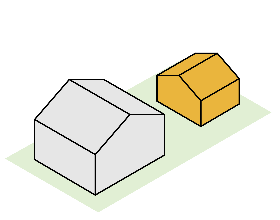
Single detached unit
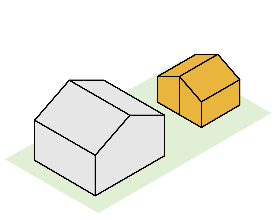
Ground-related duplex
Ground-related triplex / fourplex
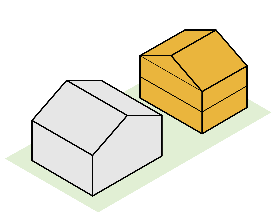
Stacked duplex
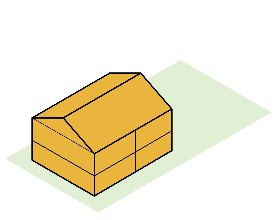
Stacked fourplex
Stacked sixplex
Description
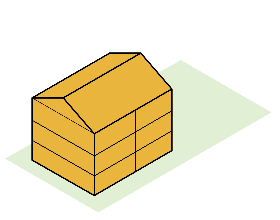
A single unit that could be permitted as an ADU or principal unit, up to three stories
Two ground-related attached units that could be permitted as a Double DADU, a principal unit with AADU, or two principal units, up to three stories
Three or four attached units, similar to a townhouse or rowhouse form, up to three stories
Two-story duplex with one home per level
Could be permitted as two ADUs, a principal unit with AADU, or two principal units
Two-story fourplex with stacked units
Two- or three-story sixplex with stacked units
Potential configurations
Could be permitted as a single home or arranged as up to 4+ cottages on one site
Could be permitted as a single duplex or as 2-3 placed on one site that can accommodate 4-6 units
Orientation on the lot could be side by side or front to back
Could be configured for interior and/or corner lots
Could be permitted as a single duplex or as 2-3 placed on one site that can accommodate 4-6 units
Envisioned as one new structure on a lot
Envisioned as one new structure on a lot
Applicable construction code
SRC
SRC
SRC
SRC
SBC
SBC
- How does this submission fulfill our design criteria? (300 words maximum) (required) —
As part of this typology, we aim to curate a gallery of designs that, collectively, reflect the following:
- Accessible units. We seek designs that meet accessibility requirements. Some people require a single-story accessible design. We recognize that accessibility depends in part on site conditions, which vary for each lot where these plans might be used. Still, single-story units designed with accessibility in mind meet the needs of some residents. We also encourage plans that, even if not fully accessible, include universal design features and are visitable for at least some units. For stacked housing forms, consider the accessibility of ground-floor units.
- Range of unit sizes. To serve various household types and sizes, we seek designs with one, two, and three bedrooms. We particularly encourage designs with at least two bedrooms, since larger households and families with children may need multiple bedrooms to meet their needs.
- Single- and multi-level designs. Given the accessibility and size goals above, we anticipate selecting designs that vary in terms of arrangement of space vertically and horizontally.
- Flexibility. For types like single detached units and side-by-side duplexes, we welcome submissions of designs that can be modified for multiple unit sizes and configurations where feasible. For example, a one-bedroom base design could include an option to add a second bedroom that does not modify the remainder of the plan. Such design options can be considered as part of one pre-approved plan.
- Garage and storage. ADUs and dwelling units smaller than 1,200 square feet do not require off-street parking requirement. Other housing generally requires one space per two dwelling units. Though not always required, we welcome submissions of designs with and without attached garages. We also welcome (but do not require) thoughtful inclusion of bike storage and other amenities.
- Amenity spaces. In the updated Neighborhood Residential (NR) legislation, Section 23.44.110 includes requirements for amenity area. While full compliance with this standard requires a complete site plan, we encourage designs that offer a clear pathway to compliance and welcome designs with open space features including porches, balconies, and roof decks.
- Repeatability. As noted in the typology above, several housing types could be permitted in multiple configurations. For example, a single detached unit could be permitted once or multiple times on a site; a stacked duplex could be permitted once in a backyard or two to three times on one lot as a four- or six-unit development project. We welcome designs that consider these options for configuration in their submission.
Submissions will be assessed on the following criteria:
- Affordable to construct. Designs that can be constructed easily, quickly, predictably, and at relatively lower cost.
- Energy efficient. Designs that include green building and design features, passive heating and cooling, renewable energy generation, etc.
- Repeatability. Designs that can be configured well in multiples on a site.
- Easy to live in. Efficient, comfortable unit design and layout.
- Creativity. In form and design
- Contextual design. Potential for compatibility with common architectural contexts and privacy considerations in relationship to common lot configurations in Seattle residential neighborhoods.
- Design submission (required) —
Submissions may include up to three 22” x 34” pages in PDF format showing:
- Floor plans (1/4” scale) with dimensioned room sizes
- Building sections (1/4” scale) showing wall and roof assembly
- Building elevations (1/4” scale)
- Three-dimensional views (maximum of six)
- Major materials
- List of mechanical systems
- Diagrams for site adaptability. Include sketches that help reviewers understand how the design could be used in different contexts or configurations, such as:
- How the design can be used as standalone home in the rear yard (preserving an existing structure) and/or in a series of multiples (if the entire site is redeveloped)
- How the design can be used on mid-block and corner lots
- Viability on a range of lot sizes from roughly 4,000 to 8,000 square feet, as applicable
- Assumptions about minimum setback to property line and distance to other dwelling units on the site, if applicable
- Options the design includes, such as:
- Roof form
- Addition of a bedroom
- Window packages
- Material variations
- Open space options (e.g., porches, balconies)
- Structures subject to the Seattle Building Code (SBC) must additionally include:
- Structural design performed by a licensed structural engineer in the State of Washington
- Mandatory accessibility requirements, for projects with four or more stacked units
- Minimum Qualifications (required) —
This response is mandatory. The determination you have achieved all minimum qualifications is made from this section alone, and therefore, the Evaluation Committee is not obligated to check references or search other materials in your proposal to make this decision.
For each Minimum Qualification listed below, please describe how you meet the minimum qualification.
Minimum Qualification #1
Provide Minimum QualificationMinimum Qualification #2
Provide Minimum QualificationMinimum Qualification #3
Provide Minimum Qualification - Consultant Inclusion Plan (required) —
Please download the below documents, complete, and upload.
- Contract Modifications —
Make requested changes to the Contract language using track changes and upload here.
- Will there be minimum qualifications? (required) —
Are there qualifications the Consultants must have to even be considered? Minimum qualifications should ONLY be those that the Consultant must meet to have their proposal considered, meaning you will toss the proposal out in full if the Consultant cannot meet the minimum qualifications.
Minimum qualifications can sometimes be important, such as a professional license. If you require a Minimum Qualification, ensure it is fair, appropriate and reasonable. Consultants can protest these if they seem exclusionary and unnecessary. In addition, some federal requirements may restrict or prohibit the use of such qualifications. Review the terms of the grant to ensure compliance with all such requirements. Minimum Qualifications are only for factual yes/no items which can be easily proven as a matter of fact and on the face of the RFQ response. These are NOT subjective such as “Company needs to be experienced” or “needs to have good references.” These are instead hard and fast criteria we check off “yes or no,” and we will toss them out without further consideration if they say no.
- Will a Consultant Inclusion Plan be needed? (required) —
Note to department – All non-federally funded contracts above $395,000 require an Inclusion Plan. If potential work, including all phases, is above $395,000, retain the Inclusion Plan as a required submittal. The Mayor’s 2010 policy requires you to score the WMBE response, for no less than 10% of total points.
Departments are encouraged to list the core Scope of Work items that the department has determined to be available for subcontracting.
Contracts with FEDERAL FUNDING may require different or additional social equity requirements, such as federal Disadvantaged Business Enterprise (DBE) requirements, which are required for US DOT funded projects, such as FTA projects.
Exceptions: Exceptions to the Inclusion Plan requirement are rare. Departments must notify their WMBE IDT representative and PC for a review and written approval of an exception. An exception does not relieve the Consultant of its responsibilities to seek WMBE inclusion if changes to the contract provides opportunities for WMBE inclusion.
For assistance, contact Miguel Beltran at Miguel.Beltran@Seattle.gov or 206-684-4525.
- Are you open to negotiating the standard contract terms and conditions? (required)
- Is this RFQ for architecture or engineering services per RCW 39.80? (required) —
State law requires the City to select the firm deemed to be the most highly qualified to provide A&E services. The City cannot ask for pricing before selecting the most highly qualified vendor.
Per RCW 18.08.320, Architecture includes: the rendering of any service or related work requiring architectural education, training, and experience, in connection with the art and science of building design for construction of any structure or grouping of structures and the use of space within and surrounding the structures or the design for construction of alterations or additions to the structures, including but not specifically limited to predesign services, schematic design, design development, preparation of construction contract documents, and administration of the construction contract.
Per RCW 18.43.020, Engineering is any professional service or creative work requiring engineering education, training, and experience and the application of special knowledge of the mathematical, physical, and engineering sciences to such professional services or creative work as consultation, investigation, evaluation, planning, design, and supervision of construction for the purpose of assuring compliance with specifications and design, in connection with any public or private utilities, structures, buildings, machines, equipment, processes, works, or projects.
Per RCW 18.96, Landscape Architecture is the rendering of professional services in connection with consultations, investigations, reconnaissance, research, planning, design, construction document preparation, construction administration, or teaching supervision in connection with the development of land areas where, and to the extent that, the dominant purpose of such services is the preservation, enhancement, or determination of proper land uses, natural land features, ground cover and planting, naturalistic and aesthetic values, the settings and approaches to structures or other improvements, or natural drainage and erosion control. This practice includes the location, design, and arrangement of such tangible objects as pools, walls, steps, trellises, canopies, and such features as are incidental and necessary to the purposes in this chapter. Landscape architecture involves the design and arrangement of land forms and the development of outdoor space including, but not limited to, the design of public parks, trails, playgrounds, cemeteries, home and school grounds, and the development of industrial and recreational sites.

Key dates
- May 12, 2026Published
- July 4, 2026Responses Due
AI classification tags
Frequently asked questions
SLED stands for State, Local, and Education. These are solicitations issued by state governments, counties, cities, school districts, utilities, and higher education institutions — as opposed to federal agencies.
SamSearch Platform
Stop searching. Start winning.
AI-powered intelligence for the right opportunities, the right leads, and the right time.