SLED Opportunity · CALIFORNIA · SFO CONSTRUCTION
Bridge Deck Resurfacing
AI Summary
Bridge Deck Resurfacing project at San Francisco International Airport involves concrete repair, pavement coating, and markings on two vehicular bridge decks. Requires California Class A license, 210 calendar days contract duration, and 14% LBE subcontracting. Virtual pre-bid meeting on April 10, 2026; bids due April 30, 2026. Extensive safety, environmental, and sustainability compliance required.
Opportunity details
- Solicitation No.
- 182852
- Type / RFx
- IFB
- Status
- open
- Level
- local
- Published Date
- April 8, 2026
- Due Date
- April 30, 2026
- Jurisdiction
- Sfo Construction
- State
- California
- Agency
- Sfo Construction
Description
1.01 Project Summary
Contract Number: 11852.61
Project Title: Bridge Deck Resurfacing
Delivery Type: Design-Bid-Build
Funding: Local Funding Source
1.02 Project Description:
This Project will protect and preserve the bridge deck wear surfaces of two (2) vehicular bridge decks: I-380 Northbound viaduct on-ramp (Caltrans Bridge ID 35c0180k) and the international return loop (Caltrans Bridge ID 35c0196). These two (2) existing bridge deck wear surfaces show signs of deterioration and will require modification to preserve their structural integrity. The Scope includes removing unsound concrete, repairing potholes in the roadway, installing a new pavement protective coating, and reinstalling new pavement markings.
1.03 Contract Duration:
The Contract Time is 210 total consecutive calendar days after the effective date indicated in the Notice to Proceed. See Document 00 54 39 (Contract Time and Liquidated Damages) for additional details.
1.04 Estimate:
The estimated cost of construction is $2,400,000 - $2,800,000.
1.05 License Requirements:
California Class “A” license is required at the time of Bid.
1.06 LBE Subcontracting Requirement:
The Local Business Enterprise (LBE) subcontracting requirement is 14% of the Contract Sum.
1.07 Pre-Bid Meeting:
A virtual pre-bid meeting will be held at 10:00 am, Pacific Time, on Friday, April 10, 2026, using Microsoft Teams video conferencing. Participation in the virtual pre-bid meeting is not mandatory but recommended.
To participate in the virtual pre-bid meeting using Microsoft Teams or Microsoft Teams web app, please use the following link: https://bit.ly/48cSquN
To join by phone, call (650) 466-0290 and use the Conference ID: 642 509 81#
1.08 Bid Opening Date:
Bidders shall submit their Bids through the Airport's e-Procurement portal found at: https://procurement.opengov.com/portalsfoconstuction no later than 2:00 pm, Pacific Time, on Thursday, April 30, 2026. Completed Bids and required documents must be uploaded in Portable Document Format (PDF). Bids received after the Bid opening time will not be considered. All details for the preparation of Bids are set forth in Document 00 21 13 (Instructions to Bidders).
Bidder shall transmit their original Bid Forms (Document 00 41 00) and original Bid security by U.S. Mail in a sealed envelope addressed to Tiffany Gonzalez-Ruiz, Contract Administrator, San Francisco International Airport, P.O. Box 8097, San Francisco, CA 94128, postmarked no later than Thursday, April 30, 2026.
Bids will be opened and read virtually using Microsoft Teams video conferencing.
To participate in the virtual bid opening using Microsoft Teams or Microsoft Teams web app, please use the following link: https://bit.ly/4co42xu
To join by phone, call (650) 466-0290 and use the Conference ID: 750 611 315#
1.09 Project Site Visit:
Please see the Timeline for more information about the Site Visit.
1.10 Contact Information:
CONTRACT MANAGER:
Yihang Zhang
(650) 821-7789
yihang.zhang@flysfo.com
CONTRACT ADMINISTRATOR:
Tiffany Gonzalez-Ruiz
(650) 821-7863
tiffany.gonzalez-rui@flysfo.com
Project Details
- Reference ID: 11852.61
- Department: Civil Engineering
- Department Head: Seng Nguy (Section Manager of Civil Engineering)
Important Dates
- Questions Due: 2026-04-18T00:00:00.000Z
- Pre-Proposal Meeting: 2026-04-10T17:00:00.000Z — https://bit.ly/48cSquN
Meetings & Milestones
| Event | Date | Location |
|---|---|---|
| Site Visit | 2026-04-14T13:00:00.000Z | San Francisco International Airport Building 674, Level 1, Lobby Area 674 West Field Road San Francisco, CA 94128 |
Addenda
- Official Notice #1: Pre-Bid Meeting Presentation and Supplementary Documents (released 2026-04-10T17:50:32.854Z) —
Attached are the Pre-Bid Meeting presentation, the sign-in sheet, the SFO Local Hiring Policy, and Labor Standards Fact Sheet.
Evaluation Criteria
- GENERAL —
1.01 SUMMARY
- This Document describes minimum Airport requirements to be specifically addressed in Contractor’s Health and Safety Plan for protecting its workers and the Airport community during excavation of potentially contaminated soils, extraction of contaminated groundwater, and during removal of Underground Storage Tanks (USTs).
- Contractor shall prepare its Environmental Health and Safety Plan for the conditions specific to the Site. Contractor’s Environmental Health and Safety Plan shall conform to requirements of all applicable local, state, and federal regulations, including, but not limited to, the minimum general requirements of this Document.
1.02 REFERENCES
- Federal Regulations
- OSHA 29 CFR, 1910.120
- OSHA 29 CFR, 1910.132, 133 & 134
- OSHA 29 CFR, 1910.1200
- OSHA 29 CFR, 1926
- State Regulations
- 8 CCR, 5192
- 8 CCR, 5144
- 8 CCR, 1540-1541.1
- 8 CCR, 1509
- 8 CCR, 3328
- 8 CCR, 3382
- 8 CCR, 5194
- 8 CCR, 14301
1.03 TRAINING
Contractor shall provide appropriate health and safety training to its employees as required by OSHA.
1.04 RESPIRATORY PROTECTION
Petroleum-Contaminated Soils, Water, and UST Removal
- 29 CFR Part 1926, Subpart 651, Paragraph (g) and 8CCR 5156 and 5157, requires that if an oxygen-deficient or hazardous atmosphere is suspected, ambient air conditions shall be assessed prior to entering excavations greater than 4 feet in depth (OSHA confined space). Therefore, Contractor shall first screen the excavation or pit for explosion potential, volatile organics, and oxygen content before entry. Any of the following readings shall preclude entry of personnel without proper respiratory protection:
- O2 Deficiency - <19.5% O2 present
- Combustibility - >20% LEL
- Toxics/Volatile Organics - ppm readings at or above Permissible Exposure Limits (PELs), PuELs (published exposure levels), or Threshold Limit Values (TLVs) for characterized chemicals or concentrations above ambient levels in the breathing zone (generally 20 ppm).
- Proper engineering procedures (ventilation, etc.) shall be used to establish safe atmospheric conditions before personnel shall be allowed to enter the excavation without the proper respiratory protection.
- If Volatile Organic Chemicals (VOCs) are consistently detected in excess of PEL, PuEL, or TLVs, or above background levels in the breathing zone, the Work Area shall be evacuated immediately, and the use of appropriate respiratory protection shall be required for re-entry to the Work Area.
- Contractor shall, where required, provide all respiratory protection to workers in accordance with their submitted written respiratory protection program, which includes all items in OSHA 29 CFR, 1910.134(b)(1-9) and OSHA 29 CFR, 1926.59(h), and 8CCR 1531 and 5144, and which shall be included in Contractor’s Health and Safety Plan.
1.05 PERSONAL PROTECTION
- Primary Direct Contact
- All field personnel who are in direct contact with low level petroleum contaminated soils/water shall perform nonintrusive field activities using minimum Level D personal protective equipment. Smoking, eating, or drinking will not be permitted in or near contaminated areas or excavations. Level D protection is designed for use when only minor skin and eye protection is needed and airborne contamination is unlikely. Personal equipment requirements for Level D include (Note: Personnel shall have 40-hour HAZMAT training for primary work):
- Hard hat
- Goggles or safety glasses
- Work gloves
- Coveralls, long-sleeve (Tyvek or equivalent)
- Steel-toe safety boots
- Chemical-resistant gloves (optional, except when collecting soil samples)
- Ear protection optional unless noise levels exceed OSHA limits
- All field personnel who are in direct contact with low level petroleum contaminated soils/water shall perform nonintrusive field activities using minimum Level D personal protective equipment. Smoking, eating, or drinking will not be permitted in or near contaminated areas or excavations. Level D protection is designed for use when only minor skin and eye protection is needed and airborne contamination is unlikely. Personal equipment requirements for Level D include (Note: Personnel shall have 40-hour HAZMAT training for primary work):
- Contingency
- All field personnel who are in direct contact with high level (1,000 ppm+) petroleum-contaminated soil/water shall perform field activities using Minimum Level C personal protective equipment.
- Oxygen concentration must be >19.5%. Modified Level C protection is designed for use when minor skin and eye protection is needed with the addition of respiratory protection. The personal protection equipment required for modified Level C includes:
- Hard hat
- Air purifying respirator with appropriate organic vapor cartridge (fit tests and monitoring)
- Chemical-resistant gloves
- Coveralls, long-sleeve (chemical-resistant)
- Steel-toe safety boots
- Chemical-resistant overboots
- Ear protection (optional)
- Personally Issued Respirators: Contractor shall provide workers with personally issued, individually-identified respirators, marked with waterproof designations. Contractor shall, on demand, provide documentation for employees required to wear a respirator showing that such persons have been examined by a physician and have been found medically fit to wear a respirator.
- Respirator Care and Maintenance: Contractor shall dispose of used filter material at the end of each working day and replace it with new filter material. All respirators shall be cleaned and maintained daily. A record log, recording these procedures, shall be maintained on site.
- Fit Testing
- Workers shall perform positive and negative air pressure qualitative fit tests each time a respirator is put on, whenever the respirator design so permits.
- Contractor shall give workers a fit test in accordance with procedures detailed in OSHA 29 CFR, 1926.1101(h)(4) and Appendix C and 8CCR 1531 and 5144 for all negative pressure respirators to be used for abatement Work.
- Contractor shall maintain documentation of adequate respirator fit tests for all personnel at the Work Area.
- Contractor shall not provide anyone with a respirator without documentation that such person has been examined by a physician and been found medically fit to wear a respirator.
- Restrictions
- Contractor shall permit no one with facial hair located beneath the respirator seal to put on a respirator and enter the designated environmental Work Area.
- Contractor shall not allow its workers to eat, drink, smoke, or chew gum or tobacco at the Work Site.
- Contractor shall not allow corrective glasses to interfere with the seal of the facepiece. Contact lenses shall not be allowed inside the containment Work Area. Corrective lenses must be mounted inside a full facepiece.
- At no time will respirator head straps be worn outside/over protective clothing (e.g., Tyvek) material.
- Respirators for Authorized Visitors: Contractor shall make available additional respirators (minimum of two of each type) for Authorized Visitors, who may be required to enter the Work Area. Authorized visitors must also be fit tested prior to the use of a respirator as described under E above.
- Standards: Except to the extent that more stringent requirements are written directly into the Contract Documents, the following regulations and standards have the same force and effect (and are made a part of the Contract Documents by reference) as if copied directly into the Contract Documents, or as if published copies were bound herewith. Where there is a conflict in requirements set forth in these regulations and standards, Contractor shall meet the more stringent requirement.
- OSHA - U.S. Department of Labor Occupational Safety and Health Administration, Safety and Health Standards, 29 CFR, 1910.134.
- CGA - Compressed Gas Association, Inc., New York, Pamphlet G-7, “Compressed Air for Human Respiration,” and Specification G-7.1, “Commodity Specification for Air.”
- CSA - Canadian Standard Association, Resdal, Ontario, Standard Z180.1-1978 (or latest edition), “Compressed Breathing Air.”
- ANSI - American National Standard Institute, “Practices for Respiratory Protection.” ANSI Z88.2-1980.
- NIOSH - National Institute for Occupational Safety and Health.
- MSHA - Mine Safety and Health Administration.
1.06 PERSONNEL DECONTAMINATION
In the event Contractor personnel become contaminated, the effected person shall proceed to a nearby shower facility, remove contaminated clothing, and take a complete soap and water shower and redress in appropriate clean clothing. The petroleum-contaminated clothing may be returned to the person for cleaning, if applicable.
- GENERAL —
1.01 PARTNERING LEVEL
This Project shall incorporate the required partnering elements for Partnering Level # 1
Level
Estimated Construction Amount
Complexity
Political Significance
Relationships
5
$200 million +
Highly technical and complex design & construction
High visibility/ oversight; significant strategic project
New project relationships; high potential for conflict (strained relationship, previous litigation, or high probability of claims)
4
$50 mil - $200 mil
High complexity – schedule constraints, uncommon materials, etc.
Probable
New contractors or CM, new subs
3
$20 mil - $50 mil
Increased complexity
Likely, depending on the location and other project characteristics
Established relationships; new CM, subs, or other key stakeholders
2
$5 mil - $20 mil
Moderate complexity
Unlikely, unless in a place of importance
Established relationships; new subs, new stakeholders
1
$100,000 - $5 million
Standard complexity
Unlikely, unless in a place of importance
Established relationships; new subs, new stakeholders
1.02 SUMMARY
- This Document specifies the requirements for establishing a collaborative partnering process. The partnering process will assist the Airport and Contractor to develop a collaborative environment so that communication, coordination, and cooperation are the norm, and to encourage resolution of conflicts at the lowest responsible management level.
- The partnering process is not intended to have any legal significance or to be construed as denoting a legal relationship of agency, partnership, or joint venture between the Airport and Contractor.
- This Document does not supersede or modify any other provisions of this Contract, nor does it reduce or change the respective rights and duties of the Airport and Contractor under this Contract, nor supersede contractual procedures for the resolution of disputes.
1.03 PURPOSE/GOALS
The goals of Project partnering are to:
- Use early and regular communication with involved parties.
- Establish and maintain a relationship of shared trust, equity, and commitment.
- Identify, quantify, and support attainment of mutual goals.
- Develop strategies for using risk management concepts and identify potential Project efficiencies.
- Implement timely communication and decision-making.
- Resolve potential problems at the lowest possible level to avoid negative impacts.
- Hold periodic partnering workshops throughout the life of the Project to maintain the benefits of a partnered relationship.
- Establish periodic joint evaluations of the partnering process and attainment of mutual goals.
1.04 DEFINITIONS
- Unless specifically defined in this Document, all terms have the same meaning as defined in Document 00 72 00 (General Conditions).
- Stakeholders: Any person or entity that has a stake in the outcome of a construction project. Examples include the end users, neighbors, vendors, special interest groups, those who must maintain the facility, those providing funding, and those who own one or more of the systems.
- Project Team: Key members from the Airport and Contractor organizations responsible for the management, implementation, and execution of the Project, and will participate in the partnering process.
- GENERAL —
.
- GENERAL —
1.01 SUMMARY
This Document describes coordination of Work within Project and with work of other projects.
1.02 REQUIREMENTS
A. Coordinate Work described in the Specifications to assure efficient and orderly sequence of installation of construction elements, with provisions for accommodating items installed by the Airport or under separate contracts.
B. Verify that characteristics of elements of interrelated operating equipment are compatible; coordinate Work described in the Specifications having interdependent responsibilities for installing, connecting to, and placing such equipment in service.
C. Coordinate space requirements and installation of work, which are indicated diagrammatically in the Drawings. Follow routing shown in the Contract Documents as closely as practicable; make runs parallel with lines of buildings and roads. Utilize spaces efficiently to maximize accessibility for other installations, maintenance, and repairs.
D. Conceal work in finished areas unless otherwise indicated. Coordinate locations of fixtures and outlets with finish elements.
E. Work out “tight” conditions involving Work described in the Specifications in advance of installation. Prepare drawings for review indicating Work in “tight” areas if necessary, prior to installation.
No additional costs will be allowed due to drawings of additional Work required to overcome “tight” conditions.
F. Whenever the Work of a Subcontractor is dependent upon the work of other Subcontractors or contractors, then Contractor shall require Subcontractor to:
1. Coordinate its Work with the dependent work
2. Provide necessary dependent data and requirements
3. Supply and/or install items to be built into dependent work of others
4. Make provisions for dependent work of others
5. Examine dependent drawings, specifications, and submittals
6. Examine previously placed dependent work
7. Check and verify dependent dimensions of previously placed work
8. Notify Contractor of previously-placed dependent work or dependent dimensions which are unsatisfactory or will prevent a satisfactory installation of its Work
9. Not proceed with its Work until the unsatisfactory dependent conditions have been corrected
10. If necessary, Contractor shall require Subcontractor to participate in coordination meetings with other contractors, and any other activities necessary for Contractor to discharge its coordination and cooperation responsibilities established by Document 00 72 00 (General Conditions)G. If Contractor is notified that a clarification is forthcoming from the Airport, any Work performed before the receipt of same shall be coordinated with the Airport to minimize the effect of the clarification on Work in progress. Any Work performed after notification, but before receipt of clarification and not so coordinated, shall be at Contractor’s risk.
H. Prepare coordination drawings as necessary, as determined by the Airport, to satisfactorily coordinate and interface the Work of this Contract with the work of other contracts thereby avoiding conflicts which may otherwise arise.
I. Coordinate Work with other contractors, utilities, and the Airport, as required by the General Conditions. If the Airport or its authorized representatives determine that Contractor is failing to coordinate its Work with the work of other contractors as required by the General Conditions and this Document, the Airport or its authorized representatives may, upon 72-hour written notice, do any or all of the following:
1. Withhold any payment otherwise owed hereunder until Contractor complies with the Airport’s directions
2. Direct others to perform portions of Work and charge the cost of Work against the Contract Sum
3. Terminate any and all portions of this Contract for Contractor’s failure to perform in accordance with the Contract Documents - GENERAL —
1.01 SUMMARY
- This Document describes the requirements to perform PCB remediation where specified or when encountered as an unanticipated condition. This Document primarily addresses PCB remediation in building construction materials (ballasts, paints).
- This Document describes the health and safety requirements to perform PCB remediation activities.
- Contractor shall review all information and reports relating to PCB containing materials collected and prepared by the Airport. The information and reports are provided for Contractor’s convenience and use for identifying where known or suspect materials reside within the Work Area. Contractor shall identify data gaps and conduct its own testing and discovery to definitively identify the full extent of such materials within the Work Area.
1.02 FIRE MARSHAL REVIEW- Contact the Airport Fire Marshal to review remediation procedures prior to the start of Work.
- Comply with Airport Fire Marshal’s as-needed fire safety related requirements.
1.03 CODES AND REGULATIONSGeneral Requirements
- All Work under this Contract, and any other trade work in conjunction with the disposal of the hazardous material, shall be done in strict accordance with all applicable local, state, and federal regulations, standards and codes governing handling, transportation, and disposal of hazardous waste materials.
- The most recent edition of any relevant regulation, standard, document, or code shall be in effect. Where conflict among the requirements or with these Documents exists, the most stringent requirements shall be used.
- Contractor shall refer to Document 01 41 13 (Regulatory Requirements, References, Definitions, and Acronyms – Hazardous Materials) for applicable codes and regulations.
- Contractor shall have copies of all standards, regulations, codes, and other applicable documents (including this Document) available at the job site.
- 40 CFR 761 - PCBs Manufacturing, Processing, Distribution in Commerce, and Use Prohibitions.
1.04 WORKER PROTECTION AND TRAINING- Contractor shall ensure that all workers who will work in a full containment environment have received required training, medical monitoring, respiratory protection, and protective clothing as required by Cal/OSHA regulations. Contractor shall provide protective equipment to Contractor’s personnel who are handling, loading, and unloading containers. The protective equipment shall consist of disposable head, body, and foot protection of a different color from the remediation personnel in the Work Area and, at a minimum, non-disposable half-face piece, air-purifying, dual cartridge respirators equipped with P100 HEPA Filters. If for any reason a Contractor’s employee at the disposal site suspects that their clothing has become contaminated during the disposal process, he or she shall remove the contaminated clothing at the disposal site, and don clean disposable clothing for the return trip to the remediation site.
- Training: All remediation personnel shall have initial 40-hour Cal/OSHA HAZWOPER training and eight-hour annual refresher training, as applicable. Certificates of training shall be submitted to the Government’s Representative.
- Permits and Agreements. —
Attached herewith are the following permits and agreements obtained for the Work by the City:
SFO Building Inspection and Code Enforcement (BICE) permit, Caltrans permit
END OF DOCUMENT
- GENERAL —
1.01 DESCRIPTION
This Document includes requirements for the closure in place of welded steel aviation fuel pipelines.
1.02 REFERENCES
Applicable Standards
- American Petroleum Institute (API)
- Bulletin 2201 – Procedures for Welding or Hot Tapping on Equipment Containing Flammables
- Bulletin 2209 – Pipe Plugging Practices
- National Fire Protection Association (NFPA)
- NFPA 30 – Flammable Liquids Code
- Occupational Safety and Health Administration (OSHA)
- 29 CFR Part 1910 – Occupational Safety and Health Standard
- 29 CFR Part 1926 – Occupational Safety and Health Standards
- San Francisco International Airport Tenant Improvement Guidance – April, 1999
1.03 SUBMITTALS
- Fuel System Closure:
- Contractor shall submit information related to line fill sequencing, schedule, method of pumping, grout mix design, and any applicable requirements for approval prior to starting Work.
- American Petroleum Institute (API)
- GENERAL —
1.01 SUMMARY
This Document describes the procedures Contractor shall follow for the control of storm water and control of silt and debris at the Site. No additional compensation will be allowed for the erosion control measures and no separate measurement or payment will be made for such Work unless it is established as a payable Bid Item on the Bid Form.
1.02 REQUIREMENTS
- Contractor shall comply with the requirements outlined in the Airport’s Storm Water Pollution Prevention Plan (SWPPP) for Construction Activities (Construction SWPPP) and all applicable permits as follows:
- National Pollutant Discharge Elimination System (NPDES) Permit No. CA00383180, WDID #2 417033001, California Regional Water Quality Control Board (RWQCB), San Francisco Bay Region Order No. R2 2013-0011.
http://www.waterboards.ca.gov/sanfranciscobay/board_decisions/adopted_orders/2013/R2-2013-0011.pdf - When coverage is applied for, California’s General Permit for Storm Water Discharges Associated with Construction and Land Disturbance Activities (CGP), including the State Water Resources Control Board (SWRCB) Order No. 2022-0057-DWQ (as amended by Orders 2010-0014-DWQ and 2012-0006-DWQ) for the CGP.
http://www.waterboards.ca.gov/water_issues/programs/stormwater/docs/constpermits/wqo_2009_0009_complete.pdf. - The Airport’s Construction SWPPP is periodically updated. Contractor is responsible for complying with the Airport’s most current Construction SWPPP. For copy of the current Construction SWPPP email: bppp@flysfo.com or call (650) 821-8357.
- National Pollutant Discharge Elimination System (NPDES) Permit No. CA00383180, WDID #2 417033001, California Regional Water Quality Control Board (RWQCB), San Francisco Bay Region Order No. R2 2013-0011.
- If there is a discrepancy between the requirements of the Airport NPDES Permit and the CGP, Contractor shall comply with the more stringent requirements.
- Contractor is required to manage and control construction site runoff. Contractor shall prepare and submit for approval a Site-Specific Plan in accordance with Article 1.03 below. No initiation of any ground disturbing activities shall occur until the Airport has approved the Plan and, when applicable, the Project has obtained a WDID through the CGP.
- Contractor shall not, under any circumstances, discharge any liquid, solution, wash water or operational effluent resulting from any Work on the Project or on behalf of the Airport into any storm, industrial, or sanitary drainage systems on or off the Airport without prior written approval from the Airport’s Bay Pollution Prevention Program (BPPP) Section. Contractor is responsible to provide all necessary holding storage and secondary containment for all process water until release into any Airport drain collection system is authorized in writing from Airport’s BPPP Section.
- Contractor, except in areas to be cleared, shall not remove, cut, deface, injure or destroy trees or shrubs without the Airport’s written permission.
- Contractor shall be solely responsible for complying with the soil erosion and sedimentation control requirements of this Contract and for otherwise preventing contamination of storm water from the general construction activities. Contractor shall be solely responsible for any and all fines, penalties or damages, which result from its failure to so comply.
1.03 SOIL EROSION AND SEDIMENT CONTROL PLAN
- Contractor shall submit a Site-Specific Soil Erosion and Sediment Control Plan. If approved by the Airport’s BPPP Section, Contractor may use the short form provided by the Airport. The Site-Specific Plan shall comply with the Airport’s Construction SWPPP. Contractor shall submit the Site-Specific Plan to the City Representative for approval by the Airport’s BPPP Section.
- The Site-Specific Plan shall include furnishing, installing and removal of the following storm water pollution prevention measures: silt fence, filter fabric, straw mats and straw wattles or fiber rolls or mats, wheel wash and concrete washout facilities at construction site access or worksite locations, tracking control at construction entrances, sediment traps, dust control and other erosion control measures needed to prevent the discharge of sediment into the storm drain system during construction. Contractor shall also take needed measures to prevent contamination of storm water from construction activities such as temporary fuel storage, fueling operations, equipment maintenance, hazardous material and waste handling, concrete truck washing, etc. If any modifications are made to the construction procedures that are not addressed in the Site-Specific Plan, Contractor shall prepare and submit to the Airport an amendment to the Site-Specific Plan describing the required storm water pollution prevention measures prior to implementing the modified construction procedures.
- The Site-Specific Plan shall be prepared in accordance with the Water Board’s suggested publications listed on their Storm Water Program page, http://www.waterboards.ca.gov/water_issues/programs/stormwater/training.shtml.
- Contractor Identification and Certification:
The Site-Specific SWPPP must clearly identify Contractor or Subcontractors responsible for implementation of each control measure. Contractor and all such Subcontractors identified must submit the following certification statement as part of the Site-Specific Plan:
“I certify under a penalty of law to the best of my knowledge and belief, the information submitted in this document is true, accurate, and complete.” - The Plan may utilize plans, details, notes, and other information provided in the Contract Documents; however, such information shall not, in itself, be construed to meet the requirements of this Document. Contractor shall provide additional detail to ensure that the Plan accurately reflects Contractor’s means and methods for construction, to include: construction sequencing, site layout, construction access, temporary facilities, specific structural and non-structural controls and Project organization. Contractor shall provide a Qualified Stormwater Pollution Prevention Plan Practitioner to ensure SWPPP compliance for the duration of the Project.
- Where Documents overlap, references may be included to avoid duplication.
- The submission of a Site-Specific Plan is required before the issuance of a building permit.
- Contractor shall comply with the requirements outlined in the Airport’s Storm Water Pollution Prevention Plan (SWPPP) for Construction Activities (Construction SWPPP) and all applicable permits as follows:
- GENERAL —
1.01 SUMMARY
This Document describes the field offices and sheds required during construction.
1.02 REQUIREMENTS
- Contractor’s Field Offices
A field office is required. It shall be weather-tight, with lighting, electrical outlets, windows, Wi-Fi, heating and ventilating equipment, and equipped with furniture and computer equipment. This space will be sufficient to house the construction team, including Contractor, Inspector, and City Representative. It may be a portable or mobile office trailer for the sole use of designated occupants with secure entrance doors and six keys. - Storage Units for Tools, Materials, and Equipment
Storage units shall be weather-tight, with heat and ventilation for products requiring controlled conditions, adequate space for organized storage and access, and lighting for inspection of stored materials. - Use of Existing Facilities
Upon request by Contractor, available existing facilities at the Site may be used for field offices or as storage units, as approved by the City Representative. - Maintenance and Cleaning
Contractor shall provide weekly maintenance and cleaning for temporary structures, furnishings, equipment and services. - Additional Requirements
RESERVED
- Contractor’s Field Offices
- GENERAL. —
1.01 Summary
This Document describes Allowances and procedures for doing Allowance Work.
1.02 Procedures
- Allowances under this Work are contingency Allowances. Allowance Work may or may not be performed. They shall be done only when and as directed in writing by the City Representative.
- The amount given on the Bid Form under each Allowance Item is the sum of money set aside for each Allowance. These amounts shall be included in the Contract Sum on the Bid Form.
- If the cost of Work done under any Allowance Item is less than the amount given on the Bid Form under that Allowance Item, the Contract Sum shall be reduced by the difference between the amount given in the Bid Form and the cost of Work actually done. This reduction in Contract Sum shall be done under a Change Order.
- Contractor agrees that the Airport may issue a joint check to Contractor and Utility for utility relocation Allowance Work. When the Airport issues a joint check to Contractor and Utility, Contractor shall provide its endorsement on the joint check upon the request of the Airport.
1.03 Scope of Allowances
- Refer to Document 01 11 00 1.03 Bid Items
- GENERAL —
1.01 SUMMARY
This Document includes the Scope of Environmental Work, including:
- General requirements for environmental Work
- Project description
- Appendix A: Copies of Hazardous Materials Reports and Documentation
1.02 GENERAL INFORMATION
- All references to the “Airport’s Environmental Consultant” in the Contract and Specifications shall be understood to refer to the consultant(s) assigned by the Airport to an identified project. It is acknowledged that the Airport’s Environmental Consultant is a firm having expertise in environmental compliance, assessment, and remediation activities, and has been engaged by the Airport as its representative with respect to the activities described hereunder. The Airport retains the right to change its Environmental Consultant.
- Existing Hazardous Materials Reports: A list of the hazardous materials reports available for this Project are presented in Part 4. Hard copies of these reports are available at the Airport’s Environmental Library. Additional reports may be available at the Regional Water Quality Control Board’s Geotracker website. This information is not exhaustive. Supplemental investigation by Contractor may be appropriate.
1.03 PROJECT DESCRIPTION
[enter the Environmental Scope of Work]
1.04 GENERAL REQUIREMENTS FOR ENVIRONMENTAL WORK
- Contractor shall furnish all labor (including all licenses, permits, and certifications required for particular tasks), materials, and equipment, and perform all operations in connection with the excavation, removal, handling, storage, treatment, transport, and disposal of contaminated soil, sludge, and water.
- Contractor shall furnish all labor (including all license, permits, and certifications required for particular tasks), materials, and equipment, and perform all operations in connection with the abatement of lead containing paint, PCB, asbestos containing materials at areas where known and discovered.
- Contractor shall retain a hazardous material specialist to develop appropriate recommendations for further exploration and discovery to assess the type and extent of contamination within the Work Area, and prepare a mitigation plan, subject to approval by the Airport, that describes the mitigation activities.
- Contractor shall ensure that environmental compliance staff holds necessary licenses, certifications, and/or training for the performance of environmental compliance Work.
- Unless provided otherwise in the Contract Documents, all risk of loss to Work covered by Contract Documents shall rest with Contractor until Final Completion and Acceptance of the Work.
- Contractor shall take the necessary steps to ensure worker safety as specified in 29 CFR, 1910.120, and 1926, and by Cal/OSHA regulations.
- SUMMARY —
This Document specifies the limits of Contract Time and amounts of liquidated damages agreed to be assessed should the Work be incomplete after the limits of Contract Time.
- GENERAL —
1.01 DESCRIPTION
- General: Contractor shall perform all excavation, shoring, dewatering, backfilling, compaction, and grading necessary or required for the Work as covered by this Document and further defined in the Contract Documents. The excavation shall include, without classification, the removal and disposal of all materials of whatever nature that are encountered, including water, soil, and all other objects, which could interfere with the proper completion of the required Work.
- Site Access: Access to the Site will be over public and private roads. Contractor shall exercise care in the use of such roads and shall repair, at its own expense, any damage thereto caused by its operations. Such repair shall be to the satisfaction of the Airport or agency having jurisdiction over the road. Contractor shall take necessary action to prevent tracking of mud onto existing roads and shall keep the roads free of any debris.
- Traffic Regulation: Provide such flagmen, patrols, pilot cars, drivers, lighted barricades, flares, lights, warning signs, and safety devices as may be required for control of traffic adjacent to all areas of Work. A minimum of one lane of traffic shall be kept open at all times on public roads. Refer to Document 01 55 26 for Traffic Regulations.
- Barriers: Barriers shall be placed at each end of all excavations and at such places along excavations as may be necessary to warn all pedestrian and vehicular traffic of such excavations. Lights shall also be placed along excavations from sunset each day to sunrise of the next day until such excavation is entirely restored.
- Access: Free access must be maintained to all fire hydrants, water valves and meters, and driveways.
- Open Trench Limitations: The City Representative shall have the authority to limit the amount of trench to be opened or left open at any one time. In public roads, excavation shall be coordinated so that a minimum of interference with public traffic will result. In existing paved areas, no more than 200 feet of trench shall be open at any time. An open trench in existing street shall be defined as any trench that has not been completely backfilled, satisfactorily compacted, and capped with at least 1 inch of temporary paving (cutback) or first lift of permanent pavement.
- Demolition of Pavement: Where trenching or excavation occurs in paved areas, the pavement shall be scored and broken ahead of the trenching or excavation operation. The extent of paving removed shall be limited to the minimum necessary for the excavation.
- Dust Control: Contractor shall take proper and efficient steps to control dust.
- Permits: Refer to Document 00 72 00 (General Conditions), Paragraph 3.06.
- Storage of Materials: Excavated materials unsuitable for backfill shall not be stored on existing streets and shall be disposed of immediately. Neatly place excavated materials far enough from the excavation to prevent stability problems. Keep the materials shaped so as to cause the least possible interference with drainage or the normal use of adjacent properties, structures or roadways.
- Temporary Pavements: Place temporary pavement or first lift of permanent pavement on trenches in existing street within 24 hours after the trench has been backfilled. Maintain temporary pavement until permanent pavement is to be placed.
- Hazardous Material: Contaminated soil and groundwater may be encountered during excavation operation. Pipelines containing asbestos may also be encountered. Specifications for handling, storage, transport, treatment, and disposal of these materials are included in Specifications Division 01, Document 01 35 43.16 (Excavation and Disposal of Contaminated Soil, Sludge and Water).
1.02 QUALITY ASSURANCE
- Source Quality Control: Only virgin quarry soil shall be used for backfilling all excavations. Contractor shall test all imported soil materials to demonstrate that the materials conform to the specified requirements. All required tests should be performed by an independent testing laboratory. Contractor shall provide a certification verifying the source of any imported soil.
- Field Quality Control
- The Airport will:
- Review and test materials proposed for use
- Inspect placement and compaction of fill
- Test soil during placement of fill
- Contractor shall excavate holes for in-place soil sampling. Contractor shall be responsible for costs of additional inspection and re-testing resulting from non-compliance.
- The Airport will:
- Testing Methods
- Durability Index: Manual of Test, State of California, Department of Transportation
- Specific Gravity: ASTM D854
- Laboratory Compaction: ASTM D1557, Method A or C
- In -place Density: ASTM D1556 or ASTM D2922
- Particle Size Analysis of Soils: STM D422
- Plastic Limit and Plasticity Index: ASTM D4318
- Soil Classification: ASTM D2487
- In-place Moisture Content: ASTM D3017
- Definition
- Relative Compaction: In-place dry density divided by the maximum dry density laboratory compaction expressed as a percentage.
1.03 SUBMITTALS
- Sheeting and Shoring Plan: In accordance with Section 6705 of the State Labor Code, Contractor shall submit to the Airport specific plans to show details of provisions for worker protection from caving ground. The submittal of a plan would in no way relieve Contractor from the requirement of maintaining safe conditions in all operations performed by Contractor or the associated Subcontractors. The detailed plan showing the design of shoring, bracing, sloping, or other measures should be prepared by a registered Civil or Structural Engineer, as required. Acceptance of the sheeting and shoring plan by the Airport or its designated agent only constitutes acknowledgement of the submission and does not constitute review or approval of the design, design assumptions or criteria, completeness of submissions, applicability to areas of intended use, or implementation of the plan. All of the above issues are the sole responsibility of Contractor and Contractor’s registered engineer.
- Potholing Report as described in Article 3.02.
- Traffic/Pedestrian Detour Routing Plan and Proposed Parking Plan: Refer to Document 01 55 26 (Traffic Regulation).
- Samples and Test Results: Furnish, without additional cost to the Airport, such quantities of import materials as may be required by the City Representative for test purposes. Contractor shall cooperate with the City Representative and furnish necessary facilities for sampling and testing of all materials and workmanship. Submit test results for import materials. Test shall be performed within 10 Working Days of the submission. All materials furnished and all Work performed shall be subject to rigorous inspection. No material shall be delivered to the Site until it has been reviewed and approved by the City Representative. No material shall be used in the Work until it had been inspected in the field by the City Representative.
1.04 EXPLOSIVES
The uses of explosives will not be permitted on this Project.
1.05 SUBSURFACE INVESTIGATIONS
- Geotechnical investigations for design purposes for this Project were made for the Airport by various consultants.
- Bidders may make additional subsurface investigations at the Site prior to the bidding of the Project. Prior to making any drilling or excavations, Bidder shall secure permission from the City Representative.
- Numerous investigations on the occurrence of hazardous materials in soil and groundwater at the Airport have been performed by the Airport and various tenants.
1.06 REFERENCE SPECIFICATIONS
Wherever the words “Standard Specifications” are referred to, the reference is to the State of California, Department of Transportation, Standard Specifications dated July 1992 (or latest edition).
- CONTENTS —
1.02 DEFINITIONS
1.03 DRAWING INDEX
1.04 BIDDING CONTACT INFORMATION
1.05 LIMITATIONS ON COMMUNICATIONS
1.06 ISSUANCE OF BID DOCUMENTS
1.07 EXAMINATION OF BID DOCUMENTS AND SITE
1.08 BID SECURITY
1.09 QUESTIONS AND ADDENDA
1.10 STATUTORY BIDDING REQUIREMENTS
1.11 BIDDER QUALIFICATIONS
1.12 DEBARMENT AND SUSPENSION CERTIFICATION REQUIREMENTS
1.13 LOCAL BUSINESS ENTERPRISE PROGRAM
1.14 LOCAL HIRING REQUIRMENTS
1.15 ACKNOWLEDGEMENT OF RECEIPT OF ADDENDA
1.16 BID FORM
1.17 SUBMISSION AND OPENING OF BIDS
1.18 INFORMATION TO BE SUBMITTED AFTER BID OPENING
1.19 WITHDRAWAL OR REVISION OF BID
1.20 BID PROTESTS
1.21 AWARD OF CONTRACT
1.22 CONTRACT SECURITY
1.23 EXECUTION OF CONTRACT - GENERAL —
1.01 SUMMARY
This Document describes the constructions aids required during construction, including:
- Construction elevators, cranes and hoists
- Scaffolding and platforms
- Swing staging
- Temporary enclosures
- First aid
1.02 REFERENCES
Occupational Safety and Health Administration (OSHA) Standards.
1.03 REQUIREMENTS
- Construction elevators, cranes, and hoists shall be operated and inspected routinely by certified personnel.
- Scaffolding and platforms erection and use shall be compliant with applicable OSHA and industry standards.
- Swing staging erection and use shall be compliant with applicable OSHA and industry standards.
- Temporary enclosures shall be properly fabricated, secured and identified, and code compliant.
- Contractor shall provide adequate first aid supplies at the Site, with personnel trained in basic use.
- GENERAL —
1.01 SUMMARY
This Document describes the procedures for selecting products and requesting substitutions of unlisted materials in lieu of materials named in the Specifications or approved for use in Addenda.
1.02 CONTRACTOR’S OPTIONS
- For products specified only by reference standard, select any product meeting that standard.
- For products specified by naming one or more products or manufacturers:
- Select products of any named manufacturer meeting the Specifications.
- For any product or manufacturer that is not specifically named, submit Document 00 63 25 (Request for Product Substitution).
- After the specified time stated in the Request for Product Substitution (RFPS), requests will be considered only when product becomes unavailable due to no fault of Contractor. Requests for review of proposed substitute items will not be accepted from anyone other than Contractor. The RFPS will state the extent, if any, to which the evaluation and acceptance of the proposed substitute will prejudice Contractor’s achievement of Substantial Completion on time, whether or not acceptance of the substitute for use in the Work will require a change in any of the Contract Documents (or in the provisions of any other direct contract with the Airport for Work on this Project).
1.03 SUBSTITUTIONS
- Contractor shall submit separate RFPS for each product and support each request with:
- Product identification
- Manufacturer’s literature
- Samples, as applicable
- Name and address of similar projects on which product has been used, and date of installation
- Name, address, and telephone number of manufacturer’s representative or sales engineer
- Where required, itemize a comparison of the proposed substitution with the specified product and list significant variations. If variation from the specified product is not pointed out in the submittal, variation will be rejected even though submittal was favorably reviewed.
- State whether the substitute will require a change in any of the Contract Documents (or provisions of any other direct contract with the Airport for Work on this Project) to adapt the design of the proposed substitute, and whether or not incorporation or use of the substitute in connection with the Work is subject to payment of any license fee or royalty. Submit data relating to changes in the construction schedule.
- All variations of the proposed substitute from that specified will be identified in the RFPS and available maintenance, repair, and replacement service will be indicated.
- Include accurate cost data comparing proposed substitution with the specified product and amount of net change in Contract Sum, including but not limited to, an itemized estimate of all costs or credits that will result directly or indirectly from acceptance of such substitute, costs of redesign and claims of other contractors effected by the resulting change, all of which will be considered by the Airport in evaluating the proposed substitute. The Airport may require Contractor to furnish additional data about the proposed substitute.
- Substitutions will not be considered for acceptance when:
- They will result in delays meeting construction milestones or completion dates.
- They are indicated or implied on submittals without formal request from Contractor.
- They are requested directly by Subcontractor or Supplier.
- Acceptance will require substantial revision of the Contract Documents.
- They disrupt Contractor’s job rhythm or ability to perform efficiently.
- Substitute products shall not be ordered without written acceptance of the Airport.
- The Airport will determine acceptability of proposed substitutions and reserves the right to reject RFPS due to insufficient information.
- Accepted substitutions may be evidenced by a Change Order. All Contract requirements apply to Work involving substitutions.
1.04 CONTRACTOR’S REPRESENTATION AND WARRANTY
Requests constitute a representation and warranty that Contractor:
- Has investigated proposed product and determined that it meets or exceeds, in all respects, the specified product.
- Will provide the same warranty for substitution as for specified product.
- Will coordinate installation and make other changes, which may be required for Work to be complete in all respects.
- Waives claims for additional costs, which may subsequently become apparent.
- Will compensate the Airport for additional redesign costs associated with substitution.
- Will be responsible for construction schedule slippage due to substitution.
- Will be responsible for delay due to late ordering of available specified products caused by RFPS, which is subsequently rejected by the Airport.
- Will compensate the Airport for all costs, including extra costs of the Contract, extra cost to other contractors, extra costs to the Airport, Airport tenants, and any claims brought against the Airport, caused by late RFPS or late ordering of products.
1.05 AIRPORT’S DUTIES
- The Airport shall review Contractor’s RFPS with reasonable promptness.
- Notify Contractor in writing of its decision to accept or reject requested substitution.
1.06 COST OF REVIEW
- The Airport will record the time required in evaluating substitutes proposed or submitted by Contractor. Whether or not the Airport accepts the substitute item so proposed or submitted by Contractor, Contractor shall reimburse the Airport for charges of evaluating each such proposed substitute item.
- The Airport reserves the right to waive the requirement of Paragraph 1.06A.
- ADVERTISEMENT FOR BIDS —
Contract Number: 11852.61
Project Title: Bridge Deck Resurfacing - GENERAL —
1.01 SUMMARY
This Document describes the general safety requirements, driving safety requirements, and emergency/accident reporting for this Work.
1.02 REFERENCES
- 29 CFR Section 1910, Occupational Safety and Health Standards
- 40 CFR Section 61, Subpart M
- 8 CCR Division 1, Chapter 4, Division of Industrial Safety
- 22 CCR Division 4
- California Health and Safety Code Chapter 10.4
- Federal Aviation Administration (FAA) Advisory Circular No. 150/5370-2G
- Airport Rules and Regulations
- Airport Employee Safety Procedures and Practices Manual
- Airport Hazard Communication Program
- Airport Operations/Certification Manual
1.03 GENERAL SAFETY REQUIREMENTS
- All Work shall meet the requirements of the multi-employer worksite standard (8 CCR Section 336.10 and 336.11). Contractor has the authority to control and correct all hazards associated with the Work performed by Contractor and/or its Subcontractors. If Contractor becomes aware of a hazard which Contractor contends was created or caused by the Airport, Contractor must notify the Airport immediately in the case of an imminent hazard, and no later than five Working Days in all other cases. If Contractor fails to do so, Contractor agrees to assume all responsibility to control and/or correct the hazard as if Contractor were the creator or cause of the hazard.
- Requirements listed in this Document cover only those more significant safety features that must be considered. It is expected that Contractor may see additional hazards, which, of course, must be dealt with, as local, state, federal, and Airport regulations require, in order to ensure safety and health of all concerned. Contractor shall comply with all applicable local, state, federal, and Airport rules and regulations and with the provisions of Article 12 of Document 00 72 00 (General Conditions). Contractor shall become familiar with the Airport's Safety Program and Procedures (including Fall Protection, Lockout and Tagout, Confined Space Entry, Excavation, Traffic Signs) and the Airport's Emergency Plan. Both documents are available at the Airport’s Safety, Health, and Wellness Division office.
- Failure to comply with any of the above rules and regulations may be considered a material breach of Contract.
- The Airport may review Contractor’s safety programs previously submitted pursuant to Document 00 21 13 (Instructions to Bidders) and make appropriate recommendations. In making such recommendations and carrying out such reviews, the Airport or City Representative shall not be required to make exhaustive or continuous inspections to check safety precautions and programs in connection with the Work. Performance of reviews by the Airport or City Representative shall not relieve Contractor of the responsibility for the safety of persons or property as herein specified or for compliance with local, state, and federal statutes, rules, regulations, and orders applicable to the performance of the Work.
- Contractor shall designate safety representative(s) for the Project who shall be on Site whenever Work is being performed. The safety representative(s) shall have the responsibility and authority to ensure the safety of employees and property, and the prevention of accidents. The safety representative(s) shall have, as a minimum, five years of diversified construction safety experience and two years of experience related to the Project scope of Work. The name and resume of the designated person(s) shall be provided to the City Representative for review in accordance with Document 01 33 00 (Submittals) prior to commencement of Work.
- A representative of the Airport, along with the City Representative, will make periodic safety inspections of construction areas and will document deficiencies when observed. Deficiencies will be submitted, in writing, to the City Representative for distribution to Contractor. Contractor shall be responsible for replying to the City Representative within 24 hours as to what corrective action has been taken on the deficiencies.
- Contractor’s safety representative(s) shall conduct on-going safety inspections of the Site. A formal inspection shall be conducted at least weekly and a copy of the inspection documentation shall be provided to the City Representative. This inspection will be in addition to the periodic inspections conducted by the representative of the Airport.
- Contractor shall be responsible for providing safety training for its employees. This shall include, but is not limited to, hazard communication, use of personal protective equipment, excavation safety, confined space safety, and weekly “Toolbox” safety meetings. Documentation of such training, including training notes and a list of attendees, shall be provided to the City Representative.
- Before commencing Work, Contractor shall:
- Submit a Site-Specific Safety Plan.
- Establish respiratory protection and hearing conservation programs and implement as required.
- Require employees to wear hearing and eye protection, hard hats, sleeved shirts, long pants, adequate ANSI-approved foot protection, and full protection and other special equipment that may be required to perform the Work in accordance with local, state, and federal standards.
- Conduct walk-throughs with the Airport Fire Marshal and meet all additional requirements imposed by the Airport Fire Marshal at no additional cost to the City.
- Post a copy of the Cal/OSHA “Safety and Health Protection on the Job” poster on Site.
- Contractor shall provide adequate first aid supplies on Site for its employees and a person trained in basic first aid that can render immediate care when needed. Contractor will provide transportation to a medical facility for injured employees with minor injuries. For major injuries, see Paragraph 1.06B.
- Possession of illegal drugs, alcoholic beverages, and drug paraphernalia is prohibited. Being under the influence of illegal drugs or alcoholic beverages is prohibited.
- Contractor shall ensure that employees taking prescription medications notify their immediate supervisor who will make a determination as to the employee’s ability to operate equipment.
- No one under Contractor's employ or direction is permitted to enter the Airport's Control Rooms, Electrical Substations, or Motor Control Centers unless authorized to do so.
- No one under Contractor's employ or direction is permitted to start, or in any way tamper with, the Airport's operating plant or equipment.
- Employees shall be required to immediately correct all unsafe conditions and unsafe acts, and to report those that cannot be corrected to their supervisor.
- Notify the City Representative at least three Working Days prior to hazardous Work activity or receipt of hazardous substances, which would endanger Airport property or employees or the general public. Contractor shall provide Material Safety Data Sheets to the City Representative for hazardous substances used in Work.
- Notify the City Representative two weeks prior to any Work requiring the shutdown of heating, ventilating, and air conditioning equipment.
- Materials and equipment shall not be released from elevated locations in an uncontrolled manner, and area below elevated work locations shall be barricaded off to exclude all persons.
- Provide personnel with ANSI-approved protective clothing and equipment and ensure compliance with local, state, and federal laws, rules, and regulations pertaining to safety, including Contractor’s Code of Safe Practices. Provide reflectorized traffic vests for employees when working around or near moving vehicles or any type of mobile equipment either on Airport roadways or in the AOA. Contractor shall ensure compliance with this provision.
- Smoking is prohibited in the AOA.
- Provide to employees, and ensure compliance with, AOA Regulation requiring guide for vehicle or mobile equipment where operator's vision is restricted.
- Instruct employees working within the AOA, including security guards and flaggers, on potential hazards of aircraft jet blast, right-of-way of aircraft, high sound levels, proper attire, safe procedures, etc.
- Store materials and equipment in approved areas and in an approved manner where they will not constitute hazard to Airport operations. Do not unreasonably encumber premises with unusual materials, equipment, or scaffolding. After working hours, remove unauthorized equipment to a safe location as directed by the City Representative and Airport Fire Marshal. Inspect construction and storage areas as often as is necessary to ensure safety of areas.
- All Work on energized (electrical, mechanical, or kinetic) equipment shall be property-locked and tagged-out in accordance with Airport policy.
- Electric tools and extension cords shall be grounded. Ground fault circuit interrupters shall be used whenever electrical tools or extension cords are used.
- Hand tools shall be maintained in safe, useable condition.
- Only authorized, properly trained, and licensed employees shall operate equipment, machinery, vehicles, and tools. Only the operator shall ride on any equipment.
- Forklift and powered industrial vehicle operators shall be trained and certified in accordance with Cal/OSHA industrial truck regulations, 8 CCR, Section 3668.
- Powder actuated tools shall be operated by licensed operators using the required personnel gear. Spent caps shall be contained and secured at all times. Equipment shall be tagged-out and removed from the Site when not in use.
- Scaffolding shall be inspected by a competent person prior to use. Defective ladders or scaffolding shall be red-tagged and removed from service immediately.
- Ladders shall have firm footing, secure at top, and extend 36 inches above landing level.
- Secure compressed gas cylinders in an upright position at all times. Valve caps shall be in place when cylinders are not in use. Transport and store cylinders in accordance with state and federal standards.
- At least one 10-pound ABC-rated fire extinguisher shall be within 25 feet any time:
- Power tools (gasoline or electric) are being used
- Welding, grinding, or other spark-generating work is being done
- Paint or cleaning solutions are being used
- A Hot Work permit is required from the Airport Fire Marshal prior to the start of any welding, grinding, or other spark-generating work (Hot Work). A fire watch shall be utilized, and a fire blanket and fire extinguisher shall be in place any time Hot Work is being done and 30 minutes after the Work is completed.
- Install anti-flashback devices on fuel side of all fuel gas and oxy-acetylene welding and cutting torches.
- Provide safety devices on air compressors with hoses exceeding 1-1/2 inch inside diameter at source of supply or branch line to reduce pressure in case of hose failure.
- Excavations more than 5 feet in depth require a Cal/OSHA permit. A competent person shall inspect any excavations more than 5 feet in depth at the beginning of each shift.
- A confined space permit shall be posted for the duration of the shift for Work requiring entry into confined spaces, or in excavations greater than 4 feet in depth. Permit records shall be maintained on Site when entry is completed.
- Provide a safe means of access for each work location on Site.
- Immediately inform the City Representative when Cal/OSHA inspectors visit the Site.
- Blasting is prohibited at the Airport. Any use of explosives or explosive devices must be approved by the City Representative.
1.04 DRIVING SAFETY REQUIREMENTS
- Operators of vehicles or equipment in the AOA must have passed a Vehicle Safety Test administered by the Airport License and Permit Bureau and have the designation “DR” on their Identification Media.
- Contractor shall maintain vehicles in safe condition (i.e., operational headlights, brake lights, brakes, reverse horn, unobstructed windshield, and no fluid leaks of any kind).
- All vehicle passengers are required to wear a seat belt. Transporting passengers in the bed of a truck is prohibited.
- Turn on vehicle lights between 30 minutes after sunset and 30 minutes before sunrise and while operating during periods of darkness or reduced visibility except when parked in areas designated by Airfield Operations.
- Operate vehicles and equipment in a safe and orderly manner. Yield right-of-way to aircraft at all times. Runway and taxiway incursions will result in permanent removal of involved personnel from the Work. Depending on the severity of incident, Work cancellation is possible. A fine of $1,000 may be charged by the City to Contractor.
- Do not drive vehicles between aircraft and passenger terminal or passenger lane when aircraft is parked at gate position. Drive vehicles around aircraft away from passenger loading gates and passenger lanes.
- Do not drive vehicles on taxiway side of double white line without positive escort from Inspector or Airfield Operations.
- Do not operate vehicles within jet blast of running jet engine.
- Do not transport loose debris or items, which could be dropped from or blown out of a vehicle onto the airfield. Foreign object damage to aircraft must be prevented.
- All engines shall be shut off before refueling. Smoking is prohibited around all volatile fuels, vapors, or combustible material.
- Do not leave vehicles unattended with engines running. Vehicles left unattended which pose hazard to aircraft will be towed and impounded at Contractor’s expense as directed by Airport Operations.
1.05 ELECTRICAL SAFETY POLICY
On projects where the scope of work is estimated to be $50,000 or more, the following requirements must be met:
- All apprentices must be registered in a State of California Approved Apprenticeship Program.
- The use of “journeyperson” must comply with all State of California Labor Laws.
- A minimum of 75% of all “Journey Level Wirepersons” and Sound & Communication (S&C) workers shall be graduates of a State of California Approved Electrical Apprenticeship Program that graduates 15 or more Journeyperson and/or S&C workers per year.
- A minimum of 20% of the jobsite electrical workers, when and where available, shall be OSHA 10-hour General Industry Safety & Health Certified; and
- At least one job site electrical worker, when and where available, shall be OSHA 30-hour General Industry and Health certified.
- Electrical workers shall be in compliance with the State certification and licensing requirements (if any) as adopted by the State of California.
1.06 EMERGENCY AND ACCIDENT REPORTING
- An Emergency Action Program for the care of injured employees and for fire incidents shall be addressed in Contractor’s Site-Specific Safety Plan.
- Contractor shall report all emergencies (medical, criminal, vehicle accident, industrial accident, property damage) immediately to Airport Communications Center at (650) 876-2323 or dial 911.
- Describe nature of emergency (e.g., male, 60 years, and possible heart attack, unconscious, not breathing - or unauthorized male, approximately 30 years, acting irrational).
- Give location of emergency.
- Have escort stand by if possible.
- Stay on phone and give updates if possible.
- Report all accidents/incidents to the City Representative immediately and document all cases on Contractor’s accident report form.
- Drivers of vehicles involved in an accident in the AOA must file an accident report with both Airfield Operations and Airport Police. Report is to be filed as soon as possible, but not later than 12 hours after the accident.
- Drivers of vehicles involved in an accident outside the AOA, but resulting in injuries or damage to Airport property must file an accident report with the San Francisco Police Department, Airport Bureau, and the Airport Legal Department. Report is to be filed as soon as possible, but not later than 12 hours after the accident.
- When an industrial accident results in injury, Contractor shall submit a copy of the written accident report detailing the accident to the City Representative within 48 hours.
- Immediately notify Cal/OSHA and the City Representative of serious injuries or illnesses. Serious injuries or illnesses are defined as those requiring inpatient hospitalization for more than 24 hours for other than medical observation, or those in which an employee suffers a loss of any member of the body, or any serious degree of permanent disfigurement. Serious injuries and illnesses do not include any injury, illness, or death caused by an accident on a public street or highway, or by a violation of the Penal Code (except a violation of Section 385 of the Penal Code).
- In addition to the above reporting requirements, Contractor shall complete an accident report and forward to the Airport’s Safety, Health, and Wellness Division for all incidents.
- An incident shall mean any unforeseen event involving a Contractor employee or employees engaged in job-related duties, a member of the general public, or the property of others, arising from or connected with Project activities resulting in or potentially resulting in bodily injury or property damage.
- Copies of Contractor’s accident report with instructions are available at the Safety, Health, and Wellness Division.
- Contractor is responsible for complying with Airport rules and regulations and California Vehicle Code Sections concerning reporting of accidents or property damage.
- GENERAL —
1.01 SUMMARY
- This Document describes the regulatory requirements applicable to the Work in connection with excavation, removal, handling, storage, treatment, transport, and disposal of contaminated or hazardous materials/waste including, but not limited to, asbestos and asbestos-containing materials, polychlorinated biphenyls, petroleum-contaminated soils and materials, construction and demolition debris, and underground storage tanks.
- This Document supplements Document 01 41 00 (Regulatory Requirements) and the Work-specific listings of applicable regulatory requirements elsewhere in the Specifications.
1.02 REFERENCES TO REGULATORY REQUIREMENTS
- Codes, laws, ordinances, and rules and regulations applicable to the Work shall have full force and effect as though printed in full in the Specifications. Codes, laws, ordinances, and rules and regulations are not furnished to Contractor, since Contractor is assumed to be familiar with their requirements. The listing herein of applicable codes, laws, and regulations for contaminated or hazardous materials/waste excavation, removal, handling, storage, transport, treatment and disposal Work is supplied to Contractor as a courtesy and shall not limit Contractor’s responsibility for complying with all applicable laws, regulations or ordinances having application to the Work. Where conflict among the requirements or with these specifications exists, the most stringent requirements shall be used.
- Contractor’s Work shall conform to all applicable codes, laws, ordinances, and rules and regulations which are in effect at the time the Work is being performed.
1.03 LAWS, ORDINANCES, RULES AND REGULATIONS
- During prosecution of Work under this Contract, Contractor shall comply with applicable laws, ordinances, and rules and regulations including, but not limited to, those listed below.
- Federal:
- Statutory Requirements:
- Resource Conservation and Recovery Act, 42 U.S.C. § 6901 et seq.;
- Comprehensive Environmental Response, Compensation and Liability Act of 1980, as amended by the Superfund Amendments and Reauthorization Act of 1986, 42 U.S.C. § 9601 et seq.;
- Toxic Substances Control Act of 1976, 15 U.S.C. § 2601 et seq.;
- Hazardous Materials Transportation Act of 1975, 49 U.S.C. § 1801 et seq.;
- Clean Water Act, 33 U.S.C. § 1251 et seq.;
- Safe Drinking Water Act, 42 U.S.C. §§3001 et seq.;
- Clean Air Act, Section 112, 42 U.S.C. §7412 et seq.;
- Occupational Safety and Health Act of 1970, 29 U.S.C. § 651 et seq.;
- Underground Storage Tank Law, 42 U.S.C. §6991 et seq.; and
- The Emergency Planning and Community Right to Know Act of 1986, 42 U.S.C. § 11001 et seq.
- Environmental Protection Agency (EPA):
- 40 CFR Parts 260, 264, 265, 266, 268, 270;
- 40 CFR Parts 258, 261, 262, 263;
- 40 CFR Part 761; and
- 40 CFR Parts 122-124.
- Occupational Safety and Health Administration (OSHA):
- OSHA Worker Protection Standards, 29 CFR Part 1926.58, Construction Standards and 29 CFR 1910.1001 General Industry Standard;
- OSHA, 29 CFR. Part 1926.1101, Construction Standards for Asbestos;
- OSHA, Lead Exposure in Construction: Interim Final Rule, 29 CFR 1926.62;
- National Emission Standard for Hazardous Air Pollutants, 40 CFR Part 61; and
- Asbestos Hazardous Emergency Response Act, 40 CFR 763.
- Department of Transportation:
- 49 CFR 173.1090;
- 49 CFR 172;
- 49 CFR 173; and
- DOT, HM 181 and MH126f.
- Statutory Requirements:
- State of California Requirements:
- Statutory Law:
- The Carpenter-Presley-Tanner Hazardous Substance Account Act, Cal. Health & Safety Code §§25300 et seq.;
- Cal. Health and Safety Code § 25359.4;
- Hazardous Waste Control Law, Cal. Health & Safety Code §§25100 et seq.;
- Porter Cologne Water Quality Control Act, Cal. Water Code §§13000 et seq.;
- Cal. Health and Safety Code §§25915-25924;
- Cal. Labor Code Chapter 6, including, without limitation, §§ 6382, 6501.5-6501.9, 6503.5, 9021.5, 9080;
- Cal. Bus. and Prof. Code, including without limitation, §§7058.5, 7065.01, 7118.5;
- Underground Storage of Hazardous Substance Act, Cal. Health & Safety Code §§25280 et seq.;
- Petroleum Underground Storage Tank Cleanup, Cal. Health and Safety Code §§25299.10 et seq.;
- Safe Drinking Water and Toxic Enforcement Act of 1986, Cal. Health & Safety Code §§25249.5 et seq. (Proposition 65);
- Above Ground Petroleum Storage Act, Cal. Health and Safety Code §§ 25270 et seq.; and
- Hazardous Materials Release Response Plans and Inventory, Cal. Health and Safety Code Chapter 6.95.
- Statutory Law:
- Administrative Code and Regulations:
- 22 CCR § 6600 et seq.;
- 22 CCR Chapter 30, Minimum Standards for Management of Hazardous and Extremely Hazardous Waste;
- DTSC Treatment Standard for PCB Wastes, Title 22 CCR, § 66268.110;
- Cal OSHA Worker Protection Standards, Title 8 CCR §§1529, 5208;
- 8 CCR §1532.1, Lead In Construction;
- 22 CCR § 66999(b); and
- 23 CCR §2610 et seq.
- Local Agency Requirements:
- Bay Area Air Quality Management District, Fugitive Dust Rules;
- Bay Area Air Quality Management District Regulation 11-2-303; and
- State Water Resource Control Board, General Construction Activity Storm water Permit Requirements (Order No. 2009-0009-DWQ, as amended by orders No. 2010-0014-DMQ and No. 2012-0006-DWQ).
- City Requirements:
- San Francisco Fire Department, Office Bulletin Bureau of Fire Prevention, NO. 88-41; and
- San Francisco Department of Public Health, Underground Storage Tank Removal Regulations.
1.04 PERMITS
Contractor shall comply with, implement, or acknowledge effectiveness of all Airport-held permits and secure all required notifications or approvals therefore, including but not limited to permits affecting environmental Work and the following:
- BAAQMD, Permit to Treat Contaminated Soil or Groundwater;
- Regional Water Quality Control Board, General Construction Activity Storm Water Permit;
- Written permits required from POTW (Airport Industrial Wastewater Treatment Plant) for acceptance of affected Project groundwater and Contractor shall comply with any and all conditions imposed to discharge affected waters;
- An NPDES Permit from the RWQCB for discharge of groundwater into the San Francisco Bay; and
- Underground Storage Tank Closure Permit.
- GENERAL —
1.01 WARRANTY CONDITIONS; GUARANTEE TO REPAIR PERIOD
Except to the extent a longer period of time is specified in individual Specifications sections, Contractor shall guarantee/warrant for two years from the date of Substantial Completion that Work performed under this Contract conforms to the Contract Documents and is free of any defect of equipment, equipment systems, material, installation, design furnished, or workmanship furnished by Contractor, and/or its Subcontractors, Suppliers, manufacturers, and design professionals. These warranties shall be in addition to, and not a limitation of, other rights the City may have under the Contract and which may be prescribed by law, regardless of the wording of manufacturer’s standard warranty.
- Contractor shall comply with the guarantee/warranty requirements as specified in the individual Specifications sections.
- Warranties are not intended to cover failures which result from the following:
- Unusual or abnormal phenomena of the elements.
- The City’s misuse, maltreatment, or improper maintenance of the Work.
- Insurrection or acts of aggression including war.
- Vandalism after Substantial Completion.
1.02 SUBMITTAL REQUIREMENTS
- Contractor shall submit a Schedule of Warranties in the form as shown in Article 1.05 below in hard copy or electronic file copy on a USB flash drive. A Preliminary Schedule of Warranties shall be submitted within the same time period as the preliminary submittal log. Refer to Document 01 33 00 (Submittals).
- Contractor shall submit guarantees/warranties within seven calendar days after Contractor requests the Inspection for Substantial Completion for the City’s review.
- If the City issues a Notice of Partial Utilization, Contractor shall submit guarantees/warranties within seven calendar days of the Partial Utilization date for a particular item of Work or piece of equipment. Refer to Document 00 72 00 (General Conditions), subparagraph 9.07F, for further details regarding Partial Utilization.
- For Work described as incomplete in the Punch List / Final Completion, Contractor shall submit updated or revised guarantees/warranties prior to and as a condition precedent to Final Completion.
- Submit one original of each Guarantee/Warranty Form in the form shown in Article 1.03 below in hard copy and electronic file copy on a USB flash drive. The original shall be executed by Contractor and any Subcontractor or installer responsible for that portion of the Work. Submit one original of each manufacturer guarantee/warranty as required by the Specifications.
- Unless otherwise specified in the Specifications, submit all original warranty material bound in commercial quality 8-1/2 by 11-inch three-ring side binders with hardback, cleanable, plastic covers, and an electronic file copy on a USB flash drive.
- Label each warranty section’s cover sheet with the Contract number, Project title, name, address, and telephone number of Contractor, the entity identified in Article 1.03 below, and the name of Contractor’s responsible principal employee.
- Provide a neatly organized Warranty Table of Contents as shown in the sample form provided in Article 1.05 below.
- Contractor shall separate each warranty with index tab sheets keyed to the Table of Contents listing and shall provide full information, using separate typed sheets as necessary. Contractor shall provide a list of Subcontractors, Suppliers, and manufacturers, with names, addresses, and telephone numbers of responsible principals for each entity identified in Article 1.03 below.
- Submit electronic copies of all Guarantees/Warranty Forms using the Airport’s project management information system, Oracle Primavera Unifier.
- The required guarantees/warranties are subject to the City’s verification that the documents are in proper form and contain complete information. Contractor shall correct and resubmit deficient guarantees/warranties before Final Completion.
- The City shall co-execute submittals when required. Acceptance of Supplier’s / manufacturer’s guarantees/warranties by the City shall not be construed to limit the City’s recourse against Contractor for correction of defects under the law and in accordance with the General Conditions.
1.03 FORM OF GUARANTEE/WARRANTY FOR ENTIRE WORK
For guarantee/warranty of the entire Work against defects in materials and workmanship for the period of warranty after the date stated in the Certificate of Substantial Completion, the guarantee/warranty must be submitted in the following form:
GUARANTEE/WARRANTY FORM
for
Bridge Deck Resurfacing
11852.61
GUARANTEE/WARRANTY for _____________________________________
We hereby guarantee/warrant that the __________________________________ which we have provided in the _______________________________________ has been completed in accordance with the Contract Documents.
We agree to repair or replace any or all of our Work, together with any other adjacent work which may be displaced by so doing, that may prove to be defective in its workmanship or material within a period of 24 months from the date of Substantial Completion of the above-named Project; and we also agree to repair any and all damages resulting from such defects, all without any expense to the City, ordinary wear and tear and unusual abuse or neglect excepted.
In the event of our failure to comply with the above-mentioned conditions within 10 calendar days after being notified in writing by the City, we collectively or separately do hereby authorize the City to proceed to have such defective Work repaired or replaced and made good at our expense, and we will honor and pay the costs and charges therefor upon demand.
Signed____________________________________ Date ___________________
(Include Contractor’s name, address, and license number)
Countersigned _____________________________Date ___________________
(City Representative)
Substantial Completion was granted by the City on ________________.
1.04 FORM OF GUARANTEE/WARRANTY FOR PARTIALLY UTILIZED EQUIPMENT OR COMPONENTS
For equipment or components of equipment put into service for the City’s benefit during the progress of the Work, all guarantees/warranties must be submitted in the following form:
(Letterhead of Company)
We, ____________________ (Name of Contractor), agree to maintain and repair as recommended by equipment and system manufacturers, equipment and systems as required in Specifications Section _______________, which have been beneficially used by San Francisco City personnel prior to the approval of Contractor’s application for Substantial Completion.
Owner: Airport Commission, City and County of San Francisco
Location of Equipment: ________________________________
This guarantee is effective this ___ day of _________________, 20____ until the date of City approval of Contractor’s application for final payment.
Signed: ______________________________(Name of Contractor)
By: _________________________________
Telephone Number: ____________________
1.05 SAMPLE SCHEDULE OF WARRANTY FORM
Specifications
Section
Description of Equipment or Equipment System
Name of Equipment or Equipment System Manufacturer
Guarantee/ Warranty
Duration
Guarantor(s)
The above is a tabulation of equipment and equipment systems for which Guarantor’s warranties/ guarantees are required under the Specifications of this Contract. The information in Divisions 2 through 49 shall govern over information shown in this table.
END OF DOCUMENT
- GENERAL —
1.01 SUMMARY
- This Document specifies the administrative and procedural requirements for Project Record Documents for this Project:
- Project Record Documents required include:
- As-Built Drawings
- Marked-up copies of the Contract Documents
- Marked-up copies of the Shop Drawings
- Marked-up copies of the Specifications, Addenda, and Change Orders
- Marked-up Project Data submittals
- Record Samples
- Field records for variable and concealed conditions
- Record information of the Work that is recorded only schematically in the Contract Document
- Final programmable logic control code
- Project Record Documents required include:
- Specific Project Record Documents requirements that expand requirements of this Document are included in the individual Specifications Divisions 02 through 48 (as applicable).
- General Project closeout requirements are included in Document 01 78 00 (Contract Closeout).
- General requirements for submittal of Project Record Documents are included in Document 01 33 00 (Submittals).
- Maintenance of Documents and Samples
- Contractor shall store Project Record Documents and Samples in the field office apart from the Contract Documents used for construction.
- Do not permit Project Record Documents to be used for construction purposes.
- Maintain Project Record Documents organized according to the Airport Contract File Index.
- Documents and Samples shall be made available at all times for inspection by the City Representative.
1.02 PROJECT RECORD MODELS (if applicable)
- Record Model Set
- Refer to Document 00 73 87.01 (Building Information Model & Geographic Information System Requirements)
1.03 PROJECT RECORD DRAWINGS
- Mark-up Procedure
- During the construction period for the Project, maintain a set of digital Contract Documents and Shop Drawings for Project Record Document purposes. All project drawing mark ups should be prepared with the original (native) application (e.g., Autodesk AutoCAD and Autodesk Civil 3D) and within designated project record files, then exported to PDF.
- Mark the designated Project Record Drawing Set completely and accurately to indicate the actual installation where the installation varies appreciably from the installation shown originally. Give particular attention to information on concealed elements, which would be difficult to identify, measure, and record later. Items required to be marked include, but are not limited to:
- Dimensional changes to the Drawings
- Revisions to details shown on the Drawings
- Depths of foundations below the first floor
- Locations and depths of underground utilities
- Revisions to routing of piping and conduits
- Revisions to electrical circuitry
- Actual equipment locations
- Duct size and routing
- Locations of concealed internal utilities
- Changes made by Change Order
- Details not on original Contract Documents
- Mark completely and accurately Project Record Drawing prints of the Drawings or Shop Drawings, whichever is the most capable of showing actual physical conditions. Where Shop Drawings are marked, show cross-reference on the Drawings location.
- Mark Project Record Drawing sets in red using AutoCAD adhering to the Airport's CAD Standards; use other colors to distinguish between changes for different categories of the Work at the same location.
- Mark important additional information, which was either shown schematically or omitted from original Contract Documents.
- Note construction change directive numbers, alternate numbers, Change Order numbers, and similar identification.
- Responsibility for Mark-up
- Where feasible, the individual or entity who obtained the Project Record Drawing data, whether the individual or entity is the installer, Subcontractor, or similar entity, is required to prepare the mark-up on Project Record Drawing Set and to do the following:
- Accurately record information in AutoCAD.
- Record data as soon as possible after it has been obtained. In the case of concealed installations, record and check the mark-up prior to concealment.
- At time of Substantial Completion, submit Project Record Drawings to the Airport for its records in both AutoCAD (.dwg) format and Portable Document Format (.pdf).
- Preparation of Project Record Drawing Set
- Immediately prior to inspection for the Certification of Substantial Completion, Contractor shall review completed marked-up Project Record Drawings with the City Representative. Prepare a full set of correct Project Record and Shop Drawings reflecting the as-built conditions recorded during construction.
- Incorporate changes and additional information previously marked on print sets into as-built drawings using AutoCAD. Identify and date each Drawing; include the printed designation “PROJECT RECORD DRAWINGS” in a prominent location on each Drawing.
- Refer instances of uncertainty to the City Representative for resolution.
- Review of Project Record Drawings
- Before Substantial Completion, submit corrected Drawings to the City Representative for review. When acceptable, the City Representative will initial and date the Project Record Drawings, indicating acceptance of general scope of changes and additional information recorded.
- Copies and Distribution
- Contractor shall provide electronic copies in the Airport's most current version of AutoCAD (.dwg) and Portable Document Format (.pdf), whether or not changes and additional information were recorded.
1.04 PROJECT RECORD SPECIFICATIONS
- Contractor shall mark the Project Record Specifications to indicate the actual installation where the installation varies substantially from that indicated in the Specifications and Modifications issued. Note related Project Record Document information, where applicable. Give particular attention to substitutions, selection of product options, and information on concealed installation that would be difficult to identify or measure and record later.
- In each Specification section where products, materials, or units of equipment are specified or scheduled, mark the copy with the proprietary name and model number of the product furnished.
- Record the name of the manufacturer, Supplier and installer, and other information necessary to provide a record of selections made and to document coordination with Project Record Product Data submittals and maintenance manuals.
- Note related Project Record Product Data, where applicable, for each principal product specified, indicate whether Project Record Product Data has been submitted in maintenance manual instead of submitted as Project Record Product Data.
- Upon completion of mark-up, revise Specifications and submit Project Record Specifications in PDF format to the City Representative for the Airport’s records.
1.05 PROJECT RECORD PRODUCT DATA
- During the construction period for the Project, Contractor shall maintain one copy of each Project Record Product Data submittal for Project Record Document purposes.
- Mark Project Record Product Data to indicate the actual product installation where the installation varies substantially from that indicated in Product Data submitted. Include significant changes in the product delivered to the Site, and changes in manufacturer’s instructions and recommendations for installation.
- Give particular attention to information on concealed products and installations that cannot be readily identified and recorded later based on visual inspection.
- Note related Change Orders and mark-up of Project Record Documents, where applicable.
- Upon completion of the mark-up, submit a complete set of Project Record Product Data to the City Representative for the Airport’s records.
- Where Project Record Product Data is required as part of maintenance manuals for the Project, submit marked-up Project Record Product Data as an insert in the manual, instead of submittal as Project Record Product Data.
- Contractor is responsible for mark-up and submittal of Project Record Product Data for its own Work.
- As applicable above, submit in PDF format, final Project Record Project Data/maintenance manuals to the City Representative.
- Material, Equipment, and Finish Data
- Contractor shall provide data for primary materials, equipment, and finishes as required under each Specification section.
- Contractor shall submit prior to final inspection, one electronic copy; provide table of contents for each volume.
- Contractor shall arrange by Specification section and give names, addresses, and telephone numbers of Subcontractors and Suppliers providing Work, services or equipment for Specification. Contractor shall list:
- Trade names
- Model or type numbers
- Assembly diagrams
- Operating instructions
- Cleaning instructions
- Maintenance instructions
- Recommended spare parts
- Product data
1.06 MISCELLANEOUS PROJECT RECORD SUBMITTALS
Refer to other Specification sections for miscellaneous record keeping requirements and submittals in connection with various construction activities. Immediately prior to Substantial Completion, Contractor shall complete miscellaneous records and place in good order, properly identified and electronically filed, ready for use and reference. Submit a copy in PDF format to the City Representative for the Airport’s records.
Categories of requirements resulting in miscellaneous records include, but are not limited to, the following:
- Field records on excavations and foundations
- Field records on underground construction and similar work
- Surveys showing locations and elevations of underground lines
- Invert elevations of drainage piping
- Surveys establishing building lines and levels
- Authorized measurements utilizing unit prices or allowances
- Records of plant treatment
- Ambient and substrate condition tests
- Certifications received in lieu of labels on bulk products
- Batch mixing and bulk delivery records
- Testing and qualification of tradespersons
- Documented qualification of installation firms
- Load and performance testing
- Inspections and certifications by governing authorities
- Leakage and water-penetration tests
- Fire resistance and flame spread test results
- Final inspection and correction procedures
- This Document specifies the administrative and procedural requirements for Project Record Documents for this Project:
- GENERAL —
1.01 SUMMARY
- This Document includes regulatory requirements applicable to Work in connection with excavation, removal, handling, storage, treatment, transport, and disposal of construction and demolition debris, contaminated or hazardous materials/waste, soil, sludge, or water, including, but not limited to, materials containing asbestos, polychlorinated biphenyls, lead and other heavy metals, and petroleum hydrocarbons.
- This Document supplements Document 01 41 00 (Regulatory Requirements) and the specific listings of applicable regulatory requirements elsewhere in the Contract Documents and Specifications.
1.02 REGULATORY REQUIREMENTS
Codes, laws, ordinances, rules and regulations applicable to the Work shall have full force and effect as though printed in full in these Documents. Not all codes, laws, ordinances, rules and regulations are furnished to Contractor, since Contractor shall be familiar with their requirements. The listing herein of applicable codes, laws, and regulations for contaminated or hazardous materials/waste excavation, removal, handling, storage, transport, treatment and disposal Work is supplied to Contractor as a courtesy and shall not limit Contractor’s responsibility for complying with all applicable laws, regulations, or ordinances having application to the Work. Where conflict among the requirements or with these Documents exists, the most stringent requirements shall apply.
1.03 REFERENCES, LAWS, ORDINANCES, RULES, AND REGULATIONS
- During execution of Work under this Contract, Contractor’s Work shall conform to all applicable codes, laws, ordinances, rules, and regulations which are in effect at the time the Work is being performed, including, but not limited to, those listed below.
- Federal
- Statutory Requirements
- Resource Conservation and Recovery Act, 42 U.S. Code Ch. 82 §§ 6901 et seq.;
- Comprehensive Environmental Response, Compensation and Liability Act of 1980, as amended by the Superfund Amendments and Reauthorization Act of 1986, 42 U.S. Code Ch. 103 §§ 9601 et seq.;
- Toxic Substances Control Act of 1976, 15 U.S. Code Ch. 53 §§ 2601 et seq.;
- Hazardous Materials Transportation Act of 1975, 49 U.S. Code Ch. 51 §§ 5101 et seq.;
- Clean Water Act, 33 U.S. Code Ch. 26 §§ 1251 et seq.;
- Safe Drinking Water Act, 42 U.S. Code §§ 300f et seq.;
- Clean Air Act, 42 U.S. Code § 7401 et seq.;
- Occupational Safety and Health Act of 1970, 29 U.S. Code §§ 651 et seq.;
- Underground Storage Tank Law, 42 U.S. Code Ch. 82 §§ 6991 et seq.; and
- The Emergency Planning and Community Right to Know Act of 1986, 42 U.S. Code Ch. 116 §§ 11001 et seq.
- Environmental Protection Agency (EPA):
40 CFR Protection of Environment - Occupational Safety and Health Administration (OSHA):
29 CFR OSHA Worker Protection Standards, - Department of Transportation (DOT):
49 CFR Transportation
- Statutory Requirements
- State of California Requirements
- Statutory Law
- The Carpenter-Presley-Tanner Hazardous Substance Account Act, Cal. Health & Safety Code §§25300 et seq.;
- Cal. Health and Safety Code § 25359.4;
- Hazardous Waste Control Law, Cal. Health & Safety Code §§25100 et seq.;
- Porter Cologne Water Quality Control Act, Cal. Water Code §§13000 et seq.;
- Cal. Health and Safety Code §§25915-25924;
- Cal. Labor Code Chapter 6, including, without limitation, §§ 6382, 6501.5-6501.9, 6503.5, 9021.5, 9080;
- Cal. Bus. and Prof. Code, including without limitation, §§7058.5, 7065.01, 7118.5;
- Underground Storage of Hazardous Substance Act, Cal. Health & Safety Code §§25280 et seq.;
- Petroleum Underground Storage Tank Cleanup, Cal. Health and Safety Code §§25299.10 et seq.;
- Safe Drinking Water and Toxic Enforcement Act of 1986, Cal. Health & Safety Code §§25249.5 et seq. (Proposition 65);
- Above Ground Petroleum Storage Act, Cal. Health and Safety Code §§ 25270 et seq.; and
- Hazardous Materials Release Response Plans and Inventory, Cal. Health and Safety Code Chapter 6.95.
- Administrative Code and Regulations
- 17 CCR, Division 3, Air Resources;
- 22 CCR, Division 4.5, Environmental Health Standards for the Management of Hazardous Waste;
- Cal/OSHA Worker Protection Standards, 8 CCR, Industrial Relations; and
- 26 CCR, Toxics.
- Local Agency Requirements
- Bay Area Air Quality Management District (BAAQMD), Fugitive Dust Rules;
- BAAQMD Regulation 11-2-303; and
- State Water Resource Control Board, National Pollutant Discharge Elimination System General Permit for Storm Water Discharges Associated with Construction and Land Disturbance Activities (Construction General Permit Order 2009-0009-DWQ as amended by 2010-0014-DWQ and 2012-0006-DWQ).
- City Requirements
- San Francisco Fire Department, Office Bulletin Bureau of Fire Prevention, NO. 88-41; and
- San Francisco Department of Public Health, Underground Storage Tank Removal Regulations.
- Statutory Law
1.04 PERMITS
Contractor shall comply with, implement, or acknowledge effectiveness of all Airport-held permits, and secure all required notifications or approvals therefore, including, but not limited to, permits affecting environmental Work and the following:
- BAAQMD – Title V Permit for Facility #A1784;
- BAAQMD – Permit to Treat Contaminated Soil or Groundwater;
- Regional Water Quality Control Board (RWQCB), Construction General Permit;
- Written permits required from IWWTF (Airport Industrial Wastewater Treatment Facility) for acceptance of affected project groundwater and Contractor shall comply with any and all conditions imposed to discharge affected waters;
- NPDES Permit from the RWQCB for discharge of groundwater into the San Francisco Bay;
- Notification to BAAQMD for Demolition Permit and Removal of Asbestos (10-day advanced notice);
- Notification to Cal/OSHA per 8 CCR 1529 & 1532.1 (24-hours advanced notice); and
- Notification to California Department of Public Health for Remediation of Lead Hazards in Public Areas.
- For projects within 100 feet of the shoreline, San Francisco Bay Conservation and Development Commission (SF BCDC) permit.
1.05 DEFINITIONS
The definitions provided below are provided to Contractor as a courtesy, are not inclusive, do not constitute the Airport’s official use of terms and phrases for regulatory purposes, and should not be used to alter or supplant those found in any other local, state, or federal document.
Definitions have been presented in four sections; however, their inclusion in a particular section does not limit their applicability to other sections.
- Definitions - Removal and Disposal of Contaminated Soil, Sludge, and Water
- Aboveground Release: - Release to the surface of the land or to surface water.
- Aboveground Tank: Any tank or other container that is aboveground, partially buried, bunkered, or in a subterranean vault. This includes floating fuel systems. Also see Bulk Storage Container.
- Ancillary Equipment: Devices including, but not limited to, piping, fittings, flanges, valves, and pumps used to distribute, meter, or control the flow of regulated substances to and from fuel storage facilities.
- Below Ground Release: Release to the subsurface of the land and to water bodies (either ground water or surface water). This includes, but is not limited to, releases from the below ground portions of an underground storage and delivery system and below ground releases associated with overfills and transfer operations as regulated substance moves to or from a storage facility.
- Below Ground Surface: Beneath the ground surface or otherwise covered with earthen materials.
- Bulk Storage Container: Any container used to store oil. These containers are used for purposes including, but not limited to, the storage of oil prior to use, while being used, or prior to further distribution in commerce. Oil-filled electrical, operating, or manufacturing equipment is not a bulk storage container. A bulk storage container is 55 gallons or greater and may be aboveground, partially buried, bunkered, or completely buried underground.
- CERCLA: Comprehensive Environmental Response Compensation and Liability Act, 42 U.S. Code Chapter 103 §§ 9601 et seq.
- Connected Piping: Aboveground and underground piping, including valves, elbows, joints, flanges, and flexible connectors attached to a tank system through which regulated substances flow. For the purpose of determining how much piping is connected to any individual Underground Storage Tank (UST) system, the piping that joins two UST systems should be allocated equally between them.
- Contamination: Refers to the introduction of micro-organisms, chemicals, toxic substances, petroleum hydrocarbons, wastes, or wastewater into water, air, sediment, sludge, and soil at concentrations that may adversely affect human health or the environment.
- Discarded Material: Material defined in 40 CFR, 261, that is applied to or placed on the land in a manner that constitutes disposal.
- Disposal: The removal of any contaminated or hazardous materials/waste from the Airport property including temporary stockpiling and storage, treatment, loading, transportation, and depositing or transferring to an approved disposal site. On-site or off-site treatment, if approved, may constitute a means of disposal.
- Disposal Facility: A facility or part of a facility at which contaminated or hazardous materials/waste are intentionally placed into or onto any land or water, and at which the waste shall remain after closure.
- Flash Point: The minimum temperature at which a liquid or solid gives off sufficient vapor to form an ignitable vapor-air mixture near the surface of the liquid or solid. An ignitable mixture is one that, when ignited, is capable of the initiation and propagation of flame away from the source of ignition. Propagation of flame means the spread of the flame from the vapor layer independent of the source of ignition.
- Free Product: A regulated substance that is present as a non-aqueous phase liquid (e.g., liquid not dissolved in water.)
- Fuel Delivery System: Underground piping, underground ancillary equipment, and containment system.
- Groundwater: Water, except capillary moisture, beneath the land surface in the zone of saturation or beneath the bed of any stream, lake, reservoir, or other body of surface water within the boundaries of this State, whatever may be the subsurface geologic structure in which such water stands, flows, percolates, or otherwise occurs.
- Hazardous Material: A substance or material that the Secretary of Transportation has determined is capable of posing an unreasonable risk to health, safety, and property when transported in commerce, and has designated as hazardous under section 5103 of Federal hazardous materials transportation law (49 U.S. Code 5103). The term includes hazardous substances, hazardous wastes, marine pollutants, elevated temperature materials, materials designated as hazardous in the Hazardous Materials Table (see 49 CFR 172.101), and materials that meet the defining criteria for hazard classes and divisions in 49 CFR 173, as well as the criteria listed in §66261.3 of Division 4.5 of Title 22 of the California Code of Regulations.
- Hazardous Substance: A broad term that includes all substances that can be harmful to people or the environment, toxic, hazardous materials, and other similar terms are subsets of hazardous substances.
- Hazardous Waste: By-products or waste materials of manufacturing and other processes that have some dangerous property; generally categorized as corrosive, ignitable, toxic, or reactive, or in some way harmful to people or the environment. Any material that is subject to the Hazardous Waste Manifest Requirements of the U.S. Environmental Protection Agency specified in 40 CFR Part 262.
- Incompatible Waste: A waste that is unsuitable for:
- Placement in a particular device or facility because it may cause corrosion or decay of containment materials; or
- Commingling with another waste or material under controlled conditions because the commingling might produce heat, pressure, fire, explosion, violent reaction, toxic dusts, mists, fumes or gases, flammable fumes, or gases.
- Land Disposal: Placement in or on the land and includes, but is not limited to, placement in landfill, surface impoundment, waste pile, injection well, land treatment facility, salt dome formation, salt bed formation, underground mine or cave, or placement in a concrete vault or bunker intended for disposal purposes.
- Landfill: A disposal facility or part of a facility where contaminated soil and sludge waste is placed in or on land and that is not a pile, a land treatment facility, a surface impoundment, an underground injection well, a salt dome formation, a salt bed formation, an underground mine, or a cave.
- Manifest: The shipping document originated and signed by the generator that contains the information specified in 40 CFR 262 and 22 CCR §66262 of those regulations.
- Off-site: A site that does not meet the definition of on-site as defined in this part.
- On-site: The same or geographically contiguous property which may be divided by public or private right-of-way provided the entrance and exit between the properties are at a cross-roads intersection, and access is by crossing as opposed to going along the right-of-way. Non-contiguous properties owned by the same person but connected by a right-of way that he controls and to which the public does not have access, is also considered on-site property.
- Pipe or Piping: A hollow cylinder or tubular conduit constructed of non-earthen and non-plastic materials.
- RCRA: The Federal Resource Conversation and Recovery Act of 1976 as amended, 42 U.S. Code, Ch. 82 §§ 6901 et seq.
- Regulated Substance: An element, compound, mixture, solution, or substance that, when released into the environment, may present substantial danger to the public health or welfare, or the environment. The term “regulated substance” includes:
- Substances defined in § 101(14) of CERCLA, but not any substance regulated as a hazardous waste under subtitle C of RCRA; and
- Petroleum, including crude oil or any fraction thereof, that is liquid at standard conditions of temperature and pressure (60 degrees Fahrenheit and 14.7 pound per square inch absolute). The term “regulated substance” includes, but is not limited to petroleum and petroleum-based substances comprised of a complex blend of hydrocarbons derived from crude oil through processes of separation, conversion, upgrading, and finishing, such as motor fuels, jet fuels, distillant fuel oils, residual fuel oils, lubricants, petroleum solvents, and used oils.
- Regulation: The control, direction and governing of hazardous waste activities by means of the adoption and enforcement of laws, ordinances, rules, and regulations.
- Release: Spilling, leaking, emitting, discharging, escaping, leaching, or disposing into ground water, surface water, or subsurface soils.
- Solid Waste: Any discarded material that is excluded from the listing of hazardous wastes 40 CFR, 261 and 261.2 and 22 CCR 66261, or that is not excluded by variance granted under the same section.
- Tank: A stationary device designed to contain an accumulation of regulated substances and constructed of non-earthen materials (e.g., concrete, steel, plastic) that provide structural support.
- Underground Release: Any below Ground Release.
- Underground Storage Tank (UST): Any one or combination of tanks (including underground pipes connected thereto) that is used to contain an accumulation of regulated substances, and the volume of which (including the volume of underground pipes connected thereto) is 10% or more beneath the surface of the ground. Also see Bulk Storage Container. This term does not include any:
- Tank used for storing heating oil for consumption on the premises where stored, except for tanks having a capacity of more than 5,000 gallons and used for storing heating oil.
- Septic tank.
- Pipeline facility (including gathering lines) regulated under:
- The Natural Gas Pipeline Safety Act of 1968 (49 U.S. Code), or
- The Hazardous Liquid Pipeline Safety Act of 1979 (49 U.S. Code), or
- That is an intrastate pipeline facility regulated under laws comparable to the provisions of the law referred to in (c)(1) or (c)(2) of this definition.
- Storm water or wastewater collection system.
- Liquid trap or associated gathering lines directly related to oil or gas production and gathering operations.
- UST System or Tank System: An underground storage tank, connected underground piping, underground ancillary equipment, and containment system, if any.
- Definitions - Asbestos Remediation
- ACBM (Asbestos-Containing Building Material): AHERA/ASHARA term for material with more than 1% asbestos comprising an interior structural member in or on the building inclusive of covered walkways, porticos and exterior HVAC TSI.
- ACCM (Asbestos-Containing Construction Material): Manufactured construction material with greater than 0.1% asbestos, requiring a Cal/OSHA registered contractor for any disturbance exceeding 100 square feet. Concrete, asphalt are ACCM; base rock is not.
- ACM: Asbestos-containing material is defined using numerical criteria for various applications. Soil containing more than 0.25% asbestos soil invokes CARB NOA requirements. Manufactured asbestos containing more than 0.1% asbestos invokes the need of asbestos contractor registration. Any material containing more than 1% asbestos invokes the need Cal/OSHA work class designation.
- Accessible ACM: Materials that can be removed safely by the workers and re-insulated adequately by subsequent renovation activities.
- Aggressive Clearance: Work area clearance at the completion of abatement using aggressive sampling techniques, whereby air samples are collected while fans, leaf blowers, or air circulating devices are operated in a work area, and while floors, walls, and other structural surfaces are swept with brooms or a leaf blower to entrain any particles that may be present. Aggressive sampling will be utilized at the completion of interior abatement, unless otherwise noted.
- Airless Sprayer: Airless sprayer with the following minimum features: 120 volt, totally enclosed fan cooled electric motor equipped with a 3-wire cord; gun safety lock to prevent accidental spraying; single pump control knob to adjust priming and pressure from 500 to 2,500 psi at a constant volume; stainless steel or tungsten carbide paint valves; replaceable in-line filter and hose; self-cleaning adjustable spray tip; and 0.25 to 0.50 gallon per minute delivery.
- Airlock: A system for permitting ingress or egress without permitting air movement between any two adjacent areas consisting of two curtained doorways. The airlock must be maintained in uncontaminated condition at all times.
- Air Monitoring: The process of measuring the fiber content of a specific volume of air in a stated period of time. Analysis of air samples shall be by phase contrast microscopy in accordance with the NIOSH 7400A or the OSHA Reference Method, or Transmission Electron Microscopy in accordance with 40 CFR Part 763 Asbestos-Containing Materials in Schools as published in the Federal Register, October 30, 1987, as applicable.
- Amended Water: A water to which a surfactant has been added at a ratio according to the manufacturer’s directions with a minimum surface tension of 29 dynes per square centimeter when tested in accordance with ASTM D1331.
- Asbestos: A generic name given to a number of naturally occurring hydrated mineral silicates that possess a unique crystalline structure, are incombustible in air, and are separable into fibers. Asbestos includes the asbestiform varieties of chrysotile (serpentine); crocidolite (riebecklite); amosite (cummingtonite-grunerite); anthophyllite; tremolite; and actinolite. For the purposes of determining respiratory protection and worker protection, both the asbestiform and non-asbestiform varieties of the above materials and any of these materials that have been chemically treated or altered shall be considered asbestos.
- Asbestos Remediation Operations: All herein specified procedures pertaining to the removing and disposing of all asbestos at an EPA approved site, including encapsulation, repair, enclosure, encasement, controlled renovations, and operations and maintenance programs.
- Asbestos Work Area: A workspace within which all exposed surfaces, except those being removed, and fixed equipment have been sealed with intact layer(s) of polyethylene sheeting or equivalent. Work can be performed in this area that may result in the release of asbestos fibers into the workspace only.
- Asbestos Work Class: Activities as per Cal/OSHA for removing asbestos materials exceeding 1% by categories are as follows:
- Work Class I: Activity involving removal of TSI and surfacing asbestos-containing materials (ACM) or friable presumed asbestos-containing materials (PACM).
- Work Class II: Activity involving removal of ACM other than TSI or surfacing ACM. Class II includes removal or grading of NOA that contains more than 1% asbestos.
- Work Class III: Repair and maintenance operations where TSI or surfacing is likely to be disturbed, which fits within one standard glovebag or waste container under 60 inches.
- Work Class IV: Maintenance and custodial activities during which employees contact but do not disturb PACM or ACM and activities to clean-up dust, waste and debris resulting from Work Class I, II, and III activities.
- Barrier: Any surface that separates or seals off the work area to inhibit the movement of asbestos fibers, including:
- Construction Barrier: A partial barrier installed to restrict access to areas adjacent to the project area; may include barrier tape, where applicable.
- Physical Barrier: An airtight, solid barrier installed where the work area is adjacent to public areas.
- Visual Barrier: An opaque barrier constructed of polyethylene sheeting so that abatement operations are not visible to building occupants.
- Critical Barrier: The physical point at which the pressure differential occurs, defined by a single or multiple barriers. Establish a critical barrier at every point where a distinct, independent air space exists adjacent to the work area, such as at doorways, windows, diffusers, etc. Critical barriers may be constructed of fire-retardant plywood, sheet metal, or sheetrock, as specified. Alternatively, a 6- or 10-mil layer of polyethylene sheeting may suffice, installed with reinforcing studs or furring strips. Critical barriers or other means of isolation are required for Class I Asbestos Work exceeding 25 linear feet or 10 square feet.
- Primary Barrier: Consists of two layers of fire-retardant polyethylene sheeting installed to protect interior surfaces of the work area from damage or encapsulant and aid in the decontamination process. Surfaces covered by primary barriers shall be pre-cleaned and inspected by the Environmental Consultant in order for these barriers to remain during the clearance air sampling phase.
- Secondary Barrier: Consists of a single layer of fire-retardant polyethylene sheeting installed on top of the primary barrier or building surfaces to catch gross debris and aid in the decontamination process.
- Certified Industrial Hygienist (CIH): An industrial hygienist certified by the American Board of Industrial Hygiene.
- Clean Equipment Room: A room between the holding room and non-work area that is part of the equipment decontamination enclosure system. The clean equipment room comprises an airlock and must be maintained in an uncontaminated condition at all times.
- Clean Room (Change Room): An uncontaminated room that is part of the worker decontamination enclosures system, with storage space for workers’ street clothes and protective equipment.
- Competent Person: A person capable of identifying and eliminating asbestos hazards as defined per OSHA Regulation 29 CFR Part 1926.1101 and per DOSH Title 8 CCR Section 1529.
- Contaminated Area: A work area where airborne concentrations of ACM exceed or can reasonably be expected to exceed the PEL, if disturbed.
- Curtained Doorway: A device to allow ingress or egress from one room to another while permitting minimal air movement between the rooms. Typically constructed by placing two overlapping layers of polyethylene sheeting over an existing or temporarily framed doorway, securing each along the opposite vertical edge of the doorway. Space the two curtained doorways sufficiently apart to form an airlock, unless otherwise directed or approved due to space limitations. Weigh the curtains with a flexible/conforming material such as steel chain or PVC pipe.
- Decontamination Enclosure System: A series of connected rooms with curtained doorways between any two adjacent rooms, for the decontamination of workers or of materials and equipment. A decontamination enclosure system contains at least one airlock.
- Demolition: The destruction or removal of any structural member or architectural treatment/surfaces of the facility together with any related handling operations.
- Disposal Bag: 6-mil minimum thickness, leak proof plastic bag used for transporting asbestos waste from the work area to the disposal site, with the prescribed warning labels and identification markers.
- Encapsulant (Sealant): A liquid material that surrounds or embeds asbestos fibers in an adhesive matrix to prevent release of fibers, including:
- Bridging Encapsulant: An encapsulant that forms a discrete layer on the surface of an in-situ asbestos matrix.
- Penetrating Encapsulant: An encapsulant that is absorbed by the in-situ asbestos matrix without leaving a discrete surface layer.
- Encapsulation: All herein specified procedures necessary to coat asbestos-containing material or asbestos-contaminated surfaces with an encapsulant to control the possible release of asbestos fibers into the ambient air.
- Enclosure: The construction of airtight walls, ceilings, and floors between the asbestos material and the facility environment, or around surfaces coated with asbestos materials, which prevents the release or disturbance of asbestos materials.
- Environmental Consultant: Technical representative of the City, consisting of Cal/OSHA Certified Asbestos Consultant(s) (CACs) and Certified Site Surveillance Technician(s) (CSSTs), under the supervision of a CIH and/or PE.
- Equipment Decontamination Enclosure System: A decontamination system for materials and equipment consisting of a designated area of the work area for a washroom, holding room and clean equipment room.
- Equipment Room: A room that is part of the worker decontamination enclosure system, with provisions for storage of potentially contaminated clothing or equipment. Keep the equipment room clear of suspect asbestos-containing debris at all times.
- Excursion Limit: A level of airborne fibers specified by Cal/OSHA as an occupational exposure limit for asbestos set at 1.0 total fibers per cubic centimeter as measured over a 30-minute period.
- Fireproofing: Spray or trowel-applied fire-resistant material and any overspray thereof.
- Fixed Object: Any object which cannot be removed from the work area. This would include, but is not limited to, furniture, equipment, walls, and doors.
- Friable: A material that can be crumbled, pulverized, or reduced to powder by hand pressure when dry, and includes previously non-friable material that becomes damaged to the extent that, when dry, it may be crumbled, pulverized, or reduced to powder by hand pressure.
- Full Isolation (FI) Work Area: Designated rooms, spaces, or areas of the project that have been totally isolated for removal work by sealing, plasticizing, equipping with decontamination enclosure systems, and placing under negative pressure. Construct the full isolation work area (as a minimum) per OSHA Regulation 29 CFR Part 1926.1101 and DOSH Title 8 CCR, Section 1529.
- Glove Bag: A manufactured or fabricated assembly consisting of a bag constructed of at least 6-mil transparent plastic, two inward-projecting long sleeve gloves, and may also contain an inward-projecting water wand sleeve, an internal tool pouch, and an attached, labeled receptacle or portion for asbestos waste. Most commonly used for the abatement of TSI.
- Glove Bag (GB) Work Area: A method for removing ACM from heating, ventilating, and air conditioning (HVAC) ducts, piping runs, valves, joints, elbows, and other non-planar surfaces. The glove bag assembly is constructed and installed in such a manner that it surrounds the object or area to be contaminated and to contain all asbestos fibers released during the abatement process. Provide secondary containment for all glove bag work unless noted otherwise. Proper work procedures include smoke testing, no sliding or reuse, sealing adjacent materials (typically with a lagging compound), and a minimum of two abatement workers.
- Glove Bag Work Area With Cut-Out (GBCO): Same as GB Work Area except that the pipe section or duct is removed with insulation in place. Two sections of the pipe are cleaned using GB technique after pipe or duct and insulation are wrapped and sealed with polyethylene. Then pipe or duct is cut at both ends and disposed of intact as ACM.
- Ground Fault Interrupter (GFI): A device that automatically de-energizes any high voltage system component, which has developed a fault in the ground line.
- HEPA Filter: A HEPA filter which has a tested and documented efficiency for trapping and retaining a minimum of 99.97% of a 0.3 micrometer (aerodynamic diameter) dioctylphthalate (DOP) test aerosol in accordance with ANSI Standard Z9.2 - 1979 “Fundamentals Governing the Design and Operations of Local Exhaust Systems,” and Federal Standard 209-B for Class 100 air and as indicated in UL 586.
- HEPA Vacuum Equipment: Vacuuming equipment with a (UL 586 label) HEPA filtration system capable of collecting and retaining asbestos fibers.
- Holding Room: A room between the washroom and clean equipment room in the equipment decontamination enclosure system. The holding room comprises an airlock and must be maintained in uncontaminated condition at all times.
- HVAC System: Heating, ventilating and air-conditioning systems consisting of pipes, ducts, and equipment (air-conditioners, chillers, boilers, heaters, pumps, fans, controls, etc.) used to heat, cool, move and/or filter air in a building; also known as mechanical systems.
- Make-up Air: Supplied or re-circulated air to offset that that has been exhausted from an area.
- Material Safety Data Sheets (MSDS): Available from the vendor or supplier for all materials used on the project. MSDS must be available at the site in accordance with the OSHA Hazard Communications Standard (29 CFR Part 1910.1299).
- Medical Surveillance: A periodic comprehensive review of a worker’s health status. The required elements of an acceptable medical surveillance program are listed in the Cal/OSHA standards for asbestos.
- Miscellaneous ACM: Asbestos-containing building material on interior structural components, structural members, or fixtures, such as floor and ceiling tiles; does not include surfacing material or thermal system insulation.
- Movable Object: A unit of equipment or furniture in the work area, which can be removed from the work area.
- Negative Pressure Equipment: A local exhaust system capable of maintaining a constant low velocity air flow into the decontamination enclosure system and work area from adjacent unsealed areas. A differential pressure must be maintained at any point in the work area no less than -0.025 inches water gauge relative to the pressure at any point outside the work area at all times, unless otherwise noted or approved.
- Negative Pressure Enclosure (NPE) System: Approved work practice including smoke testing each shift, manometer testing to prove a minimum 0.025 inches w.g. pressure differential, a minimum of four air changes per hour, electrical circuits off unless GFI circuits, and air movement away from the workers towards the HEPA unit.
- NESHAP: National Emission Standards for Hazardous Air Pollutants -- EPA Regulation 40 CFR Subpart M, Part 61.
- Perimeter Action Level: The eight-hour time weighted average (TWA) airborne concentration of total fibers to which an occupant, employee, building maintenance and operations employee, contract tradesman, or other building occupant may be exposed. The perimeter action level shall be 0.01 fibers per cubic centimeter for the Clean Room and Equipment Decontamination Assembly areas; and 0.005 fibers per cubic centimeter for the Elevator Lobby and Electrical Room areas, and other occupied areas. These concentrations shall be measured as determined by phase contrast microscopy (PCM) in accordance with the OSHA Reference Method.
- Permissible Exposure Level: A level of airborne fibers specified by Cal/OSHA as an occupational exposure standard for asbestos, which represents the eight-hour time-weighted average of 0.1 total fibers per cubic centimeter as measured by phase contrast microscopy.
- Personal Air Monitoring: A method used to determine an individual’s exposure to airborne fibers. The sample is collected outside the respirator in the person’s breathing zone.
- Phase Contrast Microscopy (PCM): A method of analysis for air samples for fibers using a light microscope. PCM analyses are unable to distinguish asbestos fibers from non-asbestos fibers, such as fiberglass, cellulose, household dust, gypsum, etc.
- Polarized Light Microscopy (PLM): An optical microscopic technique used to distinguish between different types of asbestos fibers by unique optical properties.
- Powered Air Purifying Respirator (PAPR): Either a full facepiece, helmet, or hooded respirator that has the breathing air powered to the wearer after it has been purified through a filter.
- Pre-Cleaning: The process of cleaning (decontaminating) all objects, ceilings, wall and floors of a proposed work area using wet cleaning methods, HEPA vacuuming equipment, etc., before abatement work commences.
- Presumed Asbestos-Containing Material (PACM): TSI or surfacing (sprayed or troweled-on surfaces, not including mastics) material found in buildings constructed no later than 1980 considered to be ACM unless disproved by 3 random negative PLM samples of the homogeneous material. While not PACM, asphalt and vinyl flooring materials installed no later than 1980 are considered ACM unless proven by negative PLM samples otherwise.
- Protection Factor (PF): The ratio of the airborne fiber concentration outside the respirator relative to the airborne fiber concentration within the respirator facepiece.
- Quality Control Representative (QCR): Contractor’s representative who is responsible for:
- Evaluating the work quality to ensure that the area meets the criteria for acceptability prior to requesting an inspection, and
- Notifying the Environmental Consultant in writing for all requests for inspections.
- Qualitative Fit Test: A method of testing a respirator’s face-to-facepiece seal by covering the inhalation or exhalation valves and either breathing in or out to determine the presence of any leak.
- Remediation: Procedures for control of fiber release from asbestos, ACBM, ACCM and ACM, including encapsulation, enclosure, controlled renovation procedures and removal.
- Remediation Contractor: Contractor responsible for remediation of all asbestos, ACBM, ACCM and ACM, unless otherwise noted herein.
- Removal: Procedures necessary to strip all asbestos from the designated areas and to dispose of these materials at an acceptable site.
- Renovation: Modification of any existing structure or portion thereof where exposure to airborne asbestos may result.
- Self-Contained Breathing Apparatus (SCBA): Supplied air respirators in which a tank worn on one’s back contains the air.
- Shower Room: A room between the clean room and the equipment room in the worker decontamination enclosure system equipped with a shower. The shower will allow for complete showering during decontamination. Provide the shower with 60 minutes of continuous, warm running water at a temperature of 110 degrees Fahrenheit to 120 degrees Fahrenheit, as well as providing liquid soap, and shampoo.
- Staging Area: Either the holding area or some area near the waste transfer airlock where containerized asbestos waste has been placed prior to removal from the work area.
- Static (Passive) Air Sampling: Air monitoring without the use of fans or air circulating devices.
- Surfacing ACM: Asbestos-containing material that is sprayed-on, troweled-on, or otherwise applied to surfaces, such as acoustical plaster on ceilings and fireproofing materials on structural members, or other materials on surfaces for acoustical, fireproofing, or other purposes.
- Surfactant: A chemical wetting agent added to water to decrease surface tension and thus increase water’s ability to wet or penetrate bulk materials. The surfactant used must be compatible to the type of asbestos being remediated, e.g., chrysotile is hydrophilic, a surfactant that works well with it would not work well for amosite, which is hydrophobic.
- Time Weighted Average (TWA): The average concentration of a contaminant weighted according to the duration for each time period of measurement.
- TLV: Threshold limit value; levels of contaminants established by the ACGIH to which it is believed that most of the workers can be exposed with minimal adverse health effects.
- Transmission Electron Microscopy (TEM): A method of analyzing air samples for asbestos fibers using a transmission electron microscope and associated instrumentation.
- TSI: Thermal system insulation; asbestos-containing material applied to fittings, pipes, boilers, breeching, tanks, ducts, or other interior structural components to prevent heat loss or gain or water condensation.
- Type C Supplied Air Respirator: A respirator designed to provide a very high level of protection, which supplies air to the wearer from an outside source, such as a compressor.
- Visible Emissions: Any emissions containing particulate asbestos material that are visually detectable without the aid of instruments, not including condensed water vapor.
- Visual Inspection: A visual inspection by the Environmental Consultant of the work area under adequate lighting to ensure that the work area is free of visible asbestos material, debris, and dust.
- Washroom: A room between the work area and holding area in the equipment decontamination enclosure system. The washroom comprises an airlock.
- Wet Cleaning: The process of eliminating asbestos contamination from building surfaces and objects using cloths, mops, or other cleaning tools, which have been dampened with water, and by afterwards disposing of these cleaning tools as asbestos-contaminated waste.
- Wetting Agents: Materials that are added to water which are used for wetting the asbestos-containing material in order for the water to penetrate more effectively.
- Work Area: Designated rooms, spaces, zones, or areas as defined by the project in coordination with the Airport.
- Worker Decontamination Enclosure System: A decontamination system for workers consisting of a clean room, a shower room, and an equipment room.
- Zone: See Work Area.
- Definitions - Lead Remediation
- Activity Class/Category - Lead: Cal/OSHA Lead hazard designations assigned to work activities that involve lead-containing materials. Activities, which fall into Classes I through III, including as examples the operations defined below, are required to assume the following personal airborne exposure levels, unless otherwise demonstrated.
- Certified Lead Worker: Includes those who do lead-related construction work activities on a job site under the directions of a Certified Lead Supervisor, including:
- Removal, disposal or remediation of loose and peeling lead-based paints as defined by CDPH, including scraping, demolition or other Cal/OSHA Activity Classes 1 through 3 work as defined above.
- Removal or repair of lead plumbing.
- Repainting or general construction on surfaces painted with lead-based paints.
- Removal, enclosing or covering of lead-contaminated soils.
- Exemption: renovations, remodeling, painting, operations and maintenance work or other activities listed above that are considered to be interim controls, or lasting less than 20 years, may be completed by workers satisfying Cal/OSHA’s awareness training requirements only.
- Certified Lead Supervisor: Includes those who supervise daily work activities on a lead-related construction site, as well as supervision of repainting or general construction performed on surfaces with lead-based paints where remediation is designed to permanently reduce or eliminate lead hazards for public (non-industrial) buildings or to last more than 20 years. The Certified Lead Supervisor shall oversee the Certified Lead Workers, enforce safe work practices, and schedule and coordinate work site activities with the building occupants and other contractors and consultants.
- Containment: As defined by the California Department of Public Health includes any system, process or barrier used to contain lead hazards in a work area, including plastic sheeting, wet scraping, and other lead-safe work practices as described in the HUD Guidelines, Chapter 8.
- Remediation: Removal, control or containment of hazardous or toxic material(s).
- Remediation for Lead: As defined by the California Department of Public Health for lead hazards work, includes any set of measures designed to reduce or eliminate lead hazards or lead-based paint, but excludes containment or cleanup. Remediation for Lead is designed to permanently reduce or eliminate lead hazards for public (non-industrial) buildings or to last more than 20 years.
- Activity Class/Category - Lead: Cal/OSHA Lead hazard designations assigned to work activities that involve lead-containing materials. Activities, which fall into Classes I through III, including as examples the operations defined below, are required to assume the following personal airborne exposure levels, unless otherwise demonstrated.
- Definitions - PCB Remediation
- Leak: Any instance in which a PCB-containing building component has resulted in contamination of building surfaces.
- Polychlorinated Biphenyls (PCB): PCB as used in this specification shall mean the same as PCB, PCB-contaminants or PCB-spill as defined in 40 CFR 761.
- Spill: Leaks and other uncontrolled discharges, when the release results in any quantity of PCB running off or on the external surface of the source, as well as contamination resulting from those releases. Includes both intentional and unintentional spills.
1.06 ACRONYMS
The acronyms provided below are provided to Contractor as a courtesy, are not inclusive, do not constitute the Airport’s official use of terms and phrases for regulatory purposes, and should not be used to alter or supplant those found in any other local, state, or federal document.
- Acronyms
- ACM: Asbestos-containing material
- AHERA: Asbestos Hazard Emergency Response Act (40 CFR Part 763)
- APR: Air Purifying Respirator
- AS/cc: Asbestos Structures per cubic centimeter of air
- BAAQMD: Bay Area Air Quality Management District
- Cal/OSHA: California Occupational Safety and Health Administration
- CCR: California Code of Regulations
- CDPH: California Department of Public Health
- CFM: Cubic feet per minute
- CFR: Code of Federal Regulations
- CGA: Compressed Gas Association
- CO: Carbon Monoxide
- DOP: Dioctylphthalate
- EPA: Environmental Protection Agency
- Fibers/cc: fibers per cubic centimeter.
- HAZWOPER: Hazardous Waste Operations and Emergency Response
- HEPA: High Efficiency Particulate Air
- HDPE: High-density polyethylene
- HMMP: Hazardous Materials Management Plan
- IWWTF: Industrial Wastewater Treatment Facility
- MSDS: Material Safety Data Sheet
- MSHA: Mine Safety and Health Administration
- NIOSH: National Institute of Occupational Safety and Health.
- NOA: Naturally Occurring Asbestos
- NPDES: National Pollutant Discharge Elimination System
- OSHA: Occupational Safety and Health Administration
- PACM: Presumed asbestos-containing materials
- PAPR: Powered Air Purifying Respirator
- PCBs: Polychlorinated Biphenyls
- PEL: Permissible Exposure Limit
- PODF: Performance-Based Organic Decontamination Fluid
- PPE: Personal Protective Equipment
- PPM or PPM/v: Parts per million or parts per million by volume
- RWQCB: Regional Water Quality Control Board
- GENERAL —
1.01 SUMMARY
This Document describes requirements for submission of the Equipment Inventory Spreadsheets (EIS) as supplied by the Airport’s Infrastructure Management (IIM) Team, adhering to specific data requirements listed in the following sections.
The EIS is a web-based spreadsheet that enables contractors to populate facility management data for assets which require routine maintenance.
1.02 REQUIREMENTS
- The Contractor shall follow the EIS process if the Project contains assets listed in Paragraph 1.04 that are being installed, modified, removed, relocated, or replaced, and meet the conditions described below.
- The Contractor shall submit the completed EIS for each discipline whose scope contains one or more manufactured units, fixtures, or pieces of equipment before a Certificate of Substantial Completion will be issued.
- The EIS is in addition to, and is not a substitute for, any Operations and Maintenance (O&M) manuals required by Document 01 33 00 (Submittals).
1.03 PROCESS
- Equipment schedules shall be coordinated with the Equipment Inventory Spreadsheets (EIS) that will identify naming criteria and acronyms.
- EIS templates shall be provided to the Contractor by the IIM Team. The Contractor shall populate and deliver incrementally throughout the Project.
- The Contractors, Designers, Subcontractors, and Suppliers must coordinate and align equipment schedules and tag annotations between their respective documents and the EIS.
1.04 ITEMS TO BE LISTED
- Items on existing Airport list for which Equipment Inventory Sheets are required:
In addition to the above items, Contractor shall provide data into Equipment Inventory Spreadsheets and relevant documents for mechanical, electrical, plumbing, or other specialty equipment not listed above for which the manufacturer recommends periodic preventive maintenance, or that have moving or motorized components. Inclusion of this additional Equipment Inventory Spreadsheet data will be reviewed and agreed to between Contractor and City Representative prior to equipment installation.
Inclusion of additional data or items, or the deletion of any of the above attributes or items, shall be coordinated between Contractor and the IIM Team.
1.05 SUBMITTAL
Submit EIS prior to submitting notice of Substantial Completion.
- GENERAL —
1.01 SUMMARY
This Document describes the Contract closeout procedures, including:
- Removal of temporary construction facilities
- Substantial Completion
- Final Completion
- Final cleaning
- Project record documents
- Spare parts and operations and maintenance manuals
- Project guarantee
- Warranties
- Turn-in
- Release of claims
1.02 REMOVAL OF TEMPORARY CONSTRUCTION FACILITIES
- Contractor shall remove temporary materials, equipment, services, and construction prior to Substantial Completion inspection.
- Clean and repair any damage caused by installation or use of temporary facilities.
- Restore permanent facilities used during construction to specified condition.
1.03 SUBSTANTIAL COMPLETION
- When Contractor considers Work or designated portion thereof is Substantially Complete, Contractor shall submit written notice, with a list of items to be completed or corrected.
- Within reasonable time, the City Representative will inspect the Work to determine status of completion.
- Should the City Representative determine that Work is not Substantially Complete, the City Representative will promptly notify Contractor in writing, listing all defects and omissions.
- Contractor shall remedy deficiencies and send a second written notice of Substantial Completion. The City Representative will re-inspect the Work.
- Prior to request for Substantial Completion, the Contractor shall submit as-built drawings and models in AutoCAD (.dwg) or Revit® (.rvt) and (.pdf) formats, in addition to any output from laser scanned activities throughout the project.
- Copies of all working files (e.g., AutoCAD files, reports, spreadsheets, etc.) shall be provided in editable format (e.g., .rvt, .dwg, .doc, .xls).
- Once the City Representative determines that Work is Substantially Complete and the Airport Infrastructure Information Management Team issues a signed copy of the Model, Drawing and Data Acceptance Criteria (MDAC) Checklist, the City Representative will issue a Certificate of Substantial Completion.
- Manufactured units, equipment, and systems which require startup must have been started up in accordance with the provisions of Document 01 91 00 (Facility Startup) and run for specified periods before a Certificate of Substantial Completion will be issued.
1.04 FINAL COMPLETION
- When Contractor considers Work is complete, Contractor shall submit written certification that the requirements for Final Completion, as defined in Document 00 72 00 (General Conditions), are met, and that:
- Contractor has inspected Work for compliance with the Contract Documents;
- The Work has been completed in accordance with the Contract Documents and deficiencies listed with the Certificate of Substantial Completion have been corrected; and
- Work is complete and ready for final inspection.
- In addition to submittals required by the conditions of this Contract, Contractor shall provide submittals required by governing authorities and submit final statement of accounting giving total adjusted Contract Sum, previous payments, and sum remaining due.
- When the City Representative finds Work is acceptable and final submittal is complete, the City Representative will issue a Final Change Order reflecting the approved adjustments to Contract Sum not previously made by Change Order.
- If Contractor maintenance is required in Document 01 93 00 (Maintenance), Contract closeout will occur after completion of final maintenance items specified therein.
1.05 FINAL CLEANING
- Contractor shall execute final cleaning prior to final inspection.
- Clean interior and exterior surfaces exposed to view; remove temporary labels, stains and foreign substances, polish transparent and glossy surfaces, vacuum carpeted and soft surfaces.
- Clean equipment and fixtures to a sanitary condition, clean or replace filters of mechanical equipment operated during construction, clean ducts, blowers, and coils of units operated without filters during construction.
- Employ skilled workers for final cleaning.
- Clean Site; mechanically sweep paved areas.
- Remove waste and surplus materials, rubbish, and construction facilities from Site.
1.06 PROJECT RECORD DOCUMENTS
Requirements for Project record documents are included in Document 01 78 39 (Project Record Documents).
1.07 SPARE PARTS AND OPERATIONS AND MAINTENANCE MANUALS
- Contractor shall provide products, spare parts, maintenance, and extra materials in quantities specified in the Contract Documents. Deliver to location as directed by the City Representative and obtain receipt prior to final payment.
- Provide operations and maintenance manuals for equipment, systems, manufactured units, components, and accessories as required in the Contract Documents and as specified in Article 1.10 of Document 01 33 00 (Submittals).
1.08 PROJECT GUARANTEE
- Requirements for Contractor’s guarantee of completed Work are included in Paragraph 3.17 of Document 00 72 00 (General Conditions). Contractor shall guarantee Work done under Contract against failures, leaks, breaks, or other unsatisfactory conditions due to defective equipment, materials, or workmanship, and perform repair work or replacement required, at Contractor’s sole expense, for a period of two (2) years from date of Final Completion, as required by Article 8 of the General Conditions.
- Neither recordation of Final Completion, final Application for Payment, provision of the Contract, nor partial or entire use or occupancy of premises by the Airport shall constitute acceptance of Work not done in accordance with the Contract Documents nor relieve Contractor of liability in respect to express warranties or responsibility for faulty materials or workmanship.
- The Airport may make repairs to defective Work as set forth in Article 8 of the General Conditions if, within five Working Days after mailing of written notice of defective Work to Contractor or authorized agent, Contractor shall neglect to make or undertake with due diligence repairs; provided, however, that in case of a leak or emergency where, in the opinion of the Airport, delay would cause hazard to health or serious loss or damage, repairs may be made without notice being sent to Contractor, and Contractor shall pay cost thereof.
- If, after installation, operation or use of materials or equipment to be furnished under this Contract proves to be unsatisfactory to the City Representative, the Airport shall have the right to operate and use materials or equipment until it can, without damage to the Airport, be taken out of service for correction or replacement. The period of use of defective materials or equipment pending correction or replacement shall in no way decrease the guarantee period required for acceptable corrected or replaced items of materials or equipment.
- Nothing in this Document shall be construed to limit, relieve, or release Contractor’s, Subcontractors’ and Suppliers’ liability to the Airport for damages sustained as a result of latent defects in equipment caused by negligence of Suppliers’ agents, employees, or subcontractors. Stated in another manner, warranty contained in the Contract Documents shall not amount to, nor shall it be deemed to be, a waiver by the Airport of any rights or remedies (or time limits in which to enforce such rights or remedies) it may have for defective workmanship or defective materials under the laws of the State of California pertaining to acts or omissions of negligence.
1.09 WARRANTIES
- Contractor shall provide duplicate originals of warranties. Execute Contractor’s submittals and assemble documents executed by Subcontractors, Suppliers, and manufacturers.
- Submit material prior to final Application for Payment.
- For equipment put into use with the Airport’s permission during construction, submit within 10 Working Days after first operation.
- For Items of Work delayed materially beyond the date of Substantial Completion, provide updated submittal within 10 Working Days after acceptance, listing the date of acceptance as the start of the warranty period.
- Warranties are intended to protect the Airport against failure of Work and against deficient, defective, and faulty materials and workmanship, regardless of sources.
- Warranty Reinstatement
After correction of warranted Work, Contractor shall reinstate warranty for corrected Work to the date of the original warranty expiration or to a date not less than 365 days after corrected Work was done, whichever is later. - Replacement Cost
Contractor shall replace or restore failing warranted items without regard to anticipated useful service lives. - Warranty Forms
Contractor shall submit drafts to the City Representative for approval prior to execution. Forms shall not detract from, or confuse requirements or interpretations of, the Contract Documents.- Warranty shall be countersigned by manufacturers.
- Where specified, warranty shall be countersigned by Subcontractors and installers.
- Rejection of Warranties
The Airport reserves the right to reject unsolicited and coincidental product warranties that contradict, detract from, or confuse requirements or interpretations of, the Contract Documents. - Term of Warranties
For materials, equipment, systems, and workmanship, the warranty period shall be two years minimum from the date of Substantial Completion of entire Work, except where:- Detailed specifications for certain materials, equipment, or systems require longer warranty periods.
- Materials, equipment, or systems are put into beneficial use of the Airport prior to Substantial Completion, as agreed to in writing by the City Representative.
- Warranty of Title
No material, supplies, or equipment for Work shall be purchased subject to any chattel mortgage, security agreement, or under a conditional sale or other agreement by which an interest therein or any part thereof is retained by seller or supplier. Contractor warrants good title to all material, supplies, and equipment installed or incorporated in the Work and agrees upon completion of all Work to deliver premises, together with improvements and appurtenances constructed or placed thereon by Contractor, to the Airport free from any claim, liens, security interest, or charges, and further agrees that neither Contractor nor any person, firm, or corporation furnishing any materials or labor for any Work covered by Contract shall have the right to lien upon premises or improvement or appurtenances thereon. Nothing contained in this Paragraph 1.09I, however, shall defeat or impair the right of persons furnishing materials or labor under bond given by Contractor for their protection or any rights under law permitting persons to look to funds due Contractor in hands of the City.
1.10 TURN-IN
The Contract will not be closed out, and final payment will not be made, until all personnel Identification Media, vehicle permits, and keys issued to Contractor during prosecution of Work are turned in to the Airport.
1.11 RELEASE OF CLAIMS
The Contract will not be closed out, and final payment will not be made, until Document 00 65 19 (Final Settlement and Release of Claims) is completed and executed by Contractor and the City
- GENERAL —
1.01 SUMMARY
This Document describes the requirements to perform building demolition, salvage of materials, and disposal of materials.
1.02 REFERENCES
Plates, as listed in Document 00 01 15 (List of Drawings, Tables, and Schedules) and other Documents of the Project Manual, apply to the Work of this Document.
1.03 DEMOLITION
- General Requirements
- The Work includes demolition, salvage of identified items and materials, and removal of resulting rubbish and debris. Rubbish and debris shall be removed from Airport property daily, unless authorized otherwise by the Airport, to avoid accumulation at the demolition site. Materials that cannot be removed daily shall be stored in areas specified by the City Representative. Contractor shall coordinate the hazardous materials and demolition Work.
- Contractor shall sequence its operations to prevent damage to existing structures or new work installed by others.
- Submittals
- A Work plan shall be submitted and approved by the Airport for the abatement/demolition Work in accordance with Document 01 33 00 (Submittals).
- The Work plan shall address the procedures proposed for the accomplishment of the Work. The procedures shall:
- Provide for safe conduct of the Work, careful removal and disposition of materials that are specified to be salvaged, protection of property that is to remain undisturbed, coordination with other work in progress, and traffic control provisions and timely disconnection of utility services.
- Include a detailed description of the methods and equipment to be used for each operation, and the sequence of operations. The Work plan shall also include a sequence of demolition which considers forces such as wind load, unbalanced loading during removal of structural components, untimely removal of structural connections, or other consideration which could result in uncontrolled collapse of the structure.
- The Work plan should present drawings, text, and all necessary calculations to adequately describe the demolition sequence. The purpose of the review of a submittal is to assess conformance with Airport procedures and such review shall not relieve Contractor from responsibility for any errors therein or constitute the assumption of any risks by the Airport.
- Dust Control
- The amount of dust resulting from demolition shall be controlled in accordance with Document 01 57 00 (Temporary Controls) to prevent the spread of dust to adjacent occupied areas and to avoid creation of a nuisance in the surrounding area. Use of water will not be permitted when it will result in or create hazardous or objectionable conditions such as ice, flooding, and pollution.
- Traffic Control
- Contractor shall coordinate all movements of vehicles, equipment, and trucks with Airport Operations.
- Escorts are required for all movement on the Air Operations Area (AOA) and on construction work sites.
- Airport Operations shall establish the haul route for the proposed abatement/demolition Work.
- All activities involving cranes or mobilized vehicles exceeding 20 feet in height shall require advanced coordination with the City Representative and Airport Operations. Contractor shall also contact the Federal Aviation Administration (FAA) Airport District Office to obtain the required FAA Form 7460-1, Notice of Proposed Construction or Alterations, at least 60 days prior to mobilization and utilization of the above equipment. Upon approval by the FAA, scheduling of the equipment activity shall be coordinated through Airport Operations no later than 72 hours prior to set up. Equipment must be lowered to its stowed height when not in use or as otherwise directed. The highest point of each piece of equipment shall be marked with a 3-foot by 3-foot international orange and white checkered flag. At night and during periods of low visibility, the highest point of the equipment shall be marked by a red obstruction light. Contractor must be prepared to promptly remove any equipment from the AOA if so directed by Airfield Safety Personnel.
- Contractor shall provide such flag persons, barricades, flares, lights, warning signs, and safety devices as may be required for the control of traffic adjacent to all areas of work.
- All proposed road or lane closures require submittal and approval of a Site-Specific Traffic Control Plan. The Traffic Control Plan shall be submitted for approval at least 10 Working Days prior to any proposed road or lane closure.
- Contractor shall provide 72-hour notice to the Airport prior to road or lane closures.
- Protection of Existing Property
- Before beginning any demolition Work, Contractor shall carefully survey the Site and examine the Drawings and Specifications to determine the extent of the Work. Contractor shall take all necessary precautions to avoid damage to existing facilities either above or below ground that will remain in place, be reused, or remain the property of the Airport or its tenants. Any items damaged by Contractor (including Contractor’s Subcontractors, Suppliers, and Haulers) shall be repaired or replaced as approved by the City Representative at no additional cost to the City.
- Contractor shall carefully coordinate the Work of this Document with all other work and shall construct and maintain shoring, bracing and supports, as required. Contractor shall ensure that structural elements are not overloaded and shall be responsible for increasing structural supports or adding new supports as may be required as a result of any cutting, removal, or demolition Work performed under this Contract.
- Burning
- The use of burning at the Site for the disposal of refuse and debris is prohibited.
- Use of Explosives
- The use of explosives of any kind at the Airport is prohibited.
- Access to Work by Others
- Except for emergency and regulatory agency personnel (with jurisdiction over this Project), Contractor shall limit access to the Work Area to the designated representatives of the Airport, who have completed worker training equivalent to Contractor’s Program, and to Authorized Visitors.
- Authorized Visitors are limited to, and defined as, anyone who has been authorized by Contractor and/or the Airport to enter the Site.
- Contractor shall require all Authorized Visitors to comply with the provisions specified in this Document.
- Contractor shall provide necessary clothing and protective equipment to Authorized Visitors.
- Pedestrian Walkways and Roadways
- Sidewalks or other walkways used by pedestrian traffic within 25 feet of the structures to be demolished shall be protected from falling debris by use of temporary enclosures.
- Enclosures shall have a minimum width of 4 feet and a minimum height of 7 feet.
- Enclosures shall extend along the frontage of the Work Area and a minimum of 25 feet in each direction beyond the frontage.
- Sidewalks or other walkways used by pedestrian traffic within 25 feet of the structures to be demolished shall be protected from falling debris by use of temporary enclosures.
1.04 ENVIRONMENTAL PROTECTION
- Scope
- The requirements of the General and Special Provisions form a part of this Document.
- During the progress of the Work, Contractor shall maintain the premises in a neat and clean condition. Throughout and upon completion of the Project, Contractor shall protect the environment both on-Site and off-Site.
- Contractor shall prepare a detailed Environmental Protection Plan and submit that plan for the City Representative’s approval within 15 days from the effective date indicated in the Notice to Proceed. Following approval by the City Representative, Contractor shall distribute the Plan to all employees and to all Subcontractors and its employees.
- The Environmental Protection Plan shall include, but not be limited to, the following items:
- Copies of required permits;
- Proposed sanitary landfill and recycling sites (for garbage, rubble, debris, and other non-hazardous materials);
- Other proposed disposal sites; and
- Copies of any agreements with public or private landowners regarding equipment, materials storage, borrow sites, fill sites, or disposal sites. Any such agreement made by Contractor shall be invalid if its execution causes violation of local or regional grading or land use regulations.
- Hazardous and Contaminated Materials
- Hazardous materials shall be removed as applicable in accordance with the requirements of Document 01 35 43.13 (Asbestos Remediation), Document 01.35.43.14 (Lead Remediation), and Document 01.35.43.15 (PCB Remediation).
- Contaminated materials shall be removed in accordance with the requirements of Document 01 35 43.16 (Excavation and Disposal of Contaminated Soil, Sludge, and Water).
- Mitigation of Construction Impacts
- Requirements: All operations shall comply with all local, state, and federal laws and regulations pertaining to water, air, solid waste, and noise pollution.
- Definitions
- Sediment: Soil and other debris that have been eroded and transported by runoff water.
- Solid Waste: Rubbish, debris, garbage and other discarded solid materials resulting from construction, abatement, and demolition activities, including a variety of combustible and non-combustible wastes, such as ashes, waste materials that result from construction or maintenance and repair work, leaves, and tree trimmings.
- Rubbish shall consist of rubble, and materials not classified as suitable for backfill, and shall include shrubbery, trees, trash, and garbage.
- Chemical Waste: Includes petroleum products, bituminous materials, salts, acids, alkalies, herbicides, pesticides, disinfectants, organic chemicals, and inorganic wastes. Some of the above may be classified as “hazardous.”
- Sanitary Wastes
- Sewage: That which is considered as domestic sanitary sewage.
- Garbage: Refuse and scraps resulting from preparation, cooking, dispensing and consumption of food.
- Hazardous Materials and Wastes: As defined by applicable laws and regulations. Contractor shall disinfect and decontaminate any biological waste, such as rodent waste materials, and shall exterminate and remove any live rodents from the demolition Site at Contractor’s expense. Undisclosed hazardous material contamination, if encountered, will constitute a changed Site condition. The Airport may retain a separate contractor to dispose of undisclosed hazardous materials encountered.
- Construction Storage Areas: Storage areas for construction equipment and materials shall be designated by the Inspector. Store and service equipment at the designated storage area where oil wastes shall be collected in containers. Oil wastes shall not be allowed to flow onto the ground or into surface waters. Containers shall be required at the Site for the disposal of materials such as paint, paint thinner, solvents, motor oil, fuels, resins, and other environmentally deleterious substances. No dumping of surplus concrete or grout on the Site will be permitted.
- Sanitation: During the construction period, provide adequate and conveniently located chemical sanitation facilities, properly screened, for use of construction crews and visitors to the Site. Facilities shall be regularly maintained.
- Fire Prevention: Take steps to prevent fires including but not limited to the following:
- Provide spark arresters on all internal combustion engines.
- Store and handle flammable liquids in accordance with the Flammable and Combustible Liquids Code, NFPA 30.
- Provide fire extinguisher at hazardous locations or operations, such as welding areas.
- Air Pollution and Odor Control: Employ measures to avoid the creation of dust, air pollution and odors.
- Store in closed containers all volatile liquids, including fuels and solvents.
- No open burning of debris, lumber or other scrap will be permitted.
- Properly maintain equipment to reduce gaseous pollutant emissions.
- Disposal Operations
- Solid Waste Management
- Contractor shall supply solid waste transfer containers.
- Remove, on a daily basis, all debris such as spent air filters, oil cartridges, cans, bottles, combustibles, and litter.
- Exercise extreme caution to prevent trash and papers from blowing onto the AOA. Any such debris would pose a serious hazard to aircrafts operating in the area. Contractor shall routinely sweep and visually inspect all haul routes and remove any foreign objects debris (FOD) from the routes and adjacent areas.
- Collect and convey rubbish to a sanitary landfill or an appropriate recycling site.
- Washing of concrete containers where wastewater may reach adjacent property or natural watercourses will not be permitted. Contractor shall recycle any excess concrete to a sanitary landfill or a recycling facility.
- Garbage
- Store garbage in covered containers, pick up daily, and dispose of in a sanitary landfill.
- Vegetation
- Dispose of vegetation, weeds, rubble, and other materials removed by the clearing, stripping and grubbing operations off-site at a suitable disposal site in accordance with applicable regulations.
- Solid Waste Management
1.05 EARTHWORK
Description
- The requirements of the General and Special Provisions form a part of this Document.
- General: Contractor shall perform all excavation, shoring, dewatering, backfilling, compacting, and grading necessary or required for the Work as covered by the Specifications. The excavation shall include, without classification, the removal and disposal of materials of whatever nature encountered, including water and all other obstructions that would interfere with completion of the required Work.
- Site Access: Access to the Site will be over public and private roads. Contractor shall exercise care in the use of such roads and shall repair, at its own expense, any damage thereto caused by its operations. Such repair shall be made to the satisfaction of the Airport or agency having jurisdiction over the road. Contractor shall take whatever means are necessary to prevent tracking of mud onto existing roads and shall keep all roads used by Contractor free of debris.
- Barriers: Contractor shall place barriers at each end of all excavations and at such places along excavations as may be necessary to warn all pedestrian and vehicular traffic of such excavations. Warning lights shall also be placed along excavations from sunset each day to sunrise of the next day until such excavation is entirely backfilled.
- Storage of Materials: Contractor shall neatly place excavated materials that are suitable for use as backfill far enough from the excavation to prevent stability problems in the excavation sidewalls.
- General Requirements
- GENERAL —
1.01 SUMMARY
This Document describes the requirements for the construction and removal of barriers and enclosures required during construction, including:
- Barricades
- Fences
- Tree and plant protection
1.02 REQUIREMENT
- Barricades
- Contractor shall provide barricades as required to prevent entry to construction areas and to protect adjacent properties from damage from construction operations.
- Contractor shall maintain proper lights of such size and location each night between the hours of sunset and sunrise upon all obstructions resulting from Work, which may endanger or obstruct traffic, and be responsible for all damages to persons and property resulting from failure to maintain lights. Designate personnel to replace or relight markers or barricades and provide the City Representative with their names and telephone numbers for use in summoning them as necessary.
- See Document 01 35 13 (Special Project Procedures) for barricade requirements within the AOA.
- Contractor shall provide barricades as required to prevent entry to construction areas and to protect adjacent properties from damage from construction operations.
- Fences
- Existing fences enclose present facilities at the Site. Fences are for protection and security of the AOA. While it may be necessary for Contractor to remove some fences for installation of new Work, Contractor’s operations shall not reduce present protection and security. If present fences are removed, an equivalent temporary continuous perimeter protection shall be provided, and new fences shall be installed prior to completion of Work.
- See Document 01 35 53 (Security) for additional requirements.
- Existing fences enclose present facilities at the Site. Fences are for protection and security of the AOA. While it may be necessary for Contractor to remove some fences for installation of new Work, Contractor’s operations shall not reduce present protection and security. If present fences are removed, an equivalent temporary continuous perimeter protection shall be provided, and new fences shall be installed prior to completion of Work.
- Tree and Plant Protection
Contractor shall provide protection for plant life designated to remain. Replace damaged plant life.
- GENERAL —
1.01 SUMMARY
- This Document describes the field engineering services to be performed by Contractor and procedures to accomplish these services. In the event that the Airport is to provide field engineering services, then Document 00 73 00 (Supplementary Conditions) will apply.
- Related Documents:
All applicable Specifications sections.
1.02 SERVICES TO BE PERFORMED BY THE CONTRACTOR
- Contractor shall provide field engineering services as necessary, including establish grades, lines, and levels for Work by use of recognized engineering survey practices. Contractor shall assure consistency and accuracy of all horizontal and vertical control.
- Contractor shall employ a California-registered, licensed land surveyor acceptable to the City Representative.
- The Airport provides reference control stations for horizontal and vertical control, as shown on Record of Survey No. 2925, recorded in Book 43 of L.L.S. Maps at Pages 44-45, Official Records of San Mateo County.
- Contractor is responsible to protect any Horizontal or Vertical control points in the work area. If control point is damaged or destroyed, Contractor shall have control point reestablished in the same location by a California-registered land surveyor.
1.03 PROCEDURES
If Document 00 73 00 (Supplementary Conditions) applies, Contractor could request assistance from the Airport through the Inspector. A minimum of three Working Days prior to date assistance is required.
- GENERAL —
1.01 SUMMARY
This Document describes the requirements and limitations of Project identification and signs for the Work.
1.02 QUALITY ASSURANCE
- Contractor shall design signs and structures to withstand 100 mile per hour wind velocity.
- The sign painter shall be a professional sign painter with a minimum of three years of experience.
- Finishes shall be adequate to withstand weathering, fading, and chipping for the duration of the Work.
1.03 SUBMITTALS
Contractor shall submit Shop Drawings and product data showing content, layout, lettering, colors, structural details, sizes, and grades of structural members.
- General —
This Document amends, deletes, and/or modifies provisions of Document 00 72 00 (General Conditions) as specified herein. All provisions that are not so modified shall remain in full force and effect.
- GENERAL —
1.01 SUMMARY
This Document describes the requirements for performing excavation and removal of underground diesel fuel storage tanks located at the Airport. Contractor shall remove and dispose of tanks as its property, including concrete hold-down slabs and concrete underground structure and all associated piping, control equipment, and appurtenances. If piles are present under the tanks, the foundation anchor piles beneath the tanks shall be cut off and left in place.
Work shall include removal and disposal of existing tank backfill and bedding gravel, and dewatering of ground water to the bottom of the excavation(s), for excavation and removal of the tanks and concrete, and for collection of soil samples by the Airport; proper handling and disposal as hazardous wastes of any soil and ground water from the excavation(s) which may be contaminated by fuel or other hazardous substances; over-excavation, associated dewatering and proper disposal of contaminated soils and groundwater adjacent to the primary tank excavation(s), when directed by the Airport; and proper destruction/closure of existing shallow ground water monitoring wells at the tank site.
The tank removal and disposal of contaminated soil and ground water shall be performed in accordance with all applicable local, state, and federal regulations, laws, and guidelines for closure of Underground Storage Tanks (UST) sites.
The proposed Work includes health and safety compliance, testing and documentation of UST removal, over excavation of contaminated soil, proper handling and disposal of soil and ground water, and backfilling and compaction of all excavations to surface grade.
1.02 REFERENCES
Including, but are not limited to:
- Site Plan
- 40 CFR 280, Subtitle I; RCRA-UST’s
- California Underground Storage Tank Regulations; 23 CCR, 2610-2721
- Tri-Regional Board Staff Recommendations for Preliminary Evaluation and Investigation of Underground Tank Sites, 10 August 1990
- Revised Site Cleanup Requirements For: City and County of San Francisco and San Francisco International Airport and Tenants, adopted by California Regional Water Quality Control Board, San Francisco Bay Region, June 24, 1999
- San Mateo County Underground Storage Tank Regulations.
1.03 SUBMITTALS
- Contractor shall provide the following submittals to the Airport within five days after the issuance of a Task Order related to tank removal. Acceptance of submittals by the Airport shall not relieve Contractor of its responsibility for proper documentation of Work and compliance with all applicable laws, regulations, and codes.
- All permits, including San Mateo County Tank Removal Permit
- Certifications of tank haulers and disposal facilities
- Contractor’s Health and Safety Site Plan
- Proposed Activity Schedule
- Contractor shall provide the following submittals to the Airport during Work:
- A signed copy of all manifests for tanks hauled off-Site for disposal
- All identifying tags or labels from tanks hauled off-Site for disposal
- A signed copy of the record of disposal certifying destruction of the tanks
- A copy of any additional Contractor sampled and analyzed test results
- Tank removal documents, as required by governing regulations
- Prior to Final Completion of the Project, the certification that all contaminated or hazardous materials/waste excavated during the course of the Work has been removed from Airport property and accepted by a disposal facility licensed to accept the contaminated or hazardous materials/waste.
1.04 QUALITY ASSURANCE
- Qualifications
- Contractor shall conform to the following qualifications:
- Perform all Work utilizing personnel formally trained in procedures for tank removal, including health and safety training and qualifications, and have maintained a full-time office with a proven history of successfully executing similar tank removal projects.
- Work must be accomplished with proper equipment normally utilized in UST removals.
- Contractor shall conform to the following qualifications:
- Site Inspection
- The Work is subject to on- and off-Site observation and testing by the Airport.
- Monitoring of the Work shall not relieve Contractor from its sole responsibility and liability for violations of any applicable laws, regulations, or guidelines.
1.05 SITE WORK
- All Site Work shall be performed in accordance with applicable laws, regulations, and codes.
- Protection of Existing Surfaces: Contractor shall conduct its operations so that adjacent areas are not damaged. Site is adjacent to roadways and other Airport improvements, which shall not be damaged by Contractor. Contractor shall restore any damaged surface as directed by the Airport.
- Excavation Shoring: All excavations shall be made safely, considering the presence of the soft Bay Mud and high ground water table at the Site. All excavations shall have safely sloped sidewalls if Site conditions permit or be provided with shoring as required by state and federal regulations and safety rules.
- Dewatering: The excavation shall be dewatered as required for the removal of the tanks and contaminated soil, and for collection of soil samples for chemical analysis. Contaminated ground water shall be removed and disposed of by Contractor as described in Documents 01 35 43.16 (Excavation and Disposal of Contaminated Soil, Sludge, and Water).
- Work Area Access: Prior to beginning its operations, Contractor shall coordinate its access routes with Airport Operations. Contractor shall provide flagmen and other traffic control systems as required by the Airport and shall not interfere with Airport traffic or block any roadway without prior authorization of the Airport.
- Contractor shall be familiar with, and conduct all its Work in accordance with, criteria given in the Airport’s Storm Water Pollution Prevention Plan for Construction Activities, as amended.
- ARTICLE 1 - GENERAL —
.
- . —
Date of Bid:_____________________
TO THE AIRPORT CONTRACT ADMINISTRATOR, CITY AND COUNTY OF SAN FRANCISCO
In response to the Advertisement for Bids for the following public work:
Bridge Deck Resurfacing
San Francisco International Airport Contract No.11852.61The undersigned Bidder hereby proposes and agrees to execute the required Contract, should it be awarded to the undersigned Bidder, and to do all the Work and furnish all the materials therefor all in accordance with the Specifications and Drawings referred to in said Advertisement for Bids and at the prices named in the attached Schedule of Bid Prices.
The undersigned declares: That it is the Bidder (or by holding the position below indicated is authorized to execute this Bid Form on behalf of the Bidder); that said Bidder submits this Bid; that said Bidder has not, nor have any of its agents, officers, representatives or employees, been guilty of collusion with any officer or representative of the City and County of San Francisco, or with any other party or parties in the submission of this Bid; nor has said Bidder received any preferential treatment by any officer or employee of the City and County in the making or submitting of this Bid. The undersigned declares under penalty of perjury that all representations made on this Bid Form are true and correct.
The undersigned declares, under penalty of perjury under the laws of the State of California, that the Bidder has read and agrees to the requirements of the San Francisco Administrative Code and applicable requirements of the California Labor Code described in the attached Documents listed below and certifies that statements contained in such Documents are true and correct:
- Document 00 42 54 (Acknowledgment of Receipt of Addenda)
- Document 00 43 36 (Contractor/Subcontractor List)
- Document 00 43 36.03 (Subcontractor List for Alternate Work), if applicable
- Document 00 43 43 (Highest Prevailing Wage Rate Certification)
- Document 00 43 44 (Certificate of Bidder Regarding Apprenticeship Training Program)
- Document 00 45 13 (Bidder’s Qualifications Statement)
- Document 00 45 36 (Certificate of Bidder Regarding Nondiscrimination in Contracts and Benefits)
The undersigned acknowledges that they have read and agrees to the Documents
referenced above on behalf of Bidder (initial):______ ← INITIAL HERE
The undersigned further certifies, under penalty of perjury under the laws of the State of California, that the following Documents submitted in this Bid are true and correct:
- Document 00 45 14 (Certification of Bidder Regarding Debarment and Suspension)
- Document 00 45 19 (Non-Collusion Affidavit)
The undersigned acknowledges that they have read and agrees to the Documents
referenced above on behalf of Bidder (initial):______ ← INITIAL HERE
- GENERAL —
1.01 SUMMARY
- This Document describes the temporary utilities required during construction for the operation of existing facilities and temporary construction facilities, including:
- Temporary electricity
- Temporary lighting
- Temporary heating, cooling, and ventilating
- Temporary telephone
- Temporary water
- Temporary sanitary facilities
- Temporary fire protection
- Temporary sewerage
- Related Documents
- All Documents of Division 21 - Fire Suppression
- All Documents of Division 23 - Mechanical
- All Documents of Division 26 - Electrical
- All Documents of Division 33 - Utilities
1.02 REFERENCES
- NEC
- NESC
- Airport Building Regulations (ABR): Airport Commission Rules and Regulations, Appendix F. A copy can be found at https://www.flysfo.com/about-sfo/the-organization/rules-and-regulations
1.03 TEMPORARY ELECTRICITY
- Contractor shall provide and maintain temporary electrical service required to serve existing loads, which will be interrupted for more than 15 minutes, unless otherwise noted.
- Planned facility shutdowns to portions of the existing facility shall be accomplished during periods of minimum use. In some cases, this may require night or weekend Work, which shall be at no additional cost to the Airport. Contractor shall schedule Work so that service will be restored in the minimum possible time and shall cooperate with the Airport in reducing shutdowns to a minimum.
- Contractor may use locally available receptacles for small power tools, which require a GFCI interface. Contractor will provide any other power requirements at Contractor’s sole expense.
- Submit “Application for Electric Service,” obtained from the City Representative, and submit to the Airport Chief Electrician, Facilities Maintenance/Electric Shop, for approval prior to connecting to existing power. Contractor will be charged for use of Airport power at prevailing rate.
- Provide separate meter at connection to Airport power.
- Requirements
- Temporary electrical services may be temporary connections to alternate sources or mobile generators that shall be connected to low voltage (600 volt maximum) distribution systems of affected facilities.
- The number of mobile generators that shall be of sufficient capacity to serve affected loads.
- Contractor shall immediately remove associated temporary electrical service upon completion, inspection, testing, and acceptance of permanent electrical service connection and restore facilities affected by installation of temporary electrical service to their original condition.
1.04 TEMPORARY LIGHTING
When Work is performed at night or where daylight is insufficient or obscured, Contractor shall provide artificial light sufficient to illuminate the Site, staging areas, haul routes, flagger positions, and AOA access points properly and to permit thorough inspection.
1.05 TEMPORARY HEATING, COOLING AND VENTILATING
- Contractor shall provide as required to maintain specified conditions for construction operation and to protect materials and finishes from damage due to temperature or humidity.
- Portable units shall be approved by the City Representative and Airport Fire Marshal; units shall be complete with controls.
1.06 TEMPORARY TELEPHONE
- Contractor shall provide direct telephone service to all field offices.
- Provide other instruments at its option and as required by regulations.
1.07 TEMPORARY WATER
- Request for water utility services will be made to the Airport’s Bureau of Inspection and Code Enforcement (BICE) as part of the building permit process.
- Contractor shall provide, at convenient points, an ample water supply of satisfactory quality for all construction operations required under this Work. Extend branch piping with outlets located so that water is available by use of hoses. Where possible, connections may be made to existing facilities. All water connections are to be approved by BICE.
- Contractor is responsible for a backflow preventer if required.
- The Airport will provide a meter. Refundable deposit for meter is required.
1.08 TEMPORARY SANITARY FACILITIES
- Contractor shall provide required toilet facilities where needed for use by employees on Site and strictly enforce their use. Toilet facilities shall be properly secluded from public observation and shall be located, constructed, and maintained subject to approval of the City Representative.
- Existing public facilities may not be used.
1.09 TEMPORARY FIRE PROTECTION
- Contractor shall not disrupt active fire alarm systems, unless specifically directed to do so under the Contract Documents. If systems are disrupted, Contractor shall provide temporary means for monitoring and activating fire alarm devices. Work done on active fire alarm systems shall be approved by the Airport Fire Marshal.
- Provide temporary fire protection required by Document 01 60 00 (Material and Equipment).
1.10 TEMPORARY SEWAGE
Contractor shall not disrupt surface or underground drainage systems or sanitary sewer systems, unless specifically directed to do so under the Contract Documents. If systems are disrupted, Contractor shall provide temporary means for maintaining them in service. Notify the City Representative whenever facilities are encountered.
- This Document describes the temporary utilities required during construction for the operation of existing facilities and temporary construction facilities, including:
- SUMMARY —
This Document describes Reference Documents and the use of data resulting from the various investigations or from available information, including existing geotechnical data and soils engineering reports, as-builts, hazardous materials survey reports, underground facilities plans, and environmental assessment information.
- GENERAL —
1.01 SUMMARY
This Document describes the traffic regulations, including:
- Construction traffic and parking control
- Flaggers
- Haul routes
1.02 REFERENCES
- Construction Safety Order in the California Code Regulations (Title 8, Division 1, Chapter 4, Subchapter 4, Article 3, Section 1523 – Illumination and Section 1599 – Flaggers)
- California Manual on Uniform Traffic Control Devices (CA MUTCD), Chapter 6
1.03 REQUIREMENTS
- Construction Traffic and Parking Control
- Contractor’s vehicles, equipment, materials, and/or other items may not be stored or staged along publicly accessed Airport roadways during non-working hours. The City Representative will designate staging areas.
- Contractor shall submit a complete Traffic/Pedestrian Detour Routing Plan and a proposed parking plan 10 Working Days prior to the effective date of detour or parking, prepared in strict compliance with Airport traffic regulations, to the City Representative for approval by Airport Traffic Engineering and Airport Police. The Plan must be based on Caltrans California Manual on Uniform Traffic Control Devices (CA MUTCD), Chapter 6. Contractor shall notify the City Representative three Working Days in advance of commencement, postponement, or cancellation of such Plan.
- Flaggers
- The California Code Regulations Section 1599 requires that flaggers be trained in the proper fundamentals of flagging moving traffic before being assigned as flaggers. The training and instructions requirements for flaggers are included in the California MUTCD Chapter 6, Section 6E – Flagger Control.
- Contractor shall furnish flaggers whenever working on or adjacent to roads or whenever associated vehicles are permitted to use aprons, taxiways, or runway crossings. Positions of flaggers will be assigned by the City Representative, through coordination with Airport Police, Airfield Operations, Traffic Engineering, or Airport Duty Manager. Assigned post will be manned by alert and properly trained flaggers at all times. Flaggers will use a “slow/stop” paddle sign while on Airport roads and haul routes. Flaggers will use positive hand motions for traffic.
- Flaggers shall notify Contractor supervisory personnel of any traffic problems. Trucking company names and driver identification shall be reported for all incidents. Contractor should then contact Airport Police, Airfield Operations, and the Inspector for follow-up action.
- Flaggers in the AOA shall read English-language Airport Identification Media.
- Flaggers shall understand and carry out instructions written in English regarding proper performance of their security function.
- Flaggers shall speak and understand English sufficiently to understand and answer questions, give comprehensive directions in English to persons seeking help and seeking to enter the AOA, communicate problems and questions by telephone and radio, and understand responses from appropriate authorities
- Each flagger post may have a different vehicle and/or aircraft traffic pattern. Familiarization with particular patterns is of utmost importance. Contractor supervisory personnel shall be responsible for briefing flaggers daily.
- Comply with requirements of Caltrans California MUTCD Manual, Chapter 6.
- Flaggers shall not control an active traffic signal intersection unless the signal has been placed on flashing “RED” mode and approval has been obtained from Traffic Engineering.
- Except in emergency situations, flagger stations shall be preceded by advance warning signs. Except in emergency situations, flagger stations shall be illuminated during hours of darkness with a minimum 20-foot diameter illumination footprint (at 10-foot candles per the California Code Regulations Section 1523), which is normally achieved with light plants. Street luminaries or vehicle headlights are not permitted for illuminating flagger stations.
- Haul Routes
- A haul route is a designated route approved by the City Representative, Airport Police, or Airfield Operations for use by Contractor to deliver equipment and supplies and to travel to the Site within the AOA without positive Airport escort. Haul routes for landside projects are designated routes approved by the City Representative and Traffic Engineering.
- Haul routes within the AOA will be set up with A-frame or timber barricades placed approximately every 150 feet along designated the route prior to opening new Work Sites. Contractor shall provide additional barricades and signs to mark turns, block other access routes, identify hazards, mark flagger and security guard positions, create choke points, and as required by Airport Police or Airfield Operations. Haul route barricades will be removed, and areas returned to original condition, when Work Site is closed.
- GENERAL —
1.01 SUMMARY
- This Document describes surveying services to be performed by Contractor and procedures to accomplish these services.
- Where provisions of this Document differ from other sections of the Contract Documents, provisions of this Document shall control.
- All survey data shall be provided in SFO-B coordinate system using Airport CAD Standards layering system.
1.02 SURVEY SERVICES BY AIRPORT
The Airport’s Chief Surveyor will provide Project horizontal and vertical control points (also referenced as Survey Control Points) as indicated on the Drawings.
1.03 SERVICES TO BE PERFORMED BY CONTRACTOR
- Unless otherwise specified, Contractor shall perform and be responsible for the accuracy of surveying necessary to adequately construct the Project in compliance with the Contract Documents. All Work under this Document shall be accomplished by or under the direct supervision of a professional land surveyor licensed in the State of California or a civil engineer authorized to practice land surveying in the State of California.
- Before starting Work, Contractor shall reference Survey Control Points, establish monuments, and take such precaution/action as is necessary to prevent their destruction; after referencing Survey Control Points, Contractor shall lay out all the required lines, elevations, and measurements. Contractor shall verify figures and dimensions shown on the Drawings and shall accept all responsibility for any error resulting from failure to so verify.
- Contractor, based on Survey Control Points, shall survey all Work within Project Work limits to verify the accuracy of the design survey and provide electronic file(s) for the results of their survey to the City Representative prior to starting each phase of the Work. Project Work limits extend to wherever Work activity is required to complete the Project. All electronic files shall be provided in AutoCAD .DWG format with a Digital Terrain Model, in addition to a separate Point, Northing, Easting, Elevation, Description (PNEZD) delimited file in .CSV or .TXT format.
- Contractor shall be responsible for the preservation of Survey Control Points except as noted herein. Where Survey Control Points are to be removed by Contractor to accomplish the Work, Contractor shall notify the City Representative in writing seven days before starting the Work. Where Survey Control Points are damaged or destroyed, Contractor shall notify the City Representative and within seven days provide them a written explanation regarding the cause of the damage and steps taken to prevent damage to Survey Control Points in the future. Contractor shall coordinate with the Airport’s Chief Surveyor to re-establish Survey Control Points.
- Unless otherwise specified, all new pavement surfaces and finished grades shall be surveyed based on Survey Control Points as shown on the Drawings. Additionally, Portland Cement Concrete (PCC) pavement shall be surveyed at the panel corners, as shown on the Drawings or as required by the Specifications and the electronic file(s) transmitted to the City Representative.
- Contractor shall provide all reference stakes and form checks necessary for construction and inspection of the Work as required by the Specifications. Contractor shall preserve construction survey stakes and marks for the duration of their usefulness. All construction staking shall be documented in survey field notes, which shall be made available to the City Representative upon request. Except as otherwise specified, stakes shall be set and stationed at a maximum interval of 50' by Contractor as follows:
- For items including, but are not limited to, curbs, headers, sewers, storm drains, site structures and fixed works with corresponding cut or fill to finished grade (or flow line) indicated on the grading Drawings.
- Provide a reference or grade stake for each grade change or angle point on the Plan, Caltrans Survey Manual Chapter 12, and Shop Drawing, in addition to the normal staking interval stipulated herein.
- For all utilities, public or private, that require location or relocation.
- Survey the elevation and alignment of all PCC forms prior to placement of concrete. When utilizing a slip form paver, Contractor shall provide the City Representative the survey data coordinates used for automatic grade control or control wire at all planned joints.
- For all volume measurements, the following minimum surveys shall be completed:
- Contractor shall provide AutoCAD .DWG format file with a Digital Terrain Model (DTM) as indicated, in addition to separate PNEZD delimited files in .CSV or .TXT format for the items listed below with each pay request.
- X, Y, and Z shots at all edges of the Work, grade breaks, and at locations not exceeding a maximum of 25' x 25' grid of existing ground, after completed pavement removal, milling, grinding, and stripping (i.e. final milled surface).
- X, Y, and Z shots at all edges of the work, grade breaks, and at locations not exceeding a maximum of 25' x 25' grid of the excavated subgrade, after the completion of excavation (i.e. final subgrade). X, Y, and Z shots at all edges of the Work, grade breaks, and at locations not exceeding a maximum of 25' x 25' grid of the finished grade, after completion of embankment or material placement (i.e. final aggregate base surface, final pavement surface, etc.).
- Contractor shall provide copies of their daily survey field notes to be included with Contractor Quality Control daily reports as specified in Document 01 33 00 (Submittals).
- Contractor shall establish runway and taxiway alignments, and horizontal and vertical controls, such as benchmarks, survey points, and elevation benchmark(s), as needed, for pavement construction. Contractor’s land surveyor shall lay out the survey controls and all Work, set grades, lines, levels and positions throughout, including, but not limited to, the inverts or lines and grades for underground piping and conduits, and measure and monitor the actual lines, grades, elevations, and measurements of constructed Work for the purposes of determining any construction errors or deficiencies, and for the Project Record Drawings.
- See Specifications Section 02 22 25 (Underground Utility Locating) for requirements relative to potholing and determining location of utilities.
- Contractor’s land surveyor shall perform and/or supervise all land survey Work required by this Contract including the setting of grade stakes. Contractor’s land surveyor shall be on-site and available during the Project’s working hours, as required to complete all necessary land surveying Work, including setting of stakes, monitoring actual construction for the purpose of determining grades, soil quantities, and keeping as-built drawings. Contractor’s land surveyor shall survey the elevation and alignment of all PCC forms prior to the placement of concrete.
- At the start of each phase of Work, Contractor shall have surveyed all the existing asphalt concrete and or PCC joint elevations for said phase. There may be some discrepancy between the existing joint elevations and those shown on the Drawings. Any discrepancy between elevations shown on the Drawings and the field elevations noted by Contractor shall be brought to the attention of the City Representative immediately. If necessary, the Airport will modify the grading Drawings.
- Contractor may also be required to furnish additional survey Work, such as profiles, re-stakes, and Change Orders at the request of the Airport. Contractor shall keep complete survey notes. Copies of these notes and corresponding grade sheets shall be made available to the Inspector and/or the City Representative, daily. Upon completion of the Project, the original survey notes shall become the property of the Airport and shall be delivered to the City Representative along with the as-built drawings. A copy of the horizontal and vertical controls that were established beyond the Survey Control Points shall be provided to the City Representative and the Airport’s Chief Surveyor.
1.04 EXAMINATION OF EXISTING CONDITIONS
- Contractor shall identify existing Survey Control Points and conform limits
- Contractor shall coordinate Survey Control Points with the Airport’s Chief Surveyor in advance, such that any new survey ties into previously, Airport-established, survey control.
- Contractor shall verify layout information indicated, in relation to Survey Control Points, before proceeding to lay out Work. Locate and protect existing Survey Control Points. Preserve Survey Control Points during construction, where applicable.
- Contractor shall establish and maintain a minimum of two permanent benchmarks on the Site, referenced to Survey Control Points, with horizontal and vertical data, on Project Record Documents. Existence and location of underground and other utilities and construction indicated as existing are not guaranteed. Before beginning Site Work, Contractor shall investigate and verify existence and location of underground utilities and other construction. Prior to construction, Contractor shall verify location and invert elevation at points of connection. Prior to placing material for each phase of Work, Contractor shall survey all existing pavement longitudinal joint conform elevations for each phase. Any discrepancy between elevations shown on the Drawings and the field elevations noted by Contractor shall be brought to the attention of the City Representative.
1.05 LINE AND GRADE
- All Work shall conform to the lines, elevations, and grades shown on the Drawings or as prescribed in the Specifications. From the Survey Control Points, Contractor shall set supplemental “working stakes”. Working stakes used by Contractor in actually performing the Work are Contractor’s responsibility and are to be set by Contractor’s forces from Airport-furnished Survey Control Points. Methods used to establish working stakes are at Contractor’s option. These methods may include equipment such as lasers capable of maintaining the necessary accuracy as required by the Specifications.
- Three consecutive points set on the same slope shall be used together so that any variation from a straight grade can be detected. Any such variation shall be reported to the City Representative. In the absence of such points, Contractor shall be responsible for any error in the grade of the Work.
- Grades for underground conduits will be set at the surface of the ground. Contractor shall transfer them to the bottom of the trench.
1.06 SUBMITTALS
- Contractor shall submit a survey, document, or statement signed by Contractor’s land surveyor certifying the location and elevation of improvements.
- Except as otherwise indicated, all the survey information shall be provided as a PNEZD delimited file in a .CSV or .TXT format indicating X, Y and Z coordinates, point numbers, and point descriptions and as a computer drawing in AutoCAD .DWG format with a Digital Terrain Model (DTM) or AutoCAD Civil 3D (latest edition) with Triangular Irregular Networks (TIN).
- Except as otherwise indicated by the City Representative, Contractor shall comply with Submittal requirements for Shop Drawings specified in the Contract Documents.
1.07 PERFORMANCE
- Contractor’s land surveyor shall maintain field notes for control and other survey Work. Contractor’s land surveyor’s log shall be available for reference.
- Contractor shall record deviation from required lines and levels and advise the City Representative when deviations that exceed indicated or recognized tolerances are detected. All deviations that are accepted and not corrected, shall be recorded on the Project Record Drawings.
- On completion of foundation walls, major site improvements, and other work requiring field-engineering services, Contractor’s land surveyor shall prepare a survey and certify the required survey for final dimensions, locations, angles, and elevations of construction and Site Work.
- Contractor shall locate and lay out grade elevations, fill and topsoil placements, and utility slopes.
- Contractor’s land surveyor shall locate and lay out offsets and/or project control to establish the location of fixed works, invert elevations, runway and taxiway markings, batter boards for structures, building foundations, column grids and locations, floor levels, and control lines and levels required for mechanical and electrical Work.
- Contractor’s land surveyor shall furnish survey information necessary to adjust, move, or relocate existing structures, utility poles, lines, services, or other appurtenances located in or affected by construction. Contractor shall coordinate with City Representative.
- Unless otherwise specified, stakes will be set and stationed for any structures or construction items indicated in the Contract Documents and a corresponding cut-or-fill to the reference points indicated on a grade sheet.
- All cut sheets shall include date, Project title, Work area or phase number, elevation grid on grading plan sheet, and the land surveyor’s stamp and signature. Cut sheets shall be provided in AutoCAD format or a format as approved by the City Representative.
- The Airport may, at its discretion, direct Contractor to perform additional survey work as the Airport deems necessary to verify accuracy of construction Work. Any delays due to the unavailability of the surveyor to perform Work as requested shall be the sole responsibility of Contractor.
1.08 QUALITY CONTROL
- Contractor shall conform to State of California laws for land surveying and perform Work in accordance with all applicable codes, rules and regulations, as well as abiding by all Airport Rules and Regulations.
- Contractor shall be responsible for quality control of survey Work.
- The Airport’s Chief Surveyor will perform quality assurance survey to monitor Contractor’s survey Work.
1.09 AS BUILT SURVEY REQUIREMENTS
- Pavement surfaces: Contractor’s survey shall include, but is not be limited to:
- X, Y, and Z shots not exceeding a maximum of 25' x 25' grid finished surface grades, including pavement edges, low and high points, and grade breaks.
- Non-paved surfaces: Contractor’s survey shall include, but is not be limited to:
- X, Y, and Z shots not exceeding a maximum of 25' x 25' grid finished grades, limit of work, including low and high points, and grade breaks.
- Other surveys shall include, but are not limited to:
- Pavement markings and striping, including all begin and end locations, locations of angle points, begin, middle, and end of curves, conforming to data provided on the Drawings;
- Taxilane/taxiway/runway lights and signs, as prescribed by Paragraph 1.09 F, conforming to data provided on the Drawings;
- Layout of utility structures including opening diameter and X, Y, and Z shots of all corners.
- Drainage: Survey shall include, but is not limited to:
- Layout of below grade structure including pipe sizes and inverts, box culvert sizes, and flow lines (elevations of inflow/outflow structures);
- Layout of drainage structures including opening diameter and X, Y, and Z shots of all corners;
- Identify the location of the centerline (X, Y, and Z shots) at 50' intervals or as directed by the City Representative;
- Depth of line.
- Utilities
- Gas and Petroleum Pipelines
- Identify the location of the centerline (X, Y, and Z shots) at 50' intervals or as directed by the City Representative;
- Location of vents (if cased);
- Location of bends;
- Location of meter vaults and valve pits;
- Depth of the line.
- Water and Sewer Lines
- Identify the location of the centerline (X, Y, and Z) shots at fifty 50' feet intervals or as directed by the City Representative;
- Location of manholes, valve boxes, meter pits, crosses and tees and bends;
- Elevation on top of the waterline, sewer invert elevation, and manhole ring elevations;
- Location of fire hydrants and curb stops.
- Power Lines (Above Grade)
- Location of supporting structures on each side of the centerline (X, Y, and Z shots) with the elevation of the neutral or lowest conductor at the centerline crossing point;
- Location of each pole and pole lines, including their alignment on either side of the corridor;
- In cases of buried power, location of cables, pull boxes, transformer pads and notation of whether direct burial or conduit.
- Communication Lines
- Location of pedestal loop boxes;
- Location of manhole and sizes;
- Location of each pole and pole lines, including elevation, centerline crossing station and distance from centerline.
- Gas and Petroleum Pipelines
- Below grade (underground): Survey shall include but not be limited to:
- Layout of below grade structure including pipe sizes and inverts, box culvert sizes and flow lines, and all pertinent information to determine the position of the structure (elevations of inflow/outflow structures).
- Federal Aviation Administration (FAA) NAVAIDS: Survey shall include, but is not be limited to:
- Contractor shall provide a layout of NAVAIDS for runways conforming to data provided on the Drawings.
- Contractor shall coordinate with the City Representative for FAA Airports Geographic Information System (AGIS) data survey requirements to be conducted in compliance with FAA Advisory Circulars 150/5300-17C, Standards for Using Remote Sensing Technologies in Airport Surveys Remote, and 150/5300-18B, General Guidance and Specifications for Submission of Aeronautical Surveys to NGS: Field Data Collection and Geographic Information System (GIS) Standards.
- The Contractor shall survey all FAA NAVAID electrical infrastructure that is new, replaced, reinstalled, moved, or adjusted within the Project Work. Infrastructure (such as Housings/Pullboxes/Handholes/Manholes) shown as existing where only a connection is made, do not have to be re-surveyed. Horizontal tolerance accuracy of survey point(s) shall be ± one inch (1"). Staking or pre-construction Site layout shall not be an acceptable as-built survey. As-built survey shall be post-construction/final installed location of the following:
- Runway Status Lights – Survey Center Point.
- Antennas – Survey four (4) corner points of foundation, top of foundation elevation and antenna height.
- Lighting Systems – Survey each center point of light standard and fixture elevation.
- PAPI’s – Survey four (4) corner points of foundation, top of foundation and fixture elevation.
- Items noted in the Drawings and Specifications to meet the FAA AGIS standards.
- Airport Airfield Electrical Infrastructure: Contractor shall survey all electrical infrastructure that is new, replaced, reinstalled, moved, adjusted etc. within the Project Work. Infrastructure (such as housings/pullboxes/handholes/manholes) shown as existing where only a connection is made, do not have to be re-surveyed. Horizontal tolerance accuracy of survey point(s) shall be ± one inch (1"). Staking or pre-construction Site layout shall not be an acceptable as-built survey. As-built survey shall be post-construction/final installed location of the following:
- All Runway Lights – survey center point;
- All Taxiway Lights – survey center point;
- All Obstruction Lights – survey center point;
- All Taxiway Lights – survey center point;
- All Airfield Signage – Contractor shall survey the midpoint of the side closest to the runway or taxiway and two end corners of the sign foundation diagonal from each other.
- All Utilities: Conduit, ENT kerf and duct bank – Contractor shall survey three points (two ends and one center), if the conduit, ENT kerf and duct bank have bends greater than 15 degrees, survey each segment run individually (survey three points [two ends and one center]);
- All transformer housing, junction housing, and manholes – survey center point.
- Sectional pullboxes and handholes – survey four corners or as needed to locate horizontal position and alignment.
- As-built survey shall be signed and sealed by a land surveyor.
- Submit as-built information on a USB flash drive to the City Representative. Contractor shall use the Contract legends for objects used in AutoCAD with proper ID legends identifying the information.
- GENERAL —
1.01 SUMMARY
This Document describes the protection of Work and property required during construction. Note that these regulations are subject to change.
1.02 REFERENCES
- 49 CFR Part 1542
- Airport Commission’s Rules and Regulations for the San Francisco International Airport (http://www.flysfo.com/about-sfo/the-organization/rules-and-regulations)
- TSA 49 CFR Part 1542.211 - Identification Systems
- Badging and Security (https://www.sfoconnect.com/badging-security)
1.03 REQUIREMENTS OF CONTRACTOR
- Contractor shall initiate a security program in compliance with the Airport Security Program (ASP) prior to mobilization and shall maintain the program throughout construction. Contractor may obtain information from the Airfield Operations - Construction Coordinator and/or Airfield Operations at (650) 821-3355.
- Any addition, deletion, or modification of an Air Operations Area (AOA)/Secured Area fence line, gate, door, barrier, or building that abuts the AOA/Secured Area perimeter requires approval by the Airport’s Aviation Security & Regulatory Compliance Office (AVSEC).
- Contractor shall submit a detailed drawing, to scale, for review and approval. This drawing shall be on 8-1/2 inches by 11 inches or 11 inches by 17 inches sized paper with date, scale, Contract number, and Project title, and other identifying information as requested by the City Representative. AVSEC will keep the approved drawing on file. For further information, contact AVSEC at (650) 821-3900.
- Direct any questions regarding Sensitive Security Information (SSI) to AVSEC.
- Additionally, any scheduled Work that may affect the Airport’s Access Control System (ACS) requires review and approval by AVSEC. Contractor must submit proposed Work to AVSEC a minimum of two weeks prior to the proposed date of Work, 45 days for Work that requires an amendment to the ASP.
- To obtain Airport-issued ID badges, Contractor’s authorized representative must submit a new company set up request to the Security Access Office (SAO).
- Article 1.05 outlines the procedures for obtaining Airport-issued ID badges.
- Contractor employees must have a Customs and Border Protection (CBP) seal when working within 200 feet of a Customs-controlled area. A Contractor employee may seek authorization for this seal from CBP subject to passing Airport Criminal History Record Check (CHRC) and Security Threat Assessment (STA). Refer to Article 1.05 for more information. Contractor shall coordinate Work that takes place within the CBP Federal Inspection Area with CBP prior to the performing Work.
- Contractor shall maintain a log of all Airport-issued ID badges.
- Contractor shall require all of its personnel to display Airport-issued ID badges on their outermost garment, above the waist, at all times while at the Airport.
- Contractor shall require each of its employees to present their Airport-issued ID badge, upon request, to any duly authorized representative of the Airport Director, or any badged employee if challenged.
- Contractor shall inform the Security Operations Center and CBP (if the badge has a Customs seal) immediately of the loss of any Airport-issued ID badge and submit a written explanation.
- Contractor shall inform SAO immediately of any change in an employee’s driver’s license or employment status.
- Within three calendar days after final acceptance, or after completion of Contractor maintenance, Contractor shall return Airport-issued ID badges to the City Representative. Failure to return or properly account for all Airport-issued ID badges will delay final payment. Contractor shall pay a fee for each Airport-issued ID badge not returned.
- Fees and fines are subject to change. Contractor shall be liable for additional fees and penalties when an excessive number of badges are lost or turned in after the required period.
- Any addition, deletion, or modification of an Air Operations Area (AOA)/Secured Area fence line, gate, door, barrier, or building that abuts the AOA/Secured Area perimeter requires approval by the Airport’s Aviation Security & Regulatory Compliance Office (AVSEC).
- Contractor shall obtain, through SAO, vehicle permits for vehicles required to enter an AOA/Secured Area job site. The Airport will determine the number of vehicles that can be issued vehicle access permits.
- Permits shall include the following information:
- Current California registration showing license plate number
- Vehicle type and make
- Company emergency contact number
- Expiration date and valid access hours
- Written request for variance for out-of-state vehicle permit, if applicable
- Contractor shall require display of vehicle permits through the windshield at all times when vehicle is on the Airport.
- Contractor shall require each of its employee drivers to carry vehicle registration and vehicle permit and present them upon request to duly authorized representatives of the Airport Director.
- Contractor shall maintain a log of vehicle permits.
- Contractor shall inform SAO immediately of loss of a vehicle permit and submit a written explanation to SAO within 24 hours.
- Contractor shall, within three calendar days after final acceptance, or after completion of Contractor maintenance, return all permits to the City Representative or account for missing vehicle permits. Failure to return or properly account for vehicle permits will delay final payment. Contractor shall pay a replacement fee for each vehicle permit not returned.
- Permits shall include the following information:
- Contractor shall have at least one foreperson with an AOA unescorted-access Airport-issued ID badge on Site at all times during working hours. Non-AOA-badged Contractor and Subcontractor personnel (with “T” badges) within the AOA/Secured/Sterile Area must be under the positive escort of an AOA unescorted-access Airport-issued ID badged employee at all times.
- Contractor shall ensure required access control for construction gates providing direct vehicle access to the AOA or Secured Area are in place by scheduling a San Francisco Police Department, Airport Bureau (SFPDAB), Law Enforcement Officer (LEO) by contacting the Airfield Operations - Construction Coordinator. Contractor shall employ a Police Service Aide (PSA) whenever an airfield entry point other than an Airport Vehicle Checkpoint is used.
- Contractor shall ensure required access control for construction access points other than gates providing direct vehicle access to the AOA or Secured Area (e.g. access doors leading to Sterile, Secured, or AOA areas) are in place by obtaining approval from AVSEC for the use of a badged guard (e.g. SFPD-AB PSA, Airport-contracted guard, company employee, etc.) to control access.
- Contractor shall maintain the Clear Zone of 10 feet both inside and outside the airfield perimeter fence line.
- Contractor shall maintain equivalent security along the AOA/Secured Area perimeter fence, when fence is removed, by coordinating with the Airfield Operations - Construction Coordinator at least 72 hours prior to removing the fence and acquiring approval by the City Representative and AVSEC.
- All Contractor personnel must challenge and report anyone in the AOA/Secured Area not displaying a proper Airport-issued ID badge. All Contractor personnel shall contact Airport Communications Center at 911 and detain such person(s) if it is safe to do so.
- Contractor shall protect vehicles, stored materials, Site, and structures from damage; maintain security of Site and materials.
- Contractor shall ensure that its employees and those of its Subcontractors are aware of past construction project thefts.
- Contractor shall notify Airfield Operations - Construction Coordinator and the City Representative to inform Airport Police of construction activities on roadways and in areas not included in enclosed construction sites so that adequate police patrols will be in place.
- Contractor shall notify Airfield Operations of times and locations of construction activities on airside roadways or aircraft gate areas which may impede normal Airport and airline operations.
- Any violation of the provision(s) of this Document constitutes grounds for immediate loss of Airport-issued ID badge privileges. Any delays in the Work caused by a loss of AOA access privileges shall be deemed avoidable delays.
1.04 DIRECT ACCESS POINTS CONSTRUCTION POLICY
- The following requirements shall be strictly adhered to when constructing a Direct Access Point (DAP). A DAP is defined as an access point which allows for Airport-issued ID badge holders to traverse from the Public Area to Sterile or Secured Areas of the Airport using their badge to bypass a Passenger or Employee Security Checkpoint:
- Only one DAP shall be constructed per terminal for each level (Arrival and Departure):
- One for Public to Sterile access
- One for Public to Secured access
- The DAP must be located furthest from commonly used public areas and out of view as much as possible:
- Only one DAP shall be constructed per terminal for each level (Arrival and Departure):
- The DAP should consist of one turnstile and one bypass door:
- A vestibule with an access card reader will be installed
- A turnstile will be installed inside of the vestibule
- Turnstile facing cameras will be installed on both sides of the turnstile
- Dual identification access control readers will be installed on both sides of the turnstile, with the reader providing access to the Sterile or Secured Area being Biometric dual authentication type.
- Bypass door card reader is placed on the Sterile or Secured side only. Reset reader is placed on public side.
- Security signage must be affixed on both sides of the DAP. Samples of the approved standard signage is available from AVSEC.
- Door details can be found in the Airport Door Specification Manual, contact AVSEC for a current copy.
1.05 AIRPORT IDENTIFICATION BADGES
- Contractor shall designate an Authorized Signatory (maximum of three, number approved determined by the SAO) to act on behalf of Contractor and all Subcontractors. Authorized Signator(ies) will serve as the designated representatives authorized to request Airport-issued ID badges and maintain employee records on behalf of their company, as well as any of its Subcontractors. The representative will verify that an employee has a valid business-related purpose for unescorted access to the Security Identification Display Area (SIDA), Sterile, AOA, or Secured Areas. By requesting an Airport-issued ID badge for an employee, the Authorized Signator(ies) confirms that the employee has presented acceptable identification and employment documents. The Authorized Signator(ies) are also required to comply with Airport-initiated audits as mandated by the Transportation Security Administration (TSA).
- All Contractor employees working on Airport property must obtain an Airport-issued ID Badge or “T” Badge as required prior to commencement of Work. There is a cost for the replacement of lost, damaged, or stolen badges which is not an Airport reimbursable cost to Contractor. Upon loss of an Airport-issued ID badge, Contractor shall notify SAO immediately of the loss. Failure to return all badges may result in an assessment fee per each occurrence.
- Requests for an Airport-issued ID badge (AOA, Sterile Area, and Terminal Area) require approval by the City Representative if Contractor submits a new company set up request to SAO. Applicants must submit to a fingerprint based CHRC and STA.
- Contractor shall refer to the SAO web page for information and current assessment fees, as well as scheduling appointments, at https://sfoconnect.com/fees.
- For individuals requiring a CBP seal on their Airport-issued ID badge, Contractor must obtain the required “Application for Identification Card,” Form 3078, directly from the Customs and Border Protection Office at (650) 876-2735.
- Use of Airport-issued ID badges:
- No person shall produce, copy, issue or use a similar badge at the Airport.
- No person shall in any way alter an Airport-issued ID badge.
- Airport-issued ID badges are non-transferable.
- The following information is required for each employee:
- Company name and address
- Company 24-hour contact number
- Employee name (Last, First, MI)
- Valid Driver’s License or picture ID
- The following types of Airport-issued ID badges may be issued to Contractor personnel:
- AOA Badge: Issued to employees requiring unescorted access to the AOA/Secured Area.
- AOA Badge with Escort Privileges: Issued to employees requiring unescorted access to the AOA/Secured Area, and who are responsible for escorting non-AOA-badged personnel. ”ESCORT” indicia must be displayed on badge.
- Sterile Area Badge: Issued to employees only requiring access to Sterile Areas of the Airport.
- Temporary “T” Badge: Issued to all other personnel. While on the AOA/Secured/Sterile Area, bearers of this badge shall be escorted by an AOA badged holder with “ESCORT” indicia.
- Any contractor who has individuals that require airfield driving privileges must undergo Airport-approved training conducted by Airfield Operations and have the “DRIVER” indicia placed on their Airport-issued ID badge.
- Contractor’s personnel must repeat the Airport SIDA and driver training classes as required.
- Any cost for procuring and maintaining badges, vehicle permits, fingerprinting, and associated expenses shall be considered incidental to the Work and shall not be reimbursable to Contractor. These fees are subject to change.
1.06 AIRFIELD SECURITY
- Any AOA gate opened for construction activities shall be controlled by an SFPDAB Officer, uniformed Airfield Operations staff, or authorized City employee (“Gate Controller”).
- Gate Controller Responsibilities
- Control vehicle gate entry to the AOA/Secured Area during construction activities. Confirm that Contractor, Subcontractors, and pertinent Supplier personnel and vehicles attempting to enter the AOA/Secured Area meet the following criteria.
- Individuals:
- Allow only valid Airport-badged personnel to enter.
- Match picture on Airport-issued ID badge with face of individual. “T” badges are excluded from this requirement as they do not have pictures on them.
- Check badge expiration date.
- Airport-issued ID badges shall be screened against the Lost ID Card Report (“Stop List”).
- Escorted “T”-badged personnel shall present a valid government ID confirming their identity. Contractor delivery vehicles entering the AOA/Secured Area shall be under positive airfield escort, unless there is designated haul route to the job site. Haul route shall be approved by Airfield Operations. The City Representative may authorize contractors who have a “DRIVER” indicia on their AOA Badge to escort vehicles to approved locations. The Airport may require unbadged drivers to submit a driver’s license to the Officer at a construction access gate, which the Officer will scan prior to entrance to the AOA/Secured Area.
- Vehicles:
- The Airport permits unescorted AOA/Secured Area access only for vehicles with an AOA vehicle access permit, issued by SAO and placed on the dashboard.
- The Airport permits AOA/Secured Area access only for vehicles with company’s name and logo, which must be 8 inches or taller, permanently affixed (or magnetic sign), on driver’s and passenger’s sides of vehicle.
- Individuals:
- Contractor shall ensure that equipment entering the AOA/Secured Area complies with the following:
- Equipment and vehicles are in safe and sound working order (i.e., unobstructed windshields, operative sidelights and headlights, and adequate brakes). The Gate Controller’s responsibility is limited to observable defects only.
- Contractor operates its vehicle in a safe and controlled manner.
- Equipment and vehicles shall have either an orange and white checkered flag or amber beacon as approved by Airfield Operations. Flag shall be mounted on vehicle, uppermost portion, and prior to entrance to the AOA/Secured Area.
- Assure that authorized Contractor personnel use designated haul routes and staging areas.
- Control vehicle gate entry to the AOA/Secured Area during construction activities. Confirm that Contractor, Subcontractors, and pertinent Supplier personnel and vehicles attempting to enter the AOA/Secured Area meet the following criteria.
- Contractor Responsibility
- Contractor shall provide an AOA-badged Safety Point/Flag personnel, as deemed necessary by the City Representative and/or Airfield Operations. Train each assigned person and furnish him or her with the following operational communication equipment for potential safety issues, security breaches, and escort requests:
- Two-way walkie-talkie or car-based radio capable of reaching the on–duty Contractor foreperson. Minimum of one spare radio battery, per guard, shall be furnished.
- Cellular telephone with telephone number of Contractor’s staging office or foreperson, Airfield Operations Office - (650) 821-3355, and Airport Communications Center - (650) 876-2323 for non-emergencies or 911 for emergencies; or
- Airport field side telephones, or
- Any other communication system approved by the City Representative.
- Contractor-staffed Safety Point without the working communication device(s) is subject to immediate closure by Airfield Operations staff until proper equipment is on hand.
- Contractor forepersons are responsible for immediately notifying Airport Communications Center at 911 in event of any security issues or concerns.
- Contractor shall fully brief Safety Point/Flag person(s) prior to start of work shift relative to how to contact Contractor, operation, and procedures for using communication devices, location of haul route and staging area, and hazards that they may encounter at their post.
- Contractor shall ensure that Safety Point/Flag person(s) are attired in highly visible security uniforms, including orange reflective vests, and have necessary safety devices, such as hearing protection, available for use. In addition, light units may be requested by the Airport to be located at flag person positions during poor light conditions.
- Contractor shall assure proper positioning of Safety Point/Flag persons at their posts to monitor construction area for unauthorized entry or movement.
- Contractor shall provide rest breaks for Safety Point/Flag person(s) in accordance with applicable laws. Contractor shall make sanitary facilities accessible and provide relief staff, as necessary, to ensure safety.
- Contractor shall furnish Safety Point/Flag person(s) with sufficient number of flags for transient vehicles, such as concrete/asphalt trucks entering the AOA/Secured Area. The Airport is not responsible for providing flags. Vehicles without flags will be denied access to the airfield.
- All Contractor personnel, including the Safety Point/Flag person(s), shall be able to:
- Read English language and clearly interpret Airport-issued ID badges.
- Understand and carry out instructions written in English regarding proper performance of their security function(s).
- Speak and understand English sufficiently to answer questions, give comprehensible directions, and to communicate problems and questions by telephone and radio. All Contractor personnel must have an Airport-issued “escort authorization” AOA Badge when monitoring activity inside a clear zone or providing an escort.
- Contractor shall provide an AOA-badged Safety Point/Flag personnel, as deemed necessary by the City Representative and/or Airfield Operations. Train each assigned person and furnish him or her with the following operational communication equipment for potential safety issues, security breaches, and escort requests:
- Airport Responsibility
- The Airport shall provide Contractor with a SFPDAB Officer, uniformed Airfield Operations staff, or authorized City employee (“Gate Controller”), as necessary.
- The Airport shall provide telephone numbers and contacts for Airfield Operations and Airport Communications.
- The Airport shall provide Airport a layout map detailing locations of respective Gate Controller/Flag/officer person post, haul route, adjacent staging area, and Site.
- Airfield Operations will secure access gates used by Contractor at completion of each Working Day, provide surveillance of haul routes, permit selected Contractor foreperson(s) to provide escort in designated areas, ensure selected Contractor foreperson(s) have their names posted on an approved list.
- Special Provisions
- Work crews shall be set up and escorted to and from the Site in the AOA/Secured Area by Airfield Operations. Airfield Operations may allow City Inspectors with Airport-issued ID badges with “Escort” indicia the ability to act as an escort for Contractor personnel. Work crews shall remain in established work areas, barricaded areas, or designated haul routes unless positively escorted by Airfield Operations or properly Airport-issued ID badged City Inspectors.
- The Airport will charge any TSA fines levied against the Airport as a result of violations of TSA Regulations by Contractor personnel to Contractor. Fines range up to $10,000 for each violation. There may be multiple violations during one incident.
- Airfield Operations will immediately shut down Safety Point/Flag person positions found to be in violation of 49 CFR Part 1542, ASP, or Airport rules and regulations. Contractor shall bear any Project Work delays and subsequent incurred costs.
- If contracted Safety Point /Flag person(s) fails responsibility at a given location, Contractor may elect to utilize a responsible, badged, company employee only with prior approval by Airfield Operations.
- Safety Point/Flag person (s) found away from assigned post, inattentive or leading to an Access Control Event, or observed to be under the influence of alcohol, drugs or narcotics shall be permanently removed from the Airport.
- Contractor’s personnel and their vehicles will be allowed access to the AOA/Secured Area between 7:00 AM and 5:00 PM, Monday through Friday only. Access onto the AOA for privately-owned vehicles is prohibited.
- Off-hours, weekend, or holiday access for Work in the AOA shall be coordinated with the City Representative or City Inspector through Airfield Operations - Construction Coordinator at least 72 hours prior to the Work.
1.07 STERILE AREA
- Requirements of Contractor
- Contractor shall obtain Airport-issued Sterile Area ID badges for Contractor and Subcontractor employees working on the Site. Article 1.05 outlines the procedures for obtaining an Airport-issued Sterile Area ID badge.
- Tool Procedures
- Contractor shall adhere to the following requirements:
- Properly badged personnel must maintain control over and monitor all tools at all times.
- Contractor’s employees shall not remove tools from the Site when going on breaks (i.e., lunch, restroom, etc.).
- Contractor’s employees shall not take tools through passenger screening checkpoints.
- Contractor shall keep tools locked within the construction area when construction personnel are not present.
- Contractor shall properly secure the job site when construction personnel are not present.
- Only AOA and Sterile Area-badged individuals may be in possession of tools, unescorted, within the Sterile Area.
- Contractor’s “T”-badged personnel in possession of tools must obtain escort from an AOA-badged individual with “Escort” indicia at all times.
- AOA badged contractors may take tools into the Sterile Area through cipher-controlled, key-controlled, or card reader-controlled doors. Such persons must follow proper access control procedures.
- Contractor may bring only those tools necessary for a particular job into the Sterile Area.
- The Airport will hold Contractor fully accountable and responsible for any TSA regulatory violations involving escort procedures and any punitive damages that TSA may assess against the Airport while providing a tool escort.
- TSA and Airport Inspections: TSA and the Airport will conduct routine inspections to confirm that Contractor is following the stated procedures and maintaining positive control.
- Contractor shall adhere to the following requirements:
- GENERAL —
.
- GENERAL —
1.01 SUMMARY
- This Document describes coordination required by Contractor between Work under appropriate Mechanical and Electrical Divisions.
- Related Documents.
- Appropriate Documents of Division 10 - Specialties (as applicable)
- Appropriate Documents of Division 11 - Equipment (as applicable)
- Appropriate Documents of Division 13 - Special Construction (as applicable)
- Appropriate Documents of Division 14 - Conveying Equipment (as applicable)
- Appropriate Documents of Division 22 - Plumbing Piping (as applicable)
- Appropriate Documents of Division 23 - Heating Ventilating and Air Conditions (as applicable)
- Appropriate Documents of Division 26 - Electrical (as applicable)
- Appropriate Documents of Division 28 - Electronic Safety and Security (as applicable)
1.02 REQUIREMENTS
- Systems shall be provided as specified in Divisions 10, 11, 13, 14, 22, 23, 26, and 28, and shall be perform as specified in those divisions.
- Contractor shall coordinate Work of all Subcontractors and Contractor’s own work forces involved in Divisions 10, 11, 13, 14, 22, 23, 26, and 28, and make necessary changes in Work of one division required by changes in Work of another.
- Specified types and sizes of relays, starters, controllers, circuit breakers, fuses, branch circuit wiring, feeders, panel boards, switchboards, etc. under Division 26 are based, in whole or in part, on specified types and sizes of motors and other loads of materials and equipment under Divisions 10, 11, 13, 14, 22, 23, and 28. Changes of products or execution in any of the Documents of Division 26 necessitated by changes of products or execution in Documents of other divisions, which are requested by Contractor, shall be done at no extra cost to the Airport.
1.03 DRAWING
The layout of mechanical and electrical systems, equipment, fixtures, piping, ductwork, conduit, specialty items, and accessories on the Drawings is diagrammatic, and all variations in alignment, elevation, and detail required to avoid interferences and satisfy architectural and structural limitations are not necessarily shown. Actual layout of the Work shall be carried out without affecting the architectural and structural integrity and limitations of the Work and shall be performed in such sequence and manner as to avoid conflicts, provide clear access to all control points, including valves, strainers, control devices, and specialty items of every nature related to such systems and equipment, obtain maximum headroom and provide adequate clearances as required for operation and maintenance. Clear access is defined as arms reach without requiring the use of special equipment or the dismantling of building systems or equipment.
- GENERAL —
1.01 SUMMARY
- This Document describes the requirements to perform asbestos remediation where specified or when encountered as an unanticipated condition. This Document primarily addresses asbestos remediation in building construction materials (flooring, mastic, etc.).
- This Document includes the health and safety requirements to perform asbestos remediation activities.
- Contractor shall review all information and reports relating to asbestos provided by the Airport. The information and reports are provided for Contractor’s convenience and use for identifying where known or suspect materials reside within the Work Area. Contractor shall identify data gaps and conduct its own testing and discovery to definitively identify the full extent of such materials within the Work Area.
1.02 FIRE MARSHAL REVIEW- Contact the Airport Fire Marshal to review remediation procedures prior to the start of Work.
- Comply with the Airport Fire Marshal’s as-needed fire safety related requirements.
1.03 CODES AND REGULATIONS- General Requirements
- All Work under this Contract, and any other trade work in conjunction with the disposal of the hazardous material, shall be done in strict accordance with all applicable local, state, and federal regulations, standards and codes governing handling, transportation, and disposal of hazardous waste materials.
- The most recent edition of any relevant regulation, standard, document, or code shall be in effect. Where conflict among the requirements or with these Documents exists, the most stringent requirements shall be used.
- Contractor shall refer to Document 01 41 13 (Regulatory Requirements, References, Definitions, and Acronyms – Hazardous Materials) for applicable codes and regulations.
- Contractor shall have copies of all standards, regulations, codes, and other applicable documents (including this Document) available at the job site.
1.04 WORKER PROTECTIONContractor shall ensure that all workers who will work in a full containment environment have received required training, medical monitoring, respiratory protection, and protective clothing as required by Cal/OSHA regulations. Contractor shall provide protective equipment to Contractor’s personnel who are handling, loading and unloading containers. The protective equipment shall consist of disposable head, body, and foot protection of a different color from the remediation personnel in the Work Area and, at a minimum, non-disposable half-face piece, air-purifying, dual cartridge respirators equipped with P100 HEPA Filters. If for any reason a Contractor’s employee at the disposal site suspects that their clothing has become contaminated during the disposal process, he or she shall remove the contaminated clothing at the disposal site, and don clean disposable clothing for the return trip to the remediation site.
- General —
1.01 DEFINITIONS
Wherever a word or phrase defined below, or a pronoun used in place thereof, is used in the Contract Documents (as defined in Paragraph 1.02), it shall have the meaning set forth in this Paragraph 1.01. References to related Paragraphs or Documents are provided for convenience but not to exclude other Paragraphs or Documents where such terms may be used. The colon (“:”) is employed in this Paragraph as a symbol for “shall mean.” A colon also may be employed in these General Conditions or elsewhere in the Contract Documents to set off a paragraph title or heading from the text that follows or as a punctuation mark in a sentence to direct attention to the matter that follows.
Accepted, Approved, Satisfactory: Accepted or approved, or satisfactory for the Work, as determined in writing by the City, unless otherwise specified. Where used in conjunction with the City’s response to schedules, submittals, requests, applications, inquiries, proposals and reports by Contractor, the terms “Accepted,” “Approved,” and “Satisfactory” shall be held to limitations of the City’s responsibilities and duties as specified in these General Conditions. In no case shall the City’s approval be interpreted as a release of Contractor from its responsibilities to fulfill the requirements of the Contract Documents or a waiver of the City’s right under the Contract.
Addenda: Written or graphic instruments issued prior to the opening of Bids which make changes, additions, or deletions to the Bid Documents. Refer to Document 00 21 13 (Instructions to Bidders).
Agreement: The Agreement or Contract between the City and Contractor covering the Work to be performed; other Contract Documents are attached to the Agreement and made part thereof as provided herein. The Contract is fully executed upon certification by the Controller of the City and County of San Francisco as to the availability of construction funds. Refer to Document 00 52 00 (Agreement).
Air Operations Area or “AOA”: The term “Air Operations Area” shall mean any area of the Airport used or intended to be used for the landing, takeoff, or surface maneuvering of aircraft. An Air Operations Area shall include such paved or unpaved areas that are used or intended to be used for the unobstructed movement of aircraft in addition to its associated runway, taxiway or apron.
Airport Commission: The Airport Commission of the City and County of San Francisco, representing the City and County of San Francisco, acting directly or through properly authorized agents limited by particular duties entrusted to them.
Alternate Bid Item: A Bid Item that may be added to or deducted from the Total Bid Price to meet Project construction budget requirements.
Application for Payment: Written request submitted by Contractor to the City for payment of Work completed in accordance with the Contract Documents and approved schedule of values. Refer to Article 9 of these General Conditions.
Approved Equal: Approved in writing by the City as being of equivalent quality, utility, and appearance. Equivalent means equality in the opinion of the City Representative. The burden of proof of equality is the responsibility of Contractor. Refer to Division 01 for procedures for proposing substitutions.
Bid, Bid Documents: Refer to Document 00 21 13 (Instructions to Bidders).
Bidding Requirements: The Documents listed in Document 00 01 10 (Table of Contents) under the heading “Bidding and Contracting Requirements.”
Bonds: Bid, performance and payment (labor and materials) bonds, and other instruments of security acceptable to the City. Refer to Paragraph 10.02 of these General Conditions, Document 00 61 00 (Bid Bond), and Document 00 61 13 (Performance Bond & Payment (Labor and Material) Bond) for Bond forms.
Building Inspection and Code Enforcement (BICE): The Airport division with the responsibility to administer and enforce the applicable building codes, including but not limited to the following responsibilities: review and approve all Airport design and construction projects and tenant improvement proposals; issue Airport building permits; inspect all demolition activities and construction installed within Airport boundaries and in conjunction with ongoing Airport projects; enforce compliance with various building codes, construction standards and regulations; issue certificates of occupancy.
By Others: Work on this Project that is outside the Scope of Work to be performed by Contractor under this Contract, but that will be performed by the City, other contractors, or other means and at other’s expense.
Certificate of Substantial Completion: The written notice issued by the City to Contractor acknowledging that the Work is Substantially Complete as determined by the City. Said Certificate shall not be considered as Final Acceptance of any portion of the Work or relieve Contractor from completing the punch list items attached to said Certificate within the specified time and in full compliance with the Contract Documents.
Change Order: A written instrument prepared by the City issued after the Effective Date of the Agreement and executed in writing by the City and Contractor, stating their agreement upon all of the following: (i) a change in the Work; (ii) the amount of the adjustment in the Contract Sum, if any; (iii) the extent of the adjustment in the Contract Time, if any; and (iv) an amendment to any other Contract term or condition. Refer to Article 6 of these General Conditions.
Change Order Request: Refer to Paragraph 6.03.
City: The City and County of San Francisco, California, identified as such in the Agreement and referred to throughout the Contract Documents as if singular in number. The term “Owner” means the City and its authorized agent or representative.
City Representative: The authorized representative of the City, as identified at the pre-construction meeting convened by the City, in the performance of on-Site inspection and administration of the Contract. All liaisons between the City and Contractor shall be directed through the City Representative. City Representative is also known as “Project Manager,” “Airport Project Manager,” “Contract Manager,” “Airport Contract Manager,” “Owner,” “Construction Manager,” and “Resident Engineer” throughout the Contract Documents.
Claim: A written demand or assertion by Contractor seeking an adjustment or interpretation of the terms of the Contract Documents, an adjustment in the Contract Sum or Contract Time, or both, or other relief with respect to the Contract Documents, including a determination of disputes or matters in question between the City and Contractor arising out of or related to the Contract Documents of the performance of the Work, which is submitted in accordance with the requirements of the Contract Documents. Refer to Article 13 of these General Conditions.
Clarification: A document consisting of supplementary details, instructions, or information issued by the City which clarifies or supplements the Contract Documents. Clarifications do not constitute a change in Contract Work, Contract Sum, or an extension of Contract Time. For example, refer to “Field Memo.” Refer to Article 6 of these General Conditions Work.
Code: The latest editions of the San Francisco Municipal Code, as well as any local, State of California, or federal law, statute, ordinance, rule, or regulation having jurisdiction or application to the Project.
Commission: Refer to “Airport Commission.”
Contract: All of the Contract Documents. Refer to Paragraph 1.02.
Contract Sum: The sum stated in the Agreement and, including authorized adjustments, the total amount payable by the City to Contractor for the performance of the Work under the Contract Documents. Refer to Document 00 52 00 (Agreement).
Contract Time(s): The number of consecutive days as stated in Document 00 52 00 (Agreement) and Document 00 54 39 (Contract Time and Liquidated Damages), from the start date specified in the Notice to Proceed to: (i) achieve Substantial Completion; (ii) achieve Final Completion so that it is ready for Final Acceptance as evidenced by the City’s issuance of Notice of Final Acceptance as required by San Francisco Administrative Code Section 6.22(k); and (iii) achieve any interim Milestones specified in the Contract Documents.
Contracting Requirements: The Contracting Requirements establish the rights and responsibilities of the parties and include these General Conditions and the Documents as listed under Bidding and Contracting Requirements in Document 00 01 10 (Table of Contents).
Contractor: The person or entity with whom the City has executed the Agreement and identified as such therein and referred to throughout the Contract Documents as if singular in number and neuter in gender. The term “Contractor” means Contractor or its authorized representative.
Controller: Controller of the City and County of San Francisco.
Critical Path: A continuous chain of activities with zero float running from the start event to the finish event in the schedule.
Critical Path Method: Refers to the critical path method scheduling technique.
Day: References to “day” shall be construed to mean a calendar day of 24 hours, unless otherwise specified.
Default: Refer to Paragraph 14.01 for cause.
Delivery: In reference to an item specified or Indicated shall mean for Contractor and/or Supplier to have delivered and to unload and store with proper protection at the Site. Refer to Paragraph 9.10 for delivery to another (Off Site) location.
Department Head: The contracting officer for the Contract (i.e., the General Manager of the San Francisco Public Utilities Commission, the Director of the San Francisco Public Works, the Executive Director of the Port of San Francisco, the General Manager of the San Francisco Recreation and Parks Department, the Director of Transportation of the San Francisco Municipal Transportation Agency, or the Director of the San Francisco International Airport, as appropriate), or his/her designee, acting directly or through properly authorized representatives, agents, and consultants, limited by the particular duties entrusted to them. Refer to Document 00 52 00 (Agreement).
Designated, Determined, Directed: Required by the City, unless otherwise specified. Refer to Paragraph 2.01.
Differing Site Conditions: Refer to Paragraph 3.03.
Division: A grouping of Documents of the Specifications describing related construction products and activities. Refer to Document 00 01 10 (Table of Contents) for a listing of Division and Document numbers and titles.
Drawings: The graphic and pictorial portions of the Contract Documents showing the design, location, and dimensions of the Work, generally including plans, elevations, sections, details, schedules, and diagrams.
Effective Date of the Agreement: The date indicated in the Agreement on which it was executed, but if no such date is indicated it shall mean the date on which the Agreement is signed by the last of the two parties to sign, or when the Controller of the City and County of San Francisco certifies the availability of funds, whichever is later.
Field Memo: A written memo issued by the City which provides instructions or requires minor changes in the Work but which does not involve a change in the Contract Sum or the Contract Time. Refer to Paragraph 6.02.
Final Acceptance: The date of written acceptance of the Work by the Department Head, issued in accordance with Section 6.22(k) of the San Francisco Administrative Code, when all Work has been fully and satisfactorily completed in accordance with the Contract Documents, including all items on Punch Lists, and when all contractual and administrative requirements have been fulfilled.
Final Completion: The completion by Contractor of all Work, including all items on Punch Lists.
Force Account Work: Change Order Work to be paid for on the basis of direct costs plus markup on direct costs for overhead and profit as provided in Paragraph 6.07.
Furnish: Purchase and deliver to the Site, including proper storage only; no installation is included. The term “Furnish” also means to Supply and Deliver to the Site.
General Requirements: The General Requirements include all Documents in Division 01 and govern the execution of the Work of all sections of the Specifications.
Guarantee to Repair Period: The period specified in Paragraph 8.03 of these General Conditions or Division 01 during which Contractor must correct Non-conforming Work.
Indicated: Shown or noted on the Drawings or written in the Specifications.
Inspector: Any inspector or inspectors of the Airport who is or are assigned by the City Representative for inspection of Work to be done under Contract, limited by particular duties entrusted by the City Representative.
Install: Apply, connect, or erect items for incorporation into the Project; Furnishing or Supplying is not included. The term “Install” also describes operations at the Site, including unpacking, assembly, erection, placing, anchoring, applying, working to dimension, and finishing, curing, protecting, cleaning, and similar operations.
Installer: A person engaged by Contractor, its Subcontractor or Lower-Tier Subcontractor for performance of a particular element of construction at the Site, including installation, erection, application, and similar required operations.
Item: A separate, distinct portion of the whole Work, which may comprise material, equipment, article, or process.
Lower-Tier Subcontractor or Supplier: A person or entity who has a direct contract with a Subcontractor or Supplier, or with another Lower-Tier Subcontractor or Supplier, to perform a portion of the Work at the Site or to furnish Materials or equipment to be incorporated in the Work by Contractor, Subcontractor, or Lower-Tier Subcontractor, as applicable.
Material or Materials: These words shall be construed to embrace machinery, manufactured articles, materials of construction (fabricated or otherwise), and any other classes of material to be furnished and/or installed in connection with the Contract, except where a more limited meaning is indicated by context.
Milestone: A principal date or time specified in the Contract Documents relating to an intermediate event prior to Substantial Completion.
Modification: A document incorporating one or more Change Orders approved by the City to comply with the Certification by Controller requirements of the City’s Charter as stated in Document 00 52 00 (Agreement).
Non-conforming Work: Work that is unsatisfactory, faulty, defective, omitted, incomplete or deficient; Work that does not conform to the requirements of the Contract Documents; Work that does not meet the requirements of inspection, reference standards, tests, or approval referred to in the Contract Documents; or Work that has been damaged or disturbed by Contractor’s operations contrary to the Contract Documents prior to Final Completion.
Notice of Default: Refer to Paragraph 14.01.
Notice of Potential Claim: Refer to Paragraph 13.02.
Notice to Proceed or “NTP”: The written notice issued by the City to Contractor authorizing Contractor to proceed with the Work and establishing the date of commencement of the Contract Time. The Contract Documents may specify more than one NTP applicable to different phases of the Work.
Off Site: Outside geographical location of the Contract.
Paragraph: A paragraph under an Article of these General Conditions. Refer to Document 00 01 10 (Table of Contents) for a listing of Article and Paragraph numbers and titles.
Partial Utilization: The stage in the progress of Work, prior to Substantial Completion, when the City finds the Work, or designated portion thereof, sufficiently complete in accordance with the Contract Documents to occupy and utilize the Work for its intended use.
Project: Refer to “Work.”
Project Manual: The bound written portion of the Contract Documents prepared for bidding and constructing the Work. A listing of the contents of the Project Manual, which consists of the Documents and Specification sections and may include schedules, is contained in Document 00 01 10 (Table of Contents).
Punch List/Final Completion: A punch list prepared by the City identifying deficient Items to be corrected by Contractor prior to Final Completion. Refer to Paragraph 9.09.
Punch List/Substantial Completion: The list provided by the City identifying Items that shall be corrected or completed before the City considers the Work Substantially Complete. Refer to Paragraph 9.08.
Quality Assurance: All those planned and systematic actions necessary to provide adequate confidence that a Quality Control Program has been applied.
Quality Control: Those actions that control and measure the characteristics of an item, process, or facility against established requirements to ensure that a product or service will satisfy given requirements for quality.
Reference Documents: Refer to Document 00 21 13 (Instructions to Bidders) and Document 00 31 00 (Reference Documents).
Regular Working Hours: 7:00 AM to 3:30 PM, Monday through Friday, except City legal holidays.
Request for Information: A document prepared by Contractor requesting information from the City regarding the Project or Contract Documents.
Proposed Change Order: A document prepared by the City requesting a quotation of cost or time from Contractor for additions, deletions, or revisions in the Work, initiated by the City or Contractor.
Request for Substitution: A request from Contractor in accordance with the conditions specified in Division 00 and Division 01 to substitute a Material, product, thing, or service specified in the Contract Documents with an equal material, product, thing, or service. Refer to Paragraph 3.11 of these General Conditions, Document 00 63 25 (Request for Product Substitution), and Document 01 62 00 (Product Options and Substitutions).
Required: In accordance with the requirements of the Contract Documents.
Samples: Physical examples of materials, equipment, or workmanship that are submitted for adjudication of their compliance with the Specifications.
Shop Drawings: All drawings, diagrams, illustrations, schedules, and other data or information which are prepared or assembled by or for Contractor and submitted to the City.
Site: Geographical location of the Project as indicated elsewhere in the Contract Documents.
Special Provisions: The part of the Contract Documents that amends, modifies, or supplements these General Conditions. The Special Provisions include the 00 73-series, Document 00 54 39 (Contract Time and Liquidated Damages), and Document 01 35 91 (Archeological Conditions), as listed in Document 00 01 10 (Table of Contents).
Specifications: The portion of the Project Manual comprising Division 01 through Division 48 and listed in Document 00 01 10 (Table of Contents), consisting of requirements and technical descriptions of materials, equipment, systems, standards, and workmanship for the Work, and performance of related administrative services.
Specified: Written or indicated in the Contract Documents.
Subcontractor: A person or entity who has a direct contract with Contractor to perform a portion of the Work. The term “Subcontractor” is referred to throughout the Contract Documents as if singular in number and neuter in gender and means a Subcontractor or an authorized representative of the Subcontractor. The term “Subcontractor” does not include a separate contractor or subcontractors of a separate contractor. The term “Subcontractor” shall also include contracts assigned to Contractor if so provided in Document 00 73 00 (Supplementary Conditions), or specified in the General Requirements (Division 01). Unless a Contract Document expressly states to the contrary, the term “Subcontractor” includes a person or entity who has a direct contract with Contractor to provide professional services in connection with the Work such as (but not limited to) engineering services, design professional services, and/or construction administration services.
Substantial Completion: The stage in the progress of the Work, when the Work (or a specified part thereof) is sufficiently complete in accordance with the Contract Documents including receipt of a temporary certificate of occupancy, if applicable, issued by the agency having jurisdiction over the Work so that the Work (or a specified part thereof) can be utilized for the purposes for which it is intended.
Supplementary Conditions: The part of the Contract Documents that amends, deletes, or modifies these General Conditions. The Supplementary Conditions are set forth in Document 00 73 00 (Supplementary Conditions).
Supplier: A manufacturer, fabricator, distributor, or vendor having a direct contract with Contractor or with a Subcontractor to furnish Materials or equipment to be incorporated in the Work.
Supply: Refer to “Furnish.”
Total Bid Price: Refer to Document 00 21 13 (Instructions to Bidders).
Trucker: A business which provides trucking services for profit including sub-haulers, independent truckers, and brokers as these terms are commonly understood within the trucking industry.
Unavoidable Delay: Refer to Paragraph 7.02.
Underground Facilities: All pipelines, conduits, ducts, cables, wires, manholes, vaults, tanks, tunnels, or other such facilities or attachments, and any encasements containing such facilities which have been installed underground to furnish any of the following services or materials: electricity, gases, steam, liquid petroleum products, telephone or other communications, cable television, sewage and drainage removal, traffic or other control systems or water.
Unilateral Change Order: A written Change Order to Contractor issued after the Effective Date of the Agreement in accordance with Paragraph 6.05.
Unit Price Work: Work to be paid for on the basis of unit prices and actual quantities of Work. Refer to Paragraph 6.08.
Work: The performance by Contractor of all its responsibilities and obligations set forth in the Contract Documents. Work shall include, but not be limited to, providing all labor, services, and documentation required by the Contract Documents. References in the Contract Documents to “Work” may be to Items of Work. Refer to Paragraph 1.03.
Working Day: Any day of the week except Saturdays, Sundays, and statutory holidays.
1.02 CONTRACT DOCUMENTS AND CONTRACTING REQUIREMENTS
The Contract Documents form the entire Contract for the construction of the Work and consist of the following:
The Drawings, Project Manual, and all Addenda thereto;
The Agreement and other documents listed in the Agreement;
Change Orders, Unilateral Change Orders, and Clarifications issued after execution of the Contract; and
All provisions of the Bid Documents, as defined in Document 00 21 13 (Instructions to Bidders), or Request for Qualifications and Request for Proposals, not in conflict with the foregoing.
Nothing in the Contract Documents shall be construed to create a contractual relationship between the City and a Subcontractor, Supplier, Lower-Tier Subcontractor, or Supplier or a person or entity other than the City and Contractor.
The Contracting Requirements and the General Requirements contain information necessary for completion of every part of the Project and are applicable to each Document of the Specifications. Where Items of Work are performed under subcontracts, each Item shall be subject to the Contracting Requirements and General Requirements.
1.03 MEANING AND INTENT OF CONTRACT DOCUMENTS
The Contract Documents are complementary; what is required by one shall be as binding as if required by all. The Contract Documents will be construed in accordance with the laws of the State of California, the City’s Charter and Administrative Code, and applicable building codes and statutes of the city and/or county where the Project is located.
The intent of the Contract Documents is to describe and provide for a functionally complete and operational Project (or part thereof) to be constructed in accordance with the Contract Documents. All Work, Materials, and equipment that may reasonably be inferred from the Contract Documents or from prevailing custom or trade usage as necessary to properly execute and complete the Work to conform to the requirements of the Contract Documents shall be provided by Contractor with no change in the Contract Sum or Contract Time.
Arrangement and titles of Drawings, and organization of the Specifications into Divisions, Documents, parts and articles in the Contract Documents shall not be construed as segregating the various units of Material and labor, dividing the Work among Subcontractors, or establishing the extent of Work to be performed by any trade. Contractor may arrange and delegate its Work in conformance with trade practices, but Contractor shall be responsible for completion of all Work in accordance with the Contract Documents. The City assumes no liability arising out of jurisdictional issues raised or claims advanced by trade organizations or other interested parties based on the arrangement or manner of subdivision of the content of the Drawings and Specifications. The City assumes no responsibility to act as arbiter to establish subcontract limits between portions of the Work.
In interpreting the Contract Documents, words describing Materials or Work with a well-known technical or trade meaning, unless otherwise specifically defined in the Contract Documents, shall be construed in accordance with such well-known meaning.
A typical or representative detail on the Drawings shall constitute the standard for workmanship and Material throughout corresponding parts of the Work. Where necessary, and where reasonably inferable from the Drawings, Contractor shall adapt such representative detail for application to such corresponding parts of the Work. The details of such adaptation shall be submitted to the City for approval. Repetitive features shown in outline on the Drawings shall be in exact accordance with corresponding features completely shown.
In the event of a conflict in the Contract Documents regarding the quality of a product, Contractor shall request Clarification from the City as provided in Paragraph 6.02 before procuring said product or proceeding with the Work affected thereby.
The layout of mechanical and electrical systems, equipment, fixtures, piping, ductwork, conduit, specialty items, and accessories on the Drawings is shown in diagrams and symbols to illustrate the relationships existing between the parts of the Work; all variations in alignment, elevation, and detail required to avoid interferences and satisfy architectural and structural limitations are not necessarily shown. If rerouting, i.e. relocating a duct, pipe, conduit or similar utilities from the indicated room or space to another room or space to avoid structural interferences, results in a total linear footage which exceeds 125% of the indicated route if the structural interferences did not exist, then Contractor will be compensated for the amount in excess of 125% under the provisions for Change Orders of Article 6 of these General Conditions. Actual layout of the Work shall be carried out without affecting the architectural and structural integrity and limitations of the Work; shall be performed in such sequence and manner as to avoid conflicts; shall provide clear access to all control points, including valves, strainers, control devices, and specialty items of every nature related to such systems and equipment; shall obtain maximum headroom; and shall provide adequate clearances as required for operation and maintenance, and as required by the California Building Standards Code or Code of other public authority having jurisdiction.
Unless otherwise Indicated in the Contract Documents, the Drawings shall not be scaled for dimensions when figured dimensions are given, or when dimensions could be calculated or field measured. When a true dimension cannot be determined from the Drawings or field measurement, Contractor shall request promptly the same from the City and shall obtain a Clarification from the City before proceeding with the Work affected thereby.
In the interest of brevity, the Contract Documents frequently omit modifying words such as “all” and “any” and articles such as “the” and “an,” but the fact that a modifier or an article is absent from one statement and appears in another is not intended to affect the interpretation of either statement.
When there is a conflict between existing on-Site conditions and information Indicated on the Drawings, other than Differing Site Conditions as defined in Paragraph 3.03, the existing condition shall govern. Contractor shall perform the Work and adjust to the existing condition at no additional cost to the City, provided Contractor should have known of such conflicts based on its reasonable investigation of the Site prior to submitting its Bid in accordance with the requirements of Document 00 21 13 (Instructions to Bidders).
All references in the Contract Documents to satisfactory, sufficient, reasonable, acceptable, suitable, proper, correct, or adjectives of like effect shall be construed to describe an action or determination of the City Representative for the sole purpose of evaluating the completed Work for compliance with the requirements of the Contract Documents and conformance with the intent as expressed in subparagraph 1.03B. Such determinations of the City Representative shall be final and conclusive.
All references to specific Contract Documents shall exclude extension numbers generated for different types of City contracts. For example, references to “Document 00 52 00” shall refer to Document 00 52 00, Document 00 52 00.01, 00 52 00.02, or 00 52 00.03, whichever is included in this Contract.
1.04 AMENDMENT OF CONTRACT DOCUMENTS
The Contract Documents may be amended after execution of the Agreement to provide for additions, deletions, and revisions in the Work or to modify the terms and conditions thereof in one or more of the following ways: (i) Change Order, (ii) Modification, or (iii) Unilateral Change Order.
In addition, the requirements of the Contract Documents may be supplemented, and minor variations and deviations in the Work may be authorized, in one or more of the following ways: (i) a Clarification, written interpretation, or other bulletin issued by the City; or (ii) the City’s review and acceptance of a Shop Drawing or Sample in accordance with Paragraph 2.01.
1.05 RESOLUTION OF CONFLICTING TERMS; PRECEDENCE OF CONTRACT DOCUMENTS
The Contract Documents are intended to be read together and integrated as a whole and shall be construed and interpreted in a manner so as to avoid any conflicts to the extent possible. Supplementary provisions in the Contract Documents shall not be deemed to be in conflict. It is expressly agreed by and between Contractor and the City that should there be any conflict between the terms of the Contract Documents and the Bid submitted by Contractor, the Contract Documents shall control and nothing herein shall be considered as an acceptance of any terms of the Bid which conflict with the Contract Documents.
In the case of discrepancy or ambiguity in the Contract Documents, the following order of precedence shall prevail (listed in order of highest to lowest precedence):
Modifications, Change Orders, and Unilateral Change Orders in inverse chronological order, and in same order as specific portions they are modifying
Written Clarifications
Certified Agreement
Addenda
Special Provisions
These General Conditions
General Requirements (Division 01)
Other Contracting Requirements
Divisions 2 through 48 of the Specifications
Drawings
Bid Documents
With reference to the Drawings, the order of precedence shall be as follows (listed in order of highest to lowest precedence):
Written numbers over figures, unless obviously incorrect
Figured dimensions over scaled dimensions
Large-scale Drawings over small-scale Drawings
Schedules on Drawings or in Project Manual over conflicting information on other portions of Drawings
Detail Drawings govern over general Drawings
Drawing with highest revision number prevails
1.06 REUSE OF CONTRACT DOCUMENTS
The Contract Documents were prepared for the Work of this Contract only. No part of the Contract Documents shall be used for any other construction or for any other purpose except with the written consent of the City. Any unauthorized use of the Contract Documents is at the sole liability of the user.
- GENERAL —
1.01 SUMMARY
- This Document describes the health and safety requirements to perform building demolition and limited excavation activities.
- Conditions of the Contract and other Documents of the Project Manual apply to the Work of this Document.
1.02 REGULATIONS
Contractor shall conform to relevant Airport, state, and federal health and safety requirements relevant to hazardous waste site workers and emergency response in areas of suspected or known soil and/or groundwater contamination. The following are some, but not necessarily all, of the relevant regulations. These regulations are listed for Contractor’s convenience and the responsibility for worker and site health and safety rests solely with Contractor.
- Federal Regulations
- Health and Safety Plans - 29 CFR, 1910.120
- Hazardous waste linings - 40 CFR, 261
- Control of hazardous energies - 29 CFR, 1910.47
- Confined space entry - 29 CFR, 1910.146
- Excavation safety - 9 CFR, 1926.650
- State of California Regulations
- Health and safety plans - 8 CCR, 5192
- Hazardous waste listings - 22 CCR, 66265
- Control of Hazardous Energies - 8 CCR, 3314
- Confined space entry -8 CCR, 5156
- Excavation safety - 8 CCR, 1541
- Injury and Illness Prevention Plan -8 CCR, 3203 and 1509
1.03 SAFETY REQUIREMENTS
- Description of the Work:
- This Article sets forth safety issues that are included and incorporated herein by reference and made a part of the Specifications.
- Environmental Health and Safety Plan
- Contractor shall develop, implement, and maintain for the duration of this Contract a Site-Specific Environmental Health and Safety Plan. This Plan shall supplement the Environmental Protection Plan as required by Document 01 35 43.01 (Demolition). This Plan shall be amended, as necessary, based on task assignments requested by the Airport and when environmental conditions not covered by the plan are encountered. This Plan shall be specific to the environmental hazards that are anticipated for each of the task assignments. Contractor shall appoint a qualified employee authorized to supervise and enforce compliance with the Health and Safety Plan. This person shall be Contractor’s superintendent, unless otherwise designated in writing by Contractor to the Airport.
- Safe Access by Local, State, and Federal Government Officials:
- Contractor shall provide safe access to the Site for local, state, and federal government officials. Contractor shall provide visitors safety equipment and clothing and escorts as required.
- Construction Safety Program
- Contractor shall develop and maintain for the duration of this Contract a Construction Safety Program in accordance with the required safety provisions. Contractor shall appoint an employee who is qualified and authorized to supervise and enforce compliance with the safety program. This person shall be Contractor’s superintendent unless otherwise designated in writing by Contractor to the Airport.
- The Airport’s review of Contractor’s performance does not include a review or approval of the adequacy of Contractor’s safety supervisor, the safety program, or any safety measures taken in, on, or near the Site. Contractor is solely responsible for all safety-related issues.
- Excavation Safety Plan
- In accordance with Section 6705 of the California Labor Code, for excavations of 5 feet or more in depth, Contractor shall submit to the Airport a detailed plan showing the design of shoring, bracing, sloping, or other provisions to be made for worker protection from the hazards of caving ground. Such plan shall be submitted at least five days before Contractor intends to begin Work on excavations.
- The plan shall be prepared by a registered civil or structural engineer. The purpose of submitting this plan is to demonstrate compliance with the California Labor Code. This submittal does not relieve Contractor from any responsibility for safe design and construction of excavations.
- Nothing herein shall be deemed to allow the use of a shoring, sloping, or protective system less effective than that required by the Construction Safety Orders of the Division of Industrial Safety.
- For excavations of 5 feet or deeper, Contractor shall obtain an appropriate permit from the Division of Industrial Safety, City of San Francisco.
- In accordance with Section 6705 of the California Labor Code, for excavations of 5 feet or more in depth, Contractor shall submit to the Airport a detailed plan showing the design of shoring, bracing, sloping, or other provisions to be made for worker protection from the hazards of caving ground. Such plan shall be submitted at least five days before Contractor intends to begin Work on excavations.
- Confined Spaces
- Confined spaces, for the purpose of this Article, shall mean the interior of sewers, vaults, utility pipelines, manholes, digesters, and any other such structure that is similarly surrounded by confining surfaces that limit circulation of oxygen and/or permit the accumulation of hazardous gases or vapors. Confined spaces have limited egress or are not intended for continuous occupancy. Contractor shall perform tests for the presence of combustible or hazardous gases and oxygen deficiency with an approved device immediately prior to a worker entering a confined space and at intervals frequent enough to ensure a safe atmosphere during the time a worker is in such a structure. A record of such tests shall be kept at the Site. Sources of ignition shall be prohibited in any confined space until after the atmosphere within the confined space has been tested and found safe for such activities.
- No employee shall be permitted to enter or remain within a confined space until such confined space is free of explosive atmospheres and hazardous concentrations of harmful gases and contains sufficient oxygen, unless the employee is wearing suitable and an approved self-contained breathing apparatus.
- Confined spaces that contain or that have last been used as containers of toxic gases, light oils, hydrogen sulfide, corrosives, or poisonous substances, shall, in every case, be tested by means of approved devices or chemical analysis before being entered without wearing approved respiratory equipment.
- When entering confined spaces, Contractor’s employees shall follow all applicable safety requirements, including the use of additional employees on watch outside the confined space and/or using a surface tripod to provide leverage to retrieve a harnessed employee from the confined space.
- Material Safety Data Sheet
- In accordance with the provisions of General Industry Safety Orders, California Code of Regulations Title 8, Section 5194, Contractor shall submit to the Airport a Material Safety Data Sheet (MSDS) or a letter from the manufacturer or Supplier stating that an MSDS is not required for each hazardous substance that is to be used. The MSDS or letter shall be submitted 10 days prior to the delivery of such material to the job site. “Hazardous Substance” is defined as any substance included in the list (Directors’ List) of hazardous substances prepared by the Director, California Department of Industrial Relations, pursuant to California Labor Code Section 6382, and materials listed pursuant to 40 CFR 355, Appendix A.
- Hazardous Materials and Hazardous Waste
- The contaminants of concern in this Document are asbestos-containing materials and lead-based paint products. Due to subsurface contamination, Contractor shall take the necessary steps to ensure worker safety as specified in 29 CFR, 1910.20, and 1926, and by Cal/OSHA regulations.
- Safety Equipment:
- As part of the safety program, Contractor shall maintain at its office, or other well-known place at the Site, safety equipment applicable to the Work as prescribed by the governing safety authorities, and all articles necessary for giving first aid to the injured. Contractor shall establish procedures for the immediate transportation to a medical facility or a doctor’s care of any person who may be injured on Site.
- Contractor shall protect Airport personnel and the general public from hazards including, but not limited to, falling debris, surface irregularities or un-ramped grade changes in pedestrian sidewalks or walkways, and trenches or excavations in roadways at the Site. Barricades, walkway covers, lanterns, and proper signs shall be furnished in sufficient amount to safeguard the public and the Work.
- The performance of all Work and all completed construction, particularly with respect to ladders, platforms, structure openings, scaffolding, shoring, lagging, machinery guards and the like, shall be in accordance with the applicable governing safety authorities.
- During construction, Contractor shall construct, and at all times maintain, satisfactory and substantial temporary chain link fencing, solid fencing, railing, barricades, or steel plates, as applicable, at all openings, obstructions, or other hazards in streets, sidewalks, floors, roofs, and walkways. All such barriers shall have adequate warning lights as necessary or required for safety. Any breaches of the fencing shall be repaired with fencing of similar design and construction.
- Contractor shall provide temporary lighting in all Work Areas sufficient to maintain a lighting level during working hours not less than the lighting level required by Cal/OSHA standards.
- Warning Devices and Barricades
- Contractor shall adequately identify and guard all contaminated areas and conditions by visual warning devices and, where necessary, physical barriers. Such devices shall, at a minimum, conform to the requirements of Cal/OSHA and Title 22.CCR.
- Hazards in Protected Areas
- Work at sites with hazardous materials shall be marked or guarded in a manner appropriate for the hazard.
- Accident Reports
- All accidents causing serious harm to humans or significant material damage shall be reported immediately by telephone at (650) 742-4100, or dial 911, and by messenger to the Inspector and Health and Safety Officer. In addition, Contractor must promptly report, in writing to the Airport, all accidents whatsoever arising out of, or in connection with, the performance of the Work, whether on, or adjacent to, the Site.
- Fire Prevention and Protection
- Contractor shall perform all Work in a fire-safe manner. Contractor shall supply and maintain adequate fire-fighting equipment on Site, approved by the Airport Fire Marshal. Contractor shall comply with applicable local, state, and federal fire prevention regulations. Where these regulations do not apply, applicable parts of the National Fire Prevention Standard for Safeguarding Building Construction Operations (NFPA No. 241) shall be followed.
- A sufficient number of fire extinguishers of the type and capacity required to protect the Work and ancillary facilities shall be provided in readily accessible locations.
- At least one 2-inch riser provided with 100 feet of 1-1/2 inch hose and a suitable nozzle, stored in a suitable hose cabinet, shall be located in the temporary storage shed, office, or other temporary structure erected by Contractor. In large areas, similar facilities shall be placed in additional locations to provide coverage for all areas where a fire hazard may exist.
- Contractor shall notify the Airport Fire Marshal prior to removal or modification of any fire protection system.
1.04 WORKER PROTECTION FOR CONTAMINATED MATERIALS EXCAVATION ACTIVITIES
- Description of Work
- Work may include, but is not limited to, removal of asbestos-containing materials, lead-based paint, and PCB.
- This Article describes the minimum procedures and equipment required for protecting workers from activities that disturb contaminated soil, sludge, and water. It is Contractor’s sole responsibility to provide the proper equipment and training in conformance with all applicable laws, rules, and regulations.
- Worker Training
- Personnel Requiring Training: Contractor shall provide training to all employees or agents who may be required to disturb subsurface contamination.
- Minimum Training Information:
- The training by Contractor shall provide, at a minimum, information on the following topics:
- The health hazards of the contaminants, including the nature of various related diseases, routes of exposure, and known dose response relationships;
- Employee personal protective equipment, including the types and characteristics of respirator classes, limitations of respirators, proper selection, inspection, donning, use, maintenance and storage of respirators, field testing the face piece to face seal (positive and negative pressure fitting tests), qualitative and quantitative fit testing procedures, variations between laboratory and field fit factors, factors that affect respirator fit (e.g., facial hair), selection and use of disposable clothing, nonskid shoes, gloves, eye protection, and hard hat;
- Medical monitoring requirements for workers, including required and recommended tests, reasons for medical monitoring, and employee access to records;
- Air monitoring procedures and requirements for workers, including description of equipment and procedures, reasons for monitoring, types of samples, and current standards with recommended changes;
- Work practices for soil removal, transportation, handling, waste cleanup, waste handling, storage, and disposal procedures;
- Special safety hazards that may be encountered, including electrical hazards, air contaminants, fire and explosion hazards, scaffold and ladder hazards, slippery surfaces, confined spaces, heat stress, and noise; and
- The applicable OSHA and EPA standards.
- The training by Contractor shall provide, at a minimum, information on the following topics:
- Qualifications of Personnel Providing Training: Training must be provided by an organization(s) accredited to provide OSHA 40-hour worker training, pursuant to 29 CFR, 1910.120. This training can be provided by the contracting firm only if this firm is OSHA/EPA accredited/approved to provide this training.
- Time Requirements: Training is to have occurred within 12 months prior to the initiation of the remediation activities.
- Training Documentation: Contractor shall document employee training by keeping a copy of all current certificates of training for all of Contractor’s personnel on file at the Site.
- On Site Training: Contractor shall conduct and document, as required, special on Site training on equipment and procedures unique to the Site.
- Emergency Response and Evacuation: Contractor shall provide and document training in emergency response and evacuation procedures.
- Medical Surveillance
- Personnel Requiring Medical Monitoring:
- Contractor shall provide to the Airport up to date proof of participation in a medical surveillance program for all workers who may encounter hazardous materials and hazardous waste. The medical surveillance program shall, at a minimum, meet OSHA requirements.
- A periodic medical examination must be provided at least annually to all employees.
- Minimum Medical Monitoring Requirements: Medical monitoring provided by Contractor shall include, at a minimum, the following:
- A detailed work and medical history that pays particular attention to past hazardous materials and hazardous waste exposure and past gastrointestinal, hematological, renal, cardiovascular, reproductive, and neurological problems as well as personal habits, such as smoking and hygiene.
- A physical examination directed to the pulmonary and gastrointestinal systems, including a chest roentgenogram to be administered at the discretion of the physician, and pulmonary function tests of forced vital capacity and forced expiratory volume at one second (FEV1).
- Any other examinations or tests deemed necessary by the examining physician.
- Examination by a Physician: Contractor shall require employees to be evaluated by a physician to determine that they are able to work safely while breathing through the added resistance of a respirator, are able to carry the extra weight of a respirator, and are psychologically able to wear a respirator. Examining physicians shall be made aware of the nature of respiratory protective devices and their contributions to breathing resistance. They shall also be informed of the specific types of respirators the employee shall be required to wear and the work he or she will be required to perform, as well as special work place conditions such as high temperatures, high humidity, and chemical contaminants to which the employee may be exposed.
- Personnel Requiring Medical Monitoring:
- GENERAL —
1.01 SUMMARY
This Document specifies the materials and documents to be submitted to the Airport and to other agencies prior to the start of Work.
1.02 SUBMITTAL PACKAGES
Contractor shall submit the following documents and reports as described in Document 01 11 00 (Scope of Work) and Document 01 33 00 (Submittals), and as required below:
- Initial HazMat Submittal Package: Initial submittals shall be provided to the Airport within 15 Working Days from the effective date indicated in the Notice to Proceed. The information presented shall include, but not be limited to, the following:
- A statement from Contractor stating that the hazardous materials/waste contractor has a minimum of five years of documented hazardous materials removal experience.
- A copy of hazardous materials/waste contractor’s license to work in California.
- Special licenses required for the use of patented processes or products.
- A copy of the hazardous materials/waste contractor workers’ compensation insurance documentation.
- A statement with applicable documentation that Contractor’s superintendent assigned to this Project meets the requirements of a Competent Person as required in 29 CFR, 1926 and 8 CCR 1540, Construction Safety Orders, and has completed an approved 40-hour Hazardous Waste Operations and Emergency Response Standard (HAZWOPER), and 8 CCR 1540, Industrial Relations, and eight-hour Supervisors Course as set forth in 29 CFR, 1910.120 and 8 CCR 5192(e)(4)(A).
- Pre-Work HazMat Submittal Package: Contractor shall submit the following items to the Airport a minimum of 10 Working Days prior to the pre-construction meeting. No Work shall begin until these submittals have been submitted to and are accepted by the Airport.
- Copies of all required notifications, e.g., San Francisco Bay Region, Regional Water Quality Control Board (RWQCB), Department of Toxic Substances Control (DTSC), Bay Area Air Quality Management District (BAAQMD), United States Environmental Protection Agency (USEPA).
- Copies of notifications sent to others and to emergency service agencies.
- Permits, registrations, and certification of waste haulers and disposal facilities, if any are required.
- If a Hazardous Materials Site Characterization is conducted by Contractor, a Hazardous Materials Site Characterization Report summarizing the findings of soil, sludge, and/or water investigation will be completed by Contractor. The report shall be prepared under the supervision of a professional engineer (PE) or geologist (PG) registered in the State of California that is knowledgeable and experienced in the field of hazardous materials. The report will present a narrative description of the Project, state the purpose of the investigation, summarize the investigation findings, present conclusions and recommendations, and attach a Site map, bore logs, tabulated summary of data, and laboratory reports.
- A Site-specific Environmental Health and Safety Plan for Work to be done under the Contract Documents and Specifications. The written plan shall include, but not be limited to, the following items:
- Identify Contractor’s qualified employee authorized to supervise and enforce compliance with the plan. This person shall be Contractor’s superintendent, unless otherwise designated in writing by Contractor to the Airport.
- Descriptions of the exposure assessment and personal air monitoring and testing methods.
- Scheduling and administrative and/or engineering control methods proposed for the Project.
- Specify HAZWOPER certifications; types of personal protective equipment (PPE) including, but not limited to, respiratory protection and protective clothing to be used for various Work activities; and field monitoring methods and action levels.
- The decontamination procedures for equipment and personnel prior to leaving exclusion zones and specific procedures for final decontamination and cleanup of the work area.
- Locations of emergency services including, but not limited to, fire, ambulance, doctor, hospital, police, utility and telephone companies, the Airport, the Airport’s Environmental Consultant, and emergency contacts. Contractor shall establish procedures for the immediate removal to a hospital or a doctor’s care of any person who may be injured on the job site.
- Copies of sign-in sheet listings of employees attending safety meetings.
- This Plan shall be amended, as necessary, based on task assignments requested by the Airport and when environmental conditions not covered by the Plan are encountered. This Plan shall be specific to the environmental hazards that are anticipated for each of the task assignments. Contractor shall require any Subcontractors to adopt and adhere to the Project Health and Safety Plan.
- Contractor shall prepare a Project-Specific Materials Management Plan, including but not limited to, means, methods, and procedures for handling contaminated soil, sludge, and water; site security and fencing; excavation dewatering; dust control; storm water and erosion control; material tracking, record keeping, and disposal; and Site plans illustrating the management areas, etc. The plan shall be prepared by competent individuals knowledgeable about handling and disposal of contaminated and hazardous materials.
- For excavations of 5 feet or more in depth, Contractor shall include in the Materials Management Plan a detailed plan showing design of shoring, bracing, sloping, or other provisions to be made for worker protection from the hazards of caving ground in accordance with Section 6705 of the California Labor Code. Such plan shall be submitted at least five Working Days before Contractor intends to begin Work on excavations. The Plan shall be prepared by a California-licensed civil or structural engineer. The purpose of submitting this plan shall be to demonstrate compliance with the California Labor Code. This submittal does not relieve Contractor from any responsibility for safe design and construction of excavations.
- HazMat Work Submittal Package: During and after removal of contaminated or hazardous materials/waste, Contractor shall submit:
- A Hazardous Materials Invoice Report detailing the labor, equipment, transportation, and disposal costs, etc. for the handling of contaminated or hazardous materials incurred under this Project. The report shall include the following information, to the extent applicable: (i) description of activity, including labor and equipment, soil stockpiling and sampling, laboratory analytical fees, stockpile management, treatment and/or off-hauling of contaminated soil, landfill and disposal fees, storage, treatment and disposal of contaminated groundwater; (ii) date(s) or date range of activity; (iii) Contract number and Project title; (iv) Airport location, including plot and/or building number(s). The report shall be submitted along with, and cross-referenced to, invoices submitted by Contractor to the Airport for this Project.
- Worker information for all new employees used on this Project not included in the pre-Work submittals.
- Copies of sign-in sheet listings of employees attending safety meetings.
- Copies of the worker/visitor log(s) showing the following for all persons entering the work area: date, time, name, company or agency represented, personal protective equipment (PPE) issued, and reason for entry. A Worker Release Form will be required for visitors. Contractor’s time records shall not be acceptable for worker/visitor log. Include a cover sheet certifying that this is a complete copy of the log from this Project. An example of worker/visitor log is provided in this Document.
- Complete copies of all accident, illness, and injury reports completed during the course of the Work.
- Confirmation from the disposal facility operator that the contaminated materials to be removed for this Project will be accepted for disposal or treatment.
- Prior to the start of the environmental Work, Contractor shall take digital images of the designated environmental Work area and surrounding areas from different points of view in coordination with the Inspector.
- The photographs (digital images) shall be digital, in color, and provided to the Airport on a USB flash drive. If requested by the Airport, Contractor shall print photographs out on 4 inch by 6 inch glossy or commercial stock paper. Each image, whether submitted to the Airport digitally or printed, shall include the Project title, location, date, location of point of view and image description.
- Contractor shall take a minimum of two images per day during construction, one in the morning before starting Work and one at mid-day, sufficient to show the progress of the Work.
- Upon completion and acceptance of the field environmental portion of the Work, Contractor shall take a minimum of two images to document the restoration of the area. These images shall meet the requirements outlined above.
- Construction images shall be submitted with the Applications for Payment.
- HazMat Project Completion Submittal Package: Contractor shall submit the following prior to final Project closeout:
- All signed certificates of destruction, manifests, bills of lading, weight tickets, truck logs, and/or other written verification of contaminated waste disposal.
- A completed Waste Materials Log indicating the information as required. An example of the Waste Materials Log is presented in this Document.
- Initial HazMat Submittal Package: Initial submittals shall be provided to the Airport within 15 Working Days from the effective date indicated in the Notice to Proceed. The information presented shall include, but not be limited to, the following:
- GENERAL —
1.01 SUMMARY
This Document describes the basic requirements governing material and equipment, including:
- General requirements
- Manufacturer’s instructions
- Transportation and handling
- Storage and protection
- Seismic anchorage
- Banned products
- Resource conservation
- Resource efficiency
- Workmanship
- Installation standards
1.02 REFERENCES
- San Francisco Administrative Code, Chapter 12I
- San Francisco Administrative Code, Chapter 21A
- San Francisco Administrative Code, Sections 10.240 through 10.247
- San Francisco Administrative Code, Section 82
1.03 DEFINITIONS
Products include material, equipment, and systems.
1.04 GENERAL REQUIREMENTS
- Contractor shall comply with the Contract Documents and referenced standards as minimum requirements.
- Components required to be supplied in quantity within a Contract Document shall be the same and shall be interchangeable.
- Do not use materials and equipment removed from existing structures or equipment, except as specifically required or allowed under the Contract Documents.
- Article or class of materials specified by trade name or by name of particular patentee, manufacturer, or dealer, shall be, and is mutually understood to mean and specify article or class of materials described, or any other equal thereto in quality, finish, and durability, and equally as serviceable for the purpose for which it is intended, subject to favorable review and acceptance of the City Representative. The Specifications may provide that no substitutions will be allowed for certain materials, manufactured units, or equipment.
- Listing manufacturer’s name and model number after product description does not constitute guarantee or representation on part of the Airport that the maker listed will provide the item specified at time of bidding or when needed for the Work. It is incumbent on Bidders to verify availability of all items required and base their Bids on quotations from providers who can and will supply items meeting detailed product specifications in time to meet Contractor’s construction schedule. Model numbers listed may not include all options or modifications required by detailed specifications.
- Unless otherwise indicated in the Contract Documents, or favorably reviewed, materials and equipment for Work shall be essentially standard product of manufacturer regularly engaged in production of such materials and equipment or materials and equipment of comparable character. Equipment and material shall be new.
1.05 MANUFACTURERS’ RECOMMENDATIONS AND INSTRUCTIONS
Contractor shall submit copies of all manufacturers recommendations or instructions that pertain to equipment, materials, the Work or any part thereof, as specified in Document 01 33 00 (Submittals), distribute copies to persons involved, and maintain one set in the field office.
1.06 TRANSPORTATION AND HANDLING
- Contractor shall transport products by methods to avoid product damage and deliver in undamaged condition in manufacturer’s unopened containers or packaging.
- Provide equipment and personnel to handle products by methods to prevent soiling or damage.
- Promptly inspect shipments to assure that products comply with requirements, quantities are correct, and products are undamaged.
- Notify the City Representative in writing within 24 hours in event the equipment or material is damaged.
- Obtain prior favorable review by the City Representative before making repairs to damaged equipment or material.
1.07 STORAGE AND PROTECTION
- Store products in accordance with manufacturer’s instructions, within Contractor’s staging area, and with seals and labels intact and legible. Store sensitive products in weather-tight enclosures; maintain within temperature and humidity ranges required by manufacturer’s instructions.
- For exterior storage of fabricated products, place on sloped supports above ground. Cover products subject to deterioration with impervious sheet covering; provide ventilation to avoid condensation.
- Store loose granular materials on solid surfaces in a well-drained area; prevent mixing with foreign matter.
- Arrange storage to provide access for inspection. Periodically inspect to assure products are undamaged and are maintained under required conditions.
- After installation, provide coverings to protect products from damage from traffic and construction operations; remove when no longer needed.
- Immediately following initial delivery of combustible materials, and throughout construction, supply and maintain fire protection by means of either portable fire extinguishers, or approved wet standpipes, dry standpipes, fire lines, valves, hoses and nozzles of types, numbers and locations approved by the Airport Fire Marshal and Fire Department.
- Existing standpipes, inlets and outlets, and sprinkler connections shall be kept free and clear of obstructions to ready use.
- Flammable materials shall not be stored in existing buildings or buildings under construction.
- Prevention of Moisture Contamination
Building materials that are intended to be kept dry before, during, and following installation (e.g., fabrics, carpeting, drywall, ceiling tiles, and insulation) shall be protected from moisture prior to, during, and after installation. - Removal of Building Materials Contaminated by Moisture
If, in the judgment of the City Representative, any building material that is intended to be kept dry before, during, and after installation has become wet, such material shall be removed immediately from the Site, disposed of in accordance with this Section, and replaced. It shall be the responsibility of the relevant Contractor or Subcontractor to monitor the storage of such materials to ensure that they remain dry, and to remove and dispose of such materials if they become wet. - Determination by Independent Industrial Hygienist
On construction projects with a total construction cost exceeding $1,000,000, if any building material that is intended to be kept dry becomes, in the judgment of Contractor or the City Representative, contaminated by moisture, the City Representative shall obtain an assessment by an independent industrial hygienist to assess the extent of contamination and supervise the containment and removal of moisture-contaminated materials. Where the hygienist determines that moisture contamination has occurred, Contractor or Subcontractor responsible for causing or allowing the contamination to occur shall be responsible for the costs of the hygienist’s services and the costs for removal and replacement of the contaminated materials. Should no moisture contamination be found, the Airport shall be responsible for the costs of the hygienist’s services. - Elimination or Encapsulation of Fibrous Insulation Materials
The use of exposed fibrous duct insulation material shall be prohibited. If the design requires the use of fibrous insulation material, such material shall be encapsulated to minimize mold and/or mildew growth and emissions of volatile organic compounds into the habitable space.
1.08 SEISMIC ANCHORAGE
- Except where specifically noted otherwise in the Specifications, anchor equipment, architectural features, and appurtenant facilities to resist following seismic forces:
- Horizontal: 0.45 times weight of equipment or facilities
- Vertical: 0.30 times weight of equipment or facilities
- Weight of equipment or facilities shall include contents therein.
- This requirement applies, but is not limited to, such items as light fixtures, electrical panels, switchgear, tanks, pumps, piping, pipe supports and hangers, generators, motors, cabinets, shelving, fans, and air ducts.
- The horizontal force shall be considered as acting in any direction in a horizontal plane. Vertical force shall be considered as acting upwards or downwards in a vertical plane.
- Design of entire anchoring system, and furnishing of any part of anchoring system, which must be integral with equipment or facilities, shall be the responsibility of manufacturer or Supplier. Contractor, working closely with manufacturer or Supplier, shall be responsible for furnishing and installing any anchors or restraints, which are independent of equipment or facilities. Examples, but not limited to these noted, are anchor bolts, restraining curbs, walls, angles, and similar items.
- Make anchorage to structural elements only, and so design and install that resisting capabilities of elements are not exceeded. If, in the opinion of manufacturer or Contractor, conditions of anchorage are so special or limiting that available structural elements are incapable of resisting seismic forces, the City Representative will provide equipment manufacturer with instructions for procedures to be followed.
- Except where specifically noted otherwise in the Specifications, submit certification for equipment specified in Divisions 11 through 16, inclusive, that equipment anchorage complies with requirements of this Article. Also submit sketch or description of anchorage system where certification is required. The City Representative may require submission of calculations prepared by registered engineer to substantiate anchorage design if design does not appear to be adequate. Perform one field test for shear and/or pullout of each kind of anchorage assembly. If assembly fails in any way, revise, reinstall or otherwise make corrections to all such assemblies installed in Work, and retest, at no additional cost to the Airport.
- GENERAL —
1.01 SUMMARY
- This Document specifies the Airport’s goals and requirements for Construction and Demolition (C&D) Debris management.
- Contractor shall develop and implement a Material Reduction and Recovery Plan (MRRP) to comply with the zero waste management requirements of the City and County of San Francisco, CALGreen, the Airport, Leadership in Energy and Environmental Design (LEED®) certification, Envision® Certification requirements, and all other relevant third-party rating systems described in the Contract Documents, and the SFO Sustainable Planning, Design and Construction Guidelines.
1.02 REFERENCES- San Francisco Environment Code: https://codelibrary.amlegal.com/codes/san_francisco/latest/sf_environment/0-0-0-2
- Chapter 5, Resource Conservation Ordinance for City Departments
- Chapter 7, Green Building Requirements for City Buildings
- Chapter 14, Construction and Demolition Debris Recovery Ordinance
- Chapter 16, Food Service and Packaging Waste Reduction Ordinance
- Chapter 19, Mandatory Recycling and Compositing
- Title 24 California Building Code Standard part 11, CALGreen: https://law.resource.org/pub/us/code/bsc.ca.gov/
- LEED Green Building Rating System, Version 4.1, or the most current version. U.S. Green Building Council (USBC): http://www.usgbc.org.
- Envision® green infrastructure rating system, Version 3, or most current version. Institute for Sustainable Infrastructure. https://sustainableinfrastructure.org/
- SFO Sustainable Planning, Design and Construction Standards: https://sfoconnect.com/abr-ae-standards-tenant-improvement-guide
- Treated Wood Waste Fact Sheet provided by the California Department of Toxic Substance Control: https://dtsc.ca.gov/toxics-in-products/treated-wood-waste-information-and-fact-sheets/
- Universal Waste information provided by CalRecycle: http://www.calrecycle.ca.gov/HomeHazWaste/Uwaste/
- Green Halo System: Material Reduction and Recovery web-based software platform used by the City and the Airport to record all Construction and Demolition Debris records: http://sfgov.wastetracking.com/. The User Guide and walk through videos are posted here, https://sfenvironment.org/ccsf under “Green Building.”
- SFO Zero Waste Plan: https://www.flysfo.com/environment/zero-waste
1.03 DEFINITIONS- Biomass Energy Generation: The controlled combustion, when separated from other Solid Waste and used for producing electricity or heat, of wood, wood chips, wood waste, and tree and brush prunings. Biomass Energy Generation does not include the controlled combustion of recyclable pulp or recyclable paper materials, or medical or hazardous waste.
- Class 3 Landfill: A landfill that accepts non-hazardous waste such as household, commercial, and industrial waste resulting from construction, remodeling, repair, and demolition operations. A Class 3 Landfill must have a Solid Waste facility permit from the California Department of Resources, Recycling and Recovery (CalRecycle), and regulated by the Local Enforcement Agency (LEA).
- Construction and Demolition (C&D) Debris: Non-hazardous solid resources resulting from Contractor’s construction, remodeling, repair, demolition, and deconstruction operations for the Project. This term includes, but is not limited to, asphalt, concrete, Portland cement concrete, brick, lumber, gypsum wallboard, cardboard and other associated packaging, roofing material, ceramic tile, carpeting, plastic pipe, and steel. The debris may be commingled with rock, soil, tree stumps, and other vegetative matter resulting from land clearing and landscaping or land development projects.
- Construction and Demolition Recycling Facility: A facility that receives only C&D material that has been separated for reuse or recycling prior to receipt, in which the residual (disposed) amount of waste in the material is less than 10% of the amount separated for reuse or recycling by weight.
- Disposal: Acceptance of Solid Waste at a legally operating facility for the purpose of landfilling. This includes Class 3 Landfills and Inert Fill Facilities. State regulations do not consider the Disposal of inert materials at Inert Fill Facilities or Inert Backfill Sites as recycling.
- Diversion: Use of material for any purpose other than Disposal in a Landfill or transformation facility, such as source reduction, reuse, recycling, and composting activities that do not result in material being disposed of at permitted Landfills and transformation facilities.
- Inert Backfill Site: A location, other than Inert Fill Facility or other Disposal facility, to which inert materials are taken for the purpose of legally filling an excavation, shoring, erosion control, land filling for future development, or other soils engineering operation.
- Inert Fill Facility: A facility that can legally accept Inert Waste such as asphalt and concrete exclusively for the purpose of Disposal.
- Inert Solids/Inert Waste: Non-liquid solid resources including, but not limited to, soil and concrete that do not contain hazardous waste or soluble pollutants at concentrations in excess of water-quality objectives and do not contain significant quantities of decomposable solid resources. The water-quality objectives are those established by the Regional Water Quality Control Board pursuant to Division 7 (Section 13000, et seq.) of the California Water Code.
- Landfill: A Landfill is a waste management facility at which waste is discharged in or on land for disposal, which may (i) accept for Disposal in or on land non-hazardous waste such as household, commercial, and industrial waste, and waste generated during construction, remodeling, repair, demolition, and de-construction operations, and (ii) has a valid, current Solid Waste facility permit from CalRecycle: http://www.calrecycle.ca.gov/.
- Mixed Construction and Demolition Debris Material: Commingled recyclable and non-recyclable materials generated at the Site but excluding materials source-separated for reuse or recycling. The Diversion Recovery rate for Mixed C&D Debris Material taken to one of San Francisco’s Registered Facilities will vary monthly per Registered Facility (percentages are recorded by facilities monthly in Green Halo System). The Recovery rate for Mixed C&D Debris Material taken to a facility not registered by City shall be determined by the local jurisdiction in which that facility is registered. Official documentation of the Recovery rate approved by the local jurisdiction shall be provided by the Contractor. If the facility does not have a locally approved Recovery rate, the Recovery rate is calculated as zero.
- Mixed Construction and Demolition Debris Recycling Facility: A solid resources processing facility that accepts commingled C&D Debris for the purpose of recovering reusable and recyclable materials and disposing of the non-recyclable residual materials. Depending on the types of materials accepted and operating procedures, a Mixed C&D Debris Recycling Facility may or may not be required to have a Solid Waste facility permit from CalRecycle or be regulated by the LEA.
- Recover or Recovery: Any activity, including source reduction, deconstruction, and salvaging, reuse, recycling, composting, or anaerobic digestion that causes materials to be recovered for use as a resource and diverted from disposal. Recovery shall not include engineered municipal solid waste conversion.
- Recycle or Recycling: The process of sorting, cleansing, treating, and reconstituting materials to use the altered form in the manufacture of a new product. Recycling does not include disposal, burning, incinerating, or thermally destroying Solid Waste.
- Recycling Facility: An operation that can legally accept materials for processing materials into an altered form for the manufacture of a new product. Depending on the types of materials accepted and operating procedures, a Recycling Facility may or may not be required to have a Solid Waste facility permit from CalRecycle or be regulated by the LEA.
- Registered Facility: Any facility that accepts Mixed C&D Debris Material for processing and recycling and holds a valid registration issued by the City and County of San Francisco pursuant to the San Francisco Environment Code Chapter 14.
- Reuse: Making new use of material without altering its form. Reuse of materials shall also include the materials removed by Contractor and provided to the Airport for reuse (e.g., furniture, light fixtures, door hardware, etc.).
- Source-Separated Materials: Materials that are sorted at the site of generation by individual material type for the purpose of reuse or recycling (e.g., demolished concrete that is separated at the Site for delivery to a base course Recycling Facility).
- Solid Waste: Materials designated as non-recyclable and discarded for the purposes of Disposal.
- Transfer Station: A facility that can legally accept Solid Wastes for temporarily storing the materials for reloading onto other trucks and transporting to a Landfill for disposal or recovering some of the materials for reuse or recycling. Transfer Stations must be permitted by CalRecycle and be regulated by the LEA.
1.04 SUBMITTALS
- Contractor shall use the Green Halo System to provide all MRRPs and reports for the Project. The Airport’s Green Halo System Administrator or the City Representative will create a Green Halo project account by registering the Project in the Green Halo System for use by Contractor. Contractor shall use this account to prepare and submit the following:
- Material Reduction and Recovery Plan. Develop and submit a project-specific MRRP for the Project:
- Complete the project registration and obtain a Green Halo project tracking number (GH Tracking #: GHxxx-xxx-xxxx). Provide the Green Halo project tracking number on the Contract Documents prior to submission to the Airport’s Building Inspection and Code Enforcement Office (“BICE”) for the building permit review. Provide Green Halo project tracking number to BICE using the Code Review Submittal Application when submitting for a building permit. Obtain the application from BICE.
- Conduct a Site assessment to estimate the types of material discards that will be generated during the Project, including packaging and/or shipping materials.
- Materials identified for reuse by the Airport shall be identified prior to demolition.
- Provide and upload the MRRP to Green Halo. The Contractor shall select the material types with a designated debris box, the facilities used to process those materials, and, if applicable, which permitted hauler will transport mixed C&D material. The Contractor shall select “Start Project” when ready for the Airport’s Construction and Demolition Debris Administrator to review the MRRP. Approval of the MRRP will be provided electronically by the Airport’s Construction and Demolition Debris Administrator on Green Halo.
- Coordinate the MRRP with relevant LEED, Envision, and/or with an alternative third-party certification program (as defined by the Contract or as identified in the Project’s Programming phase) for C&D debris reporting requirements.
- Monthly Material Reduction and Recovery Green Halo Updates: Contractor shall update the Green Halo monthly with the manifests, weight tickets, receipts, and invoices specifically identifying the Project and debris material transported to third-party Recycling Facilities.
- At a minimum, source separate for reuse or recycling concrete, metal, clean solid wood, clean and unpainted drywall, and carpet and carpet padding.
- Materials transported to the Airport for reuse shall include those materials identified by the Airport prior to demolition.
- Contractor shall provide written documentation (email or spreadsheet) to the Airport Division that receives the material to document and identify the materials provided for reuse and shall upload this documentation into the Green Halo System. Weight tickets and receipts are no longer accepted.
- Final Material Reduction and Recovery Summary Report. Upon Final Completion of the Project, Contractor shall submit the final recovery report using "Green Halo" showing the weight of all C&D Debris material recovered for the entire Project and the overall recovery rate achieved by Contractor and all Subcontractors. Contractor shall provide the final diversion report in a form usable for the LEED or Envision certification documentation and shall include the report in the LEED or Envision credit form submission.
- When complete, Contractor shall click “Submit” to deliver the final summary report for review and approval by the Airport’s Construction and Demolition Debris Administrator, prior to contacting BICE to schedule final inspection and Final Certificate of Occupancy. The San Francisco Environment Department will regularly audit the submissions.
- Material Reduction and Recovery Plan. Develop and submit a project-specific MRRP for the Project:
1.05 CONSTRUCTION AND DEMOLITION DEBRIS MANAGEMENT GOALS- Comply with the Airport’s requirement for a minimum 75% recovery rate from Landfill for new construction and major renovations. For tenant improvement facilities, divert a minimum of 65% of all C&D Debris from Landfill (per SF Environment Code), and generate less than 7.5 lbs./sq. ft. of waste material from all new construction activities (per the LEED ID+C Construction and Demolition Waste Management Credit). No C&D Debris material shall be disposed of in trash.
- C&D Debris shall be managed to comply with the LEED requirements and to maximize the LEED credit points achieved.
- Contractor shall employ the following hierarchy of highest and best use for handling C&D Debris in accordance with the U.S Environmental Protection Agency's “Sustainable Materials Management: Non-Hazardous Materials and Waste Management Hierarchy” Guidance (https://www.epa.gov/smm/sustainable-materials-management-non-hazardous-materials-and-waste-management-hierarchy) and as follows:
- Implement reduced material usage or reuse of materials before any recycling
- Implement recycling or reuse of source-separated material before any recycling of Mixed C&D Debris Material
- Implement recycling of Mixed C&D Debris Material before all other forms of disposal
- Alternative Daily Cover (ADC)
- The City allows the inclusion of ADC as recycled material.
- The LEED Green Building rating system does not allow the use of ADC to qualify as recycled material. For projects that are required to achieve a LEED certification, Contractor shall only use waste haulers listed in the Green Halo System with the designation “LEED project – disqualifies ADC.”
1.06 RECYCLING REQUIREMENTS- Required Source Separated Materials: Contractor shall source separate the following types of materials:
- Metal
- Concrete
- Clean solid wood.
- Clean unpainted drywall
- Carpet and carpet padding.
- Other Source Separated Materials: Contractor shall develop and implement procedures for source separation for reuse and recycling to the greatest extent possible, for the following types of materials:
- Asphalt
- Soil
- Bricks, stones, granite, and other finished stone-type materials
- Fixtures, hardware, doors, and windows
- Corrugated cardboard
- Trees, cleared vegetation, and cut-off or other wood scraps.
- Mixed C&D Debris: Contractor shall develop and implement procedures for transporting Mixed C&D Debris that cannot be feasibly source-separated, for acceptance at a San Francisco Environment Department Registered Facility, in compliance with the recycling and reporting requirements requested by the Airport and the City. A list of Registered facilities can be found here: https://www.sfenvironment.org/construction-demolition-registered-facilities?repaired.
- Source Reduction: Contractor shall coordinate with its Subcontractors and Suppliers to reduce debris at the sources by requiring vendors to deliver materials and products in reusable packaging.
- On-Site Processing: Contractor shall coordinate with its Subcontractors to develop and implement procedures for on-Site reuse and/or recycling of materials.
- Handling:
- Contractor shall assure that materials shall be free of dirt, adhesives, solvents, petroleum contamination, and other substances harmful to the recycling process. Contractor shall clean materials that are contaminated before placing them in collection containers.
- Contractor shall arrange for collection by or delivery to the appropriate recycling center or Mixed C&D Debris processing facility that accepts C&D Debris for purpose of recycling.
- Hauling:
- Contractor shall provide collection and trucking to dispose of materials.
- Contractor shall ensure that the collection and transport of Mixed C&D Debris is performed by a permitted transporter, in accordance with the rules and regulations issued by the San Francisco Environment Department (San Francisco Environment Code, Chapter 14). Valid permits are required for each dumpster container, box, or vehicle used to transport Mixed C&D Debris. A list of permitted haulers can be found here: https://www.sfenvironment.org/construction-demolition-permitted-transporters-0.
- Disposal:
- Contractor shall legally transport and dispose of materials at a Transfer Station or Disposal facility that cannot be delivered to a source-separated or Mixed C&D Debris Recycling Facility.
- Contractor shall not burn, bury, or otherwise dispose of Solid Waste on or off Airport property. Contractor shall not send any C&D Debris material directly to Landfill or to any facility that would incinerate or otherwise process such debris using high temperature technology without submitting a written request to and receiving approval from the Airport and the San Francisco Department of the Environment.
1.07 JOB SITE ADMINISTRATION- Contractor shall review the Project environmental goals and the MRRP with all Trade Partners, Subcontractors, and Vendors. Contractor shall make a proactive effort to increase awareness of these goals among Contractor’s workers on the job site.
- Contractor shall review Safety Data Sheets (previously Material Safety Data Sheets) with workers on the job site. Contractor shall discuss alternatives to minimize exposure to potentially harmful substances.
- Contractor shall follow protocol outlined in the Airport Rules and Regulations, Section 8.5, to appropriately manage compostable materials, cooking oils, large bulky items, non-renewable mixed municipal solid waste, recyclable materials, and universal, electronic, hazardous materials and hazardous waste.
- Contractor shall separate all organics and recyclables from other solid waste generated on the job site and in field offices by providing separate, clearly, and visibly labeled containers for compost, recycling, and landfill refuse. Contractor shall separate municipal solid waste materials in designated green bins for compost, blue bins for recycling, and black or grey bins for landfill refuse.
- Contractor shall provide collection containers for organic waste and recyclables in all areas where black landfill disposal containers are provided. In the event Contractor does not generate any of the materials that would be collected in a specific container, then it does not have to provide that particular container.
- Containers provided by Contractor shall have: (i) a body or lid that conforms with the container colors in compliance with Airport policy; and (ii) container labels provided by the waste hauler where Contractor municipal solid waste will be disposed that comply with California Senate Bill 1383 Section 18984.8 on container labeling requirements.
- Contractor shall meet with the Airport Facilities and Environmental Operations divisions on a quarterly basis to confirm and ensure compliance with Airport requirements for recycling, composting, and debris collection.
1.08 PAYMENT- All costs associated with the Work described in this Document shall be incidental to other work and be included in the overall Contract Sum. There will not be a separate payment for Work described within this Document.
- The material reduction and recovery reporting shall be submitted monthly using the Green Halo System. Weight tickets shall be uploaded monthly by the Contractor. A Portable Document Format (.pdf) version of the monthly report shall be submitted with the monthly Application for Payment to the City Representative and is a condition of progress payment. Failure to submit this information shall render the Application for Payment incomplete and unacceptable.
- SCOPE AND PURPOSE —
- This Document establishes a procedure to preserve all documentary information generated by Contractor in preparation of its Bid Prices for the Work (“Escrow Bid Documents”).
- The purpose of the Escrow Bid Documents procedure is to create a spirit of cooperation in an atmosphere of honesty and candor between the City and Contractor.
- The Escrow Bid Documents will be used to assist in the negotiation of price adjustments and Change Orders and in the settlement of disputes and claims. They will not be used for pre-award evaluation of Contractor’s anticipated methods of construction or to assess Contractor’s qualifications for performing the Work.
- Contractor agrees, as a condition of the award of the Contract, that the Escrow Bid Documents constitute all of the information used in preparation of its Bid, and that no other bid preparation information shall be considered in resolving disputes or claims. Contractor also agrees that nothing in the Escrow Bid Documents shall change or modify the terms or conditions of the Contract Documents.
- GENERAL —
1.01 SUMMARY
This Document describes the temporary construction facilities required during construction, including:
- Temporary bridges
- Temporary decking
- Temporary overpasses
- Temporary runarounds
1.02 REFERENCES
RESERVED
1.03 REQUIREMENTS
- Temporary Bridges
RESERVED - Temporary Decking
RESERVED - Temporary Overpasses
RESERVED - Temporary Runarounds
RESERVED
- GENERAL —
1.01 SUMMARY
This Document describes the temporary controls required during construction, including:
A. Construction cleaning
B. Dust control
C. Erosion and sediment control
D. Noise control
E. Pest control
F. Pollution control
G. Rodent control
H. Surface water control
1.02 REFERENCES
- FAA Advisory Circulars Nos. 150/5370-2G & 10H: https://www.faa.gov/documentLibrary/media/Advisory_Circular/150-5370-2G.pdf and https://www.faa.gov/documentLibrary/media/Advisory_Circular/150-5370-10H.pdf
- Airport Rules and Regulations:
https://www.flysfo.com/sites/default/files/2025-01/2024-10%20R%26R%20Final.pdf - Airport Rules and Regulations, Appendix F, Airport Building Regulations (ABR):
https://www.flysfo.com/sites/default/files/media/sfo/about-sfo/2018-10_RR_Appx_F.pdf - Architecture & Engineering (A&E) Standards:
https://www.sfoconnect.com/architecture-engineering-ae-standards - Airport Storm Water Pollution Prevention Plan (SWPPP) for Construction Activities (Included in Document 01 57 23.01 [Storm Water Pollution Prevention, Erosion and Sediment Control])
1.03 REQUIREMENTS
- General Requirements
Contractor shall prepare a SWPPP for review and approval by the Airport prior to commencing Work. - Construction Cleaning
- Contractor shall control the accumulation of waste, rubbish, and recyclable materials and dispose of same off-Site daily.
- Regularly clean up Work Areas to maintain safety for access and to avoid fire hazards. Site shall be kept neat at all times.
- The City Representative will undertake removal of debris left after two Working Days’ notice by the Airport Fire Marshal, and shall back-charge costs to Contractor.
- Foreign Object Damage and Debris Management: Waste and loose materials, commonly referred to as Foreign Object Debris (FOD), are capable of causing damage to aircraft gears, propellers, and jet engines. Contractor shall not leave or place FOD on or near active aircraft movement areas. Materials tracked onto these shall be continuously removed for duration of the Work.
- Keep Work Areas free from materials, equipment, and scaffolding which will not be used within a short period of time.
- Have equipment and personnel available on-Site daily to sweep and scrub roads, parking areas, taxiways, ramps and runways, which are Work Sites or haul routes. Backup equipment will be available should on-Site equipment fail. Effective cleanup is imperative.
- All vehicles used in Contractor’s operations shall, prior to leaving the Site, have its wheels thoroughly washed by Contractor to remove any mud or clumps of dirt, which might otherwise be tracked onto roadways outside of the Site.
- Pavement striping and markings that cannot be effectively cleaned shall be replaced at Contractor’s expense.
- Staging and storage areas used by Contractor shall be monitored for cleanliness, loose items and debris, and any hazardous material storage. Each staging and storage area shall have covered debris box(es) which shall be replaced on a scheduled basis.
- If a dispute arises among Contractor, separate contractors, and the Airport as to the responsibility under their separate contracts for maintaining the premises and surrounding area free from waste materials, rubbish, excess materials and equipment, the Airport may, after 24 hour written notice, clean up and allocate the costs among those responsible as it determines just.
- Contractor shall control the accumulation of waste, rubbish, and recyclable materials and dispose of same off-Site daily.
- Dust Control
- During performance of the Work, Contractor shall assume responsibility for dust control and furnish labor, equipment, and means required to carry out proper and efficient measures wherever and whenever dust control is necessary to prevent operations from producing dust damage, health impacts, and nuisance to persons and property. Claims resulting from dust damage or nuisance shall be borne solely by Contractor.
- Contractor’s attention is specifically directed to local, state, and federal laws regarding abatement of air and water pollution as required by FAA Advisory Circular No. 150/5370-7. Part of the FAA Advisory Circular is summarized as follows:
- Control of dust and other air pollutants caused by, but not limited to, clearing, grubbing, stripping, excavating, compacting, cement and aggregate handling, cement or lime stabilization, hauling, grading or sandblasting, or use of herbicides or fertilizers shall be Contractor’s responsibility.
- At the Pre-Construction Meeting, or prior to start of applicable Work, Contractor shall submit for acceptance, schedules for accomplishing abatement procedures for haul roads, borrow pits, and other areas of concern.
- Contractor shall also submit a plan for disposal of waste material.
- Contractor shall sprinkle demolition sites where dust is created with water continuously during demolition activities.
- Sprinkle unpaved construction areas at least twice per day.
- Cover stockpiles of soil, sand and other fine materials.
- Cover trucks hauling debris, soil, sand and other fine materials.
- Sweep all roadways surrounding demolition and construction areas, and along haul routes, at least once per day.
- Erosion and Sediment Control
- Contractor shall prepare and implement erosion control plans for construction activities during the wet season, which involves grading or other activities that would expose soil to erosion.
- Provide protection of embankments and excavations from erosion.
- Prevent materials disturbed under the Work from entering drainage or sanitary sewer systems, or from directly or indirectly entering Bay waters.
- Noise Control
- Contractor shall muffle and shield intakes and exhausts, shroud or shield impact tools, and use electric-powered, rather than diesel-powered, construction equipment, as feasible, so that noise and air pollution from construction activities is reduced to the fullest extent possible near the terminal complex and other Airport facilities.
- The City Representative will determine times for pile driving.
- Construct noise barriers around the Site or around stationary equipment, such as compressors, as feasible, if barriers would reduce noise by at least 5 dBA less than the ambient noise caused by aircraft operations, and locate stationary equipment in pit areas or excavated areas as much as possible to have areas serve as noise barriers.
- Pest and Rodent Control
- Contractor shall notify the City Representative in writing of the presence of pests and rodents. Submit proposed pest or rodent abatement to the City Representative for approval.
- Keep Work Areas clean and free from food waste to prevent pest or rodent infestation.
- Pollution Control
- Contractor shall operate and maintain vehicles and equipment so as to minimize exhaust emissions of particulates, volatile organic compounds, and other air pollutants.
- Shut off vehicles and equipment when not in use and while waiting in queues for longer than five minutes.
- Implement an on-Site maintenance program for the Project to reduce emissions from equipment that will be in frequent use for much of the construction period.
- Comply with the provisions of the Airport Building Regulations. Implement on-Site maintenance program and spill containment to reduce pollution and disruption from equipment that will be in frequent use during construction periods.
- Conduct groundwater testing before dewatering is performed at Site. If petroleum hydrocarbons or other contaminates are suspected or found, immediately contact the Mel Leong Treatment Plant at (650) 821-8350. In general, excavation dewatering volume should be stored in Baker tanks and the water shall be sampled and analyzed for fuel hydrocarbons and visually inspected for floating fuel materials. If free fuel product is observed in the Baker tank, the fuel shall be removed by using an oil water separator or the entire volume shall be off-hauled to a licensed treatment facility. Discharge from the oil water separator could be delivered to the Airport’s Industrial Wastewater Treatment Plant (IWWTP) upon inspection and approval by IWWTP staff. Contractor shall maintain all chain of custody documentation for sampling and disposal, including sample profiles and waste disposal manifests.
- Contractor shall maintain a spill incident log, including details such as time incident occurred, arrival time of first responders, and a description of incident including cause and future prevention measures.
- Submit to the Airport and comply with Project Spill Prevention Control and Countermeasure Plan.
- Maintain on-Site spill kits appropriate to task and equipment. Provide and document spill response training.
- When any spill incident occurs, immediately contact Airport Communications Center at (650) 876-2323. Use 911 only on Airport phone system. Promptly contact Airport officials and the City Representative. Contractor is responsible to provide clear directions to spill location, act prudently in containing spill, and standby to assist first responders.
- Surface Water Control
- Contractor shall provide and operate drainage and pumping equipment, maintain excavations and Site free from standing water.
- Provide proper drainage to protect excavations from damage due to water.
- When dewatering is required, temporarily retain groundwater pumped from Site in holding tank before discharge to allow suspended particles to settle. Refer to subparagraph 1.03G(5) above for surface water which may contain prohibited substances and for proper handling procedures.
- GENERAL —
1.01 SUMMARY
- This Document describes the general procedural requirements for activation, verification of correct operation, and demonstrations of manufactured units, equipment, and systems.
- Detailed requirements for startup are included in those Documents where systems or equipment are specified.
- Manufactured units, equipment, and systems to be started up include:
- Electrical distribution system
- HVAC system
- Fire sprinkler and standpipe system
- Alarm systems:
- Fire
- Security
- Elevator
1.02 PROCEDURES
- The following must be done before startup of a particular manufactured unit, piece of equipment, or system:
- Required Operation and Maintenance Data, Test Reports, Certificates, Manufacturer’s Instructions and Manufacturer’s Field Reports submitted and approved.
- Required instructions to Airport personnel given.
- Required Equipment Inventory submitted.
- Work, which may cause dust, spray, water, debris, or other foreign material to be deposited on or into unit, equipment, or system, completed.
- Manufacturers shall provide field service as required by the Specifications. Manufactured units, equipment, and systems will not be considered ready for full-time operation until after the authorized factory-trained and qualified manufacturer’s representative for the specific item has checked and adjusted the item and certified in writing that item has been properly installed, tested, adjusted, lubricated, and calibrated, and is ready for full-time operation. Acceptable certification shall be submitted prior to startup of item. Certificates shall contain the following specific wording:
“The (Name of Manufactured Unit, Equipment, or System) has been properly installed, tested, adjusted, lubricated, and calibrated, and is ready for full-time operation. The installation has been inspected and has been found to be in conformance with (Name of Manufacturer) standards and requirements.”
No amplification, dilution, or modification of this specific wording will be permitted. - Notify the City Representative 14 days in advance of startup and have manufacturer’s representative on Site to participate in startup. Conduct performance testing according to industry standards or manufacturer’s recommendations.
- Procedure for submittals are specified in Document 01 33 00 (Submittals)
- Requirements for submittals are specified in the individual Specifications Divisions 02 through 16 (as applicable).
- Requirements for Substantial Completion are specified in Document 01 78 00 (Contract Closeout).
- Startup shall be witnessed by the Inspector and City Representative.
- GENERAL —
1.01 SUMMARY
- This Document describes the requirements to perform lead remediation where specified or when encountered as an unanticipated condition. This Document primarily addresses lead remediation in building construction materials (paints).
- This Document describes the health and safety requirements to perform lead remediation activities.
- Contractor shall review all information and reports relating to lead-based paint and lead containing materials collected and prepared by the Airport. The information and reports are provided for Contractor’s convenience and use for identifying where known or suspect materials reside within the Work Area. Contractor shall identify data gaps and conduct its own testing and discovery to definitively identify the full extent of such materials within the Work Area.
1.02 FIRE MARSHAL REVIEW- Contact the Airport Fire Marshal to review remediation procedures prior to the start of Work.
- Comply with Airport Fire Marshal’s as-needed fire safety related requirements.
1.03 CODES AND REGULATIONSGeneral Requirements
- All Work under this Contract, and any other trade work in conjunction with the disposal of the hazardous material, shall be done in strict accordance with all applicable local, state, and federal regulations, standards and codes governing handling, transportation, and disposal of hazardous waste materials.
- The most recent edition of any relevant regulation, standard, document, or code shall be in effect. Where conflict among the requirements or with these Documents exists, the most stringent requirements shall be used.
- Contractor shall refer to Document 01 41 13 (Regulatory Requirements, References, Definitions, and Acronyms – Hazardous Materials) for applicable codes and regulations.
- Contractor shall have copies of all standards, regulations, codes, and other applicable documents (including this Document) available at the job site.
1.04 WORKER PROTECTIONContractor shall ensure that all workers who will work in a full containment environment have received required training, medical monitoring, respiratory protection, and protective clothing as required by Cal/OSHA regulations. Contractor shall provide protective equipment to Contractor’s personnel who are handling, loading and unloading containers. The protective equipment shall consist of disposable head, body, and foot protection of a different color from the remediation personnel in the Work Area and, at a minimum, non-disposable half-face piece, air-purifying, dual cartridge respirators equipped with P100 HEPA Filters. If for any reason a Contractor’s employee at the disposal site suspects that their clothing has become contaminated during the disposal process, he or she shall remove the contaminated clothing at the disposal site, and don clean disposable clothing for the return trip to the remediation site.
1.05 SUBMITTALS
- Contractor shall submit a Hazardous Materials Management Plan (HMMP) with the following documentation listed below. The HMMP shall be submitted ten (10) Working Days before commencement of demolition activities. No hazardous materials abatement Work will start without the HMMP approved and reviewed by the Airport or Airport’s Environmental Consultant.
- The HMMP is Contractor’s comprehensive plan for the management of hazards encountered during the Work of this project. The HMMP is to include the following:
- Information about Contractor’s designated Site Safety Representative. Include their training certification, qualifications, their name, and telephone number.
- Management spill procedures in the event of any lead materials release or any event that may require modification or abridgment of site control and decontamination procedures.
- Intended methods of compliance for lead materials handling Work, including description of engineering controls, personal protective equipment, as well as compliance monitoring as applicable.
- Schedule and sequence of Work for all hazardous materials Work.
- Worksite Layout Diagram: Detailing location of each regulated area and construction of each containment identifying location of each decontamination units, fire extinguishers, and emergency exits.
- A copy of the Site-Specific Hazard Communication Plan in accordance with State and Federal OSHA requirements.
- Copies of required licenses, certifications and notifications to handle and control hazardous materials.
- Waste hauler identification, insurance information, 24-hour contact telephone number and copy of licenses.
- Lead waste disposal sites identification: Name, address, 24-hour contact telephone number and insurance information.
- For Lead Related Work
- Pre-job Submittals:
- As part of Contractor’s HMMP, Contractor shall submit the following items listed herein:
- Workers documentation
- Current California Department of Public Health (CDPH) lead contractor/supervisor training certificates.
- Current lead awareness training certificates - workers or CDPH Certified Lead Workers Certificate, as appropriate.
- Respiratory fit test records within past six months.
- Annual Medical Examination approvals.
- Blood lead tests within past 90 days. Material Safety Data Sheets for chemicals used.
- Lead Hazard Control Plan pursuant to 8 CCR 1532.1: Procedures for minimizing and controlling the migration of lead from disturbance of lead-containing materials including a written lead hazard or lead removal work plan and schedule with the sequence of Work.
- Project Close-out Submittals
- Within five calendar days upon the Airport’s Environmental Consultant’s request, or within five calendar days after completion of the remediation or hazard control Work, Contractor shall submit the following:
- Updated worker documentation, as needed.
- Contractor periodic personal air monitoring results.
- Receipt and weight tickets from landfill operator or recycler as applicable.
- Waste profiling data (Toxicity Characteristic Leaching Procedure, Waste Extraction Test, and SW846).
- Within five calendar days upon the Airport’s Environmental Consultant’s request, or within five calendar days after completion of the remediation or hazard control Work, Contractor shall submit the following:
- Workers documentation
- As part of Contractor’s HMMP, Contractor shall submit the following items listed herein:
- Pre-job Submittals:
- Within five calendar days upon the Airport’s request, or within five calendar days after completion of the remediation or hazard control Work, Contractor shall submit the completed manifest or evidence of shipment date, recycler, and quantities shipped.
1.06 QUALITY CONTROL- Field Quality Control Sampling
- Perimeter Lead Air Monitoring: The Airport’s Environmental Consultant may elect to perform air sampling in non-work areas of the building before the start of demolition and/or hazardous materials removal Work to establish the background total lead concentration and/or conduct monitoring during lead hazard-related Work, such as demolition, refinishing, or torching and welding activities, to review engineering controls effectiveness and acceptability of Contractor’s work practices. The Airport’s Environmental Consultant, at its own discretion, may collect air samples for analysis by flame atomic absorption or ICP/MS. Air samples will be analyzed for total lead in accordance with NIOSH method 7082 or OSHA method 121. The Perimeter Lead Results shall be maintained as tabulated below. Resampling of the contaminated areas and handling, shipping, and analysis charges (including the Airport’s Environmental Consultant’s time and expenses) for additional sampling required to show background levels below these lead standards shall be borne by Contractor.
- Perimeter Lead Wipe Samples: Wipe samples may be collected outside or within representative Work Areas prior to start-up of the lead removal or lead hazard control activities in order to establish the background or pre-existing lead dust content or at the option of the Airport’s Environmental Consultant when evidence of contamination on adjacent areas is visually apparent.
- For lead removal Work, the Environmental Consultant may evaluate the lead dust concentrations outside the Work Area on the floor and other horizontal surfaces during the Work progress by collecting wipe samples to evaluate the integrity of the containment and to detect dust contamination resulting from:
- Failure to adequately cordon off or contain Work Area dusts, clean-up debris, and use approved work practices, such as wet wiping and HEPA vacuuming.
- Incomplete decontamination of personnel or equipment removed from the Work Area(s).
- If the test results indicate that any of the level is greater than the background concentrations, or 400 µg/ft^2 for exterior horizontal and floor surfaces, 250 µg/ft^2 for interior horizontal surfaces, and 40 µg/ft^2 for interior floor or horizontal surfaces, whichever is greater, Contractor shall:
- Immediately and automatically stop all Work, until corrective actions are completed.
- If the sample was collected inside the building but outside the critical barriers or within the decontamination assemblies, isolate and decontaminate the affected area using a HEPA-vacuum and wet cleaning methods.
- For lead removal Work, the Environmental Consultant may evaluate the lead dust concentrations outside the Work Area on the floor and other horizontal surfaces during the Work progress by collecting wipe samples to evaluate the integrity of the containment and to detect dust contamination resulting from:
- Perimeter Lead Air Monitoring: The Airport’s Environmental Consultant may elect to perform air sampling in non-work areas of the building before the start of demolition and/or hazardous materials removal Work to establish the background total lead concentration and/or conduct monitoring during lead hazard-related Work, such as demolition, refinishing, or torching and welding activities, to review engineering controls effectiveness and acceptability of Contractor’s work practices. The Airport’s Environmental Consultant, at its own discretion, may collect air samples for analysis by flame atomic absorption or ICP/MS. Air samples will be analyzed for total lead in accordance with NIOSH method 7082 or OSHA method 121. The Perimeter Lead Results shall be maintained as tabulated below. Resampling of the contaminated areas and handling, shipping, and analysis charges (including the Airport’s Environmental Consultant’s time and expenses) for additional sampling required to show background levels below these lead standards shall be borne by Contractor.
- Inspections
- Work Area Inspections
- Precede all inspection requests by an evaluation by Contractor’s supervisor.
- Contractor’s supervisor shall provide in writing a signed or initialed request for inspection to the Airport’s Environmental Consultant.
- Inspections are required at the completions of the following job phases:
- Pre-cleaning Inspection(s)
- Work Area Preparation Inspection
- Pre-Encapsulation Inspection
- Final Visual Inspection
- Waste Handling Inspection
- Precede all inspection requests by an evaluation by Contractor’s superintendent. The superintendent shall be a person who has not participated in the supervision, preparation, remediation, and cleanup of the Work Area, except on small-scale, short-duration projects where Contractor’s foreman may serve as the superintendent. The superintendent shall verify that criteria for acceptability have been met prior to requesting an inspection.
- Contractor’s superintendent shall provide in writing a signed or initialed request for inspection to the Airport’s Environmental Consultant. Request all inspections at least 24 hours in advance of the time required; inspections shall be performed between the hours of 8:00 AM and 3:00 PM, Monday through Friday, unless otherwise noted. Written requests may be waived and verbal requests accepted for short-duration projects at the discretion of the Airport’s Environmental Consultant. Adequate lighting shall be provided by Contractor.
- Pre-cleaning Inspection
- The Airport’s Environmental Consultant shall inspect all surfaces requiring pre-cleaning to verify that dust and debris have been removed and cleaned up to an acceptable condition. Multiple inspections may be required to cover all systems and the required phasing of activities.
- No object shall be covered until inspected or approved by the Airport’s Environmental Consultant as stated in this Document. When covered before such inspections are made and approved, Contractor shall uncover such work for inspection, subsequently restore it, and replace work of others damaged thereby, all at Contractor’s expense.
- Work Area Preparation Inspection
- After preparing the Work Area and decontamination enclosure system(s) by Contractor, the Airport’s Environmental Consultant shall conduct an initial inspection to ensure completeness of Work and type containment according to the Specifications.
- No lead material removal Work shall commence without the approval of the Airport’s Environmental Consultant following a Work Area preparation inspection.
- Pre-Encapsulation Inspection
- After detail cleaning has been completed and Contractor’s superintendent has checked and approved the area as adequately cleaned, the Airport’s Environmental Consultant shall inspect all surfaces requiring encapsulation to verify that hazardous materials have been removed and the area and abated surfaces leaned to an acceptable condition.
- During such inspections, Contractor will provide adequate lighting, ladders, scaffolding, and workers so as not to curtail the systematic inspection of all surfaces by the Airport’s Environmental Consultant. Areas requiring rework will be tagged in a manner to allow continuation of the inspection in a timely manner. The Airport’s Environmental Consultant shall not be expected to remain within an area requiring extensive re-cleaning.
- The pre-encapsulation inspection may be staged to allow inspection of detailed surfaces concurrent with the removal activities in adjoining areas ready for inspection, allowing a buffer zone to protect against cross-contaminating inspected surfaces. For lead removal, a final overall inspection will be required to reconfirm the final wipe down of all horizontal surfaces, which may have been subjected to contamination from airborne releases during the staged inspection process. The staging of inspections shall not preclude Contractor from conducting internal quality control inspections prior to requesting the Airport’s Environmental Consultant’s review.
- Final Visual Inspection: After the encapsulation process is complete, the encapsulant is dry, and all debris bags, tools, supplies, and equipment have been removed from the work area, as applicable, the Airport’s Environmental Consultant shall inspect the Work Area to verify the cleanliness of the area, including but not limited to, public and attic areas. The Work Area must be free of visible debris, dust, water, or loose and peeling paints as a minimum.
- Waste Handling Inspection: The Airport’s Environmental Consultant shall inspect waste as it leaves the regulated area. Contractor shall ensure that all waste is packaged, labeled, and handled as required. The Airport’s Environmental Consultant may inspect the waste dumpsters at any time, including prior to transportation. Coordinate temporary relocation to a transport staging area with the Airport’s Environmental Consultant prior to removal.
- Work Area Inspections
- GENERAL —
.
- GENERAL —
1.01 SUMMARY
This Document describes the required Project meetings for this Work. These meetings include:
- Pre-construction meeting
- Scheduling meetings
- Progress meetings
- Special meetings
- Virtual Design and Construction (VDC) engagement meetings
1.02 PRE-CONSTRUCTION MEETING
- The City Representative will call for and administer a pre-construction meeting at time and place to be announced. The meeting will occur as soon after award as can be reasonably scheduled.
- Contractor, all Subcontractors, and major Suppliers shall attend the pre-construction meeting.
- The agenda may include, but is not limited to, the following items:
- Schedules
- Contract Monitoring Division (CMD)
- Personnel and vehicle permit procedures
- Use of premises
- Location of Contractor’s on-site facilities
- AOA access
- Employee parking
- Security
- Housekeeping
- Submittals
- Inspection and testing procedures, on-site and off-site
- Utility shutdown procedures
- Control and reference point survey procedures
- Injury and Illness Prevention Program
- Contractor's Initial CPM Schedule
- Social Responsibility and Community Sustainability
- City Build/First Source Hiring
- The City Representative will distribute copies of the minutes to attendees. Attendees shall have five Working Days to submit to the City Representative comments or additions to the minutes. The minutes will constitute final memorialization of the results of the conference.
1.03 SCHEDULING MEETINGS
- The Contractor's authorized representative, designated in writing, that will be responsible for working and coordinating with the City Representative relative to preparation and maintenance of progress schedule shall attend an initial review meeting.
- Contractor shall, within 60 days from the effective date indicated in the Notice to Proceed, meet with the City Representative to review the Original CPM Schedule submittal.
- Contractor shall have its manager, superintendent, scheduler, and key Subcontractor representatives, as required by the City Representative, in attendance.
- The City Representative’s review will be limited to submittal’s conformance to Contract requirements, including, but not limited to, coordination requirements. However, review may also include:
- Clarifications of Contract requirements
- Directions to include activities and information missing from submittal
- Requests to Contractor to clarify its schedule
- Within five days of the schedule review meeting, Contractor shall respond in writing to all questions and comments expressed by the City Representative at the meeting.
- The City Representative will schedule meetings and shall distribute minutes of the meetings to attendees. Attendees shall have five Working Days to submit comments or additions to the minutes. Minutes will constitute final memorialization of the results of the meeting.
1.04 PROGRESS MEETINGS
- The City Representative will schedule and administer progress meetings throughout the duration of Work. Progress meetings will be held weekly unless otherwise directed by the City Representative.
- Meetings shall be held at Contractor’s on-site office unless otherwise directed by the City Representative.
- The City Representative will prepare an agenda and distribute to Contractor, Inspector, and Architect/Engineer four Working Days in advance of the meeting.
- The City Representative will preside at meeting.
- The City Representative will record and distribute minutes to Contractor, Inspector, Architect/Engineer, all other participants, and those affected by decisions made at the meeting, within three Working Days after the meeting. Attendees shall have five Working Days to submit comments or additions to the minutes. Minutes will constitute final memorialization of the results of the meeting.
- Progress meetings shall be attended by Contractor’s job superintendent, major Subcontractors and Suppliers, the City Representative, Architect/Engineer, and others as appropriate to agenda topics for each meeting.
- Agenda will contain the following items as appropriate:
- Review of Work progress
- Status of construction work schedule, adjustments
- Submittals
- Delivery schedules
- Utility shutdowns, traffic disruptions, runway and taxiway closures, and other interferences with Airport operations, tenants or public, scheduled during the subsequent two weeks
- Quality control
- Pending changes
- Substitutions
- Review of Contractor’s safety program activities and results, including report on all serious injuries and/or damage accidents
- Other items affecting progress of Work
- A meeting will be held on approximately the 25th of each month to review the schedule update submittal and progress payment application.
- At this meeting, at a minimum, the following items will be reviewed: the percent complete of each activity; time impact evaluations for Change Orders and time extension request; actual and anticipated activity sequence changes; actual and anticipated duration changes; and actual and anticipated Contractor delays.
- These meetings are considered a critical component of the overall monthly schedule update submittal and Contractor shall have appropriate personnel attend. At a minimum, these meetings shall be attended by Contractor’s general superintendent and scheduler.
1.05 SPECIAL MEETINGS
- Any party may call special meetings by notifying all desired participants, the City Representative, and Inspector of the reason for the meeting and providing at least four Working Days advance notice. Special meetings may be held without advance notice in emergency situations.
- At any time during the progress of the Work, the Airport shall have the authority to require Contractor to attend a meeting of any or all of the contractors engaged in the Work or in other work at the Airport, and notice of such meeting shall be duly observed and complied with by Contractor.
- Contractor shall schedule and conduct coordination meetings as necessary to discharge the coordination responsibilities in the General Conditions. The City Representative shall be given five days written notice of coordination meetings. Contractors shall maintain minutes of coordination meetings. Attendees shall have five Working Days to submit comments or additions to the minutes. The minutes will constitute final memorialization of the results of the coordination meetings.
1.06 SAFETY MEETINGS
- Contractor shall conduct monthly Contractor Safety Committee meetings.
- Contractor shall conduct weekly toolbox safety talks.
1.07 VIRTUAL DESING AND CONSTRUCTION (VDC) ENGAGEMENT MEETINGS
The Airport's Infrastructure Information Management (IIM) Team will conduct a series of VDC Engagement Meetings. The IIM Team will schedule and administer the initial VDC Download meeting, thereafter, it will schedule meetings throughout duration of Work when and/or if applicable.
- Meetings shall be held at 674 West Field Road, the Contractor's on-site office, or via teleconference, unless otherwise directed by the City Representative.
- The IIM Team will prepare an agenda for the City Representative to distribute to Contractor four Working Days in advance of the each meeting.
- The City Representative will preside at all VDC Engagement Meetings.
- The City Representative will record and distribute minutes to Contractor, all other participants, and those affected by decisions made, within three (3) Working Days after the meeting. Attendee shall have five (5) Working Days to submit comments or additions to these minutes. The minutes will constitute final memorialization of results of the meeting.
- VDC Engagement Meetings shall be attended by Contractor's project manager, major Subcontractors and Suppliers, City Representative, and others as appropriate to agenda topics for each meeting.
- Agenda items can include, but are limited to:
- VDC Standards Download
- VDC Data Collection Strategy
- GENERAL —
1.01 DEFINITION OF CUSTOMS SECURITY AREA
- The term “Customs Security Area” has the same meaning as set forth in 19 CRF 122.181. Customs Security Area is the Federal Inspection Services area at the Airport accommodating international air commerce designated for processing passengers, crew, their baggage and effects arriving from, or departing to, foreign countries, as well as the aircraft deplaning and ramp area and other restricted areas designated by the Customs Port Director.
- Security Zones. Customs Security Areas are divided into two types of zones that require the following seals/holograms:
- Security Zone One – Red Customs and Border Protection (CBP) seals/holograms provides access to the following areas:
- The Federal Inspection Services area (FIS)
- Jetways and vestibules to all arriving international flights
- The interior of the international aircraft prior to CBP clearance (this only applies to the carrier agent who is meeting the flight)
- Doors that are designated entry points into the FIS
- Any other place where there is contact with international passengers or crew that have not cleared CBP
- All areas that are authorized for security zone two
- Security Zone Two – Black CBP seals/holograms provides access to the following areas:
- The aircraft interior after the complete deplaning of all arriving international passengers and crew and after CBP clearance
- The immediate area surrounding and under the arriving/departing international aircraft (the footprint of the aircraft)
- CBP Bonded areas of warehouses on airport property
- Any other place where international cargo or international baggage that has not been cleared by CBP must be handled.
Note: CBP Security seals/holograms DO NOT TRANSFER from job to job or station to station.
- Security Zone One – Red Customs and Border Protection (CBP) seals/holograms provides access to the following areas:
- The following Contract Documents depict the Customs Security Area at the Airport relevant to this Contract:
TBD
1.02 PROPER IDENTIFICATION REQUIRED (19 CFR 122.182 – 122.188)
- Identification cards required. All persons, who have unescorted access to the Customs Security Area, must display a valid Airport-issued ID badge with a Customs Seal at all times while conducting official business within the FIS, or produce upon demand an approved identification card, strip, or seal issued by the Customs and Border Protection Agency ("Customs").The approved identification card, strip, or seal shall be in the possession of the person in whose name it is issued whenever the person is in the Customs Security Area and must be used only in furtherance of that person’s employment in accordance with the descriptions of duties submitted by the employer in its Application for Customs Seal pursuant to Article 2.01 of this Document. The identification card, strip or seal remains the property of Customs, and any bearer must immediately surrender it upon demand by any authorized Customs officer.
- Replacement identification. A new identification card, strip or seal may be obtained from the Customs Port Director. Please refer to the Customs rules, regulations, policies and procedures for further information.
- Surrender of cards. Where the employee no longer requires access to the Customs Security Area for an extended period of time at the Airport for any reason, the Contractor shall notify City Representative and the Customs Port Director in writing, at the time of such change in access requirements, and Contractor shall return the identification card, strip, or seal to Customs. The notification shall include information regarding the disposition of the approved identification card, strip, or seal of the employee who no longer requires access. A summary of such information shall be filed by the Contractor quarterly or at such shorter intervals as established by the Customs Port Director.
- Change of identification. The identification card, strip, or seal may be removed from the employee by the Customs Port Director where, for security reasons, a change in the nature of the identification is necessitated.
- Report of loss or theft of identification cards. Within no more than five Working Days of the loss or theft of an identification card, strip, or seal, the employee shall promptly report in writing such loss or theft to the City Representative and the Customs Port Director. The card, strip, or seal may be replaced.
- Presentation of identification by other person. If an approved identification card, strip, or seal is presented by a person other than the one to whom it was issued, the identification card, strip, or seal shall be removed and destroyed. An approved identification card, strip, or seal may be removed from an employee by any Customs officer designated by the Customs Port Director.
- Temporary identification. Contractor may, upon written request to the Customs Port Director, be issued a temporary identification card, strip, or seal for his employee. Please refer to the Customs rules, regulations, policies and procedures for further information.
- Denial of application. An approved identification card, strip, or seal shall not be issued to any person whose employment necessitates access to the Customs Security Area and whose access will, in the judgment of the Customs Port Director, endanger the revenue or the security of the area. Please refer to the Customs rules, regulations, policies and procedures for further information.
- SUMMARY —
This Document includes insurance requirements, which supplements Article 10 of Document 00 72 00 (General Conditions).
- SUMMARY —
This Document describes the access roads and parking areas available during construction and requirements for Contractor to provide access roads and parking areas.
- GENERAL —
1.01 SUMMARY
- This Document describes the general requirements for the maintenance of systems and equipment after installation until Final Acceptance, and maintenance during the maintenance period after Final Acceptance.
- This Document does not include warranty work.
1.02 MAINTENANCE DURING CONSTRUCTION
- Contractor shall maintain all systems and equipment provided under this Contract from startup of system or equipment and from beneficial occupancy or Partial Utilization to Final Acceptance.
- Maintenance to be performed shall be that listed on work orders generated by Airport’s Computerized Maintenance Management System for those items included in the Equipment Inventory. Tasks and frequency of maintenance are based on data submitted and approved on Equipment Inventory Spreadsheets.
- Perform maintenance as recommended by manufacturer for systems and equipment not included in the Airport’s Computerized Maintenance Management System.
- Perform emergency repairs due to defective equipment, materials, or workmanship, which are required to prevent damage to adjacent property or injury to persons, at Contractor’s sole expense, as soon as practicable, upon notification by the Airport. If Contractor fails to respond, or if repairs must be done before Contractor can respond, the Airport shall have the right to make repairs and charge Contractor for actual costs of necessary labor and materials.
1.03 MAINTENANCE AFTER FINAL ACCEPTANCE
- Contractor shall maintain the following listed systems and equipment for a period of 0 years after Final Acceptance.
- Systems to be included: N/A
- Standby emergency generator: TBD
- Elevators: TBD
- Escalators TBD
- Moving walks: TBD
- Conveyor systems: TBD
- Others: TBD
- Maintenance to be performed shall be the same as specified in Paragraphs 1.02B and 1.02C.
- Contractor shall refer to the technical specifications for maintenance requirements after final acceptance.
- General —
1.01 SUMMARY
This Document describes the special procedures required for Work in the Air Operations Area (AOA), terminals, and in other secure areas and to all Work as it affects Airport operations.
1.02 REFERENCES
- Federal Aviation Administration (FAA) Advisory Circular No. 150/5300-13
- FAA Advisory Circular No. 150/5370-2 Current Version
- FAA Federal Aviation Regulations (FAR) Part 107
- Caltrans Safety Manual
- CCR, Title 8, Division 1, Chapter 4, Subchapter 4, Construction Safety Orders
1.03 AIRPORT OPERATION
- The Airport is in continuous operation 24 hours a day during the entire construction period. Cooperate with the City Representative to facilitate and minimize conflict with Airport operations.
- Contractor shall schedule all Work in the terminals with Airport Duty Managers at least seven calendar days in advance and in the AOA with Airfield Operations at least 14 calendar days in advance. Work schedule must conform to the Contract phasing plan unless agreed to by the City Representative, Airport Duty Manager, Airfield Operations and Contractor. The schedule shall include dates, hours of operation, description of Work, type of equipment, Work Area, planned personnel/equipment movements and deliveries.
- Airline and airline cargo operations shall not be interrupted as the result of Contractor’s construction activities. Contractor shall not cause flight delays, security breaches, power or data interruptions, or tug and cart traffic disruptions. Contractor shall phase the Work, perform construction during off-hours, provide portering, and temporary systems as necessary to maintain operations.
1.04 CONTRACTOR OPERATIONS
- Contractor shall conduct operations so that interference with normal use of the AOA and annoyance to Airport tenants, patrons, visitors, and operating personnel will be held to an absolute minimum. Work or any activity that affects Airport operations or the public on roadways, in buildings, or in the AOA shall be done only during hours designated by the City Representative. This may require that Work or activity be done during odd hours, at night, and on weekends or holidays. Work or activity includes shutdowns of utilities and other Airport functions.
- Contractor shall limit operations to areas on which Work under this Contract is being performed. Keep all equipment, supplies, and delivery of materials within designated staging areas. All use or occupancy shall be subject to prior approval by the City Representative. Should such use or occupancy prove objectionable in any way, modify arrangements so as to eliminate the objection.
- Contractor shall obtain and pay for earth-haul permits from all local jurisdictions, which may require such permits for off-Airport haul routes.
- Prior to the start of Work, Contractor shall meet with the City Representative and become thoroughly familiar with the rules and regulations pertaining to hazards to flying and also with control of vehicular traffic on Airport roads. Plan Work so that no unnecessary hazards to aircraft will be created. Advise the City Representative of all hazards created by Contractor’s operations.
- Safety Areas:
- The Safety Area of a runway is 250 feet from the centerline and 1,000 feet from the ends. Some Runway Safety Areas at the Airport are 280 feet or more from the runway centerline. The City Representative and Airfield Operations will define these specific areas and control access at all times.
- The Safety Area of a taxiway is 150 feet from the centerline.
- Navigational Aids and Instrument Landing System (ILS) must remain in operation at all times. Work adjacent to or affecting the operation of these systems must be approved and scheduled in advance with Airfield Operations. No access to ILS critical areas will be permitted in poor visibility.
- Each Safety Area shall be cleared and graded and shall have no potentially hazardous ruts, humps, depressions, or other surface variations. Each Safety Area shall be drained by proper grading. Safety Area shall be capable under dry conditions of supporting emergency and airfield operations equipment. No object may be located in Safety Areas, except for objects that need to be located in Safety Areas because of their function. Objects shall be constructed of frangible mounted structure with frangible point no higher than 3 inches.
- No Work within Safety Areas shall be performed unless such runway or taxiway or section thereof is closed off to aircraft, or unless otherwise authorized by Airport Operations. While working within the AOA, Contractor shall provide, place, and maintain barricades, delineators, temporary lighting, temporary fencing, other temporary controls, and marking of hazards by direction of Airfield Operations. These controls shall comply with FAA Advisory Circular 150/5370-2G and as required by Airfield Operations. Information and guidance is available to Contractor in the AOA Safety and Security Guide produced by Airfield Operations.
- Excavations:
- Open trenches within runway or taxiway Safety Areas shall be backfilled daily prior to re-opening of the runway and/or taxiways affected and prior to Contractor leaving the Site. Use of plating is optional with the City Representative’s approval. Low-profile barricades must be used in areas of engine or wingtip overlap. Low-profile barricades will be anchored to avoid misalignment or displacement from ground vehicles or jet blast. Airfield Operations may request use of low-profile barricades versus A-frame if the Site is within the Safety Area of a taxilane, taxiway, or runway. Low-profile barricades shall be placed no more than 4 feet apart. K-rails will be placed at the direction of the City Representative.
- Where trenches are opened in existing apron, runway, or taxiway areas, Contractor shall conduct Work so as to provide aircraft alternate taxiing routes to all other active aprons, runways, and taxiways.
- Materials:
- Contractor shall remove all stockpiled materials daily from within the AOA, unless otherwise directed by the City Representative.
- Under no circumstances shall excavated or stored materials inside an active runway or taxiway Safety Area exceed 3 feet in height.
- Contractor shall store all materials only in designated staging areas.
- Control dust and foreign object damage (FOD) within the Work areas, staging areas, equipment parking, and laydown areas in a manner that eliminates dust or FOD from posing a hazard to aircraft, vehicle operators, personnel, and the public.
- Aircraft Right-of-Way:
- Aircraft, regardless of size, have the right of way at all times. Contractor vehicles must be held outside runway and taxiway Safety Areas.
- Special Considerations:
- All Contractor operations within the Security Perimeter and upon the AOA are subject to approval and modification by Airfield Operations. All deliveries of supplies and materials and location of Work and personnel require prior approval and coordination with Airfield Operations at the weekly Project meetings. All activity and movement upon the AOA are subject to approval by Airfield Operations.
- Inclement weather can affect scheduled Work. During poor weather, protection of airfield critical areas is essential in order to not interfere with FAA navigational aids. Relocation of working sites or Work cancellation may be necessary at the discretion of the City Representative.
- VIP activities may involve increased security procedures which could affect location of working site or hours of operations.
- Airport emergencies (i.e., ambulance escorts, aircraft emergencies) may delay Work.
- Contractor supervisors, foreman, equipment operators, and workers may be required to take special training and pass a written examination when working in certain areas of the AOA. The requirement for this training will be discussed in the pre-construction meeting and at the weekly Project meetings. This training is in addition to the SIDA and AOA driver training required of all contractors having unescorted access to the SIDA and secured areas.
1.05 VEHICLES AND EQUIPMENT OPERATIONS
- Contractor shall not use existing access roads, taxiways, runways, or other pavements for hauling or transport of equipment on which Work is not in progress. No vehicular traffic shall be permitted on existing fine graded field areas.
- Except as qualified by Paragraph 1.05A and through approval of Airfield Operations, aprons, taxiways, and other portions of the Airport may be used for hauling or other operations, provided such use does not interfere with ,or constitute a hazard to, air navigation or other Airport activities, and does not endanger or damage pavements, drainage pipelines or structures, duct lines, lighting systems, landing field areas, or other improvements.
- Contractor shall properly mark all equipment, structures, and obstructions within the AOA with barricades with flags with stiffeners to prevent drooping, and with red lamps of approved sizes and distribution at night or during periods of poor visibility. Flags for vehicles shall not be smaller than 3 feet by 3 feet, consisting of a checkered pattern of international orange and white squares of not less than 1 foot on each side and mounted above the highest point of the vehicle or equipment entering the AOA. Flags, 360-degree red flashing lights, and barricades shall be used in sufficient number to give a good definition of hazards and shall be set at intervals not greater than 4 feet unless otherwise approved by Airfield Operations and the City Representative. Flag or light mounts shall be of such height that the marker is supported free of ground or vegetation. Such mounts or any barricades shall be so constructed to stay upright under adverse wind or aircraft blast conditions.
- Contractor shall mark all equipment and structures, such as hoisting towers, pile drivers, etc., by not less than two red 100-watt electric lamps above the top of equipment at night and during periods of poor visibility and by two flags above the top of equipment by day. Equipment in excess of 50 feet in height above ground level shall be painted, including interior surfaces of skeletal members, in alternating bands of international orange and white. Width of bands shall be 1/7 of the total height or not less than 7 feet in width, or whichever is larger. The top band shall be international orange. Any deviation shall require the approval of the City Representative.
- Contractor shall remove construction equipment that might endanger aircraft at night from the Work area to a location as directed by the City Representative. Contractor’s equipment shall be parked at least 450 feet away from any runway or taxiway. High booms or cranes shall be lowered to 20 feet or less in height as directed by the City Representative.
- Contractor shall provide required barricades, K-rails, obstruction lights, flags, signs, weights, sandbags, light units, plating, etc. for Work in the AOA. Equipment shall effectively isolate hazardous Work areas from pedestrian, vehicle, and aircraft traffic. If required, Contractor shall have personnel available to relocate equipment at the direction of Airfield Operations. Insufficient quantity of equipment or safety items will result in restriction or cancellation of scheduled Work
- Barricades and Sand Bags:
- A-frame or low-profile barricades and associated equipment are required to enclose trenches, stockpiled materials, potential hazards, and closed or restrict taxiways or runways. The FAA establishes barricades to be, “A device that is easily collapsible upon contact with an aircraft or any of its components and would not damage or cause minimal damage if impacted.” The Advisory Circular 150/5370-2G states, “All barricades, temporary markers, and other objects placed and left in safety areas associated with any open runway, taxiway, must be as low as possible to the ground; of low mass; easily collapsible upon contact with an aircraft or any of its components; and weighted or sturdily attached to the surface to prevent displacement from prop wash, jet blast, wing vortex, or other surface wind currents.” Frangible stakes connected with vinyl caution tape may be required to define infield Work areas.
- A-frame barricades must have standard alternating orange and white-painted scheme no higher than 3 feet with frangible mount and in good operating condition. A minimum of two operational red (360-degree visible) hazard lights are required per barricade. Sandbags/weights must be supplied and anchored on barricades as directed by Airfield Operations.
- Low-profile barricades shall conform to FAA Advisory Circular 150/5370-2G. A minimum of two operational red (360-degree visible) hazard lights are required per barricade. Anchor barricades to pavement or ground at two points.
- K-rails shall have a minimum of two operational red (360-degree visible) hazard lights per K-rail.
- Use barricades to close runways and taxiways and place at intervals no greater than 4 feet unless otherwise directed by Airfield Operations. One flag shall be used per barricade for such closures. Barricaded areas will extend into shoulder areas and turf areas as directed by Airfield Operations. K-rails shall not be used within taxiway or runway object free areas unless specifically directed by the City Representative.
- A-frame or low-profile barricades and associated equipment are required to enclose trenches, stockpiled materials, potential hazards, and closed or restrict taxiways or runways. The FAA establishes barricades to be, “A device that is easily collapsible upon contact with an aircraft or any of its components and would not damage or cause minimal damage if impacted.” The Advisory Circular 150/5370-2G states, “All barricades, temporary markers, and other objects placed and left in safety areas associated with any open runway, taxiway, must be as low as possible to the ground; of low mass; easily collapsible upon contact with an aircraft or any of its components; and weighted or sturdily attached to the surface to prevent displacement from prop wash, jet blast, wing vortex, or other surface wind currents.” Frangible stakes connected with vinyl caution tape may be required to define infield Work areas.
- Flags: All flags shall have international orange and white checkered design. Flags shall be a minimum of 3 feet by 3 feet in size.
- Signs: Signs are needed to designate haul routes, live runway intersections, Contractor access points, possible hazards, and flagman positions. Other signs may be required by Airfield Operations to assure safety. Signs shall conform to the Caltrans Safety Manual, or as otherwise prescribed by the City Representative. Signs must be securely fastened to their support to withstand jet blast and strong winds. Signs that are no longer needed shall be promptly removed at the direction of Airfield Operations.
- Light Units: Use light units to sufficiently illuminate the Work area, haul route, staging and dump areas, Contractor access points, and flagger or guard positions during night time or low visibility periods. Contractor shall assure there are sufficient operational light units on Site for scheduled Work. Illumination shall meet the minimum intensities of CCR, Title 8, Division 1, Chapter 4, Subchapter 4, and Section 1523. Ensure that lights are positioned in a manner not to interfere with or jeopardize the safety of the Control Tower, aircraft, personnel, or vehicle operations. Airfield Operations will provide guidance regarding light position to promptly remedy light problems (reposition light units, redirect lights to avoid glare, substitute inoperative equipment as required). Contractor shall properly maintain lights in good working order and be responsible for damages to persons and property resulting from failure to maintain lights. Contractor shall designate personnel to replace or re-light markers or barricades as required and maintain a current list for services required during off-duty hours.
- Plating: Plating may be required for open trenches across taxiways or within runway or taxiway Safety Areas. Plates shall be adequately secured to prevent movement. Lips between plates and adjacent surfaces shall not exceed 1 inch and, in critical areas, may be required to be flush with the surface.
- Barricades and Sand Bags:
- Cranes or Mobilized Equipment:
- All activities involving cranes or mobilized vehicles exceeding 20 feet in height on the Airport or near the AOA require advanced approval from the City Representative and Airport Operations. The following information shall be required:
- Location of equipment
- Maximum extendable height
- Duration of use
- Daily hours of operation
- Whether or not the crane can be lowered when not in use
- Contractor shall contact the FAA Airport District Office to obtain required Form 7460-1, Notice of Proposed Construction or Alterations, no later than 60 calendar days prior to mobilization and utilization of the above equipment. A Letter of Determination from the FAA must be provided to Airport Operations and the City Representative prior to scheduling of crane/pile driver or similar equipment exceeding 25 feet in height. Scheduling of the equipment activity will be coordinated through the Airport Operations Construction Office no later than 72 hours prior to setup.
- Equipment shall be lowered to its stowed height when not in use or as otherwise directed. The highest point of each piece of equipment shall be marked by a 3-foot by 3-foot international orange and white checkered flag. At night and during periods of low visibility, the highest point of the equipment shall be marked by a red obstruction light. Crew shall be prepared to remove equipment promptly when so directed.
- All activities involving cranes or mobilized vehicles exceeding 20 feet in height on the Airport or near the AOA require advanced approval from the City Representative and Airport Operations. The following information shall be required:
- Contractor’s equipment and personnel, except barrier removal crew, shall be clear of runway or taxiway Safety Areas at least 30 minutes prior to the scheduled reopening of the area. The barricade removal crew shall be clear at least 15 minutes prior to the scheduled reopening of the area.
- Special Considerations:
- All vehicle and equipment operations are subject to approval of Airfield Operations and must be scheduled in advance at the weekly Project meetings. This includes, but is not limited to: deliveries, hauling, placement and relocation of equipment and personnel, grinding, grading, paving, excavating, backfilling, and stockpiling and storage of materials and supplies.
- Access to the AOA and secured areas of the Airport requires compliance with all applicable federal regulations and Airport rules and regulations.
- Access via Airfield Access Gates requires advanced planning and approval of Airfield Operations.
- Gates are staffed by the San Francisco Police Department, Airport Bureau, or Airfield Operations personnel in accordance with federal regulations. The Airfield Operations - Construction Office manages availability and scheduling of personnel. Advanced planning is required at the weekly Project meetings in order to facilitate use of Airfield Access Gates. Airfield Operations may revoke use of these access gates at any time due to lack of compliance by Contractor, Subcontractor, or delivery personnel under this Contract.
- Emergencies, VIP movements, and other considerations may limit use of access gates and security checkpoints for Work.
- GENERAL —
1.01 SUMMARY
This Document describes requirements for job site administration, including:
- Airport Construction Manager
- Contractor’s project management team
- Hazardous waste job site abatement administration
1.02 AIRPORT CONSTRUCTION MANAGER
- The Airport Construction Manager, as referenced in the definitions, will be assigned to manage the Contract on behalf of the Airport and City Representative. The Airport Construction Manager, under authority from the Airport, has the responsibility to administer contracts so that their completion may be accomplished in accordance with the contractual requirements. Should the performance of Contractor, quality of Contractor’s Work, or materials furnished by Contractor, fail to meet the standards specified, the Airport Construction Manager may take such action or require such measures to be taken by Contractor as may be required to meet the requirements of this Contract.
- Functions of the Airport Construction Manager include, but are not limited to, the following:
- The Airport Construction Manager functions as the primary Airport representative with Contractor in all matters concerning this Contract, monitoring Contractor’s performance in all respects to ascertain that the Work is performed in accordance with all the requirements of this Contract.
- The Airport Construction Manager is the focal point of contact with Contractor regarding clarification of discrepancies and resolution of questions of fact that arise during performance of the Work under this Contract. The Airport Construction Manager also performs this role with regard to all agency and utility construction interfaces with the Work under this Contract.
- Contractor is required by this Contract to provide formal notice of any and all potential claims arising during the performance of the Work. The Airport Construction Manager will administer the processing and resolution of any such claims in accordance with the requirements of this Contract.
- All contractual correspondence, including submittals, shall be directed and processed through the Airport Construction Manager, unless otherwise specifically directed in this Contract. Any required or requested interface between Contractor and the Airport, Architect/Engineer, or any other representative of the Airport, will be coordinated by the Airport Construction Manager.
- Except for emergencies or unless otherwise assigned, the Airport reserves to itself the authority to act on the following items:
- Instruct Contractor to start or stop the Work.
- Authorize performance by Contractor of extra work or changed work beyond the Airport Construction Manager’s monetary authority.
- Authorize payment to Contractor for Work performed.
- Authorize Final Completion of the Work.
- Any disputes between Contractor and the Airport Construction Manager shall be brought to the attention of the City Representative in a timely manner.
1.03 CONTRACTOR'S PROJECT MANAGEMENT TEAM
- Contractor shall staff the Project with a management team qualified and experienced in construction of a public works project of this value, nature, and complexity. This team shall possess the competency, skills, and authority specified in the Contract Documents.
- Contractor shall submit to the City Representative, prior to Notice to Proceed, the names, detailed project experience, references, and proposed project position for each team member. Key team members shall have a minimum of 10 years of experience in the proposed position.
- If, during the course of the Project, Contractor finds it necessary to replace a member of its project management team, the name, qualifications, and experience of the proposed replacement shall be submitted to the City Representative for approval.
- Contractor’s project management team shall be composed of members with the necessary skills and be sufficient in number to handle all duties normal to a project of this scale and complexity. Special attention shall be given to the responsibility for coordination and scheduling.
- Contractor’s project management team shall be capable of performing the following duties, including but not necessarily limited to:
- Maintain the schedule and resolve construction related issues.
- Coordinate permitting and construction activities to ensure timely completion of the Project.
- Maintain a CPM schedule as specified in Document 01 32 00 (Work Schedules and Reports).
- Coordinate construction activities of Suppliers and Subcontractors with those of Contractor and each other to insure timely deliveries for installation.
- Coordinate the construction activities of Subcontractors to ensure available manpower and adequate labor to maintain the Project schedule.
- Coordinate necessary inspections with the Airport, approved testing laboratory, and other agencies as required for the progress of the Work.
- Participate in Project meetings with the Airport and Architect/Engineer to review the progress of the Work and identify and resolve outstanding construction-related issues.
- Coordinate the installation, operation, and maintenance of temporary utilities required during construction.
- Prior to submittal of Shop Drawings, product data, Samples, and other submittals, as specified in Document 01 33 00 (Submittals), review for compliance with the Contract Documents and coordination with other work.
- Check field dimensions and clearance dimensions.
- Check relation to available space.
- Check anchor bolt settings.
- Review the effect of changes, if any, on the work of other contracts or by others.
- Check compatibility of equipment and work of the various trades.
- Check motor voltages and control characteristics.
- Coordinate controls and interlocks: voltages and wiring of electric switches and relays.
- Coordinate wiring and control diagrams.
- Certify compliance with Contract Documents or list differences.
- Coordinate drawings, as specified in Document 01 31 13 (Work Coordination) and Document 01 31 13.50 (Mechanical and Electrical Coordination):
- Prepare, as required to ensure coordination of Work of, or affected by, mechanical and electrical Work, or to resolve conflicts.
- Reproduce and distribute reviewed copies to all concerned parties.
- Observe required testing and maintain a record of tests. Records shall describe the following:
- Testing laboratory and name of inspector.
- b. Subcontractor.
- Manufacturer's representative present.
- Date and time of testing.
- Type of product or equipment.
- Type of test and test results.
- Retesting required.
- Verify that Subcontractors maintain an accurate and up-to-date record of Contract Documents.
- Observe the Work for compliance with requirements of the Contract Documents. Maintain list of observed deficiencies and discrepancies.
- Equipment Start-up
- Check to ensure that utilities and specified connections are complete and that equipment is in operable condition.
- Observe testing, adjusting, and balancing.
- Record results, including time and date of start-up.
- Inspection of Equipment
- Prior to inspection, check that equipment is clean, repainted as required, tested, and operational.
- Assist inspector; prepare list of items to be completed or corrected.
- Assemble Project Record Documents from Subcontractors and ensure that completed Project Record Documents are submitted to the Airport in accordance with Document 01 78 39 (Project Record Documents) and other requirements of the Contract Documents.
1.04 HAZARDOUS WASTE ABATEMENT JOB SITE ADMINISTRATION REQUIRMENTS
- Hazardous materials or hazardous waste Work shall not commence until:
- Arrangements have been made by Contractor for disposal of the hazardous materials/waste at an acceptable site.
- A treatment system for contaminated water is installed by Contractor or the Airport, or arrangements have been made for containing and disposing of such water in a manner acceptable to the Airport.
- Environmental Work Area is marked and decontamination systems are effectively segregated as determined by the Airport’s Environmental Consultant.
- Tools, equipment, and hazardous materials/waste receptacles are on hand.
- Arrangements have been made for Site security.
- All other preparatory steps have been taken and applicable notices posted and permits obtained.
- The underground utilities within the limits of construction have been identified, located, marked and shut off.
- In the event of an emergency response to a hazardous materials/waste spill, or leak, Work shall commence immediately to evaluate and contain the hazardous materials/waste, notice shall immediately be given to the City Representative, and preliminary notifications to responsible agencies shall be made concurrently. Paragraph 12.04 of Document 00 72 00 (General Conditions) shall apply. Contractor shall notify emergency service agencies, including fire, ambulance, police and any other agency, which may service the Site in case of an emergency.
- Contractor shall maintain a daily log. The log will document the date and time of, but not limited to, the following items:
- Meetings (purpose, attendees, brief discussion)
- Visitations (authorized and unauthorized)
- Personnel (by name, entering and leaving the work area or zones for hazardous materials response)
- Special or unusual events (i.e., barrier breaching, equipment failures, and accidents)
- Laboratory analytical results and air monitoring tests and test results
- The log book shall document Contractor’s completion of the following:
- Inspection of Work Area prior to start of contaminated material removal and daily thereafter.
- Removal of any sheet plastic barriers.
- Contractor’s inspections prior to backfilling or any other operation that shall conceal the condition of the contaminated areas from which contaminated materials have been removed.
- Removal of waste materials from work area including measurements of items for payment.
- Decontamination of equipment (list items).
- Notifications to appropriate regulatory agencies.
- Except as otherwise indicated, special reports of any accidents, spills, or containment breaches shall be submitted to the Airport within one day from any such occurrence.
- Contractor shall prepare an overall contingency plan for emergencies including fire, accident, power failure, or any other event that may require modification or abridgement of decontamination or work area isolation procedures prior to commencing Work. Nothing in this Document should impede safe exiting or provision of adequate medical attention to injured parties in the event of an emergency at the Airport. The contingency plan shall be updated annually by Contractor and shall include telephone numbers and locations of emergency services, including but not limited to fire, ambulance, doctor, hospital, police, power company, telephone company, and key Contractor personnel shall be included in the contingency plan.
1.05 ENVIRONMENTAL COMPLIANCE
San Francisco Bay Conservation and Development Commission (BCDC) Jurisdiction:
- The BCDC, a state agency established by law under the McAteer-Petris Act, Government Code §66610(b), has jurisdiction (permitting and regulatory authority) over the San Francisco Bay and a 100-foot shoreline band inland from the Bay’s edge. BCDC jurisdiction includes associated submerged lands, tidelands, and tidal marsh. The 100-foot shoreline band at the Airport extends landward from and parallel to the +3.10 NGVD contour, in areas without wetlands or tidal marsh, and, for tidal marsh or wetland areas, 100 feet landward from and parallel to the +5.45 NGVD contour.
- All required permissions/permits must be obtained from the Bay Conservation and Development Commission (BCDC) prior to initiating activities, including temporary work, in the Bay, within the BCDC’s 100-foot shoreline band, or bayward of the band.
- Work must be performed in the precise manner and at the precise locations as indicated herein the Drawings and Specifications. Contractor shall not conduct Work or allow access within BCDC jurisdiction as delineated/shown on the Drawings or as directed by the City Representative.
- If Work is required within BCDC jurisdiction, Contractor is responsible for obtaining a copy of the BCDC permit from the City Representative and briefing its employees on the protective measures and/or restrictions required by the permit.
- Should any issues arise during the process of construction activities and Contractor has any questions, concerns or needs clarification regarding environmentally sensitive areas or the BCDC’s jurisdiction, Contractor shall coordinate directly with the City Representative prior to initiating Work in or adjacent to the area of concern.
- Work must be conducted in a manner that minimizes muddying water. If diking is involved, then dikes must be waterproof.
Best Management Practices: silt curtains, sheet piling, hay bales, other erosion/sediment control measures shall be implemented when required to prevent sedimentation into San Francisco Bay and the 100-foot shoreline band (including sensitive wetland areas) under the jurisdiction of the BCDC. - Contractor shall install and maintain temporary fencing when Work occurs adjacent to BCDC jurisdiction and/or environmentally sensitive areas to restrict access and storage of equipment, as directed by the City Representative. Environmentally sensitive areas include areas under the BCDC’s jurisdiction.
- GENERAL —
1.01 SUMMARY
- Contractor shall review all information and reports relating to contaminated soil, sludge, and/or water provided by the Airport. The information and reports are provided for Contractor’s convenience and use for identifying known or suspected contaminated materials within the Work Area. Contractor shall identify data gaps and coordinate with the Airport to determine the necessary scope of Work required to identify the presence of contaminated soil, sludge, and/or water that will be encountered within the Work Area (Hazardous Materials Site Characterization) and coordinate disposal of such material at an appropriate facility. The Airport will either conduct the necessary investigation or request Contractor’s proposal to conduct such Work under the supervision of a Professional Engineer or Professional Geologist with relevant hazardous materials experience. Results of investigation will be used by Contractor to develop appropriate cost estimate for Contractor’s hazardous and contaminated materials handling and disposal. Such cost estimate will be submitted to the Airport for review and approval prior to commencing Work.
- Contractor shall follow the requirements in this Document when excavating and disposing contaminated soil, sludge, and/or water. When Contractor encounters contaminated material, which has not been previously identified, Contractor shall suspend Work in the contaminated area and notify the Airport immediately. Contractor shall coordinate with the City Representative regarding the need and scope of additional testing. Contractor shall also redeploy forces as necessary to minimize delay or disruption and complete Work in other areas until appropriate material handling has been confirmed with the Airport.
- Contractor shall remove and dispose of all hazardous or contaminated materials/waste from the Work Area. Contractor shall cooperate with the handling and disposal of contaminated materials by others if the Airport chooses to allow tenants to perform handling, treatment, and disposal of contaminated materials.
1.02 PROJECT CONDITIONS
- Protection of Existing Surfaces: Contractor shall perform contaminated or hazardous soil and sludge excavation, and water extraction and removal Work without contaminating adjacent areas. When such areas are contaminated by the acts or omissions of Contractor, Contractor shall restore these areas to original condition or as specified without any additional costs to the Airport.
- Existing Utilities: Before excavating, Contractor shall notify the Airport, coordinate protective work, and comply with the Airport’s requirements. Contractor shall safeguard and protect from damage or movement existing services, utilities, and utility structures uncovered or encountered which are to remain in service.
- Within the limits of excavation, remove existing piping, subsoil drainage systems, conduit, manholes, and related items, or abandon them in accordance with Airport requirements. Existing inactive fuel lines that are cut and abandoned shall be slurried and capped in accordance with Airport requirements.
- Contractor shall immediately notify the Airport upon the discovery of any unidentified or incorrectly identified piping or utilities encountered during excavation. Contractor shall cooperate with the utility owner to maintain operation of such utilities.
- Retaining Structures: Contractor shall provide bracing, shoring, sheeting, sheet piling, underpinning or other retaining structures as necessary to prevent any movement or settlement of existing construction, utilities, paving, light standards, piping, or conduit. Contractor shall be responsible for the strength and adequacy of retaining structures, and for the safety and support of construction, utilities or paving, and for any movement, settlement or damage. Excavation support systems are incidental to construction and no extra payment will be made by the Airport for such measures.
- Site Access: The Airport reserves the right to require Contractor to establish a Regulated Area (i.e. Exclusion Zone) around the designated Work Area to prohibit unauthorized entry into an area where contaminated soil, sludge, and/or water are being removed and when respirator or other worker protection measures are required. Orange barricade (snow) fencing typically satisfies this requirement.
- In the event that respirator or other worker protection measures are required, warning and danger signs shall be posted at a sufficient distance from the Regulated Area to permit an employee to read the sign and take necessary protective measures to avoid exposure. Additional postings may be required following construction of additional workplace barriers (fencing, barricades, or similar markers).
- There shall be a logbook maintained, recording name, and affiliation, entry, and exit times in the Regulated Area when respirator protection is required.
- No eating, drinking, smoking, or chewing gum or tobacco is allowed in the Regulated Area.
- Workers shall comply with the required regulations outlined in this Document, including, but not limited to worker protection, entry procedures, or decontamination procedures.
- Access to Work Area by Others: Except for emergency and regulatory agency personnel (with jurisdiction over this Project), access to the Work Area shall be limited to Contractor and designated representatives of the Airport, with appropriate training, and Authorized Visitors.
- Authorized Visitors are limited to and defined as anyone who has been authorized by Contractor or the Airport to enter the Site.
- Contractor shall require all Authorized Visitors to comply with provisions specified in this Document. Contractor shall provide necessary clothing and protective equipment (Level D as applicable) to Authorized Visitors.
1.03 WORKER PROTECTION
- Description of Work
- Work shall include, but is not limited to, removal of contaminated soil, sludge, and water present at the Site. Due to subsurface contamination, Contractor shall take the necessary steps to ensure worker safety as specified in 29 CFR, 1910 and 1926, and Cal/OSHA regulations.
- It is Contractor’s sole responsibility to provide the proper equipment and training in conformance with all applicable laws, rules and regulations.
- Worker Training
- Personnel Requiring Training: Contractor shall provide training to all employees or agents who are conducting investigation, sampling, monitoring, abatement, handling of hazardous materials, handling of hazardous waste, including contaminated soil, sludge, and water.
- Minimum Training Information: Contractor shall provide its training information to the Airport regarding the following topics as requested:
- Applicable OSHA and EPA training requirements such as HAZWOPER certifications.
- Employee personal protective equipment (PPE) selection and training program, including but not limited to PPE selection and maintenance; dermal, ingestion, inhalation protection; eye protection; and hearing protection.
- Medical monitoring requirements, including required and recommended tests, reasons for medical monitoring, and employee access to records.
- Air monitoring procedures and requirements for workers, including description of equipment and procedures, reasons for monitoring, types of samples, and current standards with recommended changes.
- Work practices for hazardous materials removal, transportation, handling, waste cleanup, waste handling, storage, and disposal procedures.
- Special safety hazards that may be encountered, including electrical hazards, air contaminants, fire and explosion hazards, scaffold and ladder hazards, slippery surfaces, confined spaces, heat stress, and noise.
- Qualifications of Personnel Providing Training: Training shall be provided by an organization(s) accredited to provide OSHA 40-hour worker training (HAZWOPER) and annual refresher training, pursuant to 29 CFR 1910.120.
- Training Documentation: Contractor shall document employee training by keeping a copy of all current certificates of training for all Contractor’s personnel on file and readily available to the Airport upon request.
- On-Site Training: Contractor shall conduct and document, as required, routine tailgate meetings as well as special onSite training for equipment and procedures unique to the Work and job site.
- Emergency Response and Evacuation: Contractor shall provide and document training in emergency response and evacuation procedures.
- Medical Surveillance
- Contractor shall provide to the Airport up-to-date proof of participation in a medical surveillance program for all workers who may encounter hazardous materials and hazardous waste in accordance with OSHA 29 CFR 1910 requirements, including a periodic medical examination as needed.
- Confined Spaces
- Confined spaces for the purpose of this Article shall mean the interior of sewers, vaults, utility pipelines, manholes, digesters, and any other such structure that is similarly surrounded by confining surfaces that limit circulation of oxygen and/or permit the accumulation of hazardous gases or vapors. Confined spaces have limited egress or are not intended for continuous occupancy. Contractor shall perform tests for the presence of combustible or hazardous gases and oxygen deficiency with an approved device immediately prior to a worker entering a confined space and at intervals frequent enough to ensure a safe atmosphere during the time a worker is in such a structure. A record of such tests shall be maintained at the job site. Sources of ignition shall be prohibited in any confined space until after the atmosphere within the confined space has been tested and found safe for such activities.
- No employee shall be permitted to enter or remain within a confined space until such confined space is free of explosive atmospheres and hazardous concentrations of harmful gases, and contains sufficient oxygen concentrations, unless the employee is wearing suitable and appropriate self-contained breathing apparatus.
- Confined spaces that contain or that have last been used as containers of toxic gases, light oils, hydrogen sulfide, corrosives, or poisonous substances shall, in every case, be tested by means of appropriate devices or chemical analysis before being entered without wearing appropriate respiratory equipment.
- When entering confined spaces, Contractor’s employees shall follow all applicable safety requirements, including the use of additional employees on watch outside the confined space (e.g. buddy system) and/or using a surface tripod to retrieve a harnessed employee from the confined space.
- Safe Access by Local, State, and Federal Government Officials
- Contractor shall provide safe access to the Work Area for local, state, and federal government officials. Contractor shall provide visitors safety equipment, protective clothing, and security escort as required.
- Hazards in Protected Areas
- Work at sites with hazardous materials shall be marked and secured in a manner appropriate for the hazard.
- Accident Reports
- All accidents causing serious harm to humans or significant material damage shall be reported immediately as specified in Document 01 35 23 (Safety) to the Construction Inspector and Health and Safety Officer. In addition, Contractor shall promptly report in writing to the Airport all accidents whatsoever arising out of, or in connection with, the performance of the Work, whether on, or adjacent to, the Site.
1.04 SUBMITTALS
Contractor shall refer to Document 01 33 16 (Submittal Requirements for Removal of Contaminated Soil, Sludge, and Water) for submittal requirements.
1.05 DISPOSAL OR TREATMENT OPTIONS
The Project-specific scope of Contractor’s services is presented in Document 01 11 14 (Scope of Environmental Work - Hazardous Materials). The following provides the standard requirements for disposal and treatment options:
- Contaminated Soil and Sludge
- Contractor shall dispose of contaminated soil at an approved off-site landfill. Contractor shall arrange waste acceptance for the appropriate disposal facility prior to transportation of the material to the facility. Contractor shall make all arrangements for disposal and shall comply with all regulatory requirements for disposal documentation.
- Contractor has the option to deliver contaminated materials to a thermal treatment system at the Airport or an off-site location (determined and set-up by Contractor with approval by the Airport). Contractor will be required to dispose of the thermally treated waste or reuse the treated waste for fill if deemed acceptable by the Airport. Thermal treatment system and disposal shall comply with all applicable permits and regulations. Additionally, facility operator shall provide the Airport a Certificate of Treatment for biologically treated or Certificate of Destruction for thermally treated soils within 90 days of receiving material for treatment.
- Contaminated Water
- Contractor shall dispose of contaminated water at an off-site facility, or by on-site treatment and discharge to the Airport’s Industrial Wastewater Treatment Facility (IWWTF) provided that the effluent from Contractor’s treatment operation meets the IWWTF’s requirements and Contractor obtains a discharge permit from the IWWTF. The Airport may monitor the effectiveness of Contractor’s on-site treatment system by sampling at periodic intervals for site-specific constituents. Costs for monitoring and sample analysis, if any, shall be borne by Contractor.
- For large scale operations involving significant volumes of contaminated water, Contractor may, with the written approval of the Airport, construct and operate an on-site pretreatment or treatment system under a state-approved, Contractor obtained NPDES permit. If there is an Airport-wide NPDES permit for discharge to the Airport storm drain system in force during Contractor’s operations, Contractor may discharge treated water to the storm drain system subject to those permit requirements subject. Contractor shall obtain Airport approval prior to discharging into any collection system operated by the Airport. The capacity of the system may limit the availability of the facility to Contractor, may vary by season, and may limit the design flow rate of Contractor’s treatment facility. Costs for monitoring and sample analysis, if any, shall be borne by Contractor.
- Free Phase Product
- Contractor shall transport and dispose of all free phase product encountered in accordance with applicable laws and regulation at a permitted recycling or treatment facility as approved by the Airport.
1.06 HAULERS
Only trucks meeting the requirements set forth in Document 01 41 13 (Regulatory Requirements, References, Definitions, and Acronyms – Hazardous Materials) and below shall be loaded with material for transportation to the disposal facility. In addition, haulers shall implement the following:
- For transporting wet contaminated materials, trucks shall have bed liners, sealed polyethylene sheeting, or use water-tight bins to prevent possible leakage.
- Trucks shall be completely covered prior to leaving the Airport and remain covered during transport.
- All waste hauling trucks, including vacuum trucks and drum haulers, shall be placarded with appropriate signs.
- GENERAL —
.
- GENERAL —
.
- GENERAL —
1.01 SUMMARY
Contractor shall cut, fit, and patch, including attendant excavation and backfill, as required to complete the Work and to ensure the following:
- Make its parts fit together properly
- Uncover portions of the Work to provide for installation of ill-timed Work
- Remove and replace defective Work
- Remove and replace Work not conforming to the requirements of the Contract Documents
- Remove samples of installed Work as required for testing
- Provide routine penetrations of non-structural surfaces for installation of piping and electrical conduit
1.02 SUBMITTALS
- Contractor shall submit the following in accordance with Document 01 33 00 (Submittals).
- Submit a written request to the City Representative well in advance of executing, cutting, or alteration which affects:
- Work of the Airport or separate contractor
- Structural value or integrity of any element of the Project
- Integrity or effectiveness of weather-exposed or moisture-resistant elements or systems
- Efficiency, operational life, maintenance, or safety of operational elements
- Visual qualities of sight-exposed elements
- Request shall include the following:
- Identification of Project
- Description of affected Work
- Necessity for cutting, alteration, or excavation
- Effect on work of the Airport or separate contractor, or on structural or weatherproof integrity of the Project
- Alternatives to cutting and patching
- Cost proposal, when applicable
- Written permission of separate contractor whose work will be affected
- Description of proposed Work including:
- Scope of cutting, patching, alteration, or excavation
- Trades to execute Work
- Products proposed to be used
- Extent of refinishing to be included
- Should conditions of Work or schedule indicate a change of products from original installation, Contractor shall submit a request for substitution as specified in Document 01 62 00 (Product Options and Substitutions).
- Submit written notice to the City Representative designating date and time Work will be uncovered.
- GENERAL —
.
- GENERAL —
1.01 DESCRIPTION
Active and abandoned fuel lines of varying diameter and depth may exist within some excavations. The provisions of this Document and the requirements of the Airport Building Regulations are applicable when removal or handling of active or abandoned fuel lines are required. Contractor shall identify and handle such fuel lines as described in this Document, Document 01 35 43.16 (Excavation and Disposal of Contaminated Soil, Sludge, and Water). Contractor shall review available underground utility survey drawings prepared by the Airport and its tenants for the Work Area. The Airport, however, makes no representation as to the accuracy of the information presented in the Drawings. Prior to any excavation in an area with known active or abandoned fuel lines, Contractor shall perform a survey of underground utilities as required herein.
Contractor shall coordinate all of the activities associated with the handling of active or abandoned fuel lines with other Airport or tenant contractors and with Airport personnel pursuant to the provisions of Article 6 of Document 00 72 00 (General Conditions).
1.02 DEFINITIONS
- Active Fuel Lines: Underground pipelines that are currently in use for transporting petroleum hydrocarbon fuel products throughout the Airport. These pipelines contain petroleum hydrocarbon products including, but not limited to, gasoline, jet fuel, or diesel fuel.
- Abandoned Fuel Lines: Underground pipelines that have been used in the past for transporting petroleum hydrocarbon fuel products but are not currently in use. In accordance with the Airport Building Regulations, these pipelines should have been drained of all fuel products and filled with an inert gas or with cement slurry. The Airport cannot confirm, however, that this is the case with all abandoned fuel pipelines or that any abandoned fuel line is totally free from fuel products. Abandoned fuel lines may contain petroleum hydrocarbon products including, but not limited to, gasoline, jet fuel, or diesel fuel in liquid and/or vapor form.
- SUMMARY —
- Scheduling of Work under this Contract shall be performed by Contractor in accordance with requirements of this Document.
- Development of schedule, cost and resource loading of the schedule, monthly payment requests, and Project status reporting requirements of this Contract shall employ computerized Critical Path Method (CPM) scheduling.
- The CPM Schedule shall be cost loaded based on the schedule of values as approved by the Airport.
- Contractor shall submit schedules and reports as specified in Article 1.05 of Document 01 33 00 (Submittals).
- Upon award of this Contract, Contractor shall immediately commence with development of the Initial and Original CPM Schedules as specified herein.
- Scheduling of Work under this Contract shall be performed by Contractor in accordance with requirements of this Document.
- OWNERSHIP —
The Escrow Bid Documents are, and shall always remain, the property of Contractor, subject to joint review by the City and Contractor as provided in this Document. The City will safeguard the Escrow Bid Documents against disclosure to third parties to the fullest extent permitted by law.
- GEOTECHNICAL REPORTS. —
This Article describes geotechnical data at or near the Site and use of data resulting from various investigations.
- Geotechnical Reports:
- Geotechnical reports may have been prepared for and around Site by soil investigation engineers hired by the Commission, and its consultants, contractors and tenants.
- Geotechnical reports may be inspected at the Airport Contract Manager’s office at the San Francisco International Airport, 674 West Field Road, San Francisco, California 94128. These reports are not part of the Contract Documents.
- Geotechnical reports and drawings available for inspection and copying are:
- TBD
- Use of Data:
- Geotechnical data were obtained only for use of the Airport and its consultants, contractors and tenants for planning and design and are not a part of the Contract Documents.
- Except as expressly set forth below, the City and the Airport do not warrant and make no representation regarding the accuracy or thoroughness of any geotechnical data available. Bidder represents and agrees that in submitting a Bid it is not relying on any geotechnical data supplied by the Airport, except as specifically allowed below.
- Under no circumstances shall the City or the Airport be deemed to make a warranty or representation of existing above ground conditions, as-built conditions, or other actual conditions verifiable by independent investigation. These conditions are verifiable by Bidder by the performance of its own independent investigation that Bidder must perform as a condition to bidding and Bidder must not, and shall not; rely on information supplied by the City or the Airport.
- Limited Reliance Permitted on Certain Information:
- Reference is made to Paragraph 1.02B for identification of:
- Reports of explorations and tests of subsurface conditions at or contiguous to the Site which have been utilized by the Airport in preparation of the Contract Documents.
- Any drawings of physical conditions in or relating to existing subsurface structures (except underground facilities) which are at or contiguous to the Site but have been utilized by the Airport in preparation of the Contract Documents.
- Bidder may rely upon the general accuracy of the “technical data” contained in the reports and drawings identified in subparagraph 1.02C(1), but only insofar as it relates to subsurface conditions, provided Bidder has conducted the independent investigation required of it under Document 00 21 13 (Instructions to Bidders) and discrepancies are not apparent. The term “technical data” in the reference reports and drawings shall be limited as follows:
- The term “technical data” shall include actual reported depths, reported quantities, reported soil types, reported soil conditions, and reported material, equipment or structures that were encountered during the subsurface exploration. The term “technical data” does not include, and Bidder may not rely upon, any other data, interpretations, opinions or information shown or indicated in such drawings or reports that otherwise relate to subsurface conditions or described structures.
- The term “technical data” shall not include the location of underground facilities.
- Bidder may not rely upon the completeness of reports and drawings for the purposes of proposing or construction. Bidder may rely upon the general accuracy of the “technical data” contained in such reports or drawings.
- Bidder is solely responsible for any interpretation or conclusion drawn from any “technical data” or any such data, interpretations, opinions or information.
- Before submitting a Bid, each Bidder will be responsible for obtaining such additional or supplementary examinations, investigations, explorations, tests, studies and data concerning the conditions (surface, subsurface and underground facilities) at, or contiguous to the Site or otherwise, which may affect cost, progress, performance or furnishing of the Work, or which relate to any aspect of the means, methods, techniques, sequences or procedures of construction to be employed by Bidder, and safety precautions and programs incident thereto or which Bidder deems necessary to determine its Bid for performing and furnishing the Work in accordance with the time, price, and other terms and conditions of the Contract Documents.
- The Airport has provided time in the period prior to bidding for Bidder to perform these investigations.
- Reference is made to Paragraph 1.02B for identification of:
- On request, the Airport will provide each Bidder access to the Site to conduct such examinations, investigations, explorations, tests and studies as each Bidder deems necessary for submission of a Bid. Bidder must fill all holes, clean up, and restore the Site to its former conditions upon completion of such explorations, investigations, tests, and studies. Such investigations may be performed only under the provisions of Document 00 72 00 (General Conditions) and Document 00 73 00 (Supplementary Conditions), including, but not limited to, their requirements regarding compliance with all laws, permits, licenses, giving of all notices, and indemnifications. Bidder shall also present proof of insurance satisfactory to the Commission.
- Bidders’ attention is directed to a geotechnical report that was prepared for the Site as follows:
- TBD
- Geotechnical consultation was obtained only for the use of the Airport and its consultants for the planning and design of the Project and is not part of the Contract Documents, but boring logs and test results contained in said geotechnical report constitute technical data on which Bidder may rely. Refer to Document 00 72 00 (General Conditions), Paragraph 3.03, Differing Site Conditions, and Document 00 73 00 (Supplementary Conditions).
- All statements, findings, and interpretations in said report are those of the geotechnical consultant and the Airport makes no representations, either express or implied, as to the completeness or adequacy of said report.
- Bidders’ attention is directed to a geotechnical report that was prepared for the Site as follows:
- Geotechnical Reports:
- PRODUCTS —
RESERVED
- PRODUCTS —
RESERVED
- PRODUCTS —
RESERVED
- PRODUCTS —
RESERVED
- PRODUCTS —
RESERVED
- . —
All requirements in this Document are incidental work, unless specified otherwise.
- PRODUCTS —
RESERVED
- PRODUCTS —
RESERVED
- PRODUCTS —
2.01 GENERAL
- Prohibited Materials
- Mastic or paint removers shall not result in the generation of hazardous waste.
- Cleaning agents, equipment, and methods employed shall not in any way damage the substrate or adjoining surfaces and finishes which are to remain. Cleaning solvents shall be non-injurious to the surfaces upon which they are applied. The methods used shall cause no pitting, erosion or damages to the surfaces.
- Paint removal chemicals may not attach or leave deposits on the substrate material.
- The following tools and equipment are specifically prohibited unless accepted in writing by the Airport’s Environmental Consultant:
- High- or low-pressure water-blasting equipment for hosing of ductwork or Work Areas.
- Gasoline, propane, diesel, or other fuel powered equipment inside the building.
- Equipment that creates excessive noise or vibration that would affect safety of the building or its occupants or generate complaints from the occupants. Equipment shall not exceed an A-weighted sound level of 85 dB as measured at 50 feet from the radiating source.
- Minimum Requirements
- Deliver all materials in original packages, containers, or bundles bearing the names of the manufacturers and the brand names and details for proper storage and usage. Store all materials subject to damage off the ground, away from wet or damp surfaces, and under cover sufficient to prevent damage or contamination. Store materials so as not to interfere with the Airport’s or other contractors’ operations.
- Do not use damaged or deteriorating materials. Remove damaged materials from the premises. Dispose of contaminated materials in accordance with applicable regulations.
2.02 MATERIALS AND EQUIPMENT- Protective Devices: Temporary wash stations or showers, disposable clothing, respirators, gloves, hard hats, and other required items. Respirators shall protect against appropriate dusts, fumes and mists as approved by the Mine Safety and Health Administration (MSHA) and the National Institute for Occupational Safety and Health (NIOSH) under provisions of 30 CFR Part 11. Any visitor who enters the work area shall be required to provide their own respiratory protection. Contractor shall ensure that all authorized visitors provide proof of appropriate HAZWOPER and respiratory fitness documentation.
- Waste Receptacles: Conform to state and federal regulations, with 6-mil minimum thickness waste bags.
- Polyethylene Sheeting and Dust Barriers
- Polyethylene sheeting shall be flame-retardant and approved and listed by the State Fire Marshal in accordance with Section 13121 and/or 13144.1 of the California Health and Safety Code.
- Thickness and Size: 6-mil thick minimum, unless otherwise specified, sized to minimize the frequency of joints.
- Flammability: Comply with NFPA Standard 701 with a flame spread rating of no greater than 5 and a smoke development rating of no more than 70 when tested in accordance with ASTM accordance with ASTM E84 procedures.
- Protective Devices to conform to the following:
- Polyethylene drop cloths and dust barriers, temporary wash stations or showers, disposable clothing, respirators, gloves, hard hats, and other required items.
- Respirators shall protect against lead dusts, fumes and mists as approved by the National Institute for Occupational Safety and Health (NIOSH) under provisions of 30 CFR Part 11.
- Sealants
- Sealants shall, at a minimum, conform to the following:
- Shall be Fire resistant.
- Shall be compatible with concrete, metals, wood, cable jacketing and other materials capable of preventing fire, smoke, water and toxic fumes from penetrating through sealants.
- Shall be asbestos free and shall have a flame spread, smoke and fuel contribution of zero.
- Shall be ASTM- and UL-rated for three hours for standard method of fire test for fire stop systems.
- Spray adhesives shall not contain methylene chloride or methyl chloroform (1,1,1- trichloroethane) compounds.
- Adhesive tape shall comply, at a minimum, with the following:
- Must be 2 inches or wider, shall be capable of sealing joints of adjacent sheet of polyethylene and attaching polyethylene sheet to finished or unfinished surfaces of similar materials.
- Tape shall be capable of adhering under dry and wet conditions, including use of amended water. Complete taping to critical or sensitive surfaces utilizing preservation sealing tape, such as:
- 3M Scotch Brand No. 4811 Preservation Tape; or
- 3M Scotch Brands No. 472 Plastic Film Tape
- Sealants shall, at a minimum, conform to the following:
- Surfactants and Encapsulants
- Wetting agents or surfactants shall be effective and compatible with the materials being wetted.
- Bridging or penetrating type encapsulants shall have the following characteristics:
- Water based. Do not utilize an organic solvent in which the solid parts the encapsulant are suspended.
- Non-flammable with no methylene chloride.
- U.L. listed encapsulants, in full-scale ASTM E119 fire test, compatible with W.R. Grace “Retroguard, RG-1” fireproofing with “Spatterkote” Type SKII” bonding treatment for structural and decking widths exceeding 24 inches.
- Compatible with replacement materials.
- Paint Removers to conform to the following:
- Non-flammable solvent or gel, with a flash point above 140 degrees Fahrenheit.
- Of low odor type.
- Solvent waste shall not result in the generation of hazardous waste as described under 22 CCR, Division 4.
- Removers shall NOT contain methylene chloride, halogenated hydrocarbons, or any of the following glycol ethers:
- Vacuums and Negative Pressure Units (NPUs) used for cleanup of materials and detailing shall be HEPA-filtered, clean, without significant dents, marring, or otherwise unprofessional appearance. Coordinate with the Airport’s Environmental Consultant for inspection and approval prior to bringing this equipment into a building. Conduct DOP testing on-Site in the presence of the Airport’s Environmental Consultant for all HEPA-filtered units.
- Air Filtration Devices shall, at a minimum, conform to the following:
- Filtration devices shall be HEPA filtration systems bearing a UL 586 label indicating its ability to perform under specified conditions. Filters shall be marked with the name of the manufacturer, serial number, airflow rate efficiency and resistance, and the direction of the test airflow. Provide units with two stages of pre-filtering, as follows:
- A low efficiency type first stage pre-filter for particle sizes 100 micrometers and larger.
- A medium efficiency type second stage pre-filter effective for particle sizes down to 5 micrometers
- Pre-filters installed either on or in the intake grid to the exhaust unit and held in place with special housings or clamps
- HEPA-filtration exhaust units are to include:
- An elapsed time meter showing the total accumulated hours of operation.
- An electrical interlock preventing operation of the unit without a HEPA filter.
- An automatic shutdown system to stop the fan in the event of a rupture in the HEPA filter or a blocked air discharge.
- Warning lights to indicate normal operation (green), moderately high pressure drop across the filters, such as due to filter overloading (yellow), and too high of a pressure drop due to an overloaded or ruptured HEPA filter or obstructed discharge (red).
- An audible alarm if the unit shuts down due to operation of the safety systems.
- Electrical components approved by the National Electrical Manufacturers Association (NEMA) and the Underwriter’s Laboratories (UL). Each unit shall be equipped with overload protection sized for the equipment. Properly ground the motor, fan, fan housing, and cabinet.
- A cabinet constructed of steel or aluminum capable of withstanding damage from rough handling and transportation, with a width under 30 inches to fit through a standard-size doorway, mounted on casters or wheels.
- Several spare HEPA-filtered exhaust units on-Site to be used as needed should active units fail.
- Filtration devices shall be HEPA filtration systems bearing a UL 586 label indicating its ability to perform under specified conditions. Filters shall be marked with the name of the manufacturer, serial number, airflow rate efficiency and resistance, and the direction of the test airflow. Provide units with two stages of pre-filtering, as follows:
- Waste Containers
- Waste Receptacles to conform to federal and State regulations, with 6-mil minimum thickness or glove bags or waste bags.
- Sealable drums shall be of 30- or 55-gallon capacity constructed of fiber or metal with tightly fitting lids for hazardous waste disposal. Label the drums and bags in accordance with U.S. EPA and Bay Area Air Quality Management District (BAAQMD) requirements, including the Generator I.D. number or location identification, and manifest number. Provide air and watertight drums. If previously used, the drums shall be food grade and shall be approved by the Airport’s Environmental Consultant prior to their storage or use on-Site. Sealable polyethylene bags shall be of 6-mil minimum thickness for asbestos disposal. Size bags to fit within drums specified above.
- Cleaning Agents
- Cleaning agents, equipment, and methods employed shall not in any way damage the substrate or adjoining surfaces and finishes. Cleaning solvents shall be non-injurious to the surfaces upon which they are applied. The methods used shall cause no pitting, erosion or damages to the surfaces.
- Do not use chemicals that may attach or leave deposits on the substrate material. Modify the process or processes to suit the finish, hardness, and condition of the surface to be cleaned.
- Prohibited Materials
- PRODUCTS —
RESERVED
- ACCESS —
2.01 APPLICATION FOR CUSTOMS SEAL
- New Applicants/employees that have not been issued Security Identification Display Area (SIDA) badges. To start the application process, new applicants/employees, requesting approval for access to Customs Security Area must report to the United States Customs Seal Office and submit an application for a security seal prior to receiving a SIDA badge.
- Customs Form 3078. Complete Customs Form 3078 which can be found at: https://www.cbp.gov/document/forms/form-3078-application-identification-card.
- Background Check. For employees hired on or after November 1, 1985, an authorized official of the employer contractor shall attest in writing through a Letter of Introduction, that a background check has been conducted on the applicant, to the extent allowable by law. The background check shall include, at a minimum, references and employment history, to the extent necessary to verify representations made by the applicant relating to employment in the preceding five years. For employees hired before November 1, 1985, the authorized official of the employer need only attest to the fact that the employee was hired before that date. The authorized official of the employer shall attest that, to the best of his knowledge, the applicant meets the conditions necessary to perform functions associated with employment in the Customs Security Area.
- The Customs Port Director may require the applicant to submit fingerprints on Form FD–258 either at the time of, or following, the filing of the application. If required, the Customs Port Director shall inform the applicant of the current Federal Bureau of Investigation user fee for conducting fingerprint checks and the Customs administrative processing fee, the total of which must be tendered with the application.
- Proof of citizenship or authorized residency and a photograph may also be required.
- Additionally, the application may be investigated by Customs and a report prepared concerning the character of the applicant. Records of background investigations conducted by employers must be retained for a period of one year, following cessation of employment and made available upon request of the Customs Port Director.
- Legal Status. All individual applicants must present one of the following as proof of U.S. Citizenship, Residency or work authorization.
- U.S. Passport
- Expired U.S. Passport
- U.S. Birth Certificate with government photo ID (IE Driver’s License)
- Certificate of Birth Abroad
- Certificate of Citizenship
- Certificate of Naturalization
- Green Card (I-551)
- Employment Authorization Card
- Authorized Work Visa in Valid Passport
2.02 REVOCATION OF CUSTOMS SEAL
The Customs Port Director must immediately revoke or suspend or propose such action of an employee’s access to the CBP security area for the following reasons:
- The employee refuses or neglects to obey any proper order of a CBP Officer or any CBP order, rule, or regulation.
- There is probable cause to believe that an approved CBP access seal/hologram was obtained through fraud, a material omission, or the misstatement of a material fact.
- The employee is or has been convicted of, or found not guilty by reason of insanity, or there is probable cause to believe that the employee has committed any act or omission involving an offense listed in 19 CFR 122.183(a)(4).
- The employee has been arrested for, or charged with an offense listed in 19 CFR 122.183(a)(4) and prosecution or other disposition of the arrest or charge is pending.
- The employee permits the approved CBP access seal/hologram to be used by any other person or refuses to openly display or produce it upon the demand of a CBP Officer.
- The employee uses the approved CBP access seal/hologram in connection with a matter not related to his employment or not constituting a duty described in the written justification required by 19 CFR 122.182 (c)(1).
- For the bond holder, if the bond required by 122.182(c) is determined to be insufficient in amount or lacking sufficient sureties and a satisfactory new bond with good and sufficient sureties is not furnished within a reasonable time.
- The employee no longer requires access to the CBP security area for an extended period of time at the Airport because of a change in duties, termination of employment, or other reason.
- The employee or employer fails to provide the notification of a change in circumstances as required under 19 CFR 122.184(b) or (c) or the employee fails to report the loss or theft of a CBP access seal/hologram.
- Any cause which would justify a suspension or revocation of access is under 19 CFR 122.182 or 19 CFR 122.187.
2.03 CUSTOMS SECURITY AREA BOND
- If Contractor is required to obtain a Customs Security Area Bond the following procedures apply:
- Contractor shall contact the CBP Security Seals Office immediately following Bid opening to receive information about the amount, conditions, and requirements of the Customs Security Area Bond for Work in the Customs Security Area. Contractor is advised that the City does not control these bonding requirements and has no control over the length of the approval process. For more information, please call U.S. Customs and Border Protection Security Seals Office at (650) 877-4002 or email at sfocbpseals@cbp.dhs.gov.
- Contractor must provide a copy of the fully executed, valid Customs Security Area Bond applicable to the Project within 10 days of receipt.
- Contractor must obtain the Customs Security Area Bond prior to applying for the Customs Seal.
- Treasury Department Circular 570, which is published annually, is a list of Treasury approved, certified surety companies. The most current list of Treasury authorized companies is available at https://www.fiscal.treasury.gov/surety-bonds/circular-570.html. For further information on Circular 570, and for the requirements for corporate sureties, please call U.S. Department of Treasury, Fiscal Services at (202)-874-6850 or email at Surety.Bonds@fiscal.treasury.gov.
- The Airport shall reimburse Contractor for the direct cost of the Custom Security Area Bond. The Airport will not permit or reimburse Contractor for any markup on the direct cost of the Custom Security Area Bond.
- Any failure on the part of a principal to comply with the conditions of the bond requirement under 19 CFR 122.182(c), including a failure of an employer to comply with any requirement applicable to the employer, will constitute a breach of the bond and may result in a claim for liquidated damages under the bond.
2.04 ESCORTING PROCEDURES
- Meeting and or escorting of non-sealed personnel by sealed personnel is prohibited in all CBP zones unless the following conditions are met:
- CBP security personnel on a case by case basis must approve prior authorization.
- All escorted personnel must provide their name, date of birth, and other information as requested, for the basis of a security check.
- FIS Escorting
- All persons being escorted in the FIS area must check in and check out at the CBP Main Desk located by the G-side International Arrivals door prior to gaining access or exiting the FIS area. Visitors shall wear a CBP visitor badge and remain with their sealed escort at all times (sealed escorts may only escort up to five visitors). Visitor badges are issued by the CBP Security Seals Office. All visitors will be required to leave a form of ID with the Security Officers prior to being granted access to a Customs Security Areas (the ID will be returned when they depart the area).
- ACCESS ROADS —
- Access roads to the Project will be determined by the City Representative and Airport Traffic Engineering. Routes may be changed at the Airport’s direction to accommodate operational and traffic requirements.
- Contractor shall provide and maintain vehicular access to Site so as to minimize congestion and delays in normal movement of public.
- Contractor shall construct and maintain access roads as may be necessary for the Work at points approved by the City Representative and remove to extent directed upon completion of the Work. Provide suitable drainage by ditches or pipe culverts for access roads. Location and grade of any temporary construction for convenience of Contractor lying within Airport property are subject to approval of the City Representative.
- PRODUCTS —
2.01 GENERAL
Products used in maintenance of systems and equipment shall be those recommended by the system or equipment manufacturer or approved equal.
- PRODUCTS —
2.01 GROUT
- Inert fill material for jet fuel piping, which is to be abandoned in-place, shall consist of a high slump, low strength flowable grout type material.
- A bentonite material additive may be used at Contractor’s option.
- PRODUCTS —
2.01 GEOTEXTILE FABRIC (SILT FENCE AND FILTER FABRIC)
The physical properties of the geotextile for silt fence and filter fabric shall be as follows:
Fabric Properties
Test Values
Test Units
Methods
Weight
3
oz/yd2
ASTM D3776
Thickness
15
mils
ASTM D1777
Grab Tensile Strength
100
lb
ASTM D1682
Grab Elongation
20
%
ASTM D1682
Mullen Burst
235 min
psi
ASTM D3786
Trapezoidal Tear
50 min
lb
ASTM D4533
Ultra-Violet Stability
(after 500 hrs/carbon arc exposure)
>90
% Strength Retained
ASTM G26 & D1682
Permeability-k
0.01
cm/sec
ASTM D4491
Apparent Opening Size (U.S. sieve no equivalent)
-50
COE CW-02215
- PRODUCTS —
2.01 PRODUCTS
- General
- General Requirements: Contractor shall deliver all materials in their original packages, containers, or bundles bearing the name of the manufacturer and the brand name (where applicable). Materials shall be standard cataloged products of manufacturers regularly engaged in production of such materials or equipment and shall be the manufacturer’s latest standard design that complies with this Document. Materials shall essentially duplicate items that have been in satisfactory commercial or industrial use at least two years prior to the Notice to Proceed.
- Material Storage: Materials shall be properly stored, adequately protected, and carefully handled to prevent damage before and during installation. Materials shall be handled, stored, and protected in accordance with the manufacturer’s recommendations and in a manner acceptable to the Airport. Contractor shall store all materials subject to damage off the ground, away from wet or damp surfaces, and under cover sufficient to prevent damage or contamination.
- Damaged Materials: Contractor shall not use damaged, deteriorating, or previously used materials. Contractor shall remove these materials from the job site and dispose of them properly. Items that the Airport or the Airport’s Environmental Consultant deems damaged or defective shall be replaced at no cost to the Airport.
- Materials
- Polyethylene Sheet
- Polyethylene Sheet: Contractor shall provide flame-resistant polyethylene film that conforms to requirements set forth by the National Fire Protection Association Standard 701, Small Scale Fire Test for Flame-Resistant Textiles and Films. The largest size possible to minimize seams, 6 mil thick unless otherwise specified, and frosted or black as indicated, should be used in areas where there could be exiting difficulties in case of emergency or lack of equipment or a potential for fire.
- Reinforced Polyethylene Sheet: Where the plastic sheet constitutes the only barrier between the Work Area and the building exterior, Contractor shall provide translucent, nylon reinforced or woven, laminated, flame resistant, polyethylene film that conforms to requirements set forth by the National Fire Protection Association Standard 701, Small Scale Fire Test for Flame-Resistant Textiles and Films. The film shall be the largest size possible to minimize seams, 6 mil thick unless otherwise specified, frosted or black as indicated. The reinforced film should be used in exterior applications where the sheet is expected to be stressed by winds or in locations where strength is required.
- Warning Signs: Contractor shall post warning signs as required by Cal/OSHA requirements.
- Tape and Glue: Contractor shall use tape and/or glue capable of sealing joints of adjacent sheets of plastic and attachment of plastic sheet to finished surfaces without damage to existing finish or unfinished surfaces of dissimilar materials. The tape and/or glue shall be capable of adhering under wet conditions, including use of amended water.
- Duct Tape: Contractor shall provide duct tape in 2- or 3-inch widths as indicated, with an adhesive which is formulated to stick aggressively to sheet polyethylene.
- Spray Adhesive: Contractor shall provide spray adhesive in aerosol cans that is specifically formulated to stick tenaciously to sheet polyethylene.
- PCB waste materials must be containerized and labeled:
- “CLASS 9 PLACARD”
- HAZARDOUS MATERIAL
- STATE AND FEDERAL LAW PROHIBITS IMPROPER DISPOSAL
- IF FOUND, CONTACT THE NEAREST POLICE OR PUBLIC SAFETY
- AUTHORITY OF THE CALIFORNIA
- DEPARTMENT OF TOXIC SUBSTANCES AND CONTROL
- RQ, HAZARDOUS WASTE, LIQUID
- NAME, ADDRESS, SITE LOCATION, GENERATOR NUMBER
- P.O.P.S. CERTIFICATION
- “CLASS 9 PLACARD”
- PCB Containers
- Containers used for the PCB shall be in accordance with the Department of Transportation specification containers identified in 40 CFR 761.65 or in containers that comply with 49 CFR 178.118.
- All PCB containers shall be properly labeled in accordance with 40 CFR 761, identifying the contents as PCB articles. If PCB light ballasts are leaking, then the ballasts shall be double contained with sufficient sorbent materials to absorb the liquid contained in the PCB article.
- PCB Spill Response Equipment
- Solutions required to cleanse solid surfaces contaminated with PCB fluids shall be non-halogenated solvents or other materials in which PCBs are at least 5% soluble (by weight). A volume of PCB-free fluid sufficient to cover the contaminated surface shall be used in each wash/rinse.
- Sorbent materials are required to absorb the PCB fluids and to wipe contaminated surfaces.
- Polyethylene sheeting and approved containers are required to contain any runoff resulting from the cleansing of contaminated surfaces. Precautions shall be taken to dispose of wastes generated during cleansing.
- PCB Coatings / Contamination Remover Systems
- Aqueous potassium hydroxide at a pH between 9 and 12; or
- Water containing 5% sodium hydroxide by weight; or
- Peel Away 1 by Dumond Chemicals, Inc. with a 9% sodium hydroxide content, Super C Lead Strip by W. R. Grace and Co. with <22% sodium hydroxide, or equivalent; with
- Peel Away Neutralizer by Dumond Chemicals, Inc., or equivalent.
- Polyethylene Sheet
- Equipment
- Contractor shall provide a sufficient supply of disposable mops, rags, and sponges for Work Area decontamination.
- Contractor shall provide a sufficient supply of scaffolds, ladders, lifts, and hand tools (e.g., scrapers, wire cutters, nylon bristle brushes, utility knives, and wire saws).
- Contractor shall provide rubber dustpans and rubber squeegees for cleanup.
- Contractor shall provide a sufficient supply of HEPA filtered vacuum systems during cleanup.
- Contractor shall provide suitable equipment for inter-room communications, such as “walkie-talkies” or “radio band” communicators. Contractor shall provide the Airport with the frequency utilized by such devices to ensure that a conflict will not exist with other Airport frequencies in use.
2.02 WORKER PROTECTIONProtective Clothing
Coveralls: Contractor shall provide one-piece disposable clothing including head, foot and full body protection in sufficient quantities and adequate sizes for all workers and authorized visitors. This clothing shall consist of opaque material impenetrable by asbestos fibers and lead-based paint dust. Specific hazards, such as PCB fluids, which are likely to be encountered during the removal of light ballasts and transformers, shall require Saranac-coated Tyvek. Disposable clothing may not be worn over the worker’s work clothes. This disposable clothing may be re-worn provided it remains inside the equipment room until ready for cleaning or disposal. Cleaning shall adhere to guidelines outlined in 29 CFR 1926.1101. Protective coveralls, particularly as required to protect against contact with use of caustic solutions.
Boots: Contractor shall provide, at no cost, work boots with nonskid soles, and where required by Cal/OSHA, foot protectors, for all workers. Do not allow boots to be removed from the Work Area for any reason after being potentially contaminated. Thoroughly clean, decontaminate, and bag boots before removing them from Work Area at the end of the Work.
Hard Hats: Contractor shall provide head protectors (hard hats) as required by Cal/OSHA for all workers. Require hard hats to be worn at all times that Work is in progress that may potentially cause head injury. Provide hard hats of a type with plastic strap type suspension. Require hats to remain in the Work Area throughout the Work. Thoroughly clean, decontaminate, and bag hats before removing them from Work Area at the end of the Work. Hard hats older than the manufacturer’s expiration date shall not be used.
Goggles: Contractor shall provide eye protection (goggles) as required by Cal/OSHA for all workers involved in scraping, spraying, or any other activity which may potentially cause eye injury.
Gloves: Contractor shall provide work gloves to all workers as required. Do not remove gloves from Work Area. Dispose of gloves as contaminated waste at the end of the Work.
- Additional Protective Equipment: Disposable coveralls, head covers, and footwear covers shall be provided by Contractor for the Airport, Airport’s Environmental Consultant, and other authorized representatives who may monitor the job site.
- Any visitor who enters the Work Area shall be required to provide their own respiratory protection. Contractor shall ensure that all authorized visitors provide proof of appropriate HAZWOPER and respiratory fitness documentation.
- General
- PRODUCTS —
RESERVED
- SUMMARY —
- This Document includes a description of the Alternate Work.
- Alternates will be exercised at the City's option.
- Coordinate related work and modify surrounding work as required to complete the Work, including changes under each Alternate, when acceptance is designated in Document 00 52 00 (Agreement).
- Related Documents - Technical Specifications, Divisions [2, 5, 7, and 9.]
- PARTNERING PROCESS —
2.01 SELECTION OF A FACILITATOR
- An Internal Facilitator or a Professional Neutral Facilitator shall be retained for projects with a Partnering Level of 1 through 3. A Professional Neutral Facilitator shall be retained for projects with a Partnering Level of 4 or 5. The Airport and Contractor shall meet as soon as practicable after award of Contract to work cooperatively and in good faith to select a Facilitator.
- An Internal Facilitator is a trained employee or representative of the City or Airport who provides partnering facilitation services.
- A Professional Neutral Facilitator shall have the following qualifications:
- The Facilitator shall be trained in the recognized principles of partnering;
- The Facilitator shall have at least three years’ experience in partnering facilitation with a demonstrated track record, including public sector construction for a city or other municipal agency;
- The Facilitator shall have a skill set that may include construction management, negotiations, labor-management mediation, and/or human relations; and
- The Facilitator shall be in the business of providing partnering services for construction projects.
- Within 30 days of the effective date indicated in the Notice to Proceed (NTP), Contractor and the selected Professional Neutral Facilitator shall execute an agreement that establishes a budget for fees and expenses of the Facilitator, workshop site costs, if any, and describes the Facilitator’s role for the Project consistent with the requirements of this Document. The scope of the Facilitator’s role is for descriptive purposes only and is not a guarantee for payment as the scope of work will be revised as needed throughout the Project. The agreement shall be terminable at will.
- The Facilitator shall be evaluated by the Project Team: (i) at the end of the Kick-off Partnering Workshop; and (ii) at the Project close-out partnering session.
- In the event that either Contractor or the Airport is not satisfied by the services provided by the Facilitator, a new mutually acceptable Facilitator shall be chosen in a reasonable amount of time in the same manner pursuant to Paragraph 2.01A, and a new agreement shall be executed by Contractor and the new Professional Neutral Facilitator pursuant to Paragraph 2.01D.
2.02 PARTNERING ELEMENTS
- All partnering levels require the following elements:
- Executive Sponsorship. Commitment to and support of the partnering process from the senior-most levels of the Airport and Contractor organizations.
- Collaborative Partnering. A structured and scalable process made up of elements that develop and grow a culture (value system) of trust among the parties of a construction contract. Together, the combination of elements including the Partnering Charter, Executive Sponsorship, partnering workshops, an accountability tool for the Project Team (Scorecards), and the Facilitator create a collaborative atmosphere on each project.
- Facilitator. Depending on the Project's partnering level, the Airport and Contractor shall retain either an Internal Facilitator or a Professional Neutral Facilitator according to the process listed in Article 2.01 to lead workshops.
- Partnering Charter and/or mission statement. The Airport and Contractor shall create a Partnering Charter that is the guiding focus for the Project Team. It documents the team's vision and commitment to work openly and cooperatively together toward mutual success during the life of the Project. The Partnering Charter helps to maintain accountability and clarity of agreements made and allows for broader communication of the team's distinct goals and partnering process. At a minimum, the Partnering Charter must include the following elements:
- Mutual goals, including core Project goals, and may also include Project-specific goals and mutually supported individual goals. The required core Project goals relate to Project schedule, budget, quality, and safety
- Partnering maintenance and close-out plan, including partnering session attendees and frequency of workshops
- Dispute resolution plan that includes an Escalation Resolution Ladder
- Team commitment statement and signatures
- Partnering Workshops. At a minimum, the following two workshops are required:
- Kick-off Partnering Workshop. Within 45 days of NTP, the Airport and Contractor shall meet for the Kick-off Partnering Workshop; determine the workshop site and duration, and other administrative details. At the Kick-off Partnering Workshop, the Airport, Contractor, and Facilitator shall meet to mutually develop a strategy for a successful partnering process and to develop their Partnering Charter.
- Close-out Partnering Workshop. Prior to final closeout, the Airport and Contractor shall schedule the Close-out Partnering Workshop. At the Close-Out Partnering Workshop, the Airport, Contractor, and Facilitator, shall meet to discuss lessons learned throughout the Project, focus on ensuring continued collaboration and cooperation through the end of the Project, and discuss requirements for the close-out process. At the conclusion of the workshop, a summary of the lessons learned should be prepared to be distributed to the Project Team. The Airport and Contractor shall also evaluate the Facilitator. The Project Team may participate in additional workshops during the life of the Project as they agree is necessary and appropriate. Each workshop is a formalized meeting focused on developing a collaborative culture among the Project Team. The Project Team will use these workshops to set Project goals, define Project commitments, attend joint training sessions, and perform other tasks.
- Multi-tiered Partnering (Core Team – Executive – Stakeholder). The Partnering Team will divide into smaller groups and convene multiple workshops including a Core Team Workshop, an Executive Workshop, and a Stakeholder Workshop.
- Core Team Workshop. The Core Team is made up of Project Team members who are a part of the Project for its duration, including the following (not in order of hierarchy):
- Executive Workshop. The senior leaders of the Airport and Contractor may form a Project Board of Directors. The Project Board of Directors is charged with steering the Project to success.
- Stakeholder Workshop. As the Project progresses, various systems and processes will be the focus. The Stakeholder Workshop is a meeting of the key stakeholder groups, made up of Stakeholders that are involved in the current focus of the systems or processes.
- Special Task Forces. The Project Team may task a subset of its members to work on a particular issue or opportunity for the good of the overall project.
- Core Team Workshop. The Core Team is made up of Project Team members who are a part of the Project for its duration, including the following (not in order of hierarchy):
- Escalation Resolution Ladder. The Airport and Contractor shall mutually develop an Escalation Resolution Ladder, which is a stepped process that formalizes the negotiation between the Parties. The intent of this ladder is to provide a process that elevates issues up the chain of command between the parties. The objective is to resolve issues at the lowest practical level and to not allow individual Project issues to disrupt Project momentum. When an issue is escalated one level, it is expected that a special meeting focusing on the negotiated settlement for that issue will be called with the goal of settling as quickly as possible.
Sample Escalation Resolution Ladder:
- Project Scorecards. The Airport and Contractor shall participate in periodic partnering evaluation surveys to measure progress on mutual goals and short-term key issues as they arise. Project Scorecards are an accountability tool that allows the Airport and Contractor to measure how well they are doing at following through on commitments made to one another. Typically, the Project Scorecards are confidential surveys prepared and submitted to the Project Team by the Facilitator. The Facilitator typically then compiles the responses into a report which is then sent out to the Project Team for review.
- Level 1 Projects require all of the following elements:
- Kick-off Workshop
- Partnering Workshops:
- Executive Board Workshops – As Needed
- Stakeholder Workshops – As Needed
- Core Team Workshops – As Needed
- Close-Out Workshop
- No Project Scorecards are required. The Airport and Contractor may agree to participate in partnering evaluation surveys.
- Level 2 Projects require all of the following elements:
- Kick-off Workshop
- Partnering Workshops:
- Core Team Workshops – As Needed
- Executive Board Workshops – As Needed
- Stakeholder Workshops – As Needed
- Close-Out Workshop
- Two Project Scorecards are required. The Airport and Contractor may agree to participate in more regular partnering evaluation surveys.
- Level 3 Projects require all of the following elements:
- Kick-off Workshop
- Partnering Workshops:
- Core Team Workshops – Quarterly. Additional workshops may be led by the Professional Neutral Facilitator, and Internal Facilitator, or may be self-directed by the Project Team.
- Executive Board Workshops – As Needed
- Stakeholder Workshops – As Needed
- Close-Out Workshop
- Quarterly Project Scorecards are required. The Airport and Contractor may agree to participate in more regular partnering evaluation surveys. Monthly Project Scorecards are recommended.
- Level 4 Projects require all of the following elements:
- Kick-off Workshop
- Partnering Workshops:
- Core Team Workshops – Quarterly. Additional workshops may be led by the Professional Neutral Facilitator, and Internal Facilitator, or may be self-directed by the Project Team.
- Executive Board Workshops – Quarterly
- Stakeholder Workshops – Quarterly
- Close-Out Workshop
- Quarterly Project Scorecards are required. The Airport and Contractor may agree to participate in more regular partnering evaluation surveys. Monthly Project Scorecards are recommended.
- Level 5 Projects require all of the following elements:
- Kick-off Workshop
- Partnering Workshops:
- Core Team Workshops – Monthly. Additional workshops may be led by the Professional Neutral Facilitator, and Internal Facilitator, or may be self-directed by the Project Team.
- Executive Board Workshops – Quarterly
- Stakeholder Workshops – Quarterly
- Close-Out Workshop
- Monthly Project Scorecards are required.
2.03 COSTS
- The fees and expenses of the Internal Facilitator, if any, shall be paid by the Airport directly and shall not be costs of this Contract.
- The Airport will reimburse Contractor for the direct costs of partnering, including actual fees and expenses of a Professional Neutral Facilitator, if any, the workshop site costs, if any, and other pre-approved direct costs related to partnering. Contractor shall not receive any mark-ups on these direct costs.
- With the exception of the Facilitators’ fees and other direct costs described in Paragraphs 2.03A and 2.03B above, all costs associated with the partnering participation, workshops and sessions, partnering evaluation surveys, or partnering skills trainings are deemed to be included in the Bid Price.
- PRODUCTS —
RESERVED
- QUALIFICATIONS —
- Contractor shall employ experienced scheduling personnel qualified to use the latest version of Microsoft Project software, or a software program approved by the City Representative. Experience level required is set forth below. Contractor may employ such personnel directly, or employ a consultant, for this purpose. After Bid opening, the apparent low Bidder shall provide the Airport written verification that Contractor has the required personnel under its employ or that Contractor will employ the required CPM consultant.
- The written statement shall identify the individual who will perform CPM scheduling.
- Capability and experience shall be verified by description of construction projects on which individual has successfully applied computerized CPM.
- Required level of experience shall include at least two projects of similar nature, scope, and value not less than three-fourths the Total Bid Price of this Project.
- The written statement shall provide contact persons for referenced projects with current telephone and address information.
- The Airport reserves the right to approve Contractor’s scheduler or consultant, and the right to reject them at any time. The Airport also reserves the right to refuse replacement of Contractor’s scheduler or consultant if it believes such replacement will negatively affect this Contract.
- Due to the complexity, value, and size of the Project, Contractor shall employ at the field project office, at a minimum, a full-time scheduler or a full-time consultant for the Project duration to ensure compliance with this Document.
- Contractor shall employ experienced scheduling personnel qualified to use the latest version of Microsoft Project software, or a software program approved by the City Representative. Experience level required is set forth below. Contractor may employ such personnel directly, or employ a consultant, for this purpose. After Bid opening, the apparent low Bidder shall provide the Airport written verification that Contractor has the required personnel under its employ or that Contractor will employ the required CPM consultant.
- PRODUCTS —
RESERVED
- SUMMARY —
This Document describes the Scope of Work, including:
- Work covered by Contract
- Bid Items
- Work under other contracts
- Future Work
- Work sequence
- Cooperation of Contractor and coordination with other work
- Maintenance
- Occupancy requirements
- Reference standards
- Products ordered in advance
- Airport-furnished products
- PRODUCTS —
Contractor shall comply with the specifications and standards for each specific product involved.
- SUMMARY —
This Document describes requirements and procedures for determining amount of Work done and for obtaining payment for Work done.
- PRODUCTS —
2.01 GENERAL
General Requirements: Contractor shall use generally accepted materials and equipment to perform the required excavation and removal activities in compliance with the specification requirements. Materials and equipment shall be in good condition, and not damaged or deteriorated. Items that the Airport or the Airport’s Environmental Consultant deems damaged or defective shall be replaced at no cost to the Airport.
2.02 MATERIALS
- General: Contractor shall provide storage containers, lifting, and hauling equipment for the handling and transportation of contaminated soils, sludge, and water encountered during Work activities.
- Polyethylene: Contractor shall use high density polyethylene (HDPE) sheeting with a minimum thickness of 12 millimeters to stockpile contaminated soil on or to line bulk removal trucks (in the case of sludge disposal), and 6 mil HDPE for covering the stockpiled materials. Contractor shall use filled sandbags, stakes, hay bales, or other Airport-approved methods and materials to weigh down HDPE sheeting as a dust control and erosion control measure.
- Spill Control: Contractor shall provide a spill control or spill response kit, including, but not limited to, “mini” booms, sorbent pads, and sorbent pillows. The kit shall contain sufficient quantities of the above materials to quickly contain spills, particularly for hydraulic fluid and petroleum hydrocarbons, that might occur during the Work activities.
- Water: The water used shall be potable water.
- Barricades: Contractor shall provide 4-foot high orange polyethylene barricade (snow) fence, as necessary, to restrict entry into regulated and designated environmental Work Area.
- Drums: Contractor shall use standard 55-gallon, steel drums, either open head or closed head, appropriate for the particular Work. Contractor shall label drums with standard DOT markings in accordance with CFR Title 49.
2.03 EQUIPMENT
- General: Contractor shall use generally accepted equipment in the excavation and disposal of contaminated soil, sludge, and water.
- Safety Equipment: As part of the safety program, Contractor shall maintain, at its office or other well-known place at the job site, safety equipment applicable to the Work as prescribed by the governing safety authorities, and all articles necessary for giving first aid to the injured.
- Contractor shall protect Airport personnel and the general public from hazards including, but not limited to, falling debris, surface irregularities or un-ramped grade changes in pedestrian sidewalks or walkways, and trenches or excavations in roadways at the job site. Barricades, walkway covers, lanterns, and proper signs shall be furnished in sufficient amount and installed to safeguard the public and Work Areas.
- The performance of all Work and all completed construction, particularly with respect to ladders, platforms, structure openings, scaffolding, shoring, lagging, machinery guards and the like, shall be in accordance with the applicable governing safety authorities.
- During construction, Contractor shall construct and at all times maintain satisfactory and substantial temporary chain link fencing, solid fencing, railing, barricades, or steel plates, as applicable, at all openings, obstructions, or other hazards in streets, sidewalks, floors, roofs, and walkways. All such barriers shall have adequate warning lights as necessary or required for safety. Any breaches of the fencing shall be repaired with fencing of similar design and construction.
- Contractor shall provide temporary lighting in all Work Areas sufficient to maintain a lighting level during working hours not less than the lighting level required by Cal/OSHA standards.
- Warning Devices and Barricades: Contractor shall adequately identify and guard all contaminated areas and conditions by visual warning devices, signs, and, where necessary, physical barriers. Such devices shall, as a minimum, conform to the requirements of Cal/OSHA and Title 22, CCR.
- Fire Prevention and Protection
- Contractor shall perform all Work in a fire-safe manner.
- Contractor shall supply and maintain adequate fire-fighting equipment on Site, approved by the Airport Fire Marshal. Contractor shall comply with applicable local, state, and federal fire prevention regulation. Where these regulations do not apply, applicable parts of the National Fire Prevention Standard for Safeguarding Building Construction Operations (NFPA No. 241) shall be followed.
- Sufficient number of fire extinguishers of the type and capacity required to protect the Work and ancillary facilities shall be provided for each piece of equipment operating in the Work Area and in readily accessible locations in each Work Area based on the fire hazards present and Work activities to be performed, and as required by the Airport Fire Marshal. Refer to Document 01 35 23 (Safety) for additional requirements.
- At least one 2 inch riser provided with 100 feet of 1-1/2 inch hose and a suitable nozzle stored in a suitable hose cabinet shall be located in the temporary storage shed, office, or other temporary structure erected by Contractor. In large areas, similar facilities shall be placed in additional locations to provide coverage for all areas where a fire hazard may exist.
- Contractor shall notify the Airport Fire Marshal prior to removal or modification of any fire protection system.
2.04 WORKER PROTECTION
- Protective Clothing
- Coveralls: Contractor shall provide one-piece disposable clothing including head, foot, and full body protection in sufficient quantities and adequate sizes for all workers and authorized visitors. Disposable clothing may be worn over the worker’s clothes.
- Steel-Toed Boots: Contractor shall provide steel-toed work boots with non-skid soles and foot protectors where required by OSHA.
- Hard Hats: Contractor shall provide head protectors (hard hats) as required by Cal/OSHA for all workers. Require hard hats to be worn at all times that Work is in progress that may potentially cause head injury. Provide hard hats of a type with plastic strap type suspension. Require hats to remain in the Work Area throughout the Work. Thoroughly clean, decontaminate, and bag hats before removing them from Work Area at the end of Work. Hard hats older than the manufacturer’s expiration date shall not be used.
- Goggles: Contractor shall provide eye protection (goggles) as required by Cal/OSHA for all workers involved with any activity which may potentially cause eye injury.
- Gloves: Contractor shall provide appropriate chemically resistant work gloves to all workers as required. Dispose of gloves as contaminated waste at the end of the Work.
- Hearing Protection
- Hearing protection equipment shall be provided by Contractor for its personnel and the Airport or its representatives should noise levels exceed allowable OSHA standards.
- Respirator Protection
- Contractor shall provide OSHA compliant respiratory protection to all workers as needed. Full-face or half-face respirators shall be issued for each individual conducting hazardous materials work. Respirators shall be fitted with Combination HEPA/Organic Vapor Cartridges or other as specified in the site-specific Health and Safety Plan. All respirators shall be cleaned and maintained daily throughout the course of Work.
- Any authorized visitor who enters the Work Area shall be required to provide their own respiratory protection. Contractor shall ensure that all authorized visitors provide proof of appropriate HAZWOPER and respiratory fitness documentation.
- Where required, Contractor shall provide supplied air respirators comprising full face piece and hose (by the same manufacturer) that has been certified by NIOSH/MSHA as an approved Type “C” respirator assembly operating in pressure demand mode with a positive pressure facepiece.
- Warning Device:
- Contractor shall provide a warning device that will operate independently of the building’s power supply. The alarm shall be located so that it is clearly audible above the noise level produced by equipment and work procedures in use, in all parts of the Work Area and at the compressor. The alarm shall be connected to warn of:
- Compressor shut down or other fault requiring use of backup air supply
- Carbon Monoxide (CO) level in excess of 5 PPM
- Contractor shall provide a warning device that will operate independently of the building’s power supply. The alarm shall be located so that it is clearly audible above the noise level produced by equipment and work procedures in use, in all parts of the Work Area and at the compressor. The alarm shall be connected to warn of:
- In potential IDLH atmospheres, including those of reduced oxygen, Contractor shall provide workers with a five-minute escape-type respirator.
- Asbestos in Soil
- If soil is found to contain more than 1% asbestos, Contractor shall comply with Cal/OSHA Class II work requirements involving asbestos per 8 CCR 1529 (AHERA trained personnel, respiratory protection, etc.) and BAAQMD Regulation 11, Rule 2.
- If soil is found to contain more than 0.25% naturally occurring asbestos, Contractor shall comply with the CARB Asbestos Airborne Toxic Control Measure for Construction, Grading, Quarrying, and Surface Mining (17 CCR 93105).
- PRODUCTS —
RESERVED
- SUMMARY —
A. This Document specifies the Airport’s goals and requirements for the seamless integration of sustainable infrastructure practices into the Project design and construction to achieve an exceptional project outcome in alignment with the Airport’s Strategic Plan and Guiding Principles.
- PRODUCTS —
NOT APPLICABLE
- PRODUCTS —
2.01 BANNED PRODUCTS
Tropical Hardwoods, Tropical Hardwood Wood Products, Virgin Redwood, and Virgin Redwood Wood Products
Except as expressly permitted by the application of Sections 12I.3.b and 12I.4.b of the San Francisco Administrative Code, Contractor shall not provide any items to the Airport in performance of this Contract which are tropical hardwoods, tropical hardwood wood products, virgin redwood, or virgin redwood wood products.
- The City and County of San Francisco urges contractors not to import, purchase, obtain, or use for any purpose, any tropical hardwood, tropical hardwood wood product, virgin redwood, or virgin redwood wood product.
- Pursuant to Chapter 12I of the San Francisco Administrative Code, and except as expressly permitted by the application of Sections 12I.3.b and 12I.4.b, Contractor shall not provide, specify, or permit the use of any items in performance of this Contract which are tropical hardwoods, tropical hardwood wood products, virgin redwood, or virgin redwood wood products. Contractor agrees that this Paragraph is a material provision of this Contract.
- In the event Contractor fails to comply in good faith with any of the provisions of Chapter 12I, Contractor shall be liable for liquidated damages in an amount equal to Contractor’s net profit under this Contract, or 5% of the total amount of the Contract Sum, whichever is greatest. Contractor acknowledges and agrees that the liquidated damages assessed shall be payable to the City upon demand and may be set off against any monies due to Contractor from any contract with the City and County of San Francisco.
- “Tropical hardwood” shall mean any and all hardwood, scientifically classified as angiosperm, that grows in any tropical moist forest.
- “Tropical hardwood wood products” shall refer to any wood products, wholesale or retail, in any form, including, but not limited to, veneer, plywood, furniture, cabinets, paneling, moldings, door skins, joinery, or sawnwood, which are composed of tropical hardwood.
- A list of banned tropical hardwoods is published in Chapter 12I.
- “Virgin redwood” shall mean wood from the species scientifically classified as “sequoia semparvirens,” including, but not limited to, word that is graded “clear heart,” “clear all heart,” or any successor or equivalent terms under lumber industry grading standards, unless such wood is either (i) reclaimed or recycled; or (ii) certified as sustainably harvested redwood by a certification organization that bases its standards on the principles and criteria of the United States Forest Stewardship Council.
- “Virgin redwood wood products” shall refer to any wood products, which are composed, in whole or in part, of virgin redwood.
2.02 RESOURCE CONSERVATION
- Chapter 21A of the San Francisco Administrative Code is incorporated herein by reference as though fully set forth. Failure by Contractor to comply with any of the requirements of Chapter 21A shall be deemed a material breach of Contract.
- Contractor and Suppliers shall offer the Airport building insulation products using or containing recovered materials whenever available and to the maximum extent possible without jeopardizing reasonable performance standards.
- The following minimum percentages of recovered materials shall be required in building insulation products:
- The above requirements shall not apply where the City Representative finds and certifies that:
- Building insulation products containing recovered material are not available in a sufficient quantity within a period of time necessary for completion of the Project or application; or
- The available building insulation product containing recovered material is unable to meet technical performance standards required by this Contract; or
- The inclusion of application of such provisions will violate or be inconsistent with the terms or conditions of a grant, subvention, or contract with an agency of the State of California or the United States, or the instructions of an authorized representative of any such agency with respect to any such grants, subvention, or contract.
- In the event Contractor fails to comply in good faith with any of the provisions of Chapter 21A, Contractor shall be liable for liquidated damages in an amount equal to Contractor’s net profit under the Contract, or 5% of the Contract Sum, whichever is greater. Contractor acknowledges and agrees that the liquidated damages assessed shall be payable to the City upon demand and may be set off against any monies due to Contractor from any contract with the City and County of San Francisco.
2.03 RESOURCE EFFICIENCY
Chapter 82 of the San Francisco Administrative Code is incorporated herein by reference as though fully set forth. Failure by Contractor to comply with any of the requirements of Chapter 82 shall be deemed a material breach of Contract. Contractor is responsible to provide the following:
- A schedule and procedures for thorough cleaning of finishes, furniture, and fixtures in order to remove and reduce the growth of organisms hazardous to human health at the time of delivery and regularly after installation.
- A schedule and procedures for inspecting and maintaining mechanical systems, including heating, ventilation, and air conditioning systems.
- A schedule and procedures for inspecting for mold and/or mildew contamination in porous building materials, fixtures, and furnishing, including provisions for the complete removal and replacement of such materials where it is determined by inspection that the materials have become contaminated by mold and/or mildew.
- A commitment to using cleaners and polishes with minimal effects on indoor air quality.
- PRODUCTS —
RESERVED
- PRODUCTS —
2.01 WORKER PROTECTION
- Protective Clothing
- Coveralls: Contractor shall provide one-piece disposable clothing including head, foot, and full body protection in sufficient quantities and adequate sizes for all workers and authorized visitors. Disposable clothing may be worn over the worker’s clothes.
- Steel-Toed Boots: Contractor shall provide, at no cost, steel-toed work boots with non-skid soles, and where required by OSHA, foot protectors. Boots shall not be removed from the Work Area for any reason. Boots shall be thoroughly cleaned, decontaminated, and bagged before being removed from the Work Area at the end of the Work.
- Hard Hats: Contractor shall provide head protectors (hard hats), as required by OSHA, for all workers. Hard hats shall be worn at all times when Work is in progress that may potentially cause head injury. Hard hats shall have plastic strap type suspension.
- Goggles/Safety Glasses: Contractor shall provide eye protection (goggles/safety glasses), as required by OSHA, for all workers involved with any activity which may potentially cause eye injury.
- Gloves: Contractor shall provide appropriate work gloves to all workers as required. Gloves shall not be removed from the Work Area. Gloves shall be disposed of as contaminated waste at the end of the Work.
- Respirator Protection
- Contractor shall provide respiratory protection to all workers in accordance with a written Respiratory Protection Program, which includes all items in OSHA 29 CFR 1910.134(b)(19). Contractor shall keep a copy of this program on Site at all times and shall produce a copy upon demand. Contractor shall provide workers with personally issued, individually identified (marked with waterproof designations) respirators.
- Additional Protective Equipment
- Respirators shall be provided by Contractor for the Airport, Airport’s environmental consultant, Inspector, and other authorized representatives who may inspect the Site.
- Hearing protection equipment shall be provided by Contractor for its personnel and the Airport or its representatives, should noise levels exceed allowable OSHA standards.
- Air Purifying Respirators and Cartridges
- Air Purifying Respirators – Full-Face Mask: Contractor shall supply a sufficient quantity of full-face respirators.
- Filter Cartridges: Combination HEPA/Organic Vapor Cartridges shall be worn for all operations where workers may come in contact with petroleum-contaminated soil, sludge, and water.
- Filter cartridges, for contaminants other than petroleum-based products, shall be specifically selected, or the contaminant to be excavated, and shall be documented in the Health and Safety Plan.
- Supplied Air Respirator Systems
- Contractor shall provide equipment capable of producing air of the quality and volume required by the above reference standards applied to the Site conditions and crew size. Contractor shall comply with the provisions of this Document if they are more stringent than the governing standard.
- Facepiece and Hose: Contractor shall provide full facepiece and hose (by the same manufacturer) that has been certified by NIOSH/MSHA as an approved Type “C” respirator assembly operating in pressure demand mode with a positive pressure facepiece. In immediately dangerous to life and health IDLH, or potential IDLH atmospheres, including those of reduced oxygen, an attendant and a retrieval system shall be used, and the worker(s) shall be provided with a five-minute escape-type respirator.
- Warning Device: Contractor shall provide a warning device that will alert the wearer should the supplied air system lose positive pressure.
- Contractor shall provide equipment capable of producing air of the quality and volume required by the above reference standards applied to the Site conditions and crew size. Contractor shall comply with the provisions of this Document if they are more stringent than the governing standard.
- Protective Clothing
- City's Responsibilities and Rights —
2.01 ADMINISTRATION OF THE CONTRACT
The City shall administer the Contract as described in the Contract Documents. Reference is made to Division 01 for administrative requirements and procedures.
The Department Head will designate in writing an authorized representative with limited authority to act on behalf of the City. The City may at any time during the performance of this Contract make changes in the authority of any representative or may designate additional representatives in accordance with the City’s Charter and Codes. These changes will be communicated to Contractor in writing. Contractor assumes all risks and consequences of performing work pursuant to any order, including but not limited to instruction, direction, interpretation or determination, of anyone not authorized to issue such order.
2.02 INFORMATION AND SERVICES
The City’s survey information, such as monuments, property lines, and reports describing physical characteristics, legal limitations, and utility locations for the Site are available as Reference Documents.
The City shall apply and pay for the building permit if required for the Work and shall pay all permanent utility service connection fees. All other permits, easements, approvals, temporary utility charges, and other charges required for construction shall be secured and paid for by Contractor in accordance with Paragraph 3.06.
The City’s responsibility with respect to certain inspections, tests, and approvals is set forth in Article 8 of these General Conditions.
2.03 RIGHT TO STOP THE WORK; CONTRACTOR’S FAILURE TO CARRY OUT THE WORK IN ACCORDANCE WITH CONTRACT
The City may order Contractor to stop the Work, or a portion thereof, until the cause for such order has been eliminated. Any such order to stop the Work shall be in writing, provide Contractor with an effective date for stopping Work, and shall be signed by the City Representative. Unless otherwise agreed to by the City, Contractor shall not be entitled to an adjustment of the Contract Time or Contract Sum as a result of any such order to stop the Work.
The right of the City to stop the Work shall not give rise to a duty on the part of the City to exercise this right for the benefit of Contractor or other person or entity.
Reasons for ordering Contractor to stop the Work, or a portion thereof, include, but are not limited to, the following:
Contractor fails to correct Work which is not in accordance with the requirements of the Contract Documents; or
Contractor fails to carry out Work in accordance with the Contract Documents; or
Contractor disregards the authority of the authorized City Representative; or
Contractor disregards the laws and regulations of a public body having jurisdiction over the Project; or
Contractor violates in any substantial way any provisions of the Contract Documents; or
Contractor fails to maintain current certificates of insurance on file with the City; or
Original Contract Work is proceeding but will be modified by a pending Change Order.
In the event that Contractor (i) fails to maintain current certificates of insurance on file with the City; (ii) commits criminal or unlawful acts; (iii) creates safety hazards; or (iv) commits acts or creates conditions that would have an immediate adverse impact on the well-being of the Project, the City, the public, and/or Contractor’s employees, the City shall have the right to order Contractor to stop the Work immediately, without prior notice.
2.04 RIGHT TO CARRY OUT THE WORK
In the event that Contractor fails to carry out the Work in accordance with the Contract Documents and fails to promptly correct or prosecute the Work within a three-day period following a written notice of a deficiency from the City, or other such period as may be specified elsewhere in the Contract Documents, the City may, without prejudice to other remedies the City may have, correct such deficiencies.
In such case the City will deduct all costs of such corrections, including the costs of City staff and consultants, from amounts due Contractor. If funds remaining under the Contract are not sufficient to cover the costs of such corrections, Contractor shall reimburse the City.
2.05 RIGHT TO CHANGE, SUSPEND OR DELAY THE WORK
By executing this Contract, Contractor agrees that the City has the right to do any or all of the following, which are reasonable and within the contemplation of the parties: (i) order changes, additions, deletions, and extras to the Work after execution of the Contract and issued from time to time throughout the period of construction, regardless of their scope, number, cumulative value, or complexity, to correct errors, omissions, conflicts and ambiguities in the Contract Documents, or to implement discretionary changes to the scope of Work requested by the City; (ii) issue changes, additions, deletions, and extras in a manner that is not in sequence with the as-built or as-planned progress of the Work; (iii) issue changes due to unforeseen or Differing Site Conditions; (iv) suspend the Work, or parts thereof, or limit access to portions of or all of the Work, for the convenience of the City or in the interests of the Project as described in Paragraph 14.02; and (v) delay or disrupt the Work due to failure of the City to timely perform any contractual obligation. Delays or disruptions to the Work caused by the City may be compensable delays as described in Paragraph 7.02.
2.06 EXAMINATION OF RECORDS; AUDIT
The City shall have the right to examine, copy, and audit all documents (whether paper, electronic, or other media) and electronically stored information, including, but not limited to, any and all books, estimates, records, contracts, escrow bid documents, bid cost data, schedules, subcontracts, job cost reports, correspondence, and other data, including computations and projections, of Contractor, Subcontractors, Lower-Tier Subcontractors, and Suppliers related to bidding, negotiating, pricing, or performing the Work covered by: (i) a Change Order Request (COR); (ii) Force Account Work; or (iii) a Contract Claim. In the event that Contractor is a joint venture, said right to examine, copy, and audit shall apply collaterally and to the same extent to the records of the joint venture sponsor, and those of each individual joint venture member.
Upon written notice by the City, Contractor immediately shall make available at its office at all reasonable times the materials noted in subparagraph 2.06A for examination, audit, or reproduction. Notice shall be in writing, delivered by hand or by certified mail, and shall provide not fewer than five-days’ notice of the examination and/or audit. The City may take possession of the records and materials noted in subparagraph 2.06A by reproducing documents for off-site review or audit. When requested in the City’s written notice of examination and/or audit, Contractor shall provide the City with copies of electronic documents and electronically stored information in a reasonably usable format that allows the City to access and analyze all such documents and information. For documents and information that require proprietary software to access and analyze, Contractor shall provide the City with two licenses with maintenance agreements authorizing the City to access and analyze all such documents and information.
The City has sole discretion as to the selection of an examiner or auditor and the scope of the examination or audit.
The City may examine, audit, or reproduce the materials and records under this Paragraph 2.06 from the date of award until three years after final payment under this Contract.
Failure by Contractor to make available any of the records or materials noted in subparagraph 2.06A or refusal to cooperate with a notice of audit shall be deemed a material breach of the Contract and grounds for termination for cause.
Contractor shall insert a clause containing all the provisions of this Paragraph 2.06 in all subcontracts of Subcontractors and Lower-Tier Subcontractors and Suppliers for this Contract over $10,000.
2.07 NO WAIVER OF RIGHTS
None of the following shall operate as a waiver of any provision of this Contract or of any power herein reserved by the City or any right to damages herein provided:
Inspection by the City or its authorized agents or representatives; or
Any order or certificate for payment, or any payment for, or acceptance of the whole or any part of the Work by the City; or
Any extension of time; or
Any position taken by the City or its authorized agents or representatives.
2.08 CITY NOT LIABLE FOR CONSEQUENTIAL DAMAGES
The City, its boards and commissions, and all of their officers, agents, members, employees, and authorized representatives shall have no liability to Contractor for any type of special, consequential, or incidental damages arising out of or connected with Contractor’s Work. This limit of liability applies under all circumstances including, but not limited to, the breach, completion, termination, suspension, cancellation or rescission of the Work or this Contract, negligence or strict liability by the City, its boards and commissions, and their representatives, consultants or agents.
- PRODUCTS —
2.01 PRODUCTS
- General
- General Requirements: Contractor shall deliver all materials in their original packages, containers, or bundles bearing the name of the manufacturer and the brand name (where applicable). Materials shall be standard cataloged products of manufacturers regularly engaged in production of such materials or equipment and shall be the manufacturer’s latest standard design that complies with this Document. Materials shall essentially duplicate items that have been in satisfactory commercial or industrial use at least two years prior to the Notice to Proceed.
- Material Storage: Materials shall be properly stored, adequately protected, and carefully handled to prevent damage before and during installation. Materials shall be handled, stored, and protected in accordance with the manufacturer’s recommendations and in a manner acceptable to the Airport. Contractor shall store all materials subject to damage off the ground, away from wet or damp surfaces, and under cover sufficient to prevent damage or contamination.
- Damaged Materials: Contractor shall not use damaged, deteriorating, or previously used materials. Contractor shall remove these materials from the job site and dispose of them properly. Items that the Airport or the Airport’s Environmental Consultant deems damaged or defective shall be replaced at no cost to the Airport.
- Materials
- Polyethylene Sheet
- Polyethylene Sheet: Contractor shall provide flame-resistant polyethylene film that conforms to requirements set forth by the National Fire Protection Association Standard 701, Small Scale Fire Test for Flame-Resistant Textiles and Films. The largest size possible to minimize seams, 6 mil thick unless otherwise specified, and frosted or black as indicated, should be used in areas where there could be exiting difficulties in case of emergency or lack of equipment or a potential for fire.
- Reinforced Polyethylene Sheet: Where the plastic sheet constitutes the only barrier between the Work Area and the building exterior, Contractor shall provide translucent, nylon reinforced or woven, laminated, flame resistant, polyethylene film that conforms to requirements set forth by the National Fire Protection Association Standard 701, Small Scale Fire Test for Flame-Resistant Textiles and Films. The film shall be the largest size possible to minimize seams, 6 mil thick unless otherwise specified, frosted or black as indicated. The reinforced film should be used in exterior applications where the sheet is expected to be stressed by winds or in locations where strength is required.
- Spray Poly: Spray Poly may be substituted for a 6-mil layer of polyethylene sheeting. Spray Poly shall only be used with prior acceptance by the Airport.
- Warning Signs: Contractor shall post warning signs as required by Cal/OSHA requirements.
- Surfactants: Contractor shall apply a surfactant (wetting agent) to all asbestos prior to removal to assist in reducing aerosolization of asbestos fibers in the Work Area. The surfactant shall be used according to the manufacturer’s specifications. The surfactant selected shall be compatible with the type of asbestos being abated, being able to enhance the wettability of the asbestos for dust suppression purposes.
- Encapsulants: Contractor shall not use encapsulants that are solvent-based or have a vehicle (the liquid in which the solid parts of the encapsulant are suspended) consisting of hydrocarbons. Encapsulants shall not be flammable. Bridging-type encapsulants shall provide a minimum dry film thickness of 0.010 inch. The encapsulants shall be compatible with the replacement insulation materials, and the operating conditions and temperature. For example, encapsulant used for abating fireproofing shall be listed as being compatible by the manufacturer of the replacement fireproofing manufacturer.
- Tape and Glue: Contractor shall use tape and/or glue capable of sealing joints of adjacent sheets of plastic and attachment of plastic sheet to finished surfaces without damage to existing finish or unfinished surfaces of dissimilar materials. The tape and/or glue shall be capable of adhering under wet conditions, including use of amended water.
- Duct Tape: Contractor shall provide duct tape in 2- or 3-inch widths as indicated, with an adhesive which is formulated to stick aggressively to sheet polyethylene.
- Spray Adhesive: Contractor shall provide spray adhesive in aerosol cans that is specifically formulated to stick tenaciously to sheet polyethylene.
- Caulk shall be one of the following, or a suitable equivalent:
- Tremco Tremflex 834 Acrylic Latex
- Pecora AC-20 Acrylic Latex
- DAP Acrylic Latex
- Dow Corning Silicone Rubber Sealant
- Chemical Floor Tile Glue/Mastic Remover
- Contractor shall use a remover capable of removing floor tile glue/mastic without any deterioration of plastic, rubber, or building finishes.
- Contractor shall submit material safety data sheets (MSDSs), Cal/OSHA Form No. 20, toxicological reports, and manufacturer’s data information for all chemicals used for mastic removal.
- Citrus-based d-limolene-based mastic remover shall not be allowed.
- The mastic remover must be of the low odor type. An example is the soybean oil-based mastic remover.
- Asbestos Waste Disposal Bags and Drums
- Contractor shall use 6 mil polyethylene disposal bags, pre-printed with labels as required by applicable local, state, and federal regulations. Contractor may use disposal drums with locking ring tops, if the drums are made out of fiberboard or polyboard and if drum disposal is approved by the landfill owner. These drums shall not be reused. For asbestos disposal Contractor shall use stick-on labels as per Cal-EPA requirements on disposal drums. If bags are used, provide 6 mil thick leak-tight polyethylene bags labeled as follows:
DANGER
CONTAINS ASBESTOS FIBERS
MAY CAUSE CANCER, CAUSES DAMAGE TO LUNGS, DO NOT BREATHE DUST
AVOID CREATING DUST
RQ WASTE ASBESTOS, 9 NA2212 PG III (NAERG #171)
“CLASS 9 PLACARD”
HAZARDOUS MATERIAL
STATE AND FEDERAL LAW PROHIBITS IMPROPER DISPOSAL
IF FOUND, CONTACT THE NEAREST POLICE OR PUBLIC SAFETY AUTHORITY OR THE CALIFORNIA
DEPARTMENT OF TOXIC SUBSTANCES AND CONTROL
NAME, ADDRESS, SITE LOCATION, GENERATOR NUMBER
P.O.P.S. CERTIFICATION
- Contractor shall use 6 mil polyethylene disposal bags, pre-printed with labels as required by applicable local, state, and federal regulations. Contractor may use disposal drums with locking ring tops, if the drums are made out of fiberboard or polyboard and if drum disposal is approved by the landfill owner. These drums shall not be reused. For asbestos disposal Contractor shall use stick-on labels as per Cal-EPA requirements on disposal drums. If bags are used, provide 6 mil thick leak-tight polyethylene bags labeled as follows:
- Wood: Provide (plywood) treated with fire retardant material that conforms to the requirements set forth by the National Fire Protection Association Standard 703, Standard for Fire-Retardant Treatments of Building Materials. Use in all areas adjacent to possible ignition sources.
- Other Materials: Contractor shall provide all other materials, such as lumber, steel studs, plywood, ladders, scaffolds, asbestos removal tools, scrapers, brushes, cleaning materials, adhesive, nails, and hardware, which may be required to construct and dismantle the decontamination area and the barriers that isolate the Work Area or any materials or tools or means of conveyance, such as hoists or elevators, required for the Work.
- Polyethylene Sheet
- Equipment
- Contractor shall provide a sufficient supply of disposable mops, rags, and sponges for Work Area decontamination.
- Contractor shall use a sufficient quantity of Negative Pressure Machines for indoor Work Areas, equipped with HEPA filtration and operated in accordance with ANSI Z9.2-79 (local exhaust ventilation requirements) and the U.S. EPA Guidance Document (Guidance for Controlling Friable Asbestos-Containing Materials in Buildings, Appendix J, U.S. EPA 560/5-85-024) to provide a minimum of four Work Area air changes per hour and negative pressure of better than 0.02-in w.g. in all locations at all times. Back up negative pressure units, meeting the requirements of this Document, shall be maintained on-site and be readily available to replace any primary negative air units that may fail during the course of the Work.
- Contractor shall investigate and make sure that the electrical power supplied by the Airport is adequate to meet the electrical power demand by the ventilation units. If electrical power is insufficient, Contractor shall notify the Airport.
- The Airport will arrange to have adequate power provided. If air-supplied respirators are used, Contractor shall estimate the volume of supplied air and add to workplace air volume when calculating ventilation requirements.
- Each Negative Pressure Machine shall include the following:
- Cabinet: Constructed of steel or other durable materials able to withstand damage from rough handling and transportation. The width of the cabinet shall be less than 30 inches to fit through standard size doorways. Access to and replacement of all air filters shall be from the intake end. The unit shall be mounted on casters or wheels.
- Fans: Rate capacity of fan according to the useable air moving capacity under actual operating conditions.
- HEPA: The final filter shall be the HEPA type. The filter media shall be completely sealed on all edges with a structurally rigid frame.
- A continuous rubber gasket shall be located between the filter and the filter housing to form a tight seal.
- Each filter shall be individually tested and certified by the manufacturer to have an efficiency of better than 99.97% when challenged with 0.3-micrometer dioctylphthalate (DOP) particles. On-site testing shall be in accordance with Military Standard Number 282 and Army Instruction Manual 136-300-175A. Each filter shall bear a UL586 label to indicate the ability to perform under specified conditions.
- Each filter shall be marked with the name of the manufacturer, serial number, airflow rating, efficiency and resistance, and the direction of test airflow.
- Pre-filters: To protect the final filter by removing the larger particles, prefilters are required to prolong the operating life of the HEPA filter. Two stages of prefiltration are required: the first stage pre-filter shall be a low efficiency type (e.g., for particles 10 micrometer and larger) and the second stage (or intermediate) filter shall have a medium efficiency (e.g., effective for particles down to 5 micrometer). Prefilters and intermediate filters shall be installed either on or in the intake grid of the unit and held in place with special housings or clamps.
- Instrumentation: Each unit shall be equipped with a magnehelic gauge or manometer to measure the pressure drop across filters and indicate when the filters have become loaded and need to be changed. A table indicating the useable air handling capacity for various static pressure readings on the magnehelic gauge shall be affixed near the gauge or the magnehelic reading, indicating at which point the filters should be changed and noting cubic feet per minute (CFM) air delivery at that point. Provide units equipped with an elapsed time meter to show the total accumulated hours of operation.
- Safety and Warning Devices: The unit shall have an electrical (or mechanical) lockout to prevent the fan from operating without a HEPA filter. Units shall be equipped with an automatic shutdown system to stop the fan in the event of a major rupture in the HEPA filter or blocked air discharge. Warning lights are required to indicate normal operation, too high a pressure drop across the filters (i.e., filter overloading), and too low of a pressure drop (i.e., major rupture in the HEPA filter or an obstructed discharge).
- Electrical Components: All electrical components shall be approved by the National Electrical Manufacturers Association (NEMA) and Underwriter’s Laboratories (UL). Each unit shall be equipped with overload protection sized for the equipment. The motor, fan, fan housing, and cabinet shall be grounded.
- Proprietary Equipment: Contractor agrees to indemnify and hold harmless the Airport and Airport’s Environmental Consultant from any claim, suit, liability, and expense including attorney’s fees, arising out of any infringement of patented technologies including but not limited to the use of negative or differential pressure containment systems.
- Personnel Decontamination Units
- Shower Pan: Provide a one-piece waterproof shower pan 4 feet by 8 feet by 6 inches deep. Fabricate from seamless fiberglass that is a minimum 1/16-inch thick, reinforced with wood and 18-gauge stainless steel.
- Sump Pump: Provide a totally submersible waterproof sump pump with an integral float switch. Provide a unit sized to pump two times the flow capacity of all showers or hoses supplying water to the sump through the filters specified herein when they are loaded to the extent that replacement is required. Provide a unit capable of pumping debris, sand, plaster or other materials washed off during decontamination procedures without damage to the mechanism of the pump. Adjust the float switch so that a minimum of 3 inches remains between the top of the liquid and the top of the sump.
- Water Filtration: Provide 20 micron and 5-micron wastewater filters housed in transparent casing in line to the drain or wastewater storage. Change the filters daily or more often if necessary. Locate the filters inside the shower unit so that water lost during filter changes is caught by the shower pan. Pump wastewater to a drain or to storage for use in amended water.
- Contractor shall provide a sufficient supply of scaffolds, ladders, lifts, and hand tools (e.g., scrapers, wire cutters, nylon bristle brushes, utility knives, and wire saws).
- Contractor shall provide sprayers with pumps capable of supplying amended water spray at a flow rate of two gallons per minute and at a pressure of 500 pounds per square inch (psi) at the nozzle tip.
- Contractor shall provide rubber dustpans and rubber squeegees for cleanup.
- Brushes used by Contractor for removing asbestos-containing material shall have nylon or fiber bristles, not metal bristles.
- Contractor shall provide a sufficient supply of HEPA filtered vacuum systems during cleanup.
- Encapsulants used by Contractor shall be sprayed using airless spray equipment. Nozzle pressure should be adjustable within the 400 to 1500 psi range. (Nozzle pressure can be specified depending on the encapsulant’s viscosity and solids content. Tip size shall also be specified based on manufacturer’s recommendations.) All encapsulants shall be applied by trained and experienced personnel. The nature of the encapsulant may affect the requirements for respiratory protection. Vapors that may be given off during encapsulant application shall be taken into account by Contractor when selecting respirators, if other than supplied-air type respirators are used.
- Contractor shall provide suitable equipment for inter-room communications, such as “walkie-talkies” or “radio band” communicators. Contractor shall provide the Airport with the frequency utilized by such devices to ensure that a conflict will not exist with other Airport frequencies in use.
- Wetting Materials: For wetting prior to disturbance of asbestos materials, Contractor shall use either amended water or a removal encapsulant.
- Amended Water: Contractor shall provide water to which a surfactant has been added. Contractor shall use a mixture of surfactant and water which results in adequate wetting of the asbestos and retardation of fiber release during disturbance of the material in accordance with the product manufacturer’s instructions.
- Removal Encapsulant: Contractor shall provide a penetrating type encapsulant designed specifically for removal of asbestos. The encapsulant shall be compatible with the replacement insulation, operating conditions (humidity, temperature, acidity, etc.). For fireproofing, the encapsulant must be listed by the replacement fireproofing manufacturer as being compatible.
2.02 AIR MONITORING- Filters: 0.45 to 0.8-micron mixed cellulose ester filters (MCEF) with backup pads will be used.
- Cassettes: 25-millimeter cassettes with a conductive cowl will be used for airborne asbestos sampling.
- Sampling Equipment
- The following types of sampling pumps will be used for asbestos monitoring, if required:
- Constant flow pump with a range of 0.75 to 5.0 liters per minute (lpm), battery charger and equipment.
- High volume pump with a range of 2 to 10 lpm.
- Rotameter or other calibrator with current (within six months) calibration chart.
- Tripod.
- Extension cords.
- The following types of sampling pumps will be used for asbestos monitoring, if required:
2.03 WORKER PROTECTION- Protective Clothing
- Coveralls: Contractor shall provide one-piece disposable clothing including head, foot and full body protection in sufficient quantities and adequate sizes for all workers and authorized visitors. This clothing shall consist of material impenetrable by asbestos fibers. The disposable clothing shall be opaque and non-revealing. Disposable clothing may not be worn over the worker’s work clothes. This disposable clothing may be re-worn provided it remains inside the equipment room until ready for cleaning or disposal. Cleaning shall adhere to guidelines outlined in 29 CFR 1926.1101.
- Boots: Contractor shall provide, at no cost, work boots with nonskid soles, and where required by Cal/OSHA, foot protectors, for all workers. Do not allow boots to be removed from the Work Area for any reason after being contaminated with asbestos. Thoroughly clean, decontaminate, and bag boots before removing them from Work Area at the end of the Work.
- Hard Hats: Contractor shall provide head protectors (hard hats) as required by Cal/OSHA for all workers. Require hard hats to be worn at all times that Work is in progress that may potentially cause head injury. Provide hard hats of a type with plastic strap type suspension. Require hats to remain in the Work Area throughout the Work. Thoroughly clean, decontaminate, and bag hats before removing them from Work Area at the end of the Work. Hard hats older than the manufacturer’s expiration date shall not be used.
- Goggles: Contractor shall provide eye protection (goggles) as required by Cal/OSHA for all workers involved in scraping, spraying, or any other activity which may potentially cause eye injury.
- Gloves: Contractor shall provide work gloves to all workers as required. Do not remove gloves from Work Area. Dispose of gloves as asbestos-contaminated waste at the end of the Work.
- Additional Protective Equipment: Disposable coveralls, head covers, and footwear covers shall be provided by Contractor for the Airport, Airport’s Environmental Consultant, and other authorized representatives who may monitor the job site. Any authorized visitor who enters the Work Area shall be required to provide their own respiratory protection. Contractor shall ensure that all authorized visitors provide proof of appropriate HAZWOPER and respiratory fitness documentation.
- Air Purifying Respirators and Cartridges
- Powered Air Purifying Respirators (PAPR) Full Face Mask: Contractor shall supply each worker with a PAPR assigned specifically to that worker. Contractor shall require the entire exterior housing of respirator including blower unit, P100 filter cartridges, hoses, battery pack, facemask, belt, and cords to be washed each time a worker leaves the Work Area. Caution should be used to avoid shorting the battery pack during washing. An extra battery pack for each respirator shall be provided so that one can be charging while one is in use.
- Air Purifying Respirators Half Face Mask: Contractor shall supply a sufficient quantity of non-disposable half face respirators.
- Filter Cartridges: Contractor shall provide, at a minimum, P100 HEPA type filters labeled with NIOSH and MSHA certification for radionuclides, radon daughters, dust, fumes, and mists, including asbestos containing dusts and mists. Contractor shall supply a sufficient quantity of P100 HEPA respirator filters, so that workers can change filters as needed. HEPA elements in filter cartridges shall be protected from wetting during showering by manufacturer’s caps designed for this purpose.
- Supplied Air Respirator Systems: Contractor shall provide equipment capable of producing air of Compressed Gas Association (CGA) Grade D quality or better and volume required by the above reference standards applied to the job site conditions and crew size, if required, for asbestos remediation in enclosed areas. Comply with provisions of this specification if more stringent than the governing standard.
- Face piece and Hose: Contractor shall provide full face piece and hose (by the same manufacturer) that has been certified by NIOSH/MSHA as an approved Type “C” respirator assembly operating in pressure demand mode with a positive pressure face piece.
- Auxiliary Backup System: In atmospheres, which contain sufficient oxygen (greater than or equal to 19.5% oxygen); Contractor shall provide a pressure demand full-face piece supplied air respirator equipped with an emergency backup HEPA filter cartridges.
- Warning Device: Contractor shall provide a warning device that will operate independently of the building’s power supply. The alarm shall be located so that it is clearly audible above the noise level produced by equipment and work procedures in use, in all parts of the Work Area and at the compressor. The alarm shall be connected to warn of:
- Compressor shut down or other fault requiring use of backup air supply
- Carbon Monoxide (CO) level in excess of 5 PPM.
- General
- PRODUCTS —
RESERVED
- PRODUCTS —
RESERVED
- Permits and Agreements —
Attached herewith are the following permits and agreements obtained for the Work by the City:
NONE.
END OF DOCUMENT
- PRODUCTS —
RESERVED
- PRODUCTS —
Materials may be new or used, but shall be adequate in capacity for required usage, shall not create unsafe conditions, and shall not violate requirements of applicable codes and standards. Plastic pipe shall not be used.
- PRODUCTS —
2.01 GENERAL
General Requirements: Contractor shall use equipment and materials standard to current excavation and UST removal activities that comply with specification requirements.
2.02 MATERIALS
Materials for handling contaminated soil and water shall be as specified in Documents 01 35 43.16 (Excavation and Disposal of Contaminated Soil, Sludge, and Water).
2.03 EQUIPMENT
Contractor shall use, to the greatest extent possible, mechanical equipment that limits the potential personnel exposure during the excavation of known and potentially contaminated soils. - Supplementary Condition. —
N/A
END OF DOCUMENT
- PRODUCTS —
2.01 SIGN MATERIALS
- Structure and Framing
New or used wood or metal. - Sign Surfaces
Exterior grade plywood with medium density overlay, minimum 3/4-inch thick, standard large sizes to minimize joints. - Rough Hardware
Galvanized steel. - Paint and Primers
Exterior quality, two coats, and background color as selected.
- Structure and Framing
- PRODUCTS —
RESERVED
- PRODUCTS —
2.01 EARTHWORK
Materials
- Imported Backfill: Imported backfill shall be non-expansive soil with a liquid limit not greater than 40% and a plasticity index not greater than 15%. No more than 5% of the imported backfill shall pass a No. 200 sieve. The material shall be free from clods larger than 6 inches in greatest dimension and rocks larger than 2 inches greatest dimension. The material shall be free from organic matter and debris.
- Water: The water used shall be reasonably free of objectionable quantities of silt, oil, organic matter, alkali, salts and other impurities. Contractor shall provide written verification of water quality for the Airport’s approval.
- Airport-Supplied Material: The Airport, at its option, may designate on-Site stockpiles of clean or treated soil for use as backfill.
- PRODUCTS —
RESERVED
- PRODUCTS —
RESERVED
- PRODUCTS —
RESERVED
- PRODUCTS —
2.01 MATERIALS
- Crushed Rock: Class 2, 3/4-inch maximum aggregate base, Standard Specifications Document 26.
- Bedding Materials
- Sand: Standard Specifications, Paragraph 19-3.025B
- Permeable Materials: Standard Specifications, Paragraph 68-1.025 Class I, Type A
- Pea Gravel: River run, rounded pea gravel with a maximum dimension no larger 1/2 inch, and with no more than 10% passing the No. 200 sieve. The material shall have a durability index of 40 or higher
- Import Backfill: Imported granular, well graded, non-expansive soil with liquid limit no greater than 40% and a plasticity index no greater than 15%, free from clods or rocks larger than 2 inches in greatest dimension, and free from organic material.
- Backfill containing undesirable materials such as clay, organic matter, and soil that will disintegrate easily, will not be accepted.
- Material shall have a California Bearing Ratio of not less than 20 at 0.1-inch penetration when compacted to 95% of its maximum density at optimum moisture content. Surcharge weight for the CBR test shall be 25 pounds.
- The expansion of the specimen shall not exceed 2%.
- The portion of material passing No. 40 sieve shall have liquid limit not exceeding 35 and a plasticity index not exceeding 8 as determined in accordance with ASTM D-4318.
- Impervious Material: Clay with a minimum of 50% passing through the No. 200 sieve. The clay soil shall be free from organic materials, rocks, or clods greater than 4 inches in diameter.
- Water: The water used shall be reasonably free of objectionable quantities of silt, oil, organic matter, alkali, salts, and other impurities. Water quality must be acceptable to the City Representative.
- Warning Tape: 6 inches wide, inert, fade-resistant plastic film resistant to acids, alkalis, and other components likely to be encountered in soil. Warning tapes shall have the following colors and imprinted messages for the following utilities:
Utility
Color
Imprinted Message
Water
Blue
Caution Water Line Buried Below
Sewer (Gravity)
Green
Caution Sewer Line Buried Below
Sanitary Force Main
Green
Caution Sewer Line Buried Below
Storm Drain
Green
Caution Sewer Line Buried Below
Natural Gas
Yellow
Caution Gas Line Buried Below
Industrial Waste (Gravity)
Green
Caution Sewer Line Buried Below
Industrial Waste Force Main
Green
Caution Sewer Line Buried Below
Fuel Oil
Yellow
Caution Oil Line Buried Below
Manufacturer: Griffolyn Terra Tape; Allen Detectatape; or equal.
- PRODUCTS —
RESERVED
- SUMMARY —
A. Document Includes:
1. Airport Sustainability Goals:
a. This Document specifies the Airport's goals and requirements for the seamless integration of sustainable building practices into the Project design and construction to achieve an exceptional project outcome in alignment with the Airport's Strategic Plan and Guiding Principles.
2. Project Sustainability Requirements:
a. Minimum Requirements: Contractor shall construct the Project in compliance with the Minimum Requirements. These include but are not limited to the following:
1. 2022 California Building Code Standards, Title 24, California Energy Code Part 6, and the mandatory measures of the California Green Building Standards Code, Part 11.
2. Local requirements of the San Francisco Environment and Planning codes.
3. Requirements of the SFO Sustainable Planning, Design, & Construction Standards (SPDCS) including specific requirements for decarbonized building products (e.g.: Low-Embodied Carbon and Sequestered Carbon Targets for concrete, steel, and other building and infrastructure products.)
b. SFO Sustainable Design, & Construction Stretch Goals: Contractor shall implement the selected Stretch Goals in the construction of the Project. These include such items as:
1. Additional LEED or other rating system credits. [Note for Contract Manager: You may delete item no.1. if this Project is not pursuing additional LEED or optional portions of CALGreen (Delete this highlighted comment once the task is complete)]
2. Optional portions of CALGreen Code Tiers 1 and 2 measures (2022 California Building Code Title 24 Part 11).
3. The SPDCS Reach and Regenerate Goals including but not limited to the Low-Embodied Carbon and Sequestered Carbon Targets for concrete products, steel products, and other products.
c. Green Building and Infrastructure Certification: Contractor shall provide information and documents to support certification (current version at the time of project registration with the certification organization) as indicated for the relevant project type. This Project is required to achieve the following certifications at the minimum level indicated in the San Francisco Environment Code or as indicated below:
[Note for Contract Manager: Of the list below delete the certifications which are not pursued for this Project, update the versions that are used, and update the numbering as needed. (Delete this highlighted comment once the task is complete)]
1. LEED V4.1 BD+C (New Construction)
2. LEED V4.1 ID+C (Commercial Interiors)
3. ParkSmart
4. WELL V2 Building Standard
5. Fitwel v3
6. Envision V3.
- PRODUCTS —
RESERVED
- PRODUCTS —
RESERVED
- SUMMARY —
A. This Document includes general requirements that apply to the Contractor for implementation of a Commissioning (Cx) process.
B. Related Documents
< Note for Contract Manager: ADD / DELETE Items 1 - 6 below as required (Delete this once complete)>
1. Document 01 11 00: Scope of Work
2. Document 22 08 00: Commissioning of Plumbing Systems
3. Document 23 08 00: Commissioning of Mechanical Systems
4. Document 26 08 00: Commissioning of Electrical Systems
5. All project specifications related to the “Systems Within the Commissioning Scope of Work” (SECTION 1.02)
6. SFO Commissioning, Activation, and Simulation Standards
C. Commissioning Process
1. The Cx process is a collaborative effort between the Airport, Contractors, and the Commissioning Provider (CxP). The Airport utilizes the Cx process for commissioning various systems as defined in Section 1.2 SYSTEMS WITHIN THE COMMISSIONING SCOPE OF WORK. This section provides a general overview of the Cx process; specific responsibilities are defined in Sections 1.05, 1.06, 1.07, and 1.08 and Part 3.
2. Commissioning is a systematic process of ensuring that all building systems perform interactively according to the design intent and the owner’s operational needs. This is achieved by beginning in the design phase and documenting design intent and continuing through construction, acceptance, and the warranty period with actual verification of performance. The commissioning process shall encompass and coordinate the traditionally separate functions of system documentation, equipment startup, control system calibration, testing and balancing, performance testing, ongoing performance monitoring, and staff training.
3. The Cx process shall be performed according to the following:
<Note for Contract Manager: UPDATE REFERENCES BELOW AS REQUIRED (Delete this once complete)>
a. San Francisco Environment Code Chapter 7 (current version)
b. Title 24 California Building Code Standards (including Part 11, CALGreen)
c. ASHRAE Guideline 0-2005 and ASHRAE Guideline 1.1-2007 for HVAC&R Systems (or latest revisions of ASHRAE Guidelines)
d. SFO Commissioning, Activation, and Simulation Standards
<Note for Contract Manager: UPDATE WITH THE LEED VERSION AND RATING SYSTEM PURSUED (IF APPLICABLE). NOTE ADDITIONAL LEED SCOPE (BEYOND THE TYPICAL FUNDAMENTAL & ENHANCED COMMISSIONING) (Delete this once complete).>
4. The Sustainability Cx process shall be performed to meet the LEED EA Prerequisite Fundamental Commissioning and Verification and EA Enhanced Commissioning Option 1 Path 2 requirements of LEED New Construction/Core and Shell/Commercial Interiors (LEED NC/CS/CI): New Construction v4.1 (or current version) for the applicable systems.
a. Sustainability Cx may be categorized under four types, based on LEED NC/CS/CI requirements:
i. Fundamental Commissioning
ii. Enhanced Commissioning
iii. Monitoring Based Commissioning (MBCx)
iv. Building Envelope Commissioning (BECx)
5. Commissioning Provider
a. The Commissioning Provider (CxP) is an individual or a team responsible for managing the commissioning process for the Airport. The CxP may consist of third-party consultants, Airport representatives, and/or Contractors as determined by the Airport.
b. More than one CxP may be required for a project. Each focusing on their area of expertise. For example, a Sustainability Commissioning Provider for the LEED required Sustainability Cx and an Airport Systems Commissioning Provider for Airport Systems Cx.
c. The CxP develops the Cx Plan and submits it to the Airport for review and acceptance.
d. The CxP also provides the Commissioning reports and applicable LEED certification documents.
6. System Integrator
a. If the project includes Level 3 Systems (as defined below) the Contractor shall include on their team a System Integrator to facilitate the design, construction, and testing of the integrated systems. The System Integrator is responsible for developing the Integrated System Test Plans including but not limited to interface diagrams, sequence of operations, pre-functional checklists, and functional performance tests.
7. Example of typical Cx team organization chart:
8. Commissioning Levels
a. The Airport utilizes three commissioning procedure levels to verify system functionality (see Section 1.02: SYSTEMS WITHIN THE COMMISSIONING SCOPE OF WORK):
i. Level 1 is used to commission building elements with limited functionality or performance level that have no connectivity to technology or monitoring systems. Installation verification satisfies the verification/testing requirements. Level 1 verification of systems is required for standard General Contractor Quality Assurance / Quality Control (QA/QC) procedures for each system or unit installed, ensuring its readiness for facility activation.
ii. Level 2 involves commissioning equipment or systems that have some connectivity to technology, monitoring systems and few stakeholder groups. Functional performance testing satisfies the testing requirements for Level 2 systems.
iii. Level 3 systems are more complex Airport systems or functional areas involving multiple stakeholder groups, connections to technology, and monitoring systems. The verification of Level 3 system operations is satisfied by Integrated Systems Testing (IST). Integrated systems tests verify the integration of equipment, controls, functions, and systems into combined system operation.
9. Programming / Design Phase Cx Activities
a. Contractor and System Integrator work with the CxP by following the steps defined in the Cx Plan. These steps include:
i. Attending Cx Design Phase meetings.
ii. Incorporating the concepts direction of the Owner’s Project Requirements (OPR) document into the Basis of Implementation and the Construction Documents.
iii. Responding to all Basis of Implementation review comments.
iv. Incorporating the CxP’s Cx specifications into the Construction Documents and coordinating this section with the other related sections.
v. Incorporate the CxP’s review comments of the Construction Documents including Schematic Design, Design Development, and Construction Document phases.
b. Contractor shall incorporate the requirements of the Monitoring Based Commissioning (MBCx) Plan into the construction documents <IF APPLICABLE>. The MBCx Plan shall define:
i. Roles and responsibilities.
ii. Measurement requirements for meters, data points, metering systems and data access.
iii. Direct Digital Control (DDC) data points to be tracked, with frequency and duration for trend monitoring. The Airport will define the software platform to be used for trend analysis and energy analytics and the DDC system shall be configured to facilitate data exchange between the DDC systems and the monitoring system.
iv. An action plan for identifying and correcting operational errors and deficiencies.
10. Construction Commissioning Activities
a. After the notice to proceed, the CxP coordinates and leads an initial commissioning kick-off meeting with the Airport, Contractor, Installers and System Integrator. The CxP presents the Commissioning Plan, discusses the commissioning process in detail and identifies specific commissioning related responsibilities. Milestones shall be discussed, including submission of the Contractor’s System Readiness Manual, preliminary Operation and Maintenance (O&M) manuals, training agendas and other approved submittals needed to complete the Cx Plan. The Contractor ensures the Installers attend the meeting and follow through with assigned action items.
b. The CxP and the Contractor shall coordinate schedules such that Construction phase commissioning activities are in alignment with Airport Activation and Simulation activities.
c. The CxP shall coordinate a Controls Review meeting with the Airport, CxP, controls contractor, and Engineer(s)-of-Record to review the proposed sequences of operation for feasibility, energy efficiency, and maintainability. The CxP shall document any required changes to the controls’ sequences in the Cx Issues Log. The controls contractor shall provide an updated Controls Logic submittal reflecting the agreed-upon controls’ sequences.
d. At the Contractor’s option, Installers or the CxP shall develop the Construction Checklist forms for each system within the Cx scope of work. If an Installer’s forms are used, Installer shall incorporate edits requested by the CxP and Airport. The CxP shall provide System Readiness Checklists to be used by the Installers in addition to the Construction Checklists.
e. As part of the Pre-functional Testing process, the Contractor shall submit a System Readiness Plan to the CxP. This plan includes:
i. Construction Checklists
ii. Start-up and testing procedures and data forms for all equipment and systems within the commissioning scope of work, in accordance with the project specifications.
iii. Blank Testing, Adjusting and Balancing (TAB) forms and reports, where applicable.
iv. Piping and duct testing reports, where applicable, to be approved by the Design Team.
v. Water treatment reports, where applicable, to be approved by the Design Team.
vi. CxP provided System Readiness Checklists.
f. The CxP shall review the System Readiness Plan for completeness. The CxP shall provide final approval and acceptance of the System Readiness Plan for use by the Contractor, System Integrator, and/or Installers. Once approved, the System Readiness Plan becomes the System Readiness Manual. The forms in the System Readiness Manual are then completed by the Contractor and submitted to the CxP prior to the final installation verification and functional performance testing. By submitting these completed forms, the Contractor signals that the relevant systems are installed, operational and meet functional testing acceptance criteria.
g. The CxP shall develop final equipment and system Functional Performance Test (FPT) procedures and forms. These test procedures are submitted to the Contractor and Installers for review.
h. The System Integrator shall develop the Integrated System Test Plans. These test procedures are submitted to the CxP, Airport, and Contractor for review.
i. The CxP shall update the Cx Plan with information pertaining to equipment specific documentation and testing.
j. Commissioning status meetings shall be scheduled to occur regularly during the Construction, Activation, and Closeout phases to monitor progress and to help facilitate the commissioning process. Contractor, System Integrator, and Installer representatives for commissioned systems shall be required to attend these meetings. Meetings shall, when possible, be scheduled to occur with scheduled construction or management meetings.
k. The CxP shall perform periodic site visits during construction and, for each visit, identify potential issues in a Site Observation Report. The Contractor shall review these site reports and resolve issues in accordance with the Contract Documents.
l. Pre-Functional Tests:
i. The Contractor and Installers shall prepare the equipment and systems for start-up in accordance with the Contract Documents, industry standard guidelines and the guidelines of the equipment and systems manufacturers. Start-up shall be performed by the Installer’s and/or manufacturer's start-up technicians in accordance with the Contract Documents, industry standard guidelines and the guidelines of the equipment and systems manufacturers. The Contractors shall test the systems to verify that they perform in accordance with the Contract Documents, including the Cx Functional Performance Test procedures and Integrated System Test Plans prior to witnessing by the CxP.
ii. The CxP shall witness equipment start up and testing. The Contractors shall notify the CxP and Airport in writing at least ten (10) working days in advance of the start-up and testing dates so that the CxP can schedule attendance. If the CxP is not notified in advance of a scheduled start-up or testing activity, the start-up or testing shall be rescheduled and repeated to the satisfaction of the CxP.
iii.The Installers shall complete and compile all start-up forms, test forms and checklists in the System Readiness Manual and submit to the CxP.
iv. Upon receipt of the completed System Readiness Manual forms, the CxP shall perform an Installation Verification by providing various inspections and back-checks. Issues noted during this process shall be documented by the CxP in the Cx Issues Log.
v. Upon acceptance of the System Readiness Manual, functional performance testing shall be scheduled. Functional Performance Tests shall not commence until all critical issues identified during the Installation Verification process are resolved.
m. Functional Performance Tests
i. The FPTs are executed by the Installers under direction of the Contractor’s Commissioning Coordinator (CxC) and are witnessed by the CxP. The FPTs may be achieved by any combination of manual testing and analysis of performance trends monitored via the Building Management System (BMS), Energy Management Control System (EMCS), and/or Human-Machine Interface (HMI).
ii. The Contractor shall re-perform a sampling of the FPTs (Operational Trials) for witnessing by the Airport as part of the Activation Phase as described in the next section.
n. Integrated System Tests
i. The Integrated System Tests (ISTs) are executed by the Installers under direction of the System Integrator and are witnessed by the CxP.
ii. ISTs are not able to be performed until all individual systems or component installation are complete, this is often one of the last activities of the construction acceptance phase.
iii. ISTs shall be completed for Operational Readiness Trials to proceed.
o. The following procedures are carried out by the Cx team for Special System Room(s) (SSRs).
i. Room Readiness 1: The level of completion is confirmed by SFO-ITT to ensure the SSR is clean, secured, finished, and fitted out, and ready for fiber termination.
ii. Fiber Test: Fiber Certification is conducted to document the Fiber Test results submitted to SFO-ITT and fiber route provisioning is scheduled. Fiber route provisioning connects the new SSR to the existing Airport campus.
iii. Room Readiness 2: The level of completion is confirmed by SFO-ITT to ensure Special System Rooms are clean and ready for installation of active network equipment.
iv. Cable Test: Copper Cable Certification is used to document the results of the horizontal voice and data Copper installation from the SSR to the Jack for end device connectivity.
p. The Construction Checklists, Startup / Unit Testing, FPTs, and Integrated System Tests are executed and documented by the Installers and Contractor, as applicable.
q. Issues noted during the Commissioning process shall be documented by the CxP. When easily corrected, issues are resolved at the time of discovery. The appropriate Contractor shall resolve all other issues at a later time. Issues shall be tracked by issue number, date identified, responsible party, resolution status, and most recent activity date. The Contractor shall be responsible for reporting, in writing, to the CxP when issues have been resolved so that the CxP can verify resolution.
r. Contractor provides to the CxP and Airport copies of all O&M manuals relevant to the systems commissioned. The CxP reviews this material for compliance with the Contract Documents and notes and reports all issues for resolution by the responsible party.
s. Stakeholder familiarizations
i. Familiarization training is generic, stakeholder focused, and designed to provide awareness of facility spaces, functions, systems or processes and not its detailed operation.
ii. Contractor and Installers shall provide project familiarization walks for Airport stakeholders during the construction phase per the Airport issued Activation Plan.
iii. The familiarization program shall be structured to develop a basic understanding of the facility design, function, maintenance, and operability prior to the technical operation and maintenance training.
t. The Construction Phase Cx process is complete when all noted issues have been corrected, documented to show compliance with the Contract Documents or otherwise resolved to the satisfaction of the CxP and Airport.
11. Activation Activities
a. Contractor shall develop an overall training plan for operation and maintenance of the systems and equipment. The CxP and/or the Airport shall review the training plan for completeness and provide final approval.
b. Contractor shall be responsible for training coordination and scheduling and ultimately for ensuring that training is completed. The CxC shall coordinate and schedule the training sessions with the Airport Stakeholders. Training shall be scheduled after testing is satisfactorily completed and O&M manuals have been accepted and delivered to the Airport.
c. All training sessions, with only Airport approved exceptions, shall be recorded by the Contractor.
d. Contractor shall submit a manufacturer recommended spare parts and consumables list with a procurement contact to the Airport for all systems and equipment prior to date certified for Substantial Completion.
i. Approval of the individual equipment submittal does not constitute authorization to procure the recommended spare parts.
ii. Spare parts should be supplied in the manufacturer's original packaging and shall be new and unused. A statement shall be included to clearly indicate that the Spare Parts are new and unused.
e. Contractor shall provide preventive maintenance plans for all commissioned systems and equipment.
f. Operational Readiness Trials are a series of stakeholder-focused tests that verify staff readiness to operate systems and processes, including during off-normal conditions. The trials are dependent on having unimpeded access to relevant systems and building areas, required systems to be commissioned, and the users need to have completed associated training. The Contractor and Installers shall support this process by operating equipment (normal operations, irregular operations, emergency operations) as needed and correcting issues as they arise.
g. Activation checklists are developed for each of the identified and classified Level 1, 2 and 3 systems. The CxP and/or Airport leads the checklist development effort with participation from Airport stakeholders, Contractors and Installers. Activation checklists are maintained by the CxP or Airport and used for tracking, reporting, and communicating the status of CAS activities to the Airport stakeholders and for System Acceptance.
h. System Acceptance: Confirmation by the CxP or Airport that all testing criteria have been satisfied and building systems operate and interact as per the project performance criteria
12. Simulation Activities
a. The Simulation Process is used to assess the effectiveness of the facility’s components, operational processes and procedures, and staff awareness and training for small and/or large parts of a facility.
b. Simulation activities shall be performed on all major components that impact public customer service activities as defined by the Airport. The Simulations will range from extensive testing and operation of integrated systems such as passenger processing, baggage handling system, and gate operations, to simple systems such as water fountains and courtesy phones.
c. The Contractor and Installers shall support this process by monitoring construction progress is in alignment with Simulation milestones, identifying scheduling impacts, and taking corrective action to rectify issues that are identified during Simulation exercises.
13. Closeout Phase Commissioning Process
a. Contractor shall perform Closeout Phase Activities per the Contract Closeout Plan.
b. Closeout phase Contractor responsibilities include completion and submission of the Project Closeout Checklist to the Airport for commissioned systems.
c. Upon request, the Contractor is responsible for providing the CxP with copies of all TAB reports, as-built drawings, and O&M manuals relevant to the systems commissioned. The CxP shall review this material for compliance with the Contract Documents and shall note and report all issues for resolution by the responsible party.
d. Upon completion of all commissioning activities, the CxP shall prepare and submit to the Airport the Final Commissioning Report which details the commissioning process and all commissioning activities that were conducted during the process. The Commissioning Report shall contain final versions of all documents developed during the commissioning process, including the final Commissioning Plan, completed System Readiness Manual, Functional Performance Testing documentation and the final Cx Issues Log.
e. When a project is completed in phases or stages, the Contractor and Installers, under the process outlined in the CxP Plan, shall commission each phase, then recommission systems that are dependent or rely on the previous phase. The CxP shall then update the Commissioning Report to compile the commissioning documents from each phase. Contractor and Installers shall participate at each phase, if the project is delivered in phases.
f. The CxP conducts a warranty review of the facility 10 months into the warranty period. The Contractors shall attend this review. During this review, warranty problems under contract are identified, recorded, and a resolution action is provided for each that is submitted in a Warranty Review Report to the Airport.
<Note for Contract Manager: REMOVE PARAGRAPHS BELOW FOR DISCRETE SYSTEM COMMISSIONING (APPLICABLE TO LEED) (Delete this once complete)>
g. The CxP shall upload all documents to LEED Online for the commissioning-related LEED prerequisites and credits pursued during the project, and shall make updates as required based on Green Business Certification, Inc. (GBCI) LEED Prerequisite and Credit review comments.
h. The CxP implements the MBCx Plan.
- PRODUCTS —
RESERVED
- CONTRACT TIME —
- The total Contract Time is 210 consecutive calendar days after the effective date indicated in the Notice to Proceed. The Notice to Proceed will be issued by the Airport within five (5) Working Days from the date the Airport notifies Contractor that the Contract has been certified.
- Substantial Completion
- The Work shall commence within five (5) calendar days after the effective date indicated in the Notice to Proceed by the Airport, prosecuted diligently thereafter, and brought to Substantial Completion within the time limit of 150 consecutive calendar days after the effective date indicated in the Notice to Proceed.
- The time allowed for achieving Substantial Completion as specified above shall include the time required for public notification and application and approval for all required permits and submittals prior to start of Work.
- Final Completion
- Final Completion shall occur no later than 210 total consecutive calendar days after the effective date indicated in the Notice to Proceed.
- The time allowed for achieving Final Completion shall include the time required for public notification and application and approval for all required permits and submittals prior to start of Work.
- PRODUCTS —
RESERVED
- CONTRACTOR’S LIABILITY INSURANCE —
- Contractor, or each of Contractor’s joint venture (JV) partners, shall maintain at its sole cost and expense, for the period covered by the Contract, the following liability insurance covers with the following minimum specified coverages or coverages as required by laws and regulations, whichever is greater:
- Worker’s Compensation in statutory amounts prescribed by the State of California and Employers’ Liability insurance with coverage of at least $1,000,000 for each accident, injury, or illness. The Worker’s Compensation insurance shall include the following endorsements as deemed necessary by the City and County of San Francisco: U.S. Long Shore and Harbor Workers’ Act benefits, and Jones Act benefits, and Federal Employers Liability Act, broad form all states, voluntary compensation, and a waiver of subrogation in favor of the City and County of San Francisco. Contractor, and each JV partner, hereby agrees to waive subrogation which any insurer of Contractor or any JV partner may acquire from Contractor by virtue of the payment of any loss. Contractor and each JV partner agree to obtain any endorsement that may be necessary to effect this waiver of subrogation. Each Workers’ Compensation policy must be endorsed with a waiver of subrogation in favor of the City for all work performed by the Contractor or any JV partner, their employees, agents and Subcontractors.
- Commercial General Liability insurance with limits not less than $2,000,000 combined single limit per occurrence with an annual aggregate of not less than $4,000,000 for bodily injury and property damage, including contractual liability, products and completed operations, motor vehicle liability within the confines of the airport, aviation and completed operations, premises liability, Contractor’s pollution liability, independent contractors, Explosion, Collapse, and Underground (XCU), and Broadform Property Damage.
- Commercial Automobile Liability insurance with limits not less than $2,000,000 combined single limit for bodily injury and property damage, including any and all leased, owned, hired or non-owned vehicles used in the pursuit of any of the activities associated with this agreement. Where project activity is restricted to the Airport’s landside (non-airfield) operation, said insurance will have a combined single limit per occurrence limit of liability of $1,000,000, and where such project activity is located within the Airport’s field side, otherwise known as Air Operations Area, the combined single limit per occurrence will be at least $2,000,000. In the event Contractor’s and/or Subcontractor’s commercial liability insurance specifically excludes any drivers from the coverage, said drivers will be prohibited from operating a motor vehicle on Airport property in connection with the performance of this Contract. The commercial automobile liability insurance shall cover liability to the Airport as a third party, for any loss to or destruction of, or damage to, Airport provided vehicles employed by the Contractor, or Subcontractors, in the performance of this Contract.
- Approval of Contractor’s insurance by the City will not relieve or decrease the liability of Contractor under this Contract. The City reserves the right to require an increase in insurance coverage in the event the City determines that conditions show cause for an increase.
- Contractor, or each of Contractor’s joint venture (JV) partners, shall maintain at its sole cost and expense, for the period covered by the Contract, the following liability insurance covers with the following minimum specified coverages or coverages as required by laws and regulations, whichever is greater:
- PRODUCTS —
RESERVED
- VIRTUAL PRE-BID MEETING —
A virtual pre-bid meeting will be held at 10:00 am, Pacific Time, on Friday, April 10, 2026, using Microsoft Teams video conferencing. Participation in the virtual pre-bid meeting is not mandatory but recommended.
To participate in the virtual pre-bid meeting using Microsoft Teams or Microsoft Teams web app, please use the following link: https://bit.ly/48cSquN.
To join by phone, call (650) 466-0290 and use the Conference ID: 642 509 81#.
- DEFINITIONS —
- The Bid Documents consist of the Advertisement for Bids, Instructions to Bidders, the Bid and all accompanying Bid forms, Bid security or bond, Contract Monitoring Division (CMD) employment requirements, Drawings, Project Manual, and all Addenda issued prior to the Bid opening date.
- Addenda are written or graphic instruments issued by the Airport prior to the Bid opening date which modify or interpret the Bid Documents by additions, deletions, or other changes.
- A Bid is a complete and properly executed offer, submitted in accordance with the Bidding requirements, to provide products and services and to perform the Work in accordance with the requirements of the Contract Documents.
- The Total Bid Price is the sum stated in the Bid for which Bidder offers to perform the Work described in the Bid Documents, and it shall include the total cost of all allowances and Alternates, if any, for all of the Work necessary to complete the Project in accordance with the requirements of the Contract Documents.
- A Bidder is a person or entity who submits a Bid.
- All definitions set forth in Document 00 72 00 (General Conditions) and in other Contract Documents are applicable to the Bid Documents.
- EXECUTION —
RESERVED
END OF DOCUMENT
- EXECUTION —
3.01 GENERAL GROUTING PROCEDURE
- Contractor shall comply with all safety and security requirements of the Airport.
- Contractor shall locate all utilities within areas of excavation and all pipelines to be abandoned.
- All pavements to be removed shall be saw cut to provide straight and clean edges.
- Excavations shall proceed to a minimum of 18 inches below the bottom of pipes to be cut.
- Excavated material shall be stockpiled and covered to protect against precipitation and wind.
- Contractor shall provide all materials for the fabrication of all connections required to grout the pipelines.
- Contractor shall isolate and drain lengths of piping to be abandoned. Maximum filling lengths shall be limited to 600 feet unless an alternative filling plan and grout mix is submitted and approved.
- Piping shall be cut using cold cut methods.
- Grouting of fuel lines shall begin at one point and work systematically toward the opposite end.
- A line pig shall be inserted in the pipe prior to pumping the grout. The line pig shall be pushed through the line with the grout to remove any residual fuel.
- The drained fuel and residual fuel shall be disposed of in accordance with all applicable regulations.
- All hydrant pit valves shall be removed prior to grouting. After the pipelines have been grouted, the hydrant pits shall be filled with grout and the pit lids shall be tack welded closed. Contractor shall secure the Airport Fire Marshal’s approval for all capping and sealing operations for the evacuated pipelines.
- Excavations shall be backfilled with flowable fill to a point above the fuel piping. Crushed rock 3/4 inches shall be filled in excavation to within 24 inches below top of pavement. Pavement shall be restored with 6 inches base rock and up to 18 inches of concrete to match thickness of existing pavement. New pavement shall have 18-inch long #8 dowels placed at 12-inch spacing in the middle of the slab on all four sides. All pavement replacement shall follow applicable standards found in the Airport’s Building Regulations.
- Contractor shall remove all equipment, materials and waste promptly upon completion of the Work.
- Contractor shall characterize and dispose of all stockpiled soil in accordance with the procedures described in the relevant documents of these specifications.
END OF DOCUMENT
- LIQUIDATED DAMAGES. —
- The City and Contractor agree that, as liquidated damages for delay (but not as a penalty), Contractor shall pay the City and County of San Francisco the sum of Five Hundred Dollars ($500.00) for each calendar day that transpires with the Work not Substantially Completed after the time limit for achieving Substantial Completion specified in Paragraph 1.02B.
- In addition, Contractor shall pay the sum of Five Hundred Dollars ($500.00) for each calendar day that transpires with the Work not Finally Completed after the time limit for achieving Final Completion specified in Paragraph 1.02C.
- Additional Liquidated Damages are described below:
- [Describe additional Liquidated Damages]
END OF DOCUMENT
- EXECUTION —
3.01 CONTROL OF WATER
- This Article covers dewatering of non-hazardous construction water. For the handling of hazardous or potentially hazardous groundwater, see Document 01 35 43.16 (Excavation and Disposal of Contaminated Soil, Sludge, and Water).
- All excavations shall be kept free from water and all Work shall be performed in a dry environment.
- It should be presumed that the presence of groundwater would necessitate dewatering operations. Contractor shall furnish, install, maintain, and operate all necessary pumping and other equipment for dewatering all excavations. Contractor shall at all times have at the Site sufficient pumping equipment for immediate use, including standby pumps for use in case other pumps become inoperable.
- Provide a sufficient number of pumps so as to hold the groundwater level at an elevation of not less than 1 foot below the lowest elevation of the excavation bottom.
- Dispose of water in a manner that causes no injury or nuisance to public or private property or creates a menace to public health.
- The dewatering operation shall be continuous, so that the excavated areas shall be kept free from water during construction, while concrete is setting and achieves full strength, and until backfill has been placed to a sufficient height to anchor the Work against possible flotation.
- Continue dewatering during backfilling operations such that the groundwater is at least 1 foot below the level of the compaction effort at all times. No compaction of saturated materials will be allowed.
- Dewatering devices must be adequately filtered to prevent the removal of fines from the soil.
- Contractor shall be responsible for any damage to the foundations or any other parts of existing structures or of the new work caused by failure of any part of Contractor’s protective works. After temporary protective works are no longer needed for dewatering purposes, such works should be removed by Contractor.
- If pumping is required on a 24-hour basis, requiring engine services, then engines shall be equipped in a manner to keep noise to a minimum.
- Prevent disposal of sediments from the soils to adjacent lands or waterways by employing necessary methods, including settling basins, see Document 01 57 23.01 (Storm Water Pollution Prevention, Erosion and Sediment Control).
- Contractor shall be responsible for furnishing temporary drainage facilities to convey and dispose of surface water falling on or passing over the Site, see Document 01 57 00 (Temporary Controls).
3.02 EXISTING UTILITIES
- See Document 00 72 00 (General Conditions), Paragraph 12.02.
- General: The known existing buried utilities and pipelines, except building connections, will be shown on the Drawings in their approximate location in conjunction with the Specifications. Contractor shall exercise care in avoiding damage to all utilities. Contractor will be held responsible for the repair of any utility that is damaged by Contractor. There is no guarantee that all utilities or obstructions are shown on the Drawings, or that locations indicated are accurate. Utilities are piping, conduits, wires, cables, poles, ducts, manholes, pull boxes and the like, located at the Site and adjoining said Site and along the pipeline right-of-way.
- Check on Locations (Potholing): Contact all affected utility owners and request them to locate their respective utilities prior to the start of “potholing” procedures. The utility owner shall be given seven days’ written notice prior to commencing potholing. If a utility owner is not equipped to locate its utility, Contractor shall locate it.
- Clearly paint the location of all affected underground utility pipes, conduits, and other utilities on the pavement or identity the location with suitable markers if not on pavement. In addition to the location of metallic pipes and conduits, non-metallic pipe, ducts and conduits shall also be similarly located using surface indicators and detection tape, if present and shall then be similarly marked.
- After the utility survey is completed, commence “potholing” to determine the actual location and elevation of all utilities, marked by the utility companies, or indicated by surface signs. Prior to any excavation, Contractor shall locate and uncover existing utilities including services and laterals to a point 1 foot below the utility. Submit a report identifying each underground utility and its depth and station.
- Excavations around underground electrical ducts and conduits shall be performed using extreme caution to prevent injury to workmen or damage to electrical ducts or conduits. Similar precautions shall be exercised around gas lines, telephone, and television cables.
- Excavations shall have surface dimensions of no more than 18 inches by 18 inches. Air spades and vacuum excavators shall be used to limit the size of excavations and damage to adjacent facilities. All potholes shall be backfilled after completion of potholing Work. In existing paved areas, the disturbed area shall be paved with 1 inch of cutback.
- Interferences: If interferences occur at locations other than shown on the Drawings, Contractor shall notify the City Representative, and a method for correcting said interferences shall be supplied by the City Representative. Payment for interferences that are not shown on the Drawings, or which could not have been inferred from surface indications, shall be in accordance with the provisions of the General Conditions. If Contractor does not expose all required utilities prior to general excavation, Contractor shall not be entitled to additional compensation for work necessary to avoid interferences, nor for repair to damaged utilities.
- Any necessary relocations of utilities, whether shown on the Drawings or not, shall be coordinated with the City Representative.
- Shutdowns: Planned utility service shutdowns shall be accomplished during a period of minimum use. In some cases, this may require night or weekend Work. Such Work shall be at no additional cost to the Airport. Contractor shall schedule Work so that service would be restored in the minimum possible time and shall cooperate with the City Representative in minimizing the shutdowns of utility systems.
- Contractor shall not disconnect or shut down any existing utilities. When it is necessary to disconnect or shut down a utility, Contractor shall notify the City Representative and request that the utility be disconnected or shut down. Contractor shall give a minimum of three Working Days’ notice when making this request. The City Representative will coordinate the utility disconnection or shutdown and will notify Contractor that the disconnection or shutdown has been made and that Contractor can proceed with the Work. Contractor shall program the Work so that service will be restored in a minimum possible time.
- Existing gas, water, sewer, and telephone laterals will not be specifically shown on the Drawings but do exist in excavation areas. Protect all service laterals from damage due to construction operations. If any laterals are damaged, notify the City Representative immediately. The cost of repair shall be borne by Contractor.
3.03 EXCAVATION
- Contractor shall remove all excavated non-hazardous material from the Airport immediately after excavation and shall notify the City Representative immediately if any indication of hazardous or potentially hazardous material (including asbestos pipe) or groundwater is encountered. Hazardous or potentially hazardous excavated material shall be stockpiled on Airport property. Refer to Document 01 35 43.16 (Excavation and Disposal of Contaminated Soil, Sludge, and Water) for the handling of hazardous or potentially hazardous excavated material (including asbestos pipe) and groundwater.
- Earthwork shall be suspended at any time when satisfactory results cannot be obtained on account of weather or other conditions arising in the field. Contractor shall provide the means to ensure proper drainage and to dewater excavation site as necessary or as directed by the City Representative. Such work shall be incidental work.
3.04 BACKFILL AND COMPACTION
- Place backfill materials and compact to 95% relative compaction. Place backfill materials in horizontal lifts not to exceed 6 inches in thickness measured before compaction.
- Backfill material shall not be placed over any pipe or duct until after such pipes or ducts have been inspected by the City Representative.
- It shall be incumbent upon Contractor to protect any pipes or ducts from damage during the Work. Contractor shall repair any broken or damaged pipes and ducts at no extra cost to the Airport. Tamping of backfill over the pipe shall be done with tampers, vibratory rollers, and other machines that will not damage or disturb the pipe or duct. Backfill material shall be carefully placed around and over any pipe or duct and shall not be dumped directly upon the pipe.
- Do not allow construction traffic nor highway or Airport traffic over the excavation area until the backfill has been brought back even with existing adjacent grade.
- Add water to the backfill material or dry the material as necessary to obtain the optimum moisture content for the compaction specified. If the City Representative determines that the nature of the ground in which the excavation lies precludes compaction of the backfill to the specified density, the backfill shall be compacted to the maximum practicable density. Employ such means as may be necessary to secure a uniform moisture content throughout the material of each layer being compacted. After the material has been brought to the required moisture content, it should be compacted with the equipment approved by the City Representative to achieve the specified compaction. Contractor shall be responsible for obtaining the specified soil densities. Should Contractor fail, through negligence or otherwise, to compact the fill to the specified density, or to backfill and compact to surface grade, thus permitting saturation of the backfill material by rainwater or by water from any other source, the faulty material shall be removed and replaced with approved material. The approved replacement material shall be compacted to the specified density at optimum moisture content. No additional payment shall be made to Contractor for performing such removal and replacement work.
- Compaction by flooding, ponding, or jetting will not be permitted.
- For all piping or conduits in any excavated and backfilled area, such as at manholes or for building connections, the structural backfill shall be first compacted to a level at least 3 feet above the top of the piping or conduit elevation and then retrenched to pipe grade.
- A clay plug with a permeability of 1 x 10⁻⁶ centimeters per second (cm/sec) or less shall be constructed in all open utility trenches to minimize the transport of contaminated groundwater through the trench backfill. The design details of clay plugs are shown in the Drawings. Clay plug locations will be determined in the field by the City Representative.
3.05 SUPPORT OF EXCAVATIONS
- Adequately support excavation for trenches and structures to meet all applicable requirements in the current rules, orders, and regulations. Excavation shall be adequately shored, braced, and sheeted so that the earth will not slide or settle and so that all existing structures and all new pipe and structures will be fully protected from damage. Keep vehicles, equipment, and materials far enough from the excavation to prevent instability.
- Take all necessary measures to protect excavations and adjacent improvements from running, caving, boiling, settling, or sliding soil resulting from the high groundwater table and the nature of the soil excavated. Attention is directed to Section 832 of the Civil Code of the State of California relating to lateral and sub-adjacent supports. Contractor shall comply with this law, wherever structures or improvements adjacent to the excavation may be damaged by such excavation.
- The support for excavation shall remain in place until Work has been completed. During the backfilling of the excavation, the shoring, sheeting, and bracing shall be carefully removed so that no voids are created and no caving, lateral movements, or flowing of the subsoils is caused.
3.06 FINISH GRADING
Except where shown otherwise in the Drawings, restore the finish grade to the original contours and to the original drainage patterns. Grade surfaces to drain away from structures. The finished surfaces shall be smooth and compacted.
3.07 DISPOSAL OF EXCAVATED MATERIAL
- Dispose of unsuitable material or excavated non-hazardous material off-Site in accordance with the requirements of the Specifications.
- Refer to Document 01 35 43.16 (Excavation and Disposal of Contaminated Soil, Sludge, and Water) for handling hazardous or potentially hazardous excavated material.
END OF DOCUMENT
- EXECUTION —
RESERVED
END OF DOCUMENT
- EXECUTION —
RESERVED
END OF DOCUMENT
- EXECUTION —
RESERVED
END OF DOCUMENT
- EXECUTION —
RESERVED
END OF DOCUMENT
- EXECUTION —
Contractor shall post changes and modifications to the Documents as they occur. Do not wait until the end of the Project. The City Representative will periodically review Project Record Documents to assure compliance with this requirement.
END OF DOCUMENT
- EXECUTION —
3.01 TEST PROCEDURES
Contractor shall conduct performance testing according to performance test procedures that comply with industry standards or manufacturers’ recommendations, unless individual Specifications sections require more stringent requirements.
END OF DOCUMENT
- EXECUTION —
RESERVED
END OF DOCUMENT
- EXECUTION —
3.01 CONSTRUCTION AND DEMOLITION DEBRIS MANAGEMENT PLAN
- Prior to start of the demolition Work, Contractor shall conduct a Site assessment to estimate the types and quantities of materials that will be generated by construction and/or demolition at the Site and which materials are anticipated to be feasible and practical for reuse and recycling.
- Contractor shall obtain tonnage estimates for all C&D Debris materials from all subcontractors and compile data into the MRRP.
- Prior to start of the demolition Work, Contractor shall obtain Airport approval for the MRRP, obtain Airport approval for the MRRP, and shall submit all documents using the Green Halo System. The MRRP shall include but not be limited to the following:
- Contractor contact information.
- Procedures to be used for debris management.
- A list of materials and estimated quantities to be reused, recycled, or transported to a facility that processes Mixed C&D Debris.
- The names and locations of the recycling and reuse facilities that the Contractor plans to use for the project.
- If applicable, procedures for materials that will be reused on-site, such as reuse of lumber for concrete frames.
- Procedures to educate and train employees and subcontractors on source-separation and reuse procedures.
- Any project practices which will reduce waste at the source, such as requiring vendors to deliver materials in reusable packaging.
- The Airport and the San Francisco Environment Department will regularly audit the submissions. If the MRRP, monthly reports, and/or final reports are rejected, Contractor shall revise and resubmit to comply with Contract requirements.
- Contractor shall upload the weight tags from the recycling facilities monthly on Green Halo.
- Implement the approved MRRP throughout the life of the Project in accordance with City and Airport requirements, LEED prerequisite and credit(s) requirements, Envision verification requirements, and/or alternative third-party certification program requirements as described in the Contract Documents.
- Regularly review and update MRRP as needed to:
- Assess the most appropriate method for recycling C&D Debris.
- Identify materials that can be reused.
- Schedule MRRP activities to be included in the Project schedule.
- Determine and schedule the appropriate transportation for the debris.
- Submit the final material reduction and recovery report by pressing the Green Halo System “Submit” button when the Project is complete, and all the weight tags have been submitted online. Provide a .pdf copy of the final report to the City Representative prior to Final Completion in accordance with the Contract Documents.
3.02 LEED AND ENVISION REQUIREMENTS
- Contractor shall collect and record C&D Debris data as needed to comply with the LEED prerequisite and credit(s), or the Envision verification requirements, and/or an alternative third-party certification program requirement as required by the Contract.
- Contractor shall complete the required documentation for LEED, Envision, and/or other third-party rating systems using rating system online forms as described in the Contract Documents.
END OF DOCUMENT
- EXECUTION —
RESERVED
END OF DOCUMENT
- EXECUTION —
RESERVED
END OF DOCUMENT
- FORMAT AND CONTENTS —
- Bidder may submit Escrow Bid Documents in its usual cost estimation format; a standard format is not required. It is not the intention of this Document to cause Bidders extra work during the preparation of the Bids, but to ensure that the Escrow Bid Documents will be adequate to enable complete understanding and proper interpretation for their intended use. The Escrow Bid Documents shall be in English.
- It is required that the Escrow Bid Documents clearly itemize the estimated costs of performing the Work of each Bid Item contained in the Bid Schedule. Bid Items should be separated into sub-items as required to present a complete and detailed cost estimate and allow a detailed cost review. The Escrow Bid Documents shall include all quantity takeoffs, crew, equipment, calculations of rates of production and progress, copies of quotations from Subcontractors and Suppliers, and memoranda, narratives, add/deduct sheets, and all other information used by Bidder to arrive at the prices contained in the Bid. Estimated costs should be broken down into the Bidder’s usual estimate categories such as direct labor, repair labor, equipment ownership and operation, expendable materials, permanent materials, and subcontract cost, as appropriate. Plant and equipment and indirect costs should be detailed in the Bidder’s usual format. The Bidder’s reallocation of indirect costs, contingencies, markup and other items to each Bid Item shall be identified.
- All estimates for items of Work that are based in whole or in part upon any baseline statements or information in any Reference Document shall clearly reference the baseline statements used. Contractor shall have no right to an adjustment in the Contract Sum or the Contract Time due to Differing Site Conditions of the General Conditions unless such baseline statements have been clearly identified in the Escrow Bid Documents.
- All costs shall be identified. For Bid Items amounting to less than ten thousand dollars ($10,000), estimated unit costs are acceptable without a detailed cost estimate, provided that labor, equipment, materials, and subcontracts, as applicable, are included and provided that indirect costs, contingencies, and markups, as applicable, are allocated. Bid Documents provided by the City need not be included in the Escrow Bid Documents unless necessary to comply with this Paragraph.
Each Subcontractor, whose total subcontract price exceeds 5% of the Total Bid Price, shall provide separate Escrow Bid Documents to be included with those of the Bidder. If Contractor requests to add or substitute any Subcontractor after award, the City retains the right to require Contractor to submit Escrow Bid Documents from the proposed Subcontractor before the addition or substitution is approved.
- EXECUTION —
3.01 WORKMANSHIP
- Contractor shall comply with industry standards except when more restrictive tolerances or Contract requirements indicate more rigid standards or precise workmanship.
- Perform Work by persons qualified to produce workmanship of specified quality.
- Secure products in place with positive anchorage devices designed and sized to withstand stresses, vibration, racking, and seismic forces.
3.02 INSTALLATION STANDARDS
Contractor shall perform Work in accordance with instructions and specified requirements. Should a conflict exist between Specifications and instructions, Contractor shall submit a Request for Information.
END OF DOCUMENT
- EXECUTION —
RESERVED
END OF DOCUMENT
- EXECUTION —
3.01 DEMOLITION
- Clearing
- Clearing shall consist of the removal of all trees and shrubs or other such vegetation as described in Document 01 11 00 (Scope of Work). Clearing shall include removal of roots to a depth of 5 feet below the ground surface.
- Existing Structures
- Existing structure foundation shall be demolished to completely remove pile caps and/or grade beams and that portion of the pile to the elevations specified in Document 01 11 00 (Scope of Work). Contractor shall limit the excavation and removal of soil within the building footprint to the extent necessary to remove the foundation.
- All excavations shall be kept free from water and all construction shall be performed under dry conditions.
- The presence of groundwater in excavations will require dewatering operations. Contractor shall furnish, install, maintain, and operate all necessary pumping, storage and other equipment for dewatering all excavations. Contractor shall at all times have sufficient pumping equipment available at the Site for immediate use, including standby pumps for use in case other pumps become inoperable.
- Contractor shall provide a sufficient number of pumps to hold the groundwater level at an elevation of not less than 1 foot below the deepest point of the excavation and temporary storage to accommodate two weeks storage for extracted groundwater.
- Contractor shall continue dewatering during backfilling operations such that the groundwater is at least 1 foot below the level of the layer being compacted at all times. No compaction of saturated materials will be allowed.
- Dewatering devices shall be equipped with adequate filters to prevent the removal of fines from the soil.
- Contractor shall be responsible for any damage to the foundations or any other parts of existing structures caused by a failure of any part of Contractor’s protective works. After temporary protective works are no longer needed for dewatering purposes, such works shall be removed by Contractor.
- Contractor shall prevent disposal of sediments from the soils to adjacent lands or waterways by employing whatever methods are necessary, including settling basins.
- Contractor shall be responsible for furnishing temporary drainage facilities to convey and dispose of surface water falling on or passing over the Site.
- Surface water entering the excavation shall be handled as groundwater. Any expense for handling surface water entering the excavation shall be borne by Contractor.
- Utilities
- The Airport will shut down all utility services to the buildings to be demolished. Contractor shall provide a written request for shutting down the utilities a minimum of 14 days prior to the demolition Work. After shutdown, Contractor shall be responsible for disconnecting all utilities from the buildings. Contractor shall be solely responsible for verifying that all utility services have been shut down prior to demolition.
- Contractor shall disconnect all utilities, including related meters and equipment in accordance with the following requirements:
- Contractor shall supply a written request to the Airport to provide identifications and locations of the known utility services connections that need to be disconnected. Contractor shall provide the request a minimum of 14 days prior to the anticipated date of disconnection. Based on the request, the Airport will locate and mark the disconnection locations. Contractor shall be solely responsible for completing all utility disconnection operations prior to demolition. Any equipment or other facilities damaged by the disconnection activities shall be repaired or replaced at Contractor’s sole expense.
- After disconnecting the utilities all underground pipes, conduits or other facilities entering the structures shall be capped by Contractor at a point 5 feet from the edge of demolished buildings.
- All electrical wiring and phone cables shall be removed from all duct banks or conduits from the point of the disconnection to the structure to be demolished.
- All pipes, conduits, duct banks, or other subsurface abandoned utility facilities shall be grout-filled from the point of the disconnection to the capped point.
- Location of existing underground utility systems provided with the Project Manual is approximate. Prior to demolition, Contractor shall hire underground utility locator(s) to verify the accuracy and completeness of the utility information and notify the City Representative of any discrepancies between actual conditions and the provided information. Additional utility information is presented in the various plot plans provided with the Project Manual. Prior to demolition Contractor shall verify the accuracy and completeness of the utility information and notify the City Representative of any discrepancies between actual conditions and the provided information.
- Backfilling
- Backfill for excavations, and other subsurface openings resulting from the utility disconnection and from the foundation removal, shall be filled with either non-contaminated excavated soil, Airport-supplied material, or clean, imported granular fill material. All backfill material shall be compacted to 95% of maximum dry density (ASTM D1557-78) at a moisture content of 2% (based on either wet or dry weight) of the optimum moisture content unless Contractor can demonstrate that the required compaction cannot be achieved under these conditions and an alternate compaction procedure is approved by the City Representative.
- Disposition of Material and Salvage
- Title to materials and equipment to be demolished is vested in Contractor upon receipt of the Notice to Proceed, except for salvageable items identified by the Airport prior to the Notice to Proceed, or in Document 01 11 00 (Scope of Work). The Airport will not be responsible for the condition, loss, or damage to such property after the Notice to Proceed.
- Salvageable Items and Materials: Contractor is not required to perform salvage of any materials. Prior to demolition of each structure, the Airport, or its authorized representative, may conduct salvage operations for salvageable equipment, materials, or other items identified prior to the issuance of the Notice to Proceed or in the Scope of Work.
- Unsalvageable Materials: Uncontaminated concrete, masonry, and other noncombustible materials, except concrete permitted to remain in place, shall be recycled or disposed of in an approved sanitary landfill in compliance with all applicable laws and regulations.
- Contaminated Materials: Contaminated concrete, masonry, soil, sludge, water or other non-combustible materials, except concrete permitted to remain in place, shall be disposed of in accordance with Document 01 35 43.16 (Excavation and Disposal of Contaminated Soil, Sludge, and Water).
- Title to materials and equipment to be demolished is vested in Contractor upon receipt of the Notice to Proceed, except for salvageable items identified by the Airport prior to the Notice to Proceed, or in Document 01 11 00 (Scope of Work). The Airport will not be responsible for the condition, loss, or damage to such property after the Notice to Proceed.
- Clean-up
- Debris and rubbish shall be removed from excavations. Debris shall be removed and transported in a manner that prevents spillage onto the AOA, streets, or adjacent areas. Contractor shall comply with all local regulations applicable to hauling and disposal activities.
3.02 HAZARDOUS WASTE DISPOSAL
Contractor shall dispose of hazardous materials or contaminated materials in accordance with the Specifications for the type of material. Contractor shall not mix any hazardous materials with common demolition debris.
END OF DOCUMENT
- Clearing
- EXECUTION —
3.01 SUBMITTALS
- Submittal packages shall be numbered consecutively and clearly identified on the first page of each submittal and elsewhere as necessary for positive identification of the submittal.
- Each submittal package shall be accompanied by a letter of transmittal showing all information required for identification and checking.
- Each submittal package shall be marked with a permanent label for identification. The label shall provide the following information.
- Contract number and Project title
- Date
- Name and address of the Airport
- Name and address of the City Representative
- Name, address, and telephone number for Contractor’s project office
- Label (Initial HazMat, Pre-Work HazMat, HazMat Work, or HazMat Project Submittal Package)
- Submittals shall be packaged appropriately for transmittal and handling and shall be bound in 3-ring binders or provided electronically in Portable Document Format (PDF) or as required by the Airport. All information shall be grouped in order by submittal type and tabbed or labeled in a manner consistent with the requirements listed in this Document.
3.02 MANUFACTURER’S LITERATURE
Where contents of submitted literature from manufacturers include data not pertinent to the submittal, the submittal shall clearly show which portions of the contents are being submitted for review.
3.03 AIRPORT’S ENVIRONMENTAL CONSULTANT’S REVIEW
- Contractor shall make revisions when required by the Airport and resubmit for review and comment.
- Partial submittals may be rejected.
- Contractor is solely responsible for all safety-related issues. Review by the Airport does not relieve Contractor from the responsibility for errors in the submitted data nor does the Airport’s review of Contractor’s performance constitute approval of the adequacy of Contractor's safety supervisor, the safety program, or any safety measures taken in, on, or near the Site.
SAMPLE
WORKER/VISITOR LOG
DATE:
PROJECT TITLE: Bridge Deck Resurfacing
SUPERINTENDENT:
WORK AREA:
ALL PERSONNEL AND VISITORS MUST SIGN IN AND SIGN OUT EVERY TIME THEY ENTER/ EXIT A RESTRICTED WORK AREA. PLEASE PRINT CLEARLY. ATTACH WORKER RELEASE FORM FOR ALL VISITORS.
Name Employer Time in Time Out Purpose of Visit Type of PPE Issued * Name, address, phone
** NOT required of Contractor’s employees
+ Type of PPE (Personal Protective Equipment) issued. Includes both protective clothing worn (e.g. Tyvek) and type of respirator used (e.g. Level "C", halfface dual cartridge)
SAMPLE
WASTE MATERIALS LOG
PROJECT TITLE: Bridge Deck Resurfacing
LANDFILL:
CONTRACTOR:
DATE/TIME MANIFEST NO.* QUANTITY/WEIGHT MATERIAL/WASTE CONTAINER TYPE HAULER RECORDER * Attach copies of each landfill receipt, weigh ticket, bill-of-laden, truck log, or manifest.
END OF DOCUMENT
- WORK COVERED BY CONTRACT DOCUMENTS —
- Work of the Contract comprises all the activities as described in this Document at and near the San Francisco International Airport and ancillary work in accordance with the terms and conditions of the Contract Documents. The Work is as follows:
- This Project will protect and preserve the bridge deck wear surfaces of two (2) vehicular bridge decks: I-380 Northbound viaduct on-ramp (Caltrans Bridge ID 35c0180k) and the international return loop (Caltrans Bridge ID 35c0196). These two (2) existing bridge deck wear surfaces show signs of deterioration and will require modification to preserve their structural integrity. The Scope includes removing unsound concrete, repairing potholes in the roadway, installing a new pavement protective coating, and reinstalling new pavement markings.
- For Work in the Air Operations Area (AOA), Contractor shall comply with approved Work phasing and construction safety procedures and requirements as described in Document 01 33 00 (Submittals). This will include submitting a Safety Plan Compliance Document that is consistent with the Airport-prepared Construction Safety and Phasing Plan.
- Unless provided otherwise in the Contract Documents, all risk of loss to Work covered by Contract Documents shall rest with Contractor until Final Completion and acceptance of the Work. Contractor’s responsibility for damages incurred to the Work as a direct result of an earthquake shall not exceed 5% of the Contract Sum provided that the Work damaged is built in accordance with accepted and applicable building standards and all requirements in the Contract Documents.
- Coordination and scheduling requirements of Document 00 72 00 (General Conditions), Document 01 31 13 (Work Coordination), and Document 01 32 00 (Work Schedules and Reports) shall be strictly complied with.
- Contractor shall verify the existing conditions and report any inconsistencies from the construction documents within 15 days of the Notice to Proceed.
- Contractor must provide verification of each Contract quantity, measured as described in Document 01 29 00 (Measurement and Payment) and in the Specifications, prior to each progress billing. Contractor may choose to hire an independent survey firm to monitor and verify the construction Work and quantities installed at its own expense. If an independent survey firm is not used, the Airport shall have the final decision on quantities to be paid.
- Prior to the processing of each progress payment, Contractor and the City Representative shall together review the Project Record Drawings for accuracy and completeness (refer to Document 01 78 39, Paragraph 1.02A).
- Contractor shall comply with all requirements in Document 01 78 39 (Project Record Documents) to the City Representative before the final payment is processed.
- Work of the Contract comprises all the activities as described in this Document at and near the San Francisco International Airport and ancillary work in accordance with the terms and conditions of the Contract Documents. The Work is as follows:
- EXECUTION —
3.01 INSTALLATION
- Install Project identification sign within 30 days of the Notice to Proceed.
- Erect at location designated by the City Representative.
- Erect supports and framing on secure foundation, rigidly braced and framed to resist wind loadings.
- Install sign surface plumb and level with butt joints. Anchor securely.
- Paint all exposed surfaces of sign, supports, and framing.
3.02 PROJECT IDENTIFICATION SIGN
- Content
- The Airport logo and “San Francisco International Airport”
- Project number and title as indicated in the Contract Documents
- Names and titles of the Airport Commissioners and Airport Director
- Name of Contractor
- Graphic design, colors, style, sizes of lettering, and placement as designated and approved by the City Representative.
3.03 PROJECT INFORMATIONAL SIGN
- Contractor shall provide sign at each field office, storage unit, storage area, and fenced staging area. Show Project number and title, identification of facility, and name of Contractor or Subcontractor responsible for facility.
- Provide directional signs to direct traffic into and within Site. Relocate, as Work progress requires.
3.04 REMOVAL
Contractor shall remove all Project signs upon completion of Work, or earlier, if so directed in writing by the City Representative.
END OF DOCUMENT
- EXECUTION —
3.01 WORKER PROTECTION
- General
- Contractor shall provide worker protection as required by the most stringent federal, state, OSHA and/or EPA standards applicable to the Work.
- Respirator Care and Maintenance
- All respirators shall be cleaned and maintained daily. A record log, recording these procedures, shall be maintained on Site.
- Fit Testing
- Workers shall perform positive and negative air pressure qualitative fit tests each time a respirator is put on, whenever the respirator design so permits.
- Contractor shall give workers a fit test for all negative pressure respirators to be used on abatement Work.
- Contractor shall provide documentation of adequate respirator fit tests to the Airport’s Environmental Consultant.
- Restrictions
- Contractor shall permit no one wearing a beard to put on a respirator and enter the Work Area.
- Contractor shall not allow its workers to eat, drink, smoke, or chew gum or tobacco at the Site.
- Contractor shall not allow corrective glasses to interfere with the seal of the facepiece. Contact lenses shall not be allowed inside the containment Work Area. Corrective lenses must be mounted inside a full facepiece. At no time will respirator head straps be worn outside/over protective clothing (e.g., Tyvek) material.
- Respirators for Authorized Visitors
- Contractor shall ensure that all authorized visitors provide proof of having completed all appropriate health and safety requirements. These requirements shall include respiratory fitness and physical fitness as documented by a registered health professional. Any visitor who enters the Work Area will be required to provide its own respiratory protection.
END OF DOCUMENT
- General
- Contractor's Responsibilities —
3.01 REVIEW OF CONTRACT DOCUMENTS AND SITE CONDITIONS
The Contract Documents are not complete in every detail but show the purpose and intent only, and Contractor shall comply with their true intent and meaning, taken as a whole, and shall not avail itself of any manifest error, omission, discrepancy or ambiguity that appear in the Contract Documents, instructions or work performed by others.
Contractor shall verify all dimensions and determine all existing conditions that may affect its Work adequately in advance of the Work to allow for resolution of questions without delaying said Work, and Contractor shall be responsible for the accuracy of such dimensions and determinations.
Contractor shall carefully review the appropriate portions of the Contract Documents a minimum of 30 days in advance of the Work to be executed for the express purposes of checking for any manifest errors, omissions, discrepancies, or ambiguities. Contractor shall not be entitled to any compensation for delays, disruptions, inefficiencies, or additional administrative effort caused by Contractor’s untimely review of the Contract Documents.
Contractor shall notify the City in writing promptly as specified in Paragraph 6.02 upon discovery of errors, omissions, discrepancies, or ambiguities, and the City will issue a Clarification or Request for Information (RFI) reply as to the procedure to be followed. If Contractor proceeds with any such Work without receiving such Clarification or RFI reply, it shall be responsible for correcting all resulting damage and Non-conforming Work.
Contractor shall be responsible for its costs and the costs of its Subcontractors to review Contract Documents and field conditions and to implement and administer an RFI system throughout the Contract Time in accordance with the requirements of Division 01. Contractor shall be responsible for costs incurred by the City for the work of the City’s consultants and City’s administrative efforts in answering Contractor’s RFIs where the answer could reasonably be found by reviewing the Contract Documents.
Prior to the start date established in the Notice to Proceed (NTP), Contractor and the City Representative shall visit the Site and adjacent properties as necessary to document readily observable existing conditions including photographs. Contractor shall document these conditions and shall submit prior to the start date a complete report of existing conditions determined by the Site survey as Indicated in Division 01.
3.02 SUPERVISION OF THE WORK
- Unless there are specific provisions in the Contract Documents to the contrary, Contractor shall be solely responsible to fully and skillfully supervise and coordinate the Work and control the construction means, methods, techniques, sequences and procedures. Contractor shall be solely responsible for its failure to carry out the Work in accordance with the Contract Documents and for the acts or omissions of Contractor, its Subcontractors, or their agents or employees, or of any other persons performing portions of the Work. Contractor is solely responsible for maintaining safe conditions on the Site at all times, in accordance with Article 12 of these General Conditions.
- Contractor shall supervise and coordinate the Work of its Subcontractors so that information required by one will be furnished by others involved in time for incorporation into the Work in the proper sequence and without delay of materials, devices, or provisions for future Work.
- Whenever the Work of a Subcontractor is dependent upon the work of other subcontractors or contractors, then Contractor shall require the Subcontractor to:
- Coordinate its Work with the dependent work;
- Provide necessary dependent data, connections, miscellaneous items, and other transitional requirements;
- Supply and install items to be built into dependent work of others;
- Make provisions for dependent work of others;
- Examine dependent drawings, specifications and submittals;
- Examine previously placed dependent work;
- Check and verify dependent dimensions of previously placed work;
- Notify Contractor of previously placed dependent work or dependent dimensions which are unsatisfactory or will prevent a satisfactory installation of its Work; and
- Not proceed with its Work until the unsatisfactory dependent conditions have been corrected.
- Contractor shall immediately comply with and prosecute orders and instructions including, but not limited to, Change Orders, RFI replies, and Clarifications given by the City in accordance with the terms of this Contract, but nothing herein contained shall be taken to relieve Contractor of any of its obligations or liabilities under this Contract, or of performing its required detailed direction and supervision.
- Contractor shall at all times permit the City, its agents and authorized representatives to: (i) visit and inspect the Work, the Materials and the manufacture and preparation of such Materials; (ii) subject them to inspection at all such places; and (iii) reject if the Work does not conform to the requirements of the Contract Documents. This obligation of Contractor shall include maintaining proper facilities and safe access for such inspection. Where the Contract requires Work to be tested or inspected, it shall not be covered up before inspection and approval by the City as set forth in Article 8 of these General Conditions.
- Whenever Contractor desires to perform Work outside Regular Working Hours, Contractor shall give notice to the City of such desire and request and obtain the City’s written permission at least three Working Days in advance, or such other period as may be specified, except in the event of an emergency prior to performing such Work so that the City may make the necessary arrangement for testing and inspection.
- If Contractor receives a written notice from the City that a Clarification is forthcoming from the City, all Work performed before the receipt of the Clarification shall be coordinated with the City to minimize the effect of the Clarification on Work in progress. All affected Work performed after receipt of the City’s written notice but before receipt of the Clarification and not so coordinated shall be at Contractor’s risk.
- During all disputes or disagreements with the City, Contractor shall carry on the Work and adhere to the progress schedule required to be submitted under the requirements of the Contract Documents. No Work shall be delayed or postponed pending resolution of any disputes or disagreements, except as the City and Contractor may otherwise agree in writing.
3.03 DIFFERING SITE CONDITIONS
- Consistent with California Public Contract Code Section 7104, if any of the following conditions are encountered at the Site, Contractor shall promptly, and before such conditions are disturbed, notify the City in writing.
- Material that Contractor believes may be material that is hazardous waste, as defined in California Health and Safety Code Section 25117, that is required to be removed to a Class I, Class II, or Class III disposal site in accordance with provisions of existing law.
- Subsurface or latent physical conditions at the Site differing materially from those Indicated by information about the Site made available to Bidders prior to the deadline for submitting Bids.
- Unknown physical conditions at the Site of any unusual nature, different materially from those ordinarily encountered and generally recognized as inherent in the work of the character provided for in the Contract Documents.
- Contractor’s written notice shall include the following information concerning such conditions: (i) location; (ii) nature and extent; (iii) a description of how such conditions affect the Work; (iv) recommended methods to overcome such conditions; (v) the baseline conditions described in the Contract Documents that formed the basis of Contractor’s expectations regarding the conditions that would be encountered; and (vi) the results of any testing, sampling, or other investigation conducted by Contractor.
Differing Site Conditions shall not include:
All that is Indicated in or reasonably interpreted from the Contract Documents or Reference Documents;
All that could be seen on Site;
Conditions that are materially similar or characteristically the same as those Indicated or described in the Contract Documents or Reference Documents;
Conditions where the location of a building component is in the proximity where Indicated in or reasonably interpreted from the Contract Documents or Reference Documents.
- The City will promptly investigate the conditions reported in Contractor’s written notice and will issue a written report of findings to Contractor.
- Contractor shall be responsible for the safety and protection of the affected area of the Work for the duration of the City’s investigation of potential Differing Site Conditions.
- Only if the City determines, in its sole and reasonable discretion, that the conditions reported do materially so differ, or do involve hazardous waste, and cause a decrease or increase in Contractor’s cost or time required to perform all or part of the Work, will the City issue a Change Order as provided in Article 6 of these General Conditions. If the City determines that a differing condition exists, Contractor shall promptly submit a cost proposal and/or time adjustment proposal, as appropriate, per Article 6 to facilitate the timely negotiation and execution of a Change Order.
- If Contractor disagrees with the City’s determination and wishes to pursue an adjustment to the Contract Sum and/or Contract Time, Contractor must timely submit a written Notice of Potential Claim to the City as provided in Paragraph 13.02. Contractor’s Notice of Potential Claim must include the information required by Paragraph 13.02 and must also identify the escrow bid documents that formed the basis of Contractor’s Bid to perform the Work affected by the alleged Differing Site Condition. In the event of such disagreement, Contractor shall proceed with all Work to be performed under the Contract Documents and shall not be excused from any scheduled completion date provided for by the Contract Documents.
- Failure by Contractor to comply with the requirements of this Paragraph 3.03 concerning the timing and content of any notice of Differing Site Conditions or of any request for adjustment of the Contract Sum and/or Contract Time based on alleged unforeseen or Differing Site Conditions shall be deemed a waiver of any Contract Claim or subsequent proceedings (e.g., Government Code Claims and litigation) by Contractor for adjustments to the Contract Sum or Contract Time arising from or relating to such conditions.
3.04 SUPERINTENDENTS AND OTHER KEY TEAM MEMBERS
- Contractor shall at all times be represented at the Site by Contractor’s competent project manager or superintendent whom it has authorized in writing to make decisions and receive and carry out any instructions given by the City. Contractor shall be held liable for the faithful compliance with such instructions. Prior to the issuance of NTP, Contractor shall inform the City in writing of the names, addresses, and telephone numbers of its key personnel whom it has authorized to act as its representatives at the Site and who are to be contacted in case of emergencies at the Site during non-working hours, including Saturdays, Sundays, and holidays. If Contractor is a joint venture, it shall designate only one such representative.
- The City reserves the right to reject Contractor’s project manager, general construction superintendents, project coordinators, and foremen at any time for cause as provided in subparagraph 3.05A. The City shall be given written notice of, and shall have the right to approve, replacement of Contractor’s project manager, superintendents, and foremen.
- In the event that Contractor proposes to substitute a key team member during the performance of the Contract, Contractor shall submit to the City Representative, at least seven days prior to engaging the person, an Experience Statement form (see Document 00 62 96) for the City’s review and acceptance. Any proposed substitution is subject to the approval of the City Representative based upon qualifying experience on similar projects as set forth in the Bid Documents for the Project. Failure to obtain the City’s acceptance shall not constitute a cause for delay. In addition, the City may issue an order to stop the Work under Paragraph 2.03 until such time as Contractor engages persons possessing skills and qualifications acceptable to the City.
3.05 LABOR, MATERIALS, AND EQUIPMENT
- Contractor shall employ only competent and skillful persons to perform the Work and shall at all times maintain good discipline and order at the Site. Upon the City’s notification, Contractor shall discharge from the Work and replace at no additional cost to the City an employee, Subcontractor, or Supplier used on the Work who, in the City’s sole judgment: (i) is incompetent, obnoxious, or disorderly; or (ii) has intimidated or sexually harassed a City employee, agent, or member of the public; or (iii) is refusing to carry out the provisions of the Contract.
- In order that the City can determine whether Contractor has complied or is complying with the requirements of the Contract which are not readily enforceable by inspection and test of the Work and Materials, Contractor shall upon request submit properly authenticated documents or other satisfactory proof of its compliance with such requirements.
- Before ordering Materials, equipment, or performing Work, Contractor shall verify Indicated dimensions in a timely fashion by taking field measurements required for the proper fabrication and installation of the Work as specified in Paragraph 3.01. If a discrepancy exists, Contractor shall notify the City immediately and request the City to clarify the intended design. Upon commencement of a particular Item of Work, Contractor shall be responsible for dimensions related to such Item of Work.
- All Materials and equipment shall be delivered, handled, stored, installed, and protected to prevent damage in accordance with best current practice in the industry, in accordance with manufacturers’ specifications and recommendations, and in accordance with the requirements of the Contract Documents. Contractor shall store packaged Materials and equipment to the Site in their original and sealed containers, marked with the brand and manufacturer’s name, until ready for use. Contractor shall deliver Materials and equipment in ample time to facilitate inspection and tests prior to installation.
- Unless otherwise specified in the Contract Documents, Contractor shall provide and assume full responsibility for all Materials, equipment, labor, transportation, construction equipment, machinery, tools, appliances, fuel, power, light, heat, telephone, water, sanitary facilities, field offices, storage facilities, and incidentals necessary for the performance, testing, start-up and completion of the Work in accordance with Division 01.
- In the event that Division 01 does not require a field office for the City Representative, Contractor shall provide adequate separate sanitary facilities at the Site for the City Representative.
3.06 PERMITS, FEES, AND NOTICES
- Contractor shall pay all utility charges for temporary connections to the Work.
- Unless otherwise provided in the Contract Documents, Contractor shall secure and pay for all permits (other than the building permit), governmental fees (other than permanent utility service connection fees), licenses, and inspections (other than inspections which are to be performed at the expense of the City as provided in Article 8 of these General Conditions) necessary for proper execution and completion of the Work. Refer to Document 00 73 00.03 (Permits and Agreements).
- Contractor shall coordinate and obtain all permits prior to starting Work for which permits are required.
- The City will reimburse Contractor for reasonable costs incurred for obtaining permits that are not specified in the Contract Documents to be obtained at Contractor’s expense.
- Pursuant to California Civil Code Section 832, Contractor shall give all notices required by laws, ordinances, rules, regulations, and lawful orders of public authorities that relate to performance of the Work.
- Contractor shall secure all permits and pay all applicable permit fees prior to performing excavation in the public right of way. Contractor shall timely deliver, post, and maintain all notices required by such permits. Contractor shall be solely responsible for coordinating and performing its excavation and street restoration operations in accordance with the conditions of such excavation permits and applicable regulations. Should delays or damages be caused by Contractor’s failure to coordinate or comply with the conditions of such excavation permits, Contractor shall pay all costs, assessments, fines, and penalties resulting therefrom.
- If Contractor observes that portions of the Contract Documents are at variance with the Code or other applicable laws, statutes, ordinances, rules and regulations, Contractor shall promptly notify the City in writing. If the City determines that changes to the Contract Documents are necessary to comply with such laws, statutes, ordinances, rules or regulations, the City will make necessary changes to the Contract Documents by appropriate amendment.
- If Contractor performs Work it knows, or reasonably should have known, to be contrary to the Code or other applicable laws, statutes, ordinances, and rules and regulations without written notice to the City, Contractor shall assume responsibility for such Work and shall bear all costs of correction.
- Contractor shall keep the permits, an approved set of Drawings and Specifications, and a copy of the Code at the Site readily available for inspection during Regular Working Hours throughout the Contract Time.
- Contractor shall coordinate all required inspections and special inspections with the appropriate agency having jurisdiction. Contractor shall notify the City Representative in accordance with Article 8 of these General Conditions, so that the appropriate City representatives and inspectors will be present at these inspections.
- Contractor shall be responsible for preparing and submitting for approval to the appropriate agency having jurisdiction all Shop Drawings, product data, and manufacturer’s certificates as may be required under the conditions of applicable permits.
- Contractor shall submit to the City Representative, as a condition precedent to Final Completion, signed permit documents including, but not limited to, job cards, permit applications, permit drawings, and certificates of occupancy.
3.07 RECORD DOCUMENTS
- Contractor shall maintain at the Site a current record copy of all Contract Documents including, but not limited to, Drawings, Specifications, Addenda, Change Orders, RFIs, Clarifications, and approved Shop Drawings, Samples, and other submittals, in good order and clearly red-marked to record accurately the Work as actually constructed (“as-built”), including changes, adjustments, and other information relative to the Work as actually constructed, all in accordance with the Specifications. Additionally, record documents shall conform to the requirements specified in Division 01.
- Contractor shall furnish on a monthly basis the record documents referenced in this Paragraph 3.07 for the City to review and determine their sufficiency in conforming to the requirements set forth in subparagraph 3.07(A). The City shall have the right to withhold 25% of progress payments due Contractor until Contractor has complied with this Paragraph 3.07.
- Record documents shall be available for inspection by the City at all times and shall be delivered to the City prior to Substantial Completion.
3.08 CONTRACTOR’S REPORTS
- Contractor shall complete and submit to the City consecutively numbered construction reports in accordance with Division 01, including daily reports that will be submitted on the next day.
- In addition, whenever Force Account Work is in progress, Contractor shall complete and submit to the City detailed written daily Force Account Work reports as provided under Paragraph 6.07.
3.09 PROGRESS AND SUBMITTAL SCHEDULES
- At the pre-construction meeting, or as otherwise specified in Document 01 32 00 (Work Schedules and Reports), Contractor shall submit to the City for review the Initial Schedule.
- Within 30 days after receipt of the NTP, or as otherwise specified in Division 01, Contractor shall submit to the City for review the following:
- Baseline Schedule. A cost-and-resource-loaded Baseline Schedule for the Work which shall use, unless otherwise specified in Division 01, the Critical Path Method (CPM), and shall indicate the times (number of days or dates) for starting and completing the various stages of the Work, including all Milestones and special constraints specified in the Contract Documents. Refer to Document 01 32 00 (Work Schedules and Reports).
- Submittal Log. A preliminary submittal log, coordinated with the Baseline Schedule in accordance with the requirements of Division 01, listing all submittals required by the Contract, the specific Contract Document reference, and indicating the times for submitting such submittals. Refer to Document 01 33 00 (Submittals).
- Unless specified elsewhere in the Contract Documents, within 10 Working Days after submittal, the City and Contractor shall meet to review for acceptability to the City the schedules submitted under subparagraph 3.09A. Contractor shall have an additional five days to make corrections and adjustments and to complete and resubmit the schedules.
- No progress payments will be made to Contractor unless and until the Baseline Schedule is submitted and accepted by the City.
- Contractor shall adhere to the Baseline Schedule accepted by the City in accordance with subparagraph 3.09C and as may be adjusted during the performance of the Work in accordance with the Contract Documents. Contractor shall submit to the City for acceptance proposed revisions or adjustments in the Baseline Schedule. Proposed adjustments in the Baseline Schedule that will change the Contract Time(s) shall be submitted to the City in accordance with Paragraph 7.02.
- Acceptance of Baseline Schedule and Submittal Log by the City will neither impose on the City responsibility for the sequencing, scheduling, or progress of the Work nor interfere with or relieve Contractor from its full responsibility therefor.
- Contractor shall submit a progress schedule update at least once a month as a condition precedent to making an Application for Payment as set forth in Paragraph 9.03 and Document 01 32 00 (Work Schedules and Reports). All updates shall be submitted to the City for the City’s acceptance; if rejected, Contractor shall correct and resubmit updates to the satisfaction of the City before a pending Application for Payment is approved.
- Each progress schedule update shall continue to show all Work activities including those already completed and those of changed Work.
- Each progress schedule update shall accurately reflect “as-built” information by accurately indicating the dates activities were actually started and completed and the actual percent complete of activities.
- Contractor’s submission of progress schedule updates, reports, curves or narratives, or the City’s acceptance of such progress schedule updates, reports, curves or narratives, shall not amend or modify, in any way, the Contract Time or Milestone dates or modify or limit, in any way, Contractor’s obligations under this Contract.
- Contractor waives its rights to time extensions based on changed Work if Contractor has failed to meet its obligations to provide progress schedule updates as specified herein.
- Early Completion Schedule: If Contractor submits a Baseline Schedule that shows a completion time that is earlier than the Contract Time, the “float” shall belong to the Project and is an expiring resource available to the City or Contractor as needed to meet Milestones or complete the Work within the Contract Time. Contractor shall not be entitled to a compensable time extension for any Change Order or Unilateral Change Order that causes the early completion date to be extended within the “float.”
3.10 SHOP DRAWINGS, PRODUCT DATA, AND SAMPLES
- Shop Drawings, product data, Samples, and similar submittals are not Contract Documents. The purpose of their submittal is to demonstrate for those portions of the Work for which submittals are required the way Contractor proposes to conform to the information given and the design concept expressed in the Contract Documents.
- Contractor shall review, approve, stamp, and submit to the City as specified in Division 01 Shop Drawings, product data, Samples, and similar submittals required by the Contract Documents in accordance with the accepted submittal schedule. Submittals made by Contractor that are not required by the Contract Documents may be returned without action.
- By approving and submitting Shop Drawings, product data, Samples, and other submittals, Contractor represents that it has determined and verified Materials, field measurements, and field construction criteria related thereto, and has checked and coordinated the information contained within such submittals for conformance to the Contract Documents and for coordination of the Work indicated in the submittal and with adjacent work.
- Contractor shall not perform any portion of the Work requiring submittal and review of Shop Drawings, product data, Samples, and other submittals until the respective submittal has been received, reviewed, and approved or received, reviewed, and accepted by the City and returned to Contractor. Such Work shall be in accordance with Approved/Accepted submittals. Contractor is solely responsible for delays or disruptions to the Work caused by inadequate, uncoordinated, incorrect or late submittals.
- Where a Shop Drawing or Sample is required by the Contract Documents, related Work performed prior to the City’s review and approval of the pertinent submittal shall be at the sole expense, risk, and responsibility of Contractor.
- The review, acceptance, approval, or other action taken by the City upon Contractor’s submittals such as Shop Drawings, product data, Samples, and other submittals, shall apply to general design concepts only, and shall in no way relieve Contractor from its responsibility to notify the City of errors or omissions therein in accordance with Paragraph 3.01, nor from providing all labor, equipment, and Materials in accordance with the requirements of the Contract Documents necessary for the proper execution of the Work. The City’s action will be taken with such reasonable promptness provided that the City shall be provided a reasonable time, as set forth in Division 01, to permit adequate review. Approval/acceptance of submittals shall not affect the Contract Sum, and additional costs that may result therefrom shall be solely Contractor’s obligation. Contractor shall be responsible to provide engineering or other costs necessary to prepare the submittals and obtain approvals required by the Contract Documents from the City or other authorities having jurisdiction. The City is not precluded, by virtue of such approvals/acceptances, from obtaining a credit for construction cost resulting from allowed concessions in the Work or Materials therefor.
- Contractor shall not be relieved of responsibility for deviations from requirements of the Contract Documents by the City’s approval of Shop Drawings, product data, Samples, and other submittals unless Contractor has specifically informed the City in writing, attached to the submittal, of such deviation at the time of submittal and the City has given written approval to the specific deviation.
- Deviations shall also be indicated clearly and boldly on such Shop Drawing, product data, Sample, or related submittal.
- For resubmitted Shop Drawings, product data, Samples, and other submittals, Contractor shall direct specific attention, by written attachment, to revisions other than those requested by the City on previous submittals.
- Contractor shall not be relieved of responsibility for errors or omissions in Shop Drawings, product data, Samples, or similar submittals by the City’s approval thereof.
3.11 SUBSTITUTIONS
- Pursuant to California Public Contract Code Section 3400, Contractor shall submit for approval to the City a properly completed Request for Substitution (refer to Document 00 63 25) for each Material, product, thing, or service that it proposes to substitute in place of, and as the equal, of a Material, product, thing, or service specified in the Contract Documents by trade name or by the names of any particular patentee, manufacturer, or dealer. Failure to submit said Request for Substitution form within the period specified in Document 00 63 25 (Request for Product Substitution), will be deemed adequate and reasonable grounds for refusal by the City to consider any subsequent proposed substitutions.
- The requirements for obtaining approval of substitutions shall be as specified in Division 01.
3.12 USE OF SITE
- Contractor shall confine its operations at the Site to areas permitted by law, ordinances, permits, and the Contract Documents and shall not unreasonably encumber the Site with materials or equipment.
- Notwithstanding the designation of Contract limits or the indication of temporary fences or barricades, the provisions of the Contract Documents governing certain portions or phases of the Work may require that certain operations be carried out beyond such designated limits. In all cases, the Work shall be constructed solely within the boundaries described in the Contract Documents. Contractor shall coordinate with the City to obtain in advance of said operations all necessary permits, rights-of-way, or easements, and shall give proper notice thereof to owners of affected properties in accordance with California Civil Code Section 832. Contractor shall obtain all such permits, rights-of-way, and easements at no cost to the City.
- Pumping, draining, and control of surface and ground water and excavating or other earthwork shall be carried out so as to avoid endangering the Work or adjacent facility or property, or interrupting, restricting or otherwise infringing or interfering with the use thereof. Contractor shall conform to the Code and applicable laws and regulations and shall obtain all permits necessary to perform grading or excavation or dispose of surface or ground water or excavated materials at the Site.
- Contractor shall not load nor permit any part of any structure to be loaded in a manner that will endanger the structure, nor shall Contractor subject part of the Work or adjacent property to stresses or pressures that will endanger it.
- Contractor shall assume full responsibility and shall promptly settle all claims for damage to areas within the Contract limits, or to adjoining areas or the owners or occupants thereof, resulting from the performance of the Work.
3.13 ACCESS TO WORK
During the performance of the Work, the City and its authorized representatives, including City consultants performing necessary project-related functions on behalf of the City (e.g., construction management personnel and design professionals), or other persons deemed necessary by any of them acting within the scope of the duties entrusted to them, may at any time, and for any purpose, enter upon the Work, the shops where any part of such Work may be in preparation, the facilities where any part of the Work may be in storage, or the factories where any Materials for use in the Work are being, or are to be, manufactured. Contractor shall not require City personnel or City consultants performing necessary project-related functions on behalf of the City to sign visitor hold harmless agreements or similar agreements requiring the signatory to defend, hold harmless, and/or indemnify Contractor for claims arising out of or relating to the Work, the Project, or the Site.
3.14 CUTTING AND PATCHING
- Contractor shall be responsible for performing, in accordance with the requirements of the Specifications, all cutting, fitting, and patching of the Work that may be required to make all parts fit together or to receive the work of other contractors shown on, or reasonably implied by, the Contract Documents for the completed Work.
- Contractor shall not damage or endanger a portion of the Work, or fully or other partially completed construction of the City or separate contractors, by excavation or by cutting, patching or otherwise altering such construction. Contractor shall not cut or otherwise alter such construction by the City or a separate contractor except with written consent of the City. Contractor shall not withhold from the City Contractor’s consent to cut or otherwise alter the Work.
3.15 CLEANING UP AND REMOVING DEBRIS
- Contractor shall keep the Site and surrounding area, including public areas immediately adjacent to the Site, such as temporary pedestrian walkways and sidewalks, free from accumulation of excess materials, rubbish, graffiti, and debris.
- Contractor shall perform such clean up and removal in accordance with the requirements of the Specifications.
- Prior to Substantial Completion, Contractor shall remove from and about the Site excess materials, rubbish, Contractor’s tools, construction equipment, and machinery and shall perform final cleaning as specified in accordance with the requirements of the Specifications.
- Removal and disposal of such excess materials, rubbish, and other debris shall conform to applicable laws and regulations.
- If Contractor fails to comply with this Paragraph 3.15 or to clean up as provided in the Contract Documents, the City may do so and deduct the cost of such cleanup from the amount due Contractor under the Contract through a deductive Change Order.
- Contractor shall salvage and deliver to the City removed equipment, appurtenances, and other materials that are not reused in the Work and indicated by the City to be salvaged. Contractor shall remove from the Site as its property and dispose of in a legal manner all other equipment, appurtenances, and other materials to be removed and not indicated to be salvaged or otherwise claimed by the City.
3.16 INTELLECTUAL PROPERTY; ROYALTIES AND INDEMNIFICATION
- Contractor shall be responsible at all times for compliance with applicable patents, copyrights, trademarks, and/or other intellectual property rights held by others encompassing, in whole or in part, any invention, design, process, product, device, material, article or arrangement used, directly or indirectly, in the performance of the Work or incorporated into the Work.
- Contractor shall pay, and include in the Contract Sum, all royalties and license fees and assume all costs incident to the use in the performance of the Work or the incorporation into the Work of any invention, design, process, product, device, material, article or arrangement which is the subject of a patent right, copyright, trademark, and/or other intellectual property right held by others.
- To the fullest extent permitted by law, Contractor shall save, defend, hold harmless, and fully indemnify the City and all its officers and employees connected with the Project, other parties designated in Document 00 73 16 (Insurance Requirements), and all of their officers, agents, members, employees, authorized representatives, or any other persons deemed necessary by any of them acting within the scope of the duties entrusted to them, from all damages, claims for damage, costs, or expenses in law or equity, including attorney’s fees and costs, that may at any time arise or be set up for any infringement or unauthorized use of any patent rights, copyrights, trademarks, or other intellectual property claims by any person in consequence of the use by the City, or any of its officers, agents, members, employees, authorized representatives, or any other person deemed necessary by any of them acting within the scope of the duties entrusted to them, of articles to be supplied under the Contract and of which Contractor is not the patentee or assignee or does not have the lawful right to sell the same.
- This indemnity provision is in addition to all other hold harmless and indemnity clauses in the Contract Documents and shall survive Final Completion and termination of the Contract. The notice, cooperation, and control of defense provisions set forth in Paragraph 3.19 shall apply to this intellectual property indemnity.
- If the City is enjoined from the operation or use of the Work, or any part thereof, as a result of any suits or claims for infringement or unauthorized use of a patent right, copyright, trademark, and/or other intellectual property right, Contractor shall, at its sole expense and at no cost to the City, take reasonable steps to procure the right to operate or use the Work. If Contractor cannot so procure such right within a reasonable time, Contractor shall promptly, at Contractor’s sole expense and at no cost to the City, (i) modify the Work, consistent with applicable requirements of the Contract Documents, so as to avoid infringement of any such intellectual property right; or (ii) replace said Work with work that meets applicable requirements of the Contract Documents and that does not infringe or violate any such intellectual property right.
- Subparagraphs 3.16C and 3.16D shall not apply to any suit, claim, or proceeding based on infringement or violation of a patent right, copyright, trademark, and/or other intellectual property right (i) arising from any unauthorized modifications to the Work by the City or its agents; (ii) arising from the combination of Work with any products or services not provided or recommended by Contractor where the combination is the basis for infringement; or (iii) articles supplied to Contractor by the City.
3.17 WARRANTY
- Contractor warrants and guarantees to the City that Materials and equipment provided under the Contract shall be at least of the quality specified and new unless otherwise required or permitted by the Contract Documents. If no quality is specified in the Contract Documents, then the Materials and equipment shall be of commercial grade, suitable for heavy public use in facilities of similar size and complexity; that the Work will be free from defects, and that the Work will conform to the requirements of the Contract Documents. Contractor additionally warrants manufacturers’ product warranties: (i) for the Guarantee to Repair Period; and (ii) for any duration that may be specified in the Contract Documents for any particular product.
- Contractor’s warranty excludes damage or defects caused by abuse, modifications to equipment by the City and not authorized by Contractor, improper or insufficient maintenance, improper operation, or normal wear and tear. Testing shall not be construed as operation.
- Contractor shall deliver product warranties and guarantees conforming to the requirements of the Specifications to the City Representative in the timeframes set forth in the Contract Documents, but no later than Final Completion.
- The warranty provisions of this Paragraph 3.17 are separate and additional to the Guarantee to Repair Period and the provisions for correction of Non-conforming Work as specified in Article 8 of these General Conditions.
3.18 TAXES
Contractor shall be responsible for paying all taxes applicable during the performance of the Work or portions thereof, whether or not said taxes were in effect on or increased after the date of Bid opening.
3.19 INDEMNIFICATION
- Consistent with California Civil Code Section 2782, Contractor shall assume the defense of, indemnify and hold harmless the City, its boards and commissions, other parties designated in Document 00 73 16 (Insurance Requirements), and all of their officers, agents, members, employees, authorized representatives, or any other persons deemed necessary by any of them acting within the scope of the duties entrusted to them, from all claims, suits, actions, losses and liability of every kind, nature and description, including but not limited to attorney’s fees, directly or indirectly arising out of, connected with or resulting from the performance of the Work. This indemnification shall not be valid in the instance where the loss is caused by the sole negligence or willful misconduct of the person indemnified herein. Contractor’s obligations under this Paragraph 3.19 apply regardless of whether or not such claim, suit, action, loss, or liability was caused in part or contributed to by an indemnitee. However, without affecting the rights of the City under any provision of this Contract, Contractor shall not be required to indemnify and hold harmless the City for liability attributable to the active negligence of the City, provided such active negligence is determined by agreement between Contractor and the City or by the findings of a court of competent jurisdiction. In instances where the City is shown to have been actively negligent and where the City’s active negligence accounts for only a percentage of the liability involved, the obligation of Contractor will be for that entire portion or percentage of liability not attributable to the active negligence of the City.
- Contractor’s defense, indemnity, and hold harmless obligations shall extend to City consultants (e.g., design professionals and construction managers) providing services under separate written agreement with the City covering any portion of the Project and designated as additional insured in Document 00 73 16 (Insurance Requirements).
- Contractor’s defense, indemnity, and hold harmless obligations shall not extend to the liability of a City consultant designated as additional insured in Document 00 73 16 (Insurance Requirements), or its agents, employees, or subconsultants arising out of, connected with or resulting from such indemnitee’s own active negligence, errors, or omissions, or from (i) such indemnitee’s preparation or approval of maps, plans, opinions, reports, surveys, Change Orders, designs, or Specifications; or (ii) such indemnitee’s issuance of or failure to issue directions or instructions provided that such issuance or failure to issue is the primary cause of the damage or injury.
- Contractor acknowledges that any claims, demands, losses, damages, costs, expenses, and legal liability that arise out of, result from, or are in any way connected with the release or spill of any legally designated hazardous material or waste or contaminated material as a result of the Work performed under this Contract are expressly within the scope of this indemnity, and that the costs, expenses, and legal liability for environmental investigations, monitoring, containment, removal, repair, cleanup, restoration, remedial work, penalties, and fines arising from the violation of any local, state, or federal law or regulation, attorney’s fees, disbursements, and other response costs are expressly within the scope of this indemnity.
- The City and other indemnified parties specified in subparagraph 3.19A shall provide Contractor with prompt written notice after receipt of any claim, action, or demand (“claim”) made by a third party against the City and/or other indemnified party, provided, however, that no delay on the part of the City or other indemnified party shall relieve Contractor from any obligation hereunder. Contractor shall obtain the City’s and other indemnified parties’ consent for Contractor’s choice of counsel and such consent shall not be unreasonably withheld or delayed, such that any responsive pleadings may be timely filed, and in every instance, within 30 days after the City or other indemnified party has given notice of the claim, and provided further that the City and other indemnified parties may retain separate co-counsel at their expense and participate in the defense of the claim. If the interests of Contractor and the City and/or other indemnified party conflict and counsel chosen by Contractor cannot, in the City’s or other indemnified parties’ reasonable opinion, adequately represent Contractor, the City and/or other indemnified party, then the cost and expense associated with the City and/or other indemnified party retaining separate co-counsel shall be borne by Contractor, otherwise, the cost and expense of separate co-counsel retained by the City and/or other indemnified party shall be borne by the City or other indemnified party, as applicable. Subject to Contractor’s obligation to reimburse the City’s and other indemnified parties’ costs of same, the City and other indemnified parties will assist Contractor in the defense of the claim by providing cooperation, information, and witnesses as needed to the extent there is no material conflict of interest.
- So long as Contractor has assumed and is conducting the defense of a claim in accordance with the preceding subparagraph, (i) Contractor will not consent to the entry of any judgment or enter into any settlement with respect to the claim without the prior written consent of the City or other indemnified party, as applicable, which consent will not be unreasonably withheld, unless the judgment or proposed settlement involves only the payment of money damages by Contractor and does not impose any obligation upon the City and/or other indemnified party in connection with such judgment or settlement and Contractor obtains the full and complete release of the City and/or other indemnified parties; and (ii) the City and/or other indemnified parties will not consent to the entry of judgment or enter into any settlement without the prior written consent of Contractor.
- If Contractor does not assume and conduct the defense of claim as required above, (i) the City or other indemnified party may defend against, and consent to, the entry of any judgment or enter into any settlement with respect to the claim in any manner it reasonably may deem appropriate, and the City or other indemnified party need not consult with, or obtain any consent from, Contractor; and (ii) Contractor will remain responsible for any losses the City and/or other indemnified party may suffer resulting from, arising out of, relating to, in the nature of, of caused by the claim to the fullest extent provided in this Paragraph 3.19.
- Contractor’s liability shall not be limited to the amount of insurance coverages required under the Contract Documents.
- In the event that Contractor and its insurance carrier(s) in bad faith refuse to negotiate and compensate a third party or parties for property damage or personal injuries which arise out of Contractor’s performance of the Work, the City shall have the right to estimate the amount of damages and to pay the same, and the amount so paid shall be deducted from the amount due Contractor under this Contract, or an appropriate amount shall be retained by the City until all suits or claims for said damages shall have been settled or otherwise disposed of and satisfactory evidence to that effect shall have been furnished to the City.
- The defense and indemnity obligations of this Paragraph 3.19 shall survive Final Completion and termination of this Contract. Contractor’s defense and indemnity obligations shall extend to claims arising after the Work is completed and accepted if the claims are directly related to alleged acts or omissions by Contractor that occurred during the course of the Work.
3.20 COMPLIANCE WITH LAWS; INDEMNIFICATION
- Contractor shall keep itself fully informed of and comply with the Charter, ordinances and regulations of the City and other local agencies having jurisdiction over the Work, and all state and federal laws, regulations, orders or decrees in any manner affecting or applicable to the Contract Documents, the performance of the Work, or those persons engaged therein.
- All construction and Materials provided under the Contract Documents shall be in full accordance with the latest laws and requirements, or the same as may be amended, updated or supplemented from time to time, of the Code specified in the Contract Documents, Americans with Disability Act Accessibility Guidelines, Cal/OSHA, the State Division of Industrial Safety of the Department of Industrial Relations, the Division of the State Architect – Access Compliance, the Public Utilities Commission of the State of California, the State Fire Marshal, the National Fire Protection Association, the San Francisco Department of Public Health, state and federal laws and regulations, and of other bodies or officials having jurisdiction or authority over same, and they shall be observed and complied with by Contractor and any and all persons, firms, and corporations employed by or under it.
- As required by and in accordance with the procedures specified in Paragraph 3.19, Contractor shall assume the defense of, indemnify and hold harmless the City, its boards and commissions, other parties designated in Document 00 73 16 (Insurance Requirements), and all of their officers, agents, members, employees, authorized representatives, or any other persons deemed necessary by any of them acting within the scope of the duties entrusted to them, from all claims or liability arising from the violation of law, regulation, order or decree by Contractor or its Subcontractors or Suppliers of all tiers in connection with or resulting from performance of the Work.
- If the City incurs any fines or penalties because of Contractor’s (or a Subcontractor’s or Supplier’s) failure to comply with a law, regulation, order, or decree, the City may deduct the amount of the fine or penalty from the Contract Sum.
- Authorized persons may at any time enter upon any part of the Work to ascertain whether applicable laws, regulations, orders, or decrees are being complied with. Contractor shall promptly notify the City Representative if a regulatory agency requests access to the job site or to records. Contractor shall provide the City Representative with a list of documents provided to the regulatory agency and enforcement actions issued against Contractor.
- No additional costs will be paid or extensions of time granted as a result of Contractor’s compliance with this Paragraph 3.20.
3.21 LIABILITY OF CONTRACTOR - CONSEQUENTIAL DAMAGES
Contractor shall have no liability to City for any type of special, consequential, or incidental damages arising out of or connected with Contractor’s performance of the Work. This limit of liability applies under all circumstances including, but not limited to, the breach, completion, termination, suspension or cancellation of the services under this Contract, and negligence or strict liability of Contractor. This limit of liability shall NOT, however, apply to, limit or preclude: (i) Contractor’s obligation to pay Liquidated Damages as set forth in the Contract Documents; (ii) damages caused by Contractor’s gross negligence, reckless conduct, willful acts or omissions, fraud or illegal or unlawful acts; (iii) Contractor’s obligations to indemnify and defend the City and other indemnified parties as set forth in these General Conditions; (iv) Contractor’s liability for any type of damage, including, but not limited to, business interruption and extra expense, to the extent such damage is required to be covered by insurance as specified in the Contract Documents; (v) wrongful death or personal injuries caused by Contractor; (vi) punitive or treble damages; (vii) Contractor’s liability for damages expressly provided for in the Contract Documents, including without limitation statutory damages imposed by the City upon Contractor under the City Ordinances and Municipal Codes specified in the Contract Documents; and (viii) Contractor’s warranties and guarantees under the Contract Documents.
- Supplementary Condition —
- [Enter SC 1]
- [Enter SC 2]
END OF DOCUMENT
- EXECUTION —
3.01 PREPARATION OF WORK AREA FOR UST REMOVAL
- Prior to Contractor’s mobilization to the Site, the Airport shall remove remaining fuel from the USTs, to the extent practicable by pumping, and shall disconnect the electrical power source to the tanks.
- Contractor shall not begin Work until all notifications are made and all of the required submittals are approved by the Airport and San Mateo County. Contractor shall notify the Airport Fire Marshal at least 72 hours before commencing any excavation at the Site.
- Contractor shall remove loose equipment and objects from Work Area, provided such removal does not disturb the USTs to be removed.
- Contractor shall erect barricades (minimum 4 feet high fence), post notices and warning signs, and control access into the Work Area and Regulated Areas, as required by Airport Operations.
- Contractor shall be responsible for the security of the area and equipment throughout the Project. Contractor shall provide adequate security measures to ensure the safety of buildings, equipment, and property, as well as to prevent the exposure of anyone to possible contamination.
- Contractor shall perform Work to ensure minimum interference with pedestrian and vehicular traffic and shall not close or obstruct roads, streets, alleys, sidewalks, or passageways without permission from the Airport.
- Contractor shall maintain emergency and fire routes from Work Area and shall coordinate with the Airport Fire Marshal, Airport Landside and Airport Operations.
- Contractor, with prior approval of the Airport, shall prepare a secured area for parking its trailer and storing its materials, equipment, and containerizing or stockpiling contaminated soil or ground water as necessary.
3.02 TANK REMOVAL
- Contractor shall render inert, remove, and dispose USTs in accordance with all governing laws, regulations, and codes. Contractor shall be aware that the tanks may contain petroleum products and all precautions against leak hazards shall be used. Before the existing tanks are excavated to be removed, the tanks shall be pumped out to remove any remaining residual diesel fuel. All lines shall be disconnected from the tank and those containing product shall be drained into an approved container for proper disposal. The lines within the limits of the excavation shall then be removed and disposed of with the tank. No liquid from these pipes shall be allowed to drain into the excavation or onto the ground. Remaining supply and return piping to remain in the ground shall be capped and sealed. Contractor is responsible for proper removal and disposal of any remaining product in the tank. A disposal certification for the tank and associated piping shall be provided by Contractor with final submission documents.
- Under no circumstances shall Contractor allow any person to enter the tanks without its approval.
- Tanks shall be rendered inert using an approved method. To measure the effectiveness of the inertion procedure, the tank shall be tested by Contractor and verified by an Airport representative with an oxygen indicator near the base of the tank, middle of the tank, and near the top of the tank.
- In preparation for transport, the tank exterior shall be scraped and cleaned of all loose dirt. Inspection plates shall be removed and turned over to the Airport.
- Contractor shall be responsible for loading and securing the tank on a transport vehicle.
- Transportation of the removed tank shall be accomplished by Contractor in accordance with all applicable transportation regulations.
- The Airport will perform confirmatory soil and ground water sampling to test for evidence of contamination in the tank pit. Confirmatory test results will be available within 72 hours of removal of the UST. Under no circumstances shall the tank excavation be backfilled without the Airport’s authorization and inspection, and approval by San Mateo County.
3.03 EXCAVATED SOILS AND CONCRETE
During the course of excavation activities, it may be necessary to excavate, stockpile for characterization, transport, and dispose of contaminated soil and concrete. All stockpiles shall be maintained to a safe height and at a safe distance from the edges of the tank excavation(s), to preclude any possibility of a ground failure of the underground soft Bay Mud soil. Excavated soils shall be removed from the Site immediately. For detailed removal and stockpiling procedures, refer to Document 01 35 43.16 (Excavation and Disposal of Contaminated Soil, Sludge, and Water).
3.04 CONCRETE ANCHOR PILES
Concrete anchor piles, if found, shall be cut at the lowest point of excavation, surveyed, and left in place.
3.05 MONITORING DURING TANK REMOVAL
- Airport staff or consultants will be on-Site during the tank removal activities to monitor for the presence of contaminated soils and ground water. Monitoring will include collecting soil samples for analysis and screening soils to determine the level of contamination and collecting water samples for laboratory analysis. The Airport will take confirmatory soil samples of the tank excavation.
- Contractor shall schedule required inspections with appropriate local, state, and federal agencies, including San Mateo County.
3.06 SUPPORT AND BACKFILLING OF EXCAVATED AREA
The excavation shall be supported, and backfilling shall be carried out, with clean soil in accordance with Document 01 35 43.06 (Earthwork).
3.07 EXISTING UTILITIES
All existing utilities within, and adjacent to, the excavation shall be identified by Contractor and shall be protected from any damage. Any utilities that are damaged by Contractor shall be repaired immediately at Contractor’s expense.
3.08 DECONTAMINATION
Contractor shall establish an appropriate decontamination area in the Work Area as described in Document 01 35 43.16 (Excavation and Disposal of Contaminated Soil, Sludge, and Water).
END OF DOCUMENT
- .. —
BOND REQUIREMENT: Accompanying this Bid, as required by law, is a Bid security in an amount equal to at least 10% of the Total Bid Price.
ATTESTATION OF COMPLIANCE: The undersigned further declares that Bidder and its Subcontractors, vendors, and/or their representatives are compliant with the restriction on communications in accordance with Article 1.05 of Document 00 21 13 (Instructions to Bidders).
BUSINESS TAX REGISTRATION DECLARATION: The undersigned further declares and understands that if awarded the Contract, Bidder and each of Bidder’s Subcontractors must maintain a current business tax registration number. If the Tax Collector of the City and County of San Francisco determines that Bidder or any of Bidder’s Subcontractors does not have or maintain a current business tax registration number, the City may either cancel the Contract or withhold payment.
APPRENTICESHIP PROGRAM: The undersigned further declares that Bidder and all of its Subcontractors will comply, as a material term of the Contract, with the requirements of the State Apprenticeship Program as set forth in the California Labor Code, Division 3, Chapter 4 (commencing at Section 3070) and Section 1777.5, San Francisco Administrative Code Section 6.22(n), and all requests by the City to provide proof that Bidder and all its Subcontractors are in compliance with those requirements.
LOCAL BUSINESS ENTERPRISE PARTICIPATION AND NON-DISCRIMINATORY EMPLOYMENT PRACTICES: Provisions of San Francisco Administrative Code Chapters 12B and 14B (including their implementing Rules and Regulations) are incorporated by reference made a part of the Bid Documents as though fully set forth. Bidder and all Subcontractors and Suppliers shall comply with these provisions and shall submit all required documents in a timely manner.
DEPARTMENT OF INDUSTRIAL RELATIONS REGISTRATION: The undersigned further declares that the Bidder is compliant with the registration requirements of the California Department of Industrial Relations (“DIR”) under California Labor Code Section 1725.5, and that its registration with the DIR is current as of the Bid date.
QUANTITIES NOT GUARANTEED: Bidder acknowledges that quantities are not guaranteed and final payment will be based on the actual quantities determined as provided in the Contract Documents.
REJECTION OF BIDS AND MINOR IRREGULARITIES: The City reserves the right after opening Bids to reject any or all Bids, and to waive any minor irregularity in a Bid. In case of discrepancy between the sum of Bid Item amounts and the Total Bid Price, the sum of said amounts shall prevail. In the case of discrepancy between words and figures, the words shall prevail. In case of discrepancy between unit prices bid and extensions thereof, said unit prices shall prevail.
BID VALIDITY: Bidder acknowledges and agrees that this Bid, if not withdrawn prior to the scheduled time for receipt of Bids, shall not be withdrawn for a period of 90 days thereafter.
CONTRACT TIME FOR COMPLETION: Time allowed for all Work shall be as specified in Document 00 54 39 (Contract Time and Liquidated Damages).
BASIS FOR AWARD: The Contract, if awarded, will be awarded to the responsible Bidder who submitted the lowest Total Bid Price. In addition, the engineer's estimate will be announced immediately before the opening of the Bids.
SCHEDULE OF BID PRICES: The undersigned, having examined all referenced documents and the Drawings, understanding the terms and conditions of the Contract Documents and the local conditions affecting the performance and costs of the Work, and having fully inspected the Site in all particulars, hereby proposes and agrees to fully perform the Work as indicated on the Drawings and in accordance with the requirements of the Contract Documents within the time stated therein, and for the following price(s):
- EXECUTION —
3.01 ERECTION, INSTALLATION AND APPLICATION
All Work performed under this Document shall be in compliance with:
- NEC
- NESC
- Airport Building Regulations (ABR): Airport Commission Rules and Regulations, Appendix F
- U.P.C. + NFPA
3.02 REMOVAL
Contractor shall remove all temporary utilities after their use is no longer required unless otherwise directed in writing by the City Representative. Restore all facilities to original condition including patching, backfilling, and pavement repair.
END OF DOCUMENT
- EXECUTION —
RESERVED
END OF DOCUMENT
- . —
Contractor shall be solely responsible and fully liable for any and all failures to comply with the requirements specified in this Document and shall unconditionally and fully indemnify the City for any damages resulting therefrom. If Contractor fails to comply with the requirements specified in this Document or fails to promptly take all required remedial actions to the City’s satisfaction, the City may withhold progress payments to Contractor until satisfactory compliance has been accomplished and/or may assess statutory liquidated damages or penalties, as applicable.
- EXECUTION —
- Contractor shall use the latest field codes/description keys for pavements and surface features as established by the Airport’s Chief Surveyor.
- Contractor shall use the FAA item number (e.g. 401 for P-401, 209 for P-209, etc.) exclusively as a prefix for all survey point numbers surveyed for the as-built drawings. In cases where survey data is not part of an FAA item, survey point numbers will be at Contractor’s discretion.
- Contractor shall use the latest available SFO CAD standard to identify layers, symbols, and other drafting styles.
- EXECUTION —
3.01 FULL CONTAINMENT REQUIREMENTS
- General Preparations: The procedures described below shall be followed when asbestos remediation is performed in enclosed areas or when the procedure is applicable to all asbestos remediation activities:
- Background Sampling: The Airport’s Environmental Consultant will take background air samples to establish the Controlled Area pre-existing conditions prior to Contractor’s Work Area preparation.
- Notifications: Contractor shall not begin Work until all notifications to BAAQMD, Cal/OSHA and Airport Fire Marshal are performed and the Airport has reviewed and commented on all required submittals.
- Equipment Staging: Prior to erecting plastic sheeting temporary enclosure, place all tools, scaffolding, and other equipment necessary for the Work, in the area to be isolated.
- Equipment and Furniture Removal: Contractor shall remove loose equipment and objects from Work Area, provided such removal does not disturb the asbestos material to be removed. Remove all uncontaminated movable furniture, equipment, and/or supplies from the Work Area. All furniture, equipment, and/or supplies stored in an area shielded from exposed fireproofing shall be deemed uncontaminated unless otherwise indicated on the project plans. All such items stored in an area NOT shielded from exposed fireproofing shall be considered potentially contaminated. Contractor shall wet wipe, HEPA-vacuum their surfaces before moving them from the Work Area.
- Barricades and Signage: The first work procedures shall be the erection of barricades, posting of notices and warning signs, and sealing off existing openings into the Work Area and Controlled Areas. Contractor shall erect appropriate warning signs that barricade to public access all areas adjacent to the removal site.
- Security: Contractor shall be responsible for the security of the area and equipment throughout the project. Contractor shall provide adequate security measures to ensure the safety of the building, equipment, and property as well as to prevent the exposure of anyone to asbestos.
- Temporary Barriers: Contractor shall seal with temporary barriers all doorways, windows, cased openings, roof vents, pipe openings, and corridors that will not be used for passage during Work.
- Electrical Lockout and Temporary Lighting: Contractor shall shut down, disconnect, and lockout all electric power to the Work Area, using Cal/OSHA lockout tag out procedures if required, so that there is no possibility of its reactivation until after clearance testing of the Work Area has been performed. Contractor shall provide temporary power and lighting and ensure safe installation of temporary power sources and equipment per applicable electrical code requirements and Cal/OSHA requirements for temporary lighting normal to remediation Work Areas. Ground fault protection procedures shall be utilized.
- Communication Equipment: Contractor’s communication equipment shall be in place, in operating condition, and shall remain in operation during the Work.
- Pedestrian and Vehicle Obstructions: Contractor shall perform Work to ensure minimum interference with pedestrian and vehicular traffic. Contractor shall not close or obstruct roads, streets, alleys, sidewalks, or passageways without permission from the Airport.
- Pre-cleaning: Fixed objects within the Work Area (e.g., perimeter radiators) shall be pre-cleaned using HEPA vacuum equipment and/or wet cleaning methods as appropriate. Except when otherwise specified, joints of covers or casings shall be sealed with tape, and fixed objects shall be enclosed with a minimum double layer of 6 mil plastic sheeting sealed airtight with duct tape. The Work Area shall be cleaned using HEPA vacuum equipment or wet cleaning methods as appropriate. Contractor shall not use methods that raise dust, such as dry sweeping or vacuuming with equipment not equipped with HEPA filters.
- Protection of Adjacent Areas: Adjacent areas not undergoing asbestos material removal, but which are necessary routes to and from the Work Area, shall be protected with one layer of 6 mil polyethylene sheeting on floors, preferably with sticky-back. Use masonite panels to help prevent damages to carpets, flooring, etc.
- Emergency Exits: Contractor shall maintain emergency and fire exits from the Work Area or establish alternate exits satisfactory to the fire officials.
- HVAC Isolation: Contractor shall use Cal/OSHA lockout/tag out procedures to lock out power to all heating, ventilation, and air conditioning system components that supply or pass through the Work Area. Contractor shall individually seal all intakes and exhaust vents in the Work Area with duct tape and two layers of 6-mil polyethylene. If the HVAC system cannot be powered down, such intakes and exhaust vents must be additionally covered with rigid barriers (plywood, sheet metal, etc.).
- Water Usage: The Airport will provide water to Contractor for use in the Worker Decontamination Enclosure System. Contractor shall connect its water system to the existing water system (including a backflow prevention valve connection). The water connection to the Airport’s existing potable water system shall be limited to a maximum flow of 10 GPM each for hot and cold water supply. Contractor may need to bring their own electric water heater for this purpose if hot water is not supplied.
- Construction Trailer Staging: Contractor shall prepare a secured area for parking its trailer and storing materials, equipment, and containerized asbestos wastes. Contractor shall provide a locked dumpster if necessary. Contractor shall provide all required signs, including those for directing traffic at the staging area. Contractor shall coordinate the location for the staging area with the Airport.
- Preparation Inspection: The Airport’s Environmental Consultant will inspect all enclosures for completeness prior to Work. Any down time resulting from this inspection will be at Contractor’s expense.
- Temporary Enclosures
- Work Area: The location where Work of the Contract occurs. It may be a portion of a room, a single room, or a complex of rooms. A Work Area is considered contaminated during the Work and shall be isolated from the balance of the building and decontaminated at the completion of the asbestos-control Work.
- Completely isolate the Work Area from other parts of the building so as to prevent asbestos-containing dust or debris from passing beyond the isolated area. Should the area beyond the Work Area(s) become contaminated with asbestos-containing dust or debris as a consequence of the Work, clean those areas in accordance with the procedures indicated in this Document. Perform all such required cleaning or decontamination at no additional cost to the Airport.
- Prior to completion of Work Area isolation, place in the area to be isolated all tools, scaffolding, staging, etc., necessary for the Work.
- If fixed scaffolding is to be used, HEPA vacuum and wet clean the area prior to installing scaffolding.
- Do not remove any electrical and mechanical items, such as lighting fixtures, clocks, diffusers, registers, and escutcheon plates, which cover any part of the surface to be worked on. These items shall be treated as fixed objects and be cleaned and covered and left in place.
- Clean all surfaces in the Work Area with a HEPA filtered vacuum or by wet wiping prior to the installation of the primary barrier.
- Inspection Windows: Install inspection windows in locations shown on the Drawings or as directed by the Airport’s Environmental Consultant. Each inspection window shall have a 24-inch by 24-inch viewing area fabricated from 1/4 inch clear acrylic or polycarbonate sheet. Install the window with its top at 6 feet and 6 inches above floor height in a manner that provides unobstructed vision from the outside to the inside of the Work Area. Protect the window from damage from scratching, dirt, or any coatings used during the Work. A sufficient number of windows shall be installed to provide observation of all portions of the Work Area that can be made visible from adjacent areas. Inspection windows that open into uncontrolled areas shall be covered with a removable plywood hatch secured by lock and key. Provide keys to the Airport’s Environmental Consultant for all such locks.
- Emergency Exits
- At each existing exit door from the Work Area, provide the following means for emergency exit:
- Arrange the exit door so that it is secure from outside the Work Area but permits exit from the Work Area as well as emergency entry. Such emergency exit doors must NOT be taped. A plastic sheeting independent of the continuous protection on the wall can be used to seal the door such that it can be opened from either side in the event of an emergency.
- Mark the outline of the door on primary and critical barriers with luminescent paint in lines at least 1 inch wide. Hang a razor knife or scissors on a string beside the outline. Arrange critical and primary barriers so that they can be easily cut with one pass of the razor knife. Paint the words “EMERGENCY EXIT” inside the outline with luminescent paint in letters at least 1 foot high and 2 inches thick.
- Emergency lighting (battery powered) shall be provided at all emergency exits routes.
- At each existing exit door from the Work Area, provide the following means for emergency exit:
- Critical Barriers
- Completely separate the Work Area from other portions of the building and the outside by closing all openings with sheet plastic barriers at least 6 mil in thickness, and by sealing cracks leading out of the Work Area with duct tape.
- Individually seal all ventilation openings (supply and exhaust), lighting fixtures, clocks, doorways, windows, convectors and speakers, and other openings into the Work Area with duct tape or with polyethylene sheeting at least 6 mil in thickness, taped securely in place with duct tape. Maintain the seal until all Work, including Project Decontamination, is completed. Take care when sealing lighting fixtures to avoid melting or burning the sheeting.
- Provide sheet plastic barriers at least 6 mil in thickness as required to seal openings completely from the Work Area into adjacent areas. Seal the perimeter of all sheet plastic barriers with duct tape or spray cement.
- Mechanically support sheet plastic independently of duct tape or spray adhesive seals so that the seals do not support the weight of the plastic. The following are acceptable methods of supporting sheet plastic barriers. Alternative support methods may be used if accepted by the Airport’s Environmental Consultant.
- Plywood squares 6 inches by 6 inches by 3/8 inch held in place with one 6d smooth masonry nail or electro-galvanized common nail driven through the center of the plywood and duct tape on the plastic so that the plywood clamps the plastic to the wall. Locate plywood squares at each end, corner, and at maximum 4 feet on centers.
- Nylon or polypropylene rope minimum 1/4 inch in diameter suspended between supports securely fastened on either side of the opening at maximum 1 foot below the ceiling. Tighten the rope so that it has a 2-inch maximum dip. Drape the plastic over the rope from outside the Work Area so that a 2-foot flap of plastic extends over the rope into the Work Area. Staple or wire the plastic to itself 1 inch below the rope at maximum 6 inches on centers to form a sheath over the rope. Lift flap and seal to ceiling with duct tape or spray cement. Seal loop at bottom of flap with duct tape. Erect entire assembly so that it hangs vertically without a “shelf” upon which debris could collect.
- Clean all potentially contaminated furniture, equipment, and/or supplies with a HEPA filtered vacuum cleaner or by wet cleaning, prior to being moved or covered.
- All electrical and mechanical items, such as lighting fixtures, electrical wires, HVAC ductwork, and escutcheon plates, entering or leaving the Work Area shall become part of the critical barrier.
- As required to prevent interference with the Work, remove all general construction items such as cabinets, casework, doors and window trim, moldings, and ceilings, which cover the surface of the Work. Clean and decontaminate and/or dispose of all such materials upon completion of all removal Work. Provide decontamination units in accordance with Article 3.04.
- Provide a negative pressure system in accordance with Article 3.03.
- Provide a pressure differential system.
- Clean the housings and ducts of all overspray materials prior to the erection of any critical barrier that will restrict access.
- Primary Barrier
- Protect the building and other surfaces in the Work Area from damage from contamination from asbestos-containing debris, slurry, or high airborne fiber levels by covering with a primary barrier as described below.
- The primary barrier shall consist of two layers of polyethylene sheeting on perimeter walls and the floors, or as otherwise recommended in writing by the Airport’s Environmental Consultant. Perform Work in the following sequence:
- Where fire doors have been removed, seal windows and doorways leading out of the Work Area with 1/4 inch plywood. Doorways heading out of the Work Area where fire doors remain shall be closed and locked. These areas may now be considered as part of the perimeter wall.
- Cover all walls and floors in the Work Area including critical barriers with two layers of polyethylene sheeting a minimum of 6 mil thickness mechanically supported and sealed with duct tape or spray-glue in the same manner as critical barrier sheet plastic barriers. Tape all joints with duct tape or as otherwise indicated in the Contract Documents or in writing by the Airport’s Environmental Consultant.
- Repair any polyethylene sheeting that has been damaged by removal operations or where the seal has failed and allowed water to seep between the layers. Cover the affected sheeting and wipe down the entire area. Install new sheet polyethylene only when the area is completely dry.
- Secondary Barrier
- Over the primary barrier, install a clear 6-mil sheet plastic as a drop cloth in all areas where asbestos removal Work is to be carried out. Completely cover the floor with sheet plastic.
- Remove and replace the secondary barrier (drop cloth) at end of each work shift or as Work in an area is completed. Fold the plastic toward the center of the sheet and pack in disposal bags. Keep the material on the sheet continuously wet until bagged.
- Stop Work: If the critical or primary barrier fails or is breached in any manner, stop Work and notify the Airport and the Airport’s Environmental Consultant immediately. Do not re-start Work until authorized in writing by the Airport’s Environmental Consultant.
- Work Area: The location where Work of the Contract occurs. It may be a portion of a room, a single room, or a complex of rooms. A Work Area is considered contaminated during the Work and shall be isolated from the balance of the building and decontaminated at the completion of the asbestos-control Work.
- Alternative Methods of Enclosure: Alternate methods of containing the Work Area may be submitted to the Airport’s Environmental Consultant for review and acceptance. Do not proceed with any such method(s) without prior written acceptance of the Airport’s Environmental Consultant.
- Extension of Work Area: If the enclosure barrier is breached in any manner that could allow the passage of asbestos debris or airborne fibers, then add the affected area to the Work Area, enclose it as required by this Document and the Specifications, and decontaminate it as described herein.
3.02 MINI ENCLOSURES- The procedures described in this Article shall be followed when asbestos remediation is performed in enclosed areas or when the procedure is applicable to all asbestos remediation activities.
- Sequence of Work: Carry out the Work of this Article sequentially. Complete each activity before proceeding to the next. Before beginning the Work of this Article, construct a personnel decontamination unit in accordance as described in this Document, for use after the completion of each day’s Work when using mini-enclosures.
- General
- A mini enclosure consists of a small workroom with an attached separate change room. Worker decontamination requires a remote personnel decontamination unit.
- Work Room: Construct the workroom in the same manner as a primary barrier fabricated from 6-mil sheet plastic. Arrange so that the primary barrier provides both a critical and primary barrier. Line the walls and floor of the workroom with a continuous secondary barrier.
- Change Room: Provide an adequately dimensioned change room, with additional space as required for storage, attached to each workroom. Fabricate the change room from 6-mil sheet plastic in the same manner as a primary barrier. Locate so that access to the Work Area is through the change room.
- Cover the floor in front of the entry to the change room with one layer of 6-mil sheet plastic. Securely anchor the sheet plastic to prevent slipping.
- Provide a flapped door as entry to the change room and entry from the change room to the workroom. Fabricate each flapped door from overlapping contacting layers of sheet plastic. Fasten each layer on the top and one side. Each flap is to be 3 inches longer than door opening. Reinforce the free side and bottom of each sheet with duct tape. Alternate sides that are fastened on each layer. On the inside and outside of the door, use duct tape to form arrows pointing to the entry side.
- Signage: At the entry to the change room, post a manufactured caution sign as required by 29 CFR 1926.
- Complete requirements as described in this Document for the following:
- Worker Protection
- Respiratory Protection
- A 600 CFM Negative Pressure Machine shall be used for compliance with this requirement. Provide a minimum of eight air changes per hour in the workroom. The Negative Pressure Machine shall be placed inside the mine enclosure, wherever feasible.
- Prior to the start of Work, the Airport’s Environmental Consultant will inspect all mini enclosures for completeness.
- Require that any time a worker enters the workroom, implement the following procedure:
- Outside of the change room, remove all street clothes and don clean coveralls and respirator. A second disposable suit may be worn beneath outer coveralls.
- Enter the change room. Be sure that the entry is completely closed.
- Enter the workroom. Be sure that the entry is completely closed.
- Worker Decontamination
- Require that any time a worker leaves the mini enclosure, implement the following procedure:
- Maintain a bucket of clean potable water in the Work Area. Do not amend with a wetting agent.
- Remove contaminated suit inside the Work Area. Leave respirator in place.
- Wash hands, face, and surface of the respirator with soap and water and wet paper towels. Use caution to avoid breaking the seal between the respirator facepiece and face.
- Leave the respirator in place and proceed to the change room.
- Be sure that the entry to the Work Area is completely closed.
- In the change room, don a clean disposable suit while leaving the respirator in place.
- Exit the change room. Be sure that the entry to the change room is completely closed. Proceed to the next mini-enclosure, or a remote shower.
- At the end of the workday, decontaminate fully in accordance with procedures described in this Document.
- Require that any time a worker leaves the mini enclosure, implement the following procedure:
- Material Decontamination
- Require that the following procedure be used in removing equipment and bagged debris from the workroom:
- Three workers are required: one in the workroom, one in the change room, and one in the step off area.
- The worker in the workroom cleans equipment and bagged debris and hands one piece of equipment or one bag of debris at a time to the worker in the change room.
- The worker in the change room wet cleans each piece of equipment or bag and stores them in the change room. Equipment is sealed completely in 6-mil sheet plastic in the change room.
- When the amount of stored material in the change room becomes large enough that the worker cannot clean incoming material without contacting previously cleaned material, the door between the workroom and the clean room is closed.
- The worker in the change room then passes each item into a new disposal bag held open in the doorway between the changing room and step off area by the worker on the step off area. The worker on the step off area places each bag in a sealed cart for transport to the load out area. No bags shall be stored outside of the mini enclosure.
- All bags shall be transported through the building in clean sealed containers that have never been inside an asbestos Work Area, mini enclosure, or decontamination unit.
- Mini Enclosure Decontamination: At completion of all Work, decontaminate the Work and change rooms as set forth herein.
- Require that the following procedure be used in removing equipment and bagged debris from the workroom:
- A mini enclosure consists of a small workroom with an attached separate change room. Worker decontamination requires a remote personnel decontamination unit.
3.03 NEGATIVE PRESSURE SYSTEMS- The procedures described in this Article shall be followed when asbestos remediation is performed in enclosed areas or when the procedure is applicable to all asbestos remediation activities:
- Quality Assurance
- Pressure Differential Monitor: Monitor pressure differential across each decontamination unit with a differential pressure meter equipped with a seven-day circular chart recorder and datalogger. The meter shall be equipped with an audible warning, which will sound if the pressure differential drops below 0.02 inch of water.
- Emergency Power Back-up: Provide emergency backup power for Negative Pressure Machines.
- Objectives
- Air Filtration Devices: Install HEPA filtered Negative Pressure Machines (air filtration devices or AFDs) to exhaust a sufficient amount of air from the contained area to outside the building, resulting in a negative pressure and thereby minimizing or eliminating airborne fiber migration.
- Make-up Air: Minimize potential for heat related illnesses to workers and lower Work Area airborne fiber levels by either providing increased exhaust or by recirculating air in the Work Area via AFDs.
- Pressure Differential: Provide a fully operational Negative Pressure System within the Work Area, maintaining a pressure differential across Work Area enclosures of -0.02 inch of water or better, at all locations and at all times. Before disturbance of any asbestos-containing material, demonstrate to the Airport’s Environmental Consultant the pressure differential by use of pressure differential meters or manometers.
- Monitoring: Continuously monitor and record the pressure differential between the Work Area and the building outside of the Work Area with a monitoring device that incorporates a chart recorder and datalogger.
- Preparation of the Work Area
- Location of Exhaust Units: Locate exhaust unit(s) so that makeup air enters the Work Area primarily through the decontamination facilities and traverses the Work Area as much as possible. This may be accomplished by positioning the exhaust unit(s) at a maximum distance from the worker access opening or other makeup air sources. Place the end of unit or its exhaust duct through an opening in the plastic barrier or wall covering. The plastic around the unit or duct shall then be sealed with tape. Note that covering any part of the exhaust end of the unit reduces the capacity of the unit (cfm), which may then require that additional Negative Pressure Machines be added. Exhaust Locations: Ventilation units shall be exhausted to the outside of the building whenever feasible. They shall not be exhausted into occupied areas of the building. A minimum 12-inch diameter extension ducting shall be used to reach from the Work Area to the outside, when required.
- Supplemental Makeup Air Inlets: Where required for proper air flow through the workspace, provide openings in the plastic sheeting that allow air from outside the Work Area into the Work Area, in a location and manner accepted by the Airport’s Environmental Consultant. Locate auxiliary makeup air inlets as far as possible from the exhaust unit(s) (e.g., on an opposite wall), off the floor (preferably near the ceiling), and away from barriers that separate the Work Area from occupied clean areas. Cover with weighted flaps to reseal automatically if the negative pressure system should shut down for any reason. Spray the flap and around the opening with spray adhesive so that the flap seals if it closes.
- Use of Negative Pressure Systems
- General: Each unit shall be serviced by a dedicated minimum 110-120V circuit with an overload device tied into an existing building electrical panel that has sufficient spare capacity to accommodate the load of all negative pressure units connected. Dedication of an existing circuit may be accomplished by shutting down existing loads on the circuit.
- Testing the System: Test the negative pressure system before any asbestos-containing material is wetted or removed. After the Work Area has been prepared, the decontamination facility set up, and the exhaust unit(s) installed, start the unit(s) (one at a time). Demonstration of the operation and testing of the negative pressure system to the Airport’s Environmental Consultant shall include but not be limited to the following:
- The plastic barriers and sheeting move lightly in toward the Work Area.
- The decontamination unit curtains move lightly in toward the Work Area.
- There is a noticeable movement of air through the decontamination unit. Use a non-irritant smoke tube to demonstrate air movement from clean room to shower room, from shower room to equipment room, and from equipment room to Work Area.
- There is a positive motion of air across all Work Areas in which Work will be performed. Demonstrate using non-irritants.
- Use a differential pressure meter or manometer to demonstrate a pressure difference of at least 0.02 inch of water across every barrier separating the Work Areas from the adjoining areas, including with the adjacent floors.
- Use of the System During Remediation Operations
- Starts exhaust units before beginning Work (before any asbestos-containing material is disturbed). Run units continuously to maintain a constant negative pressure until decontamination of the Work Area is complete. Do not turn off units at the end of the work shift or if remediation operations temporarily stop.
- Do not shut down Negative Pressure System during encapsulation procedures, unless authorized by the Airport’s Environmental Consultant in writing.
- Start remediation Work at a location farthest from the exhaust units and proceed toward them. If an electric power failure occurs, immediately stop all remediation Work and do not resume until power is restored and exhaust units are operating again.
- At completion of the remediation Work, allow exhaust units to run as specified herein, to remove airborne fibers that may have been generated during remediation Work and cleanup and to purge the Work Area with clean makeup air. If dry or only partially wetted asbestos material was encountered during remediation Work, the units may be required to run for a longer time after decontamination.
- Dismantling the System: When a final inspection and the results of final air clearance tests indicate that the area has been decontaminated, remove exhaust units from the Work Area. Before removing the units from the Work Area, remove and properly dispose of the pre-filter, and seal the intake vent with 6-mil polyethylene to prevent environmental contamination from the filters.
- Temporary Pressure Differential and Air Circulation Systems
- Ventilation Requirements: Provide fully operational negative pressure systems supplying a minimum of four air change per hour and better than -0.02 in. w.g.
- Installation Precaution: Openings made in the enclosure system to accommodate the exhaust units shall be made airtight with tape and/or caulking as needed. If more than one unit is installed, only one unit shall be turned on at a time to check the integrity of wall barriers for secure attachment and the need for additional barrier reinforcement.
- Electrical Requirements: Adequate ground-faulted power supply systems shall be used for the ventilating units.
- Exhaust Monitoring: Careful installation, air monitoring, and daily inspections shall be done to ensure that the ducting does not release fibers into uncontaminated adjacent building areas and the outside.
- Documentation: The proper operation of ventilation units (including all filter changes) shall be documented in the daily log.
- Testing and Monitoring of the Enclosure Systems for Leakage
- Contractor shall use non-irritants, or the equivalent, to test the effectiveness of the barrier systems prior to obtaining an isolation inspection from the Airport’s Environmental Consultant. Prior to any smoke testing, Contractor shall make suitable arrangements with the Airport and the fire department having jurisdiction over the building to ensure that no inappropriate response to the smoke is made by the fire department.
- Once the enclosure systems are constructed and reinforced as necessary, Contractor shall test the enclosure systems for leakage using non-irritants. During this test, the ventilation units shall not be in operation. If leaks are detected, Contractor shall repair or reconstruct the enclosures as needed. Ventilation equipment shall be sufficient to maintain a minimum pressure differential of minus 0.02 inch of water column relative to adjacent, unsealed areas. Contractor shall monitor the pressure differential continuously with a seven-day circular chart recorder and datalogger. At no time shall the building ventilation system be used as the local exhaust system.
- Quality Assurance
3.04 DECONTAMINATION UNITS- Description of Work: Provide personnel and equipment decontamination facilities in order to prevent contamination and exposure to persons or areas outside of the Work Area.
- All decontamination units shall be constructed by using an existing room or enclosure or built utilizing a suitable wood, plastic, or metal frame.
- Portable prefabricated units may be used if they are of suitable construction.
- Decontamination units shall be securely attached to the Work Area utilizing framed-in tunnels or attached at the Work Area ingress-egress point.
- The construction and attachment of the decontamination units to Work Areas under negative pressure shall not compromise the air tightness of the Work Area.
- Decontamination units attached to Work Areas under negative pressure shall be maintained at all times to ensure proper air tightness.
- Repairs of defects shall be undertaken immediately upon discovery of said defects.
- All decontamination units shall be inspected and cleaned at the end of each workday.
- Prefabricated decontamination units and showers shall be clean upon arrival at the job site and shall be subject to the acceptance of the Airport’s Environmental Consultant before they are used for the Work.
- All ingress and egress of personnel and visitors to and from Work Areas under negative pressure shall be through a worker decontamination unit. All egress of personnel and visitors from exterior Work Areas shall be through a worker decontamination unit.
- All ingress and egress of equipment to and from Work Areas under negative air pressure, and wastes from any Work Area shall be through a separate equipment decontamination unit.
- Personal Decontamination Unit
- Provide a personnel decontamination unit consisting of a changing or clean room, shower room, and equipment room. Require all persons without exception to pass through this decontamination unit following the completion of the work shift.
- Changing Rooms (Clean Room)
- Provide a room that is physically and visually separated from the rest of the building for the purpose of changing into protective clothing. Construct the room using black or frosted polyethylene sheeting, as necessary, at least 6 mil thick, to provide an airtight seal between the changing room and the rest of the building. Locate so that access to the Work Area from the changing room is through the shower room. Separate the changing room from the building and shower room by a triple flapped sheet polyethylene doorway.
- Provide one change room for men and another for women. The sizes of the change rooms can be prorated with the gender distribution of the work crew.
- Require workers to remove all street clothes in the changing room, dress in clean disposable coveralls, and don respiratory protection equipment. Do not allow asbestos contaminated items to enter this room. Require workers to enter this room either from outside the structure dressed in street clothes or naked from the showers.
- An existing room may be utilized as the changing room if it is suitably located and of a configuration whereby workers may enter the changing room directly from the shower room.
- Keep the floor of the changing rooms dry and clean at all times. Do not allow overflow water from the shower to wet the floor in the changing room.
- Provide a continuously adequate supply of disposable bath towels, soap and shampoo.
- Post information for all emergency telephone numbers and procedures.
- Provide one storage locker per employee.
- Shower Room
- Provide a completely watertight operational shower to be used for passage by cleanly dressed workers entering the Work Area from the changing room, or for showering by workers exiting the Work Area after undressing in the equipment room.
- Construct room by providing a shower pan and two shower walls in a configuration that will cause water running down the walls to drip into the pan. Install a freely draining wooden floor in the shower pan at the elevation of the top of the pan.
- Separate the shower room from the rest of the building with airtight walls fabricated of 6-mil polyethylene.
- Separate the shower room from the changing room with airtight walls fabricated of 6-mil polyethylene.
- Provide splash proof entrances to the changing and equipment rooms with two doors arranged in the following configuration:
- At each entrance to the shower room, construct a door frame out of 2-inch by 4-inch lumber with 1-1/2 inch jambs (sides) and 1-1/2 inch head (top) and sill (bottom). Attach to this door frame three alternating overlapping flaps of 6 mil plastic sheeting, fastened at the head (top) and jambs (sides) by clamping between a 1-1/2 inch by 3/4 inch batten and frame. Overlap the flaps a minimum of 6 inches in a direction that presents a shingle like configuration to the water stream from the shower. Overlap sill (bottom) by 1-1/2 inch minimum. Arrange so that any air movement out of the Work Area shall cause the flaps to seal against the door frame.
- At 1 foot toward the shower from each entrance to the shower room, construct a second 2 inches by 4 inches door head (top). Attach to this door head a one piece flap of black 6 mil plastic sheeting, fastened at the top (by clamping between a 1-1/2 inch by 3/4 inch batten and head), overlapping onto each side of the shower unit by 1-1/2 inch and stopping 1 inch clear of the shower floor.
- Provide a shower head and controls.
- Provide temporary extensions of existing hot and cold water or provide a temporary hot water heater.
- Exiting Work Area
- Before leaving the Work Area, the worker removes all gross contamination and debris from coveralls and feet. The worker proceeds to the equipment room and removes all clothing except respiratory protection equipment. Extra work clothing may be stored in the contaminated end of the equipment room. Disposable coveralls are placed in a bag for disposal with other material. Decontamination procedures as described in this Document, shall be followed by all individuals leaving the Work Area.
- Proceed to shower room. After showering, the worker moves to the changing room and dresses in either clean disposable clothing for another entry or street clothes if leaving.
- Equipment Decontamination Unit
- An equipment decontamination unit, attached to Work Areas under negative air pressure and adjacent to all exterior Work Areas, shall be constructed at all locations where equipment enters and exits the Work Area and wastes exit the Work Area.
- The equipment decontamination unit shall consist of two separate chambers and include a washroom and a holding room, each separated from the other by curtained doorways.
- The washroom shall:
- Be attached to or adjacent to the Work Area and contain an air lock leading to the holding room.
- Be separated from the Work Area and the holding room by curtained doorways.
- Be completely sealed against water leaks.
- The holding room shall:
- Be situated between the washroom and the uncontaminated area.
- Be separated from the washroom and the uncontaminated area by curtained doorways.
- Cleaning and Decontamination Units: Clean debris and residue from the inside of the decontamination units on a daily basis or as otherwise indicated on Contract Plates. Damp wipe or hose down all surfaces after each shift change. Clean debris from the shower pans on a daily basis. If the changing room becomes contaminated with asbestos containing debris, abandon the entire decontamination unit and erect a new decontamination unit. Use the former changing room as an inner section of the new equipment room.
3.05 WORKER PROTECTION- General
- Standards Required: Contractor shall provide worker protection as required by the most stringent State and Federal OSHA and/or EPA standards applicable to the Work. The following procedures are minimums to be adhered to regardless of the fiber count in the Work Area.
- Protective Equipment Usage: Each time the Work Area is entered following Work Area preparation, remove all clothes in the changing room of the personnel decontamination unit and put on a new disposable coverall, a new head cover, and a clean respirator. Proceed through the shower room to the equipment room and put on work boots.
- Description of Work: This Article describes the equipment and procedures required for protecting workers against asbestos, contamination, and other workplace hazards.
- Worker Training
- Personnel Requiring Training: Contractor shall provide training to all employees or agents who may be required to disturb or handle asbestos or asbestos waste materials for remediation, transportation, disposal, and auxiliary purposes. All supervisory personnel who may be involved in planning, execution, or inspection of remediation projects shall also receive the required training.
- Minimum Asbestos Training Information
- Training by Contractor shall comply with 8 CCR 1529 Asbestos as per the Class of Asbestos Work, in addition to the following requirements:
- Employee personal protective equipment including the types and characteristics of respirator classes, limitations of respirators, proper selection, inspection, donning, use, maintenance and storage of respirators, field testing the face piece-to-face seal (positive and negative pressure fitting tests), qualitative and quantitative fit testing procedures, variations between laboratory and field fit factors, factors that affect respirator fit (e.g., facial hair), selection and use of disposable clothing, nonskid shoes, gloves, eye protection, and hard hats.
- Special safety hazards that may be encountered including electrical hazards, air contaminants (carbon monoxide, wetting agents, encapsulates, materials from Airport’s operation), fire and explosion hazards, scaffold and ladder hazards, slippery surfaces, confined spaces, heat stress, and noise.
- Training by Contractor shall comply with 8 CCR 1529 Asbestos as per the Class of Asbestos Work, in addition to the following requirements:
- Qualifications of Personnel Providing Training: Training for asbestos shall be provided by an entity accredited by Cal/OSHA to provide training for compliance with 8 CCR 1529. This training can only be provided by the contracting firm if this firm is Cal/OSHA accredited to provide such training.
- Time Requirements: Training shall have occurred within 12 months prior to the initiation of the remediation activities. This requirement can be met by refresher training if the 40-hour course was attended no more than 12 months prior to the start of the remediation activities.
- Training Documentation: Contractor shall document training by providing date of training, training entity, course outline, and names and qualifications of trainers.
- Specific Training Requirements: For the purpose of this specification, the State of California asbestos worker certification training programs, as accepted by the Airport’s Environmental Consultant, shall be required. Each employee as defined above shall attend and possess a current certificate from such training.
- Onsite Training: Contractor shall conduct and document, as required, special onsite training on equipment and procedures unique to the job site.
- Emergency Response and Evacuation: Contractor shall provide and document training in emergency response and evacuation procedures.
- Medical Surveillance
- Personnel Requiring Medical Monitoring for Asbestos: Provide up-to-date proof of participation in a medical surveillance program for all workers who may encounter an airborne fiber level of 0.1 f/cc or greater for an eight-hour time weighted average or who will enter the Work Area for any reason. The medical surveillance program shall, at a minimum, meet Cal/OSHA requirements as set forth in 8 CCR 1529 (Asbestos). In addition, provide a physician’s evaluation of the individual’s ability to wear respirators and work in environments capable of producing heat stress in the worker.
- Physical fitness for wearing respirators: Contractor shall require employees to be evaluated by a physician to determine that they are able to work safely while breathing through the added resistance of a respirator, are able to carry the extra weight of a respirator, and are psychologically able to wear a respirator. Examining physicians shall be made aware of the nature of respiratory protective devices and their contributions to breathing resistance. They shall also be informed of the specific types of respirators the employee shall be required to wear and the work he or she will be required to perform, as well as special work place conditions such as high temperatures, high humidity, and chemical contaminants to which he or she may be exposed.
- Respiratory Protection
- General Requirements: Contractor shall provide respiratory protection to all workers as needed in accordance with Contractor’s submitted written respiratory protection program, which includes all items in Cal/OSHA 8 CCR 5144 (Respiratory Protection Standard). Contractor shall have a copy of this program on the job site at all times and shall produce a copy upon demand. Based on the Work required, the information described in this Document is focused primarily on asbestos exposures.
- Personally Issued Respirators: Contractor shall provide workers with personally issued, individually identified (marked with indelible designations) respirators.
- Use of Respirators: Minimum acceptable respiratory protection for all remediation activities is non-disposable half-face piece, negative pressure air purifying respirator (APR) equipped with P100 filter cartridges, and where appropriate, with the necessary combination for other chemical(s) of concern. Respiratory protection may be increased by the Airport or the Airport’s Environmental Consultant dependent upon air monitoring results and respirator protection factors.
- Removal Activities
- Activities
- During asbestos removal in full and limited containment, and during glove bag technique removals, no less than a full-face piece PAPR with P100 HEPA filters shall be used.
- For personnel handling double bagged or containerized asbestos waste outside of containment, no less than a non-disposable half-face piece, dual cartridge, P100 HEPA filtered APR shall be used.
- When asbestos is held in place by mastic and will be removed by means of an organic solvent, combination cartridges for organic compounds and asbestos (P100) shall be used.
- For removal of non-friable asbestos-containing materials, which will be removed in a non-contaminant Work Area, no less than a non-disposable half-face piece, dual cartridge, P100 HEPA filtered APR shall be used.
- Respirator usage requirements based on Asbestos Air Monitoring
- When airborne asbestos levels within a contained Work Area have been determined by PCM in a statistically valid sampling program, the following requirements apply. This sampling program shall be performed by the Airport’s Environmental Consultant.
- For all activities covered by this Document where the area’s airborne eight-hour TWA concentrations have been determined to be greater than 0.1 f/cc for area samples or greater than 0.5 f/cc for personal samples, Type C, full-face piece, pressure-demand respirators with a HEPA filtered disconnect or auxiliary escape air supply shall be used.
- For all activities covered by this Document where airborne eight-hour TWA concentrations inside the Work Area have been determined to fall within the ranges specified below, no less than full-face piece PAPR equipped with P100 cartridges shall be used:
- For all activities covered by this Document where airborne eight-hour TWA concentrations have been determined to be <0.03 f/cc for area samples or <0.1 f/cc for personal samples, no less than non-disposable half-face piece, dual cartridge, P100 HEPA filtered air purifying respirators shall be used, unless gross removal is occurring. If gross removal is occurring, full-face piece PAPRs with P100 HEPA filters shall be used.
- For emergency and supervisor entry into a containment or limited-containment Work Area for a limited time period (less than one hour per eight-hour shift), where general area airborne fiber concentrations are less than 0.5 f/cc as measured by PCM, full-face piece PAPRs with P100 HEPA filters shall be used.
- When airborne asbestos levels within a contained Work Area have been determined by PCM in a statistically valid sampling program, the following requirements apply. This sampling program shall be performed by the Airport’s Environmental Consultant.
- Activities
- Air Quality for Supplied Air Respiratory Systems
- Contractor shall provide air used for breathing in Type “C” supplied air respiratory systems that meets or exceeds standards set for CGA Type I (Gaseous Air) Grade D. The following table sets forth the acceptable values of the given component:
- Contractor shall provide air used for breathing in Type “C” supplied air respiratory systems that meets or exceeds standards set for CGA Type I (Gaseous Air) Grade D. The following table sets forth the acceptable values of the given component:
- Supplied Air Respirator Systems
- Contractor shall provide equipment capable of producing air of the quality and volume required by the above reference standards applied to the job site conditions and crew size. Contractor shall comply with provisions of this Document if more stringent than the governing standard.
- Face Piece and Hose: Provide full-face piece and hose (by the same manufacturer) that has been certified by NIOSH/MSHA as an approved Type “C” respirator assembly operating in pressure demand mode with a positive pressure face piece.
- Auxiliary Backup System: In atmospheres, which contain sufficient oxygen (greater than or equal to 19.5% oxygen), provide a pressure demand full-face piece supplied air respirator equipped with an emergency backup HEPA filter.
- Warning Device: Provide a warning device that will operate independently of the building’s power supply. Locate so that the alarm is clearly audible above the noise level produced by equipment and work procedures in use, in all parts of the Work Area and at the compressor. Connect the alarm to warn if any of the following occurs:
- Compressor shut down or other fault requiring use of backup air supply.
- CO level in excess of 5 PPM/v.
- CO Monitor: Continuously monitor CO levels. Place monitors in the airline between the compressor and workers. Connect the monitors so that they also sound an alarm as specified under “Warning Devices”.
- Compressor Shut Down: Interconnect the monitors, alarms and compressor so that the compressor is automatically shut down and the alarms sound if any one of the following occurs.
- CO concentrations exceed 5 PPM/v in the air line between the filter bank and backup air supply.
- The compressor temperature exceeds the normal operating range.
- Compressor Motor: Provide a compressor driven by an electric motor. Do not use gas or diesel engines to drive the compressor. Ensure that the electrical supply available at the job site is adequate to energize the motor. Locate the air intake remotely from any source of automobile exhaust or any exhaust from motors or buildings. Provide an after cooler at the entry to the filter system that is capable of reducing temperature to outside ambient air temperatures.
- Compressor Location: Locate compressor outside of the building in a location that shall not impede access to the building, and that shall not cause a nuisance to occupied portions of the building.
- Respirator Care and Maintenance: Contractor shall dispose of used filter material at the end of each Working Day and replace it with new filter material. All respirators shall be cleaned and maintained daily. A record log, recording these procedures, shall be maintained on-site.
- Fit Testing
- Positive and Negative Air Pressure Fit Testing: Workers shall perform positive and negative air pressure qualitative fit tests each time a respirator is put on, whenever the respirator design so permits.
- Fit Testing Requirements: Contractor shall give workers a fit test in accordance with procedures detailed in Cal/OSHA 8 CCR 5144 Appendix A for all tight-fitting respirators to be used on this remediation project.
- Documentation: Contractor shall provide documentation of adequate respirator fit tests to the Airport’s Environmental Consultant.
- Contractor shall not provide anyone with a respirator without documentation that such person has been examined by a physician and been found medically fit to wear a respirator.
- Restrictions
- Facial Hair: Contractor shall permit no one wearing a beard or facial hair that would degrade proper seal to put on a tight-fitting air purifying respirator and enter the Work Area.
- Eating and Smoking: Contractor shall not allow workers to eat, drink, smoke, or chew gum or tobacco at the job site.
- Glasses and Contact Lenses: Contractor shall not allow corrective glasses to interfere with the seal of the face piece. Contact lenses shall not be allowed inside the Containment Work Area. Corrective lenses shall be mounted inside a full-face piece. At no time shall respirator head straps be worn outside/over protective clothing (e.g., Tyvek) material.
- Respirators for Authorized Visitors: Any visitor who enters the Work Area shall be required to provide their own respiratory protection. Contractor shall ensure that all authorized visitors provide proof of appropriate HAZWOPER and respiratory fitness documentation.
3.06 ELECTRICAL- Contractor shall be aware that the Work environment is extreme and involves the use of water sprays and mists.
- Contractor is solely responsible for assuring the Work Area is safe from electrical hazard. An adequate Ground Fault Interrupter system shall be used as required in the California Electric Code. Lines from power sources shall be equipped with a Ground Fault Interrupter system installed so as to reduce the length of unprotected run to a minimum.
- Contractor shall be responsible for damages resulting from the disruption of power because of the Work.
3.07 FIRE PROTECTION- Fire extinguishers of suitable type shall be required in the Work Area at all times.
- No fire extinguisher shall be further than 75 feet from any location in the Work Area.
- The number of extinguishers inside and outside of the Work Area shall be in accordance with all applicable regulations, codes, ordinances, rules and standards, and as directed by the Airport Fire Marshal.
3.08 SLIPS AND FALLSContractor shall provide a plan for review addressing the prevention of slips and falls, especially for falling through the plastic sheeting containment sheeting on the scaffolding.
3.09 ONSITE DOP-TESTING OF HEPA-FILTERED EQUIPMENT- Provide on-Site DOP-testing of all HEPA-filtered equipment, including Negative Pressure Units and vacuum cleaners. Units that fail to provide better than 99.97% efficiency for 0.3-micron DOP particulates shall be taken off-site for repair.
- DOP-testing shall be performed under the direct supervision of either a Certified Industrial Hygienist or a Licensed Professional Engineer.
3.10 PREPARATION OF WORK AREA FOR REMOVAL OF ASBESTOS- Contractor shall prepare the Work Area for the removal of hazardous building materials.
- Spray Poly® Application, if used:
- Material Preparation: The product shall be applied in accordance with the instructions of the manufacturer.
- Surface Preparation: Spray Poly® shall be applied by applicators who have received thoroughly training in the use of the material. At a minimum, the following preparations shall be carried out prior to Spray Poly® application:
- Completion of the soft demolition (non-structural items) of the overhead items and removal of any floor monuments that are to be demolished,
- The removal of floor tiles and mastic,
- Sealing the cracks, fractures, holes, etc. in the concrete floor,
- Sealing separately with water-resistant tape any floor trenches (such as Walker Duct),
- Removal of significant protruding debris that may penetrate the spray-poly membrane.
- Application: Refer to manufacturer’s product information for coverage information and detailed application procedures. Observe all application precautions mandated by Cal/OSHA and the EPA Guideline Documents. Due to the potential migration of ammonia-odor to adjoining occupied areas, the time and date of application shall be approved by the City Representative, taking into consideration of the temperature, curing time, and amount of airflow.
- Spray Equipment: Comply with product manufacturer’s requirement for the spray equipment. Airless spray-equipment shall comply with the safety standards set by Cal/Osha and the National Safety Council. Fuel-powered equipment must be placed outside of the building against emission of combustion products into the building.
- Clean-Up: Comply with product manufacturer’s requirement for equipment cleanup, such as flushing the entire unit with at least ten gallons cool soapy water, flushing through the hose until the water coming out is completely clear. The pump and gun shall be taken apart and cleaned every time spraying is stopped. Dry material cannot be removed with cool, soapy water. Dry material that cannot be pulled off may be removed with a commercial paint stripper containing chlorinated solvent and alcohol.
- Lip Allowance: If Spray Poly® is applied only on the floor, a lip of at least 12 inches up the sidewalls shall also be applied.
- Free standing water shall not be left on the Spray Poly® for more than one hour at a time and shall be substantially removed prior to leaving the site at the end of each shift.
- Tears and cuts in the Spray Poly® shall be immediately repaired per manufacturer’s requirement.
- Spray Poly® shall be removed no later than 14 calendar days after the application or as specified by the manufacturer.
- Temporary Enclosures
- Work Area: The location where Work of the Contract occurs. It may be a portion of a room, a single room, a complex of rooms, or an open area. A Work Area is considered contaminated during the Work and shall be isolated from the balance of the building and decontaminated at the completion of the asbestos-control Work. Temporary enclosures are applicable to indoors Work Areas.
- Controlled Area
- Contractor shall cordon off or barricade the Work Area to limit access to project personnel only. Setup and management of the Work Area is under the responsibility of Contractor’s Competent Person as defined by Cal/OSHA.
- Before the start of Work, Contractor shall comply with the worker protection requirements of this Document.
- Contractor shall post warning signs at each locked door leading to the controlled areas. The first sign shall read “DANGER – ASBESTOS. CANCER AND LUNG HAZARDS. KEEP OUT” in 3-inch block notation.
- Immediately inside the locked door and outside the controlled area, at any location and approaches to a location where airborne concentrations of asbestos may exceed ambient background levels, Contractor shall post DANGER signs in accordance with the requirements of Cal/OSHA.
- Entry and Exit of Regulated Areas
- General: The Work Area shall be restricted to only authorized, trained, and properly protected personnel. These personnel may include Contractor’s employees, the Airport, the Airport’s Environmental Consultant, employees, local and state inspectors, and any other individuals accepted by the Airport. A list of authorized personnel shall be established prior to job start.
- Contractor shall maintain a logbook in a suitable location. Anyone who enters the Work Area must record in permanent ink their name, affiliation, time in, and time out for each entry.
- Contractor shall provide access to the Work Area through a single, controlled access. All other means of access shall be cordoned off, blocked, or locked to prevent entry to or exit from the Work Area.
- Contractor shall have full responsibility for the security of its equipment at the remediation site.
- Contractor shall maintain a record of the arrival and departure times for all personnel. The log shall include the worker’s printed name, social security number, Work Area assignment, time on-Site, time off-Site, and the worker’s initials. Contractor shall also establish and maintain all exposure records, medical surveillance records, and training records required by Cal/OSHA and provide copies to the Airport or the Airport’s Environmental Consultant upon request.
- Entry and Exit Procedures for Work Area
- Personnel Entry and Exit Procedures
- All workers and authorized personnel shall enter the Work Area through the Worker Decontamination Enclosure System.
- All personnel who enter and exit the Work Area shall sign the entry log, located in the Clean Room, or clean area upon entry and exit. Clean Room is a room, which is free of any asbestos, and clean area is a similar area in the outdoors.
- Before entering the Work Area, all personnel shall read and be familiar with all posted regulations, personal protection requirements (including workplace entry and exit procedures), and emergency procedures. A sign-off sheet shall be used to acknowledge that the posted information has been reviewed and understood by all personnel prior to entry.
- To enter the Work Area, all personnel shall proceed first to the clean room or clean area, remove all street clothes and don appropriate respiratory protection (as deemed adequate for the job conditions), disposal coveralls, head covering, and foot covering. Hard hats, eye protection, and gloves shall be used. Clean respirators and protective clothing shall be provided and used by each person for each separate entry into the Work Area.
- Personnel wearing designated personal protective equipment shall proceed from the clean room through the shower room and equipment room to the Work Area.
- To exit the Work Area, all personnel shall first remove gross contamination from the outside of respirators and protective clothing by HEPA vacuuming and/or wet wiping procedures. Each person shall clean the bottoms of their protective footwear in a walk-off pan just prior to entering the equipment room. A walk-off pan (such as a small child’s swimming pool) filled with water shall be located in the Work Area just outside the equipment room for workers to clean off foot coverings after leaving the Work Area, and to prevent excessive contamination of the Worker Decontamination Enclosure System.
- Personnel shall proceed to the equipment room or area, where they shall remove all protective equipment except respirators. Personnel shall then deposit disposable clothing into appropriately labeled containers for disposal.
- Contractor shall store reusable contaminated footwear in the equipment room when it is not being used in the Work Area. Upon completion of remediation, the contaminated footwear shall be disposed of as asbestos-contaminated waste material. Rubber boots may be decontaminated at the completion of remediation for reuse.
- Still wearing respirators, the remediation personnel shall proceed to the shower room and, prior to removal of respirators, clean the outside of their respirators and exposed face areas under running water. Personnel will then remove their respirators, and shower with soap and shampoo to remove residual asbestos contamination. Various types of respirators will require slight modification of these procedures.
- An airline respirator with HEPA filtered disconnect protection may be disconnected in the equipment room and worn into the shower room by remediation personnel. HEPA filters may be covered with tape and reused as appropriate.
- Filters for PAPRs may be covered with tape and reused as appropriate.
- After showering and drying off, the remediation personnel shall proceed to the clean room, and don clean disposable clothing (if there will be later re-entry into the Work Area) or street clothes (if it is the end of the work shift).
- Contractor’s superintendent or Competent Person shall document decontamination of each employee following asbestos remediation activities.
- Contractor shall post these workplace entry and exit procedures in the clean room and equipment room.
- At no time shall Contractor’s personnel be in public areas wearing protective clothing and/or respiratory protection, except as a part of disposal activities (in which case the color of the protective clothing shall be different from that of the workers inside the Work Area).
- While outside the Work Area, Contractor’s personnel shall not wear coveralls or other clothing, which is similar in appearance and color to the clothing used inside the Work Area.
- Waste Container Pass-Out Procedures
- Asbestos-containing waste material that has been containerized shall be transported out of the indoor Work Areas by Contractor through the Waste and Equipment Decontamination/Pass-Out Enclosure (or, with the written permission of the Airport, through the Worker Decontamination Enclosure System if a separate airlock cannot be constructed).
- Contractor’s waste pass-out procedure shall use two teams of workers, an “inside” team and an “outside” team.
- The inside team, wearing appropriate protective clothing and respirators for inside the Work Area, shall clean the outside, including the bottoms, of properly labeled containers (bags, drums, or wrapped components) using HEPA vacuums and wet wiping techniques, and transport them into the first airlock in the enclosure system. No worker from the inside team shall exit the Work Area through this airlock.
- The outside team, wearing protective clothing and appropriately assigned respirators, shall enter the airlock from outside the Work Area, enclose the drums, bags, or wrapped components in clean, labeled, 6 mil polyethylene bags, and move the containerized waste to the middle airlock in the enclosure system.
- The containerized waste shall be wet wiped and passed to the outer airlock, where it shall be dried or allowed to dry and then removed to a secure holding area or placed in a vehicle for removal to the disposal site.
- Contractor shall secure the exit from this airlock to prevent unauthorized entry. When not in use, the outer curtained doorway can be used as a curtained doorway to supply air to the Work Area. If it is not needed to supply air, the curtained doorway shall be sealed.
- Personnel Entry and Exit Procedures
- General: The Work Area shall be restricted to only authorized, trained, and properly protected personnel. These personnel may include Contractor’s employees, the Airport, the Airport’s Environmental Consultant, employees, local and state inspectors, and any other individuals accepted by the Airport. A list of authorized personnel shall be established prior to job start.
3.11 REMOVAL PROCEDURES- General Removal Procedures
- Once the preparation has been made and the area established for the removal process, the Airport’s Environmental Consultant shall inspect the facility. No Work shall proceed until the Airport’s Environmental Consultant has provided written authorization that the removal area has been accepted for Work commencement. Upon receipt of authorization to proceed, Contractor can begin initiating the removal process, which will consist of removing all asbestos materials as outlined in the task order and in these specifications. Where conflict among requirements or with these Documents exists, the more stringent requirement shall apply. The following procedure has been outlined in prioritized fashion for each reference involving the remediation project.
- All Work shall be done in strict accordance with all applicable local, state, and federal regulations, standards, and codes covering asbestos removal, transportation, disposal, and the requirements stated in this Document.
- Asbestos remediation procedures shall be completed separately when remediation is required in the same Work Area. This is necessary to segregate asbestos waste from PCB waste. Contractor shall also segregate HEPA filters, vacuums bags and contaminated personal protective equipment (PPE) when remediation Work is taking place. Contractor shall address the scheduling and sequencing of remediation in its Written Compliance Program.
- At no time shall Contractor’s personnel be in public areas wearing protective clothing and/or respiratory protection, except as part of the transportation and disposal activities.
- All Work shall be done in such a manner as to have the least possible impact upon the tenants in the occupied areas adjacent to the Work Area.
- Contractor shall ensure that all preparatory activities are completed and that written notice to proceed has been granted.
- Specific removal procedures shall be required for each remediation task depending on type, friability, and location of asbestos to be removed. These procedures shall be provided by Contractor in a specific Work Plan for each task reviewed by the Airport.
- Wet Removal of Asbestos Pipe Lagging
- Mist Work Area continually with amended water during removal.
- Use wet methods and HEPA vacuuming techniques. Perform all pipe lagging removal in glove bags under negative pressurization or using a wrap-and-cut method within a secondary enclosure under negative pressure.
- Wet Removal of Asbestos Transite Panels or Pipes
- Mist Work Area continually with amended water during removal.
- Wrap the pipe sections or pieces in polyethylene sheeting for transport to the landfill.
- Avoid sawing or cutting the pipe or panels at all times.
- Wet Removal of Asbestos Electrical Wiring
- Once all electrical equipment has been deactivated, use wet methods and HEPA vacuuming techniques. Remove electrical wiring in manageable sections.
- Place sections of wiring in labeled disposal bags.
- Removal of Asbestos Fire Doors
- Wrap intact doors in two layers of 6 mil polyethylene sheeting, and label properly prior to disposal.
3.12 PROJECT DECONTAMINATION- Description of Requirements
- Decontamination of the Work Area following asbestos remediation involves (i) cleaning the removal substrate and Work Area surfaces to remove any new or existing contamination, and (ii) encapsulation of the removal surfaces.
- Work of this Document includes:
- Decontamination of air in the Work Area, which may have been contaminated by airborne asbestos fibers, generated during remediation activities or by friable asbestos in the Work Area prior to remediation activities.
- Cleaning, decontamination, and removal of temporary facilities installed prior to remediation Work, including the primary and secondary barriers erected. Critical barriers shall be cleaned but remain in place.
- Start of Work
- Previous Work: Completion of the removal of all designated asbestos.
- Start of Work: Work of this Document begins with the cleaning of the secondary barrier. At the start of Work, the following will be in place:
- Secondary Barrier: One layer of 6-mil polyethylene used as a drop cloth on the floor in the area of remediation.
- Primary Barrier: Two layers of polyethylene sheeting on the floor and walls.
- Critical Barrier: Polyethylene sheeting, Spray Poly® or foam, or duct tape which forms the sole barrier between the Work Area and other portions of the building or the outside.
- Cleanup for Final Clearance of Work Area
- Aggressive air clearance and wipe sampling procedures shall be used for the full containment Work Area and the following cleanup procedures shall be used by Contractor to prepare the Work Area for final air clearance.
- Secondary barriers of polyethylene sheeting shall be removed and disposed of along with any gross debris generated by the asbestos remediation Work.
- Work of this Article begins with the cleaning of the primary barrier. At the start of Work, the following will be in place:
- Primary barrier: One layer of polyethylene sheeting for floor and one layer on walls.
- Critical barrier, which forms the sole barrier between the Work Area and other portions of the building or the outside.
- Critical barrier sheeting over ventilation openings, doorways, convectors, and other openings.
- Decontamination units: for personnel and equipment in operating condition.
- Negative pressure system, which shall remain in continuous operation until clearance air monitoring has been completed.
- First Cleaning
- Perform a first cleaning of all surfaces of the Work Area including items of remaining sheeting, tools, scaffolding and/or staging by use of wet cleaning and/or HEPA vacuums. Do not perform dry dusting or dry sweeping. Use each surface of a cleaning cloth one time only and then dispose of as contaminated waste. Continue this cleaning until there is no visible debris from removed materials or residue on plastic sheeting or other surfaces.
- When washing is completed, the Work Area shall be allowed to dry.
- Wait 24 hours to allow Negative Pressure Machines to clean air of airborne asbestos fibers and LBP dust. Maintain the negative pressure system in operation for the entire 24-hour period.
- Contractor shall inspect all surfaces including polyethylene sheeting using the Dark Cloth and/or Flashlight Test to check for cleanliness. If any residue is found, it shall be assumed to be contaminated and a further cleaning by Contractor shall be required.
- When Contractor determines that the area is ready for a first visual inspection and the decontamination of tools and equipment is completed, Contractor shall provide to the Airport’s Environmental Consultant a written notice that the area is ready for the first visual inspection.
- The Airport’s Environmental Consultant will conduct a visual inspection in accordance with ASTM E1368 to ensure that gross material has been removed and that the first cleaning of all surfaces including polyethylene sheeting has been successfully completed.
- Contractor shall spray a diluted form of an encapsulant accepted by the Airport or the Airport’s Environmental Consultant to mist the area and to lock down any remaining non-visible residue on all polyethylene-sheeting surfaces. This encapsulant shall not be sprayed on areas that have been abated. Contractor shall allow the encapsulant to dry.
- Second Cleaning
- Contractor shall mist the Work Area and remove all layers of polyethylene sheeting from the walls and floor - windows, doors, HVAC system ducts and vents, and all other openings and critical barriers shall remain sealed. Contractor shall then HEPA vacuum and wet clean all residues uncovered by the removal of polyethylene sheeting. The air shall also be misted. Contractor shall also inspect all surfaces using the Dark Cloth and/or Flashlight Test to check for cleanliness. If any residue is found, it shall be assumed to be contaminated and further cleaning by Contractor shall be required.
- After the second cleaning is complete and Contractor’s Dark Cloth and/or Flashlight Tests show that the entire Work Area is clean, Contractor shall submit a written request to the Airport’s Environmental Consultant for a final inspection.
- Upon receipt of the notice of acceptance under the above section, Contractor may, at its option, provide a coating of a encapsulant accepted by the Airport or the Airport’s Environmental Consultant to all surfaces in the Work Area from which asbestos material has been removed including structural members, building components, and any remaining polyethylene barrier sheeting, floors, and coverings of non-movable items to seal in non-visible residues. Contractor shall be responsible for ensuring that such encapsulation is compatible with whatever refurnishing or reinsulation is intended for such surfaces. Contractor shall allow the encapsulant to dry for at least the time period specified by the manufacturer and longer if such time is required.
- Upon receipt of the acceptance notice or after the final encapsulation and drying period, whichever is longer, Contractor shall request the Airport’s Environmental Consultant, in writing, to conduct aggressive clearance air monitoring. Such air monitoring will be conducted by the Airport’s Environmental Consultant.
- Removal of Barriers: If the sample results from the aggressive clearance air monitoring show that the Work Area is not acceptable for clearance, the entire cleaning cycle shall be repeated at no additional cost to the Airport’s Environmental Consultant or the Airport (including the cost of sample collection and analysis), until sample results meeting the clearance specification requirements are obtained and the Airport’s Environmental Consultant has provided the Contractor with a written notice of acceptance. Upon receipt of the acceptance notice, Contractor shall remove all the remaining barriers in the Work Area.
- Final Inspection: After removal of the barriers, the Airport’s Environmental Consultant will conduct a final inspection. Any material found shall be cleaned up by Contractor. When the area is clean, the Airport’s Environmental Consultant will provide Contractor with a written notice of acceptance.
- Re-Establishment of Work Area
- Reestablishment of the Work Area by Contractor shall only occur when cleanup procedures have been completed, clearance air monitoring and wipe sampling has been performed for indoor areas, all repairs necessitated by removal activities have been performed, and all work has been documented to the satisfaction of the Airport’s Environmental Consultant. Any variation from this will be at the Airport’s Environmental Consultant’s discretion.
- Visual Inspection: Contractor and the Airport’s Environmental Consultant shall visually inspect the Work Area in accordance with ASTM E1368 for any remaining visible residue. Evidence of contamination shall necessitate additional cleaning requirements in accordance with this Document. Additional air monitoring shall be performed in accordance with this Document if additional cleanup is necessary.
- Repair of Damaged Areas: Even when a building is scheduled for eventual demolition, Contractor shall perform the removal Work with minimum damage. Where such Work causes damage to facilities or fixtures, which are not slated for demolition, the area may require restoration by Contractor. The decision to repair damaged areas will be based upon the physical hazard created by the damage. If required, Contractor shall repair all areas (both within the Work Area and adjacent to the Work Area) damaged as a result of remediation activities at no cost to the Airport or the Airport’s Environmental Consultant.
- Mechanical and Electrical Systems: Contractor shall reestablish mechanical and electrical systems in proper working order.
- Water Connections: Contractor shall remove the temporary connections and restore the original connection when the remediation Work is completed.
- General Housekeeping: Following final clearance Contractor shall perform follow-up general house cleaning of the Work Areas and remove adhesive and tape residue and residue from the installation of all new replacement materials and finishes from glass, walls, and floor surfaces.
- Reestablishment of the Work Area by Contractor shall only occur when cleanup procedures have been completed, clearance air monitoring and wipe sampling has been performed for indoor areas, all repairs necessitated by removal activities have been performed, and all work has been documented to the satisfaction of the Airport’s Environmental Consultant. Any variation from this will be at the Airport’s Environmental Consultant’s discretion.
- Certificate of Visual Inspection
- This certification shall be completed by Contractor and certified by the Airport’s Environmental Consultant.
3.13 PERIMETER AIR MONITORING AND TEST LABORATORY SERVICES- The procedures described in this Article shall be followed when asbestos remediation is performed in enclosed areas or when the procedure is applicable to all such remediation activities.
- Description of the Work: This Article describes air monitoring carried out by the Airport to verify that the building beyond the Work Areas and the outside environment remain uncontaminated. This Article also sets forth airborne fiber levels both inside and outside the Work Areas as action levels, and describes the action required by Contractor if an action level is met or exceeded. Personnel air monitoring as required by Cal/OSHA of Contractor is not covered in this Article.
- Air Monitoring and Sampling
- Air Monitoring and Wipe Sampling Prior to Commencement of Work
- Prior to the commencement of remediation activities, the Airport’s Environmental Consultant will collect background air and wipe samples in the proposed Work Area and other potentially impacted locations to determine the background airborne fiber and lead dust concentrations. These samples shall be analyzed by qualified laboratories that are accredited and registered as follows:
- Prior to the commencement of remediation activities, the Airport’s Environmental Consultant will collect background air and wipe samples in the proposed Work Area and other potentially impacted locations to determine the background airborne fiber and lead dust concentrations. These samples shall be analyzed by qualified laboratories that are accredited and registered as follows:
- Outside the Work Areas During Work
- The Airport’s Environmental Consultant will monitor the airborne fiber concentrations outside the Work Area during Work to detect fiber contamination resulting from:
- Faults or breaches in the Work Area isolation barriers.
- Failure of filtration or rupture in the negative pressure system.
- Incomplete decontamination of personnel or equipment removed from the Work Areas.
- The Airport’s Environmental Consultant will monitor the airborne fiber concentrations outside the Work Area during Work to detect fiber contamination resulting from:
- Should elevated fiber concentrations occur due to any of the above, Contractor shall immediately cease remediation activities until the fault is corrected. Work shall not recommence until authorized by the Airport’s Environmental Consultant.
- Inside the Work Area during Work: The Airport’s Environmental Consultant will monitor airborne fiber concentrations inside the Work Area during Work. The purpose of this air monitoring is to detect airborne fiber counts that may significantly challenge the ability of the Work Area isolation procedures to protect the balance of the building or outside of the building from contamination.
- Work Area Clearance: The Airport’s Environmental Consultant will monitor airborne fiber concentrations for Work Area clearance. The purpose of this air monitoring is to determine if the levels inside the Work Area comply with an acceptable level. The Airport’s Environmental Consultant shall sample and analyze Work Area clearance air samples.
- Air Monitoring and Wipe Sampling Prior to Commencement of Work
- Airborne Fiber Levels
- Inside Work Area
- Contractor shall maintain an average airborne concentration in fully contained Work Areas of less than Cal/OSHA permissible exposure limits (PELs). The PEL is 0.1 f/cc for asbestos. If the Time Weighted Average (TWA) for any work shift exceeds the PEL, Contractor shall revise work procedures to lower concentrations. If concentrations remain above the PEL for two consecutive eight-hour TWAs, stop all Work, leave Negative Pressure System in operation, and notify Airport’s Environmental Consultant. Do not recommence Work until authorized in writing by Airport’s Environmental Consultant.
- If airborne asbestos concentrations exceed the Cal/OSHA excursion limit (EL) of 1.0 f/cc for any period of time, cease all Work until fiber counts fall below the EL and notify the Airport’s Environmental Consultant. Do not recommence Work until authorized in writing by the Airport’s Environmental Consultant.
- Outside Work Area
- Sample results above the following levels shall be considered as “elevated” and shall require actions by Contractor.
- Asbestos Action Levels:
- Greater than 0.01 f/cc or background level (whichever is higher), by NIOSH 7400 or equivalent method.
- Greater than 0.018 asbestos structures per cubic centimeter of air (AS/cc) or background level (whichever is higher), by Transmission Electron Microscopy (TEM) as specified in 40 CFR 763 (US EPA AHERA).
- Asbestos Action Levels:
- Sample results above the following levels shall be considered as “elevated” and shall require actions by Contractor.
- Response Actions
- If any air sample taken outside of the Work Area exceeds the Asbestos Action Levels, Contractor shall immediately and automatically stop all Work. If this air sample was taken inside the building and outside of critical barriers around the Work Area, immediately erect new critical barriers as set forth this Document, to isolate the affected area from the balance of the building. Erect critical barriers at the next existing structural isolation of the involved space (e.g. wall, ceiling, and floor).
- Decontaminate the affected area in accordance with this Document.
- Wear respiratory protection in affected area as set forth herein this Document until area is cleared for preoccupancy in accordance with this Document.
- Leave critical barriers in place and ensure that the operation of the Negative Pressure System in the Work Area results in a flow of air from the balance of the building into the affected area.
- If the exit from the clean room of the personnel decontamination unit enters the affected area, establish a temporary decontamination facility consisting of a shower room and changing room as set forth in this Document. After cleaning and decontamination of the affected area, remove the shower room and leave the changing room in place as an air lock.
- Fibers Counted: The following procedure shall be used to resolve any disputes regarding fiber types when a project has been stopped due to excessive airborne fiber levels inside or outside the Work Area. Airborne fibers referred to above include all fibers regardless of composition as counted in the NIOSH Method 7400. If Work has stopped due to elevated airborne fiber levels, the Airport’s Environmental Consultant may collect air samples in the same area for analysis by TEM.
- Effect on the Contract Sum: If TEM is used to arrive at the basis for determining airborne fiber levels in accordance with the above paragraph, and if airborne asbestos concentration exceeds 0.018 AS/cc outside the Work Area, then the costs of such analysis shall be borne by Contractor, at no additional cost to the Airport.
- Inside Work Area
- Schedule of Samples
- Prevalent Level
- Before the start of Work, the Airport’s Environmental Consultant will secure the following air samples to establish a prevalent level:
- The prevalent level is a level above which Contractor shall be required to take action to reduce airborne asbestos levels. The prevalent level shall be considered to be the largest of the following:
- 10% above the average of the samples collected inside or outside each Work Area.
- 10% above the average of the samples collected outside the building.
- Asbestos: 0.01 f/cc.
- Before the start of Work, the Airport’s Environmental Consultant will secure the following air samples to establish a prevalent level:
- Daily
- From the start of the remediation Work, the Airport’s Environmental Consultant will collect the following samples daily:
- If airborne concentrations exceed Allowed Levels, Contractor shall take action to correct the condition, including stop Work.
- From the start of the remediation Work, the Airport’s Environmental Consultant will collect the following samples daily:
- Prevalent Level
- Laboratory Testing
- Frequency of Testing: The Airport’s Environmental Consultant will be on-Site to collect samples and send them daily to a testing laboratory accredited/registered by the American Industrial Hygiene Association (AIHA) by overnight mail so that verbal results are available within 24 hours.
- Posting of Reports: Written reports of all air monitoring tests will be available and posted at the job site.
- Additional Testing: Contractor may conduct additional air monitoring and laboratory testing at its own expense.
- Workers Exposure Monitoring: Contractor shall perform air monitoring as required to meet Cal/OSHA requirements for maintenance of TWA fiber counts for the types of respiratory protection provided. The Airport will not perform air monitoring to meet these Cal/OSHA requirements.
3.14 WORK AREA CLEARANCE- General
- Decontamination is complete when the Work Area is visually clean and airborne asbestos has been reduced to the level specified below.
- The Airport shall bear the cost of the successful (final) round of clearance sampling and analysis. All rounds of clearance sample collection and analysis that fail shall be paid by Contractor.
- Air Monitoring
- To determine if the elevated airborne fiber counts encountered during remediation operations have been reduced to the specified level, the Airport’s Environmental Consultant shall secure samples and analyze them according to the procedures specified herein.
- Work Area Clearance for Asbestos
- Final Clearance Air Monitoring and Analysis for Indoor Areas: The Containment Work Area will receive a visual inspection in accordance with ASTM E1368 to ensure the Work has been completed. The Containment Work Area will also be tested for asbestos fibers using an aggressive clearance procedure by the Airport’s Environmental Consultant. This testing will be performed after Contractor has notified the Airport’s Environmental Consultant as specified herein.
- Aggressive Clearance Air Monitoring
- Sample collection shall not start until the area is dry with no visible water, condensation, or liquid encapsulant.
- The HEPA filtered ventilation system shall remain in operation during clearance air monitoring.
- Aggressive Clearance Sampling shall be collected with all building surfaces exposed and not covered by plastic sheeting or temporary barriers, with the exception of critical barriers on vents, exhausts, etc.
- The Airport’s Environmental Consultant shall conduct the clearance air sampling using the aggressive procedure described in U.S. EPA Report EPA 600/4-85-049 “Measuring Airborne Asbestos Following a Remediation Action,” pages 4-7. It will include the following steps:
- Before starting the sampling pumps, direct the exhaust from forced air equipment (such as a one horsepower leaf blower) to sweep across all walls, ceilings, floors, ledges and other surfaces in the room. (Direct impact of the air stream against critical barriers shall be avoided.) This shall take at least five minutes per 1,000 ft2 of floor.
- Place a 20-inch fan in the center of the Work Area. Use one fan per 10,000 ft3 of room space. Place the fan on slow speed and point it toward the ceiling.
- Start the sampling pumps and sample for the required time.
- Turn off the pump and then the fan(s) when sampling is complete.
- Collect five samples per homogeneous area and five simultaneous samples of air outside of the Work Area to be cleared. Also provide two field blanks, which have been opened for a few seconds in the Work Area and one laboratory blank (which is an unopened filter). Minimum sample volumes shall be at least 1199 liters for 25 mm cassettes. At the discretion of the Airport’s Environmental Consultant with approval from a Certified Industrial Hygienist, the sample volumes may be reduced to prevent overloading of sampling cassettes by interfering particulates (such as welding fumes and demolition dust) rendering analysis impossible. If sample volumes are reduced, the laboratory shall be instructed to analyze additional grids so that the analytical sensitivity for TEM analysis remains at or below 0.005 AS/cc.
- Analysis of samples shall be in accordance with AHERA for TEM analysis.
- The area shall be considered cleared for re-occupancy when the results of all inside samples are less than 0.018 AS/cc of air by TEM (analyzed based on AHERA Method). Z-testing shall not be used as a means for comparing the interior levels against those of the exterior for the purpose of clearing the Work Area.
- Where levels in the Work Area fail the clearance standard as determined by the Airport’s Environmental Consultant, Contractor shall re-clean the Work Area. This process of re-cleaning, allowing surfaces to dry, and retesting shall be repeated, at no additional cost to the Airport or the Airport’s Environmental Consultant, until the clearance standard is achieved.
- Aggressive Clearance Air Monitoring
- Additional Cleanup and Monitoring Expense
- Contractor’s Responsibility: Contractor shall pay for Air Monitoring and visual inspections conducted by the Airport’s Environmental Consultant in the shower area, clean room, adjacent airlocks, and any areas surrounding the outside of the Work Area that become contaminated by asbestos debris.
- Responsibility of the Airport’s Environmental Consultant: The Airport’s Environmental Consultant is responsible for the cost of the final round of Clearance Air Monitoring. However, should the Work Area fail to meet acceptable clearance criteria, such failed testing shall be paid for by Contractor. The Airport’s Environmental Consultant reserves the right, at any time to take additional samples such as bulk samples and/or tape samples to evaluate the adequacy of surface cleaning.
- The services of the testing laboratory selected to perform laboratory analysis of the TEM clearance air samples shall be fully accredited by the National Institute of Standards and Technology (NIST) and the National Voluntary Laboratory Accreditation Program (NVLAP). The technician at the job site shall send the samples by overnight mail or courier, so that verbal reports are available within 24 hours.
- Final Clearance Air Monitoring and Analysis for Indoor Areas: The Containment Work Area will receive a visual inspection in accordance with ASTM E1368 to ensure the Work has been completed. The Containment Work Area will also be tested for asbestos fibers using an aggressive clearance procedure by the Airport’s Environmental Consultant. This testing will be performed after Contractor has notified the Airport’s Environmental Consultant as specified herein.
3.15 ASBESTOS WASTE DISPOSAL- Description of Work
- This Article describes the procedures to be followed in the handling, storage, and disposal of asbestos waste materials.
- Contractor’s Responsibility
- Contractor: Contractor shall dispose of asbestos-contaminated waste material in a manner consistent with appropriate Federal, State, and local regulations. The proper characterization and disposal of contaminated solid waste and wastewater shall be the responsibility of Contractor.
- Quality Assurance
- Contractor’s Qualifications
- Contractor shall conform to the following qualifications:
- Perform all Work by a Contractor licensed in the State of California for asbestos transportation and disposal.
- Work shall be accomplished by Contractor with proper equipment and personnel experienced in asbestos transportation and disposal.
- Demonstrate to the Airport’s satisfaction: Expertise of personnel, adequacy and dependability of equipment, and techniques proposed for use.
- Contractor shall conform to the following qualifications:
- Site Inspection: While Work is in progress, the Project is subject to on- and off-Site monitoring by the Airport and the Airport’s Environmental Consultant who may be assisted by safety and/or health personnel. If non-environmental Work is found to be in violation of this Document, the Airport may issue a stop Work order. If environmental Work is found to be in violation of this Document, the Airport and/or the Airport’s Environmental Consultant may issue a stop Work order. Once issued, a stop Work order shall be in effect immediately and shall continue until the violation has been corrected. Work shall not resume until Contractor has received approval from the issuing party in writing allowing Work to proceed. Standby time required to correct the violation shall be at Contractor’s expense.
- Contractor’s Qualifications
- Job Conditions
- Contractor shall perform all handling, transportation, and disposal operations Work without damage or contamination of equipment.
- Containment of asbestos waste material
- Contractor shall be responsible for proper disposal of all materials removed from the Work Area. Prior to remediation, Contractor shall check with the local landfill about specific containerization and disposal requirements at that site, and Contractor shall be responsible for meeting these requirements.
- Materials to be treated as contaminated waste are as follows: all plastic sheeting, tape, cleaning material, clothing, and all other disposable material or items used in the Work Area as well as the asbestos materials removed from the structure under the remediation contract.
- Contractor shall not allow asbestos material to dry out or collect on any surface during the remediation process.
- Containers: Contractor shall seal containers 6 mil polyethylene bags or fiberboard or polyboard drums) when full. Contractor shall use double bagging procedures. Bags shall not be overfilled. These bags shall be securely sealed, and the air shall be evacuated with a HEPA-filtered vacuum. To prevent accidental opening and leakage, the tops of the bags shall be tied with an overhand knot or taped in goose neck fashion. Bags shall not be sealed with wire or cord. Bags may be placed in clean fiberboard or polyboard drums (not metal drums) and sealed with locking ring tops.
- Large Components: Large components removed intact may be wrapped in two layers of 6 mil polyethylene sheeting and secured with tape by Contractor for transport to the landfill.
- Sharp-Edged Components: Contractor shall place asbestos waste with sharp-edged components (e.g., nails, screws, metal lath, tin sheeting, and possibly transite tiles) into fiberboard or polyboard drums (not metal drums) for disposal, because the sharp-edged components may tear the polyethylene bags and sheeting. Additional filler material, such as burlap, shall be used to wrap such sharp-edged components preventing puncture.
- Disposal Drums: The disposal drums, if used to hold the asbestos waste materials, shall be made out of fiberboard or polyboard, and have locking ring tops.
- Storage Requirements for Asbestos Waste Material
- Contractor shall provide a securely lockable dumpster or secured area for storage of the asbestos waste material. This storage area shall have doors that can be closed and locked to prevent vandalism. This secured dumpster or area shall be approved by the Airport.
- Bagged asbestos Waste Material: If bagged asbestos waste material will be stored, Contractor shall provide and use lockable dumpsters for this purpose. Contractor shall not store unbagged asbestos waste or non-contaminated waste in these dumpsters. Contractor shall also ensure that the bags in the dumpsters are not damaged. Contractor shall post warning signs on the dumpsters as specified in Cal/OSHA requirements.
- Drummed Asbestos Waste Material: Contractor shall only store asbestos waste material contained in drums or dumpsters in the secured area. Contractor shall ensure that the drums in this secured storage area are not damaged. Contractor shall post warning signs outside the secured storage area as specified in the Cal/OSHA requirement.
- Contractor shall provide a securely lockable dumpster or secured area for storage of the asbestos waste material. This storage area shall have doors that can be closed and locked to prevent vandalism. This secured dumpster or area shall be approved by the Airport.
- Drum Handling
- Handling
- Prior to handling drums, warn personnel of hazards and instruct them to minimize handling. Maintain a spill control kit containing an adequate volume of absorbent overpack drums, shovels, and other necessary equipment near areas where minor spills from damaged drums may occur.
- Where possible, use a handling equipment to move drums. This may include a drum grappler attached to a hydraulic excavator, a small front-end loader, a rough terrain forklift, a roller conveyor equipped with solid rollers, or drum carts.
- Train personnel in proper lifting and moving techniques to prevent injuries. Ensure that the vehicle(s) selected has sufficient rated load capacity and is stable on the available road surface. Do not move drums unless they are intact and tightly sealed. Ensure that equipment operators have a clear view of the roadway. Use ground personnel to guide equipment if necessary.
- Leaking, Open, or Deteriorated Drums: If a drum containing a liquid cannot be moved without rupture, immediately transfer its contents to an overpack drum using a diaphragm pump. Place into overpack containers any leaking drums containing liquid or solid waste and deteriorated drums, which can be moved without rupture.
- Handling
- Drum Shipment
- Prepare a traffic circulation plan, which minimizes traffic congestion. Install signs and signals as required.
- Equip vehicles with back-up lights and warning alarms.
- Stage vehicles in a safe area until ready for loading.
- Provide drivers with appropriate PPE.
- Drum Shipment
- Tightly seal drums prior to loading.
- Overpack leaking or deteriorated drums prior to shipment.
- Ensure that the truck bed and walls are clean and smooth (lined).
- Do not double stack drums.
- Secure drums to prevent shifting during transport.
- Placard vehicles for the material being handled.
- Prepare and provide drivers with a manifest meeting state and federal requirements.
- Develop procedures for quick response to off-Site vehicle breakdown and accidents.
- Transportation of Asbestos Waste Material
- Preparation: Contractor shall be responsible for preparing the asbestos material for transportation as required by the State of California, Department of Transportation (DOT) and EPA regulations (including Federal NESHAP Part 61, Subparts A and M and Revised Subpart B) and also state and local requirements, if applicable.
- Handling and Loading Requirements
- Contractor shall load the asbestos waste material, which has been prepared for transportation as required by all applicable DOT regulations (including DOT 49 CFR 173.1090), onto its trucks.
- Contractor is encouraged to use hand trucks, carts, and proper lifting techniques to avoid back and other injuries when employees are moving bags and drums of asbestos waste. Trucks with lift gates are helpful for raising drums and pallets during truck loading. Contractor shall not drop or throw to the ground asbestos waste material. This material shall be carefully lowered to the ground.
- Contractor shall clean the enclosed cargo area of the truck of debris and line the cargo area with one layer of 6-mil polyethylene sheeting to prevent contamination from damaged or leaking containers. First, floor sheeting shall be installed to extend up the sidewalls a minimum of 2 feet. Then wall sheeting shall be overlapped and taped into place.
- Contractor shall place the cargo on level surfaces in the cargo area of the truck and pack them tightly together to prevent shifting and tipping. Contractor shall not throw the cargo into the truck cargo area.
- Any debris or residue observed on containers or surfaces outside of the Work Area shall be removed by Contractor using HEPA filtered vacuum equipment and/or wet methods.
- Contractor shall prepare a standard (EPA approved) manifest document for the hauling of the waste material from Airport property to the disposal facility (landfill). This manifest shall include, but is not limited to, the following:
- Site name, address, and Generator’s name and telephone number
- Transporter’s name, address, and telephone number
- Waste disposal facility’s name, address, and telephone number
- Name and address of responsible agency (NESHAP)
- Description of waste (friable, non-friable)
- The number and type of containers, and total volume of material
- Emergency contact person, telephone number, and special instructions
- Contractor and/or the Airport’s Environmental Consultant may add additional descriptive comments such as project name, location, job and contract numbers within the Special Handling Instructions block and additional information to allow for better tracking of the material.
- Prior to the removal of the asbestos material from Airport property, the Airport shall sign and date the waste manifest.
- Contractor (Transporter) shall sign and date the manifest accepting the material for transportation to the disposal facility. By this signature, Contractor (Transporter) certifies compliance with all local, state, and federal requirements, including placarding and weight limits for the transportation of the loaded and secured waste material.
- Contractor (Transporter) shall provide a copy of the Transporter signed manifest to the Airport’s Environmental Consultant prior to the waste leaving Airport property.
- Contractor (Transporter) shall be responsible for the safe handling of the material in transit to the disposal facility.
- Upon delivery of the material to the disposal facility, Contractor (Transporter) shall receive a volume ticket or similar item indicating that the material has been received and accepted for disposal. Contractor (Transporter) shall provide a copy of this receipt within two Working Days of the delivery to the Airport’s Environmental Consultant.
- Contractor shall advise the disposal facility that, upon the disposal facility’s placement of the waste material in their landfill, the disposal facility is to submit a letter certifying that the specific waste manifested has been landfilled in accordance with all local, state, and federal requirements.
- Transportation Requirements: Contractor shall ensure the Airport that all asbestos waste material from the Work Area is transported from the remediation site by a registered hazardous waste hauler. Contractor shall transport asbestos waste material from this remediation site directly to the specified disposal site.
- Disposal of Asbestos Waste Material
- Notifying Landfill Operator: Contractor shall meet the notification requirement of the landfill owner prior to shipment of asbestos waste material from the remediation site.
- Unloading
- Upon reaching the landfill, Contractor’s trucks are to approach the dump location as closely as possible for unloading the asbestos waste material.
- Contractor shall inspect containers as they are unloaded at the disposal site. Material in damaged containers shall be repacked in empty containers, as necessary.
- Contractor shall carefully place waste containers on the ground at the disposal site, not push or throw the containers out of the trucks.
- Disposal of Drums: Contractor shall not remove asbestos waste material from fiberboard or polyboard drums, unless required to do so by the landfill owner. Drums shall be disposed of as asbestos waste material.
- Cleanup Procedures
- If the containers are broken or damaged, Contractor shall leave the containers in the truck and clean the truck and containers using HEPA vacuums and wet cleaning methods, until no visible residue is observed.
- Following the removal of all containerized waste, Contractor shall decontaminate the truck cargo area using HEPA vacuums and/or wet cleaning methods until no visible residue is observed. Polyethylene sheeting shall be removed and discarded as asbestos waste material, along with contaminated cleaning materials and protective clothing, in containers at the disposal site.
3.16 CERTIFICATE OF DISPOSALWhen asbestos is disposed of within the State of California, the following certificate of disposal arrangements shall be used.
CERTIFICATE OF DISPOSAL ARRANGEMENTS
_________________________________ __________________________________
Project Remediation Contractor
_________________________________ __________________________________
Owner Landfill
I certify the following has been accomplished:
(Landfill) is approved by the California Department of Health and Environment for disposal of (Asbestos) material.
The California Department of Health and Environment has been notified of the intent to dispose of materials from this Project at the selected landfill.
- (Landfill) has agreed to receive the materials from this Project and to perform this disposal in accordance with the Project specifications.
Signed:
Authorized Contractor Representative Date
CERTIFICATE OF DISPOSAL OF ASBESTOS MATERIAL
This is to verify that approximately of asbestos materials were delivered to and received by on
(Amount) (Landfill)
______________________.
(Date)
This material came from ________________________________________________________ and was
(Project, City, State)
delivered by __________________________________________________________________________.
(Contractor)
This disposal operation was conducted in accordance with the Project specifications.
Signed:
Landfill Operator Date
END OF DOCUMENT
- General Preparations: The procedures described below shall be followed when asbestos remediation is performed in enclosed areas or when the procedure is applicable to all asbestos remediation activities:
- DRAWING INDEX —
See Document 00 01 15 (List of Drawings, Tables, and Schedules).
- EXECUTION —
RESERVED
END OF DOCUMENT
- EXECUTION —
RESERVED
END OF DOCUMENT
- SYSTEMS WITHIN THE COMMISSIONING SCOPE OF WORK —
A. Systems that require commissioning include but are not limited to the following (Note: these are examples of systems specific to the Airport). The Level of other systems within the project’s commissioning scope of work are identified in the appropriate technical specifications sections as defined in Section 1.01.B - Related Documents:
1. Level 1:
a. Emergency and earthquake lockers
b. Passenger processing millwork
c. Hydration stations
d. Doors and hardware
e. Toilet fixtures
f. Furniture
g. Wheeled fire extinguishers
2. Level 2:
a. HVAC System
i. Air handling units
ii. Exhaust Fans
iii. Chilled Water System
iv. Condenser Water Systems
v. Heating Hot Water System
vi. Fan Coil Units
vii. Air Terminal Units
viii. Indoor and Outdoor Air Quality Sensors
b. Electrical Systems
i. Normal Power Distribution System
ii. Emergency Power Distribution System
iii. Photovoltaic Panel System
iv. Lighting Control System
v. Smart Glass / Dynamic Glazing
c. Low Voltage (Telecom, date, etc.)
d. Electronic Visual Information Display
e. Fire Suppression
f. Fire Alarm
g. Emergency Responders Radio Coverage
h. Hydrant Fueling System
i. Pump Stations
j. Electric Vehicle Chargers
3. Level 3:
a. Electrical Metering, Monitoring and Control
b. Access Control Systems
c. Exit Lane Breach Control
d. Sterile Corridor Interlock
e. Conveyances
f. Passenger Boarding Bridges
g. Emergency Fuel Shutoff System
h. Building Management System Integration
i. Audio Emergency Notification
j. Passenger Processing Systems
4. The Level assigned to each system shall define the minimum Cx steps to be followed for that system per the following table:
- GENERAL —
- Work schedules shall be based on and incorporate the Contract milestone and completion dates specified in the Contract Documents.
- Overall time of completion and time of completion for each milestone shown on Work schedules shall adhere to times in the Agreement, unless an earlier (advanced) time of completion is requested by Contractor and agreed to by the Airport. A Change Order shall formalize any such agreement.
- The Airport is not required to accept an earlier (advanced) schedule (i.e., one that shows early completion dates for the Contract Time).
- Contractor shall not be entitled to extra compensation in event agreement is reached on an earlier (advanced) schedule and Contractor completes its Work, for whatever reason, beyond completion date shown in earlier (advanced) schedule, but within the Contract Time.
- A schedule showing the Work completed in less than the Contract Time, which has been accepted by the Airport, shall be considered to have Project Float. The Project Float is the time between the scheduled completion date of the Work and Substantial Completion date. Project Float is a resource available to both the Airport and Contractor.
- Float Ownership
Neither the Airport nor Contractor owns Float. The Project owns the Float. As such, liability for delay of the Substantial Completion date rests with the party whose actions, last in time, actually cause delay to the Substantial Completion date.
- For example, if Party A uses some, but not all of the Airport Float, and Party B later uses the remainder of the Float as well as additional time beyond the Float, Party B shall be liable for the time that represents a delay to the Substantial Completion date.
- Party A would not be responsible for the time since it did not consume all of the Float and additional float remained; therefore, the Substantial Completion date was unaffected by Party A.
- Work Periods
- Standard Work Period
The standard workweek shall be Monday through Friday and the standard workday shall be from 7 am to 3:30 pm, except as may otherwise authorized by the Contract Manager. Unless otherwise noted "day" shall be defined as a calendar day of 24 hours beginning at midnight.
- Extended Work Period
Upon authorization by the City Representative, the Work period may be extended to 48 hours per calendar week encompassing six days of eight hours per day.
- Emergency Work Period
Emergencies may arise during the progress of the Work, which may require special treatment or may make advisable extra shifts of workers to continue the Work in excess of eight hours per day. Contractor shall be prepared in case of such emergencies to make all necessary repairs and promptly execute such Work when required by the City Representative. Determinations made by the City Representative for handling emergencies shall be final and conclusive.
- Holiday Periods
In order to prevent undue traffic congestion, schedule Work to minimize construction activity during holiday periods as described herein.
- Thanksgiving each construction year:
- No terminal roadway lanes shall be blocked by construction on the Monday and Tuesday preceding Thanksgiving Day.
- Project shall be shut down from end of workday the Tuesday before Thanksgiving through, and including, the Monday following Thanksgiving.
- Christmas through New Years each construction year:
- Thanksgiving each construction year:
Project shall be shut down from end of workday the Friday before Christmas through, and including, January 2nd.
- All other legal holidays:
When a holiday falls on a Friday, Project shall be shut down from end of workday Wednesday to start of work Tuesday. When holiday falls on a Monday, Project shall be shut down from end of workday Thursday to start of workday Wednesday. The City observes the following other legal holidays: Dr. Martin Luther King Jr. Day, Presidents Day, Memorial Day, Juneteenth, Independence Day, Labor Day, Indigenous Peoples Day, Veterans Day.
- Some or all of the above holiday period requirements may be waived if a written request is submitted by Contractor to the City Representative at least 10 Working Days prior to the start of the holiday period.
- Stand-by Time
- In order to accommodate Airport operational conditions or circumstances, Contractor may be required to suspend Work, but have its crew(s) and equipment remain at or near the Site of Work.
- When Stand-by Time is ordered by the Airport, Stand-by Time shall be paid on Force Account, except that Contractor is permitted a maximum mark-up for overhead, profit, and other costs of 5% on the direct labor, materials, and equipment costs.
- Contractor shall not be paid for Stand-by Time when Work stoppage is caused by Contractor or its workers, Subcontractors or their workers, a breakdown on Contractor-supplied equipment, shortage of materials or fuel, or other similar circumstances within Contractor’s control or the control of Subcontractors or Suppliers.
- Monthly CPM Schedule updates shall be the basis for evaluating job progress, payment requests, and time extension requests. Responsibility for developing Contract CPM Schedule and monitoring actual progress as compared to schedule rests with Contractor.
- Failure of Contractor to include any element of the Work in the Work schedules, or any inaccuracy in progress schedule will not relieve Contractor from the responsibility for accomplishing the Work in accordance with the Contract Documents. The Airport’s acceptance of schedule shall be for its use in monitoring and evaluating job progress, payment requests, and time extension requests, and shall not, in any manner, impose a duty of care upon the Airport, or act to relieve Contractor of its responsibility for means and methods of construction.
- Contractor shall transmit Contract files to the Airport on a USB flash drive at times requested by the Airport.
- Transmit each item under form approved by the Airport.
- Identify Project, Contract number, and name of Contractor.
- Provide space for Contractor’s approval stamp and the Airport’s review stamps.
- Submittals received from sources other than Contractor will be returned to Contractor without the Airport’s review.
- PARKING AREAS FOR CONSTRUCTION PERSONNEL VEHICLES —
On-Airport
No on-site parking areas are available for construction personnel. No reserved parking will be provided, private vehicles of contractor and subcontractor personnel can be parked in SFO public garage at prevailing rates. The contractor shall, at its sole expense provide transportation from parking areas on or outside SFO property to the project job site. Contractor shall coordinate with SFO construction inspector assigned to the project.
- EXECUTION —
3.01 GENERAL
- Contractor shall exercise every reasonable precaution, including temporary and permanent measures, throughout the duration of the Project to control erosion and prevent or minimize pollution of receiving surface waters. Siltation control measures shall be applied to erodible materials exposed by any activity associated with the non-hazardous waste removal construction including, but not limited to, local material sources and haul roads. Additional information on erosion and sediment control practices is contained in the Airport’s SWPPP and Water Board approved publications are listed on their Storm Water Program site: http://www.waterboards.ca.gov/water_issues/programs/stormwater/training.shtml.
- Any temporary measures shall be coordinated with Work to the extent practicable to ensure economical, effective, and continuous erosion and siltation control and pollution prevention. Permanent pollution control measures and facilities shall be installed as the Work progresses.
- Contractor shall inspect erosion and siltation control devices and measures for deficiencies immediately before and immediately after each rainfall and at least daily during prolonged rainfall. Deficiencies shall be corrected immediately. Failure on the part of Contractor to maintain erosion and siltation control devices in a functioning condition may result in the Airport notifying Contractor in writing of specific deficiencies, and if Contractor fails to correct the identified deficiencies within 24 hours after receipt of such notification, the Airport may require Contractor to discontinue Work in other areas and concentrate efforts toward rectifying the specified deficiencies. Alternatively, the Airport may proceed to remedy specified deficiencies and deduct the entire cost of such Work from payments due to Contractor.
- Contractor, and all Subcontractors performing Work with the potential to impact storm water quality, shall notify the Airport and, if applicable, RWQCB at least 48 hours prior to the start of the applicable Work.
3.02 PRE-CONSTRUCTION CONTROL PRACTICES
Once the Site is turned over to Contractor, Contractor shall institute pre-construction pollutant control measures. Once Contractor has control of the Site, Contractor shall be responsible for control of pollutants from the Site, even if construction has not commenced.
3.03 STORAGE OF SOIL AND SOLID WASTE
A. Contractor shall place soil storage areas near construction entrances, away from waterways. All soil stockpiles shall have appropriate coverings, erosion and flooding control measures for minimizing water run-on and preventing the loss of sediments from stockpiles.
B. Contractor shall place waste storage areas near construction entrances, away from waterways. Waste shall be covered and have measures for preventing water from entering containment regions. Areas shall also include different covered storage containers for separating various types of waste. In addition, hazardous waste shall be separated from non-hazardous waste and dry hazardous waste shall be separated from saturated hazardous waste.
3.04 SOIL STABILIZATION
Soil stabilization practices that preserve existing vegetation shall be employed. Open graded areas shall be re-vegetated to the extent practical during and after construction. Soil stabilization practices may include hydro-seeding, erosion blankets or filter fabrics, stabilizing stakes or other methods.
3.05 TRACKING SEDIMENT ONTO ROADS
Contractor shall institute practices to reduce tracking of sediment onto public and private roads. These practices, such as wheel wash facilities, must be effective in preventing the deposition of sediments into storm drains and prevent production of airborne dust. Contractor shall sweep the public roadways that are affected by truck traffic from the site, as needed.
3.06 WIND EROSION
Contractor shall implement dust control measures that will generally stabilize exposed surfaces and minimize activities that suspend or track dust particles. Sediments must be removed from hard surfaces within and adjacent to the site. No debris shall be swept into storm drain systems. The Mel Leong Treatment Plant (MLTP), through the Airport’s BPPP Section, offers recycled water use for dust control.
3.07 PRACTICES TO MINIMIZE CONTACT WITH STORM WATER
Storm water management practices to minimize contact of construction vehicles, equipment, and materials with storm water shall be employed.
- Contractor shall maintain, fuel and wash vehicles and equipment in a manner that will reduce or prevent soil and water pollution by petroleum products, antifreeze, grease, and other products associated with vehicle and equipment maintenance and operation.
- Contractor shall minimize the amount of material stored on-Site and shall use suitable secondary containment practices to prevent runoff from material storage areas from entering the storm drain system. All chemicals shall be stored in their original, labeled containers. Drums shall be stored in such a manner to reduce corrosion and ponding of rainwater on the lids.
3.08 CONSTRUCTION MATERIAL LOADING, UNLOADING, AND ACCESS AREAS
Contractor shall employ practices for preventing and reducing storm water pollution from construction material loading and unloading areas. Adequate access to construction material storage and loading and unloading areas shall be maintained to allow access for emergency crews to respond to any accidental spills that might occur in those areas.
3.09 WASTE MANAGEMENT AND DISPOSAL
Contractor shall reduce or prevent discharge of pollutants to storm water from solid or construction waste by providing designated waste collection areas and containers, arranging for regular disposal, and training employees and subcontractors.
- Concrete Wash-Out: All contractors receiving concrete deliveries shall provide wash-out areas that prevent discharge of high pH and sediment/aggregate laden rinse water into the storm drain system. Contractor shall be held responsible for any concrete trucks leaving the Site that engage in washing-out in unauthorized areas or that perform an illicit discharge into the Airport’s storm drain, sanitary or industrial collection systems. Any excess wastewater and runoff shall be disposed of off-Airport property at an appropriate treatment facility.
- Miscellaneous Waste: Contractor shall conduct weekly pickup of miscellaneous waste around the Site, including around erosion control devices where waste tends to collect.
3.10 SILT FENCE
- Contractor shall install silt fence(s) at the locations and to the limits shown on the approved SWPPP and as otherwise directed by the Airport.
- Contractor shall maintain the alignment and condition of the silt fence(s), as necessary, throughout its use on the Project. Upon completion and/or as directed by the Airport, Contractor shall remove the silt fence from the Project.
- If required by construction operations and as approved by the Airport, Contractor shall relocate the silt fence as necessary.
3.11 DUST CONTROL
- Contractor shall employ construction methods and means that will keep airborne dust to the minimum. Contractor shall provide for the spraying of water using hoses on the Project, and on roads and other areas immediately adjacent to the Project limits, wherever traffic, or buildings that are occupied or in use, are affected by such dust caused by its hauling or other operations. The materials and methods used for water laying shall be subject to the approval of the Airport. Contractor shall sweep the public roadways that are affected by truck traffic from the Site, as needed. The MLTP, through the Airport’s BPPP Section, offers recycled water use for dust control.
- Contractor shall provide for prompt and proper removal from existing aprons and roadways of all dirt and other materials that have been spilled, washed, tracked or otherwise deposited thereon by its hauling and other operations.
3.12 CONSTRUCTION ENTRANCE
Contractor shall construct an equipment decontamination pad as shown on the Drawings. The pad shall be in place prior to any excavation or earthmoving operations. In the event that the pad becomes clogged with soil, it shall be cleaned. At the completion of construction, Contractor shall remove the pad and the area top soil and seed the area as specified.
3.13 DIVERSION DIKES
Contractor shall install minimum 18-inch high and 24-inch wide diversion dikes to exclude storm water runoff from entering the Work Areas. Diversion dikes shall also be constructed within each phased Work Area to capture all rainwater, which falls within the contaminated Work Areas. When applicable, Contractor shall hydro-seed the diversion dikes with Airport-approved seed at an application rate of 100 pounds per acre. Contractor shall then mulch the areas using straw or similar materials.
3.14 LINED SUMP PITS
Contractor shall construct a polyethylene-lined sump pit for the collection of surface water that may enter hazardous work areas. These pits shall be constructed such that the liquids contained may be removed using a vacuum tanker truck. All materials shall be removed in accordance with the applicable Documents and Specifications.
3.15 TEMPORARY AND PERMANENT SEEDING
All areas that have been cleared of vegetation longer than 30 calendar days shall be hydro-seeded with Airport-approved seed, at an application rate of 100 pounds per acre. Contractor shall then mulch these areas using straw or similar materials.
3.16 REPORTS
Throughout the duration of the Project, Contractor shall submit all reports required to comply with the Airport’s Construction SWPPP.
3.17 INSPECTIONS
Throughout the duration of the Project, inspection of the Site shall be conducted in accordance with the Airport’s Construction SWPPP, Inspection Frequency and Reporting, Section 500.4.14.
At a minimum, inspections shall be conducted weekly and quarterly, and before, during, and after rain events, as defined by the Airport’s Construction SWPPP.
3.18 COMPLIANCE WITH REGULATORY REQUIREMENTS
Contractor shall comply with all local, state, and federal regulations including federal storm water regulations (40 CFR 122.26), which require that erosion control measures be included in the Contract Documents.
END OF DOCUMENT
- EXECUTION —
RESERVED
END OF DOCUMENT
- EXECUTION —
3.01 INSPECTION
- Contractor shall inspect existing conditions of the Project, including elements subject to damage or to movement during cutting and patching.
- After uncovering Work, inspect conditions affecting installation of products or performance of Work.
- Report unsatisfactory or questionable conditions to the City Representative in writing; do not proceed with Work until the City Representative has provided further instructions.
3.02 PREPARATION
- Contractor shall provide adequate temporary support as necessary to assure structural value or integrity of affected portion of Work.
- Provide devices and methods to protect other portions of the Project from damage.
- Protect exposed portions of the Project from elements and maintain excavations for cutting and patching free from water.
3.03 PERFORMANCE
- Contractor shall execute cutting and demolition by methods that will provide proper surfaces to receive installation of repairs.
- Execute excavating and backfilling by methods which will prevent settlement or damage to other work.
- Employ same installer or fabricator to perform cutting and patching Work as employed for new construction for:
- Weather-exposed or moisture-resistant elements
- Sight-exposed finished surfaces
- Execute fitting and adjustment of products to provide a finished installation to comply with specified products, functions, tolerances, and finishes.
- Restore work that has been cut or removed; install new products to provide completed Work in accordance with the requirements of the Contract Documents.
- Fit work tight to pipes, sleeves, ducts, conduit, and other penetrations through surfaces.
- Refinish entire surfaces as necessary to provide an even finish to match adjacent finishes:
- For continuous surfaces, refinish to nearest intersection
- For an assembly, refinish entire unit
END OF DOCUMENT
- VIRTUAL BID OPENING —
Bidders shall submit their Bids through the Airport's e-Procurement portal found at https://procurement.opengov.com/portal/sfoconstruction. Bids must be received by the Airport no later than 2:00 pm, Pacific Time, on Thursday, April 30, 2026. Completed Bids and required documents must be uploaded in Portable Document Format (PDF). Bids received after the Bid opening time will not be considered. All details for the preparation of Bids are set forth in Document 00 21 13 (Instructions to Bidders).
Bidders shall transmit their original Bid Form (Document 00 41 00) and Bid security by U.S. Mail in a sealed envelope addressed to Tiffany Gonzalez-Ruiz, Contract Administrator, San Francisco International Airport, P.O. Box 8097, San Francisco, CA 94128, postmarked no later than the Bid opening date.
Bids will be opened and read virtually using Microsoft Teams video conferencing.
To participate in the virtual Bid opening using Microsoft Teams or Microsoft Teams web app, please use the following link: https://bit.ly/4co42xu.
To join by phone, call (650) 466-0290 and use the Conference ID: 750 611 315#.
The Airport Commission specifically reserves the right, in its sole discretion, to reject any or all Bids or to waive technical defects in bidding. Bidders are solely responsible for the cost of preparation of Bids.
- SCOPE OF WORK —
Work under Contract, or under any Bid Item, Allowance, or Alternate, shall include all labor, materials, transport, handling, storage, supervision, administration and all other items necessary for the satisfactory completion of Work, whether or not expressly specified or shown.
- RELATED SECTIONS —
A. Drawings and general provisions of the Contract, including General and Supplementary Conditions and other Division 01 Specification Sections, apply to this Section.
1. Document 01 33 00: Submittals
2. Document 01 35 43.07: Recovery, Reuse and Recycling Requirements.
3. Document 01 78 00: Contract Closeout
4. Document 01 91 13.01: General Commissioning Requirements.
5. Individual Specification Sections for additional systems and product requirements.
- EXECUTION —
RESERVED
- ALTERNATE —
- [See 1. for instructions for section]
- [See 2. for instructions for section]
- [See 3. for instructions for section]
- EXECUTION —
3.01 PREPARATION OF WORK AREA FOR CONTAMINATED SOIL, SLUDGE, AND WATER REMOVAL
- Contractor shall not begin Work until specified notifications are performed and specified submittals are acceptable to the Airport.
- Contractor shall remove loose equipment and objects from the Work Area.
- Contractor shall erect barricades, post notices and warning signs, and cordon off access to the Regulated Area within the designated Work Area as required by the Airport.
- Contractor shall be responsible for the security of the area and equipment throughout the Project. Contractor shall provide adequate security measures to ensure the safety of buildings, equipment, property, and the general public as well as to prevent the exposure to possible contamination.
3.02 WORKER PROTECTION
- Contractor will provide worker protection consistent with the Site-Specific Environmental Health and Safety Plan.
- Contractor shall provide worker protection as required by the most stringent local, state, federal, OSHA, and/or EPA standards applicable to the Work.
- Contractor shall not allow its workers to eat, drink, smoke, or chew gum or tobacco at the job site. No smoking shall be permitted within the Work Area.
3.03 TEST PITS
Contractor may elect to complete test pits to assess subsurface conditions, presence of utilities, or to collect samples for waste disposal characterization purposes.
- The locations of the test pits will be coordinated with the Airport. The locations shall be based, in part, on existing Site information and with consideration of nearby known or suspected contaminated areas.
- Should the test pits be required to depths below the water table, Contractor shall treat this water as contaminated and follow the requirements for handling and disposing the water as prescribed in this Document.
3.04 EXISTING UTILITIES
- Contractor shall exercise care in avoiding damage to utilities. There may be utilities or obstructions that are not shown, or indicated locations are not accurate. Utilities are piping, conduits, wire, cable, ducts, manholes, pull boxes and the like, located at the Site. Contractor shall be responsible for the repair of utilities damaged during construction.
- Shutdowns: Contractor shall cooperate with the utility companies in minimizing shutdowns of utility systems. Planned utility service shutdowns shall be accomplished during periods of minimum use. In some cases, this may require night or weekend Work. The schedule for such Work shall be defined in the Document 01 32 00 (Work Schedules and Reports). Such Work shall be at no additional cost to the Airport. Work shall be scheduled so that service is restored in the minimum possible time.
3.05 SUPPORT OF EXCAVATIONS
- Contractor shall adequately support excavation for trenches and structures to meet applicable local, state, and federal requirements for such Work.
- Contractor shall protect excavations and adjacent improvements from running, caving, boiling, settling, or sliding soil resulting from the high groundwater table and the nature of the soil excavated. Contractor shall comply with Section 832 of the Civil Code of the State of California relating to lateral and subjacent supports, and wherever structures or improvements adjacent to the excavation may be damaged by such excavation.
- The support for excavation shall remain in place until the removal or demolition of pipelines or structures has been completed. The shoring, sheeting, and bracing shall be carefully removed so that there shall be no voids created, no caving, and no lateral movement or flowing of the soils.
3.06 STOCKPILES
- Contractor may store material temporarily on-Site or at another location on Airport property if a suitable area is available for storage. Stockpiling shall be completed in accordance with applicable laws and regulations. Excavating, loading and stockpiling, including clean up after removal of the contaminated material, shall be at Contractor’s expense.
- Contaminated soils shall be stockpiled on top of 12 mil HDPE. All stockpiled soil shall be covered daily by Contractor with 6 mil HDPE. The HDPE cover must overlap a minimum of 2 feet and be secured using stakes, hay bales, or other Airport-approved methods to prevent the HDPE from blowing away, and such that no portion of the contaminated soil is exposed to the atmosphere. When handling the stockpile, Contractor shall only uncover the working face of the stockpile.
- Contractor shall inspect the stockpile daily and deficiencies shall be corrected immediately. Should the stockpile not be maintained as required, the Airport may restrict the addition of more contaminated material to the pile until the initial problems are corrected. Standby time required to correct the deficiencies shall be at Contractor’s expense. No approval by the Airport for stockpiling of contaminated soil or sludge shall relieve Contractor of the responsibility for compliance with applicable laws and regulations.
- Contractor shall arrange for, remove, and transport the classified soil stockpile to the disposal facility within 30 calendar days of its placement unless otherwise approved in writing by the Airport.
3.07 FREE PRODUCT REMOVAL
- In the event that free product is encountered, the free product shall be removed in a manner that minimizes the spread of contamination into previously uncontaminated areas. Free product shall be pumped into holding tanks, truck trailer, vacuum truck, or other suitable storage container pending disposal. The method of removing, storing, and disposing of free product shall be submitted in writing to the Airport for approval. Airport approval shall not relieve Contractor of responsibility for compliance with applicable laws and regulations.
- Contractor shall arrange for, remove, and transport this material to a disposal facility. Disposal shall be completed within 30 calendar days of removal unless otherwise approved in writing by the Airport.
3.08 CONTAMINATED WATER
Contractor shall limit the migration of contaminated water, if encountered, in a manner that minimizes impact to previously uncontaminated areas. Contractor shall collect and contain the contaminated water using a vacuum tanker truck or other appropriate system pending disposal. Handling, treatment, and disposal of contaminated water will be completed at Contractor’s expense.
- Contaminated water may be discharged to the industrial wastewater system in accordance with the Airport’s IWWTF permit requirements, including water quality requirements and if there is sufficient capacity as determined by the IWWTF. If the contaminated water does not meet the IWWTF’s permit requirements, or there is not sufficient capacity in the industrial wastewater system for the contaminated water, Contractor shall make other arrangements for disposal of water. The costs associated with the removal and disposal of contaminated water shall be incidental to the cost of the Contract and shall not be subject to separate or additional reimbursement.
- Contractor may use an appropriate on-Site treatment system for treating contaminated water. Treated water can be discharged to the industrial wastewater system subject to IWWTF permit requirements, or to the Airport storm drain system subject to the approval of the Airport’s Field Operations and Maintenance Department.
- Contractor may arrange for, remove, and transport of contaminated water to a disposal facility. Disposal shall be completed within 30 calendar days of removal unless otherwise approved in writing by the Airport.
3.09 UNDERGROUND FUEL LINES
Contractor may encounter underground fuel lines. Contractor shall verify with the Airport if the fuel lines are active or have been abandoned, and the Airport will take the necessary action to have any active fuel lines, falling within the limits of excavations, deactivated, rerouted, and removed. Contractor shall remove abandoned fuel lines to the limits of its excavation. Fuel lines shall be slurried with grout beyond the limits of the excavation and then capped in accordance with Airport guidelines.
3.10 INCLEMENT WEATHER
In the event of inclement weather, Contractor shall prevent the migration of runoff into and out of contaminated soil excavation areas. These actions shall be completed in accordance with Document 01 57 23 (Storm Water Pollution Prevention, Erosion, and Sediment Control) and may include, but shall be limited to, installation of straw wattles, hay bales, silt fencing, construction of a diversion trench, and/or a soil berm. Water that migrates into contaminated soil excavation areas shall be deemed contaminated and handled as contaminated water in accordance with the Specifications. The costs associated with the removal and disposal of this additional water shall be incidental to the cost of the Contract and shall not be subject to separate or additional reimbursement.
3.11 BACKFILLING OF EXCAVATED AREA
If needed, Contractor shall backfill excavated areas using uncontaminated material that meets the geotechnical, structural, and/or other engineering requirements for the Project. Contractor may be required to provide results of chemical analyses to confirm that backfill material is free of contamination. Results of chemical analyses shall be compared to appropriate environmental screening criteria and Contractor shall verify with the Airport that backfill material is acceptable prior to conducting backfill activities.
3.12 AIRPORT MONITORING DURING EXCAVATION ACTIVITIES
Airport’s representatives may be on-Site during excavation and removal activities to monitor for the presence of contaminated soil, sludge, and water. Monitoring may include screening and/or sampling of soil, sludge, and/or water to determine whether contamination is present and collecting samples for laboratory analysis. Monitoring, sampling, and analysis by the Airport shall not relieve Contractor of responsibility for characterization and management of contaminated materials in accordance with applicable laws and regulations. If needed, Contractor shall assist the Airport in collecting samples by providing personnel and equipment.
3.13 EQUIPMENT DECONTAMINATION
When contaminated soil, sludge, and/or water is encountered or free product is observed, Contractor shall decontaminate the affected pieces of equipment. The cleaning shall be accomplished by thoroughly washing the equipment with a non-phosphate detergent and rinsing with potable water. Airport may require, based on the amount and type of contamination, that all water from the cleaning process be collected and treated as contaminated water. Containment may be accomplished by using a nylon reinforced polyethylene lined bermed area and a vacuum truck to pump off liquid, or other similar methods.
3.14 DISPOSAL OF SOIL, SLUDGE, AND/OR WATER
- Contractor shall arrange for, remove, and transport this material to a disposal facility within 30 calendar days of removal unless otherwise approved in writing by the Airport.
- For contaminated materials being handled, transported, and disposed, Contractor shall meet the following minimum requirements:
- Contractor shall keep bulk solids at least 6 inches below the top of the container. The load shall be secured to prevent shifting or release and shall be covered with a tarp for the duration of transport.
- Contractor shall place a placard on all vehicles used for the material being handled.
- Contractor shall prepare and provide drivers with a manifest and/or shipping papers meeting state and federal requirements for the waste material.
- The manifests shall be signed by the Airport prior to the vehicles leaving the job site.
- Airport may request that Contractor weigh its vehicles to ensure that vehicle and road weight limits are not exceeded. Provide state scale tickets and landfill scale tickets, where applicable.
- Contractor shall decontaminate haul vehicle tires prior to leaving the job site.
- Contractor shall remove all loose soil from the exterior of the truck prior to leaving the job site.
- Contractor shall monitor vehicles periodically to ensure that they do not release dust or vapor off-Site.
- To assure quick response to vehicle breakdowns and accidents, Contractor shall have procedures in place prior to vehicles leaving the Site.
3.15 MANIFEST REQUIREMENTS
- Contractor shall provide completed (except for signatures and dates) manifest forms to the Airport. The manifest forms shall be sequentially numbered, provided to, and coordinated with the Airport allowing ample time to sign the manifests prior to material off haul. The Airport’s EPA Hazardous Material Generator Number to be listed on the manifests is CAT080033822. The Generator address to be listed on the manifest, unless otherwise directed by the Airport, shall be:
San Francisco International Airport
P.O. Box 8097
674 West Field Road
San Francisco, California 94128
- Waste Manifesting Requirements and Procedures
- Contractor shall prepare standard waste manifest documents for the hauling of the hazardous and non-hazardous materials from Airport property to the disposal facility (landfill). This manifest shall include, but is not limited to:
- Generator’s U.S. EPA ID Number (hazardous wastes only)
- Manifest Document Number
- Generator’s name, address, telephone number, and point of contact
- Transporter’s name and telephone number
- Transporter’s EPA ID Number (registered hazardous waste hauler)
- Disposal facility’s name, address, and telephone number
- Disposal facility’s EPA ID Number
- The type and shipping class of material (non-regulated, if applicable)
- The number of containers and total quantity of material and/or weight/volume
- The physical properties of the waste material/handling code
- Emergency contact person and telephone number in the event of a spill and/or release
- Contractor and/or the Airport’s Environmental Consultant may add additional descriptive comments such as project name, job location, and contract numbers within the Special Handling Instructions block to allow for better tracking of material.
- Prior to the removal of the excavated, stockpiled, drummed, or containerized waste material from Airport property, the Airport shall sign and date the waste manifest.
- Contractor (Transporter) shall sign and date the manifest, accepting the material for transportation to the disposal facility. By this signature, Contractor (Transporter) certifies compliance with all local, state, and federal requirements, including placarding and weight limits for the transportation of the loaded, covered, and secured waste material.
- Contractor (Transporter) shall provide one original and two copies of the manifest (signed by the Generator and Transporter) to the Airport’s Environmental Consultant prior to the waste leaving Airport property.
- Contractor (Transporter) shall be responsible for the safe handling of the material in transit to the disposal facility.
- Upon initial delivery of the material to the disposal facility, Contractor (Transporter) shall receive a weight ticket or similar item indicating that the material has been received by the facility. This receipt does not necessarily constitute acceptance of the material, only receipt of the material. Contractor (Transporter) shall provide an initialed and dated copy of this receipt (weight ticket) within five Working Days of the delivery to the Airport’s Environmental Consultant.
- Contractor shall be responsible for any additional costs associated with additional characterization of the material for disposal performed or requested by the disposal facility.
- The disposal facility shall return to Contractor a signed and dated copy of the manifest (signed by the Generator, Transporter, and Disposal Facility Operator) accepting the material for disposal. Contractor will submit copies of such manifests to the Airport within 15 Working Days after delivery of the material by the Waste Transporter.
- Contractor shall, in the event that the material is rejected by the disposal facility, supply all labor materials and equipment to retrieve the material from the disposal facility. Costs for this retrieval, re-stockpile, re-characterization, and transportation and disposal shall be the responsibility of Contractor. Contractor shall be responsible for proper manifesting of this waste using the process specified herein. Contractor shall be responsible for proper disposal of this material within 30 Working Days of the rejection by the original disposal facility.
- Contractor shall advise the disposal facility that, upon treatment or destruction of the material, the facility shall submit to the Airport a letter certifying that the specific manifested waste has been treated or destroyed in accordance with all local, state, and federal regulations. This shall be submitted to the Airport within 90 Working Days of receipt of the material by the Disposal Facility Operator unless Contractor obtains specific written permission from the Airport to extend this deadline.
- Contractor shall prepare standard waste manifest documents for the hauling of the hazardous and non-hazardous materials from Airport property to the disposal facility (landfill). This manifest shall include, but is not limited to:
END OF DOCUMENT
- EXECUTION —
3.01 GENERAL
- Maintenance shall be performed by Subcontractor who installed the system or equipment, unless otherwise approved by the City Representative.
- Methods and tools shall be as recommended by manufacturer and specified by applicable standards under which the system or equipment was installed.
END OF DOCUMENT
- EXECUTION —
RESERVED
END OF DOCUMENT
- CONTRACTORS LIABILITY AND RESPONSIBILITIES —
3.01 CUSTOMS SECURITY AREA BRIEFING
Within five Working Days of award of this Contract, Contractor is required to contact the San Francisco International Airport U.S. Customs and Border Protection Office of Field Operations to schedule a briefing regarding the Customs Security Area rules and requirements. The Office of Field Operations can be reached by telephone at (650) 624-7222.
3.02 INDEMNITY
In addition to the indemnification provisions contained in Document 00 72 00 (General Conditions), Contractor shall assume the defense of, indemnify and hold harmless the City, its boards and commissions, other parties designated in Article 1.04 of Document 00 73 16 (Insurance Requirements), and all of their officers, agents, members, employees, authorized representatives, or any other persons deemed necessary by any of them acting within the scope of the duties entrusted to them, from all claims, suits, actions, losses and liability of every kind, nature and description, including, but not limited to, attorney’s fees, directly or indirectly arising out of, connected with, or resulting from, Contractor’s Work in the Customs Security Area.
3.03 SAMPLE VIOLATIONS
Customs’ purpose is to protect the U.S. borders, prevent importation of illegal substances and prevent illegal immigration. Any activity that interferes with this mandate may constitute a violation of permitted access, which result in ejection from the Customs Security Area, fine, or detention. Violations may include, but are not limited to, the following:
- Contractor/Employee Violations
- Failure to obey any proper order of a CBP Officer.
- Failure to properly secure tools, equipment, and materials in the Customs Security Area during Work and at all other times.
- Failure to openly display or produce, upon demand, CBP approved identification card, strip, or seal/hologram.
- Entry into an unauthorized area (example, employees with zone two access enter into a zone one and/or entry to zone one area by other than designated points).
- Entry into a CBP security zone for purposes other than to perform duties associated with work or in an off-duty status.
- Unauthorized use and possession of an approved CBP seal/hologram by another employee or individual.
- Removing any bags or articles from a CBP zone one area without prior CBP clearance/approval.
- Allowing any person(s) without proper security clearance to access a Customs Security Area.
- Contractor Violations
- Failure to perform employment history background checks and maintain records for one year.
- Failure to notify CBP that employee(s) no longer requires access to a Customs Security Area
- Failure to return CBP approved ID card, strip, or seal.
- Failure to report the loss or theft of an approved CBP seal/hologram.
- Failure to comply with required audits or supply required security reports.
END OF DOCUMENT
- Contractor/Employee Violations
- PRODUCTS —
RESERVED
- EXECUTION —
RESERVED
END OF DOCUMENT
- EXECUTION —
3.01 EXAMINATION
- Review materials survey reports and information and ensure the information is available to all Subcontractors and trades.
- Promptly notify the Airport’s Environmental Consultant of differing conditions of suspected materials not identified or listed in the Contract Documents.
- Notify the Airport’s Environmental Consultant, in writing, a minimum of 48 hours in advance of any planned disturbances to any hazardous materials or prior to performing any hazardous materials remediation.
- Disturbance of lead containing materials, including demolition, surface preparation, or removal of paint, can contaminate air, soil, and water surrounding the job site. It is the responsibility of Contractor to evaluate and determine the most appropriate level of containment necessary to prevent the uncontrolled release of hazardous materials from the job site.
- In accordance with Cal/OSHA regulatory requirements, establish the required class of containment, of ventilation, and of air monitoring as appropriate for the removal means and methods as selected to perform the specific removal Work. These systems shall be sufficient to control exposures to workers, the public, and to protect the surrounding environment.
3.02 PREPARATION- Protective Procedures and Workers Protection
- Protect Visitors and Other Site Personnel: Cordon off the hazardous materials removal and hazard control area(s) with appropriate signs, and provide temporary tunneling or scaffolding, as applicable.
- Provide Site security to assure that no member of the public or any unqualified or untrained person is able to gain access to any hazardous materials Work Area at any time while maintaining open access and egress routes at all times.
- Provide worker training, respiratory protection, and medical examinations to meet applicable regulations.
- Provide temporary lighting and power to Work Areas, including installation of ground fault interrupters as required. Ensure that all electrical power terminating in the Work Area, including but not limited to outlets and lights are disconnected and cannot be re-energized during the course of the Work. Fully ground all equipment within the Work Area and decontamination assemblies.
- Construct enclosure system(s) for worker and equipment decontamination.
- Establish negative pressure in Work Area(s) as required. Follow and follow hazard control procedures as outlined under Cal/OSHA regulations CCR 1532.1 and CDPH regulations 17 CCR Sections 35001 through 36100.
- Provide workers with sufficient sets of protective full-body clothing to be worn in the designated Work Area and whenever a potential exposure to lead, asbestos, and hazards exists. Such clothing shall include but not be limited to full-body coveralls, headgear, eye protection, and gloves. Disposable-type protective clothing, headgear, and footwear may be provided.
- Respiratory Protection: Comply with Cal/OSHA Regulations included in 8 CCR Section 1532.1 and ANSI Standard Z88.2, “Practices for Respiratory Protection: Workers” shall wear appropriate respiratory protection during lead hazards Work.
- Site Protective Controls
- Locate temporary scaffolding and containment barriers, as required, and proceed with the construction or demolition, allowing for continued operation of any adjacent occupied areas, as applicable.
- Erect temporary protective covers over pedestrian walkways and at points of passage for persons or vehicles, which are to remain operational during the Work.
- Where life safety systems shall be made non-operational, coordinate shutoff with the Airport’s Environmental Consultant. Protect all wiring associated with the system.
- Air Filtration Devices
- Differential air pressure systems for each work area to be in accordance with Appendix J of the EPA’s “Guidance for Controlling Asbestos-Containing Materials in Buildings”, EPA 560/5-85-024.
- Minimum work area differential air pressure of -0.025 inch w.g. and 4 air changes per hour at all times when required, including during the removal, gross clean-up, waste transfer, and encapsulation activities. Account for fluctuations of the negative pressure by aiming for a higher-pressure differential at the project outset to ensure that the chances of the pressure differential dipping below -0.025 inch w.g. are minimal.
- Provide sufficient number of units for each Work Area to maintain differential air pressure in the work area at -0.025 inch w.g. between the Work Area and adjacent non-work areas at all times, allowing for stack and thermal effects. Locate unit(s) so that the primary make-up air enters the zone through the decontamination facilities and traverses the Work Area as much as possible, unless otherwise approved by the Airport’s Environmental Consultant.
- Provide on-Site certification of all HEPA-filtered negative pressure units to document adequate filtration efficiency for all units exhausting internally within the building or as otherwise required by the Airport’s Environmental Consultant. Systems shall be certified by DOP or Portacount testing, signed by an independent tester or Contractor’s Site Safety Representative. DOP testing shall verify an in-situ efficiency of 99.97% or greater.
- Exhaust Air
- Establish negative pressurization within the Work Area exhausting air ducted through temporary panels located in window frames or exterior doorways. Such panels must be designed to prevent rainwater from entering the Work Area.
- Unless otherwise directed by the Airport’s Environmental Consultant, Contractor shall replace windows removed at the completion of hazardous materials removal work. Vent exhaust air to the exterior of the building at locations approved by the Airport’s Environmental Consultant unless otherwise noted or directed.
- Do not locate exhaust outlets near or adjacent to other building intake vents or louvers or at the entrances to the building. Do not exhaust air into the building interior spaces or within 50 feet of the building’s supply air intakes, unless otherwise noted or directed by the Airport’s Environmental Consultant.
- Decontamination Enclosure Systems
- Construct a decontamination enclosure system (as a minimum) in accordance with Cal/OSHA Regulation 8 CCR Section 1532.1. The systems shall be contiguous to the Work Area consisting of three totally enclosed chambers and airlocks. Mobile isolation enclosures will be permitted in areas where space limitations will not permit such construction.
- Post all emergency telephone numbers, notifications, emergency exiting diagrams and procedures, as required.
- Post danger signs at the entrance to all decontamination units, per 8 CCR 1532.1.
- The Airport’s Environmental Consultant prior to construction must approve location of decontamination enclosure systems.
- Mobile Isolation enclosure(s) shall be constructed of rigid frames (either 2-inch by 4-inch wood construction or PVC tubing, as appropriate) and polyethylene sheeting or rigid Plexiglas sheets. Do not tape, nail, puncture or disturb asbestos containing building materials to attach, or secure the mini enclosure system.
- No eating, drinking, smoking, or chewing gum or tobacco is permitted in or near the lead Work Areas or decontamination enclosure systems except in areas designated by the Airport’s Environmental Consultant. Smoking will not be permitted in the clean room and near storage or usage areas of flammable materials, such as spray adhesive and mastic removers. Smoking is also prohibited inside a building or within 30 feet of a building.
3.03 LEAD REMOVAL AND HAZARD CONTROL- Notifications
- Notify the Environmental Consultant, in writing, a minimum of 48 hours in advance of any lead removal Work.
- When disturbing paint, notify various affected parties:
- Notify other building tenants / occupants no less than three business days before Work begins.
- Post a “Lead Work In Progress” sign before work begins if containment is needed to prevent lead-based paint from migrating to another property.
- Remove the sign when Work is complete.
- Work Pre-Job Notification form as required by the California Division of Occupational Health and Safety pursuant to Section 1532.1 of Title 8 of the California Code of Regulations.
- Prohibited Activities
- The following activities are prohibited unless written permission otherwise is given by the Airport’s Environmental Consultant:
- Open flame burning or torching, including propane-fueled grids.
- Scrapping, sanding, and grinding without proper containment of HEPA vacuum exhaust tools.
- Uncontained hydroblasting or high-pressure wash.
- Heat guns operating above 1,100 degrees Fahrenheit.
- Dry sweeping of debris.
- Removal, burning through, torching, heating, or welding have painted or coated surfaces by torch or flame.
- Removal, disturbance, welding, or heating of or through lead-containing coatings with a torch or flame, except as unavoidable due to a condition where there is back-to-back structural elements with paint in between that cannot be adequately previously abated without affecting the integrity of the structure. For these conditions, Contractor is required to provide adequate lead hazard control as required to perform the Work.
- Disturbance of lead-painted or lead-coated surfaces scheduled to remain by cutting, sawing, grinding, or other construction operations without adequate dust controls.
- Under no circumstances shall workers or supervisory personnel eat, drink, smoke, chew gum, or chew tobacco or remove their respirators in the Work Area or in the proximity to lead hazard operations.
- The use of steam cleaning and compressed air removal methods.
- Abrasive blasting or sandblasting without local HEPA exhausts dust collectors, and containment.
- The following activities are prohibited unless written permission otherwise is given by the Airport’s Environmental Consultant:
- Handling Requirements
- For existing lead-painted or lead-coated surfaces that are present, advise workers of the potential hazards.
- For areas where handling or disturbance of loose or peeling paints are required, verify that the paint that remains on interior walls, ceilings, and other surfaces in areas of active work, as applicable, is adhered to the substrate sufficiently to prior to demolition. Paints that peel or loosen during wetting shall be handled and removed as specified in this Article.
- Building components with intact and non-peeling, lead containing coatings may be disposed of as general construction debris when done so in compliance with applicable laws and regulations.
- During demolition, wet down building components and apply localized dust controls. Clean debris and surfaces with HEPA-filtered vacuums or wet methods. Dry sweeping is not permitted. Shoveling, wet sweeping, and brushing may be used only where vacuuming or other equally effective methods have been tried and are found to be ineffective for controls of potential hazardous airborne emissions.
- Loose debris and scraped materials with a lead content greater than 1000 mg/kg or 5.0 mg/l shall be treated as hazardous. Workers shall decontaminate themselves and appropriate equipment prior to eating, drinking and smoking.
- Building/Work Area Isolation and Signs
- Construct temporary isolation partitions, tunnels, and other critical barriers. Enclosures shall include, as minimum, polyethylene barriers impervious to dust and wind, taped and sealed joints. Equip critical barriers with transparent viewing ports, where feasible, to allow views by authorized personnel of the lead-related Work activities throughout the regulated area. Contractor shall secure area entrances and exits.
- Cordon off active lead hazard zone(s) and post with warning signs at entries to regulated areas. Affix appropriate warning signs at the entry and approaches to the regulated area(s) as follows:
WARNING
LEAD WORK AREA
POISON
NO SMOKING OR EATING
AUTHORIZED PERSONNEL ONLY
- Cordon off the proximity (within approximately 20 feet) of Cal/OSHA Activity Class I & II Work Areas using construction tape or other appropriate means. Only the lead certified worker, the Airport’s Environmental Consultant, and its representatives will be allowed in the restricted access area. Anyone entering the regulated “cordoned” Work Area shall wear appropriate respiratory protection and disposable coveralls equivalent to the type of personal protective equipment used by those performing the activity. Affix appropriate warning signs at the entry and approaches to the regulated area(s).
- Contractor shall decide the size of each daily work area to be cordoned off under the various Activity Class Categories. Contractor shall fully isolate all Cal/OSHA Activity Class III remediation zones unless otherwise directed by the Airport’s Environmental Consultant Seal off entrances to these work areas with one layer of 6-mil plastic sheeting or barrier tape, as applicable.
- Loose and Peeling Paint Hazard Controls
- Scrape loose and peeling paints and use dust controls for demolition of lead coated architectural and structural elements as indicated in the Plans and following dust control procedures as outlined under Cal/OSHA Regulation 8 CCR 1532.1.
- HEPA vacuum residual debris and wet wipe affected substrates as required for clearance inspection or testing. Characterize the waste for possible disposal as a hazardous waste.
3.04 LEAD REMOVAL PROCEDURES
- Painted Plaster Ceiling/Wall/Column Lead Paint Removal
- Provide ladders and scaffolding to access and remove paint and or paint/substrate from all surfaces, as applicable. Ceilings are to be scraped first in each area.
- Remove materials at applicable locations. Wet wipe, as required. Lightly dampen the work surface and mist the surrounding area continuously throughout the scraping process.
- Scrape and nylon brush decorative or rough ceiling surfaces or trusses, as applicable, to remove the paint and or paint/substrate. Then, HEPA vacuum these surfaces.
- After scraping, HEPA vacuum all surfaces to remove any remaining dust.
- Exterior Paint Removal
- Place drop cloths on the ground surrounding surfaces to catch any debris from scraping lead-based coatings, as applicable.
- Erect temporary protective covers over pedestrian walkways and at points of passage for persons or vehicles, which may remain operational during the course of the paint removal.
- Protect glass, metal trim and attachments, polished stone, or other sensitive materials and finishes from contact with chemical paint removers by covering them with liquid strippable masking agent or polyethylene film and waterproof masking tape. Apply masking agent to comply with the manufacturer’s recommendations. Do not apply liquid masking agent to painted or porous surfaces, or masonry, as applicable.
- Steel/Metal/Piping Spot Removal
- Remove paints on steel components scheduled for welding or torching using a chemical stripper, needle gun or other approved methods as outlined in the approved Contractor’s Hazardous Materials Management Plan (HMMP).
- Use drop cloths, polyethylene barriers, Hudson, and airless sprayers and other methods as required for dust control.
- Characterize and dispose of paints and rags separately for possible disposal as a hazardous waste.
- Loose Debris Clean up
- Construction operations may occasionally disturb loose and peeling paints outside the immediate work area through building vibration or other means. All such loose paint and debris shall be cleaned-up daily using a HEPA-filtration vacuum. Provide adequate protection to offset future disturbances by abating or otherwise sealing affected surfaces.
- Clean-up background or construction-related dusts from demolition of lead-coated elements or other contaminant sources using wet methods and HEPA-filtered vacuums.
- Do not dry sweep.
- Leaded Ceramic Tile Demolition
- Manually demolish ceramic wall tiles using drop cloths, wet methods, and HEPA vacuums for dust control in compliance with Cal/OSHA regulation 8 CCR 1532.1.
- Avoid dry sweeping. Clean-up daily all work areas before leaving the site.
- For tiles mounted to concrete, plaster or masonry substrates, isolate the room and establish negative pressurization of the work areas using HEPA-filtered negative pressure units and demolish the tiles using a pneumatic or electric chipper or jackhammer. Continuously mist the work area during chipping activities.
- Dispose of debris as hazardous waste. HEPA vacuum the fine debris and dust residues and disposal as hazardous waste.
- Special Techniques
- Cordon off the proximity (with approximately 20 feet) of Activity Class I Work Areas using construction tape, polyethylene dust barriers, or other appropriate means.
- Persons entering the regulated “cordoned” Work Area shall wear appropriate respiratory protection and full body coveralls.
- Affix appropriate warning signs at the entry and approaches to the regulated area(s).
- Lockout electrical and HVAC equipment within the regulated area as necessary.
- Protect floors, furnishings, and other items with polyethylene drop cloths or other acceptable means to prevent contamination.
- Maintain Work Area surfaces as free as practicable from accumulated dust or debris.
- Clean equipment, tools and containment structures within regulated areas, at a minimum, with HEPA vacuums or wet methods.
- Conduct operations to prevent injury to adjoining facilities, facility staff and the public.
- Prevent chemical cleaning agents from coming into contact with pedestrians, and other surfaces, which could be injured or damaged by such contact.
- Do not spray or scrape outdoors during winds of sufficient force to spread cleaning agents to unprotected surfaces.
- Avoid direct welding or cutting on any coated surfaces by mechanically or chemically removing the coating to a distance of at least 6 inches from the point at which heat is applied.
- If surface coatings are not removed feasibly prior to welding or cutting, provide local exhaust ventilation to capture the aerosolized lead, using HEPA filters.
- Where mechanical removal of surface coatings constitutes a Level II activity, provide power tools, to the extent feasible, with local HEPA exhaust or dust collector systems to capture the aerosolized lead.
- Removal of Surface Coatings with Power Tools
- Where mechanical removal of surface coatings constitutes a Level II activity, provide power tools, to the extent feasible, with local HEPA exhaust or dust collector systems to capture the aerosolized lead.
- Removal with power blasting tools: For steel-coated structures and as approved by the Airport’s Environmental Consultant, power blasting tools may be used for removal of the lead-based paint or hazardous coating materials. A containment shall be erected to control emissions. As part of the HMMP, a detailed work plan including an enclosure system with dust collection systems and exhaust ventilation as needed shall be submitted and approved by the Airport’s Environmental Consultant prior to using this method.
- Removal with Power Washing: For industrial facilities or where otherwise approved by the Airport’s Environmental Consultant, power washing may be used for removal of the lead-based paint or contamination. Use of this method requires construction of containment and filtering system to segregate activities and waste from active work areas. Adequately protect adjoining sensitive materials and equipment from damage or inclusion within the lead remediation waste. Deactivate electrical systems or adequately protect them prior to the power washing. A detailed work plan including an enclosure system shall be submitted and approved by the Airport’s Environmental Consultant prior to conduct such activities.
- Removal with Sodium Bicarbonate Blasting: For areas requiring complete removal of all coating residues, use of sodium bicarbonate blasting may be used to supplement scraping or chemical stripping. Use of this method requires construction of containment and filtering system to segregate activities and waste from active Work Areas. Adequately protect adjoining sensitive materials and equipment from damage or inclusion within the lead remediation waste. Deactivate electrical systems or adequately protect them prior to the water and sodium bicarbonate blasting. A detailed work plan including enclosure shall be submitted and approved by the Airport’s Environmental Consultant prior to such activities.
- Where mechanical removal of surface coatings constitutes a Level II activity, provide power tools, to the extent feasible, with local HEPA exhaust or dust collector systems to capture the aerosolized lead.
- Removal of lead-containing jacketed telephone cable
- Removal, handling, and disposal of lead-jacketed telephone cables that may be encountered during demolition activities shall be conducted in accordance with the Cal/OSHA’s Construction Lead Standards 8 CCR 1532.1 and CDPH Regulation 17 CCR Section 35000 through 36100. This includes, isolation controls, personal protective procedures, and dust controls
- Prevent dust generated from trimming, cutting, and otherwise manhandling lead-sheathed telephone cables, dust from deconstructing, and hauling off outmoded equipment and dust from soldier waste deposited on floors.
- Isolate and remove in its entirety each cable designated for removal. Use appropriate equipment and work practices to prevent lead releases. If at all feasible remove the cables using hand electrical shear tools with local HEPA exhaust or dust collector systems to capture the aerosolized lead. To further minimize lead dust during the cutting, apply isolation materials such as foam or “Vaseline” in the entire area of the cutting.
- Segregate, containerize, and characterize the electrical cables for waste disposal in accordance with Part I.
- Final Clearance
- The lead removal zone shall remain secured until cleared by the Airport’s Environmental Consultant.
- Visual Inspection: When Contractor considers the Work or a designated portion of the Work to be complete, Contractor shall notify the Airport’s Environmental Consultant that the Work is ready for clearance inspection.
- Within a reasonable time after receiving notification from Contractor, the Airport’s Environmental Consultant will perform a visual inspection of the Work Area.
- Evidence of lead contamination identified during the inspection will necessitate further cleaning as specified herein.
- Waste Disposal and Manifesting
- Packing, labeling, transporting, and disposing of hazardous waste shall comply with the requirements specified in the Contract Documents.
- Laboratory costs associated with analyses required for disposal shall be at Contractor’s expense.
- Segregate, containerize, and characterize construction debris including, rags, protective coveralls, polyethylene sheeting, and other consumable items. Waste shall be packaged in accordance with the applicable U.S. Department of Transportation regulations included in 49 CFR Parts 173, 178 and 179.
- Profile waste with an approved landfill or incinerator by means of standard digestion and extraction tests (Toxicity Characteristic Leaching Procedure, Waste Extraction Test, and SW846), as appropriate. If debris is to be recycled, provide a bill of lading and a memorandum from the recycler acknowledging that lead may be present and Work activities and disposal will comply with applicable regulations.
- A waste characterization process must be used to determine if metal with LBP meets the “scrap metal” definition under Title 22. Contractor shall make this determination and submit this determination to the Airport’s Environmental Consultant on a written statement.
3.05 FINAL PROJECT CLEAN-UP AND REOCCUPANCY CLEARANCE CRITERIA PROCEDURES- Lead Wipe Sample Clearance Criteria
- The Airport’s Environmental Consultant will collect clearance wipe samples after approving the Work Area cleanliness based on visual inspection. The wipe samples will be collected from building surfaces, NOT from plastic sheeting or other temporary barriers. Contractor shall re-clean the area if surface lead concentrations exceed any of the following CDPH definitions of lead contaminated dust:
- The Airport’s Environmental Consultant will collect clearance wipe samples after approving the Work Area cleanliness based on visual inspection. The wipe samples will be collected from building surfaces, NOT from plastic sheeting or other temporary barriers. Contractor shall re-clean the area if surface lead concentrations exceed any of the following CDPH definitions of lead contaminated dust:
- Lead Clearance Air Sampling: Where lead remediation occur concurrently with asbestos remediation activities, the area may be cleared (in addition to the wipe samples) by aggressive air sampling, where airborne lead concentrations following the final visual inspection shall not exceed the EPA’s NAAQS standard of 1.5 micrograms/M^3 as analyzed by NIOSH method 7082 (flame atomic absorption) or 7105 (graphite furnace atomic absorption) or ICP/MS.
3.06 LEAD WASTE DISPOSAL- Description of Work
- This Article describes the procedures to be followed in the handling, storage, and disposal of lead waste materials.
- Contractor’s Responsibility
- Contractor: Contractor shall dispose of lead-contaminated waste material in a manner consistent with appropriate local, state, and federal regulations. The proper characterization and disposal of contaminated solid waste and wastewater shall be the responsibility of Contractor.
- Quality Assurance
- Contractor shall conform to the following qualifications:
- Perform all work by a Contractor licensed in the State of California for lead waste transportation and disposal.
- Work shall be accomplished by Contractor with proper equipment and personnel experienced in lead waste transportation and disposal.
- Demonstrate to the Airport’s satisfaction expertise of personnel, adequacy and dependability of equipment, and techniques proposed for use.
- Site Inspection: While Work is in progress, the Project is subject to on- and off-Site monitoring by the Airport and the Airport’s Environmental Consultant who may be assisted by safety and/or health personnel. If non-environmental Work is found to be in violation of this Document, the Airport may issue a stop Work order. If environmental Work is found to be in violation of this Document, the Airport and/or the Airport’s Environmental Consultant may issue a stop Work order. Once issued, a stop Work order shall be in effect immediately and shall continue until the violation has been corrected. Work shall not resume until Contractor has received approval from the issuing party in writing allowing Work to proceed. Standby time required to correct the violation shall be at Contractor’s expense.
- Contractor shall conform to the following qualifications:
- Job Conditions
- Contractor shall perform all handling, transportation, and disposal operations Work without damage or contamination of equipment.
END OF DOCUMENT
- AIRPORT SUSTAINABILITY GOALS —
A. The following Airport sustainability goals are provided for the Contractor’s information and use:
1. The Airport has developed the 2023 – 2028 Strategic Plan with a stated mission of “Delivering an airport experience where people and planet come first.” This Project shall be designed and constructed to assist the airport in achieving the goals and objectives as outlined in the Strategic Plan, https://www.flysfo.com/about/about-sfo/strategic-plan.
2. Guiding Principles of Sustainability: Contractor shall review the Airport’s “Guiding Principles of Sustainability,” “Key Goals”, and the “Triple Bottom Line: Goals and Outcomes” as described in Delivering Exceptional Projects – Our Guiding Principles, https://www.flysfo.com/sites/default/files/2023-10/230901_sfo-delivering-exceptional-projects.pdf, and shall construct the Project in alignment with these principles.
3. The SFO Sustainable Planning, Design, and Construction Standards (https://www.sfoconnect.com/architectural-and-engineering-ae-standards) are intended to guide Project teams to seamlessly integrate sustainability throughout a facility’s life cycle, starting with Project planning, and continuing through design, construction, operations, and decommissioning. The Sustainability Standards include minimum standards as well as a selection of stretch goals that may be included in project contracts based on project size, complexity, and location.
4. It is the Airport’s vision to operate as a Zero Net Energy campus. This Project has been envisioned and designed to minimize the energy use as much as possible with efficient systems, energy use reduction strategies, on-site renewable energy sources, and other innovative approaches to help achieve the Airport’s Zero Net Energy goal.
B. Stretch Requirements: [Note for Contract Manager: Delete this line and the subsequent paragraphs Stretch Requirements do not apply for this Project. (Delete this highlighted comment once this task is complete)]
1. Plan and Build for Improved Health: Develop and implement a systems-integrated Building Indoor Environmental Quality Plan using an Integrative Process for designing and constructing a Project that provides the environment for improved building occupant health and comfort. The plan shall include strategies for improved thermal quality, lighting quality, acoustical quality, indoor air quality, green building systems and products, post occupancy building performance monitoring, clean water, and waste management systems.
2. Ecological Footprint and Greenhouse Gas Reduction:
a. The Project is designed to minimize the ecological footprint and reduce greenhouse gas (GHG) production during the project’s life cycle – from site preparation to construction to occupancy, including the use of decarbonized project materials and products to reduce potential climate change and human health impacts.
b. High performance enclosures (where enclosures are used) have been designed and specified to minimize entropy, control the elements, and isolate sound during the daily, weekly, yearly use cycles. Execution of the installation of the functional barriers is vital to the long-term operational success of the project. These barriers are rain screens, air barriers, vapor barriers (where required), thermal insulations and sound-attenuation assemblies.
- EXECUTION —
3.01 ACTIVE FUEL LINES
- General: The known existing buried active fuel pipelines are shown on the Drawings in their approximate locations. Contractor shall exercise extreme care in avoiding damage to active fuel lines during potholing or other excavation operations to avoid any accidental release of petroleum hydrocarbons into the environment. Contractor shall be held responsible for the cost of repair of any damaged pipe and for the cost of remediating any fuel spill into the environment from these lines. The Airport does not guarantee that all active fuel lines are shown, nor that locations indicated are accurate. Fuel lines include piping, valves, manholes, pull boxes, and associated appurtenances, located at the Site and adjoining said Site and along the pipeline right-of-way.
- Pipeline Survey: Contractor shall perform an underground fuel line survey to locate all active fuel lines within 20 feet of any excavation prior to performing any subsurface Work at the Airport. Contractor, or Contractor’s representative, shall use the latest technology in determining fuel line trace and depth. All known affected fuel line owner/operators will be contacted by the City Representative and requested to locate in the field their respective pipelines, prior to the start of potholing by Contractor. If a pipeline owner/operator fails to locate its pipeline, Contractor may be instructed by the City Representative to locate the subject pipeline. Contractor’s schedule shall include seven days’ written notice to fuel line owner/operator before beginning potholing. Contractor shall walk the affected sections of the fuel line with a representative of the owner/operator of the fuel line before initiating any Work near the fuel line.
- The location of all known affected underground active fuel pipelines and their associated appurtenances shall be clearly indicated in the field by the owner/operator or Contractor, if the owner/operator fails to do so, by paint markings on the pavement or with suitable markers if not on pavement. In addition to the location of metallic pipes and conduits, non-metallic pipe, ducts and conduits, if present, shall be similarly located and marked using surface indicators and detection tape.
- Contractor shall prepare a schedule for potholing fuel lines and shall provide this schedule to the City Representative a minimum of seven days prior to beginning potholing. Contractor shall not pothole any active fuel line without a fuel line owner/operator representative present, unless directed otherwise by the City Representative.
- Excavations around active underground fuel pipelines shall be performed using extreme caution to prevent injury to workers or damage to the fuel lines. Contractor shall be responsible for any consequential damage caused, and any remedial action necessitated by, any damage to active fuel pipelines.
- Potholing: After receiving approval from the City Representative of the potholing schedule, Contractor shall commence potholing to determine the actual location and elevation of all active fuel lines within the limits of excavations as shown on the Drawings. The pipelines shall be determined to be within the limits of an excavation based on the Drawings, on reference drawings listed in the Specifications, on drawings supplied by the fuel pipeline owner/operators, as marked in the field by Contractor and owner/operators or as indicated by surface signs. While performing the potholing operation, Contractor shall exercise extreme care and caution so as not to damage any piping during construction. Manual excavation may be required near active fuel lines as determined by the City Representative.
- Prior to preparing piping Shop Drawings, or excavating for any new pipelines or structures, Contractor shall locate and uncover all affected existing fuel pipelines or structures, including services and laterals, to a point 1 foot below the pipeline. Contractor shall submit a report to the City Representative identifying each underground active fuel pipeline and its depth and station. Contractor shall identify in the report any variation in the elevations determined by potholing and the elevations shown on the drawings used for reference.
- Pothole excavations shall have surface dimensions of no more than 18 inches by 18 inches, unless otherwise approved by the City Representative. Air spades and vacuum excavators shall be used to limit the size of excavations and damage to adjacent facilities. Contractor shall backfill excavations after potholing is completed. In existing paved areas, backfill and restore in accordance with the requirements of Specifications Division 02 and pave with 1 inch of cutback. Excavations around active underground fuel pipelines shall be performed using extreme caution since the pipelines contain petroleum fuel products under high pressure.
- If the Airport determines that an active fuel line must be removed, relocated, or otherwise modified, Contractor shall allow 30 calendar days in the Contract schedule for said pipeline modifications by the fuel line owner/operator.
- Contractor shall provide to the City Representative the construction schedule for each segment of the excavation which involves the possible excavation of an active fuel line, which has been determined by the Airport not to require relocation, a minimum of 15 calendar days prior to beginning excavation of the segment.
- Following the completion of active fuel pipeline removal or relocation, Contractor shall proceed with the remaining Project activities at the affected location.
- If any contaminated soil, groundwater, or free product is encountered in the vicinity of the active fuel lines, Contractor shall follow the requirements of Document 01 35 43.16 (Excavation and Disposal of Contaminated Soil, Sludge, and Water) for removal, handling, transportation, and disposal or treatment of such materials, unless otherwise instructed by the City Representative.
- If any unknown active fuel lines are encountered by Contractor during the construction activities, Contractor shall immediately cease all construction activities within a 20-foot radius from the exposed pipeline and shall isolate the fuel line with appropriate barricades. Contractor shall also immediately notify the City Representative of the finding and shall stringently follow the instructions of the City Representative for handling of the identified active fuel line.
3.02 ABANDONED FUEL LINES
- General: The known existing buried abandoned fuel pipelines are shown on the Drawings in their approximate locations. Contractor shall exercise extreme care in avoiding damage to abandoned fuel pipelines during potholing or other excavation operations to avoid any accidental release of petroleum hydrocarbons into the environment or the risk of fire or explosion. Contractor shall be held responsible for the cost of repair of any damaged facilities and for the cost of remediating any fuel spill into the environment from these lines. The Airport does not guarantee that all abandoned fuel lines are shown on the Drawings, nor that locations indicated are accurate. Fuel lines include piping, valves, manholes, pull boxes, and associated appurtenances, located at the Site and adjoining said Site and along the pipeline right-of-way.
- Pipeline Survey: Contractor shall perform an underground fuel line survey to locate all abandoned fuel lines within 20 feet of any excavation prior to performing any subsurface Work at the Airport. Contractor, or Contractor’s representative, shall use the latest technology in determining fuel line trace and depth. The City Representative will contact all affected abandoned fuel line owner/operators and direct them to locate in the field the trace and depth of their respective pipelines prior to the start of potholing procedures by Contractor. If a pipeline owner/operator fails to locate its pipeline, Contractor may be instructed by the City Representative to locate the subject pipeline. If the owner/operator of the fuel line locates the abandoned fuel lines, Contractor shall independently confirm the owner’s findings before initiating any Work on or near the fuel line. Contractor’s schedule shall include seven days’ written notice to fuel line owner/operator before beginning potholing. Contractor shall walk the affected sections of the fuel line with a representative of the owner/operator of the fuel line before initiating any Work near the fuel line.
- The location of all known affected underground abandoned fuel pipelines and their associated appurtenances shall be clearly indicated in the field by paint markings on the pavement or with suitable markers if not on pavement. In addition to the location of metallic pipes and conduits, non-metallic pipe, ducts and conduits, if present, shall be similarly located and marked using surface indicators and detection tape.
- Contractor shall prepare a schedule for potholing abandoned fuel lines and shall provide this schedule to the City Representative a minimum of seven days prior to beginning potholing. Contractor shall not pothole any abandoned fuel line without a fuel line owner/operator representative present, unless directed otherwise by the City Representative.
- Potholing: After receiving approval from the City Representative for potholing schedule, Contractor shall commence potholing to determine the actual location and elevation of all abandoned fuel lines within the limits of excavations as shown on the Drawings. The pipelines shall be determined to be within the limits of the excavations based on the Drawings, on reference drawings included in the Specifications, or drawings supplied by the fuel pipeline owner/operators, as marked in the field by Contractor and owner/operators or as indicated by surface signs. While performing the potholing operation, Contractor shall exercise extreme care and caution so as not to damage any piping during excavation. Manual excavation may be required near abandoned fuel lines as determined by the City Representative.
- Prior to preparing piping Shop Drawings, or excavating for any new pipelines or structures, Contractor shall locate and uncover all affected abandoned fuel pipelines or structures, including services and laterals, to a point 1 foot below the pipeline. Contractor shall submit a report to the City Representative identifying each underground abandoned fuel pipeline and its depth and station. Contractor shall identify in the report any variation in the elevations determined by potholing and the elevations shown on the drawings used for reference.
- Pothole excavations shall have surface dimensions of no more than 18 inches by 18 inches, unless otherwise approved by the City Representative. Air spades and vacuum excavators shall be used to limit the size of excavations and damage to adjacent facilities. Contractor shall backfill excavations after potholing is completed. In existing paved areas, backfill and restore as in accordance with the requirements of Specifications Division 02 and pave with 1 inch of cutback.
- Excavations around abandoned underground fuel pipelines shall be performed using extreme caution because the abandoned pipelines may contain petroleum hydrocarbon products in liquid and/or vapor form. Contractor shall be responsible for any consequential damage caused, or any remedial action necessitated, by improper handling or removal of abandoned fuel lines.
- After each abandoned pipeline is exposed, the owner/operator of the fuel line will be requested by the Airport to test the piping to verify the abandoned status of the pipeline. Contractor shall allow for five days in the schedule for the Airport to obtain the owner/operator’s verification of the pipeline status. In the event that the owner/operator of the pipeline fails to provide the necessary verification, Contractor shall determine the status of the pipeline using extreme care and proper safety precautions to allow for the possibility that the piping contains petroleum hydrocarbon fuel products in liquid and/or vapor form.
- Upon receiving approval from the City Representative, Contractor shall saw cut the pipe at the limits of the trench excavation, remove the pipe section extending across the excavation, and dispose of it as detailed in Paragraph 3.02H below. No saw cutting shall be performed until Contractor has verified that the abandoned line does not contain petroleum products in liquid and/or vapor form. If the pipe contains liquid and/or vapor petroleum hydrocarbons, the owner/operator of the pipe shall be directed by the City Representative to drain the pipe of all such products. If the owner/operator cannot be identified, Contractor shall be directed to perform this task. Contractor shall use appropriate methods and personnel with expertise in draining abandoned fuel pipelines to perform this Work. Contractor shall exercise extreme care to eliminate the risk of fire, explosion, and accidental release of petroleum products into the environment. Contractor shall bear full responsibility for any damages caused by improper execution of this Work.
- Immediately after cutting out the section of piping, Contractor shall:
- Insert a wooden or rubber plug into each end of the abandoned pipe on both sides of the excavation and push the plug into the piping a minimum of 10 feet from the exposed end of the pipe
- Fill with concrete the ends of the piping up to the plug, and
- Fit and install by welding a watertight cap with a 3-inch long sleeve to each exposed end of the abandoned pipe.
- In the event that the abandoned pipeline has been filled previously with concrete, Contractor shall fit and install by welding a watertight cap with a 3-inch long sleeve to each exposed end of the abandoned pipe.
- Immediately after cutting out the section of piping, Contractor shall:
- All abandoned pipelines removed from the excavation shall be disposed of by Contractor, unless instructed otherwise by the City Representative. Such disposal operation shall be carried out in compliance with all applicable laws, regulations, and codes as described in Document 01 41 13 (Regulatory Requirements, References, Definitions, and Acronyms - Hazardous Materials).
- If any contaminated soil, groundwater, or free product is encountered in the vicinity of the abandoned fuel lines, Contractor shall follow the requirements of Document 01 35 43.16 (Excavation and Disposal of Contaminated Soil, Sludge, and Water) for removal, handling, transportation, and disposal or treatment of such materials, unless otherwise instructed by the City Representative.
- If any unknown abandoned fuel lines are encountered by Contractor during the construction activities, Contractor shall immediately cease all construction activities within a 20-foot radius from the exposed pipeline and isolate the fuel line with appropriate barricades. Contractor shall also immediately notify the City Representative of the finding and shall stringently follow the instructions of the City Representative for handling of the identified abandoned fuel line
END OF DOCUMENT
- EXECUTION —
Contractor shall prepare and submit a Site Logistics Plan for the Airport’s acceptance.
- The Site Logistics Plan shall meet the requirements of the Contract Documents and comply with the San Francisco Fire Code and other code requirements and laws.
- The initial Site Logistics Plan shall be accepted by the Airport prior to Contractor performing Work at the Site.
- Contractor shall update the Site Logistics Plan as needed to identify changes and submit the updated plan 60 calendar days in advance of any significant modification.
- The Site Logistics Plan shall include:
- Construction Barricades and Fences:
- AOA Fence: Fences shall be mounted atop K-Rails and conform to the Airport’s security fence standards. Additionally, a windscreen mesh fabric shall be installed on the interior face (non-AOA) side of the fence. Upon acceptance of the fence location by the Airport, a white line shall be painted on the ground 10 feet back from the interior face of the fence with the words “No Parking or Storage” marked at specified intervals as determined by the Airport.
- Gates: At a minimum, at least one AOA Emergency Access gate shall be provided and maintained. This gate will be secured by the Airport (chain and lock).
- Landside fencing shall be a minimum of 8 feet tall with windscreen mesh lining the interior face of the fence.
- Interior barricades/temporary construction walls shall conform to Airport standards and be approved by the City Representative.
- Contractor shall also provide an Interior Construction Barricade Phasing Plan.
- Emergency contact information for Contractor’s key personnel and Contractor staff designated to be responsible for ensuring compliance with the plan.
- Procedures for:
- Reporting emergencies to the Fire Department
- Emergency notification and evacuation of the Site
- Hot Work operations
- Management of hazardous materials
- Debris removal – reference Document 01 35 43.07 (Recovery, Reuse, and Recycling Requirements)
- Maintenance of emergency access routes
- Revised floor plans identifying the course-of-construction locations of:
- Exits
- Stairs (temporary and permanent)
- Portable fire extinguishers
- Site Use Study for all phases of the Project, identifying:
- Designated exterior assembly areas for each evacuation route(s)
- Fire apparatus access routes within the Site
- Location of construction fences, encroachments to adjacent streets, Site access, on-site and adjacent fire hydrants
- Site offices for Contractor and Subcontractors
- Material storage units/trailers
- Laydown/fabrication areas
- Crane locations and swings
- Construction parking
- Phased construction areas
- Temporary facilities
- Truck staging and haul routes for trucking and concrete deliveries
- Strategy for accommodating existing tenants. Contractor shall maintain continuous operations for tenants through the duration of the Project.
- Contractor shall be responsible for implementation of the requirements and provisions of the approved Site Logistics Plan.
- Contractor shall be responsible for communicating the requirements and provisions of the approved Site Logistics Plan to all Subcontractors and other personnel working at the Site.
- Contractor shall enforce parking limitations per Document 01 55 00 (Access Roads and Parking Areas).
- Construction Barricades and Fences:
END OF DOCUMENT
- EXECUTION —
3.01 PCB BALLASTS REMOVAL PROCEDURES
- Always layout plastic sheeting as a dropcloth before dissembling a light fixture.
- Identify PCB ballasts: All ballasts not specifically labeled “non-PCB” or “PCB free” shall be considered PCB-containing.
- Procedures for Removal of Non-Leaking Ballasts: Non-leaking ballasts shall be removed from their fixtures and packed in kitty litter-lined steel drums for hazardous waste disposal. Workers removing ballasts are required to wear protective gloves as a precaution against unforeseen leaks or damage.
- Procedure for Handling Leaking PCB Ballasts
- Workers removing ballasts from fixtures shall wear protective clothing and nitrile or neoprene gloves.
- Leaking ballasts pose a health and safety hazard and shall therefore be removed by trained workers only (Cal/OSHA 40-hour HAZWOPER training is recommended).
- Wipe down the fixture showing signs of overheated or leaking ballasts with paper towels after the unit has been cooled to room temperature.
- Follow with additional wiping with an organic solvent, e.g., mineral spirits or isopropyl alcohol.
- Place leaking ballasts and rags into a plastic bag, which is tied-off and secured.
- Pack the ballasts in kitty litter-lined steel drums for hazardous waste disposal.
- Procedure for Packing of PCB Ballasts for Disposal
- Pack PCB ballasts and bagged leaking ballasts and rags into a steel drum, sealed, labeled, and transported to an approved incinerator following required manifest procedures as specified in this Article.
- Absorbent material, such as kitty litter, shall be used as a cushion and absorbent within the drums.
- Do not exceed the incinerator’s drum loading requirements, typically 350 to 500 pounds per drum.
3.02 PCB DECONTAMINATION- Do not expose PCBs to open flames or other high temperature sources since toxic decomposition by-products may be produced.
- Work Operations
- Ensure that Work operations or processes involving PCB or PCB-contaminated materials are conducted in accordance with 40 CFR 761, 40 CFR 262, 40 CFR 263, and other applicable requirements of this section, including but not limited to:
- Obtaining suitable PCB storage or incineration sites.
- Notify the Airport’s Environmental Consultant prior to commencing the operation.
- Cleaning up spill or surface decontamination in designated areas.
- Maintaining inspection, inventory and waste disposal records.
- Contractor shall effectively cordon off or otherwise delineate and restrict an area encompassing any visible traces plus a 5-foot buffer and place visible signs advising persons to avoid the area to minimize the spread of contamination as well as the potential for human exposure.
- Cleanup shall occur by swabbing the contaminated surfaces with a caustic-based paint stripper, such as Peel Away 1 by Dumond Chemicals, Inc., then application of a performance-based organic decontamination fluid (PODF) containing less than 2 ppm PCBs, which includes any of the following:
- Mineral oil;
- Kerosene;
- Diesel fuel;
- Terpene hydrocarbons;
- Mixtures of terpene hydrocarbons and terpene alcohols;
- Aqueous potassium hydroxide at a pH between 9 and 12; or
- Water containing 5% sodium hydroxide by weight.
- Follow the manufacturer’s recommendations for use of paint strippers and neutralizers.
- Following the PODF treatment, collect the PODF with an absorbent and clean the area with a double wash/rinse until all porous surfaces are cleaned to <10 µg/100 cm2 per wipe testing. If applicable, completely strip paint coatings, laterally a minimum of 5 feet outward from known contamination or as otherwise impacted by the removal method.
- The PODF solvent may be reused for decontamination so long as its PCB concentration is <50 ppm.
- Where caustic removers are used, neutralize substrates as recommended by the manufacturer.
- Confirmatory sampling shall be conducted in a statistically verifiable manner by the Airport’s Environmental Consultant to determine compliance with the Decontaminations Standards. Reapply solvents and reclean, if necessary.
- Ensure that Work operations or processes involving PCB or PCB-contaminated materials are conducted in accordance with 40 CFR 761, 40 CFR 262, 40 CFR 263, and other applicable requirements of this section, including but not limited to:
3.03 DECONTAMINATION STANDARDS- The decontamination standards are tabulated as follows:
Surface / Media
PCB Decontamination Standard (a)
Comments
Water
<200 ppb or <200 µg/L
For non-contact use in a closed system where there is no release
3 ppb or <3 µg/L
Discharge standard for municipal treatment or to navigable waters
<0.5 ppb or <0.5 µg/L
Discharge standard for unrestricted use
Porous Surfaces (such as concrete) in High Access Areas
<10 µg/100 cm^2
Measured by wipe tests
Porous Surfaces (such as concrete, granite) in Low Access Areas
<100 µg/100 cm^2
Measured by wipe tests
Organic Liquids & Non-Aqueous Inorganic Liquids
2 ppm
Unrestricted Use: Non-Porous Surfaces (such as metal, glass or ceramics) in contact with non-liquid PCBs
<10 µg/100 cm^2
Measured by wipe tests
Unrestricted Use: Non Porous Surfaces (such as metal, glass or ceramics) covered with a porous surface (such as paint) in contact with non-liquid PCBs
Visual inspection only
Cleaning to visual standard no. 2, near-white blast cleaned surface finish, of the National Association of Corrosion Engineers (NACE). The Airport’s Environmental Consultant shall verify compliance with standard no. 2 by visually inspecting all cleaned areas.
For Disposal in Smelter: Non-Porous Surfaces (such as metal, glass or ceramics) in contact with liquid PCBs of any concentration
<100 µg/100 cm^2
Measured by wipe tests
For Disposal in Smelter: Non Porous Surfaces (such as metal, glass or ceramics) covered with a porous surface (such as paint) in contact with liquid PCBs
Visual inspection only
Cleaning to visual standard no. 3, commercial blast cleaned surface finish, of the National Association of Corrosion Engineers (NACE). The Airport’s Environmental Consultant shall verify compliance with standard no. 3 by visually inspecting all cleaned areas.
a. 40 CFR 761 as summarized in EPA 2005 PCB Site Revitalization Guidance under the Toxic Substances Control Act (TSCA)
B.PCB Spill Cleanup Requirements
- PCB Spill Cleanup Requirements
- PCB Spill Control Area: Cordon off the area around the edges of the designated PCB decontamination areas and post a “PCB Spill Authorized Personnel Only” caution sign.
- PCB Spill Cleanup: Initiate cleanup in compliance with 40 CFR 761, subpart G.
- Bulk PCB remediation waste may remain at a cleanup site at concentrations of <25 ppm if the material is encased.
- Records and Certification: Document the cleanup with records of decontamination in accordance with 40 CFR 761, Section 125, Requirements for PCB Spill Cleanup. Provide test results of cleanup and certification of decontamination. Records and certification of the cleanup must be maintained for a period of five years
- PCB Spill Cleanup Requirements
3.04 WASTE DISPOSAL AND MANIFESTING PROCEDURES- Hazardous Waste Disposal
- Packing, labeling, transporting, and disposing of hazardous waste shall comply with Cal/EPA regulations under 22 CCR, including completion of the Uniform Hazardous Waste Manifest Form (DTSC 8022A and EPA 8700-22). Contractor shall be responsible for proper typing of the Manifest Forms in a neat, correct and legible fashion.
- Decontamination Waste and Residues: Decontamination waste and residues shall be disposed of at their existing PCB concentration unless otherwise specified.
- Bulk PCB Remediation Waste: Coal tar pitches and solid residues physically separated from regulated waste during decontamination shall be disposed of as PCB remediation waste, transported off-Site in containers meeting the requirements of the DOT Hazardous Materials Regulations (HMR) at 49 CFR Parts 171 through 180.
- Hydrocarbon solvents used or reused for decontamination under this Article that contain <50 ppm PCB must be burned or disposed of in accordance with 40 CFR Section 761.60(a) or (e).
- Non-liquid cleaning materials and personal protective equipment waste at any concentration, including non-porous surfaces and other non-liquid materials such as rags, gloves, booties, other disposable personal protective equipment, and similar materials resulting from decontamination shall be disposed of in accordance with 40 CFR 761(a)(5)(v).
- Marking of PCB Light Ballast, Transformers, and PCB Liquid Containers:
- Prior to the containers being removed from the Work Area, all containers shall be marked in accordance with 40 CFR 761.45. The container shall use pre-manufactured PCB labels and the labels shall be marked with the name and telephone number of the Airport’s contact person. Each container shall have a unique marking number, and the accumulation start date shall also be marked on each container.
- Storage Requirements for PCB Waste Material
- Contractor shall provide a securely lockable dumpster or secured area for storage of the PCB waste material. This storage area shall have doors that can be closed and locked to prevent vandalism. This secured dumpster or area shall be approved by the Airport.
- Drummed PCB Waste Material: Contractor shall only store PCB waste material contained in drums or dumpsters in the secured area. Contractor shall ensure that the drums in this secured storage area are not damaged. Contractor shall post warning signs outside the secured storage area as specified in the Cal/OSHA requirement.
- Short-Term On-Site Storage of PCB Waste Material
- PCB-containing and PCB-contaminated items may be stored on-site for no longer than thirty (30) days (as described in 40 CFR 761.65(c)(1). All liquid PCBs shall be stored in DOT specification 17E containers, labeled with the date of storage. All non-liquid PCB mixtures, articles, or equipment shall be stored in DOT specification 5, 5B, or 17C containers with removable heads.
- The storage site shall be constructed in such a manner as to provide containment (impermeable) for 150% of the volume stored.
- The storage site shall be constructed above the 100-year flood plain elevation (if applicable).
- The storage site shall be posted with a PCB caution sign meeting the requirements as outlined in 29 CFR 1910.145.
- The temporary storage site shall be approved by the Airport or the Airport’s Environmental Consultant.
- Off-Site Storage of PCB Waste Materials
- If Contractor elects to use an off-Site storage facility to store the PCB items or PCB-contaminated items prior to disposal, this storage facility shall be an EPA approved and licensed facility (as defined in 40 CFR 761.65, amended December 21, 1989). Contractor shall provide the Airport’s Environmental Consultant with a copy of the facility’s EPA license and the state permit, including the location of the facility, the expiration date of the license and permits, and the type of material the facility is licensed and permitted to store. This information shall be submitted to the Airport’s Environmental Consultant three days prior to the Pre-Work Meeting.
- Drum Handling
- Handling
- Prior to handling drums, warn personnel of hazards and instruct them to minimize handling. Maintain a spill control kit containing an adequate volume of absorbent overpack drums, shovels, and other necessary equipment near areas where minor spills from damaged drums may occur.
- Where possible, use handling equipment to move drums. This may include a drum grappler attached to a hydraulic excavator, a small front-end loader, a rough terrain forklift, a roller conveyor equipped with solid rollers, or drum carts.
- Train personnel in proper lifting and moving techniques to prevent injuries. Ensure that the vehicle(s) selected has sufficient rated load capacity and is stable on the available road surface. Do not move drums unless they are intact and tightly sealed. Ensure that equipment operators have a clear view of the roadway. Use ground personnel to guide equipment if necessary.
- Leaking, Open, or Deteriorated Drums: If a drum containing a liquid cannot be moved without rupture, immediately transfer its contents to an overpack drum using a diaphragm pump. Place into overpack containers any leaking drums containing liquid or solid waste and deteriorated drums, which can be moved without rupture.
- Handling
- Drum Shipment
- Prepare a traffic circulation plan, which minimizes traffic congestion. Install signs and signals as required.
- Equip vehicles with back-up lights and warning alarms.
- Stage vehicles in a safe area until ready for loading.
- Provide drivers with appropriate PPE.
- Drum Shipment
- Tightly seal drums prior to loading.
- Overpack leaking or deteriorated drums prior to shipment.
- Ensure that the truck bed and walls are clean and smooth (lined).
- Do NOT double stack drums.
- Secure drums to prevent shifting during transport.
- Placard vehicles for the material being handled.
- Prepare and provide drivers with a manifest meeting state and federal requirements.
- Develop procedures for quick response to off-site vehicle breakdown and accidents.
- Transportation of PCB Drums, Lights, Ballasts, and Transformers
- The transporter to be used to remove the PCB-containing or -contaminated items from the job site to the storage or disposal site shall be an EPA approved and licensed transporter (in accordance with 40 CFR 761, Subpart K, December 21, 1989). Contractor shall provide the Airport’s Environmental Consultant with a copy of the transporter’s EPA license and the state permit, including the location of the transporter’s home office, the expiration date of the license and permits, and the type of material the transporter is licensed to transport.
- All PCB articles shall be transported in appropriate containers. The containers shall be clearly labeled in accordance with 40 CFR 761, identifying the contents as containing PCB articles.
- Contractor shall obtain for the Airport a copy of the disposal facility’s certificate of destruction of the PCB articles.
- Waste Manifesting Requirements and Procedures
- Contractor shall prepare a standard hazardous waste manifest document for the hauling and removal of material from Airport property to the disposal facility (landfill). This manifest shall include, but is not limited to:
- Generator’s U.S. EPA ID Number
- Manifest Document Number
- Generator’s name, address, telephone number, and point of contact
- Transporter’s name and telephone number
- Transporter’s EPA ID Number (registered hazardous waste hauler)
- Disposal facility’s name, address, and telephone number
- Disposal facility’s EPA ID Number
- The type and shipping class of material (non-regulated, if applicable)
- The number of containers and total quantity of material and/or weight/volume
- The physical properties of the waste material/handling code
- Emergency contact person and telephone number in the event of a spill and/or release.
- Contractor and/or the Airport’s Environmental Consultant may add additional descriptive comments such as project name, location job, and contract numbers within the Special Handling Instructions block and additional information to allow for better tracking of the material.
- Prior to the removal of the waste material from Airport property, the Airport shall sign and date the waste manifest.
- Contractor (Transporter) shall sign and date the manifest, accepting the material for transportation to the disposal facility. By this signature, Contractor (Transporter) certifies compliance with all local, state, and federal requirements, including placarding and weight limits for the transportation of the loaded and secured waste material.
- Contractor (Transporter) shall provide a copy of the Transporter signed manifest to the Airport’s Environmental Consultant prior to the waste leaving Airport property.
- Contractor (Transporter) shall be responsible for the safe handling of the material in transit to the disposal facility.
- Upon initial delivery of the material to the disposal facility, Contractor (Transporter) shall receive a weight ticket or similar item indicating that the material has been received and accepted for disposal. Contractor (Transporter) shall provide a copy of this receipt within two Working Days of the delivery to the Airport’s Environmental Consultant.
- Contractor’s disposal facility may characterize the material for disposal and shall return a signed and dated copy of the manifest (signed by the Generator, Transporter, and Disposal Facility Operator) accepting the material for disposal. This shall be submitted to the Airport within 15 calendar days delivery of the material by the Waste Transporter.
- In the event that the material is rejected by the disposal facility, Contractor shall supply all labor materials and equipment to retrieve the material from the disposal facility. All costs for this retrieval, re-characterization, re-transportation, and disposal shall be the responsibility of Contractor. Contractor shall be responsible for proper manifesting of this waste using the process specified herein. Contractor shall be responsible for proper disposal of this material within 30 calendar days of the rejection by the original disposal facility.
- Contractor shall advise the disposal facility that, upon destruction or disposal of the material, the facility is required to submit to the Airport a letter certifying that the specific manifested waste has been destroyed or landfilled in accordance with all local, state, and federal regulations. This letter shall be submitted within 13 months as required by EPA 40 CFR 761.215 and 761.218.
- Contractor shall be a licensed PCB transporter. Contractor shall have the responsibility of transporting the PCB light ballasts to a licensed disposal facility. The transport and disposal shall follow the specific requirements of 40 CFR 761 of the PCB articles and shall be accurately manifested. A copy of all manifests and records shall be sent to the Airport.
- All PCB articles shall be transported in appropriate containers. The containers shall be clearly labeled in accordance with 40 CFR 761, identifying the contents as containing PCB articles.
- The disposal firm selected by Contractor shall be an EPA approved and licensed facility (as defined in 40 CFR 261.60, amended December 21, 1989). Contractor shall provide the Airport’s Environmental Consultant with a copy of the facility’s EPA license and the state permit, including the location of the facility, the expiration date of the license and permits, the type of material the facility is licensed to dispose, and the type of disposal to be used (incineration or alternate technology). This firm shall be notified prior to each shipment from the Site.
- Contractor shall obtain for the Airport a copy of the disposal facility’s Certificate of Destruction of the PCB articles.
- Final payment shall not be made until the Certificate of Disposal has been furnished to the Airport.
- Contractor shall prepare a standard hazardous waste manifest document for the hauling and removal of material from Airport property to the disposal facility (landfill). This manifest shall include, but is not limited to:
- Disposal of PCB Light Ballast, PCB Liquid, and PCB Transformers
- The disposal firm selected by Contractor shall be an EPA approved and licensed facility (as defined in 40 CFR 761.60, amended December 21, 1989). Contractor shall provide the Airport’s Environmental Consultant with a copy of the facility’s EPA license and the state permit, including the location of the facility, the expiration date of the license and permits, the type of material the facility is licensed to dispose, and the type of disposal to be used (landfill, incineration or alternate technology). This firm shall be notified prior to each shipment from the remediation site. Contractor shall also verify receipt of the shipment by the disposal firm on the day following the shipment. Upon acceptance of the shipment, a third signature copy of the manifest shall be submitted by Contractor to the Airport.
- Contractor shall have the original of the Certificate of Disposal sent to the Airport within the 13 months required by EPA 40 CFR 761.215 and 761.218. Any fines resulting from the failure of the disposal site to dispose of the PCB material and to issue the Certificate of Disposal shall be the responsibility of Contractor.
3.05 CERTIFICATE OF DISPOSAL
When PCB materials are disposed of within the State of California, the following Certificate of Disposal shall be used:
_______________________________ _____________________________
Project Remediation Contractor
_______________________________ _____________________________
Owner Landfill
I certify the following has been accomplished:
- (Landfill) is approved by the California Department of Health and Environment for disposal of (PCB) material.
- The California Department of Health and Environment has been notified of the intent to dispose of materials from this Project at the selected landfill.
- (Landfill) has agreed to receive the materials from this Project and to perform this disposal in accordance with the Project specifications.
Signed:
Authorized Contractor Representative Date
CERTIFICATE OF DISPOSAL OF PCB MATERIAL
This is to verify that approximately of PCB materials were delivered to and received by on . This material came from
(Amount) (Landfill) (Date)
and was delivered by . (Project, City, State) (Contractor)
This disposal operation was conducted in accordance with the project specifications.
Signed:
Landfill Operator Date
END OF DOCUMENT
- EXECUTION —
RESERVED
END OF DOCUMENT
- EXECUTION —
RESERVED
END OF DOCUMENT
- EXECUTION —
RESERVED
END OF DOCUMENT - EXECUTION —
RESERVED
END OF DOCUMENT
- GEOTECHNICAL REPORTS —
This Article describes geotechnical data at or near the Site and use of data resulting from various investigations.
- Geotechnical Reports: No geotechnical reports or data are available.
- Use of Data: N/A
- Limited Reliance Permitted on Certain Information:
- Before submitting a Bid, each Bidder will be responsible for obtaining such additional or supplementary examinations, investigations, explorations, tests, studies and data concerning the conditions (surface, subsurface and underground facilities) at, or contiguous to the Site or otherwise, which may affect cost, progress, performance or furnishing of the Work, or which relate to any aspect of the means, methods, techniques, sequences or procedures of construction to be employed by Bidder, and safety precautions and programs incident thereto or which Bidder deems necessary to determine its Bid for performing and furnishing the Work in accordance with the time, price, and other terms and conditions of the Contract Documents.
- The Airport has provided time in the period prior to bidding for Bidder to perform these investigations.
- On request, the Airport will provide each Bidder access to the Site to conduct such examinations, investigations, explorations, tests and studies as each Bidder deems necessary for submission of a Bid. Bidder must fill all holes, clean up, and restore the Site to its former conditions upon completion of such explorations, investigations, tests, and studies. Such investigations may be performed only under the provisions of Document 00 72 00 (General Conditions) and Document 00 73 00 (Supplementary Conditions), including, but not limited to, their requirements regarding compliance with all laws, permits, licenses, giving of all notices, and indemnifications. Bidder shall also present proof of insurance satisfactory to the Commission.
- EXECUTION —
RESERVED
END OF DOCUMENT
- MEASUREMENT AND PAYMENT —
Field Survey shall be measured for payment as a percentage of the lump sum price to perform all field survey, line and grade survey, as-built survey, and provide all notes, models and survey data. This price shall be full compensation for all materials, labor, equipment, tools and incidentals necessary to complete this Work in accordance with the provisions and intent of the Drawings and Specifications.
END OF DOCUMENT
- EXISTING SITE AND BUILDING CONSTRUCTION DOCUMENTS. —
This Article describes existing conditions at or near Site and use of data available regarding existing conditions.
- Reports and information on existing conditions:
- Documents providing a general description of the Site and conditions of the Work may have been collected by the Airport, its consultants, contractors, and tenants. These documents consist of previous contracts, contract specifications, tenant improvement contracts, as-built drawings, utility drawings, and information regarding underground facilities.
- Documents regarding existing conditions may be inspected at the Airport Contract Manager’s office at the San Francisco International Airport, 647 West Field Road, San Francisco, California 94128. These reports, documents and other information are not part of the Contract Documents.
- Documents regarding existing conditions available for inspection and copying are:
- 35C0196_AAAC_2022-FEB, 35C0180K_AAAH_2022-APR
- Use of data:
- Data regarding existing conditions was obtained only for use of the Airport and its consultants, contractors, and tenants for planning and design and are not part of the Contract Documents.
- The City and the Airport do not warrant and make no representation regarding the accuracy or thoroughness of any data regarding existing conditions. Bidder represents and agrees that in submitting a Bid it is not relying on any data regarding existing conditions supplied by the Airport.
- Under no circumstances shall the City or the Airport be deemed to make a warranty or representation of existing aboveground conditions, as-built conditions, or other actual conditions verifiable by independent investigation. These conditions are verifiable by Bidder by the performance of its own independent investigation, which Bidder must perform as a condition to bidding and Bidder must not, and shall not; rely on this information or any other information supplied by the City or the Airport regarding existing conditions.
- Any information and data shown, or indicated, in the reports and other data supplied under Paragraph 1.03A with respect to existing underground facilities at or contiguous to the Site is based upon information and data furnished to the Airport by the owners or builders of such underground facilities or others. The Airport does not assume responsibility for the completeness of this information, and Bidder is solely responsible for any interpretation or conclusion drawn from this information. The Airport will be responsible only for the general accuracy of information regarding underground facilities, and only for those underground facilities that are owned by the City or the Airport, and only where Bidder has conducted the independent investigation required of it under Document 00 21 13 (Instructions to Bidders) and discrepancies were not apparent.
- Investigations:
- Before submitting a Bid, each Bidder will be responsible to obtain such additional or supplementary examinations, investigations, explorations, tests, studies and data concerning conditions (surface, subsurface, and underground facilities) at or contiguous to the Site or otherwise which may affect cost, progress, performance or furnishing of the Work or which relate to any aspect of the means, methods, techniques, sequences or procedures of construction to be employed by Bidder and the safety precautions and programs incident thereto or which Bidder deems necessary to determine its Bid for performing and furnishing the Work in accordance with the time, price and other terms and conditions of the Contract Documents.
- The Airport has provided time in the period prior to bidding for Bidder to perform these investigations.
- On request, the Airport will provide each Bidder access to the Site to conduct such examinations, investigations, explorations, tests and studies as each Bidder deems necessary for submission of a bid. Bidder must fill all holes, clean up, and restore the Site to its former condition upon completion of such explorations, investigations, tests, and studies. Such investigations may be performed only under the provisions provided in Document 00 72 00 (General Conditions) and Document 00 73 00 (Supplementary Conditions), including, but not limited to, their requirements regarding compliance with all laws, permits, licenses, giving of all notices, and indemnifications. Bidder shall also present proof of insurance satisfactory to the Airport.
- Reports and information on existing conditions:
- PROJECT SITE VISIT: —
A site visit is available will be held at 6:00AM on Tuesday, April 14, 2026 and will meet at
San Francisco International Airport
Building 674, Level 1, Lobby Area
674 West Field Road
San Francisco, CA 94128Refer to the Timeline found on the Overview page of the Project found on the e-Procurement portal for the time and date of the site visit.
Due to limited space, be sure to contact the Airport Contract Manager to reserve attendance for the Site visit no later than three (3) calendar days prior to the pre-bid meeting. Attendance at the Site visit may be denied if advance notice is not provided.
- ... —
BOND REQUIREMENT: Accompanying this Bid, as required by law, is a Bid security in an amount equal to at least 10% of the Total Bid Price.
ATTESTATION OF COMPLIANCE: The undersigned further declares that Bidder and its Subcontractors, vendors, and/or their representatives are compliant with the restriction on communications in accordance with Article 1.05 of Document 00 21 13 (Instructions to Bidders).
BUSINESS TAX REGISTRATION DECLARATION: The undersigned further declares and understands that if awarded the Contract, Bidder and each of Bidder’s Subcontractors must maintain a current business tax registration number. If the Tax Collector of the City and County of San Francisco determines that Bidder or any of Bidder’s Subcontractors does not have or maintain a current business tax registration number, the City may either cancel the Contract or withhold payment.
APPRENTICESHIP PROGRAM: The undersigned further declares that Bidder and all of its Subcontractors will comply, as a material term of the Contract, with the requirements of the State Apprenticeship Program as set forth in the California Labor Code, Division 3, Chapter 4 (commencing at Section 3070) and Section 1777.5, San Francisco Administrative Code Section 6.22(n), and all requests by the City to provide proof that Bidder and all its Subcontractors are in compliance with those requirements.
LOCAL BUSINESS ENTERPRISE PARTICIPATION AND NON-DISCRIMINATORY EMPLOYMENT PRACTICES: Provisions of San Francisco Administrative Code Chapters 12B and 14B (including their implementing Rules and Regulations) are incorporated by reference made a part of the Bid Documents as though fully set forth. Bidder and all Subcontractors and Suppliers shall comply with these provisions and shall submit all required documents in a timely manner.
DEPARTMENT OF INDUSTRIAL RELATIONS REGISTRATION: The undersigned further declares that the Bidder is compliant with the registration requirements of the California Department of Industrial Relations (“DIR”) under California Labor Code Section 1725.5, and that its registration with the DIR is current as of the Bid date.
QUANTITIES NOT GUARANTEED: Bidder acknowledges that quantities are not guaranteed and final payment will be based on the actual quantities determined as provided in the Contract Documents.
REJECTION OF BIDS AND MINOR IRREGULARITIES: The City reserves the right after opening Bids to reject any or all Bids, and to waive any minor irregularity in a Bid. In case of discrepancy between the sum of Bid Item amounts and the Total Bid Price, the sum of said amounts shall prevail. In the case of discrepancy between words and figures, the words shall prevail. In case of discrepancy between unit prices bid and extensions thereof, said unit prices shall prevail.
BID VALIDITY: Bidder acknowledges and agrees that this Bid, if not withdrawn prior to the scheduled time for receipt of Bids, shall not be withdrawn for a period of 90 days thereafter.
CONTRACT TIME FOR COMPLETION: Time allowed for all Work shall be as specified in Document 00 54 39 (Contract Time and Liquidated Damages).
BASIS FOR AWARD:
Without Alternates:
If the City elects to proceed without Alternates, the Contract, if awarded, will be awarded to the responsible Bidder who submitted the lowest Total Base Bid Price without Alternates. Immediately prior to Bid opening, City will announce if the basis for award will be determined without consideration of Alternates. In addition, the engineer’s estimate will be announced immediately before the opening of the Bids.With Alternates:
If the City elects to proceed with Alternates, the Alternates below, if used, will be selected by the City in a specific descending order of priority that will be announced immediately before the opening of the Bids. If any Alternates are selected by the City, the Contract will be awarded to the responsible Bidder who submitted the lowest Total Bid Price, including the selected Alternates.ALTERNATES: The Alternates below, if used, will be selected by the City in a specific descending order of priority which will be announced immediately before the opening of the Bids. In addition, the engineer’s estimate will be announced immediately before the opening of the Bids.
- If the Total Bid Price of the lowest responsible Bidder exceeds the Engineer's Estimate, then the Contract may be awarded to the lowest responsible Bidder.
- If the Total Bid Price of the responsible Bidder who submits the lowest responsive Bid does not exceed the engineer's estimate then the Contract will be awarded to the responsible Bidder who submits the lowest responsive Bid and whose Total Bid Price and greatest number of additive Alternates selected by the City in a descending order of priority do not exceed the construction budget amount.
The Bidder further proposes and agrees that if an Alternate is incorporated in the Contract up to six (6) months after the date of the City's written notification of award of the Contract, the Contract Sum will be adjusted by the addition of the Alternate Price bid for the selected Alternate.
SCHEDULE OF BID PRICES: The undersigned, having examined all referenced documents and the Drawings, understanding the terms and conditions of the Contract Documents and the local conditions affecting the performance and costs of the Work, and having fully inspected the Site in all particulars, hereby proposes and agrees to fully perform the Work as indicated on the Drawings and in accordance with the requirements of the Contract Documents within the time stated therein, and for the following price(s):
- GENERAL. —
- Work schedules shall be based on and incorporate the Contract milestone and completion dates specified in the Contract Documents.
- Overall time of completion and time of completion for each milestone shown on Work schedules shall adhere to times in the Agreement, unless an earlier (advanced) time of completion is requested by Contractor and agreed to by the Airport. A Change Order shall formalize any such agreement.
- The Airport is not required to accept an earlier (advanced) schedule (i.e., one that shows early completion dates for the Contract Time).
- Contractor shall not be entitled to extra compensation in event agreement is reached on an earlier (advanced) schedule and Contractor completes its Work, for whatever reason, beyond completion date shown in earlier (advanced) schedule, but within the Contract Time.
- A schedule showing the Work completed in less than the Contract Time, which has been accepted by the Airport, shall be considered to have Project Float. The Project Float is the time between the scheduled completion date of the Work and Substantial Completion date. Project Float is a resource available to both the Airport and Contractor.
- Float Ownership
Neither the Airport nor Contractor owns Float. The Project owns the Float. As such, liability for delay of the Substantial Completion date rests with the party whose actions, last in time, actually cause delay to the Substantial Completion date.
- For example, if Party A uses some, but not all of the Airport Float, and Party B later uses the remainder of the Float as well as additional time beyond the Float, Party B shall be liable for the time that represents a delay to the Substantial Completion date.
- Party A would not be responsible for the time since it did not consume all of the Float and additional float remained; therefore, the Substantial Completion date was unaffected by Party A.
- Work Periods
- Standard Work Period
The standard workweek shall be Monday through Friday and the standard workday shall be from 7 am to 3:30 pm, except as may otherwise authorized by the Contract Manager. Unless otherwise noted "day" shall be defined as a calendar day of 24 hours beginning at midnight.
- Extended Work Period
Upon authorization by the City Representative, the Work period may be extended to 48 hours per calendar week encompassing six days of eight hours per day.
- Emergency Work Period
Emergencies may arise during the progress of the Work, which may require special treatment or may make advisable extra shifts of workers to continue the Work in excess of eight hours per day. Contractor shall be prepared in case of such emergencies to make all necessary repairs and promptly execute such Work when required by the City Representative. Determinations made by the City Representative for handling emergencies shall be final and conclusive.
- Holiday Periods
In order to prevent undue traffic congestion, schedule Work to minimize construction activity during holiday periods as described herein.
- Thanksgiving each construction year:
- No terminal roadway lanes shall be blocked by construction on the Monday and Tuesday preceding Thanksgiving Day.
- Project shall be shut down from end of workday the Tuesday before Thanksgiving through, and including, the Monday following Thanksgiving.
- Christmas through New Years each construction year:
- Thanksgiving each construction year:
Project shall be shut down from end of workday the Friday before Christmas through, and including, January 2nd.
- All other legal holidays:
When a holiday falls on a Friday, Project shall be shut down from end of workday Wednesday to start of work Tuesday. When holiday falls on a Monday, Project shall be shut down from end of workday Thursday to start of workday Wednesday. The City observes the following other legal holidays: Dr. Martin Luther King Jr. Day, Presidents Day, Memorial Day, Juneteenth, Independence Day, Labor Day, Indigenous Peoples Day, Veterans Day.
- Some or all of the above holiday period requirements may be waived if a written request is submitted by Contractor to the City Representative at least 10 Working Days prior to the start of the holiday period.
- Stand-by Time
- In order to accommodate Airport operational conditions or circumstances, Contractor may be required to suspend Work, but have its crew(s) and equipment remain at or near the Site of Work.
- When Stand-by Time is ordered by the Airport, Stand-by Time shall be paid on Force Account, except that Contractor is permitted a maximum mark-up for overhead, profit, and other costs of 5% on the direct labor, materials, and equipment costs.
- Contractor shall not be paid for Stand-by Time when Work stoppage is caused by Contractor or its workers, Subcontractors or their workers, a breakdown on Contractor-supplied equipment, shortage of materials or fuel, or other similar circumstances within Contractor’s control or the control of Subcontractors or Suppliers.
- Monthly CPM Schedule updates shall be the basis for evaluating job progress, payment requests, and time extension requests. Responsibility for developing Contract CPM Schedule and monitoring actual progress as compared to schedule rests with Contractor.
- Failure of Contractor to include any element of the Work in the Work schedules, or any inaccuracy in progress schedule will not relieve Contractor from the responsibility for accomplishing the Work in accordance with the Contract Documents. The Airport’s acceptance of schedule shall be for its use in monitoring and evaluating job progress, payment requests, and time extension requests, and shall not, in any manner, impose a duty of care upon the Airport, or act to relieve Contractor of its responsibility for means and methods of construction.
- Contractor shall transmit Contract files to the Airport on a USB flash drive at times requested by the Airport.
- Transmit each item under form approved by the Airport.
- Identify Project, Contract number, and name of Contractor.
- Provide space for Contractor’s approval stamp and the Airport’s review stamps.
- Submittals received from sources other than Contractor will be returned to Contractor without the Airport’s review.
- PRODUCTS —
RESERVED
- RELATED SECTIONS —
A. Drawings and general provisions of the Contract, including General and Supplementary Conditions and other Division 01 Specification Sections, apply to this Section.
- Document 01 33 00: Submittals
- Document 01 35 12: Sustainable Project Requirements [Note for Contract Manager: Delete this line if LEED is not used. (Delete this highlighted comment once this task is complete)]
- Document 01 35 43.07: Recovery, Reuse and Recycling Requirements.
- Document 01 78 00: Contract Closeout
- Document 01 91 13: Commissioning: General Commissioning Requirements.
- Individual Specification Sections for additional systems and product requirements.
- TRANSPORTATION PLAN —
1. Contractor shall provide, at its sole expense, the necessary transportation from all of the parking areas off-Airport, used by its personnel, to the Site.
2. Such transportation shall be in accordance with an approved Transportation Plan, which Contractor shall submit at the pre-construction meeting for the Airport’s approval. The Airport may choose to withhold up to $5000 per month for each month that Contractor fails to submit a satisfactory Transportation Plan.
3. This proposed Plan shall contain an operating schedule, list of equipment, hours of operation, on-Airport route, and pick-up/drop-off locations for shuttle bus operation between the Site and the various parking areas. Shuttle buses may be subject to inspection for compliance with the standards required by the Airport for such vehicles to operate on its property. Contractor shall provide evidence that the shuttle bus operator has obtained all necessary permits and licenses, including, but not limited to, Airport permits and evidence that the operator holds vehicle liability insurance coverage in the amount of $ $2,000,000.END OF DOCUMENT
- LIST OF HAZARDOUS MATERIALS REPORTS AND DOCUMENTATION —
RESERVED
END OF DOCUMENT
- EXECUTION —
RESERVED
END OF DOCUMENT
- SUBCONTRACTORS —
4.01 SUBCONTRACTS AND OTHER CONTRACTS FOR PORTIONS OF THE WORK
- Under California Labor Code Section 1725.5, all Subcontractors who bid or work on a public works project must register and pay an annual fee to the California Department of Industrial Relations (“DIR”). No unregistered Subcontractor, regardless of the dollar amount of subcontract work, may be awarded a contract for public work on a public works project. Contractor shall not employ a Subcontractor who does not maintain a current registration with the DIR.
- Unless otherwise specifically provided by the Contract Documents, subcontracting shall be in accordance with the governing regulations regarding subcontracts and San Francisco Administrative Code Section 6.21 and California Labor Code Section 1771.1. Section 6.21 and Section 1771.1 shall govern the designation of, failure to specify, and substitution of Subcontractors and the assignment, transfer, and performance of subcontracts.
- Contractor shall not employ a Subcontractor, Supplier, or other person or entity that the City has determined unqualified or non-responsible. The City may give written notice of such determination prior to award of the Contract or at any time during the Contract Time, and upon receipt thereof Contractor shall provide replacement with a qualified person or entity. The City shall have the right of approval and shall not be responsible for added costs to Contractor, if any, of employing such replacement person or entity.
4.02 SUBCONTRACTUAL RELATIONS
Contractor shall have an appropriate written agreement specifically binding each Subcontractor or Supplier to Contractor by the applicable terms and conditions of the Contract Documents, in the same manner Contractor is bound to the City. Each subcontract agreement shall preserve all rights of the City with regards to the Work to be performed by the Subcontractor or Supplier. All Subcontractors and Suppliers shall have similar agreements with Lower-Tier Subcontractor and Lower-Tier Suppliers. All Subcontractors and Suppliers shall be given copies of the Contract Documents to which the Subcontractor or Supplier will be bound, and upon written request of the Subcontractor or Supplier, shall have identified written terms and conditions of their proposed subcontract agreement that vary from the Contract Documents. Subcontractors and Suppliers shall fulfill the same requirements toward their respective proposed Lower-Tier Subcontractors and Lower-Tier Suppliers.
4.03 ASSIGNABILITY OF SUBCONTRACTS
- All subcontracts of Subcontractors and Lower-Tier Subcontractors and purchase agreements of Suppliers and Lower-Tier Suppliers shall provide that they are freely assignable to the City under the following conditions:
- The City terminates the Contract for cause under provisions of Article 14 of these General Conditions;
- The City requests such assignment; and
- The surety providing the performance bond for the Project fails to timely fulfill its obligations under the performance bond.
- The City will notify the Subcontractors, Lower-Tier Subcontractors, and Suppliers in writing of those agreements the City wishes to accept.
4.04 SUCCESSORS AND ASSIGNS
- Contractor shall constantly give its personal attention to the faithful prosecution of the Work. Contractor shall keep the Work under its personal control and shall not assign by power of attorney or otherwise, nor subcontract the whole or any part thereof, except as herein provided.
- All transactions with Subcontractors will be made through Contractor, and no Subcontractor shall relieve Contractor of any of its liabilities or obligations under the Contract.
- When a Subcontractor fails to prosecute a portion of the Work in a manner satisfactory to the City, Contractor shall remove such Subcontractor immediately upon written request of the City, and shall request approval of a replacement Subcontractor to perform the Work in accordance with San Francisco Administrative Code Section 6.21(a)(9) and the Subletting and Subcontracting Fair Practices Act, California Public Contract Code Section 4100 et seq., at no added cost to the City.
- The Contract shall not be assigned except upon the approval of the City in accordance with San Francisco Administrative Code Section 6.22(d).
- . —
The full text of the City Requirements provided in Articles 2 and 3 below are incorporated by reference in the Contract Documents, and are available at:
- LIQUIDATED DAMAGES —
- The City and Contractor agree that, as liquidated damages for delay (but not as a penalty), Contractor shall pay the City and County of San Francisco the sum of Five Hundred Dollars ($500.00) for each calendar day that transpires with the Work not Substantially Completed after the time limit for achieving Substantial Completion specified in Paragraph 1.02B.
- In addition, Contractor shall pay the sum of Five Hundred Dollars ($500.00) for each calendar day that transpires with the Work not Finally Completed after the time limit for achieving Final Completion specified in Paragraph 1.02C.
END OF DOCUMENT
- BIDDING CONTACT INFORMATION —
- For all questions on the Bid Documents, contact the Contract Administrator:
Tiffany Gonzalez-Ruiz
San Francisco International Airport
(650) 821-7863
tiffany.gonzalez-rui@flysfo.com - Inquiries concerning CMD bid documents and submittal requirements should be directed to Seth Benkle, CMD Contract Compliance Officer for the Airport, by telephone at (415)554-0659 or by email at seth.benkle@sfgov.org.
- For all questions on the Bid Documents, contact the Contract Administrator:
- REFERENCE GREEN BUILDING CODES AND STANDARDS —
A. Contractor shall comply with the green building laws, codes, ordinances, and rules and shall confirm the applicable codes and the most current version thereof for each project. Refer to the Airport Building Regulation (ABR) included in Airport Rules and Regulations, Specification Section 01 41 00 (Regulatory Requirements), and the Authority Having Jurisdiction (AHJ) to determine applicable codes.
B. Relevant provisions of the green building codes include but are not limited to the following:
1. Title 24 California Building Code Standards Part 6 - Energy and Part 11- CALGreen Mandatory Requirements, http://www.dgs.ca.gov/BSC/CALGreen
2. City and County of San Francisco Planning Code
a. Bird-Safe Standard, Section 139, Standards for Bird-Safe Buildings: http://www.sf-planning.org/index.aspx?page=2506
b. Bicycle Parking in City-Owned and Leased Buildings (San Francisco Planning Code, Section 155.1). Provide the appropriate number of Class 1 and Class 2 bicycle parking stalls on-site.
c. LEED Pilot Credit SSpc55 "Bird Collision Deterrence" provides additional information on Building Façade and Lighting design for bird-safe building treatments. [Note for Contract Manager: You may delete this item if the Project is not pursuing LEED certification (Delete this highlighted comment once the task is complete)]
3. San Francisco Health Code, Article 30: Regulation of Diesel Backup Generators
4. City and County of San Francisco Environment Code and related Ordinances: https://codelibrary.amlegal.com/codes/san_francisco/latest/sf_environment/0-0-0-8 and https://sfenvironment.org/chapter7
a. Applicable sections of the San Francisco Environment Code include, but are not limited to, the following:
1) Chapter 1: Precautionary Principle Policy Statement
2) Chapter 2: Environmentally Preferable Purchasing Ordinance
3) Chapter 4: Healthy Air and Clean Transportation Program
4) Chapter 5: Resource Conservation Ordinance (Sec. 509 Non-PVC Plastics)
5) Chapter 7: Green Building Requirements for City Buildings
6) Chapter 8: Tropical Hardwood and Virgin Redwood Ban
7) Chapter 9: Greenhouse Gas Emissions Targets and Departmental Plans
8) Chapter 10: Transportation and Aggregate Materials
9) Chapter 14: Construction and Demolition Debris Recovery Ordinance
10) Chapter 16: Food Service Waste Reduction Ordinance
11) Chapter 19: Mandatory Recycling and Compositing
12) Chapter 20: Existing Commercial Buildings Energy Performance
13) Chapter 23: Drinking Tap Ordinance
In addition to the San Francisco Environment Code sections listed above, Contractor shall comply with the following regulations and requirements for the purchase of products used for municipal buildings:
b. The San Francisco Environment Code regulates the use of the following materials and products:
1) Non-PVC Plastics: Eliminate building materials containing Poly Vinyl Chloride (PVC), chapter 5, Section 509.
2) Tropical Hardwood and Virgin Redwood: Eliminate all building materials containing tropical hardwood and virgin redwood, per Chapter 8, Section 804.
3) Carpet tile: Comply with SF Environment Regulation and use SF Approved Carpet Tile per (https://sfenvironment.org/sites/default/files/policy/regulation_sfe-2018-01-ppo_gbrcbo.pdf)
4) Paints and primers, lighting equipment, and resilient flooring and adhesives: Comply with SF Environment Regulations per (http://sfapproved.org/sites/default/files/files/general-files/2020-12-23%20Green%20Purchasing%20Regulations%20-%20FINAL%20Signed.pdf).
- SUBMITTAL —
- The Escrow Bid Documents shall be submitted by the apparent low Bidder in sealed containers within 10 Working Days after the Bid opening date. The containers shall be clearly marked on the outside with the Bidder’s name, date of submittal, Project title, and the words “Escrow Bid Documents.”
- The Bidder shall make an appointment and deliver the Escrow Bid Documents in person by an authorized representative of Bidder to:
- Tiffany Gonzalez-Ruiz
San Francisco International Airport
674 West Field Road
San Francisco, CA 94128
Email: tiffany.gonzalez-rui@flysfo.com
- Tiffany Gonzalez-Ruiz
- The Escrow Bid Documents shall be accompanied by Document 00 62 76.21 (Escrow Bid Documents Declaration), signed by an individual authorized by the Bidder to execute Bids, stating that the material in the Escrow Bid Documents constitutes all the documentary information used in preparation of the Bid and that the Bidder has personally examined the contents of the Escrow Bid Documents container and has found that the documents in the container are complete.
- Escrow Bid Documents will be examined, organized and inventoried by the City in the presence of Bidder’s representative who shall be knowledgeable of how the Bid was prepared. This examination is to ensure that the Escrow Bid Documents are legible and complete. It will not constitute approval of proposed construction methods, estimating assumptions, or interpretations of Contract Documents. Examination will not alter any condition or term of the Contract.
- If all the documentation required in Article 1.03 has not been included in the original submittal, additional documentation shall be submitted as requested by the City. The detailed breakdown of estimated costs shall be reconciled and revised, if appropriate, by agreement between Bidder and the City before making the award. If the Contract is not awarded to the apparent low Bidder, the Escrow Bid Documents of the Bidder next to be considered for award shall be processed as described above.
- Timely submission of complete Escrow Bid Documents is an essential element of the Bidder’s responsiveness and a prerequisite to a Contract award. Failure to provide the necessary Escrow Bid Documents shall render the Bid non-responsive. The Escrow Bid Documents of any unsuccessful Bidders will be returned following award of the Contract.
- DETERMINATION OF QUANTITIES —
Determination of quantity of Work to be paid for under any Item for which a unit price is fixed shall be made pursuant to subparagraph 9.03D.2 of Document 00 72 00 (General Conditions). Unless otherwise provided, determination of number of units of Work so completed will be based, so far as practicable, on actual measurement or count within prescribed or ordered limits, and no payment will be made for Work done outside of limits. Measurements and computations will be made by methods as the City Representative may consider appropriate for class of Work measured.
- DESCRIPTION OF WORK —
A. Contractor is responsible for performing the requirements of the Cx process including those responsibilities assigned to Installers, vendors, manufacturers, or their representatives. The Contractor shall ensure all systems to be commissioned include provisions for compliance with this Document.
B. Under the leadership of the CxP, systems and equipment shall be commissioned in order to achieve the following specific objectives:
1. Verify and document that the Airport systems and equipment are documented in the Design and Construction Documents in accordance with the Airport’s Owner’s Program Requirements.
2. Verify and document that equipment is designed, installed, tested, and operates per the Contract Documents
3. Identify deficient equipment, systems, and installations as early as possible to facilitate timely corrective action minimizing schedule impact. Maintain an issue log and risk register. Track nonconforming work to resolution.
4. Verify and document that equipment and systems receive complete operational checkout.
5. Verify integrated equipment and system performance.
6. Verify and validate that the Airport's operating personnel and Stakeholders are adequately trained on the Operation and Maintenance of equipment and systems.
7. Verify Operations and Maintenance Data for airport systems and equipment is complete and usable.
C. Support of Materials, Equipment and Systems Suppliers: Suppliers of major equipment and systems within the Commissioning Scope of Work (specified elsewhere in this Document 01 91 13.01) shall support the Cx process. Minimum support shall consist of the following:
1. Submit the manufacturer’s installation and start-up checklists and manuals as a part of the initial equipment submittal in accordance with the equipment specifications.
2. Submit the manufacturer’s operating and maintenance manuals as a part of the initial equipment submittal in accordance with the equipment specifications.
3. Assist in developing the final functional test procedures as specified in Document 01 91 13.01, and related sections.
4. Provide authorized start-up technician to perform startup / unit testing as specified in Document 01 91 13.01, and related sections.
- ADDITIONAL COVERAGE - Builder's Risk —
- Builder's Risk Insurance: Contractor shall provide "Special Form" (All Risk) Builder's Risk Insurance on a replacement cost basis as follows:
- Amount of Coverage: The amount of coverage shall be equal to the full replacement cost on a completed value basis, including periodic increases or decreases in values through change orders. The policy shall provide for no deduction for depreciation. The policy shall provide coverage for "soft costs," such as but not limited to design and engineering fees, code updates, permits, bonds, insurances, and inspection costs caused by an insured peril; the policy may limit the amount of soft costs but such limit shall not be less than 5% of the coverage amount. The Builder's Risk Insurance shall also include the full replacement cost of all City-furnished equipment, if any.
- Additional Premium: If, due to change orders of project term extension authorized by the City, the Builder's Risk policy becomes subject to additional premium, the City will reimburse Contractor the actual cost of such additional premium, without markup, provided that the Contractor submits to the City proof of payment of such additional premium and either:
- a copy of the applicable endorsement to the Builder's Risk policy, if the Builder's Risk policy is issued on a declared-project basis; or
- a copy of Evidence of Property Insurance if the Builder's Risk policy is placed on a reporting form basis.
- Parties Covered: The Builder's Risk policy shall identify the City and County of San Francisco and Contractor as loss payee. The policy shall name as insured the City and County of San Francisco, the Contractor and its subcontractors of every tier. Each insured shall waive all rights of subrogation against each of the other insureds to the extent that the loss is covered by the Builder's Risk Insurance.
- Included Covered: The Builder's Risk Insurance shall include an endorsement including damage caused by earthquake and flood in an amount not-to-exceed five percent (5%) of the contract value, but shall not be limited to, the following coverages:
- All damages of loss to the Work and to appurtenances, to materials and equipment to by incorporated into the Project while the same are in transit, stored on or off the Project site, to construction plant and temporary structures.
- The perils of fire, lighting, windstorm, hail, explosion, riot, riot attending a strike, civil commotion, smoke damage, damage of aircraft or vehicles, vandalism, and malicious mischief, theft, collapse and water damage.
- The costs of debris removal, including demolition as may be made reasonably necessary by such covered perils, resulting damage, and any applicable law, ordinance, or regulation.
- Start up and testing and machinery breakdown including electrical arcing.
- Consequential loss (lost revenues and costs of funding or financing when a covered risk causes delay in completing the Work). In the event the City receives coverage specifically for a consequential loss associated with delay to the completion of the Project, such specific amount shall be credited against any liquidated damages for delay for which the Contractor would otherwise be responsible.
- Deductibles: The Builder's Risk Insurance may have a deductible clauses not to exceed the amounts below. Contractor shall be responsible for paying any and all deductible costs. The deductible for coverage of All Perils shall not exceed $10,000.
- Builder's Risk Insurance: Contractor shall provide "Special Form" (All Risk) Builder's Risk Insurance on a replacement cost basis as follows:
- LIMITATIONS ON COMMUNICATIONS —
- From the date the Advertisement for Bids is issued until the date the competitive process for the Advertisement for Bids is completed (either by cancellation of the Advertisement for Bids or by final action of the Airport Commission), Bidders and prospective Bidders, Subcontractors, vendors, and/or their representatives or other interested parties, shall communicate soley with the Airport Contract Administrator to request Bid Documents, submit a question on Bid Documents, and otherwise obtain general information about this Contract that is available or will be made available to all Bidders.
- Any attempt to communicate with or solicit any person involved in the evaluation, selection, award, or approval process, except as instructed in this Document, is prohibited. The persons with whom communication is prohibited includes, but is not limited to, any City and County of San Francisco elected official, member of the Airport Commission, or City or Airport Commission personnel. Failure to comply with this communications protocol of the Advertisement for Bids shall, at the sole discretion of the Airport, result in the disqualification of the Bidder or prospective Bidder from the competitive process. Prohibited communications made on behalf of a Bidder or prospective Bidder shall be imputed to the Bidder. This protocol does not apply to communications with the City regarding business not related to the Advertisement for Bids.
- INITIAL CPM SCHEDULE —
- Initial CPM Schedule submitted for review at the pre-construction meeting shall serve as Contractor’s schedule for up to 90 days after the effective date indicated in the Notice to Proceed (NTP).
- Contractor shall indicate a detailed plan for the Work to be performed in the first 90 days after the effective date indicated in the NTP, including, but not limited to, details of planned mobilization of plant and equipment, sequence of early operations, and procurement of materials and equipment. Show Work beyond 90 days in summary form.
- Initial CPM Schedule shall be time-scaled.
- Initial CPM Schedule shall be cost and resource-loaded. Accepted cost and resource-loaded schedule will be used as the basis for monthly progress payments until acceptance of the Original CPM Schedule. Use of Initial CPM Schedule for progress payments shall not exceed 90 days.
- The Airport and Contractor shall meet to review and discuss the Initial CPM Schedule within five Working Days after it has been submitted to the Airport.
- The Airport’s review and comment on the schedule shall be limited to Contract conformance with sequencing, coordination, and milestone requirements.
- Contractor shall make corrections to the schedule necessary to comply with the Contract requirements and shall adjust the schedule to incorporate any missing information requested by the Airport. Contractor shall resubmit Initial CPM Schedule if requested by the Airport.
- If, during the first 90 days after the effective date indicated in the NTP, Contractor is of the opinion that any of the Work included on its Initial CPM Schedule has been impacted, Contractor shall submit to the Airport a written Time Impact Evaluation (TIE) in accordance with Article 1.09 below. The TIE shall be based on the most current update of the Initial CPM Schedule.
- COMMISSIONING, ACTIVATION, & SIMULATION (CAS) —
A. Sustainability and Airport commissioning requirements are outlined in Specification Document 01 91 13.01 (General Commissioning Requirements) and in the SFO Commissioning, Activation, & Simulation Standards located here: https://www.sfoconnect.com/architectural-and-engineering-ae-standards
- NO PROJECT SITE VISIT —
A Site visit is not available for this Project.
- STORAGE —
The Escrow Bid Documents will be placed in a locked storage container at the Airport for the life of the Contract. Contractor may review the storage location and protocols prior to award of the Contract. If Contractor objects to the storage location and protocols, Contractor may set up an escrow for the Escrow Bid Documents in a mutually agreeable institution at Contractor’s expense. By signing the Contract, Contractor waives any objections to the storage location or protocols.
- CONSTRUCTION BY CITY OR BY SEPARATE CONTRACTORS —
5.01 CITY’S RIGHT TO PERFORM CONSTRUCTION AND TO AWARD SEPARATE CONTRACTS
- Should the Contract Documents indicate that construction work, or work of any other nature, be performed by other contractors or other forces within or adjacent to the limits of Work, or be underway at the time the Work was advertised for Bids, Contractor shall cooperate with all such contractors or forces to the end so as to avoid delay or hindrance to their work. The cost of such cooperation shall be considered as included in Contractor’s Bid Price and no direct or additional payment will be made therefor.
- The City reserves the right to perform other or additional work within or adjacent to the limits of Work at any time during the Contract by the use of other forces or contractors. If the performance of such other or additional work not indicated in the Contract Documents or underway at the time of advertising for Bids materially increases or decreases Contractor’s costs, Contractor may submit a COR therefor in accordance with Paragraph 6.03 and the Work and the amount to be paid therefore will be appropriately adjusted as determined by the City Representative.
- If the City gives Contractor written notice to vacate a location so that other work may be performed by other forces or contractors at the location(s) where Contractor is already performing Work, Contractor shall promptly suspend Work at that location and clean up and demobilize its operations from the location to the extent necessary as determined by the City to allow the other forces or contractors to perform their work. Contractor shall provide the City Representative written notice when cleanup and demobilization has been completed. The City Representative will issue to the other forces or contractors a notice to proceed with their work. After the date of said notice to proceed, Contractor shall allow proper and safe access to the Work at the subject location and shall schedule and coordinate its Work with the other contractors’ work.
- If Contractor requires access to a location where another contractor is performing work, Contractor shall request such access in writing from the City Representative. The City Representative will provide written notice to Contractor when the work of other forces or contractors at the subject location is completed, and upon receipt of such notification, Contractor shall have full access and shall commence or resume its operations in that location.
- If Contractor believes it is entitled to a time extension caused by its obligations under subparagraphs 5.01C or 5.01D, it shall comply with the notification requirements of Paragraph 7.02.
- When it is necessary for Contractor and another contractor or utility owner to work in the same location at the Site, each party shall assume the following mutual responsibilities for the benefit of the other party at no additional cost to the City:
- Both parties shall execute identical agreements mutually indemnifying each other from any loss, damage, or injury that may be incurred as a result of the performance of work by the other while both are performing work in the same location;
- Both parties shall add the other party as an additional insured under their respective liability policies;
- The party seeking to use portions of the construction site of the other party to perform its work shall pay all direct costs incurred by the other party to accommodate its operations; and
- If Contractor contends that delay or additional cost is involved because of such action by the City, Contractor shall make such Claim by the procedures as provided in Article 13 of these General Conditions.
- The City shall not be a party to any of the agreements between multiple contractors and shall have no liability to any party with regard to the lack of coordination and cooperation or the inability of a party to execute specific work requirements. Contractor agrees to indemnify and hold the City harmless for all claims or losses that Contractor or the other contractors may incur as a result of their inability to successfully obtain work areas under the control of one of the parties.
5.02 COORDINATION
- Contractor shall afford other contractors and the City reasonable opportunity for storage of materials at the Site, shall ensure that the execution of the Work properly coordinates with work of such contractors, and shall cooperate with such other contractors to facilitate the progress of the Work in such a manner as the City may direct.
- Notice of Conflicting Conditions: Where Contractor’s Work is adjacent to or placed on top of that of another contractor, Contractor shall examine the adjacent work and substrate and report in writing to the City any visible defect or condition preventing the proper execution or increased cost of its Contract. If Contractor proceeds without giving notice, it shall be held to have accepted the work or material and the existing conditions, and shall be responsible for any defects in its own Work consequent thereon, and shall not be relieved of any obligation or any guarantee because of any such condition or imperfection. This provision shall be included in any and all other contracts or subcontracts for Work to be performed where such a conflict could exist.
The foregoing does not apply to latent defects. Contractor shall report to the City latent defects in another contractor’s work promptly upon discovery. - Contractor shall notify the City promptly in writing when another contractor working at the Site fails to coordinate its work with the Work of this Contract as directed.
- Any difference or conflict that may arise between Contractor and the other contractors or City forces in regard to their work shall be adjusted as determined by the City.
- If so directed by the City, Contractor shall prepare coordination drawings as necessary to satisfactorily coordinate and interface the Work of its Contract with the work of all other contracts thereby avoiding conflicts that may otherwise arise. If such coordination drawings are not required elsewhere in the Contract Documents, then Contractor may submit a COR as provided under Paragraph 6.03 for additional costs incurred by it in preparation of such coordination drawings.
- At any time during the progress of the Work, the City may, by providing reasonable notice, require Contractor to attend any meeting of any or all contractors engaged in the Work.
- If the City determines that Contractor is failing to coordinate its Work with the work of other contractors as directed, the City may, upon 72-hour written notice:
- Withhold any payment otherwise owed under the Contract until Contractor complies with the City’s directions; or
- Direct others to perform portions of the Contract and charge the cost of Work against the Contract Sum; or
- Terminate any and all portions of the Contract for Contractor’s failure to perform in accordance with the Contract.
CLEAN UP RESPONSIBILITIES
- Contractor and other contractors shall each bear responsibility for maintaining their respective work areas on the premises and adjoining areas free of waste, rubbish, graffiti, debris, or excess materials and equipment at all times.
- In the event of conflicts, the City, after issuing a 24-hour written notice to the contractors involved, will clean up the premises and deduct from the amount due Contractor under the Contract the cost of said clean up as the City determines equitable.
- ADDITIONAL COVERAGE - Environmental Pollution Liability —
Environmental Pollution Liability. Contractor shall purchase and maintain, or cause to purchase and maintain Environmental Pollution Liability. Contractor, or its subcontractors, who perform abatement of hazardous or contaminated materials removal shall maintain in force, throughout the term of this Contract, Contractor's pollution liability insurance with limits not less than $1,000,000 each occurrence combined single limit (true occurrence form), including coverage for on-site or off-site third party claims for bodily injury and property damage.
- REFERENCE GREEN BUILDING CODES AND STANDARDS —
A. Contractor shall comply with applicable green building laws, codes, ordinances, rules, and regulations, including but not limited to, relevant provisions of those listed below:
1. Mandatory Requirements in Title 24 California Building Code Standards Part 6 - Energy and Part 11 - CALGreen: https://www.dgs.ca.gov/BSC/CALGreen
2. City and County of San Francisco Planning Code
a. Bird-Safe Standard, Section 139, Standards for Bird-Safe Buildings: http://www.sf-planning.org/index.aspx?page=2506.
3. City and County of San Francisco Environment Code and related Ordinances: https://codelibrary.amlegal.com/codes/san_francisco/latest/sf_environment/0-0-0-8 and https://sfenvironment.org/chapter7
a. Applicable sections of the Code include, but are not limited to, the following:
1) Chapter 1: Precautionary Principle Policy Statement
2) Chapter 2: Environmentally Preferable Purchasing Ordinance
3) Chapter 4: Healthy Air and Clean Transportation Program
4) Chapter 5: Resource Conservation Ordinance (Sec. 509 Non-PVC Plastics)
5) Chapter 7: Green Building Requirements for City Buildings
6) Chapter 8: Tropical Hardwood and Virgin Redwood Ban
7) Chapter 9: Greenhouse Gas Emissions Targets and Departmental Plans
8) Chapter 10: Transportation and Aggregate Materials
9) Chapter14: Construction and Demolition Debris Recovery Ordinance
10) Chapter 16: Food Service Waste Reduction Ordinance
11) Chapter 17: Plastic Bag Reduction Ordinance
12) Chapter 19: Mandatory Recycling and Composting
13) Chapter 20: Existing Commercial Buildings Energy Performance
14) Chapter 23: Drinking Tap Ordinance
b. The San Francisco Environment Code regulates the use of the following materials and products:
1) Lead Elimination: Eliminate building materials containing lead, per Chapter 7, Section 711(g)(2).
2) Non-PVC Plastics: Eliminate building materials containing Poly Vinyl Chloride (PVC), chapter 5, Section 509.
3) Tropical Hardwood and Virgin Redwood: Eliminate all building materials containing tropical hardwood and virgin redwood, per Chapter 8.
4) Carpet tile (https://sfenvironment.org/sites/default/files/policy/regulation_sfe-2018-01-ppo_gbrcbo.pdf),
5) Paints and primers, lighting equipment, and resilient flooring and adhesives (http://sfapproved.org/sites/default/files/files/general-files/2020-12-23%20Green%20Purchasing%20Regulations%20-%20FINAL%20Signed.pdf
4. SFO Sustainable Planning, Design, & Construction Standards including specific requirements for decarbonized building products (e.g.: Low-Embodied Carbon and Sequestered Carbon Targets for concrete, steel, and other building /infrastructure products). https://www.sfoconnect.com/architectural-and-engineering-ae-standards
5. ISI Envision v3 Sustainable infrastructure Framework Rating System Reference Guide: https://sustainableinfrastructure.org/. [Note for Contract Manager: Delete this item if this Project is not tracking or pursuing Envision certification (Delete this highlighted comment once this task is complete)]
- SCOPE OF PAYMENT —
A. Payment to Contractor shall be made pursuant to Paragraph 9.03 of the General Conditions.
B. No payment shall be made for materials or equipment not yet incorporated into the Work, except for the following listed Items:
RESERVED
C. If any Items are listed in Paragraph 1.04B above, payment will be made in accordance with Paragraph 9.03I of the General Conditions.
- EXISTING SITE AND BUILDING CONSTRUCTION DOCUMENTS —
This Article describes existing conditions at or near Site and use of data available regarding existing conditions.
- Reports and information on existing conditions:
- Documents providing a general description of the Site and conditions of the Work may have been collected by the Airport, its consultants, contractors, and tenants. These documents consist of previous contracts, contract specifications, tenant improvement contracts, as-built drawings, utility drawings, and information regarding underground facilities.
- Documents regarding existing conditions may be inspected at the Airport Contract Manager’s office at the San Francisco International Airport, 647 West Field Road, San Francisco, California 94128. These reports, documents and other information are not part of the Contract Documents.
- Documents regarding existing conditions available for inspection and copying are:
- N/A
- Use of data:
- Data regarding existing conditions was obtained only for use of the Airport and its consultants, contractors, and tenants for planning and design and are not part of the Contract Documents.
- The City and the Airport do not warrant and make no representation regarding the accuracy or thoroughness of any data regarding existing conditions. Bidder represents and agrees that in submitting a Bid it is not relying on any data regarding existing conditions supplied by the Airport.
- Under no circumstances shall the City or the Airport be deemed to make a warranty or representation of existing aboveground conditions, as-built conditions, or other actual conditions verifiable by independent investigation. These conditions are verifiable by Bidder by the performance of its own independent investigation, which Bidder must perform as a condition to bidding and Bidder must not, and shall not; rely on this information or any other information supplied by the City or the Airport regarding existing conditions.
- Any information and data shown, or indicated, in the reports and other data supplied under Paragraph 1.03A with respect to existing underground facilities at or contiguous to the Site is based upon information and data furnished to the Airport by the owners or builders of such underground facilities or others. The Airport does not assume responsibility for the completeness of this information, and Bidder is solely responsible for any interpretation or conclusion drawn from this information. The Airport will be responsible only for the general accuracy of information regarding underground facilities, and only for those underground facilities that are owned by the City or the Airport, and only where Bidder has conducted the independent investigation required of it under Document 00 21 13 (Instructions to Bidders) and discrepancies were not apparent.
- Investigations:
- Before submitting a Bid, each Bidder will be responsible to obtain such additional or supplementary examinations, investigations, explorations, tests, studies and data concerning conditions (surface, subsurface, and underground facilities) at or contiguous to the Site or otherwise which may affect cost, progress, performance or furnishing of the Work or which relate to any aspect of the means, methods, techniques, sequences or procedures of construction to be employed by Bidder and the safety precautions and programs incident thereto or which Bidder deems necessary to determine its Bid for performing and furnishing the Work in accordance with the time, price and other terms and conditions of the Contract Documents.
- The Airport has provided time in the period prior to bidding for Bidder to perform these investigations.
- On request, the Airport will provide each Bidder access to the Site to conduct such examinations, investigations, explorations, tests and studies as each Bidder deems necessary for submission of a bid. Bidder must fill all holes, clean up, and restore the Site to its former condition upon completion of such explorations, investigations, tests, and studies. Such investigations may be performed only under the provisions provided in Document 00 72 00 (General Conditions) and Document 00 73 00 (Supplementary Conditions), including, but not limited to, their requirements regarding compliance with all laws, permits, licenses, giving of all notices, and indemnifications. Bidder shall also present proof of insurance satisfactory to the Airport.
- Reports and information on existing conditions:
- ARTICLE 2 - REQUIREMENTS FOR ALL CITY ADMINISTERED CONTRACTS —
.
- Schedule of Bid Prices —
Schedule of Bid Prices, Base Bid
Bid Item No.
Item Description
Est. Quantity
Unit1
Unit Price
Extended Bid Price
GENERAL
G1
Mobilization and Demobilization
1
LS
$
$
G2
Traffic Control
1
LS
$
$
CIVIL
C1
Methacrylate Resin Bridge Deck Treatment
1
LS
$
$
C2
Pavement Marking and Traffic Stripes
1
LS
$
$
ALLOWANCES
AL1
Allowance – Miscellaneous Concrete Repairs
1
AL
$150,000
$150,000
AL2
Allowance – Concrete Expansion Joint System
1
AL
$150,000
$150,000
AL3
Project Partnering
1
AL
$50,000
$50,000
AL4
Standby Time
1
AL
$100,000
$100,000
TOTAL BASE BID PRICE = Total of Bid Items G1 through C2, inclusive of AL1 through AL4:
$
TOTAL BASE BID PRICE IN WORDS:
1AL= Allowance; CY= Cubic Yard; EA= Each; GAL= Gallon; LF= Linear Feet; LS= Lump Sum;
SF= Square Feet; SY= Square Yard; TN= Ton
- EXECUTION —
RESERVED
END OF DOCUMENT
- BID ITEMS —
- The Bid Items are included in the Scope of Work. Any Bid Item may be deleted in total or in part prior to or after award of Contract without compensation for that Bid Item in any form or adjustment of other Bid Items for prices therefore.
- Descriptions:
- G1 Mobilization and Demobilization
The Contractor shall furnish all equipment, labor, material, and incidentals to the Project Site and prepare to perform, execute, and complete work as shown on the plans and specifications. After the Project is completed, Contractor shall remove and haul all equipment, materials, incidentals, and debris from the Project Site and staging areas to locations off Airport property.
Completion of Bid Items shall be made as described in Specification 17 80 00 (Mobilization and Demobilization). Measurement and payment shall be made as described in Specification 17 80 00 (Mobilization and Demobilization) and accepted by the City Representative per the Contract Documents.
- G2 Traffic Control
The Contractor shall furnish all equipment, labor, material, and services to implement traffic control at the Work site in accordance with approved traffic control plans.
Preparation of traffic control plans, developed in accordance with the requirements of the Airport, shall be included and the Drawings shall be submitted to the City Representative for approval prior to each phase of Work as indicated in the Drawings.
- C1 Methacrylate Resin Bridge Deck Treatment
This Bid Item shall be for the preparation of the existing roadway pavement surface, and application of new methacrylate resin coating on the existing roadway pavement surface. Refer to Specification 03 81 00 (Unsound Concrete Removal and Surface Preparation), Specification 32 01 26 (Methacrylate Resin Bridge Deck Treatment), and Plan Sheets C3.1.1 through 3.1.4 and C4.1.1.
- METHOD OF MEASUREMENT
The Contractor shall furnish all equipment, labor, material and services to perform and execute Work as shown in the Contract Documents.
- BASIS OF PAYMENT
This price shall be full compensation for the preparation of the existing roadway pavement surface including the removal of the existing pavement markings and traffic stripes, furnishing all materials, all preparation (such as sandblasting and cleaning), delivery and application of these materials, and for all labor, equipment, tools, and incidentals necessary to complete the item. Work includes, but is not limited to, survey and layout, installing test patches, clean up, pavement markings and accessories removal, addressing bridge deck surface, control joints, and protecting existing expansion joints, existing drain inlets, and other existing infrastructures, and applying methacrylate resin as indicated in the Drawings. Working around existing obstructions shall be considered incidental. Payment shall be made by lump sum and progress made by percentage of total Work completed and accepted by the City Representative per the Contract Documents.
- C2 Pavement Markings and Traffic Stripes
This Bid Item shall be for the installation of new pavement markings and traffic stripes according to Plan Sheet C5.1.1 through C5.1.4 and C5.2.1. Refer to Specification 32 17 23 (Markings).
- METHOD OF MEASUREMENT
The Contractor shall furnish all equipment, labor, material and services to perform and execute Work as shown in the Contract Documents for this lump sum price Bid Item.
- BASIS OF PAYMENT
All pavement markings and traffic stripes shall be surveyed, cat-tracked, and installed in two (2) coats (prime and final) with or without retroreflective media as indicated in the Drawings. This price shall be full compensation for furnishing all materials, labor, equipment, tools, control test strips, survey and layout, surface preparations specified in Specification 32 17 23 (Markings), and incidentals necessary to complete the item in place and accepted by the City Representative in accordance with these Specifications. Payment shall be made by lump sum and progress payment shall be the percentage of total Work completed and accepted by the City Representative per the Contract Documents.
- AL1 Allowance – Miscellaneous Concrete Repairs
This Allowance shall cover the costs for unanticipated miscellaneous concrete repairs not shown on the contract drawings or specified under other Bid Items, as directed and approved by the City Representative. Work includes but is not limited to concrete spall and delamination repairs, steel reinforcement cleaning, concrete treatment or replacement, and concrete grinding and patching.
Measurement and payment will be as provided in Document 01 21 00 (Allowances). Refer to Specification 03 30 53 (Rapid Setting Concrete).
- AL2 Allowance – Concrete Expansion Joint System Replacement
This Allowance shall cover the costs for unanticipated damaged concrete expansion joint repairs not shown in the Contract Drawing or specified under other Bid Items, as directed and approved by the City Representative. Work includes, but is not limited to, replacing concrete expansion joint assemblies, disposal of existing joint material, clean and repair concrete joint, installing new joint material per manufacturer specifications in accordance with the project plans, specifications, and phasing, and subject to submitted as-builts verification, incidentals and as accepted by the City Representative per the Contract Documents.
- Measurement and payment will be as provided in Document 01 21 00 (Allowances).
- AL3 Allowance – Project Partnering
This Allowance shall cover the costs incurred associated with the partnering participation, workshops and sessions, partnering evaluation surveys, or partnering skills trainings.
Measurement and payment will be as provided in Document 01 21 00 (Allowances).
- AL4 Allowance – Standby Time
When directed by the City Representative, the Contractor’s crew and equipment shall be on stand-by within or near the Site of the Work, as required by conditions necessary for Airport operations or circumstances beyond the Contractor’s control.
Stand-by time will be applied per Document 01 32 00 (Work Schedules and Reports).
- Measurement and payment will be as provided in Document 01 21 00 (Allowances).
All required supporting documentation, reports, copies of written communication, and signed tags shall accompany any payment request for this Bid Item.
- G1 Mobilization and Demobilization
- ABBREVIATIONS AND DEFINITIONS —
A. Abbreviations
1. BMS – Building Management System
2. BECx – Building Envelope Cx
3. BoI – Basis of Implementation
4. CAS – Commissioning, Activation and Simulation
5. Cx – Commissioning
6. CxC – Contractor’s Commissioning Coordinator
7. CxP – Commissioning Provider
8. DDC – Direct Digital Control
9. EMCS – Energy Management and Control System
10. FPT – Functional Performance Test
11. GBCI - Green Business Certification, Inc.
12. HMI - Human-Machine Interface
13. IST – Integrated System Test
14. LEED - Leadership in Energy and Environmental Design
15. MBCx - Monitoring Based Commissioning
16. O&M – Operations and Maintenance
17. QA - Quality Assurance
18. QC - Quality Control
19. SCx - Sustainability Commissioning
20. SEP – Stakeholder Engagement Process
21. SIM – Simulation
22. SOO – Sequence of Operations
23. SRC – System Readiness Checklist
24. SSR – Special Systems Room
B. Acceptance Criteria: System Acceptance is based on the Contractor’s ability to demonstrate that the systems and their components are installed, operate, and interact in accordance with the commissioning acceptance criteria.
C. Activation: Activation refers to the transitional phase from construction into occupancy intended to ensure site readiness and that Airport stakeholders are fully prepared and equipped to utilize, manage, operate and maintain the facility on opening day and onwards.
D. Activation Checklists: Activation checklists are comprehensive lists of tasks, related to either a system, process or facility, that need to be accomplished to support the opening. Unlike construction or Commissioning checklists, Activation checklists are stakeholder focused and tasks may be grouped by respective SEP or working group.
E. Activation Plan: The project’s Activation Plan is prepared by the Airport and outlines the key steps necessary to ensure a successful opening and ongoing operations. The plan addresses the following areas:
1. Operational Planning
2. Familiarization and Training
3. Operational Readiness Trials
4. Opening Day and Post-Opening Day Support
F. Back-Checking: Back-Checking is the process of verifying that commissioning related issues have been resolved by the responsible party. The back-checking process takes place once the Contractor has provided written notification that an issue or issues in the Commissioning Issues Log have been resolved, at which time the CxP verifies the resolution of the issue(s).
G. Basis of Implementation (BoI): A document that records concepts, calculations, decisions, and product selections used to meet the OPR and to satisfy applicable regulatory requirements, standards, and guidelines. The BoI includes cost models, project schedules, and other information necessary to articulate how the project will be delivered.
H. Commissioning Plan: The Commissioning Plan defines the roles and responsibilities, schedule, allocation of resources, and documentation requirements of the commissioning process. The Commissioning Plan is prepared and maintained by the CxP.
I. Contractor’s Commissioning Coordinator (CxC): The Contractor’s Commissioning Coordinator is responsible for managing the commissioning work specified in this Contract and in the Contract Documents. While the CxP leads the overall commissioning process, the CxC manages the Installers in their day-to-day performance of the specified commissioning work.
J. Commissioning Provider (CxP): The Commissioning Provider is an individual or a team designated by the Airport, responsible for the development and execution of the Cx Plan.
K. Commissioning Issues Log: This document, which shall be maintained by the CxP, includes descriptions of all issues discovered through the commissioning process.
L. Commissioning Team: The commissioning process is performed by the Cx Team, which consists of the Airport, System Integrator, CxP, Contractors and Installers.
M. Construction Checklists: These checklists are provided by the Contractor, Installer, Vendor and / or System Integrator and include equipment installation and start-up items specified to be performed and verified by the Contractor.
N. Contract Documents: As defined elsewhere in Division 00 General Conditions Document.
O. Contractor: The entity directly contracted to the Airport with overall responsibility for the project and all commissioning activities described herein. The Contractor is responsible for all work within their contract scope, including that of the Design-Build team.
P. Contractors: The team that includes the Contractor and Installers who are responsible for the construction, and oftentimes the design, of the project per the contract documents.
Q. Functional Performance Testing (FPT): Functional Performance Tests include the testing of the system in likely conditions the equipment or system experience, and verification that all the required functionality specified in the contract documents is provided.
R. Installation Verification Process: This process includes the on-site review of Level 1, 2 and 3 system components for conformance to the Contract Documents.
S. Installers: The architects, engineers (including Architect- and Engineer(s)-of-Record), Consultants, and trade Installers contracted with, or a sub-tier to, the Contractor who are responsible for specific elements of the design and / or construction of the project.
T. Integrated System Testing (IST): IST verifies the integration of equipment, controls, functions, and systems into combined system operation. Integrated Systems Tests follow Functional Performance Tests. This phase confirms that all Systems interact properly, and that the system will meet the project performance criteria when exposed to failures at the utility service, component or system level.
U. Monitoring Based Commissioning: MBCx is an element of SCx that requires developing procedures and identifying measurement points to evaluate equipment and building performance, specifically related to energy and water consuming systems.
V. Owner’s Representative: This individual, typically the Airport’s Project Manager, has contractual authority to make decisions and to authorize change orders on the project in an effort to protect the best interests of the Airport.
W. Simulation: Simulation is typically a one-day event where a representative sample of volunteers act as real-life passengers, facility users, operators, and service providers and exercise systems and operational processes as they would in a real-world environment. Unlike trials, the Simulation focuses on the facility operation as a whole rather than individual processes. This practice is used to assess the effectiveness of the facility’s systems, staff awareness, operation processes and procedures before opening.
X. Stakeholder Engagement Process (SEP): The SEP Group Leaders review, direct, and approve commissioning related tasks and major Cx deliverables. The SEP Group Leaders shall attend meetings, training and witness testing as required to assist with the commissioning process.
Y. Start-up and Test Forms: Part of the pre-functional testing process, these forms are based primarily on the manufacturer’s detailed installation, start-up checklists, and include the various checks and tests performed on a piece of equipment or system just before or after preparing the equipment and system for initial operation. They are typically performed to confirm that equipment and individual components are working per the construction documents.
Z. System Integrator: The System Integrator is part of the Contractor’s team and is responsible for ensuring the various integrated systems are designed, constructed, and tested per the Construction Documents.
AA. System Readiness Checklists: These checklists are provided by the CxP to be compiled and completed by the Contractor to document that the equipment has been installed in accordance with the project requirements and is ready for functional performance testing.
BB. System Readiness Plan: This document is compiled by the Contractor and Installers and includes, for each system within the commissioning scope of work, the Systems Readiness Checklists provided by the CxP, Construction Checklists, Start-up forms and Test Forms.
CC. System Readiness Manual: This document includes, for each system within the commissioning scope of work, completed and signed versions of each form submitted in the Contractor’s System Readiness Plan.
DD. Temporary Certificate of Occupancy (TCO): A Temporary Certificate of Occupancy may be issued by the authority having jurisdiction for discrete sections of the facility under construction that are deemed sufficiently complete for temporary occupancy prior to the issuance of the Certification of Occupancy.
EE. Vendor: A supplier of equipment that is acquired and installed by the Contractors. A vendor, typically a manufacturer or a manufacturer’s representative, may be involved in the Cx process especially if the equipment is integral to a complex system.
FF. Warranty Issues: Operational and outstanding issues and deficiencies identified during the Warranty Period.
GG. Warranty Period: Warranty Period for the entire project, including components. Refer to warranty information as specified elsewhere in the Contract Documents.
- . —
Check if you are:
____ Certified LBE (10% discount)
____ Certified SBA-LBE (5% discount, if applicable)
____ Micro, Small, or SBA-LBE (2% discount, contracts in excess of $10,000,000)Executed on
20
Name of Firm, Corporation, Partnership or Joint Venture
Email Address
Signature of Bidder or Authorized Representative
Telephone Number
Print Name of Authorized Representative
Contractor’s California License No.
Position in Firm or Corporation
License Expiration Date
Address of Firm or Corporation
San Francisco Business Tax Registration Certificate Number
City State Zip Code
Note: If Bidder is a corporation, set forth the legal name of the corporation together with the signature of the officer or officers authorized to sign contracts on behalf of the corporation. If Bidder is a partnership, set forth the name of the firm together with the signature of the partner or partners authorized to sign contracts on behalf of the partnership.
END OF DOCUMENT
- BASIS OF PAYMENT —
A. Unit Pay Quantities
When estimated quantity for specific portions of Work is listed on the Bid Form, quantity of Work to be paid for shall be actual number of units satisfactorily completed in accordance with the Drawings and Specifications.
B. Lump Sum
When estimated quantity for specific portion of Work is not indicated, and unit is designated as lump sum, payment will be on a lump-sum basis for Work satisfactorily completed in accordance with the Drawings and Specifications.
C. Allowances
Allowance items, if any, will be paid for as provided in Document 01 21 00 (Allowances). Funds authorized for Allowance Work will not be released for payment unless additional Work has been authorized in writing by the City Representative.
D. Payment for all Work included in the Contract Documents shall be included in lump sum or unit price or prices bid, and no direct or additional payments will be made for any incidental Work.
E. The Airport does not expressly, or by implication, agree, warrant, or represent in any manner, that actual amount of Work will correspond with amount shown or estimated and reserves the right to increase or decrease amount of any class or portion of Work, to leave out entire Bid Items, or to add work not included in the Bid, when in its judgment such change is in the best interest of the Airport. No change in Work shall be considered a waiver of any other condition of this Contract. No claim shall be made for anticipated profit, loss of profit, damages, or extra payment whatsoever, except as otherwise expressly provided for in the Contract Documents, because of any differences between amounts of Work actually done and estimated amount as set forth herein, or for elimination of Bid Items.
- MEETINGS —
A. Contractor shall conduct Sustainability coordination meetings as needed, in addition to those meetings outlined in Section 01 31 19 Project Meetings.
1. The meetings shall include, at a minimum:
a. Contractor's Project Manager
b. Airport's Project Manager.
c. Contractor's Sustainability Representative.
d. Architect and Engineers of Record as designated by Airport Contract Manager.
e. Architect's Sustainability Representative.
f. Airport's Sustainability Representative.
g. All other attendees designated by Airport Contract Manager
h. Sub-Contractors’ Representatives as appropriate for related divisions of work
i. Commissioning team when appropriate for the stage of work.
2. At a minimum, CALGreen, SF Environment Code, LEED, SFO sustainability goals, challenges, and strategies, and the Project Sustainability Requirements shall be discussed at the following meetings:
a. Pre-construction Meetings
b. Progress Meetings
c. Pre-installation Meetings
d. Subcontractor Meetings
e. Monthly Project Sustainability Meetings. These meetings are to be scheduled as a part of regularly scheduled on-site Owner/Architect/Contractor (OAC) meetings.
f. Sustainability and Airport Commissioning Meetings.
- COMMISSIONING, ACTIVATION, & SIMULATION (CAS) —
A. Sustainability and Airport Commissioning requirements are outlined in Document 01 91 13.01: General Commissioning Requirements, and in the SFO Commissioning, Activation, & Simulation (CAS) Standards located here: https://www.sfoconnect.com/architectural-and-engineering-ae-standards.
- CLARIFICATIONS AND CHANGES IN THE WORK —
6.01 GENERALLY
- The City may, at any time between the NTP and Final Completion, and without notice to Contractor’s surety, order additions, deletions, or revisions in the Work by Change Order, Unilateral Change Order, or Field Memo. Contractor shall promptly comply with such orders and proceed with the Work, which shall be performed under the applicable requirements of the Contract Documents.
- Contractor shall not be entitled to an increase in the Contract Sum or an extension of the Contract Time if Contractor performs work that is not required by the Contract Documents as amended, modified, or supplemented in writing.
- The procedures set forth in this Article 6 are intended to ensure that when Clarifications and changes in the Work are proposed, Contractor provides the City with its best estimate of the costs and impacts associated with each Clarification and/or change, so that the City may evaluate each potential change and proceed on an informed basis. The City also intends that the Clarification and Change Order procedures (including the use of Directive Change Orders, Unilateral Change Orders, and Force Account) facilitate payment to Contractor of additional, undisputed amounts.
- Failure by Contractor to comply with the procedures of this Article 6, including the failure to provide timely, sufficient information, and/or documentation to the City at the time of any Clarification or COR, shall constitute a waiver of any subsequent claim by Contractor arising out of such Clarification or Change Order.
6.02 REQUESTS FOR INFORMATION AND CLARIFICATIONS
- Should there appear to Contractor to be a discrepancy in the Contract Documents, should questions arise as to the meaning or intent of the Contract Documents, or should the City’s comments on submittals returned to Contractor appear to Contractor to change the requirements or scope of the Contract Documents, Contractor shall submit an RFI to the City promptly in accordance with Division 01. Contractor shall coordinate and schedule its Work to provide the City sufficient time to issue a written reply to the RFI before proceeding with Work affected thereby.
- The City shall issue a reply to the RFI within 10 Working Days of receipt of the same. The reply may include written Clarifications as deemed by the City to be necessary and consistent with the Contract Documents. A Field Memo may require minor no cost/no time changes in the Work. If additional time is needed for the City to issue the reply, the City will, within the 10-Working-Day reply period, notify Contractor of the longer reply period.
- Clarifications of the Contract Documents issued by the City shall be binding on Contractor and shall be promptly executed by Contractor. The City’s right to clarify any element of the Contract Documents shall not be construed to entitle Contractor to a modification of the Contract Sum or a change in the Contract Time. Clarifications may include Field Memos, replies to RFIs, bulletins, or any other supplemental information provided in writing by the City.
6.03 CHANGE ORDER REQUESTS AND PROPOSED CHANGE ORDERS
- COR Initiation: Should the City’s Clarification, in the opinion of Contractor, materially exceed or change the requirements of the Contract Documents, Contractor shall submit to the City a written COR within five Working Days of receipt of the Clarification or other written directive or determination. A COR shall reference the Clarification, Directive Change Order, or other written directive or determination and the relevant Specification and Drawings. A COR shall also include a cost proposal and/or a time adjustment proposal, as a good faith estimate of any additional compensation or time associated with the affected Work, documented in accordance with subparagraphs 6.03E and 6.03F, and a narrative describing the scope of the COR including means and methods, sequence of Work, and other information necessary to fully understand the scope of the COR. The COR shall also include, as a minimum standard, quantity take offs and extensions identifying equipment and Material against a specific Work task within the scope. Failure to submit a timely, fully documented COR shall constitute a waiver of any future claim for additional compensation or time relating to such Work.
- COR Review: The City will review the COR. Within 10 Working Days after receipt of the COR and all required supporting documentation, the City will issue a written determination accepting or rejecting the COR in whole or in part. If the City requires additional time to issue a determination, it shall notify Contractor of the same in writing, within the initial 10-Working-Day period. A final determination is any determination on a COR which states that it is final. If the City accepts the COR in whole, the City will issue a Final Change Order in accordance with Paragraph 6.04. If the City issues a final determination denying a COR in whole or in part, Contractor may contest the decision by filing a timely Notice of Potential Claim in accordance with Article 13 of these General Conditions. If the City does not issue a determination within the 10-Working-Day period, or such other period as set forth in a written notice, then the COR is deemed rejected and the City’s failure to issue a determination shall be treated as the issuance, on the last day of the applicable period, of a final decision denying the COR in its entirety.
- PCO Initiation: The City may initiate a change in the Work by issuing a Proposed Change Order (PCO). A PCO will include a detailed description of the proposed additions, deletions, or revisions to the Work with supplementary or revised Drawings and Specifications, if any, and will request from Contractor a cost proposal and time adjustment proposal for completing the proposed changes. After the City issues a PCO, Contractor shall not submit a COR for the same Work addressed in the City’s PCO.
- PCO Quotation Time Period: Contractor shall submit a PCO proposal for cost and/or time adjustment to the City within 10 Working Days after receipt of a PCO. If the City accepts the proposal in full, the City will issue a Final Change Order in accordance with Paragraph 6.04. If Contractor fails to submit a PCO cost proposal and/or time adjustment proposal within the 10-Working-Day period, or if the price or time adjustment cannot be agreed upon, the City may issue a Directive Change Order or a Unilateral Change Order instructing Contractor to proceed with the PCO Work based on the City’s estimate of the cost and/or time adjustment.
- COR and PCO Cost Proposal Requirements: The cost proposal shall include a complete itemized breakdown of labor, material, equipment, and markup as described in Paragraph 6.06 for both additions and deletions on a form supplied by the City. The same shall be required for Subcontractor and Lower-Tier Subcontractor cost proposals, which shall be furnished on the same form as required for Contractor.
At a minimum, Contractor shall provide the following documentation to the City in support of Contractor and Subcontractor cost proposals:- Material quantities and type of products;
- Labor breakdown by trade classification, wage rates, and estimated hours;
- Equipment breakdown by make, type, size, rental rates, and equipment hours; and
- Taxes.
- COR and PCO Time Adjustment Proposal Requirements: If Contractor asserts it is entitled to an adjustment in Contract Time due to the proposed Change Order Work, whether by COR or PCO, Contractor shall provide the following documentation to the City in support of any Contractor and Subcontractor time adjustment proposals:
- Contractor shall submit to the City a CPM time impact evaluation using sub-network or fragmentary network and include a written narrative and a schedule diagram or other written documentation acceptable to the City, showing the detailed work activities involved in a change that may affect the Critical Path and increase the Contract Time. The analysis shall also show the impact of the change on other Work and activities of the proposed schedule adjustment. This sub-network shall be tied to the complete and most current City-accepted progress schedule network, with appropriate logic so that a true analysis of critical path can be made.
- Failure to comply with the requirements set forth in this subparagraph 6.03F shall constitute a waiver of any claim for delay, disruption, extended overhead, and other associated costs or damages.
6.04 CHANGE ORDERS
- Execution of Change Orders: When the City and Contractor agree on the total cost and time of a COR or PCO, the City will prepare for signatures of parties a Final Change Order to implement the changed Work. No oral instructions of any person shall in any manner or degree modify or otherwise affect the terms of this Contract. Change Orders that result in an increase to the amount certified by the Controller for the Project are subject to the Certification by Controller requirements of the City’s Charter. Refer to Document 00 52 00 (Agreement).
- Release of Claims: The parties agree to make good faith efforts to settle all Change Orders full and final at the time of Change Order execution. Accordingly, City and Contractor acknowledge and agree that Final Change Orders shall contain the following provision, unless and only if the City determines that good cause exists to use different release language for a specific Change Order:
“The compensation (time and cost) set forth in this Change Order comprises the total compensation due to Contractor, all Subcontractors and all Suppliers, for the Work or change defined in the Change Order, including impact on unchanged Work. By executing this Change Order, Contractor acknowledges and agrees on behalf of itself, all Subcontractors, and all Suppliers, that the stipulated compensation includes payment for all Work contained in the Change Order, plus all payment for the interruption of schedules, extended field and home overhead costs (if any), delay, and all impact, ripple effect or cumulative impact on all other Work under this Contract. The execution of this Change Order indicates that the Change Order constitutes full mutual accord and satisfaction for the change, and that the time and/or cost under the Change Order constitutes the total equitable adjustment owed Contractor, all Subcontractors, and all Suppliers as a result of the change. Contractor, on behalf of itself, all Subcontractors, and all Suppliers, agrees to waive all rights, without exception or reservation of any kind whatsoever, to file any further claim related to this Change Order. No further claim or request for equitable adjustment of any type for any reasonably foreseeable cause shall arise out of or as a result of this Change Order or the impact of this Change Order on the remainder of the Work under this Contract.” - When time does not allow for a Final Change Order to be negotiated, the City may issue a Directive Change Order instructing Contractor to proceed with a change in the Work based on the City’s estimate of cost and time to perform the change in the Work or upon Force Account with a not-to-exceed amount. Upon receipt of a Directive Change Order, Contractor shall proceed with the ordered Work.
- Protest: If Contractor disagrees with any terms or conditions set forth in a Directive Change Order and wishes to protest the Directive Change Order, Contractor shall submit, within five Working Days of receipt of the Directive Change Order, a complete COR in accordance with the requirements of Paragraph 6.03 (including a complete cost and/or time adjustment proposal, as applicable).
- The City will review the COR and issue a determination in accordance with Paragraph 6.03. If the City denies the COR in whole or in part, Contractor may contest the decision by filing a timely Notice of Potential Claim in accordance with Article 13 of these General Conditions.
- If a COR is not timely submitted as required, the City may issue a Unilateral Change Order.
- Change Orders issued under this Article 6 or extensions of Contract Time made necessary by reason thereof shall not in any way release any guarantees or warranties given by Contractor under the provisions of the Contract Documents, nor shall they relieve or release Contractor’s sureties of Bonds executed under such provisions. The sureties, in executing such Bonds, shall be deemed to have expressly agreed to any such Change Orders and to any extension of time made by reason thereof. Contractor shall be responsible for giving notice of any change affecting the Work, Contract Sum, or Contract Times that is required to be given to its sureties by the provisions of any bond.
6.05 UNILATERAL CHANGE ORDERS
- General: When the City and Contractor are unable to agree on the cost or time required to complete the change in the Work, or Contractor has failed to protest any Directive Change Order, the City may issue a Unilateral Change Order instructing Contractor to proceed or continue with a change in the Work based on the City’s estimate of cost and time to perform the change in the Work and/or upon Force Account. Upon receipt of a Unilateral Change Order, Contractor shall execute the ordered Work.
- Protest: If Contractor disagrees with any terms or conditions set forth in a Unilateral Change Order and wishes to protest the Unilateral Change Order, Contractor may contest the decision by filing a timely Notice of Potential Claim in accordance with subparagraph 6.05C.
- Claim Notification: Contractor waives all costs exceeding the authorized amount stated in the Unilateral Change Order Work unless Contractor submits a written Notice of Potential Claim in accordance with the requirements of Article 13 of these General Conditions. Said Notice shall be submitted no later than 10 Working Days after occurrence of one of the following potential claim events, whichever occurs first:
- Contractor submits an invoice for completion of the Unilateral Change Order Work; or
- Upon Contractor’s receipt of written notice from the City that the City considers the Unilateral Change Order Work completed.
6.06 COST OF CHANGE ORDER WORK
- For Change Order Work and Change Order Work proposal pricing, Contractor will be paid the sum of the direct costs for labor, materials and equipment used in performing the Work as determined by the procedures set forth in this subparagraph 6.06A.
- Labor. Contractor will be paid the cost of labor for the workers used in the actual and direct performance of the Change Order Work. Working foremen will be considered a direct cost of the Change Order Work only if the individual is on Site physically installing the Work. The costs for all supervision, including general superintendents, will not be considered a direct cost and shall be included in the markup defined in subparagraph 6.06B, below. All labor costs associated with Change Order Work-related revisions to construction engineering plans, shop drawings, detailing, and other submittals will be paid on actual costs, including overhead and profit. The cost of labor, whether the employer is Contractor, a Subcontractor, or other forces, will be the sum of the following:
- Actual Wages. The actual wages paid shall include any actual payments by the employer for its workers’ health and welfare, pension, vacation, training, and similar purposes.
- Actual Labor Surcharge. The actual labor surcharge paid shall include any actual payment by the employer for its workers’ workers’ compensation insurance, City and County of San Francisco Payroll Expense Tax, Social Security, Medicare, subsistence and travel allowance paid to workers. No other fixed labor burdens will be considered, unless approved in writing by the City.
- To the actual wages, as defined above, will be added a labor surcharge as set forth in the version of the California Department of Transportation (CALTRANS) publication entitled Labor Surcharge and Equipment Rental Rates in effect on the date upon which the extra work is accomplished and which is incorporated by reference as though set forth in full. That labor surcharge shall constitute full compensation to Contractor for all of its costs for worker’s compensation insurance, City and County of San Francisco Payroll Expense Tax, Social Security, Medicare, federal unemployment insurance, state unemployment insurance, state training taxes and actual subsistence and travel allowance paid to workers. No other fixed labor burdens will be considered, unless approved in writing by the City.
- In lieu of using the Caltrans Labor Surcharge and Equipment Rental Rates, Contractor may request payment based on actual costs incurred, subject to review and approval of supporting documentation submitted to the City.
- Materials: The City will pay Contractor on Change Orders only for those materials furnished by Contractor and directly required for performing the Change Order Work. The cost of such material shall be the direct cost to the purchaser, whether Contractor, Subcontractor or Lower-Tier Subcontractor, from the Supplier thereof and may include the cost of transportation, including sales tax, but delivery charges will not be allowed unless the delivery is specifically required for the Change Order Work. If a trade discount by an actual Supplier is available to Contractor, such discount shall be credited to the City notwithstanding the fact that such discount may not have been taken. If the materials are obtained from a Supplier or source owned wholly or in part by Contractor, payment thereof shall not exceed the current wholesale price for the materials as determined by the City. The term “trade discount” includes, but is not limited to, the concept of cash discounting.
- Equipment: Payment for equipment costs on Change Orders will be made at the rental rates listed for such equipment as specified in the current edition, at the time of the Change Order, of the Labor Surcharge & Equipment Rental Rate Book (including its supplement Miscellaneous Equipment Rental Rates) published by the California Department of Transportation and available for download at http://www.dot.ca.gov/hq/construc/equipmnt.html.
- Such rental rates shall be adjusted as appropriate and will be used to compute payments for equipment, regardless of whether the equipment is under Contractor’s control through direct ownership, leasing, renting, or other method of acquisition; provided, however, for equipment rented or leased in arm’s length transactions with outside vendors, Contractor will be reimbursed at the actual rental or leased invoice rates when such rates are reasonably in line with the applicable rates specified in the publication identified above as determined by the City. Arm’s length rental or lease transactions are those in which the firm involved in the rental or lease of such equipment is not associated with, owned by, have common management, directorship, facilities, or stockholders with the firm renting the equipment. Contractor has the burden of proof to demonstrate that a rental or lease transaction was an arm’s length transaction. Contractor shall submit copies of all rental or lease invoices, and other information as requested by the City, if any, as supporting documentation with each PCO cost proposal.
- Daily, weekly, or monthly rates shall be used, whichever are lower. Hourly rates including operator shall not be used. Unless otherwise specified, manufacturer’s ratings and manufacturer-approved modifications shall be used to classify equipment for determination of applicable rental rates. If, however, equipment of unwarranted size or type and cost is used, the cost shall be calculated at the rental rate for equipment of proper size and type.
- The actual time to be paid for equipment shall be the time the equipment is in productive operation on the Work under the Change Order. No payment will be made for time while equipment is inoperative due to breakdown or for non-work days. In addition, the rental time shall not include the time required to move the equipment to and from the Site. Loading and transportation costs will be paid, in lieu of rental time, only if the equipment does not move under its own power and is utilized solely for the Work of the Change Order. No mobilization or demobilization will be allowed for equipment already on the Site. Equipment that is idle, non-operating or in standby mode shall be reimbursed at the CALTRANS rate, as adjusted by CALTRANS Delay Factor, unless such equipment is rented or leased as provided above.
- Equipment transportation costs includes the cost of vehicles used to transport large or heavy equipment that cannot be transported by on-site vehicles and could not reasonably have been expected to be needed in the performance of the base Contract Work. The actual time to be paid for any such transportation vehicles shall be the time of the round-trip travel to the Site related directly to delivery or pick up and loading or unloading of the large equipment. No payment will be made for time while the transportation vehicle is inoperative.
- Individual pieces of equipment having a replacement value of $1,000 or less shall be considered to be small tools or small equipment, and no payment will be made since the costs of these tools and equipment are included as part of Contractor’s markup for overhead and profit as defined in subparagraph 6.06B.
- Payment to Contractor for the use of equipment as set forth herein shall constitute full compensation to Contractor for the cost of fuel, power, oil, lubricants, supplies, small equipment, necessary attachments, repairs and maintenance of any kind, depreciation, storage, insurance, labor (except for equipment operators), and any and all costs to Contractor incidental to the use of the equipment.
- Labor. Contractor will be paid the cost of labor for the workers used in the actual and direct performance of the Change Order Work. Working foremen will be considered a direct cost of the Change Order Work only if the individual is on Site physically installing the Work. The costs for all supervision, including general superintendents, will not be considered a direct cost and shall be included in the markup defined in subparagraph 6.06B, below. All labor costs associated with Change Order Work-related revisions to construction engineering plans, shop drawings, detailing, and other submittals will be paid on actual costs, including overhead and profit. The cost of labor, whether the employer is Contractor, a Subcontractor, or other forces, will be the sum of the following:
- Costs Included as Part of Construction Markup for Overhead and Profit: To the total of the direct costs computed as provided in subparagraph 6.06A there will be added a markup for overhead and profit and other costs as specified in subparagraph 6.06C. The markup shall constitute full compensation for all direct and indirect overhead costs and profit, which shall be deemed to include all items of expense not specifically listed in subparagraph 6.06A as direct costs. No separate allowance or itemization for overhead costs shall be allowed. The following is a list, not intended to be comprehensive, of the types of costs that are included in the markup for overhead and profit for all Change Orders including Force Account Work:
- Field and home office personnel including, but not limited to, principals, project managers, superintendents, supervisory foremen, estimators, project engineers, schedulers, consultants, watchpersons, payroll clerks, administrative assistants, and secretaries.
- All field and home office expenses including, but not limited to, field trailers, staff vehicles and fuel, on-site vehicles used in the routine execution of the Work such as for the transport of workers and ordinary construction equipment, parking, storage sheds, office equipment and supplies, telephone service at the Site, long-distance telephone calls, fax machines, computers and software, internet and email services, temporary utilities, sanitary facilities and services, janitorial services, small tools and equipment with a cost under $1,000 each, portable scaffolding, blocking, shores, appliances, conformance to all regulatory requirements including compliance with safety regulations, safety programs and meetings, cartage, warranties, record documents, and all related maintenance costs.
- Administrative functions including, but not limited to, reviewing, coordinating, distributing, processing, posting, recording, estimating, negotiating, scheduling, schedule updating and revising, expediting, preparing record drawings, carting, cleaning, protecting the Work, and other incidental Work related to the Change Order.
- Bond and insurance costs.
- All other costs and taxes required to be paid, but not included under direct costs as defined in subparagraph 6.06A.
- Contractor’s Construction Markup for Overhead and Profit: The following maximum percentage markups shall be applied to the total direct costs for each direct cost category. These markups provide for all indirect and overhead costs and profit.
- For Work performed by a Subcontractor or Supplier, Contractor shall receive a maximum 5% markup on the Subcontractor’s total cost (total cost includes Subcontractor’s direct costs plus applicable markups specified above). Such additional markup shall reimburse Contractor for all additional indirect, administrative and overhead costs associated with Change Order Work performed by the Subcontractor or Supplier.
- For Work performed by a Lower-Tier Subcontractor or Supplier, Contractor and Subcontractor shall each receive a 5% markup on the total cost of their respective Lower-Tier Subcontractors. Such additional markup shall reimburse Contractor and Subcontractor for all additional indirect, administrative and overhead costs associated with Change Order Work performed by the Lower Subcontractor or Supplier.
- In no case shall the sum of the individual markups specified in subparagraphs 6.06C(1) and 6.06C(2), above, exceed 25%, regardless of the number of Subcontractor tiers involved in performing the Change Order Work.
- For Work to be deleted by Change Order, the reduction of the Contract Sum shall be computed on the basis of one or more of the following: (i) Unit Prices stated in the Contract Documents; (ii) where Unit Prices are not applicable, a lump sum based upon the costs which would have been incurred in performing the deleted portions of the Work as calculated in accordance with Paragraph 6.06, supported by a Cost Proposal as required by Paragraph 6.03. Neither Contractor nor the Subcontractor shall receive a markup on their respective Lower-Tier Subcontractors to administer the credit Change Order.
- When both additions and credits are involved in any one Change Order, Contractor’s markup shall be computed on the basis of its direct costs and labor productivity for the net change in the quantity of the Work. For example, if a Change Order adds 14 units on one Drawing and deletes 5 units on another Drawing, the markup shall be based on the net addition of 9 units. No markup will be allowed if the deductive cost exceeds the additive cost.
- If the City issues written notice of deletion of a portion of Work after the commencement of such Work or after Contractor has ordered acceptable materials for such Work which cannot be cancelled, or if part or all of such Work is not performed by Contractor because it is unnecessary due to actual Site conditions, payment will be made to Contractor for direct costs of such Work actually performed or acceptable materials ordered plus markup for overhead and profit as provided in subparagraph 6.06C.
- Materials ordered by Contractor and paid for by the City prior to the City’s issuance of a notice of deletion shall become the property of the City, and the City will pay for the actual cost of any further handling of such material. If the material is returnable to the vendor, and if the City so directs, the material shall be returned and Contractor will give the City a credit for the amount paid by the City for these materials less the actual charges made by the vendor for returning the material including restocking charges.
- Contractor shall not be compensated for costs incurred after receipt of the City’s written notice deleting the portion of Work.
- Costs Not Included in the Work: Contractor shall be solely responsible for determining which of its Subcontractors receive Change Orders. No additional compensation will be provided Contractor for the cost of its Subcontractors to review, post, coordinate, and perform related tasks to administer Change Orders which do not result in direct cost charges from such Subcontractors. Such costs shall be considered normal business costs, which are contractually determined between Contractor and its Subcontractors prior to Bid, and such costs shall be included in Contractor’s Total Bid Price.
- Records: Contractor shall maintain its records in such a manner as to provide a clear distinction between the direct costs of Change Orders and the cost of original Contract Work. This requirement pertains to all types of Change Orders, as well as the additions, deletions, revisions, CORs, and Claims initiated by Contractor.
6.07 FORCE ACCOUNT WORK
- General: When additions or revisions in the Work are to be paid for on a Force Account basis, all direct costs itemized in subparagraph 6.06A shall be subject to the approval of the City and compensation will be determined as set forth herein.
- The City will direct Contractor to proceed with the Work on a Force Account basis, and the City will establish a “not to exceed” budget.
- All requirements regarding direct costs and markup for overhead and profit provided in subparagraph 6.06B shall apply to Force Account Work. However, the City will pay only the actual necessary costs verified in the field by the City on a daily basis.
- Contractor shall be responsible for all costs related to the documentation, data preparation, and administration of Force Account Work. Compensation for such costs shall be fully covered by the markup for overhead and profit markup as provided in subparagraph 6.06C.
- Notification and Verification: Contractor shall notify the City in writing at least 24 hours in advance of its schedule before proceeding with the Force Account Work. All Force Account Work shall be witnessed, documented, and approved in writing by the City on the day that the Work is performed. Contractor will not be compensated for Force Account Work if Contractor fails to provide timely notice to the City before commencing the Force Account Work. In addition, Contractor shall notify the City when the cumulative costs incurred by Contractor for the Force Account Work equal 80% of the budget pre-established by the City. Contractor will not be compensated for Force Account Work exceeding the “not to exceed” budget amount if Contractor fails to provide the required notice before exceeding 80% of the Force Account budget.
- Reports:
- Contractor shall diligently proceed with the approved Force Account Work and shall submit to the City no later than 12:00 PM of the day following performance of Force Account Work a daily Force Account Work report. The report shall provide an itemized, detailed account of the daily Force Account labor, material, and equipment, including names of the individuals and the specific pieces of equipment identified by manufacturer’s model type and serial number. Contractor’s authorized representative shall complete and sign the report. Contractor will not be compensated for Force Account Work for which said timely report is not completed and submitted to the City.
- Contractor shall also provide a weekly Force Account summary of the daily Force Account Work reports for that week. The Force Account summary shall include the percent of any Force Account allowance used and the estimated percentage complete of the anticipated Force Account Work.
- Records: Contractor shall maintain detailed records of all Work done on a Force Account basis.
- Agreement: If Contractor and the City reach a negotiated, signed agreement on the cost of a Change Order while the Work is proceeding on a Force Account basis, Contractor’s signed written reports shall be discontinued and all previously signed reports shall become invalid.
6.08 UNIT PRICE WORK
- General: Where the Contract Documents provide that all or part of the Work is to be Unit Price Work, initially the Contract Sum will be deemed to include for all Unit Price Work an amount equal to the product of the established unit price bid for each Item of Unit Price Work multiplied by the estimated quantity of each Item as indicated in the Schedule of Bid Prices. The estimated quantities of unit price Items are not guaranteed and are solely for the purpose of comparing Bids and determining an initial Contract Total Bid Price. Determination of the actual quantities and classifications of Unit Price Work will be made in accordance with Division 01, and the Contract Sum will be adjusted based on the actual quantities of Work performed.
Each unit price on the Schedule of Bid Prices shall include an amount considered by Contractor to cover Contractor’s markup for overhead and profit as defined in Paragraph 6.06. - Quantity Increases: Should the total quantity of any Item of Unit Price Work performed exceed the estimated quantity indicated on the Schedule of Bid Prices by more than 125%, the Work in excess of 125% of such estimated quantity will be paid for by adjusting the unit price bid therefor as follows:
- The unit price will be adjusted by the difference between the unit price bid for the Item and the actual unit cost, determined as follows, of the total quantity of Work performed under said Item. The actual unit cost will be determined based on the direct costs per unit less fixed costs, which will be deemed to have been recovered by Contractor with the payments made for 125% of the quantity indicated on the Schedule of Bid Prices, and markup for overhead and profit as provided in Paragraph 6.06.
- When the compensation payable for the number of units of an Item of Unit Price Work performed in excess of 125% of the quantity as indicated on the Schedule of Bid Price is less than $5,000 at the unit price bid therefor, the City reserves the right to make no adjustment in said unit price if the City so elects, except that an adjustment will be made if Contractor submits a COR in accordance with the requirements of Paragraph 6.03.
- At the City’s option, payment for Unit Price Work in such excess will be made on a Force Account basis as provided in Paragraph 6.07 in lieu of adjusting the unit price in accordance with subparagraphs 6.08B(1) or 6.08B(2).
- Quantity Decreases: Should the total quantity of any Item of Unit Price Work performed be less than 75% of the estimated quantity indicated on the Schedule of Bid Prices, an adjustment in compensation will not be made unless Contractor submits a COR in accordance with Paragraph 6.03. If Contractor so requests, the quantity of said Item performed will be paid for by adjusting the unit price bid therefor as follows:
- The unit price will be adjusted by the difference between the unit price bid for the Item and the actual unit cost, determined based on the direct costs per unit, including fixed costs described under subparagraph 6.08B(1), and markup for overhead and profit as provided in Paragraph 6.06, of the total quantity of Work performed under said Item, provided however, that in no case shall the payment for such Work be less than that which would be made at the unit price bid therefor.
- The payment for the total pay quantity of such Item of Unit Price Work will in no case exceed the payment which would be made for the performance of 75% of the estimated quantity as indicated on the Schedule of Bid Prices at the unit price bid therefor.
- At the City’s option, payment for the Work involved in such deficiency will be made on a Force Account basis as provided in Paragraph 6.07 in lieu of adjusting the unit price in accordance with subparagraphs 6.08C(1) and 6.08C(2).
- COMMISSIONING TEAM —
A. Members from Contractor:
1. Individuals having the authority to act on behalf of the Contractor’s entity explicitly organized to implement the commissioning process through coordinated action.
2. System Integrator
3. Commissioning Coordinator
4. Commissioning Provider (to be determined by the Airport)
B. Members from the Airport:
1. Airport PM and / or Airport Representative
2. Commissioning Provider (to be determined by the Airport)
3. Airport Stakeholder(s) including users, operations and maintenance personnel as appropriate for the systems to be commissioned.
- ORIGINAL CPM SCHEDULE —
- Contractor shall submit a detailed, proposed Original CPM Schedule presenting an orderly and realistic plan for completion of the Work in conformance with the requirements as specified herein.
- Original CPM Schedule shall include or comply with the following requirements:
- Time-scaled, cost and resource (labor and major equipment)-loaded CPM schedule.
- No activity on schedule shall have durations longer than 15 Working Days, with exception of submittal, approval, fabrication, and procurement activities, unless otherwise approved by the Airport.
Activity durations shall be total number of actual Working Days required to perform that activity.
- The start and completion dates of all Items of Work, their major components, and milestone completion dates, if any.
- Airport -furnished materials and equipment, if any, identified as separate activities.
- Activities for maintaining Project record documents.
- Dependencies (or relationships) between activities.
- Processing/approval of submittals and Shop Drawings for all required material and equipment. Activities that are dependent on submittal acceptance or material delivery shall not be scheduled to start earlier than expected acceptance or delivery dates.
- Include time for submittals, re-submittal, and reviews by the Airport. Coordinate with accepted schedule for submission of Shop Drawings, Samples and other submittals.
- Contractor shall be responsible for all impacts resulting from re-submittal of Shop Drawings and submittals.
- Procurement of major equipment, through receipt and inspection at the job site, identified as a separate activity.
- Include time for fabrication and delivery of manufactured products for the Work.
- Show dependencies between procurement and construction.
- Activity description, including what Work is to be accomplished and where.
- The total cost of performing each activity shall be total of labor, material, and equipment, excluding overhead and profit of Contractor. Overhead and profit of Contractor shall be shown as a separate activity in the schedule. Sum of costs for all activities shall equal the total Contract value.
- Resources required (labor and major equipment) to perform each activity.
- Responsibility code for each activity corresponding to Contractor or Subcontractor responsible for performing the Work.
- Identify the activities, which constitute the controlling operations or critical path. No more than 25% of the activities shall be critical or near critical. Near critical is defined as float in the range of one to 10 Working Days.
- 20 Working Days for developing punch list(s), completion of punch list items, and final cleanup for the Work or any designated portion thereof. No other activities shall be scheduled during this period.
- Interface with the work of other contractors, the Airport, Airport tenants, and agencies such as, but not limited to, utility companies.
- Show detailed Subcontractor Work activities. In addition, furnish copies of Subcontractor schedules upon which CPM was built.
- Also furnish, for each Subcontractor as determined by the Airport, submitted on Subcontractor’s letterhead, a statement certifying that Subcontractor concurs with Contractor's Original CPM Schedule and that Subcontractor’s related schedules have been incorporated, including activity duration, cost, and resource loading.
- Subcontractor schedules shall be independently derived and not a copy of Contractor's schedule.
- In addition to Contractor’s schedule and resource loading, obtain from electrical, mechanical, and plumbing Subcontractors, and other Subcontractors as required by the Airport, productivity calculations common to their trades, such as units per person per day, feet of pipe per day per person, feet of wiring per day per person, and similar information.
- Furnish schedule for Contractor/Subcontractor CPM schedule meetings, which shall be held prior to submission of Original CPM schedule to the Airport. The Airport shall be permitted to attend scheduled meetings as an observer.
- Activity durations shall be in Working Days.
- Submit with the schedule a list of anticipated non-Working Days, such as weekends, holidays, and Black Fridays. The Contract schedule shall exclude in its Working Day calendar all non-Working Days on which Contractor anticipates critical Work will not be performed.
- Adjustments to Original CPM Schedule: Contractor shall adjust the Original CPM Schedule to address all review comments from Original CPM Schedule review meeting (See Document 01 31 19 [Project Meetings]) and resubmit network diagrams and reports for the Airport’s review.
- The Airport, within 10 days from the date that Contractor submitted the revised schedule, will either:
- Accept the schedule and cost and resource-loaded activities as submitted, or
- Advise Contractor in writing to review any part or parts of the schedule which either do not meet the Contract requirements or are unsatisfactory for the Airport to monitor the Project’s progress, resources, and status, or evaluate monthly payment requests by Contractor.
- The Airport may accept the schedule with conditions that the first monthly CPM Schedule update be revised to correct deficiencies identified.
- When the schedule is accepted, it shall be considered as the “Original CPM Schedule” which will then be immediately updated to reflect the current status of the Work.
- The Airport reserves the right to require Contractor to adjust, add to, or clarify any portion of the schedule which may later be discovered to be insufficient for monitoring of the Work or approval of partial payment requests. No additional compensation will be provided for such adjustments, additions, or clarifications.
- The Airport, within 10 days from the date that Contractor submitted the revised schedule, will either:
- Acceptance of Contractor’s schedule by the Airport will be based solely upon the schedule's compliance with the Contract requirements.
- By way of Contractor assigning activity durations and proposing sequence of Work, Contractor agrees to utilize sufficient and necessary management and other resources to perform the Work in accordance with the schedule.
- Upon submittal of the schedule update, the updated schedule shall be considered “current” CPM Schedule.
- Submission of Contractor’s schedule to the Airport shall not relieve Contractor of total responsibility for scheduling, sequencing, and pursuing Work to comply with the requirements of the Contract Documents, including adverse effects such as delays resulting from ill-timed work.
- Submittal of Original CPM Schedule, and subsequent schedule updates, shall be understood to be Contractor’s representation that the schedule meets the requirements of the Contract Documents and that Work shall be executed in sequence indicated on the schedule.
- Contractor shall distribute Original CPM Schedule to Subcontractors for review and written acceptance, which shall be noted on Subcontractors’ letterheads to Contractor and transmitted to the Airport for the record.
- EXAMINATION —
- The City and Contractor shall each designate, in writing to the other party and within 10 Working Days after award of the Contract, representatives who are authorized to examine the Escrow Bid Documents.
- At any time deemed necessary by either the City or Contractor to assist in the negotiation of price adjustments and Change Orders or the settlement of disputes and claims, the Escrow Bid Documents may be examined.
- Examination of the Escrow Bid Documents shall only take place in the presence of the designated representatives of both the City and Contractor.
- After examination, the Escrow Bid Documents will be resealed in the presence of all designated representatives and returned to the storage location.
- The Escrow Bid Documents are deemed proprietary and confidential and will be protected from disclosure to third parties to the fullest extent of the law.
- Reproduction of any portion of the Escrow Bid Documents will not be permitted at any time without the written permission of Contractor.
- CONFLICT OF INTEREST —
By executing Document 00 52 00 (Agreement), Contractor certifies that it does not know of any fact that constitutes a violation of Section 15.103 of the City’s Charter; Article III, Chapter 2 of the City’s Campaign and Governmental Conduct Code; Title 9, Chapter 7 of the California Government Code (Section 87100 et seq.); or Title 1, Division 4, Chapter 1, Article 4 of the California Government Code (Section 1090 et seq.), and further agrees promptly to notify the City if it becomes aware of any such fact during the term of the Contract.
- WORK UNDER OTHER CONTRACTS. —
This Contract will have Work under the following contract(s):
[Enter Contract No.] - [Enter Contract Title]
- PROJECT DESCRIPTION —
This Project will protect and preserve the bridge deck wear surfaces of two (2) vehicular bridge decks: I-380 Northbound viaduct on-ramp (Caltrans Bridge ID 35c0180k) and the international return loop (Caltrans Bridge ID 35c0196). These two (2) existing bridge deck wear surfaces show signs of deterioration and will require modification to preserve their structural integrity. The Scope includes removing unsound concrete, repairing potholes in the roadway, installing a new pavement protective coating, and reinstalling new pavement markings.
- ISSUANCE OF BID DOCUMENTS —
Bid Documents are available to download at no cost from the Airport's e-Procurement portal.
- ADDITIONAL COVERAGE - Professional Liability —
Professional Liability insurance with limits not less than $ each claim with respect to negligent acts, errors, or omissions in connection with professional services to by provided under this Contract. If Contractor is a Joint Venture, each member of the Joint Venture must maintain individual Professional Liability insurance and each policy must include 'Joint Venture' coverage but only for the liability arising out of the professional services performed by the Joint Venture member.
- In the event Contractor employs professional engineering or land surveyor services for performing field engineering or preparing design calculations, plans and specifications, Contractor shall require the retained engineers and land surveyors to carry professional liability insurance as indicated above in addition to Contractor's policy.
- Contractor may be asked to provide all applicable policies for verification of coverage. Additionally, said insurance policy shall maintain claims-made coverage for three (3) years.
- HAZARDOUS MATERIALS REPORTS. —
- The Airport’s environmental consultant has surveyed the facility for the presence of various hazardous materials. Materials investigated may include asbestos, lead, PCB ballasts, mercury containing lamps, contaminated soils, underground storage tanks, other hazardous materials. The survey findings are documented in the following:
- TBD
- The City has contracted for hazardous materials abatement at the Site. The abatement oversight information for this work is documented in the following:
- TBD
- Hazardous materials surveys and reports were obtained only for the use of the City and its consultants for planning and design. Such documentation is not part of the Contract Documents, but the technical data contained in the referenced reports on which Bidder is entitled to rely are incorporated in the Contract Documents by reference.
- The Airport’s environmental consultant has surveyed the facility for the presence of various hazardous materials. Materials investigated may include asbestos, lead, PCB ballasts, mercury containing lamps, contaminated soils, underground storage tanks, other hazardous materials. The survey findings are documented in the following:
- CONTACT INFORMATION —
CONTRACT MANAGER:
Yihang Zhang
(650) 821-7789
yihang.zhang@flysfo.comCONTRACT ADMINISTRATOR:
Tiffany Gonzalez-Ruiz
(650) 821-7863
tiffany.gonzalez-rui@flysfo.com - ADDITIONAL COVERAGE - Technology Errors and Omissions Liability —
Technology Errors and Omissions Liability Coverage. Contractor shall purchase and maintain, or cause to purchase and maintain Technology Errors and Omission Liability with limits of $ each occurrence and each loss, and $ general aggregate. The policy shall at a minimum cover professional misconduct or lack of the requisite skill required for the performance of services defined in the contract and shall also provide coverage for the following risks:
- Liability arising from theft, dissemination, and/or use of confidential information, including but not limited to, bank and credit card account information or personal information, such as name, address, social security numbers, protected health information or other personally identifying information, stored or transmitted in electronic form;
- Network security liability arising from the unauthorized access to, use of, or tampering with computers or computer systems, including hacker attacks; and
- Liability arising from the introduction of any form of malicious software including computer viruses into, or otherwise causing damage to the City's or third person's computer, computer system, network, or similar computer related property and the data, software, and programs thereon.
- EXAMINATION OF BID DOCUMENTS AND SITE —
- Before submitting a Bid, if a Bidder objects on any grounds to any specification or legal requirement imposed by this Document, Bidder shall provide written notice to the Contract Administrator setting forth with specificity the grounds for the objection. The failure of a Bidder to object in the manner set forth in this Paragraph shall constitute a complete and irrevocable waiver of any such objection.
- Before submitting a Bid, Bidder shall carefully examine the Bid Documents, visit the Site, and fully inform itself of existing conditions and limitations, including all items described in the Bid Documents. No consideration will be granted for any alleged misunderstanding of the materials to be furnished, Work to be performed or of actual conditions at the Site, it being understood that the tender of a Bid carries with it the agreement to complete all Work and comply with all conditions specified herein and indicated in the Bid Documents.
- All special Site access for facility inspection and subsurface investigations shall be requested, approved, and scheduled through the Contract Administrator.
- Persons requesting special Site access must identify the Bidder being represented, who must by a plan holder for this Contract on the Airport's e-Procurement portal.
- No discussion, dissemination of information, or clarification of the Bid Documents will be given during Site access. The Airport Contract Manager must accompany each person or group requesting special Site access.
- Site access is limited and must be scheduled seven calendar days in advance.
- No adjustment in the Contract Sum will be allowed because of a Bidder’s inability to gain access to the Site during the Bid period.
- Reference Documents are available to Bidders as described in Document 00 31 00 (Reference Documents).
- The submission of a Bid will constitute an incontrovertible representation by Bidder of the following:
- Bidder has complied with every requirement of this Article;
- The Bid Price is premised upon performing and furnishing the Work required by the Contract Documents without exception; and
- The Contract Documents are sufficient in scope and detail to accurately describe all terms and conditions for the performance of the Work.
- DEFINITIONS —
A. Envision: Institute for Sustainable Infrastructure’s “Envision Sustainable Infrastructure Framework” https://sustainableinfrastructure.org/
1. Definitions that are a part of "Envision" apply to this Section. Refer to the Envision Sustainable Infrastructure Framework Version 3 Glossary: https://sustainableinfrastructure.org/wp-content/uploads/EnvisionV3.9.7.2018.pdf
B. Bio-Based Materials: Bio-based products shall meet the Sustainable Agriculture Network’s Sustainable Agriculture Standard. Bio-based raw materials shall be tested using ASTM Test Method D6866 and be legally harvested, as defined by the exporting and receiving countries. Bio-based products do not include hide products, such as leather and other animal skin material. SANS-accepted bio-based materials may include products made from bamboo, cotton, flax, jute, straw, sunflower seed hulls, vegetable oils, or wool.
C. California Air Resources Board (CARB): Governing body that sets limits for formaldehyde in composite wood projects, found at: https://ww2.arb.ca.gov/our-work/programs/composite-wood-products-program.
D. California Department of Public Health (CDPH) Standard Method v1.2-2017: Standard Method for the Testing and Evaluation of Volatile Organic Chemical Emissions from Indoor Sources Using Environment Chambers: https://www.cdph.ca.gov/Programs/CCDPHP/DEODC/EHLB/IAQ/CDPH%20Document%20Library/CDPH-IAQ_StandardMethod_V1_2_2017_ADA.pdf
E. Chain-of-Custody Certificates: Certificates signed by manufacturers certifying that wood used to make products was obtained from forests certified by an FSC-accredited certification body to comply with FSC National Standards that meet the FSC International Principles and Criteria (FSC-STD-01-001 v4-0): https://ic.fsc.org/en/certification/principles-and-criteria. Certificates shall include evidence that manufacturer is certified for chain of custody by an FSC-accredited certification body.
F. C2C: Cradle To Cradle certification program, see: http://www.c2ccertified.org
G. Composite Wood: A product consisting of wood or plant particles or fibers bound together by a synthetic resin or binder (e.g. plywood, particleboard, wheat board, strawboard, panel substrates, oriented strand board (OSB), medium density fiber board (MDF), composite door cores).
H. Construction and Demolition (C&D) Waste and Debris: Waste and recyclables generated from construction, renovation, and demolition or deconstruction of preexisting structures. Hazardous waste, excavated soils, land clearing debris including soil, vegetation, rocks, etc. are not to be included in Envision and SFO/City and County of San Francisco (Green Halo online web-based system) calculations for diversion of C&D debris.
I. ‘Declare’ product label: A publicly available reporting format in which product manufacturers can report compliance with the emissions testing criteria of the California Department of Public Health (CDPH) Standard Method v1.2-2017: https://www.cdph.ca.gov/Programs/CCDPHP/DEODC/EHLB/IAQ/CDPH%20Document%20Library/CDPH-IAQ_StandardMethod_V1_2_2017_ADA.pdf . ‘Declare’ does not contain the same information as an EPD. For more information, see: http://www.declareproducts.com/
J. Environmental Product Declaration (EPD): Disclosure of product contents and associated environmental information.
K. Extended producer responsibility: Products purchased from a manufacturer (producer) that participates in an extended producer responsibility program or is directly responsible for extended producer responsibility. Extended Producer Responsibility (EPR) is an environmental policy approach in which a producer’s responsibility for a product is extended to the post-consumer stage of a product’s life cycle.
L. Exterior material: For low-emitting materials, the building exterior is a structure’s primary and secondary weatherproofing system, including waterproofing membranes and air- and water-resistant barrier materials, and all building elements outside that system.
M. Forest Stewardship Council (FSC): An organization supervising the responsible extraction of natural wood. International Principles and Criteria: https://ic.fsc.org/en/certification/principles-and-criteria. FSC US Standards: https://us.fsc.org/en-us/certification/forest-management-certification
N. Integrative Process: a major concept of sustainable and resilience thinking that emphasizes the importance of connection and communication among all the professionals and stakeholders in the project. The integrative process encourages the coordination of all the project team members, starting from the Programming phase. Project teams should implement an integrative process to discover unique opportunities for enhancing project performance and environmental benefits. The Integrative Process includes design charettes and interdisciplinary team meetings to discover synergies and efficiencies between various technologies, systems, and products.
O. Life-Cycle Assessment (LCA): an evaluation of the environmental effects of a product from cradle to grave, as defined by ISO 14040–2006 and ISO 14044–2006.
P. Persistent Bioaccumulative Toxic (PBT) Chemical: Substance that poses a long-term risk to both humans and the environment because it persists in the environment for long periods, bioaccumulates up the food chain, and can travel far from the source of contamination.
Q. Product: “Product” as used herein may mean product, equipment, or system. A product is an item that arrives on the project site either as a finished element ready for installation or as a component to another item assembled on-site. The product unit is defined by the functional requirement for use in the project; this includes the physical components and services needed to serve the intended function of the permanently installed building product. If there are similar products within a specification, each contributes as a separate product.
R. Recycled Content: Envision defines recycled content in accordance with ISO 14021 as the portion of materials used in a product that have been diverted from the solid waste stream and used in part or whole in place of a new primary material. Material eligible for consideration can also be defined as pre-existing material on site, or from another site, that was previously a product or piece of equipment that is now being repurposed or reused.
For Envision projects, calculations of recycled materials can be done by weight, volume, or cost, but must remain consistent within the credit. Calculations should compare the total quantity of recycled materials and reused structures with the total quantity of materials on the project. Products that contain a percentage of recycled material should be factored according to the percentage of material that is recycled.
If Project is also pursuing LEED certification, refer to specification section 01 35 12, Sustainable Project Requirements for LEED Projects for LEED’s recycled content definition and requirements.
S. Refurbished: Post-consumer material, restored by substantial repair to like-new status, and reused.
T. Regional Materials: Materials that have been extracted, harvested, or recovered, as well as manufactured within 100 miles from the Project site.
U. Reused: Post-consumer material used a second time without refurbishment.
V. Salvaged: Material recovered from the demolition of another structure.
W. SMACNA: Sheet Metal and Air Conditioning Contractors’ National Association. An international trade association which publishes standards addressing all aspects of the sheet metal industry, from duct construction/installation to indoor air quality, energy recovery, and roofing.
X. Solar Reflectance Index (SRI): The measure of a constructed surface's ability to stay cool in the sun by reflecting solar radiation and emitting thermal radiation. SRI values range from zero (solid black surface) to 100 (solid white surface). SRI value of a material is calculated according to ASTM E1980 and based on the aged tested values of solar reflectance and thermal emittance.
Y. South Coast Air Quality Management District (SCAQMD) Rule 1113: Architectural Coatings: http://www.aqmd.gov/docs/default-source/rule-book/reg-xi/r1113.pdf
Z. South Coast Air Quality Management District (SCAQMD) Rule 1168: Adhesive and Sealant Applications: http://www.aqmd.gov/docs/default-source/rule-book/reg-xi/rule-1168.pdf
AA. Volatile Organic Compounds (VOCs): Carbon compounds that participate in atmospheric photochemical reactions (excluding carbon monoxide, carbon dioxide, carbonic acid, metallic carbides, carbonates, and ammonium carbonate). The compounds vaporize (become gas) at normal room temperature. Where VOC emission data is required for indoor products, modelled VOC concentrations shall be based on VOC emissions be in accordance with the California “Standard Method for Testing and Evaluation of Volatile Organic Chemical Emissions from Indoor Sources Using Environmental Chambers” v1.2, 2017: https://www.cdph.ca.gov/Programs/CCDPHP/DEODC/EHLB/IAQ/CDPH%20Document%20Library/CDPH-IAQ_StandardMethod_V1_2_2017_ADA.pdf
- NONDISCRIMINATION REQUIREMENTS —
- Nondiscrimination in Contracts. Contractor shall comply with the provisions of San Francisco Labor and Employment Code Articles 131 and 132. Contractor shall incorporate by reference in all subcontracts the provisions of Sections 131.2(a), 131.2(c)-(k), and 132.3 of the San Francisco Labor and Employment Code and shall require all Subcontractors to comply with such provisions. Contractor is subject to the enforcement and penalty provisions in Articles 131 and 132.
- Nondiscrimination in the Provision of Employee Benefits. San Francisco Labor and Employment Code Article 131.2 applies to the Contract. Contractor does not as of the date of the Contract, and will not during the term of the Contract, in any of its operations in San Francisco, on real property owned by San Francisco, or where work is being performed for City elsewhere in the United States, discriminate in the provision of employee benefits between employees with domestic partners and employees with spouses and/or between the domestic partners and spouses of such employees, subject to the conditions set forth in San Francisco Labor and Employment Code Article 131.2.
- SPECIAL PRODUCTS AND SUBSTITUTION PROCEDURES —
A. In addition to Section 01 62 00 – Product Options and Substitutions, the special substitution requirements described here apply only to the Airport's sustainability requirements, SF Environment Code requirements, CALGreen requirements, and environmental products and procedures identified in this Section.
B. Notify Airport Contract Manager and Architect when Contractor wishes to substitute materials, equipment, or products that meet the aesthetic and programmatic intent of the Construction Documents and offer equivalent or increased environmental sensitivity to materials, equipment, or products specified to meet sustainability requirements as indicated in the Construction Documents.
C. Substitutions that may affect any of the Airport's sustainability requirements, SF Environment Code requirements, or CALGreen compliance must be clearly stated as such.
D. Content: Comply with the requirements of Section 01 62 00 – Product Options and Substitutions and as follows:
1. Before submitting detailed information required under Section 01 62 00 – Product Options and Substitutions, submit the following for initial review by the Architect or Engineer:
a. Product data must include the manufacturer’s name, address, and phone number.
b. Identify product by Specification Section, SF Environment Code requirement, CALGreen requirement, SFO Sustainability Requirement, and LEED credit(s) as applicable.
c. Description of the differences between the proposed substitution and the specified product related to sustainability, SF Environment Code requirements, CALGreen requirements, and LEED credit requirements. Include a description of the environmental advantages of the proposed substitution over the specified product.
d. The Contractor is responsible for re-submittal of all calculations and documentation of products or material substitutions that affect LEED prerequisites and credits referenced in this Section, and any credits previously submitted as part of the project LEED Design Application Submittal, and all credits included in the LEED Construction Submittal. Products that do not meet these requirements should not be submitted for substitution. [Note for Contract Manager: You may delete this item d. if this Project is not pursuing LEED certification. If you are deleting this item please renumber the list. (Delete this highlighted comment once the task is complete)]
e. The Contractor is responsible for re-submittal all calculations and documentation of products or material substitutions that affect CALGreen. Products that do not meet these requirements should not be submitted for substitution.
f. Substitutions of materials and products specified as part of the Contract documents in the following areas (but not necessarily limited to these items) will require review for compliance with sustainable requirements:
1) Roofing products and materials
2) Plumbing fixtures and controls
3) Interior Lighting systems and controls
4) HVAC equipment, systems, and controls
5) CO2 monitoring system
- WORK UNDER OTHER CONTRACTS —
RESERVED
- FINAL DISPOSITION —
The sealed Escrow Bid Documents will be returned to Contractor at such time as the following conditions have been satisfied:
- Work has been completed
- Final payment has been issued by the City
- Any litigation has been finally resolved
END OF DOCUMENT
- MONTHLY CPM SCHEDULE UPDATES —
- Following acceptance of Contractor’s Original CPM Schedule, Contractor shall monitor progress of Work and adjust the schedule each month to reflect actual progress and any anticipated changes to planned activities.
- Each schedule update submitted shall be complete, including all information requested for the Original CPM Schedule.
- Each update shall continue to show all Work activities including those already completed. These completed activities shall accurately reflect “as-built” information by indicating when activities were actually started and completed.
- Within five Working Days after the monthly schedule update meeting, Contractor shall submit the updated CPM Schedule update.
- Within five Working Days of receipt of the above-noted revised submittals, the Airport will either accept or reject the monthly schedule update submittal.
- If accepted, percent complete shown in monthly update will be the basis for Application for Payment by Contractor. The schedule update shall be submitted as part of Contractor’s Application for Payment.
- If rejected, the update shall be corrected and resubmitted by Contractor before the Application for Payment is submitted.
- Updating, changing, or revising of any report, curve, schedule or narrative submitted to the Airport by Contractor under this Contract, nor the Airport’s review or acceptance of any such report, curve, schedule, or narrative, shall not have the effect of amending or modifying, in any way, the Substantial Completion date or milestone dates, or of modifying or limiting, in any way, Contractor’s obligations under this Contract.
- Following acceptance of Contractor’s Original CPM Schedule, Contractor shall monitor progress of Work and adjust the schedule each month to reflect actual progress and any anticipated changes to planned activities.
- AIRPORT RESPONSIBILITIES —
A. Assign appropriate Airport personnel and schedule them to participate in Cx team activities.
B. Support the CxP teams in developing and implementing the Cx processes.
C. Provide Activation Checklists for the project.
- TIME —
7.01 PROGRESS AND COMPLETION
Contractor shall commence the Work of the Contract within five days from the start date established in the NTP issued by the City and shall diligently and continuously prosecute the Work to its completion.
No demolition, removal, or reconstruction Work at the Site shall be started until Contractor has presented evidence satisfactory to the City Representative that it can, upon commencement, prosecute the Work continuously and expeditiously, and a NTP has been issued by the City for such Work establishing the start date.
The continuous prosecution of the Work by Contractor shall be subject only to the delays defined in Paragraph 7.02. The start of Work shall include attendance at pre-construction meetings; joint survey and documentation of existing conditions, if required by the Contract Documents; preparation and submittal of Shop Drawings, equipment lists, schedule of values, progress schedule, submittal schedule, and requests for substitutions; and other similar activities.
The Work of this Contract shall be brought to Substantial Completion and Final Completion, as determined by the City, in the manner provided for in the Contract Documents within the limits of Contract Time set forth in Document 00 54 39 (Contract Time and Liquidated Damages), from and after the effective date established in the written NTP.
Issuance of a Certificate of Substantial Completion may not precede the issuance of a temporary certificate of occupancy, if such temporary certificate of occupancy is required by the authority having jurisdiction over the Work.
During the time between Substantial Completion and Final Completion, Contractor shall complete the punch list work, but Contractor shall not disrupt the City’s Partial Utilization of the Project or any public use of the Work.
Final Completion is a condition precedent to final payment. The City will issue final payment to Contractor after acknowledging that the Project is complete and the Work is acceptable to the City.
The limits of Contract Time as specified in Document 00 54 39 (Contract Time and Liquidated Damages) shall not be affected by the acceptance of any of the Alternate Bid Items included in the Contract Documents provided that said Alternate Bid Items were incorporated into the Contract within the number of months after the date of the Order of Award of the Contract specified on Document 00 41 00 (Bid Form).
The specified limits of Contract Time may be changed only by a Change Order. Claims for compensation because of adjustment of the limits of Contract Time shall be made in accordance with the requirements of Paragraph 13.03.
Contractor shall at all times keep on the premises sufficient material and employ sufficient supervision and workers to prosecute the Work at the rate necessary to reach completion of the Project within the specified limits of Contract Time required by the Contract Documents. Contractor shall not start the Work unless it has sufficient equipment and materials available for the Project to allow diligent and continuous prosecution of the Work.
Contractor shall be responsible to maintain its schedule so as not to delay the progress of the Project or the schedules of other contractors. Contractor is required by virtue of this Contract to cooperate in every way possible with other contractors in order to maintain its schedule and complete the Work within the specified limits of Contract Time. No additional compensation will be paid for such cooperation.
If, in the opinion of the City, Contractor has fallen behind schedule according to Contractor’s most current and City-approved update of the progress schedule submitted as set forth in Paragraph 3.09, or if Contractor delays the progress of other contractors, and is not entitled to an extension of time as provided in these Contract Documents, Contractor shall take some or all of the steps as follows to improve its progress at no additional cost to the City and shall submit operational plans to the City to demonstrate the manner in which the desired rate of progress will be regained:
Increase construction manpower in such quantities and crafts as will substantially eliminate the backlog of Work;
Increase, when permitted in writing by the City, the number of working hours per shift, shifts per Working Day, Working Days per week, or the amount of construction equipment or any combination of the foregoing, sufficiently to substantially eliminate the backlog of Work;
Reschedule activities to achieve maximum practical concurrence of accomplishment of activities;
Expedite delivery of Materials and equipment such as by airfreight;
Accelerate the priority of manufacture, fabrication and shipment preparation of Work on order with the Supplier should such priority lists exist as a normal course of its business; and
Any other means deemed appropriate by the City.
The City may direct Contractor to take steps enumerated in subparagraph 7.01G for the convenience of the City and if Contractor is not at fault. Should the City Representative direct Contractor to take measures previously described, the City will reimburse Contractor for reasonable costs of complying.
Should Contractor at any time during the progress of Work, refuse, neglect, or be unable for avoidable reasons to supply sufficient resources to prosecute the Work continuously and at the rate necessary to complete the Work within the specified limits of Contract Time, in accordance with the currently accepted progress schedule update, the City shall have the right to enter Default and terminate the Contract for cause as set forth in Paragraph 14.01.
7.02 DELAYS AND EXTENSIONS OF TIME
- Unavoidable Delays: Pursuant to San Francisco Administrative Code Section 6.22(h)(2)(C), and for the purposes of the Contract Documents, the term Unavoidable Delay shall mean an interruption of the Work beyond the control of Contractor that could not have been avoided by Contractor’s exercising care, prudence, foresight, and diligence. Moreover, in accordance with the progress schedule requirements of Paragraph 3.09, Contractor shall demonstrate that the Unavoidable Delay actually extends the most current Contract Substantial Completion date. Delays attributable to and within the control of a Subcontractor or Supplier shall be deemed to be delays within the control of Contractor (i.e., Avoidable Delays).
- Non-compensable Delay/Time Extension. Contractor will be entitled to only a non-compensable time extension for the following types of Unavoidable Delay: Acts of God (as used herein, includes only earthquakes in excess of a magnitude 3.5 on the Richter Scale and tidal waves); acts of the public enemy; adverse weather conditions (in excess of the number of days specified in subparagraph 7.02C or the Supplementary Conditions); fires; floods; windstorms; tornadoes; wars; riots; insurrections; epidemics; quarantine restrictions; strikes; lockouts; sit-downs; slowdowns; other labor trouble; labor shortages; inability of Contractor to procure labor; Material shortages; inability of Contractor to procure Material; fuel shortages; freight embargoes; acts of a government agency; priorities or privileges established for the manufacture, assembly or allotment of Materials by order, decree, or otherwise of the United States or by any department, bureau, commission, committee, agent or administrator of any legally constituted public authority; changes in the Work ordered by the City insofar as they necessarily require additional time in which to complete the Project; the prevention by the City of Contractor from commencing or prosecuting the Work; the prevention of Contractor from commencing or prosecuting the Work because of the acts of others, excepting Contractor’s Subcontractors and Suppliers of all tiers; the prevention of Contractor from commencing or prosecuting the Work because of failure of the City to furnish the necessary Materials, when required by the Contract Documents and when requested by Contractor in the manner provided in the Contract Documents; and inability to procure or failure of public utility service.
- Whenever Contractor has knowledge that any actual or potential labor dispute is delaying or is threatening to delay the timely performance of its Contract, Contractor shall immediately give written notice thereof, including all relevant information with respect thereto, to the City.
- In addition, Contractor shall take all appropriate measures to eliminate or minimize the effect of such labor dispute on the current, City-approved progress schedule, including but not limited to such measures as: promptly seeking appropriate injunctive relief; filing appropriate charges with the National Labor Relations Board under the applicable provisions of the Labor Management Relations Act of 1947, as amended; filing appropriate damage actions; taking such measures as establishing a reserved gate, as appropriate; if reasonably feasible, seeking other sources of supply or service; or any other measures that may be appropriately utilized as deemed by the City to limit or eliminate the effect of the labor dispute on the Work. To the extent Contractor fails to initiate appropriate measures, it is not entitled to an extension of Contract Time. In addition, any delay impact caused by said failure on the progress schedule will be considered a Contractor-caused delay under any and all applicable provisions of the Contract Documents.
- Compensable Delay/Time Extension. Contractor shall be entitled to a compensable time extension for an Unavoidable Delay caused solely by (i) the failure of the City to furnish necessary rights-of-way in accordance with the schedule set forth in the Contract Documents; (ii) failure by the City to deliver Materials or equipment shown in the Contract Documents to be furnished by the City in accordance with the schedule specified in the Contract Documents where such failure is not the result of any default or misconduct of Contractor; (iii) the failure of the City to perform some other contract obligation where such failure is not the result of any default or misconduct of Contractor; (iv) the suspension of the Work by the City for its own convenience or benefit where such decision is not the result of any default or misconduct of Contractor; or (v) a materially Differing Site Condition per Paragraph 3.03, provided such City-caused Unavoidable Delay is critical, extends the most current Contract Substantial Completion date, and is not concurrent with a Contractor-caused delay (Avoidable Delay) or other type of Unavoidable Delay as previously defined (not caused by the City). If for any reason one or more of the conditions prescribed above is held legally unenforceable, the remaining conditions must be met as a condition to obtaining a compensable time extension. All other types of Unavoidable Delay shall not entitle Contractor to a compensable time extension. Refer to Paragraph 7.03 for more information regarding compensable delay.
- Float or slack time within the Baseline Schedule belongs to the Project and is an expiring resource available to the City or Contractor as needed to meet Milestones or complete the Work within the Contract Time. Accordingly, Contractor acknowledges and agrees that any City-caused delays on the Project may be offset by City-caused time savings (including, but not limited to, the return of Critical Path submittals is less time than allowed under the Contract Documents, approval of substitution or value engineering requests which result in savings of time along the Critical Path). In such event Contractor shall not be entitled to receive a compensable time extension until all City-caused time savings are exceeded and the Contract Time is also exceeded.
- Early Completion Schedule: If Contractor submits a Baseline Schedule that shows a completion time that is earlier than the Contract Time, the float shall belong to the Project. Contractor shall not be entitled to a compensable time extension for any Change Order, Unilateral Change Order, or City-caused delay that causes the early completion date to be extended within the float.
- Concurrent Delay. Contractor shall be entitled to a non-compensable time extension in the event that a City-caused (otherwise compensable) delay is concurrent with either a Contractor-caused delay or a non-compensable Unavoidable Delay.
- Non-compensable Delay/Time Extension. Contractor will be entitled to only a non-compensable time extension for the following types of Unavoidable Delay: Acts of God (as used herein, includes only earthquakes in excess of a magnitude 3.5 on the Richter Scale and tidal waves); acts of the public enemy; adverse weather conditions (in excess of the number of days specified in subparagraph 7.02C or the Supplementary Conditions); fires; floods; windstorms; tornadoes; wars; riots; insurrections; epidemics; quarantine restrictions; strikes; lockouts; sit-downs; slowdowns; other labor trouble; labor shortages; inability of Contractor to procure labor; Material shortages; inability of Contractor to procure Material; fuel shortages; freight embargoes; acts of a government agency; priorities or privileges established for the manufacture, assembly or allotment of Materials by order, decree, or otherwise of the United States or by any department, bureau, commission, committee, agent or administrator of any legally constituted public authority; changes in the Work ordered by the City insofar as they necessarily require additional time in which to complete the Project; the prevention by the City of Contractor from commencing or prosecuting the Work; the prevention of Contractor from commencing or prosecuting the Work because of the acts of others, excepting Contractor’s Subcontractors and Suppliers of all tiers; the prevention of Contractor from commencing or prosecuting the Work because of failure of the City to furnish the necessary Materials, when required by the Contract Documents and when requested by Contractor in the manner provided in the Contract Documents; and inability to procure or failure of public utility service.
- Avoidable Delays: The term Avoidable Delay shall include, but is not limited to, the following:
- Any delay which could have been avoided by the exercise of care, prudence, foresight and diligence on the part of Contractor or its Subcontractors or Suppliers of any tier; or
- Any delay in the prosecution of parts of the Work, which may in itself be Unavoidable, but which does not necessarily prevent or delay the prosecution of other parts of the Work, nor delay the date of Substantial Completion based on the specified limits of Contract Time; or
- Any delay caused by the untimely review by Contractor of the Drawings and Specifications pursuant to subparagraph 3.01C; or
- Any delay resulting from the City responding to Contractor-generated RFIs in accordance with subparagraph 6.02B; or
- Any delay arising from an interruption in the prosecution of the Work resulting from a reasonable interference from other contractors employed by the City but does not delay the date of Substantial Completion based on the specified limit of Contract Time.
- Contractor shall not be entitled to, and hereby conclusively waives, any right to recovery of compensation, costs or damages for delay, disruptions, hindrances or interferences (including without limitation interruption of schedules, extended, excess of extraordinary field and indirect overhead costs, loss of productivity and the impact, ripple or cumulative effect on other Work) that are the result of an Avoidable Delay.
- Adverse Weather Delays:
- Adverse weather shall not be a prima facie reason for the granting of a non-compensable time extension, and Contractor shall make every effort to continue Work under prevailing conditions. Such efforts by Contractor shall include, but are not limited to, providing temporary gravel roads; installing a rain dewatering system; protecting interior and exterior areas exposed to rain, wind, and extreme temperatures; and providing temporary heat where required for Work to proceed without delay.
- The City may classify an adverse weather day as a non-compensable Unavoidable Delay, provided Contractor made efforts to work during adverse weather and to avoid the impacts of adverse weather to its schedule. If such an event occurs, and Contractor is prevented by adverse weather or conditions from proceeding with at least 75% of the scheduled labor, material, and equipment resources for at least five hours per work day on activities shown as critical on the most current and City-approved progress schedule update, the delay will be classified as an Unavoidable Delay, and Contractor will be granted a non-compensable time extension.
- Regardless of the type and severity of the adverse weather, Contractor shall be responsible for all costs of its efforts to mitigate the impacts of adverse weather to its schedule during the Contract Time.
- Adverse weather shall mean rain, windstorm, flood, or other natural phenomenon occurring at the Site which exceed the anticipated number of days of inclement weather as provided herein and which are proven by Contractor to be detrimental to the progress of the Work. Contractor shall plan the Work to allow for the following number of days of inclement weather during Regular Working Hours:
- Contractor’s progress schedule shall incorporate prudent allowance for the anticipated number of days of inclement weather specified herein.
- The Contract Time allowed for completion of Work specified in Document 00 54 39 (Contract Time and Liquidated Damages) is predicated on the anticipated number of days of inclement weather specified herein.
- Contractor shall not be entitled to receive a time extension related to weather until the anticipated number of days specified herein for the month of occurrence of the inclement weather event has been exceeded.
- In the event that there are months with less than the anticipated number of inclement weather days specified herein, the City reserves the right to transfer the unused inclement weather days to other months of the Contract Time for which Contractor has requested a time extension because of adverse weather.
- In the event that there is a month with more than the anticipated number of inclement weather days specified herein, and Contractor has requested a time extension because of adverse weather, the City reserves the right to transfer unused inclement weather days from other months of the Contract Time to the month in question. Contractor shall not be entitled to receive a time extension related to weather until the anticipated number of days specified herein for the month of occurrence of the inclement weather event, plus any inclement weather days transferred by the City from other months of the Contract Time, has been exceeded.
- Notice of Delay:
- Pursuant to San Francisco Administrative Code Section 6.22(h)(2)(D), Contractor shall notify the City in writing promptly of all anticipated delays in the prosecution of the Work and, in any event, promptly upon the occurrence of a delay. The City may take steps to prevent the occurrence or continuance of the delay, and the City may determine to what extent Substantial Completion is delayed thereby.
- Said notice shall constitute an application for an extension of time and payment for a compensable time extension, if applicable, only if the notice requests such time extension, specifies whether Contractor believes the time extension is compensable or non-compensable, sets forth Contractor’s estimate of the additional time required together with a full recital of the causes of Unavoidable Delays relied upon, and meets all requirements for a Notice of Potential Claim as set forth in Article 13 of these General Conditions, including the requirement that such Notice be submitted to the City within seven days of the event which Contractor contends affected the performance of the Work.
- The City’s determination of whether an extension of time will be granted and whether the extension is compensable or non-compensable will be based on Contractor’s demonstration to the City’s satisfaction that such Unavoidable Delays will extend Contractor’s current Critical Path on the current, City-approved updated progress schedule or require the formulation of a new extended Critical Path.
- If Contractor does not submit a notice as set forth in subparagraph 7.02D(2), Contractor thereby admits the occurrence had no effect on the length of its duration of Work and no extension of time is necessary, and Contractor understands and agrees that no extension of time or adjustment of the Contract Sum will be granted by the City.
- Extensions of Time:
- In the event it is deemed necessary by the City to extend the time for completion of the Work to be performed under these Contract Documents beyond the specified limits of Contract Time specified in the Contract Documents, such extensions shall in no way release any guarantees or warranties given by Contractor pursuant to the provisions of the Contract Documents, nor shall such extension of time relieve or release the sureties on the Bonds executed pursuant to said provision.
- The sureties in executing such Bonds shall be deemed to have expressly agreed to any such extension of time.
- The length of any extension of time shall be limited to the extent that the commencement, prosecution, and completion of the Work are delayed by the event as determined by the City in accordance with San Francisco Administrative Code Section 6.22(h)(2)(D).
- Adjustments to the Contract Sum for compensable time extensions shall be in accordance with Paragraph 7.03.
- Extensions of time that cumulatively extend the Contract Time in excess of 10% of the original Contract duration as specified in Document 00 54 39 (Contract Time and Liquidated Damages) shall be subject to the approval of the Airport Commission (or the Commission’s designee), as appropriate.
- In no event shall such extensions of time be granted subsequent to the date of Final Completion.
- Granting of an extension of time because of Unavoidable Delays shall in no way operate as a waiver on the part of the City of the right to collect liquidated damages for other delays or to collect other damages or to pursue other rights and interests which the City is entitled.
- Should Contractor, any Subcontractor of any tier, or any Supplier of any tier, seek an extension of time for the completion of the Work under the provisions of this Paragraph 7.02, Contractor and its Subcontractor or Supplier shall submit justification for the extension of the time requested and otherwise comply with all provisions of these Contract Documents with respect to requests for extensions of time.
- Neither this provision, nor any other provision of the Contract Documents, are intended by the parties to be contrary to any express provision of law. The parties specifically agree, acknowledge, and warrant that neither this provision nor any other provision of the Contract Documents has for its object, directly or indirectly, the exemption of the City, the City Representative, the City’s consultants, and their respective directors, officers, members, employees, and authorized representatives from responsibility of their own sole negligence, violation of law, or other willful injury to the person or property of another.
7.03 ADJUSTMENTS TO THE CONTRACT SUM FOR COMPENSABLE DELAY/COMPENSABLE TIME EXTENSION
- The Contract Sum will be adjusted for a compensable delay as specified in this Paragraph 7.03 if, and only if, Contractor demonstrates that it is entitled to a compensable time extension per subparagraph 7.02A(2) and timely complies with the Notice of Delay requirements of these General Conditions.
- The provisions of this Paragraph 7.03 and subparagraph 7.02A(2) do not apply to Change Order Work paid under Paragraph 6.06 or Paragraph 6.08, or to Force Account Work performed under Paragraph 6.07. Contractor’s right to recovery of compensation, costs, expenses and damages for delay, disruption, hindrance, and interference (including without limitation interruption of schedules, extended, excess or extraordinary field and home office overhead costs, loss of productivity and the impact, ripple or cumulative effect on other Work) that are the result of extras, changes, additions or deletions in the Work shall be limited to the adjustment of the Contract Sum (including without limitation the mark-ups specified) as set forth in Paragraph 6.06 or Paragraph 6.08. Those Paragraphs include markups to cover field and home office overhead costs. Overhead claims in excess of the markups specified are not allowed for Change Order Work, Force Account Work, or Unit Price Work. The Contract Sum adjustment provisions set forth in Paragraph 6.06 and Paragraph 6.08 constitute the sole, exclusive, and complete compensation that the City is obligated to pay Contractor for all costs, expenses, and damages incurred by Contractor and its Subcontractors and Suppliers of all tiers associated with Change Order Work, Force Account Work, or Unit Price Work.
- Field Office Overhead – Daily Rate. If Contractor meets the conditions for a compensable time extension specified in this subparagraph 7.03C, then the City shall pay Contractor such amount as the City may find to be fair and reasonable compensation for such part of Contractor’s actual loss that was unavoidable. Fair and reasonable compensation shall be calculated as follows:
- Within the time and in the format specified by the City, Contractor shall submit a detailed listing of daily field office overhead cost components which are time related. The individual cost components shall represent costs which have been or will be incurred or increased as a sole or direct result of the compensable time extension. This listing may include without limitation onsite project management, supervision, engineering, and clerical salaries; onsite office utilities and rent; onsite company vehicles and their operating expenses; site maintenance, safety and security expenses.
- The listing of the daily field office overhead cost components described above must be based on Contractor’s actual field office overhead costs. This listing must be submitted with the first Notice of Delay that includes a request for a compensable time extension. If Contractor’s time-related daily field office overhead cost changes for subsequent compensable delays, then Contractor shall submit a new overhead rate based on Contractor’s overhead costs at the time of the subsequent delay.
- The daily field office overhead rate shall be multiplied by the number of days the Contract is to be extended. No markup for overhead and profit shall be allowed on the extended daily field office overhead cost.
- The information submitted as required above shall be submitted in sufficient detail to allow review and shall be prepared in accordance with generally accepted accounting principles. The City shall have the right to audit Contractor’s costs under Paragraph 2.06.
- Extended Home Office Overhead. Absent extraordinary circumstances, extended home office overhead is not allowable. Extended home office overhead and its application to a compensable time extension will not be allowed unless Contractor demonstrates to the satisfaction of the City that each and every of the following conditions apply to the delay period: (i) the delay was caused by the City and meets the conditions of subparagraph 7.02A(2); (ii) such City-caused delay was of an indefinite (unknown) duration; (iii) the City-caused delay suspended most, if not all, Work; (iv) the City-caused delay resulted in a substantial disruption or decrease in the income stream from the Project; (v) during the City-caused delay, Contractor was required to remain ready to resume Work immediately; and (vi) Contractor was unable to secure comparable replacement work due solely to the said delay from this Project during the impacted period to replace the reduced cash flow from this Project. If Contractor believes that it may be entitled to extended home office overhead, it must notify the City through the Notice of Delay process specified in subparagraph 7.02D. Within the time and in the format specified by the City, Contractor shall submit detailed evidence of entitlement and the requested rate, including all supporting evidence from which the City may make a determination (including an audit by a California-licensed Certified Public Accountant (CPA) if the City so requests). Supporting evidence shall be prepared in accordance with generally accepted accounting principles, and the City shall have the right to audit Contractor’s submittal under Paragraph 2.06. If the City determines that extended home office overhead is available, then the City shall have the discretion to determine the methodology for calculation of the rate.
- E. Credit for Change Order and Force Account Markups. In order to avoid double payment of overhead and if Contractor timely requests additional compensation for a compensable delay in accordance with the Contract, and the City determines Contractor entitlement to additional compensation for such delay, then the City will adjust the amount payable to Contractor for the compensable delay by deducting a fair and reasonable credit to account for additional overhead paid to Contractor under the markups specified in Paragraph 6.06 for Change Order Work and Force Account Work, including markups from changes performed and paid under Bid Items (i.e. unit priced and contingency allowance Bid Items). The baseline credit amount will be 5% of the value of all Change Order Work and Force Account Work performed by Contractor under the Contract during the compensable delay period (but excluding any future Change Order Work and Force Account Work). If the City seeks a credit in excess of 5%, then the City will provide Contractor with supporting documentation. Such supporting documentation may include, at the City’s discretion, the results of an audit or examination of documents performed under Paragraph 2.06. If Contractor seeks either a credit of less than 5% or objects to the credit amount proposed by the City, then Contractor shall timely provide the City with supporting documentation. Such supporting documentation shall include the results of an audit performed by a CPA at Contractor’s cost if so requested by the City.
7.04 LIQUIDATED DAMAGES
- Determination of Damages:
- The actual fact of the occurrence of damages and the actual amount of the damages which the City would suffer if the Work were not completed within the specified limits of Contract Time are dependent upon many circumstances and conditions which could prevail in various combinations and, from the nature of the case, it is impracticable and extremely difficult to fix the actual damages.
- Damages which the City would suffer in the event of delay include, but are not limited to, costs of renting equivalent space, impact on adjacent use and operations, expenses of prolonged employment of an architectural, engineering and construction management staff comprised of both City Representatives and consultants; costs of administration, inspection and supervision; and the loss suffered by the public within the City and County of San Francisco by reasons of the delay in the construction of the Project to serve the public at the earliest possible time.
- B. Agreed Amount of Damages: It is understood and agreed by Contractor and City that if all the Work specified or indicated in the Contract Documents is not completed within the specified limits of Contract Time, or within such time limits as extended in accordance with Paragraph 7.02, actual damages will be sustained by the City in the event of and by reason of such delay.
- Contractor and City agree that the amount of liquidated damages set forth in Document 00 54 39 (Contract Time and Liquidated Damages) represents the Parties’ reasonable estimate of the approximate damages which the City will sustain for each and every day of delay beyond the number of days specified in Document 00 54 39 (Contract Time and Liquidated Damages) for Substantial Completion, as such date may be modified in accordance with the Contract Documents.
- Contractor and City agree that the amount of liquidated damages set forth in Document 00 54 39 (Contract Time and Liquidated Damages) represents the Parties’ reasonable estimate of the approximate damages which the City will sustain for each and every day of delay beyond the number of days specified in Document 00 54 39 (Contract Time and Liquidated Damages) for completing the punch list of remedial Work and achieving Final Completion, as such date may be modified in accordance with the Contract Documents.
- Contractor and City agree that the amount of liquidated damages set forth in Document 00 54 39 (Contract Time and Liquidated Damages) represents the Parties’ reasonable estimate of the approximate damages which the City will sustain for each and every day (or other measure) of delay beyond the number of days (or other measure) specified in Document 00 54 39 (Contract Time and Liquidated Damages) for completing the specified critical, independent Milestone Work (e.g., shutdown Work), if any, as such date may be modified in accordance with the Contract Documents.
- It is therefore agreed that Contractor shall pay such amount of liquidated damages as specified in Document 00 54 39 (Contract Time and Liquidated Damages) and, in case such amount is not paid, Contractor agrees that the City may deduct the amount therefor from any money due or that may become due Contractor under the Contract.
- Payment of Damages:
- Should Contractor become liable for liquidated damages, the City, in addition to all other remedies provided by law, shall have the right to withhold any and all retained percentages of payments as provided in Paragraph 9.06 which would otherwise be due or become due Contractor until the liability of Contractor has finally been determined.
- The City shall have the right to use and apply such retained percentages, in whole or in part, to reimburse the City for all liquidated damages due or to become due to the City. Any remaining balance of such retained percentages shall be paid to Contractor only after discharge in full of all liability incurred by Contractor.
- If the retained percentage is not sufficient to discharge all such liabilities of Contractor, Contractor and its sureties shall continue to remain liable to the City until all such liabilities are satisfied in full.
- Should the retention of moneys due or to become due to Contractor be insufficient to cover such damages, Contractor shall pay forthwith the remainder to the City.
- HAZARDOUS MATERIALS REPORTS —
- The Airport’s environmental consultant has surveyed the facility for the presence of various hazardous materials. Materials investigated may include asbestos, lead, PCB ballasts, mercury containing lamps, contaminated soils, underground storage tanks, other hazardous materials. The survey findings are documented in the following:
- N/A
- The City has contracted for hazardous materials abatement at the Site. The abatement oversight information for this work is documented in the following:
- N/A
- Hazardous materials surveys and reports were obtained only for the use of the City and its consultants for planning and design. Such documentation is not part of the Contract Documents, but the technical data contained in the referenced reports on which Bidder is entitled to rely are incorporated in the Contract Documents by reference.
- The Airport’s environmental consultant has surveyed the facility for the presence of various hazardous materials. Materials investigated may include asbestos, lead, PCB ballasts, mercury containing lamps, contaminated soils, underground storage tanks, other hazardous materials. The survey findings are documented in the following:
- SCHEDULE REVISIONS —
- Updating the schedule to reflect actual progress shall not be considered revisions to the schedule. Since scheduling is a dynamic process, revisions to activity durations and sequences are expected on a monthly basis.
- To reflect revisions to the schedule, Contractor shall provide the Airport with a written narrative with a full description and reasons for each Work activity revised. For revisions affecting the sequence of Work, Contractor shall provide a schedule diagram, which compares the original sequence to the revised sequence of Work. Contractor shall provide the written narrative and schedule diagram for revisions two Working Days in advance of the monthly schedule update meeting.
- Schedule revisions shall not be incorporated into any schedule update until the Airport has reviewed the revisions. The Airport may request further information and justification for schedule revisions and Contractor shall, within three Working Days, provide the Airport with a complete written narrative response to the Airport’s request.
- If the Airport does still not accept Contractor’s revision, and Contractor disagrees with Airport’s position, Contractor has seven days from receipt of the Airport’s letter rejecting the revision to provide a written narrative providing full justification and explanation for the revision. Contractor’s failure to respond in writing within seven days of the Airport’s written rejection of a schedule revision shall be contractually interpreted as acceptance of the Airport’s position, and Contractor waives its rights to subsequently dispute or file a claim regarding the Airport’s position.
- At the Airport’s discretion, Contractor can be required to provide Subcontractor certifications of performance regarding proposed schedule revisions affecting said Subcontractors.
- PROGRESS PAYMENTS —
- If requested by Contractor, progress payments will be made pursuant to Paragraph 9.03 of the General Conditions.
- Schedule of Values
- For lump sum Work, Contractor shall submit a schedule of values pursuant to Paragraph 9.02 of the General Conditions.
- Contractor’s overhead, profit, insurance, cost of bonds and/or financing, as well as “general conditions costs” (e.g., site cleanup and maintenance, temporary roads and access, off-site access roads, temporary power and lighting, security and the like), shall be prorated through all activities so that the sum of all the schedule of values line items equal Contractor’s total Contract Sum less any Allowances designated by the City Representative.
- The City Representative will review the breakdown in conjunction with the progress schedule to ensure that the dollar amounts reflected in the schedule of values are, in fact, fair market cost allocations for the Work Items listed. Upon favorable review, this schedule of values will be accepted for use by the City Representative. The Airport and the City Representative shall be the sole judges of fair market cost allocations.
- Any attempt to increase the cost of early activities (i.e., “front loading”) will be rejected by the Airport resulting in a complete reallocation of monies until such “front loading” is corrected. Repeated attempts at “front loading” may result in suspension or termination of the Work or refusal to process progress payments, until such time as the schedule of values is acceptable to the Airport.
- Payment Requests
- On or before the 25th day of each month, Contractor shall submit to the City Representative one electronic copy of a payment request for the cost of the Work put in place during the previous one-month period, defined as the 16th day of the previous month through the 15th day of the current month. Such requests for progress payments shall be based upon schedule of values prices of all labor and materials incorporated in the Work up until midnight of the last day of that one-month period, less the aggregate of previous payments. If Contractor is late in submitting its payment request, that payment request may be processed after all other prime contractors’ payment requests are processed, resulting in processing of Contractor’s payment request being delayed for more than a day-for-day basis.
- Payment requests may include, but are not necessarily limited to, the following:
- Material, equipment, and labor incorporated into the Work, less any previous payments for the same.
- Up to 75% of the cost of major equipment identified in Paragraph 1.04B above, if purchased and delivered to the Site or stored off-site, as may be approved by the City Representative.
- Up to 50% of the cost of materials identified in Paragraph 1.04B above, specifically fabricated for the Project that are not yet incorporated into the Work.
- Contractor shall, at the time any payment request is submitted, provide an original request, certify in writing the accuracy of the payment request and that Contractor has fulfilled all scheduling requirements of Document 01 33 00 (Submittals) and Document 01 32 00 (Work Schedules and Reports), including updates and revisions. The certification shall be executed by a responsible officer of Contractor.
- No progress payment will be processed prior to the City Representative receiving all requested, acceptable schedule update information, updated as-built drawings, and required Prevailing Wage documents.
- Each payment request shall list each Change Order executed prior to date of submission, including the Change Order number, and a description of the Work activities, consistent with the descriptions of original Work activities. Contractor shall also submit a monthly Change Order status log to the City Representative.
- If the City Representative requires substantiating data, Contractor shall submit information requested by the City Representative, with cover letter identifying the Project, payment request number and date, and a detailed list of enclosures. Contractor shall submit one copy of substantiating data and cover letter for each copy of payment request submitted.
- Monthly progress payments shall be made based on total value of activities completed or partially completed, as determined by the Airport with participation of Contractor, and based upon approved activity costs. Accumulated retention will be shown as a separate item in the payment summary. If Contractor fails or refuses to participate in construction progress evaluation with the Airport, Contractor shall not receive current payment until Contractor has participated fully in providing construction progress information and schedule update information to the Airport.
- Progress Payments
- Upon receiving Contractor’s payment request, the Airport will review Contractor’s payment request and make necessary adjustments to percent of completion of each activity. One copy will be returned to Contractor with description of adjustments made. All parties will update percentage of completion values in the same manner (i.e. express value of an accumulated percentage of completion to date).
- The payment request may be reviewed by the City Representative, Architect/Engineer and/or Inspectors, for the purpose of determining that the payment request is a proper payment request, and shall be rejected, revised, or approved by the City Representative pursuant to the cost breakdown prepared in accordance with Paragraph 1.06B above.
- If it is determined that the payment request is not a proper payment request suitable or payment, the City Representative shall return it to Contractor as soon as practicable.
- As soon as practicable after approval of each request for progress payment, the Airport will pay to Contractor in the manner provided by law and subject to the retention, authorization, and withholding provisions of Paragraphs 9.04 through 9.06 (inclusive) of the General Conditions.
- Upon receipt of any progress payment, Contractor shall complete Form 9: CMD Payment Affidavit, and submit the completed form to the Airport within 10 days following payment to Contractor of monies owed for Work completed on the Project. Before any progress payment or final payment is made, Contractor may be required to submit satisfactory evidence that Contractor is not delinquent in payments to employees, Subcontractors, Suppliers, or creditors for labor and materials incorporated into Work.
- The Airport reserves and shall have the right to withhold payment for any equipment and/or specifically fabricated materials that, in the sole judgment of the City Representative, is not adequately and properly protected against weather and/or damage, prior to incorporation into the Work or following incorporation into the Work.
- Granting of progress payment or payments by the Airport, or receipt thereof by Contractor, shall not be understood as constituting in any sense acceptance of Work or of any portion thereof, and shall in no way lessen liability of Contractor to replace unsatisfactory Work or material, though unsatisfactory character of Work or material may not have been apparent or detected at time payment was made.
- When the Airport shall charge sum of monies against Contractor under any provision of this Contract, the amount of charge shall be deducted and retained by the Airport from the amount of the next succeeding progress payment or from any other moneys due or that may become due Contractor under this Contract. If, on completion or termination of this Contract, such monies due Contractor are found insufficient to cover the Airport’s charges against him or her, the Airport shall have right to recover the balance from Contractor or sureties.
- MINIMUM COMPENSATION ORDINANCE —
Labor and Employment Code Article 111 applies to the Contract. Contractor shall pay covered employees no less than the minimum compensation required by San Francisco Labor and Employment Code Article 111, including a minimum hourly gross compensation, compensated time off, and uncompensated time off. Contractor is subject to the enforcement and penalty provisions in Article 111. Information about and the text of Article 111 is available on the web at http://sfgov.org/olse/mco. Contractor is required to comply with all of the applicable provisions of Article 111, irrespective of the listing of obligations in this paragraph. By signing and executing the Agreement, Contractor certifies that it complies with Article 111.
- SUSTAINABILITY SUBMITTALS —
A. General:
1. Submittals shall conform to the requirements of Section 01 33 00 – Submittals: Submittal Procedures.
2. Provide sustainability submittals as required by the Airport sustainability requirements for the project.
3. Provide submittals as described in Part 2 of this Document and as required in the technical specification sections.
4. Sustainability submittals are in addition to other submittals:
5. If the submitted item is identical to that submitted to comply with other requirements, include an additional copy with the other submittal as a record copy of compliance with indicated sustainability requirements instead of separate sustainability submittal. Mark additional copy "Sustainability Submittal."
B. Qualification Data: For General Contractor's LEED Coordinator, the General Contractor to submit a copy of a valid up-to-date LEED AP BD+C or LEED ID+C certificate. [Note for the Contract Manager: You may choose to delete this list item B if this Project is not pursuing LEED certification (Delete this highlighted comment once the task is complete)]
C. SF Environment Code Submittals
1. General: Additional SF Environment Code submittals are specified in the technical sections and are required to indicate compliance with code material, product, finishes, and furniture requirements.
D. CALGreen Submittals:
1. General: Additional CALGreen submittals are specified in the technical specification sections.
2. CALGreen Action Plans: Within seven days of Notice to Proceed, submit Action Plans indicating how the following will be met:
a. 5.504.3 Covering duct openings and mechanical equipment protection during construction, Construction indoor air quality management plan.
3. CALGreen Progress Reports: Concurrent with each Application for Payment, submit reports comparing actual construction and purchasing activities with CALGreen action plans for the following:
a. 5.504.3 Covering of duct openings and protection of mechanical equipment during construction. Construction Indoor Air Quality Management (IAQ) plan: During Construction.
4. CALGreen Documentation Submittals:
a. 5.504.3 Covering of duct openings and protection of mechanical equipment during construction:
1) Provide a copy of the project's Indoor Air Quality (IAQ) Management Plan.
b. 5.504.4.1 Adhesives, Sealants, Caulks: Product data and Safety Data Sheets (previously known as Material Safety Data Sheets -MSDSs) for adhesives and sealants used on the project, indicating Volatile Organic Compound (VOC) content and modeled concentrations for each product used.
1) Provide a listing of each adhesive, sealant, and sealant primer product used on the project. Include the manufacturer’s name, product name, specific VOC data (in g/L less water) for each product, and the corresponding allowable VOC from the referenced standard.
2) Provide a listing of each aerosol adhesive product used on the project. Include the manufacturer’s name, product name, specific VOC data (in g/L less water) for each product, and the corresponding allowable VOC from the referenced standard.
c. 5.504.4.3Paints and Coatings: Product data and Safety Data Sheets (previously known as Material Safety Data Sheets -MSDSs) for paints and coatings used on the interior of the building, in
dicating the VOC content of each product used.1) Provide a listing of each indoor paint and coating used on the project. Include the manufacturer’s name, product name, specific VOC data (in g/L less water) for each product, and the corresponding allowable VOC from the referenced standard.
2) Provide a listing of each aerosol paint and coating used on the project. Include the manufacturer’s name, product name, specific VOC data (in g/L less water) for each product, and the corresponding allowable VOC from the referenced standard.
d. 5.504.4.4: Product data for carpet cushion and carpet adhesive, including documentation indicating products meet the requirements of the Carpet and Rug Institute's Green Label Program and that adhesive meets requirements of Table 5.504.4.1 of the California Building Code.
e. 5.504.4.5: Product data for composite wood products. Hardwood plywood and medium-density fiberboard composite wood products used on the interior or exterior of the building shall meet the requirements for formaldehyde as specified in Table 5.504.4.
1) 504.4.5.3 Documentation. Documentation shall include at least one of the following.
a) Product certifications and specifications
b) Chain of custody certifications
c) Product labeled and invoiced as meeting the Composite Wood Products regulation (see CCR, Title 17, Sct. 93120, et seq)
d) Exterior grade products are marked as meeting the PS-1 or PS-2 standards of the Engineered Wood Association or equal.
f. 5.504.4.6: Product data for resilient flooring shall indicate compliance with the California Standard Method v1.2, 2017 for modeled VOC concentration limits; compliance with this standard shall be indicated with a third-party certification such as Greenguard Gold; Scientific Certifications Systems Indoor Advantage Gold; MAS Certified Green, or equivalent.
g. 5.504.5.3 Filters: Product data for filters used in the building. In mechanically ventilated buildings, provide regularly occupied areas of the building with air filtration media for outside and return air prior to occupancy that provides at least a combination of MERV 8 and MERV 14 filters.
[Note for Contract Manager: You may delete "E. LEED Submittals" below if this Project is not pursuing LEED certification (Delete this highlighted comment once complete)]
E. LEED Submittals:
1. LEED Criteria Worksheet: no more than thirty days after contract execution, submit one LEED Criteria Worksheet for each product to be submitted. Worksheet submittal shall be approved when all fields are complete and correct, as applicable, and approval of this submittal is required for successful closeout. The LEED Criteria Worksheet tracks data pertaining to LEED for each product:
a. MRc2.1 – Environmental Product Declarations – in this section, identify the presence and type of EPD for your product.
b. MRc2.2 – Multi-Attribute Optimization – in this section, identify the environmental factors in the product-specific EPD which perform better than the industry average.
c. MRc3.1 – Corporate Sustainability Reports (CSR) – in this section, identify the presence and type of CSR for your product's manufacturer.
d. MRc3.2 – Leadership Extraction Practices – in this section, identify the presence, type, and extent of a Leadership Extraction Practice for this product. The type(s) of Leadership Extraction Practice will vary per product (recycled content for some products, FSC wood for others, manufacturer take-back program, reused/salvaged, bio-based material standards).
e. MRc4.1 – Material Ingredient Inventories – in this section, identify the presence and type of inventory for your product's ingredients.
f. EQc2 – Low-Emitting Materials – in this section, identify your product with a category, then identify the VOC levels and method of compliance.
g. IEQc3 - Construction Indoor-Air-Quality (IAQ) Management: Submit:
1) Construction IAQ management plan.
2) Product data for temporary filtration media.
3) Product data for filtration media used during occupancy.
4) Construction Documentation: Six photographs at three different times during the construction period, along with a brief description of the SMACNA approach employed, documenting the implementation of the IAQ management measures, such as protection of ducts and on-site stored or installed absorptive materials.
5) IAQ Assessment. Submit report from testing and inspecting agency indicating results of IAQ testing and documentation showing compliance with IAQ testing procedures and requirements.
h. WEc2-Indoor Water Use Reduction: For interior toilets, urinals, public or private washroom lavatories, and kitchen/bath/shower faucets, provide the fixture's cut sheet showing its flush or flow rate, in gallons per minute or gallons per flush, at time of product submittal.
F. SFO Low-Embodied Carbon and Sequestered Carbon Target Submittals:
1. Concrete Products Requirements:
a. CarbonStar rating for low embodied carbon concrete. https://www.carbonstar.org/
1) Maximum Carbon Star CO2e rating of 200 lb./yd3 (90.72 kg/yd3)[AB1]
[Note for Contract Manager: You may delete 2 & 3 below if this Project is not pursuing Carbon Reach or Regen (Delete this highlighted comment once complete)]
2) Reach Goal: Maximum CarbonStar CO2e rating of 0 lb./yd3 (0 kg/yd3)
3) Regenerative Goal: Maximum CarbonStar CO2e rating of -200 lb./yd3 (-90.72 kg/yd3)
b. Environmental Product Declarations (EPDs) for concrete products. Submit into the SFO template in the Embodied Carbon Calculator (EC3) tool. https://buildingtransparency.org/ec3
2. Steel Products Requirements:
a. Environmental Product Declarations (EPDs) for steel products. Submit into the SFO template in the Embodied Carbon Calculator (EC3) tool. https://buildingtransparency.org/ec3
3. Other Product Requirements:
a. Environmental Product Declarations (EPDs) for building products. Submit into the SFO template in the Embodied Carbon Calculator (EC3) tool. https://buildingtransparency.org/ec3
G. Additional Sustainability Submittals:
1. Construction Indoor-Air-Quality (IAQ) Management:
a. Construction IAQ management plan.
b. Product data for temporary filtration media.
c. Product data for filtration media used during occupancy.
d. Construction Documentation: Six photographs at three different times during the construction period, along with a brief description of the SMACNA approach employed, documenting the implementation of the IAQ management measures, such as protection of ducts and on-site stored or installed absorptive materials.
2. IAQ Assessment:
a. Provide the following documentation if using LEED Option 1, as detailed in article 3.04
b. Signed statement describing the building air flush-out procedures, including the dates when flush-out was begun and completed and a statement that filtration media was replaced after flush-out.
c. Product data for filtration media used during flush-out and occupancy.
d. Provide the following documentation if using Option 1, as detailed in article 3.3.B.3.
e. Submit report from testing and inspecting agency indicating results of IAQ testing and documentation showing compliance with IAQ testing procedures and requirements in accordance with the LEED Air Quality Assessment credit and the San Francisco Environment Code for projects at 10,000 gross square feet or larger (i.e., LEED projects)
- ADDITIONAL COVERAGE - Installation Floater —
Installation Floater: Contractor shall purchase and maintain in force, throughout the term of this Contract, an installation floater on an all-risk form, excluding earthquake and flood, for 100 percent of the replacement value of all City-furnished equipment as specified in the Specifications or Contract Service Order.
- BID SECURITY —
- A Bid security in an amount equal to 10% of amount Bid, including all allowances and Alternates, if applicable, shall be submitted with each Bid.
- The Bid security may be in the form of a notarized corporate surety bond, a certified check payable on sight to the City and County of San Francisco, or an irrevocable standby letter of credit, on a bank or trust company doing business and having an office in the State of California, having a combined capital and surplus of at least $50,000,000, and subject to supervision and examination by federal or state authority, as provided for in San Francisco Administrative Code Section 6.21(a)(4).
- Document 00 61 00 (Bid Bond) shall be notarized and submitted unless the Bid is accompanied by a certified check or Document 00 61 26 (Irrevocable Standby Letter of Credit).
- Corporate sureties issuing Bid Bonds shall be legally authorized to engage in the business of furnishing surety bonds in the State of California. All sureties shall have either a current A.M. Best Rating not less than "A-, VIII" or shall be listed in the current version of the United States Department of the Treasury's Listing of Approved Sureties (Department Circular 570) and shall be satisfactory to the City.
- PROJECT SUSTAINABILITY REQUIREMENTS —
A. Minimum Requirements: Contractor shall construct the Project in compliance with the Minimum Requirements. These include but are not limited to the following:
1. 2022 California Building Code Standards, Title 24, mandatory measures of the California Green Building Standards Code, Part 11
2. San Francisco Environment Code (current version)
3. SFO Sustainable Planning, Design and Construction Standards: Mandatory and selected stretch goal requirements. https://www.sfoconnect.com/abr-ae-standards-tenant-improvement-guide
4. Specifically identified Envision or other rating system credits [Note for Contract Manager: Delete A.4 in its entirety if this Project is not pursuing Envision certification. Update CBC version as required. (Delete this highlighted comment once this task is complete)]
a. Envision Certification:
1) The Envision rating system has gained nationwide adoption by numerous federal agencies, state, and local governments, as well as private industries, serving as the benchmark for assessing sustainability in infrastructure. This is achieved by establishing and implementing universally recognized tools and performance criteria related to human wellbeing, mobility, community development, collaboration, planning, economy, materials, energy, water, siting, conservation, ecology, emissions, and resilience. Envision certification is categorized into different levels, namely "Verified" (20%), "Silver" (30%), "Gold" (40%), and "Platinum" (50%). These levels are awarded based on the percentage of points earned for each credit, derived from the total Envision points available for all credits.
2) Some Envision credits needed to obtain Envision certification depend on product selections and may not be specifically identified as Envision requirements. Compliance with requirements needed to obtain Envision credits may be used as one criterion to evaluate substitution requests and comparable product requests.
3) Some Envision credits needed to obtain the Envision certification depend on the Engineer’s design, owner operations, and other aspects of Project that are not part of the Work of the Contract.
4) The Project’s Envision Scorecard is attached at the end of this Section for reference only.
5) Institute for Sustainable Infrastructure (ISI) Envision® Framework:
[Choice A (Delete the paragraph in it entirety once a choice is made)]Project will be submitted to the ISI for certification using Envision Online. Project when completed shall achieve at a minimum the following Envision certification Level:
i. Stand-alone Sitework = Envision Silver or higher
ii. Infrastructure (e.g. Central utility plant) = Envision Gold or higher.
[Choice B (Delete the paragraph in it entirety once a choice is made)]Project will not be submitted to the ISI for certification. Project shall be tracked against the Envision Checklist in Part 4, and when completed shall achieve at a minimum the following Envision certification Level:
i. Stand-alone Sitework (e.g. airfield pavement, roadway, parking lot, utility, etc.) = Envision Silver or higher
ii. Infrastructure (e.g. Central Utility Plant) = Envision Gold or higher
B. Contractor shall collaborate with the SFO Contract Manager who will lead the sustainability process throughout the Project. [Note for Contract Manager: Delete 1. and 2. below if this Project is not pursuing Envision certification. (Delete this highlighted comment once this task is complete)]
1. Contractor shall submit the Envision documentation for those credits assigned to the Contractor using the Envision online portal.
2. Contractor shall install Envision plaque, location to be determined by the Airport Contract Manager.
C. The organizational, interactive process among the parties, including the Airport, Contractor, Subcontractors, Architect(s) and Engineer(s) shall be carried out electronically, using protocols designated by the Airport. Contractor shall:
1. Utilize systems that are compatible with current SFO project control software. These include, but are not to be limited to, Primavera P6 EPPM (scheduling), Primavera Unifier (cost management and business processes), CIP Planner (project financial planning), Bluebeam, Microsoft Outlook (email), AutoCAD, and Revit.
2. Produce reports, schedules and deliverables that help SFO to manage the activation process and make decisions. Reports and deliverables shall be output from and generated using the data entered into the project management system. At the request of SFO, Microsoft Word and Excel Documents, PDFs, hard copy color duplicates shall be made available.
- CONTRACTOR'S RESPONSIBILITIES —
A. Respond within fifteen (15) working days to comments provided by the CxP (through the Airport) as part of their design reviews. Contractor and Installers shall incorporate the recommendations from CxP unless in the judgment of the Architect-of-Record or the Engineer(s)-of-Record that the recommendations are inconsistent with the BOI, Airport’s OPR, construction budget limitations, or other valid reasons.
B. Incorporate Cx Specifications into the Construction Documents and require all relevant Installers to support the commissioning process.
C. Contractor shall develop the Basis of Implementation document per contract requirements. The document includes both narrative descriptions and lists of individual items that support the design process.
D. Review and provide comments on the Cx Plan.
E. Contractor shall assign representatives with expertise and authority to act on its behalf to participate in and perform commissioning process activities including, but not limited to, the following:
1. Evaluate performance deficiencies and non-conforming work identified in test reports and recommend corrective action.
2. Cooperate with the CxP for resolution of issues.
3. Integrate and coordinate systems commissioning process activities with the construction schedule.
4. Attend Cx meetings
5. Review and accept Activation Checklists provided by the Airport.
6. Develop and submit System Readiness Plan and System Readiness Manual
7. Develop and submit an overall Training Plan and relevant training documentation.
8. Complete the Verification Request form per the Cx Plan.
9. Review and accept commissioning process test procedures provided by the CxP.
10. Complete commissioning process test procedures.
F. With input from the Airport and CxP, incorporate Commissioning, Activation and Simulation activities into the project schedule.
G. Contractor shall provide a System Integrator, who shall be involved in the Programming and / or Design Phase to identify systems that should fall under their scope. Their work shall also include performing design reviews, writing the Integrated Sequences of Operation, ensuring the installation of the systems is consistent with the Contract Documents, and shall develop, monitor and actively participate in the execution of the Integrated Tests Plan.
- FUTURE WORK. —
This Contract will have the following future work, [enter description of future work here].
- INSPECTION AND CORRECTION OF WORK —
8.01 UNCOVERING OF WORK
No Work or portion of Work shall be covered until inspected by the City or other public authorities having jurisdiction as required by the Contract Documents.
If any part of the Work is covered contrary to the request or direction of the City Representative or other public authority having jurisdiction, or contrary to the requirements of the Contract Documents, Contractor must, upon written request, uncover it for inspection by the City or other public authorities having jurisdiction and subsequently cover the Work in accordance with the requirements of the Contract Documents without adjustment to the Contract Time or Contract Sum. The provisions and obligations set forth in this subparagraph 8.01B shall apply even if the City or other public authorities having jurisdiction ultimately determine (after uncovering and inspection) that the underlying Work in question conforms to the requirements of the Contract Documents.
Should the City or other public authorities having jurisdiction wish to either (i) re-inspect a portion of the Work that has been covered by Contractor in compliance with subparagraph 8.01A, or (ii) inspect a portion of the Work that has been covered by Contractor which is not required by the Contract Documents to be observed or inspected prior to its being covered and which the City or other public authorities having jurisdiction did not specifically request to observe prior to its being covered, Contractor shall uncover the applicable portion of the Work upon written request. If the City or other public authorities having jurisdiction determine that the Work uncovered conforms to the requirements of the Contract Documents, then the City will pay the costs of uncovering and replacement of the cover through a Change Order and will adjust the Contract Time by Change Order if the uncovering and replacement Work extends the most current Substantial Completion or Final Completion date, as applicable. If, however, the City or other public authority having jurisdiction determine that the Work uncovered does not conform to the requirements of the Contract Documents, then Contractor shall pay the costs of uncovering and replacement and shall not be entitled to an adjustment of the Contract Time or the Contract Sum.
8.02 TESTS AND INSPECTIONS
All testing and inspection of the Work required by the Contract Documents (other than special inspections as set forth in subparagraph 8.02B) shall be arranged and paid for by Contractor through an independent testing laboratory, unless specifically indicated in the Contract Documents to be the responsibility of the City or other authority having jurisdiction.
Special inspections to be performed by the City as specified in the Contract Documents or as required to comply with the Code or other agency having jurisdiction shall be performed at the City’s expense. Contractor shall give the City Representative, the City’s independent testing laboratory, special inspectors, and representatives from other authorities having jurisdiction a minimum of two Working Days’ notice, excluding weekends and City holidays, of when and where such special inspections are required so the City may arrange for the appropriate City representatives and inspectors, and representatives from other public authorities having jurisdiction, to be present to perform the necessary inspections or tests.
The City reserves the right to modify the scope of, or to reassign, any of the testing and inspection services specified in the Contract Documents to be performed by a testing agency or consultant retained by the City in connection with the Work.
If the City or public authorities having jurisdiction determine that portions of the Work require additional testing, inspection, or approval not included in subparagraph 8.02A, the City will order the performance of such services by qualified independent testing agencies or consultants as may reasonably be required. The City shall bear such costs except as otherwise provided in subparagraph 8.02D.
If such testing, inspection, or approval reveal failure of the portion of the Work to comply with requirements of the Contract Documents, Contractor shall bear all costs made necessary by such failure including costs of repeated procedures and compensation for the City’s additional testing and inspection services and expenses.
If the City’s observation of any inspection or testing undertaken pursuant to this Paragraph 8.02 reveals a failure in any one of a number of identical or similar Items or elements incorporated in the Work to comply: (i) with the requirements of the Contract Documents or (ii) with laws, ordinances, rules, regulations, or orders of any public authority having jurisdiction with respect to the performance of the Work, then the City will have the authority to order inspection and testing of all such Items or elements of the Work, or of a representative number of such Items or elements of the Work, as it may consider necessary or advisable.
Contractor shall bear all costs thereof, including reimbursement to the City for the City’s additional testing and inspection services if any are required, made necessary thereby. However, neither the City’s authority to act under this Paragraph 8.02 nor any decision made by the City Representative in good faith either to exercise or not to exercise such authority, shall give rise to any duty or responsibility of the City to Contractor, any Subcontractor, or any of their agents or employees, or any other person performing any of the Work.
Neither observation by the City nor inspections, tests, or approvals by the City’s inspectors or testing agencies and consultants, or by other public authorities having jurisdiction, shall relieve Contractor from Contractor’s obligation to perform and provide Quality Control services to assure that the Work conforms to the requirements of the Contract Documents.
Failure or neglect on the part of the City or any of its authorized agents or representatives to condemn or reject Non-conforming Work or defective Materials shall not be construed:
To imply acceptance of such Non-conforming Work or Materials; or
As barring the City at any subsequent time from the recovery of money needed to build anew all portions of such Non-conforming Work; or
To relieve Contractor from the responsibility of correcting Non-conforming Work or Materials.
Unless otherwise required by the Contract Documents, required certificates of testing, inspection, or approval shall be secured by Contractor and furnished to the City in accordance with the Specifications.
Contractor shall provide promptly all facilities, labor, equipment, and material reasonably needed for performing such safe and convenient inspection and test as may be required by the City. Tests or inspections conducted pursuant to the Contract Documents will be made promptly to avoid unreasonable delay in the Work.
The City reserves the right to charge Contractor any additional cost of inspection, including travel, transportation, lodging, etc., or test when the Work, Material, or workmanship is not ready for testing or inspection at the specified time.
8.03 CORRECTION OF NON-CONFORMING WORK AND GUARANTEE TO REPAIR PERIOD
Contractor shall (i) correct Non-conforming Work that becomes apparent during the progress of the Work or during the Guarantee to Repair Period and (ii) replace, repair, or restore to the City’s satisfaction any other parts of the Work and any other real or personal property which is damaged or destroyed as a result of Non-conforming Work or correction of Non-conforming Work. Contractor shall promptly commence such correction, replacement, repair, or restoration upon notice from the City Representative, but in no case later than 10 days after receipt of such notice; and Contractor shall diligently and continuously prosecute such correction to completion. Contractor shall bear all costs of such correction, replacement, repair, or restoration, and all damages resulting from such Non-conforming Work, including without limitation additional testing, inspection, engineering, and compensation for City Representative’s services and expenses (including the City’s expenses at the labor rates included in the contracts between the City and the City’s testing and inspection services). This subparagraph 8.03A shall not be interpreted to provide for recovery of attorney’s fees.
The term “Guarantee to Repair Period” means a period of two years, unless a longer period of time is specified in the General Requirements or other Contract Documents or prescribed by applicable laws and regulations, commencing as follows:
For any Work not described as incomplete in the Punch List/Final Completion, on the date of Substantial Completion.
For space used or for separate systems fully utilized prior to Substantial Completion per Paragraph 9.07, as established in a Notice of Partial Utilization.
For all Work other than subparagraphs 8.03B(1) and 8.03B(2), from the date of Final Completion.
The requirement to correct Non-conforming Work shall continue until one year after the date of correction of repaired or replaced Items, or such longer period as may be specified in the Contract Documents or mutually agreed to by Contractor and City.
If Contractor fails to commence correction of Non-conforming Work or fails to diligently prosecute such correction within 10 Working Days of the date of written notification from the City, the City may correct the Non-conforming Work in accordance with Paragraph 2.04 or may remove it and store the salvageable Materials or equipment at Contractor’s expense. If Contractor does not pay the costs of such removal and storage within five Working Days after written notice, the City may sell, auction, or discard such Materials and equipment. The City will credit Contractor’s account for the excess proceeds of such sale, if any. The City will deduct from Contractor’s account the costs of damages to the Work, rectifying the Non-conforming Work, removing and storing such salvageable Materials and equipment, and discarding the Materials and equipment, if any. If the proceeds fail to cover said costs and damages, the Contract Sum shall be reduced by the deficit. If the current Contract unpaid balance and retention is insufficient to cover such amount, Contractor shall reimburse the City.
If immediate correction of Non-conforming Work is required for life safety or the protection of property and is performed by the City or a separate contractor, Contractor shall pay to the City all reasonable costs of correcting such Non-conforming Work. Contractor shall replace, repair, or restore to the City’s satisfaction any other parts of the Work and any other real or personal property which is damaged or destroyed as a result of such Non-conforming Work or the correction of such Non-conforming Work.
This requirement to correct Non-conforming Work and all similar requirements applicable to equipment of Subcontractors of any tier or Suppliers used in or as a part of the Work (whether on equipment of the nature above specified or otherwise) shall inure to the benefit of the City without necessity of separate transfer or assignment thereof.
Contractor’s obligations under this Paragraph 8.03 are in addition to and not in limitation of its warranty obligations under Paragraph 3.17 or any other obligation of Contractor under the Contract Documents. Enforcement of Contractor’s express warranties and guarantees to repair contained in the Contract Documents shall be in addition to and not in limitation of any other rights or remedies City may have under the Contract Documents or at law or in equity for Non-conforming Work. Nothing contained in this Paragraph 8.03 shall be construed to establish a period of limitation with respect to other obligations of Contractor under the Contract Documents. Establishment of correction periods for Non-conforming Work relate only to the specific obligations of Contractor to correct the Work and in no way limits either Contractor’s liability for Non-conforming Work or the time within which proceedings may be commenced to enforce Contractor’s obligations under the Contract Documents.
8.04 ACCEPTANCE OF NON-CONFORMING WORK
If, in the sole and unfettered judgment of the City, it is undesirable or impractical to repair or replace any Non-conforming Work, the City may accept such Non-conforming Work in exchange for a reduction in the Contract Sum by such amount as the City or its authorized representatives deem equitable, or Contractor shall rebate moneys previously paid by the City.
- CONTRACT DURATION —
The Contract Time is 210 consecutive calendar days after the effective date indicated in the Notice to Proceed.
- UTILITY OCCUPANCY PLANS. —
- Bidders’ attention is directed to utility occupancy drawings that were utilized in the preparation of the Contract Documents as follows:
- TBD
- Utility occupancy drawings show existing or proposed utility locations which data have been compiled from information furnished by the various utilities.
- Bidders’ attention is directed to utility occupancy drawings that were utilized in the preparation of the Contract Documents as follows:
- QUESTIONS AND ADDENDA —
- Questions on Bid Documents.
- Prior to the Bid opening date, should a Bidder find discrepancies, ambiguities, or conflicts in the Bid Documents, or should there be doubt as to meaning of a provision or requirement, Bidder shall notify the Contract Administrator in writing at tiffany.gonzalez-rui@flysfo.com, or through the Airport's e-Procurement portal, no later than 10 Working Days before the Bid opening date.
- If the City's response to a submission described in Paragraph 1.09A, above is not already contained in the current Bid Documents and resolution of the item is considered necessary by the City, then the City will, time permitting, issue a written response to all plan holders and post the response on the Airport's e-Procurement portal.
- Addenda.
- If the response requires a revision to the Bid Documents, the City will issue a written response in the form of an Addendum to all plan holders and post the response on the Airport's e-Procurement portal.
- Only responses contained in an Addendum will be binding.
- The Airport will not be responsible for oral explanations or interpretations of the Bid Documents.
- If the response requires a revision to the Bid Documents, the City will issue a written response in the form of an Addendum to all plan holders and post the response on the Airport's e-Procurement portal.
- Substitutions.
- The products specified in the Bid Documents establish a minimum standard of required type, function, quality, and may also specify manufacturer installer certifications. The proposed substitutions must meet or exceed these specifications to be considered acceptable to the Airport. To obtain acceptance of substituted products, Bidders shall submit Document 00 63 25 (Request for Product Substitution), together with supporting documentation required by Document 01 62 00 (Product Options and Substitutions), to the Contract Administrator no later than 10 Working Days prior to the Bid opening date.
- The burden of proof of the merit of the proposed substitute item is upon Bidder.
- The Airport’s decision of approval or disapproval of a proposed substitute item will be final.
- If the Airport approves a proposed substitute item, such approval shall be stated in writing and issued to all prospective Bidders as an Addendum.
- The products specified in the Bid Documents establish a minimum standard of required type, function, quality, and may also specify manufacturer installer certifications. The proposed substitutions must meet or exceed these specifications to be considered acceptable to the Airport. To obtain acceptance of substituted products, Bidders shall submit Document 00 63 25 (Request for Product Substitution), together with supporting documentation required by Document 01 62 00 (Product Options and Substitutions), to the Contract Administrator no later than 10 Working Days prior to the Bid opening date.
- Questions or requests for substitution received after the times stated above may not be answered or accepted.
- A pre-bid meeting will be held at the place, date, and time specified in Document 00 11 13 (Advertisement for Bids) for discussion of the Contract Documents and specific Project requirements, and the City’s nondiscrimination and Local Hiring programs.
- Questions on Bid Documents.
- HEALTH CARE ACCOUNTABILITY ORDINANCE —
Labor and Employment Code Article 121 applies to the Contract. Contractor shall comply with the requirements of Article 121. For each Covered Employee, Contractor shall provide the appropriate health benefit set forth in Article 121.3 of the Health Care Accountability Ordinance (HCAO). If Contractor chooses to offer the health plan option, such health plan shall meet the minimum standards set forth by the San Francisco Health Commission. Information about and the text of Article 121, as well as the Health Commission’s minimum standards, is available on the web at http://sfgov.org/olse/hcao. Contractor is subject to the enforcement and penalty provisions in Article 121. Any subcontract entered into by Contractor shall require any Subcontractor with 20 or more employees to comply with the requirements of the HCAO and shall contain contractual obligations substantially the same as those set forth in this paragraph. If the Airport’s Quality Standards Program applies to the Contract, see Paragraph 3.07 for further requirements related to the Healthy Airport Ordinance.
- QUALITY ASSURANCE —
A. Contractor shall provide a Sustainability Coordinator who, at a minimum, is a LEED accredited professional with specialty (LEED AP BD+C or LEED AP ID+C)]. The Sustainability Coordinator shall:
1. Oversee the environmental goals for the project, shall instruct the sub-contractors, trade partners, and construction workers concerning these goals, and shall be present on-site when Work is in progress.
2. Provide environmental training for workers performing Work on the Project site. Training shall include the following:
a. Overview of environmental issues related to the building industry.
b. LEED and other green building rating system Project Requirements.
c. Code requirements for this project.
3. Be responsible for coordinating the construction phase sustainability, green building codes, and LEED Project requirements throughout the Project.
4. Serve as the contact person for the construction phase LEED prerequisites and credit documentation.
5. Coordinate the sustainability submittals. Be responsible for managing the Contractor's LEED online submittal responsibilities.
B. Contractor shall provide access to the LEED online Reference Guide at the Project job site office. Provide the Reference Guide for Building Design and Construction and the Reference Guide for Interior Design and Construction as appropriate for the Project.
- MEETINGS —
A. Under the direction of the Airport, organize and lead the Cx process and Cx meetings.
B. Develop the Cx Plan that identifies Level 1, 2, and 3 Cx items, building elements, and systems required to be installed to proceed with facility Activation and Simulation activities.
C. Prepare Functional Performance and Integrated System Tests, except where tests are developed by System Integrator or Installer as defined in the Cx Plan.
D. Prepare and maintain the Cx Issues Log.
E. Witness system startup and testing.
F. Compile test data, inspection reports, and certificates submitted by Contractor or Installer; include them in the Cx Report.
G. Provide Sustainability Commissioning (SCx) process as required by codes and LEED, and provide documentation to GBCI as needed for LEED certification.
- ESTIMATED COST OF CONSTRUCTION —
The estimated cost of construction is between $2,400,000 - $2,800,000.
- RECOVERY SCHEDULE —
- If the schedule update shows a substantial completion date 21 days beyond the Substantial Completion date, or individual milestone completion dates, Contractor shall submit to the Airport the proposed revisions to recover the lost time within seven days. As part of this submittal, Contractor shall provide a written narrative for each revision made to recapture the lost time. If the revisions include sequence changes, Contractor shall provide a schedule diagram comparing the original sequence to the revised sequence of Work.
- The revisions shall not be incorporated into any schedule update until the revisions have been reviewed by the Airport.
- If Contractor’s revisions are not accepted by the Airport, the Airport and Contractor shall follow the procedures in Paragraphs 1.07C through 1.07E, inclusive.
- At the Airport’s discretion, Contractor can be required to provide Subcontractor certifications for revisions affecting said Subcontractors.
- UTILITY OCCUPANCY PLANS —
- Bidders’ attention is directed to utility occupancy drawings that were utilized in the preparation of the Contract Documents as follows:
- N/A
- Utility occupancy drawings show existing or proposed utility locations which data have been compiled from information furnished by the various utilities.
- Bidders’ attention is directed to utility occupancy drawings that were utilized in the preparation of the Contract Documents as follows:
- ADDITIONAL COVERAGE - Aircraft and Watercraft Liability —
Aircraft and Watercraft Liability: If the Contractor or subcontractors use owned, chartered, leased or hired aircraft and/or watercraft in their operations, the Contractor and subcontractors shall maintain aircraft and/or watercraft bodily injury and property damage liability insurance. Limit of liability will depend on the scope of work, or as specified on the Contract Service Order.
- RETENTION —
- The City shall hold 5% in retention from each progress payment as described in Paragraph 9.04 of the General Conditions.
- Pursuant to the provisions of California Public Contract Code Section 22300, substitution of securities for any monies withheld under this Contract to ensure performance is permitted as set forth in Paragraph 9.03 of the General Conditions.
- PAYMENTS AND COMPLETION —
9.01 CONTRACT SUM
Payment to Contractor at the Contract Sum shall be full compensation for furnishing all labor, Materials, equipment and tools necessary to the Work; for performing and completing all Work in accordance with the requirements of the Contract Documents; and for all expenses incurred by Contractor for any purpose incidental to performing and completing the Work.
Whenever the Contract Documents specify that Contractor is to perform Work or furnish Materials of any class for which no price is fixed in the Contract, it shall be understood that such Work is to be performed or such Materials furnished without extra charge, allowance, or direct payment of any sort, and that the cost of performing such Work or furnishing such Materials is included in Contractor’s Total Bid Price.
9.02 SCHEDULE OF VALUES FOR LUMP SUM WORK
Within 30 days after receipt of the NTP, or as otherwise specified in Division 01, Contractor shall submit a detailed cost breakdown of each of the lump sum Items in the Schedule of Bid Prices, including Alternate Bid Items selected by the City, by Work that will be performed by Contractor and first-tier Subcontractors. This breakdown shall be referred to as the schedule of values and shall serve as the basis for progress payments for lump sum Items. No progress payments will be made on account of lump sum Items until the City has reviewed and accepted Contractor’s schedule of values.
The specific format, detail, and submittal requirements for the schedule of values shall be as specified in Division 01 or as directed by the City to facilitate and clarify progress payments to Contractor for completed Work.
The sum of the individual costs listed in the schedule of values for each lump sum Item shall equal the lump sum price bid therefor under the Bid Item named in Document 00 41 00 (Bid Form).
Unless otherwise provided in the Contract Documents, Contractor’s overhead, profit, insurance, bonds, and other similar costs, shall be prorated through all Items so that the sum of the cost for all Items shall equal Contractor’s Total Bid Price.
The City will review and return Contractor’s schedule of values with comments. Contractor shall make all corrections requested by the City and resubmit for approval.
The City shall be the sole judge of the sufficiency in detail and proper proportioning of Contractor’s schedule of values.
Contractor’s schedule of values will be acceptable to the City as to form and substance if it provides a reasonable allocation of Contractor’s Bid Price to component parts of the Work.
Upon concurrence by the City, a written formal approval of Contractor’s schedule of values will be issued. If the City later determines that the schedule of values is insufficient or incorrect, an adjustment shall be made as specified in subparagraph 9.02B.
9.03 PROGRESS PAYMENTS
Subject to the conditions set forth in these General Conditions, and to the authorization of the City or the authorized representatives of the City, payment shall be made upon monthly demand of Contractor and pursuant to the Contract Documents.
On the 25th day of each month, Contractor may submit to the City for review a draft Application for Payment, on a form approved by the City, covering the Work completed by Contractor as of the date of the draft Application and estimating the Work that will be completed for the remainder of the calendar month. If submitted, the draft Application for Payment shall be accompanied by such supporting documentation as specified in Division 01.
On the 1st day of each month, Contractor shall submit to the City for review a final Application for Payment for the preceding calendar month, on a form approved by the City and signed by Contractor, covering the Work completed by Contractor as of the last day of the preceding calendar month. The final Application for Payment shall be accompanied by such supporting documentation as specified in Division 01. Late Applications for Payment shall only include days within completed calendar months.
The Application for Payment shall identify the amount of Contractor’s total earnings to date and shall include the following:
Lump Sum. The monthly value of lump sum Work shall be estimated by Contractor pursuant to the schedule of values prepared in accordance with Paragraph 9.02. Contractor’s estimates need not be based on strict measurements but shall consist of good-faith approximations and shall be proportional to the total amount, considering payments previously made, that becomes due for such Work satisfactorily completed in accordance with the requirements of the Contract Documents.
Unit Prices. Progress payments on account of Unit Price Work shall be based on the number of units of Work satisfactorily completed as determined by the City and the unit prices bid by Contractor, adjusted as specified in Paragraph 6.08 for the actual quantities of Work performed.
Allowances. Progress payments on account of allowances named in Document 00 41 00 (Bid Form) shall be made for such sums as may be acceptable to the City. Prior to payment of any allowance Item, an appropriate Change Order will be issued as directed by the City Representative to reflect actual amounts due Contractor on account of Work covered by the allowance(s). The Application for Payment shall identify the amount of Contractor’s total charges to date.
Monthly progress payment amounts to Contractor shall be based upon completed Work or percentages of Work completed prior to the end of the payment period. Except as provided in Paragraph 9.10, no payments will be made for Materials or equipment not incorporated into the Work as of the last day of the payment period.
Monthly Applications for Payment shall be based on information developed at monthly progress meetings and shall be prepared by Contractor as specified in Division 01. Submission of approved monthly progress schedule updates for same period as the Application for Payment shall be a condition precedent to making progress payment Applications. No partial progress payment shall be made to Contractor until all cost information requested by the City is submitted and reviewed.
In addition to other requirements specified in Division 01, consistent with San Francisco Mayor’s Executive Directive 12-01, Contractor shall include its Subcontractors’ acceptable invoices with the monthly Application for Payment that it submits no later than 30 days after receipt of such invoices from its Subcontractors.
Contractor may be required to submit all required payment information in up to three systems, such as SOLIS, Unifier, and PeopleSoft. This will enable the Airport to monitor Contractor’s compliance with the Local Business Enterprise (LBE) subcontracting commitments in the Agreement. Contractor shall pay its LBE Subcontractors and Suppliers within three Working Days after receiving payment from the City, except as otherwise authorized by the LBE Ordinance. The Controller is not authorized to pay invoices submitted by Contractor prior to Contractor’s submission of all required Contract Monitoring Division (CMD) payment information. Failure to submit all required payment information with each payment request may result in the Controller withholding 20% of the requested payment due pursuant to that invoice until the required payment information is provided.
As soon as practical after estimating the progress of the Work, the City will pay to Contractor in a manner provided by law an amount based upon Contract prices, of labor and Materials incorporated in the Work at the Site, until midnight of the last day of the last calendar month included in the payment period, less the aggregate of the amount of previous payments. Payments, however, may be withheld at any time that the Work, in the City’s estimation, is not proceeding in accordance with the Contract, or as otherwise provided in Paragraph 9.06.
The City shall endeavor to make progress payments for undisputed amounts within 15 business days, but no later than 45 business days, of receiving an acceptable payment request and the required documentation including, without limitation, certified payrolls, and Contract Monitoring Division program participation forms. In no event shall the City become liable for interest or other charges for late payment except as set forth in San Francisco Administrative Code Section 6.22(j)(7).
No inaccuracy or error in said monthly estimates shall operate to release Contractor or its sureties from damages arising from such Work or from the enforcement of each and every provision of the Contract Documents, and the City shall have the right to correct any error made in any estimate for payment.
In accordance with the provisions of California Public Contract Code Section 22300, Contractor will be permitted to substitute securities for any moneys withheld by the City to ensure performance under the Contract under the following conditions:
At the request and expense of Contractor, securities listed in California Government Code Section 16430, bank or savings and loan certificate of deposits, interest bearing demand deposit accounts, standby letters of credit, or any other security mutually agreed to by the City and Contractor which are equivalent to the amount withheld under the retention provisions of the Contract Documents shall be deposited with the City Controller who shall then pay such moneys to Contractor. Upon satisfactory completion of the Project and all Work under the Contract, the securities shall be returned to Contractor.
Contractor shall be the beneficial owner of the securities substituted for moneys withheld and shall receive any interest thereon.
Contractor shall enter into an escrow agreement with the City Controller according to Document 00 62 76.19 (Escrow Agreement for Security Deposits in Lieu of Retention), specifying the amount of securities to be deposited, terms and conditions of conversion to cash in case of default of Contractor, and termination of escrow upon completion of the Contract.
The granting of any progress payment, or the receipt thereof by Contractor, shall not constitute acceptance of the Work or any portion thereof and shall in no way lessen the liability of Contractor to replace unsatisfactory Work or Material, though the unsatisfactory character of such Work or Material may not have been apparent or detected at the time such payment was made.
It is mutually understood and agreed that the City may withhold from any payment otherwise due Contractor such amounts as may be necessary to protect the City to ensure completion of the Project pursuant to the requirements of this Contract. The failure or refusal of the City to withhold any moneys from Contractor shall in no way impair the obligations of any surety or sureties under any Bonds furnished under this Contract.
If any payment or portion of payment is withheld by the City, Contractor will be notified in writing of the cause(s) of such action.
Only Directive or Final Change Orders and undisputed portions of Unilateral Change Orders completely approved and executed by the City shall be included on the payment authorization, and only that portion of the Change Order Work actually performed shall be submitted for payment. Contractor shall submit a breakdown for each Change Order by Change Order number on its Application for Payment.
Submission of Electronic Certified Payrolls. Contractor shall submit certified payrolls within seven days of Contractor’s regular payment date for any payroll period. The City will not issue a monthly progress payment until Contractor has submitted weekly payrolls to the City through the second Friday of the last calendar month included in the applicable progress payment period. No monthly progress payments will be processed until Contractor has also submitted weekly certified payrolls to the DIR (in addition to the City) for the applicable progress payment period.
Certified payrolls shall be prepared pursuant to California Labor Code Section 1770, et seq. for the period involved for all employees and owner-operators, including those of Subcontractors and Suppliers of all tiers, for all labor and Materials incorporated into the Work.
Contractor shall submit certified payrolls to the City electronically via the project reporting system selected by the City (“LCPtracker”), an Internet-based system accessible on-line through a web browser. Contractor and each Subcontractor and Supplier will be assigned a log-on identification and password to access LCPtracker.
Contractor shall submit certified payrolls to the DIR in the manner specified by the DIR.
Use of LCPtracker may require Contractor, Subcontractors, and Suppliers to enter additional data relating to weekly payroll information including, but not limited to, employee identification, labor classification, total hours worked and hours worked on this Project, and wage and benefit rates paid. Contractor’s payroll and accounting software may be capable of generating a “comma delimited file” that will interface with LCPtracker software.
The City will provide basic training in the use of LCPtracker at a scheduled training session. Contractor and all Subcontractors and Suppliers and/or their designated representatives must attend an LCPtracker training session.
Contractor shall comply with the requirements of this subparagraph 9.03O at no additional cost to the City.
The City will not be liable for interest, charges, or costs arising out of or relating to any delay in making progress payments due to Contractor’s failure to make a timely and accurate submittal of certified payrolls.
Final payment will not be processed until Contractor has submitted all weekly certified payrolls.
Contractor Prompt Payment. Except as otherwise required by San Francisco Administrative Code Chapter 14B, and consistent with the provisions of San Francisco Administrative Code Section 6.22(q), Contractor shall pay its Subcontractors within seven calendar days after receipt of each progress payment from the City, unless otherwise agreed to in writing by both Contractor and the Subcontractor. In the event that there is a good faith dispute over all or any portion of the amount due on a progress payment from Contractor to a Subcontractor, Contractor may withhold the disputed amount but shall pay the undisputed amount. If Contractor violates the provisions of Section 6.22(q), then Contractor shall pay to the Subcontractor directly the penalty specified in Section 6.22(q).
9.04 RETENTION
As required by and in conformance with the procedures set forth in San Francisco Administrative Code Section 6.22(j), the City shall hold 5% in retention from each progress payment.
When the City determines that the Work is 98% or more complete, the City may reduce retention funds to an amount equal to 200% of the estimated value of Work yet to be completed, plus any amounts necessary to cover offsets by the City for liquidated damages, defective Work, stop notices, forfeitures, and other charges.
The City shall release the balance of retention only upon the following conditions: (i) Contractor has reached Final Completion as provided in Paragraph 9.09; and (ii) the Contract is free of offsets by the City for liquidated damages and defective Work and is free of stop notices, forfeitures, and other charges.
Contractor may apply for early release of retention for Work performed by (i) any Subcontractor certified by the City as an LBE or (ii) any Subcontractor under a contract with a construction duration of more than two years. Contractor shall make such application in writing and shall certify the following:
That the Work by the Subcontractor is completed and satisfactory in accordance with the Contract Documents;
The total amount paid to the Subcontractor by Contractor as of the date of the written request; and
The amount of retention associated with the Work performed by the Subcontractor.
Contractor acknowledges and agrees that the release of retention under this subparagraph 9.04D shall not reduce the responsibilities or liabilities of Contractor or its surety(ies) under the Contract or applicable law.
9.05 PAYMENT AUTHORIZATION
The City will, after receipt of Contractor’s Application for Payment, approve such amount as the City determines is properly due.
Payment will be issued by the City based on the City’s determination that the Work has progressed satisfactorily to the point stated in the Application for Payment. Payment will not be a representation that the City has:
Inspected the Work exhaustively to check that the quality or quantity are in conformance to the requirements of the Contract Documents; or
Reviewed Contractor’s means, methods, techniques, sequences, or procedures of construction; or
Ascertained how or for what purpose Contractor has used money paid, or determined that title to any of the Work, Materials, or equipment has passed to the City free and clear of any liens.
9.06 WITHHOLDING PAYMENT
The City may decide not to authorize payment, in whole or in part, to the extent reasonably necessary to protect itself, as determined by the City, up to a maximum of 125% of the estimated cost to cure or otherwise correct or account for Contractor’s failure if, in the City’s judgment, the determination required by subparagraph 9.05B cannot be made. If the City does not authorize payment in the amount of the application, the City will notify Contractor of the reasons for withholding payment. The City may also decline to authorize payment based on subsequently discovered evidence, and the City may nullify the whole or a part of a payment previously issued 125% of the estimated cost to cure or otherwise correct or account for Contractor’s failure, for one or more of the following reasons:
The City determines the existence of Non-conforming Work or completed Work that has been damaged, requiring correction or replacement.
Third party claims have been filed, or there is reasonable evidence indicating probable filing of such claims.
The City determines that the Work cannot be completed for the unpaid balance of the Contract Sum.
The Contract Sum has been reduced by Change Orders.
Damage has occurred to the City or another contractor.
The City determines that the Work will not be completed within the Contract Time and that the current unpaid balance and retention will not be adequate to cover actual or liquidated damages for the anticipated delay.
The City determines that Contractor persistently fails to perform the Work in accordance with the Contract Documents (including, but not limited to, any of the causes enumerated under subparagraph 14.01A).
The City determines that Contractor fails to submit timely PCO cost proposal breakdowns in accordance with the Contract Documents.
The City determines that Contractor fails to comply with any other requirements of the Contract Documents.
The City determines that Contractor fails to submit record documents in accordance with the requirements under Document 01 78 39 (Project Record Documents).
9.07 PARTIAL UTILIZATION
Whenever the Work, or any part thereof, is in a condition suitable for use in the opinion of the City, and the best interest of the City requires such use, the City may make a written request for Contractor to permit the City to take possession of and use the Work, or a part thereof, at no additional cost to the City. When so used, maintenance and repair due to ordinary wear and tear caused by the City will be made at the City’s expense. The use by the City of the Work or part thereof shall in no case be construed as constituting completion or acceptance of Non-conforming Work. Unless otherwise provided elsewhere in the Contract Documents, such use shall neither relieve Contractor of any of its responsibilities under the Contract, nor act as a waiver by the City of any of the conditions thereof.
Such Partial Utilization may commence at any time as determined by the City, except that the insurers providing property insurance shall have acknowledged notice thereof and in writing effected any changes in insurance coverage necessitated thereby.
If, in response to the City’s written request(s) to take possession of and use part of the Work, Contractor believes that a specified part of the Work is sufficiently complete and ready for Partial Utilization, Contractor shall notify the City in writing and request a joint inspection of that part of the Work in accordance with the procedures described in Paragraph 9.08. When the City determines that the Work is ready for Partial Utilization, the City will issue a Notice of Partial Utilization, which shall establish the Partial Utilization date. The City will also issue a punch list for the Work identifying deficient Items to be corrected by Contractor prior to Final Completion.
Partial Utilization of the Work shall not constitute acceptance of Work not complying with the requirements of the Contract Documents.
Contractor shall perform final cleaning of such partially utilized Work as specified in Division 01 when directed to do so by the City.
The Guarantee to Repair Period, as defined in Paragraph 8.03, will commence upon the date specified in the Notice of Partial Utilization except that the Guarantee to Repair Periods for that part of equipment or systems that serve portions of the Work for which the City has not taken Partial Utilization or issued a Notice of Partial Utilization shall not commence until the City has taken Partial Utilization for that portion of the Work or has issued a Certificate of Substantial Completion for the entire Project.
Except as provided in this Paragraph 9.07, there shall be no additional cost to the City due to Partial Utilization.
9.08 SUBSTANTIAL COMPLETION
Contractor shall notify the City in writing when Contractor considers that the Work is Substantially Complete and request that the City inspect the Work and prepare a Certificate of Substantial Completion. Attached to Contractor’s request for a Substantial Completion inspection shall be a preliminary list of Items to be completed or corrected before Final Completion.
Within 10 Working Days from receipt of Contractor’s written notification, the City will make an inspection to determine whether the Work is Substantially Complete. If the City determines that the Work is not Substantially Complete, the City will provide Contractor with a Punch List/Substantial Completion within 15 Working Days from Contractor’s notice, that lists all Items that shall be corrected or completed before the City considers the Work Substantially Complete.
Once Contractor has completed all Items on the Punch List/Substantial Completion, Contractor shall request a second inspection by the City to verify that the Work is Substantially Complete. If the City determines that the Work is not Substantially Complete, the City will follow the same procedure as for the first inspection as described in subparagraph 9.08B. Contractor shall reimburse the City for costs incurred by the City and its consultants related to all additional inspections necessary to achieve Substantial Completion.
As a condition precedent to Substantial Completion, Contractor shall obtain a temporary certificate of occupancy from BICE or other equivalent agency having jurisdiction over the Work in the event that such temporary occupancy permit or equivalent permit is necessary for the City to utilize the Work for the purposes for which it is intended.
When the City determines that the Work is Substantially Complete, the City will issue a Certificate of Substantial Completion, which shall establish the Substantial Completion date.
At the time of delivery of the Certificate of Substantial Completion, the City will deliver to Contractor (i) a Punch List/Final Completion identifying deficient Items to be corrected by Contractor prior to Final Completion; and (ii) a written determination as to the division of responsibilities regarding closeout requirements including, but not limited to, security, operation, safety, maintenance, heat, utilities, insurance, and warranties.
9.10 FINAL COMPLETION AND FINAL PAYMENT
When Contractor considers all Work complete, including all Items of Work on the Punch List/Final Completion and all closeout requirements, Contractor shall notify the City in writing and request that the City issue a Notice of Completion.
Within 10 Working Days of receipt of Contractor’s written notice, the City will verify whether all Punch List/Final Completion Items are completed. If the City finds that any of the Punch List/Final Completion Items are not complete, the City will notify Contractor in writing within 15 Working Days from Contractor’s notice. Contractor shall promptly take actions necessary to complete such Punch List/Final Completion Items. The City will add to or modify the Punch List if it discovers additional non-compliant Work prior to Final Completion.
Once Contractor considers all deficient Punch List/Final Completion Items complete, Contractor shall notify the City in writing and request a second inspection. If the City finds the Punch List/Final Completion Items are still not complete, Contractor shall be responsible for all costs for conducting such additional inspections incurred by the City and its consultants before Final Completion. The cost of such inspections shall not be considered a delay cost and shall be charged in addition to any liquidated damages which may become due as a result of Contractor’s failure to achieve Final Completion within the time prescribed in Document 00 54 39 (Contract Time and Liquidated Damages). All such costs of the City and its consultants shall be deducted from amounts which are due or become due to Contractor.
While deficient Punch List/Final Completion Work is outstanding, the City may, at its option, pay Contractor any earned Contract funds, including retention, subject to offset for the following: (i) funds subject to a certification of forfeiture by the Office of Labor Standards Enforcement and/or stop notice claims and/or funds to be withheld as otherwise required by law or court order; (ii) an amount not to exceed 200% of the total estimated cost of labor and materials to correct any Non-conforming, unacceptable, or incomplete Work; and (iii) amounts assessed for liquidated damages.
After Contractor has completed to the satisfaction of the City all Punch List/Final Completion Items and closeout requirements in accordance with the Contract Documents, the City will issue a written Notice of Completion as required by San Francisco Administrative Code Section 6.22(k) stating that the Work is acceptable, and Contractor may submit the final Application for Payment.
Contractor and each assignee under any assignment in effect at the time of final payment shall, if required by the City, execute and deliver at the time of final payment, as a condition precedent to final payment, a release in the form specified in Division 00 and containing such exemptions as may be found appropriate by the City, discharging the City and the City’s consultants, and their directors, officers, members, employees, agents, and authorized representatives, of all liabilities, obligations, and Claims arising under this Contract.
9.11 PAYMENT FOR UNDELIVERED LONG LEAD ITEMS; PAYMENT FOR ITEMS DELIVERED AND STORED ON OR OFF THE SITE
Long Lead Items Not Delivered to Contractor. In general, the City will not make payments for undelivered equipment or Materials. Notwithstanding that general rule, the Contract Documents may, in limited circumstances, authorize partial payment for undelivered equipment or Materials which require lengthy fabrication periods. Payment will be made according to and limited to the specific authorization and process set forth in Document 01 29 00 (Measurement and Payment). The City will not make partial payment for undelivered Items unless the Agreement specifically authorizes such payment.
Items Delivered and Stored On or Off the Site. In general, the City will not make partial payment to Contractor for Material or equipment procured by Contractor but stored on or off the Site and not incorporated into the Project. Notwithstanding that general rule, the following exception applies in limited circumstances:
The City will, upon written request by Contractor, make partial payment for Material or equipment procured by Contractor and not incorporated into the Project subject to the following conditions:
Partial payment will not be made for any Materials or equipment unless each individual piece of the Material or equipment will become a permanent part of the Work, the Materials and/or equipment are required by the Contract Documents, and the Materials and/or equipment are specially manufactured for the Project and could not readily be used for or diverted to another job.
No partial payment will be made for living or perishable plant material, or for degradable materials such as rock, sand, cement, or for reinforcing steel, miscellaneous piping, off the shelf and catalog items, or similar items, until they are incorporated into the Work.
Applicable Materials and/or equipment are either stored on the Site or at an Off Site location approved in advance and in writing by the City and in compliance with the requirements set forth in this subparagraph 9.10B.
Partial payment for Materials or equipment stored off the Site shall be limited to the lessor of 75% of the invoice cost or the Bid Item amount less an estimate by the City for installation. Partial payment for Materials or equipment stored on the Site shall be limited to the lessor of 95% of the invoice cost or the Bid Item amount less an estimate by the City for installation. Contractor shall provide all documentation necessary to establish the cost of the Materials or equipment. The City shall be sole judge of installation costs. The actual percentage paid (subject to the 75% or 95% limit, as applicable) shall be at the discretion of the City.
The General Requirements may set forth additional conditions applicable to partial payment for Materials and equipment.
The City will not approve a request for partial payment for Material or equipment not incorporated into the Project unless Contractor complies with each of the applicable requirements set forth below. No partial payment will be made until Contractor submits sufficient and satisfactory documentation to the City as required below.
Contractor shall submit to the City Representative proof of Off Site Material or equipment purchases, including bills of sale, invoices, unconditional releases, and/or other documentation as requested by the City warranting that Contractor has received the Material or equipment free and clear of all liens, charges, security interests, and encumbrances.
Contractor shall submit to the City Representative proof that title to stored Items vested in the City at time of delivery to the Site or Off Site warehouse. Contractor shall be responsible for all costs associated with storage of the Items.
Contractor shall store the Materials and/or equipment in a bonded warehouse or facility approved by the City Representative. The Materials and equipment shall be physically segregated from all other materials or equipment within the facility and shall be identified as being the “PROPERTY OF THE CITY AND COUNTY OF SAN FRANCISCO.” Contractor shall exercise all measures necessary to ensure preservation of the quality, quantity, and fitness of such Materials or equipment and shall perform the manufacturers’ recommended maintenance of the Materials or equipment. Contractor shall inspect the Materials and equipment and shall submit regular reports to the City Representative as specified in the General Requirements, listing all of the equipment stored, results of its inspection, and the maintenance performed.
Contractor, at no additional cost to the City, shall insure stored Material and/or equipment against theft, fire, loss, vandalism, and malicious mischief, and shall deliver the policy or certificate of such insurance to the City Representative naming the City as additional insured. Insurance shall not be cancelable for at least 30 days and cancellation shall not be effective until certificate thereof is provided to the City. The insurance shall cover the Material or equipment while stored at the approved location, while in transit to the Site, while being off-loaded at the Site, and until the Material or equipment is incorporated into the Work and the Work is accepted by the City.
Contractor shall submit to the City Representative written consent from Contractor’s sureties approving the partial payment for Items stored on or off Site. The written consent must include a statement confirming that remittance of the advance payment will not relieve the sureties of any of their obligations under the Bonds.
Stored Material or equipment shall be available for inspection by the City at all times. Contractor shall, upon request, assist the City Representative in conducting a full view, piece-by-piece, inventory or all such Material or equipment.
Contractor shall protect stored Material and equipment from damage. Damaged Material and/or equipment, even though paid for, shall not be incorporated into the Work. In the event of loss or damage to paid Material and/or equipment, Contractor shall be responsible for replacing such lost or damaged Material and/or equipment at its own cost and shall be responsible for all delays incurred to the Project as a result of such loss or damage. Consistent with Paragraph 9.06, the City may nullify the whole or a part of an advance payment previously issued in the event that Contractor fails to replace lost or damaged Material and/or equipment at its own cost.
Contractor shall deliver stored Material and equipment to the Site. After delivery, if any inherent or acquired defects are discovered in such Material and/or equipment, Contractor shall remove and replace any defective Items with suitable Items at no additional cost to the City. Contractor shall be responsible for all delays incurred to the Project resulting from the removal and replacement of defective Material and/or equipment. Consistent with Paragraph 9.06, the City may nullify the whole or a part of an advance payment previously issued in the event that Contractor fails to remove and replace defective Items.
Nothing in this Paragraph 9.10 shall relieve Contractor of its responsibility for incorporating Material and equipment into the Work that conform to the requirements of the Contract Documents.
Contractor shall absorb any and all costs incurred to meet the requirements of this Paragraph 9.10 without modification to the Contract Sum.
- CxP RESPONSIBILITIES —
A. Under the direction of the Airport, organize and lead the Cx process and Cx meetings.
B. Develop the Cx Plan that identifies Level 1, 2, and 3 Cx items, building elements, and systems required to be installed to proceed with facility Activation and Simulation activities.
C. Prepare Functional Performance and Integrated System Tests, except where tests are developed by System Integrator or Installer as defined in the Cx Plan.
D. Prepare and maintain the Cx Issues Log.
E. Witness system startup and testing.
F. Compile test data, inspection reports, and certificates submitted by Contractor or Installer; include them in the Cx Report.
G. Provide Sustainability Commissioning (SCx) process as required by codes and LEED, and provide documentation to GBCI as needed for LEED certification.
- FUTURE WORK —
RESERVED
- REQUIRED ENDORSEMENTS —
The following insurance endorsements are required to be included in each Certificate of Insurance for Commercial General Liability, Environmental Pollution Liability and Commercial Auto Liability insurance coverages:
- The City and County of San Francisco, the Airport Commission, and all of their board members and commission officers, employees, agents, and representatives are hereby named as additional insured hereunder; but only with respect to liability arising out of the activities of the named insured.
- The policy(s) listed on this endorsement shall apply separately to each insured against whom a claim is made or suit is brought except with respect to the limits of the company's liability.
- Written notice of cancellation or of any limits reduction change in said policy shall be mailed to Tiffany Gonzalez-Ruiz, Contract Administrator, San Francisco International Airport, Procurement and Contract Section, P.O. Box 8097, San Francisco, California 94128, 30 days in advance of the effective date thereof.
- Insurance under the policy(s) listed in this endorsement shall be primary insurance and no other insurance or self-insured retention carried or held by the City and County of San Francisco shall be called upon to contribute to a loss covered by the insurance for the named insured.
- INSURANCE AND BONDS —
10.01 INSURANCE REQUIREMENTS
Contractor shall purchase and maintain in force throughout the Contract Time such liability and other insurance as provided in Document 00 73 16 (Insurance Requirements).
10.02 PERFORMANCE BOND AND PAYMENT BOND
At the time Contractor executes the Contract, Contractor shall file with the City the following Bonds using the form provided in Document 00 61 13 (Performance Bond & Payment (Labor and Material) Bond):
A corporate surety bond, in a sum as required by Document 00 52 00 (Agreement), to guarantee the faithful performance of the Contract (“Performance Bond”); and
A corporate surety bond, in a sum as required by Document 00 52 00 (Agreement), to guarantee the payment of labor, Materials, supplies, and equipment used in the performance of the Contract (“Payment Bond”).
Said Performance Bond shall cover all corrective Work required during the Guarantee to Repair Period, all warranty and maintenance Work required by the Contract Documents, and any and all Work required to correct latent defects.
Corporate sureties issuing these Bonds and Bid Bonds as specified in Document 00 21 13 (Instructions to Bidders) shall be legally authorized to engage in the business of furnishing surety bonds in the State of California. All sureties shall have either a current A.M. Best Rating not less than “A-, VIII” or shall be listed in the current version of the United States Department of the Treasury’s Listing of Approved Sureties (Department Circular 570) and shall be satisfactory to the City.
- FINAL PAYMENT —
- Final payment will be made as identified in Paragraph 9.09 of the General Conditions.
- Contractor and each assignee under an assignment in effect at time of final payment shall execute and deliver at time of final payment, and as a condition precedent to final payment, Document 00 65 19 (Final Settlement and Release of Claims) discharging the City, its officers, agents and employees of and from liabilities, obligations, and claims arising under this Contract.
- MACBRIDE PRINCIPLES - NORTHERN IRELAND —
The provisions of San Francisco Administrative Code Chapter 12F are incorporated herein by this reference and made part of the Contract. By signing the Agreement, Contractor confirms that Contractor has read and understood that the City urges companies doing business in Northern Ireland to resolve employment inequities and to abide by the MacBride Principles, and urges San Francisco companies to do business with corporations that abide by the MacBride Principles.
- STATUTORY BIDDING REQUIREMENTS —
- Pursuant to San Francisco Administrative Code Section 6.21(a), Bidder must submit Document 00 43 36 (Contractor/Subcontractor List) with information about the Subcontractors that Bidder intends to employ to perform Work. Refer to Document 00 43 36 for further instructions.
- Bidder shall provide proof that Bidder and all identified Subcontractors are currently registered with the California Department of Industrial Relations (DIR) under California Labor Code Section 1725.5.
- AVAILABILITY OF REFERENCE INFORMATION —
Copies of the above Reference Documents, if not included in this Project Manual, may be available by contacting the Contract Manager.
- PRODUCTS —
.
- SPECIAL PRODUCTS AND SUBSTITUTION PROCEDURES —
A. In addition to the requirements of Section 01 62 00 – Product Options and Substitutions, the special substitution requirements described here apply only to the Airport’s sustainability requirements, SF Environment Code requirements, CALGreen requirements and environmental products and procedures identified in this Section.
B. Notify Airport Contract Manager when Contractor wishes to substitute materials, equipment, or products that meet the aesthetic and programmatic intent of the Construction Documents and offer equivalent or increased environmental sensitivity to materials, equipment, or products specified to meet sustainability requirements as indicated in the Construction Documents.
C. Substitutions that may affect any of the Airport’s sustainability requirements, SF Environment Code requirements, or CALGreen compliance shall be clearly stated as such.
D. Content: Comply with the requirements of Section 01 62 00 – Product Options and Substitutions and as follows:
1. Prior to submitting detailed information required under Section 01 62 00 – Product Options and Substitutions, submit the following for initial review by the Airport Contract Manager:
a. Product data including manufacturer’s name, address, and phone number.
b. Identify product by Specification Section, SF Environment Code requirement, CALGreen requirement, SFO Sustainability Requirement, and Envision credit(s) as applicable.
c. Description of the differences between the proposed substitution and the specified product related to sustainability, SF Environment Code requirements, CALGreen requirements, and Envision credit requirements. Include description of environmental advantages of proposed substitution over specified product.
d. The Contractor is responsible for re-submittal of all calculations, and documentation of products or material substitutions that affect SF Environment code and CALGreen. Products that do not meet these requirements should not be submitted for substitution.
e. Substitutions of materials and products specified as part of the Contract Documents in the following areas (but not necessarily limited to these items) will require review for compliance with sustainable requirements, as applicable:
1) Paving products and materials
2) Stormwater products and materials
3) Landscape products and materials
4) Roofing products and materials
5) Plumbing fixtures and controls
6) Interior and exterior lighting systems and controls
7) HVAC equipment, systems, and controls
8) Decarbonized building materials
f. The Contractor is responsible for re-submittal of all calculations, and documentation of products or material substitutions that affect Envision credits referenced in this Section, and any credits previously submitted as part of the project’s Envision Application Submittal. Products that do not meet these requirements should not be submitted for substitution. [Note for Contract Manager: Delete this line item in its entirety if this Project is not pursuing Envision certification. (Delete this highlighted comment once this task is complete)]
- PRODUCTS —
.
- TIME IMPACTS EVALUATION FOR CHANGE ORDERS, AND OTHER DELAYS —
- When Contractor is directed to proceed with changed work, Contractor shall prepare and submit, within 14 days from the direction to proceed, a TIE, which includes both a written narrative and a schedule diagram depicting how the changed work affects other schedule activities. The schedule diagram shall show how Contractor proposes to incorporate the changed work in the schedule, and how it impacts the current schedule update critical path. Contractor is also responsible for requesting time extensions based on the TIE’s impact on the critical path. The diagram must be tied to the main sequence of schedule activities to enable the Airport to evaluate the impact of changed work to the scheduled critical path.
- Contractor shall be required to comply with the requirements of Paragraph 1.09A for all types of delays such as, but not limited to, Contractor/Subcontractor delays, adverse weather delays, strikes, procurement delays, fabrication delays, etc.
- Contractor shall be responsible for all costs associated with the preparation of TIEs, and the process of incorporating them into the current schedule update. Contractor shall provide the Airport with four copies of each TIE.
- Once agreement has been reached on a TIE, the Contract Time will be adjusted accordingly. If agreement is not reached on a TIE, the Contract Time may be extended in an amount the Airport allows, and Contractor may submit a claim for additional time claimed by Contractor.
- LICENSE REQUIREMENTS —
A California Class A Contractor’s License is required at the time of Bid.
- WORK SEQUENCE —
Construct Work in stages and at times to accommodate Airport and airline operation requirements during the construction period; coordinate construction schedule and operations with the City Representative. Construct Work in compliance with the approved Phasing Plan.
- COOPERATION OF CONTRACTOR AND COORDINATION WITH OTHER WORK —
- Should construction work, or work of any other nature, be underway by other forces or by other contractors within or adjacent to the limits of the Work at the time the Work was advertised for Bids, or as set forth in Article 1.04 above, Contractor shall cooperate, schedule, and coordinate with all such other contractors or forces so that any delay or hindrance to their work will be avoided. The cost of such cooperation, scheduling, and coordination will be considered as included in the prices Bid, and no direct or additional payment will be made therefore. Contractor shall cooperate, schedule, and coordinate with such other contractors and forces as required by Document 00 72 00 (General Conditions).
- The Airport reserves the right to perform other or additional work, within or adjacent to the limits of the Work specified, at any time by the use of other forces. Contractor shall coordinate with the Airport and any Airport forces, or other forces engaged by the Airport, as required by Document 00 72 00 (General Conditions). In the event that the performance of such other or additional work materially increases or decreases Contractor’s costs, the Work and the amount to be paid therefore will be appropriately adjusted as determined by the City Representative.
- Limit use of premises for Work and for construction operations to allow for:
- Airport and Federal Aviation Administration operation.
- Work by other contractors and tenants.
- Coordinate use of premises and access to Site with other contractors, airlines, tenants, utilities, and Airport forces, as required by Document 00 72 00 (General Conditions). The City Representative has final authority over coordination, use of premises, and access to Site.
- Cooperate with the Airport, airlines, tenants, and their contractors who may occupy and begin work on Site or inside building prior to completion of Work of this Contract.
- Cooperate with contractors for other areas of work not included in Contract, but which may take place during the construction period.
- POLLUTANT CONTROL, CALGREEN —
A. 5.504.4.1 Adhesives, Sealants, Caulks:
1. Adhesives, adhesive bonding primers, adhesive primers, sealants, sealant primers, and caulks shall comply with local or regional air pollution control or air quality management district rules where applicable or SCAQMD Rule 1168 VOC limits, as shown in Tables 5.504.4.1 and 5.504.4.2.
2. Aerosol adhesives and smaller unit sizes of adhesives and sealant or caulking compounds (in units of product, less packaging, which do not weigh more than one pound and do not consist of more than 16 fluid ounces) shall comply with statewide VOC standards and other requirements, including prohibitions on the use of certain toxic compounds, of California Code of Regulations, Title 17, commencing with Section 94507.
B. 5.504.4.3 Paints and Coatings: Architectural paints and coatings shall comply with Table 5.504.4.3 unless more stringent local limits apply.
1. 5.504.4.3.1 Aerosol paints and coatings. Aerosol paints and coatings shall meet the Product-Weighted MIR Limits for ROC in Section 94522(a)(3) and other requirements, including prohibitions on the use of certain toxic compounds and ozone-depleting substances (CCR, Title 17, Section 94520 et seq).
C. 5.504.4.5 Composite wood products. Hardwood plywood and medium density fiberboard composite wood products used on the interior or exterior of the building shall meet the requirements for formaldehyde as specified in Table 5.504.4.
1. 5.504.4.5.2 Documentation. Documentation shall include at least one of the following.
a. Product certifications and specifications
b. Chain of custody certifications
c. Product labeled and invoiced as meeting the Composite Wood Products regulation (see CCR, Title 17, Sct. 93120, et seq)
d. Exterior grade products are marked as meeting the PS-1 or PS-2 standards of the Engineered Wood Association or equal.
e. Other methods acceptable to the enforcing agency
D. 5.504.4.4 Carpet Systems: For carpet cushion and carpet adhesive, provide products that meet the Carpet and Rug Institute Green Label Program requirements and that adhesive meets Table requirements 5.504.4.1 of the California Building Code and SF Environment Code. Per SF Environment Code, only carpet tile shall be used, and broadloom carpet shall be permitted.
E. 5.504.4.6 Resilient Flooring. Comply with the modeled VOC concentration limits defined in the California Standard Method v1.2 2017. (Modelled VOC concntrations shall be based on VOC emissions and in accordance with the California “Standard Method for Testing and Evaluation of Volatile Organic Chemical Emissions from Indoor Sources Using Environmental Chambers” version 1.2, 2017: https://www.cdph.ca.gov/Programs/CCDPHP/DEODC/EHLB/IAQ/CDPH%20Document%20Library/CDPH-IAQ_StandardMethod_V1_2_2017_ADA.pdf)5.504.4.7 Resilient Flooring Systems, Tier 1:Comply with the VOC-emission limits defined in California Standard Method v1.2 2017.
F. 5.507.4 Acoustical Requirements. Building assemblies and components shall meet STC values in accordance with ASTM E 90 and E 413 or OITC via E 1332 prescriptive or performance method for floor/ceilings/walls.
G. 5.508.1.1 CFCs. Install HVAC and refrigeration equipment that do not contain CFCs.
H. 5.508.1.2 Halons. Install fire suppression equipment that do not contain Halons.
- CONTRACT MONITORING DIVISION REQUIREMENTS —
Obtain the Contract Monitoring Division (CMD) Attachment 1 – Requirements for Construction Contracts. Refer to Document 00 43 11 (Contract Monitoring Division Forms). Inquiries concerning CMD requirements and CMD forms should be directed to Seth Benkle, CMD Contract Compliance Officer for the Airport, by telephone at (415)554-0659 or by email at seth.benkle@sfgov.org.
Bid discounts may be applied in accordance with San Francisco Administrative Code Chapter 14B, Local Business Enterprise Utilization and Non-Discrimination in Contracting Ordinance.
The Local Business Enterprise (LBE) subcontracting requirement is 14%. The LBE subcontracting requirement can only be met with San Francisco CMD certified Small LBEs or Micro-LBEs. PUC-LBEs and SBA-LBEs cannot be counted towards meeting the LBE subcontracting requirement.
All Bidders shall submit CMD Form 2B: "Good Faith Efforts" Requirements Form with its Bid. Refer to CMD Attachment 1. Failure to comply with Good Faith Efforts requirements may result in deeming a Bid non-responsive and ineligible for Contract award.
- SYSTEM READINESS PLAN —
A. Contractor shall provide the following sample forms as part of the System Readiness Plan:
1. Construction Checklists
2. Systems Readiness Checklists (provided by CxP)
3. Equipment startup Procedures and Forms
4. Test instrumentation list and calibration reports
5. TAB plan
6. Point-to-point checkout form
- PROHIBITION ON USE OF PUBLIC FUNDS FOR POLITICAL ACTIVITY —
In performing the Work, Contractor shall comply with San Francisco Administrative Code Chapter 12G, which prohibits funds appropriated by the City for the Contract from being expended to participate in, support, or attempt to influence any political campaign for a candidate or for a ballot measure. Contractor is subject to the enforcement and penalty provisions in Chapter 12G.
- PRODUCTS —
RESERVED
- LABOR STANDARDS —
11.01 PREVAILING WAGES
It is hereby understood and agreed that all provisions of California Labor Code Section 1770, et seq., are required to be incorporated into every contract for any public work or improvement and are provisions of this Contract.
It is hereby understood and agreed that all provisions of San Francisco Administrative Code Sections 6.22(e) and 6.22(f) are incorporated as provisions of the Contract Documents including, but not limited to, the following:
Contractor shall pay to all persons performing labor in and about the Work not less than the highest general prevailing rate of wages determined as set forth herein for the respective crafts and employments, including such wages for holiday and overtime work.
Contractor shall insert in every subcontract or other arrangement, which it may make for the performance of any Work or labor on the Work, a provision that said Subcontractor shall pay to all persons performing labor or rendering service under said subcontract or other arrangement the highest general prevailing rate of wages determined as set forth herein for the respective crafts and employments, including such wages for holiday and overtime work.
Contractor shall keep or cause to be kept complete and accurate payroll records for all persons performing labor in or about the Work. Such records shall include the name, address, and social security number of each worker who provided labor, including apprentices, his or her classification, a general description of the services each worker performed each day, the rate of pay (including rates of contributions for, or costs assumed to provide fringe benefits), daily and weekly number of hours worked, deductions made, and actual wages paid. Every Subcontractor who shall undertake the performance of any part of the Work herein required shall keep a like record of each person engaged in the execution of the subcontract. All such records shall at all times be available for inspection of and examination by the City and its authorized representatives and the DIR.
Should Contractor, or any Subcontractor who shall undertake the performance of any part of the Work herein required, fail or neglect to pay to the persons who shall perform labor under this Contract, subcontract, or other arrangement for the Work, the highest general prevailing rate of wages as herein specified, Contractor shall forfeit, and in the case of any Subcontractor so failing or neglecting to pay said wage, Contractor and the Subcontractor shall jointly and severally forfeit back wages due plus the penalties set forth in San Francisco Administrative Code Section 6.22(e) and/or California Labor Code Section 1775, but not less than $50 per worker per day. The City, when certifying any payment which may become due under the terms of the Contract, shall deduct from the amount that would otherwise be due on such payment the amount of said forfeiture or forfeitures as so certified.
No person performing labor or rendering service in the performance of the Contract or a subcontract for the Work herein required shall perform labor for a longer period than five days (Monday-Friday) per calendar week of eight hours each (with two 10-minute breaks per eight-hour day), except in those crafts in which a different work day or week now prevails by agreement in private employment. Any person working hours in addition to the above shall be compensated in accordance with the prevailing overtime standard and rates. Contractor or any Subcontractor who violates this provision shall forfeit back wages due plus the penalties set forth in California Labor Code Section 1775, but not less than $50 per worker per day.
The most current highest prevailing wage rate determinations made at the time of the advertisement for Bids are hereby incorporated as part of the Contract Documents. No adjustments in the Contract Sum will be allowed for increases or decreases in prevailing wage rates that may occur during the Contract Time.
Copies of the prevailing wage rates are available from the contracting department, and are also available on the Internet at http://www.dir.ca.gov/DLSR/PWD.
Payments to a craft or classification not shown on the prevailing rate determinations shall comply with the rate of the craft or classification most closely related to it. Contact the California Division of Labor Statistics and Research, Prevailing Wage Unit, by telephone at (415) 703-4774 for job classifications not listed in the General Prevailing Wage Determinations of the Director of Industrial Relations.
All Work is subject to compliance monitoring and enforcement of prevailing wage requirements by the DIR and/or the San Francisco Office of Labor Standards Enforcement.
11.02 PAYROLLS
Certification of Payroll Records: In addition to the submission requirements of subparagraph 9.03O, Contractor shall comply with the requirements of California Labor Code Section 1776, or as amended from time to time, regarding the preparation, keeping, filing, and furnishing of certified copies of payroll records of wages paid to its employees and to the employees of its Subcontractors of all tiers.
The payroll records shall be certified under penalty of perjury and shall be submitted electronically to the City and, where required, to the DIR as set forth in subparagraph 9.03O. In addition, Contractor shall make the payroll records available for inspection at all reasonable hours at the job site office of Contractor on the following basis:
A certified copy of an employee’s payroll record shall be made available for inspection or furnished to such employee or his or her authorized representative upon request.
A certified copy of all payroll records shall be made available for inspection or furnished to a representative of the City upon request.
A certified copy of all payroll records shall be made available upon request to the public for inspection or copies thereof made; provided, however, that a request by the public shall be made through either the City, the Division of Apprenticeship Standards, or the Division of Labor Standard Enforcement. The public shall not be provided access to such records at the job site office of Contractor.
Contractor shall file a certified copy of the payroll records with the entity that requested such records within 10 days after receipt of a written request.
In providing copies of payroll records to any requestor, the City shall redact or obliterate such information as may be required under California Labor Code Section 1776(e), as that section may be amended from time to time.
Contractor shall inform the City of the location of the payroll records, including the street address, city, and county, and shall, within five Working Days, provide a notice of a change of location and address.
In the event that Contractor receives a written notification of noncompliance with California Labor Code Section 1776, Contractor shall have 10 days from receipt of such written notice to comply. Should noncompliance still be evident after such 10-day period, Contractor shall forfeit the penalties set forth in California Labor Code Section 1776, but not less than $50 per worker per day. Upon the request of the Division of Apprenticeship Standards or the Division of Labor Standards Enforcement, such penalties shall be withheld from the Contract Sum.
Contractor is solely responsible for compliance with California Labor Code Section 1776. The City shall not be liable for Contractor’s failure to make timely or accurate submittals of certified payrolls.
11.03 APPRENTICES
Contractor and its Subcontractors of every tier shall, as a material term of the Contract, comply with the requirements of the State Apprenticeship Program (as set forth in the California Labor Code, Division 3, Chapter 4 [commencing at Section 3070], and Section 1777.5) and San Francisco Administrative Code Section 6.22(n). Contractor shall be solely responsible for securing compliance with California Labor Code Section 1777.5 for all apprenticeable occupations.
Contractor shall comply with all requests by the City to provide proof that Contractor and all of its Subcontractors at every tier are in compliance with the State Apprenticeship Program.
Contractor shall include in all of its subcontracts the obligation for Subcontractors to comply with the requirements of the State Apprenticeship Program.
Section 1777.5 does not apply to contracts of general contractors or to contracts of specialty contractors not bidding for work through a general or prime contractor when the contracts of general contractors or those specialty contractors involve less than $30,000.
Should Contractor fail to comply with the apprenticeship requirements of Section 1777.5, Contractor shall be subject to the penalties prescribed in Section 1777.7 of the California Labor Code. The interpretation and enforcement of Section 1777.5 shall be in accordance with rules and procedures prescribed by the California Apprenticeship Council.
Contractor, if not signatory to a recognized apprenticeship training program under California Labor Code Chapter 4, shall provide to the City with all progress payment requests, starting with the second such request, satisfactory evidence that it has contributed to the appropriate apprenticeship fund(s). Contractor shall require its Subcontractors who are not signatories to provide such evidence to the City as a condition precedent for qualifying for payment from the City. The City reserves the right to demand such evidence upon request.
11.04 LABOR STANDARDS ENFORCEMENT
All Work is subject to compliance monitoring and enforcement of prevailing wage requirements by the DIR and/or the San Francisco Office of Labor Standards Enforcement.
In accordance with San Francisco Administrative Code Section 6.22(e)(7) and Section 6.24, and the applicable sections of the California Labor Code, Contractor further acknowledges and agrees as follows:
Contractor will cooperate fully with the DIR and the Labor Standards Enforcement Officer and other City employees and agents authorized to assist in the administration and enforcement of the prevailing wage requirements and other labor standards imposed on public works contractors by the San Francisco Charter, San Francisco Administrative Code Chapter 6, and the applicable sections of the California Labor Code.
Contractor agrees that the DIR and the Labor Standards Enforcement Officer and his or
her designees, in the performance of their duties, shall have the right to engage in random inspections of job sites and to have access to the employees of Contractor, employee time sheets, inspection logs, payroll records, and employee paychecks.
Contractor shall maintain a sign-in and sign-out sheet showing which employees are present on the job site.
Contractor shall post job site notices pre-scribed by the DIR at all job sites where Work is to be performed.
The DIR and the Labor Standards Enforcement Officer may audit such records of Contractor as is deemed reasonably necessary to determine compliance with the prevailing wage and other labor standards imposed by the San Francisco Charter, San Francisco Administrative Code Chapter 6, and the applicable sections of the California Labor Code.
Under California Public Contract Code Section 6109, Contractor or Subcontractors who are ineligible to bid or work on, or be awarded, a public works project under California Labor Code Sections 1777.1 or 1777.7 are prohibited from performing Work on the Project.
Any contract for the Project entered into between Contractor and a debarred Subcontractor is void as a matter of law.
A debarred subcontractor may not receive any public money for performing work as a subcontractor on a public works project. Contractor shall return to the City any public money that may have been paid to a debarred Subcontractor by Contractor.
Contractor shall be responsible for the payment of wages to workers of a debarred Subcontractor that has been allowed to work on the Project.
- BIDDER QUALIFICATIONS —
- San Francisco Administrative Code Chapter 6 prohibits the City from awarding a construction contract to a contractor that has not substantiated its record of safe performance on construction projects. Bidder shall complete the Safety Prequalification Web Form found on the San Francisco Public Utilities Commission (SFPUC) website to permit the City to evaluate this aspect of the Bidder’s responsibility.
- The Airport requires Bidders to complete the Safety Prequalification Web Form prior to, or on, the Bid due date. Failure to timely complete the Safety Prequalification Web Form may render the Bid non-responsive and result in the rejection of the Bid.
- Bidder must pass Step 1 or Step 2 of the Safety Prequalification, or achieve a score of at least 150 points in Step 3 prior to the Airport considering a Bid complete.
- If Proposer is a JV, Proposer must submit a separate Safety Prequalification Web Form for each JV partner. Each JV partner must pass the Safety Prequalification in accordance with the preceding subparagraph.
- Each Bidder shall furnish to the City satisfactory evidence of its competency to perform the proposed Work. Failure to timely provide and furnish complete information may result in a determination that Bidder is not responsible and result in the rejection of its Bid. No award will be made until a Bidder submits complete qualification information to the City.
To evaluate Bidder’s ability to perform the Work in accordance with the Contract Documents to the City’s satisfaction, the City may conduct reasonable investigations and reference checks of Bidder, proposed Subcontractors, Suppliers, key personnel, and other persons and organizations as the City deems necessary to assist in its evaluation of the Bid and to establish Bidder’s responsibility. - Bidder’s Qualification Statement.
- Submit sufficient information on Document 00 45 13 (Bidder’s Qualifications Statement) form for the prime Contractor; and Document 00 62 96 (Experience Statement) for the Bidder's Subcontractors, and on additional sheets as necessary, to demonstrate to the satisfaction of the City the following:
- Prime Contractor possesses a current California Class "A" General Contracting License for the last five (5) years prior to the Bid due date.
- Submit sufficient information on Document 00 45 13 (Bidder’s Qualifications Statement) form for the prime Contractor; and Document 00 62 96 (Experience Statement) for the Bidder's Subcontractors, and on additional sheets as necessary, to demonstrate to the satisfaction of the City the following:
- Experience Statements.
- Bidder shall submit sufficient information on completed Document 00 62 96 (Experience Statement), and on additional sheets as necessary, to demonstrate to the satisfaction of the City the qualifications and experience of the key personnel and Subcontractor(s) identified below. Submit a separate Document 00 62 96 (Experience Statement) for each key personnel and Subcontractor identified below.
- Contractor's Project Manager: experience managing day-to-day activities of at least five (5) years' experience on projects similar to the Work of the Contract, or as specified in the technical Specifications.
- Contractor's General Construction Superintendent: experience managing day-to-day activities of at least five (5) years' experience on projects similar to the Work of the Contract, or as specified in the technical Specifications.
- Contractor's Project Safety Manager: experience managing day-to-day activities of at least five (5) years' experience on projects similar to the Work of the Contract, or as specified in the technical Specifications. Meets Cal/OSHA "Competent Person" requirements, Completed Cal/OSHA 30-Hour Construction Training within the past five (5) years.
- The City will credit the experience of a Bidder's key personnel toward the qualification requirement with the following basic requirements:
- The listed individual must be an owner, partner, or principal officer responsible for making significant administrative and business decisions on behalf of the firm or JV member;
- The listed individual must not be designated to fill one of the key personnel positions identified in Paragraph 1.11(D)(1), above;
- Bidder must demonstrate, to the City's satisfaction, that the individual's prior experience with another firm/entity is predictive of Bidder's performance under this Contract based on the individual's present management role with the firm and the individual's anticipated involvement in the management/supervision of the Work under this Contract; and
- The individual has been employed by or associated with the firm for at least one year prior to the Bid opening date.
- Bidder shall submit sufficient information on completed Document 00 62 96 (Experience Statement), and on additional sheets as necessary, to demonstrate to the satisfaction of the City the qualifications and experience of the key personnel and Subcontractor(s) identified below. Submit a separate Document 00 62 96 (Experience Statement) for each key personnel and Subcontractor identified below.
- Equipment Suppliers List.
- Submit the following information on Document 00 62 93 (Equipment Suppliers List), and additional sheets and attachments as necessary, to demonstrate, to the satisfaction of the City, the equipment and/so system manufacturers proposed are in compliance with the Specification requirements. The City's receipt and review of this information neither constitutes the City's acceptance of the Bidder's proposed manufacturers and Suppliers, nor waivers the submittal or other requirements of the Contract Documents. Refer to "Substitutions" in Article 1.09 - Questions and Addenda above.
- N/A
- N/A
- Submit the following information on Document 00 62 93 (Equipment Suppliers List), and additional sheets and attachments as necessary, to demonstrate, to the satisfaction of the City, the equipment and/so system manufacturers proposed are in compliance with the Specification requirements. The City's receipt and review of this information neither constitutes the City's acceptance of the Bidder's proposed manufacturers and Suppliers, nor waivers the submittal or other requirements of the Contract Documents. Refer to "Substitutions" in Article 1.09 - Questions and Addenda above.
- Evaluation of Key Personnel Qualifications.
- The City will promptly notify the apparent low Bidder in writing if the City, after due investigation, has any reasonable objection to any person or entity proposed in response to any proposed key personnel and/or Subcontractor, and will request the apparent low Bidder to submit an acceptable substitute without an increase in Bid price.
- If the apparent low Bidder declines or fails to make such substitution within five (5) Working Days from the date of the City’s request, the City may proceed to award the Contract to the responsible Bidder who submitted the next lowest responsive Bid and proposes to use acceptable persons or entities. Declining to make requested substitutions may constitute, as determined by the City at its sole discretion, Bidder’s refusal to enter into the Contract.
- Any person or entity listed for whom the City does not make a written objection before award of the Contract will be deemed acceptable to the City, subject to revocation of such acceptance after the effective date of the Agreement as provided in Document 00 72 00 (General Conditions).
- No acceptance by the City of any such person or entity shall constitute a waiver of the right of the City to reject defective Work.
- In the event that Contractor seeks to substitute a key team member during the performance of the Contract, at least 10 Working Days prior to engaging the person, Contractor shall submit to the City Representative the qualifying experience of the key team member in compliance with Paragraph 1.11(D). The substitution is subject to the review and approval of the City Representative. Failure to obtain the City Representative’s approval shall not constitute a cause for delay. In addition, the City may exercise its right to stop the Work under Paragraph 2.03 of Document 00 72 00 (General Conditions) until such time as Contractor engages the key team member possessing skills and qualifications acceptable to the City.
- The substitution, at any time, of Subcontractors listed on Document 00 43 36 (Contractor/ Subcontractor List) who will perform services in excess of one-half of one percent of Contractor’s Total Bid Price shall be in accordance with California Public Contract Code § 4107.
- San Francisco Administrative Code Chapter 6 prohibits the City from awarding a construction contract to a contractor that has not substantiated its record of safe performance on construction projects. Bidder shall complete the Safety Prequalification Web Form found on the San Francisco Public Utilities Commission (SFPUC) website to permit the City to evaluate this aspect of the Bidder’s responsibility.
- TIME EXTENSIONS —
- Contractor is responsible for requesting time extensions for time impacts that, in the opinion of Contractor, impact the critical path of the current schedule update. Notice of time impacts shall be given in accordance with Article 7 of Document 00 72 00 (General Conditions).
- Where an event for which the Airport is responsible impacts the projected Substantial Completion date, Contractor shall provide a written mitigation plan, including a schedule diagram, which explains how (e.g., increase crew size, overtime, etc.) the impact can be mitigated. Contractor shall also include a detailed cost breakdown of the labor, equipment, and material Contractor would expend to mitigate the Airport -caused time impact. Contractor shall submit its mitigation plan to the Airport within 14 days from the date of discovery of said impact. Contractor is responsible for the cost to prepare the mitigation plan.
- Failure to request time, provide a TIE, or provide the required mitigation plan will result in Contractor waiving its right to a time extension and cost to mitigate the delay.
- No time will be granted under this Contract for cumulative effect of changes.
- The Airport will not be obligated to consider any time extension requests unless requirements of the Contract Documents are complied with.
- Failure of Contractor to perform in accordance with the current schedule update shall not be excused by submittal of time extension requests.
- If Contractor does not submit a TIE within the required 14 days for any issue, it is mutually agreed that Contractor does not require a time extension for said issue.
- SUSTAINABILITY SUBMITTALS —
A. General:
1. Submittals shall conform to the requirements of Section 01 33 00 – Submittals: Submittal Procedures.
2. Provide sustainability submittals as required by the Airport sustainability requirements for the project.
3. Provide submittals as described in Part 2 of this Document and as required in the technical specification sections.
4. Sustainability submittals are in addition to other submittals. If the submitted item is identical to that submitted to comply with other requirements, include an additional copy with the other submittal as a record copy of compliance with indicated sustainability requirements instead of separate sustainability submittal. Mark additional copy “Sustainability Submittal.”
B. Qualification Data: For General Contractor’s Sustainability Coordinator, General Contractor to submit copy of Coordinator’s Envision Sustainable Professional (ENV SP) certificate. [Note for Contract Manager: Delete B. Qualification Data if this Project is not pursuing Envision certification. (Delete the highlighted comment once the task is complete)]
C. Envision Submittals: [Note for Contract Manager: Delete this article in its entirety if this Project is not tracking or pursuing Envision certification, if section is deleted make sure to renumber the follow sections accordingly (Delete the highlighted comment once the task is complete)]
1. Envision Action Plan: no more than thirty days after contract execution, submit Plan indicating how the following Envision v3 credits associated with construction will be met to the minimum required levels.
a. Improve Construction Safety (Envision Credit QL1.3, conserving level)
b. Minimize Construction Impacts (Envision Credit QL1.6, conserving level for landside projects, enhanced level for airside projects)
c. Develop Local Skills and Capabilities (Envision Credit LD3.2, superior level)
d. Support Sustainable Procurement Practices (Envision Credit RA1.1, conserving level)
1) Identify the percentage of sustainably sourced content of at least five (5) materials, which will meet a minim sustainably sourced content of 50 percent.
2) Sustainably sourced content shall be defined as procuring materials, supplies, and equipment from a manufacturer that is demonstrably protective of human health and the environment. Demonstrably protective may include third party sustainability certification programs, environmental product declarations, or corporate sustainability policies.
3) The total sustainably sourced material shall be estimated by including the total proposed weight in tons of all new materials, supplies, and equipment procured for the Work.
e. Construction Waste Management (Envision Credit RA1.4, superior level)
f. Balance Earthwork On-Site (Envision Credit RA1.5, superior level)
g. Reduce Construction Energy Consumption (Envision Credit RA2.2, superior level)
1) Contractor shall provide the construction and site office energy use, including data on quantity purchased, utility provider and fuel type, with utility bills.
2) Contractor shall generate a minimum of 5 percent of renewable energy onsite (e.g., solar panels on trailer complex, solar-powered temporary light plant, solar-powered cameras, and variable message sign boards) and use additional renewable energy, where feasible.
3) Documentation that the project has implemented at least four (4) energy conservation strategies during construction and calculations of the energy saved for each strategy as compared to not implementing the strategy over the construction duration.
h. Reduce Construction Water Consumption (Envision Credit RA3.3, enhanced level or not applicable)
1) Construction and site office water use, including data on quantity and water type, by activity type, with utility bills and/or field waterlogs serving as documentation.
i. Manage stormwater (Envision Credit NW2.2, conserving level)
j. Protect Surface & Groundwater Quality (Envision Credit NW2.4, improved level)
k. Protect Soil Health (Envision Credit NW3.5, superior level)
l. Reduce Net Embodied Carbon (Envision Credit CR1.1, enhanced level for landside projects or optional level for airside projects)
1) Submit a regional material content estimate, identifying the percentages of regional content of all materials that support the achievement of the credit. The total regional material content shall be estimated by including the total proposed weight in tons of all new materials and supplies procured for the Work, excluding mechanical, electrical, and plumbing equipment and their components.
m. Reduce Air Pollutant Emissions (Envision Credit CR1.3, improved level)
2. Project Materials Cost, Weight, and Volume Data: Envision credit RA1.1 - Support Sustainable Procurement Practices requires calculations to be made by cost, weight, or volume for all project materials, supplies, and equipment. Cost data entries shall be consistent across all Envision credits referring to materials cost.
3. Envision Progress Reports: Concurrent with each Application for Payment, submit Quarterly Reports comparing actual construction and purchasing activities with Envision action plan.
D. Sustainable Building Code Requirement Submittals, as relevant:
1. General: Additional SF Environment Code and CALGreen submittals are specified in the technical specifications sections and are required to indicate compliance with code material and product requirements, including, but not limited to, carpet tile, resilient flooring and adhesives, sealants, and paints and primers.
2. Paints and Coatings (CALGreen Section 5.504.4.3; SF Environment, Precautionary Purchasing Ordinance, Regulation #SFE-20-08-PPO): Product data and material safety data sheets (MSDS) for paints and coatings used on the interior of the building indicating VOC content of each product used.
1) Provide a listing of each indoor paint and coating used on the project. Include the manufacturer’s name, product name, specific VOC data (in g/L less water) for each product, and the corresponding allowable VOC from the referenced standard.
2) Provide a listing of each aerosol paint and coating used on the project. Include the manufacturer’s name, product name, specific VOC data (in g/L less water) for each product, and the corresponding allowable VOC from the referenced standard.
3) Provide documentation indicating that interior latex wall and ceiling paints and primers comply with the requirements of SF Environment’s Precautionary Purchasing Ordinance, found at: https://sfapproved.org/sites/default/files/files/general-files/2020-12-23%20Green%20Purchasing%20Regulations%20-%20FINAL%20Signed.pdf
a. Shall be certified by one or more of the following: Master Painters Institute (MPI) Extreme Green, Green Wise Gold, or Cradle to Cradle Certified Gold level or higher, version 3.1 or later.
b. Include all paint and primer types designated as “Latex, Interior” by MPI, except those designated as “Latex, Interior, High Performance Architectural.”
3. Resilient Flooring and Adhesives (SF Precautionary Purchasing Ordinance, Regulation #SFO-20-09-PPO; CALGreen Section 5.504.4.6): Resilient flooring includes interior linoleum sheet and tile flooring, molded rubber mat/slab flooring, PVC-free alternatives to vinyl sheet and tile flooring, rubber sheet and tile flooring, slip-resistant safety flooring, sports flooring. Resilient flooring does not include accessories such as edgings, exterior resilient flooring, resilient bases, rubber runners, stair coverings, static control flooring.
a. Provide documentation that resilient flooring and adhesives meet the chemical restrictions and other criteria as required under SF Environment’s Precautionary Purchasing Ordinance, found at: https://sfapproved.org/sites/default/files/files/general-files/2020-12-23%20Green%20Purchasing%20Regulations%20-%20FINAL%20Signed.pdf
b. Product data for resilient flooring (CALGreen Section 5.504.4.6). Show compliance with the modeled VOC concentrations in compliance with the CA Standard Method v1.2, 2017, and third-party certifications (e.g. Greenguard Gold, SCS Indoor Advantage Gold, & MAS Certified Green).
c. Documentation is required to demonstrate compliance with the requirements above. Acceptable documentation of compliance with SF Environment Code, Regulation #SFO-20-09-PPO includes at least one of the following:
1) Resilient flooring and/or adhesives are certified as meeting the requirements above by a third-party certification body deemed acceptable by the San Francisco Department of the Environment; OR
2) Resilient flooring and/or adhesives are registered as meeting the above requirements by another organization deemed acceptable by the San Francisco Department of the Environment and listed at sfapproved.org.
4. Adhesives, Sealants, Caulks (CALGreen Section 5.504.4.1): Product Data and material safety data sheets (MSDS) for adhesives and sealants used on the project, indicating VOC content of each product used.
a. Provide a listing of each adhesive, sealant and sealant primer product used on the project. Include the manufacturer’s name, product name, specific VOC data (in g/L less water) for each product, and the corresponding allowable VOC from the referenced standard.
b. Provide a listing of each aerosol adhesive product used on the project. Include the manufacturer’s name, product name, specific VOC data (in g/L less water) for each product, and the corresponding allowable VOC from the referenced standard.
5. Carpet Tile and Adhesive (CALGreen Section 5.504.4.4, San Francisco Department of the Environment Regulation SFE 2018-01-PPO/GBRCBO (Precautionary Purchasing Ordinance No. 115-05 and Green Building Requirements for Municipal Buildings Ordinance No. 52-17)): Product data for carpet tile and adhesive, including documentation indicating that products meet the requirements of the Carpet and Rug Institute’s Green Label Program and that adhesive meets requirements of Table 5.504.4.1 of the California Building Code.
a. All carpet purchase for City projects shall meet the chemical restrictions and other criteria as required under SF Environment’s Precautionary Purchasing Ordinance No 115-05 and Green Building Requirements for Municipal Buildings Ordinance No. 52-17, found at: https://www.sfenvironment.org/files/policy/regulation_sfe-2018-01-ppo_gbrcbo.pdf.
b. Carpet tiles shall:
1) Be commercial hard-backed carpet tiles
2) Be Cradle to Cradle Certified TM (C2CC) Silver or higher under v3.1 or newer
3) Meet Carpet and Rug Institute (CR1) Green Label Plus certification or other certifications of compliance with the California Department of Public Health Standard Method for the Testing and Evaluation of Volatile Organic Chemical Emissions from Indoor Sources Using Environmental Chambers, also known as CDPH/EHLB Standard Method vl.1 or California Specification 01350 (referred to herein as “VOC requirements”).
4) Have an Environmental Product Declaration® (EPD) following a US or international carpet product category rule (PCR) that conforms to ISO 14025, 14040, 14044, and EN 15804 or ISO 21930 and has at least a cradle to gate scope.
5) Have a compliant Health Product Declaration® (HPD) with content characterized, screened, and inventoried to at least 1,000 ppm under v2.0 or newer; or a Living Building Challenge Compliant (LBCC) Declare SM label.
6) Contain no intentionally added:
a. Antimicrobials at or above 100 parts per million (ppm)
b. Flame retardant chemicals
c. PFASs, such as those commonly used as stain, water, or oil resistance treatments
7) Contain a minimum of 45% total recycled content, of which at least 10% shall be post-consumer.
8) Carpet yarn shall be:
a. Type 6 or 6,6 cationic nylon
b. 100% solution-dyed
9) Carpet backing shall be free of:
a. Coal fly-ash
b. Polyvinyl chloride (PVC)
c. Polyurethane
d. Synthetic styrene butadiene latex
c. Broadloom carpets are prohibited unless they meet the criteria for waived categories in Item E.2 of the ordinance. If exempted, broadloom products shall be commercial-grade carpets, and shall meet the same criteria as carpet tiles in Item D.2 of the ordinance, with the exception of the recycled content requirement D.2(g).
d. Carpet tile adhesives shall meet:
1) CRI Green Label Plus certification
2) California Department of Public Health (CDPH) Standard Method v1.2, 2017 for the Testing and Evaluation of Volatile Organic Chemical Emissions from Indoor Sources Using Environmental Chambers: https://www.cdph.ca.gov/Programs/CCDPHP/DEODC/EHLB/IAQ/CDPH%20Document%20Library/CDPH-IAQ_StandardMethod_V1_2_2017_ADA.pdf )
a. Carpet tile tape adhesives shall also have a Bronze level or higher Material Health Certificate (MHC) from Cradle to Crade Products Innovation Institute (C2CPII) under v3.1 or newer.
b. Carpet tile wet adhesives shall also:
1) Have a Silver level or higher MHC from C2CPII under v3.1 or newer
2)Meet South Coast Air Quality Management District (SCAQMD) Rule 1168 (2005) for wet adhesives (<50g/l)
e. Broadloom adhesives shall meet CRI Green Label Plus certification.
f. Products and packaging shall comply with all federal, state, and local regulations. California’s Toxics in Packaging Prevention Act (Health and Safety Code - HSC Division 20, Chapter 6.5, Article 10.4) requires that packaging shall not contain any intentionally introduced cadmium, lead, mercury, or hexavalent chromium. In addition, this law limits the incidental presence of these regulated metals to not more than 100 parts per million (ppm) by weight.
6. Composite Wood Products (CALGreen Section 5.504.4.5): Product data for composite wood products. Hardwood plywood, particleboard, and medium density fiberboard composite wood products used on the interior or exterior of the building shall meet the requirements for formaldehyde as specified in Table 5.504.4.
a. Documentation (Section 504.4.5.3). Documentation shall include at least one of the following:
1) Product certifications and specifications
2) Chain of custody certifications
3) Product labeled and invoiced as meeting the Composite Wood Products regulation (see CCR, Title 17, Sct. 93120, et seq)
4) Exterior grade products marked as meeting the PS-1 or PS-2 standards of the Engineered Wood Association, or equal
7. Filters (CALGreen Section 5.504.5.3): Product data for filters used in the building. In mechanically ventilated buildings, provide regularly occupied areas of the building with air filtration media for outside and return air prior to occupancy that provides at least a combination of MERV 8 and MERV 14 filters.
8. Furniture (Upholstered Seating) (SF Environment Code Precautionary Purchasing Ordinance, Regulation #SFE-20-03-PPO): Upholstered seating, including fabrics used for the upholstery and reupholstery, shall comply with restrictions on the chemicals of concern listed in Section 3 of SF Environment Code Precautionary Purchasing Ordinance, Regulation #SFE-20-03-PPO. Salvaged and refurbished furniture more than one-year old at the time of reuse is also considered compliant, provided that any site-applied paints, coatings, adhesives, and sealants meet the requirements of the regulation.
a. Documentation is required to demonstrate compliance with the requirements. Acceptable documentation of compliance includes at least one of the following:
1) Furniture is certified under the GreenScreen Certified standard for Furniture and Fabrics Version 1 or higher at the Bronze level, and is listed on the GreenScreen Furniture and Fabric Certification list of certified products; OR
2) Furniture is certified by the BIFMA LEVEL program as meeting ANSI/BIFMA e3-2019 Furniture Sustainability Standard, as credit 7.4.4- Targeted Chemical Elimination, OR
3) Furniture is certified as meeting ANSI/BIFMA e3-2019 Furniture Sustainability Standard, as credit 7.4.4 - Targeted Chemical Elimination, by a third-party certification body deemed acceptable by the San Francisco Department of the Environment; OR
4) Furniture is certified as meeting the requirements in Section 3 by a third-party certification body deemed acceptable by the San Francisco Department of the Environment (for example, SCS Global Services or UL, LLC); OR
5) Furniture is registered as meeting the requirements of Regulation #SFE-20-03-PPO by another organization deemed acceptable by the San Francisco Department of the Environment and listed on sfapproved.org.
9. Lighting Equipment (SF Environment Code Precautionary Purchasing Ordinance, Regulation #SFE-20-06-PPO): Lighting Equipment, including lamps, luminaires, fixtures, retrofit kits, drivers, and ballasts, shall comply with SF Environment Code Precautionary Purchasing Ordinance, Regulation #SFE-20-06-PPO. Documentation is required to demonstrate compliance with the requirements. Airfield lighting shall comply with FAA standards.
10. Construction Waste Management and Disposal (SF Environment Code; CALGreen; SFO Sustainable Planning, Design & Construction Standards): Submit documentation complying with Section 01 35 43.07 Recovery, Reuse, and Recycling Requirements.
11. Construction Indoor Air Quality (IAQ) Management Plan (CALGreen Section 5.504.3): Within seven days of Notice to Proceed, submit Action Plans indicating how the following will be met.
a. Covering of duct openings and protection of mechanical equipment during construction (Section 5.504.3).
b. Product data for temporary filtration media.
c. Product data for filtration media used during occupancy.
d. Construction Documentation: Six photographs at three different times during the construction period, along with a brief description of the SMACNA approach employed, documenting implementation of the IAQ management measures, such as protection of ducts and on-site stored or installed absorptive materials.
12. IAQ Assessment (if relevant). Provide the following documentation:
1) Signed statement describing the building air flush-out procedures, including the dates when flush-out was begun and completed and statement that filtration media was replaced after flush-out.
2) Product data for filtration media used during flush-out and occupancy.
3) Submit report from testing and inspecting agency indicating results of IAQ testing and documentation showing compliance with IAQ testing procedures and requirements.
13. Provide documentation to verify compliance with Life Cycle Assessment and Global Warming Potential requirements.
a. Provide documentation to verify compliance with SFO Sustainable Planning, Design and Construction Standards, SF Environment Code requirements for decarbonized building products (including, but not limited to, concrete, reinforcing steel, and structural steel).
b. Provide Environmental Product Declarations (EPDs) for concrete, reinforcing and structural steel, and other products to the Airport. Insert the EPDs into the SFO template in the Embodied Carbon Calculator (EC3) tool. https://buildingtransparency.org/ec3
- USE OF DATA —
- The foregoing Reference Documents are not part of the Contract Documents.
- The Airport does not warrant the completeness of the Reference Documents. The Airport makes no representation, either express or implied, that the conditions indicated in the Reference Documents are representative of those existing at the Site, or that different conditions may not occur or materials other than or in proportions different from those indicated may not be encountered. Refer to Document 00 72 00 (General Conditions), Paragraph 3.03, Differing Site Conditions, and Document 00 73 00 (Supplementary Conditions).
- Bidders shall visit the Site and familiarize themselves with existing conditions.
- CONTRACT MONITORING DIVISION REQUIREMENTS. —
Obtain the Contract Monitoring Division (CMD) Attachment 1 – Requirements for Construction Contracts. Refer to Document 00 43 11 (Contract Monitoring Division Forms). Inquiries concerning CMD requirements and CMD forms should be directed to Seth Benkle, CMD Contract Compliance Officer for the Airport, by telephone at (415)554-0659 or by email at seth.benkle@sfgov.org.
Bid discounts may be applied in accordance with San Francisco Administrative Code Chapter 14B, Local Business Enterprise Utilization and Non-Discrimination in Contracting Ordinance.
The Local Business Enterprise (LBE) subcontracting requirement is 14%. The LBE subcontracting requirement can only be met with San Francisco CMD certified Small LBEs or Micro-LBEs. PUC-LBEs and SBA-LBEs cannot be counted towards meeting the LBE subcontracting requirement.
The LBE subcontractor participation requirement for this Contract is 14.00%, which is less than 20% based on LBE availability for the requested scopes.
All Bidders shall submit documented Good Faith Outreach efforts with their Bids as directed on CMD Form 2B, except those who exceed the above-stated subcontracting requirement by 35%. Refer to CMD Attachment 1. Failure to comply with Good Faith Outreach efforts can result in deeming a Bid non-responsive and ineligible for Contract award.
- SCHEDULE REPORTS —
- Contractor shall submit the following reports:
- Two activity-listing reports: one sorted by activity number and one by total float. These reports shall also include each activity's early/late and actual start and finish dates, original and remaining duration, float, responsibility code, and the logic relationship of activities.
- Cost report sorted by activity number including each activity's associated cost, percentage of Work accomplished, earned value to date, previous payments, and amount earned for the current update period.
- Schedule plots presenting a time-scaled network diagram showing activities and their relationships with the controlling operations or critical path clearly highlighted.
- Cash flow report calculated by early/late start and indicating actual progress. Provide an exhibit depicting this information in graphic form.
- Planned versus actual resource (i.e., labor) histogram calculated by early start and late start.
- In addition to the above reports, the Airport may request, from month-to-month, any two of the following reports. Contractor shall submit four copies of all reports.
- Activities by early start
- Activities by late start
- Activities grouped by Subcontractors or selected trades
- Activities with scheduled early start dates in a given time frame, such as 15 or 30-day outlook
- Contractor shall furnish the Airport with electronic copies of the reports on a USB flash drive containing all schedule files for each report generated.
- Contractor shall submit the following reports:
- LIMITATIONS ON CONTRIBUTIONS —
By executing the Agreement, Contractor acknowledges its obligations under Section 1.126 of the City’s Campaign and Governmental Conduct Code, which prohibits any person who contracts with, or is seeking a contract with, any department of the City for the rendition of personal services, for the furnishing of any material, supplies or equipment, for the sale or lease of any land or building, for a grant, loan or loan guarantee, or for a development agreement, from making any campaign contribution to (i) a City elected official if the contract must be approved by that official, a board on which that official serves, or the board of a state agency on which an appointee of that official serves; (ii) a candidate for that City elective office; or (iii) a committee controlled by such elected official or a candidate for that office, at any time from the submission of a bid for the contract until the later of either the termination of negotiations for such contract or twelve (12) months after the date the City approves the contract. The prohibition on contributions applies to each prospective party to the contract; each member of Contractor’s board of directors; Contractor’s chairperson, chief executive officer, chief financial officer and chief operating officer; any person with an ownership interest of more than ten percent (10%) in Contractor; any Subcontractor listed in the bid or contract; and any committee that is sponsored or controlled by Contractor. Contractor certifies that it has informed each such person of the limitation on contributions imposed by Section 1.126 by the time it submitted a bid for the contract, and has provided the names of the persons required to be informed to the City department with whom it is contracting.
- SAFETY —
12.01 PRECAUTIONS AND PROGRAMS
Contractor shall be solely responsible for initiating, maintaining, and supervising all safety precautions and programs in connection with the Work. Contractor shall be solely responsible for any and all fines, penalties, or damages which result from Contractor’s failure to comply with applicable health and safety laws and regulations during performance of the Work.
Contractor shall designate in writing a responsible competent person of Contractor’s organization at the Site as Project safety representative whose principal duties shall be the prevention of accidents and the maintenance and supervision of safety precautions and programs in accordance with the requirements of applicable laws and regulations. This person shall be available 24 hours a day, seven days a week by telephone or other approved means.
Contractor shall perform all Work relating to hazardous materials as required by the Contract Documents. Contractor and its Subcontractors shall comply with all local, state, and federal statutes and regulations on training, handling, storage, public notification, and disposal of hazardous materials and hazardous wastes. In the event that Contractor or its Subcontractors introduces and/or discharges, spills, or releases a hazardous material onto the Site in a manner not specified by the Contract Documents; and/or (ii) disturbs a hazardous material identified in the Contract Documents or Reference Documents, Contractor shall immediately notify the City Representative and any required agencies of the spill, release, or discharge and Contractor shall stop the Work, and cordon off the affected area to secure entry. Removal and disposal of the hazardous material, if deemed necessary by the City, will, at the discretion of the City, be performed either by the City at Contractor’s expense or by Contractor, through a qualified remediation Subcontractor, at Contractor’s expense. Under no circumstance shall Contractor perform remediation Work for which it is not qualified.
Should Contractor or any of its Subcontractors, while performing Work on the Site, unexpectedly encounter any hazardous material not shown in the Contract Documents or Reference Documents, or have reason to believe that any other material encountered may be a hazard to human health and safety and/or the environment, Contractor shall stop the Work, cordon off the affected area to secure entry, and shall immediately notify the City Representative. Removal and disposal of the hazardous material not shown in the Contract Documents or Reference Documents, if deemed necessary by the City, will be performed as directed by the City at the City’s expense. In the event that Contractor is delayed in the completion of the Work solely because of such hazardous materials or conditions not previously identified in the Contract Documents or Reference Documents, Contractor shall be entitled to an extension of time in accordance with Article 7 of these General Conditions.
12.02 PERSONS AND PROPERTY
Contractor shall take all necessary precautions for safety of, and shall provide the necessary protection to prevent damage, injury, or loss to the following:
All persons on the Site or others who may be affected by the Work;
The Work and the Materials and equipment to be incorporated therein, whether in storage on or off the Site; and
Other property at the Site or adjacent thereto including, but not limited to, trees, shrubs, lawns, walks, pavements, roadways, structures, and utilities not Indicated to be removed, relocated, or replaced on the Contract Documents.
Contractor shall give notices pursuant to California Civil Code Section 832 and shall comply with all applicable laws, ordinances, rules, regulations, and lawful orders of public authorities bearing on safety of persons or property or their protection from damage, injury, or loss.
Contractor shall notify owners of adjacent property, underground facilities and utilities, such as PG&E, AT&T, Municipal Railway, BART, Hetch Hetchy Water and Power, and the San Francisco Public Utilities Commission, of Contractor’s operations a reasonable time in advance thereof so as to permit the owners to make suitable markings on the street surface of the locations of such facilities. After such markings have been satisfactorily made, Contractor shall maintain them as long as necessary for the proper conduct of the Work.
Contractor shall not hinder or interfere with an owner or agency having underground facilities and utilities when removing, relocating, or otherwise protecting such facilities.
Contractor shall erect and maintain, as required by existing conditions and performance of the Contract, safeguards for safety and protection, such as posting danger signs and other warnings against hazards; promulgating safety regulations; and notifying owners and users of adjacent sites, underground facilities and utilities of Contractor’s operations.
Contractor shall perform all Work in such manner as to avoid damage to existing underground facilities and other utilities in the process of their removal or adjustment and to avoid damage to such facilities lying outside of or below a required excavation or trench area which are intended to remain in place.
Contractor shall be responsible for coordinating the exchange of material safety data sheets or other hazard communication information required to be made available to or exchanged between or among employers at the Site in accordance with applicable laws and regulations.
In the event of damage or loss to property referred to in the previous subparagraphs, whether caused by Contractor, its Subcontractors, or Lower-Tier Subcontractors, Contractor shall promptly remedy such damage or loss, except such damage or loss attributable to the sole negligent acts or omissions of the City. The foregoing obligations of Contractor are in addition to Contractor’s obligations under Paragraph 3.19.
Pursuant to California Labor Code Section 6705, excavation for trenches 5 feet or more in depth shall not begin until Contractor has received acceptance from the City of Contractor’s detailed plan for worker protection from the hazards of caving ground during excavation of such trenches. Contractor’s shoring plan shall be submitted in accordance with the requirements of the Specifications and shall show the details and supporting calculations of the design of shoring, bracing, sloping, or other provisions to be made for worker protection during such excavation. No plan shall allow the use of shoring, sloping, or other protective system less effective than that required by the Construction Safety Orders of the Division of Occupational Safety and Health. If Contractor’s shoring plan varies from the shoring system standards established by the Construction Safety Orders, the plan shall be prepared and sealed by an engineer retained by Contractor who is registered as a civil or structural engineer in the State of California. The City’s acceptance of Contractor’s shoring plan shall not be construed to relieve Contractor of its sole responsibility for damage or injuries related to the excavation resulting from unsafe shoring.
Contractor shall be responsible for each operation and all Work, both permanent and temporary. Contractor shall protect its Work and materials and fully or partially completed work of the City or separate contractors from damage due to construction operations, the action of the elements, the carelessness of its Subcontractors, vandalism, graffiti, or any other cause whatsoever, until Final Completion of the Work. Should improper Work of any trade be covered by another contractor and damage or defects result, Contractor shall make the whole Work affected good to the satisfaction of the City and without expense to the City.
12.03 SAFETY PERMITS
A California industrial safety permit shall be obtained and paid for by Contractor if the following occurs:
The construction of a building, structure, false work, or scaffolding more than three stories or the equivalent of 35 feet height; or
The demolition of a building, structure, false work, or scaffolding more than three stories or the equivalent of 35 feet height; or
The excavation of a trench 5 feet deep or deeper into which a person must descend.
Contractor shall obtain and pay for all other required safety permits.
12.04 EMERGENCIES
In emergencies affecting the safety or protection of persons or property at the Site, Contractor shall act promptly to prevent threatened damage, injury, or loss. Contractor shall give prompt written notice to the City if Contractor believes that, due to the nature of the emergency or circumstances related thereto, any significant changes in the Work or variations in the Contract Documents have been caused thereby or are required as a result thereof. If the City determines that a change in the Contract Documents is required because of action taken by Contractor in response to such an emergency, a Change Order or Unilateral Change Order will be issued as provided in Article 6 of these General Conditions.
- SUBCONTRACTOR INSURANCE —
Contractor shall ensure that all Subcontractors on this Contract are covered by insurance of the types required by this Article, and that the amount of insurance for each Subcontractor is appropriate for that Subcontractor’s Work. Contractor shall not allow any Subcontractor to commence Work on its subcontract until the insurance has been obtained.
- QUALITY ASSURANCE —
A. Contractor shall provide a Sustainability Coordinator [Note for Contract Manager: (Choice – retain if project is of is pursuing Envision certification) who at a minimum holds an active Envision Sustainability Professional credential (ENV SP) (Delete this highlighted comment once task is complete)]. The Sustainability Coordinator shall:
1. Work with the Airport’s Contract Manager to foster collaboration and teamwork as required by Envision Credit LD1.2 Foster Collaboration and Teamwork.
2. Oversee the environmental goals for the project, shall instruct subcontractors, trade partners, and construction workers concerning these goals, and shall be present on site at regular intervals during the progress of the Work.
3. Provide environmental training for workers performing Work on the Project site. Training shall include the following:
a. Overview of environmental issues related to the building industry.
b. Project Sustainability Requirements, as defined by Article 1.07
c. Sustainability code requirements for this project.
4. Be responsible for coordinating the construction phase sustainability, green building/infrastructure codes, and Envision Project Requirements throughout the Project.
5. Serve as the contact person for the construction credits documentation.
6. Coordinate the sustainability submittals as defined by Section 1.10.
7. Be responsible for managing the Contractor’s Envision online submittals. [Note for Contract Manager: Delete item no. 7 if project is not tracking or pursuing Envision certification (Delete this highlighted comment once task is complete)]
B. Contractor shall maintain a printed copy of the Envision Reference Guide (with current errata and addenda published to date) and shall provide access to the Envision online Reference Guide at the Project job site office. [Note for Contract Manager: Delete the preceding paragraph if project is not tracking or pursuing Envision certification (Delete this highlighted comment once task is complete)]
- PRODUCT REQUIREMENTS —
A. SUSTAINABLY HARVESTED WOOD
1. All wood-based materials and products containing wood or wood-based materials shall be produced from wood obtained from forests certified by an FSC-accredited certification body to comply with the Forest Stewardship Council Principles and Criteria and carry an FSC-accredited Chain of Custody Certification.
B. LOW VOC CONTENT AND LOW VOCEMITTING MATERIALS
[Note for Contract Manager: This article contains requirements applicable to LEED Credit EQ 112, Option 1. If retaining this article, coordinate with Sections where relevant products are specified to avoid conflicting requirements in those Sections. Categories in subparagraphs below are taken from LEED Rating Systems and the standards referenced by them; if clarification is required, see those documents or the reference guides. (Delete this highlighted comment once you have completed reviewing this section)]
1. Paints and Coatings: For field applications, paints and coatings shall comply with the VOC content limits of authorities having jurisdiction and the following VOC content limits:
a. Flat Paints and Coatings: 50 g/L.
b. Nonflat Paints and Coatings: 50 g/L.
c. Dry-Fog Coatings: 150 g/L.
d. Primers, Sealers, and Undercoaters: 100 g/L.
e. Rust-Preventive Coatings: 100 g/L.
f. Zinc-Rich Industrial Maintenance Primers: 100 g/L.
g. Pretreatment Wash Primers: 420 g/L.
h. Clear Wood Finishes, Varnishes: 275 g/L.
i. Clear Wood Finishes, Lacquers: 275 g/L.
j. Floor Coatings: 50 g/L.
k. Shellacs, Clear: 730 g/L.
l. Shellacs, Pigmented: 550 g/L.
m. Stains: 100 g/L.
n. Paints and Coatings: For field applications inside the weatherproofing system, 90 percent of paints and coatings shall comply with the California Department of Public Health's "Standard Method for the Testing and Evaluation of Volatile Organic Chemical Emissions from Indoor Sources Using Environmental Chambers."
[Note for Contract Manager: Adhesives and sealants are required in many Specification Sections where, without being specifically mentioned, they may be specified only by the requirement to install products according to the manufacturer's written instructions. For this reason, it is probably best to retain both "Adhesives and Sealants" paragraphs below if this credit is required. Categories in subparagraphs below are taken from LEED Rating Systems and the standards referenced by them; if clarification is required, see those documents or the reference guides. (Delete this highlighted comment once you have completed reviewing this section)]
o. Adhesives and Sealants: For field applications that are inside the weatherproofing system, adhesives and sealants shall comply with the VOC content limits of authorities having jurisdiction and the following VOC content limits:
1) Wood Glues: 30 g/L.
2) Metal-to-Metal Adhesives: 30 g/L.
3) Adhesives for Porous Materials (Except Wood): 50 g/L.
4) Subfloor Adhesives: 50 g/L.
5) Plastic Foam Adhesives: 50 g/L.
6) Carpet Adhesives: 50 g/L.
7) Carpet Pad Adhesives: 50 g/L.
8) VCT and Asphalt Tile Adhesives: 50 g/L.
9) Cove Base Adhesives: 50 g/L.
10) Gypsum Board and Panel Adhesives: 50 g/L.
11) Rubber Floor Adhesives: 60 g/L.
12) Ceramic Tile Adhesives: 65 g/L.
13) Multipurpose Construction Adhesives: 70 g/L.
14) Fiberglass Adhesives: 80 g/L.
15) Contact Adhesives: 80 g/L.
16) Structural Glazing Adhesives: 100 g/L.
17) Wood Flooring Adhesives: 100 g/L.
18) Structural Wood Member Adhesives: 140 g/L.
19) Single-Ply Roof Membrane Adhesives: 250 g/L.
20) Special-Purpose Contact Adhesives (That Are Used to Bond Melamine-Covered Board, Metal, Unsupported Vinyl, Rubber, or Wood Veneer 1/16 Inch or Less in Thickness to Any Surface): 250 g/L.
21) Top and Trim Adhesives: 250 g/L.
22) Plastic Cement Welding Compounds: 250 g/L.
23) ABS Welding Compounds: 325 g/L.
24) CPVC Welding Compounds: 490 g/L.
25) PVC Welding Compounds: 510 g/L.
26) Adhesive Primer for Plastic: 550 g/L.
27) Sheet-Applied Rubber Lining Adhesives: 850 g/L.
28) Aerosol Adhesive, General-Purpose Mist Spray: 65 percent by weight.
29) Aerosol Adhesive, General-Purpose Web Spray: 55 percent by weight.
30) Special-Purpose Aerosol Adhesives (All Types): 70 percent by weight.
31) Other Adhesives: 250 g/L.
32) Architectural Sealants: 250 g/L.
33) Non-membrane Roof Sealants: 300 g/L.
34) Single-Ply Roof Membrane Sealants: 450 g/L.
35) Other Sealants: 420 g/L.
36) Sealant Primers for Nonporous Substrates: 250 g/L.
37) Sealant Primers for Porous Substrates: 775 g/L.
38) Modified Bituminous Sealant Primers: 500 g/L.
39) Other Sealant Primers: 750 g/L.
p. Adhesives and Sealants: All field applications that are inside the weatherproofing system shall comply with the requirements of the California Standard Method v1.2 2017.
q. Flooring: Flooring shall comply with the requirements of the California Standard Method v1.2 2017.
r. Composite Wood: Composite wood, agrifiber products, and adhesives shall be made using ultra-low-emitting formaldehyde resins as defined in the California Air Resources Board's "Airborne Toxic Control Measure to Reduce Formaldehyde Emissions from Composite Wood Products" or shall be made with no added formaldehyde.
Ceilings, Walls, and Thermal Insulation: Ceilings, walls, and thermal insulation shall comply with the requirements of the California Standard Method v1.2 2017.
- EXECUTION —
RESERVED
END OF DOCUMENT
- SYSTEM READINESS MANUAL —
A. Once the System Readiness Plan is approved, it becomes the System Readiness Manual. Contractor then completes and signs the forms throughout the construction process and submits to the CxP for approval prior to Installation Verification and Functional Performance Testing.
- PRE-BID VISIT TO WORK SITE —
Prior to bidding, Bidders may make their own subsurface investigations to satisfy themselves as to Site conditions, but such investigations shall be performed only under the provisions of Document 00 21 13 (Instructions to Bidders).
END OF DOCUMENT
- MAINTENANCE —
Maintain systems and equipment as required by Document 01 93 00 (Maintenance). Cost of such maintenance prior to Substantial Completion will be considered as included in the Bid, and no direct or additional payment will be made therefore.
- CONTRACT AND GOVERNMENT CODE CLAIMS —
13.01 CLAIMS GENERALLY
The City and Contractor acknowledge and agree that early identification and resolution of potential Claims or disputes benefits all parties and advances the success of the Project.
The notice requirements and procedures set forth under this Article 13 are necessary for the City to address potential Claims and disputes. Having knowledge of potential Claims prior to Contractor performing disputed Work and having documentation from Contractor concerning a dispute as Work is being performed is critical for the City to make informed decisions which could impact the budget and schedule for the Project.
Compliance with the Notice of Potential Claim and Contract Claim submission procedures prescribed in this Article 13 are condition precedents to the right to file a Government Code Claim under California Government Code Section 900, et seq., and San Francisco Administrative Code Chapter 10. As set forth in Paragraph 13.02, Contractor’s submittal of timely and proper Notices of Potential Claims and Contract Claims may, in some circumstances, toll Contractor’s compliance with the Government Code Claim requirements until the Contract Claim process is finally completed. Refer to Paragraph 13.02. The timely submittal of both a properly completed Contract Claim and a Government Code Claim are conditions precedent to commencing litigation against the City for disputes arising out of or related to this Contract and not expressly excluded from the Contract Claim process per subparagraph 13.01D. Disputed issues not timely raised and properly documented in conformance with this Article 13 shall be deemed waived by Contractor and may not be asserted in a Government Code Claim, subsequent litigation, or legal action. Furthermore, by executing this Contract, Contractor waives any and all claims or defenses of waiver, estoppel, release, bar, or any other type of excuse of non-compliance with the Contract Claim submission requirements.
The Contract Claim procedures specified in this Article 13 do not apply to the following: (i) claims respecting penalties for forfeitures prescribed by statute or regulation which a government agency is specifically authorized to administer, settle, or determine; (ii) claims respecting personal injury, death, reimbursement, or other compensation arising out of or resulting from personal injury or death; (iii) claims by the City; or (iv) Claims respecting stop notices.
The requirements of this Article 13 shall survive expiration or termination of this Contract.
13.02 NOTICE OF POTENTIAL CLAIM
If, during the course of the Project, Contractor seeks an adjustment of the terms of the Contract Documents, an adjustment to the Contract Sum and/or Contract Time, or other relief with respect to the Contract Documents, including a determination of disputes or matters in question between the City and Contractor arising out of or related to the Contract Documents or the performance of Work (including without limitation determination of delay, assessment of liquidated damages, PCOs, Unilateral Change Orders, denial of CORs, payment, nonpayment, termination for cause, termination for convenience, or other act by the City impacting or potentially impacting payment, nonpayment, withholding, or the performance of the Work), then Contractor must submit to the City a timely Notice of Potential Claim to preserve its right to seek such additional compensation and/or time.
Contractor must submit a Notice of Potential Claim to the City within seven days of the event, activity, occurrence, or other cause giving rise to the potential Claim.
A Notice of Potential Claim shall describe the nature and circumstances of the potential Claim event, set forth the reason(s) for which Contractor believes additional compensation and/or time will or may be due, and provide a good faith estimate of the cost and/or time impact to which Contractor believes it may be entitled. Notices of Potential Claims submitted in accordance with Paragraph 3.03 must also identify the escrow bid documents that formed the basis of Contractor’s Bid to perform the Work affected by the alleged Differing Site Condition.
The Notice of Potential Claim provides early notice to the City of a disputed issue and provides the City with the opportunity to mitigate associated costs, allowing for early resolution. Failure by Contractor to submit a timely Notice of Potential Claim shall constitute a waiver of any claim arising out of the event, activity, occurrence, or other cause giving rise to the potential Claim.
The requirements of subparagraph 13.01A apply regardless of whether or not the disputed issue underlying a potential Claim event has been or will be submitted to an issue resolution/escalation ladder, Dispute Review Board, or similar dispute resolution process that may be required by the Contract Documents.
13.03 CONTRACT CLAIM
General. The Contract Claim shall be Contractor’s sole and exclusive administrative remedy for additional compensation or time associated with its performance of the Work under the Contract. Failure to submit a timely, certified, and documented Contract Claim in conformance with this Article 13 shall constitute a waiver by Contractor as to any claims relating to its performance of the Work under the Contract and a failure to exhaust its administrative remedies.
Deadline to Submit Contract Claim. The time requirement for submitting a Contract Claim will depend on the dispute resolution process(es) that are incorporated into the Contract Documents. If the Contract Documents require the establishment of an issue resolution/ escalation ladder, Dispute Review Board, or similar supplemental dispute resolution process(es) and Contractor timely refers a disputed issue to the applicable process then the time to submit a Contract Claim shall be extended as set forth in the Contract Document that implements the supplemental dispute resolution process(es). Contractor’s timely referral of a disputed issue to any mandatory supplemental dispute resolution process(es) set forth in the Contract Documents is a prerequisite to filing a Contract Claim under this Article 13. By failing to timely refer a disputed issue to the applicable mandatory supplemental dispute resolution process specified in the Contract Documents, Contractor waives future Contract Claims relating to the disputed issue.
The following Contract Claim submittal requirements apply (i) if the Contract Documents do not establish a supplemental dispute resolution process or (ii) the Contract Documents establish an optional supplemental dispute resolution process(es) and Contractor elects to not refer the disputed issue to an optional supplemental dispute resolution process. In such cases, Contractor may file a Contract Claim only as to disputed issues presented to and rejected by the City Representative through the Notice of Potential Claim process set forth in Paragraph 13.02. The City Representative will respond, in writing, to Contractor’s Notice of Potential Claim, submitted per Paragraph 13.02, within 30 days of receipt of the Notice. If the City Representative requires additional time to issue a determination, he or she will notify Contractor of the same in writing, within the initial 30-day review period. Contractor shall submit a Contract Claim within 15 days of receipt of the City Representative’s written determination on the Notice of Potential Claim if Contractor disputes the City Representative’s written determination and wishes to preserve its right to pursue the disputed issue. In the event that the City Representative does not issue a written determination on Contractor’s Notice of Potential Claim within the prescribed period, Contractor must submit a Contract Claim either within 15 days of the expiration of the prescribed period, or 45 days of submitting its Notice of Potential Claim, whichever is later, if Contractor wishes to preserve its right to pursue the disputed issue.
Contract Claim Certification Requirement:
Contractor, under penalty of perjury, shall submit with the Contract Claim certification by Contractor and its Subcontractor(s), as applicable, that:
The Claim is made in good faith;
Supporting data are accurate and complete to the best of Contractor’s and/or Subcontractor’s knowledge and belief; and
The amount requested accurately reflects the Contract adjustment for which Contractor believes the City is liable.
An individual or officer who is authorized to act on Contractor’s behalf shall execute the certification. Failure to certify a Claim under penalty of perjury shall render the Contract Claim a nullity and the underlying Claim waived by Contractor.
In regard to a claim or portion of a claim by a Subcontractor, Contractor shall fully review the Subcontractor’s claim and shall certify the Subcontractor’s claim or such relevant portion(s) of the Subcontractor’s claim, under penalty of perjury, in the same manner Contractor would certify its own Claim under the foregoing subparagraph 13.03B(1). The City will not consider a direct claim by any Subcontractor. Subcontractors at any tier are not third-party beneficiaries of this Contract.
Contractor hereby agrees that failure to furnish certification as required in this Article 13 shall constitute a waiver by Contractor as to the subject Claim.
Contractor further acknowledges and agrees that if it submits a false Claim, on behalf of itself or a Subcontractor, Contractor may be subject to civil penalties, damages, debarment, and criminal prosecution in accordance with local, state, and federal statutes.
Format of a Contract Claim:
Contractor shall document its Contract Claim in the following format:
Cover letter and certification.
Narrative Summary of Claim merit and amount, and clause under which the Claim is made.
List of documents relating to Claim:
Specifications
Drawings
Clarifications/RFIs
Correspondence
Schedules
Other
Chronology of events and correspondence.
Analysis of Claim merit.
Analysis of Claim cost (money and time).
Attachments:
Specifications
Drawings
Clarifications/RFIs
Correspondence
Schedules
Other
Additional Requirements for Contract Claims Seeking Time Extensions or Contesting the Assessment of Delay:
- All Contract Claims seeking time extensions challenging the assessment of delay and/or liquidated damages shall include, in addition to all other applicable requirements of this Article 13, a written analysis of all changes and all delays impacting the as-built Critical Path (the “As-Built Schedule Analysis”). Contractor shall base its As-Built Schedule Analysis on an as-built schedule that incorporate all actual start and finish dates, actual durations of activities, and actual sequences of construction. Contractor shall obtain the as-built schedule from the most recent Baseline Schedule or progress schedule update as of the time of the activity, occurrence or other cause giving rise to the Claim. Contractor shall create the as-built schedule as an early start schedule, and the schedule shall use the original activity durations for all incomplete Work and the actual logic driving all activities. The As-Built Schedule Analysis shall incorporate all delays (including City, Contractor, and third party Unavoidable Delay without exception) in the time frame that they occurred with actual logic ties. As part of its review of Contractor’s As-Built Schedule Analysis, the City will determine the Critical Path and identify any City-caused and/or third party-caused delays (if any) on the Critical Path. The City will not review or consider any Contract Claim seeking time extensions or contesting the assessment of delay (including liquidated damages) that does not include an As-Built Schedule Analysis that meets the requirements of this subparagraph 13.03E.
- The City will not review or consider any Contract Claim regarding time extensions based upon an impacted as-planned CPM, collapsed as-built schedule, time impact analysis, or similar method that does not take into account actual events on the Project.
Procedure for Review of a Contract Claim:
The City shall review only a timely, certified, and properly documented Contract Claim.
The City shall respond to a Contract Claim in writing within 45 days of receipt of such Claim. In its response, the City shall either grant or deny the Claim in whole or in part. If the City does not respond to a Claim within the 45-day period, the Claim is deemed denied in its entirety.
Within 10 days of the date of the City’s response or expiration of the 45-day period, whichever is earlier, Contractor may request review of the Contract Claim and the City’s response by the Department Head. The request must be in writing, directed to the Department Head, and copied to the City Representative. Failure by Contractor to make a timely request to the Department Head, copied to the City Representative, shall constitute acceptance by Contractor of the City’s original response.
Upon a timely and proper request, the Department Head, or his/her designee (other than personnel assigned to the Project), shall review the relevant documents, meet with Contractor and City personnel assigned to the Project, and confirm or revise the City’s response to the Contract Claim. The Department Head, or his/her designee, shall issue such determination within 60 days of the date of the request for review. The determination by the Department Head, or his/her designee, shall constitute the final administrative determination of the City. If the Department Head takes no action on a request for review within the 60-day period, the City’s original response shall constitute the final administrative determination by the City.
13.04 GOVERNMENT CODE CLAIM
For the purposes of this Contract, the City and Contractor hereby agree that any action at law against the City arising out of or relating to Contractor’s performance of the Work shall accrue either on the effective date of termination (under Article 14 of these General Conditions) or on the date of Substantial Completion, whichever is earlier. Notwithstanding the foregoing, the timely submittal of a complete and proper Notice of Potential Claim and Contract Claim under the administrative procedure specified in this Article 13 shall operate to toll Contractor’s compliance with the Government Code Claim requirements under California Government Code Section 900, et seq., and San Francisco Administrative Code Chapter 10 until the City issues a final administrative determination per subparagraph 13.03F(4).
- NONDISCLOSURE OF PRIVATE, PROPRIETARY OR CONFIDENTIAL INFORMATION —
- Protection of Private Information. If the Contract requires the City to disclose “Private Information” to Contractor within the meaning of San Francisco Administrative Code Chapter 12M, Contractor and Subcontractor shall use such information only in accordance with the restrictions stated in Chapter 12M and in the Contract and only as necessary in performing the Work. Contractor is subject to the enforcement and penalty provisions in Chapter 12M.
- City Data; Confidential Information. In the performance of Work, Contractor may have access to, or collect on the City’s behalf, City Data, which may include proprietary or Confidential Information that if disclosed to third parties may damage the City. If the City discloses proprietary or Confidential Information to Contractor, or Contractor collects such information on the City’s behalf, such information must be held by Contractor in confidence and used only in performing the Contract. Contractor shall exercise the same standard of care to protect such information as a reasonably prudent contractor would use to protect its own proprietary or Confidential Information.
- City Data includes, without limitation, all data collected, used, maintained, processed, stored, or generated by or on behalf of the City in connection with this Contact. City Data includes, without limitation, Confidential Information.
- Confidential Information.
- “Confidential Information” means confidential City information including, but not limited to, personal identifiable information (“PII”), protected health information (“PHI”), or individual financial information (collectively, “Proprietary or Confidential Information”) that is subject to local, state or federal laws restricting the use and disclosure of such information, including, but not limited to, Article 1, Section 1 of the California Constitution; the California Information Practices Act (Civil Code § 1798 et seq.); the California Confidentiality of Medical Information Act (Civil Code § 56 et seq.); the federal Gramm-Leach-Bliley Act (15 U.S.C. §§ 6801(b) and 6805(b)(2)); the privacy and information security aspects of the Administrative Simplification provisions of the federal Health Insurance Portability and Accountability Act (45 CFR Part 160 and Subparts A, C, and E of part 164); and San Francisco Administrative Code Chapter 12M (“Chapter 12M”). Confidential Information includes, without limitation, City Data.
- “Confidential Information” also means any and all nonpublic information, whether written, electronic, or oral, concerning or relating to Airport technology, computer, or data systems, processes, or procedures, or Critical Infrastructure Information or Protected Critical Infrastructure Information as defined under the Homeland Security Act of 2002 and 6 CFR § 29.2, which information or access to such information is supplied by the Airport or on behalf of the Airport to Contractor or otherwise acquired by Contractor during the course of dealings with the Airport. Additionally, “Confidential Information” includes security or security-related information, whether or not such information constitutes sensitive security information (“SSI”) as provided under 49 CFR Part 1520. In the event Contractor acquires SSI, it shall treat such information in conformance with federal law and the provisions of the Contract.
- “Confidential Information” is confidential regardless of whether such information is in its original form, a copy, or a derivative product. “Derivative” means written or electronic material created from or with, or based on Confidential Information (i.e., a report analyzing Confidential Information shall also be considered Confidential Information). Confidential Information shall also mean proprietary, trade secret or other protected information identified as Confidential Information by the Airport.
- FORMS OF POLICIES AND OTHER INSURANCE REQUIREMENTS —
- Unless stated otherwise in this Document, on or before the date Contractor provides the City with the executed Agreement (Document 00 52 00), Contractor shall deliver certificates of insurance and policy endorsements in form and with insurers acceptable to the City, evidencing all required insurance and with proper endorsements from Contractor’s insurance carrier identifying as additional insured the parties indicated under Paragraph 1.04 (A) above. Complete copies of policies shall be furnished to the City promptly upon request.
- Approval of the insurance by the City shall not relieve or decrease the extent to which Contractor or Subcontractor of any tier may be held responsible for payment of any and all damages resulting from its operations. Contractor shall be responsible for all losses not covered by the policy, excluding damage caused by earthquake and flood in excess of 5% of the Contract Sum, including the deductibles, consistent with California Public Contract Code Section 7105. All policies of insurance and certificates shall be satisfactory to the City.
- Contractor and all its Subcontractors shall comply with the provisions of California Labor Code Section 3700. Prior to commencing the performance of work, the Contractor shall submit to the awarding department a certificate of insurance against liability for workers compensation or proof of self-insurance in accordance with the provisions of the California Labor Code. Upon request, all subcontracts shall also submit to the awarding department a certificate of insurance against liability for workers compensation or proof of self-insurance in accordance with the provisions of the California Labor Code.
- Liability insurance, except for professional liability insurance, shall be on an occurrence basis, and said insurance shall provide that the coverage afforded thereby shall be primary coverage (and non-contributory to any other existing valid and collectable insurance) to the full limit of liability stated in the declaration, and such insurance shall apply separately to each insured against whom claim is made or suit is brought, but the inclusion of more than one insured shall not operate to increase the insurer’s limits of liability.
- Except for professional liability insurance, should any of the required insurance be provided under a form of coverage that includes an annual general aggregate limit or provides that claims investigation or legal defense costs are included in such annual general aggregate limit, such general annual aggregate limit shall be twice the occurrence limits stipulated. City reserves the right to increase any insurance requirement as needed and as appropriate.
- Should any of the required insurance be provided under a claims-made form, Contractor shall maintain such coverage continuously throughout the term of this Contract, and without lapse, for a period of three (3) years beyond the Contract Final Completion date, to the effect that if occurrences during the Contract term give rise to claims made after expiration of the Contract, such claims shall be covered by such claims-made policies.
- Each insurance policy shall provide that no cancellation or non-renewal shall occur without the carrier giving to the City at least 30 days’ written notice prior thereto. All notices shall be made to:
Tiffany Gonzalez-Ruiz, Contract Administrator
San Francisco International Airport
P.O. Box 8097
San Francisco, CA 94128
RE: Contract 11852.61
Name of Contractor:________________________ - Contractor, upon notification of receipt by the City of any such notice, shall file with the City a certificate of the required new or renewed policy at least 10 days before the effective date of such cancellation, change or expiration, with a complete copy of new or renewed policy.
- If, at any time during the life of this Contract, Contractor fails to maintain any item of the required insurance in full force and effect, all Work of this Contract may, at City’s sole option, be discontinued immediately, and all Contract payments due or that become due will be withheld, until notice is received by the City as provided in Paragraph 1.06H that such insurance has been restored to full force and effect and that the premiums therefor have been paid for a period satisfactory to the City.
- Any failure to maintain any item of the required insurance may, at City’s sole option, be sufficient cause for termination for default of this Contract.
- LEED PREREQUISITES AND CREDITS —
A. Contractor shall be responsible for documenting compliance with the following Construction LEED prerequisites and credits and shall prepare the required documentation as indicated below and as required in the technical specification sections in preparation for submission using LEED online.
[Note for Contract Manager: Delete the credits below that are not applicable to the project, be sure to re-number the list. (Delete this highlighted comment once the task is complete)]
1. MR Prerequisite Construction and Demolition Waste Management Planning:
a. Develop, provide, and implement a Construction and Demolition Waste Management Plan.
b. Provide a final report detailing all major waste streams generated, including disposal and diversion rates.
c. This requirement is in addition to the requirements provided in Document 01 35 43.07 Recovery, Reuse, and Recycling Requirements.
2. MR Credit Building Disclosure and Optimization – Environmental Product Declarations:
a. Options 1 & 2: Where specified for products, provide one (1) of the following:
1) Product-specific life cycle assessment (LCA)
2) Industry average Environmental Product Declaration (EPD)
3) Product-specific Environmental Product Declaration (EPD)
3. MR Credit Building Disclosure and Optimization – Sourcing of Raw Materials:
a. Where specified for products, provide product manufacturer documentation to indicate compliance with the credit:
1) Raw material supplier extraction locations
2) Commitment to long-term ecologically responsible land use
3) Commitment to reducing environmental harm from extraction and manufacturing processes
4) Commitment to meeting voluntary standards or programs that address responsible sourcing.
4. MR Credit Building Disclosure and Optimization – Material Ingredients:
a. Option 1: Where specified for products, provide one (1) of the following:
1) Manufacturer inventory using GreenScreen
2) Health Product Declaration v2 (HPD)
3) Cradle to Cradle certification at the v2 Basic Level or v3 Bronze Level
4) Declare Label
b. Option 2: Where specified for products, provide one (1) of the following:
1) Manufacturer inventory using GreenScreen with no GreenScreen benchmark one hazards
2) Cradle to Cradle certification at silver, gold, or platinum level.
5. MR Credit Construction and Demolition Waste Management:
a. Provide a final waste report indicating a diversion of a minimum of 75% of total construction and demolition material from landfill where a minimum of four (4) source-separated material waste streams are used on the Project site.
b. This requirement is concurrent with the requirements provided in Document 01 35 43.07 Recovery, Reuse, and Recycling Requirements.
6. EQ Credit Low-Emitting Materials:
a. Where required for products, provide documentation to indicate that interior building products within the waterproofing membrane meet the following requirements:
1) Third-party certification that the product meets the requirements of the CA Standard Method v1.2, 2017 for modeled VOC and Formaldehyde concentrations.
2) Manufacturer's data to indicate compliance with LEED VOC content requirements.
3) Manufacturer's data to indicate compliance with the CA Air Resources Board (CARB) requirements for low formaldehyde emission for composite wood products and compliance with CARB requirements for ultra-low emitting formaldehyde (ULFE) resins or no formaldehyde resins.
b. Where required for furniture, provide documentation to indicate that furniture meets the following requirements:
1) Manufacturer's data to indicate compliance with ANSI/BIFMA e3-2011 Furniture Sustainability Standard, Sections 7.6.1 and 7.6.2.
7. EQ Credit Construction Indoor Air Quality Management Plan:
a. Provide documentation to indicate compliance with EQ Credit Construction Indoor Air Quality Management Plan. Develop and implement an indoor air quality management plan for the construction and preoccupancy phases of the project. Submit for review and approval by Airport Contract Manager.
8. EQ Credit Indoor Air Quality Assessment:
a. Provide documentation to indicate compliance with EQ Credit Indoor Air Quality Assessment for:
1) Option 2: Provide indoor air quality testing after construction is complete and before occupancy.
[Note for Contract Manager: Add innovation credits as applicable (Delete this highlighted comment once the task is complete)]
9. Innovation Credit:
a. Innovation Credit 1:
- DEBARMENT AND SUSPENSION CERTIFICATION REQUIREMENTS —
- Bidder shall complete and submit Document 00 45 14 (Certification of Bidder Regarding Debarment and Suspension) within 10 Working Days after the Bid opening date.
- Bidder further agrees by submitting its Bid that it will require each of its Subcontractors, Lower-Tier Subcontractors, and Suppliers expected to have subcontracts of $25,000 or more to complete and submit to the City Document 00 45 15 (Certification of Subcontractor, Lower-Tier Subcontractor, or Supplier Regarding Debarment and Suspension), within 10 Working Days after the Bid opening date.
- The inability of Bidder or its Subcontractors, Lower-Tier Subcontractors, or Suppliers to provide the above certifications will not necessarily result in denial of award of the Contract. In the event that Bidder or its Subcontractor, Lower-Tier Subcontractor, or Supplier is unable to provide such certification because it currently violates or has previously violated conditions of the certification, a description of each instance of violation and explanation shall be attached to its certification. The certification or explanation will be considered in connection with the City’s determination whether to award the Contract. However, failure of Bidder or its Subcontractors, Lower-Tier Subcontractors, or Suppliers to furnish a certification or an explanation may disqualify such Bidder from eligibility for award of the Contract.
- Bidder agrees by submitting its Bid that, should the Contract be entered into, it shall not knowingly enter into any covered transaction with a person who is debarred, suspended, declared ineligible, or voluntarily excluded from participation in this Contract, unless authorized by the City.
- The terms “covered transaction,” “debarment,” “suspension,” “ineligible,” “participant,” “person,” “principal,” “voluntary exclusion,” and “SAM Exclusions,” as used in this Article shall have the meanings set forth in the “Definitions” and “Coverage” sections of 2 CFR § 180 et seq., as amended from time to time.
- If a participant enters into a covered transaction with another person at the next lower tier, the participant must verify that the person with whom it intends to do business is not excluded or disqualified. The participant may do this by: (i) collecting a certification from that person; or (ii) adding a clause or condition to the covered transaction with that person; or, if Federal funding is involved in the Project, (iii) checking the System for Award Management (“SAM”) Exclusions list. The participant may rely upon a certification of a Lower-Tier Subcontractor, or Supplier in a covered transaction that it is not debarred, suspended, ineligible, or voluntarily excluded from the covered transaction, unless it knows that the certification is erroneous. A participant may decide the method and frequency by which it determines the eligibility of its principals. Each participant may, but is not required to, check the SAM Exclusions list, compiled by the General Services Administration, which may be accessed at https://www.sam.gov.
- Nothing contained in the foregoing shall be construed to require establishment of a system of records in order to render in good faith the certification required by this Article. The knowledge and information of a participant is not required to exceed that which is normally possessed by a prudent person in the ordinary course of business dealings.
- Except for transactions authorized under Paragraph 1.12 C, if a participant in a covered transaction knowingly enters into a covered transaction with a person who is suspended, debarred, ineligible, or voluntarily excluded from participation in this Contract, in addition to other remedies available, the City or other government agency may terminate this Contract for cause or default.
- BID DOCUMENTS —
Contract Documents, plan holders lists, Addenda, and Bid results will be available to download at no cost from the Airport's e-Procurement portal.
- PROJECT STATUS REPORTING —
- In addition to submittal requirements for CPM scheduling identified in this Document, Contractor shall provide a monthly Project status report to be submitted in conjunction with each CPM Schedule as specified herein. Status reporting shall be in form specified below.
- Contractor shall prepare monthly written narrative reports on the status of the Project for submission to the Airport. Written status reports shall include:
- Status of major Project components (percent complete, amount of time ahead or behind schedule) and an explanation of how the Project will be brought back on schedule if delays have occurred.
- Progress made on critical activities indicated on CPM Schedule.
- Explanations for any lack of Work on critical path activities planned to be performed during the last month.
- Explanations for any schedule changes, including changes to logic or to activity durations.
- List of critical activities scheduled to be performed in the next month.
- Status of major material and equipment procurement.
- Any delays encountered during the reporting period.
- Contractor shall provide a printed report indicating actual versus planned resource loading for each trade and each activity. This report shall be provided on a weekly and monthly basis.
- Actual resource shall be accumulated in the field by Contractor and shall be as noted on Contractor's daily reports. These reports will be the basis for information provided in computer-generated monthly and weekly printed reports
- Contractor shall explain all variances and mitigation measures.
- Contractor may include any other information pertinent to the status of the Project. Contractor shall include additional status information requested by the Airport at no additional cost.
- Status reports, and the information contained therein, shall not be construed as claims, notice of claims, notice of delay, or requests for changes or compensation.
- PRODUCTS —
.
- TEST FORMS —
A. Contractor shall review and perform tests as defined in the Functional Performance Test and Integrated System Test forms.
- OCCUPANCY REQUIREMENTS —
- Whenever, in the opinion of the City Representative, Work or any part thereof is in a condition suitable for use, and the best interest of the Airport requires such use, the Airport may take beneficial occupancy of and connect to, open for public use, or use the Work or such part thereof. In such case, the Airport will request the City Representative and Architect/Engineer to inspect the Work or part thereof, and issue a Certificate of Substantial Completion for that part of Work.
- Prior to date of Final Acceptance of the Work by the Airport, all necessary repairs or renewals in Work or part thereof so used, not due to ordinary wear and tear, but due to defective materials or workmanship or to operations of Contractor, shall be made at expense of Contractor, as required in Document 00 72 00 (General Conditions).
- Use by the Airport of Work or part thereof as contemplated by this Document shall in no case be construed as constituting acceptance of Work or any part thereof. Such use shall neither relieve Contractor of any responsibilities under Contract, nor act as waiver by the Airport of any of the conditions thereof.
- The Airport may specify in the Contract Documents that portions of the Work, including electrical and mechanical systems or separate structures, shall be Substantially Completed on milestone dates prior to Substantial Completion of all of the Work. Contractor shall notify the City Representative and Architect/Engineer in writing when Contractor considers any such part of the Work ready for its intended use and Substantially Complete and request the City Representative and Architect/Engineer to issue a Certificate of Substantial Completion for that part of the Work.
- PRODUCTS —
.
- TERMINATION OR SUSPENSION OF THE CONTRACT —
14.01 NOTICE OF DEFAULT; TERMINATION BY THE CITY FOR CAUSE
- Grounds for Default. Contractor is in Default of the Contract if Contractor:
- Refuses or fails to supply enough properly skilled workers, adequate and proper materials, or supervision to prosecute the Work at a rate necessary to complete the Work within the specified limits of Contract Time, in accordance with the currently accepted updated progress schedule; or
- Is adjudged bankrupt, makes a general assignment for the benefit of its creditors, or a receiver is appointed on account of its insolvency; or
- Refuses or fails in a material way to replace or correct Work not in conformance with the Contract Documents; or
- Repeatedly fails to make prompt payment due to Subcontractors or for labor; or
- Materially disregards or fails to comply with any law, ordinance, rule, regulation, or order of any public authority having jurisdiction; or
- Intimidates or sexually harasses a City employee, agent, or member of the public; or
- Is otherwise in material breach of any provision of the Contract Documents.
- Notice of Default. When any of the above grounds for Default exist, the City may, without prejudice to any other rights or remedies that the City may have, issue a written Notice of Default to Contractor. The City shall provide a copy of any Notice of Default to Contractor’s surety.
- The Notice of Default shall identify the ground(s) for Default and provide Contractor with a 14-day cure period to complete necessary corrective Work and/or actions.
- In the event that necessary corrective Work and/or actions cannot be completed within the 14-day cure period through no fault of Contractor or its Subcontractors/Suppliers, Contractor shall, within the 14-day cure period, (i) provide the City with a schedule, acceptable to the City, for completing the corrective Work and/or actions; and (ii) commence diligently the corrective Work and/or actions. The City, after accepting Contractor’s proposed schedule, will amend the Notice of Default in writing to set forth the agreed-upon cure period. The City will provide a copy of the amended Notice of Default to Contractor’s surety.
- Termination for Cause. If Contractor fails to completely cure the Default either (i) within the 14-day cure period set forth in the Notice of Default; or (ii) within the agreed-upon cure period set forth in an amended Notice of Default, the City may, without prejudice to any other rights or remedies that the City may have, immediately terminate employment of Contractor and, subject to the prior rights and duties of the surety under any Bond provided in accordance with the Contract Documents:
- Take possession of the Site and use any materials, equipment, tools, and construction equipment and machinery thereon owned by Contractor to complete the Project;
- Accept assignment of subcontracts and agreements pursuant to Paragraph 4.03; and
- Finish the Work by whatever reasonable method the City may deem expedient.
- When the City terminates the Contract for one of the grounds set forth in subparagraph 14.01A, Contractor shall not be entitled to receive further payment until the Work is finished. If the unpaid balance of the Contract Sum exceeds the cost of finishing the Work, including all liquidated damages for delays, such excess shall be paid to Contractor. If such costs exceed the unpaid balance, Contractor shall pay the difference to the City. The amount to be paid to Contractor or City, as the case may be, upon application, shall be an obligation for payment that shall survive termination of the Contract.
- Upon completion of all Work, Contractor shall be entitled to the return of all its materials which have not been used in the Work, its plant, tools, equipment and other property provided, however, that Contractor shall have no claim on account of usual and ordinary depreciation, loss, wear, and tear.
- If, after termination of Contractor’s right to proceed, it is determined that Contractor was not in Default, or that the delay was excusable, the rights and obligations of the parties, including adjustment of the Contract Sum, will be the same as if the termination had been issued for the convenience of the City, as provided under Paragraph 14.03.
14.02 SUSPENSION BY THE CITY FOR CONVENIENCE
- The City may, without cause, order Contractor in writing to suspend, delay, or interrupt the Work in whole or in part for such period of time as the City may determine.
- An adjustment shall be made as specified in subparagraph 7.02A for increases in the cost of performance of the Contract caused by suspension, delay, or interruption. No adjustment shall be made to the extent:
- That performance is, was, or would have been so suspended, delayed, or interrupted by another cause for which Contractor is responsible; or
- That an equitable adjustment is denied under another provision of this Contract.
14.03 TERMINATION BY THE CITY FOR CONVENIENCE
Pursuant to San Francisco Administrative Code Section 6.22(l), the City may terminate the performance of Work under this Contract in accordance with this Paragraph 14.03 in whole or, from time to time, in part, whenever the City shall determine that such termination is in the best interest of the City. Any such termination shall be effected by delivery to Contractor of a notice of termination specifying the extent to which performance of Work under the Contract is terminated, and the date upon which such termination becomes effective.
After receipt of a notice of termination, and except as otherwise directed by the City, Contractor shall comply with all of the following requirements:
Stop Work under the Contract on the date and to the extent specified in the notice of termination.
Place no further orders or subcontracts for Materials, services, or facilities except as necessary to complete the portion of the Work under the Contract that is not terminated.
Terminate all orders and subcontracts to the extent that they relate to the performance of Work terminated by the notice of termination.
Assign to the City, in the manner, at the times, and to the extent directed by the City, all of the right, title, and interest of Contractor under the orders and subcontracts so terminated. The City shall have the right, at its discretion, to settle or pay any or all Claims arising out of the termination of such orders and subcontracts.
Settle all outstanding liabilities and all Claims arising out of such termination of orders and subcontracts with the approval or ratification of the City, in writing, to the extent it may require. The City’s approval or ratification shall be final for all the purposes of this Paragraph 14.03.
Transfer title to the City, and deliver in the manner, at the times, and to the extent, if any, directed by the City, (i) the fabricated or unfabricated parts, Work in process, completed Work, supplies, and other Material produced as a part of, or acquired in connection with the performance of, the Work terminated by the notice of termination, and (ii) the completed or partially completed drawings, information, and other property which, if the Contract had been completed, would have been required to be furnished to the City.
Use its best efforts to sell, in the manner, at the times, to the extent, and at the price or prices that the City directs or authorizes, any property of the types previously referred to herein, but Contractor (i) shall not be required to extend credit to any purchaser, and (ii) may acquire any such property under the conditions prescribed and at a price or prices approved by the City. The proceeds of any such transfer or disposition shall be applied in reduction of any payments to be made by the City to Contractor under this Contract or shall otherwise be credited to the price or cost of the Work covered by this Contract or paid in such other manner as the City may direct.
Complete performance of such part of the Work as shall not have been terminated by the notice of termination.
Take such action as may be necessary, or as the City may direct, for the protection and preservation of the property related to this Contract which is in the possession of Contractor and in which the City has or may acquire an interest.
After receipt of a notice of termination, Contractor shall submit to the City its termination Claim in the form and with the certification the City prescribes. Such termination Claim shall be submitted promptly, but in no event later than three months from the effective date of termination, unless one or more extensions in writing are granted by the City upon written request of Contractor within such three-month period or an authorized extension period. However, if the City determines that the facts justify such action, it may receive and act upon any such termination Claim at any time after such three-month period or extension period. If Contractor fails to submit its termination Claim within the time allowed, the City may determine, on the basis of information available to the City, the amount, if any, due to Contractor because of the termination. The City shall then pay to Contractor the amount so determined.
Subject to the previous provisions of this Paragraph 14.03, Contractor and the City may agree upon the whole or any part of the amount or amounts to be paid to Contractor because of the total or partial termination of Work. The amount or amounts may include a reasonable allowance for profit on Work done. However, such agreed amount or amounts, exclusive of settlement costs, shall not exceed the total Contract Sum as reduced by the amount of payments otherwise made and as further reduced by the Contract Sum of Work not terminated. The Contract shall be amended accordingly, and Contractor shall be paid the agreed amount. Nothing following, prescribing the amount to be paid to Contractor in the event of failure of Contractor and the City to agree upon the whole amount to be paid to Contractor because of the termination of Work under this Paragraph 14.03, shall be deemed to limit, restrict, or otherwise determine or affect the amount or amounts which may be agreed upon to be paid to Contractor pursuant to this Paragraph 14.03.
If Contractor and the City fail to agree, as subparagraph 14.03D provides, on the whole amount to be paid to Contractor because of the termination of Work under this Paragraph 14.03, the City shall determine, on the basis of information available to the City, the amount, if any, due to Contractor by reason of the termination and shall pay to Contractor the amounts determined as follows:
For all Work performed before effective date of the notice of termination, the total (without duplication of any items) of the following items:
The cost of such Work.
The cost of settling and paying Claims arising out of the termination of Work under subcontracts or orders as previously provided. This cost is exclusive of the amounts paid or payable on account of supplies or Materials delivered or services furnished by Contractor before the effective date of the notice of termination. These amounts shall be included in the cost on account of which payment is made for the cost of Work previously provided.
A sum, as profit on the cost of the Work as provided in subparagraph 14.03D, that the City determines to be fair and reasonable. But, if it appears that Contractor would have sustained a loss on the entire Contract had it been completed, no profit shall be included or allowed, and an appropriate adjustment shall be made reducing the amount of the settlement to reflect the indicated loss.
The reasonable cost of the preservation and protection of property incurred as previously provided. The total sum to be paid to Contractor shall not exceed the total Contract Sum as reduced by the amount of payments otherwise made and as further reduced by the Contract price of Work not terminated. Except for normal spoilage, and except to the extent that the City shall have otherwise expressly assumed the risk of loss, there shall be excluded from the amounts payable to Contractor the fair value, as determined by the City, of property which is destroyed, lost, stolen, or damaged, to the extent that it is undeliverable to the City, or to a buyer as previously provided.
Contractor shall have the right to dispute in a court of competent jurisdiction within the State of California any determination the City makes under subparagraph 14.03E. But, if Contractor has failed to submit its termination Claim within the time provided and has failed to request extension of such time, it shall have no such right to dispute the City’s determination. In any case where the City has determined the amount owed, the City shall pay to Contractor the following:
If there is no right to dispute hereunder or if a right to dispute has not been timely exercised, the amount so determined by the City; or
If a proceeding is initiated in a court of competent jurisdiction within the State of California, the amount finally determined in said proceeding.
In arriving at the amount due Contractor under this clause there shall be deducted:
All unliquidated advance or other payments on account theretofore made to Contractor, applicable to the terminated portion of this Contract;
Any Claim which the City may have against Contractor in connection with this Contract; and
The agreed price for, or the proceeds of sale of, any materials, supplies, or other things kept by Contractor or sold, under the provisions of this Paragraph 14.03, and not otherwise recovered by or credited to the City.
If the termination hereunder be partial, before the settlement of the terminated portion of this Contract, Contractor may file with the City a request in writing for an equitable adjustment of the price or prices specified in the Contract relating to the continued portion of the Contract (the portion not terminated by the notice of termination). Such equitable adjustment as may be agreed upon shall be made in the specified price or prices. Nothing contained herein shall limit the right of the City and Contractor to agree upon the amount or amounts to be paid to the continued portion of the Contract when the Contract does not contain an established Contract price for the continued portion.
Contractor understands and agrees that the foregoing termination of Contract for convenience provisions shall be interpreted and enforced pursuant to cases interpreting and enforcing similar provisions in federal procurement contracts.
- Grounds for Default. Contractor is in Default of the Contract if Contractor:
- UNFAIR BUSINESS PRACTICES CLAIMS; ASSIGNMENT TO AWARDING BODY —
Under California Public Contract Code Section 7103.5, Contractor and its Subcontractors shall conform to the following requirements:
- In entering into an agreement or subcontract to supply goods, services, or materials under the Contract, Contractor or its Subcontractors offer and agree to assign the City all rights, title, and interest in and to all causes of action they may have under Section 4 of the Clayton Act (15 U.S.C. Section 15) or under the Cartwright Act (Chapter 2, commencing with Section 16700, of Part 2 of Division 7 of the Business and Professions Code), arising from purchases of goods, services or materials pursuant to the agreement or subcontract.
- The assignment shall be made and become effective at the time the City tenders Final Payment to Contractor, without further acknowledgement by the Parties.
- Contractor shall include the provisions of this paragraph in its subcontracts and purchase agreements to supply goods, services, or materials pursuant to the Agreement.
- WEEKLY SCHEDULE REPORT —
At the weekly progress meeting, Contractor shall provide and present a time-scaled three-week look ahead schedule that is based and correlated by activity number to the current schedule (i.e., Initial, Original CPM, or schedule update) as defined in subparagraph 1.05D.2.
- POLLUTANT CONTROL, CALGREEN REQUIREMENTS —
A. 5.504.4.1 Adhesives, Sealants, Caulks, as relevant:
1. Adhesives, adhesive bonding primers, adhesive primers, sealants, sealant primers and caulks shall comply with local or regional air pollution control or air quality management district rules where applicable or SCAQMD Rule 1168 VOC limits, as shown in Tables 5.504.4.1 and 5.504.4.2.
2. Aerosol adhesives and smaller unit sizes of adhesives and sealant or caulking compounds (in units of product, less packaging, which do not weigh more than one pound and do not consist of more than 16 fluid ounces) shall comply with statewide VOC standards and other requirements, including prohibitions on use of certain toxic compounds, of California Code of Regulations, Title 17, commencing with Section 94507.
B. 5.504.4.3 Paints and Coatings: Architectural paints and coatings shall comply with Table 5.504.4.3 unless more stringent local limits apply.
1. 5.504.4.3.1 Aerosol paints and coatings. Aerosol paints and coatings shall meet the Product-Weighted MIR Limits for ROC in Section 94522(a)(3) and other requirements, including prohibitions on use of certain toxic compounds and ozone depleting substances (CCR, Title 17, Section 94520 et seq).
C. 5.504.4.5 Composite wood products (as relevant). Hardwood plywood, particleboard and medium density fiberboard composite wood products used on the interior or exterior of the building shall meet the requirements for formaldehyde as specified in Table 5.504.4.
1. 5.504.4.5.2 Documentation. Documentation shall include at least one of the following.
a. Product certifications and specifications
b. Chain of custody certifications
c. Product labeled and invoiced as meeting the Composite Wood Products regulation (see CCR, Title 17, Sct. 93120, et seq)
d. Exterior grade products marked as meeting the PS-1 or PS-2 standards of the Engineered Wood Association, or equal.
e. Other methods acceptable to the enforcing agency
D. 5.504.4.4 Carpet Systems (as relevant). For carpet cushion and carpet adhesive, provide products that meet the requirements of the Carpet and Rug Institute Green Label Program and adhesive that meets requirements of the San Francisco Environment Code and Table 5.504.4.1 of the California Building Code.
E. 5.504.4.6 Resilient Flooring (as relevant). Comply with the CA Standard Method for modeled VOC concentrations as verified by third party certifications (e.g. Greenguard Gold, SCS Indoor Advantage Gold, & MAS Certified Green) to indicate compliance with this standard.
F. 5.507.4 Acoustical Requirements (as relevant). Building assemblies and components shall meet STC values in accordance with ASTM E 90 and E 413 or OITC via E 1332 prescriptive or performance method for floor/ceilings/walls.
G. 5.508.1.1 CFCs. Install HVAC and refrigeration equipment that does not contain CFCs.
H. 5.508.1.2 Halons. Install fire suppression equipment that does not contain Halons.
- EXECUTION —
.
- BID SECURITY —
Pursuant to San Francisco Administrative Code Section 6.21(a)(4), Bidder must submit a corporate surety bond or an irrevocable standby letter of credit on forms provided by the Airport, or a certified check in an amount equal to 10% of amount bid, including all allowances and Alternates, if applicable, with its Bid.
- QUALIFICATIONS —
Insurance companies shall be legally authorized to engage in the business of furnishing insurance in the State of California. All insurance companies shall have a current A.M. Best Rating not less than "A-,VIII" and shall be satisfactory to the City.
END OF DOCUMENT
- ACTIVATION CHECKLISTS —
A. The Airport shall develop Activation checklists with participation from Airport stakeholders, Contractor and Installers based on actual submittal data and project specifications. The Airport maintains the Activation checklists and tracks to completion.
- MISCELLANEOUS PROVISIONS —
15.01 GOVERNING LAW AND VENUE
The Contract Documents shall be interpreted in accordance with the laws of the State of California and the provisions of the City’s Charter and Administrative Code, including but not limited to San Francisco Administrative Code Chapter 6, which is incorporated by this reference as if set forth herein in full.
All litigation relative to the formation, interpretation, and performance of the Contract Documents will be decided by a court of competent jurisdiction within the State of California.
15.02 RIGHTS AND REMEDIES
All of City’s rights and remedies under the Contract Documents will be cumulative and in addition to and not in limitation of all other rights and remedies of City under the Contract Documents or otherwise available at law or in equity.
No action or failure to act by the City or the City Representative will constitute a waiver of a right afforded them under the Contract Documents, nor will such action or failure to act constitute approval of or acquiescence in a condition or breach thereunder, except as may be specifically agreed in writing. No waiver by City or the City Representative of any condition, breach or default will constitute a waiver of any other condition, breach or default; nor will any such waiver constitute a continuing waiver.
15.03 COMPLETE AGREEMENT
The Contract Documents constitute the full and complete understanding of the parties and supersede any previous agreements or understandings, oral or written, with respect to the subject matter hereof. The Contract Documents may be modified or amended only as specified in Paragraph 1.04.
15.04 SEVERABILITY OF PROVISIONS
Should the application of any provision of this Agreement to any particular facts or circumstances be found by a court of competent jurisdiction to be invalid or unenforceable, then (i) the validity of other provisions of this Agreement shall not be affected or impaired thereby, and (ii) such provision shall be enforced to the maximum extent possible so as to effect the intent of the parties and shall be reformed without further action by the parties to the extent necessary to make such provision valid and enforceable.
END OF DOCUMENT - LOCAL BUSINESS ENTERPRISE PROGRAM —
- Bidder shall comply with all requirements of San Francisco Administrative Code Chapter 14B, Local Business Enterprise Utilization and Non-Discrimination in Contracting Ordinance, and CMD Attachment 1 – Requirements for Construction Contracts. Please read CMD Attachment 1 carefully and in its entirety. A copy of CMD Attachment 1 and all forms are located in Document 00 43 11 (Contract Monitoring Division Forms). Bidder may also refer to the CMD website to download a copy of CMD Attachment 1: https://sfgov.org/cmd/important-forms.
- The City strongly encourages Bids from qualified Local Business Enterprises (LBEs). Bid discounts may apply pursuant to Section 14B.7(E) of the San Francisco Administrative Code and Section 2.01 of CMD Attachment 1 - Requirements for Construction Contracts. Certified Small LBEs, Micro-LBEs, and SBA-LBEs, including certified non-profit organizations, may be eligible for an LBE bid discount if the LBE is certified by the San Francisco CMD in the type of work that is specified for the prime Bidder by the Airport.
- The LBE Subcontractor participation requirement for this Contract is 14%. In accordance with San Francisco Administrative Code Section 14B.8(B), for the Bidder to be exempt from meeting the Good Faith Outreach effort requirements described in Paragraph 1.02B in CMD Attachment 1, the total amount of LBE participation must equal or exceed 18.9% (this percentage is the LBE sub requirement plus the 35% good faith exemption percentage).
- Bidders are further advised that they may not discriminate in the selection of Subcontractors on the basis of race, gender, or any other basis prohibited by law, and that they shall undertake all required Good Faith Outreach steps in such a manner as to ensure that neither MBEs nor WBEs nor OBEs are unfairly or arbitrarily excluded from the required outreach.
- An LBE Subcontractor must be certified by CMD in the scope of work that the prime Bidder is listing the LBE Subcontractor to perform to receive LBE credit. It is the Bidder’s responsibility to verify each LBE Subcontractor’s certification status, which can be done at the following link: https://sfgov.org/cmd/directory-certified-lbes. LBEs must be certified by the Bid due date to receive LBE credit.
- The City will monitor the quantities of Work and amounts paid therefor, dependent upon the method of construction and operations, for compliance with Contractor’s LBE subcontracting commitments established under the provisions of Part III of CMD Attachment 1.
- Bidders are reminded of the rules applicable to subcontracting credit for Specially Manufactured Items; refer to CMD Attachment 1, Part III, Section 3.01B. Refer to Section 01 60 00 for a list of Specially Manufactured Items for this Project, if any.
- Acceptance of Bids shall not constitute approval by the City of the list of subcontractors submitted with any Bid. To obtain such approval, each Bidder and its subcontractors shall satisfactorily complete, execute, and submit all required CMD forms in a timely manner, and be in compliance with all other applicable provisions of the Contract Documents.
- Submit the following forms with the Bid (refer to CMD Attachment 1):
- Section 00 43 36 – Proposed Subcontractors Form: To receive applicable Bid discount and to meet subcontracting participation requirement, Bidder shall complete and submit this Form with its Bid. A LBE subcontractor must be certified by CMD in the scope of work that the prime Bidder is listing the LBE subcontractor to perform (e.g., C-31 Construction Zone Traffic Control) in order to receive LBE credit toward the LBE subcontracting participation requirement. Bidder’s responsibility to verify each LBE Subcontractor’s certification status, which can be done at the following link https://sf.gov/find-certified-lbe-work. LBEs must be certified on the bid due date to receive LBE credit.
- FORM 2B: “Good Faith Efforts” Requirements Form (CMD 2B). All Bidders shall meet the specified LBE subcontracting participation requirement(s) and shall complete and submit Form 2B in accordance with the Form 2B instructions.
In accordance with Section 14B.8(B) of the Administrative Code, a Bidder must demonstrate its good faith efforts to meet the LBE subcontracting participation requirement(s), except those who exceed the sum of all the above stated LBE subcontracting participation requirement(s) by at least 35%. Such Bidder must also complete and submit Form 2B as required by Form 2B instructions and must submit all good faith documentation as specified in the applicable section(s) of Form 2B with its bid. Failure to meet the LBE subcontracting participation requirement(s) and demonstrate/document adequate good faith efforts shall cause the bid to be determined non-responsive and rejected. Refer to Part IV of CMD Attachment 1.
If a Bidder exceeds the sum of the established LBE subcontracting participation requirement(s) by 35% or more, such Bidder is not required to conduct good faith efforts or to submit evidence of good faith efforts. Such Bidder shall complete and submit Form 2B with its bid as required by Form 2B instructions.
- No later than 5:00 p.m. on the fifth Working Day after the date of Bid opening the apparent low Bidder, and any other Bidder so requested, shall submit completed and properly signed the following CMD Forms to the attention of the CMD Contract Compliance Officer identified in Key Contacts and Details Section 00 01 03.
- CMD Form 3: COMPLIANCE AFFIDAVIT
- CMD Form 6: CMD LBE SUBCONTRACTOR PARTICIPATION AFFIDAVIT
- CMD Form 6A: CMD LBE TRUCKING FORM (if applicable)
- Failure to submit properly completed CMD Bid forms may render the Bidder non-responsive and may be cause for rejection of its Bid.
- CONTRACT REQUIREMENTS (See Project Manual for complete list) —
In accordance with San Francisco Administrative Code Chapter 6, Public Works Contracting Policies and Procedures, no Bid is accepted, and no contract in excess of the Threshold Amount (currently $1,170,000) is awarded, by the City and County of San Francisco until such time as the Airport Commission approves the contract for award. Pursuant to San Francisco Charter Section 3.105, all contract awards are subject to certification by the Controller as to the availability of funds.
- FIELD EXECUTION OF GREEN BUILDING CODE REQUIREMENTS —
A. The Contractor is responsible for ensuring proper field execution of all green building code and submittal requirements; communication with sub-contractors of all requirements; and submission of all documentation in a timely manner.
B. Contractor shall notify City Representative immediately of failure to meet any stated green building code requirement.
- DAILY CONSTRUCTION REPORTS —
Contractor shall submit a daily activity report to the Airport for each Working Day, including weekends and holidays, when worked. Contractor shall develop the daily construction reports on a computer-generated database capable of sorting daily Work, manpower, and man hours by Contractor, Subcontractor, area, sub area, and Change Order Work. Upon request of the Airport, furnish this database on a USB flash drive. Contractor shall obtain the Airport’s written approval as to the format of the daily construction report database prior to implementation.
The daily activity reports shall include:
- Contract number and Project title
- Contractor’s name and address
- Weather, temperature, and any unusual Site conditions
- Brief description and location of the day’s scheduled activities and any special problems and accidents, including Work of Subcontractors. Descriptions shall be referenced to CPM scheduled activities.
- Worker quantities for its own Work force and for Subcontractors of any tier
- Equipment, other than hand tools, utilized by Contractor and Subcontractors.
END OF DOCUMENT
- REFERENCE STANDARDS —
For products specified by association or trade standards, comply with requirements of the standards, except where more rigid requirements are specified or are required by applicable codes.
- PRODUCT REQUIREMENTS —
A. SUSTAINABLE PROCUREMENT (Envision Credit RA1.1)
1. At least 50% of materials that support sustainable procurement practices (e.g., green seal, EPDs, HPDs, energy star, FSC, etc.).
B. MATERIALS WITH RECYCLED CONTENT (Envision Credit RA1.2)
1. At least 25% use of recycled materials (e.g., use of low-carbon concrete, use of on-site crushed concrete, recycled aggregate, etc.)
C. SUSTAINABLY HARVESTED WOOD
1. All wood-based materials and products containing wood shall be produced from wood obtained from forests certified by an FSC-accredited certification body to comply with the Forest Stewardship Council Principles and Criteria and carry an FSC-accredited Chain of Custody Certification.
D. LOW-VOC CONTENT AND EMMISSIONS MATERIALS
1. Paints and Coatings: For field applications, paints and coatings shall comply with VOC content limits of authorities having jurisdiction and the following VOC content limits:
a. Flat Paints and Coatings: 50 g/L.
b. Nonflat Paints and Coatings: 50 g/L.
c. Dry-Fog Coatings: 150 g/L.
d. Primers, Sealers, and Undercoaters: 100 g/L.
e. Rust-Preventive Coatings: 100 g/L.
f. Zinc-Rich Industrial Maintenance Primers: 100 g/L.
g. Pretreatment Wash Primers: 420 g/L.
h. Clear Wood Finishes, Varnishes: 275 g/L.
i. Clear Wood Finishes, Lacquers: 275 g/L.
j. Floor Coatings: 50 g/L.
k. Shellacs, Clear: 730 g/L.
l. Shellacs, Pigmented: 550 g/L.
m. Stains: 100 g/L.
n. Paints and Coatings: Field applied paints and coatings that are inside the weatherproofing system shall comply with the requirements of the California Department of Public Health’s “Standard Method for the Testing and Evaluation of Volatile Organic Chemical Emissions from Indoor Sources Using Environmental Chambers," v1.2, 2017 for modeled indoor VOC concentrations.
o. Adhesives and Sealants: For field applications that are inside the weatherproofing system, adhesives and sealants shall comply with VOC content limits of authorities having jurisdiction and the following VOC content limits:
1) Wood Glues: 30 g/L.
2) Metal-to-Metal Adhesives: 30 g/L.
3) Adhesives for Porous Materials (Except Wood): 50 g/L.
4) Subfloor Adhesives: 50 g/L.
5) Plastic Foam Adhesives: 50 g/L.
6) Carpet Adhesives: 50 g/L.
7) Carpet Pad Adhesives: 50 g/L.
8) VCT and Asphalt Tile Adhesives: 50 g/L.
9) Cove Base Adhesives: 50 g/L.
10) Gypsum Board and Panel Adhesives: 50 g/L.
11) Rubber Floor Adhesives: 60 g/L.
12) Ceramic Tile Adhesives: 65 g/L.
13) Multipurpose Construction Adhesives: 70 g/L.
14) Fiberglass Adhesives: 80 g/L.
15) Contact Adhesives: 80 g/L.
16) Structural Glazing Adhesives: 100 g/L.
17) Wood Flooring Adhesives: 100 g/L.
18) Structural Wood Member Adhesives: 140 g/L.
19) Single-Ply Roof Membrane Adhesives: 250 g/L.
20) Special-Purpose Contact Adhesives (That Are Used to Bond Melamine-Covered Board, Metal, Unsupported Vinyl, Rubber, or Wood Veneer 1/16 Inch or Less in Thickness to Any Surface): 250 g/L.
21) Top and Trim Adhesives: 250 g/L.
22) Plastic Cement Welding Compounds: 250 g/L.
23) ABS Welding Compounds: 325 g/L.
24) CPVC Welding Compounds: 490 g/L.
25) PVC Welding Compounds: 510 g/L.
26) Adhesive Primer for Plastic: 550 g/L.
27) Sheet-Applied Rubber Lining Adhesives: 850 g/L.
28) Aerosol Adhesive, General-Purpose Mist Spray: 65 percent by weight.
29) Aerosol Adhesive, General-Purpose Web Spray: 55 percent by weight.
30) Special-Purpose Aerosol Adhesives (All Types): 70 percent by weight.
31) Other Adhesives: 250 g/L.
32) Architectural Sealants: 250 g/L.
33) Non-membrane Roof Sealants: 300 g/L.
34) Single-Ply Roof Membrane Sealants: 450 g/L.
35) Other Sealants: 420 g/L.
36) Sealant Primers for Nonporous Substrates: 250 g/L.
37) Sealant Primers for Porous Substrates: 775 g/L.
38) Modified Bituminous Sealant Primers: 500 g/L.
39) Other Sealant Primers: 750 g/L.
p. Adhesives and Sealants: For field applications that are inside the weatherproofing system, adhesives and sealants shall comply with the requirements of the California Department of Public Health's "Standard Method for the Testing and Evaluation of Volatile Organic Chemical Emissions from Indoor Sources Using Environmental Chambers."
q. Flooring: Flooring shall comply with the requirements of the California Department of Public Health's "Standard Method for the Testing and Evaluation of Volatile Organic Chemical Emissions from Indoor Sources Using Environmental Chambers."
r. Composite Wood: Composite wood, agrifiber products, and adhesives shall be made using ultra-low-emitting formaldehyde resins as defined in the California Air Resources Board's "Airborne Toxic Control Measure to Reduce Formaldehyde Emissions from Composite Wood Products" or shall be made with no added formaldehyde.
s. Ceilings, Walls, and Thermal Insulation: Ceilings, walls, and thermal insulation shall comply with the requirements of the California Department of Public Health's "Standard Method for the Testing and Evaluation of Volatile Organic Chemical Emissions from Indoor Sources Using Environmental Chambers."
- TROPICAL HARDWOOD AND VIRGIN REDWOOD PRODUCTS BAN —
Under San Francisco Environment Code Section 804(b), the City urges Contractor not to import, purchase, obtain, or use for any purpose, any tropical hardwood, tropical hardwood wood product, virgin redwood or virgin redwood wood product.
- PREVENTATIVE MAINTENANCE PLANS —
A. Contractor shall provide preventive maintenance plans for all commissioned systems and equipment. Include manufacturer’s written recommendations and the following as applicable:
1. Product name and model number
2. Manufacturer’s name
3. Reordering information for specially manufactured products
4. Product test and inspection procedures including service, calibration, and lubrication requirements
5. Schedule for routine maintenance. Tabulate actions for daily, weekly, monthly, quarterly, semiannual, and annual frequencies
6. Manufacturer forms for recording maintenance
- LOCAL BUSINESS ENTERPRISE PROGRAM. —
- Bidder shall comply with all requirements of San Francisco Administrative Code Chapter 14B, Local Business Enterprise Utilization and Non-Discrimination in Contracting Ordinance, and CMD Attachment 1 – Requirements for Construction Contracts. Please read CMD Attachment 1 carefully and in its entirety. A copy of CMD Attachment 1 and all forms are located in Document 00 43 11 (Contract Monitoring Division Forms). Bidder may also refer to the CMD website to download a copy of CMD Attachment 1: https://sfgov.org/cmd/important-forms.
- The City strongly encourages Bids from qualified Local Business Enterprises (LBEs). Bid discounts may apply pursuant to Section 14B.7(E) of the San Francisco Administrative Code and Section 2.01 of CMD Attachment 1 - Requirements for Construction Contracts. Certified Small LBEs, Micro-LBEs, and SBA-LBEs, including certified non-profit organizations, may be eligible for an LBE bid discount if the LBE is certified by the San Francisco CMD in the type of work that is specified for the prime Bidder by the Airport.
- The LBE Subcontractor participation requirement for this Contract is 14%. The LBE subcontractor participation requirement for this Contract is 14.00%, which is less than 20% based on LBE availability for the requested scopes.
- In accordance with San Francisco Administrative Code Section 14B.8(B), for the Bidder to be exempt from meeting the Good Faith Outreach effort requirements described in Paragraph 1.02B in CMD Attachment 1, the total amount of LBE participation must equal or exceed 18.9% (this percentage is the LBE sub requirement plus the 35% good faith exemption percentage).
- Bidders are further advised that they may not discriminate in the selection of Subcontractors on the basis of race, gender, or any other basis prohibited by law, and that they shall undertake all required Good Faith Outreach steps in such a manner as to ensure that neither MBEs nor WBEs nor OBEs are unfairly or arbitrarily excluded from the required outreach.
- An LBE Subcontractor must be certified by CMD in the scope of work that the prime Bidder is listing the LBE Subcontractor to perform to receive LBE credit. It is the Bidder’s responsibility to verify each LBE Subcontractor’s certification status, which can be done at the following link: https://sfgov.org/cmd/directory-certified-lbes. LBEs must be certified by the Bid due date to receive LBE credit.
- The City will monitor the quantities of Work and amounts paid therefor, dependent upon the method of construction and operations, for compliance with Contractor’s LBE subcontracting commitments established under the provisions of Part III of CMD Attachment 1.
- Bidders are reminded of the rules applicable to subcontracting credit for Specially Manufactured Items; refer to CMD Attachment 1, Part III, Section 3.01B. Refer to Section 01 60 00 for a list of Specially Manufactured Items for this Project, if any.
- Acceptance of Bids shall not constitute approval by the City of the list of subcontractors submitted with any Bid. To obtain such approval, each Bidder and its subcontractors shall satisfactorily complete, execute, and submit all required CMD forms in a timely manner, and be in compliance with all other applicable provisions of the Contract Documents.
- Submit the following forms with the Bid (refer to CMD Attachment 1):
- Section 00 43 36 – Proposed Subcontractors Form: To receive applicable Bid discount and to meet subcontracting participation requirement, Bidder shall complete and submit this Form with its Bid. A LBE subcontractor must be certified by CMD in the scope of work that the prime Bidder is listing the LBE subcontractor to perform (e.g., C-31 Construction Zone Traffic Control) in order to receive LBE credit toward the LBE subcontracting participation requirement. Bidder’s responsibility to verify each LBE Subcontractor’s certification status, which can be done at the following link https://sf.gov/find-certified-lbe-work. LBEs must be certified on the bid due date to receive LBE credit.
- FORM 2B: “Good Faith Efforts” Requirements Form (CMD 2B). All Bidders shall meet the specified LBE subcontracting participation requirement(s) and shall complete and submit Form 2B in accordance with the Form 2B instructions.
In accordance with Section 14B.8(B) of the Administrative Code, a Bidder must demonstrate its good faith efforts to meet the LBE subcontracting participation requirement(s), except those who exceed the sum of all the above stated LBE subcontracting participation requirement(s) by at least 35%. Such Bidder must also complete and submit Form 2B as required by Form 2B instructions and must submit all good faith documentation as specified in the applicable section(s) of Form 2B with its bid. Failure to meet the LBE subcontracting participation requirement(s) and demonstrate/document adequate good faith efforts shall cause the bid to be determined non-responsive and rejected. Refer to Part IV of CMD Attachment 1.
If a Bidder exceeds the sum of the established LBE subcontracting participation requirement(s) by 35% or more, such Bidder is not required to conduct good faith efforts or to submit evidence of good faith efforts. Such Bidder shall complete and submit Form 2B with its bid as required by Form 2B instructions.
- No later than 5 p.m. on the fifth business day after the date of Bid opening the apparent low Bidder, and any other Bidder so requested, shall submit completed and properly signed the following CMD Forms to the attention of the CMD Contract Compliance Officer identified in Key Contacts and Details Section 00 01 03.
- CMD Form 3: COMPLIANCE AFFIDAVIT
- CMD Form 6: CMD LBE SUBCONTRACTOR PARTICIPATION AFFIDAVIT
- CMD Form 6A: CMD LBE TRUCKING FORM (if applicable)
- Failure to submit properly completed CMD Bid forms may render the Bidder non-responsive and may be cause for rejection of its Bid.
- TRAINING VIDEOS —
A. The Contractor shall engage a professional videographer to digitally record video and audio of each training session, including:
1. Close ups to clearly show complete functions of the systems
2. Sound quality shall be clear and understandable. If any parts are not understandable, edit with voiceover or captions.
3. If any portion of the recording is deemed inaudible or of poor video quality by the Airport, training shall be recorded again.
4. Each training recording shall include introductory slide(s) with the following information:
5. Each training recording shall include an introductory slide(s) with the following information:
a. Project name and number
b. Date of digital video recording
c. System, subsystem, and equipment descriptions
d. Name of instructor and company
e. General contractor name
f. Topical outline of training
6. The Airport shall have the right to use these video recordings for future Airport-conducted training courses.
- PRODUCTS ORDERED IN ADVANCE. —
This Contract will have the following products that are to be ordered in advance:
1. [Name of product]
2. [Name of product] - BONDS —
San Francisco Administrative Code Section 6.22(a) requires all construction contracts awarded by the City and County of San Francisco in excess of $25,000 to include performance and payment bonds. The bonds shall each be in an amount equal to 100% of the Contract Sum. For information on the City’s Surety Bond Program visit https://sf.gov/information/surety-bond-assistance-program.
- EXECUTION. —
N/A
- FOOD SERVICE WASTE REDUCTION REQUIREMENTS —
Contractor shall comply with the Food Service Waste Reduction Ordinance, as set forth in San Francisco Environment Code Chapter 16, including but not limited to the remedies for noncompliance provided therein.
- FIELD EXECUTION OF LEED REQUIREMENTS —
A. Contractor is responsible for ensuring proper field execution of all LEED prerequisites, credits, and submittal requirements; communication with Subcontractors of all requirements; and submission of all documentation in a timely manner.
B. Contractor shall be responsible to collect, assemble, and document the information required for submission using the LEED online system for all credits indicated below to be the responsibility of the Contractor:
C. Contractor shall notify the City Representative immediately of failure to meet any stated LEED pre-requisite or credit requirement.
- TRAINING PLAN —
A. The Contractor shall provide an overall Training Plan including the following elements:
1. Equipment included in training
2. Intended audience
3. Proposed location of training
4. Training objectives for each session
5. Topical outline of all subjects to be covered in each training session
6. Expected length of time for each training session
7. Qualifications of the proposed training presenters
8. Methods (classroom lecture, video, site walk-through, actual operational demonstrations, written handouts, etc.)
B. Each Contractor is responsible for providing a topical outline of all subjects to be covered in the training session(s), the expected length of time for the training session(s), and a brief resume listing the qualifications of the proposed training presenters.
- CONSTRUCTION WASTE MANAGEMENT —
A. Comply with the requirements of Document 01 35 43.07: Recovery, Reuse, and Recycling Requirements.
- LOCAL HIRING REQUIREMENTS —
- The San Francisco Local Hiring Policy for construction contracts, San Francisco Administrative Code Section 6.22(g), will apply to this Contract. Refer to Document 00 73 77 (Local Hiring Requirements) for information regarding Local Hiring requirements, including but not limited to, Local Hiring forms that must be submitted after Contract award and prior to Notice to Proceed. In addition, the San Francisco Office of Employment and Workforce Development (OEWD) maintains a “Q&A” regarding the Policy, which is available on OEWD’s website at: www.oewd.org.
- For projects estimated to cost in excess of $1,000,000, Bidder may submit a written request to the City seeking designation of one or more trades as project-specific “Specialized Trades.” Note that Bidders are not required to submit written requests for those trades already designated as Specialized Trades by OEWD (not project-specific) and listed on OEWD’s website at www.oewd.org/local-hire. The Local Hiring requirements will not apply to the OEWD-designated Specialized Trades or to OEWD-approved project-specific Specialized Trades.
- Any written request seeking designation of one or more project-specific Specialized Trades must be submitted by Bidder to the Contract Administrator using Document 00 43 40 (Request for Trade Exemption Form). Completed Request for Trade Exemption Forms, including all required supplementary information, must be received by the Contract Administrator no later than 15 Working Days prior to the Bid opening date. Refer to Document 00 43 40 for supplementary information requirements.
- The Contract Administrator will forward any completed Request for Trade Exemption Forms to OEWD for review and determination. Any request approved by OEWD will be recognized in an Addendum. The City will not consider incomplete Requests or Requests submitted after the deadline set forth above.
- PRODUCTS ORDERED IN ADVANCE —
RESERVED
- EXECUTION —
.
- SUNSHINE ORDINANCE —
Contractor acknowledges that the Contract and all records related to its formation, Contractor’s performance of Work, and the City’s payment are subject to the California Public Records Act (California Government Code § 7920.000 et seq.), and the San Francisco Sunshine Ordinance (San Francisco Administrative Code Chapter 67). Such records are subject to public inspection and copying unless exempt from disclosure under federal, state, or local law.
- INSURANCE —
Contractor shall maintain the insurance coverage as required under Article 10 of Document 00 72 00 (General Conditions) and Document 00 73 16 (Insurance Requirements).
- CONSTRUCTION INDOOR AIR QUALITY —
A. Contractor shall execute the approved Construction Indoor Air Quality Management Plan as specified in this Section.
B. Provide the following per LEED Indoor Air Quality Assessment Credit:
1. If the Project's Mechanical Engineer-of-Record states that the HVAC system design and equipment indicated in the Construction Documents are capable of delivering the flush-out required in the LEED line item, Contractor shall provide the HVAC system and equipment operating information necessary to achieve credit.
2. If the Project’s HVAC systems and equipment indicated in the Construction Documents cannot provide the required ventilation rates for the flush-out, the Contractor shall provide temporary systems and equipment for this task.
a. Option 1: Flush-Out: After construction ends and furniture is installed, before occupancy, and with all finishes installed, perform a building flush-out by supplying a total volume of 14,000 cu. ft. of outdoor air per sq. ft. of floor area while maintaining an internal temperature of at least 60 degrees Fahrenheit and relative humidity no higher than 60 percent. No punch list work items may be performed in the building during the flush-out.
b. Option 2: Air Testing: Provide a testing agency/company to perform the following:
1) Conduct baseline indoor air quality testing after construction ends and before substantial completion, using testing protocols consistent with ASTM standard methods (current version), EPA Compendium Methods, or ISO Methods, as additionally detailed in the USGBC's “LEED Reference Guide for Building Design and Construction.”
2) Air sample testing shall be conducted as follows:
a) All measurements shall be conducted prior to substantial completion and during regular occupied hours, with the building ventilation system starting at a normal daily start time and operated at a minimum outside air flow rate for the occupied mode throughout the duration of the air testing.
b) All interior finishes (e.g., millwork, doors, paint, carpet, acoustic ceiling tiles) and non-fixed furnishings (e.g., workstations, demountable partitions) shall be installed before the testing.
c) The number of sampling locations will vary depending on the size of the building and the number of ventilation systems. For each building portion served by a separate ventilation system, the number of sampling locations shall not be less than one per 5,000 sq. ft. For large open spaces, one sampling location per 5,000 sq. ft. may be used.
3) Air samples shall be collected between 3 and 6 feet from the floor to represent the breathing zone of occupants and over a minimum four-hour period. Reference Guide for Building Design and Construction.”
4) For each sampling location where the maximum concentration limits are exceeded, take corrective action and retest for the non-compliant contaminants at the same sampling points. Repeat until the requirements are met.
5) Demonstrate that the contaminant levels do not exceed the concentrations listed in the “LEED Reference Guide for Building Design and Construction” (as updated and revised by the USGBC).
- AIRPORT FURNISHED PRODUCTS. —
This Contract will have the following Airport Furnished Products:
1. [Name the first Airport furnished product]
2. [Name the second Airport furnished product] - WAGES —
Minimum wage rates for this Project must comply with the current General Prevailing Wage as determined by the California Department of Industrial Relations (DIR). Minimum wage rates other than applicable General Prevailing Wage must comply with San Francisco Administrative Code Chapter 12P, Minimum Compensation.
This Contract is subject to compliance monitoring and enforcement of prevailing wage requirements by the DIR and the San Francisco Office of Labor Standards Enforcement.
No Contractor or Subcontractor may be listed in a bid for a public works project unless registered with the DIR per California Labor Code Section 1725.5 [with limited exceptions from this requirement for bid purposes only under California Labor Code Section 1771.1(a)].
- SUBMITTING FALSE CLAIMS; REMEDIES —
The full text of San Francisco Administrative Code Sections 6.80-6.83, including the enforcement and penalty provisions, is incorporated into the Contract. Any contractor or subcontractor who submits a false claim shall be liable to the City for the statutory penalties set forth in those sections.
- ACKNOWLEDGMENT OF RECEIPT OF ADDENDA —
Bidder shall acknowledge receipt of all Addenda by completing Document 00 42 54 (Acknowledgment of Receipt of Addenda) and submitting it with its Bid.
- RECOMMENDED SPARE PARTS LIST —
A. Contractor shall submit manufacturer recommended spare parts and consumables lists with a procurement contact for all commissioned systems and equipment.
- FIELD EXECUTION OF GREEN BUILDING/INFRASTRUCTURE REQUIREMENTS —
A. The Contractor is responsible for ensuring proper field execution of all green building/infrastructure code and submittal requirements; communication with subcontractors of all requirements; and submission of all documentation in a timely manner.
B. Contractor shall notify Airport Contract Manager and Engineer immediately of failure to meet any stated green building/infrastructure code requirement.
- EXECUTION —
.
- LABOR PEACE/CARD CHECK RULE —
In submitting a Bid, Bidder agrees that if awarded the Contract it will comply with the requirements of the Airport Commission’s Rules and Regulations, Rule 12.1, Labor Peace/Card Check Rule. A copy of the Airport Commission’s Rules and Regulations can be found at: http://www.flysfo.com/about-sfo/the-organization/rules-and-regulations.
- FIELD EXECUTION OF ENVISION CREDITS —
A. All applicable credit requirements shall be incorporated into the Construction phase in order to meet the targeted levels of achievement. The contractor is responsible for ensuring proper field execution of all Envision construction related credits and submittal requirements, communication with subcontractors of all requirements, and submission of all documentation in a timely manner. Contractor shall submit their Envision submittals to the Airport Contract Manager for review, and upon approval will submit documentation to the Project’s Envision Scoresheet online portal.
1. Improve Construction Safety (Envision Credit QL1.3)
a. Include the following requirements in construction safety and security plans: commitment to safety, safety rewards program, hazard identification and risk analysis, safety training, physical and information security procedures, and feedback mechanisms.
2. Minimize Construction Impacts (Envision Credit QL1.6)
a. Include requirements in the construction management plan regarding noise, safety/wayfinding, access/mobility, and lighting.
3. Develop Local Skills and Capabilities (Envision Credit LD3.2.)
a. Provide documentation on any implemented training/ apprenticeship programs for local workforce development.
4. Construction Waste Management (Envision Credit RA.1.4)
a. Divert at least 75% construction and demolition waste streams from disposal to recycling and reuse.
5. Balance Earthwork On-Site (Envision Credit RA.1.5)
a. At least 80% of earthwork is retained on site.
b. Excavated material moved off site and/or fill brought on to the site does not exceed 20% of total site soil handling, OR 100% of fill and excavated materials are sourced or reused within 5 miles of the site.
6. Reduce Construction Energy Consumption (Envision Credit RA.2.2)
a. Include a minimum of four (4) of the following measures in during construction:
- Tier IV construction equipment or Tier III with Best Available Technology (BAT) for at least 75% of non-road equipment fleet greater than 50 horsepower
- Alternative fuels in heavy equipment such as biodiesel for at least 5% of total fuel consumption
- Hybrid or fully electric project vehicles for at least 50% of fleet
- Electrified equipment for at least 20% of equipment (vs. gas or diesel engines)
- Employee commuting programs with incentives (shuttles to transit, ride-share programs, biking facilities, etc.)
- Reduce purchased energy for workstations (construction trailer/office energy) by 30% for two of the following: (1) lighting; (2) HVAC; (3) plug loads
- Purchase green power (RECs) for 30% of workstation energy consumption
- Offset electrical consumption by generating 5% renewable energy on site (e.g., solar panels on trailer complex, solar-powered temporary light plant, solar-powered cameras and variable message sign boards)
- Reduce overall fuel consumption by 10% through improved planning and logistics. Specific strategies may include: reduce number of deliveries, reduce idle times, onsite reuse of soils to decrease truck traffic, waterborne/rail transportation of materials, on-site plants in lieu of trucking material, etc.)
7. Reduce Construction Water Consumption (Envision Credit RA.3.3)
a. Include a minimum of three (3) of the following measures in the construction management plan:
- High-efficiency fixtures in construction trailers or offices (demonstrate a 40% reduction in usage)
- Monitoring and management (demonstrate team’s ability to detect leaks and respond to inefficiencies in the system)
- Reduce embodied water of materials by reducing waste material (calculate a 10% reduction in material quantities entering the site as new material)
- Use alternatives to dust suppression such as dry agents (show 50% reduction in water usage due to alternative controls)
- Alternatives for curing concrete (show 50% reduction in water usage due to alternative controls)
- Alternatives for truck tire wash stations (show 50% reduction in water usage due to alternative controls)
- Reduced embodied water through material selection (permanent and temporary materials) (Demonstrate how product selection has contributed to reduced potable water consumption by more than 25%)
- Stormwater harvesting (show 40% savings by using harvested stormwater)
- Greywater or wastewater effluent reuse (show 40% reuse)
- Dewatering reuse (show 40% reuse/recycling)
b. Projects that do not include any operational water consumption, or insignificant water consumption in comparison to the scale of the project, may apply to have this credit deemed not applicable with supporting documentation.
8. Manage stormwater (Envision Credit NW2.2)
a. Implement erosion, sedimentation, and pollutant control plan.
9. Protect Surface & Groundwater Quality (Envision Credit NW2.4)
a. Implement stormwater management plan that assesses potential impacts to surface or groundwater quality (including temperature) during construction. Develop spill and leak diversion systems, spill prevention plans, and cleanup procedures. Provide documentation of project construction decisions intended to reduce the risk of surface water and/or groundwater quality degradation.
10. Protect Soil Health (Envision Credit NW3.5)
a. Implement a soil protection plan that limits the area that is disturbed by development activities. Restore all vegetated areas disturbed by development activities for appropriate soil type, structure, and function to support healthy plant growth.
11. Reduce Air Pollutant Emissions (Envision Credit CR1.3)
a. Limit use of and exposure to airborne volatile organic compounds during construction.
B. Contractor shall notify the Airport Contract Manager and the Engineer immediately of failure to meet any stated Envision credit requirement.
- SEQUENCING —
A. Contractor shall complete all interior finish material installation before Substantial Completion to allow time for building flush out as described below. Submit notification to the City Representative when all interior finish material installation is complete, highlighting the completion date.
- CONSIDERATION OF CRIMINAL HISTORY IN HIRING AND EMPLOYMENT DECISIONS —
- Contractor agrees to comply fully with and be bound by all of the provisions of Article 142, “City Contractor/Subcontractor Consideration of Criminal History in Hiring and Employment Decisions,” of the San Francisco Labor and Employment Code (“Article 142”), including the remedies provided, and implementing regulations, as may be amended from time to time. The provisions of Article 142 are incorporated by reference and made a part of the Contract as though fully set forth herein. The text of Article 142 is available on the web at http://sfgov.org/olse/fco. Contractor is required to comply with all of the applicable provisions of Article 142, irrespective of the listing of obligations in this paragraph. Capitalized terms used in this paragraph and not defined in the Contract Documents shall have the meanings assigned to such terms in Article 142.
- The requirements of Article 142 shall only apply to a Contractor’s or Subcontractor’s operations to the extent those operations are in furtherance of the performance of the Contract, shall apply only to applicants and employees who would be or are performing work in furtherance of the Contract, and shall apply when the physical location of the employment or prospective employment of an individual is wholly or substantially within the City of San Francisco which excludes Airport property. Article 142 shall not apply when the application in a particular context would conflict with federal or state law or with a requirement of a government agency implementing federal or state law.
- BID FORM —
The Bid shall be submitted by the Bid opening date using Document 00 41 00 (Bid Form).
- AIRPORT FURNISHED PRODUCTS —
RESERVED
- CLEAN CONSTRUCTION —
- “Clean Construction on Major Construction Projects” is required in conformance with Section 6.25 of the San Francisco Administrative Code.
- The City will assess liquidated damages of $100 per day per each piece of off-road equipment and each off-road engine utilized to complete Work on the Project that violates the Clean Construction requirements of the ordinance.
- CONSTRUCTION WASTE MANAGEMENT —
A. Comply with the requirements of Document 01 35 43.07: Recovery, Reuse and Recycling Requirements, and the Envision Construction Waste Credit requirements.
- LIMITATIONS ON COMMUNICATIONS —
From the date this Advertisement for Bids is issued until the date the competitive process for this Advertisement for Bids is completed (either by cancellation of the Advertisement for Bids or by final action of the Airport Commission), Bidders and prospective Bidders, Subcontractors, vendors, and/or their representatives or other interested parties, shall communicate soley with the Airport Contract Administrator to request Bid Documents, submit a question on Bid Documents, and otherwise obtain general information about this Contract that is available or will be made available to all Bidders.
Any attempt to communicate with or solicit any person involved in the evaluation, selection, award, or approval process, except as instructed in Document 00 21 13 (Instructions to Bidders), is prohibited. The persons with whom communication is prohibited includes, but is not limited to, any City and County of San Francisco elected official, member of the Airport Commission, or City or Airport Commission personnel. Failure to comply with this communications protocol of this Advertisement for Bids shall, at the sole discretion of the Airport, result in the disqualification of the Bidder or prospective Bidder from the competitive process. Prohibited communications made on behalf of a Bidder or prospective Bidder shall be imputed to the Bidder. This protocol does not apply to communications with the City regarding business not related to this Advertisement for Bids.
- PROTECTION —
A. Protect stored on-site and installed absorptive materials from moisture damage. Where absorptive materials not intended for wet applications are exposed to moisture, immediately remove from the site and disposed of properly.
B. Protect installed materials using methods that do not support the growth of mold and mildew:
1. Immediately remove from the site and properly dispose of materials showing signs of mold and signs of mildew, including materials with moisture stains.
C. Replace all water- and moisture-damaged materials and products with new materials and products.
- COMMISSIONING MEETINGS —
A. The CxP shall conduct a commissioning kick-off meeting. All team members involved in the Cx process shall attend the kick-off meeting.
B. Other meetings shall be required for coordination and prompt resolution of commissioning issues. The CxC coordinates these meetings and the CxP chairs and provides meeting minutes. All members of the Commissioning Team shall attend these meetings.
- SUBMISSION AND OPENING OF BIDS —
- Bidder shall fill in all blanks as appropriate on Document 00 41 00 (Bid Form) and shall submit with its Bid the forms listed in Document 00 21 13.AppA (Bidding Forms Checklist). All forms must be properly completed and executed as needed.
- Bidders shall submit their Bids through the Airport's e-Procurement portal found at: https://procurement.opengov.com/portal/sfoconstruction. Bids must be received by the Airport by the date and time specified in the Advertisement for Bids. Completed Bids and required documents must be submitted in Portable Document Format (PDF). Bids received after the Bid opening time will not be considered. If a Bidder submits multiple submissions prior to the Bid opening date and time, the Airport may only consider the most recent timely submission and disregard the other submissions.
- Bidders shall transmit their original Bid Form (Document 00 41 00) and original Bid security by U.S. Mail in a sealed envelope addressed to Tiffany Gonzalez-Ruiz Contract Administrator, San Francisco International Airport, P.O. Box 8097, San Francisco, CA 94128, postmarked no later than Thursday, April 30, 2026.
- Bids that are in any way conditional or which make alterations, omissions, or qualifications to the terms of the Bid or Bid Documents may be rejected as non-responsive, incomplete, or unqualified.
- All Bid data, except signatures, shall be typed or printed legibly in ink. Mistakes may be crossed out and corrections inserted adjacent, with each correction initialed in ink by the signer of the Bid.
- Each Bid shall show the full business address of the Bidder and be executed with its usual signature. A Bid by a partnership shall furnish the full names of all partners and shall be signed in the partnership name by one member of the partnership or by an authorized representative, followed by the signature and title of the person signing. A Bid by a corporation, with corporate seal affixed, shall be executed with the legal name of the corporation, followed by the name of the state of incorporation, and the signature and title of the authorized person executing. The name and title of the person executing shall also be typed or printed below the signature. When required by the City, satisfactory evidence of the authority of the officer executing on behalf of the corporation shall be furnished. Bidder shall furnish satisfactory evidence that the Bidder is currently registered with the DIR as required by California Labor Code Section 1725.5.
- Bids will be opened and read in public; subsequently, the City will furnish Bid tabulations on the Airport's e-Procurement portal.
- CLEANING —
A. Green Cleaning: As required in Section 01 78 00 – Contract Closeout: Final cleaning, and during construction, clean installed materials and systems as follows:
1. Utilize green cleaning products and methods in compliance with the San Francisco International Airport “Green Cleaning Program.” All cleaning products used on the job site shall meet the requirements of the “SF Approved” list of the San Francisco Department of the Environment. This applies to interim cleaning as well as final cleaning products. Review the list at http://www.sfapproved.org/
2. In general, the following products must be SF Approved:
g. Floor Finishes and Strippers
l. Odor Control
3. Carpet tile: Utilize high-efficiency particulate arrestor (HEPA) vacuum cleaners certified by the Carpet and Rug Institute “Green Label” Testing Program for vacuum cleaners, and carpet extraction equipment certified by the Carpet and Rug Institute’s “Seal of Approval” Testing Program for deep-cleaning extractors
4. Floor buffer: Powered floor maintenance equipment, including electric and battery-powered floor buffers and burnishers, is equipped with vacuums, guards, and/or other devices for capturing fine particulates and operates with a sound level of less than 70dBA.
5. Battery-powered equipment is equipped with environmentally preferable gel batteries.
6. Noise and vibration: Powered equipment is ergonomically designed to minimize vibration, noise, and user fatigue.
7. Rollers and bumpers as safeguards: Equipment is designed with safeguards, such as rollers or rubber bumpers, to reduce potential damage to building surfaces.
- EXECUTION —
RESERVED
- CONSTRUCTION INDOOR AIR QUALITY MANAGEMENT (AS RELEVANT) —
A. Comply with SMACNA’s “SMACNA IAQ Guideline for Occupied Buildings under Construction.”
[Choice 1: (Delete the paragraph in it entirety once a choice is made)] With reference to Section 01 51 00 Temporary Utilities, if Temporary Heating, Cooling and Ventilation measures are taken, indoor air quality shall be in compliance with Paragraph 3.5 Construction Indoor Air Quality, below.
[Choice 2: (Delete the paragraph in it entirety once a choice is made)] If authorized by City Representative, use permanent heating, cooling, and ventilating systems during construction period as specified in Section 01 50 00 Temporary Facilities and Controls. [As 01 50 00 does not exist in the Airport’s Division 01, it would have to be added. The existing section 01 51 00 does not cover the same ideas reflected in the next two subparagraphs.]
1) Install MERV 8 filter media at each return air inlet for the air handling system used during construction.
2) Replace air filters immediately prior to Substantial Completion.
- CX ISSUES LOG —
A. Issues identified during the Cx process, including the review of construction documents, submitted checklists, start-up / unit testing, functional testing and integrated testing, shall be logged and tracked in the Cx Issues Log by the CxP.
B. Non-conforming work discovered during construction that pertain to Contractors’ construction documents shall be transferred to the Contractors’ Engineer(s)-of-Record for tracking through resolution. When the Contractors’ Engineer(s)-of-Record reports the issue resolved, the CxP shall classify the issue as Resolved, without back-checking.
C. When a commissioning issue is resolved, the Contractor shall submit an updated list with a written response describing when and how the issue is resolved. The CxP or an appropriate member of the design team shall then back-check the resolution of said issue.
- CONSIDERATION OF SALARY HISTORY —
Contractor shall comply with San Francisco Labor and Employment Code Article 141, the Consideration of Salary History Ordinance or “Pay Parity Act.” Contractor is prohibited from considering current or past salary of an applicant in determining whether to hire the applicant or what salary to offer the applicant to the extent that such applicant is applying for employment to be performed on the Contract or in furtherance of the Contract, and whose application, in whole or part, will be solicited, received, processed or considered, whether or not through an interview, in City or on City property. The ordinance also prohibits employers from (i) asking such applicants about their current or past salary or (ii) disclosing a current or former employee’s salary history without that employee’s authorization unless the salary history is publicly available. Contractor is subject to the enforcement and penalty provisions in Article 141. Information about and the text of Article 141 is available on the web at https://sfgov.org/olse/consideration-salary-history. Contractor is required to comply with all of the applicable provisions of Article 141, irrespective of the listing of obligations in this paragraph.
- INFORMATION TO BE SUBMITTED AFTER BID OPENING —
- The apparent low Bidder, and any other Bidder so requested, shall submit the forms listed in Paragraph A and B of Document 00 21 13.AppB (Supplementary Bidding Forms Checklist) by the deadlines Indicated. All forms must be properly completed and executed as needed.
- Requests for Product Substitution: If the successful Bidder wishes to propose an “or equal” or other product substitution, said Bidder must make such request no later than 10 Working Days following the date of Contract award. Requests shall be granted or denied at the City’s sole discretion. Refer to Document 00 63 25 (Request for Product Substitution) and Document 01 62 00 (Product Options and Substitutions). The completed Document 00 63 25 (Requests for Product Substitution) shall be submitted to the Contract Administrator.
- DEBARMENT AND SUSPENSION —
Bidders are advised that this Contract is subject to the provisions of San Francisco Administrative Code Chapter 28, Administrative Debarment Procedure. San Francisco Administrative Code Section 28.11 prohibits any Subcontractor, of any tier, or Supplier that is subject to an Order of Debarment or Order of Suspension issued by the City from participating in the procurement process for this Contract. Bidders are advised that any participation in the Bid by a Subcontractor or Supplier subject to an Order of Debarment or Order of Suspension issued pursuant to San Francisco Administrative Code Chapter 28 may make the submission non-responsive.
Any Order of Debarment or Order of Suspension issued pursuant to Chapter 28 of the San Francisco Administrative Code shall be a public record. Chapter 28 requires the City’s Office of the Controller to maintain a list of such contractors subject to Orders of Debarment or Orders of Suspension. The debarred or suspended contractor list is available on the City’s Controller website at https://sf.gov/resource/2022/suspended-and-debarred-contractors.
- LEED ONLINE SUBMISSION RESPONSIBILITIES —
A. Contractor shall be responsible for collecting, assembling, and documenting the information required for submission using the LEED online system for all credits indicated on the LEED Checklist.
- HOW TO REGISTER AS A CITY SUPPLIER —
The following requirements pertain only to Proposers not currently registered with the City as a Supplier. There is no requirement to be a City Supplier to submit a Proposal.
• Step 1: Register as a BIDDER at City’s Supplier Portal: https://sfcitypartner.sfgov.org/pages/index.aspx
• Step 2: Follow the instructions for converting your BIDDER ID to a SUPPLIER ID. This will require you to register with the City Tax Collector’s Office and submit the online 12B Declaration for Article 131 (Equal Benefits Program) compliance through the Supplier portal. Once these forms have been completed, submitted, and processed, you will be notified via email with your organization's new Supplier ID. That email will also provide instructions for completing your Supplier registration.
City Business Tax Registration Inquiries: For questions regarding business tax registration procedures and requirements, contact the Tax Collector’s Office at (415) 554-4400 or, if calling from within the City and County of San Francisco, 311.
Equal Benefits Program Inquiries: For questions concerning the San Francisco Labor and Employment Code Articles 131 and 132, go to www.sfgov.org/cmd.
- WITHDRAWAL OR REVISION OF BID —
Any Bid may be withdrawn or revised prior to the Bid opening date. Those Bids not withdrawn prior to the Bid opening date shall not be withdrawn for a period of 90 days thereafter.
- ARTICLE 3 - REQUIREMENTS FOR AIRPORT CONTRACTS —
.
- PREFUNCTIONAL TESTING / SYSTEM READINESS DOCUMENTATION —
A. Contractor's Start-up and Unit Testing Activities:
1. The Contractor shall perform work and complete the forms per the approved System Readiness Plan.
2. The CxC coordinates with the Installers to verify and document that:
a. The Installers correct issues as they are discovered.
b. Equipment is accessible for maintenance, operation and testing.
c. All necessary instrumentation and control devices are provided, and sensors are properly located.
3. The Contractor shall submit the completed System Readiness Manual prior to Functional Performance Testing. When it is necessary to begin functional testing on a system(s) before the readiness of other systems can be documented, it may be acceptable to provide preliminary submittals of the System Readiness Manual for which checklists and forms have been completed only for the system(s) that are ready for testing.
B. CxP Coordination
1. The CxP shall receive a minimum of five (5) working days advance notice for any activity to be witnessed and the CxC shall coordinate with the Contractors and suppliers accordingly.
2. The CxP's involvement pertaining to these activities shall consist of the following:
a. Review and approve the Contractor's System Readiness Plan.
b. For start-up of major equipment:
i. The CxP shall review the Contractor’s start-up and test plan.
ii. The start-up tech shall demonstrate to the CxP any acceptance criteria tests as required.
iii. Start-up reports shall be submitted to the CxP as part of the Systems Readiness Manual.
C. The CxP shall review all completed Construction Checklists, start-up forms and supporting documentation from installation and start-up activities provided in the System Readiness Manual.
D. Approval of completed System Readiness Manual including signed Systems Readiness Checklists are required prior to Functional Performance Testing of equipment and systems.
- CONSTRUCTION INDOOR AIR QUALITY (AS RELEVANT) —
A. Contractor shall execute the approved Construction Indoor Air Quality Management Plan as specified in this Section.
B. Provide building indoor air flush-out for buildings less than 10,000 gross square feet:
[Choice 1: (Delete the paragraph in it entirety once a choice is made)] The Project’s Mechanical Engineer-of-Record states that the HVAC system design and equipment indicated in the Construction Documents are capable of delivering flush-out as described in the LEED green building rating system. Contractor shall provide HVAC system and equipment operating information necessary to perform and document flush out completion.
[Choice 2: (Delete the paragraph in it entirety once a choice is made)] As Project HVAC systems and equipment indicated in the Construction Documents cannot provide the required ventilation rates for the flush out, Contractor shall provide temporary systems and equipment for this task.
a. After construction ends, and furniture is installed, prior to occupancy, and with all finishes installed, perform a building flush out by supplying a total volume of 14,000 cu. ft. of outdoor air per sq. ft. of floor area while maintaining an internal temperature of at least 60 deg. F. and a relative humidity no higher than 60 percent. No punch list work items may be performed in the building during the flush out.
b. If occupancy is desired prior to flush out completion, the space may be occupied following delivery of a minimum of 3,500 cu. ft. of outdoor air per sq. ft. of floor area to the space. Once the space is occupied, it shall be ventilated at a minimum rate of 0.30 cfm per sq. ft. of outside air or design minimum outside air rate, whichever is greater. During each day of flush out period, ventilation shall begin a minimum of three hours prior to occupancy and continue during occupancy. These conditions shall be maintained until a total of 14,000 cu. ft./sq. ft. of outside air has been delivered to the space.
[Note to Contract Manager: In first paragraph below "1) [Insert operating requirements.]", indicate operating procedure for each HVAC system and piece of equipment, and the operating duration required for flush out.]
1) [Insert operating requirements.]
c. Provide testing agency/company to perform the following:
C. Provide air quality testing for buildings greater than 10,000 gross square feet:
1. Conduct baseline indoor air quality testing, after construction ends and prior to substantial completion, using testing protocols consistent with ASTM standard methods (current version), EPA Compendium Methods, or ISO Methods, and as additionally detailed in the USGBC’s “LEED Reference Guide for Building Design and Construction.”
1) Air sample testing shall be conducted as follows:
a) All measurements shall be conducted prior to substantial completion and during normal occupied hours, with the building ventilation system starting at normal daily start time and operated at minimum outside air flow rate for the occupied mode throughout the duration of the air testing.
b) All interior finishes (e.g. millwork, doors, paint, carpet, acoustic ceiling tiles) and all non-fixed furnishings (e.g. workstations, demountable partitions) shall be installed prior to the testing.
c) The number of sampling locations will vary depending on the size of building and number of ventilation systems. For each portion of building served by a separate ventilation system, the number of sampling locations shall not be less than one per 5,000 sq. ft. For large open spaces, one sampling location per 5,000 sq. ft. may be used.
2) Air samples shall be collected between 3 and 6 feet from the floor to represent the breathing zone of occupants, and over a minimum four-hour period. Reference Guide for Building Design and Construction.”
3) For each sampling location where the maximum concentration limits are exceeded, take corrective action and retest for the non-compliant contaminants at the same sampling points. Repeat until the requirements are met.
4) Demonstrate that the contaminant levels do not exceed the concentrations listed in the “LEED Reference Guide for Building Design and Construction,” (as updated and revised by the USGBC).
- BID PROTESTS —
- A Bidder may file a protest with the City against another Bidder or Bidders subject to the provisions of this Article. The procedures and time limits set forth in this Article are mandatory and are Bidders’ sole and exclusive remedy in protesting other Bids. Failure to comply with these procedures shall constitute a waiver of any right to pursue the Bid protest, including filing a Government Code claim or other legal proceedings.
- A protest shall be governed by the following time limitations:
- A protest shall be in writing and shall be received by the City no later than 5:00 PM, Pacific Time, on the fifth Working Day after the Bid opening date.
- The City will give the protested Bidder(s) notice of the protest. The protested Bidder(s) shall respond within five Working Days of the City’s notification.
- All responses or comments by protested Bidders that are received after the time set forth herein may be rejected.
- The City will evaluate all protests and responses and issue a written decision on such protests, responses, and other matters related to award of the Contract.
- Protests not received within the time and in the manner specified above may not be considered.
- Delivery of protest:
- Protests shall be transmitted by email and directed to:
Judi Mosqueda
Chief Development Officer
San Francisco International Airport - Design and Construction
Email to: Judi.Mosqueda@flysfo.com
With a copy to the Contract Administrator: tiffany.gonzalez-rui@flysfo.com - Protests or notice of protests made orally by telephone or in person will not be considered.
- Protests shall be transmitted by email and directed to:
- Content of protest:
- The protest document shall state all bases for the protest and provide supporting evidence.
- The protest shall refer to the specific portion(s) of the Bid that forms the bases of the protest.
- The protest shall include the name, address, and telephone number of the person representing the protesting Bidder.
- If the City determines that a protest is frivolous, the protesting Bidder may be determined to be non-responsible and that Bidder may be determined to be ineligible for future contract awards.
- NOTICE OF NEW REQUIREMENTS —
Bidders are advised of the following new requirements used in this Contract:
- N/A
END OF DOCUMENT
- AIRPORT INTELLECTUAL PROPERTY —
Under Resolution No. 01-0118, adopted by the Airport Commission on April 18, 2001, the Airport Commission affirmed that it will not tolerate the unauthorized use of its intellectual property, including the SFO logo, CADD designs, and copyrighted publications. No proposers, bidders, contractors, tenants, permittees, and others doing business with or at the Airport in connection with the Contract (including subcontractors and subtenants) may use the Airport intellectual property, or any intellectual property confusingly similar to the Airport intellectual property, without the Airport Director’s prior written consent.
- FUNCTIONAL PERFORMANCE TESTING —
A. Functional Performance Testing of commissioned systems shall begin after all critical issues discovered during the verification process have been corrected.
B. Functional Performance Testing is performed by the Contractors and System Integrator and witnessed by the CxP and Airport (optional).
C. The procedure for developing and performing the FPTs shall be as follows:
1. The Contractor shall provide the equipment and commissioning submittals as specified in the Contract Documents.
2. The CxP shall draft the FPT procedures based on the Contractor’s submittals as approved by the Design Team. The draft procedures shall be submitted to the Cx Team for review.
3. Each FPT participant shall provide written comments on the associated FPT procedures regarding each of the following issues:
a. Verify that the procedures can be performed without compromising the safety of the participants.
b. Verify that the procedures can be performed without compromising the warranties of equipment, components and systems.
c. Verify that the procedures are appropriate for the equipment, components and systems as provided.
4. The CxP shall complete the working drafts of the FPT procedures.
5. Installers and suppliers shall provide the personnel, expertise and test equipment to operate and maintain the systems during testing.
6. The Contractors shall test all systems within the commissioning scope of work until the acceptable results specified in the FPT procedure are verified and documented.
7. The Contractor and Installers shall submit documentation that verifies that the acceptable results specified in the FPT procedures have been met. Acceptable documentation consists of completed FPT record forms which document acceptable FPT results.
8. After the CxP has accepted the Contractor’s documentation of acceptable results, the FPT shall be conducted and demonstrated to the CxP. If acceptable results are not demonstrated for an FPT, the Contractor shall resolve the issue(s) and the demonstration shall be repeated.
9. The Contractor shall verify and document acceptable FPT results for all equipment components and systems identified in the Systems Readiness Plan. The FPTs may be demonstrated for a sample of the systems that comply with all of the following criteria. This process is referred to in this document as “demonstration sampling.”
a. There shall be many of the systems with similar components that have identical sequences of operation which are implemented using identical control software programming.
b. The components and systems to be included in the Demonstration Samples shall be chosen by the CxP at the time of demonstration.
c. The sample size shall be in accordance with the Functional Performance Test (FPT) Demonstration Sampling Tables in Documents 22 08 00, 23 08 00, and 26 00 00.
d. Acceptable results must be demonstrated for the entire sample. If the FPT results are not acceptable due to a lack of preparation or coordination by the Contractor for any system or component sampled, the FPT shall be demonstrated for all of the systems and components for which it was written. Whenever the demonstrated results are not acceptable, the Contractor and Installers shall make corrections and the FPT shall be demonstrated again.
10. The CxC is responsible for scheduling and coordinating the Contractor’s functional performance testing activities.
D. Where the CxP requires analytical analysis (trending), the CxP shall provide a points list within the FPT form that may include both hardware (input/output) and software (virtual) points and appropriate trending intervals.
1. The Contractor and Installers shall provide trend data to the CxP in electronic format.
2. The CxP shall analyze and review the trend data and associated system performance. Anomalies shall be documented in the Cx Issues Log.
- SEQUENCING (AS RELEVANT) —
A. Environmental Issues: Contractor shall complete all interior finish material installation prior to Substantial Completion to allow time for building flush out as described below. Submit notification to Owner’s Representative when all interior finish material installation is complete, highlighting the date of completion.
- LEED CHECKLIST —
LEED Checklist
[copy and paste LEED Checklist table here. Note: do not resize the table. (Delete this highlighted comment once the task is complete)]
END OF DOCUMENT
- LABOR PEACE/CARD CHECK RULE —
Without limiting the generality of other provisions in the Contract requiring Contractor to comply with all Airport Rules and Regulations, for all Covered Contracts, Contractor shall comply with the Airport’s Labor Peace/Card Check Rule, a revised version of which was adopted as Rule 12.1 on February 7, 2023 by Airport Commission Resolution No. 23-0018 (as amended the “Labor Peace/Card Check Rule”). To comply with the Labor Peace/Card Check Rule, each Covered Employer shall comply with the Labor Peace/Card Check Rule, Section C, Covered Employer Duties, Items 1-13. If the Airport determines that Contractor violated the Labor Peace/Card Check Rule, the Airport shall have the option to terminate the Contract, in addition to exercising all other remedies available to the Airport. Capitalized terms not defined in this paragraph are defined in the Labor Peace/Card Check Rule.
- PROTECTION (AS RELEVANT) —
A. Protect stored on-site and installed absorptive materials from moisture damage. Where absorptive materials not intended for wet applications are exposed to moisture, immediately remove from site and dispose of properly.
B. Protect installed materials using methods that do not support growth of mold and mildew.
1. Immediately remove from site and properly dispose of materials showing signs of mold and signs of mildew, including materials with moisture stains.
C. Replace all water- and moisture-damaged materials and products with new materials and products.
- AWARD OF CONTRACT —
- In accordance with California Labor Code Sections 1771.1 and 1725.5, no contracts for public work may be awarded to a Bidder without proof that the Bidder and all identified Subcontractors are currently registered with the DIR.
- In accordance with San Francisco Administrative Code Chapter 6, Public Works Contracting Policies and Procedures, no Bid is accepted, and no contract in excess of the Threshold Amount (currently $1,170,000) is awarded, by the City and County of San Francisco until such time as the Airport Director recommends the contract for award and the Airport Commission then adopts a resolution awarding the Contract.
- Pursuant to San Francisco Charter Section 3.105, all contract awards are subject to certification by the Controller as to the availability of funds.
- The Contract, if awarded, will be awarded to the responsible Bidder who submits the lowest responsive Bid based on the lowest overall cost to the City for the Total Bid Price, with or without Alternate(s) selected by the City in a descending order of priority as described in Document 00 41 00 (Bid Form).
- The City will issue a written notification of award of the Contract to the successful Bidder.
- The successful Bidder will be required to comply with all of the requirements of CMD Attachment 1 – Requirements for Construction Contracts. The City will monitor the quantities of Work and amounts paid, dependent upon the method of construction and operations, for compliance with the successful Bidder’s LBE subcontracting commitments and employment goals.
- The successful Bidder and all Subcontractors must register with the City’s secure web-based system called the Financials and Procurement System (PeopleSoft) and enter Subcontractor payment information. Contractor and Subcontractors will be required to confirm payment and submit all payment information in up to three systems, such as SOLIS, Unifier, and PeopleSoft. This will enable the Airport to monitor Contractor’s compliance with LBE subcontracting commitments in the Agreement. The successful Bidder and all Subcontractors must also register with the project reporting system selected by the City for submission of electronic certified payroll records.
- INTEGRATED SYSTEM TESTING —
A. Integrated Systems Tests (ISTs) follow Functional Performance Tests.
B. ISTs are performed by the Contractor or System Integrator and witnessed by the CxP and Airport (optional). Airport stakeholder requirements are included in the test scripts; and Airport stakeholder witnessing and approval may be required for acceptance.
C. The System Integrator shall coordinate Integrated Sequence of Operations review meetings for the ISTs with the Airport, CxP, Contractors, and Engineer(s)-of-Record to review the proposed sequences of operation for feasibility, energy efficiency, and maintainability. The System Integrator shall document any required changes to the controls’ sequences in the Cx Issues Log. The Contractors shall provide an updated Controls Logic submittal reflecting the agreed-upon controls’ sequences.
D. The Contractor’s System Integrator, with support from the related Installers and primary system Vendors and input from the Airport shall develop integrated system test plans for review. The procedure for developing and IST plan shall be as follows:
1. Establish a working group made up of a cross functional team that participates in the development of the IST plans for the project. The working group may consist of the System Integrator, equipment vendors(s), Engineer(s) of Record, Designer(s), Contractor(s), CxP, Airport representatives and Airport stakeholders.
2. The Airport stakeholders involved in the IST shall be consulted to ensure their operational and system needs are understood. Operational and system level requirements focus on how the users, operators, and maintainers will interact with the system, including interfaces and interoperability with other systems.
3. The IST Plan shall consist of an IST overview, interface diagram, integrated sequence of operations (SOO), integrated system test script, and location diagram.
a. IST overview: information consolidated to display key information such as SEP Group classification, primary stakeholder groups, system dependencies, and points of contact for the working group.
b. Interface diagram: a graphical representation that describes the relationships and connections between end devices, systems, and stakeholder functions. It provides a high-level description of how a system will be used from the viewpoints of its various stakeholders and a conceptual view of the system.
c. Integrated SOO: the consolidated SOO for the combined system operation that combines the discrete SOOs into one master SOO.
d. IST script: a step-by-step narrative of how the IST shall be executed and also delineates the IST acceptance criteria.
e. Location diagram: a drawing highlighting the physical location of critical system components that would otherwise be found in multiple drawing sets.
4. The IST Plan shall be presented to the Airport for review and approval. Revisions from the working group review sessions shall be recorded and signed off by the CxP and Airport. The final IST Plan is presented to the working group and approval shall be recorded.
E. The System Integrator is responsible for scheduling and coordinating the Contractor’s IST activities. The CxP and Airport (optional) witnesses to verify and document that:
1. The equipment, systems, and sub-systems function and perform to meet specifications and manufacturer’s requirements.
2. All building systems (e.g. electrical, mechanical, controls, and monitoring) interact properly with the system, and that the system will meet the project performance criteria when exposed to failures at the utility service, component or at system level.
F. Installers and suppliers shall provide the personnel, expertise and test equipment to operate and maintain the systems during testing.
G. The Contractors shall conduct and demonstrate ISTs for all Level 3 systems within the commissioning scope of work to the System Integrator, CxP and Stakeholder witnesses (if attending), using the IST procedures until the acceptable results specified in the IST procedure are verified and documented.
H. In addition to conducting the Integrated Systems Tests, Contractor’s team shall be required to complete all start-up and testing procedures as specified elsewhere in the Contract Documents.
- ALCOHOL AND DRUG-FREE WORKPLACE —
Contractor acknowledges that the City reserves the right to deny access to, or require Contractor to remove from, City facilities personnel of any Contractor or Subcontractor who the City has reasonable grounds to believe has engaged in alcohol abuse or illegal drug activity which in any way impairs the City’s ability to maintain safe work facilities or to protect the health and well-being of City employees and the general public. The City shall have the right of final approval for the entry or re-entry of any such person previously denied access to, or removed from, City facilities. Illegal drug activity means possessing, furnishing, selling, offering, purchasing, using or being under the influence of illegal drugs or other controlled substances for which the individual lacks a valid prescription. Alcohol abuse means possessing, furnishing, selling, offering, or using alcoholic beverages, or being under the influence of alcohol.
- DEFICIENCIES AND COMMISSIONING ISSUES CORRECTION —
A. All deficiencies and commissioning issues noted during Start-Up/Unit Testing, Functional Performance Testing, and Integrated System Testing shall be documented on the inspection and test forms in use and shall additionally be documented by the CxP on the Commissioning Issues Log.
B. Issues entered into the Commissioning Issues Log shall be resolved by the Contractor in a timely manner. The Contractor shall submit a brief written statement of when and how each issue has been resolved. Commissioning coordination meetings shall include a review of the Issues Log.
C. The CxP shall record completion on the Commissioning Issues Log and verify issue resolution or Owner acceptance.
D. When there is a dispute regarding a Commissioning Issue, whether it is a question of validity or responsibility, additional parties may be brought into the discussion as appropriate. The CxP shall have the final interpretive authority and the Airport will have the final approval authority.
E. The CxP may recommend solutions to deficiencies and commissioning issues. However, the burden of responsibility to solve, correct and perform required re-tests is with the Contractor, installation Installers and the Design Professional(s).
F. Re-testing:
1. For all Commissioning Issues identified during Integrated System Testing, re-testing is required to verify the resolution of the issue and to complete the IST.
2. A minimum notice of 48 hours is requested for scheduling any re-testing, though the CxP shall work to accommodate a shorter timeframe if feasible.
3. Any required re-testing shall not be considered a justified reason for a claim of delay or for a time extension.
- CONTRACT SECURITY —
Article 6 of Document 00 52 00 (Agreement) sets forth the City’s requirements as to performance and payment (labor and material) bonds.
Corporate sureties issuing Bid Bonds shall be legally authorized to engage in the business of furnishing surety bonds in the State of California. All sureties shall have either a current A.M. Best Rating not less than "A-, VIII" or shall be listed in the current version of the United States Department of the Treasury's Listing of Approved Sureties (Department Circular 570) and shall be satisfactory to the City.
- CLEANING (AS RELEVANT) —
A. Green Cleaning: As required in Section 01 78 00 – Contract Closeout: Final cleaning, and during construction, clean installed materials and systems as follows:
1. Utilize green cleaning products and methods in compliance with the San Francisco International Airport “Green Cleaning Program.” All cleaning products used on the job site shall meet the requirements of the “SF Approved” list of the San Francisco Department of the Environment. This applies to interim cleaning as well as final cleaning products. Review the list at http://www.sfapproved.org/
2. In general, the following products shall be SF Approved:
a. Abrasive Cleaners
b. Bathroom Cleaners
c. Carpet Cleaners
d. Cleaner Degreasers
e. Disinfectants
f. Floor Cleaners
g. Floor Finishes and Strippers
h. Furniture Polish
i. General Purpose Cleaners
j. Glass Cleaners
k. Graffiti Control
l. Odor Control
3. Carpet/Carpet tile: Utilize high efficiency particulate arrestor (HEPA) vacuum cleaners certified by the Carpet and Rug Institute “Green Label” Testing Program for vacuum cleaners, and carpet extraction equipment certified by the Carpet and Rug Institute’s “Seal of Approval” Testing Program for deep-cleaning extractors
4. Floor buffer: Powered floor maintenance equipment, including electric and battery-powered floor buffers and burnishers, is equipped with vacuums, guards and/or other devices for capturing fine particulates and operates with a sound level of less than 70dBA.
5. Battery-powered equipment is equipped with environmentally preferable gel batteries.
6. Noise and vibration: Powered equipment is ergonomically designed to minimize vibration, noise and user fatigue.
7. Rollers and bumpers as safeguards: Equipment is designed with safeguards, such as rollers or rubber bumpers, to reduce potential damage to building surfaces.
- ENVISION ONLINE SUBMISSION RESPONSIBILITIES —
A. The contractor shall complete and submit all required Envision templates and documentation through ISI if the project is pursuing Envision certification.
B. Contractor shall provide necessary information and additional Subcontracts to support the Project in achieving Envision certification.
C. Envision certification shall be completed prior to issuance of the final Certificate of Occupancy.
- PERFORMANCE PERIOD —
A. Functional Performance Testing shall include a performance period test plan which includes measured variables and success criteria based on performance characteristics described in the Contract Documents. The CxP shall provide the Controls System Contractor with a list of required trend log definitions to be implemented as a basis for reviewing performance during this period.
B. The Contractor shall review the performance period test plan and set up the trend log definitions defined by the CxP. The trend data shall then be provided by the Contractor in a format designated by the CxP.
C. The performance period shall be as specified in the FPTs. If failures are encountered, the performance period shall be aborted. After corrections are made, the performance period shall be re-started at day one.
- FEDERAL FAIR LABOR STANDARDS ACT —
The Contract incorporates by reference the provisions of 29 USC Section 201, the Federal Fair Labor Standards Act (FLSA), with the same force and effect as if set forth in the Contract. The FLSA sets minimum wage, overtime pay, recordkeeping, and child labor standards for full and part time workers. Contractor has full responsibility to monitor compliance with the FLSA and its implementing regulations. Contractor must address any claims or disputes that arise from this requirement directly with the U.S. Department of Labor – Wage and Hour Division.
- EXECUTION OF CONTRACT —
- The successful Bidder shall deliver within 10 Working Days after the date of the City’s written notification of award of the Contract the following properly completed and signed documents to the Contract Administrator:
- Three (3) originals of 00 52 00 (Agreement), fully executed. Each original shall include the following:
- Successful Bidder’s signature witnessed and executed by a notary public;
- Notary public’s acknowledgement form to be attached to each original signed Agreement;
- If successful Bidder is a corporation, provide the following:
- Impression of the corporate seal near the place of signature, or
- Resolution, or
- Certified excerpt from the minutes authorizing the signatory to sign on behalf of the corporation;
- If successful Bidder is “doing business as” a company with a fictitious business name, attach a copy of the current “dba” certificate filed with and certified by the San Francisco County Clerk.
- Three (3) originals of Document 00 61 13 (Performance Bond & Payment (Labor and Material) Bond), partially executed, equal to 100% of the Contract Sum. Each original shall include the following:
- Attorney-in-fact’s signature witnessed and executed by a notary public;
- Notary public’s acknowledgement form to be attached to each original signed Bond;
- Power of attorney form appointing individual attorney-in-fact to execute bonds;
- Successful Bidder’s signature. If successful Bidder is a corporation, provide the following:
- Impression of the corporate seal near the place of signature, or
- Resolution, or
- Certified excerpt from the minutes authorizing the signatory to sign on behalf of the corporation.
- A copy of the San Francisco Business Tax Registration Certificates for all Subcontractors.
- Proof of Status as Signatory to Apprenticeship Program or Proof of Payment:
- If successful Bidder declared that it is a signatory to a recognized apprenticeship or training program on Document 00 43 44 (Certificate of Bidder Regarding Apprenticeship Training Program), successful Bidder shall submit written proof of its status as a signatory.
- For each Subcontractor that declared it is a signatory to a recognized apprenticeship or training program on Document 00 43 45 (Certificate of Subcontractor Regarding Apprenticeship Training Program), successful Bidder shall submit written proof of each such Subcontractor’s status as a signatory.
- Successful Bidder and/or its Subcontractor(s) that are not signatories to a recognized apprenticeship or training program as described herein shall be required after award of the Contract to submit with each progress payment request, beginning with the second such request, proof that successful Bidder or its Subcontractor(s) contribute to a fund or funds to administer and conduct the apprenticeship program(s) in the area of the Site for each apprenticeable trade or craft that successful Bidder or its Subcontractor(s) is providing labor to the Project. Such contributions shall be made on the same basis and in the same manner as the other contractors do, or, where the trust fund administrators are unable to accept such funds, successful Bidder and its Subcontractor(s) must provide written proof of payment of a like amount to the California Apprenticeship Council.
- Submit the Public Works Contractor (PWC) registration numbers for successful Bidder and all Subcontractors as proof of registration with the DIR under California Labor Code Section 1725.5.
- Three (3) originals of 00 52 00 (Agreement), fully executed. Each original shall include the following:
- Failure to deliver to the San Francisco International Airport one or more of the documents listed in this Article shall constitute a refusal to enter into the Contract and may result in forfeiture of Bidder’s Bid security.
END OF DOCUMENT
- The successful Bidder shall deliver within 10 Working Days after the date of the City’s written notification of award of the Contract the following properly completed and signed documents to the Contract Administrator:
- ATTACHMENT A: ENVISION PRE-ASSESSMENT CHECKLIST. —
[Insert copy of the completed Envision Pre-Assessment Checklist for reference by Contractor to show which credits are being pursued and at what level.
The Institute for Sustainable Infrastructure has provided an Excel-based tool to support the incorporation of Envision early in project planning. The checklist presents Envision criteria as yes/no questions, helping Project teams to quickly identify whether they are addressing the full range of sustainability criteria, and produces an estimate of the potential score a project may achieve. The Envision v3 Pre-Assessment Checklist is free to use and is available for download from Envision account holders’ dashboard on the ISI website. Complete the Envision Pre-Assessment Checklist to determine the baseline for the project and identify potential gaps.]
(Delete all highlighted language when the task is completed.)
- ACTIVATION —
A. Contractors shall support the Activation process which consists primarily of training and trials. Contractors shall provide training as documented in the approved training plan and demonstrate a sampling of the Functional Performance Tests as part of the trials process.
B. Training on operation and maintenance of related systems and equipment shall only be scheduled to commence after functional testing is satisfactorily completed, O&M manuals have been delivered and approved. The CxC is responsible for developing the training plan with input from the Contractors and directing any efforts to record the training sessions by video or other means. The CxC is responsible for coordinating and scheduling training with the Airport and obtaining approval on the Training Plan.
C. Contractor shall participate in Airport-led operational readiness assessments to evaluate construction readiness, completion of all FPTs, ISTs, familiarizations, training, and Cx issues log in preparation of opening day.
D. Upon request, the Contractor shall provide on-call support staff during the initial 72 hours of facility operation to assist with critical issue response such as unexpected power outages, system malfunctions, or major equipment failures.
- OCCUPATIONAL SAFETY AND HEALTH ACT OF 1970 —
The Contract incorporates by reference the requirements of 29 CFR Section 1910, Occupational Safety and Health Act of 1970, with the same force and effect as if set forth in the Contract. Contractor must provide a work environment that is free from recognized hazards that may cause death or serious physical harm to the employee. Contractor retains full responsibility to monitor its compliance and its Subcontractors’ compliance with the applicable requirements of the Occupational Safety and Health Act of 1970. Contractor must address any claims or disputes that arise from this requirement directly with the U.S. Department of Labor – Occupational Safety and Health Administration.
- SIMULATION —
A. The Contractor and Installers support the Simulation process by monitoring construction progress is in alignment with Simulation milestones, identifying scheduling impacts, and taking corrective action to rectify issues that are identified during Simulation exercises.
- QUALITY STANDARDS PROGRAM —
The Contract is subject to the Airport’s Quality Standards Program (QSP), which applies to firms which employ personnel involved in performing services which directly impact safety and/or security at the Airport (“QSP Covered Employers”). QSP Covered Employers are required to maintain a minimum level of compensation and benefits offering to employees engaged in services covered under the QSP, among other things. With certain limited exceptions, QSP Covered Employers must pay a wage rate at least equal to the QSP wage rate, which is higher than the wage rate required under the Minimum Compensation Ordinance (see Paragraph 2.03 above) and provide health care benefits compliant with the Healthy Airport Ordinance (HAO), which is part of the Health Care Accountability Ordinance (see Paragraph 2.04 above). Information about the HAO can be found at https://www.sf.gov/information/healthy-airport-ordinance. The Airport’s Worker Retention Policy also applies to any contracts subject to the QSP (see Paragraph 3.08 below). The QSP may be found at: https://www.flysfo.com/about/airport-operations/policies-regulations/rules-and-regulations. The Airport’s Social Responsibility Office oversees the QSP. For more information, please send an email to qsp@flysfo.com or call (650) 821-1003.
- CLOSEOUT PHASE —
A. Equipment and systems will not be accepted by the Airport until all commissioning activities are complete, the performance period standards have been met and the project closeout requirements have been satisfied.
B. Upon request, the Contractor is responsible for providing the CxP with copies of all balancing reports, as-built drawings and O&M manuals relevant to the systems commissioned. The CxP shall review this material for compliance with the Contract Documents and shall note and report all issues for resolution by the responsible party.
C. Upon completion of all commissioning activities, the CxP shall prepare and submit to the Airport the Final Commissioning Report which details the commissioning process and all completed commissioning activities and recommends acceptance to the Airport. The CxC shall support this effort by coordinating the Contractor provided documentation.
D. CxP shall submit the final report and other SCx documentation to the GBCI for LEED certification.
- QUALITY STANDARDS PROGRAM. —
NOT APPLICABLE.
- POST OCCUPANCY —
A. The Contractor shall facilitate weekly warranty review meetings with the Airport during the initial two months of facility handover to review and provide status updates on warranty issues.
B. Prior to the Contractor’s warranty service ending, the Contractor shall coordinate a close-out warranty meeting with the Airport to review and reach agreement on outstanding issues.
C. CxP shall conduct a near warranty-end review at approximately 10 months after substantial completion and update the Final Commissioning Report and Cx Issues Log with performance or warranty issues identified from review. The Contractors and installers shall support this 10-month review process by attending the site review and correcting any issues identified.
D. As part of the MBCx process, the CxP performs quarterly reviews of trend data in the first year of building occupancy to assess and optimize equipment performance and efficiency <Note for the Contract Manager: ADD THE FOLLOWING IF APPLICABLE TO THE PROJECT (Delete this once complete)>. The findings are submitted to the Airport in a report. The Contractors shall support this process by providing the requested trend data and correcting any issues identified.
END OF DOCUMENT
- WORKER RETENTION POLICY. —
NOT APPLICABLE.
END OF DOCUMENT
- WORKER RETENTION POLICY —
The Contract is subject to the Airport’s Worker Retention Policy, which is incorporated into the Airport Rules and Regulations as Appendix D, and applies to Airport contractors, tenants, and permitted operators, and their respective subcontractors, that employ workers who perform essential services at the Airport on a regular and ongoing basis for the benefit of the travelling public, which services include but are not limited to services for parking garage and curbside management operations, information booths, concessions (food & beverage, retail and passenger services), the SFO Medical Clinic, intra-Airport transportation services, on-airport rental car operations, and services by third party service providers subject to the QSP, but excluding airlines. Contractor shall require all levels of Subcontractors under the Contract to comply with the obligations imposed by the Airport’s Worker Retention Policy. More information may be found at https://www.flysfo.com/about/airport-operations/policies-regulations/rules-and-regulations.
END OF DOCUMENT
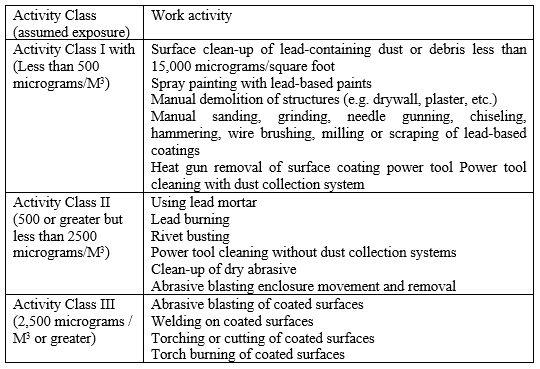
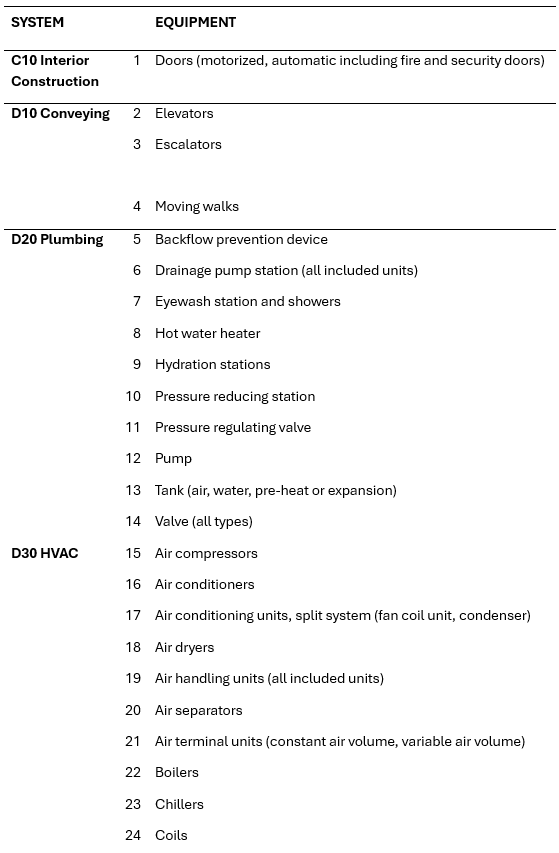
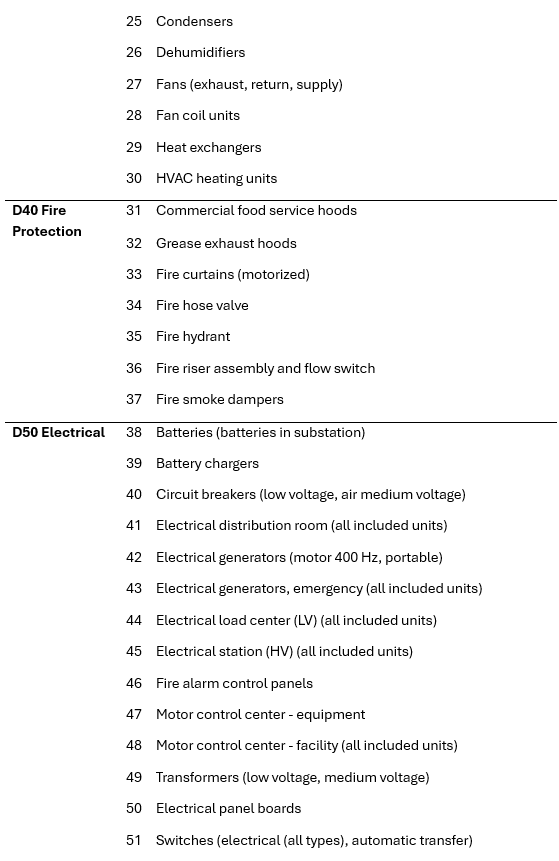
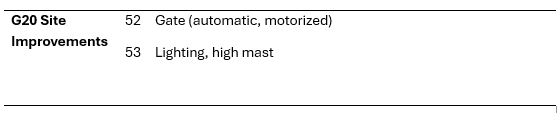
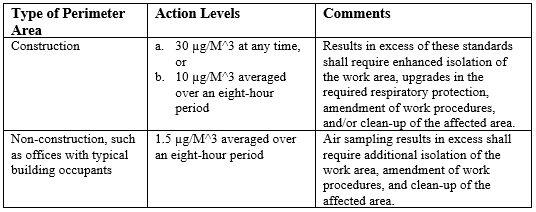
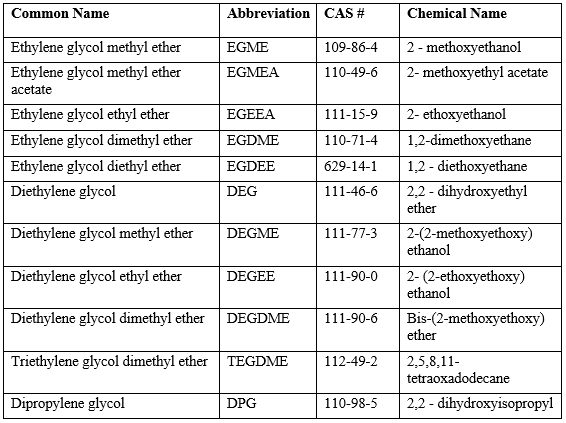
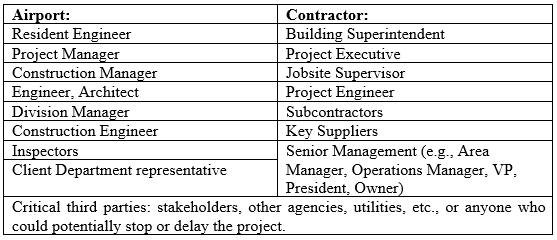

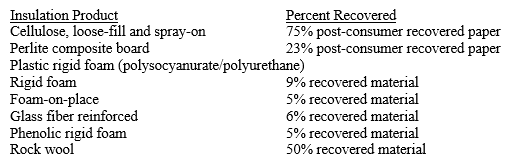
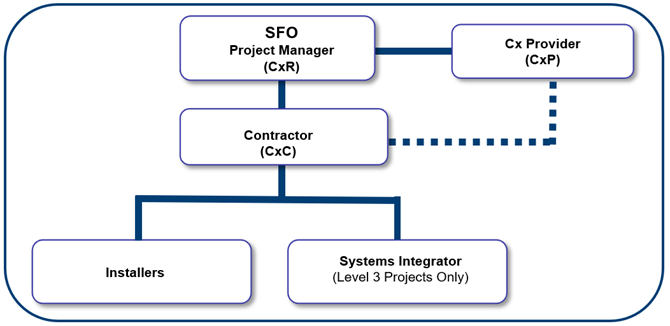

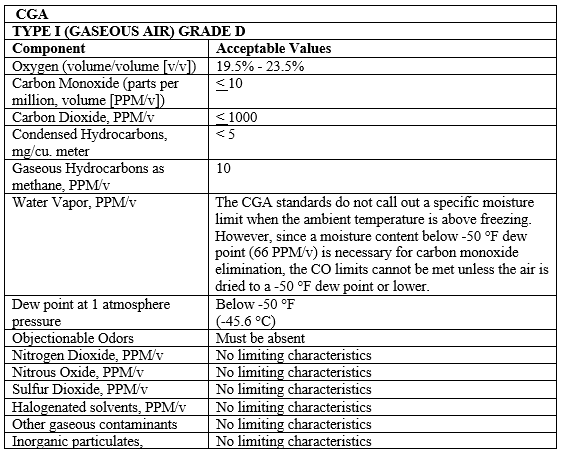
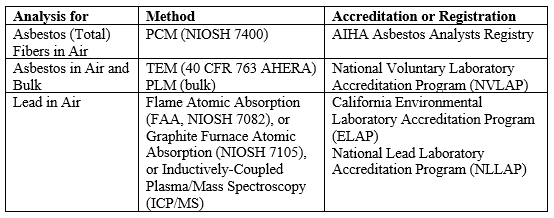
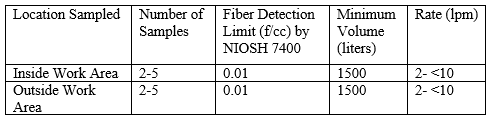
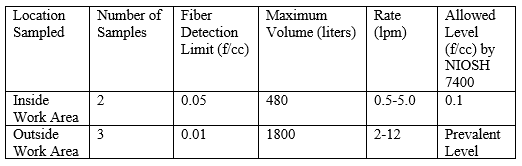
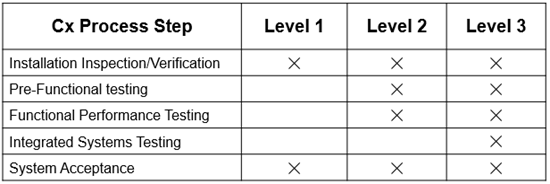

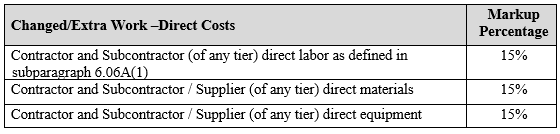
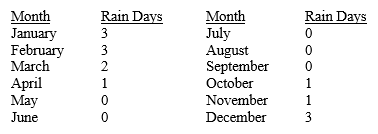

Submission Requirements
- Bid Requirements (required) —
Did you read through and confirm that you met all of the proposal requirements including the sections:- General Conditions (00 72 00)
- Supplementary Conditions (00 73 00)
- Envelope A. (required) —
Please Upload your COMPLETE Envelope A documents here, which includes the following:- Document 00 42 54 (Acknowledgment of Receipt of Addenda)
- Document 00 43 36 (Contractor/Subcontractor List)
- Document 00 43 43 (Highest Prevailing Wage Rate Certification)
- Document 00 43 44 (Certificate of Bidder Regarding Apprenticeship Training Program)
- Document 00 45 13 (Bidder's Qualifications Statement)
- Document 00 45 14 (Certificate of Bidder Regarding Debarment and Suspension)
- Document 00 45 19 (Non-Collusion Affidavit)
- Document 00 45 36 (Certificate of Bidder Regarding Non-Discrimination in Contracts and Benefits)
- Document 00 45 49 (CityBuild/First Source Referral Program Certification)
- Document 00 73 72 (Civil Rights - General and Title VI Assurance Provisions and Certification)
- CMD Form 2B: "Good Faith Efforts" Requirements Form
- A copy of Bidder's San Francisco Business Registration Certificate
- Proof of registration with the California Department of Industrial Relations for Prime Bidder and all listed subcontractors.
- Envelope B (required) —
Please Upload your COMPLETE Envelope A documents here, which includes the following:- Document 00 41 00 (Bid Form)
- Document 00 43 36.03 (Subcontractor List for Alternate Work), if applicable.
- Document 00 61 00 (Bid Bond) with Bid guaranty in an amount equal to 10% of amount bid OR Document 00 61 26 (Irrevocable Standby Letter of Credit) OR a certified check.
- Transmission of Original Documents (required) —
The Bidder acknowledges that it shall transmit their original Bid Forms (Document 00 41 00) and original Bid securities by U.S. Mail in a sealed envelope addressed to Tiffany Gonzalez-Ruiz, Contract Administrator, San Francisco International Airport, P.O. Box 8097, San Francisco, CA 94128, postmarked no later than the Bid opening date. - Acknowledgement (required) —
The bidder acknowledges that the Airport Commission reserves the right after opening Bids to reject any or all Bids, and to waive any minor irregularity in a Bid. - Bidder's Safety Record (required) —
Refer to Document 00 21 13 - Instructions to Bidders, Paragraph 1.11.A Bidder Qualifications.The Contractor's Responsibility includes its record of safe performance on construction projects, including, but not limited to, consideration of federal or state Occupational Safety and Health Administration ("OSHA") violations and work place fatalities, including OSHA citations under appeal in order for the City to find the entity to be Responsible and eligible for contract award.
The City and County of San Francisco (CCSF) Safety Prequalification Form can be found and completed online at https://sfpuc.org/construction-contracts/contract-opportunities-payments/prequalify-construction.
Follow the online instructions on how to complete the form and submit the required safety documents.
This Form must be completed specifically for each project bid. Previous completed Safety Prequalification Forms cannot be re-used for this bid.
Check the "Please confirm" box below to confirm that Safety Prequalification Form has been submitted online for this bid.
Note: The above Certification is part of the Bid. Signing the Bid Form shall also constitute signature of this Certification. Providing false information may result in criminal prosecution or administrative sanctions.
- Contract Execution, Payment Bond, Performance Bond, and Certificate(s) of Insurance (required) —
The contract shall be executed by the successful bidder and shall be returned, together with the Payment Bond, Performance Bond and Certificate(s) of Insurance to San Francisco Airport (Construction) so that it is received within 14 working days after the bidder has received the contract for execution. Failure to do so shall be just cause for forfeiture of the proposal guaranty. - Acknowledgement: Bid Opening —
Bids shall be submitted via the SFO's Design and Construction Procurement Portal. All bids must be submitted no later than Thursday, April 30, 2026at 2:00 pm.Bids received after the Bid opening time will not be considered. If a Bidder submits multiple submissions prior to the Bid opening date and time, the Airport may only consider the most recent timely submission and disregard the other submissions.
- Contract/Project Manager To Complete —
Contract/Project Manager, Please complete all Sections 1 - 19.
Contract Administrator (PCS Staff), will complete Section 20.
- Contract Description (required) —
Insert a brief description of the Project.
It is recommended to use the description was used for the Executive Summary of the Airport Commission - Authorization to Advertise for Bids.
If this Project has not yet received Airport Commission authorization to advertise, then leave this blank for now and insert the description once you have it.
- Total Contract Time / Final Completion (required) —
Enter the total Contract Time / Final Completion in consecutive calendars days.
Only enter a number value "300".
- Substantial Completion (required) —
Enter the Substantial Completion in consecutive calendars days.
Only enter a number value "270"
- Estimated Construction Range (required) —
Enter the estimated construction range, that includes the actual engineer's estimate somewhere in between the low and high values of the range.
Use this Format: $2,500,000 - $3,000,000
- Contractor License Requirements (required) —
Enter the Contractor Licensing Requirements of the Contract.
Example formats: "A", "B", or "A or B", "C-16".
- Site Visit (required) —
Do you plan on conducting a Site Visit after the Pre-Bid Meeting?
- CMD / LBE Related Set Up Questions —
Contract/Project Manager, using the CMD LBE Requirement Memo answer the following questions.
- LBE Sub Requirement % (required) —
Enter the Local Business Enterprise (LBE) subcontractor participation requirement percentage provided from the Contract Monitoring Division (CMD), this requirement can be found on the CMD memo.
Formatting Tip: Don't forget to enter the percentage "%" symbol. Example "20%", "15%".
- Good Faith Outreach Exemption Percentage (required) —
For a bidder to be exempt from meeting the Good Faith Outreach effort requirements the LBE participation must equal or exceed the LBE sub requirement plus the 35% good faith exemption percentage.
Use this formula to calculate this percentage: ([LBE Requirement] X [0.35]) + LBE Requirement = Exemption Percentage.
Example:
LBE Requirement = 20%
(20 X 0.35) + 20 = 27%
Enter the result in the field below, make sure the number includes the percentage symbol "%".
- Is the LBE subcontracting requirement less than 20%? (required) —
Refer to the CMD Memorandum issued when the CMD reviewed the engineer's estimate for subcontracting opportunities to see the requirement for your project.
- CMD LBE Language (required) —
Copy and Paste the CMD LBE language provided here.
See the red box from the sample below. Copy and Paste this portion.
- MBE% (required) —
Refer to the CMD Requirement Memo.
Be sure that a percentage symbol "%" is included when entering number.
- WBE% (required) —
Refer to the CMD Requirement Memo.
Be sure that a percentage symbol "%" is included when entering number.
- OBE% (required) —
Refer to the CMD Requirement Memo.
Be sure that a percentage symbol "%" is included when entering number.
- CMD Compliance Officer - Name (required) —
Enter the name of the assigned CMD Compliance Officer to this Contract.
- CMD Compliance Officer - Email (required) —
Enter the email of the CMD Compliance Officer assigned to this Contract
- CMD Compliance Officer - Phone No. (required) —
Enter the Phone Number of the assigned CMD Compliance Officer to this Contract
- Insurance Requirements —
This Section will go over the Insurance Requirements of your Project.
Refer to the Project Insurance Evaluation form you've received from the Risk Manager to answer this set of questions.
- Worker's Compensation Coverage (required) —
Enter the Worker's Compensation coverage amount from the Project Insurance Evaluation Form.
Worker’s Compensation in statutory amounts prescribed by the State of California and Employers’ Liability insurance with coverage of at least $Workers Compensation Amount for each accident, injury, or illness.
Formatting Tip: Enter a numerical value and make sure to include the dollar symbol "$" before the number.
Example: $2,000,000
- Commercial General Liability (Single Limit) (required) —
Enter the Commercial Automobile Liability - Single Limit requirement amount from the Project Insurance Evaluation Form.
Commercial General Liability insurance with limits not less than $Commercial General Liability (Single Limit) combined single limit per occurrence
Formatting Tip: Enter a numerical value and make sure to include the dollar symbol "$" before the number.
Example: $2,000,000
- Commercial General Liability (Annual Aggregate) (required) —
Enter the Commercial Automobile Liability - Annual Aggregate requirement amount form the Project Insurance Evaluation Form.
Commercial General Liability insurance with limits not less than $Single Limit Amount combined single limit per occurrence with an annual aggregate of not less than $Annual Aggregate Amount for bodily injury and property damage....
Formatting Tip: Enter a numerical value and make sure to include the dollar symbol "$" before the number.
Example: $4,000,000
- Commercial Automobile Liability (Single Limit) (required) —
Enter the Commercial Automobile Liability - Single Limit requirement amount from the Project Insurance Evaluation Form.
Commercial Automobile Liability insurance with limits not less than $Single Limit Amount combined single limit for bodily injury and property damage
Formatting Tip: Enter a numerical value and make sure to include the dollar symbol "$" before the number.
Example: $2,000,000
- Additional Insurance Coverage —
Select all of the additional insurance coverage requirements indicated from the Project Insurance Evaluation Form.
- Additional Insurance Requirement - Professional Liability (required) —
Enter the Professional Liability requirement amount from the Project Insurance Evaluation Form.
Formatting Tip: Enter a numerical value and make sure to include the dollar symbol "$" before the number.
Example: $5,000,000
- Additional Insurance Requirement - Environmental Pollution Liability (required) —
Enter the Environmental Pollution Liability requirement amount from the Project Insurance Evaluation Form.
Formatting Tip: Enter a numerical value and make sure to include the dollar symbol "$" before the number.
Example: $5,000,000
- Additional Insurance Requirement - Technology Errors and Omissions (each occurance) (required) —
Enter the each occurrence requirement amount for Technology Errors and Omissions Liability Coverage on the Project Insurance Evaluation Form.
Formatting Tip: Enter a numerical value and make sure to include the dollar symbol "$" before the number.
Example: $1,000,000
- Additional Insurance Requirement - Technology Errors and Omissions (general aggregate) (required) —
Enter the general aggregate requirement amount for Technology Errors and Omissions Liability Coverage on the Project Insurance Evaluation Form.
Formatting Tip: Enter a numerical value and make sure to include the dollar symbol "$" before the number.
Example: $1,000,000
- Liquidated Damages —
This set of questions are in regards to the Liquidated Damages of the Project
- Liquidated Damage Amount after Substantial Completion (required) —
Enter the daily liquidated damages amount for Work not completed after the time limit for achieving Substantial Completion.
Format: Words and (Number)
Example: Five Hundred Dollars ($500.00)
- Liquidated Damage Amount after Final Completion (required) —
Enter the daily liquidated damages amount for Work not completed after the time limit for achieving Final Completion.
Format: Words and (Number)
Example: Five Hundred Dollars ($500.00)
- Additional Liquidated Damages (required) —
Will this Project have any additional liquidated damages, that should be imposed on this Project on-top of the base liquidated damages that you've entered above?
- Reference Documents (Document 00 31 00) —
This set of questions revolves around your project's requirements regarding Reference Documents.
- Geotechnical Reports (required) —
Have geotechnical reports been prepared for this Project?
- Geotechnical Reports (required) —
You have indicated that geotechnical reports have been prepared for this Project.
Use the prompt box below to list the titles of the reports and drawings that can be made available for the bidders and contractors to inspect.
- List_of_report_A (required) —
If a Site specific geotechnical report was prepared for the Site, list them below.
- Existing Conditions Reports (required) —
Have existing conditions reports been prepared for this Project?
- DocExistCondi_List (required) —
You have indicated that documents regarding existing conditions have been prepared for this Project.
In the field below, list the name of the existing conditions documents that are available for inspection and copying for the bidders and contractors.
- Hazardous Materials Reports (required) —
Have hazardous materials reports been prepared for this Project?
- Hazardous_List_A (required) —
You have indicated that a hazardous materials report exists for this Project.
In the field below, provide a list of documents where the survey findings of hazardous materials may be found.
For context the section language will read as follows:
"The Airport’s environmental consultant has surveyed the facility for the presence of various hazardous materials. Materials investigated may include asbestos, lead, PCB ballasts, mercury containing lamps, contaminated soils, underground storage tanks, other hazardous materials. The survey findings are documented in the following: [Your description will appear here.]"
- Hazardous_List_B (required) —
In the field below, provide a list/name of documents where bidders and contractors may find abatement oversight information for the work.
For context the section language will appear as follows:
"The City has contracted for hazardous materials abatement at the Site. The abatement oversight information for this work is documented in the following: [Field description will appear here]"
- Utility Occupancy Plans (required) —
Were utility occupancy drawings utilized in the preparation of this Project?
- Utility_List (required) —
You have indicated that utility occupancy drawing were utilized in the preparation of the contract documents.
In the field below, provide the list of names, spec document numbers, or drawing numbers where a bidder and contractor may find information.
- Bid Form (00 41 00)
- Will your Project have Add Alternates that will be added to the Bid Form? (required) —
Add Alternates are additional items of work that may be awarded as part of the contract if the bids come within the budget specified in the contract. Add Alternates may include adding quantity to a project or similar type work or adding enhancements of different type work to a project.
- Bidder's Qualification Statement (00 45 13) —
These set of questions are in regards to the Bidder's Qualifications Statement document (00 45 13)
- Bidder's Required Qualification (required) —
Enter the Bidder's Required Qualifications.
The default language is as follows:
"LIST A MINIMUM OF THREE PROJECTS, WHICH BIDDER HAS COMPLETED IN THE PAST 10 YEARS THAT DEMONSTRATE BIDDER'S QUALIFICATIONS TO PERFORM THIS PROPOSED CONTRACT. INCLUDE PROJECTS THAT DEMONSTRATE BIDDER (OR SUBCONTRACTOR) MEETS THE REQUIRED QUALIFICATIONS LISTED IN THE TECHNICAL SPECIFICATIONS."
You may adjust the default language as you see appropriate for your Project.
- Bidder's Unsatisfactory Performance Rating. (required) —
Enter your requirements for Bidder's Unsatisfactory Performance Rating.
The default language is as follows:
"LIST ALL CONTRACTS DURING THE PAST 10 YEARS FOR WHICH THE BIDDER, OR A MEMBER OF THE BIDDER'S ORGANIZATION, RECEIVED AN UNSATISFACTORY PERFORMANCE RATING, WAS CITED FOR OSHA VIOLATIONS OR FAILED TO COMPLETE WORK."
You may adjust the default language as you see appropriate for your Project.
- Supplementary Conditions (00 73 00)
- Supplementary Conditions (required) —
Does this Project require updating or revising any requirements of the General Conditions?
- Permits and Agreements (Document 00 73 00.03)
- Permits and Agreements (required) —
Are there any permits and/or agreements which the City/Airport has obtained for Work on this Project?
- Permits and Agreements List (required) —
If your Project has permits and/or agreements that have been obtained by the City/Airport please list them or provide a description here.
- Customs Security Area Requirements (Document 00 73 63)
- Customs Security Area Work (required) —
Will there be Work performed in (or directly above or below) Customs Security Areas, Federal Inspection Services Areas, and/or Customs and Border Protection Areas?
- List of Customs Security Area Relevant Documents (required) —
List the Contract Documents / Specifications that depict Work relevant to the Customs Security Areas (Customs and Border Protection (CBP), Federal Inspection Services (FIS) Areas).
Use the following format: "Document/Specification No. - Document/Specification Title".
Example: Section 28 31 00 - Fire Detection and Alarm, or Drawing Sheet No. E3.02,
- Statutory Requirements (00 73 73)
- Quality Standards Program (QSP) (required) —
Will QSP apply for this Contract?
In general, it isn't common for QSP to apply to Design and Construction projects.
The Quality Standards Program applies to firms which will employ personnel involved in performing services which directly impact safety and/or security at the Airport. It specifically applies for personnel who perform duties involving security and/or baggage check-in handling services, custodial services; and AOA duties that involve ramp handling functions, aircraft cleaning, aircraft fueling, baggage/cargo handling, preparation and/or transportation of food and beverage products delivered directly onto aircraft, maintenance of aircraft, ground service equipment, baggage handling, passenger boarding bridges.
If you are unsure if QSP applies to your project email qsp@flysfo.com or call (650) 821-1103.
If none of the services described above apply to your project then select "No".
- Worker Retention Policy (required) —
Will the Worker Retention Policy apply for your project?
In general, it isn't common for this policy to apply on Design and Construction projects.
The policy applies to contractors and their subs that employ workers who will perform the following services: parking garage and curbside management operations, information booths, concessions (food & beverage, retail, and passenger services), the SFO Medical Clinic, intra-airport transportation services, on-airport rental car operations, and services by service providers covered under the Airport's Quality Standards Program.
If none of the services apply for this project then select "No".
- Scope of Work (Document 01 11 00)
- Work under other contracts. (required) —
Do you anticipate this project will have work under other contracts?
- Future Work (required) —
Do anticipate any future work that may be performed under this Contract?
- Products ordered in advance (required) —
Are there any products or items that will be required to be ordered in advance for this Project by the Contractor?
- Airport furnished Products (required) —
Will this Project provide any Airport furnished products to the Contractor?
- Allowances (Document 01 21 00)
- Will this Project have a construction allowance(s)? (required)
- Scope of Environmental Work - Hazardous Materials (Document 01 11 14)
- Scope of Environmental Work - Hazardous Materials (required) —
Do you anticipate having the following environmental scopes of work:
- The Contractor furnishing labor, materials, equipment, and perform all operations in connection with the excavation, removal, handling, storage, treatment, transport, and disposal of contaminated soil, sludge, and water?
- The Contractor furnishing labor, materials, equipment, and perform all operations in connection with the abatement of lead containing paint, PCB, asbestos containing materials?
- The Contractor retaining a hazardous material specialist to develop appropriate recommendations for further exploration and discovery to assess the type and extent of contamination within the Work Area, and prepare a mitigation plan, subject to approval by the Airport, that describes the mitigation activities?
- Partnering Requirements (Document 01 31 33)
- Partnering Level (required) —
Use the table below to select the appropriate Partnering Level for this Project.
Level
Estimated Construction Amount
Complexity
Political Significance
Relationships
5
$200 million +
Highly technical and complex design & construction
High visibility/ oversight; significant strategic project
New project relationships; high potential for conflict (strained relationship, previous litigation, or high probability of claims)
4
$50 million to $200 million
High complexity – schedule constraints, uncommon materials, etc.
Probable
New contractors or CM, new subs
3
$20 million to $50 million
Increased complexity
Likely, depending on the location and other project characteristics
Established relationships; new CM, subs, or other key stakeholders
2
$5 million to $20 million
Moderate complexity
Unlikely, unless in a place of importance
Established relationships; new subs, new stakeholders
1
$100,000 to
$5 million
Standard complexity
Unlikely, unless in a place of importance
Established relationships; new subs, new stakeholders
- Work Schedules and Reports (Document 01 32 00)
- Will the Project have a work period that is different from the standard work periods? (required) —
The default language that is placed in the Contract Documents is as follows,
"The standard workweek shall be Monday through Friday and the standard workday shall be from 7 am to 3:30 pm, except as may otherwise authorized by the Contract Manager. Unless otherwise noted "day" shall be defined as a calendar day of 24 hours beginning at midnight."
If you are ok with this standard language, then select "No" below.
- Sustainable Project Requirements (Document 01 35 12.2)
- Will this Project pursuit Envision Certification? (required)
- Energized Work (Document 01 86 26)
- Do you anticipate the contractor or subcontractor working on or around energized electrical systems? (required) —
Contact the Electrical Engineering section if you are un-sure about this option.
- Maintenance Specification (Document 01 93 00) —
This set of questions are specifically regarding systems and/or equipment of Maintenance After Final Acceptance.
- Number of Years (required) —
Enter the number of years you will require the Contractor to maintain systems and/or equipment, after the final acceptance, used on your Project.
Formatting Tip: Enter only a numerical value.
Example: 2
For context below is the language that will appear in the specification section.
1.03 MAINTENANCE AFTER FINAL ACCEPTANCE
- Contractor shall maintain the following listed systems and equipment for a period of Number_Of_Years years after Final Acceptance.
- Systems/Equipment Requiring Contractor Maintenance After Final Acceptance. —
Select the Systems and/or Equipment that the Contractor will be required the maintain after Final Acceptance.
- Systems to be included (required) —
List the name or description of the Systems that will be included for maintenance after final acceptance.
Formatting Tip: Enter the name or description. Use commas to separate multiple items..
Below is an example of the appearance of the section.
1. Systems to be included: [List of items will be listed here]
- Standby (required) —
List the name/description of the Standby Emergency Generators that will be included for maintenance after final acceptance.
Formatting Tip: Enter the name or description. Use commas to separate multiple items.
Below is an example of the appearance of the section
2. Standby emergency generator: [List of Items will be listed here.]
- Elevators (required) —
List the name or description of the Elevators that will be included for maintenance after final acceptance.
Formatting Tip: Enter the name or description. Use commas to separate multiple items.
Below is an example of the appearance of the section.
3. Elevators: [List of items will be listed here.]
- Escalators (required) —
List the name or description of the Escalators that will be included for maintenance after final acceptance.
Formatting Tip: Enter the name or description. Use commas to separate multiple items.
Below is an example of the appearance of the section.
4. Escalators: [List of items will be listed here.]
- Moving walks (required) —
List the name or description of the Moving Walks that will be included for maintenance after final acceptance.
Formatting Tip: Enter the name or description. Use commas to separate multiple items.
Below is an example of the appearance of the section.
5. Moving walks: [List of items will be listed here.]
- Conveyor (required) —
List the name or description of the Conveyor Systems that will be included for maintenance after final acceptance.
Formatting Tip: Enter the name or description. Use commas to separate multiple items.
Below is an example of the appearance of the section.
6. Conveyor Systems: [List of items will be listed here.]
- Others (required) —
List the name or description of the Other Systems or Equipment that will be included for maintenance after final acceptance.
Formatting Tip: Enter the name or description. Use commas to separate multiple items.
Below is an example of the appearance of the section.
7. Others: [List of items will be listed here.]
- Contract Administrator will answer these questions
- Virtual Pre-Bid / Pre-Conference Meeting Link (required) —
Enter the link for the Pre-Bid / Pre-Conference Meeting Link.
- Virtual Pre-Bid / Pre-Conference - Conference ID# (required) —
Enter the MS Teams Conference ID# for participants wanting to join the meeting by phone.
- Virtual Bid Opening Meeting Link (required) —
Enter the link to the virtual bid opening meeting.
- Virtual Bid Opening - Conference ID# (required) —
Enter the MS Teams Conference ID# for participants wanting to join the meeting by phone.
- Deputy City Attorney (required) —
Enter the City Attorney's Name.
The default City Attorney is "Daniel A. Edington".
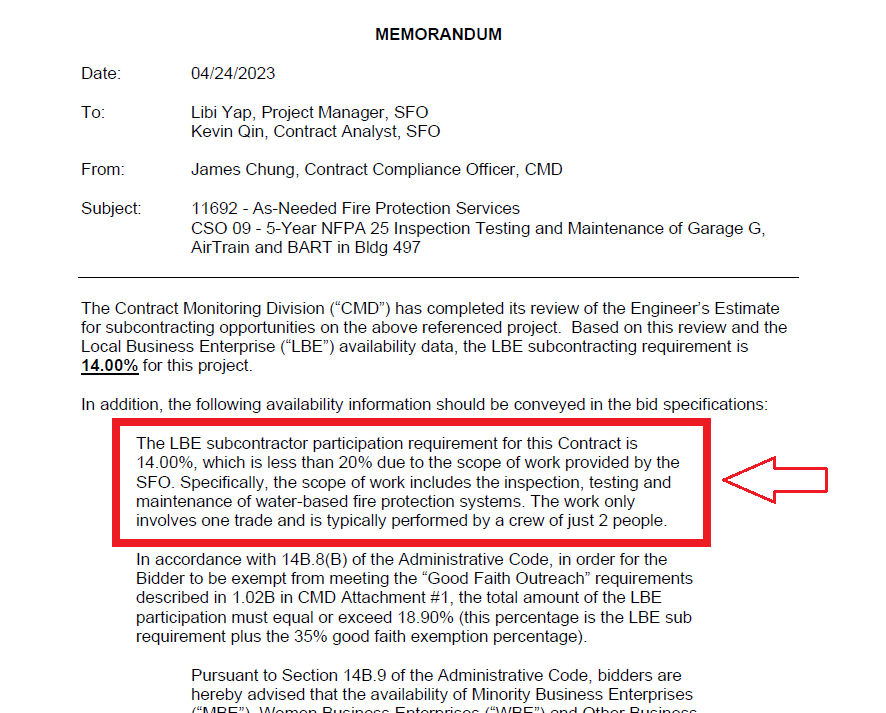
Questions & Answers
Q (Unsound Concrete payment?): Is the unsound bridge deck concrete (removal and repair) paid for under Bid Item AL1 "Allowance- Miscellaneous Concrete Repairs"?
A: Yes
Q (I-380 Ramp Shoulder Treatments?): The I-380 Northbound Viaduct On-Ramp has a heavy chip seal contrast treatment on both shoulders. Is this shoulder treatment intended to be removed prior to HMWM treatment operations? Or are contractors just treating the area between shoulder treatment (the lane) with HMWM? If intended to be removed, under which bid item would removal pay under?
A: Contractor shall strictly follow the methacrylate treatment manufacturer’s guidelines. The contract documents specify that the treatment area is between the inner edges of the existing roadway barrier. It is unlikely that the existing heavy chip seal will be removed.
Q (I-380 Ramp treatment limits?): Is the I-380 Ramp intended to be treated from barrier to barrier? Or just the lane width between the surface treatment on the shoulders?
A: The contract documents specify that the treatment area is between the inner edges of the existing roadway barrier
Key dates
- April 8, 2026Published
- April 30, 2026Responses Due
AI classification tags
Frequently asked questions
SLED stands for State, Local, and Education. These are solicitations issued by state governments, counties, cities, school districts, utilities, and higher education institutions — as opposed to federal agencies.
SamSearch Platform
Stop searching. Start winning.
AI-powered intelligence for the right opportunities, the right leads, and the right time.