SLED Opportunity · NEW MEXICO · CITY OF LAS CRUCES
Broadmoor, Galaxy, & Sirius PHMSA Grant Pipeline Rehab
AI Summary
City of Las Cruces seeks general construction services for gas pipeline replacement, micro surfacing, and restoration of sidewalks, driveways, and landscaping. Funded by PHMSA grant, the project requires compliance with federal procurement and Buy America standards. Key tasks include pipeline replacement, traffic control, materials testing, and customer outreach. Bid due May 5, 2026.
Opportunity details
- Solicitation No.
- 249955
- Type / RFx
- IFB
- Status
- open
- Level
- city
- Published Date
- March 27, 2026
- Due Date
- May 5, 2026
- Jurisdiction
- City of Las Cruces
- State
- New Mexico
- Agency
- City of Las Cruces
Description
The City of Las Cruces (City) is seeking general construction services for gas pipeline and service replacement, micro surfacing restoration, and restoration of sidewalks, drive pads, and landscaping as necessary.
Project Details
- Reference ID: 25-26-054
- Department: Utilities
- Department Head: Adrienne Widmer (Director of Utilities)
Important Dates
- Questions Due: 2026-04-21T22:00:00.000Z
- Pre-Proposal Meeting: 2026-04-14T16:00:00.000Z — via Zoom at https://us02web.zoom.us/j/9972568333 on Zoom Meeting ID # 997 256 8333
Evaluation Criteria
- Bid Item Descriptions and Detailed Scope of Work —
Bid item descriptions and detailed scope of work can be found in the attached contract and bid document listed as Exhibits "A" and "B."
- SC-1 PLANS —
The plans which are made a part of the Contract Documents are described as follows:
Sheet G1 COVER SHEET
Sheet G2 GENERAL NOTES
Sheet C1 KAREN DRIVE ALIGNMENT SHEET 1
Sheet C2 KAREN DRIVE ALIGNMENT SHEET 2
Sheet C3 BROADMOOR DRIVE ALIGNMENT SHEET 1
Sheet C4 BROADMOOR DRIVE ALIGNMENT SHEET 2
Sheet C5 KAREN PLACE ALIGNMENT SHEET
Sheet C6 RONA DRIVE ALIGNMENT SHEET
Sheet C7 GALAXY DRIVE ALIGNMENT SHEET
Sheet C8 SIRIUS STREET ALIGNMENT SHEET
Sheet R1 KAREN DRIVE ROAD REPAIR SHEET 1
Sheet R2 KAREN DRIVE ROAD REPAIR SHEET 2
Sheet R3 BROADMOOR DRIVE ROAD REPAIR SHEET 1
Sheet R4 BROADMOOR DRIVE ROAD REPAIR SHEET 2
Sheet R5 RONA DRIVE ROAD REPAIR SHEET
Sheet R6 GALAXY DRIVE ROAD REPAIR SHEET
Sheet R7 SIRIUS STREET ROAD REPAIR SHEET
Sheet M1 2" PE X 2" PE HOT TAP DETAIL
Sheet M2 2" PE X 2" PE HOT TAP W/ TWO VALVES DETAIL
Sheet G3 STANDARD DETAILS
Sheet G4 STANDARD DETAILS
Sheet G5 STANDARD DETAILS
Sheet T1 TYPICAL TRAFFIC CONTROL DETAILS
Sheet T2 TYPICAL TRAFFIC CONTROL DETAILS
Sheet S1 SURVEY CONTROL MAP
Sheet S2 SURVEY CONTROL MAP
- SC-2 DESCRIPTION AND SCOPE OF WORK —
These Special Conditions, together with the accompanying documents and maps listed under SC-1 and the Referenced Specifications listed in these documents, cover the requirements for the work as listed in the bid, including incidental appurtenant work.
The City reserves the right to shorten, add to, or change the list of work given below. It is intended, at this time, that the following work will be accomplished under this contract:
Replacement of approximately 13,600 feet of Acrylonitrile Butadiene Styrene (ABS) gas distribution pipeline with new MDPE pipeline and services. This includes the replacement and potential relocation of meters to meet current safety standards. The project will also include the required traffic control, restoration and other incidental task to complete this replacement project.
This project is to be funded by a grant from the Pipeline and Hazardous Materials Safety Administration (PHMSA) and is subject to federal procurement requirements that includes but not limited to Build America, Buy America (BABA) requirements.
- SC-3 CONTRACT TIME —
The total contract shall be completed within 60 working days. All work specified in the contract documents and construction drawings shall be completed within the contract time.
A working day is defined as any day when, in the judgment of the project manager, soil and weather conditions are such as would permit work to be performed on the project for six (6) hours or over, unless other conditions beyond the Contractor's control prevent such operations. If conditions are such as to stop work in less than six (6) hours, the day will not be counted as a working day. Saturdays, Sundays, and official holidays as established by the City of Las Cruces will not be charged as working days.
The contract time shall begin on the date noted on the "Notice to Proceed". The project manager will be the judge of the number of working days to be charged under the contract. No allowance will be made for delay or suspension of work due to fault of the Contractor.
In case of dispute the Contractor shall, within 10 calendar days of the day(s) in question, request in writing a judgment of the current working day count and the day(s) in question. The project manager shall respond with a written notice within 10 calendar days as to whether or not the day(s) in question will be counted as working days. Any objection by the Contractor to the number of working days charged shall be made in writing and shall set forth his objections and reasons therefore.
- SC-4 LIQUIDATED DAMAGES —
The completion of the work covered by this contract within the time specified is essential to minimize the impact on the public. Therefore, liquidated damages in the amount of two thousand dollars ($2,000.00) per day will be withheld from payments due the Contractor for each working day necessary to complete the contract after the expiration of the specified contract time, plus any authorized time extensions. The liquidated damages are calculated using the New Mexico State Highway and Transportation Department Standard Specifications for Highway and Bridge Construction - Latest edition and supplemental specifications. If the project is unduly delayed due to lack of vigorous prosecution of the part of the Contractor, such lack shall be considered grounds for termination of the contract with the City completing the work, under the provisions of the General Conditions.
- SC-5 CONTRACT PRECEDENCE —
The following order of precedence (highest to lowest) shall be followed for this project in case of conflict between the plans and specifications:
- Contract and Bidding Documents
- Bid Item Descriptions
- Bid Lot
- Special Conditions
- Supplemental Specifications (as listed in this document)
- Project Plans
- Referenced Specifications
- General Conditions for Construction Contracts
- Contract and Bidding Documents
- SC-6 WAGE RATES —
State of New Mexico Wage rates are hereby attached as part of this document the decision from the New Mexico Department of Labor and any modifications thereto noted in the contract shall apply. Whenever a difference exists between the minimum wage rates shown under Wage Rate Decision No. DA-26-11145-A from the New Mexico Department of Labor and any modification thereto noted in the contract, the higher wage rate shall govern.
- SC-7 RETAINAGE AND PROMPT PAYMENT —
“Due to changes in New Mexico State Law, Specifically Laws 2001, Chapter 68, House Bill 320, as amended, otherwise formally known as the Retainage Act and now known as the Prompt Payment Act, the City will not retain any portion of pay estimates for this project. The City will pay for completed work only as determined by the Project Manager, and the following provisions are included in this contract:
- If the Owner receives an improperly completed invoice, the Owner shall notify the contractor within seven days of receipt in what way the invoice is improperly completed and has no further duty to pay on the improperly completed invoice until it is resubmitted as complete.
- Each phase or portion of work which is defined by a performance specification or requirement must be completed to those specifications or requirements, in accordance with the Engineer’s Quality Assurance Plan before a partial payment request can be submitted. Partial Payment for work performed and materials in place shall only be made for portions of the project completed in accordance with this contract, the plans, and specifications, tested and judged completed to specifications by the Project Manager, and accepted by the Owner.
- All material and work covered by partial payments become the property of the Owner, but the contractor and subcontractors are not relieved from the sole responsibility for the care and protection of materials and work for which payments have been made; provided, however, the contractor and subcontractor have no duty for the care and protection of materials and work after the Owner has assumed occupancy or use of the work.
- Upon receipt of payment from the Owner, contractor, or subcontractor as appropriate, all contractors and subcontractors shall make prompt payment (within seven days) to their subcontractors and suppliers for amounts owed for work performed on the project.
- All payers shall abide by the penalty clauses found in Chapter 68, House Bill 320, as adopted, for late payments.
Ten days after certification of completion, any amount remaining due the contractor or subcontractor under the terms of the contract shall be paid upon the presentation of the following:
- A properly executed release and duly certified voucher for payment.
- A release, if required, of all claims and claims of lien against the Owner arising under and by virtue of the contract other than such claims of the contractor, if any, as may be specifically excepted by the contractor or subcontractor from the operation of the release in stated amount to be set forth in the release; and Proof of completion.
- SC-8 INSURANCE REQUIREMENTS —
- The successful contractor is required to provide within its bid submittal a copy of bidder’s current proof of insurance certificate for the project with all supporting endorsements or a letter from an authorized carrier certifying that the coverage herein below, with supporting endorsements, will be timely provided prior to contract execution.:
- Commercial General Liability: $1,000,000.00 per occurrence / $2,000,000.00 Aggregate
- Coverage must include premises and operations, products and completed operations, and personal and advertising injury.
- The City of Las Cruces must be named as an Additional Insured for all coverages listed above on endorsements acceptable to the City.
- Coverage must be primary and non-contributory.
- Coverage must be per project or per location.
- Coverage must be on an occurrence form.
- Subrogation must be waived.
- Commercial Auto Liability:
- $1,000,000.00 per occurrence
- Coverage must be for "owned, leased, hired, and non-owned autos" or "any autos."
- Workers Compensation and Employers Liability:
- Statutory limits
- Employers liability - $1,000,000.00 each accident, $1,000,000.00 each employee by disease, $1,000,000.00 policy limit
- Subrogation must be waived.
- Builders Risk: The coverage limit must accurately reflect the total completed value of the structure excluding land costs.
- Notification: The certificate must state that coverage afforded under the policies will not be canceled or allowed to expire until at least 30 days prior written notice has been given to the City.
- Coverage must remain in force for the duration of the project.
- Commercial General Liability: $1,000,000.00 per occurrence / $2,000,000.00 Aggregate
Endorsements for additional insured coverage and waivers of subrogation must be provided as a condition of this Agreement and shall be noted on the certificate.
- The successful contractor is required to provide within its bid submittal a copy of bidder’s current proof of insurance certificate for the project with all supporting endorsements or a letter from an authorized carrier certifying that the coverage herein below, with supporting endorsements, will be timely provided prior to contract execution.:
- SC-9 UNFORESEEN OR ANTICIPATED ADDITIONAL WORK —
As per the provisions incorporated within Section BID-11 of the City’s General Conditions for Construction Contracts 2004 Edition, the scope of work for this project shall be as provided within the contract documents and plans, plus, unforeseen or anticipated additional work incorporating the same specifications that may be identified by the City during the contract period. The successful contractor may extend the awarded unit prices to other such additional work which may be incorporated into and considered within the project scope as change order. The total amount of all change orders issued under the terms of the contract shall not exceed 50% of the initial contract amount.
- SC-10 MATERIALS TESTING —
The City of Las Cruces shall pay for all testing of materials for acceptance. The Contractor will be responsible for the payment for all quality assurance and quality control testing as indicated in the contract. The number, type, and location of tests shall be determined by the Engineer. The Engineer may supplement tests by the approved testing laboratory with his own test for checking of compliance, in which case the Contractor shall furnish a laborer, if required, for assistance.
Welds: The Contractor will provide and pay for the cost of an x-ray testing lab for inspection of the welding on the steel gas line. One hundred percent (100%) of the welds will be x-rayed on high pressure steel gas lines.
Retests: Any required retesting due to failed tests shall be at the expense of the Contractor. These costs will be deducted by the City of Las Cruces, from invoices submitted by the contractor for work completed under this contract.
- SC-11 GPS LOCATE OF NEW GASLINE —
All new gas lines shall be surveyed as built (GPS’s in the trench) by the City of Las Cruces, Gas Locating & Mapping Section prior to any backfilling. The coordination of this survey will be through the Public Works Department Gas Inspector assigned to the project. A 30 minute minimum notice will be given to Gas Locating and Mapping Section prior to the contractor having the pipe in place and ready to be GPS. This minimum notice will expedite GPS task. The Gas Inspector will contact the Damage Prevention Dispatcher @ (575) 528-3573. Any work performed in coordinating this effort shall be incidental to the pipeline & appurtenance installation activity.
- SC-12 NEW MEXICO EXCAVATION LAW —
The contractor and sub-contractors will need to follow the New Mexico Excavation Law. The contractor and sub-contractor should be aware of all recent changes to the law regarding the wide area locates.
- SC-13 VIDEO PROJECT SITE —
The contractor shall video the entire project site prior to start of construction. The contractor will provide a Compact Disk (CD) copy of the video to the City of Las Cruces for approval prior to construction. Cost shall be considered incidental to the contract.
- SC-14 GAS WELDING CERTIFICATIONS —
Contractor shall be responsible for providing all equipment, materials, and certified gas welders to complete all steel welds, poly welds, and welds for dissimilar materials. All gas welders shall be certified per the City of Las Cruces Utility Standards, Latest Edition, Section 400-423, Qualification of and Procedures for Polyethylene Welders, and Section 400-424, Contractor Requirements for Steel Welding and Steel Welding Certification.
- SC-15 GAS STANDARD OPERATION PROCEDURES (SOPS) —
The contractor will need to adhere to all gas SOPs when working on high pressure, transmission, or low-pressure gas lines. The SOPs can be found at the following link: http://www.las-cruces.org/departments/utilities/natural-gas/resources
- SC-16 CUSTOMER SERVICE OUTREACH & NOTIFICATION —
Customer Service is an essential component of City of Las Cruces and its representatives. Therefore, the following conditions will be required by the contractor. Any associated cost shall be considered incidental to construction.
EMERGENCY CONTACT
The Contractor shall provide a 24-hour, 7 day a week contact to the City’s Project Manager for residents, businesses, or the City in an event of an emergency. This information shall be placed on all door hanger notices provided to the public along with the City Project Manager’s contact information. All door hanger notices shall be reviewed and approved by the City’s Project Manager prior to distribution.
PUBLIC NOTIFICATION
The Contractor must coordinate/schedule with residents, businesses, and the City where applicable. The Contractor shall distribute flyers/door hangers to all potentially affected residents and/or businesses for each applicable bullet below. At minimum, the flyers/door hangers must include the scope of work, duration of construction activities, and emergency contact as noted above.
- General notification for entire project. Two weeks prior to construction. Notification must be updated if construction schedule or phasing changes.
- Utility outages. 48-hour minimum notification after City approval. Cancelation notices must be provided if outage is canceled.
- Utility transfers. 48- hour minimum notification after City approval. Specific notification for each resident and/or business including scope of work and duration of construction activities. Notification must be updated if transfer schedule changes.
- Driveway installation or construction that blocks pedestrian or vehicular access. 48-hour minimum notification after City approval. Notification must be updated if construction schedule changes.
- Private property construction. Any construction on private property, including but not limited to sidewalks, fences and gates, driveway transitions, etc. shall be coordinated with the resident and/or business and City 48 hours prior to construction.
RESIDENT/BUSINESS ACCESS
Any access restrictions that affect residents and/or businesses shall be coordinated and approved by the City’s Project Manager at least 48 hours in advance. The access must also be safe for pedestrians (i.e. a safe route must be maintained for residents to access their mailboxes). This shall also include maintaining resident and/or business access and coordinating driveway reconstruction to off-business hours or during resident preference. Additional specific signage for business access shall also be considered incidental to this special condition.
ROAD CLOSURE NOTICE
The Contractor shall inform the City Project Manager a minimum of 72 hours prior to closing or diverting traffic on each roadway. All road closures and traffic control plans must be approved by the City’s Project Manager.
TRASH/RECYCLE PICKUP
Access must be maintained for the solid waste trucks to meet their weekly scheduled route. If the nature of the work is such that it restricts solid waste’s schedule, the Contractor must make arrangements to move the containers to an accessible location. The empty containers are then to be relocated back to the correct property. This must be coordinated 48 hours in advance with solid waste customers.
LANDSCAPE CORRECTION AND SITE CLEANUP
The Contractor shall maintain a clean worksite including work on private property. In addition, the Contractor shall make all corrections to landscape and site damage withing 48 hours of conducting the work. If correction cannot take place within 48 hours, the contractor shall notify the resident and/or business and the City with a schedule of when the correction will take place.
VARIOUS COORDINATION
The Contractor will be responsible for coordinating access with any other relevant entities such as the LCPS busses, Roadrunner Transit, scheduled deliveries, scheduled resident and/or business services, Emergency Services, etc.
- SC-17 BUY AMERICA BUILD AMERICA MATERIALS —
The contractor shall ensure all materials installed have been certified for the Buy America or have prior written permission from the City prior to purchase. Contractor shall provide an inventory of all products to be installed and a BABA certification from the manufactured for each product as outlined in 49 U.S.C. 5323(j)(1), and the applicable regulations in 49 CFR part 661 at least 2 weeks prior to installation. A copy of a certification letter is included below for reference.
The descriptions above have specified BABA complaint materials from the standard materials. Additionally, the following materials have been specified as BABA Complaint for each of the 2023 CITY OF LAS CRUCES UTILITY STANDARDS Materials in Section 300. Contractor shall verify all finding below prior to acquisition.
- Steel Pipe:
- All material listed are BABA complaint
- Steel Pipe Coating
- Liberty Coating Co.
- 3M Scotchkote 6233
- 3M Scotchkote 6352
- Steel Pipe Fittings
- All material listed are BABA complaint
- Steel Pipe Stopples, and related fittings
- T.D. Williamson, Inc. have custom BABA Compliance Options upon request, but should be considered long lead items
- Steel Valves
- No steel BABA compliant valves confirmed
- Excess Flow Valves
- All material listed are BABA complaint
- Warning Tape
- All material listed are BABA complaint
- Valve Boxes
- All material listed are BABA complaint
- Galvanic Anodes
- BABA Variance letter pending
- Anode Test Station
- All material listed are BABA complaint
- Isolation Test Station
- All material listed are BABA complaint
- Isolation (Insulator) Fittings
- Staton
- Tube Turns
- Tape & Primer
- All material listed are BABA complaint
- General Purpose Coating
- All material listed are BABA complaint
- Casing
- Use Item 1 Steel Pipe for BABA Compliance
- Casing Spacer (insulators)
- All material listed are BABA complaint
- Casing End Seals
- All material listed are BABA complaint
- Service Valve Tees
- T.D. Williamson, Inc. have custom BABA Compliance Options upon request, but should be considered long lead items
- Lockwing (Meter) Valves
- National BABA Variance Approved
- Utility Markers
- All material listed are BABA complaint
- Transition Fittings
- Central Plastics
- High Density Polyethylene Pipe
- All material listed are BABA complaint
- Medium Density Polyethylene Pipe
- All material listed are BABA complaint
- Medium Density Polyethylene Pipe Fittings
- All material listed are BABA complaint
- High Density Polyethylene Pipe Fittings
- Central Plastics
- Tracing Wire
- Paigespec
- Direct Bury Splice Kits
- DBR kits
- Anodeless Meter Risers
- National BABA Variance Approved
- Polyethylene Valves
- Andronacos poly valve (not listed in 2023 specs)
- Steel Pipe:
- SC-18 CONCRETE MIX DESIGN —
The contractor shall submit a copy of an approved concrete mix design to be used on City projects. The approved copy of the mix design can be obtained from a concrete supplier. The concrete supplier should have in his file a copy of a City approved mix design to be used on City projects.
The submitted mix design must be an original (no photocopies) and embossed with the seal of and signed by, the New Mexico Professional Engineer certifying the mix design.
The pre-approved copy of the mix design will be cross checked against the copy that the supplier previously submitted, to ensure that they match and it is the current approved mix design.
No concrete shall be placed on this project until the Project Manager has approved the concrete mix design.
- SC-19 PATCHING ASPHALT PAVEMENTS —
355.00 GENERAL
This section covers the patching of asphalt pavements and shall consist of preparation of the patch area, placing and finishing and compacting with approved construction materials in compliance with this specification. This specification is intended as a minimum guideline for construction of patches to City Streets and shall be followed unless otherwise specified by the Engineer or Project Manager.
355.10 MATERIALS
- Base Course material shall conform to Section 210, GRADED GRAVEL BASE COURSE of Standard Specification for Road Construction.
- Flowable fill material shall conform to Section 515, FLOWABLE FILL of Standard Specification for Road Construction. This material may be used in narrow trenches for ease in back filling to appoint no closer than the existing pavement depth.
- Temporary Asphalt Patch material shall conform to Section 320, COLD MIX ASPHALT of Standard Specification for Road Construction unless it meets the criterion described in Section 355.20 below.
- Prime Coat material shall conform to Section 300, PRIME COAT of Standard Specification for Road Construction.
- Permanent Asphalt Patch material shall conform to Section 326.00 thru 326.45, HOT MIX ASPHALTIC CONCRETE of the Special Conditions. The Asphalt cement for all permanent patch material shall be PG 64-22 unless specified otherwise on the plan. The grading of the material shall be type C if the patch is less than 1 inch in depth or on a residential street. The grading of the material for all other applications shall be Type A or B and/or equivalent to that of the surface being patch or as determined by the Engineer.
- Tack Coat material shall conform to Section 305, Tack Coat of Standard Specification for Road Construction.
355.20 TIMELINESS OF PATCHING
If a patch is on any street other than a low volume residential street OR if a temporary patch is expected to be left for a period of time exceeding three days OR if a cut pavement is not safe for pedestrians and traffic to be left as a base or soil patch, the temporary patch material shall conform to Section 320, COLD MIXED ASPHALT of Standard Specification for Road Construction.
If the patch is on a residential low volume street and will be permanently patched within a reasonable period of time as determined by the Engineer, then the patch material shall be an approved backfill material as directed by the Engineer.
355.30 EQUIPMENT
Equipment, tools, and machines used in the performance of the work covered by this section of the specifications shall be subject to the approval of the Engineer and shall be maintained in a satisfactory working condition at all times. All equipment proposed to be used for work under this section shall be of sufficient size and in such mechanical condition to be capable of completing the work and producing a good quality patch.
355.40 WEATHER LIMITATIONS
- Permanent Asphalt Patches shall be placed only when weather permits as described by Section 326.51 HOT MIX ASPHALTIC CONCRETE of the Special Conditions.
- If weather does not meet the requirement above, then a temporary Patch shall be constructed until such time the weather permits the construction of a permanent patch.
355.50 PATCH PREPARATION
- Cuts - All patched areas shall be cut square or rectangular with straight edges in the horizontal and vertical directions. One pair of cut faces shall be at right angles to the direction of traffic. Tack coat material shall be place on all sides.
- Base Preparation - Prior to placing the Permanent Patch, the underlying base course shall be cleaned of all foreign or objectionable matter. The base course shall be compacted to a minimum of 95% of the modified proctor as indicated on the plans or as directed by the Engineer. The depth of the compacted base course shall be a minimum of 6 inches or as directed by the Engineer.
- If the patch is being placed to correct a pot hole and the depth of the hole has not extended into the base, the hole may be cut as described under paragraph A above, cleaned, dried, primed, and patched as indicated below. The Engineer may require the patch to be sealed with an approved emulsion if deemed necessary.
- Prime Coat - The Prime coat shall be applied at a rate to provide total coverage of all adjoining surfaces including the sides of the patch. If an emulsion is used for the prime material, ample time must be given to allow the prime to "break" before the patching material is placed.
- Tack Coat – The tack coat will be placed on the edges of the patch and between lifts of asphalt. Contractor may place asphalt lifts without the tack coat when in compliance with ALL of the following:
- Pre-approval is received from the Project Manager.
- Proper compaction and density has been achieved for each lift.
- The lift is placed the same day as the preceding lift.
- The asphalt surface has been inspected by the Project Manager and has been deemed to be clean and free of debris and dust prior to placement of the next lift, and the surface is still tacky.
355.60 PLACEMENT OF PERMANENT PATCHING MATERIALS
- The materials shall be placed around the perimeter of the patch area and raked toward the center of the patch to reduce segregation and concentration of aggregates at the joints. The materials shall also be dumped or placed and not thrown or broadcast to reduce segregation.
- The thickness of the compacted patch shall match the depth of the adjacent pavement surfaces and shall be a minimum of two inches (2") deep OR, as specified on approved plans and/or specifications OR, as directed by the Engineer or Project Manager.
355.70 COMPACTION
- Compaction shall begin by rolling a six inch wide section around the perimeter of the patch. After the perimeter rolling is complete, the entire patch area shall be rolled and densities shall determine payment as outlined in section 355.86 Price Adjustment for Density.
- In areas not accessible to the roller, the mixture shall be thoroughly compacted with hand operated mechanical tampers. Any mixture that becomes mixed with foreign material or in any way is defective shall be removed, replaced with fresh mixture, and compacted to the density of the surrounding pavement.
355.72 CONTRACTOR QUALITY CONTROL FOR COMPACTION
The Contractor, at their own expense, shall monitor the compaction process by determining the density of the HMAC with a portable nuclear density device in conformity with ASTM D 2950. The contractor may opt out of doing their own independent testing with the understanding that they will accept the density results obtained by the City’s lab for all payment and acceptance purposes. Should the Contractor feel that the test results are erroneous in any way, they may at their time and expense coordinate directly with the testing lab to verify the labs results.
Calibration of the portable nuclear device used by the Contractor shall be established from cut pavement samples (6” cores). The density readings of the cut pavement samples shall be determined by the Contractor in accordance with AASHTO T 166 (weight, volume method) and the density readings of the pavement shall be determined by the portable nuclear density test device in conformity with ASTM D 2950 and shall be correlated by the Contractor. A minimum of three cut pavement samples shall be used to determine the correction factor to be applied to the nuclear density readings to match the unit weight of the cut pavement samples. The Contractor shall conduct density testing at the minimum rate of one per 100 Sq. Yds. and shall furnish results to the project manager within one business day.
It is intended that quality control density testing be done while the bituminous mixture is hot enough to permit further compaction if necessary. Rolling for any compactive effort will not be allowed beyond the point at which it becomes ineffective or damage begins to occur. Additionally, use of vibratory mode will not be permitted when the temperature of the mix is below 200ºF.
355.75 CITY QUALITY ASSURANCE TESTING FOR COMPACTION
The bituminous pavement structure course shall be divided into acceptance sections or lot of 250 Sq. Yds. or one day’s production, whichever is less, for the purpose of defining areas represented by each series of tests. The City shall use a stratified random sampling plan to enhance the quality of acceptance sampling and testing.
The density of each acceptance section or lot will be evaluated by a minimum of three density tests with a portable nuclear density device in conformity with ASTM D 2950. The density readings shall be adjusted using the following calibration process.
Calibration of the portable nuclear device used by the City shall be established from cut pavement samples (6” cores). The density readings of the cut pavement samples shall be determined by the City in accordance with AASHTO T 166 (weight, volume method) and the density readings of the pavement shall be determined by the portable nuclear density test device in conformity with ASTM D 2950. A minimum of three cut pavement samples shall be used to determine the correction factor to be applied to the nuclear density readings to match the unit weight of the cut pavement samples. Once a nuclear device has been calibrated by a minimum of three cut pavement samples (6” cores) the device will be approved for use on the project and no further calibration will be require unless HMAC from a different source or a new mix design from the same source is used. If material from a different source is used any nuclear device used on the project will need to be re-calibrated.
All portable nuclear devices shall be calibrated or they will not be allowed for use on the project.
355.86 PRICE ADJUSTMENT FOR DENSITY (CONTRACTED PROJECTS)
The payment of the unit price will be adjusted for density as outlined in Table 355.86. The adjustment will be applied to a lot or by lot bases for each lift. The adjustment will be based on the average of all density tests for the lot the price adjustment will be applied only to the pay item for HMAC.
TABLE 355.86
PERCENT OF MAXIMUM THEORETICAL DENSITY
PERCENT OF CONTRACT PRICE TO BE PAID
Above 98
*
97-98.00
90%
96.01-96.99
95%
93.00-96.00
100%
92-92.99
95%
91-91.99
90%
90-90.99
80%
Less than 90.00
*
*This lot shall be removed and replaced. In lieu thereof, the contractor and the Public Works Director may agree in writing that it is in the best interest of the City that the lot not be removed but instead be paid for at 50% of the contract price.
If the pavement is constructed in conjunction with any other development such as part of a private development (Subdivision), failing densities shall be remedied as directed by the Director of Public Works.
355.90 JOINTS
All joints shall conform to Section 326.87, HOT MIX ASPHALTIC CONCRETE of the Special Conditions.
355.95 SMOOTHNESS
The surface of the pavement after compaction shall match the adjoining pavement in a transverse direction. When tested with a 10' straight edge placed in any direction, the surface shall not vary more than 3/16 of an inch between any two contacts with the surface. When the width of the patch is less than 10’ the surface shall not vary more than 3/16 of an inch between any two contacts with the surface between the joints. Transverse and longitudinal joints shall also be checked for smoothness. Joints shall not vary from the edge of a straight edge placed perpendicular to the joint by more than 3/16 of an inch.
Isolated Patches: Isolated patches are defined as those having less than 15 sq. yds. Isolated patches shall be measured for smoothness at a minimum of 3 locations to be determined by the project manager. Larger isolated patches may be measured every 10 feet at a minimum, and measurements may be taken more frequently at the Project Managers discretion.
Isolated patches that have more than 15% of the measurements not in compliance shall be replaced in full unless otherwise approved by the Project Manager.
Continuous Patches: Continuous patches are those patches greater than 15 sq. yds. and are typically associated with utility trenching. Paved areas with widths of 8 feet or greater and larger than 400 sq. yds. shall not be considered patches and shall be required to comply with Section 326. HOT MIX ASPHALTIC CONCRETE of the special conditions.
Continuous Patches shall be measured at a minimum of every 20 feet. Smaller increments or additional measurements may be taken at the Project Managers discretion. Patches or patch sections that have more than 15% of the measurements not in compliance may be corrected using diamond grinding or mill and overlay. If these methods cannot bring the patch into compliance, it shall be removed and replaced.
- Diamond Grinding. Diamond grinding shall be performed in areas that exceed 3/16 inch to the extent necessary to bring the lot to acceptable levels. Any areas that require diamond grinding shall receive a fog seal application at the Contractor’s expense. Diamond grinding will not be allowed on the existing surface to bring the patch into compliance.
- Mill and Overlay. The contractor shall remove, dispose, and replace the lot by cold milling the existing surface to a depth equal to the final surface course depth. The pavement shall be removed a full lane width and replaced with a paving machine. The area shall be re-evaluated for smoothness.
In the case that a lot contains less than 15 percent (15%) exceeding 3/16 inch when evaluated with a 10 straight edge but contains any area that exceeds 5/16 inch, the area that exceeds 5/16 inch shall receive diamond grinding at the Contractor’s expense. Any areas that require diamond grinding shall receive a fog seal application also at the Contractor’s expense. Diamond grinding will not be permitted on existing surfaces to bring the new patch into compliance. In these areas the patch shall be replaced.
The Contractor shall have a 10 foot straight edge available at all times during paving operations and when requested by the City for evaluation of completed work. Providing the straight edge shall be considered incidental to construction.
355.96 PROTECTION OF PAVEMENT
After final rolling, no vehicular traffic shall be permitted on the pavement until it has sufficiently cooled and hardened as determined by the Project Manager.
355.97 CLEANING
The Contractor shall, as directed by the Project Manager, remove at his/her own expense from the Owner's property and from all public and private property, all temporary structures, rubbish, debris, or any waste materials resulting from his/her operations. He/she shall leave the entire site in a neat condition as required by the Engineer or Project Manager.
END OF SPECIAL CONDITION 19
- SC-20 HMAC SPECIFICATION —
The following Section 326 Hot Mix Asphaltic Concrete specification shall replace sections 120.20 through 120.22, section 325 and section 340 of the City of Las Cruces Standard Specifications for Road Construction, 2000 Edition.
SECTION 326 Revised 7-27-12
HOT MIX ASPHALTIC CONCRETE326.00 GENERAL
This section outlines the requirements for the production of plant mixed hot mix asphalt concrete (HMAC) and placement of one (1) or more layers of hot mix asphalt concrete surface course materials on a prepared base or bituminous surface. Work will consist of the production and placement of HMAC and includes Contractor Quality Control Testing.
HMAC shall be composed of a mixture of bituminous material, aggregate, blending sand, mineral filler, hydrated lime, or liquid anti-strip if required. The aggregate fractions shall be sized and uniformly graded and combined in such proportions as directed by the City.
The type of HMAC and grade of asphalt shall be specified in the contract.
326.05 MATERIALS
All materials shall be tested in accordance with the applicable AASHTO methods or other test procedures designated in the contract. Material that is improperly graded or segregated, or fails to meet the requirements herein, shall be corrected or removed and disposed of immediately as directed by the City Project Manager, at the Contractor’s expense.
326.10 AGGREGATES
- COMPOSITION - Aggregate shall consist of quarried stone, crushed gravel, and filler conforming to the requirements specified herein.
- CLASSIFICATION - The portion of these materials retained on the No. 4 screen (separating screen) shall be known as coarse aggregates; the portion passing the No. 4 screen shall be known as fine aggregates.
- TESTING - Asphalt concrete aggregate surface course materials will be tested with AASHTO or ASTM methods herein provided (Table 326.10) and such other test methods as may be required by the City of Las Cruces.
TABLE 326.10
ASPHALT CONCRETE AGGREGATE
Sieve Analysis of Fine and Coarse Aggregate
AASHTO T-27 (ASTM C-136)
Mechanical Analysis of Extracted Aggregate
AASHTO T-30
Amount of Material Finer than No. 200 Sieve
AASHTO T-11 (ASTM C-117)
Liquid Limit
AASHTO T-89 (ASTM D4319)
Plastic Limit and Plasticity Index
AASHTO T-90 (ASTM D4318)
Resistance to Abrasion of Small Size Coarse Aggregate by Use of the Los Angeles Machine
AASHTO T-96 (ASTM C-131)
Sampling Bituminous Paving Mixtures
AASHTO T-168 (ASTM D-979)
Sampling of Aggregates for Paving Mixtures
AASHTO T-2 (ASTM D-75)
Soundness of Aggregate by Use of Magnesium Sulfate
AASHTO T-104 (ASTM C-88)
Standard Specification for Coarse Aggregate for Bituminous Paving Mixtures *(See Fractured Faces notes below)
ASTM D-692
Determining the Percentage of Fractured Particles in Course Aggregate
ASTM D-5821-01
Quantitative Extraction of Bitumen from Bituminous Paving Mixtures
AASHTO T-164 (ASTM D-2172)
Bulk Specific Gravity and Density of Compacted Bituminous Mixtures Using Saturated Surface-Dry Specimens
AASHTO T-166 (ASTM D-2726)
Resistance to Plastic Flow of Bituminous Mixtures Using Marshall Apparatus.
Stability (lbs.) FlowAASHTO T-245 (ASTM D-1559)
Theoretical Maximum Specific Gravity and Density of Bituminous Paving Mixtures
AASHTO T-209 (ASTM D-2041)
Percent Air Voids in Compacted Dense and Open Bituminous Paving Mixtures
AASHTO T-269 (ASTM D-3203)
- FRACTURED FACES - Not less than seventy‑five percent (75%) by weight of the individual pieces of material retained on the No. 4 screen shall have two new fractured faces. Fractured faces shall be determined in accordance with ASTM D-5821-01.
- ELONGATION - The aggregate shall not contain more than eight percent (8%) by weight of flat or elongated pieces. A flat particle is one having a ratio of length to thickness greater than five (5). An elongated particle is one having a ratio of length to width greater than five (5).
- SAND EQUIVALENT - The combined aggregate shall have a minimum sand equivalent of 45.
- AGGREGATE GRADING - The gradations listed in Table 326.15 shall be used for production of asphalt concrete surface course materials as indicated on the plans, specifications or as directed by the City of Las Cruces. The following gradations represent the extreme limits which shall determine suitability of aggregate for use from all sources of supply. The aggregate as finally selected for use in the work shall have a gradation within the limits designated in Table 326.15, close to the center of the band, and shall not vary from the low limit on one sieve to the high limit on the adjacent sieve or vice versa, but shall be uniformly graded from coarse to fine.
TABLE 326.15
ASPHALT CONCRETE AGGREGATE GRADATIONS
PERCENT PASSINGSieve Size
A
B
C
1"
100
3/4"
80-98
100
1/2"
65-85
80-98
100
3/8"
55-75
70-90
70-98
No. 4
40-55
50-65
45-70
No. 10
30-40
32-45
30-50
No. 40
10-20
10-22
15-25
No. 200
3-7
3-8
4-8
- FINE AGGREGATE – Fine Aggregate shall consist of crushed material passing the separating screen. Material passing the No. 40 sieve shall be non‑plastic.
- COARSE AGGREGATE - Coarse aggregate shall consist of clean, sound durable material free from adherent coatings of clay, dirt, dust or other objectionable matter, or from an excess soft or disintegrated pieces, and shall have a percentage of wear not to exceed 40 after 500 revolutions, as determined by ASTM Standard C-131. The aggregate shall be sampled and tested for clay lumps and friable particles in compliance with ASTM D-75 and ASTM C-142 respectively. No more than 2% by weight of such contaminant will be permitted.
- Blending sand is a filler material, other than Hydrated Lime, Portland cement or flyash which consists of the natural fines from the scalping process, concrete sand, or sandy material or combination of any or all of these that is graded in such a manner that it satisfies the mix requirements. The need for and actual percentage of blending sand will be determined based on design mix criteria tests developed from the samples taken from the Contractor’s stockpiles during construction. A maximum of twenty percent (20%) blending sand will be allowed.
- MINERAL FILLER - If mineral filler is used, it shall conform to AASHTO M17.
326.11 ADDITIVES
- Hydrated Lime. Hydrated lime when needed shall conform with the requirements of ASTM Designation C 207, Type N, and shall be furnished in the amounts shown on the plans or established by the Mix Design.
- Non‑strip Additive. Commercial non‑strip additive may be used when indicated in the Job‑Mix Formula.
326.20 PRODUCTION
- When producing aggregates for asphalt concrete, natural fines shall be removed by screening and stockpiled separately. The Contractor shall use as a minimum, the U.S. No 4 sieve for this screening operation. The Contractor may use a larger screen if needed to properly control the crushing and screening operation. The aggregate retained on the scalping screen shall then be crushed, separated, and stockpiled as specified herein. Crushing operations shall be regulated in a manner that produces material within the specified gradation band.
- When producing aggregates for HMAC the crushed material shall be separated into at least two (2) stockpiles of fine and coarse aggregate.
- The coarse aggregate shall have not more than four percent (4%) passing the U.S. No. 10 Sieve. In the case of a wet pit, when screening becomes difficult, the Project Manager may authorize the coarse aggregate passing the U.S. No. 10 sieve to be increased to ten percent (10%). The fine aggregate shall have no more than five percent (5%) retained on the separating screen. The separating screen shall be that screen where separation between coarse and fine aggregate occurs depending on the material.
- Stockpiles shall be constructed upon prepared sites and when completed shall be neat and regular in shape and so constructed to prevent segregation of the aggregate. The different size aggregates shall be kept separated until they have been delivered to the cold feed system feeding drier.
326.21 COMBINING
When the crushed materials form the stockpiles are combined, the product of such combination shall meet the gradation requirements. In order to meet the specified mix design criteria, blending sand may be added up to a maximum of twenty percent (20%). The actual percentage will be determined based on tests performed by the mix designer. The Contractor shall furnish blending sand from whatever source necessary to meet mix design gradation requirements. The City reserves the right to disapprove any source of blending sand. The blending sand shall be approved based on the mix design approved by the City. Controlled feeders from each stockpile shall be used to blend the materials.
326.22 ACCEPTANCE OF AGGREGATE
The Liquid Limit, Plastic Index, Sand Equivalent and Fractured Face Count of the HMAC aggregate will be determined from representative samples taken after the aggregate materials have been blended and prior to mixing with bituminous material. The test results from these samples will be the basis for acceptance of such aggregate. The City Project Manager may sample and test the aggregate at any time during production or stockpiling.
326.25 BITUMINOUS MATERIALS
- TYPE AND GRADE –Bituminous materials shall be of the type and grade of bituminous material specified in the Contract Document. The bituminous material shall be Performance-graded asphalt binder and shall meet the requirements of AASHTO Standard MP 1, Specification for Performance Graded Asphalt Binder.
- A performance –graded asphalt binder with a high-end or low-end temperature grade in excess of that called for in the plans and specifications may be substituted for the specified performance –graded asphalt binder at no additional cost to the city.
- Sampling and Testing Bituminous Materials. Samples of bituminous materials shall be supplied by the contractor. Tests considered necessary by the Engineer or Project Manager to determine conformance with specification after the receipt of refinery certificates will be performed by an approved testing laboratory. Materials shall be approved by the Engineer or Project Manager prior to use in the work. Additional samples of bituminous materials shall be furnished during construction, as required by the Engineer or Project Manager. Unless otherwise directed by the Engineer, ASTM Standard D 140 shall be used for sampling bituminous materials.
Refinery certificates shall be furnished with each shipment of bituminous material and each shipment shall be identified by seal numbers assigned at the refinery.
326.30 JOB‑MIX FORMULA
The job‑mix formula, with the allowable tolerances, shall be within the master range specified for the specified type of asphalt concrete. The job‑mix formula for each mixture shall be in effect until modified in writing by the Engineer. The job‑mix formula for each mixture shall establish a single percentage of aggregate passing each required sieve size, a single percentage of bituminous material to be added to the aggregate. The minimum acceptable retained strength during design when the mix is tested in accordance with AASHTO T-165 shall be +85% at 7% ± 1% air voids. The percent Air Voids, Voids in Mineral Aggregate and other properties of the asphalt mix design shall be designed in accordance with the Asphalt Institute MS-2 Manual recommendations. The job mix formula must provide air voids at ±0.5% of the midpoint of the required Air Voids. After the job‑mix formula is established, all mixtures for the project shall conform thereto within the following ranges of tolerances:
Passing No. 4 and larger sieves
± 7 percent
Passing No. 10 and No. 40 sieves
± 4 percent
Passing No. 200 sieve
± 2 percent
Asphalt Content (Extraction method ASTM D 2172)
± 0.3 percent
Mixing Temperature
± 25° F
Placing Temperature
(ASTM D 2172)
± 15° F
Hydrated Lime (when required)
± 0.3 percent
Stability (Marshall 75 Blows)
1800 lbs. plus
Flow (Marshall)
16 or lower
Sand Equivalent
45 Min.
Percent Air Voids
3 ‑ 6 (Collectors/Arterials)
2 - 4 (Residential streets)
Voids in Mineral Aggregate
MS-2 Recommendations
Immersion ‑ Compression (AASHTO T165)
85%
Should a change in source of materials be made, a new job‑mix formula shall be established before the new material is used. When unsatisfactory results are obtained, or the supplier cannot remain within the job‑mix formula band as determined by the job‑mix formula, the City of Las Cruces may require the supplier to cease operation until such corrective action is taken to remain within the job‑mix formula band. The supplier shall furnish printed tickets with each load showing the weight of aggregates and weight of asphaltic material. The supplier shall furnish a current certification showing that the plant scales have been checked for accuracy when requested by the Engineer or Project Manager. In the event a change is made to the job mix formula, a revised original mix design must be submitted to the Project Manager or Engineer for acceptance.
326.31 ANNUAL MIX DESIGN
The Contractor shall submit an asphalt mix design to the project manager for approval. No asphalt shall be placed on any project until the Project Manager has approved the asphalt mix design.
The submitted mix design must be original (no photocopies) and embossed with the seal of, and signed by, the Professional Engineer certifying the mix design. The mix design shall be done in accordance with the recommendations of the latest Asphalt Institute MS-2 Manual. The submitted mix design shall include sufficient information to determine the suitability of the proposed mix design.
The mix design proposal shall contain, as a minimum, the following:
- The name and address of the testing organization and the person responsible for the testing.
- The specific location(s) of the source(s) of aggregate and blending sand.
- The supplier, refinery and type of asphalt cement and the source and type of mineral filler and the percentage of each to be used.
- The mineral aggregate gradation in each stockpile.
- The proposed mix design gradation.
- The results of all testing, determinations, etc. such as: specific gravity of each component, water absorption, sand equivalent , loss on abrasion (LA Wear), soundness loss, fractured faces, flat & elongated pieces, immersion compression results, Marshall Stability and flow, asphalt absorption, percent air voids, voids in mineral aggregate, and bulk density.
A mix design shall be valid for a period of one year from its original approval by the City.
If the Supplier has an existing City of Las Cruces approved mix design on file, the Contractor shall submit the mix design for verification.
326.32 QUALITY ASSURANCE OF STOCKPILED MATERIALS
Before mix is approved to be delivered to a project, the Contractor shall submit Quality Assurance/Quality Control test results of aggregate produced during the current approval period of the mix design.
326.35 MIXING
The bituminous mixture shall be produced in an approved plant as hereinbefore specified.
- Preparation of Mineral Aggregates. Aggregates shall be divided in the hot bins to at least three (3) sizes. No individual aggregate size shall constitute more than three‑fourths (3/4) of the total aggregate proportioned to the drier. The aggregate furnished shall be stockpiled in separate piles on sites prepared and maintained in such a manner as to prevent the mixing of deleterious substances with the aggregate. The stockpiles shall be separated by means of adequate bulkheads to prevent the intermingling of the various aggregates or shall be separated so that a clear space of not less than twelve feet (12') can be maintained between the outer limits of adjacent piles. The stockpiles shall be constructed in successive horizontal layers to avoid segregations. Aggregates shall be taken from the stockpiles for delivery to the cold bins in such a manner that a reasonably uniform gradation is delivered to the plant. Stockpiles which show evidence of severe segregation shall be manipulated by special methods and/or equipment as necessary to overcome the effect of such segregation.
- Preparation of Bituminous Mixtures.
Asphalt Mixture. The aggregates, prepared as specified hereinbefore, and dry mineral filler shall be accurately weighed or measured and conveyed into the mixer in the proportionate amounts of each aggregate size required to meet the job‑mix formula. The required amount of asphalt for each batch, or calibrated amount for continuous mixing, shall be introduced into the mixer. In batch mixing, after the aggregates and mineral filler have been introduced into the mixer and mixed for not less than fifteen (15) seconds, the bituminous material shall be added, and mixing continued for a period of not less than twenty (20) seconds and as much longer as may be required to obtain a homogeneous mixture. When a continuous mixer is employed, the mixing time shall be not less than thirty‑five (35) seconds and as much longer as may be required to obtain a homogeneous mixture. The additional mixing time, when required, shall be determined by the Plant Operator. In no case shall the aggregate be introduced into the mixture at a temperature more than forty‑five (45) degrees F above the temperature of the asphalt. The temperature of the bituminous material at the time of mixing shall not exceed three hundred, twenty‑five (325) degrees F. The temperature of the aggregate and mineral filler in the mixer shall not exceed three hundred fifty (350) degrees F when the asphalt is added. The temperatures of both the aggregates and asphalt at the time of mixing shall be as determined by the Engineer or Project Manager. When the mixture is prepared in a twin‑pugmill mixer, the volume of the aggregates, mineral filler, and bituminous material shall not be so great as to extend above the tips of the mixer blades when the blades are in a vertical position. All over‑heated and carbonized mixtures, or mixtures which foam or show indication of moisture, will be rejected by the Engineer. When moisture is detected in the finished mixture, all aggregates in the bin shall be removed and placed in their respective stockpiles
326.40 TRANSPORTATION OF BITUMINOUS MIXTURES
- Transportation of bituminous mixtures from the paving plant to the site shall be in trucks having tight, clean, smooth beds which have been oiled with a minimum amount of approved thin oil to prevent adhesion of the mixture to the truck bodies. Each load shall be covered with canvas or other suitable material of ample size to protect it from the weather and to prevent the loss of heat. Deliveries shall be made so that spreading and rolling of all the mixture prepared for a day's run can be completed during daylight. The mixture shall be delivered to the area to be paved in such manner that the temperature at the time of dumping into the spreader shall be between two hundred seventy (270) and a maximum of +25 degrees above the mix design temperature. Mix delivered at any temperature less than two hundred seventy degrees F. will be rejected on site. Any loads wet excessively by rain will be rejected by the Engineer or Project Manager. Hauling over freshly laid material will not be permitted.
- The contractor shall provide a small hole (approximately 3/8" diameter) near the center on the left (drivers) side of all haul truck beds. The holes will be provided for ease in measuring the temperature of the materials when delivered to project sites.
326.41 INSPECTION OF PLANT AND EQUIPMENT
The Project Manager and his Inspector shall have access at all times to all parts of the paving plant for checking the adequacy of the equipment in use, inspecting the operation of the plant, verification of weights, proportions, and character of materials, as well as checking temperature control being maintained in the preparation of the asphalt materials.
326.45 TYPE OF HMAC AND GRADING OF ASPHALT CEMENT
The Type of HMAC material shall be designated in the contract and plans. For general purposes the following types of materials and grading of asphalt cement shall be used for application to various roadway types (Locations) unless otherwise specified on the plans or by the Engineer.
LOCATION
ASPHALT CEMENT TYPE
AGGREGATE GRADING
PAVING OF RESIDENTIAL STREETS
PERFORMANCE-GRADED ASPHALT BINDER
PG 64 – 22TYPE B
OR
TYPE CPAVING OF COLLECTOR STREETS
PERFORMANCE-GRADED ASPHALT BINDER
PG 64 - 22TYPE B
PAVING OF ARTERIAL STREETS
PERFORMANCE-GRADED ASPHALT BINDER
PG 64 - 22TYPE A
OR
TYPE B326.50 PLACEMENT EQUIPMENT
Equipment, tools, and machines used in the performance of the work covered by this section of the specifications shall be subject to the approval of the Engineer or Project Manager and shall be maintained in a satisfactory working condition at all times. All equipment proposed to be used for work under this section shall be of sufficient size and in such mechanical condition to be capable of completing the work and producing a good quality pavement.
- Bituminous Pavers
- Bituminous Pavers must have the following capabilities:
- Self‑propelled
- Distributing screws/augers to all points of the screed area
- Adjustable (for crowns and width), vibratory and heatable screed
- Automatic leveling/grade control devices
- Receiving hopper of sufficient capacity for uniform operation
- Variable speed
- Spread hot bituminous mixtures without tearing, shoving, or gouging.
- Be capable of paving no less than 8’ in width.
- Bituminous pavers shall be designed such that no part of the truck weight will be supported by the paver.
- Bituminous Pavers must have the following capabilities:
- Rollers
- Rollers shall utilize the following capabilities:
- Shall be of the steel wheel and/or pneumatic‑tire type.
- Capable of reversing without backlash.
- Shall be operated at speeds slow enough to avoid displacement of the bituminous mixture.
- Shall be static type (vibratory may be used if approved by the Engineer).
- Shall have smooth surfaced drum(s) and/or properly inflated tires.
- The use of equipment which results in excessive crushing of the aggregate will not be permitted.
- Rollers shall utilize the following capabilities:
- Power Blowers and Power Brooms
Blowers and brooms shall be of the power type and shall be suitable for cleaning the surface to be paved and must be vacuum-equipped such that dust is not excessively produced.
326.51 WEATHER LIMITATIONS
Asphalt concrete shall not be placed on any wet surface; when the surface temperature is below fifty (50) degrees F; when the chill factor is below forty-five (45) degrees F (chill factor is defined as the ambient temperature in degrees F minus the wind velocity in MPH); or when weather conditions otherwise prevent the proper handling or finishing of the bituminous mixtures. The wind velocity shall be the velocity in MPH determined by the average of the maximum and minimum wind velocity observed in any three (3) minute period immediately prior to or concurrent with ongoing HMA placement operations taken at five feet (5') above the surface of the road.
326.55 PLACING
Prior to transporting the surface course mix to the jobsite, a sand equivalent sample will be taken from the hot plant/pugmill by the City testing lab. The sand equivalent shall be no less than forty-five (45). Prior to laying the surface course, the underlying course shall be cleaned of all foreign or objectionable matter with vacuum-equipped power brooms, or hand brooms. The surface course shall be placed on a prepared base or bituminous surface with an approved prime coat or tack coat conforming to Sections 300 and 305 of these Standard Specifications, or as indicated on the plans and as directed by the Engineer or Project Manager. During the application of prime and tack coats, care shall be taken to prevent splattering on adjacent pavement, curb and gutter, and structures. Any material inadvertently splattered shall be promptly removed by suitable means.
The minimum thickness of the compacted surface course shall be two inches (2") unless otherwise specified on the plans or specifications. The contractor shall be responsible for monitoring the thickness of the pavement and ensure the material placed is evenly spread on the roadway to a depth that after rolling will be of the specified cross section and grade specified.
Material application shall cease if the wind velocity exceeds twenty-five (25) MPH. The wind velocity shall be the velocity in miles per hour determined by the Projects Inspector by averaging the maximum and minimum wind velocity observed in any three (3) minute period prior to or concurrent to ongoing operations. The wind velocity shall be measured three feet above the roadway surface.
326.56 TEST SECTION
Prior to full production, the Contractor shall prepare and place a quantity of HMAC according to the job mix formula. The amount of mixture should be sufficient to construct a test section 500 feet long by 12 feet wide. Quality control testing shall be performed by the Contractor and City to verify that the mix meets the requirements of the specifications. Full production will not commence until the test results are in compliance as specified by the Project Manager. Additional test sections will be performed until the desired results are obtained. The test sections can remain on the project as determined by the Project Manager.
326.60 CONTRACTOR QUALITY CONTROL FOR MATERIALS
The Contractor is responsible for the quality of materials and construction. The City reserves the right to obtain samples of any portion of any material at any point of the operation for the City’s use. The Contractor shall implement a quality control and operations plan that shall effectively monitor the operations and provide the City with timely notice of conditions adverse to the continuous and uniform production of an acceptable product. At the preconstruction conference, the Contractor shall submit the name of the Quality Control Representative to the Project Manager. The Contractor shall, at that time, submit a quality control and operation plan, including the procedures to be followed in developing, applying, and updating the quality control charts, to the Project Manager for approval. This plan shall follow the requirements outlined by the City. The Contractor shall sample the stockpiled aggregate at a point agreed to by the Project Manager and the mixed material behind the laydown machine and shall conduct testing on those samples in accordance with applicable test procedures. Qualified testing personnel using equipment furnished by the Contractor that meets all applicable ASTM and AASHTO requirements shall accomplish this sampling and testing. The Contractor shall establish a laboratory on the project separate and distinct from the City’s Laboratory and quality assurance facilities. The Contractor shall submit verification that all of the Contractor’s equipment meets the applicable standards. Equipment that does not meet the applicable standards shall be removed from the project. Testing for quality control shall be performed under the direct supervision the Project Manager or his designee. The certification will be based on demonstration of abilities for test methods and procedures, and a written test.
- AASHTO T 2 Sampling Aggregates
- AASHTO T 11 Materials Finer than 75 µm (No. 200) Sieve in Mineral Aggregates by Washing
- AASHTO T 27 Sieve Analysis of Fine and Coarse Aggregates
- AASHTO T 30 Mechanical Analysis of Extracted Aggregate
- AASHTO T 40 Sampling Bituminous Materials
- AASHTO T 85 Specific Gravity and Absorption of Coarse Aggregate
- AASHTO T 87 Dry Preparation of Disturbed Soil and Soil Aggregate
- AASHTO T 89 Determining the Liquid Limit of Soils;
- AASHTO T 90 Determining the Plastic Limit and Plasticity Index of Soils
- AASHTO T 146 Wet Preparation of Disturbed Soil Samples for Test
- AASHTO T 164 Quantitative Extraction of Bitumen from Bituminous Paving Mixtures
- AASHTO T 166 Bulk Specific Gravity of Compacted Bituminous Mixtures Using Saturated Surface-Dry Specimens
- AASHTO T 168 Sampling Bituminous Paving Mixtures
- AASHTO T 176 Plastic Fines in Graded Aggregates and Soils by Use of the Sand Equivalent Test
- AASHTO T 182 Coating and Stripping of Bituminous-Aggregate Mixtures
- AASHTO T 209 Theoretical Maximum Specific Gravity and Density of Bituminous Paving Mixtures
- AASHTO T 218 Sampling Hydrated Lime
- AASHTO T 248 Reducing Field Samples of Aggregate to Testing Size
- AASHTO T 255 Total Moisture Content of Aggregate by Drying
- AASHTO T 269 Percent Air Voids in Compacted Dense and Open Bituminous Mixtures
- AASHTO T 304 Un-compacted Void Content of Fine Aggregate
- ASTM D 2950 Density of Bituminous Concrete in Place by Nuclear Methods
- ASTM D 4791 Flat Particles, Elongated Particles, or Flat and Elongated Particles in Coarse Aggregate
Using these test procedures, the Contractor’s Quality Control Testing shall consist of the following as a minimum:
- Stockpile Testing. The Contractor shall perform gradation tests, sand equivalent tests, fine aggregate angularity tests, liquid limit determinations, plastic limit determinations, flat-elongated particle determinations, and fractured faces determinations on each fraction of aggregate stockpiled at the hot mix plant. The Project Manager shall approve the location for the sampling of stockpiled aggregate. Each fraction of material shall be samples and tested at the rate of at least one test per 250 tons of material produced for the first 2000 tons of production and at least one test per 500 tons of material produced after that time.
- Asphalt Binder Content and Aggregate Gradation. The Contractor shall sample the HMAC mixture from behind the paver and shall determine the asphalt content, for information purposes only, and the aggregate gradation of the sample that is prepared for testing per AASHTO T 308. Additionally, each oven used to perform AASHTO T 308 shall be individually calibrated before its actual use. If any Quality Control or Quality Analysis oven has not been properly calibrated per this procedure before actual production of any job mix formula, the Project Manager shall cease all paving operations until such a calibration of all ovens has been completed at no additional cost to the City for any incurred Contractor delays. The material shall be sampled and tested at the rate of at least one test per 250 tons of material produced with at least two tests per day’s production.
- Quality Control Test Submittals. By noon of the workday after the material has been produced or placed, the Contractor shall deliver to the Project Manager or his designee a copy of all test results that were run that day. The Contractor’s Quality Control Representative shall also certify that the test results obtained are a true and accurate representation of the material sampled.
The Contractor on the project shall control the aggregate gradations during production of HMAC such that the maximum variation from the approved job mix formula, using a moving average of three tests, shall comply with the established tolerances of Table 326.60.
TABLE 326.60
AGGREGATE VARIATION ALLOWANCESieve Size
Percent Tolerance
Nominal Maximum Sieve,
(3/8 in.), and (# 4)
± 7
(No. 10) and No. 40
± 4.0
(No. 200)
± 2.0
Note: The “Nominal Maximum Sieve” is defined as the sieve size that is one sieve size above the first sieve that has a minimum of 10 percent retained.
If the Contractor’s production testing indicates that this requirement is not being met, the Contractor shall take corrective action to ensure that the requirement is complied with.
326.65 CITY QUALITY ASSURANCE TESTING FOR HMAC MIX
Acceptance will be based on tests made from representative samples taken after the HMAC has been placed on the roadbed and prior to compacting. After the mix design has been issued, the Contractor shall control the mixture production on the project such that the job mix tolerances of Section 326.30 are met.
A battery of tests shall be performed on the HMAC material at a rate of one per 250 tons of mix or a minimum of one battery of test per site or a minimum of two per day.
A battery of tests shall consist of Asphalt Extraction, Gradation of Aggregates, Marshal Stability, Marshal Flow, Percent Air Voids in Compacted Mix, Theoretical Maximum Unit Weight of HMAC Mixture, and Fractured Face Count.
A minimum of one cold feed gradation and Sand Equivalent determination shall be performed per days run.
326.66 ASPHALT FAILURE RESOLUTION PROCEDURES
If the test results for the job mix formula requirements indicate that the material fails to meet the specification tolerances for a period of one day or one lot, the Contractor shall initiate corrective action. A field notice will be issued by the Project Manager with the results of the tests. If the material continues to fail to meet the specification for a total of two consecutive days or a maximum total production of 600 tons of hot mix asphalt, the production will be halted by issuance of a field notice by the Project manager.
The test results shall be used by the Contractor to determine the cause or factors that may be a contribution to the problem and to determine a solution. The Contractor shall propose a plan to solve the problem. Approval of the plan must be obtained from the Project Manager before resumption of paving operations. Upon approval of the proposed plan, the Contractor may resume operations to determine if the actions taken have corrected the problem. The Contractor shall limit production to 300 tons during a trial run period in which the asphalt will be tested in 100 ton increments. If the testing indicates that the problem has been corrected, the Contractor may resume full operations. If the problem has not been corrected, further trial runs and testing as described herein will be required. The Contractor will be responsible for providing the testing during the trial run period.
If all procedures listed above have been exhausted and problems continue to occur and/or are not remedied in the manner or time agreed upon;
- For Contract Work – The Contractor will be put on intent to terminate the contract. If the Contractor does not remedy all the problems identified in the notice of intent to terminate within the time period stated in the notice, the City shall pursue termination of the contract in compliance with the applicable surety guidelines.
- For Subdivision Work – The Contractor will be required to stop work and schedule a meeting with the Public Works Director to deliberate cancellation of the construction permit.
326.70 COMPACTION OF MIXTURE
Compaction shall be effected by the rubber‑tired rollers and tandem rollers (steel wheel) specified hereinbefore. Rolling of the mixture shall begin as soon after placing as the mixture will bear the roller without undue displacement. Delays in rolling freshly spread mixture will not be tolerated. Alternate trips of the roller shall be of slightly different lengths. The initial longitudinal rolling shall be effected by the use of tandem rollers. Incidental to any paving the contractor shall provide a rolling pattern to the Project Manager prior to the beginning of work.
Rollers shall move at a slow, not to exceed three (3) MPH (264 Ft/min.), uniform speed, with the drive roll or wheels nearest the paver. The speed of the paving machine shall be coordinated with the production of the plant to achieve a continuous operation. Sufficient hauling equipment shall be available to insure continuous operation. The number and weight of rollers shall be sufficient to compact the mixture to the required density while it is still in a workable condition. The surface course shall be compacted to a minimum of 93% and a maximum of 96% of theoretical maximum density as determined by AASHTO T 209. No leakage from any roller shall be allowed to come in contact with the pavement being constructed nor shall any roller be permitted to stand motionless on any portion of the work before it has been properly compacted. Steel roller wheels shall be treated with water and detergent to prevent the adherence of the asphalt concrete, also water and detergent may be used on pneumatic-tired rollers but the quantity used must not be such as to be detrimental to the surface being rolled.
Final rolling of the top or finish course shall be accomplished with a steel wheel roller, removing all surface imperfections, including indentures made by pneumatic-tired rollers. Rolling of the surface shall be continued until all roller marks are eliminated and an acceptable density is achieved.
In areas not accessible to the roller, the mixture shall be thoroughly compacted with hand operated mechanical tampers. Any mixture that becomes mixed with foreign material or in any way is defective shall be removed, replaced with fresh mixture, and compacted to the density of the surrounding pavement.
326.75 CONTRACTOR QUALITY CONTROL FOR COMPACTION
The Contractor, at their own expense, shall monitor the compaction process by determining the density of the HMAC with a portable nuclear density device in conformity with ASTM D 2950.
Calibration of the portable nuclear device used by the Contractor shall be established from cut pavement samples (6” dia. cores). The density readings of the cut pavement samples shall be determined by the Contractor in accordance with AASHTO T 166 (weight, volume method) and the density readings of the pavement shall be determined by the portable nuclear density test device in conformity with ASTM D 2950 and shall be correlated by the Contractor. A minimum of three cut pavement samples shall be used to determine the correction factor to be applied to the nuclear density readings to match the unit weight of the cut pavement samples. The Contractor shall conduct density testing at the minimum rate of one per 250 tons and shall furnish results to the project manager within one business day.
If the project has more than one lift of HMAC, the Contractor shall determine a new correction factor for that lift.
It is intended that quality control density testing be done while the bituminous mixture is hot enough to permit further compaction if necessary. Rolling for any compactive effort will not be allowed beyond the point at which it becomes ineffective or damage begins to occur. Additionally, use of vibratory mode will not be permitted when the temperature of the mix is below 200ºF.
326.80 CITY QUALITY ASSURANCE TESTING FOR COMPACTION
The HMAC shall be divided into acceptance sections or lots of 750 tons or one day’s production, whichever is less, for the purpose of defining areas represented by each series of acceptance tests. The City shall use a stratified random sampling plan to enhance the quality of acceptance sampling and testing. The density of each acceptance section or lot shall be evaluated by a minimum of three cut pavement samples (6” dia. cores) taken in conformity with AASHTO T 166 at randomly selected sites within the test section. The cut pavement samples shall be taken and prepared by the Contractor for testing. The City acceptance lab shall do the testing. The Contractor shall core each lift of the HMAC full depth in accordance with applicable AASHTO and City procedures. All questions arising from the sampling operation, including diameter of core samples shall be decided by the Project Manager. The Contractor shall identify each core sample with a location marking and deliver all core samples to the test site within the time specified by the Project Manager. The mean density obtained for all tests in each acceptance section or lot shall be at least 93% of the theoretical maximum density as determined from AASHTO T 209. In addition, each individual test value obtained within an acceptance section or lot shall be at least 91.00% of the theoretical maximum density and shall not exceed 98.00% of the theoretical maximum density. In the event an individual test result falls below 91.00% or exceeds 98.00% of the theoretical maximum density, the Contract Administrator shall determine the disposition of the material represented by the test.
326.86 PRICE ADJUSTMENT FOR DENSITY (CONTRACTED PROJECTS)
The payment of the unit price will be adjusted for density as outlined in Table 326.86. The adjustment shall be applied on a lot by lot basis for each lift. The adjustment will be based on the average of all density tests for the lot. The price adjustment will be applied only to the pay item for HMAC.
TABLE 326.86
PERCENT OF MAXIMUM THEORETICAL DENSITY
PERCENT OF CONTRACT PRICE TO BE PAID
Above 98
*
97.00-98.00
90%
96.00-96.99
95%
95.00-95.99
100%
94.00-94.99
102%
93.00-93.99
100%
92.00-92.99
95%
91.00-91.99
90%
Less than 91.00
*
*This lot shall be removed and replaced. In lieu thereof, the contractor and the Public Works Director may agree in writing that it is in the best interest of the City that the lot not be removed but instead be paid for at 50% of the contract price.
If the pavement is constructed in conjunction with any other development such as part of a private development (Subdivision), failing densities shall be remedied as directed by the Director of Public Works.
326.87 JOINTS
- General. All joints shall present the same texture, density, and smoothness as other sections of the course. Care shall be exercised in connection with the construction of joints to insure that the surface of the pavement is true to grade and cross section. All joints shall be completely bonded. The joints between old and new pavements or between successive days' work shall be carefully made in such manner as to insure a continuous bond between old and new sections of the course. All contact surfaces of previously constructed pavements shall be painted with a thin uniform coat of hot bituminous material just before the fresh mixture is placed.
All joints shall be properly "set up" with the back of the rake at a proper height and level to receive the maximum compression under the rolling. Work of setting up the joints shall be done by competent workmen who are capable of making a correct, clean, and neat joint. Care should be taken to ensure that joints are not placed along the wheel path. All joints shall be constructed within the smoothness requirements stated herein. To avoid segregation, any excess aggregate remaining on or near the joint area, after it is set up, shall be removed from the pavement surface, and must not be broadcast across the new pavement mat. - Transverse. The roller shall pass over the unprotected end of the freshly laid mixture only when the laying of the course is to be discontinued or when delivery of mixture is interrupted to the extent that the unrolled material may become cold. In all cases, the edge of the previously laid course shall be cut back to expose an even vertical surface for the full thickness of the course.
- Longitudinal. When the edges of the longitudinal joints are irregular, honeycombed, or poorly compacted, all unsatisfactory sections of joint shall be cut back to expose an even, vertical surface for the full thickness of the course prior to constructing the adjacent pavement. Joints should be kept to the smallest possible number and be located away from the wheel path.
326.90 SMOOTHNESS
The finished surfaces of the pavement shall not vary more than 3/16 inch for the surface courses, when evaluated with a 10 foot straight edge. The lot size shall be 1,000 square yards. Measurements will be made perpendicular and parallel to the centerline at distances not to exceed fifty (50) feet. When more than 15 percent (15%) of all measurements within a lot exceed the specified tolerance, the contractor shall do corrective work at the Contractor expense as follows:
- Diamond Grinding. Diamond grinding shall be performed in areas that exceed 3/16 inch to the extent necessary to bring the lot to acceptable levels. Any areas that require diamond grinding shall receive a fog seal application at the Contractor’s expense.
- Mill and Overlay. The contractor shall remove, dispose, and replace the lot by cold milling the existing surface to a depth equal to the final surface course depth. The pavement shall be removed a full lane width and replaced with a paving machine. The area shall be re-evaluated for smoothness.
In the case that a lot contains less than 15 percent (15%) exceeding 3/16 inch when evaluated with a 10 straight edge but contains any area that exceeds 5/16 inch, the area that exceeds 5/16 inch shall receive diamond grinding at the Contractor’s expense. Any areas that require diamond grinding shall receive a fog seal application also at the Contractor’s expense.
The Contractor shall have a 10 foot straight edge available at all times during paving operations and when requested by the City for evaluation of completed work. Providing the straight edge shall be considered incidental to construction.
326.95 PROTECTION OF PAVEMENT
After final rolling, no vehicular traffic shall be permitted on the pavement until it has sufficiently cooled and hardened as determined by the Project Manager.
326.96 REPLACEMENT OF CORES
The contractor shall replace the HMAC at all core locations. The sides of the core hole shall be tacked with a brush and the new HMAC shall be compacted as approved by the Project Manager. The new HMAC shall be of the type used on the project and shall be placed at the required temperature.
326.97 CLEANING
The Contractor shall, as directed by the Project Manager, remove at his/her own expense from the Owner's property and from all public and private property, all temporary structures, rubbish, debris, or any waste materials resulting from his/her operations. He/she shall leave the entire site in a neat condition.
END OF SPECIAL CONDITION 20
- SC-21 PAYMENT FOR NON-ESTABLISHED CONTRACT ITEMS —
Payment will be made to the Contractor for this work in accordance with the provisions of City change order policies by one of the following methods: contract unit prices, mutually agreed upon unit and lump sum prices, or force account basis.
- Work to be done by Force Account shall be compensated as follows:
- Labor: For all labor and foremen (not including superintendents, project managers, office personnel, etc.) in direct charge of the specific operations, the contractor will be paid in accordance with the wage rate decision as outlined in the contract OR the actual hourly rate as delineated in the certified payrolls. All wage rates shall be determined and mutually agreed upon prior to the commencement of the work. Include the actual reasonable costs paid to, or on behalf of, workers for labor burden including: subsistence and travel allowances, health, employee benefits, and employment taxes under FICA and FUTA for the force account work. Also include the actual reasonable costs paid for insurances and bonds including property damage, liability, worker’s compensation insurance premiums, and unemployment insurance premiums or contributions for the force account work. (If the project if federal funded then the rate will be negotiated.)
In lieu of providing actual costs, the Contractor may use a rate calculated at 35% of the above labor rate and added to that labor rate for the total cost of labor for the force account work. - Materials: For materials accepted by the Project Manager and incorporated into the work, the Contractor shall be paid the actual cost of such materials delivered to the site, including transportation charges (if not already included in original cost).
- Equipment: For machinery/heavy duty vehicles (dump trucks, excavators, tractors, rollers etc.), special equipment or tools (other than hand tools such as mechanics/carpenters/electrician tools, both manual and power) that will be required for the work and the use of which has been approved by the Project Manager, the Contractor shall be paid the rental rates as determined by the most recent NMDOT equipment rate tables or RS Means Heavy Construction Data, unless otherwise agreed to in writing. A complete description of the machinery (i.e. type, hauling/shoveling capacity, year, mileage, etc.) shall be submitted for comparison to the mutually agreed upon rate tables.
- Light Duty Vehicles (Pickup Trucks, Vans, SUVs): For light duty vehicles (other than those used by superintendents, project managers, office personnel, etc.) that will be required for the work and the use of which has been approved by the Project Manager, the Contractor shall be paid the rental rates as determined by the most recent NMDOT equipment rate tables or RS Means Heavy Construction Data, unless otherwise agreed to in writing. A complete description of the light duty vehicle (i.e. model, specifications [ex. 4x4, ¾ ton, crewcab], year, mileage, etc.) shall be submitted for comparison to the mutually agreed upon rate tables.
- The “Not to Exceed” allowance for General Administration, overhead, and profit combined shall be based on the following schedule:
- Labor: For all labor and foremen (not including superintendents, project managers, office personnel, etc.) in direct charge of the specific operations, the contractor will be paid in accordance with the wage rate decision as outlined in the contract OR the actual hourly rate as delineated in the certified payrolls. All wage rates shall be determined and mutually agreed upon prior to the commencement of the work. Include the actual reasonable costs paid to, or on behalf of, workers for labor burden including: subsistence and travel allowances, health, employee benefits, and employment taxes under FICA and FUTA for the force account work. Also include the actual reasonable costs paid for insurances and bonds including property damage, liability, worker’s compensation insurance premiums, and unemployment insurance premiums or contributions for the force account work. (If the project if federal funded then the rate will be negotiated.)
$500 & Less
Over $500
Contractor for work performed by own forces
22%
19%
Contractor for work performed by subcontractor
15%
10%
The above percent will be added to the sum of the project labor cost, materials cost, and equipment costs to determine the total cost of the change. (If the project if federal funded then the rate will be negotiated.)
- If work is to be done by Force Account all proposed wage rates, equipment rates, and materials costs shall be agreed to before work can begin.
- Work to be done by Force Account shall be compensated as follows:
- SC-22 OPEN TRENCHES/DRIVEWAY ACCESS —
No trenches longer than ten (10) feet, except bore pits, will be left open overnight In these situations, proper flashing lights, barricades, channelization devices, signs, and all other necessary nighttime and daytime traffic and pedestrian control devices will be utilized at all times from before dusk to after dawn, (flashing lights and barricades on a maximum of ten (10) feet centers shall be placed around the entire perimeter of the trench or excavation, and the entire perimeter shall be completely and securely roped off). Access shall always be provided to all driveways, etc., at night and on weekends and holidays. In addition, if work is to be suspended for three (3) or more days, absolutely no trenches or bore pits will be left open and all construction areas shall be completely cleaned up and set up for smooth and complete traffic and pedestrian flows. Proper traffic and pedestrian control devices shall be utilized continuously during construction, overnight, on weekends, and during holidays.
- SC-23 SAW CUTTING PAVEMENT/CONCRETE —
The Contractor shall make pavement/concrete cuts for utility connections, utility patching, storm drain construction, and all roadway work. The existing asphalt/concrete shall be saw cuts in neat, straight lines as directed by the city project manager. The method and equipment used for saw cutting shall be approved by the city project manager before any such cuts are made.
Pavement/concrete saw cuts shall be kept to the minimum width necessary to perform the required utility, roadway, or drainage work, or to accommodate the contractors paving equipment.
The cost of the saw cuts shall be included in the bid prices for other items of work in the contract, and no direct payment will be made for pavement/concrete saw cutting.
- SC-24 LANDSCAPING —
The Contractor shall minimize the removal or damage to any landscaping or improvements within or adjacent to the parkway and sidewalks. Any removal of landscaping or improvements will have to be approved by the City Project Manager prior to removal. Any removed/damaged landscaping or improvements shall be replaced to existing condition with like material. All replacement items shall be approved by the City Project Manager prior to installation. The installation of replacement items shall be to the City Project Manager’s satisfaction. Any replacement of damaged or removed items will be at the Contractor’s expense.
- SC-25 SIGNAGE —
The Contractor shall minimize the removal or damage to any signage within or adjacent to the parkway and sidewalks. Any removal of signage will have to be approved by the Project Manager prior to removal. Any removed/damaged signage shall be replaced to existing condition with like material. All replacement items shall be approved by the Project Manager prior to installation. The installation of replacement items shall be to the Project Manager’s satisfaction. Any replacement of damaged or removed items will be at the Contractor’s expense.
- SC-26 ASPHALT BINDER PRICE ADJUSTMENT PROCEDURE —
An adjustment will be made to the contract bid items which include asphalt binder if the monthly price index of asphalt fluctuates from the established base price index beyond 10% as maintained by the New Mexico Department of Transportation (NMDOT) State Materials Bureau during the period of a progress payment. Adjustment is not optional. For items paid by the square yard, the tonnage of Hot Mix Asphalt (HMA) will be converted by assuming a unit weight of 100 lbs. per square yard per inch. The tonnage of asphalt binder will be determined by taking the tonnage of HMA computed times the percentage of asphalt binder required in the approved mix design.
Items subject to adjustment are:
- Asphalt Paving (all types)
- Asphalt Treated Base (ATB)
- Open Graded Base Course (OGFC)
- Asphalt Patching
- Plant Mix Bituminous Pavement (all types)
The Contractor shall submit at the monthly status meeting applicable mix designs, including the percentage of asphalt binder and tonnage of HMA placed for the month for inclusion in the price adjustment for each HMA pay item listed above in the Contract.
For increasing prices, the monthly adjustment shall apply on those contracts whose monthly fluctuations are above a (B/C) ratio, defined below, of 1.10 using Equation (1).
For decreasing prices, the monthly adjustment shall apply on those contracts whose monthly fluctuations are below a (B/C) ration, defined below, of 0.90 to minimum (B/C) ration of 0.60 using Equation (2).
Only the differential percentage change beyond 10% will be used to calculate the asphalt binder price adjustment per Equations (1) or (2):
Equation (1): A = [B – (1.1 X C)] X D
Equation (2): A = [B – (0.9 X C)] X D
Where:
A = Adjustment to the Contract for asphalt binder in dollars ($).
B = Latest Average Monthly Rack Price per ton of asphalt binder.
C = Base Price Index: Average Monthly Rack Price per ton of asphalt binder for the month of
the Bid Opening.
D = Tons of Asphalt binder placed.
Monthly Adjustment: At each project monthly progress payment, the asphalt binder tonnage that has been placed since the previous monthly project monthly progress payment will be totaled and an adjustment determined by either Equations (1) or (2), as appropriate and when necessary, using the latest monthly average asphalt price. If the use of Equation (2) results in a (B/C) ratio less than 0.60, then the (B/C) ratio will be fixed at a value of 0.60.
For the purposes of making these calculations, the NMDOT State Materials Bureau will maintain a database of average weekly selling price indexes. The index will be based on the average weekly selling price for New Mexico. In order to have a “real time” cost index more indicative of the actual market conditions in New Mexico the NMDOT will use the published rack prices of the major suppliers in the state. The cost of the two major types of asphalt used in the New Mexico construction program PG 64-28 and PG 70-22 will be used to set the high and low range for asphalt material in the index and the Department will use the average of these two prices as its monthly index. The rack prices will be taken from the prices published by the state producers weekly and the average of these prices used to determine the average asphalt index in the state monthly. These rack prices are documented by the suppliers to the NMDOT via direct hard copy reports. The published Average Monthly Rack-Price will be calculated using the following formula:
Average Monthly Rack - Price = Average of the reported average weekly selling prices using the last four reported weeks on or prior to the last day of a given month as published by the New Mexico Department of Transportation Materials Bureau.
The current New Mexico Asphalt Rack – Price Data and Average Monthly Rack - Price Index will be sent, by NMDOT via e-mail, to the City of Las Cruces and the Albuquerque office of the Associated Contractors of New Mexico for distribution to their members.
THE FOLLOWING EXAMPLE WILL EXPLAIN THE ASPHALT BINDER PRICE ADJUSTMENT PROCEDURE:
The type of asphalt is Type “B”, with required asphalt content from the approved mix design of 6%.
The project was bid during the month of July 2008.
The amount of hot mix placed during the month of September 2008 is 10,000 square yards. The bid item for this work is paid by the square yard at a thickness of 2 inches.
Step One: Determine the tonnage of hot mix placed during the month.
(10,000 s.y. X 100 lbs. /s.y. inch X 2 inches)/2000 lbs. /ton = 1,000 Tons
Step Two: Determine the tonnage of binder placed.
1,000 Tons (hot mix placed) X 6% = 60 Tons
Step Three: Determine the B/C ratio.
From the attached spreadsheet for the Average Monthly Rack - Price:
C = $800.00
Assuming that the Average Monthly Rack - Price for September 2008 is $1,000.00.
B = $1,000.00
B/C = 1000/800 = 1.25
Now therefore since the B/C ratio is greater than 1.1, apply Equation (1):
A = [B – (1.1 X C)] X D = [1000.00 – (1.1 X 800.00)] X 60 = $7,200.00
Payment will be made to the Contractor in the amount of $7,200.00 for the month of September 2008.
- SC-27 MATERIALS DISPOSAL —
Per GC-41 of the General Conditions, the Contractor is responsible for disposal of construction site materials. Commercial disposal service procured by the Contractor must be obtained from the City or from a private solid waste disposal company holding a current agreement with the City for the collection and disposal of construction site materials in compliance with City Council Resolution No. 06-034.
- SC-28 ASBESTOS REGULATORY COMPLIANCE AND PREPAREDNESS REQUIREMENTS —
In accordance with Federal Environmental Protection Agency (EPA), New Mexico Environmental Department Air Quality Bureau (NMED or the State), and Office of Safety and Health Administration (OSHA), the City of Las Cruces and it’s contractors shall fully comply with Asbestos Regulations identified 40CFR 61, Subpart M National Emission Stand for Asbestos (NESHAP).
Contractors involved in projects that have or have the potential to involve asbestos materials shall complete and submit in conjunction with the City project representative the NMED Asbestos Notification Form included in the Bid Documents Package 10 days (40CFR 61, Subpart M 61.145 (b)) in advance of work. This notification can be updated in the event that no asbestos was or is no longer likely to be encountered.
In projects that there is known asbestos materials, or that asbestos materials is encountered the contractor is responsible for notifying the City project manager, NMED, and further provide the name of the on-site supervisor or subcontractor having asbestos regulatory training per 40CFR 61, Subpart M 16.145 (8) if not previously provided in advance. The contractor shall perform an assessment of the nature of the asbestos, material volume, and its handling and or removal procedures shall be done in accordance with specified regulations and with notification to NMED. All appropriate safety gear specified by OSHA shall be provided to all staff directly involved in asbestos handling and remediation activities.
References
National Emissions Standards for Hazardous Air Pollutants (NESHAPs), 40 CFR 61.0,
http://www.epa.gov/ttn/atw/eparules.html.
National Institute for Occupational Safety and Health (NIOSH) (1985) Occupational
Safety and Health Guidance Manual for Hazardous Waste Site Activities, Publication
Number 85-115, http://www.cdc.gov/niosh/pdfs/85-115.pdf
- SC-29 GAS METER RELOCATION AND CONNECTION REQUIREMENTS —
- Contractor shall give the Gas Inspector and the Project Manager a minimum of 48 hours notification for all meter connections.
- Contractor shall not move or relocate any City meters. All meter removals or installations are to be done by City crews only.
- Contractor shall install identification tags with the residents address on each meter at all multi-meter manifolds. Cost of this item shall be incidental to the project unless noted otherwise.
- The City crews will only guarantee the ability to hang a maximum of 12 meters during each working day.
- All meters installed by City crews shall be connected on the customer side by the Contractor by the end of that same working day.
- SC-30 WATER MAIN TIE-INS —
- Contractor shall give the Gas Inspector and the Project Manager a minimum of 48 hours notification for all meter connections.
- Contractor shall not move or relocate any City meters. All meter removals or installations are to be done by City crews only.
- Contractor shall install identification tags with the residents address on each meter at all multi-meter manifolds. Cost of this item shall be incidental to the project unless noted otherwise.
- The City crews will only guarantee the ability to hang a maximum of 12 meters during each working day.
- All meters installed by City crews shall be connected on the customer side by the Contractor by the end of that same working day.
- SC-30 MICRO-SURFACING —
- MATERIALS
Mineral Aggregate- Use one hundred percent (100%) manufactured mineral aggregates that shall be generated by crushing operations from a single source and shall be composed of clean, tough, and durable particles of crushed tap rock, crushed granite, crushed sandstone or other high-quality aggregate as approved by the City’s Project Manager. A sand equivalent of sixty-five (65) or higher is required. The aggregate shall show a maximum weight loss of twenty-five percent (25%) when subjected to four cycles of conditioning using magnesium sulfate solution in accordance with AASHTO T 104 and Resistance to degradation of small-size coarse aggregate by abrasion and impact of thirty percent (30%) maximum in accordance with AASHTO T 96. The tests shall be performed on the gradation to be used on the project.
Mineral Aggregate Gradation Type- when tested in accordance with AASHTO T 27 and AASHTO T 11, the mineral aggregate shall conform to the following gradation requirements for Type III as specified by the District Engineer or their designee.
Type III (Course Graded Surface Course)
Percent Passing by Weight
Stockpile Tolerance
½ inch
100
0
3/8 inch
98-100
±2
NO. 4
86-94
±5
NO. 8
45-65
±5
NO. 16
25-46
±5
NO. 30
15-35
±5
NO. 50
10-25
±4
NO. 100
7-18
±3
NO. 200
5-15
±2
The gradation of the aggregate stockpile shall not vary by more than the stockpile tolerance from the mix design submitted by the contractor while also remaining within the specification gradation band. The percentage for aggregate passing any two successive sieves shall not change from one end of the specified range to the other end.
Screening shall be required at the stockpile if there are any problems created by oversized materials in the mix.
Mineral Aggregate Stockpiling and Storage:
If the mineral aggregates are stored or stockpiled, they shall be handled in such a manner as to prevent segregation, mixing of the various materials or sizes, and contamination with foreign materials. The grading of aggregates proposed for use and as supplied to the mixing plant shall be uniform. Suitable equipment of acceptable size shall be furnished by the Contractor to work the stockpile sand to prevent segregation of the aggregates. The aggregate shall be passed over a scalping screen prior to transfer to the micro-surfacing mixing machine to remove oversize material.
Emulsified Asphalt:
The asphalt emulsion materials shall be designated as CSS-1hP or CQS-1hP and shall meet the requirements of AASHTO M 208 for each perspective designation (CSS-1hP or CQS-1hP) with the following exceptions.
EMULSION TESTS
TEST METHOD
DESCRIPTION
SPECIFICATION
AASHTO T 59
Settlement and Storage of Emulsified Asphalt 24-h
1% Maximum
AASHTO T 59
Distillation of Emulsified Asphalt *
62% Minimum
AASHTO T 53
Softening Point of Asphalt Residue
135° F Minimum
*The temperature for this test should be held at 350 ± 9° F for 20 minutes. The mixture shall be agitated constantly during the distillation process with a gentle stirring action. Complete the total distillation in 60 ± 5 minutes from the first application of heat.
The polymer shall be incorporated by blending with approved base asphalt prior to emulsification or it shall be co-milled with the asphalt to produce the finished emulsion. The distillation residue of the modified emulsion shall contain a minimum of 3.0 percent polymer by weight. Each load of emulsified asphalt shall have a certificate of Analysis/Compliance indicating that the emulsion meet specifications.
Mineral Filler:
Mineral filler shall be non-air-entrained Portland cement which is free of lumps or foreign matter conforming with the requirements of American Association of State Highway and Transportation Officials (AASHTO) AASHTO-M17. The type and amount of mineral filler needed shall be determined by a laboratory mix design and will be considered as part of the mineral aggregate gradation. An increase or decrease of less than one percent (1%) may be permitted when the micro-surfacing is being placed if it is found to be necessary for better consistency or set times.
The Contractor shall conduct trial mix designs for both Portland cement for each individual project and or aggregate source. The trial mix results shall be submitted to the City’s Project Manager for review and written approval two weeks prior to construction.
Water:
The water shall be potable and shall be free of harmful soluble salts, reactive chemicals and any other contaminants.
Other Additives:
With the approval of the City’s Project Manager, additives approved by the emulsion manufacturer may be added to the emulsion mix or to any of the component materials to provide control of the set time in the field. Appropriate additives and their applicable use range should be approved by the laboratory that submitted the mix design.
Mix Design:
The mixture design and resulting job mix formula shall be supplied by the Contractor. The following shall be required in the mix design provided by the Contractor: The mix design shall show the results of the wet cohesion test run in accordance with International Slurry Surfacing Association (ISSA) standard ISSA-TB-139 and shall have minimum values of 12 kg-cm min, at 30 minutes and 20 kg-cm min. at 60 minutes. The mix design shall show the results of the loaded wheel test run in accordance with ISSA-TB-109 and shall have a maximum value of 50 g/sq. ft. The mix design shall show the results of the wet track abrasion test run in accordance with ISSA-TB-100 and shall have maximum values of 50 g/sq. ft. after one hour of soaking and 75 g/sq. ft. after six days of soaking. The optimum asphalt content shall be selected between the minimum asphalt content found by the wet track abrasion test and the loaded wheel test. The mix design shall show the source of the aggregate to be used in the mix, the results of tests, mix compatibility tests, and mix design gradation. The mix design shall show the type of asphalt emulsion, the base stock asphalt cement, the manufacturer of the polymer, and the manufacturer of the emulsified asphalt. The mix design shall show the percent asphalt emulsion to be included in the mix as percent of dry aggregate weight. The mix design shall show the type of mineral filler and the percent of aggregate weight and allowable variation. The mix design shall show allowable additives and allowable percentage of additives by weight of aggregate, to control mixing and breaking. These mix design requirements may be subject to verification to testing of laboratory produced mixes or trial batch material prior to placement of project material.
Composition of Mixture:
The polymer modified micro-surfacing shall consist of a uniform mixture of aggregate and CSS-IP emulsion and mineral filler, water and field control additive as required. The emulsion and aggregate must be compatible so that a complete uniform coating of the aggregate will be obtained in the mixing process. The mixture must have sufficient working life to allow for proper placement at the existing ambient temperature and humidity. When the paving mixture is placed with the relative humidity of not more than 50% and ambient air temperature at not more than 75 degrees F, it must cure sufficiently that uniformly moving traffic can be allowed in one hour with no damage to the surface. Location subject to sharp turning or stopping and starting traffic may require additional curing.
The job mix formula shall meet with the approval of the Project Engineer or their designee; and proportions to be used shall be within the following limits:
Residual asphalt
6.0 to 9.0% combined weight of dry aggregate and mineral fill
Mineral filler
(Portland cement or Hydrated lime)
0.5 to 3.0% by weight of dry aggregate
Field control
Additive
As required to provide control of break and cure
Water
As required to provide proper consistency
The mixture shall be designed so that the mineral aggregate will produce a gradation which conforms to the limitations for the design grading for the type specified herein. The gradation will be determined in accordance with AASHTO T 11 and shall be based upon aggregate mineral filler.
Determination of Mixture Composition and Tolerances:
Determination of aggregate gradation may be based on sieve analysis of representative samples taken from the stockpile at the job site. The amount of mineral filler added to the mix shall be included in determining the total minus no. 200 aggregate fraction. (The asphalt content may be determined with a nuclear asphalt content gauge (NAC). Alternatively, aggregate gradation and asphalt content may be determined by AASHTO T 164.
Mix samples will be taken from the mixing unit discharge in a manner such that the complete discharge stream is included in the sample. Mix samples shall be dried to constant weight at 230°F plus or minus 10°F prior to determination of asphalt content and aggregate gradation.
- CONSTRUCTION REQUIREMENTS
General:
It shall be the responsibility of the Contractor to produce, transport, and place the specified paving mixture in accordance with these specifications and as approved by the City’s Project Manager. The finished micro-surfacing shall have a uniform texture free from excessive scratch marks, tears or other surface irregularities. The cured mixture shall adhere fully to the underlying pavement.
Equipment:
All equipment for the handling of all materials and mixing and placing of the mixture shall be maintained in good repair and operating condition and is subject to the approval of the City’s Project Manager. Any equipment found to be defective and potential affecting the quality of the paving mixture shall be replaced. All scales used in weighing aggregate and emulsion shall conform to the requirements of section 401.
The material shall be mixed by a self-propelled micro-surfacing mixing machine which shall be a continuous flow mixing unit able to accurately deliver and proportion the aggregate emulsified asphalt, mineral filler, field control additive and water to a revolving multi-blade mixer; and discharge the mixed product on a continuous flow basis. The machine shall have sufficient storage capacity for aggregate, emulsified asphalt, mineral filler, field control additive, and water to maintain, an adequate supply to the proportioning controls. The machine shall also be equipped with self-loading devices which provide for the loading of all materials while continuing to lay micro-surfacing, thereby eliminating unnecessary construction joints. The machine shall be equipped with opposite side driving stations to optimize longitudinal alignment. The machine shall be equipped to allow the mix operator to have full hydrostatic control of the forward and reverse speed during application of the micro-surfacing material. The self-loading devices, opposite side driving stations and forward and reverse speed controls shall be original equipment manufacturer design individual volume or weight controls.
Individual volume or weight controls for proportioning each material to be added to the mix shall be calibrated and properly marked. The aggregate feed to the mixer shall be equipped with a revolution counter or similar devices so that the amount of aggregate used may be determined at any time.
The mixing machine shall be equipped with a water pressure system and nozzle type spray bar to provide a water spray immediately ahead of and outside the spreader box. It also shall, be equipped with an approved fines feeder that shall provide a uniform, positive, accurately entered, metered, predetermined amount of the specified mineral filler.
The machine shall have an Electronic Monitoring System (“EMS”). The EMS shall monitor and display application rates and totals used for aggregate, emulsion, fines, water and additive. It shall also calculate and display ratios of emulsion to aggregate, fines to aggregate, additive to aggregate, water to aggregate and application rate in lbs. per sq. yd. (requires operator to input spreader box width). A hard copy report must be able to be printed on demand which will display: date, weight of aggregate used since last reset, weight of emulsion used since last reset, weight of fines used since last reset, gallons of additive used since last reset, gallons of water used since last reset, emulsion to aggregate ratio, fines to aggregate ratio, additive to aggregate ratio, water to aggregate ratio.
Spreading Equipment:
The paving mixture shall be spread uniformly by means of a mechanical type spreader box attached to the mixer equipped with paddles or other devices to agitate and spread the materials throughout the box. The spreader box used must be capable of obtaining the desired lines and grade as shown on the plans. A front seal shall be provided to insure no loss of the mixture at the road contact surface. The rear seal shall act as a strike off and shall be adjustable. The mixture shall be spread to fill cracks and minor surface irregularities and leave a uniform skid resistant application of aggregate and asphalt on the surface. The spreader box and rear strike-off shall be so designed and operated that a uniform consistency is achieved to produce a free flow of material to the rear strike-off. The seam where two spreads join shall be neat appearing and uniform. A secondary strike-off shall be provided to improve surface texture. The secondary strike-off shall have the same adjustments as the rear seal.
Surface Preparation:
The Contractor shall supply and make available, at all times all the necessary equipment required to clean and sweep the surfaces to be treated. Areas to be swept and cleaned are to be determined by the Project Engineer or their designee. A self-propelled power sweeper will be required for surface preparation.
Placement Operations:
The area to be surfaced shall be thoroughly cleaned of all vegetation, loose aggregate and soil. Water used in pre-wetting the surface ahead of and outside the spreader box shall be applied at a rate to dampen the entire surface without any free-flowing water ahead of the spreader box.
Temperature & Weather
The material shall be spread only when the atmospheric temperature is at least 50° F and rising and the weather is not foggy or rainy and there is no forecast of temperatures below 32° F within 24 hours after mix placement.
Test Strip
Prior to commencing paving operations:
- Construct a minimum 300-foot test section (a portion of which at lease 0.75 inch thick) to determine surface characteristics and set time.
- Obtain the Project Manager’s approval for the test section.
- The quantities of materials used for construction of a test strip will be included in the quantities of the respective bid items.
Ruts:
The City’s Project Manager may direct the preliminary micro-surfacing material to be placed to fill ruts, utility cuts, depressions in the existing surface, before the final surface course is placed. Ruts of ½ inch or greater depths shall be filled independently with a rut filling spreader box either 5 foot or 6 foot in width. For irregular or shallow rutting less than ½ inch depth, a full-width scratch coat pass may be used as directed by the project manager. Each individual rut fill, utilizing a rut filling spreader box shall be crowned to compensate for traffic compaction. Ruts that are in excess of 1- ½ inches depth may require multiple placements with the rut filling spreader box to restore the original cross section.
Surface Tolerances:
No excessive build-up, uncovered area, or unsightly appearance will be permitted on longitudinal or transverse joints. Longitudinal joints shall be placed on lane lines. Excessive overlap will not be permitted. Care shall be taken to insure straight lines along the roadway centerline, lane lines, or shoulder curb lines. Lines at intersections will be kept straight to provide a good appearance.
Areas which cannot be reached with the mixing machine shall be surfaced using hand tools to provide complete and uniform coverage. The area being worked by hand shall be lightly dampened prior to mix placement.
Care shall be exercised in areas that require hand work so that the finished surface is uniform in texture, dense, and of overall appearance comparable to that produced by the spreader box. Micro-surfacing material required to repair deficiencies due to unsatisfactory workmanship will be designated by the City’s Project Manager.
Finished Surface:
The Project Manager will make inspections of the finished surface at any time. On any 30 square yards of surface area inspected, comply with the following:
- No more than four tear marks greater than 0.5 inch wide and/or 4 inches long
- No tear marks greater than 1 inch wide and 3 inches long.
- No transverse ripples or longitudinal streaks of 0.25 inch or more in depth.
Method of Measurement:
Micro-surfacing will be measured by the ton.
Aggregate:
The quantity of aggregate used in accepted portions of the work shall be measured by the electronic monitoring system on paving machine as provided in printed tickets. The amount of aggregate must fall between the specified ranges of 25-26 lbs. of dry aggregate per square yard of micro-surfacing treatment to be acceptable. Any weight outside these ranges must be pre-approved by the Project Manager or will be rejected. No payment will be made for additional lbs of dry aggregate above the specified range.
Polymer Modified Asphalt Emulsion:
The quantity of polymer modified asphalt emulsion in the accepted portions of the work shall be measured by tons of material based on the accepted load tickets issued from the supplier at the completion of the project any unused emulsion shall be weighed back and that quantity deducted from the accepted asphalt emulsion quantity delivered. Mineral filler, modifier, water and all other additives shall be considered subsidiary items and shall not be paid for separately.
Mineral Filler:
The quantity of mineral filler (Portland cement) in the accepted portion of the work shall be measured by the ton and shall be included in the micro-surfacing items. At the completion of the project any unused mineral filler shall be weighed back and that quantity deducted from the accepted mineral filler quantity delivered.
- SC-31 SUBSTANTIAL COMPLETION AND PROJECT CLOSEOUT —
Substantial Completion shall be defined as the time at which all work delineated in the plan set and contract has been completed in its’ entirety before punch list items are complete. Punch list items are only for minor corrective work. The contractor shall request substantial completion in writing to the Project Manager. Once substantial completion has been granted, contract time will stop and a final inspection will be scheduled. After the final inspection, a punch list will be submitted to the contractor. The punch list will include any corrective work as well as all required closeout paperwork, including but not limited to, final invoice, release of liens, affidavit of wages paid, record drawings, consent of surety, and any other contractual obligations. The contractor shall have 20 working days (unless extensions are approved by the CLC Project Manager) to complete all punch list items, starting one working day from the date the punch list was sent. If all punch list items are not completed within the allotted time, liquidated damages will be assessed, in an amount as outlined in SC-4 Liquidated Damages, for every additional work day required.
- SC-35 CITY OF LAS CRUCES-TRAFFIC SIGNAL AND STREET LIGHTING APPROVED PRODUCTS LIST —
The Contractor shall provide equipment from the City of Las Cruces-Traffic Signal and Street Lighting Approved Products List (CLC-APL) as shown in this special condition.
- The Contractor shall prepare and provide submittals providing manufacturer’s specifications for the components as shown on the CLC-APL.
- The Contractor shall not proceed with the traffic signal or street lighting work until receiving approval of the submittals from the City of Las Cruces Traffic Engineer.
*ATTACH MOST RECENT APPROVED PRODUCT LIST FROM TRAFFIC MANAGEMENT
END OF SPECIAL CONDITIONS SECTION
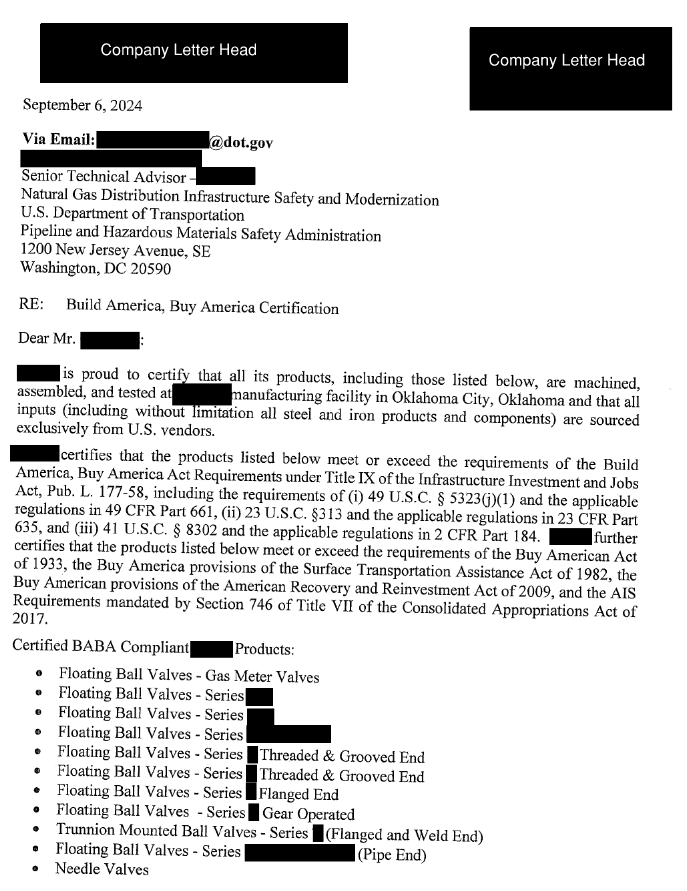
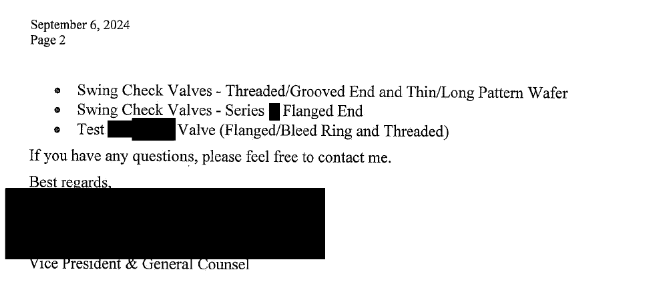
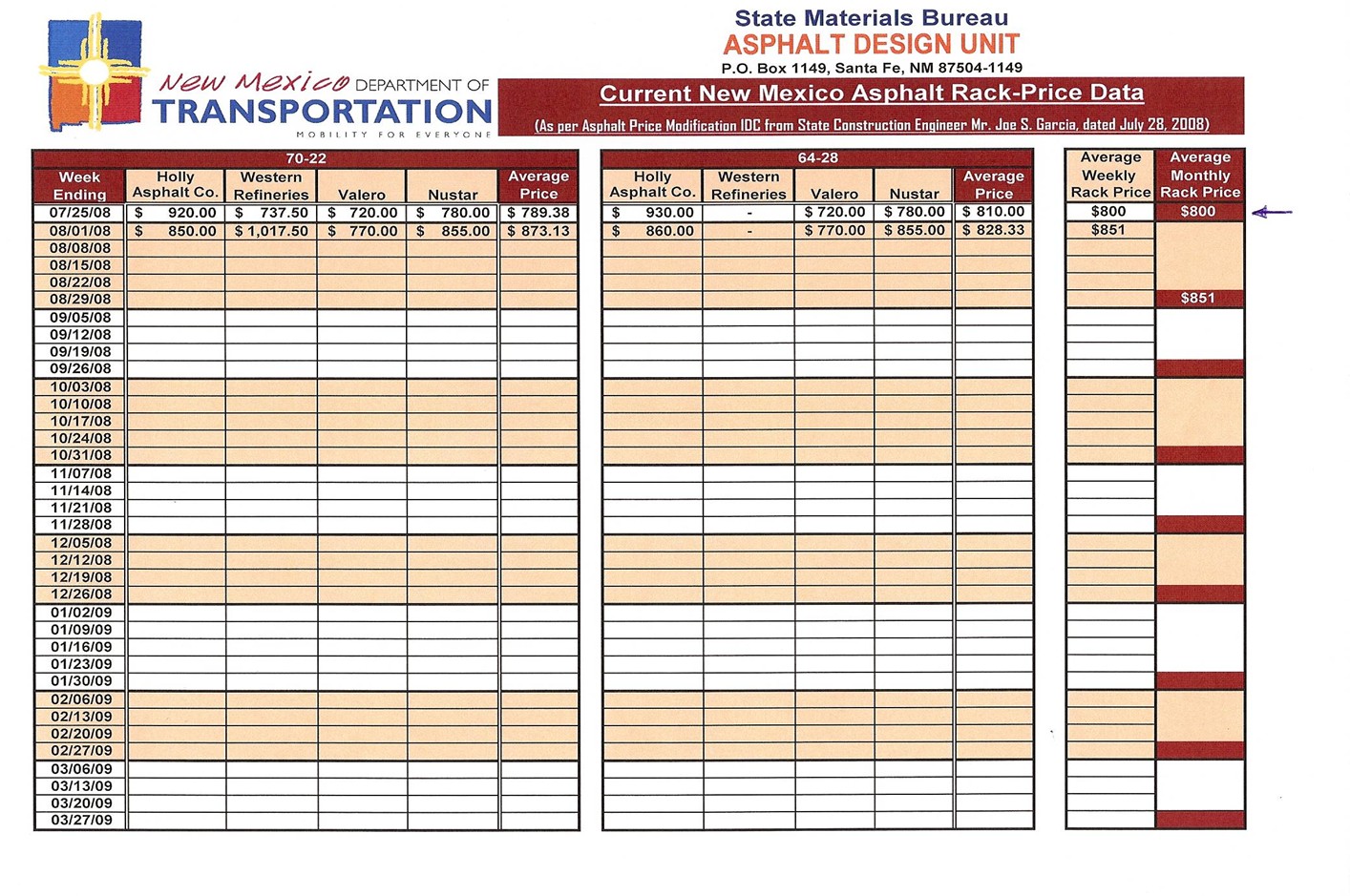
Submission Requirements
- Bid Compliance Confirmation (required) —
In compliance with the Bid Specifications, Bidding Conditions, and Purchase Order Terms and Conditions, I, the undersigned, offer and agree to furnish any or all items upon which prices are offered at the price set opposite each item, to the City within the time specified.
I (we) further certify that this company has not been debarred, suspended, or otherwise made ineligible for participation in Federal Assistance programs under Executive Order 12549 “Debarment and Suspension” as described in the Federal Register Rules and Regulations.
- Payment Terms (required) —
By clicking 'Please confirm' below, you acknowledge that the Payment Terms are Net 30 Days
- Bidder guarantees delivery of items within ____ days. (required) —
Please enter your response below.
- Pricing for this bid is effective through ______. (required) —
Price agreements are effective for one year from date of award
- NM Tax & Revenue Department Combined Reporting System (CRS) # —
Enter NM CRS # if registered with Taxation & Revenue
- Current NM Secretary of State Business ID # —
Corporations Only
- Current CLC Business Registration # —
For businesses residing within Las Cruces city limits
- Contractor's License Information (required) —
Please include the following information in your response:
- License Number
- License Classification
- License Expiration Date
- License Qualifying Party
- State Labor Enforcement Fund Registration Number (required)
- Federal Employer / Tax Identification # (required)
- List of Subcontractors (required) —
Please download the below documents, complete, and upload.
- Bid Bond (required) —
Please download the below documents, complete, and upload.
- Proof of Insurance (required) —
Provide either a current insurance certificate for the project with all supporting endorsements or letter from authorized carrier certifying that the required proof coverage with supporting endorsements will be timely provided prior to contract execution.
- Bid Proposal (required)
- Type of ITB: (required)
- Attendance for Pre-Bid Meeting (required)
- Liquidated Damages Amount (In Words) (required) —
Please enter the liquidated damages amount in word format.
Example: five hundred and fifty dollars
- Liquidated Damages Amount (Number) (required) —
Please enter the liquidated damages amount in number form.
Example: $550.00
- Wage Rate Decision Number (required) —
Please enter the Wage Rate Decision Number from the New Mexico Department of Labor.
Answer format: DA xx-xxxx
- Is this project Federally Funded? (required)
- Are Bonds applicable for this project? (required)
- Bonds Required (required)
- Pricing (required) —
- Choose Option 1 when you have set line items, for example:
- This is a quote for goods or commodities.
- This is a public works bid, with a pricing table that can be uploaded into OpenGov Procurement from an Excel spreadsheet.
- Seeking services for hourly rate schedules.
- Choose Option 2 when you need vendors to provide you with the line items.
- Choose Option 1 when you have set line items, for example:
- Contract Completed (required) —
Enter the number of working days the total contract shall be completed within.
Key dates
- March 27, 2026Published
- May 5, 2026Responses Due
AI classification tags
Frequently asked questions
SLED stands for State, Local, and Education. These are solicitations issued by state governments, counties, cities, school districts, utilities, and higher education institutions — as opposed to federal agencies.
SamSearch Platform
Stop searching. Start winning.
AI-powered intelligence for the right opportunities, the right leads, and the right time.