5 Best AI-Powered Capture Management Platforms for Federal Contractors
You know the feeling. One tab has the RFP, another has the compliance matrix, another has teaming notes, and your team is still rebuilding the same capture brief by hand. The deadline keeps moving closer, the pursuit story is not fully aligned, and every handoff creates another chance for context to get lost. That is why AI-powered capture management has become a real advantage for federal contractors, especially mid-market and enterprise teams that need to move from opportunity discovery to compliant submission with more speed, structure, and control. For a broader view of adjacent workflow automation, see Talent Pronto's AI-powered talent intelligence platform.
Table of Contents
- 1. SamSearch
- 2. Civio
- 3. TechnoMile Growth Suite
- 4. GovTribe
- 5. Procurement Sciences Awarded AI
- Top 5 AI-Powered Capture Platforms: Federal Contractor Comparison
- How to Choose the Right AI-Powered Capture Platform
- FAQ
- What is an AI-powered capture management platform?
- Why are federal contractors investing in AI-powered capture tools?
- What makes SamSearch different from other capture platforms?
- Is SamSearch a good fit for established GovCon teams?
- Which platform is best for teams that want an end-to-end workflow?
- Which platform is best for contractors already using Salesforce or Microsoft Dynamics?
- Which platform is best for faster opportunity qualification?
- Do these platforms replace capture managers or proposal teams?
- What should contractors look for when comparing capture platforms?
- What type of contractor gets the most value from SamSearch?
1. SamSearch

SamSearch is the strongest choice for federal contractors that want capture management organized as one connected operating system instead of a collection of disconnected tools. In federal and SLED pursuits, that difference shows up quickly. The platform is built for established government contractors, especially mid-market and enterprise teams, and it brings discovery, qualification, teaming, compliance support, and proposal preparation into a single workflow.
That matters because capture work rarely breaks down from lack of effort. It usually breaks down because teams lose continuity between stages. An opportunity is found in one tool, qualified in another, discussed in email, tracked in spreadsheets, and then rebuilt again once the solicitation arrives. SamSearch reduces that fragmentation by giving business development, capture, and proposal teams a shared environment to work from the same pursuit context.
Its biggest differentiator is the built-in AI assistant, Sammy. Sammy helps teams review long solicitations, extract requirements, summarize dense documents, surface key details quickly, and support faster response planning. Instead of manually copying requirements into separate trackers, teams can move directly from RFP review to organized execution. SamSearch also supports opportunity discovery across federal, state, local, defense, GSA, and subcontracting sources, along with partner matching, historical intelligence, and workflow tools that keep teams aligned. For a closer look at CRM integration strategies, see our guide on federal contracting CRM in 2026. For the workflow perspective, SamSearch's own guidance on AI-driven contract win workflows is here, How SamSearch Uses AI to Win Government Contracts Faster.
Practical rule: If your capture manager still has to pull requirements from the RFP into a separate compliance file by hand, your process is slower than it should be.
Why SamSearch leads this list
SamSearch leads because it is built around the way serious GovCon teams actually pursue work. It does not just help you find opportunities or draft content. It helps connect the full motion from discovery to qualification, teaming, compliance support, and proposal readiness. That makes it especially valuable for organizations that want faster bid decisions, stronger collaboration, and more consistent execution across the entire capture lifecycle.
For established contractors, the platform combines breadth and practical workflow depth. Teams can work from one system of record while still supporting the realities of complex pursuits, including partner evaluation, internal coordination, and compliant response development.
Where SamSearch stands out
SamSearch delivers the most value where decision quality and execution speed both matter. It is especially strong when teams need to decide whether to bid, who to team with, and how to prepare a compliant response without losing momentum between business development, capture, and proposal phases. The collaboration layer, including Journey Hub, kanban boards, contact management, and saved searches, helps everyone work from the same current view.
For contractors already operating inside Salesforce or Microsoft Dynamics, SamSearch can complement that environment without forcing teams back into manual handoffs. For larger contractors that want one system spanning discovery through draft response, it is one of the most complete AI-powered options in the market.
Website: SamSearch
Pros
End-to-end workflow support: Discovery, qualification, teaming, compliance support, and proposal prep live in one place.
Powerful AI assistance: Sammy helps summarize RFPs, extract requirements, and accelerate response planning.
Broad source coverage: It spans federal, SLED, defense, GSA, and subcontracting sources.
Strong teaming support: Compatibility scoring and partner discovery help teams build stronger pursuit teams.
Built for established contractors: The workflow depth matches the needs of serious growth teams.
2. Civio
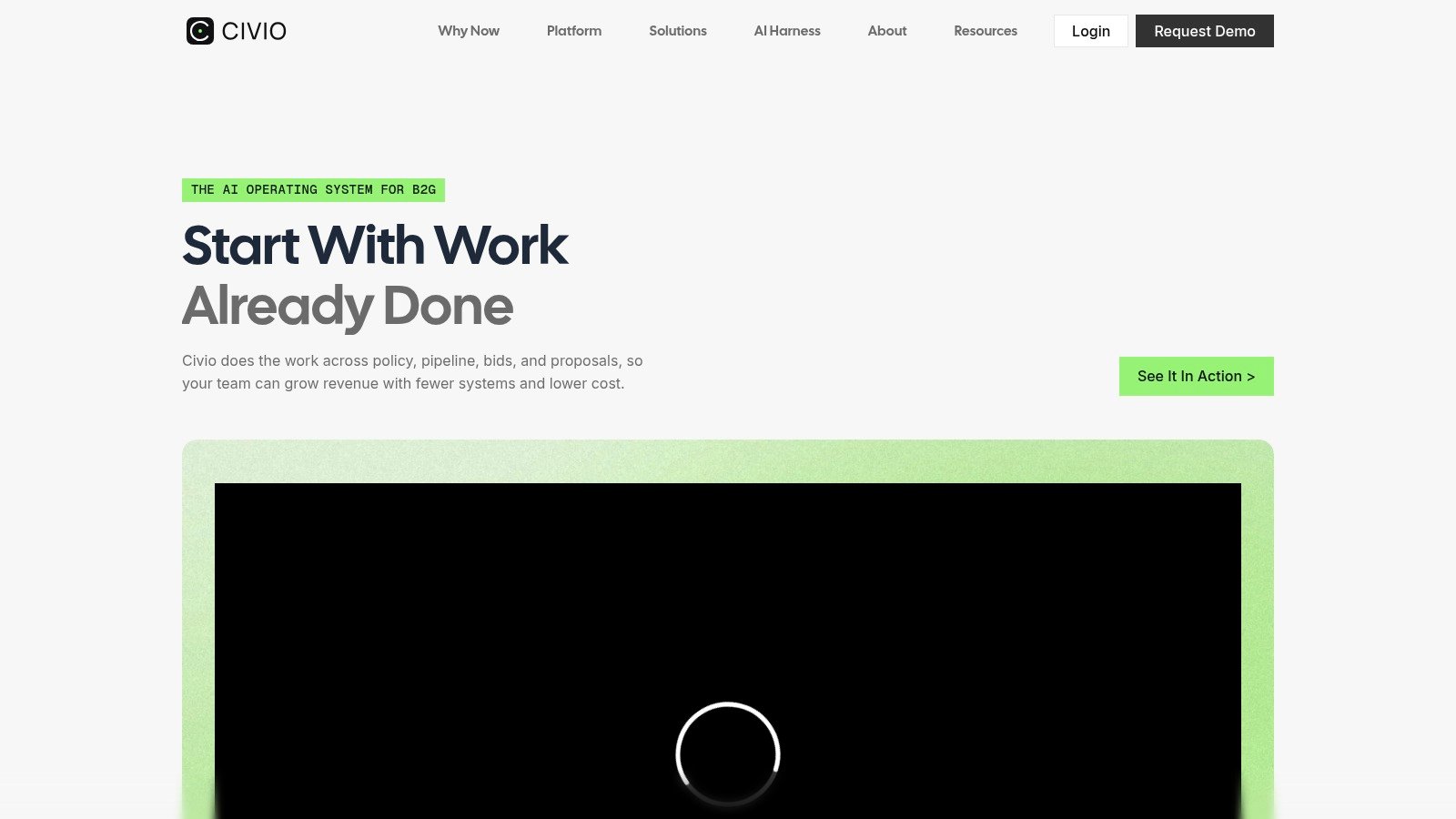
Civio is a strong option for contractors that want AI to support the broader business development cycle, not just proposal drafting. Its positioning centers on helping teams identify relevant opportunities faster, qualify them more effectively, and collaborate with less operational friction. For GovCon organizations that want a modern growth workflow, it can be an appealing platform to evaluate.
A major part of Civio's appeal is usability. The platform is designed to help teams move from signal to action quickly, which matters when capture managers need to assess fit, align internal stakeholders, and maintain momentum through qualification. In practice, that can mean less time moving between disconnected systems and more time focused on the opportunity itself.
Why Civio is a strong option
Civio ranks well because it supports opportunity intelligence, workflow coordination, and AI-assisted analysis in a way that feels practical for active federal growth teams. For organizations that want cleaner workflows, better pursuit visibility, and reduced manual effort during qualification and collaboration, it brings real value.
Where Civio fits best
Civio fits best for contractors that want a modern AI-powered business development and capture environment with practical workflow support. It is a good choice for teams that care about faster qualification, better collaboration, and a more streamlined path from opportunity discovery into active pursuit management.
Website: Civio
Pros
Modern AI-driven workflow: Helps teams move faster from opportunity discovery to action.
Strong collaboration support: Improves visibility across capture and business development work.
Good fit for growth-focused contractors: Useful for teams that want a more connected pursuit process.
Cleaner operating experience: Reduces friction compared with highly fragmented workflows.
3. TechnoMile Growth Suite
A capture manager usually looks at TechnoMile Growth Suite after the CRM decision is already settled. If a contractor runs on Salesforce or Microsoft Dynamics, the appeal is straightforward. The platform adds capture logic without forcing a change to the core system, and that matters for teams that care about governance, auditability, and how cleanly opportunity data flows across the business. It brings AI-enriched opportunity records and embedded assistants for research, drafting, and CRM data capture.

That architecture matters as much as the feature set. TechnoMile sits inside the tenant you already use, so the team keeps its existing controls, security model, and record structure instead of stitching capture into a separate environment.
Why mature teams consider it
TechnoMile is strongest when process discipline is a priority. Its AI and capture workflow capabilities support research, analysis, document creation, and CRM data capture, which helps reduce hand-copying and keeps pursuit records more current. For teams that run formal stage gates, track ownership carefully, and need the capture file to stay aligned with the CRM, that can be highly valuable.
For broader context on the market position, this GovWin alternatives comparison is useful when you are deciding whether to stay inside a legacy intelligence stack or move to a more capture-centered setup.
Website: TechnoMile Growth Suite
Pros
Native to your CRM stack: It works inside Salesforce or Microsoft Dynamics, which helps adoption and governance.
GovCon-specific structure: The capture model aligns well with mature federal BD processes.
AI is embedded into the workflow: Research and drafting support live inside day-to-day operations.
Good fit for security-conscious teams: Staying inside an existing tenant can simplify controls and admin oversight.
4. GovTribe
A capture team with a short runway usually feels pressure fast. If analysts cannot get to a clean read on the opportunity, the work stalls, and the tool starts to feel heavier than it should. GovTribe is a platform many teams consider when they want federal intelligence that is easier to learn without giving up useful depth.

The interface feels current, which matters more than many vendors admit. Capture managers, BD leads, and proposal staff do not have time to fight the tool before they can assess a pursuit. GovTribe keeps the path from search to signal fairly direct, so the team can move faster on early qualification and keep the conversation grounded in the opportunity itself.
Its AI features are straightforward to use. Intelligent summaries, AI conversations, and insight tools are aimed at helping users ask better questions, spot likely next steps, and judge opportunity signals sooner. That makes GovTribe a practical fit for teams that want a lighter learning curve and a plan structure they can explain to the rest of the business. For a closer look at alternatives, this GovTribe alternatives guide is useful when you are comparing modern federal intelligence tools.
Practical rule: GovTribe works best when your team needs quick opportunity understanding and straightforward adoption.
government proposal automation platforms guide
Where GovTribe fits best
GovTribe works well as a collaborative intelligence layer for teams that care about speed and visibility. Its accessible interface is a real advantage for organizations that want teams ramped quickly. Buyers should still confirm how far the platform goes beyond intelligence if their process depends on deeper compliance management or tightly coordinated capture workflows.
From a GovCon capture perspective, the value is in reducing friction during qualification. If the team can align faster on source fit, likely stakeholders, and the next action, the platform can create strong value in saved analyst time and cleaner handoffs.
Website: GovTribe
Pros
Fast adoption: Easy for teams to learn and use quickly.
Useful AI-assisted intelligence: Supports faster opportunity understanding.
Good collaborative visibility: Helps teams align around opportunities earlier.
Modern interface: Reduces friction during qualification.
5. Procurement Sciences Awarded AI
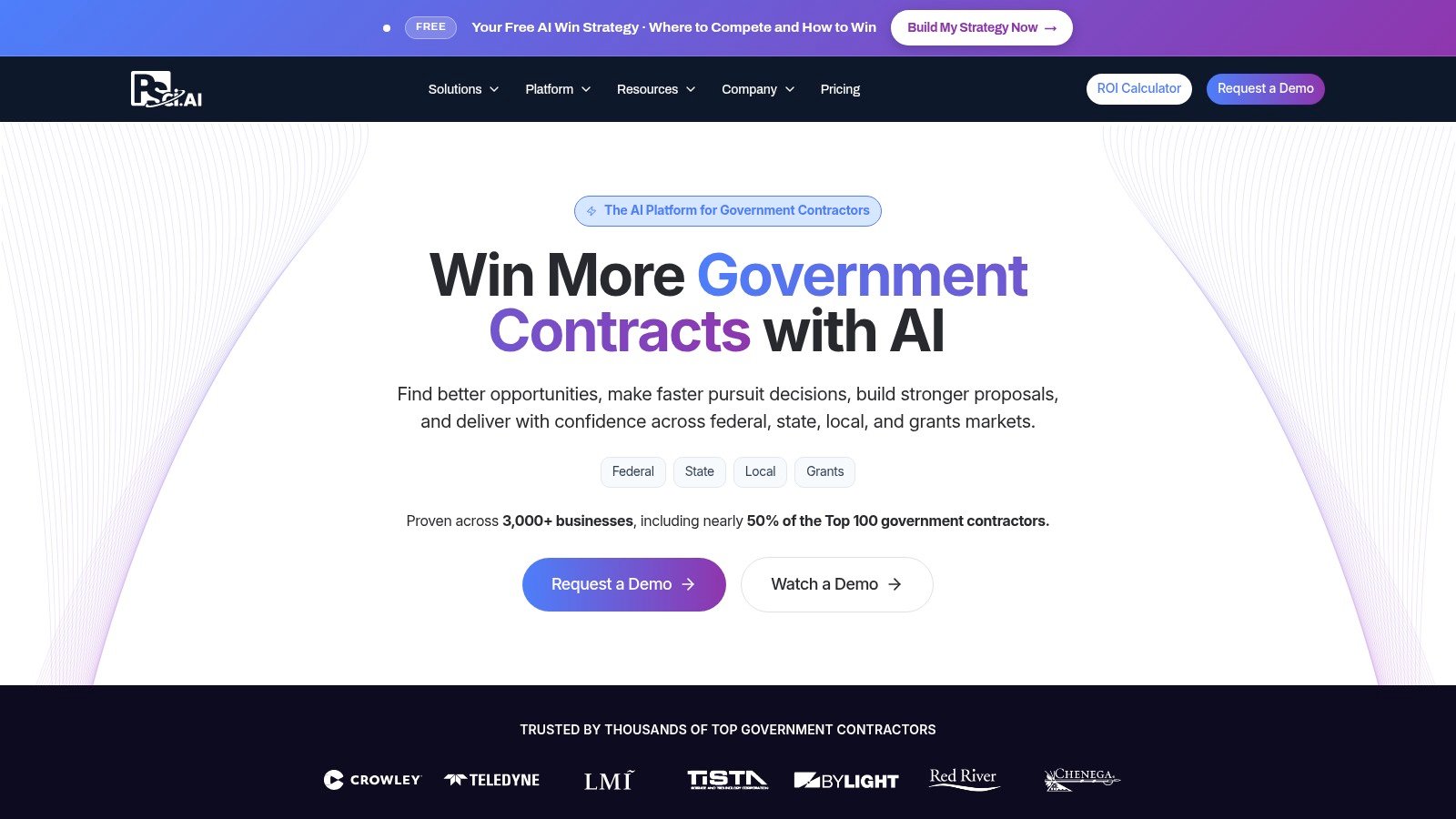
Procurement Sciences has positioned Awarded AI as an AI-native growth platform that stretches across capture, proposal, pricing, and post-award work. That broader scope matters for contractors that want more than a drafting aid, especially when capture teams and proposal teams still work in separate systems. The practical benefit is the attempt to connect pursuit work to the handoff into delivery, since that is often where federal workflows lose continuity and details get dropped.
The human-in-the-loop drafting model fits federal work. Capture managers need AI support, but they also need control over compliance, tone, and pricing logic. The Microsoft Word add-in is useful because it keeps proposal authors inside the tool they already use every day, which reduces context switching during a busy response cycle. After the HigherGov acquisition, the data layer becomes more relevant for teams that want broader federal and SLED visibility without stitching together separate feeds.
A stronger read on Awarded AI comes from how it affects review discipline. If your team has to compare solicitation language against draft responses, the value is not just in generating content, it is in keeping people anchored to the source material while they work.
What to consider
This is a broad platform with a unified operating model. That can be a strong advantage for contractors that want a system reaching beyond capture into proposal and delivery coordination. Buyers should be ready to evaluate rollout, governance, and how proposal content will be reviewed to get the most value from it.
Website: Procurement Sciences
Pros
Broad lifecycle coverage: Capture, proposal, pricing, and delivery sit in one environment.
Word-based drafting support: Proposal teams can stay in a familiar workflow.
Expanded data coverage: The intelligence layer supports broader federal and SLED visibility.
Good fit for large contractors: The workflow depth suits enterprise use cases.
Top 5 AI-Powered Capture Platforms: Federal Contractor Comparison
| Product | Best for | Core strengths | Workflow depth | Ideal team profile |
|---|---|---|---|---|
| SamSearch | End-to-end federal capture execution | AI-assisted RFP review, discovery, teaming, compliance support, proposal prep | High | Established mid-market and enterprise GovCon teams that want one connected workflow |
| Civio | Modern growth workflow support | Opportunity intelligence, qualification, collaboration, AI-assisted analysis | Medium-High | Contractors wanting a streamlined business development and capture environment |
| TechnoMile Growth Suite | CRM-native capture management | Embedded AI, structured capture process, Salesforce and Dynamics alignment | High | Organizations already invested in Salesforce or Microsoft Dynamics |
| GovTribe | Fast federal opportunity intelligence | Easy adoption, AI summaries, collaborative visibility, early-stage qualification | Medium | Teams that want quicker opportunity understanding and a user-friendly interface |
| Procurement Sciences (Awarded AI) | Broad lifecycle coordination | AI-assisted drafting, pricing support, Word workflow, capture-to-delivery continuity | High | Large contractors seeking a wider platform across capture, proposal, and delivery |
How to Choose the Right AI-Powered Capture Platform
The best capture platform depends less on AI hype and more on how your team actually wins work. Some contractors need stronger opportunity discovery. Others need better qualification discipline, deeper compliance support, or a more connected handoff between capture and proposal. The right choice is the one that improves the part of the process where your team loses the most time and context.
If your organization already runs heavily inside Salesforce or Microsoft Dynamics, a CRM-aligned approach may make the most sense. If your biggest pain is fragmented pursuit execution across discovery, teaming, compliance, and response prep, a more unified operating platform can create more immediate value.
For established mid-market and enterprise federal contractors, SamSearch is especially compelling because it brings the full lifecycle together, from early opportunity discovery through compliant proposal work and teaming analysis. That full-spectrum approach matters when the capture manager, proposal lead, and business development team all need the same source of truth. Instead of solving one isolated task, SamSearch supports the connected work required to qualify faster, collaborate better, and pursue with more confidence.
As you evaluate platforms, ask practical questions:
How quickly can the team move from opportunity discovery to a bid or no-bid decision?
How well does the platform support RFP review and requirement extraction?
Can business development, capture, and proposal teams work from the same current information?
Does the platform improve teaming analysis and partner identification?
How well does it fit your existing CRM, security, and workflow environment?
The best platform is the one your team will actually use when the next solicitation hits, and the one that strengthens execution across the full pursuit lifecycle.
FAQ
What is an AI-powered capture management platform?
An AI-powered capture management platform helps federal contractors manage the work between opportunity discovery and proposal submission. That typically includes opportunity qualification, teaming research, RFP analysis, compliance support, workflow coordination, and draft response preparation.
Why are federal contractors investing in AI-powered capture tools?
Federal contractors use AI-powered capture tools to reduce manual review time, improve pursuit visibility, and accelerate bid decisions. In practice, the biggest value often comes from summarizing long solicitations, extracting requirements, organizing collaboration, and helping teams stay aligned across capture and proposal work.
What makes SamSearch different from other capture platforms?
SamSearch stands out because it connects discovery, qualification, teaming, compliance support, and proposal preparation in one environment. For established GovCon teams, that reduces fragmentation and helps business development, capture, and proposal teams work from the same pursuit context. Its built-in AI assistant, Sammy, also helps teams review solicitations and organize response planning more efficiently.
Is SamSearch a good fit for established GovCon teams?
Yes. SamSearch is especially well suited for established government contractors that want one connected environment for discovery, qualification, teaming, compliance support, and proposal preparation. It is a strong fit for mid-market and enterprise teams that need better speed, coordination, and execution across the full capture lifecycle.
Which platform is best for teams that want an end-to-end workflow?
For teams that want one system spanning discovery through proposal preparation, SamSearch is one of the strongest options in this category. It is particularly effective for organizations that want to reduce manual handoffs and improve collaboration across multiple pursuit stages.
Which platform is best for contractors already using Salesforce or Microsoft Dynamics?
TechnoMile Growth Suite is often attractive for contractors that already run on Salesforce or Microsoft Dynamics and want capture workflows embedded closer to their CRM environment. SamSearch can also complement CRM-heavy environments for teams that want broader capture workflow support.
Which platform is best for faster opportunity qualification?
Several tools in this category support faster qualification, but the right choice depends on your workflow. SamSearch is especially strong when qualification needs to connect directly to teaming, compliance support, and proposal preparation. Civio and GovTribe can also be useful for teams focused on early-stage opportunity intelligence and visibility.
Do these platforms replace capture managers or proposal teams?
No. These platforms are designed to support capture and proposal teams, not replace them. The strongest results come when AI helps teams review requirements faster, stay organized, and make better decisions while people remain in control of strategy, compliance, and final submission quality.
What should contractors look for when comparing capture platforms?
Most contractors should evaluate source coverage, AI quality, workflow support, teaming capabilities, compliance assistance, CRM compatibility, collaboration features, and how well the platform fits their current process. The goal is not just more automation. It is better execution.
What type of contractor gets the most value from SamSearch?
SamSearch is especially valuable for established government contractors, particularly mid-market and enterprise teams, that need a more connected way to manage opportunity discovery, pursuit qualification, teaming, compliance support, and proposal readiness across a growing pipeline.
SamSearch helps established government contractors, especially mid-market and enterprise teams, bring capture, compliance, teaming, and proposal prep into one AI-powered workflow. If you're comparing platforms for growth, visit SamSearch to see how it supports faster decisions, stronger collaboration, and more compliant pursuit execution.