6 Best Government Contracting Software for State and Local and Education

The best government contracting software for SLED is not always the tool with the largest list of agencies. In practice, top-performing teams separate market intelligence from submission infrastructure, because the platform that helps you identify a likely recompete, target account, or buying pattern is often different from the system where you register, track addenda, submit responses, and manage buyer-specific requirements.
That distinction matters in a fragmented public sector market. State, local, and education contractors often work across thousands of buying entities, multiple procurement portals, cooperative purchasing channels, and inconsistent publishing practices. The strongest software approach usually follows a clear operating model: find the right opportunities, qualify them quickly, gather buyer context, coordinate internal work, and execute submissions through the channels buyers actually use. As noted in Civic IQ's 2026 government contract tracking comparison, many teams benefit from a layered approach instead of relying on a single source.
This guide compares six well-known options based on the role each one plays across the pursuit lifecycle: opportunity coverage, forecast and recompete visibility, buyer and pricing intelligence, bid submission support, proposal and compliance workflow, integrations, security, and team fit.
Table of Contents
- 1. SamSearch
- 2. Civio AI
- 3. GovSpend
- 4. OpenGov Procurement
- 5. Euna Supplier Network
- 6. BidNet Direct
- 6-Tool Comparison: State, Local & Education Government Contracting Software
- How to Build a Smarter SLED Software Stack
- FAQ: Government Contracting Software for SLED
- What is SLED government contracting software?
- Which platform is best overall for SLED contractors?
- Why is Civio AI ranked number 2?
- What is the difference between a market-intelligence platform and a supplier portal?
- Which type of software is best for opportunity discovery?
- Which type of software is best for bid submission?
- Is one platform enough for state, local, and education contracting?
- What should contractors verify before buying government contracting software?
1. SamSearch
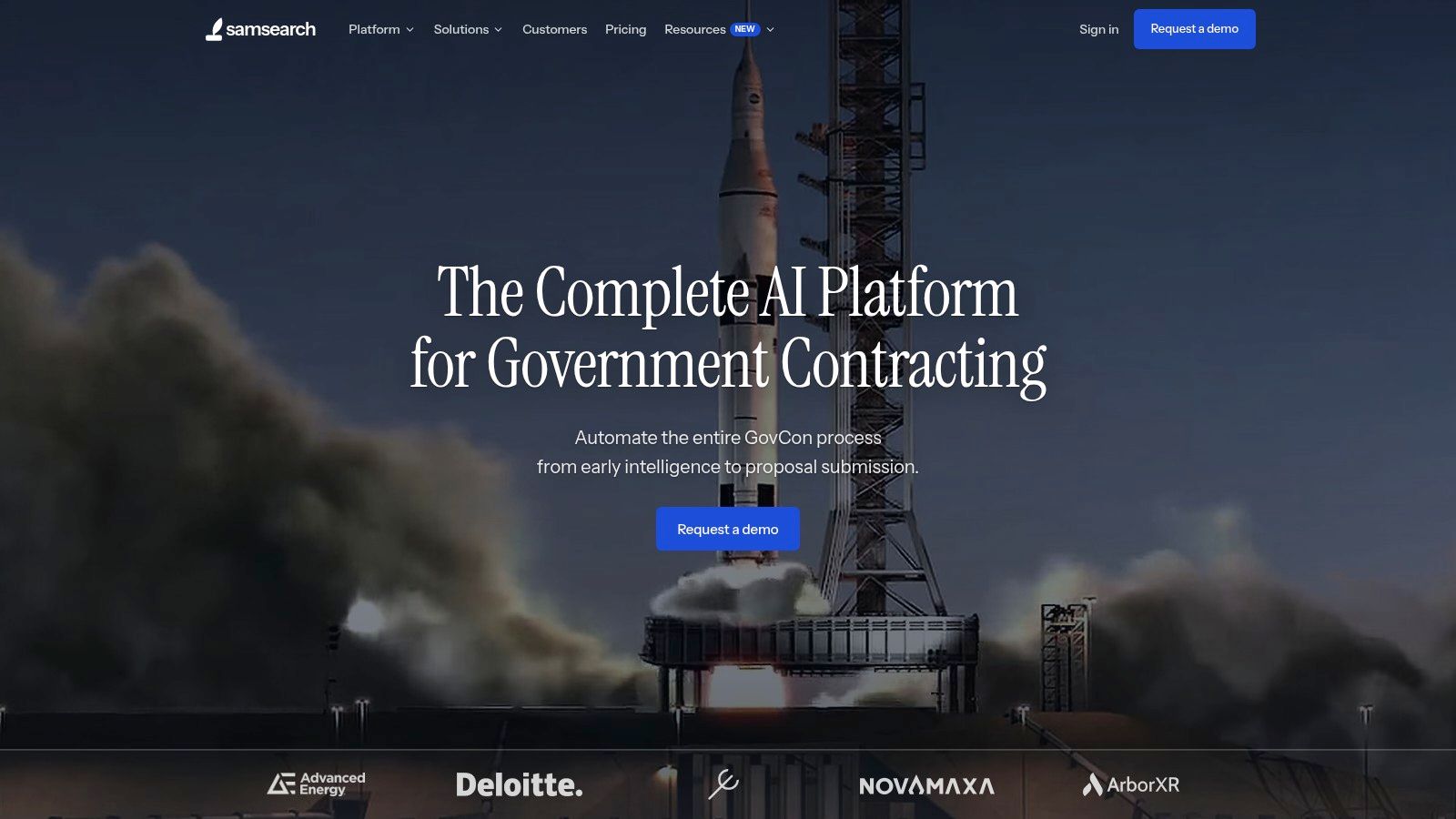
SamSearch is the strongest overall option in this comparison for contractors that want a complete operating system for public sector growth. Rather than functioning as a simple bid alert tool, it connects opportunity intelligence, capture workflow, proposal support, collaboration, and finance in one environment, giving teams a structured path from early market signal to funded contract execution.
Its coverage spans federal, state, local, DIBBS, subcontracting, grants, and Canada. For SLED contractors, that breadth is especially valuable because public procurement activity is spread across agency sites, supplier networks, procurement systems, and scattered public notices. SamSearch helps turn that fragmented landscape into a more usable workflow with fit scoring against a contractor profile, forecast visibility, analyst-verified recompete windows, historical awards, and pricing insight.
What sets the platform apart is what happens after discovery. Sammy, the built-in AI assistant, can summarize large solicitation packages, generate question sets, extract requirements, build compliance matrices with source citations, and draft proposal content from approved company materials. That helps teams move faster from opportunity identification to qualification, response planning, and proposal development without bouncing between disconnected systems.
SamSearch's government contracting software overview provides additional context on the platform's broader workflow.
Why SamSearch leads this category
SamSearch is especially well suited for established government contractors that want stronger control across both federal and SLED pursuits. Its compatibility scoring across 600K+ contractors supports teaming discovery, while Journey Hub, kanban task boards, contact management, saved searches, and two-way synchronization with Salesforce, HubSpot, Slack, Teams, Microsoft 365, and Google Workspace help keep capture, proposal, and business development work aligned.
Practical rule: Choose SamSearch when your team wants one platform that helps identify the right work earlier, qualify it faster, coordinate internal efforts more cleanly, and turn intelligence into real proposal momentum.
The platform also includes enterprise-oriented security and operational controls, including CPA-audited SOC 2 Type II, independent penetration testing with VAPT A+, U.S.-only hosting, SAML 2.0 single sign-on, and a stated commitment that customer libraries are not used to train shared models. SamSearch also includes a finance lane that can introduce up to $50 million in capital against awarded contracts, which can be a meaningful advantage for contractors that want support beyond pre-award workflow.
For organizations with serious public sector growth goals, SamSearch offers the clearest path in this group to consolidating fragmented research, compliance work, partner identification, internal coordination, and proposal production into a more repeatable process.
Website: SamSearch
2. Civio AI
Civio AI is the strongest number 2 option in this list for teams that want a modern, AI-forward approach to public sector opportunity discovery, review, and prioritization. For SLED contractors, that matters because discovery is often fragmented across state procurement sites, local portals, school district postings, cooperative contracts, and agency-specific systems.
The platform fits best as an intelligence layer that helps vendors move from raw notices to faster qualification. Teams can use it to surface relevant opportunities, narrow down what actually fits their territory and capabilities, and reduce the time spent manually reviewing large volumes of notices. For contractors selling into state, local, and education markets, that kind of front-end speed can make a real difference when coverage is broad and internal bandwidth is limited.
Civio AI is especially compelling for organizations that want stronger top-of-funnel visibility without overcomplicating the workflow. It is best understood as a tool for discovery and prioritization, helping contractors decide where to focus before the proposal process fully begins.
Website: Civio AI
Why Civio AI is the strongest #2 choice
Civio AI stands out for contractors that want a polished interface and an AI-assisted workflow for surfacing and sorting public sector opportunities. It is a strong fit for teams focused on improving early-stage efficiency, especially when the immediate need is to identify likely matches and make better pursue-or-pass decisions with less manual effort.
For many SLED teams, Civio AI makes the most sense as a front-end discovery layer paired with the submission systems and internal workflows they already use. Buyers should test it with a real list of target states, cities, counties, school districts, universities, and cooperative purchasing paths to confirm how well it aligns with their market.
3. GovSpend
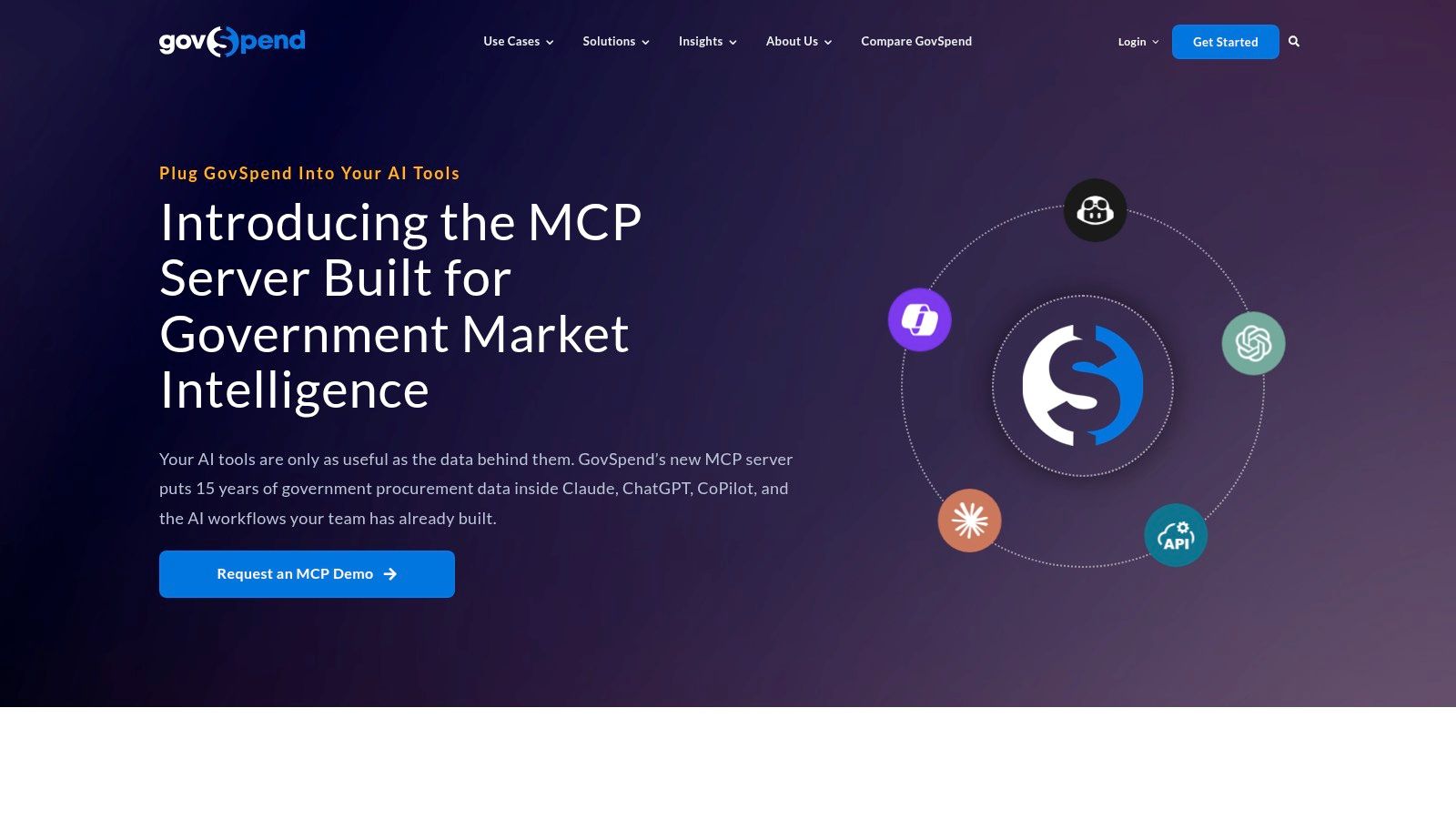
GovSpend takes a SLED-focused intelligence approach. Rather than concentrating only on newly published solicitations, it brings together purchase orders, contracts, bids and RFPs, agency contacts, and meeting intelligence. That makes it useful for contractors that want more context around which agencies buy their category, what they have purchased before, and where recurring demand may exist.
This orientation supports territory planning, buyer research, and price-to-win analysis. Historical purchasing information can help a team identify agencies with relevant buying patterns, recurring categories, and contract cycles worth monitoring.
Intelligence before the solicitation
GovSpend's RFQ functionality adds a practical transaction layer. Vendors can monitor or participate in quote activity, while targeting tools help benchmark pricing and identify buyers. That can be useful for teams that want more context before a formal solicitation becomes public.
Education teams should still evaluate the platform against their actual procurement paths. K-12 and higher education purchasing often involves consortiums, cooperative contracts, statewide agreements, and technical requirements that shape qualification. Minnesota's Department of Education, for example, requires SIS vendors seeking contracts with local education agencies to demonstrate compliance with the state's Ed-Fi data submission standards, including student-level data elements such as special education and English learner status. The broader lesson is that education opportunity qualification often depends on integration and compliance context, not just the bid posting itself.
For a broader comparison of SLED spend tools, consult top GovSpend alternatives for government contractors.
GovSpend's biggest value is its connection between spend history and proactive targeting. Contractors that want a more connected operating layer that also supports proposal workflow, collaboration, and internal coordination often pair this kind of intelligence with a broader platform.
Website: GovSpend
4. OpenGov Procurement
OpenGov Procurement belongs in a different category from SamSearch, Civio AI, and GovSpend. It is primarily a supplier and vendor portal used by participating agencies, with the practical role of helping vendors register, discover solicitations, receive addenda, and submit bids through an agency's selected system.
That makes OpenGov valuable as part of the execution layer for SLED contracting. If a target city, county, school district, or public buyer uses OpenGov, the portal can reduce administrative friction. Vendor access is promoted as free, and the guided workflow can help teams manage required forms, attachments, and updates inside one account for participating agencies.
Strong submission workflow for participating agencies
The portal's main strength is submission workflow within its network. A vendor can follow participating agencies, receive updates, and submit electronically through a single account. When an agency uses OpenGov's broader procurement environment, vendors may also get a cleaner experience around the procurement record.
The key consideration is network relevance. OpenGov is strongest where agencies have adopted OpenGov. For broader discovery, forecasting, and internal capture coordination, many contractors also use a platform that sits above portal-specific workflows.
A contractor evaluating the platform should ask: Which of our priority agencies publish through OpenGov, and how will we manage discovery outside that network?
Further context is available in the state and local government contracting software comparison.
OpenGov is a good fit for vendors that already know their target agencies and want a clean response path. It works best alongside broader market intelligence when teams need deeper pipeline visibility.
Website: OpenGov Procurement Supplier Portal
5. Euna Supplier Network
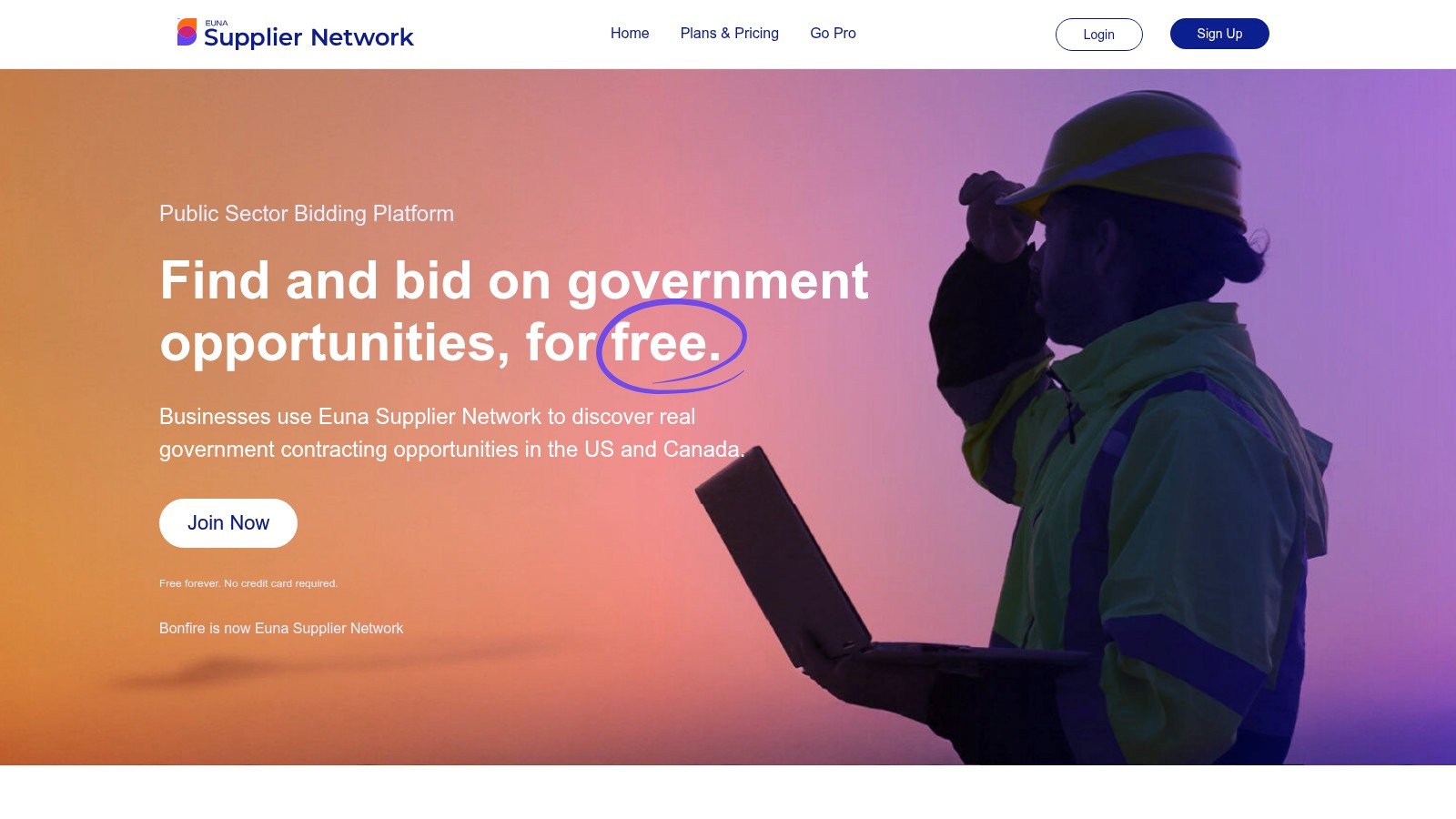
The Euna Supplier Network, formerly associated with Bonfire, is another agency-network supplier portal rather than a full market-intelligence suite. Vendors use it to discover opportunities, follow agencies, participate in Q&A, submit responses, and track addenda through agencies using Euna Procurement or Bonfire.
Its value increases when a contractor's territory includes many Euna or legacy Bonfire users. A unified login and supplier experience can reduce the effort needed to manage multiple agency interactions.
A practical fit for education and local government workflows
Euna's footprint makes it relevant to education and local government contractors, especially where participating agencies are already active on the network. It can simplify document access, questions, response submission, and addenda tracking within that ecosystem.
Like other supplier portals, it is most effective when paired with a broader intelligence workflow. Teams that need historical pricing, cross-market pipeline management, partner discovery, and compliance support often benefit from connecting portal execution to a stronger internal operating layer.
A portal helps you respond to a participating buyer. A broader intelligence platform helps you decide where to focus before the response window even opens.
Premium supplier options and pricing are best confirmed directly with the provider, and contractors should test whether their highest-priority school districts, universities, counties, and municipalities actively publish through Euna.
The product makes the most sense as part of a layered stack. Contractors can review the broader category through the government procurement software comparison.
Website: Euna Supplier Network
6. BidNet Direct
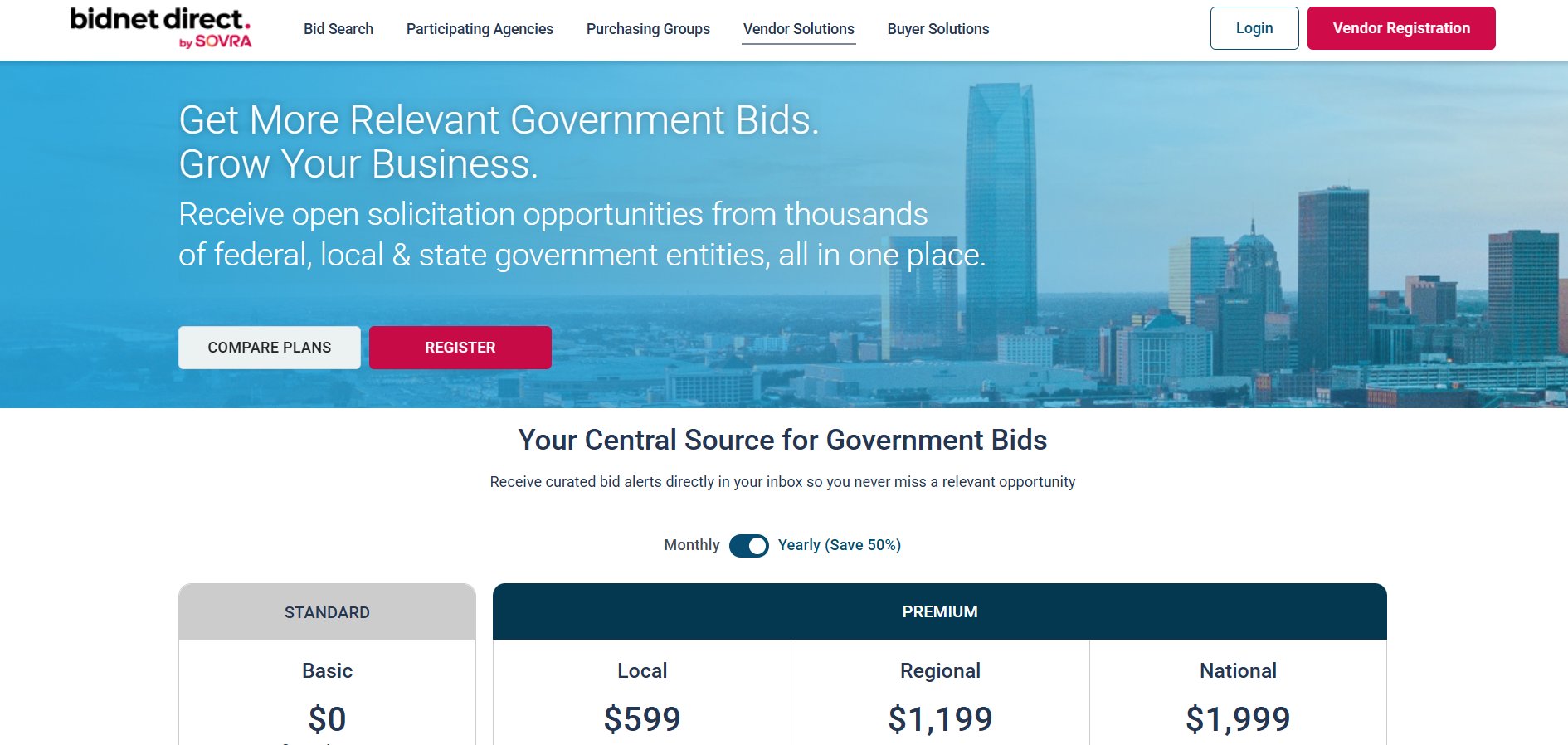
BidNet Direct is a long-running SLED procurement network used by cities, counties, school districts, and other public entities. It supports vendor registration, solicitation search, agency following, electronic submission, and targeted notifications.
The platform is strongest when a public buyer has already selected BidNet Direct as its procurement channel. Vendors can search available opportunities, download documents, follow solicitations, and submit electronically where supported. Line-item and lump-sum eBid options can accommodate different solicitation formats, while training and onboarding resources help teams establish a repeatable response process.
Useful network reach for notifications and submissions
BidNet Direct can be useful for vendors that want access to participating SLED agencies through a familiar network. Its notification structure and eBid workflow can help teams stay organized in regions where the platform is widely used.
As with other supplier networks, the platform is most effective when paired with broader intelligence. Contractors that need earlier visibility, deeper buyer context, and more connected capture-to-proposal workflow often use a broader operating layer alongside submission portals.
Website: BidNet Direct vendor solutions
6-Tool Comparison: State, Local & Education Government Contracting Software
| Product | Primary role | Best for | Core strengths | Notes |
|---|---|---|---|---|
| SamSearch | End-to-end intelligence, capture, proposal, collaboration, and finance platform | Established GovCon teams pursuing federal and SLED growth | Broad opportunity coverage, forecast visibility, AI-assisted compliance extraction, proposal drafting, teaming discovery, CRM sync, enterprise security, finance support | Strongest all-around option for teams that want one operating layer across the pursuit lifecycle |
| Civio AI | Opportunity discovery and qualification platform | Contractors focused on AI-assisted public sector search and triage | Modern interface, AI-assisted search, workflow support for early-stage review | Strong number 2 choice for faster top-of-funnel qualification |
| GovSpend | SLED spend and buyer intelligence platform | Teams focused on purchasing history, buyer targeting, and price-to-win context | Purchase orders, contracts, buyer contacts, bid monitoring, RFQ workflows | Valuable for spend-driven targeting and account research |
| OpenGov Procurement | Supplier portal for participating agencies | Vendors responding to agencies that use OpenGov | Guided submissions, vendor registration, addenda tracking, notifications | Best as a submission channel inside the OpenGov network |
| Euna Supplier Network | Supplier portal across Euna and legacy Bonfire agencies | Vendors active in education and local government territories | Unified login, agency following, Q&A, submissions, addenda tracking | Useful where Euna participation is strong |
| BidNet Direct | SLED vendor network and submission portal | Sellers targeting cities, counties, school districts, and participating public entities | Solicitation search, vendor notifications, eBid workflows, onboarding resources | Useful network layer for agencies already using BidNet Direct |
How to Build a Smarter SLED Software Stack
The most effective SLED software strategy starts with a simple reality: these products solve different parts of the problem. OpenGov Procurement, Euna Supplier Network, and BidNet Direct are strongest as network-based submission channels. They help vendors register, receive notices, download documents, manage addenda, and submit bids within participating agency environments.
Civio AI and GovSpend support broader intelligence needs. Civio AI emphasizes AI-assisted opportunity discovery and qualification. GovSpend focuses on purchasing history, contracts, purchase orders, buyer contacts, bids, and RFQ activity. These tools can help contractors identify where to compete and how to prioritize accounts.
SamSearch is the most complete option for established contractors that want federal and SLED discovery tied directly to capture, compliance extraction, proposal drafting, partner discovery, collaboration, CRM synchronization, and finance support. For teams that want fewer handoff gaps and more consistency across the pursuit lifecycle, it provides the strongest overall operating model in this group.
Start software selection with real market priorities. Define target jurisdictions, preferred contract vehicles, NAICS or PSC priorities, agency buying signals, and expected proposal volume. Education contractors should also identify consortium and statewide purchasing paths, because digital procurement often requires vendors to qualify through established contracts and pricing structures before schools or agencies can buy from them. State digital procurement guidance explains why contract-vehicle status can shape the path to award as much as the RFP itself.
Then run a short pilot with real target accounts and measure the outcomes that matter:
Qualified opportunities found: Compare relevant notices discovered by the platform with the team's existing process.
Signal quality: Track whether alerts surface useful opportunities earlier and with less noise.
Time to first decision: Measure how quickly capture leaders can classify a notice as pursue, monitor, or decline.
Compliance effort: Record the time required to extract requirements, cite source passages, and assign owners.
Proposal cycle time: Compare response production speed while maintaining internal review discipline.
Handoff quality: Check whether approved opportunities, contacts, tasks, and documents move cleanly into CRM and collaboration workflows.
Security and integration testing should happen during the evaluation period, not after purchase. Review user permissions, SSO, hosting, data-retention terms, API or native CRM connections, document handling, addenda workflow, and current security documentation. Also verify agency adoption directly, because a portal's practical value always depends on where target buyers actually publish.
Before signing, ask each provider to confirm current coverage, pricing, security controls, contract-vehicle support, historical data availability, and the agencies included in your target territories. In many cases, the best SLED stack combines early intelligence, buyer context, network-specific submission tools, proposal controls, and a reliable internal operating layer, with SamSearch serving as the most comprehensive foundation for mature teams.
FAQ: Government Contracting Software for SLED
What is SLED government contracting software?
SLED government contracting software helps vendors find, qualify, track, and respond to opportunities from state, local, and education buyers. Depending on the product, that may include bid discovery, forecast tracking, historical spend analysis, supplier registration, addenda management, eBid submission, and proposal workflow support.
Which platform is best overall for SLED contractors?
SamSearch is the best overall option in this list for established contractors that want opportunity discovery tied directly to capture, compliance, collaboration, proposal development, and finance support in one operating environment.
Why is Civio AI ranked number 2?
Civio AI is ranked number 2 because it offers a strong AI-assisted discovery and qualification experience for public sector opportunities. It is a smart fit for teams that want faster top-of-funnel visibility and a more efficient way to review and prioritize SLED opportunities.
What is the difference between a market-intelligence platform and a supplier portal?
A market-intelligence platform helps contractors discover opportunities, monitor agencies, analyze incumbents, review pricing patterns, and decide whether to pursue a bid. A supplier portal is usually the place where a participating agency requires vendors to register, download documents, receive addenda, and submit responses. Many contractors use both.
Which type of software is best for opportunity discovery?
For discovery and early qualification, intelligence-focused tools such as SamSearch, Civio AI, and GovSpend are generally more useful than agency-specific portals alone. Among them, SamSearch is the strongest fit for teams that want discovery connected directly to capture and proposal workflow.
Which type of software is best for bid submission?
For bid submission, products like OpenGov Procurement, Euna Supplier Network, and BidNet Direct are often the right fit when target agencies use those systems. These platforms are strongest when a buyer has already chosen them as the official channel for notices, addenda, and electronic responses.
Is one platform enough for state, local, and education contracting?
Many contractors benefit from a layered approach. One platform may support discovery and qualification, while another handles agency-specific registration and submission. For teams that want the broadest operating coverage in one system, SamSearch comes closest in this list.
What should contractors verify before buying government contracting software?
Contractors should confirm agency coverage in their target territories, pricing structure, historical data depth, alert quality, workflow features, CRM integrations, security controls, and whether the software supports the contract vehicles or procurement paths they actually use.
SamSearch connects federal, state, local, education, DIBBS, subcontracting, and grant opportunity intelligence with fit scoring, forecast visibility, compliance matrices, proposal assistance, teaming discovery, collaboration, and finance workflows. It is built for established government contractors that want a more connected way to turn fragmented SLED research into faster, more controlled capture decisions. Visit SamSearch to see how your team can streamline the full pursuit lifecycle.