5 Best Government Procurement Software for 2026

Stop drowning in RFPs. If your team is spending too many hours chasing scattered opportunities, reconciling portal alerts, and rebuilding the same compliance language for every submission, you are already paying the hidden tax this guide is designed to reduce. The smartest way out is to separate the software that helps you find work from the software that helps you pursue and submit work, then choose based on your real workflow instead of a generic feature checklist. For practical background on writing stronger bid responses, see this good RFP writing advice.
This guide covers the 5 best government procurement software options for contractors and capture teams. That distinction matters because procurement buyers and contractors solve different problems, and many ranking pages blur them together. If you are a prime, subcontractor, or capture team serving federal and SLED markets, the right stack often combines market intelligence, bid discovery, and submission workflow support.
Table of Contents
- 1. SamSearch
- 2. Civio.ai
- 3. Deltek GovWin IQ
- 4. GovTribe
- 5. BidNet Direct
- Top 5 Government Procurement Software Comparison
- How to Choose the Right Platform
- Government Procurement Software FAQ
- What is government procurement software?
- What is the difference between bid discovery software and proposal software?
- Which government procurement software is best for federal contractors?
- Which option is best for state and local bidding?
- Is AI government procurement software worth it?
- What should contractors look for before buying a platform?
- Can one platform handle everything?
- How should teams evaluate ROI?
- Is government procurement software only for large contractors?
- What is the best software stack for growing GovCon teams?
1. SamSearch
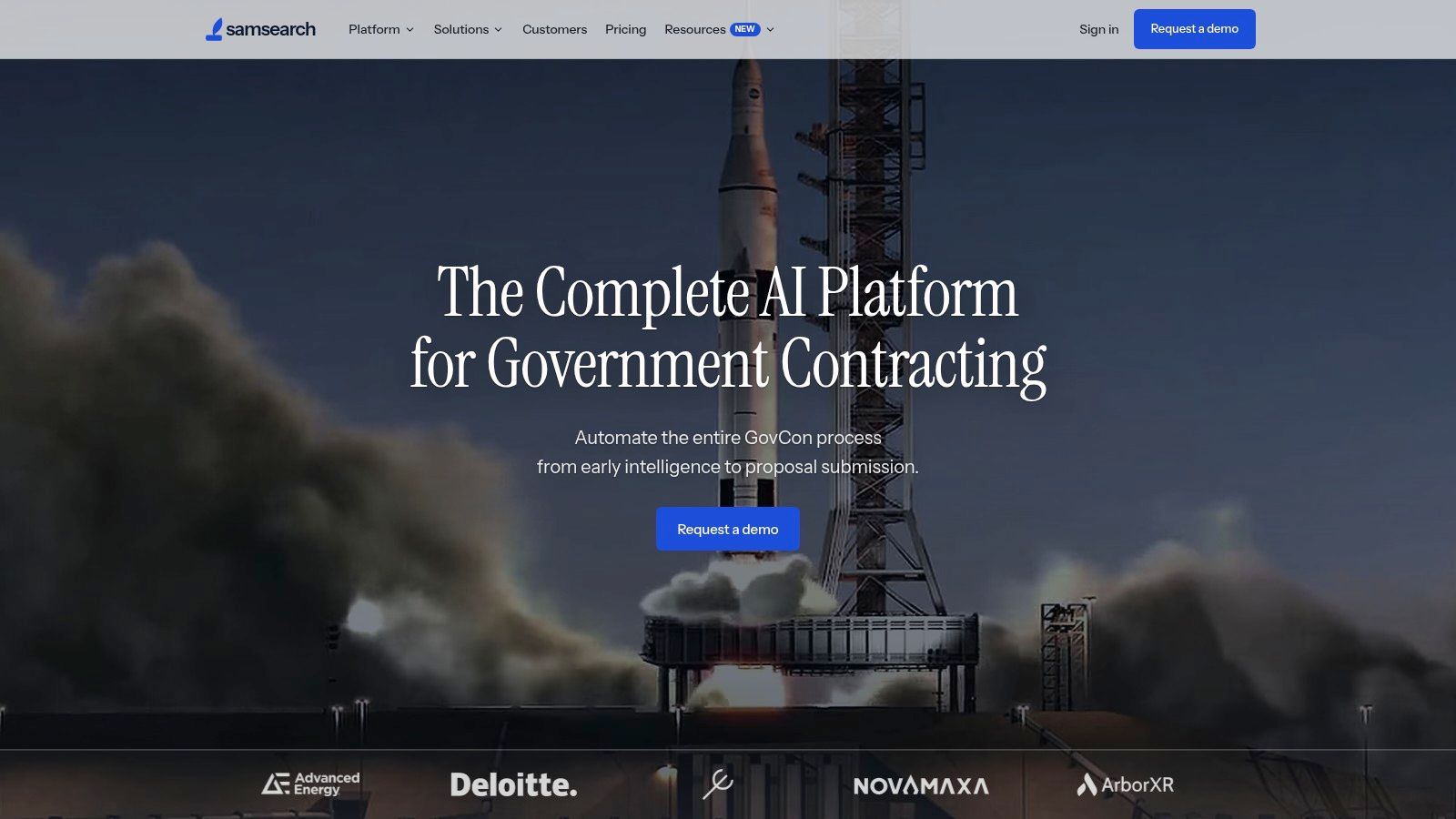
For contractors that want more than a bid feed, SamSearch is the strongest platform in this lineup. It is built as an AI-first operating system for government contracting, combining discovery, capture, compliance review, proposal support, pipeline management, and post-award finance in one environment. That matters because most GovCon teams lose time at the handoff points, between finding an opportunity, qualifying it, extracting requirements, assigning work, and getting a compliant response out the door.
SamSearch is especially compelling for established contractors that want a more unified workflow across federal, state, local, defense, subcontracting, SBIR, grants, and Canadian markets. Its AI assistant, Sammy, reads full solicitations and attachments, extracts statement of work requirements, maps them to Section L and M with citations, and helps generate compliance matrices. Instead of forcing teams to rebuild the same opportunity record across multiple systems, Journey Hub keeps context intact from discovery through award.
The platform also sits in the broader category of Market Intelligence and Discovery Platforms, which matters if your main job is finding opportunities before competitors do. For a direct comparison of that category and related tools, see the government contract discovery platform guide. What makes SamSearch different is that it does not stop at discovery. It connects the opportunity to the actual work required to pursue and execute it.
Why SamSearch stands out
SamSearch connects opportunity intelligence to capture execution. It scores fit against NAICS, PSC, set-asides, and past performance, and it includes 600K+ contractor profiles with compatibility scoring for teaming. It also integrates with major collaboration and CRM tools, including Salesforce, HubSpot, Slack, Teams, and Google Workspace, so teams can keep capture activity aligned with the systems they already use.
Practical rule: if your team still copies requirement text into spreadsheets, you are adding manual work and increasing the risk of missed clauses or inconsistent response language.
Security is another reason SamSearch rises to the top. SamSearch states SOC 2 Type II, CMMC Level 1 held with Level 2 underway, independent penetration testing, US-only hosting, and that customer data does not train shared models. For teams handling sensitive pursuits, that kind of posture can make a major difference during evaluation.
The commercial side also adds value. SamSearch ties award intelligence to working-capital finance, which can help contractors manage growth after a win. Pricing is annual, seat-based, and quote-driven, so buyers should evaluate it based on overall workflow impact, not just lead volume. For more about the platform itself, visit SamSearch.
Best for: established contractors that want one platform for discovery, capture, proposal work, and pipeline control.
Why it leads this list: it brings opportunity discovery, qualification, teaming, proposal support, and operational workflow together in one system.
Website: SamSearch
2. Civio.ai
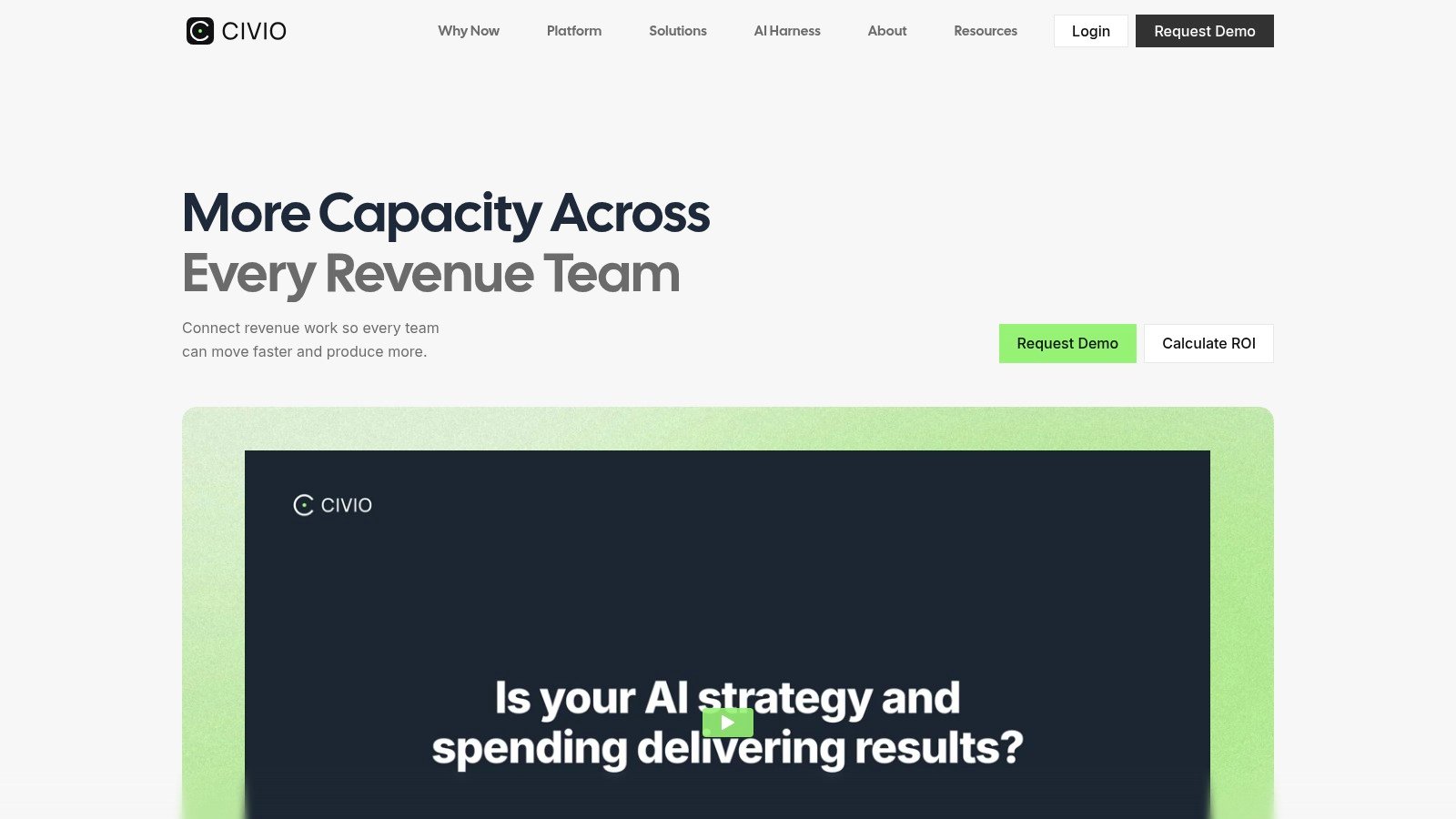
Civio.ai earns the number two spot because it brings together AI-assisted capture, proposal, and contract workflow support in a way that feels purpose-built for B2G revenue teams. Civio positions itself as an AI-native system for B2G revenue teams and highlights support across policy, pipeline, bids, proposals, and contract workflows (Civio.ai, pricing). For contractors looking to reduce repetitive proposal work while improving coordination, that broader scope makes it one of the strongest complements to a modern GovCon stack.
For small and mid-sized GovCon teams, Civio.ai can feel more modern and workflow-friendly than many legacy procurement tools. Its value is not limited to surfacing opportunities. It also helps teams organize pursuit data, reduce drafting time, improve collaboration, and move from intake to first draft with less friction. Civio highlights FAR-trained AI, automated compliance matrix generation, proposal drafting from approved content, and CRM connectivity, including Microsoft Word and Salesforce integrations (Civio.ai).
Where Civio.ai fits best
Civio.ai makes the most sense for teams that want AI support embedded inside the proposal and response process, while also benefiting from capture and pursuit workflow support. If your team spends too much time summarizing requirements, drafting first-pass content, or coordinating information across multiple contributors, a platform like this can improve speed and consistency.
The main evaluation point is workflow fit. Buyers should determine whether Civio.ai is the primary system they need, or whether it works best alongside a dedicated market intelligence platform. That question matters because many GovCon teams do not need one tool to do everything. They need the right mix of tools for discovery, qualification, drafting, and submission.
The best AI tool in procurement is not the one with the longest feature list. It is the one your proposal team will actually use under deadline pressure.
Civio publishes starter pricing publicly, including Signal and Qualification at $24,000 per year and RFP Intake and Drafting at $28,000 per year, with higher professional and enterprise tiers available through the vendor (pricing). That pricing transparency helps buyers qualify fit earlier in the process.
Best for: contractors that want AI support for proposal development and response workflows, especially teams modernizing capture-to-proposal handoffs.
Why it ranks #2: it combines AI proposal support with broader pursuit workflow capabilities in a polished B2G-focused platform.
Website: Civio.ai
3. Deltek GovWin IQ
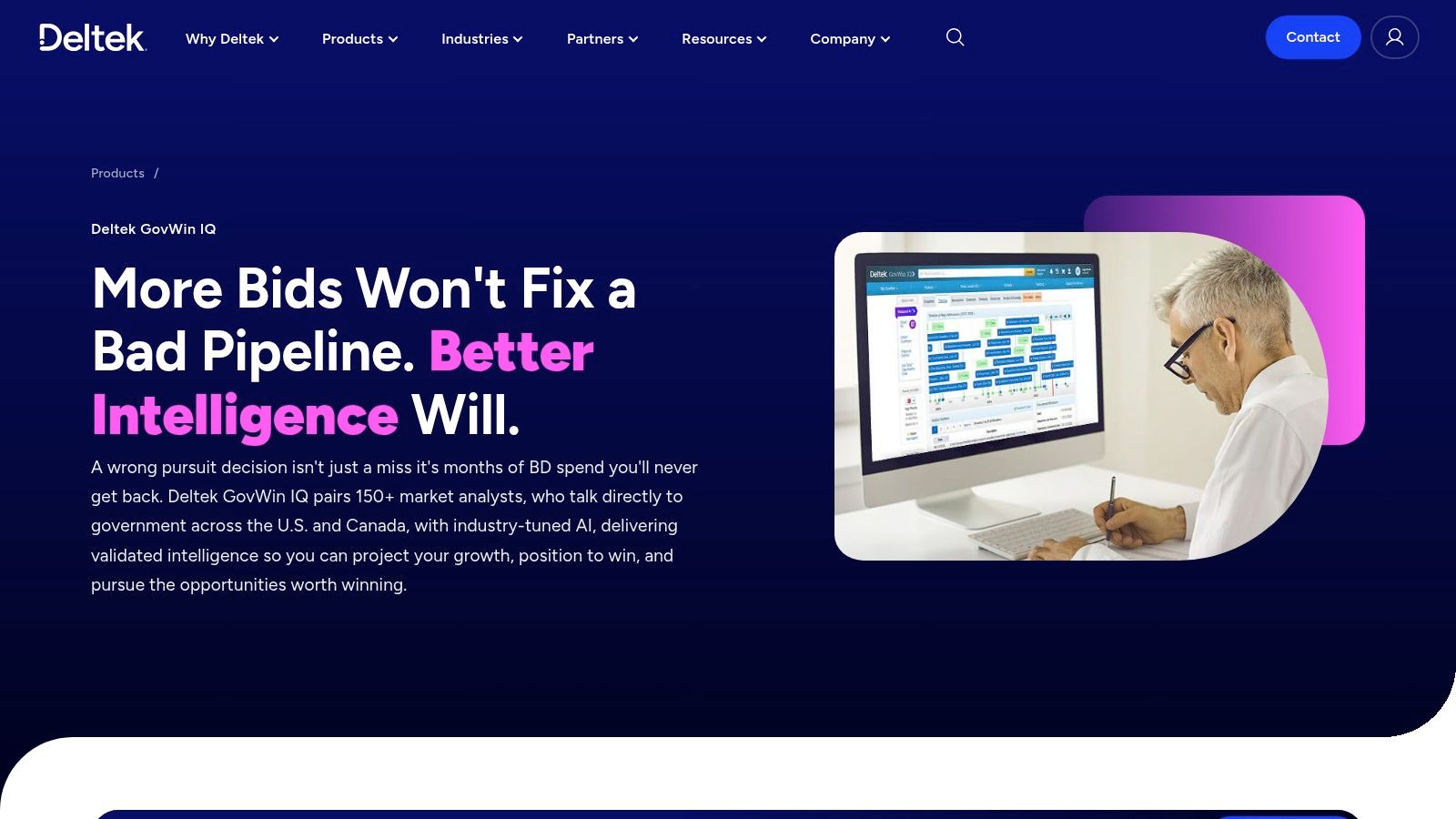
Deltek GovWin IQ is best known for validated market intelligence, early pipeline visibility, and capture planning across federal and SLED environments. Deltek's product positioning centers on helping contractors find opportunities earlier, track them more effectively, and improve win rates across federal, state, local, education, and Canadian markets (Deltek GovWin IQ, Deltek SLED market analysis).
Its strongest value shows up in forecasting and competitive intelligence. Deltek continues to emphasize analyst support, early opportunity identification, competitive context, and broad SLED coverage sourced across all 50 states (Deltek SLED market analysis). Teams already operating in the Deltek ecosystem may also benefit from integration with Costpoint and related business systems.
Where GovWin IQ fits best
GovWin IQ is a strong fit for organizations that already treat capture as a disciplined function. If you have a dedicated BD team, proposal support, and leadership that wants stronger visibility into upcoming opportunities, it can help improve prioritization and reduce blind spots. It is especially useful for firms that want a broad view of federal and SLED movement rather than only agency-by-agency postings.
Pricing is quote-driven, so buyers should expect a consultative sales process. Deltek promotes a trial or demo path through its sales flow, though detailed package pricing is not posted publicly on the main GovWin pages (Deltek GovWin IQ). For teams evaluating alternatives, SamSearch's GovWin alternatives guide is a useful companion read.
Best for: large primes and growth-focused firms that want analyst-curated pipeline intelligence.
Website: Deltek GovWin IQ
4. GovTribe
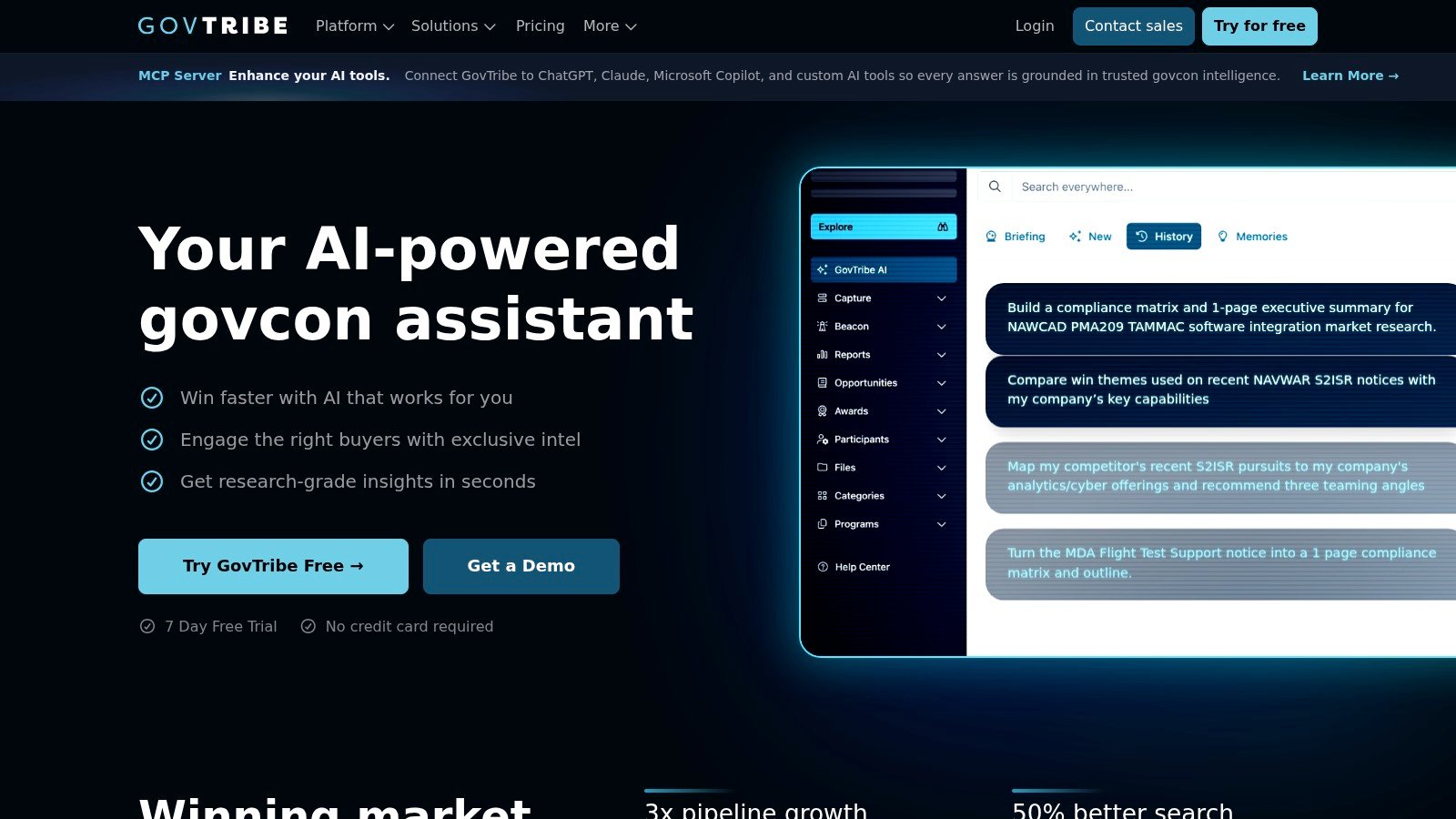
GovTribe works well for teams that want federal, state, and local opportunity data in a more accessible interface. Its AI-assisted search, competitive context, and award history keep the workflow practical for smaller capture teams that value speed and usability.
Another reason GovTribe stands out is pricing transparency. GovTribe's official plan guide lists annual pricing that is clearer than many competitors: Launch at $1,500, Launch Plus at $1,900, Growth at $5,000, Growth Plus at $6,000, and Scale as custom pricing (GovTribe plan guide). The same guide also details plan limits, coverage, and export allowances, which makes it easier for buyers to compare practical fit before booking a call.
Why GovTribe is worth considering
GovTribe fits teams that want fast search, straightforward tracking, and a conversational interface for opportunity research. It also suits organizations that need more than basic portal alerts but do not want a heavier enterprise rollout. The competitive intelligence component is useful when you need to quickly spot award patterns and decide whether an opportunity is worth pursuing.
Some capabilities sit behind higher tiers, and the plan guide shows practical limits by plan, such as 1 user on Launch and 5 users on Growth, plus export caps that can matter for heavier research workflows (GovTribe plan guide). Teams should test collaboration settings, export limits, and daily workflow fit before adopting it broadly.
Buy for the search behavior your team will actually use, not the feature list you hope they will adopt later.
For teams that want a modern discovery workflow and visible pricing signals, GovTribe is worth shortlisting. If you are comparing it against broader GovCon operating systems, the GovTribe alternatives page is a useful check on whether you need discovery alone or a deeper capture stack.
Best for: teams that want fast opportunity search and competitive intelligence with a lower-friction interface.
Website: GovTribe
5. BidNet Direct
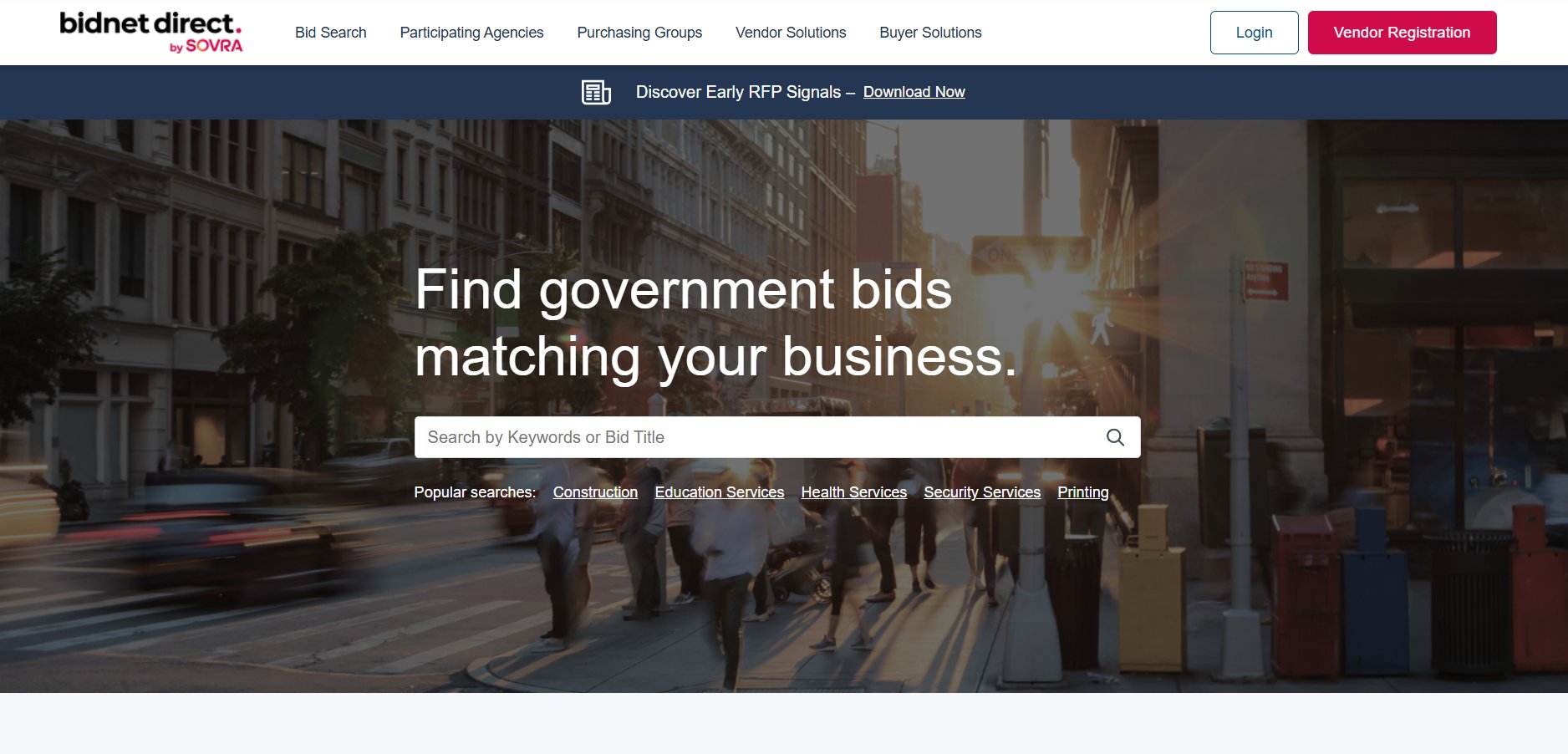
BidNet Direct fits vendors that need steady access to state and local opportunities without relying on scattered agency websites. Many agencies post solicitations directly into the network, so local bids are easier to track in one place. For firms selling to municipalities, counties, schools, and other SLED buyers, that distribution model can save a significant amount of manual effort.
The platform also supports electronic bid submission where agencies allow it. BidNet's vendor guidance shows a structured online flow with proposal, submission, and confirmation steps, plus support for uploaded documents and pricing entry formats (BidNet Direct, Electronic Bid Submission). Vendor registration also ties alerts to purchasing groups, so one login can surface a useful mix of opportunities across a wider region.
Where BidNet Direct fits best
BidNet Direct is strongest when your pipeline depends on repeat visibility into local and regional purchasing groups. It also helps teams that want a dedicated vendor support path instead of piecing together the procurement process across dozens of public websites. That can be especially useful for firms without a large proposal operations function.
BidNet Direct currently shows a Basic tier at $0, Local at $599 per year or $100 per month, Regional at $1,199 per year or $200 per month, and National at $1,999 per year or $330 per month, with add-ons such as Federal Bids at $149 per year or $25 per month and Advertising Profile at $249 per year or $40 per month (BidNet Direct vendor solutions). That makes cost planning more straightforward, though actual ROI still depends on where your target agencies post and whether your buying jurisdictions participate.
For SLED-focused contractors, BidNet Direct shows why discovery and execution are often separate decisions. If your team is building a regional bidding workflow, the state and local contracting software guide is a useful comparison point for understanding where a shared bid network fits in the broader process.
Best for: vendors targeting state and local buyers who post directly into a shared bid network.
Website: BidNet Direct
Top 5 Government Procurement Software Comparison
| Product | Coverage and Market | Key Capabilities | Target Audience | Unique Selling Points | Pricing and Access |
|---|---|---|---|---|---|
| SamSearch (Recommended) | Federal, SLED, DIBBS/defense, subcontracting, SBIR, grants, Canada, broad agency coverage | AI solicitation parsing (Sammy), SOW extraction and L/M mapping, compliance matrices, proposal drafting, partner discovery, pipeline/Journey Hub, awards and pricing analytics | Established government contractors, mid-market and enterprise | End-to-end GovCon OS, 600K+ contractor profiles, enterprise security posture, working-capital finance, discovery plus execution in one platform | Seat/module annual licensing, quote on demo |
| Civio.ai | GovCon discovery, capture, proposal, and contract workflow support | AI-assisted proposal development, FAR-aware requirement handling, compliance matrix generation, drafting support, Microsoft Word and Salesforce integrations | Contractors that want AI help across pursuit and proposal workflows | AI-native B2G platform with broader lifecycle support than a draft-only tool | Public starter pricing from $24,000 to $28,000 per year, higher tiers quoted |
| Deltek GovWin IQ | Federal, SLED, education, and Canada with analyst validation | Early opportunity forecasts, analyst-curated competitive and teaming intel, Deltek integrations | Large primes and growth-focused firms using Deltek or mature capture processes | Analyst-backed forecasts and deep market context | Enterprise subscription, quote-only, trial/demo path promoted |
| GovTribe | Federal, state, and local | AI conversational search, competitive insights, award histories, proactive alerts | Capture teams wanting fast search and AI-assisted discovery | Fast, user-friendly search, public plan guide, free trial/credits messaging on official materials | Public annual tiers from $1,500, higher plans and custom scale |
| BidNet Direct (mdf commerce) | State and local, with optional federal add-on | Vendor registration, portal-native alerts, Electronic Bid Submission (EBS) | Vendors targeting SLED opportunities and regional procurements | Direct access to agency-posted solicitations, practical statewide and multi-state plans | Free basic access, paid tiers from $599 per year |
How to Choose the Right Platform
Choosing software in this space is not about collecting the longest feature list. It is about matching the platform to the work your team actually does. Procurement software that fits the wrong workflow often turns into shelfware, even when the feature set looks impressive in a demo.
The most common mistake is confusing market intelligence with execution workflow. Tools like SamSearch, Civio.ai, GovWin IQ, and GovTribe help teams find, qualify, and work opportunities. Platforms like BidNet Direct often shape how vendors interact with the agency posting and submission process itself. In practice, many successful contractors use both, because one tool identifies the chase and the other supports a smooth submission process.
If your team wants the fewest handoffs and the most unified process, SamSearch has the clearest advantage in this list because it connects discovery, qualification, teaming, proposal support, and workflow management in one place.
Evaluation Checklist
Before you book demos, make the team answer the hard questions.
Market Focus: Are you primarily serving Federal, SLED, or both?
Team Size: How many people need access across BD, capture, proposal, and leadership?
Workflow Need: Do you need end-to-end capture support or just opportunity discovery?
Priority Features: Is AI proposal assistance, teaming data, or forecast intelligence essential?
Budget: What is the annual ceiling for software based on total workflow value, not just sticker price?
The best way to evaluate any platform is to test it with a live solicitation. That is where you see whether the software can extract requirements cleanly, preserve traceability, and support a compliant first draft instead of only producing a summary.
Implementation and ROI
Implementation should start with a clear internal owner, not a committee. Import the current pipeline, configure searches and alerts immediately, and define success metrics before the first user logs in. If that work is skipped, teams usually drift back to email, spreadsheets, and disconnected bookmarks under pressure.
Track ROI with practical measures. Measure time saved on opportunity discovery, the number of new qualified leads added to pipeline, the reduction in proposal rework, and whether your team is making stronger bid or no-bid decisions over time.
For serious government contractors, the best software does more than surface opportunities. It helps the team pursue the right work faster, with fewer handoffs and less duplication. If you are ready to move from manual chasing to a more disciplined GovCon operating model, start with SamSearch, book a demo, and see how an AI-first platform built for established contractors can tighten your discovery, capture, and proposal workflow in one place.
Government Procurement Software FAQ
What is government procurement software?
Government procurement software helps contractors find, track, qualify, and respond to public sector opportunities. Depending on the platform, it may focus on bid discovery, market intelligence, proposal development, compliance workflows, or electronic submission.
What is the difference between bid discovery software and proposal software?
Bid discovery software helps teams identify and monitor opportunities across federal, state, and local portals. Proposal software helps teams analyze solicitations, extract requirements, coordinate contributors, draft responses, and maintain compliance during submission.
Which government procurement software is best for federal contractors?
That depends on your workflow, but SamSearch stands out for contractors that want a unified system for discovery, qualification, capture, proposal support, and pipeline control. Firms that prioritize analyst-backed forecasting often consider Deltek GovWin IQ, while teams that want lighter-weight search frequently shortlist GovTribe.
Which option is best for state and local bidding?
BidNet Direct is one of the strongest options for vendors focused on state and local procurement because it centralizes many agency-posted opportunities and can support electronic bid submission in participating jurisdictions.
Is AI government procurement software worth it?
AI can be highly valuable when it reduces manual review time, improves requirement traceability, speeds up first drafts, and cuts rework between capture and proposal teams. The best way to validate value is to test a live solicitation and measure time saved.
What should contractors look for before buying a platform?
Focus on coverage, workflow fit, collaboration, traceability, security, and pricing. Also check whether the platform fits your team size and whether it solves the actual bottleneck, discovery, qualification, drafting, or submission.
Can one platform handle everything?
Sometimes. Many contractors still use one tool for market intelligence and another for proposal or submission workflow. But platforms like SamSearch are designed to reduce that fragmentation by connecting more of the GovCon process in one environment.
How should teams evaluate ROI?
Start with practical metrics. Measure time saved on opportunity discovery, the number of qualified opportunities added to pipeline, reduced rework in proposal development, and whether the team is making better bid or no-bid decisions over time.
Is government procurement software only for large contractors?
No. Larger platforms often serve mature capture organizations, but smaller firms can still benefit from tools that improve opportunity visibility, reduce manual tracking, and help standardize response workflows.
What is the best software stack for growing GovCon teams?
For growing teams, the best stack usually balances discovery, qualification, proposal execution, and collaboration. Some teams prefer separate point solutions. Others prefer a more unified system. If reducing handoffs, duplicated records, and manual compliance work is a priority, SamSearch is one of the strongest options because it ties multiple stages of the GovCon workflow together in one platform.