10 BidNetDirect Alternatives and Competitors in 2026
The usual advice is to treat every BidNetDirect alternative as simply another place to receive bid alerts. For established government contractors, that framing is too limited. A solicitation aggregator, an agency eProcurement portal, a federal notice database, and a capture intelligence platform can all help identify opportunities, but they support very different parts of the pursuit lifecycle.
BidNetDirect is best understood as a state and local e-sourcing network. Its value often comes from notice distribution and access to participating agency opportunities, but notice access alone does not always provide forecast visibility, incumbent insight, partner discovery, compliance extraction, or proposal execution support.
This guide compares BidNetDirect alternatives and competitors by market coverage, document access, forecast signals, award intelligence, workflow integration, pricing transparency, implementation effort, and buyer fit. The most important distinction is whether a product helps you discover a posted bid, participate in a specific agency network, or manage the full pursuit from early signal through submission. SamSearch is built for established government contractors in the mid-market and enterprise segment that want a more connected operating system for growth.
Table of Contents
- 1. SamSearch
- 2. Civio.ai
- 3. HigherGov
- 4. BidPrime
- 5. OpenGov Procurement
- 6. Euna Supplier Network
- 7. Ion Wave Technologies
- 8. PlanetBids with optional VendorLine
- 9. DemandStar
- 10. SAM.gov Contract Opportunities
- BidNetDirect Alternatives, Top 10 Comparison
- Choose Coverage Before You Choose Software
- FAQ
- What is the best BidNetDirect alternative?
- Is BidNetDirect the same as SAM.gov?
- Which BidNetDirect competitors are best for state and local bids?
- Which platform is best for federal and SLED opportunity discovery together?
- Are there free alternatives to BidNetDirect?
- What should contractors compare before switching from BidNetDirect?
1. SamSearch
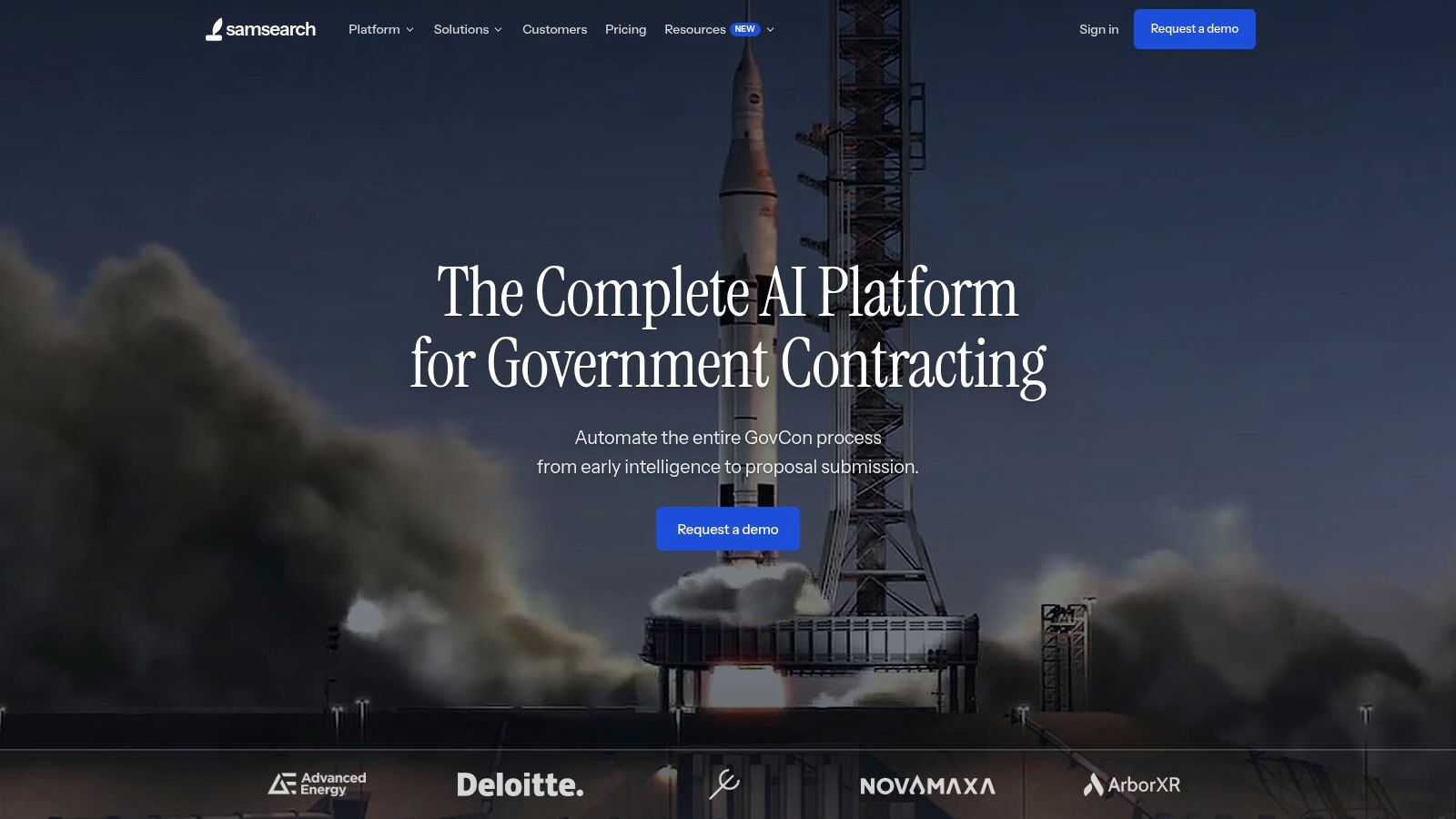
SamSearch is more than a BidNetDirect alternative. It is a connected GovCon operating system for established contractors that want to manage opportunity discovery, capture, proposal work, and post-award finance in one place. Instead of forcing teams to move the same opportunity between disconnected tools, SamSearch brings pursuit activity into one workflow across Influence, Capture, Analyze, Manage, Respond, and Finance.
Its AI agent, Sammy, helps teams search federal, SLED, DIBBS, subcontracting, SBIR and grant, and Canadian sources. It can extract solicitation requirements into a cited compliance matrix, summarize dense documents, answer questions about RFP material, and help draft proposal sections from approved company content. The practical difference is that qualified opportunities do not stop at alerts. They become active workspaces inside Journey Hub, where capture and proposal teams can coordinate around the same record.
Why SamSearch stands out beyond bid alerts
SamSearch combines broad opportunity discovery with forecast and recompete visibility, historical award and pricing analysis, and partner discovery across 600K+ contractors. Salesforce, HubSpot, Slack, and Teams integrations help keep capture leaders, proposal managers, and executives aligned without rebuilding the same pipeline in multiple systems.
Compared with tools that focus mainly on notice feeds or agency-network participation, SamSearch is built to reduce handoffs across the entire business development process. A team can move from early opportunity signal to qualification, compliance review, partner evaluation, draft support, and internal collaboration without recreating the record in separate systems. That is especially useful for contractors pursuing federal and SLED opportunities at the same time, where fragmented workflows often create missed deadlines, duplicate work, and weaker pipeline visibility.
The platform also emphasizes enterprise-ready controls, including an independent CPA audit, SOC 2 Type II, third-party VAPT A+ ratings, US-only hosting, SAML 2.0 SSO, and a policy that customer documents are not used to train shared models. Customer case studies report more than $3B+ in tracked contract wins, dozens of multi-million-dollar awards, and thousands of relevant opportunities across federal and 50,000+ SLED sources. These are customer-reported results, so buyers should confirm fit against their own markets and workflows during diligence.
SamSearch is especially strong when a team needs to connect early signals, compliance analysis, partner selection, proposal drafting, and pipeline management in a single environment. For established contractors with complex pursuits across multiple markets, that connected approach can be a major advantage over a narrow posting feed or agency portal.
Key strengths
Pros
End-to-end workflow: Connects discovery, capture, proposal collaboration, and finance.
Grounded AI assistance: Sammy extracts requirements and drafts from cited solicitations and approved content.
Broad validated coverage: Includes federal, SLED, DIBBS, subcontracting, SBIR and grants, and Canada.
Enterprise controls: Supports SSO, security reviews, US hosting, and customer-content protections.
Team connectivity: Integrates CRM, collaboration, contractor compatibility, and pursuit activity in one system.
For contractors comparing SamSearch's opportunity-finding capabilities with narrower BidNetDirect alternatives, the real test is workflow scope. Choose a feed if all you need is posted-bid discovery. Choose SamSearch when the pursuit requires coordinated intelligence and execution across several markets.
Website: SamSearch
2. Civio.ai
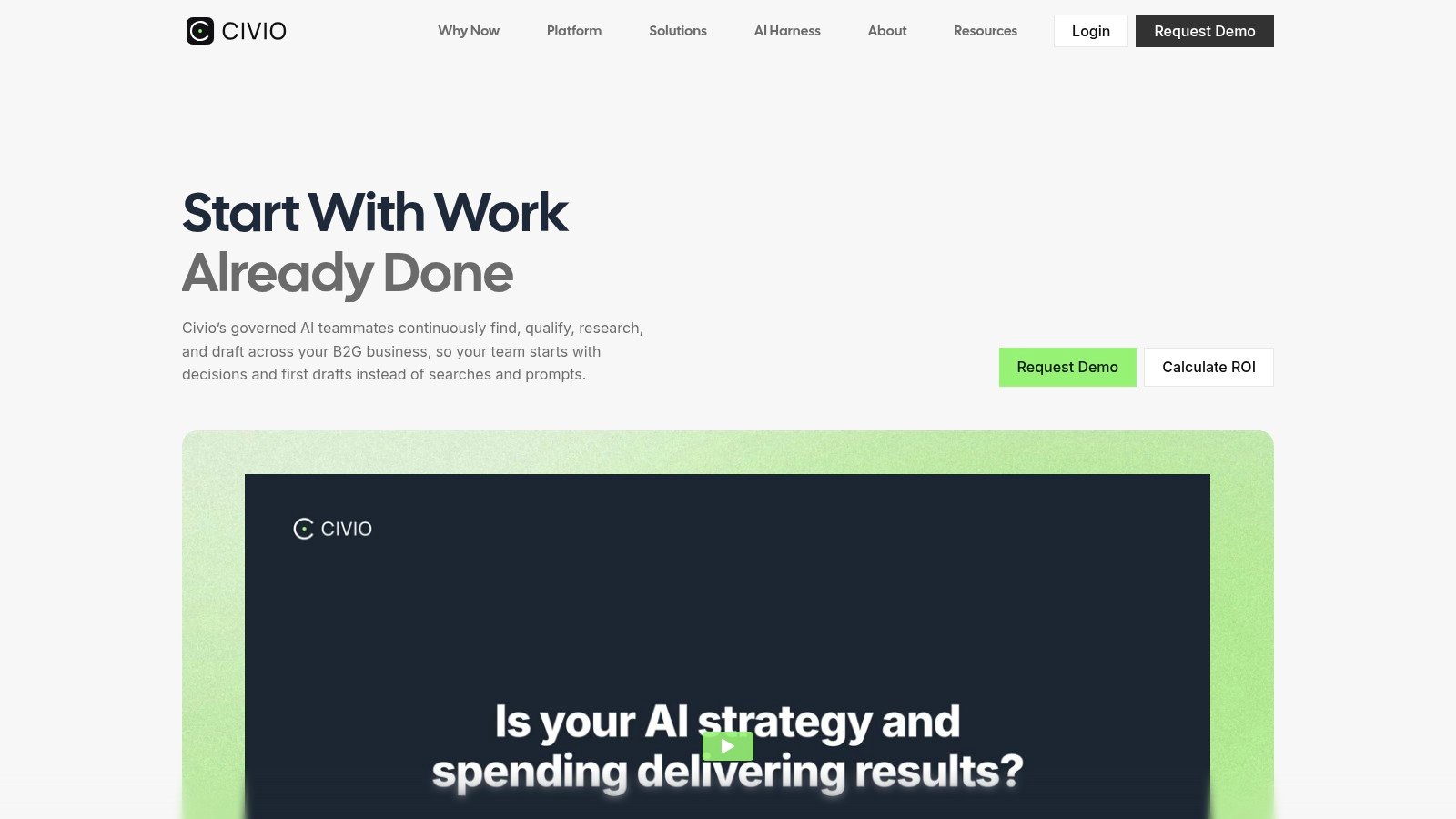
Civio.ai positions itself as an AI-native platform for government contractors that want help finding, qualifying, researching, and drafting across the B2G revenue lifecycle. Rather than operating as a notice feed alone, the platform is aimed at capture and proposal teams that want governed AI workflows for qualification, requirement review, compliance support, and response drafting.
AI-first workflow for capture and proposals
According to Civio.ai materials, the platform supports searches across SAM.gov, FPDS, DIBBS, and 1,000+ SLED sources, then layers AI assistance on top for go or no-go analysis, compliance matrices, and first-draft proposal work (The definitive guide to AI agents for government sales). Civio.ai also claims proposal time savings of up to 60%, though buyers should validate those results against their own process and review standards during diligence (Civio.ai FAQ).
The main appeal is workflow compression. Teams can reduce handoffs between search, research, compliance extraction, and draft generation. Contractors comparing it with SamSearch should pay close attention to breadth of workflow, collaboration needs, and the level of end-to-end operating support they want across the full pursuit lifecycle.
Pros
AI-native workflow: Built around qualification, research, requirement analysis, and drafting.
Relevant source coverage: Positions itself across federal data sources and 1,000+ SLED sources.
Capture-to-proposal fit: Better aligned with response operations than a basic alert platform.
Cons
Pricing requires validation: Official public pricing is not clearly defined across available materials.
Process fit matters: Results depend on review discipline, source quality, and proposal operating standards.
Website: Civio.ai
3. HigherGov
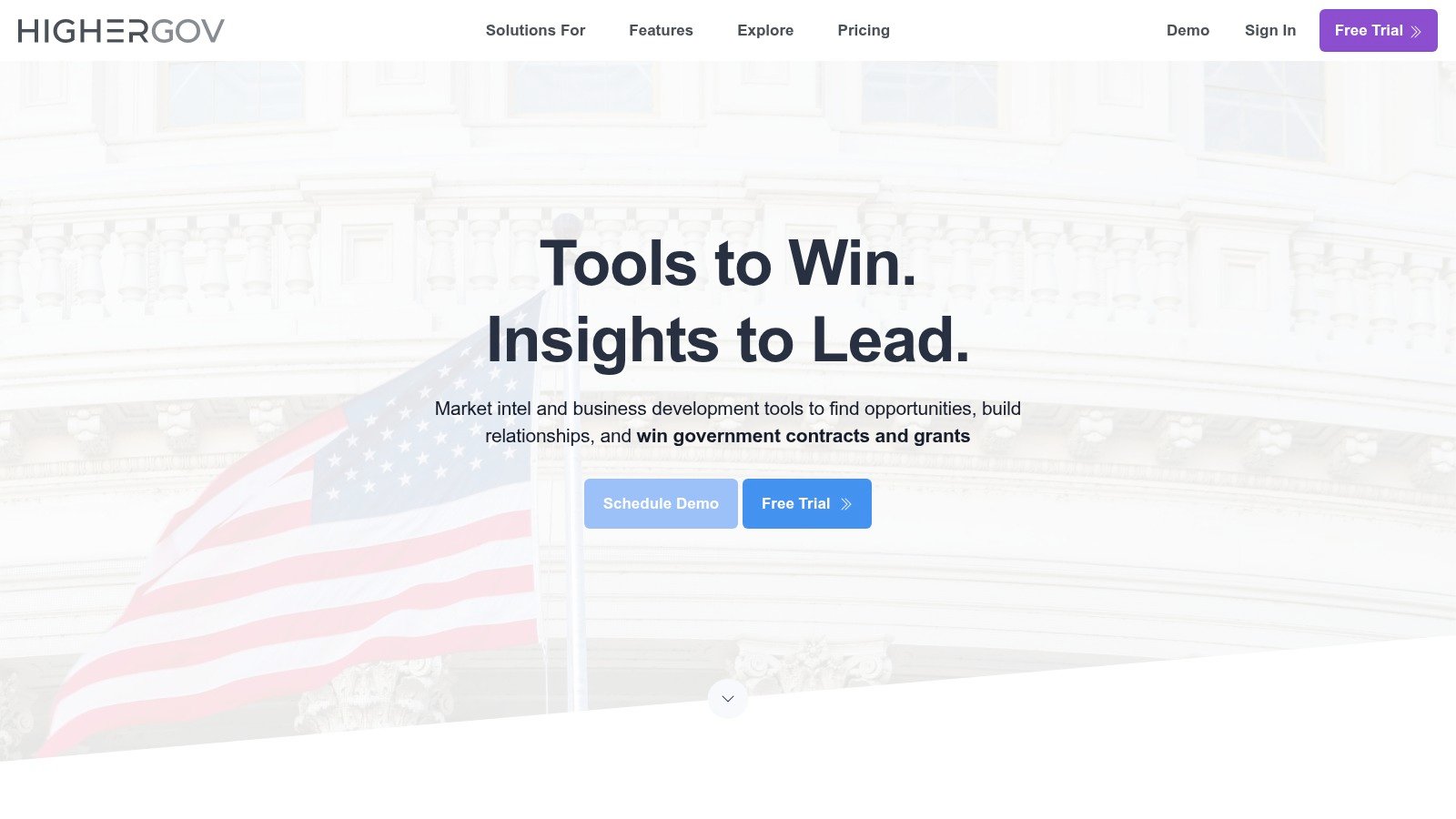
HigherGov is a practical choice for teams that want more than bid alerts. It combines federal and SLED opportunity search with forecasts, alerts, award research, competitor information, labor-pricing data, contact records, and pipeline CRM workflows. That can help capture managers spend less time collecting inputs and more time deciding which pursuits deserve attention.
Its AI can extract forms, dates, statements of work, and other document details, then assist with proposal drafting. That makes it more operationally useful than a basic portal when teams want to move from search into document review and response planning.
Accessible intelligence for growing teams
HigherGov publishes team-plan information, which can make initial budgeting easier than quote-only products. Buyers should still verify current tiers, user limits, export allowances, and API access before making a final comparison.
The product is often a good fit for growing contractors that want structured intelligence without moving immediately to a heavier enterprise operating model. Contractors comparing it with SamSearch should pay attention to the depth of collaboration, breadth of sources, and how much of the full pursuit workflow they want in one platform. The HigherGov alternatives and competitors comparison offers another framework for evaluating that choice.
Pros
Connected workflow: Links search, award research, AI document review, proposal drafting, and pipeline tasks.
Pricing visibility: Published plan information supports early budget screening.
Practical entry point: Gives growing teams structured intelligence without requiring a large incumbent platform.
Cons
Coverage depth varies by use case: Teams with highly specific research requirements should test fit carefully.
Tier review needed: Export and API capabilities should be confirmed during procurement.
Website: HigherGov
4. BidPrime
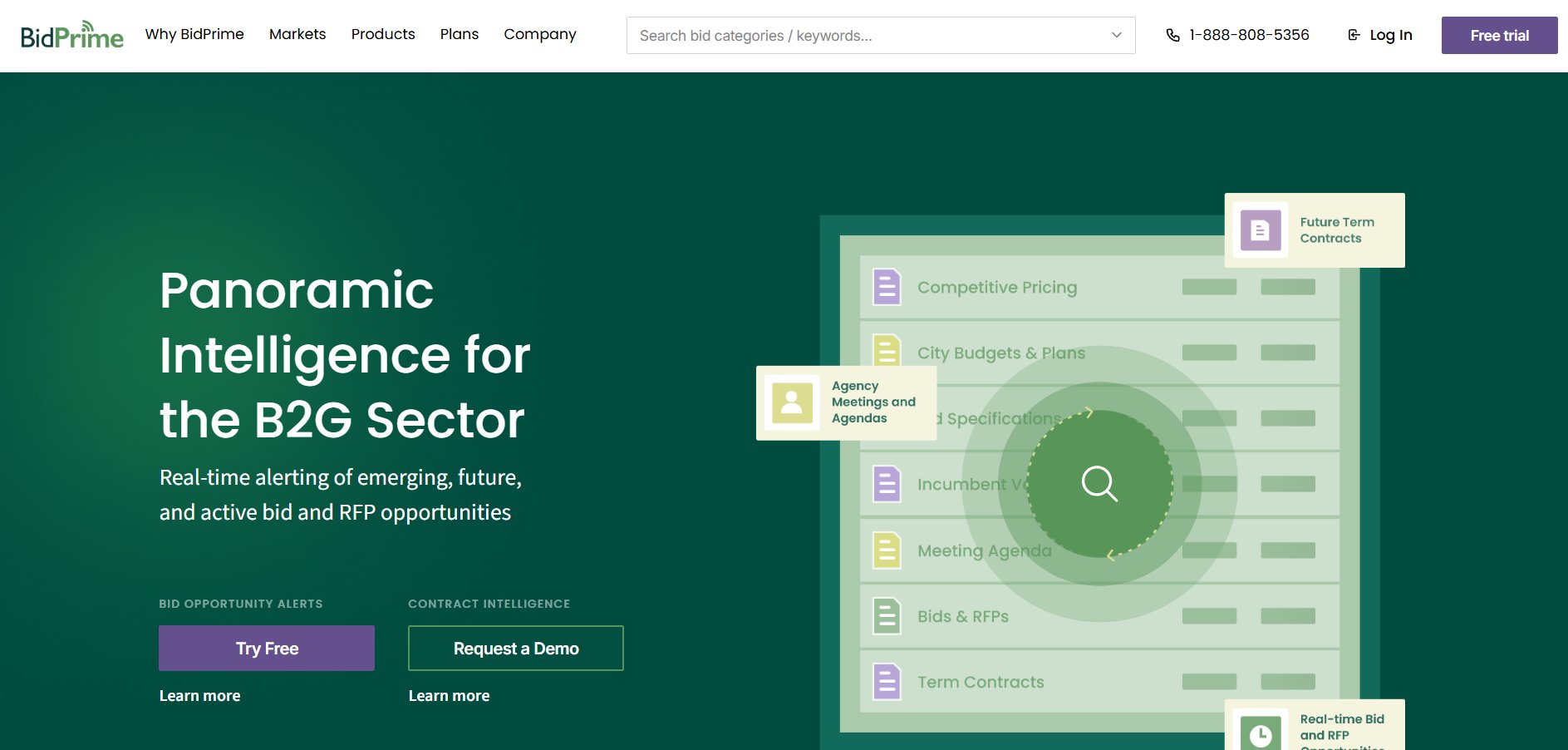
BidPrime is one of the closer BidNetDirect substitutes for contractors that want broad searchable solicitation coverage rather than a full capture intelligence platform. It aggregates federal and SLED opportunities, retrieves source documents, offers in-browser DocView, and supports text searches within specifications. That makes it useful for teams that prioritize daily go or no-go review and fast document access.
Historical data and analytics provide additional context. CSV exports and a Salesforce connector can also help teams move qualified opportunities into an existing business development process instead of replacing their CRM.
Coverage and document workflow
BidPrime can work well for teams pursuing federal and nationwide SLED markets that want notices and documents in one search environment. It is strongest as a discovery and review tool. Contractors that need a more connected operating layer for forecasts, collaboration, partner discovery, compliance analysis, and proposal coordination may still want a broader platform at the center of the workflow.
Practical rule: Choose BidPrime when the main bottleneck is finding and reviewing federal or SLED documents. Choose a deeper platform when the main bottleneck is coordinating pursuits, aligning teams, and turning opportunity signals into execution.
Pros
Document workflow: DocView and text search speed specification review.
Broad aggregation: Supports federal and nationwide SLED opportunity searches.
CRM handoff: CSV exports and Salesforce connectivity fit existing processes.
Cons
Best for discovery and review: Teams may still need other tools for broader capture orchestration.
Plan comparison matters: Buyers should compare document retrieval, user access, and connector terms carefully.
Website: BidPrime
5. OpenGov Procurement
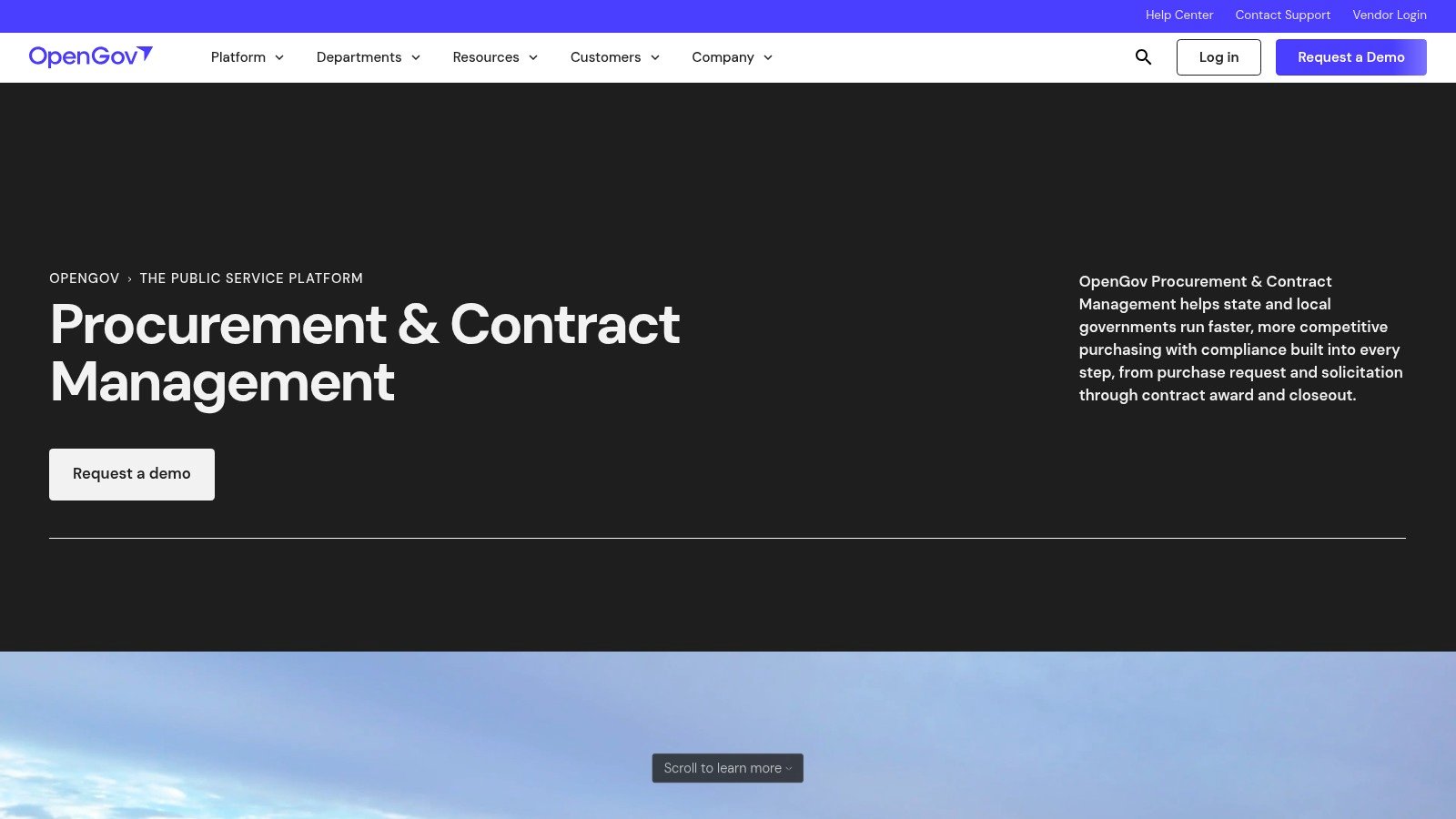
OpenGov Procurement serves a defined agency network rather than the entire public-sector opportunity market. Its value depends on whether the agencies a contractor targets publish through OpenGov. Suppliers can register, receive alerts, and submit electronic bids across participating agencies without a vendor subscription fee.
The platform also supports agency-side evaluation, contract management, shared vendor records, and role-based controls. That can make participation efficient inside the network, though contractors with broader market coverage needs may still need additional discovery and intelligence tools.
A participation portal, not a full capture platform
OpenGov is a solid fit for contractors whose target buyers already use the platform. A vendor can manage notices from those issuers in one place and reduce repeated portal administration. The key question is coverage. Contractors should map their priority agencies first, then judge how much of their pipeline territory the network actually represents.
A clean supplier experience should not be confused with full market intelligence. OpenGov works best as an agency participation channel. Teams that need federal monitoring, wider SLED discovery, historical analysis, or a full capture workflow often pair it with a specialist platform.
For a broader comparison of procurement software categories, see SamSearch's government procurement software guide.
Pros
Low participation friction: Registration, alerts, and electronic bid submission support network activity without a vendor subscription fee.
Agency workflow depth: Evaluation and contract-management functions provide structured procurement processes.
Useful network fit: Buyers targeting OpenGov agencies can reduce repeated portal administration.
Cons
Network limitation: It does not cover every SLED issuer or federal opportunity.
Limited intelligence layer: Forecasting, award analysis, and capture context are lighter than in specialist platforms.
Coverage-dependent value: Contractors should verify target-agency adoption before relying on it as a core discovery channel.
Website: OpenGov Procurement
6. Euna Supplier Network
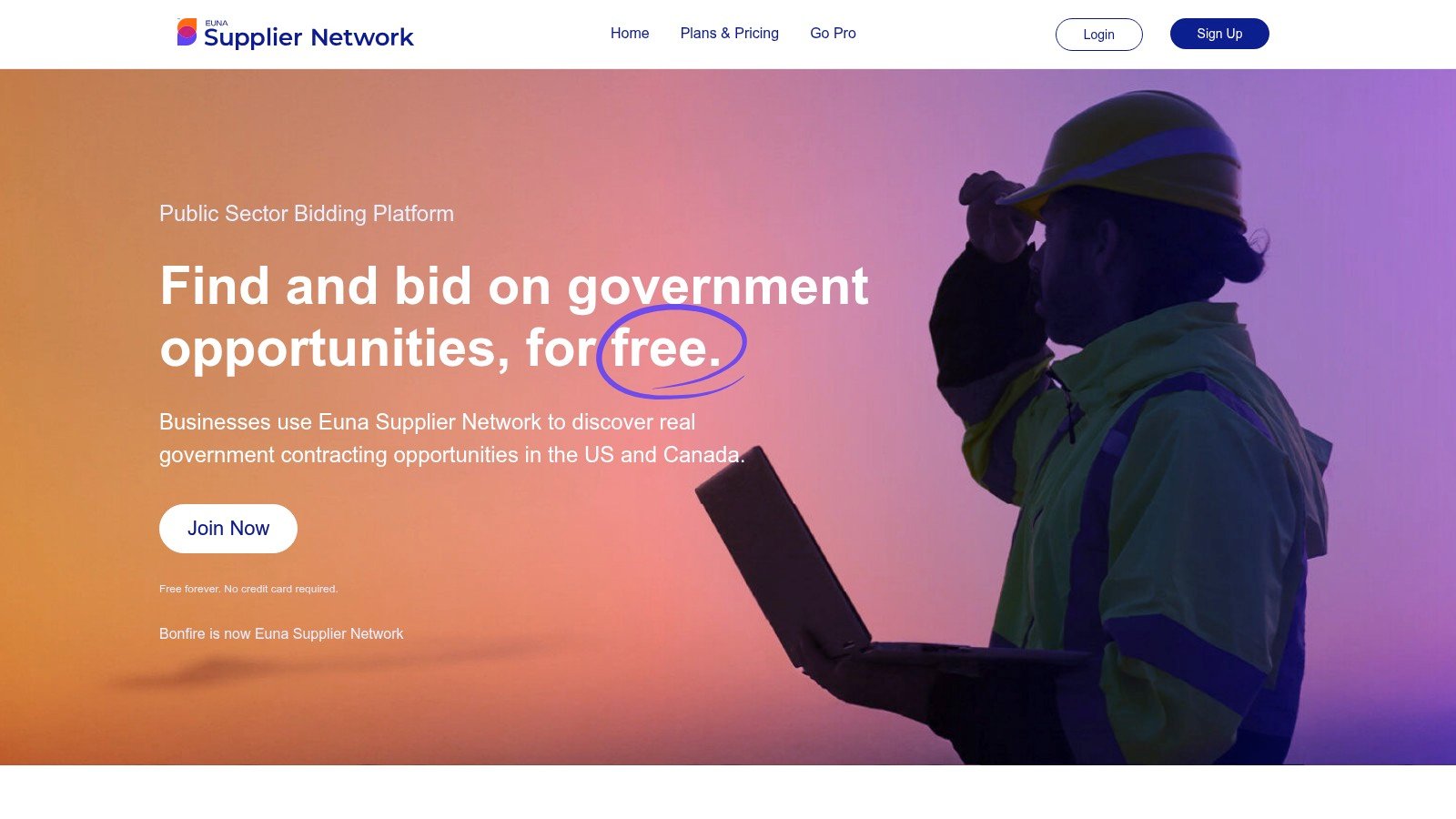
Euna Supplier Network, formerly Bonfire Vendor, is a supplier-facing portal for opportunity discovery and electronic bidding among participating public-sector agencies in the United States and Canada. The platform is designed around participation within its network. Suppliers can search posted opportunities, submit responses, receive email alerts, and access premium matching or upgrade features where available.
Its connection to the Euna and Bonfire eProcurement ecosystem can reduce setup effort for vendors already familiar with those workflows.
Value depends on issuer participation
Euna is most useful when target agencies publish through the network. Contractors focused on those issuers may gain a streamlined discovery and submission channel. It is less effective as a standalone system for teams that need market-wide discovery, federal coverage, or deeper competitive intelligence.
Contractors should also confirm how alerts, saved searches, account permissions, historical records, and premium functions work in their actual supplier setup. Some enhanced capabilities may require a fee, so the basic account should not be treated as the full commercial offering.
Pros
Centralized participation: Gives suppliers one account for opportunities from participating Euna agencies.
Workflow continuity: Familiar for teams already working in the Bonfire or Euna ecosystem.
Supplier-process alignment: Connects vendor activity with agency-configured eProcurement workflows.
Cons
Issuer dependency: Coverage is limited to agencies using the Euna or Bonfire ecosystem.
Limited market context: It does not offer the same market-wide forecasting and award analysis as specialist platforms.
Feature verification needed: Buyers should confirm which matching, alerts, and upgrade functions are included.
Website: Euna Supplier Network
7. Ion Wave Technologies
Ion Wave Technologies, often called IWT, is an eProcurement and e-bidding platform used by school districts, counties, and municipalities. Its value depends on the agencies a contractor targets. After registration, suppliers may receive invitations, manage communications, review addenda, and submit responses within the issuer's configured workflow.
IWT belongs in the agency-specific portal category, not in the same category as market-wide discovery or full capture intelligence systems. For vendors pursuing education or local government work, that direct workflow can still be very useful.
Useful for agencies already in the network
For a K-12 contractor, reliable registration and response compliance may matter more than a national intelligence layer. Keeping amendments, communications, and submission steps in one event record can reduce process risk.
Contractors should still verify which target districts, counties, and municipalities use IWT and how invitations are triggered. If only part of the territory is covered, IWT usually works best as one portal within a broader opportunity-monitoring stack.
Pros
Local-government fit: Relevant to school districts and municipal buyers with established IWT portals.
Compliance-oriented bidding: Keeps submissions, addenda, and communications within the event workflow.
Direct invitations: Registration with target agencies can support supplier notification.
Cons
Agency-bound coverage: Opportunities are limited to IWT customers.
Configuration varies: Each agency setup affects the vendor experience.
Limited intelligence depth: It does not replace cross-network discovery, award analysis, or forecast research.
Website: Ion Wave Technologies supplier portal
8. PlanetBids with optional VendorLine
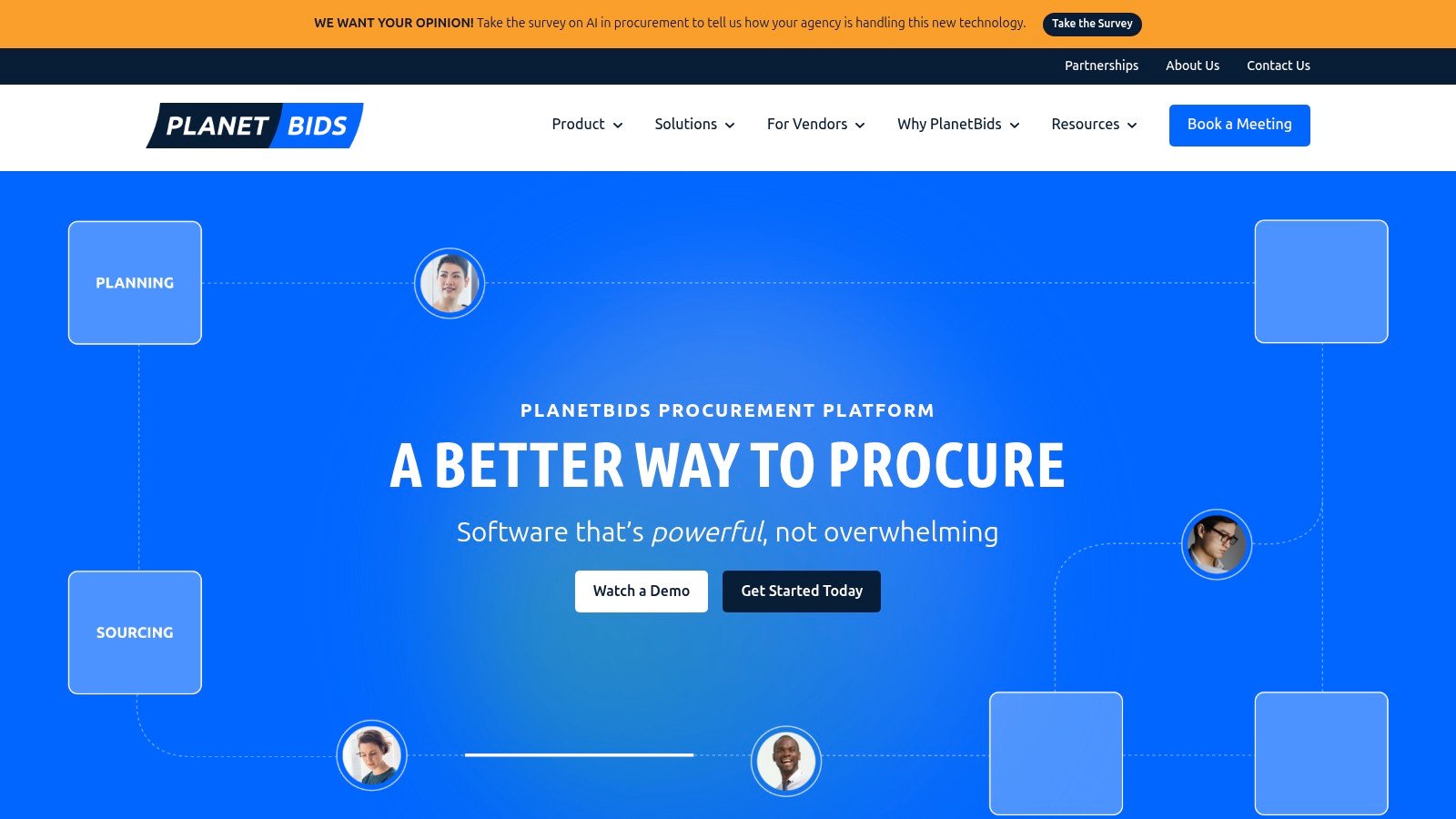
PlanetBids is primarily an agency-specific SLED eProcurement network. Participating agencies use the system to publish events, receive electronic bids, manage addenda, and preserve audit trails. That makes it useful for contractors pursuing a defined group of local-government buyers, but its base network should not be treated as a national opportunity database.
VendorLine changes the role by adding matched discovery across PlanetBids and other nationwide sources, plus bid tracking and calendar integration. That places it between a portal network and a broader discovery tool.
Choose based on workflow needs
A supplier that bids repeatedly through PlanetBids agencies may need only the base portal access. A regional contractor monitoring many public-sector sites may gain more from VendorLine's consolidated alerts and tracking. Buyers should assess total cost against existing agency registrations and other aggregators, then verify exactly which external sources and matching rules are included.
PlanetBids supports clean event records and agency workflow control. Teams that need incumbent research, forecasts, award analysis, and a broader collaborative operating system may still want a platform such as SamSearch at the center of the overall capture process.
Coverage test: Ask the vendor to run your actual NAICS, PSC, geography, and agency targets through PlanetBids and VendorLine. Verify source-level coverage, matching logic, alert rules, and export options before committing.
Pros
Agency footprint: Connects suppliers with participating local public-sector buyers.
Portal workflow: Supports browsing, electronic submission, addenda, and event records.
Optional discovery: VendorLine can add broader matching and tracking.
Cons
Base-network limits: Without VendorLine, discovery remains centered on PlanetBids agencies.
Coverage confirmation required: External sources and matching results should be validated.
Direct pricing check needed: VendorLine pricing typically requires vendor contact.
Website: PlanetBids
9. DemandStar
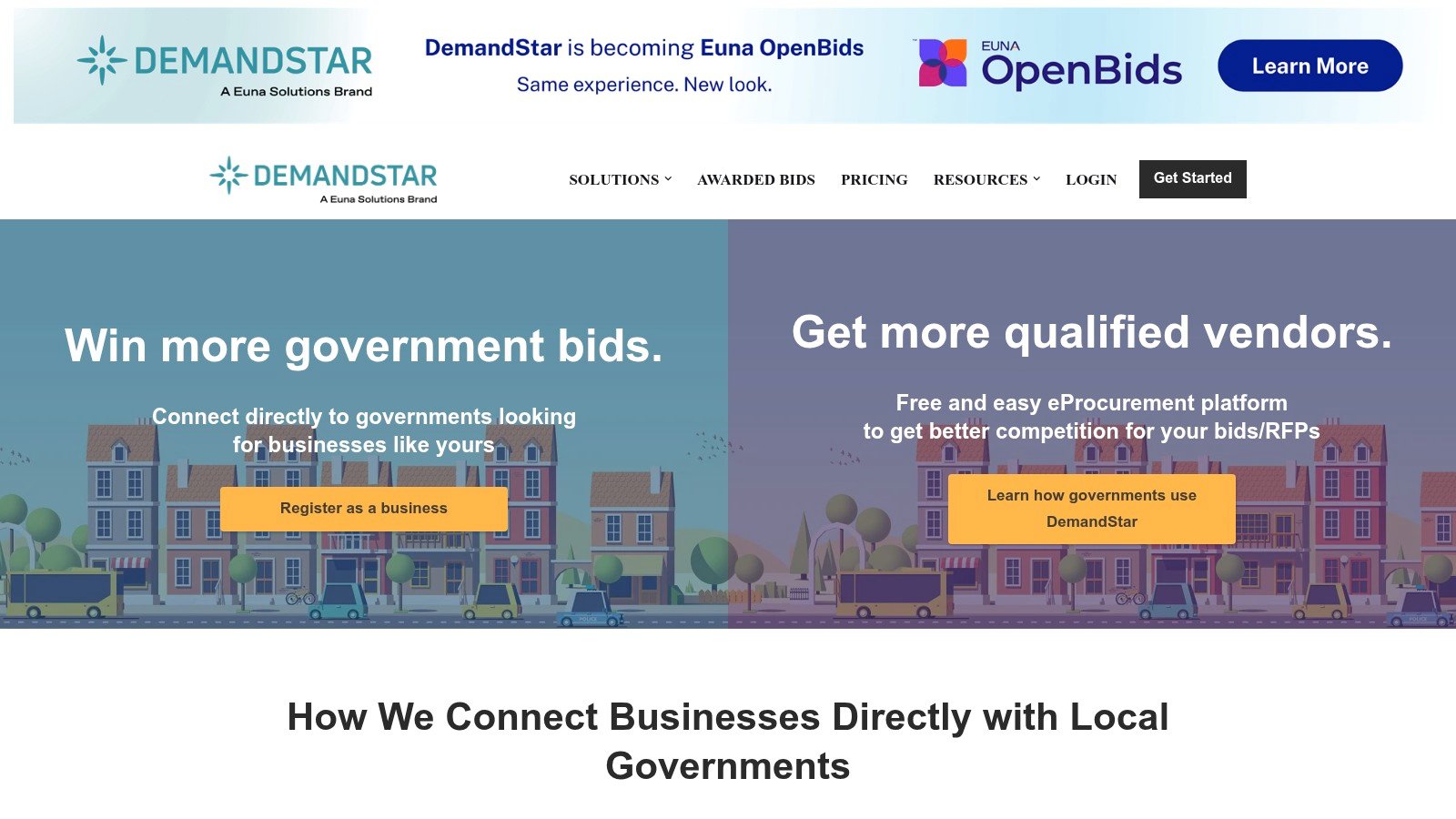
DemandStar is best understood as a regional agency-network participation tool rather than a full market-intelligence platform. Through its network, participating governments publish solicitations while suppliers search notices, receive alerts, and submit responses. A free entry point supports single-agency monitoring, while multi-agency alerts and advanced functions are part of paid plans. DemandStar
Its usefulness depends on agency participation. Contractors pursuing a defined group of cities, counties, or education buyers may gain convenient access to postings and electronic bidding in one environment.
DemandStar fits a focused regional procurement workflow. Teams with federal coverage needs or broader SLED discovery requirements typically use it as one participation channel alongside another discovery or capture platform. That distinction is what separates it from workflow-rich tools such as HigherGov, Civio.ai, and SamSearch.
Pros
Agency-network access: Connects suppliers with participating public-sector buyers.
Posting workflow: Supports notice search, alerts, electronic responses, and event records.
Low-friction entry: A supplier can begin with single-agency monitoring.
Cons
Coverage dependency: Results vary with participating agencies and target geography.
Limited intelligence layer: It does not provide full forecast, award, competitor, or capture analysis.
Plan validation needed: Multi-agency and advanced capabilities should be confirmed for your territory.
Website: DemandStar
10. SAM.gov Contract Opportunities
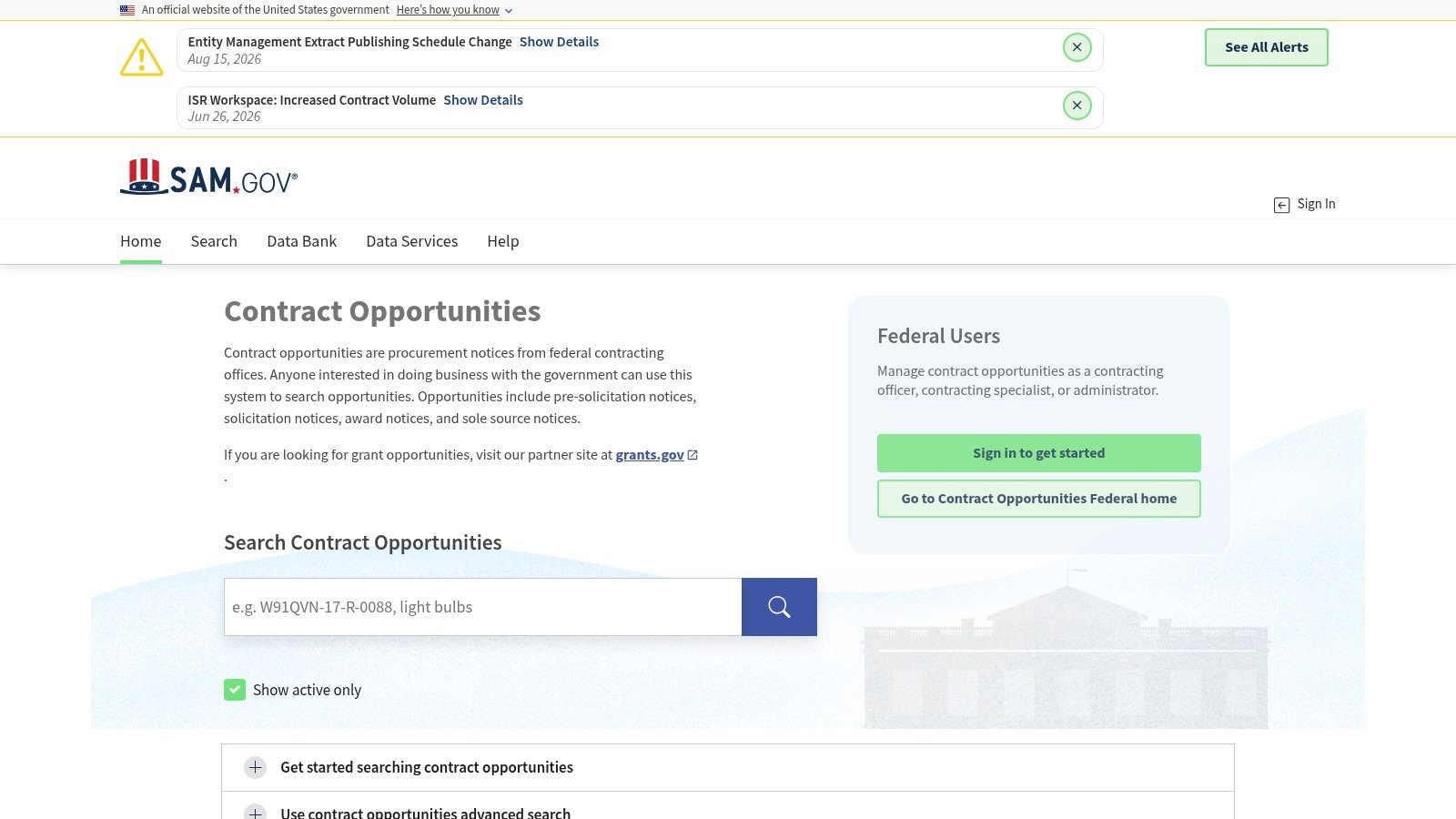
Federal contractors should start with SAM.gov Contract Opportunities, then decide whether they need additional discovery or capture software. SAM.gov is the official federal source, not a SLED aggregator or a commercial capture platform. Its notices come directly from federal contracting offices, giving it an authoritative role in federal monitoring.
The platform supports opportunity and award searches, saved searches, email alerts, public APIs, and downloadable data files. That makes it a baseline source for federal monitoring, including for teams that later add paid intelligence systems.
Its limits matter too. Coverage stops at the federal market, so state, local, and education opportunities require agency portals or aggregators. Users must also interpret solicitation documents and turn findings into qualification rules, compliance matrices, partner shortlists, and capture plans. For established contractors working across federal and SLED markets, SAM.gov is usually a starting point rather than the complete operating environment.
The SAM.gov alternatives guide for government opportunity discovery outlines where commercial products can add broader coverage, extraction, and workflow support. SamSearch is positioned for established contractors that want that wider operating layer in addition to source access.
Pros
Authoritative source: Direct federal notices, awards, and related procurement information.
No subscription cost: Search, alerts, APIs, and data files are available without a commercial platform fee.
Automation potential: Public data access supports internal monitoring and analysis.
Cons
Federal-only scope: It excludes state, local, and education solicitations.
Manual workflow: Teams still handle qualification, document extraction, competitor research, and proposal coordination themselves.
Website: SAM.gov Contract Opportunities
BidNetDirect Alternatives, Top 10 Comparison
| Product | Core features | Target audience | Key differentiator | Pricing & value |
|---|---|---|---|---|
| SamSearch (recommended) | AI-driven end-to-end GovCon OS: discovery -> capture -> analysis -> proposal -> finance; Sammy extracts requirements, drafts sections, partner scoring (600K+), forecasts and award analytics | Established government contractors, mid-market and enterprise | Integrated end-to-end workflow, proactive forecast and recompete signals, enterprise security controls, financing introductions, connected collaboration | Custom annual pricing by seat and module, demo and quote required |
| Civio.ai | AI-native B2G workflow for find, qualify, research, and draft; compliance matrices; proposal drafting; governed AI workflows | Government contractors that want AI-assisted capture and proposal operations | Strong AI-first workflow that connects qualification, research, and drafting in one platform | Pricing should be confirmed directly with vendor |
| HigherGov | Federal and SLED search, AI extraction and proposal drafting, award and pricing research, pipeline CRM and tasks | SMB to mid-market capture teams seeking AI workflows and clearer pricing | Strong AI-assisted discovery-to-response flow with published team plans | Published pricing and team plans, tiered features |
| BidPrime | Nationwide SLED and federal aggregation, document retrieval and in-browser DocView, historical analytics, CSV and Salesforce exports | Vendors needing broad daily coverage and fast document-based review | Extensive SLED breadth and in-browser document tools for fast review | Transparent plan and pricing sheet, compare against lighter alert services |
| OpenGov Procurement | Free vendor registration, saved searches and alerts, central vendor portal, full e-bidding for OpenGov agencies | Vendors targeting OpenGov state and local agencies | No vendor subscription fees, strong OpenGov agency network | Vendor experience free, agencies pay for platform |
| Euna Supplier Network (Bonfire) | Cross-agency vendor portal, email alerts, premium matching and upgrades, integrated eProcurement workflow | Vendors using Euna or Bonfire agencies | Consolidated supplier portal with familiar Bonfire-style workflows | Basic access may be free, some premium features may require fees |
| Ion Wave Technologies (IWT) | Supplier registration and invite management, in-system e-bidding, addenda tracking, evaluation workflows | Vendors serving K-12, counties, and municipalities | Strong K-12 and local-government footprint, agencies can send direct invites to registered vendors | Vendor registration often free, agency configurations vary |
| PlanetBids (with VendorLine) | Agency portals and e-bidding, vendor network search, optional VendorLine matching, reporting and audit trails | Vendors browsing many local agency portals, teams wanting optional broader matching | Large installed base of local agencies, optional VendorLine adds discovery and tracking | Base portal access often free, VendorLine is paid |
| DemandStar | Centralized SLED listings, e-bid submissions, free single-agency alerts, supplier subscription tiers | Suppliers seeking low-cost entry to SLED opportunities | Free entry for suppliers, direct-from-agency postings for timeliness | Free basic alerts, paid multi-agency and advanced tiers |
| SAM.gov (Contract Opportunities) | Official federal presolicitations, solicitations, awards; saved searches, APIs, data exports | Any federal-focused contractor, essential baseline source | Authoritative, comprehensive federal source with public APIs, free | Free to use, no subscription fees |
Choose Coverage Before You Choose Software
The right choice starts with the source of the opportunity, not the brand of the tool. Use SAM.gov as the federal baseline, especially when authoritative notices, saved searches, alerts, awards, APIs, and downloadable data matter. It is free and essential, but it does not cover SLED markets or provide a complete capture operating system.
For agency-network participation, choose based on the buyers you pursue. OpenGov Procurement, Euna Supplier Network, Ion Wave, PlanetBids, and DemandStar are most useful when target agencies publish through those networks. Their strengths are registration, alerts, addenda, communications, and electronic submission. Their coverage is naturally limited to participating agencies.
Broader discovery requires a different category. BidPrime is a practical choice for document-rich aggregation and daily SLED review. HigherGov adds award research, forecasts, AI document analysis, proposal support, and pipeline functions with more visible pricing signals. Civio.ai brings an AI-native workflow for qualification, requirement analysis, and proposal drafting. SamSearch is the strongest fit for established contractors that want connected discovery, capture, compliance, proposal, and finance workflows in one environment.
SamSearch deserves special attention when a government contractor has outgrown disconnected feeds, spreadsheets, and point solutions. Its target buyer is the mid-market or enterprise contractor that wants one system connecting opportunity discovery across federal, SLED, DIBBS, subcontracting, SBIR and grants, and Canadian sources with forecast and recompete signals, award and pricing analysis, compatibility scoring across 600K+ contractors, cited compliance extraction, proposal drafting, Journey Hub collaboration, CRM integrations, and finance introductions sized to awarded contracts.
Before signing, require five practical diligence steps:
Live coverage check: Run your real NAICS, PSC, geography, agency, contract-vehicle, and teaming criteria through the product.
Workflow demonstration: Watch a real notice move from discovery through qualification, compliance review, bid decision, proposal production, and collaboration.
Integration review: Confirm CRM, SSO, collaboration, export, API, permissions, and data-retention requirements.
Pricing quote: Request the full commercial structure, including seats, modules, premium network functions, implementation, support, and renewal terms.
Source validation: Ask how the vendor validates notices, forecasts, awards, historical pricing, AI outputs, and document citations.
As the market shifts toward connected workflows, bid discovery alone is no longer enough for many established contractors. Teams increasingly want software that supports qualification, collaboration, compliance, proposal execution, and management visibility in one operating environment. That trend is one reason platforms like SamSearch stand out from simple alert feeds or participation portals.
FAQ
What is the best BidNetDirect alternative?
The best choice depends on your workflow. Teams that only need posted bid discovery may prefer a portal or aggregator. Established contractors that need forecasting, capture support, compliance extraction, proposal drafting, and pipeline coordination often prefer a broader platform such as SamSearch.
Is BidNetDirect the same as SAM.gov?
No. BidNetDirect is primarily associated with state and local procurement network activity, while SAM.gov Contract Opportunities is the official federal source for contract notices, saved searches, alerts, APIs, and related federal procurement data.
Which BidNetDirect competitors are best for state and local bids?
For SLED-focused work, BidPrime, OpenGov Procurement, Euna Supplier Network, Ion Wave Technologies, PlanetBids, and DemandStar can all be relevant, depending on which agencies and networks your team actually targets.
Which platform is best for federal and SLED opportunity discovery together?
Contractors that need both federal and SLED coverage usually need more than a single portal. Platforms such as SamSearch, Civio.ai, HigherGov, and BidPrime are generally better suited to cross-market discovery and workflow support than agency-specific bidding portals alone.
Are there free alternatives to BidNetDirect?
Yes. SAM.gov Contract Opportunities is free for federal opportunities. Some SLED networks, including OpenGov Procurement and basic supplier access in other agency portals, may also allow free registration or limited alerting, though features and coverage vary by platform.
What should contractors compare before switching from BidNetDirect?
Compare source coverage, document access, alert quality, forecast and award intelligence, integrations, proposal workflow support, user permissions, pricing structure, and how well the platform fits your actual capture process.
Author: Editorial analysis by the SamSearch government-contracting research team, focused on opportunity intelligence, capture workflows, proposal operations, and public-sector technology.
Product information was checked against official documentation for SamSearch, Civio.ai, HigherGov, BidPrime, OpenGov Procurement, Euna Supplier Network, Ion Wave Technologies, PlanetBids, DemandStar, and SAM.gov. Market context should be revalidated during procurement because product coverage, pricing, and network participation change.
SamSearch gives established mid-market and enterprise government contractors one connected environment for forecast-led discovery, award analysis, partner compatibility, compliance extraction, proposal support, and pipeline execution across federal and SLED sources. Visit SamSearch to request a demonstration, verify coverage for your target markets, and review pricing for your team's seats and modules.