Top 6 Federal Government Contract Finder Tools
The most common advice about federal contract finder tools is also the least useful: pick one database and set up alerts. That approach confuses authoritative opportunity access with the broader capture system an established contractor needs. SAM.gov remains the official federal source for opportunities and award data, while commercial platforms add earlier planning signals, analyst research, policy context, broader aggregation, AI-assisted qualification, and workflow support.
This comparison is written for established government contractors, especially mid-market and enterprise teams in AEC, IT, defense, and professional services. Small business sole operators pursuing a narrow set of set-asides may need a simpler starting point. Larger teams should evaluate source authority, pre-RFP visibility, alert precision, document analysis, historical awards and pricing, teaming, collaboration, integrations, security, procurement requirements, and total workflow fit. A useful complement to this research is a modern IT procurement playbook.
Table of Contents
- 1. SamSearch
- 2. Civio AI
- 3. Deltek GovWin IQ
- 4. Bloomberg Government
- 5. GovTribe
- 6. BidPrime
- 6-Way Comparison of Federal Contract Finder Tools
- FAQ
- What is the best federal government contract finder tool for established contractors?
- Is SAM.gov enough on its own?
- Which tool is best for pre-RFP intelligence?
- Which tool is best for policy and budget context?
- Which tool is best for AI-assisted qualification?
- Which tool is best for federal plus SLED coverage?
- Which tool is best for teaming and partner research?
- How should teams evaluate these platforms?
- Turn Opportunity Feeds Into a Governed Capture Workflow
1. SamSearch
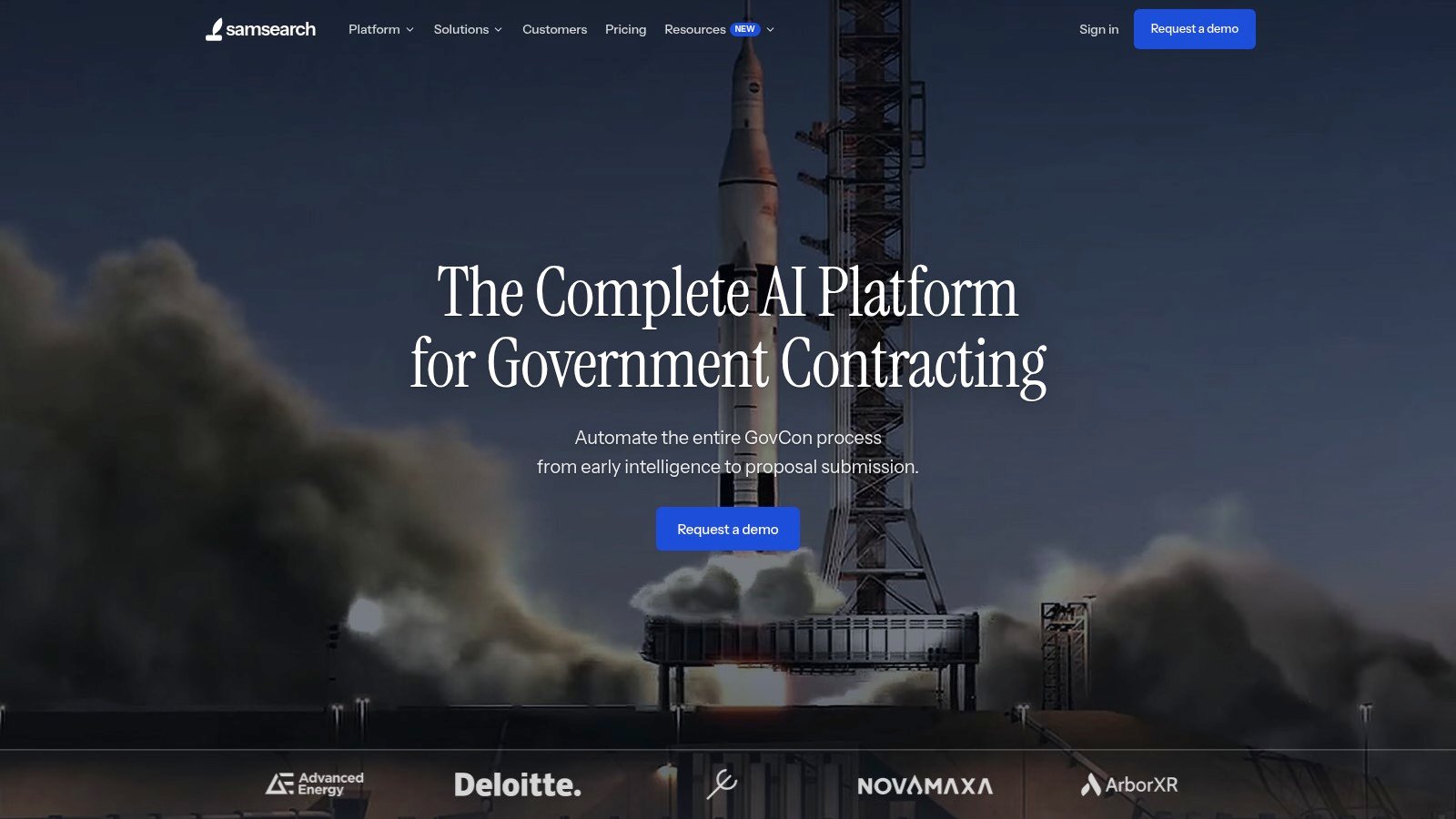
SamSearch fits established mid-market and enterprise contractors when opportunity discovery must connect directly to the work that follows. It is an AI-powered end-to-end GovCon platform for established mid-market and enterprise contractors, rather than a simple notice database aimed at small business sole operators. Its workspace brings market intelligence, capture, solicitation analysis, proposal response, contract management, and financing into one operating process.
That integrated workflow is the main reason SamSearch stands out in this category. Many federal government contract finder tools help teams find opportunities. Fewer help them qualify opportunities, coordinate capture, analyze solicitation documents, identify partners, and move work forward in the same system. For established contractors, that difference matters because the real cost is often not finding a notice. It is losing time between discovery, qualification, teaming, proposal review, and executive decision making.
SamSearch describes coverage across federal procurement sources, defense opportunities, subcontracting notices, grants, and Canadian tenders, with broader public sector coverage available by plan. Its search and qualification workflow uses company profiles, NAICS and PSC data, set-aside details, and past performance context to assess fit. The platform also highlights federal search, recommendations, alerts, contract history, and agency exploration features in its official documentation and product pages (SamSearch contracts, search docs, contract overview, agency data). Capture managers can start with a qualified opportunity list instead of a raw notice queue, then investigate recompetes, forecasts, and possible teaming paths before assigning proposal resources.
That timing matters for established teams. Earlier signals can shape account planning and partner outreach, while qualification data can support a more disciplined bid/no-bid discussion. Compared with tools focused mainly on policy context, analyst research, or broad aggregation, SamSearch is especially relevant when the team needs one platform to support discovery, capture coordination, and proposal readiness together.
SamSearch's built-in AI, Sammy, reviews solicitations and attachments, extracts requirements, answers questions across long documents, and creates a cited compliance matrix. It can also draft sections from an approved content library. Proposal leads still need to verify every requirement and source, but the first review shifts from locating information to checking extraction quality, resolving gaps, and assigning owners.
Practical rule: Use AI-generated compliance work to accelerate review, not to transfer proposal accountability to the system.
Why SamSearch stands out for established contractors
Journey Hub and kanban task boards bring bid/no-bid decisions, teaming activity, proposal assignments, and documents into the same workspace. Two-way CRM synchronization with Salesforce, HubSpot, and Pipedrive, along with Slack and Teams alerts, gives business development, capture, contracts, and executives a shared pipeline. The practical test is whether those connections replace duplicate spreadsheet updates and make ownership visible during a live pursuit.
The teaming layer supports searches across 600K+ contractors, compatibility scoring, incumbent history reconstruction, and historical award and pricing analysis, according to the SamSearch platform. That gives SamSearch an advantage over tools that surface opportunities but leave partner research and capture collaboration to separate systems. Test the partner search against three known incumbents in the target NAICS codes, contract vehicles, and agencies before relying on the scoring. SamSearch also describes financing introductions of up to $100M against awarded contracts. That may matter when post-award working capital limits growth, but it is a vendor-described service rather than an independently audited outcome.
Security and procurement reviews should treat the stated SOC 2 Type II controls, independent penetration testing with A+ ratings, US-hosted regions, SAML 2.0, AES-256 and TLS encryption, and policy against training shared models with customer documents as items to verify during diligence. SamSearch also describes a CMMC Level 1 self-assessment, with Level 2 in progress. Pricing is customized by seats, modules, team size, and market coverage, with annual billing and a demo required for an exact quote.
In practice, SamSearch is strongest when a team wants fewer handoffs between discovery and execution. GovWin IQ is often stronger for analyst-researched pre-RFP intelligence. Bloomberg Government is stronger for legislative, budget, and policy context. BidPrime is useful when broad federal plus SLED aggregation matters most. GovTribe is helpful for accessible participant and partner research. SamSearch compares favorably when the requirement is to connect opportunity identification, qualification, teaming, document analysis, collaboration, and downstream proposal work in one governed workflow.
Pros
End-to-end workflow: Discovery, compliance matrixing, drafting, pipeline management, teaming, and financing share one operating layer.
Capture intelligence: Forecasts, recompetes, awards, pricing, and partner research support bid/no-bid decisions.
Enterprise controls: Stated hosting, encryption, identity, and data isolation features address common procurement questions.
Collaboration: Journey Hub, CRM synchronization, and Slack or Teams alerts reduce handoff friction.
Cons
Enterprise orientation: The feature set and onboarding model may exceed the needs of solo operators or teams pursuing a small number of set-asides.
Custom procurement: Pricing requires a sales conversation, and advanced workflows may require implementation support before the organization sees full value.
2. Civio AI
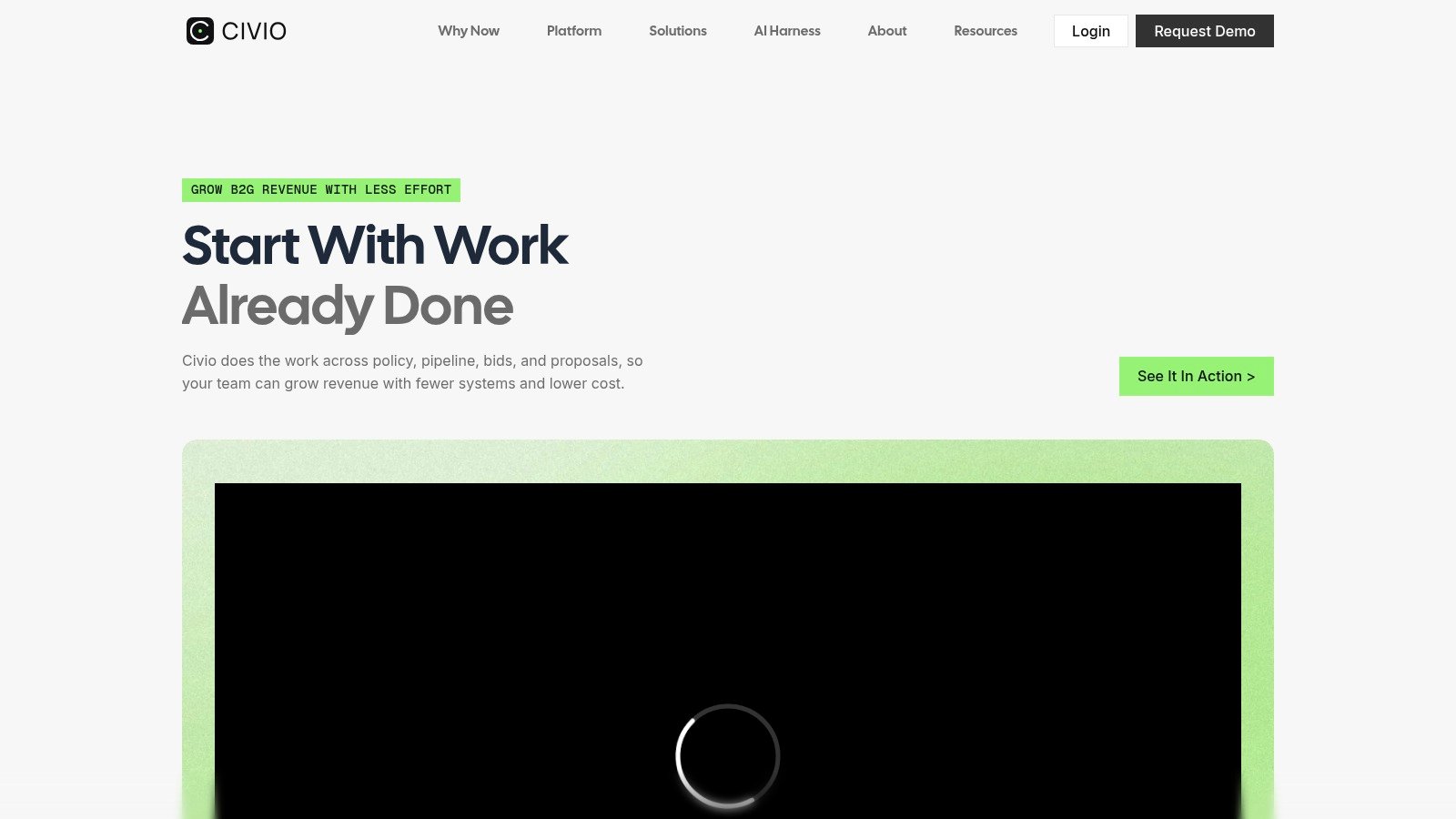
Civio AI belongs high on this list for teams that want AI assistance around government contracting workflows, especially when they need faster synthesis of opportunity and procurement information. It is best evaluated as a modern GovCon intelligence platform rather than a replacement for the government's official source of record. Review the current platform at Civio AI.
Its practical appeal is speed. A capture or BD team can use an AI-first interface to review opportunities, summarize requirements, and reduce the time spent manually sorting through procurement material. For organizations already managing a large pipeline, that kind of triage can improve focus and help teams get to qualification decisions faster.
Civio AI is most relevant when the current bottleneck is not access to opportunities, but the labor required to interpret them. If analysts are spending too much time reading notices, pulling context together, and preparing internal summaries, an AI-supported layer can add value before the pursuit becomes a full proposal effort. Civio positions itself broadly around AI teammates and business-to-government revenue workflows, so buyers should confirm exactly which discovery, scoring, and proposal features are included in the version they evaluate.
The same caution applies here as with any AI-enabled platform. Teams should verify how the system handles source attribution, attachments, amendment tracking, and official notice validation. Any summary or recommendation still needs to be checked against the authoritative posting and the full solicitation package.
Where Civio AI fits best
Civio AI fits best in the early review and qualification stage. It can help established contractors move faster from raw opportunity intake to an informed go or no-go discussion. That is especially useful for firms that review a high volume of opportunities across multiple agencies or contract vehicles.
The evaluation should focus on a few practical questions:
Does it reduce analyst time on first-pass review?
Does it preserve enough source detail for a compliant handoff?
Does it improve prioritization across real pursuits?
Does it integrate cleanly with the team's broader capture process?
Like other commercial platforms, Civio AI should complement, not replace, the official federal posting environment. Teams comparing multiple solutions should test it against live opportunities, amendments, attachments, and known incumbents before committing to broader workflow adoption.
3. Deltek GovWin IQ
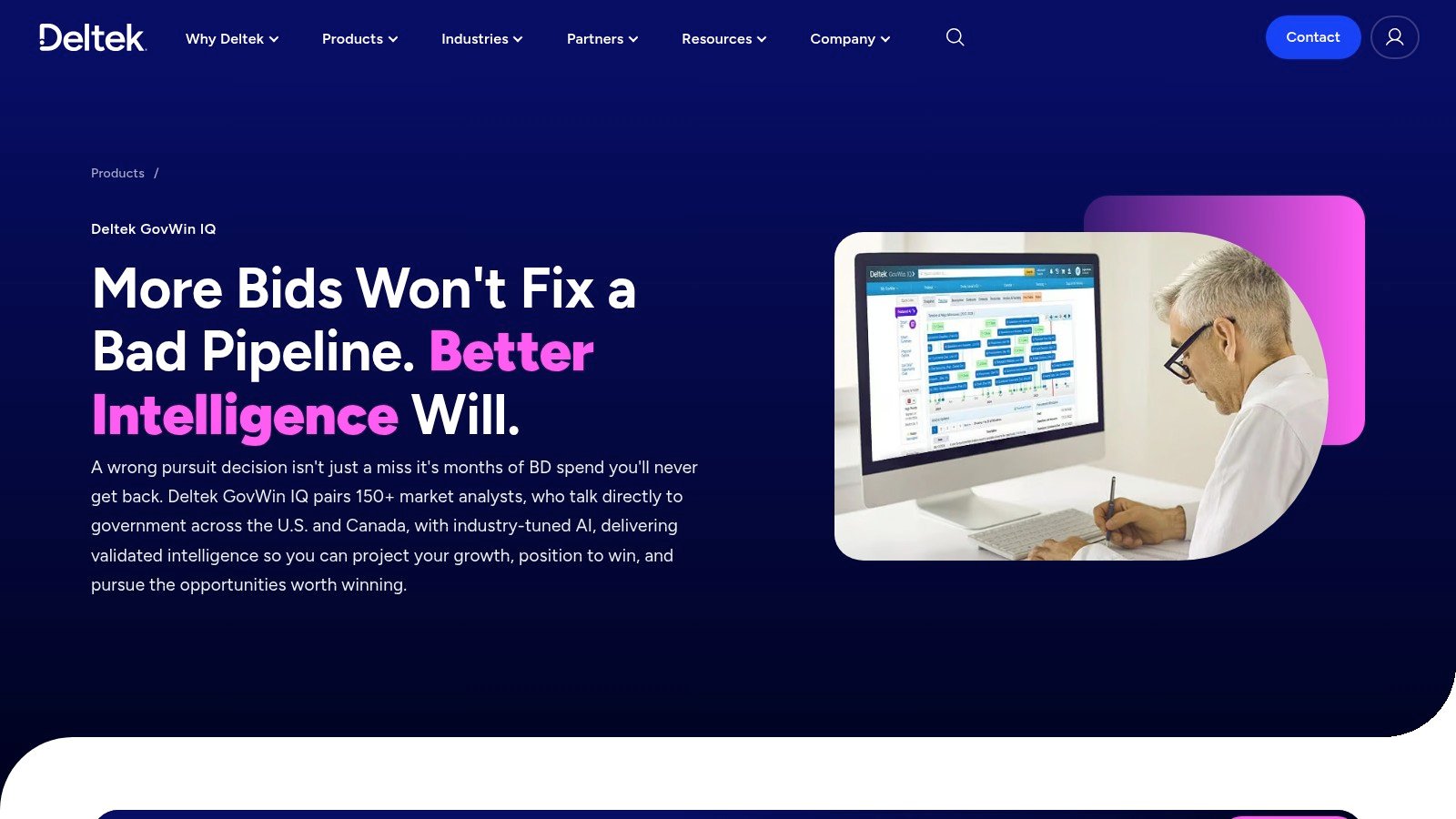
Deltek GovWin IQ creates value before an official solicitation appears. Deltek positions the platform as a premium market intelligence service with analyst-researched forecasts, capture planning, teaming intelligence, SmartFit, AI summaries, labor rate information, historical awards, FOIA services, and analyst reports. Its clearest role is pre-RFP intelligence. Capture leaders can assess likely requirements, identify competitors, shape positioning, and decide whether an agency pursuit merits continued investment.
For an established mid-market or enterprise contractor, timing changes the quality of the pursuit. An official notice may arrive after the agency has already developed much of its acquisition strategy. GovWin IQ's analyst-supported material is intended to provide earlier signals about planned requirements, buying organizations, incumbents, and probable procurement paths. That gives account and capture teams more time to coordinate teaming, test a price-to-win view, and brief executives before proposal deadlines narrow their choices.
The workflow fit is strongest at the account planning and qualification stages. Teams with federal and SLED pipelines can compare agency activity across markets, use award history and labor rate information in competitor assessments, and investigate potential teammates. Analysts still need to check forecasts against agency documents, official notices, and current budget conditions. A forecast indicates possibility, not a government commitment.
Deltek also emphasizes the scale of its research operation, including 150+ market analysts and monitoring across a wide range of public sector sources (Deltek GovWin). That supports its value for organizations that want deeper analyst-backed insight, but it does not remove the need for separate proposal execution, CRM, compliance, or finance systems.
GovWin IQ also introduces a practical buying constraint. Pricing is quote-based and not publicly listed, so evaluation requires a sales discussion and a customized enterprise review. That can suit a mature capture organization with a defined research budget. It makes direct cost comparison harder for a team testing one narrowly scoped use case or trying to connect opportunity research to existing CRM, compliance, procurement, and proposal systems.
The platform's enterprise value therefore depends on workflow depth, not coverage alone. GovWin IQ supports early qualification and market analysis, while a broader operating model may still need separate systems for collaboration, vendor vetting, subcontractor coordination, proposal execution, and procurement controls. SamSearch can centralize opportunity identification and teaming research for teams comparing those requirements. The complete GovWin alternatives guide helps frame that decision around analyst depth, SLED breadth, collaboration, and execution needs.
Where GovWin IQ helps
Early visibility: Analyst-researched forecasts support account planning before formal solicitations.
Capture depth: Forecasts, award history, labor rate information, and teaming research inform complex pursuits.
SLED reach: Coverage extends beyond federal work for contractors serving multiple public sector markets.
Analyst support: FOIA services and higher-tier research can supplement internal intelligence resources.
Trade-offs to plan for
Custom pricing: Buyers cannot benchmark subscription cost from public pricing.
Specialist workflow: Separate proposal, CRM, compliance, and finance systems may still be required.
Validation remains necessary: Forecast intelligence shapes a pursuit, but official agency documents control the bid.
4. Bloomberg Government
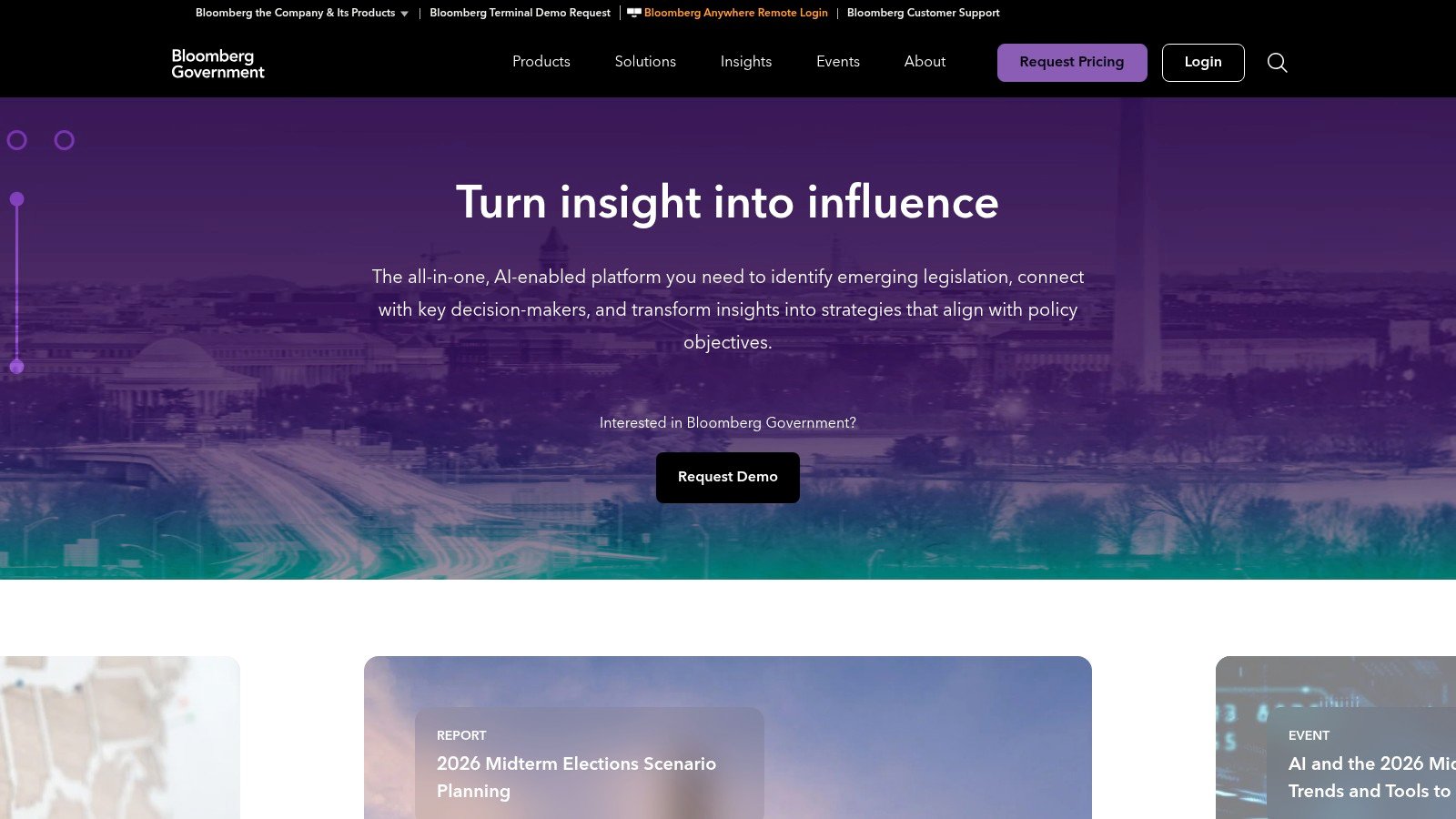
Bloomberg Government, or BGOV, works as a policy context system for federal business development. Its value extends beyond bid alerts through legislative, regulatory, budget, congressional, and procurement intelligence. That combination helps teams assess how appropriations, authorization language, agency priorities, and regulatory timing may shape future requirements.
For defense, health, infrastructure, and technology contractors, the key question is often why a requirement may emerge before it reaches an official posting. BGOV connects procurement records with the policy activity around them through integrated news, research, analyst briefings, document search, and enterprise dashboards. Capture leaders can use that context to qualify accounts, prepare executive briefings, and explain market movement to finance or corporate strategy.
A useful BGOV workflow starts with a policy signal, then tests whether it supports an account plan, teaming approach, or capture investment. The platform's document and attachment search supports examination of procurement and policy materials, while resources such as Hill Watch Live add reporting and briefing coverage. Dashboards and analytics also support communication across business units and agency-facing organizations.
The operating trade-off: BGOV supplies context. The contractor must assign the work that follows. A policy finding may influence bid qualification, subcontracting research, vendor vetting, or an executive forecast, but it does not create the capture plan or proposal package. Teams still may need separate tools for bid/no-bid governance, partner discovery, proposal assignments, content libraries, CRM synchronization, solicitation-level compliance matrices, procurement controls, and award-to-cash workflows.
That distinction matters when comparing platforms. Evaluate coverage against timing, workflow depth, collaboration requirements, procurement processes, subcontracting needs, vendor research, and enterprise fit. SamSearch can centralize opportunity identification and teaming research for teams that want those activities connected, while BGOV is better suited to organizations with analysts and capture leaders who can turn policy signals into pursuit actions.
Capture insight: Policy context creates value when a named owner uses it to make a decision, such as changing an account plan, reviewing advocacy risk, selecting a partner, or approving bid investment.
BGOV uses quote-based pricing, so procurement teams should define the policy questions, users, and business units involved before requesting a demonstration. Review the current Bloomberg Government platform with the team's existing federal sources. The practical test is whether its policy and contracting context changes a real pursuit decision, partner strategy, qualification judgment, or executive forecast. Smaller teams may find the enterprise commitment difficult to justify, while established contractors can gain more from the platform when policy research already has a place in their capture process.
5. GovTribe
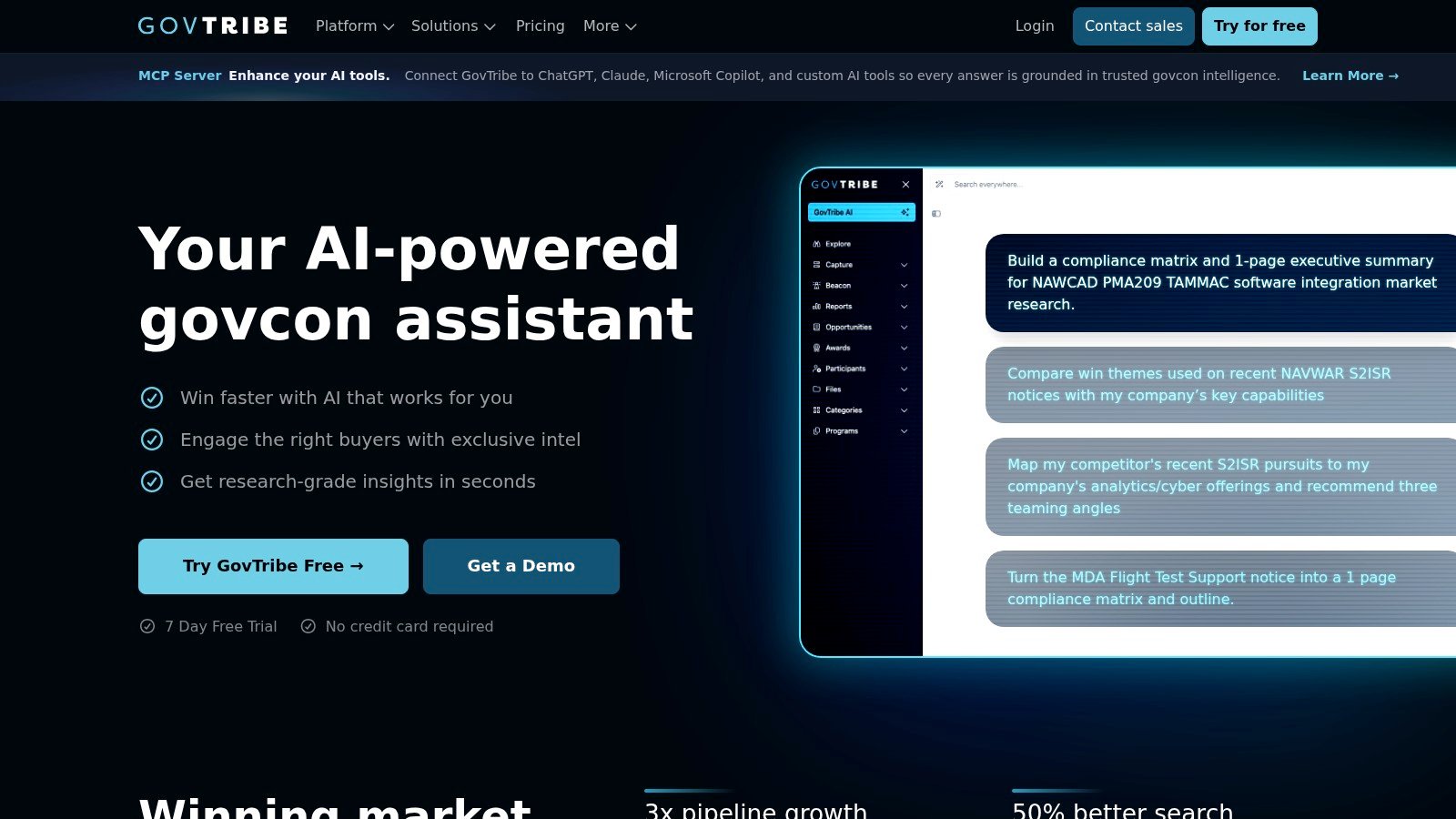
GovTribe centers on people-centric intelligence, giving BD teams more than opportunity notices. Its profiles cover buyers, participants, vendors, and industries, helping teams identify relationships around a procurement, prepare outreach, and investigate potential teaming partners. Optional SLED coverage also lets teams extend that research beyond federal buyers.
The platform changes the discovery question from “What was posted?” to “Who is involved, and what should we learn before pursuing it?” A capture manager can examine agency activity, participant histories, vendors, and related procurements, then use the findings to refine an account plan, qualify an opportunity, or select a partner. AI conversations over opportunities, predictive analytics based on historical awards, exports, collaboration features, and pipeline tools support the next steps.
Where GovTribe creates capture value
GovTribe fits the point in the workflow where people research, outreach preparation, and teaming are slowing pursuit progress. It can help a team connect opportunity discovery with vendor research and subcontracting questions, while keeping federal-only or federal-plus-SLED coverage aligned with its target markets. The platform is less focused on procurement execution than on understanding the participants and relationships that shape an opportunity.
SamSearch can centralize opportunity identification and teaming research for teams that want those activities connected. A useful comparison is this guide to GovTribe alternatives and competitors in 2026, tested against target agencies, partner searches, collaboration needs, and enterprise requirements.
GovTribe's public pricing and plan details make evaluation accessible for a mid-market team. Trials and self-serve documentation support hands-on testing, unlike platforms that begin with a lengthy enterprise sales process. Teams should test whether the coverage improves discovery timing, partner selection, qualification, or account planning.
The cost model still requires planning. Advanced AI features use credits, and some capabilities may sit behind higher-tier plans. Estimate analyst usage, export requirements, and the number of BD and capture users who need collaboration access. A low starting subscription may become less predictable when frequent AI analysis or broader team access depends on add-ons.
Accessible evaluation comes from public plans, trials, and documentation. Flexible coverage supports federal-only or federal-plus-SLED monitoring. Useful workflow tools include exports, collaboration, predictive analytics, and pipeline features. Metered AI can complicate usage planning, while Tier limits may restrict capabilities after the initial test.
GovTribe may not suit an enterprise proposal organization that needs integrated compliance drafting, document governance, finance workflows, or broad multi-market orchestration. That execution gap matters when procurement and proposal teams expect one system to carry work from research through delivery.
6. BidPrime
BidPrime earns its place through multi-market aggregation. Contractors selling to federal agencies, municipalities, education buyers, and other SLED organizations can monitor those markets in one workflow instead of maintaining separate portal routines. The practical gain is coverage across fragmented jurisdictions and buyer types. BidPrime is therefore better suited to a diversified revenue plan than to a federal-only capture operation.
Its search value sits in the documents behind an opportunity. PDF and attachment keyword scanning can surface requirements that a notice title does not mention. Teams can configure searches around capabilities, product terms, locations, agencies, or competitors, then send matching opportunities to the relevant BD or capture owner. Vendor and competitor insights add context for early account research, although teams should validate how much detail they receive for their priority markets.
The platform is most useful during initial discovery and market coverage. A regional or national contractor can compare federal and SLED demand without adopting a separate system for every jurisdiction. Account representative onboarding and plan tailoring may help define search terms and coverage around the company's actual territories, offerings, and target agencies.
Its trade-off is federal depth. BidPrime does not focus exclusively on federal capture, so federal analytics may be lighter than those in specialist platforms. Established contractors should test forecast interpretation, contract vehicle analysis, incumbent reconstruction, teaming research, and proposal compliance workflows directly. Broad aggregation does not automatically provide the policy context or capture depth required for a complex federal pursuit.
For teams comparing the full category, this government contract discovery tools comparison helps frame the choice between SLED breadth and federal intelligence. SamSearch can centralize opportunity identification and teaming for teams that need a stronger connection between discovery and partner selection, while BidPrime's distinction is cross-market monitoring.
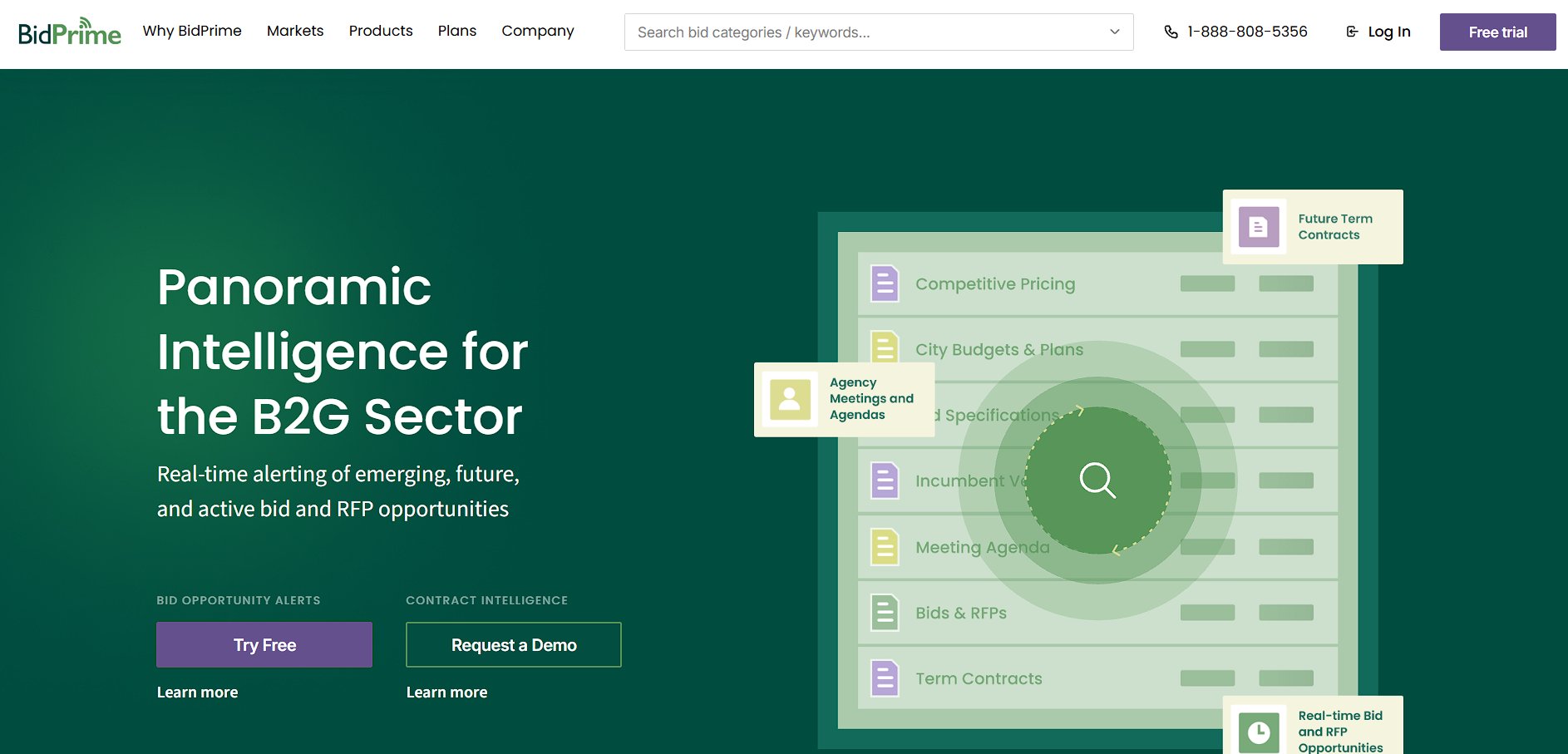
Published plan and price ranges make initial procurement planning more visible than quote-only models. Confirm current terms through BidPrime's official site.
Broad market coverage supports federal, state, and local monitoring. Attachment search exposes requirements in PDFs and supporting documents. Configurable alerts direct relevant notices to owners by capability, vendor, location, or agency. Budget visibility assists early purchasing review.
The main constraints are lighter federal specialization, potential noise, and capture integration varies. Search governance matters as coverage expands, and enterprise buyers should verify CRM, proposal, compliance, collaboration, procurement, and vendor vetting requirements before committing.
6-Way Comparison of Federal Contract Finder Tools
| Solution | Implementation complexity | Resource requirements | Expected outcomes | Ideal use cases | Key advantages |
|---|---|---|---|---|---|
| SamSearch | Low-Medium, guided onboarding, optional integrations, modular setup | Mid-to-large BD/capture teams, paid seats/modules, CRM and security integration | Accelerated discovery-to-award workflow, faster compliant drafts, improved process discipline, financing options | Mid-market and enterprise government contractors with dedicated capture teams | End-to-end AI workflow, deep document compliance extraction, finance integration, enterprise security |
| Civio AI | Medium, AI workflow onboarding and process testing | BD and capture teams that review high opportunity volume | Faster first-pass review, better prioritization, quicker internal summaries | Teams wanting AI-assisted qualification and opportunity analysis | AI-first workflow, faster synthesis, useful for early-stage evaluation |
| Deltek GovWin IQ | Medium-High, analyst onboarding and configuration | Analyst-supported subscriptions, enterprise budget, larger capture teams | Pre-RFP visibility and validated forecasts, stronger capture planning | Mid-market and enterprise primes seeking analyst-validated intelligence | Analyst-researched pre-RFP intelligence, robust capture and teaming workflows |
| Bloomberg Government (BGOV) | Medium-High, platform onboarding, content integration | Enterprise subscription cost, teams aligning business to policy and budget cycles | Integrated policy, budget and contracting insights, high-quality analytics and reporting | Contractors tying BD to appropriations, regulation, or congressional activity | Strong policy plus contracting integration, strong reporting and analyst content |
| GovTribe | Low-Medium, self-serve onboarding with clear plans | Mid-market teams, subscription tiers, optional credit-metered AI features | People-centric buyer intelligence, predictive analytics, streamlined outreach | Mid-market teams needing buyer/person profiles and transparent pricing | Strong UI/UX, public pricing, detailed people-level profiles and predictive features |
| BidPrime | Low-Medium, account setup with rep-assisted onboarding | Teams pursuing federal plus state/local work, subscription with plan options | Consolidated federal and SLED alerts, PDF/attachment keyword scanning | Organizations pursuing both federal and state/local opportunities | Broad SLED coverage, document/PDF keyword search, consolidated workflows |
FAQ
What is the best federal government contract finder tool for established contractors?
The best tool depends on where your team loses time. If you need an official source of record, SAM.gov remains essential for verification. If you need earlier market intelligence, capture support, policy context, or AI-assisted qualification, tools like Deltek GovWin IQ, Bloomberg Government, GovTribe, BidPrime, Civio AI, and SamSearch each serve different roles.
Is SAM.gov enough on its own?
For basic notice monitoring, it may be enough. For established contractors managing larger pipelines, SAM.gov usually needs to be complemented by tools that improve qualification, forecast visibility, teaming research, alert precision, or document analysis.
Which tool is best for pre-RFP intelligence?
Deltek GovWin IQ is strongest when the priority is analyst-supported forecasts and early capture planning before a solicitation is formally posted.
Which tool is best for policy and budget context?
Bloomberg Government is often the better fit when business development decisions depend on appropriations, congressional activity, regulation, or agency budget signals.
Which tool is best for AI-assisted qualification?
Civio AI and SamSearch are both relevant for teams that want AI help during early review. Civio AI is useful for faster synthesis and first-pass qualification, while SamSearch is designed to connect qualification with downstream capture, proposal, teaming, and workflow management.
Which tool is best for federal plus SLED coverage?
BidPrime is a practical option when a contractor needs broad federal, state, and local monitoring in one place. GovWin IQ and GovTribe may also help when SLED visibility matters, depending on the plan and workflow needs.
Which tool is best for teaming and partner research?
GovTribe and SamSearch are strong options when partner discovery, participant research, and incumbent analysis are important to the pursuit strategy.
How should teams evaluate these platforms?
Use live opportunities from your target agencies, contract vehicles, NAICS codes, and PSCs. Test alert quality, amendment handling, document extraction, incumbent research, collaboration, integrations, and security review before making a buying decision.
Turn Opportunity Feeds Into a Governed Capture Workflow
The best federal government contract finder tool depends on where the capture process loses time. SAM.gov is the authoritative federal source and should remain part of the verification process. Paid platforms add different layers: Civio AI emphasizes AI-assisted review and qualification, GovWin IQ emphasizes pre-RFP intelligence, BGOV connects contracting to policy and budget context, GovTribe supports people-centric research, and BidPrime aggregates federal and SLED sources. SamSearch is designed to centralize opportunity identification, teaming, document analysis, collaboration, and financing for established mid-market and enterprise contractors.
Start by scoring each finalist against the actual operating model, not a feature checklist. Separate federal coverage from SLED coverage, then assess forecast depth, alert precision, document and attachment handling, historical awards and pricing, teaming and subcontracting research, CRM and collaboration integrations, security review, procurement requirements, vendor vetting, onboarding effort, and budget. A contractor selling into federal AEC work may prioritize recompete and incumbent intelligence. An IT prime may need contract vehicle and labor rate context. A services firm with a SLED growth plan may value aggregation and regional alerts more than federal policy research.
A demonstration is not enough. Give every finalist a controlled evaluation set:
Representative opportunities: Use active notices from the agencies, NAICS codes, PSCs, and contract vehicles the team routinely pursues.
Document tests: Upload or retrieve representative RFPs and attachments, then check extraction, citations, amendment handling, and compliance matrix usability.
Incumbent research: Ask the team to reconstruct a known award history and identify relevant competitors or teaming partners.
Decision workflow: Run a real bid/no-bid review from alert to executive decision, including ownership, comments, and approvals.
Alert scenarios: Test narrow searches, broad market watch searches, recompetes, forecast signals, and false positive handling.
Security and procurement: Validate hosting, identity controls, encryption, data use terms, audit evidence, contract terms, and implementation responsibilities.
Federal opportunity discovery also depends on complementary government tools. GSA describes the Forecast of Contracting Opportunities as a governmentwide planning tool with fields including award status, estimated award date, place of performance, NAICS code, acquisition strategy, and contract type. GSA's buying and selling resources also connect opportunity finding with award research, pricing, and acquisition analysis. That data adjacency is why an enterprise should not evaluate a finder only by how many notices it displays. The question is whether the tool helps the team identify, qualify, shape, staff, price, and execute a pursuit.
The same distinction applies to award intelligence. SBA guidance describes federal contracting data as a way to see which agencies buy what and which contractors hold those contracts, while forecasts help businesses identify potential buyers. For larger primes, subcontract reports and teaming patterns matter alongside active solicitations. A tool that cannot support partner discovery or incumbent analysis may still be useful, but it should not be presented as a complete capture system.
SamSearch deserves consideration when the priority is an integrated path from opportunity identification through teaming, compliance-oriented proposal work, pipeline collaboration, and financing. Its stated security controls, AI document workflow, CRM connections, Journey Hub, partner search, and award-to-cash orientation are aimed at established government contractors in the mid-market and enterprise segment. SamSearch is not targeted at small businesses or solo contractors seeking a small number of set-asides, and buyers should verify vendor claims, customer outcomes, and independently verifiable government data as separate evidence categories.
A practical rollout can be concise:
Define the market: Document federal, SLED, defense, subcontracting, grant, and international coverage requirements.
Set qualification rules: Standardize NAICS, PSC, set-aside, geography, agency, incumbent, and past performance criteria.
Choose ownership: Assign who reviews alerts, approves bid/no-bid decisions, manages partners, and controls proposal content.
Pilot with live work: Use known opportunities, attachments, forecasts, awards, partner searches, and executive approvals.
Govern the system: Review false positives, missed notices, document citations, security controls, integrations, and adoption.
Expand deliberately: Add business units, markets, and automation only after the core capture workflow is reliable.
For a broader view of how AI systems should move from research into controlled execution, see this guide to production-ready agentic orchestration.
SamSearch brings federal, SLED, defense, subcontracting, and teaming discovery into an AI-powered workflow for established mid-market and enterprise government contractors. Visit SamSearch to evaluate opportunity matching, partner intelligence, solicitation analysis, collaboration, and financing in one platform, then test it with your own capture scenarios.