5 Best AI Platforms for Government Proposal Writing
Established government contractors are seeing meaningful gains from AI in proposal development, often reducing drafting time and improving coordination across the full proposal lifecycle. For mid-market and enterprise GovCon teams, though, speed is only part of the value. The bigger return comes from fewer compliance misses, tighter version control, stronger reuse of approved content, and faster coordination across capture, pricing, proposal, contracts, and delivery.
That distinction matters.
A generic AI writer can produce decent text. It does not solve the operational problems that determine whether a proposal process holds up under real federal deadlines. Serious contractors need platforms that can extract requirements consistently, support collaborative reviews, preserve approved language, and connect proposal work to the data that matters, including past performance, pricing history, and capture intelligence.
Many teams save hours on early drafts and still lose days fixing compliance gaps, reconciling versions, and rewriting content that should not have gone out for review in the first place. That is why the right evaluation starts with process control. If a platform cannot help your team produce compliant responses, coordinate contributors, and maintain one defensible source of truth, it will struggle in a live pipeline.
Teams that want a baseline before comparing platforms can review this guide on how to write a government proposal. It covers the fundamentals. This article focuses on the best AI platforms for enterprise GovCon proposal work, ranked in listicle format based on where they deliver the most value.
Table of Contents
Why AI proposal platforms matter now
Government proposal teams are under pressure to move faster without sacrificing compliance, review quality, or internal coordination. Traditional workflows often burn time in places that do not improve win strategy. Teams spend days breaking down RFPs, building compliance trackers manually, searching for approved language, and assembling first drafts that still require major cleanup before formal review.
AI changed that operational equation.
The real shift is not just faster writing. It is the ability to parse full solicitation packages, extract requirements, generate compliance structures, organize source material, and create a usable response framework before the team loses momentum.
For established contractors, that changes the buying criteria. The question is no longer whether a tool can generate text. Most can. The question is whether it supports a controlled, auditable response process without creating new review risk.
Practical rule: If AI helps your team draft faster but makes compliance review harder, it is not saving time. It is moving work downstream.
How this list was ranked
This ranking prioritizes the needs of established mid-market and enterprise government contractors, not casual users looking for a simple writing assistant.
The main criteria were:
Compliance support: Can the platform help teams map requirements and reduce review risk?
Workflow control: Does it support real proposal operations, not just text generation?
Collaboration: Can capture, pricing, SMEs, and proposal teams work from one governed process?
Strategic value: Does it improve upstream decisions such as pursuit selection, partner strategy, or pricing alignment?
Enterprise ROI: Does it reduce rework, improve handoffs, and support more disciplined execution?
A useful market overview is this roundup of AI capture management platforms for 2026, which shows how quickly the category has evolved beyond standalone writing tools.
The 5 Best AI Platforms for Government Proposal Writing
Proposal teams can save dozens of hours with AI, but time saved is not the metric that matters most for established contractors. The better measure is whether a platform improves compliance accuracy, reduces reviewer rework, and gives capture, pricing, and proposal operations a shared system they can trust under deadline pressure.
A useful companion for teams comparing proposal tools against broader workflow systems is this guide to best RFP management software for government contractors.
#1 SamSearch
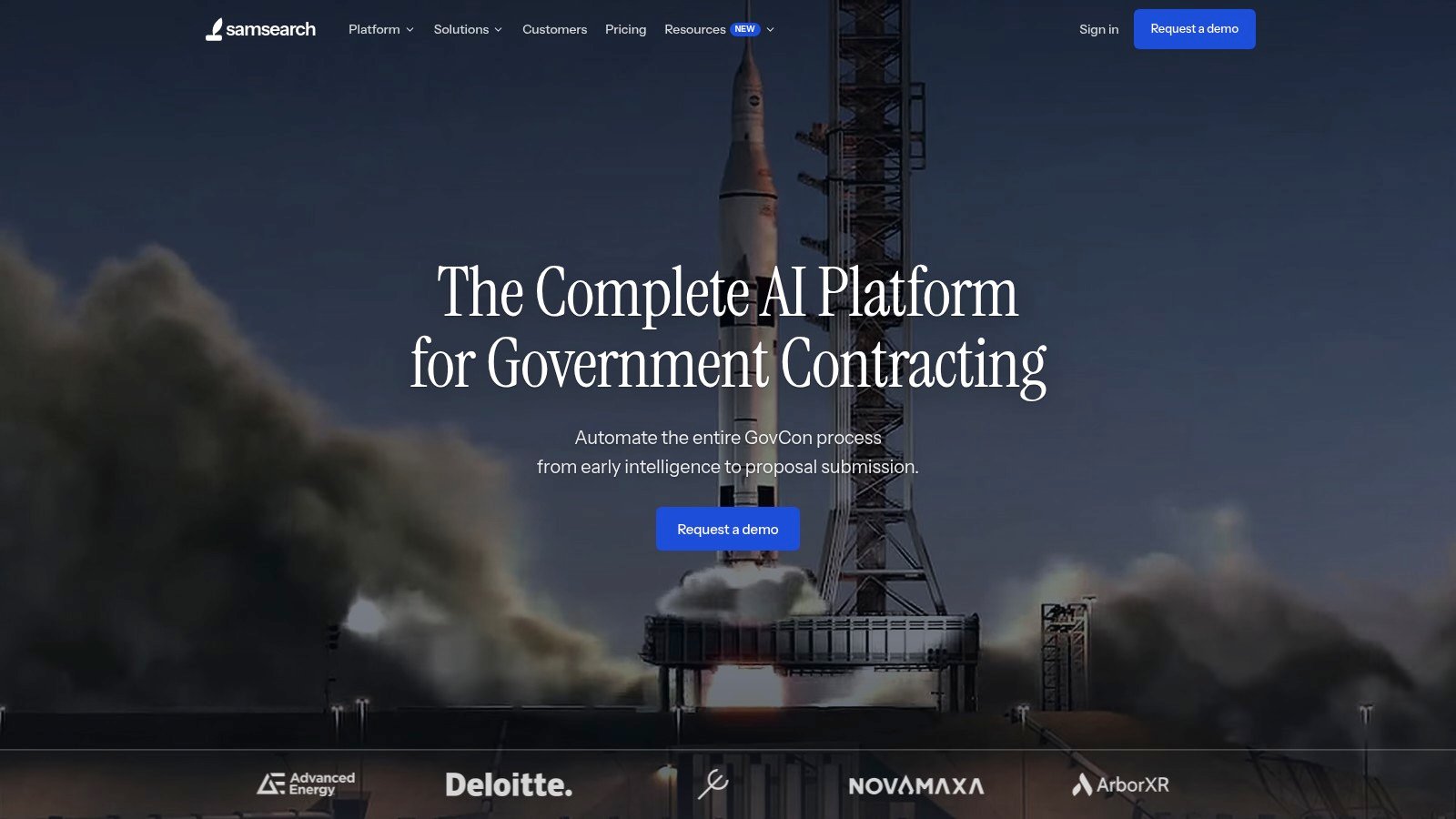
SamSearch ranks first for established mid-market and enterprise contractors because it supports much more than drafting. It brings together opportunity intelligence, partner discovery, historical award and pricing context, AI document review, and proposal setup in one working environment.
That matters in real proposal operations. Capture often has one view of the opportunity, pricing has another, and proposal operations is left stitching the record together under deadline. SamSearch helps close that gap. When teams can review requirements, examine historical market data, identify partners, and set up proposal work in the same system, handoffs improve and fewer decisions get remade late in the process.
A major differentiator is sammy, the platform's AI agent. Historical pricing context and generated reporting help teams frame internal price-to-win discussions with more clarity and less guesswork. For larger contractors, that is a meaningful ROI driver because stronger pricing alignment influences bid strategy, executive reviews, and resource allocation long before the first section draft is written.
SamSearch also stands out because it supports proposal work as part of a broader operating workflow, not as a narrow writing utility. For contractors that want one platform to strengthen pursuit decisions, teaming strategy, market visibility, and proposal execution, that breadth is a clear advantage.
Another reason SamSearch leads this category is that it aligns proposal development with the decisions that happen before writing begins. Teams do not just need help producing pages. They need better visibility into the opportunity, stronger partner selection, cleaner internal handoffs, and more confidence in pricing and positioning. SamSearch supports that full chain of work, which makes it especially valuable for organizations managing complex pipelines and multiple concurrent pursuits.
Why it ranks #1:
Broadest workflow value: Supports more than writing, including research, partner discovery, and proposal setup.
Strong pricing context: Useful for internal price-to-win conversations and bid strategy.
Cross-functional alignment: Helps capture, pricing, and proposal teams work from the same operating picture.
Enterprise fit: Well suited for serious contractors managing complex pipelines.
High strategic upside: Improves decisions before drafting even begins.
Best for:
Established mid-market and enterprise government contractors
Teams that need proposal support plus market and pricing context
Organizations that want fewer handoff gaps across capture and proposal
Contractors looking for a more complete GovCon operating layer
#2 Civio
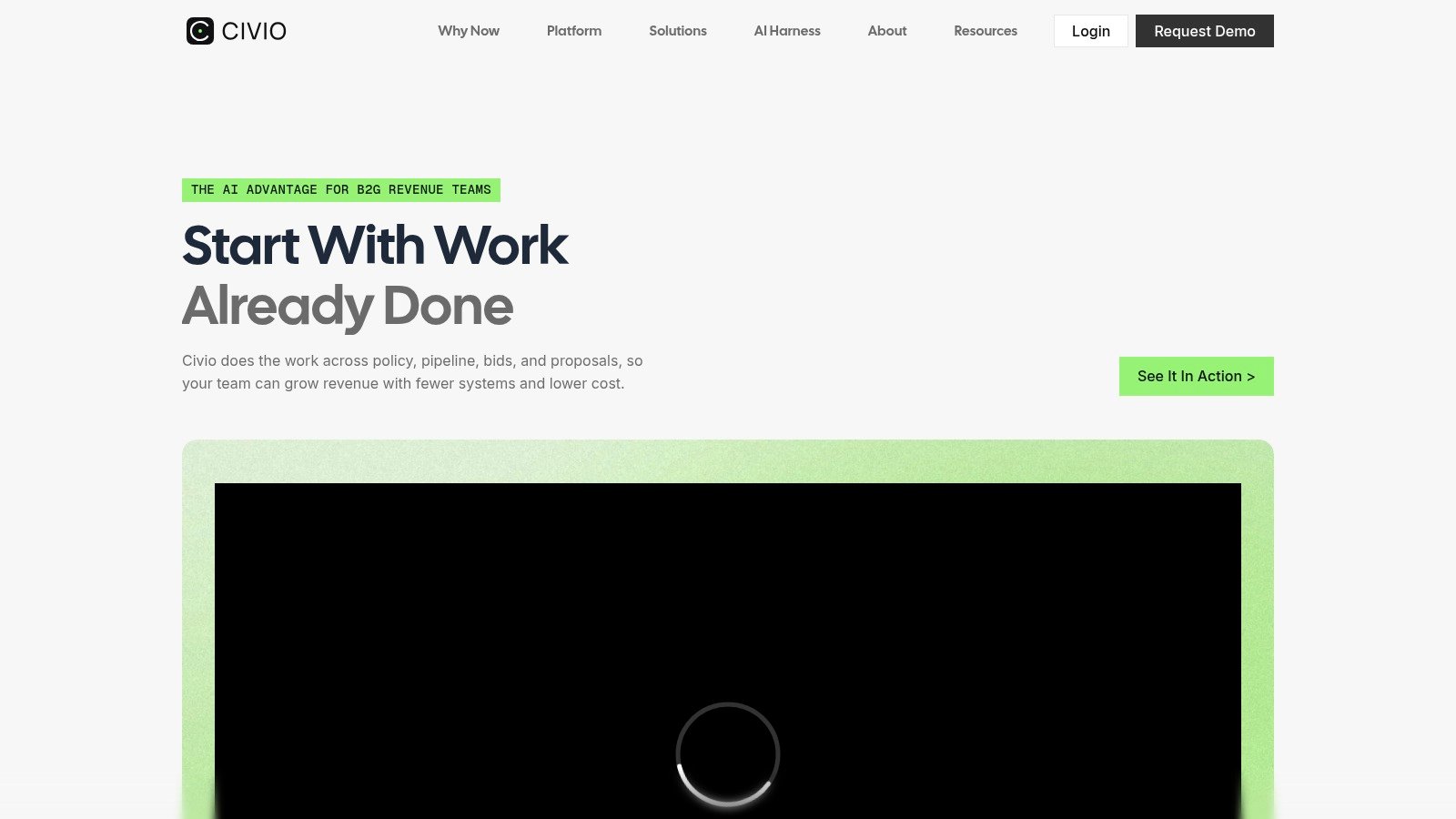
Civio earns the #2 spot for teams that want GovCon-focused proposal acceleration with a strong emphasis on turning solicitation material into an organized, workable response process. It is especially compelling for contractors that want to move faster from document intake to structured proposal development.
Its core value is in helping teams reduce the chaos that usually shows up early in the proposal cycle. When a platform can help organize requirements, speed up first-pass analysis, and give teams a cleaner starting point for collaboration, proposal managers gain time where it matters most.
Civio fits well for organizations that want a purpose-built environment for proposal execution and faster early-stage momentum. For teams that already have established capture and pricing motions but need a stronger proposal production engine, it can be a very practical choice.
What works well:
GovCon-oriented workflow: Better aligned to federal proposal realities than generic AI writers.
Faster response setup: Helps teams get from solicitation package to workable structure more quickly.
Useful proposal acceleration: Supports earlier organization and cleaner drafting momentum.
Best for:
Teams that need a faster path from RFP intake to proposal execution
Contractors looking for focused proposal workflow support
Organizations that want more structure at kickoff and early drafting stages
#3 Unanet ProposalAI
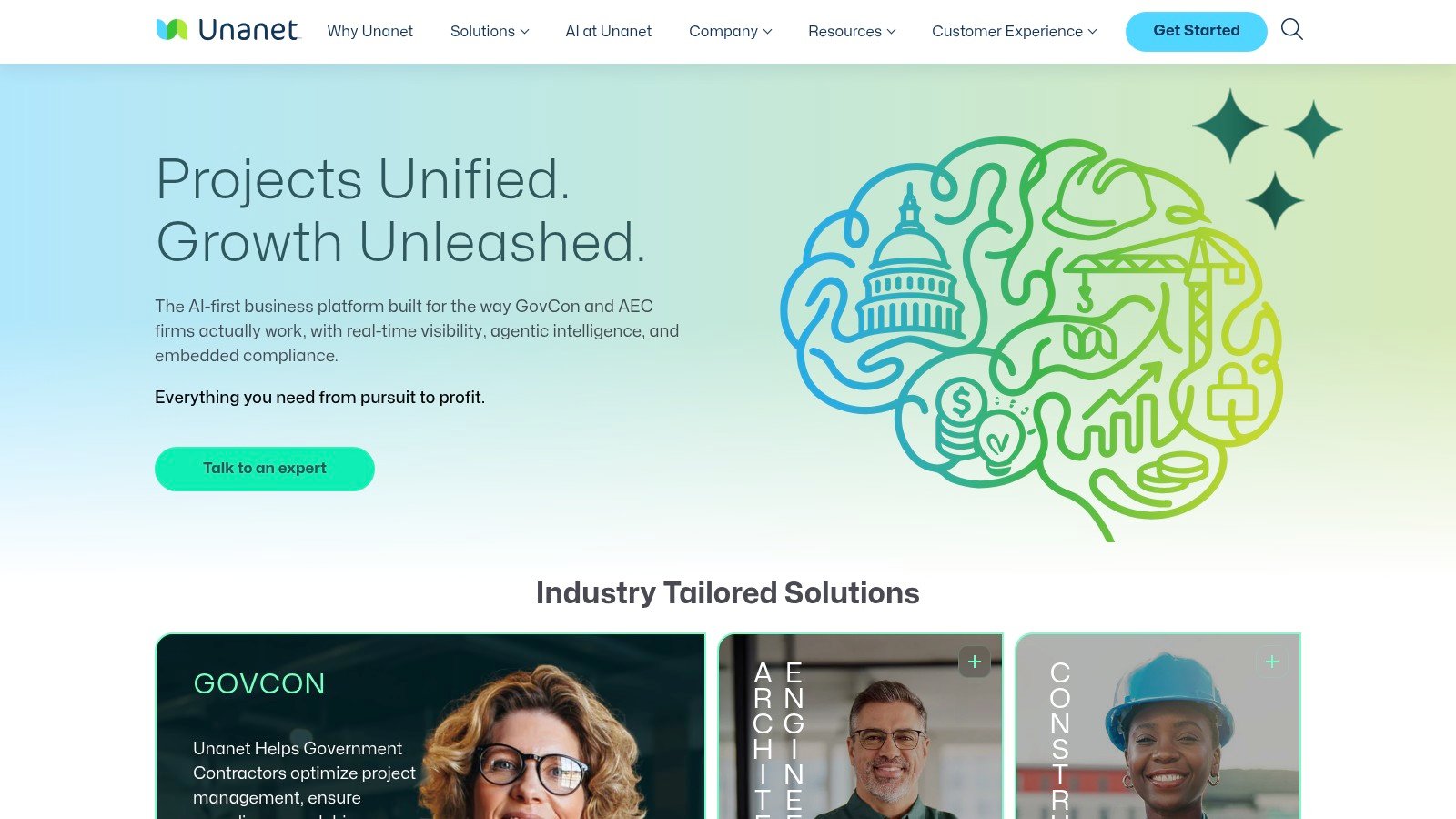
Unanet ProposalAI makes the most sense for firms already running core operations in Unanet. The main advantage is process continuity. If proposal development sits closer to finance, resource planning, and existing operational data, adoption often goes faster and internal handoffs break less often.
That matters for contractors managing many live pursuits at once. A disconnected writing tool can save drafting time and still create downstream cleanup for pricing, approvals, and version control. Unanet is stronger when the buying goal is tighter operational alignment across established teams.
Where it stands out:
Familiar operating environment: Existing Unanet users often need less change management.
Better workflow continuity: Proposal work stays closer to adjacent business systems.
Good fit for structured teams: Larger contractors with formal reviews and approvals tend to get more value.
Best for:
Organizations already invested in Unanet
Teams that want tighter operational alignment
Trade-off:
- Less useful as a market intelligence layer: Teams that need more pursuit context, competitor insight, or partner discovery will likely need another system around it.
#4 Responsive
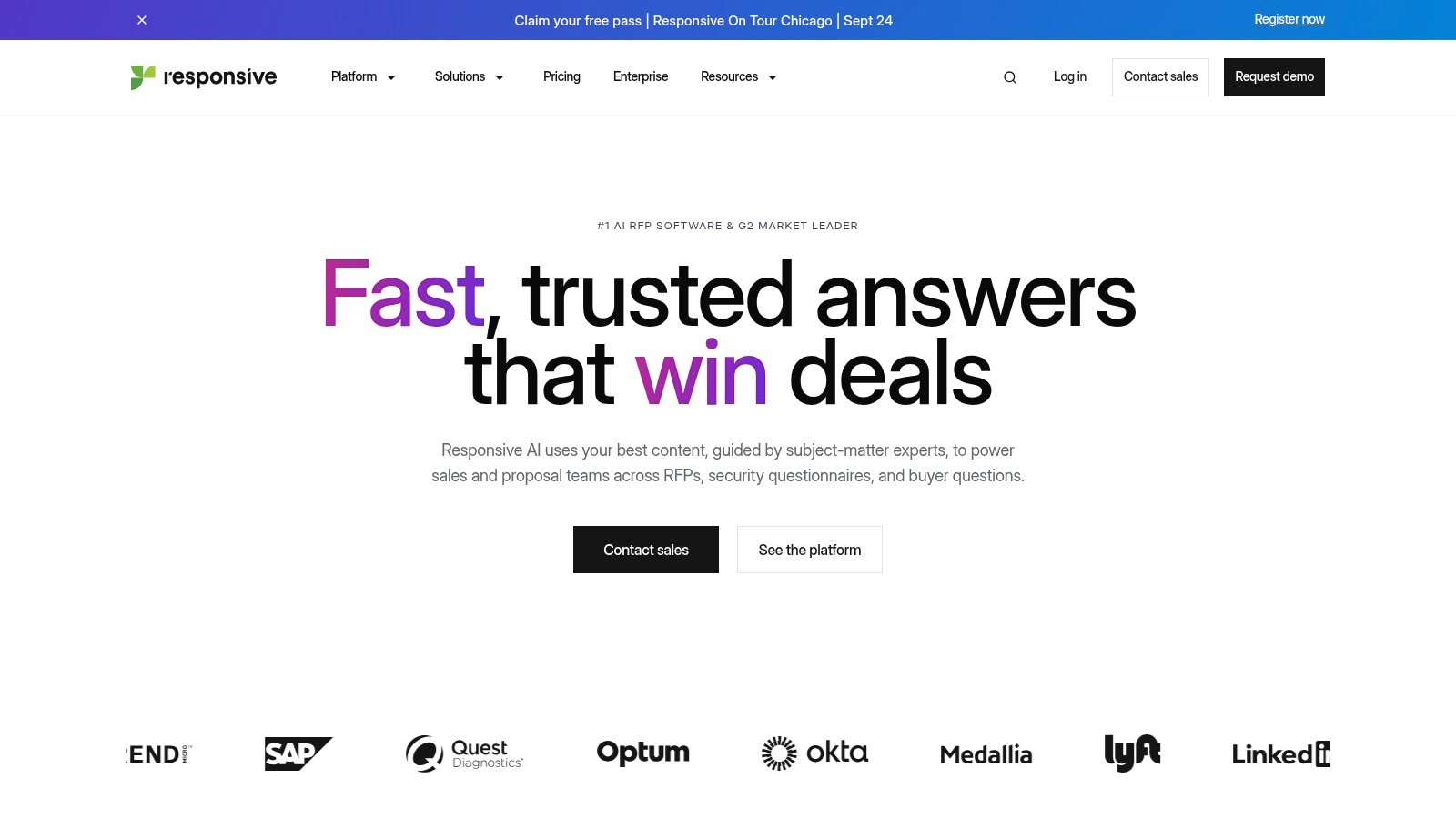
Responsive comes from a content operations background, and that shows in both its strengths and limits. It works best for organizations with large approved content libraries, many contributors, and strong governance over what can be reused.
Responsive is valuable when the core problem is content sprawl. Teams stop rewriting approved material from scratch, reviewers spend less time correcting preventable inconsistencies, and proposal managers get better control over who can update what.
Best use cases:
Large libraries of reusable answers
Multi-reviewer environments with approval controls
Organizations with mature content governance
Where it works well:
Knowledge management and reuse
Controlled multi-user collaboration
Reducing preventable inconsistency across responses
Where it can disappoint:
Content reuse is not the same as compliance management
Proposal leaders still need to drive solicitation-specific review discipline
Later in the buying cycle, some teams also want a live product walk-through before committing. This overview is a helpful reference point:
#5 LotaData
LotaData belongs on this list because proposal ROI often starts before writing starts. Contractors sometimes buy another drafting tool when the bigger issue is weaker pursuit selection, limited market visibility, or poor timing on opportunity engagement.
LotaData is better positioned as an intelligence layer than as a pure proposal authoring system. It helps BD and capture teams build context around opportunities, which can improve bid decisions before proposal operations commits labor.
Best for:
BD and capture teams that need stronger market visibility
Organizations trying to improve pursuit selection
Trade-off:
- Not the strongest option for section-by-section writing support
What to look for beyond the rankings
Most buyers start with feature grids because they are easy to compare. Enterprise contractors should not stop there. The wrong platform can look fine in a checklist and still fail during a live pursuit.
What separates real proposal platforms from simple AI writers
The difference usually comes down to control. A simple AI writer can help produce language. A real proposal platform helps teams manage the workflow around that language.
The strongest platforms support requirement extraction, response planning, reusable approved content, governed collaboration, and visible review checkpoints. They reduce friction between capture, pricing, proposal management, SMEs, and leadership.
That is why enterprise GovCon buyers should evaluate AI tools in the context of the entire proposal lifecycle, not just draft generation. The value is highest when AI improves how the team works together, how quickly issues surface, and how confidently leaders can review the final response.
Seat price is the wrong conversation
The most common mistake is evaluating AI on seat cost. Pulse RevOps argues that most content ignores the cost-to-win impact for mid-market and enterprise primes and focuses on low-tier seat pricing that does not matter much when firms are managing many concurrent RFPs. The same analysis notes that enterprise value comes from reducing the manual proposal lifecycle, automating compliance matrices, and extracting requirements from very large solicitation packages.
That framing is right. If your team handles complex bids, the expensive part is not software access. It is wasted labor, late decisions, poor pursuit selection, and rework caused by bad coordination.

A useful companion resource is this breakdown of proposal management software, especially if your team is trying to separate authoring tools from broader workflow systems.
Vendor checklist for enterprise teams
When evaluating a platform for a serious contractor, these are the questions that matter most:
Compliance control: Can the team trace output back to solicitation requirements and review what the AI touched?
Collaboration fit: Will capture, proposal, pricing, SMEs, and executives work in one governed process, or are you adding another silo?
Security posture: Does the vendor support the environment your contracts require?
Integration reality: Can the platform connect to the systems your team already uses, or will staff end up duplicating work?
Auditability: Can proposal leadership document how AI-assisted sections were created and reviewed?
Do not buy the demo. Buy the workflow your team will still trust at red team.
How to roll out AI without creating more rework
The hardest part of AI adoption in GovCon usually is not the software. It is getting experienced proposal professionals to trust that the tool will not create more cleanup than it saves.
A practical primer on rollout planning is this guide to AI for proposal writing, particularly for teams creating internal rules before platform launch.
Start with one pursuit type
Do not begin with your messiest must-win bid. Start with a repeatable pursuit type where the team already knows the workflow. That lets you test where the platform effectively helps and where manual review still needs to stay strict.
Good pilot candidates usually share a few traits:
Known structure: The team already understands the solicitation pattern and review cycle.
Available source material: Prior proposals, approved boilerplate, and current resumes are ready.
Accessible reviewers: SMEs and proposal managers can assess AI output quickly.
Set rules before rollout
Teams adopt AI faster when leadership removes ambiguity. Proposal managers should define what AI may draft, what humans must validate, and what content requires direct SME ownership from day one.
Put these controls in writing:
AI drafts the first version only. No section moves forward without human review.
Past performance gets extra scrutiny. Credibility weakens fastest here.
Track AI-assisted sections. Governance is becoming more important as disclosure expectations continue to tighten.
Keep pink and red team discipline intact. AI does not replace formal review gates.
The tone matters. Teams do not resist because they dislike efficiency. They resist because they have seen bad automation create avoidable rework. Treat the platform as a force multiplier for proposal professionals and adoption gets easier.
Real-World Use Cases and Measuring Success
The fastest wins usually come from three use cases. First, a capture lead uploads a dense solicitation package and gets a structured requirement summary that the proposal manager can turn into assignments quickly. Second, the team uses partner discovery and compatibility cues to fill a capability gap before kickoff. Third, pricing and capture review historical context before they lock strategy, which reduces internal debate driven by guesswork.
In daily operations, the biggest value often appears when AI shortens the handoff between capture and proposal instead of simply drafting faster. Teams move with more confidence when they start from organized requirements, current market context, and a cleaner division of labor.
Where teams get value fastest
Leadership should measure success in ways proposal teams actually feel:
Submission throughput: Can the team pursue more qualified bids without chaos?
Review quality: Are compliance issues surfacing earlier?
Bid decision quality: Are capture and pricing making cleaner calls?
Team responsiveness: Are stakeholders turning comments faster because work is better organized?
For outreach that supports teaming, stakeholder follow-up, or pursuit development around those bids, Mail Merge for Gmail's AI email tips are worth reviewing because they show how teams can use AI to sharpen external communication without sounding robotic.
FAQ
What is the best AI platform for government proposal writing?
For established mid-market and enterprise government contractors, the best platform is the one that improves compliance control, cross-functional coordination, and proposal quality, not just drafting speed. In this ranking, SamSearch leads because it combines opportunity intelligence, partner discovery, pricing context, AI document review, and proposal coordination in one workflow.
Why do established contractors need more than a generic AI writer?
Established contractors need more than text generation because live federal pursuits require process control. Teams need requirement extraction, approved content reuse, review discipline, coordination across contributors, and stronger alignment between capture, pricing, and proposal operations. A generic AI writer may help with a first draft, but it usually does not solve those larger operational needs.
Can AI help with compliance in federal proposals?
Yes, but only if the platform supports requirement extraction, response structuring, and governed review workflows. AI can help teams organize solicitation requirements faster, but human proposal leadership still needs to validate compliance before submission.
How does SamSearch improve proposal operations?
SamSearch improves proposal operations by connecting proposal work to the broader pursuit context. Teams can review opportunity details, analyze pricing and award context, identify potential partners, and organize proposal execution inside one environment. That reduces handoff friction, strengthens early decision-making, and gives proposal leaders a more complete operating picture.
Which platform is best for teams that want a focused proposal workflow?
Civio is a strong choice for teams that want a GovCon-focused proposal environment built to move from solicitation intake to organized execution more efficiently. It is especially useful for contractors looking to improve kickoff structure and early proposal momentum.
How should contractors evaluate AI proposal platforms?
The best evaluation criteria are compliance support, workflow control, collaboration, security posture, integration fit, and auditability. Enterprise contractors should also assess whether the platform reduces rework and improves decision quality across capture, pricing, and proposal operations.
What should teams measure after adoption?
Teams should measure outcomes that reflect operational improvement, including faster kickoff readiness, earlier detection of compliance gaps, cleaner cross-functional handoffs, stronger bid decision quality, and the ability to pursue more qualified opportunities without adding chaos.
Conclusion
The best AI platforms for government proposal writing do not all solve the same problem. Some are stronger at drafting speed. Some are better for knowledge management. Others improve upstream pricing and pursuit decisions.
For established government contractors, the strongest option is the one that helps teams stay compliant, aligned, and strategically focused under pressure. In this ranking, SamSearch takes the top spot because it extends beyond drafting into opportunity intelligence, partner discovery, pricing context, AI document review, and proposal coordination.
The winning model is still human-led. Capture leaders decide where to play. Proposal managers control structure and review. SMEs shape credibility. AI handles the repetitive work that used to consume time and budget.
If your team is an established mid-market or enterprise government contractor and you need a platform that supports opportunity intelligence, partner discovery, pricing context, AI document review, and proposal coordination in one workflow, take a look at SamSearch.