5 Best Federal Opportunity Tracking Platforms

Are you tracking the right opportunities, or just the ones that appear first in a feed? In government contracting, that difference can shape pipeline quality, capture timing, and win probability. A platform that only mirrors postings can leave meaningful revenue behind when teams need stronger qualification, better compliance visibility, sharper teaming strategy, and earlier capture action. In both defense and civilian markets, forecasts, recompetes, buyer context, and partner alignment often matter more than the first public notice.
That is why the best federal opportunity tracking platforms do much more than list bids. The strongest options help teams move from raw notice to informed action with better source coverage, clearer alerts, award history, partner discovery, and pursuit workflows that reflect how capture and proposal teams actually work. The right platform should help you find the right opportunities, decide what to pursue, organize the work, and improve execution through submission.
Table of Contents
- 1. SamSearch
- 2. Civio AI
- 3. GovTribe
- 4. Federal Compass
- 5. HigherGov
- Top 5 Federal Opportunity Trackers
- How to Choose the Right Platform
- FAQ
- What is a federal opportunity tracking platform?
- What features matter most when comparing platforms?
- Why is SamSearch ranked first?
- Is Civio AI a good option for federal opportunity tracking?
- Which platform is best for capture teams managing complex pursuits?
- Do these platforms only cover federal bids?
- Are alerts alone enough to win more government contracts?
- How should a contractor choose the right platform?
1. SamSearch
SamSearch is the strongest overall choice for contractors that need more than a basic alert feed. It is built for established government contractors, especially mid-market and enterprise teams that want a complete pursuit system instead of a simple list of notices. The platform brings together federal, state, local, defense, GSA eBuy, and subcontracting sources, plus partner discovery, recompete tracking, CRM-style organization, and AI proposal support. That makes it a practical command center for capture teams that want to move earlier, qualify faster, and coordinate pursuits with less manual work. SamSearch

Why SamSearch is the top choice
SamSearch leads this list because it is designed around the real pace of modern GovCon pursuit work. Instead of waiting for a solicitation to hit a public feed, teams can use forecasting, recompete intelligence, and searchable agency planning data to identify likely opportunities sooner and start outreach earlier. That gives capture managers more time to assess fit, shape strategy, assign internal owners, and engage potential partners before a pursuit becomes crowded. SamSearch forecast workflow
If your team wants a practical view of how AI can streamline the search process, SamSearch also explains how contractors can reduce manual effort and surface better-fit opportunities in its guide on using AI to find government contracts. How to find government contracts with AI
Practical rule: If your team is still learning about priority opportunities through forwarded emails and scattered spreadsheets, you are already operating too late.
The AI layer adds real workflow value. SamSearch says Sammy can digest RFPs, extract requirements, generate executive summaries, and produce section-by-section proposal outlines. Its comparison coverage also highlights AI-driven search, alerts for new matches, and visibility across 50,000+ SLED portals in one place. Broader industry guidance points to the same standard, strong platforms should combine broad source coverage, useful AI, workflow support, and integrations that reduce handoff friction. SamSearch AI opportunity discovery, platform evaluation guidance
SamSearch is also especially strong for partner strategy. The platform highlights compatibility scoring across 400K+ contractors and says users can search a large partner network to find primes and subs aligned to a specific pursuit. That is particularly useful when an opportunity calls for local presence, socioeconomic participation, past performance alignment, or a fast prime-sub relationship that needs to be organized early.
What works in practice: Build your shortlist early, connect opportunity data to compliance steps and outreach tasks, and keep the full capture motion in one system instead of splitting it across inboxes, notes, and disconnected trackers.
For contractors that care about forecasts, recompetes, capture discipline, and earlier decision-maker outreach, SamSearch is the most complete all-around option on this list. SamSearch pricing and demo path
If you are comparing it with other federal trackers, this SamSearch alternatives guide is a useful next read for seeing where it fits best.
Pros
Early pursuit intelligence: Forecasting and recompete visibility help teams get in front of the market.
Team-building depth: Partner discovery and compatibility scoring support faster, smarter teaming.
Workflow consolidation: Saved searches, alerts, Journey Hub, kanban boards, and contact management reduce operational friction.
AI support beyond search: Sammy helps summarize, extract, and outline RFP content for proposal teams.
Best for
Mid-market and enterprise GovCon teams
Contractors managing federal, defense, and SLED pursuits in one workflow
Capture organizations that want earlier visibility and stronger team coordination
2. Civio AI
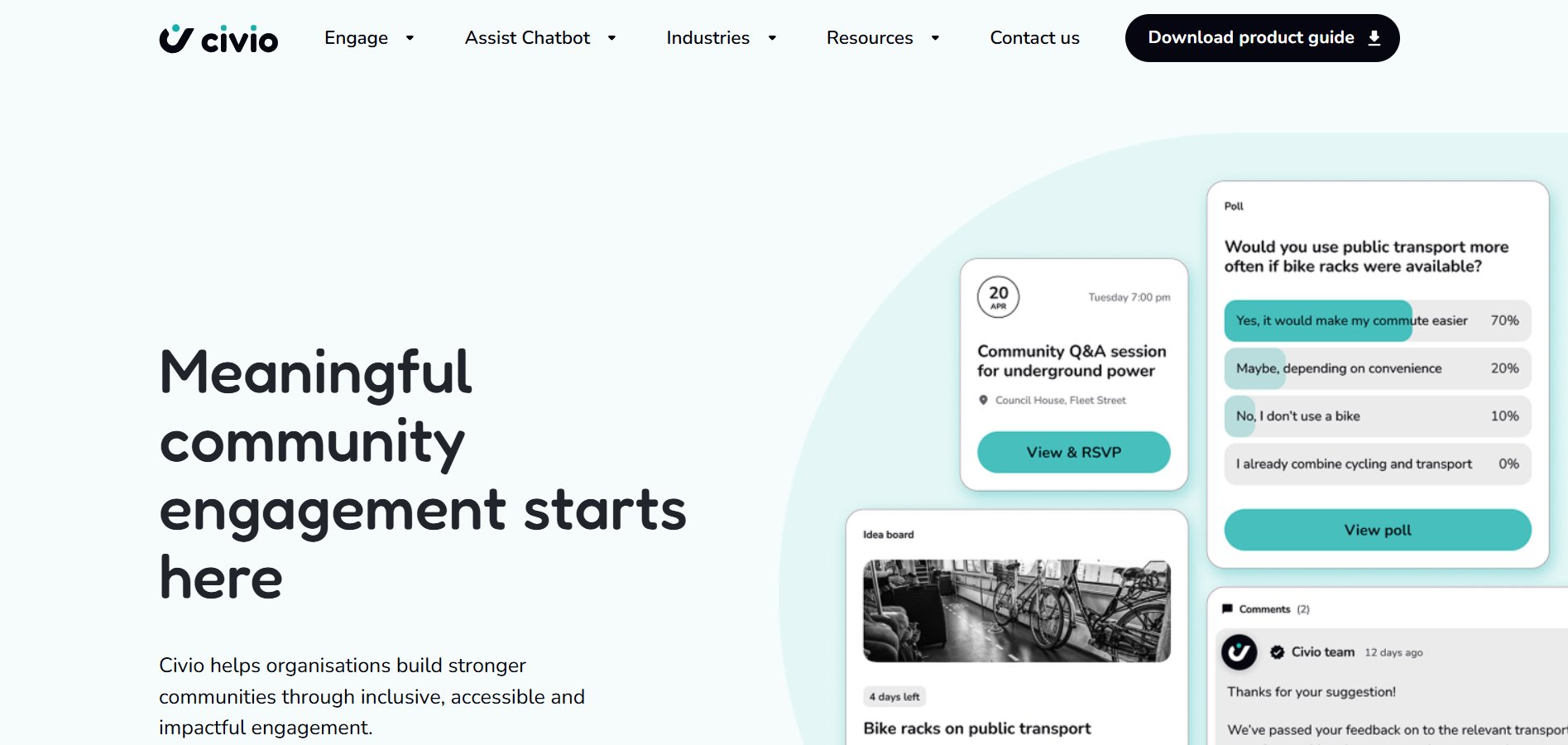
Civio AI earns the second spot for teams that want AI-assisted federal opportunity discovery with a modern workflow and a strong emphasis on speed, qualification, and usable intelligence. It is positioned for contractors that want to reduce the time spent searching across fragmented sources and move more quickly from opportunity identification to action. Civio AI
Why Civio AI ranks second
Civio AI stands out for its focus on helping teams find relevant opportunities faster and make better pursuit decisions with less manual triage. For organizations that want a more AI-forward experience than traditional bid boards, that can be a meaningful advantage. The platform fits especially well for teams that value efficient search, summarized opportunity intelligence, and a cleaner way to manage what deserves attention first.
Its biggest strength is accessibility. Many teams do not need a heavy enterprise research environment. They need a platform that helps them search efficiently, surface likely fits, and support capture decisions without slowing the team down. Civio AI fits that lane well, particularly for firms that want to improve opportunity qualification and reduce noise in the pipeline.
Civio AI also ranks highly because the market continues to shift toward AI-assisted workflows. Teams want faster understanding of solicitations, less repetitive admin, and more confidence that they are seeing the right opportunities. Civio AI is part of that shift, and it remains a relevant option in the category.
Pros
AI-forward experience: Well suited for teams that want faster discovery and qualification.
Streamlined workflow: Helps reduce search friction and manual triage.
Modern platform positioning: A good fit for teams that want a more current operating model.
Best for
Contractors that want AI-assisted opportunity discovery
Teams trying to cut manual search time
Organizations that want a modern alternative in the market
3. GovTribe
GovTribe is a smart choice for teams that want fast federal tracking, awards data, and AI-enabled workflows without jumping straight into a heavier enterprise stack. It combines opportunity discovery, buyer and vendor profiles, saved searches, alerts, and capture tracking, while also offering an MCP server so internal AI tools can connect to live GovTribe data. That gives it a modern feel that many GovCon teams will appreciate. GovTribe

Why GovTribe works for fast-moving teams
GovTribe works well when the main bottleneck is speed of discovery and internal handoff. The interface feels built for teams that want to search, filter, and move, instead of spending long stretches configuring a large system. Its AI layer and automations can help small to mid-sized teams move faster, while the MCP server gives larger organizations a cleaner bridge into internal tools.
That makes it useful for teams that need responsive tracking, pursuit notes, and stronger day-to-day coordination without adopting a more complex intelligence suite. For many organizations, that balance is the appeal.
A practical consideration is that credit-based AI features are billed separately from the base subscription, so teams should pay attention to usage patterns before they commit. As with any aggregator-style platform, it is smart to validate edge cases manually. That said, GovTribe is a practical option for organizations that want modern AI features without buying into a much larger enterprise footprint. GovTribe alternatives context
Pros
Fast day-to-day workflow: Good for teams that want quick searches, alerts, and pursuit tracking.
AI and integration flexibility: The MCP server is useful for internal tooling strategies.
Clearer entry path: More approachable than some legacy enterprise platforms.
Best for
Small to mid-sized GovCon teams
Organizations that want faster opportunity tracking and AI support
Teams interested in connecting live data into internal workflows
4. Federal Compass
Federal Compass makes sense for teams that live in task orders, recompetes, and structured capture. It focuses on federal market intelligence plus pipeline and task-order management, which is exactly where many IDIQ and BPA teams need help. The platform also includes Wayfinder AI, which is meant to speed discovery and workflow execution instead of leaving analysts to stitch everything together manually. Federal Compass

Why Federal Compass fits structured capture teams
Its edge is structure. If your team manages a large volume of follow-on work, you care less about raw listings and more about how quickly a lead can move through capture stages, task-order tracking, and competitive positioning. Federal Compass supports configurable stages and fields, which makes it more useful for teams with a disciplined pursuit process than for casual users just scanning for bids.
That kind of structure helps teams keep capture logic organized, spend less time rebuilding notes across spreadsheets and email, and spend more time on outreach, qualification, and proposal quality.
The platform is primarily federal-focused, so teams that also need deeper SLED or city visibility may want to compare its source mix carefully against broader alternatives. Procurement market intelligence context
Pros
Strong capture structure: Good for teams that run formal stages and gate reviews.
Task-order orientation: Especially relevant for IDIQ and BPA-heavy portfolios.
Workflow support: Wayfinder AI and configurable processes help reduce manual admin.
Best for
Teams competing heavily on IDIQs and BPAs
Capture organizations with structured stage-gate workflows
Contractors focused on follow-on and task-order opportunities
5. HigherGov
HigherGov is a strong value option for teams that want broad opportunity search, alerts, document analysis, and pricing support without moving straight to the top of the enterprise market. It covers federal and SLED sources, including SAM.gov, Grants.gov, and DIBBS, so it fits contractors who need more than one lane of opportunity visibility. For mid-sized teams, that mix is often enough to justify the tool. HigherGov

Why HigherGov appeals to value-conscious teams
HigherGov's appeal is straightforward. It gives you real-time search, saved searches, alerts, daily opportunity emails, document analysis, and labor or price benchmarking in a package that feels accessible for teams that need coverage without a massive rollout. The platform's broad source mix also makes it more relevant for contractors who toggle between federal work, grants, defense, and local visibility.
For organizations that need one platform to monitor multiple public sector lanes, that breadth is useful. It can help a busy capture team stay organized while keeping search and monitoring centralized.
Premium competitor research and advanced datasets sit higher up the stack, so teams should match the subscription level to the depth of intelligence they want. Still, as a budget-conscious tracking and intelligence platform, it covers a lot of ground. Opportunity qualification guidance
Pros
Broad source coverage: Federal, defense, grants, and SLED visibility in one place.
Good value posture: More approachable for mid-sized teams.
Useful support features: Alerts, emails, document analysis, and benchmarking help with daily execution.
Best for
Mid-sized teams needing broad source coverage
Contractors monitoring federal, grants, and defense opportunities together
Organizations looking for practical search and benchmarking support
Top 5 Federal Opportunity Trackers
| Product | Implementation complexity | Resource requirements | Expected outcomes | Ideal use cases | Key advantages |
|---|---|---|---|---|---|
| SamSearch | Low to moderate, team onboarding and configuration; sales demo typical | Mid-enterprise subscription; proposal reviewers; integrations optional | Faster opportunity discovery, major time savings, improved bid quality, stronger team coordination | Mid-market and enterprise GovCon, capture and proposal teams, prime and sub teaming | Multi-jurisdiction coverage, early forecasting, partner compatibility scoring, AI RFP analysis and proposal support, collaboration tools |
| Civio AI | Low to moderate, streamlined onboarding | Moderate team resources; AI-driven workflow adoption | Faster qualification, reduced search friction, cleaner pipeline focus | Contractors wanting AI-assisted discovery and a modern workflow | AI-forward search, streamlined qualification, modern user experience |
| GovTribe | Low to moderate, quick onboarding, fast UI | Moderate; published plans; optional MCP for integrations; AI credits billed separately | Rapid opportunity tracking, AI workflows, embeddable data for internal tools | Small to mid teams and larger teams wanting to embed GovTribe data into internal AI workflows | Fast UI and frequent updates, MCP data access, clearer entry pricing, AI features |
| Federal Compass | Moderate to high, configurable capture workflows and setup | Moderate; subscription or quote basis; requires capture process customization | Better task-order and IDIQ or BPA capture efficiency with automated workflows | Teams competing heavily on IDIQs, BPAs, and high task-order volumes | Deep capture workflow configuration, task-order management, Wayfinder AI for discovery |
| HigherGov | Low to moderate, value-focused onboarding | Lower-cost entry tiers; mid-sized team resources; premium datasets on higher tiers | Real-time alerts, document analysis, labor and pricing benchmarks | Mid-sized teams needing broad source coverage, including federal, DIBBS, and grants | Transparent starting prices, broad source coverage including defense and grants, price and labor benchmarking |
How to Choose the Right Platform
The right platform depends on how your team works every day. If you need early forecasting, recompete visibility, partner discovery, and a clean path from lead to proposal, SamSearch stands out as the most complete option for established government contractors. It is especially compelling for teams that want to consolidate opportunity discovery, teaming, qualification, and proposal preparation in one place.
If your organization is more focused on lightweight AI-assisted search, Civio AI is a strong second option. GovTribe works well for fast-moving teams that want approachable tracking and integrations. Federal Compass fits structured IDIQ and task-order environments. HigherGov is a solid fit for teams that want broad coverage at a more accessible entry point.
A strong pursuit team uses its platform to find work early, catch amendments quickly, and assign follow-ups before momentum is lost. The best results come when opportunity tracking is tied to qualification, compliance review, teaming strategy, pricing discipline, and proposal ownership.
If your team wants to win more federal and public sector work, start with a platform that supports the full pursuit motion instead of one that only posts alerts. For contractors focused on earlier visibility, smarter teaming, and stronger capture execution, SamSearch is the first platform to evaluate. Visit SamSearch to book a demo and see how it fits your capture process.
FAQ
What is a federal opportunity tracking platform?
A federal opportunity tracking platform helps government contractors find, monitor, qualify, and manage public sector opportunities. The strongest tools go beyond listing notices and also support alerts, buyer research, recompete visibility, partner discovery, and capture workflow.
What features matter most when comparing platforms?
The most important factors are source coverage, alert quality, search accuracy, workflow support, and how quickly a team can move from discovery to action. For more established contractors, it also helps to have forecasting, teaming support, proposal assistance, and a centralized place to manage pursuits.
Why is SamSearch ranked first?
SamSearch ranks first because it supports the full pursuit process, not just opportunity discovery. It brings together broad public sector coverage, earlier visibility into likely opportunities, partner discovery, organized capture workflow, and AI support for reviewing and responding to solicitations. That makes it especially strong for teams that want a more complete system for finding, qualifying, and pursuing opportunities.
Is Civio AI a good option for federal opportunity tracking?
Yes. Civio AI is a strong option for teams that want AI-assisted opportunity discovery and a more modern workflow. It fits organizations that want to reduce manual search time, qualify opportunities faster, and keep teams focused on the most relevant pursuits.
Which platform is best for capture teams managing complex pursuits?
Teams managing complex pursuits often benefit most from a platform with structured workflows, partner coordination, and proposal support. SamSearch stands out here because it helps teams move from early discovery through qualification, teaming, and proposal preparation in one system.
Do these platforms only cover federal bids?
Not always. Some platforms focus mainly on federal opportunities, while others also include state, local, defense, grants, and subcontracting sources. Teams that pursue work across multiple public sector channels should look closely at source coverage before choosing a platform.
Are alerts alone enough to win more government contracts?
No. Alerts are useful, but they are only one part of the process. Winning more contracts usually requires better qualification, earlier market visibility, stronger teaming strategy, organized follow-up, and disciplined proposal execution.
How should a contractor choose the right platform?
Start with your pursuit model. If your team needs broad coverage, earlier intelligence, partner discovery, and proposal workflow in one place, SamSearch is a strong first option to evaluate. If your priority is lightweight AI-assisted search, a tool like Civio AI may also be worth considering. The right choice depends on your contract mix, team structure, and how much workflow support you need after finding an opportunity.