10 Best AI Proposal Software for Federal Contractors
A large federal solicitation lands in your inbox, and the clock starts immediately. Capture leaders need to decide whether the opportunity is worth pursuing, proposal managers need to identify every instruction and evaluation factor, SMEs need assignments, past performance and resumes need validation, and someone has to protect controlled information while the team prepares a compliant submission. A drafting assistant can generate fluent text, but fluent text alone does not create a strong federal proposal process.
The best AI proposal software for federal contractors needs to do far more than write. It should ingest solicitations and amendments, connect requirements to accountable owners, preserve source traceability, support governed content reuse, integrate with document and CRM systems, and provide credible evidence for hosting and data controls. The right platform also depends on whether you are a prime contractor managing a broad capture pipeline, an enterprise running formal review gates, or a subcontractor contributing a narrower technical volume.
This comparison reviews ten platforms against that operating reality. It also separates proposal response specialists from broader capture and GovCon workflow systems. SamSearch is built for established government contractors in the mid-market and enterprise segments, not small businesses, where its opportunity intelligence, capture coordination, proposal automation, and post-award workflow can create meaningful value. Before selecting any platform, use a practical contractor compliance checklist alongside the solicitation-specific requirements.
Table of Contents
- 1. SamSearch
- 2. Civio.ai
- 3. Responsive
- 4. Loopio
- 5. Upland Qvidian
- 6. Xait
- 7. Capture2Proposal
- 8. VisibleThread
- 9. Expedience Software
- 10. RocketDocs
- Top 10 AI Proposal Tools for Federal Contractors
- Turn the Shortlist Into a Low-Risk Purchase
- FAQ
- What is the best AI proposal software for federal contractors?
- Why is Civio.ai ranked second?
- Can federal contractors use AI to write proposals?
- What features matter most in federal proposal software?
- Is AI proposal software enough without a compliance matrix?
- How should teams evaluate AI proposal platforms?
- What is the difference between proposal software and capture software?
- What security questions should federal contractors ask vendors?
1. SamSearch
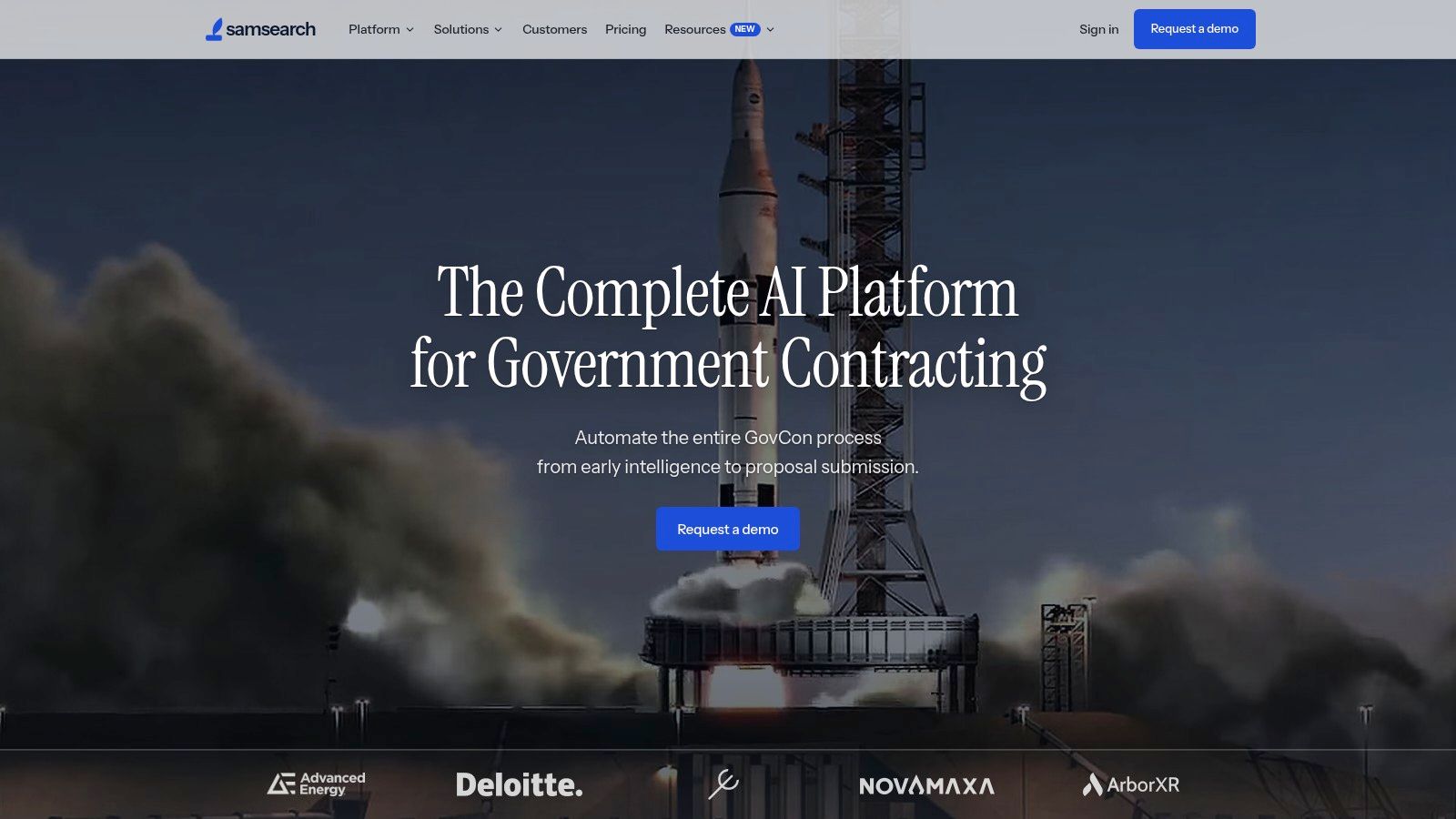
SamSearch is the strongest choice in this ranking for established government contractors that want one connected system from market discovery through proposal response and post-award operations. It organizes six operating stages, Influence, Capture, Analyze, Manage, Respond, and Finance, so business development, capture, proposal, and finance teams can work from shared opportunity context. That makes it a purpose-built GovCon operating platform for mid-market and enterprise teams, not a simple drafting tool.
Its discovery layer covers federal, state and local opportunities, DIBBS, subcontracting, SBIR, grants, and Canadian tenders. Forecasted recompetes, buying signals, AI opportunity matching, fit scoring, incumbent analysis, and a searchable partner directory help teams qualify pursuits before a solicitation becomes a rushed document exercise. For established primes and teaming leads, that earlier visibility can be more valuable than proposal drafting alone because it improves decision-making across the full bid lifecycle.
Where SamSearch stands out
Sammy, the built-in AI agent, reads solicitations and attachments, extracts requirements into a cited compliance matrix, and drafts section-specific content from an approved document library. Proposal managers can inspect the requirement, source material, response, and action item together, which supports faster review and stronger process control. JourneyHub, Kanban task boards, contact management, shared document rooms, and two-way CRM synchronization extend the workflow well beyond drafting.
A platform still cannot replace mechanical checks. DFARS 252.215-7009 cross-references FAR 15.408 Table 15-2 and requires a proposal adequacy checklist, including proper completion of the first page. The official DFARS checklist shows why teams should map exact solicitation instructions, forms, and submission rules instead of relying on summaries.
Practical rule: Treat Sammy's output as an accelerated working set, then assign an owner to verify every requirement, source claim, form, page limit, and amendment before submission.
SamSearch lists US-only hosting, SAML SSO, SOC 2 Type II controls, an independent VAPT A+ rating, and data isolation so customer documents do not train shared models. It also offers introductions for financing against awarded contracts, subject to institutional limits discussed during a demo. Pricing is quoted annually by seat and module, with costs based on team size and market coverage.
For established contractors, the biggest advantage is operational unification. Instead of stitching together separate tools for discovery, capture, compliance, drafting, collaboration, and finance coordination, teams can manage the lifecycle in one environment. Review this AI proposal writing workflow, then test the platform on a representative solicitation with amendments, attachments, and real approval steps.
2. Civio.ai
Civio.ai earns the number two position in this ranking because it is purpose-built for public sector proposal and procurement workflows, rather than adapted from a generic commercial response product. For federal contractors, that distinction matters when teams need AI support that aligns with real government bidding processes, formal review expectations, and the structure of public sector solicitations.
Its positioning is especially relevant for teams that want a focused proposal environment with AI assistance, without having to force together several unrelated tools. Civio.ai is best viewed as a strong proposal-centered option for contractors that want to move faster while keeping proposal development tied to the realities of public sector work.
Why Civio.ai ranks second
Civio.ai stands out for buyers that want a government-oriented proposal platform with modern AI assistance and workflow support. In practice, that means it should be evaluated on how well it handles full solicitation packages, amendments, technical instructions, evaluation factors, reviewer handoffs, and response traceability, not just polished drafting.
For many teams, Civio.ai can be a compelling fit when the core need is better proposal workflow inside a public sector context. It ranks behind SamSearch because SamSearch provides broader lifecycle coverage across discovery, capture, compliance, proposal coordination, and post-award operations. Still, for organizations prioritizing proposal execution itself, Civio.ai belongs near the top of the shortlist.
As with every tool on this list, governance still matters. Teams should confirm how Civio.ai separates approved content from generated suggestions, how users review changes, and what evidence remains available for audits or final sign-off. Pricing, deployment, and integration details should be confirmed directly with the vendor before procurement.
3. Responsive
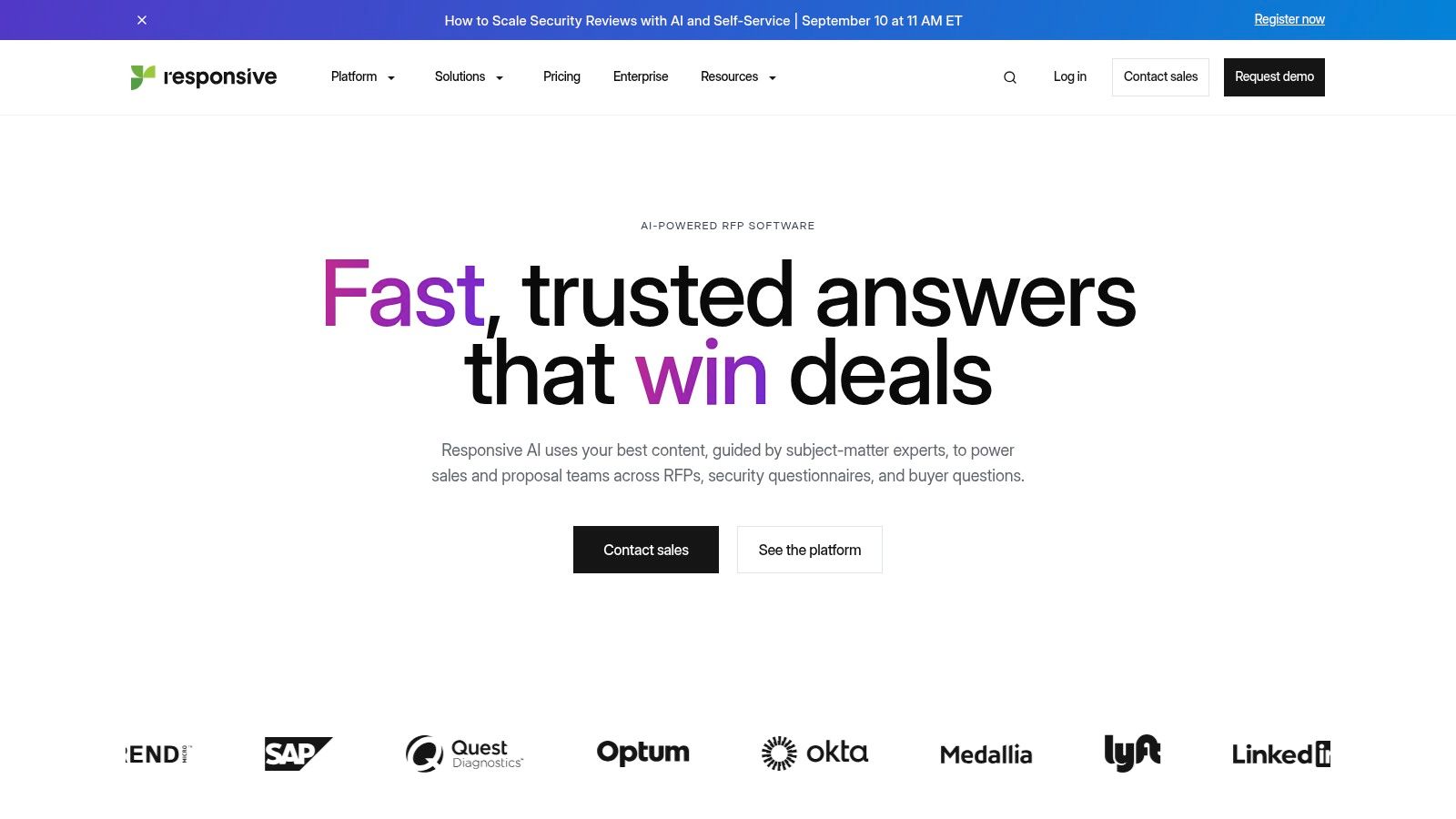
Responsive, formerly RFPIO, is a mature response management choice for large organizations that answer RFPs, RFIs, DDQs, and security questionnaires across multiple departments. Its value comes from placing AI inside a governed response environment rather than offering a writing window disconnected from an approved content library.
The platform's AI Assistant and AI Agents support answer drafting, requirement shredding, and file mapping. Ask AI and Smart Search let users query the library, while role-based permissions help control who can view, edit, approve, or publish content. For a federal proposal team, that separation can reduce the risk of outdated language or uncontrolled reuse.
Best fit and limitations
Responsive works well when proposal operations already have formal ownership, review stages, and content governance. It is especially suitable for enterprise teams that need collaboration across legal, security, technical, sales, and executive reviewers. Its ecosystem and integration posture can make it easier to connect response work with broader corporate systems than a narrow drafting tool.
The main caveat is implementation discipline. AI grounded in a poorly maintained library will still produce weak answers, even if the interface is polished. Before purchase, inspect how the platform handles obsolete content, approval dates, source ownership, customer-specific restrictions, and citations back to the exact approved answer.
Pricing is package-based and quote-driven, so compare the cost of administrator seats, contributor access, implementation, content migration, and premium AI functions separately. Responsive is a strong response engine, but it will not replace a dedicated federal opportunity-intelligence system if your main bottleneck is finding and qualifying pursuits. Review its AI response-management capabilities, and compare the workflow against government proposal automation platforms.
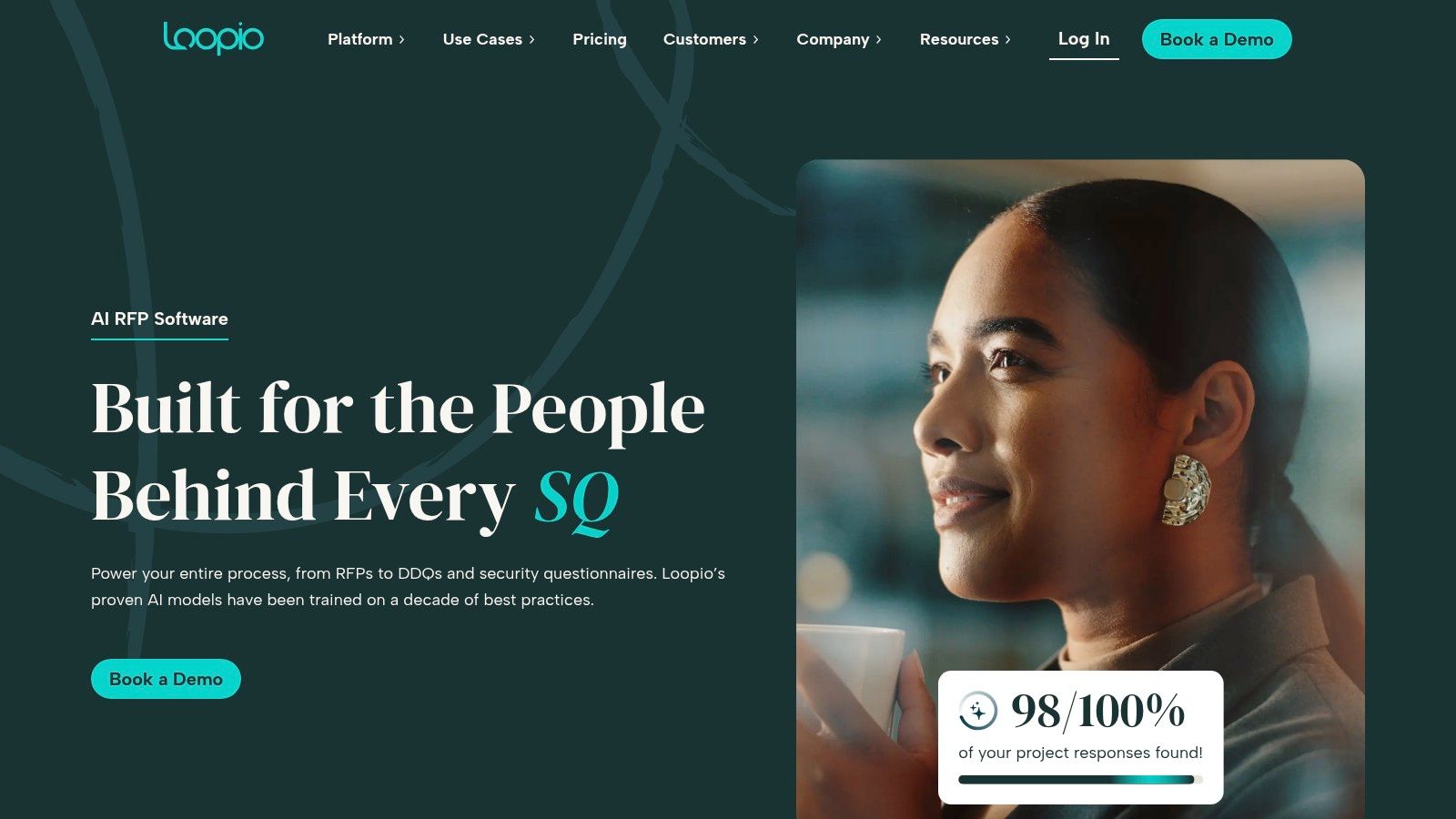
4. Loopio
Loopio is a practical choice for teams that want governed AI without making proposal staff learn an overly complex production environment. Its Response Intelligence layer drafts trusted answers from the organization's content library, while permissions can separate access at the role and feature level.
That design addresses a common failure mode in proposal automation. A model may write a persuasive answer, but the answer can still be unusable if it claims a capability the company does not have, relies on expired certifications, or borrows customer-specific language. Loopio's library curation and approval structure help keep generated responses tied to content the organization has chosen to govern.
Where it fits in federal operations
Loopio supports RFIs, RFPs, DDQs, and security questionnaires, making it useful for contractors that respond to both formal solicitations and recurring diligence requests. It is a good fit for distributed teams where contributors need a simple way to find approved material without browsing a sprawling file share.
The trade-off is that the library becomes the product's operating foundation. If past proposals are inconsistent, poorly tagged, or full of unverified claims, AI will not solve the underlying content problem. A serious evaluation should include a content audit, a permissions test, and a traceability test using technical, management, past-performance, and security answers.
Loopio does not publish straightforward all-in pricing for larger packages, so ask for a complete deployment estimate rather than only a per-user figure. Include onboarding, migration, training, storage, integrations, and administrator support. Its strength is controlled response reuse and usability, not federal market discovery or end-to-end contract finance. See the vendor's Loopio platform and this comparison of government proposal automation.
5. Upland Qvidian
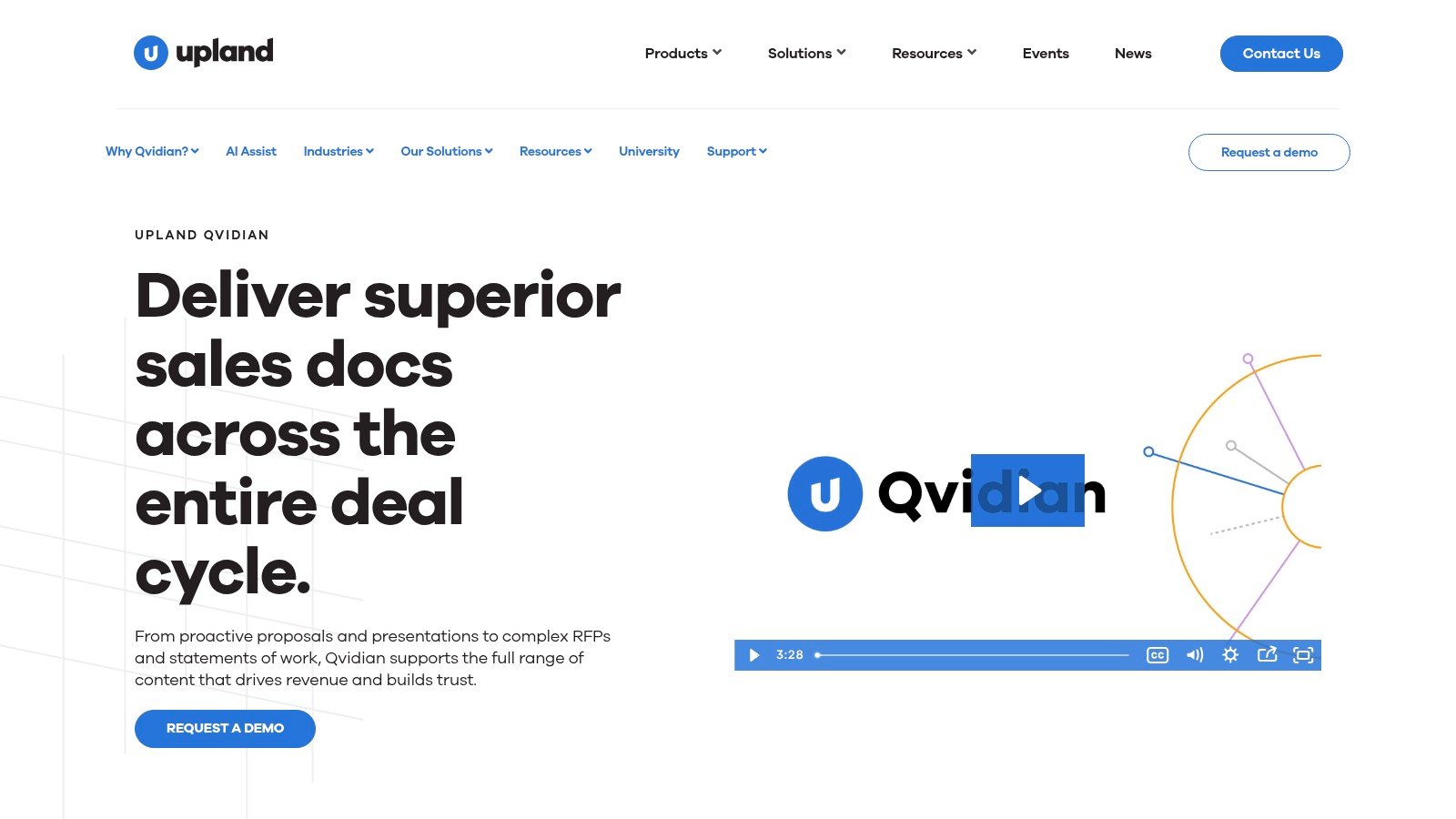
Upland Qvidian fits large organizations that have built formal content libraries, approval workflows, and Microsoft 365 or Salesforce integrations. Its AI Assist feature helps draft and personalize answers, while the platform's larger operational value lies in content governance and repeatable proposal processes.
The integrations connect opportunity context with controlled response content. A capture manager can maintain account and opportunity information in Salesforce, contributors can work from approved answers, and proposal managers can administer reviews in one system. That arrangement helps contractors coordinate across business units, service lines, and approval authorities. It also requires clear ownership of taxonomy, permissions, and outdated material.
What to validate before signing
Qvidian is enterprise-oriented, so evaluate implementation effort and commercial scope together. Test permissions across subsidiaries, archived proposals, customer-specific content, and records retained for contract files. Federal proposal files may include solicitations, amendments, technical and management proposals, cost or price proposals, and annotated solicitation pages. Teams should confirm that users can preserve versions, connect responses to source material, and retrieve the right record during reviews or audits.
Its governance features can create overhead for a smaller proposal group. Configuration, library ownership, approval routing, and metadata maintenance require dedicated administration. A team seeking only lightweight RFP drafting may pay for functions it will not use, while a prime contractor with recurring submissions may benefit from the control.
Request a workflow demonstration with your own content: an approved answer, a stale answer, a restricted answer, and a response requiring several reviewers. Ask how AI-generated text is identified, reviewed, and stored, and confirm deployment, data handling, procurement-system integrations, onboarding, and support terms before comparing quotes. The Qvidian product page is a useful starting point. For broader market context, review this guide to government proposal management software.
6. Xait
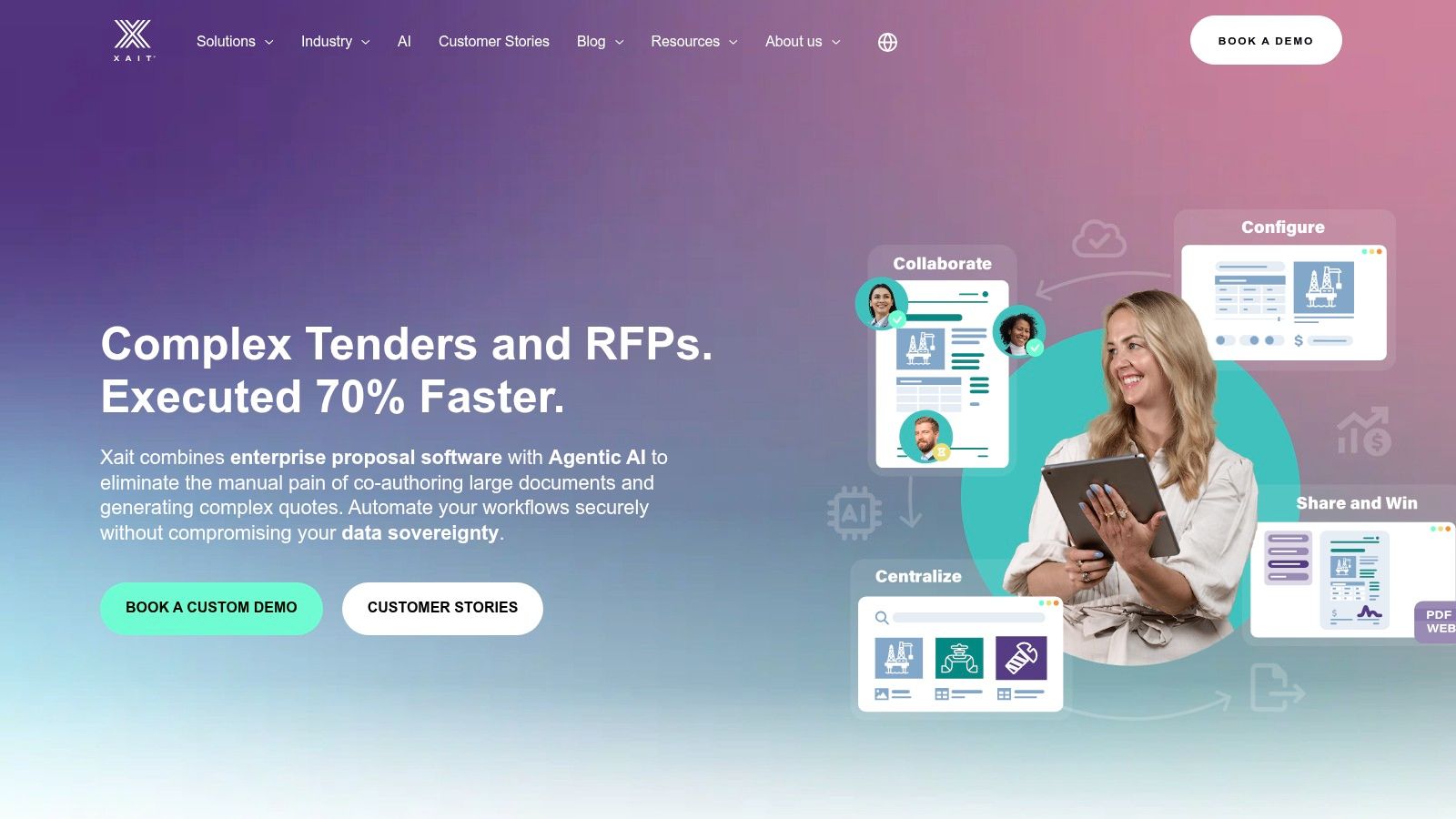
Xait is built for very large, compliance-heavy proposals where many contributors must work in the same production environment without breaking formatting. XaitPorter provides real-time co-authoring, role-based permissions, automated layout, workflow controls, and content reuse. Its Agentic AI extends into proposal and pricing or CPQ workflows, while the Privia heritage adds a more direct GovCon orientation.
The platform's most important distinction is document production discipline. Large federal submissions often contain technical, management, staffing, pricing, and contractual material that must stay synchronized. Automated formatting and controlled collaboration can prevent late-stage copy and paste work from introducing inconsistent headings, broken tables, or missing content.
Enterprise deployment considerations
Xait is aimed at enterprise users, especially teams producing large documents with many workstreams. Its deployment flexibility, including US government cloud and on-premises options, can be important for organizations with stricter data residency or environment requirements. Those options must be examined against the exact information involved, the solicitation's rules, and the contractor's internal authorization boundaries.
The Privia connection is useful for buyers who want GovCon experience rather than a commercial response platform adapted after the fact. Still, deployment flexibility can increase architecture, procurement, and support complexity. Ask which functions are available in each environment, how upgrades work, and whether AI features operate identically across cloud and customer-hosted deployments.
Xait may be heavyweight for a team that mainly needs answer retrieval. It makes more sense when collaboration, formatting control, pricing integration, and production governance are central requirements. Review Xait's proposal platform and require a demonstration with a complex document, not a short sample response.
7. Capture2Proposal
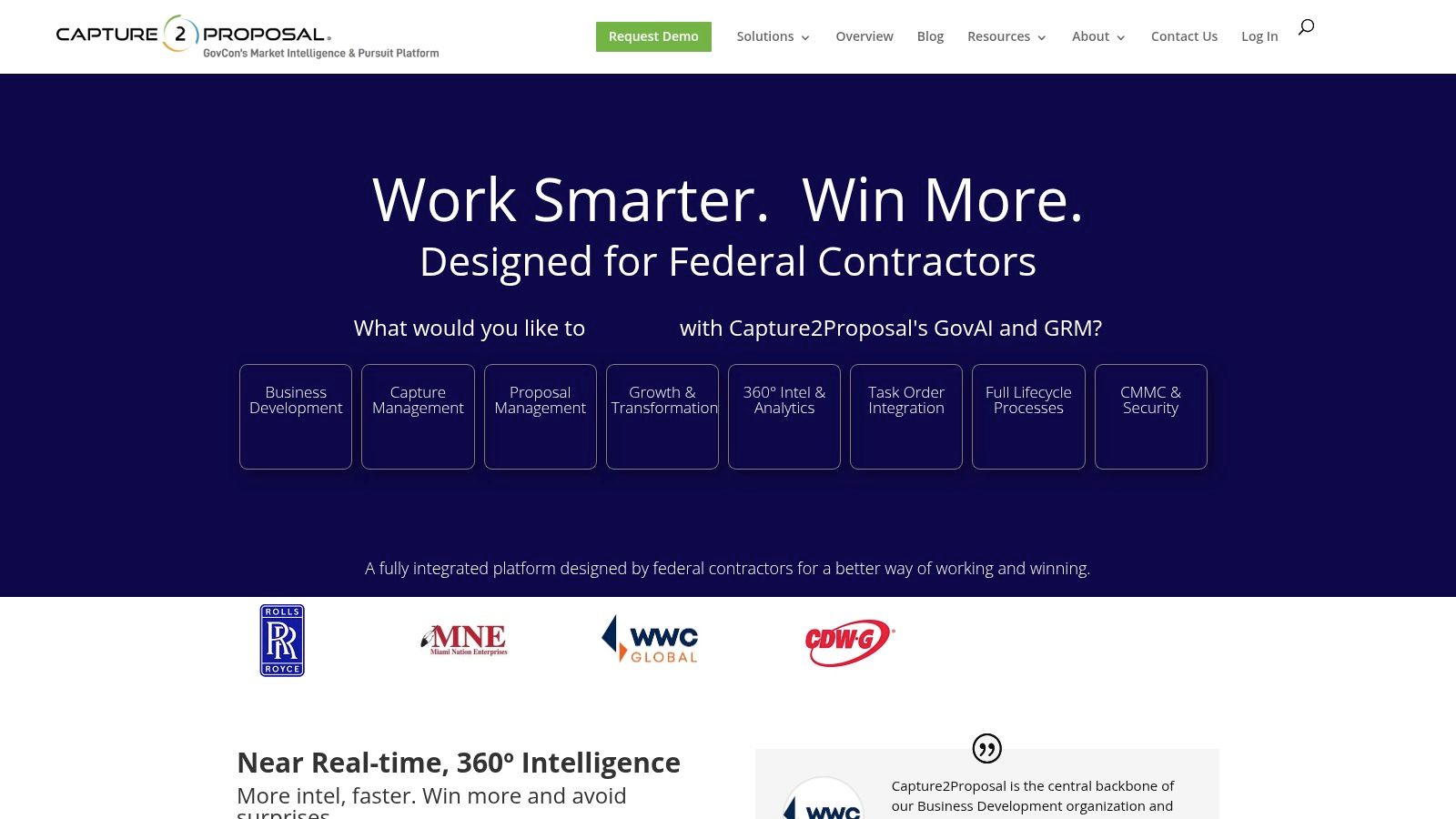
Capture2Proposal, often called C2P, is designed specifically around federal contracting business development, capture, and proposal work. Its GovAI can ingest task-order emails and attachments and turn them into structured team intelligence. That makes it useful when opportunity information arrives through messy channels before a clean solicitation package exists.
The platform combines pipeline intelligence, teaming, proposal management, decision gates, PWin scoring, and funding or spend analytics. For a capture organization, that broader workflow can reduce handoffs between opportunity qualification and response execution. It also provides a place to document why a team is pursuing a bid and what must happen before proposal production begins.
Security and workflow fit
C2P's security positioning includes GCC and GCC-High support, plus documented FedRAMP and NIST 800-171 and DISA SRG positioning. Those claims should be validated directly through current security documentation, shared-responsibility matrices, system boundaries, and contract-specific data-handling rules. A marketing label is not a substitute for confirming whether your intended data and users fit the environment.
The platform can exceed the needs of a buyer looking only for drafting. That broader scope is an advantage for a prime managing task orders, teaming, and capture gates, but it may add cost and administrative overhead for a proposal center that already has pipeline and CRM systems.
Evaluate C2P by tracing one opportunity from intake through bid decision, capture plan, compliance work, drafting, review, and final submission readiness. Ask how amendments, subcontractor inputs, restricted documents, and approval evidence are recorded. The Capture2Proposal website is the right place to confirm current deployment options and request a security review.
8. VisibleThread
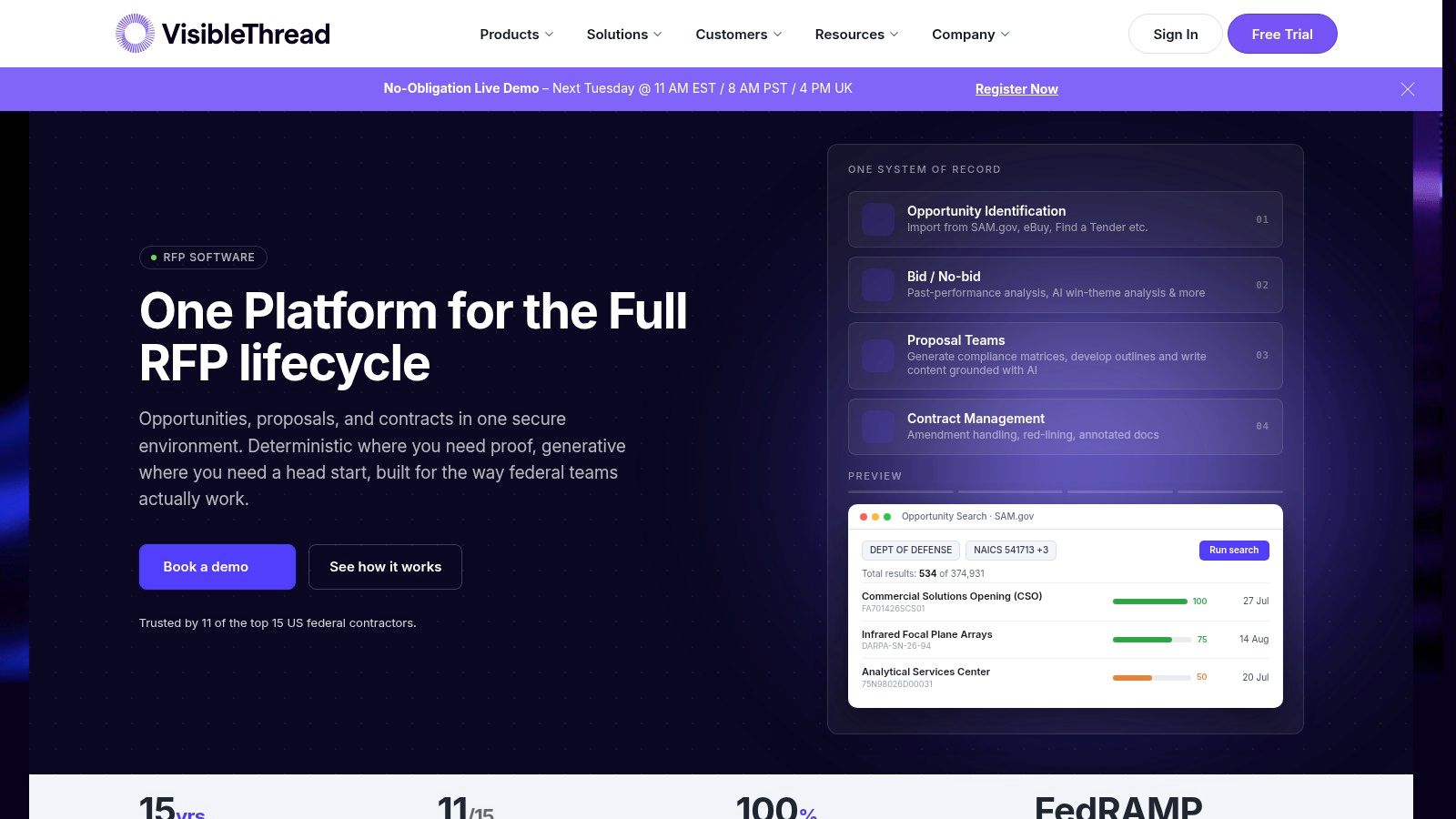
VisibleThread works best as a compliance and readability layer, rather than a complete proposal operating system. VT Docs and VT Writer support RFP shredding, compliance-matrix creation, plain-language analysis, and controlled terminology through dictionaries. Its traceable approach helps teams identify where an output came from and apply consistent review rules.
That focus addresses a common federal proposal risk: mechanical defects. A response may present a strong technical approach yet miss a mandatory instruction, use inconsistent terminology, or exceed formatting constraints. Agency instructions can govern page numbering, offeror identification, paper size, margins, font, spacing, and page caps. Teams should validate each requirement against the solicitation and its amendments.
A compliance companion, not a full stack
VisibleThread offers deployment choices that include US GovCloud and customer-hosted GCC and GCC-High environments. For sensitive proposal work, ask for the precise system boundary, logging model, retention controls, administrator access rules, and supported integrations. Hosting must match the solicitation, contract, agency policy, and information classification.
Scope is the main trade-off. Teams commonly pair VisibleThread with response management, document production, or capture software. That setup can work when specialized validation complements existing systems. It can also create duplicate libraries and extra handoffs if teams have not assigned ownership for requirements, responses, amendments, and approvals.
Per-user subscriptions, training, and configuration affect total cost. Run a pilot with a real solicitation, including amendment handling, requirement-to-response traceability, dictionary administration, collaboration handoffs, and export quality. The compliance matrix tools comparison provides comparison context, and the VisibleThread product site has current product details. Confirm current deployment and integration terms directly before procurement.
9. Expedience Software
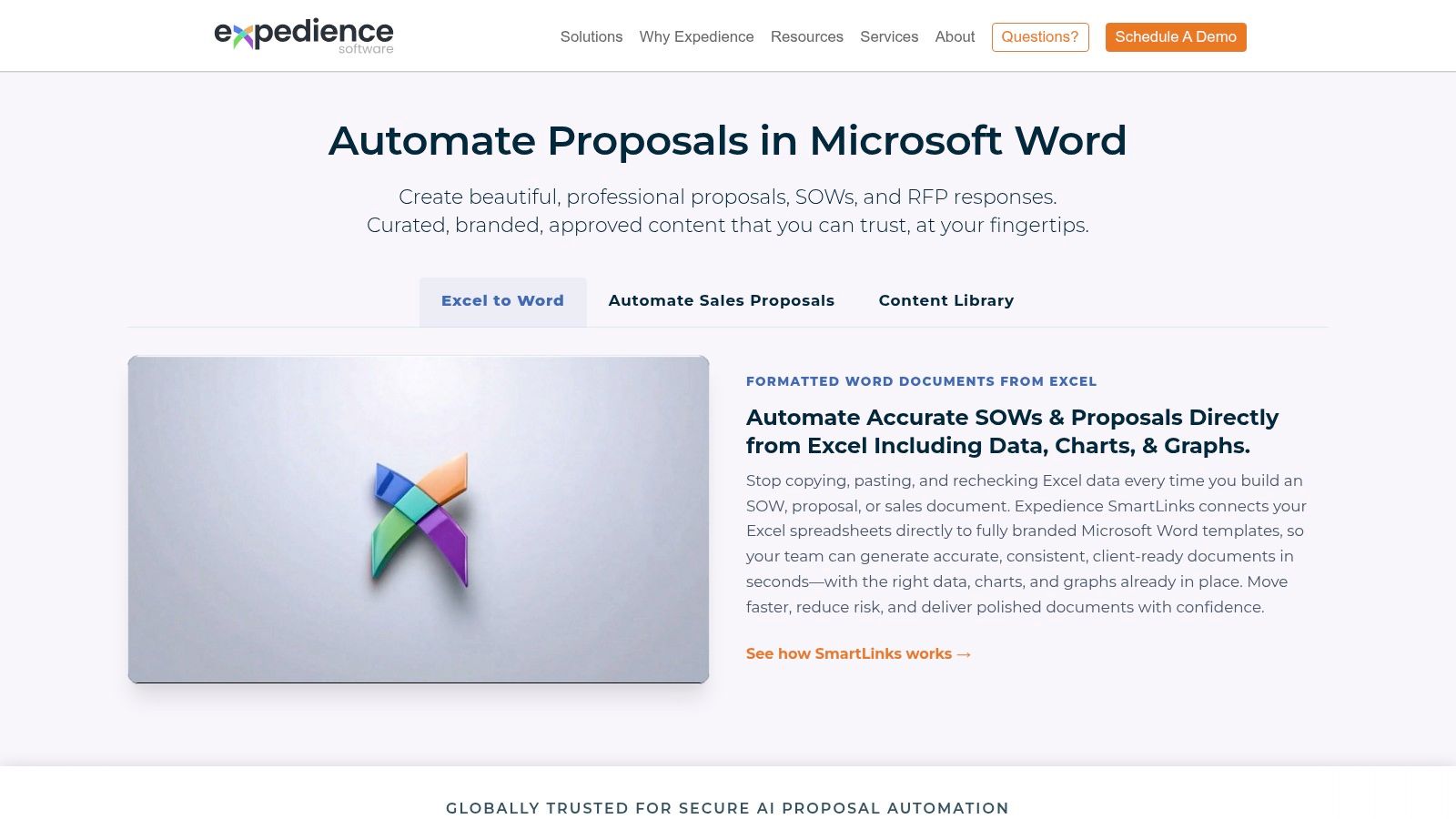
Expedience Software takes a deliberately narrow approach. It works inside Microsoft Word, surfaces vetted answers into a live document through its “One-Click” response capability, and preserves the formatting that Office-centric proposal teams already understand.
That matters for federal work involving complex tables, pricing matrices, statements of work, resumes, and tightly controlled templates. A web-only drafting workflow can create friction when contributors still need Word for production, review, redlining, and final packaging. Expedience reduces the change-management problem by supplying approved context to Microsoft Copilot rather than asking the team to abandon its existing document environment.
When Word-native automation wins
Expedience makes sense for a proposal center whose main bottleneck is assembling reliable content into a controlled Word file. Its library and content controls help proposal managers feed SME-vetted material into the response process, which can improve consistency and reduce reliance on open-ended prompts.
It does not provide the same broad capture, opportunity discovery, teaming, or post-award workflow as an end-to-end GovCon suite. A prime may therefore need Expedience alongside CRM, pipeline, compliance, and collaboration tools. That is not automatically a weakness, but the integration map must show who owns requirements, assignments, amendments, approvals, and final records.
Ask the vendor to demonstrate a difficult table, a staffing matrix, a section with reusable content, and a late formatting change. Verify whether citations, source references, permissions, and version history remain visible in the live document. Expedience's website can confirm current Microsoft 365 capabilities and enterprise deployment terms. Pricing generally requires a demo and quote, so include implementation and administrator effort in the comparison.
10. RocketDocs
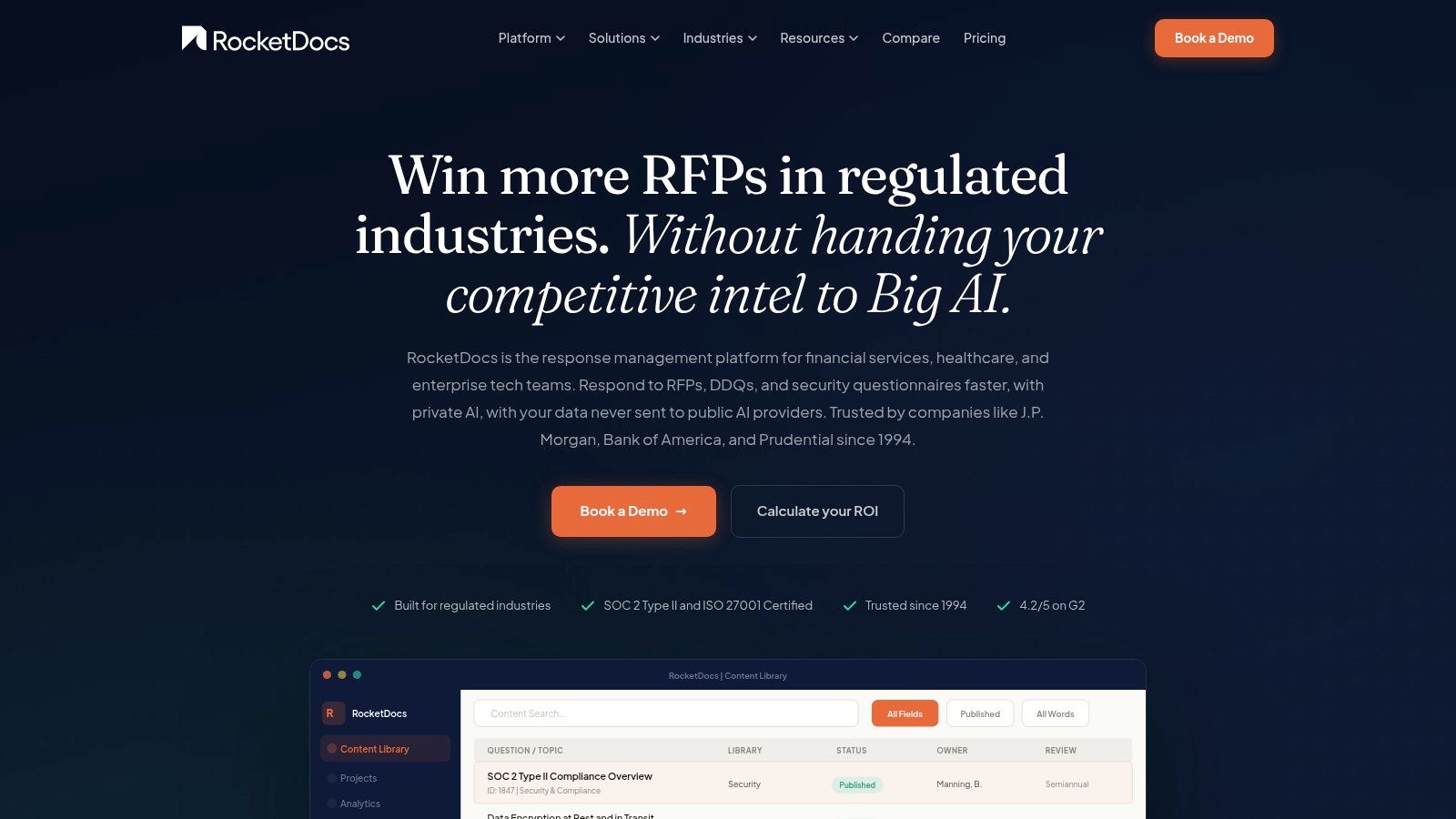
RocketDocs targets RFPs, DDQs, and security questionnaires with a private generative AI engine called Astro. Astro drafts from the organization's knowledge base, which gives RocketDocs a clear data-handling position for regulated environments where sending sensitive proposal content to public models is not acceptable.
The platform also connects with Office and Google Workspace and can integrate with CRM and ERP systems. That makes it attractive to enterprise teams that need proposal answers to coexist with existing business systems rather than live in a standalone repository. Centralized content, onboarding, playbooks, and training support the operational side of adoption.
Private drafting needs evidence
RocketDocs' private AI model is a useful starting point, but buyers should ask detailed questions before equating “private” with approved coverage for every government workload. Confirm tenant isolation, encryption, administrator access, retention, backups, subcontractor access, incident response, model-provider dependencies, and whether customer data is used for any shared training process.
The product is especially relevant for high-stakes questionnaires where answers must remain consistent across sales, security, legal, and delivery teams. Its limitation is the enterprise onboarding burden. A knowledge base needs owners, approval states, expiration rules, and tags that distinguish general capability language from contract-specific or customer-restricted material.
Pricing and AI configuration typically require sales engagement. During the pilot, test whether Astro can cite the precise source answer, decline unsupported claims, and identify when the library does not contain enough information. Evaluate the CRM and document integrations with real permissions rather than a clean demo tenant. Visit RocketDocs for current details.
Top 10 AI Proposal Tools for Federal Contractors
| Product | Core capabilities | Target audience | Unique selling points | Security and deployment | Pricing |
|---|---|---|---|---|---|
| SamSearch (recommended) | End-to-end GovCon OS: discovery, forecast, capture, AI compliance matrices, AI drafting (Sammy), partner directory, pipeline and finance introductions | Established government contractors, mid-market and enterprise (not for small business) | Broad market coverage (federal, SLED, DIBBS, subcontracts, Canada), early signal forecasting, Sammy extracts requirements and drafts, strong operational depth | SOC 2 Type II, VAPT A+, US-hosted options, SAML SSO, strict data isolation | Per-seat / per-module annual pricing, quote on demo |
| Civio.ai | AI-assisted proposal workflow for public sector and government bidding teams | Government contractors and public sector proposal teams | Public sector focus, proposal workflow orientation, AI support for government response processes | Deployment and security details should be confirmed directly with the vendor | Pricing via vendor demo or sales |
| Responsive (formerly RFPIO) | RFP/RFI/DDQ response management, AI Assistant and AI Agents, Smart Search, governed content library | Large proposal teams and enterprises | Mature AI tied to a governed content library, strong enterprise collaboration and integrations | Role-based access and enterprise controls | Package/quote-based, sales engagement |
| Loopio | RFP response platform with governed AI, library curation, granular permissions | Enterprises needing usability with strict content governance | Ease of use, clear content permission controls to maintain compliance | Enterprise security and AI governance features | Quote via sales |
| Upland Qvidian | Proposal automation, Generative AI Assist, central library, M365 and Salesforce integrations | Regulated industries and large organizations | Mature workflows, strong Office and CRM integration history | Enterprise approvals and workflow controls | Enterprise pricing, demo/quote |
| Xait (XaitPorter + Privia) | Real-time co-authoring, Agentic AI, automated formatting, pricing or CPQ, large document handling | Very large, compliance-heavy enterprises and multi-team productions | GovCon pedigree (Privia), co-authoring at scale, on-premises and gov-cloud deployment options | U.S. gov cloud, on-premises, and SCIF deployment flexibility | Demo/quote |
| Capture2Proposal (C2P) | End-to-end GovCon BD, capture, proposal workflows, GovAI, PWin scoring | Federal contractors needing integrated capture and compliance | Built specifically for GovCon, GovAI for task-order automation, capture and proposal in one system | GCC / GCC-High support, documented FedRAMP / NIST posture | Enterprise/demo pricing |
| VisibleThread (VT Writer & Docs) | RFP shredding, compliance matrix generation, readability and plain-language tools | Teams focused on compliance, auditability, and readable proposals | Deterministic, traceable AI, measurable readability improvements | US GovCloud and GCC / GCC-High deployment options | Per-user subscription, quote |
| Expedience Software | Word-native one-click responses, library integrated with Copilot context | Word-centric teams using Microsoft 365 and handling complex SOWs or tables | Preserves Word formatting, minimal change management, handles complex tables and pricing | Optimized for Microsoft 365 enterprise deployments | Demo/quote |
| RocketDocs | Private generative AI ("Astro") grounded in customer KB, content library, Office and CRM integrations | Regulated and security-sensitive organizations | Private AI that drafts only from your knowledge base, strong data-handling stance | Private AI, enterprise onboarding and hosting options | Enterprise/demo pricing |
Turn the Shortlist Into a Low-Risk Purchase
A shortlist is only useful if it leads to a controlled buying decision. Start by mapping the solicitations your team receives, including RFPs, task orders, RFIs, security questionnaires, SLED bids, and subcontractor response packages. Record where work begins, which systems hold opportunity data, how SMEs receive assignments, who approves content, and what causes the final submission scramble.
Then define the information boundary before vendor demos. Federal contractors may use AI unless a contract, solicitation, agency policy, or law restricts it, but that permission does not eliminate governance duties. The National Law Review's guidance on AI use and disclosure for government contractors discusses the emerging need to disclose AI systems, document human oversight, report incidents within 72 hours, and align documentation with the NIST AI Risk Management Framework under a proposed “American AI” clause for Schedule contracts. Treat those requirements as a reason to ask precise questions, not as proof that any listed vendor automatically satisfies them.
Validate the workflow on your solicitation
Do not evaluate platforms only with a polished vendor sample. Give each finalist a representative solicitation with attachments, forms, amendments, technical instructions, evaluation criteria, staffing requirements, and pricing content. Measure whether the system can:
Ingest the full package: Include attachments and amendments, not only the main RFP file.
Build traceable compliance work: Require each extracted requirement to link to its source location and assigned response owner.
Separate evidence from invention: Test whether the AI cites approved material and flags unsupported claims.
Preserve production rules: Check page limits, numbering, headings, forms, tables, and final export behavior.
Support review ownership: Verify comments, approvals, redlines, permissions, and audit history.
Federal proposals are form-driven as well as text-driven. FAR Subpart 15.2 establishes solicitation and receipt mechanics, while FAR Part 53 prescribes standard forms, including SF 1442 for construction-related solicitations and offers. The official FAR Subpart 15.2 guidance should inform your test cases. A system that drafts well but mishandles forms, amendments, or submission mechanics can increase risk rather than reduce it.
Compare total implementation cost
Ask for pricing by seat, module, environment, storage, integration, implementation, training, and support. Quoted annual pricing can hide the cost of administrators, occasional contributors, read-only users, security reviews, migration services, and premium hosting. For established contractors, also compare the cost of running separate discovery, CRM, proposal, compliance, document, and finance tools against the cost of a broader platform such as SamSearch.
Your integration review should include procurement and opportunity data, CRM, Microsoft 365, SharePoint or equivalent document stores, collaboration tools, ERP or finance systems, and identity management. Confirm whether integrations are two-way, whether permissions carry across systems, how failures are logged, and who maintains them after implementation.
Run a measured pilot
Choose one proposal type and one accountable pilot owner. Establish a baseline for time to compliance matrix, approved-answer reuse, review cycles, formatting defects, amendment incorporation, and submission-readiness time. These measures are more useful than a generic claim that AI is faster because they show where senior labor moves.
Keep humans responsible for final strategy, pricing, technical accuracy, past performance, resumes, representations, certifications, and compliance sign-off. AI can accelerate extraction and drafting, but it cannot authorize an unsupported commitment or decide whether a risky interpretation is acceptable. Deltek's Clarity findings show how quickly adoption has moved, with 92% of respondents using generative AI, nearly 44% using AI for proposal development, and another 40% planning future proposal use. The GovWin summary of those findings supports treating governance and review design as operating requirements, not optional extras.
Prepare content before cutover
Migration is where many deployments lose their expected value. Clean the library, remove duplicate and obsolete answers, tag content by capability and customer restrictions, identify the approving owner, preserve version history, and distinguish reusable evidence from opportunity-specific claims. Include resumes, past performance, contract references, security answers, pricing assumptions, and standard forms in the inventory.
Train SMEs to review AI output against source material and solicitation instructions, not just grammar. Run parallel workflows for a live proposal before replacing the existing process, and document every defect found in the pilot. If the vendor cannot show how a generated sentence traces to an approved source, how a reviewer records a decision, or how an administrator restricts controlled information, postpone the purchase.
Finally, separate verified vendor claims from independently validated results. Vendor-reported wins, screening volume, security controls, and workflow outcomes can guide questions, but they should not replace contract-specific review, security documentation, legal analysis, or a hands-on test. For established government contractors in the mid-market and enterprise segment, the right platform is the one that reduces operational friction while making compliance evidence easier to inspect.
FAQ
What is the best AI proposal software for federal contractors?
The best choice depends on your operating model, but in this ranking SamSearch is the top pick for established government contractors that need more than drafting alone. It combines opportunity discovery, capture coordination, solicitation analysis, cited compliance work, proposal drafting, collaboration, and post-award finance support in one workflow. Civio.ai ranks second for teams that want a public-sector-focused proposal platform with AI support tied to government bidding workflows.
Why is Civio.ai ranked second?
Civio.ai ranks second because it is strongly aligned with public sector proposal workflows and gives government contractors a focused AI-assisted proposal environment. It performs especially well for teams that want proposal support designed around government bidding processes. SamSearch remains the top choice because it covers a broader lifecycle, including discovery, capture, compliance, proposal response, and post-award workflow in one connected platform.
Can federal contractors use AI to write proposals?
Yes, in many cases federal contractors can use AI in proposal workflows, but that does not remove the need for human review, approval, and compliance control. Teams still need to verify every requirement, source claim, form, pricing input, resume, and submission instruction against the solicitation and any amendments. The National Law Review's guidance on AI use and disclosure for government contractors is a useful reference when building internal policy.
What features matter most in federal proposal software?
Federal contractors should prioritize capabilities that go beyond generic AI writing. The most important features usually include solicitation ingestion, amendment handling, compliance matrix creation, traceable requirement extraction, governed content reuse, collaboration workflows, approval controls, document production support, and credible security documentation. Integrations with CRM, Microsoft 365, document repositories, and finance systems can also matter for larger teams.
Is AI proposal software enough without a compliance matrix?
Usually not. A drafting tool can speed up writing, but federal proposals often fail on missed instructions, weak traceability, inconsistent terminology, or amendment errors rather than grammar. A compliance matrix helps teams connect solicitation requirements to section owners, response status, and source evidence. For more context, see this guide to compliance matrix tools for government proposals.
How should teams evaluate AI proposal platforms?
The safest approach is to run a pilot using a real solicitation package, including attachments, forms, amendments, evaluation criteria, and reviewer handoffs. Test whether the platform can ingest the full package, extract requirements accurately, preserve citations, control access, support approvals, and export a submission-ready file. You should also compare implementation effort, administrator burden, integration needs, and the quality of vendor security evidence before procurement.
What is the difference between proposal software and capture software?
Proposal software is usually centered on response production, including content reuse, drafting, collaboration, compliance work, and document assembly. Capture software focuses earlier in the lifecycle, helping teams qualify opportunities, track incumbents, shape strategy, manage teaming, and prepare for a bid before the full proposal effort starts. Platforms like SamSearch combine both functions, which can reduce handoffs and improve continuity from pursuit to submission.
What security questions should federal contractors ask vendors?
Ask about hosting location, tenant isolation, encryption, identity controls, logging, retention, administrator access, subcontractor access, backups, incident response, and whether customer data trains any shared model. You should also confirm how the vendor handles controlled information, what deployment options are available, and whether the proposed environment matches your solicitation and internal security requirements.
SamSearch helps established government contractors in the mid-market and enterprise segment connect opportunity discovery, capture, solicitation analysis, cited compliance work, proposal drafting, collaboration, and post-award finance in one workflow. Visit SamSearch to see how Sammy and the broader platform can support your federal and SLED proposal operations, and request a demonstration using the process your team already follows.