Best AI Tools for Government Contracting: 9 Real Platforms Worth Considering
Teams looking for the best AI tools for government contracting are usually not searching for another generic AI roundup. They want to know which platforms are actually relevant to federal contractors, what each tool is best at, and how each option fits into a real business development, capture, and proposal workflow.
That is the purpose of this guide.
If your team is trying to win more public sector work, the right platform is not the one with the broadest AI marketing. It is the one that improves the decisions that matter most, whether that means identifying better-fit opportunities, understanding the competitive landscape, finding stronger teaming options, accelerating proposal work, or handling sensitive data with the right controls.
This guide focuses on real platforms in the market and explains where each one fits, with SamSearch leading the list for teams that want stronger competitive intelligence, sharper qualification, and more disciplined capture execution.
Table of Contents
- What the Best GovCon AI Tools Actually Do
- Best AI Tools for Government Contracting
- 1. SamSearch, best for competitive intelligence and practical capture workflows
- 2. Civio, best for AI-driven B2G revenue workflow automation
- 3. GovWin IQ, best for opportunity intelligence and pre-RFP market visibility
- 4. TechnoMile, best for full-lifecycle GovCon execution
- 5. GovDash, best for proposal acceleration at scale
- 6. pWin.ai, best for structured proposal teams
- 7. GovSignals, best for teams exploring broad AI workflow coverage
- 8. AutogenAI Federal, best for security-sensitive proposal environments
- 9. AirgapAI, best for local AI processing with sensitive data
- How to Choose the Right Tool for Your Team
- What Most GovCon Teams Actually Need First
- FAQ
- What is the best AI tool for government contracting?
- Why is SamSearch often the best first platform to evaluate?
- What should GovCon teams look for in an AI platform?
- Is SamSearch only for finding opportunities?
- Which AI tools are best for proposal writing?
- Which tool is best for pre-RFP visibility?
- Which AI tools are better for secure or sensitive environments?
- Should contractors use one AI tool or multiple tools?
- How should teams evaluate AI tools before buying?
- Can AI improve capture decisions, not just proposal speed?
- FAQ Page Copy
- Final Take
What the Best GovCon AI Tools Actually Do
Most GovCon teams are not solving one isolated problem. They are dealing with multiple constraints at the same time:
Too many disconnected data sources
Too little early visibility into likely pursuits
Limited clarity on incumbents, competitors, and buyer behavior
Slow proposal development
No clean system for deciding whether to pursue, shape, team, or walk
That is why the right tool depends on the job it needs to do inside your process.
A serious AI tool for government contracting should help with at least one of these functions:
Opportunity discovery: finding relevant opportunities early
Competitive intelligence: identifying incumbents, challengers, buyer behavior, and teaming patterns
Capture support: turning raw market data into better bid decisions
Proposal automation: speeding up content development and review
Security and compliance: supporting environments where CUI, ITAR, or stricter controls matter
The wrong way to buy AI in GovCon is to ask which platform has the most features. The right way is to ask which platform improves your most important decision.
If you want a practical look at how AI is changing capture workflows, SamSearch's write-up on how AI helps teams win government contracts faster is a useful reference because it focuses on workflow and execution.
Best AI Tools for Government Contracting
1. SamSearch, best for competitive intelligence and practical capture workflows
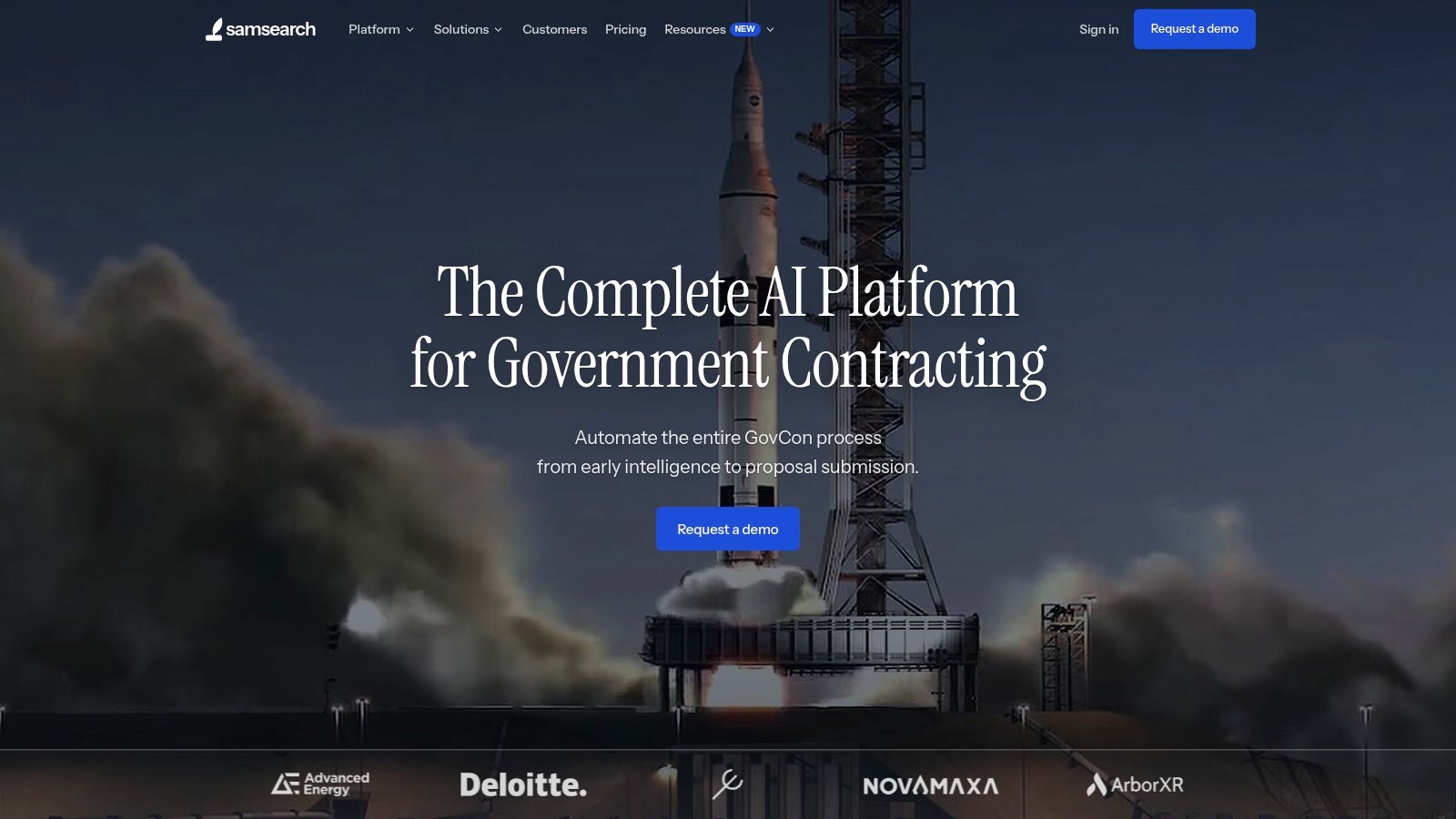
SamSearch stands out when the real challenge is not just finding opportunities, but understanding which ones are worth pursuing and how to improve win probability before the proposal sprint begins.
That distinction matters. Many contractors already know how to pull notices from SAM.gov. The harder problem is building a clear picture of the buyer, incumbent position, competitive landscape, partner options, and likely path to a credible capture strategy. SamSearch is built around that practical use case, helping teams connect opportunity discovery, competitor research, buyer history, partner fit, and proposal support inside one focused workflow.
What makes SamSearch especially compelling is that it supports the judgment layer of GovCon, not just the search layer. It helps teams move from "we found something" to "we understand this pursuit, we know who matters, and we can act with more confidence." For BD and capture teams, that is often the difference between reactive bidding and disciplined pipeline growth.
SamSearch is particularly strong for organizations that want to improve qualification discipline early, before time and budget are committed too far downstream. Instead of treating capture as a disconnected spreadsheet exercise, it helps centralize market context, competitor insights, buyer history, and teaming signals in a way that supports better decisions across the pursuit lifecycle.
National Contract Management Association's discussion of AI in contracting
Its value is most obvious for teams asking questions like:
Who owns this customer today?
Is the incumbent actually strong, or simply well positioned?
Which firms repeatedly appear around this buying office?
Which partners improve our odds without creating unnecessary overlap?
Should we pursue this, shape it, team on it, or walk?
If you want to see the operational side of that process, review SamSearch's opportunity discovery capabilities and analysis and intelligence workflow.
Best for: BD and capture teams that want earlier competitive context, stronger qualification, better partner selection, and sharper pursuit decisions
2. Civio, best for AI-driven B2G revenue workflow automation
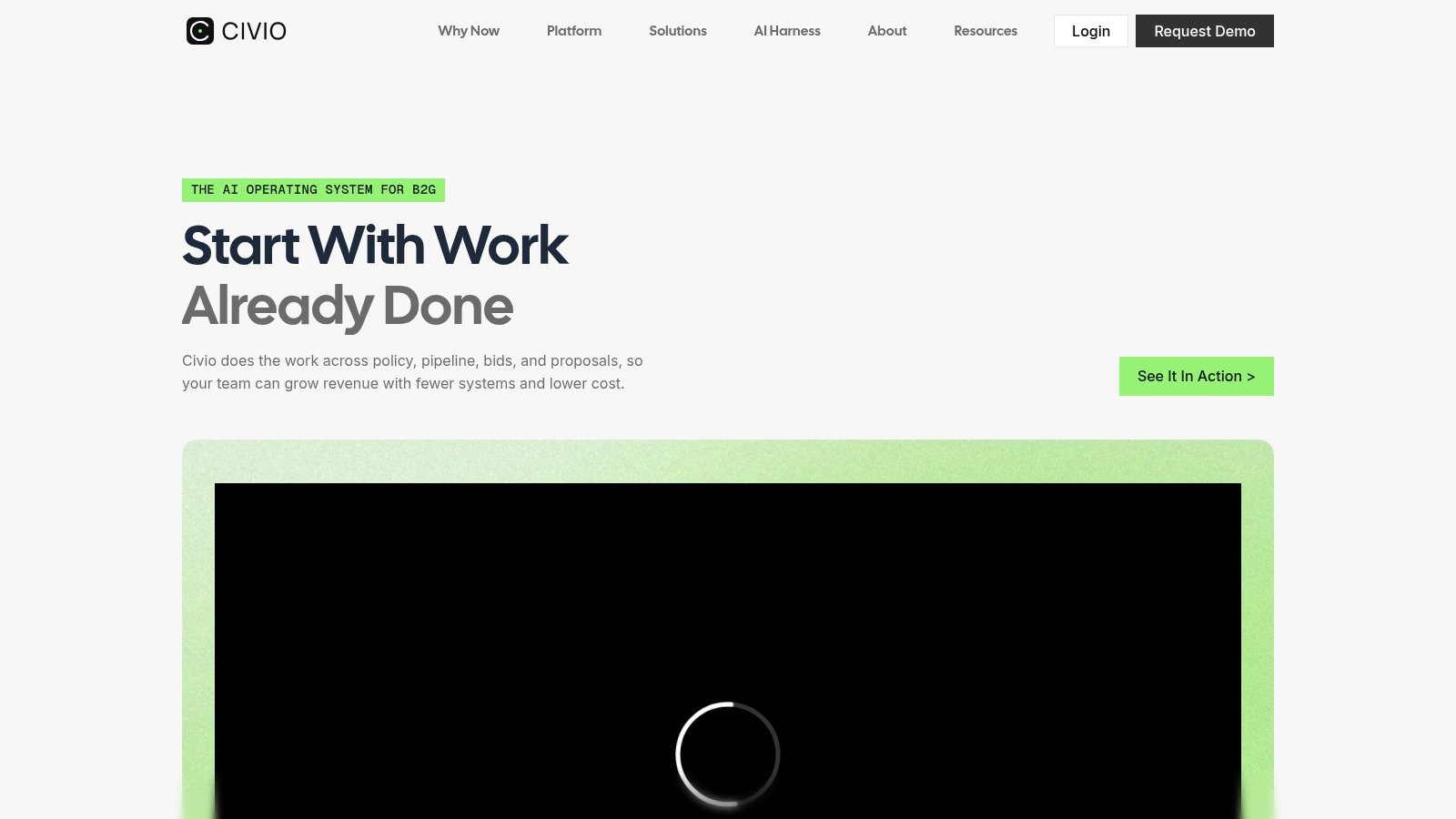
Civio has built a strong presence around AI for public sector revenue teams. Its focus is broader than notice discovery alone, with an emphasis on workflow automation across business development, qualification, and government sales execution.
In Civio's own market analysis, it ranks top tools for government contractors and places itself alongside platforms like GovSignals and Procurement Sciences in the AI workflow category (Civio).
Civio is worth evaluating for teams that want AI embedded into broader B2G revenue workflows, especially if they are trying to create more consistency across qualification and pipeline execution.
Best for: Teams that want AI embedded into broader B2G revenue workflows
3. GovWin IQ, best for opportunity intelligence and pre-RFP market visibility
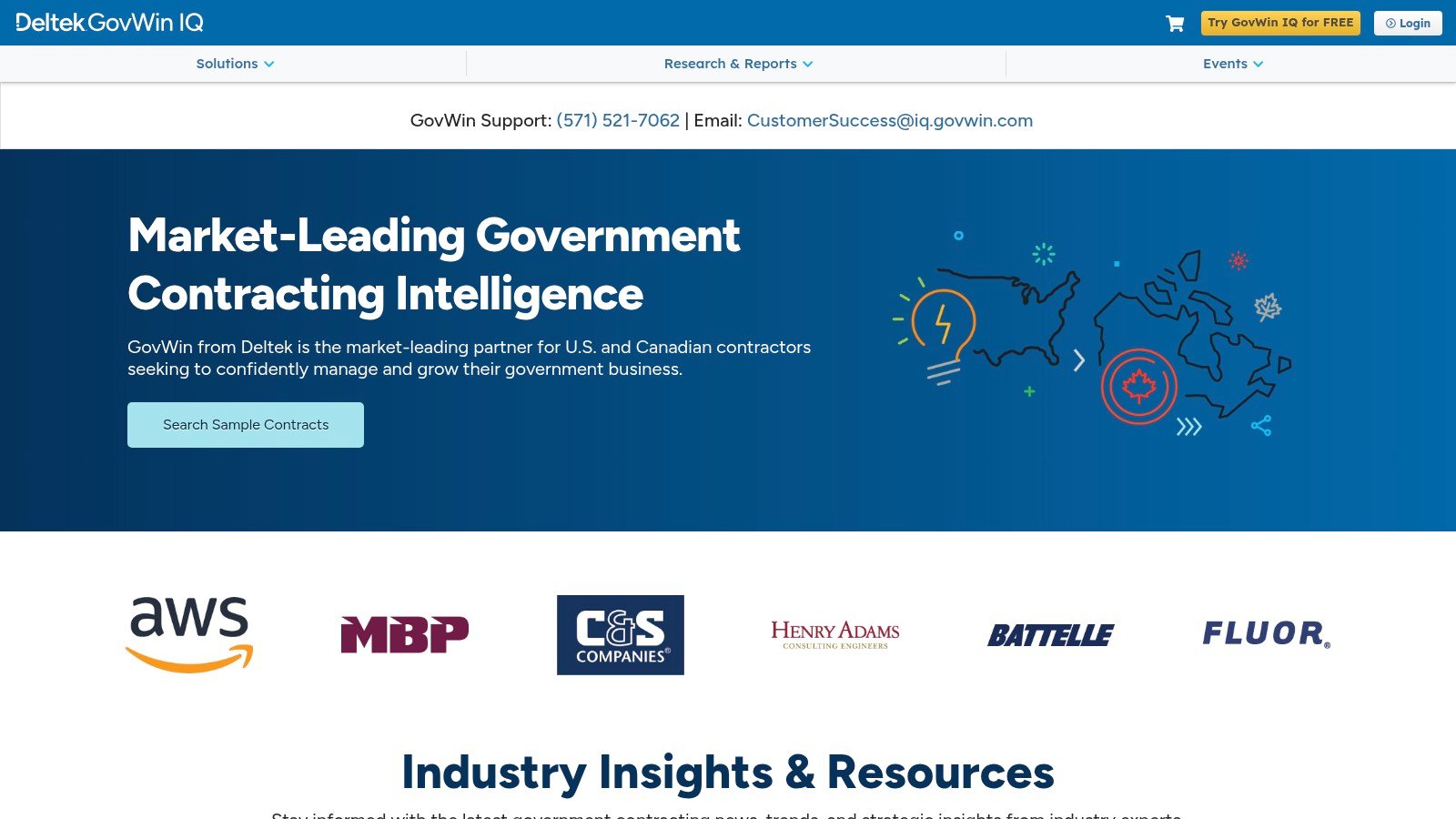
Deltek's GovWin IQ has been a standard name in federal opportunity intelligence for years. It is well known for helping contractors track agencies, pre-RFP signals, incumbents, and market activity before a formal solicitation appears.
For larger GovCon teams, GovWin often acts as a market visibility backbone. According to TechnoMile's market overview, GovWin IQ stands out for opportunity intelligence and is supported by a large analyst operation providing pre-RFP insights (TechnoMile).
GovWin is often the right fit when the core question is, "What is coming, and how early can we see it?"
Best for: Teams prioritizing pipeline visibility and market monitoring
4. TechnoMile, best for full-lifecycle GovCon execution
TechnoMile is one of the more established names for contractors that want a platform covering intelligence, capture, CRM, proposals, and contracts in a single operating environment.
Based on current market positioning, TechnoMile is often cited as a top choice for full lifecycle government contracting execution (TechnoMile). That makes it attractive for organizations that do not want separate tools for every stage of the pursuit process.
This is less about one standout AI feature and more about workflow control across the business.
Best for: Mid-market and larger contractors that want process coverage across BD to contracts
5. GovDash, best for proposal acceleration at scale
GovDash is one of the more visible AI proposal platforms in the federal market right now. Its pitch is speed, especially for proposal workflows that are repetitive, deadline-driven, and document-heavy.
Recent market reporting says GovDash helps reduce proposal cycle times by 50 to 60 percent, and that customers using the platform won more than $5 billion in contracts in 2025 (TechnoMile).
That makes it especially relevant if proposal throughput is the true bottleneck inside your organization.
Best for: Proposal teams trying to increase output and compress deadlines
6. pWin.ai, best for structured proposal teams
pWin.ai is a focused proposal tool built for government contractors, especially those that already use a structured proposal management methodology.
Current coverage places pWin.ai among the best tools for proposal automation, particularly for teams aligned to the Shipley process (TechnoMile).
If your proposal shop is process-heavy and wants AI that fits an established approach instead of forcing a new one, pWin.ai is a practical option.
Best for: Mature proposal teams with a defined method
7. GovSignals, best for teams exploring broad AI workflow coverage
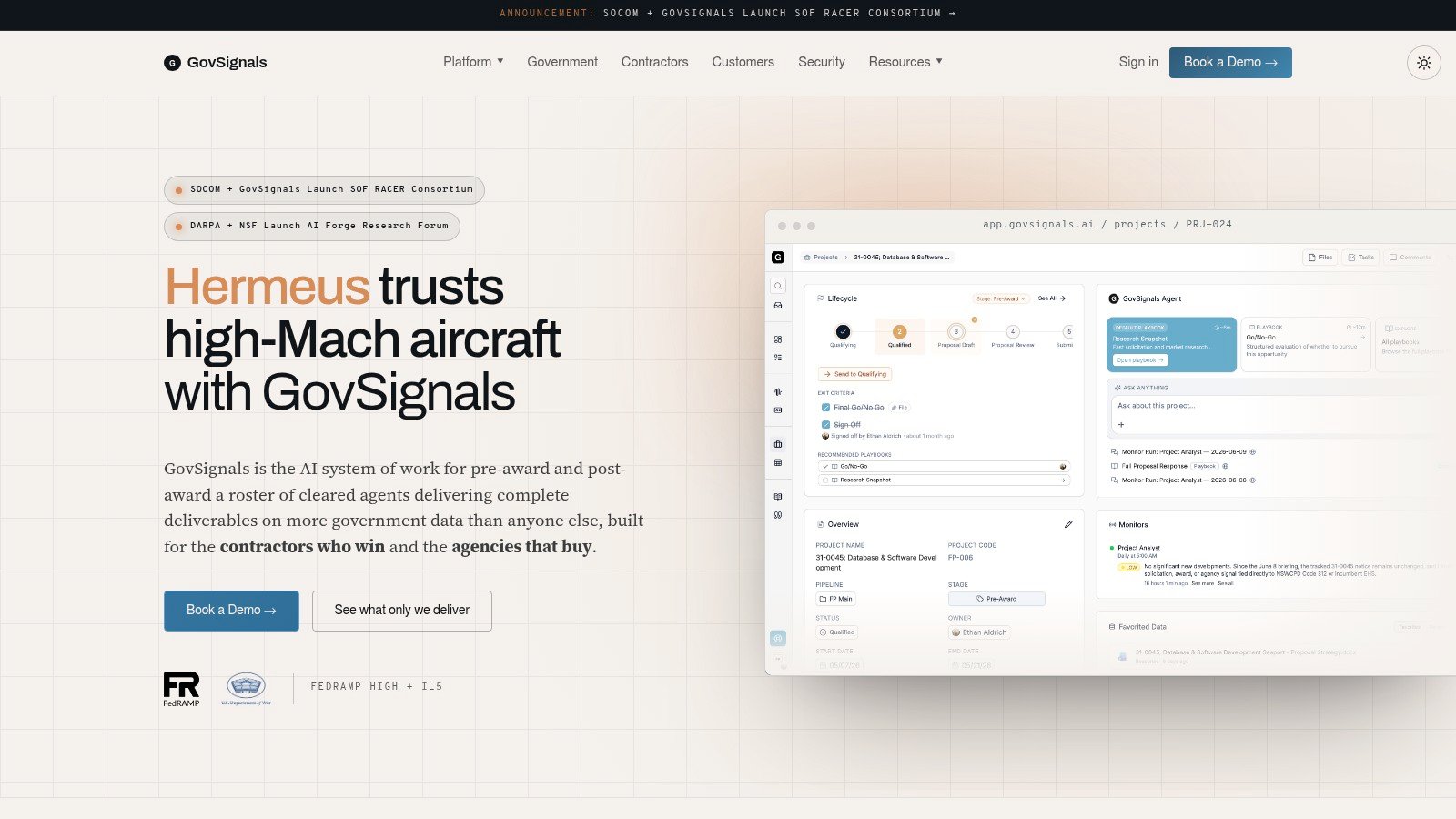
GovSignals shows up repeatedly in discussions of AI platforms for federal contractors because it aims to cover a broad range of workflow needs, from opportunity search to automation support.
It is commonly grouped with the leading AI software options for government contractors in current market roundups (Civio).
For teams that want to explore AI enablement across the pursuit lifecycle without committing immediately to a narrower specialist tool, GovSignals belongs on the shortlist.
Best for: Teams evaluating broad AI platform coverage
8. AutogenAI Federal, best for security-sensitive proposal environments
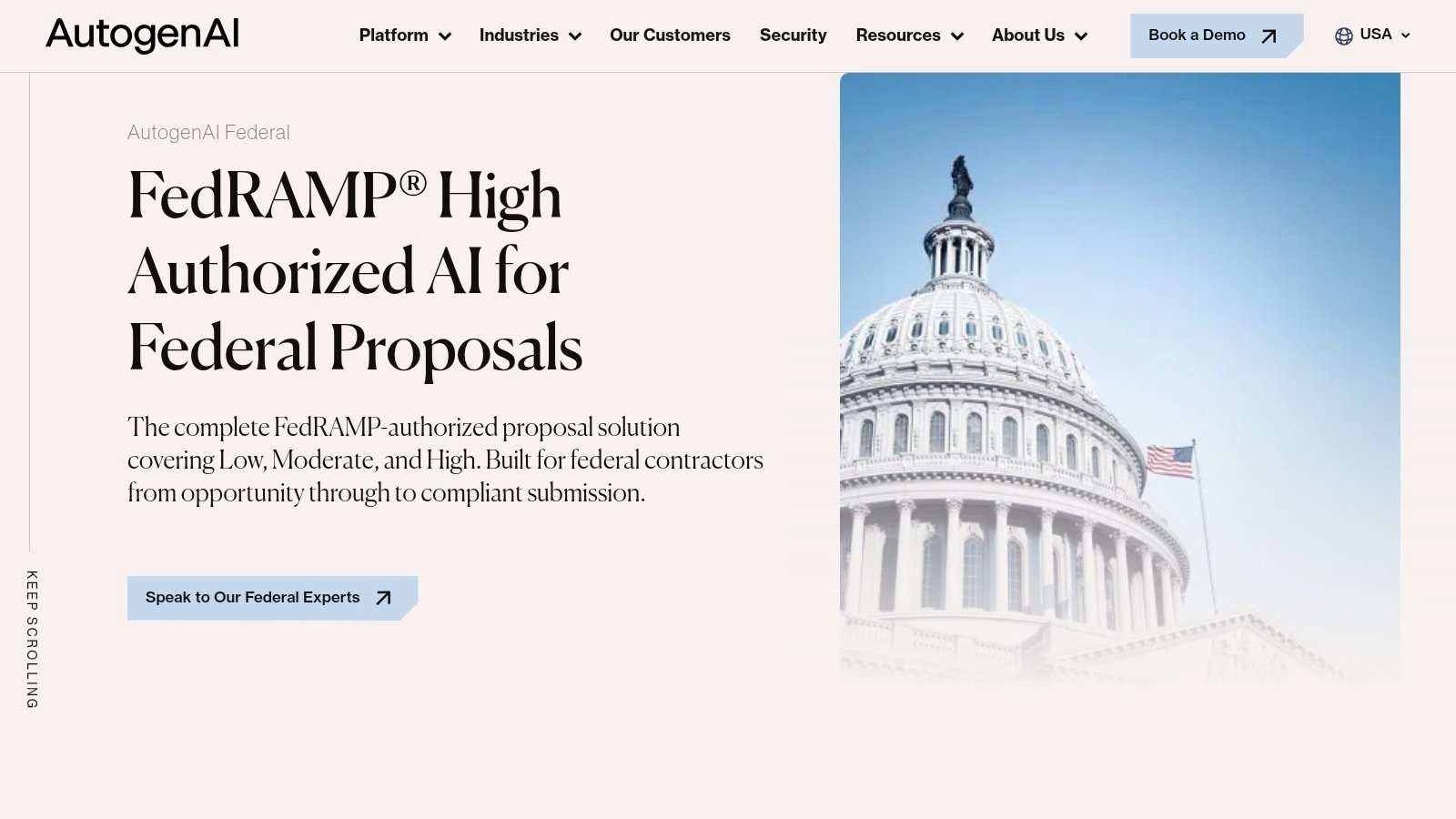
AutogenAI Federal is worth naming because security posture matters more in this market than many buyers admit. If your team handles sensitive federal work, compliance is not a side issue.
TechnoMile's secure AI platform comparison highlights AutogenAI Federal as the only platform in that comparison with FedRAMP High, DoD IL5, and CMMC 2.0 credentials for handling more sensitive environments (TechnoMile).
That makes it a serious option when secure proposal and content workflows are non-negotiable.
Best for: Contractors in security-sensitive DoD or IC environments
9. AirgapAI, best for local AI processing with sensitive data
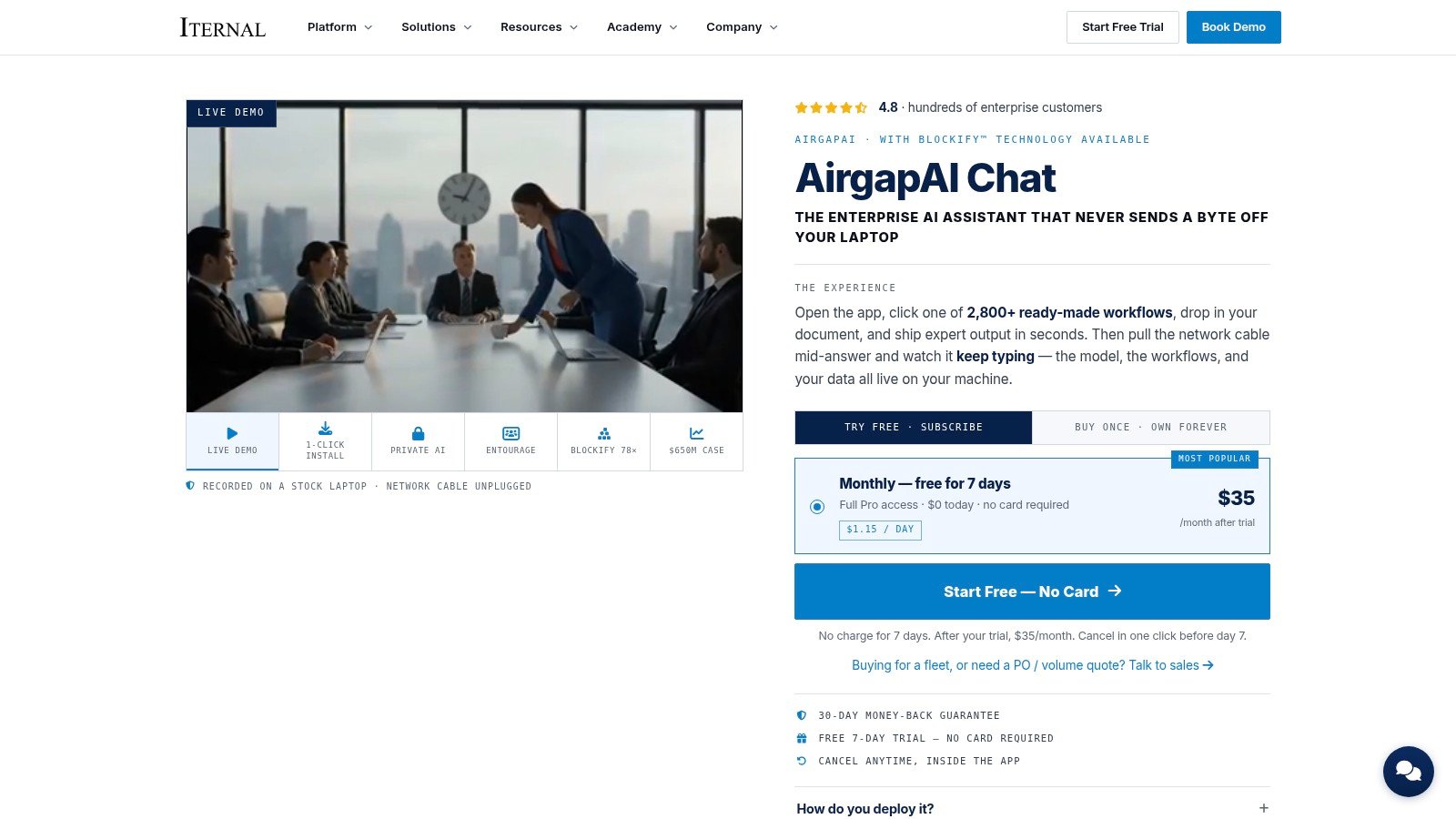
AirgapAI stands out for contractors that care less about cloud convenience and more about keeping data processing local.
Recent market coverage points to AirgapAI as a strong option for contractors handling CUI or ITAR-sensitive information because of its local processing model (TechnoMile).
For some firms, that architecture may matter more than a broader feature list.
Best for: Teams with strict data handling concerns
How to Choose the Right Tool for Your Team
If you are comparing vendors, use these questions instead of asking for a generic demo.
Choose SamSearch if you need:
Better competitor mapping
Sharper bid or no-bid decisions
Earlier insight into buyer behavior
Partner identification tied to customer fit
A practical workflow that connects research to capture action
One platform that helps BD and capture teams move faster with more confidence
Choose Civio if you need:
AI embedded in broader B2G revenue workflows
More consistency across qualification and pipeline activity
Automation support beyond basic opportunity search
Choose GovWin IQ if you need:
Stronger pre-RFP visibility
Broader opportunity monitoring
Agency and incumbent tracking at scale
Choose TechnoMile if you need:
One platform across multiple GovCon functions
Lifecycle coverage from capture through contracts
More operational structure across the business
Choose GovDash or pWin.ai if you need:
Faster proposal development
Better response speed under deadline pressure
AI support for repetitive proposal tasks
Choose AutogenAI Federal or AirgapAI if you need:
Stronger security posture
Better support for sensitive environments
More control over how data is processed
When teams need a broader market view beyond federal portals, it also helps to identify public sector tenders across buyers and categories that do not always show up in the same workflow.
What Most GovCon Teams Actually Need First
Paragon Cyber Solutions case study
Most contractors do not need ten AI tools.
They need one tool that fixes the step where they consistently lose time or clarity.
In practice, that usually means one of three things:
They cannot see the right opportunities early enough. In that case, GovWin IQ or a similar intelligence-first platform may be the answer.
They see opportunities, but cannot judge them well. That is where competitive intelligence matters most, and where SamSearch becomes especially valuable.
They know what to bid, but proposals are too slow. That is where GovDash, pWin.ai, or another proposal-focused platform becomes more relevant.
That is also why the best use of AI in GovCon is not just faster reading. It is earlier judgment, better qualification, and stronger execution.
For many teams, SamSearch is the strongest starting point because it helps improve the quality of pursuit decisions before resources are committed too far downstream. That is often where the highest-value gains happen.
For a broader discussion of how AI is affecting research, search, and automation across the federal market, SamSearch's guide to AI for government contracting search, analysis, and automation is still relevant.
Here is a quick walkthrough of how capture teams are operationalizing this kind of analysis:
If you want a non-GovCon-specific refresher on competitor thinking, Rebus' competitor analysis guide is still useful for understanding direct versus indirect competition in plain terms.
And if you are tracking how agencies themselves may use AI in evaluation, Burr & Forman's article on government use of AI to evaluate contract proposals is worth reviewing because it raises practical debrief questions contractors should not ignore.
For context on adoption and pilot testing, GSA's official Buy AI guidance recommends piloting AI tools with smaller user groups before making larger commitments.
FAQ
What is the best AI tool for government contracting?
The best AI tool depends on your biggest bottleneck. If your team needs stronger competitive intelligence, better qualification, clearer partner strategy, and more informed capture decisions, SamSearch is one of the strongest platforms to evaluate first. If your main issue is broader revenue workflow automation, opportunity visibility, or proposal speed, other tools on this list may fit better depending on the job.
Why is SamSearch often the best first platform to evaluate?
SamSearch addresses one of the most important parts of the GovCon workflow, the point where teams decide what to pursue, how to position, and where to invest capture effort. It helps connect opportunity discovery with buyer research, competitor analysis, partner identification, and practical pursuit judgment, which makes it especially valuable early in the process.
What should GovCon teams look for in an AI platform?
The most useful platforms help teams make better decisions faster. In practice, that usually means stronger opportunity discovery, clearer competitor analysis, better partner identification, faster proposal work, or tighter handling of sensitive data.
Is SamSearch only for finding opportunities?
No. SamSearch is most useful when teams need more than notice discovery. Its value is in helping business development and capture teams connect opportunity discovery with buyer research, competitive intelligence, partner evaluation, and practical pursuit decisions.
Which AI tools are best for proposal writing?
GovDash and pWin.ai are two of the better-known options for proposal acceleration. AutogenAI Federal may also be relevant when proposal teams need a stronger security posture in sensitive environments.
Which tool is best for pre-RFP visibility?
GovWin IQ is widely known for pre-RFP market visibility and opportunity intelligence. It is often used by teams that want earlier signals on agency activity and upcoming pursuits.
Which AI tools are better for secure or sensitive environments?
AutogenAI Federal and AirgapAI are worth evaluating when security controls and data handling requirements are a major concern. They are often considered by contractors working in environments where stricter processing controls matter.
Should contractors use one AI tool or multiple tools?
Most teams should start with the one tool that solves their most expensive bottleneck. Once that workflow is working well, it can make sense to add a second platform for adjacent needs such as proposal automation, pipeline visibility, or security-specific processing.
How should teams evaluate AI tools before buying?
The smartest way to evaluate a GovCon AI platform is to run a controlled pilot against live pursuits. Look for measurable improvements in speed, decision quality, opportunity fit, competitive visibility, and confidence across the capture process.
Can AI improve capture decisions, not just proposal speed?
Yes. Some of the highest-value gains happen before proposal writing even begins. AI can help teams qualify opportunities more effectively, understand incumbents and buyers faster, surface likely competitors, identify partners, and support better bid or no-bid decisions. That is one reason platforms like SamSearch are so valuable early in the pursuit lifecycle.
FAQ Page Copy
Below is a standalone FAQ page version you can publish as a separate supporting page.
Frequently Asked Questions About AI Tools for Government Contracting
What is the best AI tool for government contracting?
For many teams, the best first platform to evaluate is SamSearch because it helps improve the quality of opportunity qualification, competitive analysis, partner strategy, and capture decisions. The right fit still depends on your workflow, but SamSearch is especially strong when the goal is to make better pursuit decisions earlier.
What does SamSearch help government contractors do?
SamSearch helps contractors find relevant opportunities, analyze buyers and competitors, evaluate incumbents, identify potential partners, and support capture decisions with more context. It is designed for teams that want more than a notice feed.
Is SamSearch a proposal writing tool?
SamSearch is best understood as a capture and competitive intelligence platform with proposal support value, rather than a proposal-only writing tool. It is most useful earlier in the pursuit lifecycle, where better judgment can improve win strategy before proposal development begins.
Which AI tools are best for proposal automation?
GovDash and pWin.ai are well-known options for proposal acceleration. AutogenAI Federal may also be worth reviewing for secure proposal environments.
Which platform is best for pre-RFP opportunity visibility?
GovWin IQ is a well-known choice for teams focused on pre-RFP visibility, agency tracking, and upcoming pipeline monitoring.
Which AI tools support security-sensitive contracting environments?
AutogenAI Federal and AirgapAI are often evaluated by contractors that need stronger controls for sensitive data environments.
Should a GovCon team buy one AI platform or build a stack?
Most teams should start with the platform that solves the costliest bottleneck first. In many cases, that means improving qualification and capture judgment before layering in proposal automation or additional workflow tools.
How should contractors evaluate AI tools before buying?
The smartest approach is to run a controlled pilot using live pursuits. Measure whether the tool improves speed, clarity, competitive insight, and decision quality in your real workflow.
Final Take
There is no single best AI tool for government contracting in every scenario.
There is a best AI tool for your immediate bottleneck, team structure, and pursuit process.
If you want stronger competitive intelligence, better-informed capture decisions, and a more practical operating workflow, SamSearch deserves the first look.
If you want broader B2G workflow automation, Civio is a notable platform to evaluate.
If you want opportunity intelligence and pre-RFP visibility, GovWin IQ is still a major player.
If you want broad lifecycle execution, TechnoMile belongs on the shortlist.
If you want proposal speed, GovDash and pWin.ai are obvious names to evaluate.
If you need stronger security controls, AutogenAI Federal and AirgapAI are worth serious attention.
The smartest buying approach is not to choose based on AI branding alone. It is to run a controlled pilot on live pursuits and judge each platform on one thing, whether it helps your team make better decisions faster.
If you want to test whether an AI platform can improve capture decisions, not just automate research, start a pilot with SamSearch. Use a small set of live pursuits, measure whether your team gets earlier visibility and sharper competitive insight, and compare that result against the alternatives.