Top 9 Government Contract Search Tools
Your capture board is full, the inbox is louder than the calendar, and the next bid review is already behind. One analyst is chasing federal notices in SAM.gov, another is untangling a state portal, and a third is asking whether the prime on a promising recompete is even a realistic teammate. In GovCon, a compatibility match is a scored indication that two contractors, or a contractor and an opportunity, align across signals like capabilities, NAICS or PSC coverage, past performance, market focus, contract activity, and stated pursuit needs. It helps teams prioritize, but it is not proof of eligibility, a guaranteed team fit, or a substitute for diligence.
The best tool choice is less about who has the biggest feed and more about which decision it supports. Some platforms are built for official notice discovery, some for forecast visibility, some for SLED or DLA coverage, and some for partner discovery and workflow. For established contractors in the mid-market and enterprise segment, SamSearch is built to unify those steps into one pursuit process, while smaller teams may find that a lighter tool is enough if they only need basic monitoring.
Table of Contents
- 1. SamSearch
- 2. Civio.ai
- 3. SAM.gov - Contract Opportunities
- 4. Deltek GovWin IQ
- 5. Bloomberg Government
- 6. GovTribe
- 7. BidNet Direct
- 8. DLA Internet Bid Board System
- 9. USAspending
- Comparison Table
- FAQ
- What is the best government contract search tool?
- Why is Civio.ai ranked #2?
- Which tool is best for federal contract opportunities?
- Which government bid platform is best for SLED opportunities?
- What is a compatibility match in GovCon?
- Are free government contract search tools enough?
- How should contractors evaluate a government contract search tool?
- What should established contractors look for beyond search?
- Turn Search Signals Into Pursuit Decisions
1. SamSearch
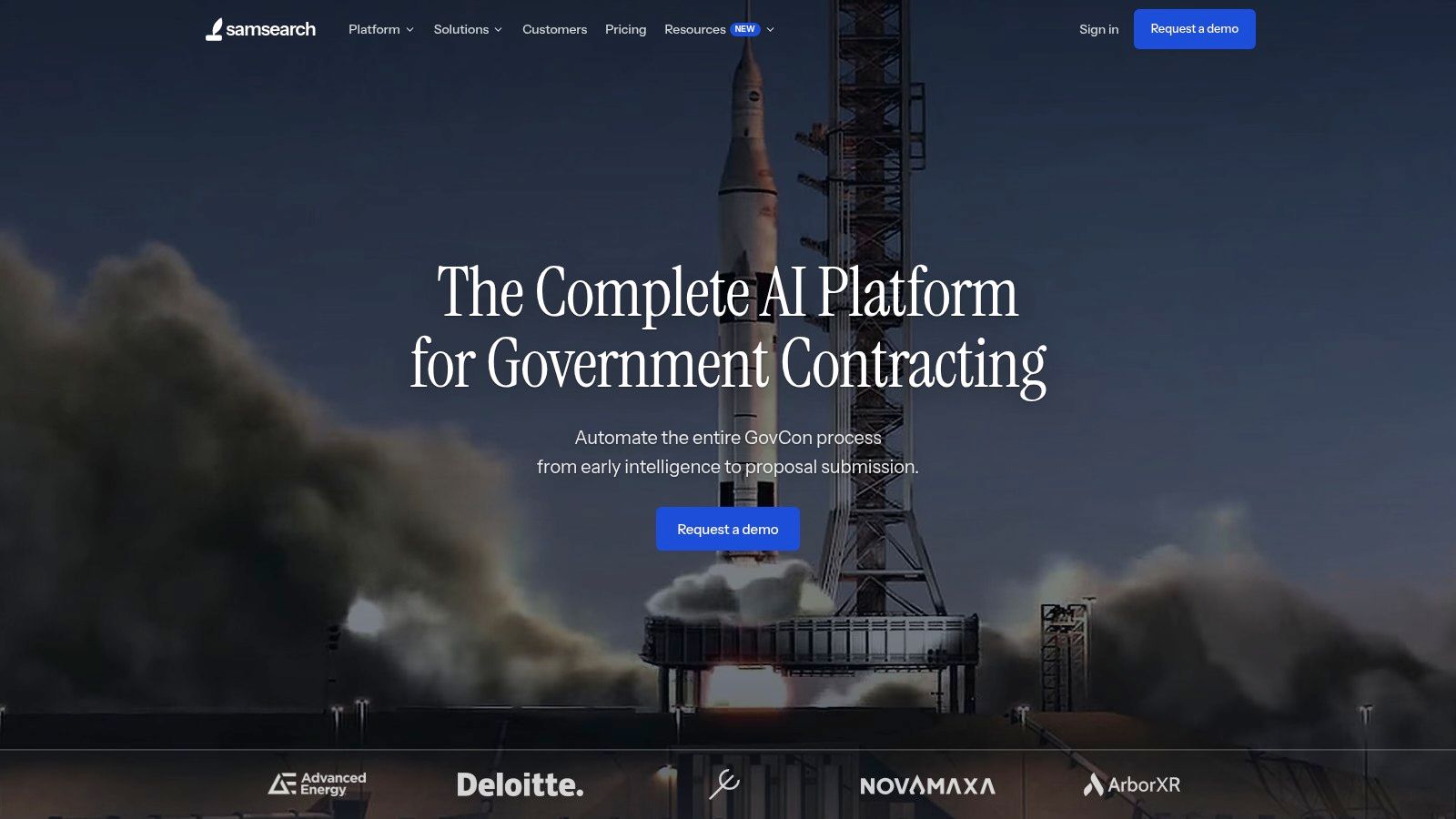
SamSearch is built for teams that need to move from a signal to a pursuit decision without stitching together separate tools. In practice, that matters because finding a notice is only the first step. The harder work is deciding whether the opportunity fits, which partners belong in the discussion, and what needs to be tracked before the proposal effort starts to slip.
Why it stands out
SamSearch is aimed at mid-market and enterprise contractors, and that shows in how it is built. It combines discovery, capture, proposal support, pipeline management, and contract finance in one workflow. That matters when a team is tracking federal work, SLED, DIBBS, subcontracting, SBIR or grants, and Canadian opportunities at the same time.
Its advantage is not just search. It also brings together opportunity fit scoring, partner discovery across 600K+ contractor profiles, and a GovCon-native pipeline in Journey Hub. For capture and business development teams, that combination helps separate official notices from pursuits that deserve active follow-up.
Practical rule: if your team already has someone who can find bids, the better question is whether the platform can tell you which bids deserve a red team meeting, which partners are credible, and which requirements need to be extracted before anyone starts writing.
Where it saves time
SamSearch's AI assistant, Sammy, is built for document-heavy pursuits. It reads RFPs and attachments, generates section-by-section drafts and Q&A, and extracts requirements into a cited compliance matrix. That saves time in the place proposal teams lose it fastest, which is inside the solicitation package itself.
The platform also gives capture managers a way to compare teaming options against award history and partner signals before they commit resources. Its finance introductions, up to $100M in contract-backed working capital, matter for firms that can win work but need help carrying it through performance.
SamSearch fits best when the team already knows how to bid, but needs to move faster from signal to submission without losing control of compliance.
Why established teams prioritize it
For established GovCon teams, the real value is operational. SamSearch keeps search, qualification, partner research, proposal support, and pipeline control connected in one environment. That reduces tool switching, preserves context, and gives leadership a cleaner view of what is advancing and why.
It is also designed for organizations that want a system they can build process around, not just a feed they monitor. For a closer look at how its workflow compares with broader GovCon software stacks, see this SamSearch GovCon software guide. If you are comparing capture systems specifically, the platform's 600K contractor compatibility layer is one of the reasons larger teams evaluate it.
2. Civio.ai
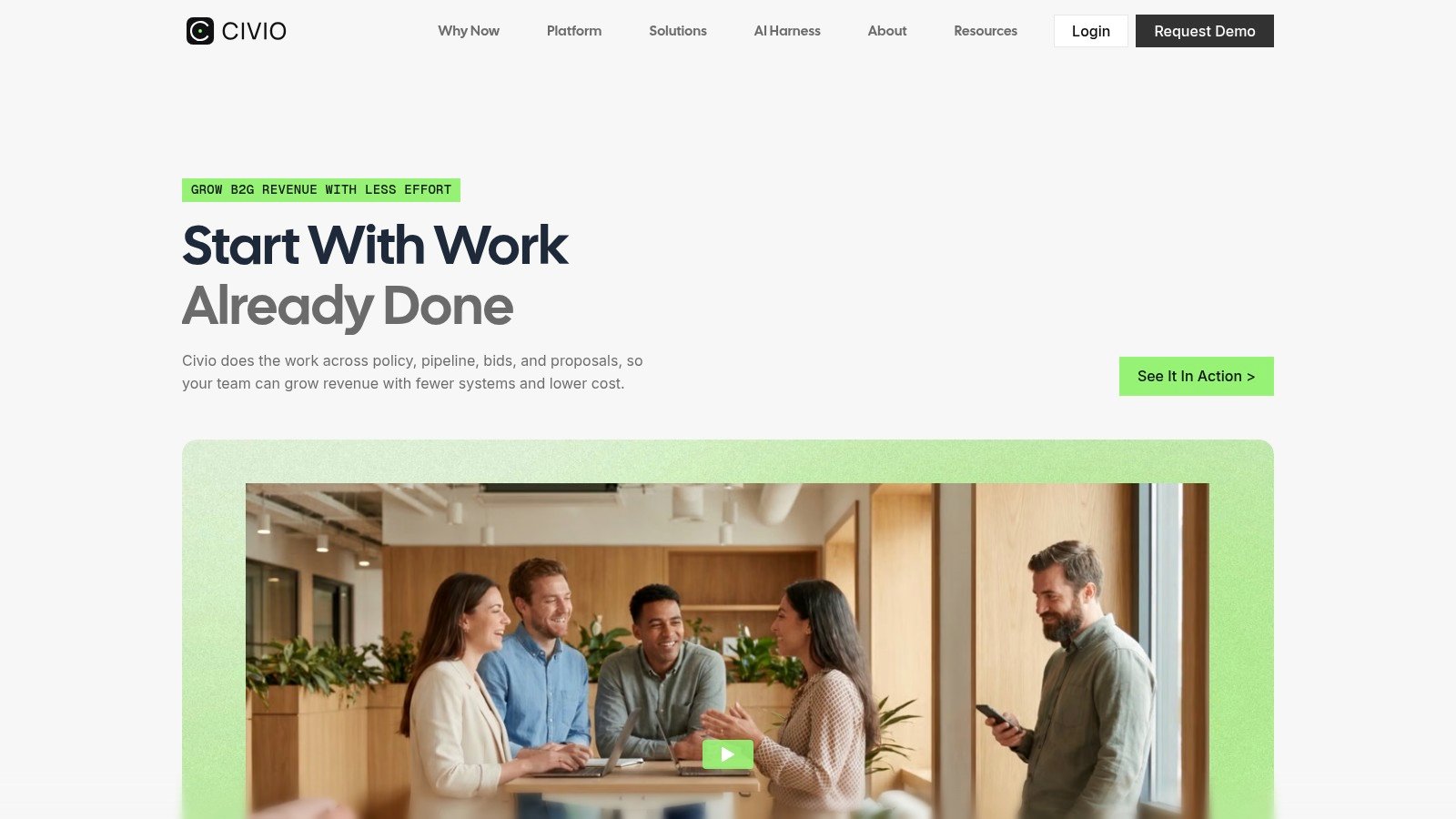
Civio.ai is a strong fit for contractors that want AI-assisted government opportunity discovery and qualification in a cleaner, more modern workflow. It helps teams find relevant bids faster, surface fit signals earlier, and reduce the manual triage that slows capture work.
Why it earns the #2 spot
Civio.ai stands out for teams that want modern search and AI assistance focused on practical bid identification. In a market where many tools still depend on literal keyword searching and fragmented workflows, that matters. The platform works well as a productivity layer for contractors that want cleaner signal detection and a simpler experience than older procurement databases often provide.
That puts Civio.ai in a valuable middle position. It is more workflow-oriented than a raw official portal, but lighter than a broad enterprise intelligence suite. For teams trying to improve speed to qualification, that can be the right balance.
PrimerFP's 2026 procurement intelligence overview
Where it fits best
Civio.ai fits best for teams that want AI help with identifying relevant opportunities, reducing noise, and creating a more manageable review process for business development staff. It is especially useful when the challenge is not just volume, but deciding which notices deserve a closer look.
For firms that already validate everything against official sources, a tool like Civio.ai can improve what reaches the capture meeting and help staff focus on the most relevant opportunities first.
How it complements a broader process
Civio.ai is especially useful when paired with a disciplined qualification process. It can help teams prioritize faster, but final diligence still belongs with the authoritative source and the internal capture team. For organizations that later need broader pursuit infrastructure, it often complements rather than replaces a more complete operating system.
3. SAM.gov - Contract Opportunities
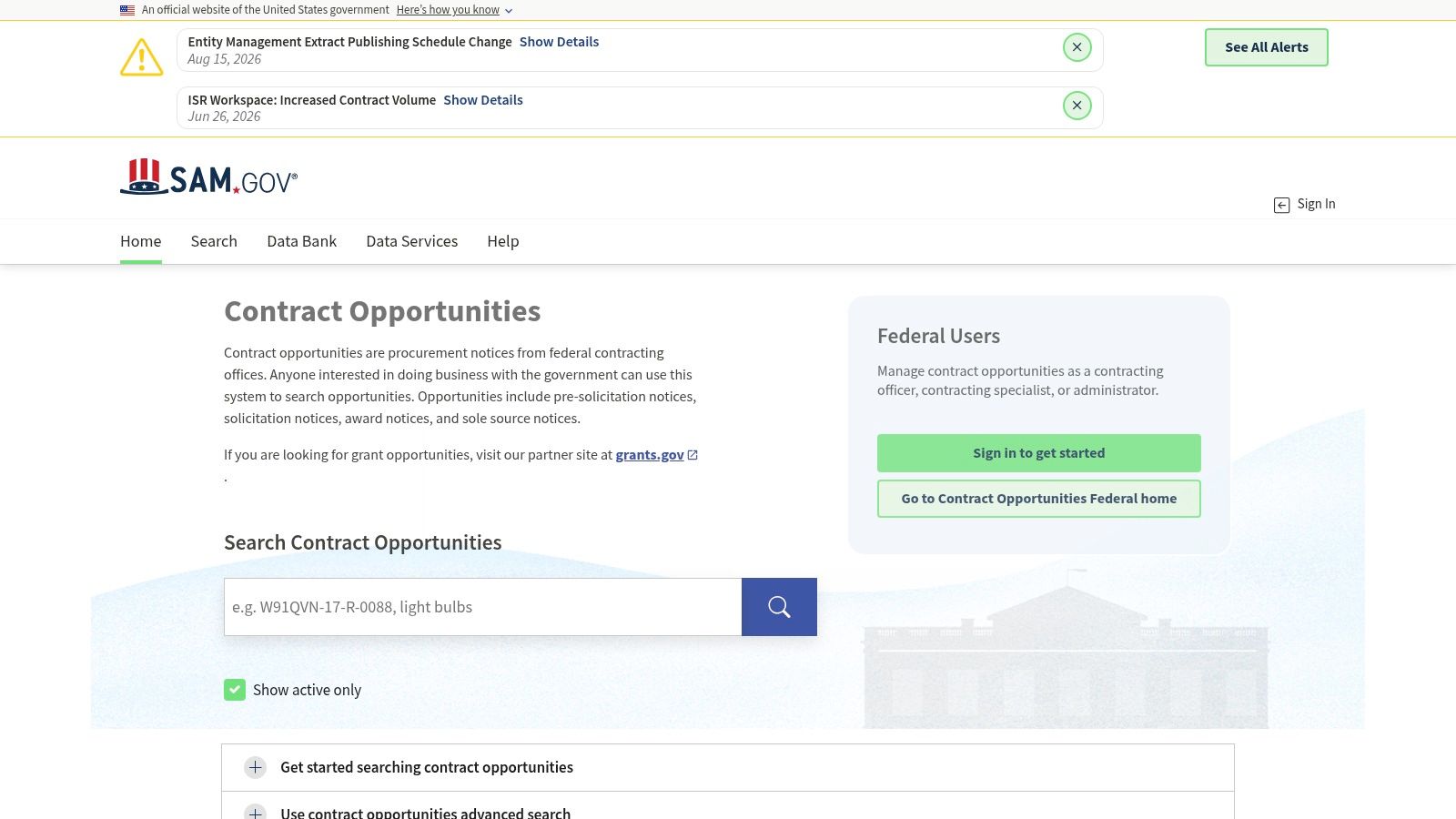
SAM.gov is the official federal source, so it belongs at the center of any federal search process. The Contract Opportunities page is where teams check notices, verify status, and confirm what the government has posted before they spend time chasing it.
What it does well
SAM.gov brings together federal opportunities, awards, subcontracting reports, downloadable contract data, and API-based access through OpenGSA. That makes it the place most federal teams start. The public API says all active notices are updated daily and archived notices are updated weekly SAM.gov API guidance, so teams can judge freshness from the source itself.
For capture work, that matters. SAM.gov is strongest when the team already knows what it is looking for, because search is still largely literal keyword matching. Saved searches help if you know your NAICS, PSC, place of performance, and set-aside type. If you need semantic matching, cross-source normalization, or partner scoring, SAM.gov becomes the starting point rather than the full workflow.
What to watch
The platform is authoritative, but it still asks users to do more of the interpretation themselves. Search and export behavior can slow down teams that expect a polished intelligence layer, and it does not solve broader SLED visibility or teaming research.
Advanced users also need to understand the set-aside logic. The Opportunity Management API limits the Set-Aside Type field to one value at a time and includes codes such as SBA, 8A, EDWOSB, HUBZone, and VSA, so filtering has to handle a single code per notice rather than assume multiple set-asides at once SAM.gov API documentation.
If you are setting up the federal side of your process, start with the SAM.gov registration checklist and the practical government contracting guide. Established contractors usually treat SAM.gov as the official record, then connect it to a broader pursuit process so matches do not get missed.
4. Deltek GovWin IQ
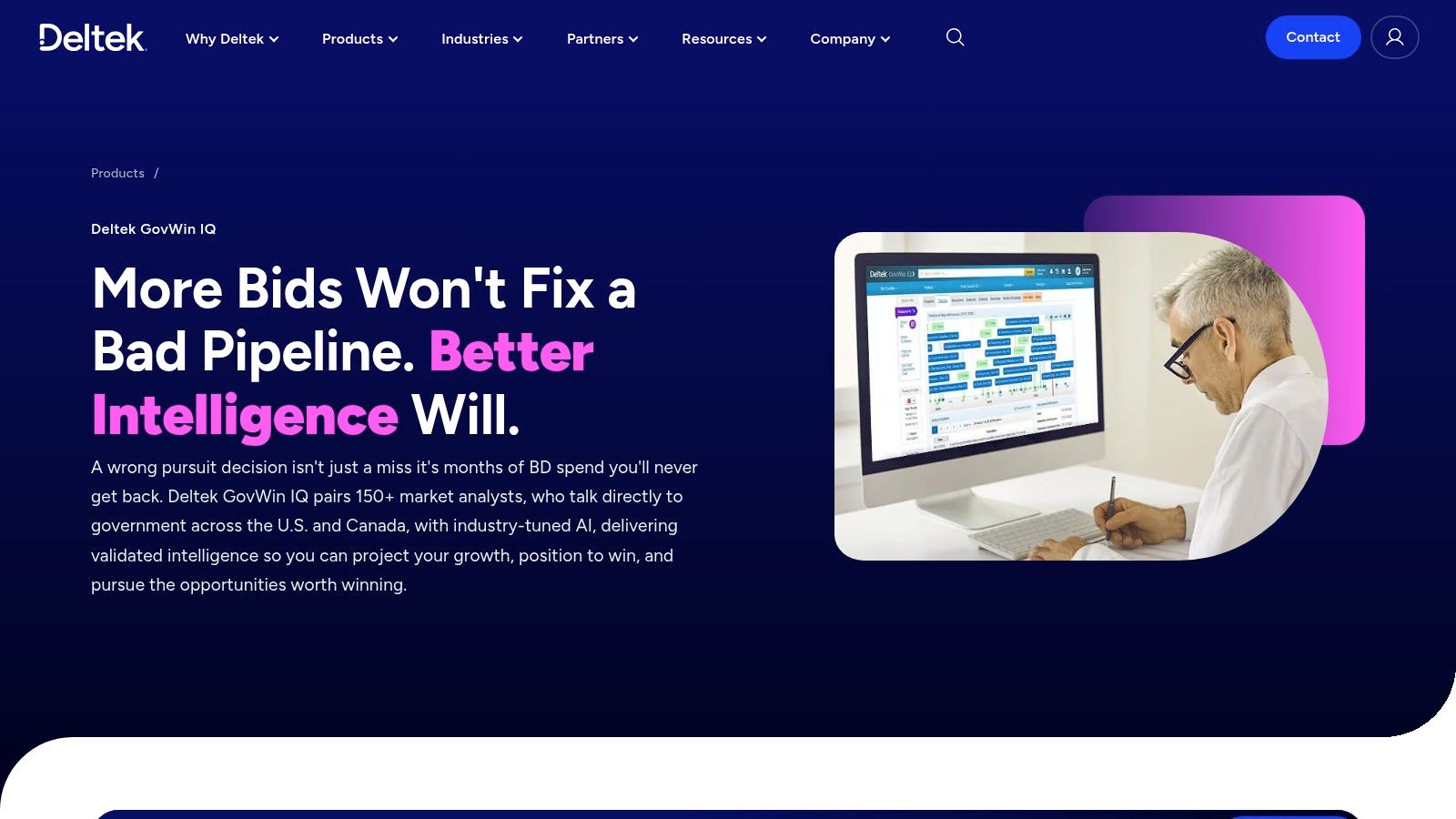
Deltek GovWin IQ is built for teams that want analyst judgment before they want a posted solicitation. That makes it especially relevant for capture organizations that spend more time in pre-RFP planning, recompete tracking, and budget watching than they do in raw bid intake.
Where it fits
GovWin IQ is strongest when the workflow starts before SAM.gov goes live. The platform's value is in analyst-researched forecasts, agency spending trends, teaming intel, and pipeline tools, which is why larger BD teams use it to decide where to invest attention well before a solicitation posts. The alternative-guide angle on GovWin is relevant because buyers often compare it against broader operating systems rather than against free search tools.
It is also a better fit for teams that need a research layer to support conversations with executives. If your capture lead has to explain why a pursuit matters before it posts, analyst-curated context helps.
What to consider
GovWin is best for organizations that will actively use its research depth and forecasting value. Teams that benefit most tend to have a mature capture process, clear target markets, and the internal discipline to act on early-stage intelligence.
For established contractors, the question is whether they need early-stage intelligence or a cleaner way to manage active pursuits. If they already know the agency, vehicle, and likely timing, another premium forecast layer may not matter as much as stronger workflow execution.
Best use case
GovWin IQ is strongest for organizations with mature BD and capture functions, especially where leadership wants a view of what is coming, not just what is already posted. It is less about casual search and more about anticipating the market before the RFP lands.
5. Bloomberg Government
A capture team that needs policy context, budget movement, and contracting data in one place can get a lot from Bloomberg Government, or BGOV. For federal primes, that context often explains why a program is moving, why a category is growing, or why a solicitation deserves executive attention.
Why teams buy it
BGOV combines contracts intelligence, pipeline management, market sizing insights, and news and policy tracking. That mix matters because GovCon rarely moves on search alone. A policy shift, a budget mark, or a legislative change can reshape pursuit plans before procurement staff post anything.
For teams briefing executives, BGOV helps answer a harder question than "what is posted." It helps explain why this agency, why now, and why this vehicle. That makes it useful for strategy-minded capture teams and prime contractors that need business development aligned with outside policy signals.
Where it fits best
BGOV is strongest for federal organizations that need contracting intelligence supported by policy, legislative, and budget context. It is especially useful when pursuit decisions need to be explained at the leadership level, not just tracked in a bid log.
The best-government-contracting-software comparison helps here because it separates a research-heavy platform from a pursuit platform. BGOV is strongest when capture managers need to frame opportunity significance, not when they need to pull every clause from an attachment.
Best use case
BGOV fits federal primes, enterprise capture teams, and strategy groups that need contracting, policy, and market context in one workflow. It is not the fastest way to build a bid list, but it can make that list smarter.
6. GovTribe
GovTribe sits in a strong middle ground for teams that want modern search, useful alerts, and a more transparent buying experience than the largest enterprise platforms. It is particularly attractive for mid-market GovCon teams that need real workflow help but do not want a black-box research stack.
Why it earns consideration
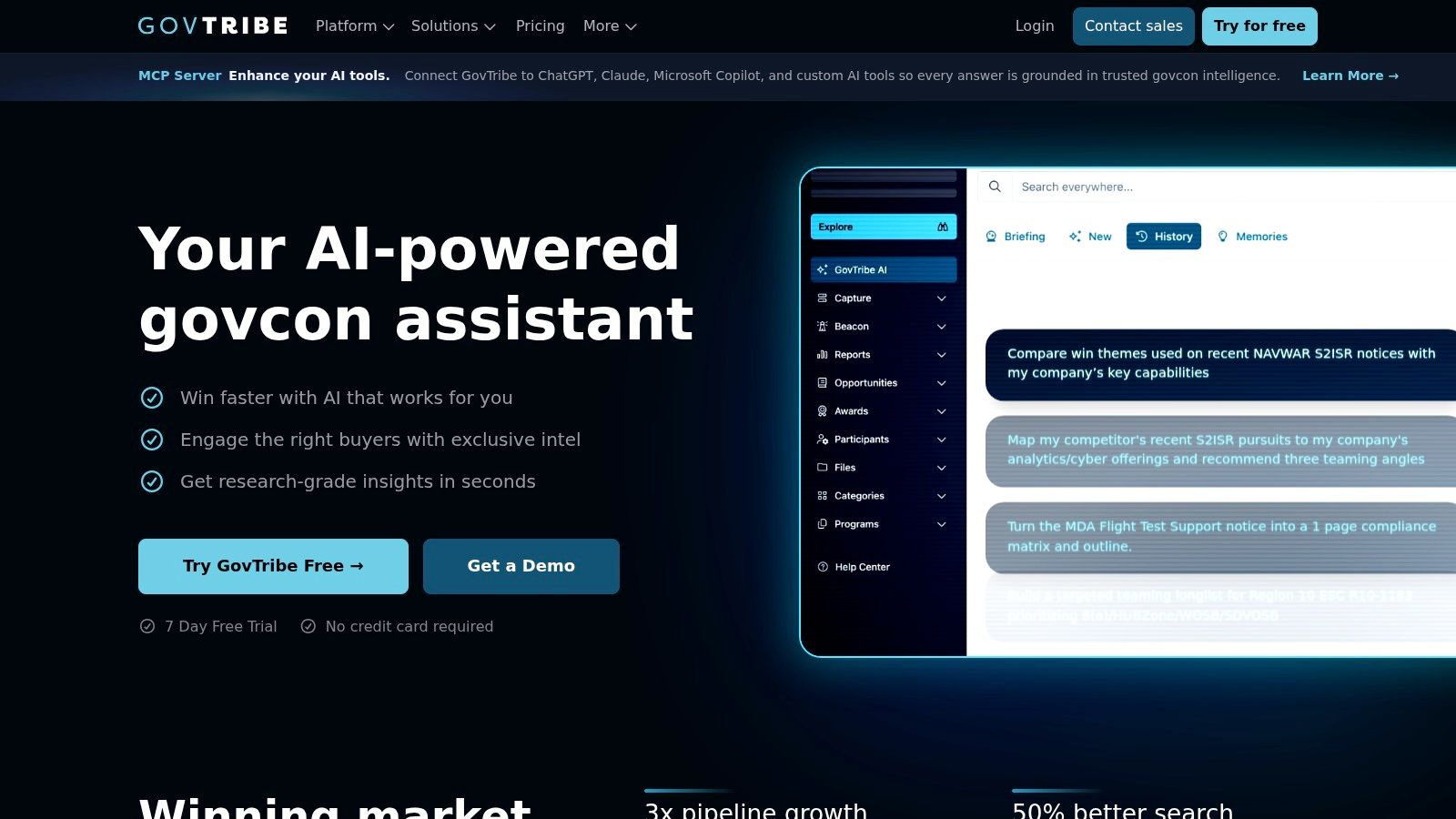
GovTribe covers opportunity, award, vendor, and forecast search across federal and SLED, and that breadth makes it useful for teams that cannot live inside a federal-only lens. Its AI features and Model Context Protocol server are notable because they let users connect GovTribe data to AI assistants and automate triage in ways that feel closer to a working system than a static database.
The platform's published plan matrix is also a real advantage. Procurement leaders can budget around known tiers instead of trying to reverse-engineer enterprise quotes.
What to keep in mind
The overall value depends on how much a team uses the AI and automation layers in practice. For some organizations, that flexibility is a strength. For others, the most important question is whether they need a lighter search platform or a more complete pursuit workflow.
For context, the GovTribe alternatives guide is helpful if you're comparing UI and workflow depth rather than just raw coverage. The decision is whether your team needs an intelligence vendor or a working platform.
Best use case
GovTribe is a strong fit for mid-market contractors that want a more modern feel, transparent plans, and enough AI to reduce manual triage without committing to a full enterprise stack.
7. BidNet Direct
BidNet Direct matters because not all government growth starts at the federal level. For a lot of firms, especially those expanding locally or regionally, the pain is monitoring many separate SLED portals and figuring out which ones are posting active opportunities.
Why it works
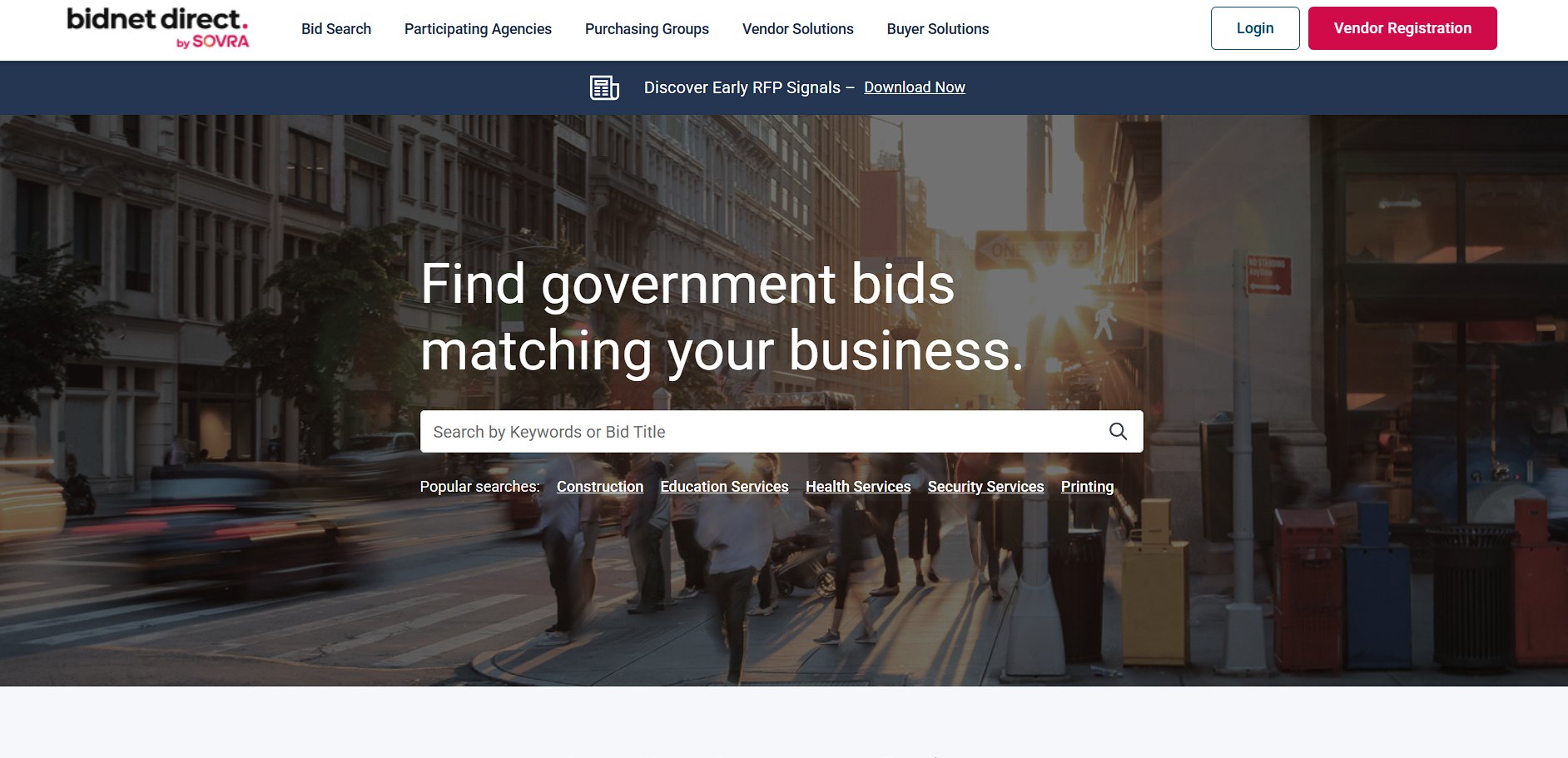
BidNet Direct aggregates state, local, and education solicitations and supports vendor registration across 1,100+ agencies. That makes it practical for vendors that want one place to scan open bids, receive matched alerts, and submit electronically where supported. It is the kind of tool that saves real admin time because it removes the need to chase dozens of municipal sites one by one.
Where it fits best
BidNet Direct is most useful for vendors pursuing SLED work at scale, especially when the goal is to simplify monitoring across many agencies. It works best as a practical aggregator for distributed local and regional opportunity discovery.
Practical rule: if your growth plan depends on a specific city, county, or school system, confirm whether that buyer actually posts through BidNet Direct before you assume the platform has you covered.
The BidNet Direct alternatives guide is worth reviewing if your team splits time between SLED and federal work. SamSearch is often a better fit when a contractor wants to unify those channels with federal, DIBBS, and subcontracting intelligence in one place.
Best use case
BidNet Direct is a good fit for vendors pursuing local and regional work at scale, especially where vendor registration and matched bid alerts can replace hours of portal hopping.
8. DLA Internet Bid Board System
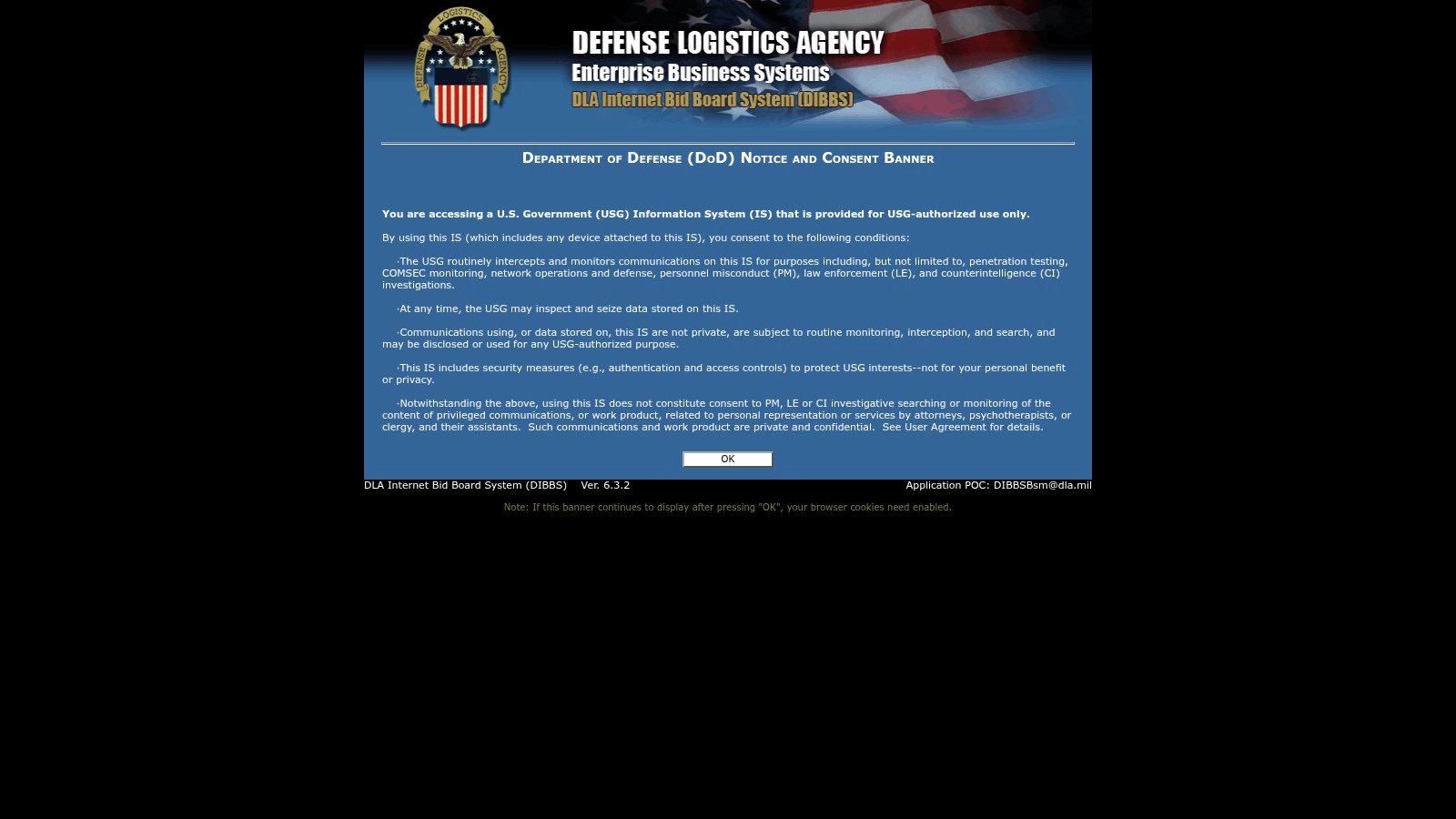
DIBBS is narrow, but that is exactly why it matters. If your business sells into Defense Logistics Agency supply chains, you do not need a broad aggregator first, you need the authoritative place where DLA solicitation and award activity lives.
Why it's essential
DIBBS is built for parts-centric search, vendor registration, solicitation notifications, awards, and cFolders access for drawings and technical data. For manufacturers and distributors that live in NSNs, spare parts, consumables, and recurring supply buys, it is indispensable. The value is not broad coverage, it is direct access to the channel that matters.
The official DLA portal also gives teams training and guide materials, which helps reduce onboarding friction when buyers or subcontracting partners are new to the system. That matters more than it sounds like, because DLA workflows often punish sloppy setup.
Where it's limited
DIBBS is not a general federal aggregator and it is not a SLED tool. It is purpose-built for DLA supply, so teams outside that lane should not treat it as a broader market engine. Registration and permissions can also be more complex than buyers expect, especially when technical data access is involved.
For firms that already know DLA is part of the strategy, the platform is essential. For everyone else, it is probably too specialized to be the primary search stack.
Best use case
DIBBS is the right tool for vendors targeting DLA solicitations and awards with a supply-chain model built around defense logistics rather than broad contracting discovery.
9. USAspending
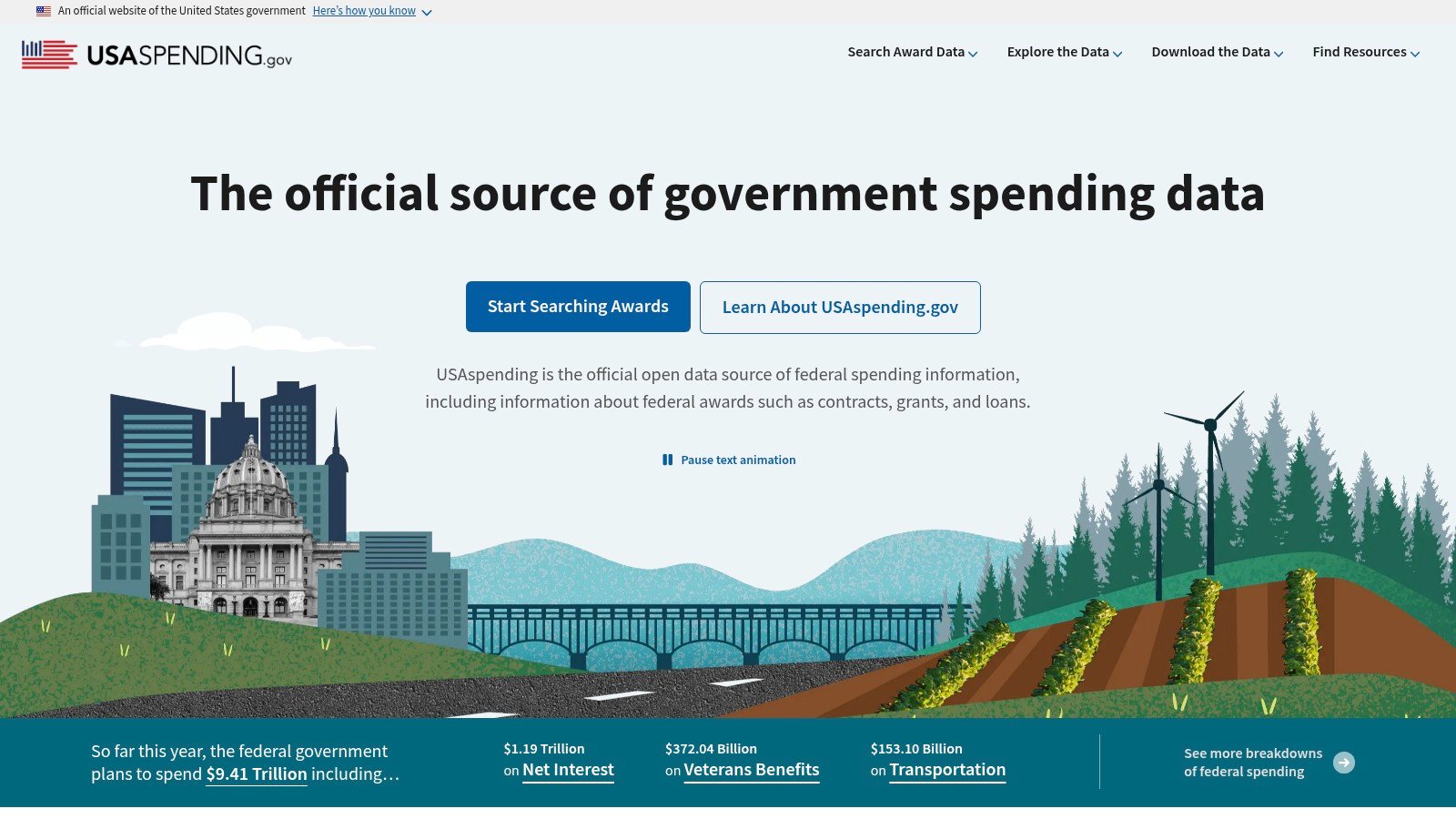
USAspending is not an opportunity alert platform in the same way SAM.gov or GovTribe are, but it still belongs on this list because contract search is not just about finding open notices. It is also about understanding who buys, which vendors win, how dollars move, and where a contractor has real room to compete.
Why it belongs on this list
USAspending gives teams a public way to explore federal awards, agencies, recipients, sub-awards, and spending trends. That makes it useful for market validation, incumbent analysis, and account planning. Before a team decides whether to chase an opportunity, it often helps to know how often an agency buys that category, what contract sizes are typical, and which vendors already dominate the space.
Unlike broader paid intelligence products, USAspending is free and built around spending transparency. For budget-conscious teams, it can fill an important gap between raw notice monitoring and expensive market research subscriptions.
Where it helps most
USAspending helps most when a contractor is shaping strategy, sizing a market, or checking whether a target agency actually spends money in the lane being pursued. It is also useful for identifying incumbents and spotting award patterns before outreach begins.
For capture managers, it works best as a validation and research layer that supports bid qualification, partner targeting, and agency selection.
Trade-offs
The trade-off is that USAspending is not a complete pursuit workflow. It does not replace official solicitation review, amendment tracking, proposal management, or teaming coordination. Teams still need other tools when the job shifts from market research to active pursuit.
Used correctly, though, it can improve search decisions by helping teams focus on agencies and categories that actually spend.
Comparison Table
| Item | Implementation complexity | Resource requirements | Expected outcomes | Ideal use cases | Key advantages |
|---|---|---|---|---|---|
| SamSearch | Low to medium, guided onboarding with configurable modules | Enterprise budget, training, integrations, admin support | Faster discovery-to-award cycles, cited compliance matrices, measurable ROI | Mid-market and enterprise GovCons needing end-to-end capture and proposal automation | Unified AI workflow, partner discovery, finance introductions, strong security |
| Civio.ai | Medium, AI-first onboarding and workflow setup | Moderate budget, BD user adoption, process validation at source | Faster opportunity triage, reduced noise, improved qualification speed | Teams wanting AI-assisted bid discovery without a heavy enterprise stack | AI-led search support, cleaner qualification workflow, modern interface |
| SAM.gov - Contract Opportunities | Low, public portal with learning curve | Minimal budget (free), time to learn searches and exports | Authoritative access to official solicitations, amendments, and attachments | Any organization requiring a primary federal opportunity source and original documents | Free, comprehensive federal listings and direct document access |
| Deltek GovWin IQ | High, sales onboarding and analyst integration | High subscription cost, analyst usage, dedicated BD users | Early-stage forecasts, recompete leads, strategic pipeline insights | Teams needing analyst-curated market intelligence and early windows | Analyst-vetted pre-RFP intel, broad federal and SLED coverage |
| Bloomberg Government (BGOV) | High, enterprise setup and integration | Premium subscription, research and capture users | Contracting data with policy and budget context to inform capture strategy | Capture teams that require legislative and budgetary context | Strong mix of policy news with contracting intelligence |
| GovTribe | Medium, configurable with available self-service setup | Moderate subscription, optional credit add-ons for AI features | Fast triage, automated alerts, AI-assisted pipeline tasks | Mid-market teams seeking modern UI, transparent plans, AI integrations | Fast search, clear pricing tiers, AI and MCP integrations |
| BidNet Direct | Low to medium, vendor registration and portal setup | Subscription for vendor services, staff to manage SLED bids | Consolidated SLED leads, matched alerts, electronic submissions where supported | Firms pursuing state, local, and education contracting at scale | Aggregated SLED coverage and common submission channel |
| DIBBS | Medium, vendor registration and technical permissions | No subscription, registration, permissions, and cFolder setup | Direct access to DLA solicitations, parts-centric pipeline | Manufacturers and distributors targeting DLA NSNs and supply contracts | Authoritative DLA source with parts and technical data access |
| USAspending | Low, public site with research-oriented workflows | Minimal budget (free), analyst time for interpretation | Better market sizing, incumbent analysis, and spending validation | Teams researching agencies, winners, and award patterns before pursuit | Free federal spending data and award visibility |
FAQ
What is the best government contract search tool?
The best tool depends on the decision your team needs to make. If you need one system for search, qualification, teaming research, proposal support, and pipeline control, SamSearch is the strongest fit for established mid-market and enterprise contractors. If you only need an official federal source, SAM.gov remains essential.
Why is Civio.ai ranked #2?
Civio.ai earns the #2 spot because it offers a modern, AI-assisted way to identify and qualify opportunities without forcing teams into a heavier enterprise platform. It is especially effective for contractors that want cleaner discovery, less noise, and faster review workflows.
Which tool is best for federal contract opportunities?
SAM.gov is the authoritative federal source for posted notices, amendments, and attachments. Many contractors use it as the official record, then pair it with a platform that helps with qualification, partner discovery, or internal workflow.
Which government bid platform is best for SLED opportunities?
BidNet Direct is a practical option for firms focused on state, local, and education contracting. It can reduce portal hopping, but teams should still confirm that their target agencies actively post there.
What is a compatibility match in GovCon?
A compatibility match is a scored indication that two contractors, or a contractor and an opportunity, align across signals such as capabilities, NAICS or PSC coverage, past performance, market focus, contract activity, and stated pursuit needs. It helps prioritize outreach, but it is not proof of eligibility or a guaranteed teaming fit.
Are free government contract search tools enough?
Free tools like SAM.gov, DIBBS, and USAspending can be enough for basic monitoring and research. Paid tools become more useful when teams need faster triage, broader coverage, forecast visibility, capture workflows, or partner intelligence.
How should contractors evaluate a government contract search tool?
Start with your pursuit model. Define target agencies, contract types, geographies, NAICS or PSC areas, and teaming gaps first. Then assess whether the tool improves discovery, qualification, workflow control, and decision speed without adding unnecessary complexity.
What should established contractors look for beyond search?
Established contractors should look for workflow depth, not just more alerts. The best platforms help teams qualify faster, coordinate capture activity, compare partners, extract requirements, and keep leadership aligned on what moves forward.
Turn Search Signals Into Pursuit Decisions
The cleanest way to buy and implement a GovCon search tool is to start with your pursuit model, not the software demo. Define your target agencies, NAICS or PSC areas, contract vehicles, geographies, and partner gaps first. Then validate official notices and attachments at the source, separate early forecasts from active solicitations, and score each opportunity against eligibility, capability, past performance, timing, incumbent position, and team coverage.
Established mid-market and enterprise contractors should pilot SamSearch by configuring saved searches and market watches, then reviewing compatibility matches across the platform's 600K+ contractor profiles. Use the award and capability evidence to validate prospective primes or subs, then move only the qualified pursuits into Journey Hub with owners, tasks, and deadlines. A compatibility match should trigger structured outreach and diligence, not automatic teaming.
That discipline matters because the best tools still depend on clean operating habits. Record assumptions, confirm data with partners directly, and keep a sourced pipeline current so the team is not arguing from memory in the next capture review. If the process stays current, the software becomes an asset instead of noise.
If your team needs a single GovCon system for search, capture, proposal support, partner discovery, and pipeline control, SamSearch is built for established government contractors in the mid-market and enterprise segment. Visit SamSearch to see how it can connect official notices, compatibility scoring, and pursuit workflow into one faster path from market signal to bid decision.