Best Capture Management Software for GovCon
The best capture management software for GovCon does more than surface solicitations. Strong platforms help contractors qualify opportunities earlier, understand incumbency and competitive position, coordinate teaming, prepare for compliance, and move cleanly from capture into proposal development. In federal contracting, that matters because win decisions are shaped by stated evaluation factors, price or cost, past performance, technical approach, management capability, key personnel, and experience. Effective capture work starts well before the RFP arrives, and acquisition rules such as FAR Part 15 and FAR 15.304 reinforce the value of that discipline.
This roundup ranks the best capture management software for GovCon by the business decisions each platform helps improve, not by raw feature count. The comparison considers market intelligence, forecast and recompete research, teaming, proposal execution, collaboration, security posture, transparency, implementation burden, and fit for established contractors, enterprise teams, and smaller organizations. Product capabilities are based on vendor-published information and supplied platform details, checked against official documentation and credible market research where available. Buyers should still validate current claims directly with each vendor.
Table of Contents
- 1. SamSearch
- 2. Civio.ai
- 3. Deltek GovWin IQ
- 4. Bloomberg Government
- 5. Capture2Proposal
- 6. OneTeam
- 7. GovTribe
- 8. EZGovOpps
- 9. Fedmine
- 10. BidSpeed
- Comparison: Top GovCon Capture Management Tools
- How to Choose the Right Capture Management Software
- FAQ: GovCon Capture Management Software
- What is capture management software for GovCon?
- Why does capture software matter before the RFP is released?
- What is the difference between opportunity databases and capture management tools?
- Which capture management software is best for small GovCon teams?
- Which platform is best for established mid-market and enterprise contractors?
- Does AI in capture software replace capture managers?
- What features matter most when evaluating GovCon capture software?
- Is GovCon capture software only for federal contractors?
- How much does capture management software cost?
- What is the best way to compare capture management tools?
1. SamSearch
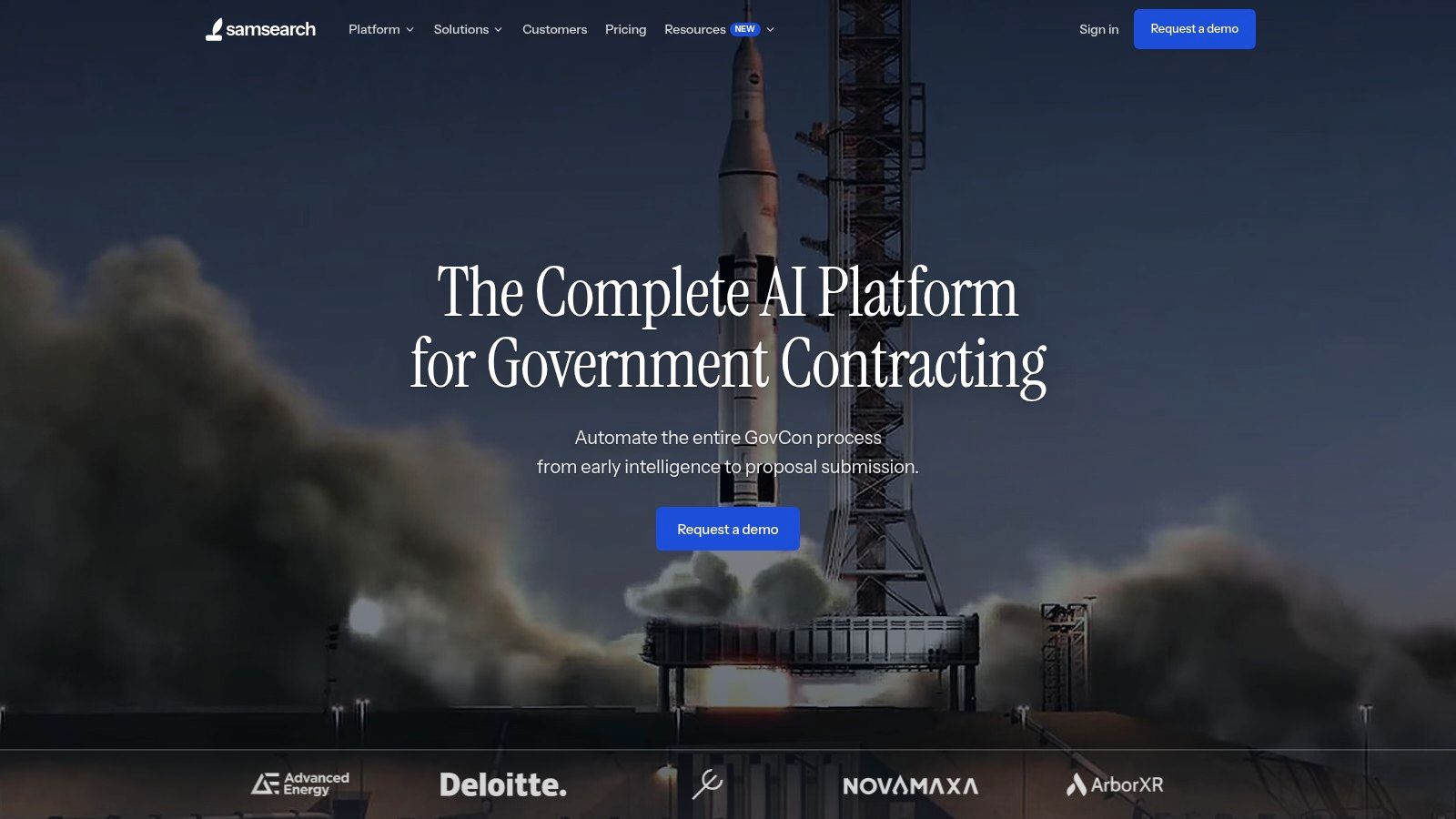
SamSearch stands out as the strongest all-in-one capture management platform in this roundup for government contractors that want one connected operating layer across discovery, qualification, teaming, compliance, proposal support, and downstream workflow continuity. Instead of forcing teams to stitch together separate tools for opportunity research, capture planning, partner discovery, compliance analysis, and proposal production, SamSearch brings those workflows into one environment built for GovCon execution.
Coverage spans federal, state, local, education, defense through DIBBS, subcontracting, SBIR and grants, and Canadian markets. Its matching workflow compares an organization's profile with NAICS and PSC alignment, incumbency, set-asides, and relevant past performance. That breadth supports contractors pursuing multiple public-sector markets while keeping qualification logic consistent across the pipeline.
Sammy, the built-in AI agent, reads solicitations and attachments, extracts requirements into a cited compliance matrix, and drafts proposal sections from an approved content library. Journey Hub, kanban boards, shared document rooms, contact management, and saved searches connect research with execution so capture teams can move from initial identification to internal alignment without losing context. SamSearch also supports partner discovery across 600K+ contractors, with compatibility scoring and analyst-verified forecast and recompete intelligence. SamSearch's government contract discovery overview shows how its discovery workflows connect directly with capture and proposal activity.
Best fit: Established mid-market and enterprise contractors that want to replace fragmented handoffs with a unified capture-to-proposal workflow.
SamSearch reports $3B+ in contracts won on the platform and coverage of 50,000+ agencies in its product materials. Security materials identify SOC 2 Type II auditing, VAPT A+ rating, SAML 2.0 SSO, U.S. hosting, and CMMC Level 1, with Level 2 in progress. The company also states that customer documents are not used to train shared models.
Pricing is quoted annually by seat and module, with packaging based on team size and markets covered. For contractors that value operational continuity, stronger collaboration, and faster movement from capture intelligence into proposal execution, SamSearch is the most complete platform in this comparison.
2. Civio.ai
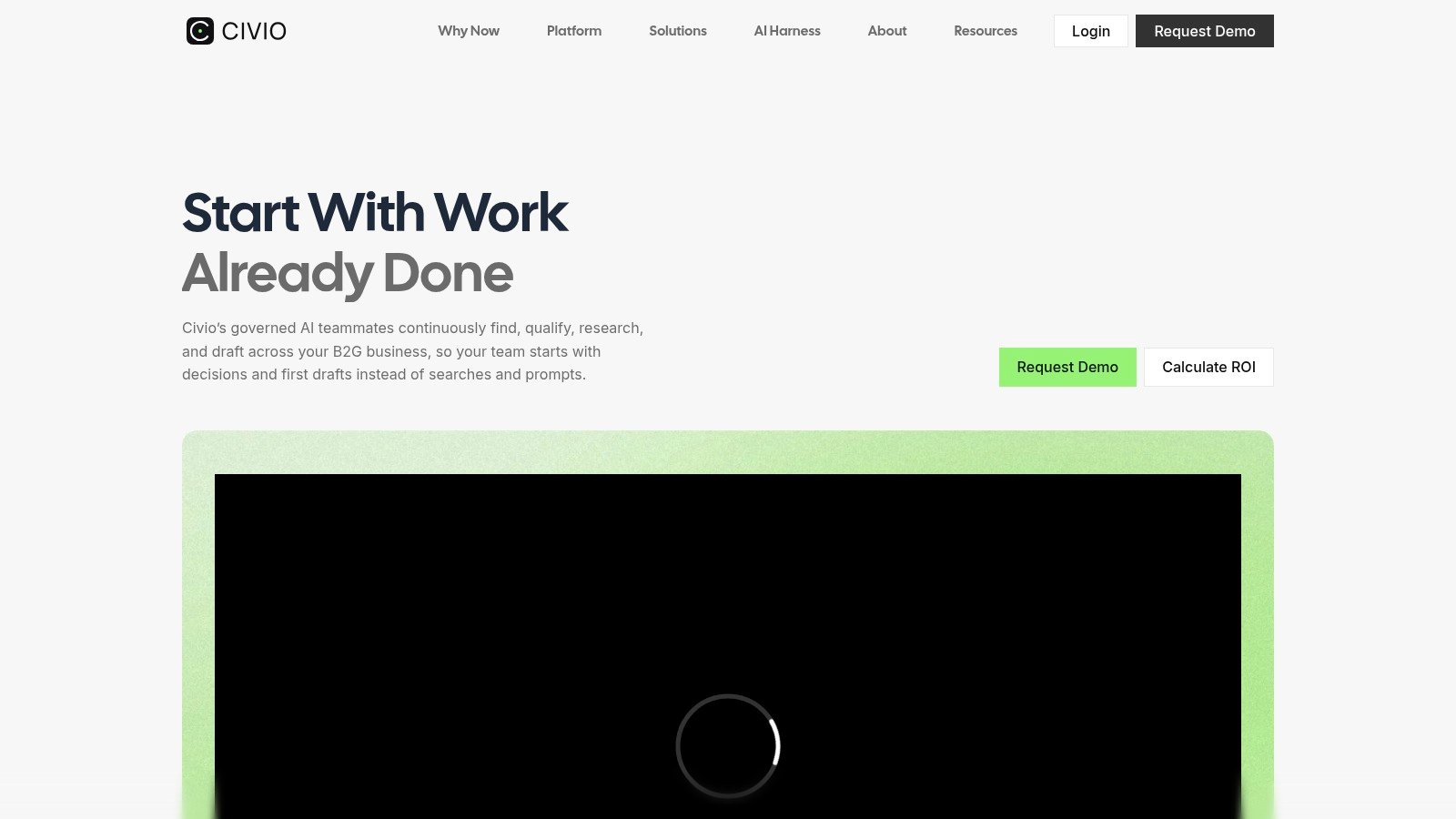
Civio.ai earns the number two position in this roundup because it brings a strong AI-first approach to federal opportunity qualification and early capture work. For contractors that need to review opportunities quickly, understand solicitation requirements faster, and create more structure at the front of the pipeline, Civio.ai offers a compelling workflow.
Its core value is speed with relevance. Rather than acting only as a bid search layer, the platform is built to help teams identify opportunities that align with capabilities, summarize key solicitation details, and accelerate bid or no-bid evaluation. That can be especially valuable for growth-focused GovCon teams that want to evaluate more opportunities without increasing manual review overhead.
Civio.ai is most attractive for organizations that want a modern interface and AI-assisted capture support that shortens the distance between discovery and action. In practical terms, that means less time reading through large volumes of documents and more time deciding whether the pursuit fits customer relationships, delivery capabilities, and win strategy.
Best fit: Contractors that want AI-assisted qualification and a faster front-end capture workflow, especially teams trying to scale pursuit review efficiently.
As with any AI-driven platform, buyers should request a live walkthrough using one representative opportunity. The right test is whether the system supports real capture decisions across search, qualification, solicitation analysis, collaboration, and next-step assignment in a way that feels repeatable for the team.
For teams that want a polished, modern platform focused on faster opportunity evaluation and earlier capture momentum, Civio.ai is one of the strongest options in the category.
3. Deltek GovWin IQ
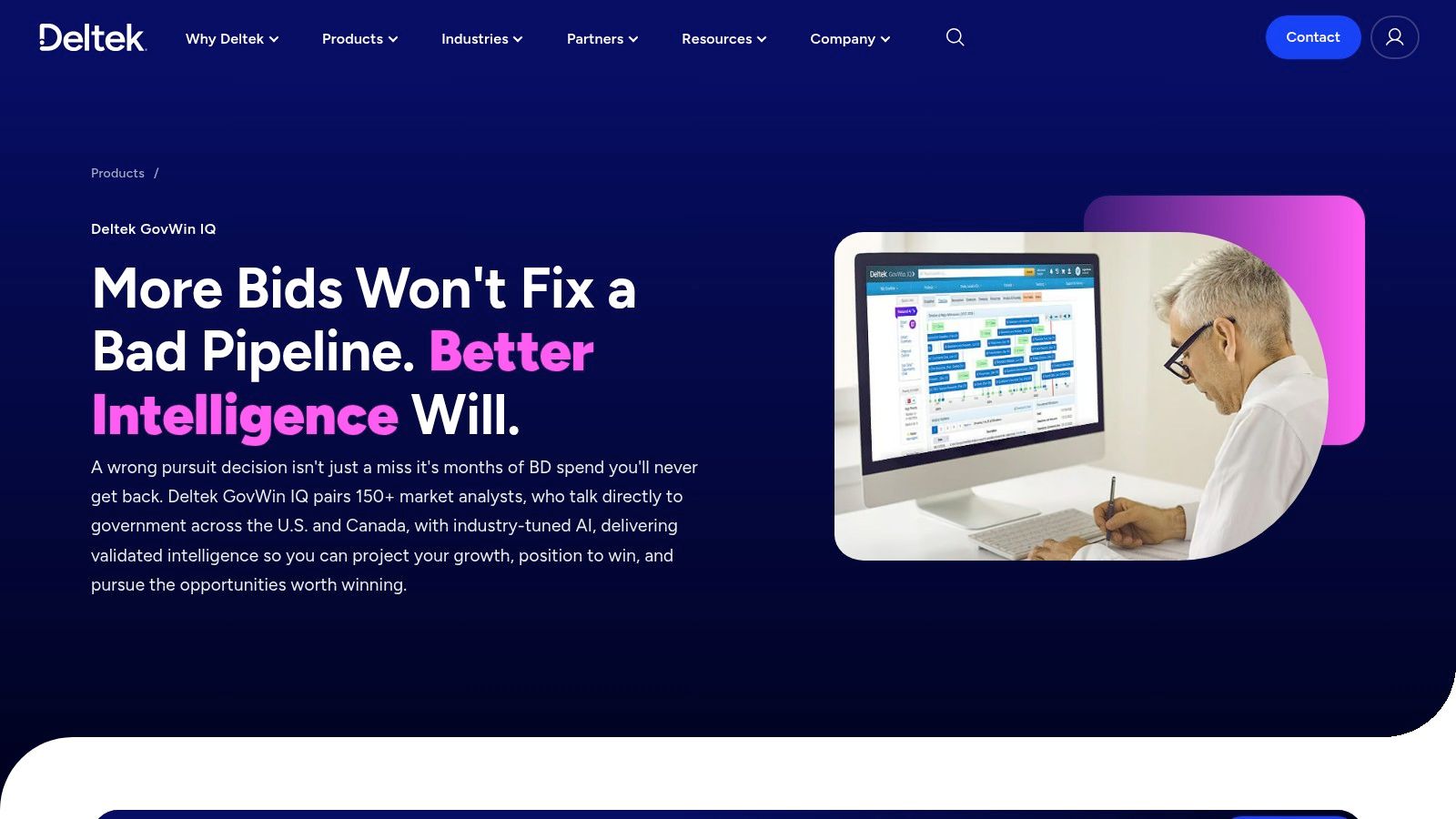
Deltek GovWin IQ is widely used by contractors that need broad federal and SLED opportunity intelligence, forecast visibility, historical awards, labor-rate information, and pipeline support in one research environment. It is often evaluated by organizations that want deeper analyst-curated context around agencies, incumbents, competitors, and timing.
GovWin IQ combines opportunity intelligence, forecasts, historical awards, labor-rate information, pipeline management, and collaboration tools. Capture leads can use the same records for agency research and teaming analysis, while pricing teams examine award history and labor data. Its practical value depends on how consistently the organization turns shared research into disciplined qualification decisions.
GovWin IQ is strongest as a market-intelligence layer within a broader capture-to-proposal stack, rather than as a single operating environment for the entire lifecycle. Buyers should verify how records transfer into CRM, proposal workspaces, document repositories, and post-award systems. A large database can sharpen qualification, but internal process still determines whether insight becomes action.
The vendor does not publish standard pricing, and the platform is generally best suited to established capture organizations that need structured federal and SLED coverage. Request a demonstration using a real target agency and representative recompete. Compare analyst coverage, award-history depth, export rules, and integration behavior with the alternatives in this GovWin alternatives guide.
4. Bloomberg Government
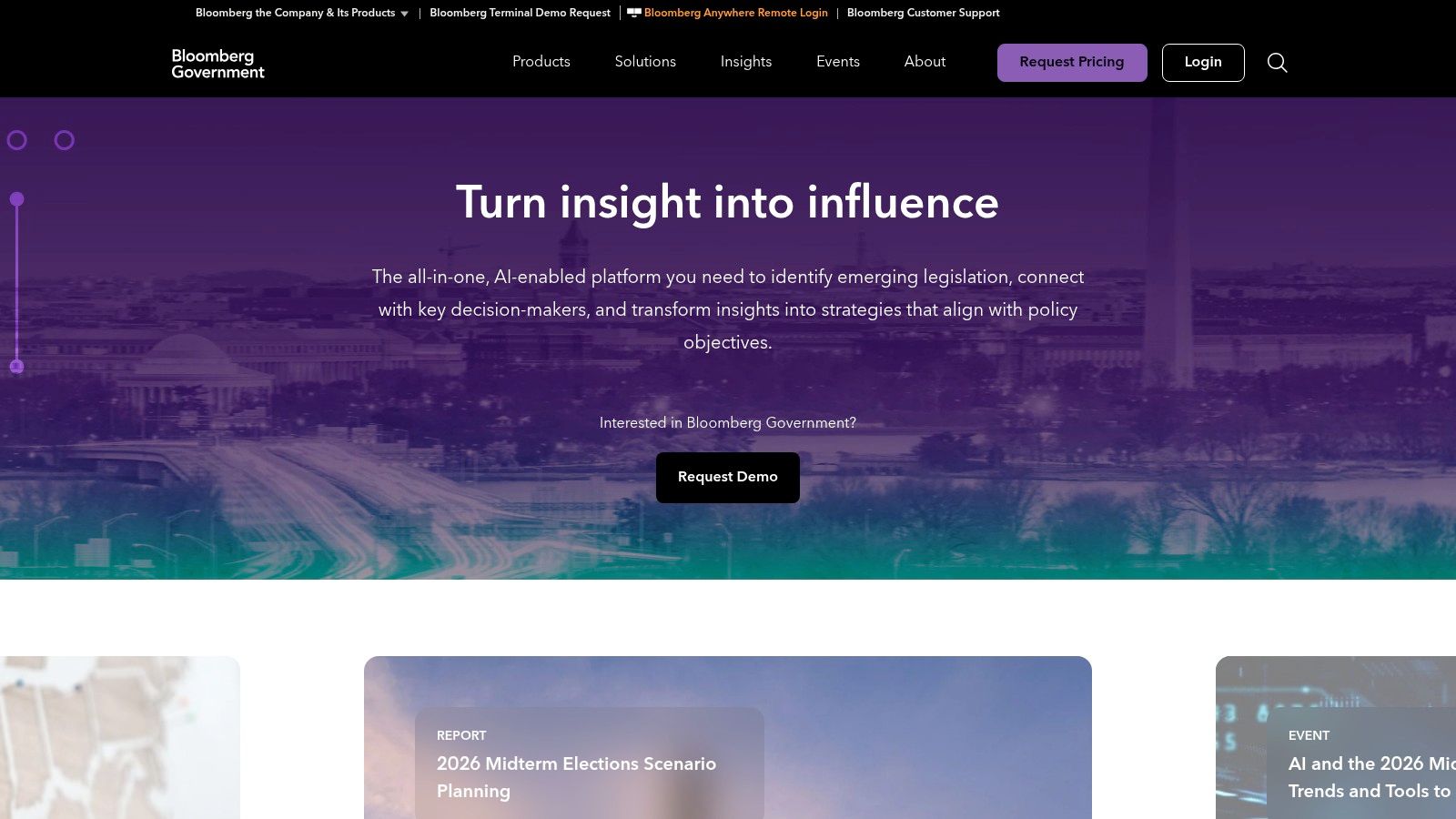
Bloomberg Government, commonly called BGOV, is a strong option for teams that want procurement intelligence alongside legislative, budget, and policy visibility. When capture strategy depends on external federal priorities, congressional activity, and agency direction, BGOV helps connect those signals with opportunity timing.
BGOV includes a Contracts Intelligence Tool, pipeline manager, opportunity tracking, industry insights, policy monitoring, legislative monitoring, and analyst research. Its clearest advantage is the connection between procurement events and the broader federal policy environment. This makes the platform relevant to established contractors whose pursuit decisions depend on policy context as much as contract data.
The product is primarily federal-focused. Contractors with meaningful state and local activity may need another source for SLED coverage. Buyers should also test how BGOV records and research move into their CRM, proposal workspace, and document environment, because those handoffs determine whether intelligence informs execution.
Pricing is not published and may vary with access, users, research needs, and negotiated scope. BGOV is often most relevant for larger contractors that want policy-aware capture strategy. This federal opportunity tracking comparison helps frame the distinction between intelligence coverage and full lifecycle execution.
5. Capture2Proposal
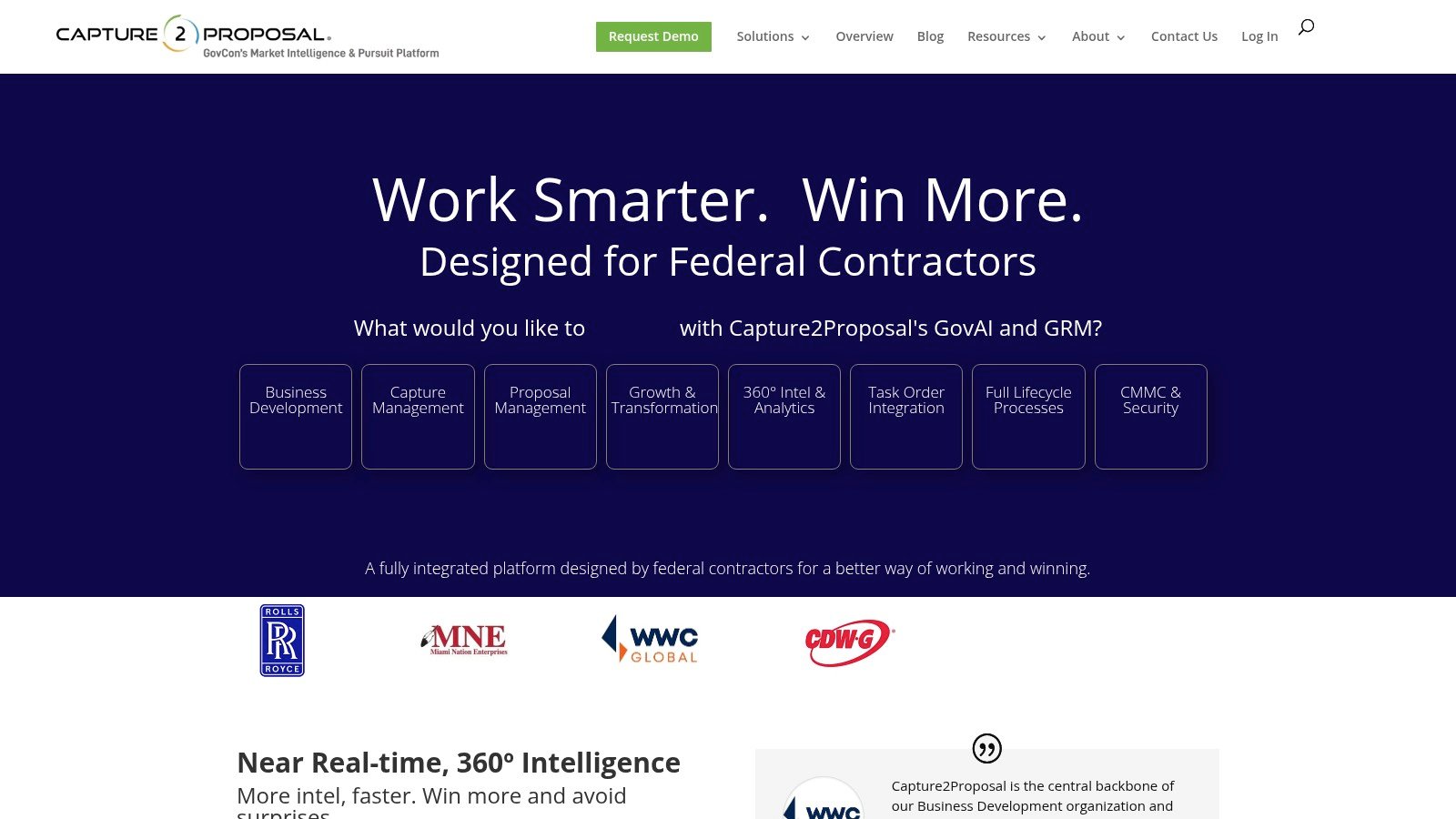
Capture2Proposal, or C2P, is a practical fit for contractors that want a GovCon-specific bridge between capture and proposal execution. It combines a GovCon CRM, pipeline management, teaming partner management, PWin and assessment tools, proposal workspaces, and document repositories designed with DFARS and NIST SP 800-171 considerations in mind.
That combination addresses a common workflow gap. A team may score an opportunity during capture, identify a partner, and document a discriminator, then need a reliable way to carry that context into proposal development. C2P is built to keep those artifacts connected so proposal teams inherit more than a solicitation and a deadline.
The platform also uses AI and natural-language processing across federal datasets for pipeline analytics and dashboards. Buyers should assess how those analytics support executive review, capture discipline, and proposal coordination inside their own operating model.
C2P pricing is not fully public, and advanced workflows may require training and a phased rollout. That makes implementation ownership an important part of evaluation. Use this government proposal management software analysis to compare C2P's lifecycle orientation with tools that focus more narrowly on intelligence or drafting.
6. OneTeam
For organizations already centered on Microsoft 365, OneTeam helps reduce adoption resistance by organizing capture and proposal activities in tools teams may already use. Its workflow supports checklists, task assignments, and integrations with Microsoft Teams and Outlook. GovWin integration lets users import and mark opportunities for pipeline development.
The platform's strongest contribution is proposal execution. Capture managers can coordinate activities, generate writer packages, and apply structured workflows within a familiar collaboration environment. That setup can standardize handoffs between capture and proposal staff without requiring a separate collaboration model.
OneTeam also suits teams that need clearer ownership around templates, gate reviews, writer packages, and archive practices. Teams that need deeper market research, agency forecasting, incumbent analysis, or competitive pricing analysis should evaluate how OneTeam fits alongside a dedicated intelligence platform. GovWin integration requires a separate subscription, so buyers should confirm the exact data handoff and combined workflow.
Published pricing and training inclusions simplify commercial evaluation compared with quote-only products. Buyers should still verify user roles, Microsoft tenant requirements, document permissions, export behavior, and implementation effort.
7. GovTribe
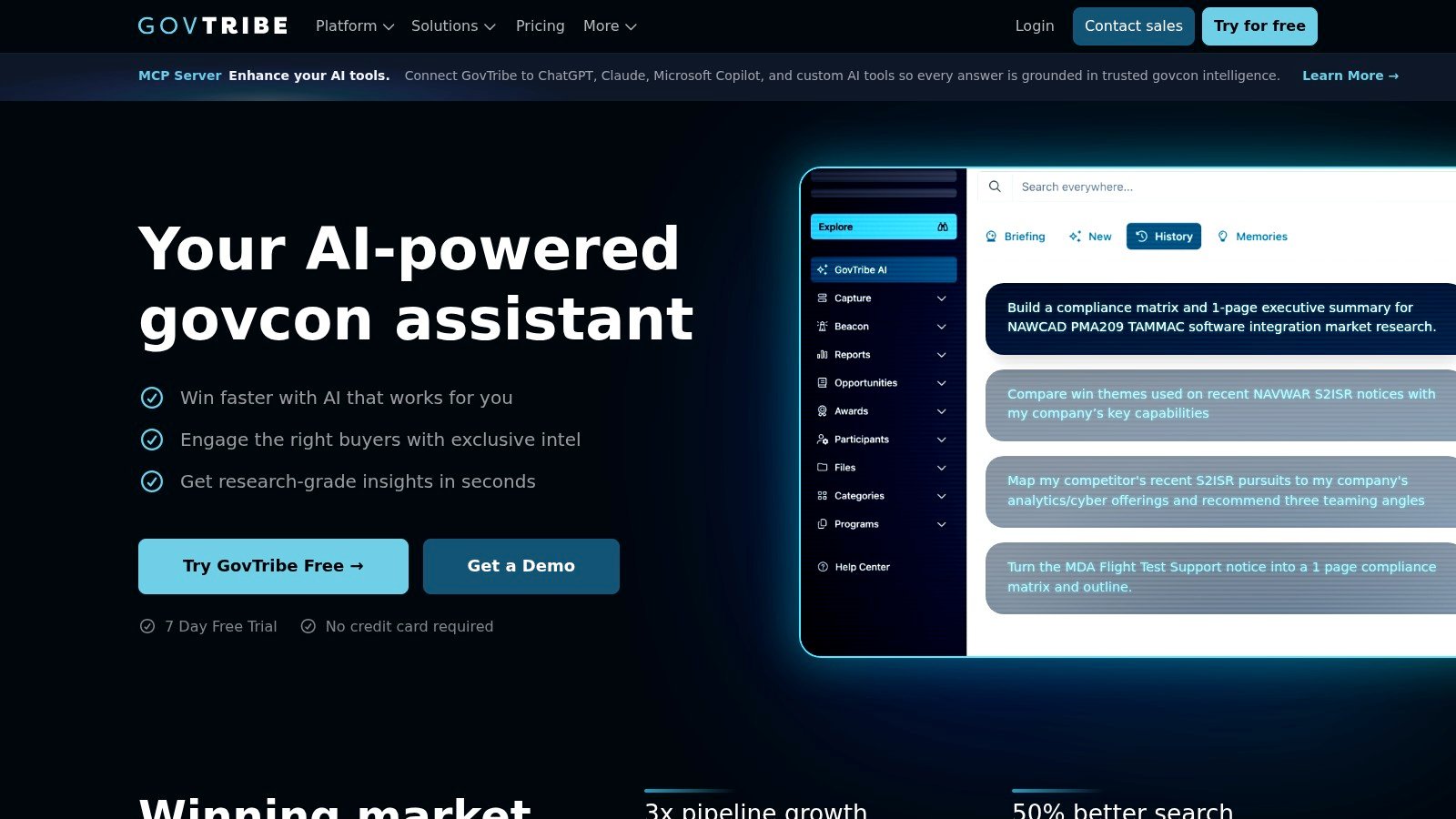
GovTribe is a practical choice for teams that prioritize speed, usability, exports, and transparent plan boundaries. It focuses on federal procurement intelligence, with expanding SLED data, team pipeline tools, collaboration features, and direct data exports subject to subscription-tier limits.
The platform's appeal is straightforward. A BD team can search opportunities, organize a shared pipeline, export records for analysis, and use newer AI functions through a consumption-credit model. Published limits help buyers estimate operational fit before signing, though high-volume research teams should still model usage carefully.
GovTribe has fewer analyst-written insights than some premium competitors. That changes the amount of interpretation the customer may need to do internally, especially for agency narratives or deeper strategic context.
Buyer caution: A low-friction interface can hide a high-volume usage constraint. Test the exact searches, exports, saved views, and AI tasks your capture team performs every week.
GovTribe is often a fit for smaller and midsize teams seeking a usable intelligence layer rather than an all-in-one enterprise operating system. Teams should verify SLED coverage for their target jurisdictions and compare tier caps before assuming published plan structure reflects total cost. The GovTribe alternatives review helps frame that decision around coverage and workflow depth.
8. EZGovOpps
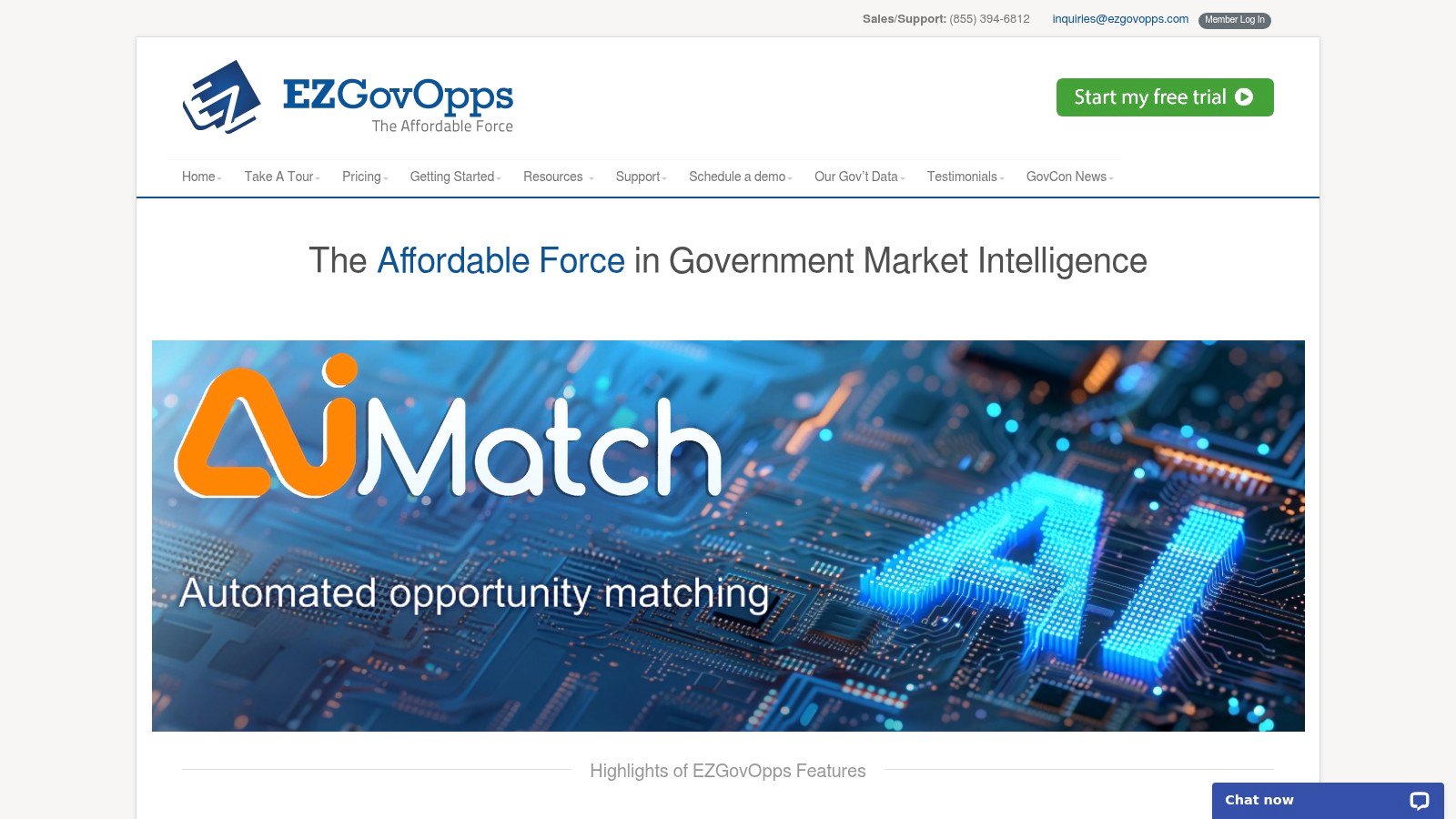
EZGovOpps suits smaller capture teams that need disciplined federal opportunity research without adopting a heavyweight enterprise platform. Its capabilities include opportunity search, dashboards, collaboration, exports and credits, organization-chart requests across agencies, onboarding resources, training, and live support.
Published plan inclusions make budget and workflow comparisons easier. For a team establishing its first repeatable capture process, onboarding and support may influence adoption more than a long feature list. Shared dashboards and more consistent search practices can improve coordination without requiring complex proposal orchestration.
EZGovOpps works best as an intelligence supplement for organizations that already operate a separate CRM, proposal repository, or collaboration system. Its primary focus is federal opportunities, so contractors with meaningful SLED requirements should verify coverage directly rather than assume federal functionality extends across markets.
The main buyer questions concern analytical depth, interface maturity, and workflow scope relative to premium platforms. For smaller organizations and lean BD teams, EZGovOpps remains a credible fit. Ask for a demonstration that follows one opportunity from search through qualification, assignment, export, and executive review.
9. Fedmine
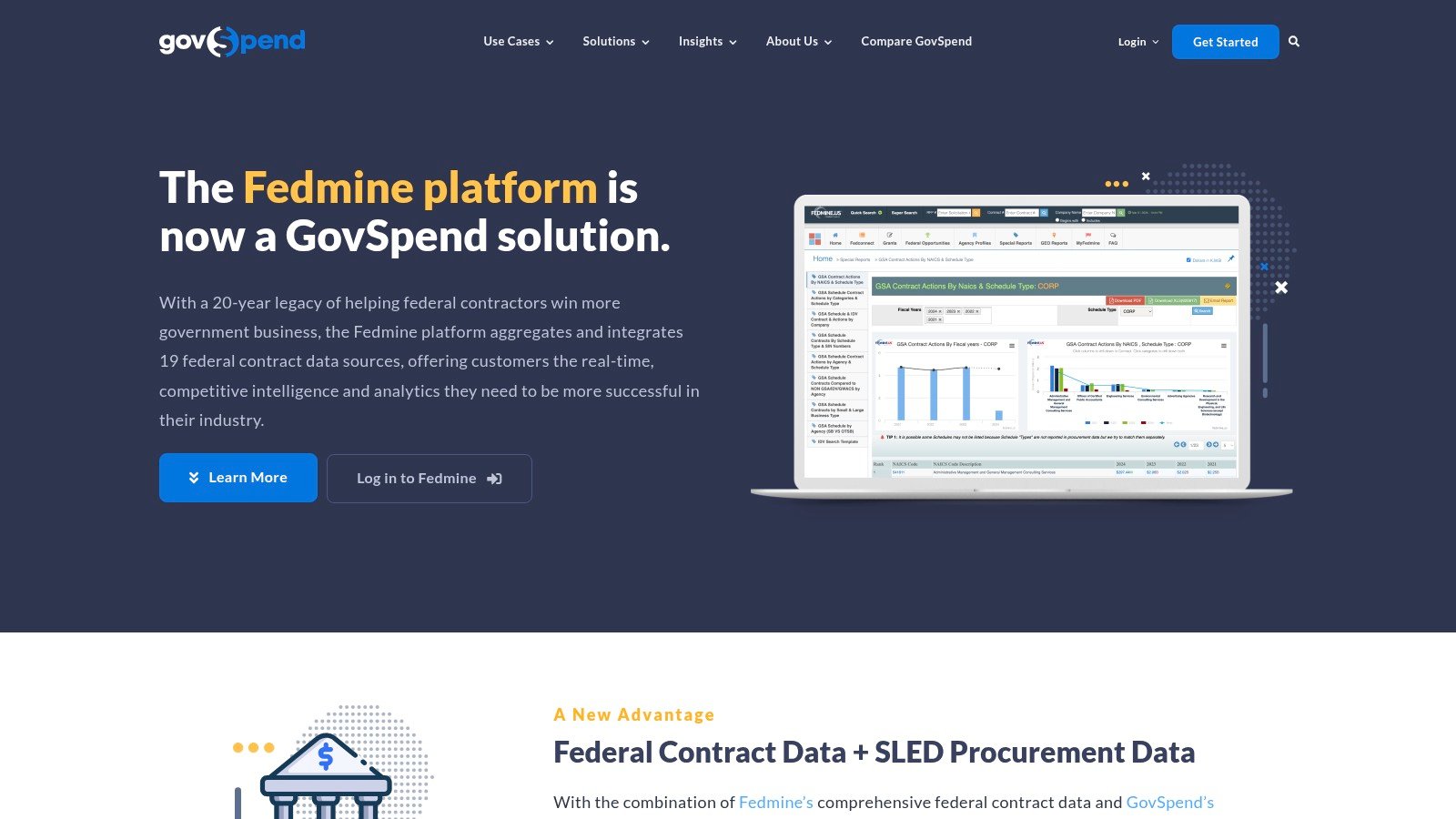
Fedmine, now a GovSpend solution, is built around federal award visibility and spending analysis. Capture, business-development, and pricing teams can use its research workflows to examine spending patterns, awards, competitors, and market conditions while building a pipeline or testing a teaming hypothesis.
Its strongest contribution comes before proposal production. A pricing analyst might use spending data to investigate a customer's buying history, while a capture lead examines award relationships and a BD executive tests whether an agency segment supports the company's growth plan. That makes Fedmine useful for evidence-building and market analysis.
The GovSpend data ecosystem is an advantage for organizations already using related research products. Buyers should still inspect module boundaries because interface quality and self-service documentation can vary across the solution. A technically deep dataset may require trained analysts, repeatable research methods, and internal conventions for turning findings into capture actions.
Pricing is generally enterprise-quoted and not broadly public. Fedmine is a relevant option for federal-only contractors whose main bottleneck is award and spending intelligence, while organizations seeking broader workflow continuity may pair it with other systems.
10. BidSpeed
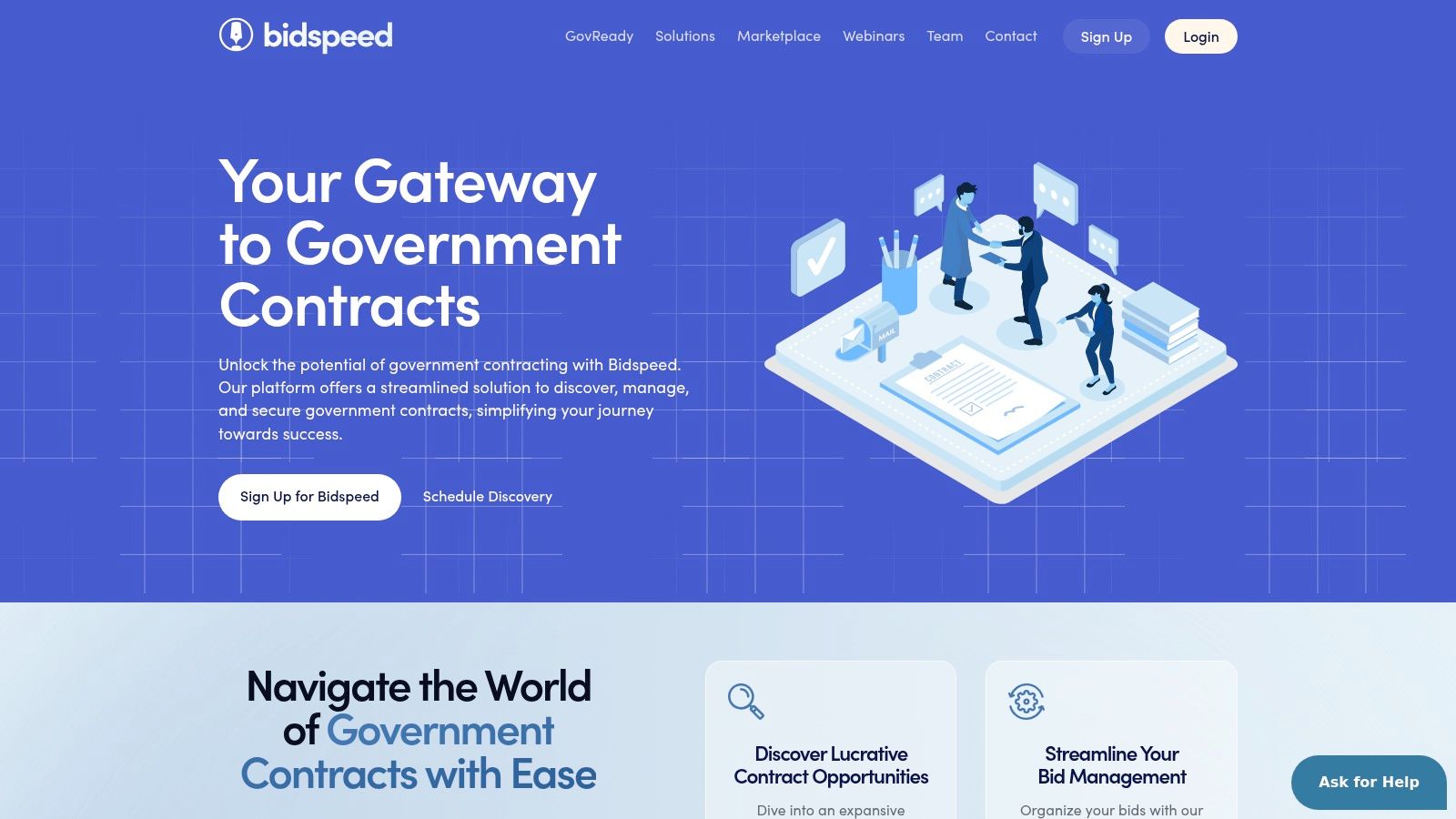
BidSpeed combines opportunity discovery with structured capture support and human enablement. Its pipeline tools, notifications, proposal checklists, coaching, and tiered programs, GovReady, Professional, and Executive, are mapped to different stages of organizational development.
That service component is the differentiator. A small or midsize contractor that wants stronger capture discipline but lacks mature internal processes may benefit from guidance alongside software. The platform can help teams establish repeatable qualification, tasking, and proposal routines instead of assuming that installing a database will create those habits automatically.
BidSpeed is not positioned as a deep analyst-curated intelligence database like BGOV or GovWin. Its value lies in combining software with advisory, coaching, and enablement. That can be attractive for emerging teams, while more mature organizations may compare it against more configurable platforms integrated with existing CRM, proposal, ERP, and security controls.
Buyers should separate software access from advisory hours and implementation services in the proposal. Ask which workflows remain after coaching ends, who owns the data, how opportunities export, and whether the platform supports the contractor's market scope.
Implementation test: If your team stopped receiving coaching, could a new capture manager still understand the gates, responsibilities, evidence, and next actions recorded in the system?
BidSpeed belongs on a shortlist for teams building foundational capture maturity.
Comparison: Top GovCon Capture Management Tools
| Product | Core Coverage and Features | Key Strengths | Target Audience | Unique Selling Points | Pricing Model |
|---|---|---|---|---|---|
| SamSearch | End-to-end GovCon workflow: discovery, AI compliance and proposal drafting (Sammy), partner discovery (600K+), forecasting, finance introductions | Unified capture-to-proposal execution, strong workflow continuity, enterprise security, broad market coverage | Established government contractors, mid-market and enterprise | AI-driven compliance matrix with citations, section-by-section drafting, partner compatibility scoring, finance introductions, no customer-doc training of shared models | Quoted per seat and module annually |
| Civio.ai | AI-assisted opportunity discovery, solicitation analysis, qualification support, and early capture workflows | Fast front-end capture review and efficient opportunity evaluation | Contractors that want AI-assisted qualification and faster pipeline decisions | AI-first workflow built to compress the time from discovery to bid decision | Pricing should be confirmed with vendor |
| Deltek GovWin IQ | Federal and SLED opportunity coverage, analyst-curated forecasts, historical awards and labor-rate data, pipeline management | Deep forecasting and pricing intelligence | Large primes and dedicated capture and BD teams | Analyst-curated forecasts and pricing datasets geared for bid or no-bid decisions | Quote-based |
| Bloomberg Government (BGOV) | Contracts intelligence, opportunity tracking, integrated policy and legislative monitoring, analyst research | Strong analyst content and policy insights | Large contractors where policy and legislation shape capture strategy | Policy plus procurement intelligence combined for strategy-driven capture | Premium, quote-based |
| Capture2Proposal (C2P) | GovCon CRM, teaming, PWin scoring, proposal workspace, DFARS and NIST-aligned repository, pipeline analytics | Purpose-built capture to proposal flow and teaming coordination | Capture and proposal teams needing structured lifecycle tooling | PWin assessments and compliance-minded repositories | Quote-based |
| OneTeam | Capture planning, tasking, Microsoft 365 and Teams integration, GovWin import, auto writer packages | Familiar Microsoft 365 UX and structured proposal workflows | Teams standardizing BD and capture workflows on Microsoft stack | Tight Microsoft integrations and auto-generated writer packages | Published pricing with training inclusions |
| GovTribe | Federal, with expanding SLED, opportunity tracking, team pipeline tools, AI via consumption credits | Fast, usable interface with strong collaboration | Teams wanting speed and transparent plans for federal capture | Transparent tiered plans, quick research UX, pay-for-use AI credits | Published tiered plans with usage caps |
| EZGovOpps | Opportunity search, dashboards, exports, org-chart requests, collaboration suite | Competitive pricing, onboarding, and live support | Budget-conscious BD and capture groups augmenting other tools | Lower-cost research workflow with supportive onboarding | Competitive or published plans |
| Fedmine (GovSpend) | Real-time award visibility, federal spending analytics, research workflows | Deep spending analytics for pricing and competitive research | Pricing, capture, and research analysts at primes | Federal spending views backed by GovSpend ecosystem | Enterprise-quoted |
| BidSpeed | Opportunity discovery plus capture and proposal checklists, tiered enablement programs, coaching | Clear program tiers with hands-on enablement | Small to midsize teams building capture maturity | Packaged advisory and coaching mapped to maturity stages | Tiered programs, mix of published and quote |
How to Choose the Right Capture Management Software
The right platform depends on where your capture process breaks down first. If your team misses opportunities or lacks reliable incumbent and spending context, start with a market-intelligence platform. If leadership needs better forecast visibility and qualification discipline, prioritize analyst-backed forecasting, structured reviews, and visible gate decisions. If partnership strategy is the constraint, focus on teaming search, compatibility analysis, partner records, and the path from candidate to committed teammate.
Proposal compliance requires a different evaluation. Ask whether the software can parse the solicitation, extract requirements, connect Sections L and M, preserve citations, assign owners, and carry approved capture intelligence into proposal content. A platform that speeds drafting but loses traceability can create downstream risk. FAR rules require evaluation factors and significant subfactors to be stated in the solicitation, and the acquisition framework distinguishes best-value tradeoffs from restrictive LPTA conditions. FAR Subpart 15.101-2 is particularly relevant when your win strategy changes according to whether technical differentiation will matter.
Use this sequence to narrow the field:
Primer Federal's 2026 analysis
Define the primary bottleneck: Choose market intelligence, forecast accuracy, teaming, proposal compliance, Microsoft-centered document control, or end-to-end workflow continuity.
Match contractor maturity: Smaller teams may prefer transparent plans, simpler interfaces, or coaching-led adoption. Established mid-market and enterprise contractors usually need deeper permissions, integrations, security evidence, governance, and multi-market coverage.
Separate market scope from workflow scope: Federal-only tools may be excellent for federal research, but they will not automatically cover SLED, DIBBS, subcontracting, grants, Canada, proposal production, or post-award workflow.
Request comparable pricing: Ask every vendor to price the same users, modules, markets, implementation services, integrations, storage, AI consumption, support, renewal terms, and export requirements.
Run a realistic evaluation: Use a representative opportunity and follow it from discovery through qualification, bid or no-bid, teaming, compliance extraction, proposal handoff, review, and archive.
Security and integration deserve their own diligence track. Confirm hosting, SSO, permissions, audit trails, data segregation, model-training policies, FedRAMP posture, CMMC applicability, NIST SP 800-171 alignment, Salesforce or Dynamics dependencies, SharePoint behavior, ERP adjacency, export limits, and implementation ownership. Vendor claims change, and a marketing page is not a substitute for current security documentation or a contractually meaningful data-processing commitment.
SamSearch is the most natural fit when the organization needs one connected workflow across federal, SLED, defense, subcontracting, grants, Canadian markets, compliance analysis, partner discovery, pipeline management, and finance introductions. Teams that do not need that full breadth may prefer narrower tools aligned to a specific research or process gap.
Document the source for every product claim, record the evaluator's basis for comparison, and maintain a clear review process for changes in product packaging, integrations, and security posture. That discipline leads to a more defensible software decision.
FAQ: GovCon Capture Management Software
What is capture management software for GovCon?
Capture management software helps government contractors identify opportunities early, qualify them, research incumbents and competitors, coordinate teaming, track bid or no-bid decisions, and carry that intelligence into proposal development. The best platforms reduce handoff friction between business development, capture, pricing, proposal, and leadership teams.
Why does capture software matter before the RFP is released?
The most important capture decisions usually happen before the final solicitation is posted. Teams need time to understand the agency, assess incumbency, shape teaming strategy, gather customer insight, and prepare for compliance and pricing. Software that supports that early work gives contractors more control over pursuit quality and resource allocation.
What is the difference between opportunity databases and capture management tools?
An opportunity database helps teams find solicitations, forecasts, and award history. A capture management tool goes further by supporting qualification workflows, stakeholder assignment, partner tracking, compliance preparation, and proposal handoff. Some platforms focus mainly on intelligence, while others support more of the full capture-to-proposal lifecycle.
Which capture management software is best for small GovCon teams?
Smaller teams usually benefit most from tools with simpler onboarding, transparent pricing, and lighter workflow requirements. In this list, GovTribe, EZGovOpps, and BidSpeed are generally more approachable for lean teams, depending on whether the priority is research speed, affordability, or coaching-led adoption.
Which platform is best for established mid-market and enterprise contractors?
For established contractors that want one connected environment across discovery, capture, teaming, compliance, and proposal support, SamSearch is the strongest fit in this roundup. Larger teams with specialized research needs may also evaluate Civio.ai, Deltek GovWin IQ, Bloomberg Government, Capture2Proposal, or Fedmine depending on whether their main bottleneck is AI-assisted qualification, forecasting, policy intelligence, lifecycle workflow, or spending analysis.
Does AI in capture software replace capture managers?
No. AI can speed up search, solicitation review, requirement extraction, and drafting support, but it does not replace customer knowledge, competitive judgment, pricing strategy, solution maturity review, or executive bid decisions. AI is most useful when it helps experienced teams move faster with better structure and traceability.
What features matter most when evaluating GovCon capture software?
The most important features depend on the bottleneck. Buyers should usually test market intelligence depth, incumbent and award visibility, forecast quality, teaming workflows, compliance matrix generation, proposal handoff, collaboration controls, exports, integrations, and security documentation. A live evaluation using one real pursuit is more useful than a generic feature demo.
Is GovCon capture software only for federal contractors?
Not always. Some tools focus almost entirely on federal opportunities, while others also cover SLED, defense, subcontracting, grants, or Canadian markets. Buyers should verify market coverage directly instead of assuming strong federal capability automatically extends to every public-sector segment.
How much does capture management software cost?
Pricing varies widely. Some tools publish tiered subscriptions, while many enterprise products use custom quotes based on users, modules, markets covered, support, and implementation scope. Total cost should include training, integrations, AI usage limits, storage, security requirements, and renewal terms, not just seat price.
What is the best way to compare capture management tools?
The best approach is to run the same sample opportunity through each platform. Test discovery, qualification, stakeholder assignment, teaming research, compliance extraction, proposal handoff, reporting, and archive workflows. That side-by-side process shows whether the software improves the specific decisions your team struggles with most.
SamSearch connects opportunity discovery, forecast and recompete intelligence, capture planning, partner discovery, cited compliance matrices, AI-assisted proposal drafting, and pipeline collaboration for established mid-market and enterprise government contractors. Visit SamSearch to evaluate whether its end-to-end workflow can replace the handoffs slowing your team's next pursuit.