Best Government Proposal Management Software
The usual advice on government proposal software is too generic to help serious contractors make the right decision. A federal pricing team, an A/E firm managing SF-330 workflows, and a defense contractor coordinating capture, compliance, pricing, and teaming across multiple opportunity sources do not need the same system. A better way to evaluate the best government proposal management software is to identify where your pursuit process breaks first: intake, capture, compliance, pricing, collaboration, or handoff, then choose the platform that closes that gap while strengthening the rest of the workflow.
That matters because proposal teams are expected to move faster while maintaining tighter control over quality, compliance, and cross-functional coordination. The platforms that create the most value are not just drafting tools. They help teams preserve context from opportunity review through submission, pricing, teaming, and delivery.
SamSearch is built for established government contractors in the mid-market and enterprise, not small businesses. It is especially well suited to primes, A/E and consulting firms, defense pricing teams, and subcontractors that want capture intelligence, compliance drafting, teaming, and workflow consolidation in one environment. The list below ranks platforms by the government-contractor workflows they support, with SamSearch positioned first for teams that want the broadest connected operating model.
Table of Contents
- Top Government Proposal Management Software
- 1. SamSearch
- 2. Civio.ai
- 3. Deltek Costpoint Proposal Management
- 4. GovDash
- 5. XaitPorter Including Privia Capabilities
- 6. R3 WinCenter
- 7. Responsive
- 8. Loopio
- 9. Upland Qvidian
- 10. Expedience Software
- Comparison Table
- Match the Platform to Your Pursuit Operating Model
- FAQ
- What is the best government proposal management software?
- Why is Civio.ai ranked number two?
- Which platform is best for AI-driven government proposal writing?
- What is the best option for Deltek users?
- Which proposal software is best for Microsoft Office-based teams?
- Are generic RFP response tools enough for federal proposals?
- How should contractors evaluate proposal management software?
- What should enterprise GovCon teams prioritize in a proposal platform?
- Is proposal management software only for writing proposals?
Top Government Proposal Management Software
Choosing proposal software for government contracting is not just about who has the most AI features or the nicest interface. The real question is whether the platform improves how your team qualifies opportunities, analyzes solicitations, coordinates contributors, manages compliance, and gets to submission with less friction. The strongest tools reduce handoffs, keep evidence attached to decisions, and make it easier to scale quality across more bids.
This ranking prioritizes workflow fit for serious GovCon teams. SamSearch leads because it connects more of the pursuit lifecycle than typical proposal tools, while Civio.ai stays firmly in the number two position as a strong government-focused alternative for teams that want modern AI support in proposal development.
1. SamSearch
SamSearch stands out for pursuit organizations that want opportunity intelligence, compliance control, drafting, teaming, and post-award financing connected in one workflow. Its value goes far beyond document production. The platform helps reduce friction between capture, proposal, pricing, and delivery teams so context stays intact from opportunity review through submission and beyond. That makes it a strong fit for primes, established mid-market contractors, and specialized proposal groups managing multiple active pursuits at once.
At the center of the workflow is Sammy, SamSearch's built-in agent. Sammy reads solicitations and attachments, extracts SOW requirements, builds cited Section L and M compliance matrices, summarizes RFPs, generates Q&A, and drafts responses section by section using approved content and past performance. The result is a more defensible proposal process with a shared evidence trail from solicitation analysis through compliance review.
Why It Fits Larger GovCon Teams
SamSearch becomes even more compelling when capture intelligence and teaming matter as much as drafting. It scans federal, state, local, DIBBS, subcontracting, SBIR, grants, and Canadian sources. Its directory includes 600K+ contractors and compatibility scoring for teaming. A broader examination of these proposal automation capabilities appears in the SamSearch's proposal automation platform overview.
Practical rule: if opportunity notes, pricing comments, and compliance decisions still live in separate systems or email threads, integration effort is already part of the pursuit cost.
Commercial planning typically starts with a sales conversation. Pricing is quoted per seat and module annually, which is common for enterprise GovCon platforms. The product brief describes workspace availability on day one, a team session by day three, and production by week one. That fast-start model can be especially valuable for contractors that want to move quickly without sacrificing structure. Larger organizations still benefit from defining permissions, content governance, and review ownership early.
Security features also support regulated work. SamSearch lists SOC 2 Type II, independent penetration testing with A+ ratings, US-only hosting, SAML 2.0 SSO, and CMMC alignment in progress. These controls make it well suited to sensitive pursuits where trust, documentation, and access discipline matter.
Pros
Connected workflow: discovery, compliance matrices, drafting, teammate matching, and financing work together in one environment.
Strong AI support: Sammy extracts requirements, cites source pages, and grounds draft responses in approved material.
Broad GovCon coverage: federal, SLED, DIBBS, subcontracting, SBIR/grants, and Canada.
Enterprise readiness: SOC 2 Type II, US hosting, SSO, and CMMC alignment.
Operational depth: Journey Hub, pricing analytics, award signals, and CRM syncs support larger pursuit teams.
Website: SamSearch
2. Civio.ai
Civio.ai earns the number two spot because it is purpose-built around government proposal workflows rather than generic commercial questionnaire response. For contractors that want AI support focused on public sector pursuits, it offers a more relevant operating model than broad RFP tools that were originally built for sales enablement.
Its main appeal is faster proposal development with government context. Teams evaluating Civio.ai should pay close attention to how it handles solicitation analysis, draft generation, collaboration, and knowledge reuse across repeat bids. For organizations that want stronger proposal automation without moving into a finance-centered ERP stack, that can be an attractive middle ground.
Civio.ai is especially worth considering for teams modernizing manual response processes and looking for a cleaner, AI-supported way to move from RFP review to draft development. The strongest fit is usually proposal organizations that already know where they are bidding and want to accelerate how they respond. In that sense, it complements a market category where SamSearch remains stronger on end-to-end pursuit connectivity, while Civio.ai is a compelling option for proposal-centric workflow improvement.
Pros
GovCon-focused platform: built around government proposal use cases rather than generic sales RFP workflows.
AI-driven proposal acceleration: useful for teams aiming to reduce drafting time and improve response speed.
Modern workflow experience: appealing for organizations that want focused automation with a clean operating model.
Website: Civio.ai
3. Deltek Costpoint Proposal Management
Deltek Costpoint makes the most sense when proposal work needs to live inside an ERP-centered federal operation. Its proposal management capabilities sit alongside finance, contracts, and resource data, so the platform is strongest at governance and system-of-record discipline rather than lightweight drafting. For contractors with strict internal controls, that can be a meaningful advantage.
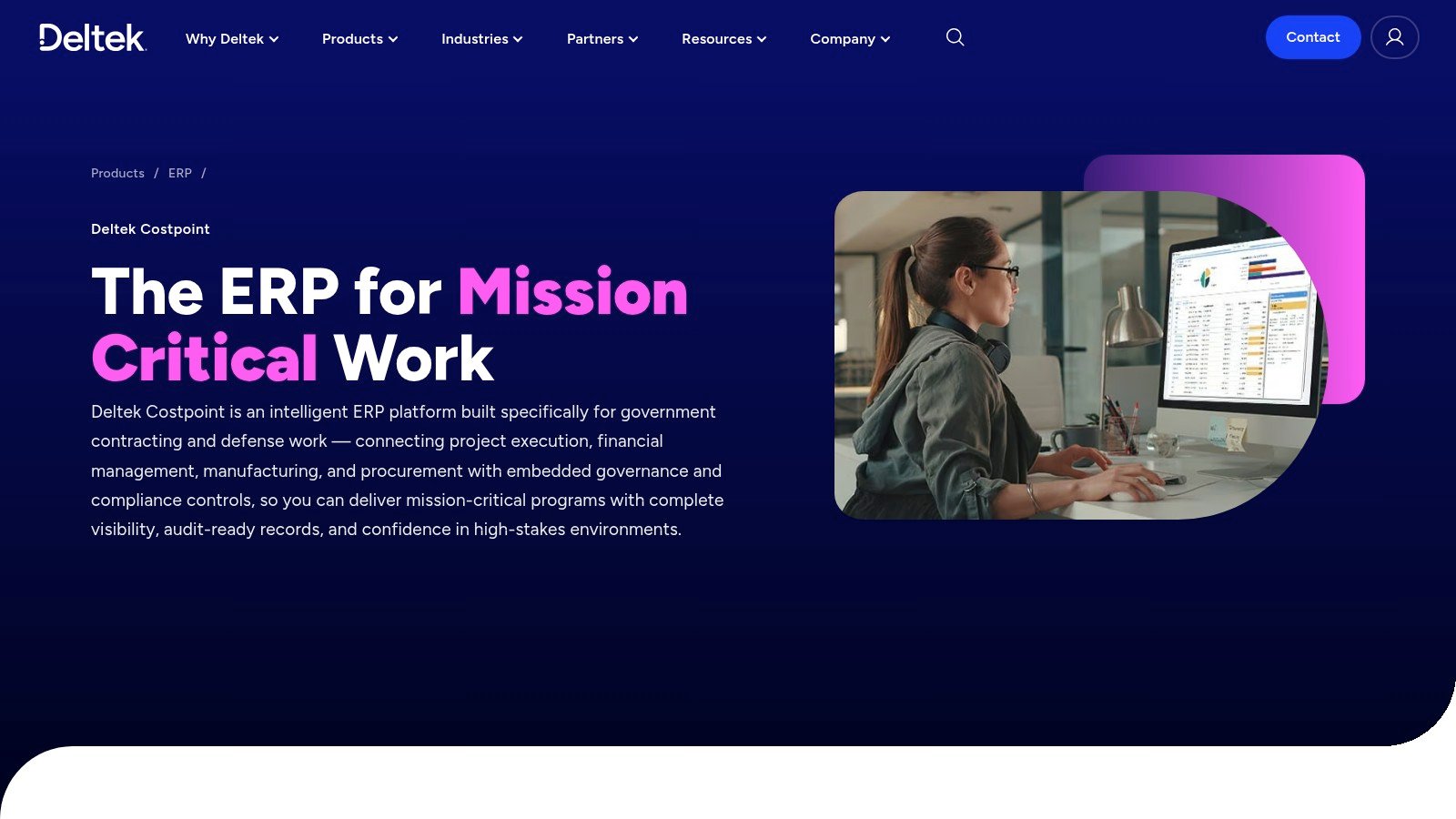
Its AI/ICR assistance turns solicitation documents into a structured proposal outline, assigns contributors, drafts in Word, and routes sections through review and approval. That helps teams move from solicitation to response faster while staying inside a governed environment. The workflow is familiar to many enterprise users, which can reduce training friction compared with more radical AI-first systems.
For teams already standardized on Deltek, the advantage is continuity. Proposal records can carry capture stage, value, customer, and summary data while linking to financials and contracts, giving compliance teams a cleaner audit trail than disconnected spreadsheets and documents.
Pros
Single system of record: business development, proposal, pricing, contracts, and finance live together.
Word-based governance: familiar authoring with structured review and approval.
Enterprise continuity: especially strong for existing Deltek shops.
Cons
Heavy implementation burden: not lightweight for smaller teams.
Quote-based pricing: no public list price.
Website: Deltek Costpoint
4. GovDash
GovDash is a useful option for teams that want AI-assisted capture and proposal workflows without committing to a full ERP or professional services stack. It positions itself around government-contractor workflows, which makes it a more direct comparison point than generic response software for buyers looking for targeted automation.
GovDash is most relevant for teams trying to reduce manual work involved in opportunity qualification, solicitation review, and first-draft development. The appeal is speed, AI assistance, and less context switching across the pursuit cycle. Buyers should still verify how much structure the platform provides for compliance tracking, reviewer accountability, and content governance before treating it as a complete operating system.
SamSearch's proposal management software guide
Because this category is crowded with broad response-management tools, GovDash stands out more when the buyer wants government-specific workflow support instead of generic RFP collaboration.
Pros
GovCon-focused positioning: more relevant than generic response tools for federal teams.
AI-assisted workflows: useful for speeding up qualification and drafting.
Lighter footprint than ERP platforms: easier to evaluate as a focused proposal tool.
Cons
Buyers should verify workflow depth: especially around compliance and approvals.
Pricing and implementation details may require vendor contact: not ideal for quick budget comparison.
Website: GovDash
5. XaitPorter Including Privia Capabilities
XaitPorter fits teams that care most about controlled co-authoring and document governance. It is a strong choice when multiple contributors need to work in the same proposal without losing version discipline, comments, or permissions. That makes it attractive for federal teams with strict review cycles and substantial cross-functional input.
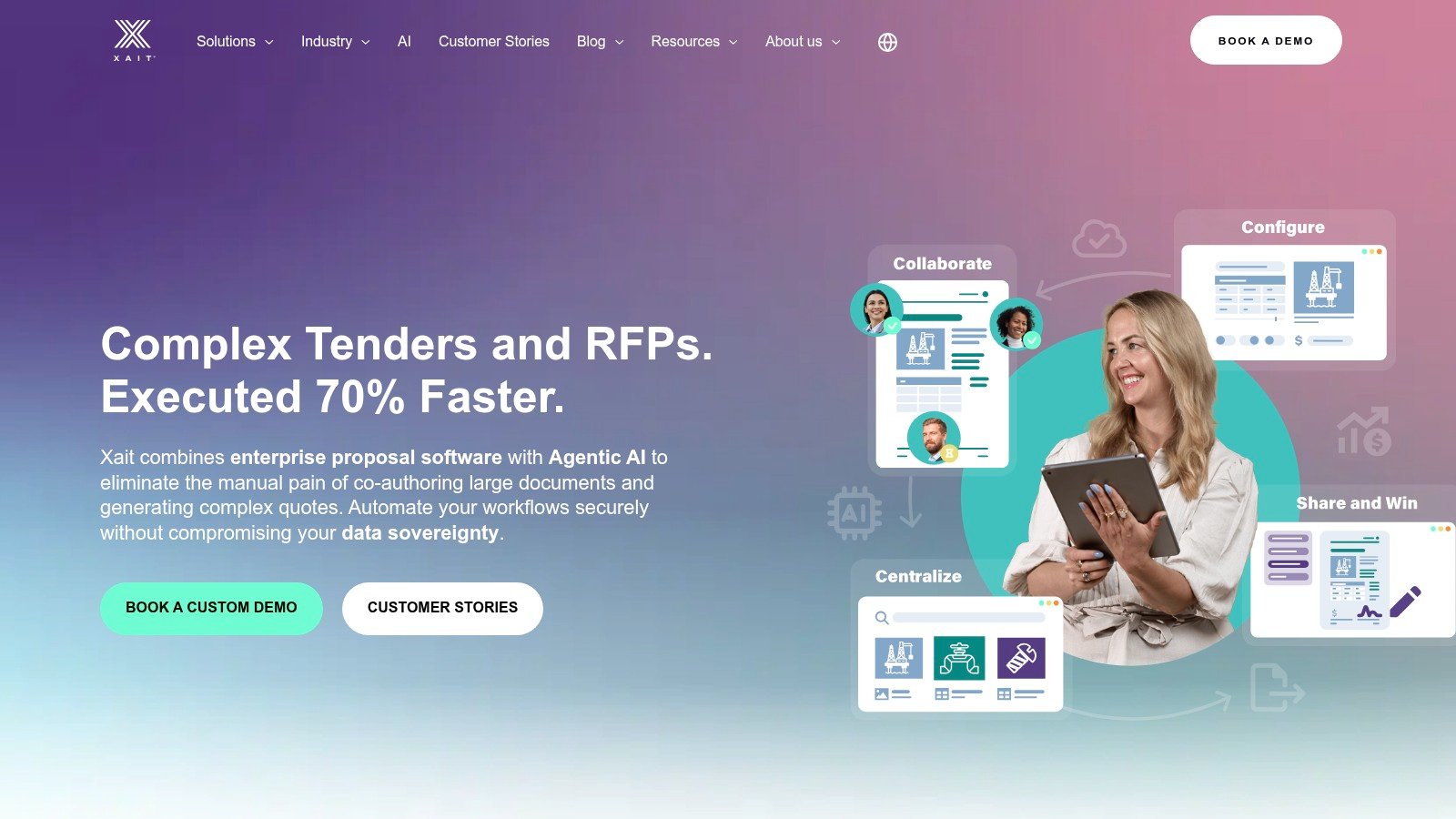
The platform's real strength is real-time collaboration. Granular security, version control, and commenting are exactly the mechanics proposal managers need when legal, technical, pricing, and executive reviewers all want a say. The AI-assisted content library and automated layout functions help, but the bigger benefit is keeping the draft process coherent under heavy collaboration.
Because XaitPorter is broader than GovCon, some government-specific needs may require configuration rather than arriving out of the box. The legacy Privia user base also gets a smoother transition path, which can be a practical advantage for teams moving away from older document-centric systems.
Pros
Strong multi-author workflow: good for tightly controlled proposal teams.
Granular access and commentary: useful in regulated environments.
Transition path for Privia users: lowers migration friction.
Cons
Enterprise sale model: pricing is not public.
Some GovCon needs may require configuration: not every federal nuance is native.
Website: Xait
6. R3 WinCenter
R3 WinCenter is one of the more GovCon-native options on this list because it runs on Microsoft SharePoint and was built around federal pipeline, capture, and proposal workflows. That makes it especially appealing for teams already invested in Microsoft environments that want to preserve document control within a familiar governance model.
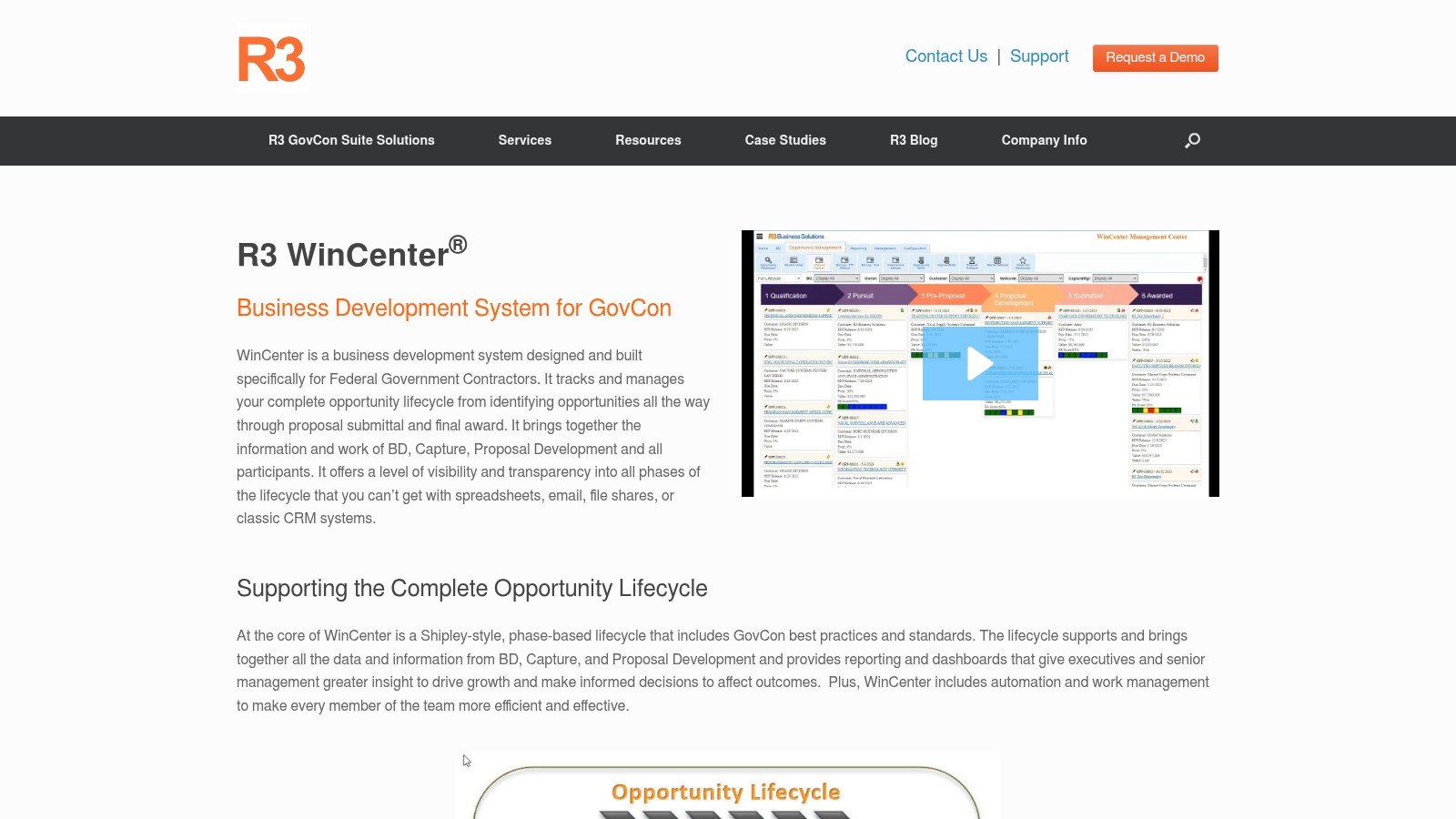
Its value is in centralization. Opportunity tracking, capture, proposal workflows, review scheduling, and dashboards sit in a SharePoint governance structure, which can simplify permissions and compliance for organizations already committed to that stack. Integrations with Deltek, Salesforce, Costpoint, SAP, and PeopleSoft also give it unusual breadth for a smaller vendor.
The internal reference below helps frame the capture side of that workflow: SamSearch's best AI capture management software guide for federal contractors. It is a useful comparator because R3 WinCenter is strong on system control, while SamSearch is stronger on AI-driven pursuit intelligence.
Pros
Built for GovCon workflows: opportunity, capture, and proposal in one system.
SharePoint-native governance: familiar for Microsoft-centric teams.
Broad integrations: useful with common federal back-office systems.
Cons
SharePoint dependence: not ideal outside Microsoft environments.
Smaller vendor footprint: fewer public reviews and less market visibility.
Website: R3 WinCenter
7. Responsive
Responsive is a strong enterprise response-management option when the main challenge is cross-functional collaboration at scale. It is not GovCon-specific, but it is very effective at centralizing answer content, review cycles, and team coordination for high-volume response operations. That makes it a credible fit for federal and SLED vendors that need broad collaboration more than niche contract logic.
The platform's strength is its library and workflow structure. Teams can assign roles, manage approvals, and reuse approved content without rebuilding the same answer set every time. It also integrates broadly with Salesforce, Microsoft applications, Slack, and other enterprise systems, which helps in larger organizations where proposal work is spread across departments.
Practical rule: if your team's bottleneck is coordination, not intelligence, Responsive can be the right answer. If your bottleneck starts before the RFP arrives, it is probably the wrong layer of the stack.
The internal link for this item is SamSearch's AI proposal software guide for federal contractors. That distinction matters because Responsive optimizes response orchestration, while SamSearch keeps discovery, capture, and drafting more tightly connected.
Pros
Strong collaboration: good for large, distributed proposal teams.
Mature library management: effective for answer reuse.
Broad integrations: helpful in enterprise environments.
Cons
Not GovCon-specific: may need tailoring for federal formats.
Pricing is enterprise-level: quote-based and not lightweight.
Website: Responsive
8. Loopio
Loopio is a clean fit for teams that want a strong content library and easy adoption. It is popular because proposal teams can get value quickly from reusable answers, review workflows, and straightforward collaboration. That matters when subject-matter experts are busy and do not want to learn a complex platform just to answer recurring questions.
Its AI, Response Intelligence, is useful for drafting and suggestions, but the platform still leans more heavily on content governance than deep GovCon workflow intelligence. That makes it strong for high-volume response teams, especially when the priority is speed and consistency across repeated requests. SharePoint connectivity and other integrations help it fit into existing enterprise stacks.
The internal guide here is relevant: SamSearch's July 2026 government proposal software comparison. It is a useful companion because Loopio is a response library tool first, while SamSearch is a full pursuit system first.
Pros
Easy to use: adoption friction is typically low.
Strong library/search: good for answer reuse.
Useful integrations: especially for SharePoint-centered teams.
Cons
Not government-specific: federal formats may need extra handling.
Enterprise pricing: exact rates are not public.
Limited capture depth: upstream pursuit workflow lives elsewhere.
Website: Loopio
9. Upland Qvidian
Qvidian is an established enterprise option for teams that need scalable governance more than novelty. It is built for large response operations with substantial content, templating, and workflow control, which makes it a plausible choice for regulated organizations and proposal shops that value administration and consistency.
The platform's AI Assist capabilities add drafting support, but the core value remains its library, workflow automation, and multi-business-unit administration. That makes it suitable for enterprises where multiple groups contribute to responses and where consistency across teams is harder to maintain than raw speed.
Pros
Longstanding enterprise presence: familiar category credibility.
Strong governance model: useful across large organizations.
Scalable administration: fits multi-business-unit environments.
Cons
Higher-end pricing: quote-based.
Interface can feel dated: usability may vary by team.
Website: Upland Qvidian
10. Expedience Software
Expedience Software is a practical fit for proposal teams that work heavily in Microsoft Word and PowerPoint and want to speed up production without forcing a full platform migration. It is often used by teams that value document automation, formatting control, and reuse inside familiar desktop workflows.
The platform's core value is efficiency in document creation and management. Teams can reuse approved content, automate formatting, assemble sections faster, and manage proposal production in the Office environment they already know. For organizations with established writing processes, that can be easier to adopt than a more disruptive end-to-end system.
If your proposal bottleneck is producing polished documents quickly inside Microsoft Office, Expedience deserves a look. If your bigger problem starts with capture, qualification, or compliance analysis, another platform may fit better.
Pros
Microsoft Office alignment: familiar for teams centered on Word and PowerPoint.
Document automation strengths: helps accelerate assembly, formatting, and reuse.
Lower workflow disruption: easier adoption for traditional proposal shops.
Cons
Less capture depth: upstream pursuit intelligence is limited.
Pricing is not public: buyers should expect a vendor-led process.
Website: Expedience Software
Comparison Table
| Solution | Core features | User experience and quality | Value proposition / Unique selling points | Target audience | Pricing and deployment |
|---|---|---|---|---|---|
| SamSearch | AI-powered end-to-end GovCon OS, opportunity discovery, Sammy RFP reader, compliance matrices, Journey Hub, partner directory, awards/pricing analytics, financing introductions | Enterprise UX, SOC 2 Type II, US-hosted, rapid onboarding, proven ROI ($3B+ tracked wins) | Recommended, centralizes the full pursuit lifecycle with cited AI drafting, compatibility scoring for teaming, post-award finance up to $50M, and broad coverage across federal, SLED, DIBBS, subcontracting, SBIR, and Canada | Established government contractors, mid-market and enterprise | Quote per seat/module annually, rapid onboarding with workspace Day 1 and production by week 1 |
| Civio.ai | AI-focused proposal support, government-oriented workflow acceleration, drafting and knowledge reuse | Modern AI-first positioning for proposal teams evaluating GovCon-specific automation | Strong number two choice for teams wanting proposal acceleration with public sector focus | Government contractors seeking AI-driven proposal workflow support | Vendor-led evaluation, buyers should confirm pricing and deployment scope |
| Deltek Costpoint (Proposal Management) | ERP-integrated proposal records, AI/ICR solicitation parsing, Word workflow, ties to financials/contracts | Governed Word authoring, enterprise auditability, ERP-grade controls | Single system of record linking capture, pricing, contracts, and finance | Federal contractors using Deltek/ERP workflows | Quote-based, typically sold as part of Costpoint with enterprise implementation |
| GovDash | AI-assisted government proposal workflow, capture support, solicitation review, drafting help | Modern GovCon-oriented interface and lighter evaluation path than ERP suites | Direct GovCon-specific alternative for teams wanting focused automation | Government contractors seeking AI support without ERP complexity | Vendor-led evaluation, buyers should confirm pricing and workflow depth |
| XaitPorter (with Privia) | Real-time co-authoring, granular permissions/versioning, AI content library, automated layout | Document-centric governance, strong security and commenting | Mature multi-author workflows and Privia continuity for strict access control | Enterprises needing tight document governance for federal proposals | Enterprise sale, pricing by quote |
| R3 WinCenter (SharePoint-based) | SharePoint-based capture/proposal, content repository, dashboards, Deltek/Salesforce integrations | GovCon-specific SharePoint governance, familiar to Microsoft-centric teams | Integration breadth with common GovCon systems and long-standing niche fit | Federal contractors on Microsoft/SharePoint environments | Quote-based, depends on SharePoint setup |
| Responsive (formerly RFPIO) | Centralized answer library, project workspace, role/review cycles, AI-assisted drafting, deep integrations | Market-leading adoption, analytics, strong cross-functional collaboration | High-volume response efficiency and extensive integrations | Enterprises with high-volume RFx across regulated industries | Quote-based, enterprise pricing |
| Loopio | Response Intelligence AI, content library with governance, SharePoint/connectors, review workflows | Generally rated easy to use, fast answer reuse | Fast time-to-response and strong search/library capabilities | Proposal teams prioritizing ease of use and reuse | Packaging disclosed, enterprise quotes for large deployments |
| Upland Qvidian | Content libraries, templating, workflow automation, AI Assist, enterprise security | Scalable admin controls, suited to large regulated shops | Built for high-governance, large-scale response operations | Large enterprises and centralized proposal centers | Quote-based, positioned at enterprise level |
| Deltek ProPricer | Cost models, BOEs, CLINs, FAR-aware reporting, Contractor and Government editions | Widely used in defense, evaluator/offeror interchange reduces friction | Standardized pricing interchange with evaluators, cited in DoD guidance | Defense contractors needing ProPricer interchange and detailed pricing | Quote-based, licensing and implementation can be significant |
Match the Platform to Your Pursuit Operating Model
The best choice starts with your operating model, not the logo on the homepage. Choose SamSearch if you are an established mid-market or enterprise contractor that needs GovCon intelligence, capture, compliance drafting, teaming, and workflow consolidation in one system. It is the strongest fit in this list for teams that want the broadest connected workflow and a platform designed around the realities of modern government contracting.
Choose Civio.ai if you want a modern AI-driven government proposal workflow platform near the front of your shortlist. Choose Deltek Costpoint if your proposal process needs to sit inside ERP, finance, and contracts. Choose GovDash if you want GovCon-specific AI assistance without moving into a full ERP or professional services platform.
Choose Deltek ProPricer when pricing, BOEs, CLINs, and evaluator interchange are the hardest part of the job. Choose XaitPorter, Responsive, Loopio, Upland Qvidian, or R3 WinCenter based on whether your main constraint is co-authoring, enterprise response orchestration, content-library reuse, or SharePoint governance. The real buying decision comes down to reducing handoffs and keeping pursuit context intact from qualification through submission.
A serious buyer should test seven things before signing. Pilot the actual solicitation type you bid most often, not a generic demo file. Verify whether the platform stores source-page citations for compliance claims, because that is what keeps AI output defensible. Check permissions, review trails, and approval routing with legal, pricing, and capture stakeholders in the room.
Integration quality matters just as much. Ask how the tool connects to CRM, document stores, chat, and finance systems, and whether migration preserves your current content library without turning it into a cleanup project. Examine training burden, renewal terms, and whether the vendor charges separately for onboarding, implementation, or module expansion. Then compare that against measurable ROI, not just the promise of faster drafting.
The market is moving toward more digital, more structured procurement, and the software you choose should reflect that reality. Italy's digital procurement reform and the OECD's framing of procurement transformation as an end-to-end redesign both reinforce the same point, the winning platforms are the ones that connect discovery, collaboration, and execution, not the ones that only help you type faster (Italy's procurement digital transformation documentation). For government contractors, that means the shortlist should start with workflow fit and end with adoption reality.
FAQ
What is the best government proposal management software?
For established mid-market and enterprise contractors, SamSearch ranks first because it brings together opportunity discovery, capture support, compliance matrices, drafting, teaming, and workflow management in one environment. The best choice still depends on whether your biggest bottleneck is capture, collaboration, pricing, or document production.
Why is Civio.ai ranked number two?
Civio.ai is ranked number two because it is focused on government proposal workflows and offers a modern AI-supported experience for public sector response teams. It is a strong option for organizations that want faster proposal development with more government-specific context than a generic RFP platform typically provides.
Which platform is best for AI-driven government proposal writing?
SamSearch is the most complete AI-forward option in this roundup for government contractors because it connects proposal writing to the broader pursuit lifecycle. Civio.ai is also a strong option for teams focused primarily on accelerating proposal development with government-specific context.
What is the best option for Deltek users?
If your proposal workflow needs to stay tightly connected to finance, contracts, and ERP data, Deltek Costpoint Proposal Management is the strongest fit in this list. It is most attractive for organizations that already operate inside the Deltek ecosystem.
Which proposal software is best for Microsoft Office-based teams?
Expedience Software is a strong fit for teams that work mainly in Word and PowerPoint and want faster document assembly, formatting, and reuse without changing their process too much. R3 WinCenter is also worth considering for organizations standardized on Microsoft and SharePoint.
Are generic RFP response tools enough for federal proposals?
Sometimes, but not always. Platforms like Responsive, Loopio, and Upland Qvidian can work well when the core need is content reuse and collaboration. Teams with heavier federal compliance, capture, or pricing requirements often benefit from a more GovCon-specific platform.
How should contractors evaluate proposal management software?
Start with the workflow that breaks first in your process. Test the platform against a real solicitation, verify citation-backed compliance tracking, confirm permissions and approval routing, and review how it connects to CRM, document repositories, and finance systems before you buy.
What should enterprise GovCon teams prioritize in a proposal platform?
Enterprise teams should prioritize workflow continuity, compliance defensibility, permission control, content governance, and cross-functional coordination. The most valuable platform is usually the one that keeps capture, proposal, pricing, and review teams working from the same context instead of splitting critical decisions across disconnected systems.
Is proposal management software only for writing proposals?
No. The best platforms support a broader operating model that can include opportunity intake, capture collaboration, compliance analysis, pricing coordination, teammate alignment, review management, and knowledge reuse. That is why broader systems like SamSearch often create more value than tools focused only on document assembly.
If your team needs a GovCon system that connects opportunity discovery, capture, compliance, teaming, and proposal drafting, SamSearch was built for that operating model. It is designed for established government contractors in the mid-market and enterprise, and it helps teams move from manual pursuit work to a more defensible, connected workflow. Visit SamSearch to see how it can fit your proposal process.