5 Best AI Agents for Government Contracting for 2026
Federal agencies continue to expand their use of AI across discovery, acquisition, and delivery. For contractors, that creates a practical opening. Teams that can identify opportunities earlier, qualify them faster, and coordinate capture work with better data can influence pursuits before deadlines tighten and competition intensifies.
This guide reviews the 5 best AI agents for government contracting through that operating lens. The right platform should do more than surface notices. It should help teams connect opportunity signals to qualification criteria, next actions, proposal inputs, and review workflows so decisions happen faster and with more confidence.
For established contractors, selection should follow workflow needs, not feature counts. Some platforms are strongest in discovery, others in capture orchestration, proposal production, task-order intelligence, or research support. The goal is not to add another dashboard. The goal is to build an AI-supported pipeline that helps teams decide where to invest pursuit resources and execute with discipline.
Table of Contents
- 1. SamSearch
- 2. Civio AI
- 3. GovDash
- 4. Bidscale
- 5. Govly
- Comparison of 5 AI Agents for Government Contracting
- How to Choose the Right AI Agent for Your GovCon Team
- FAQ
- What is an AI agent for government contracting?
- Which AI agent is best for government contractors?
- How can AI improve capture and proposal workflows?
- Can AI help with bid or no-bid decisions?
- Are AI tools allowed in government contracting?
- What should contractors look for in an AI government contracting platform?
- Do small businesses need the same AI tools as large contractors?
- Which AI agent is best for federal and SLED opportunity discovery?
- What makes an AI platform useful for task-order and vehicle tracking?
1. SamSearch
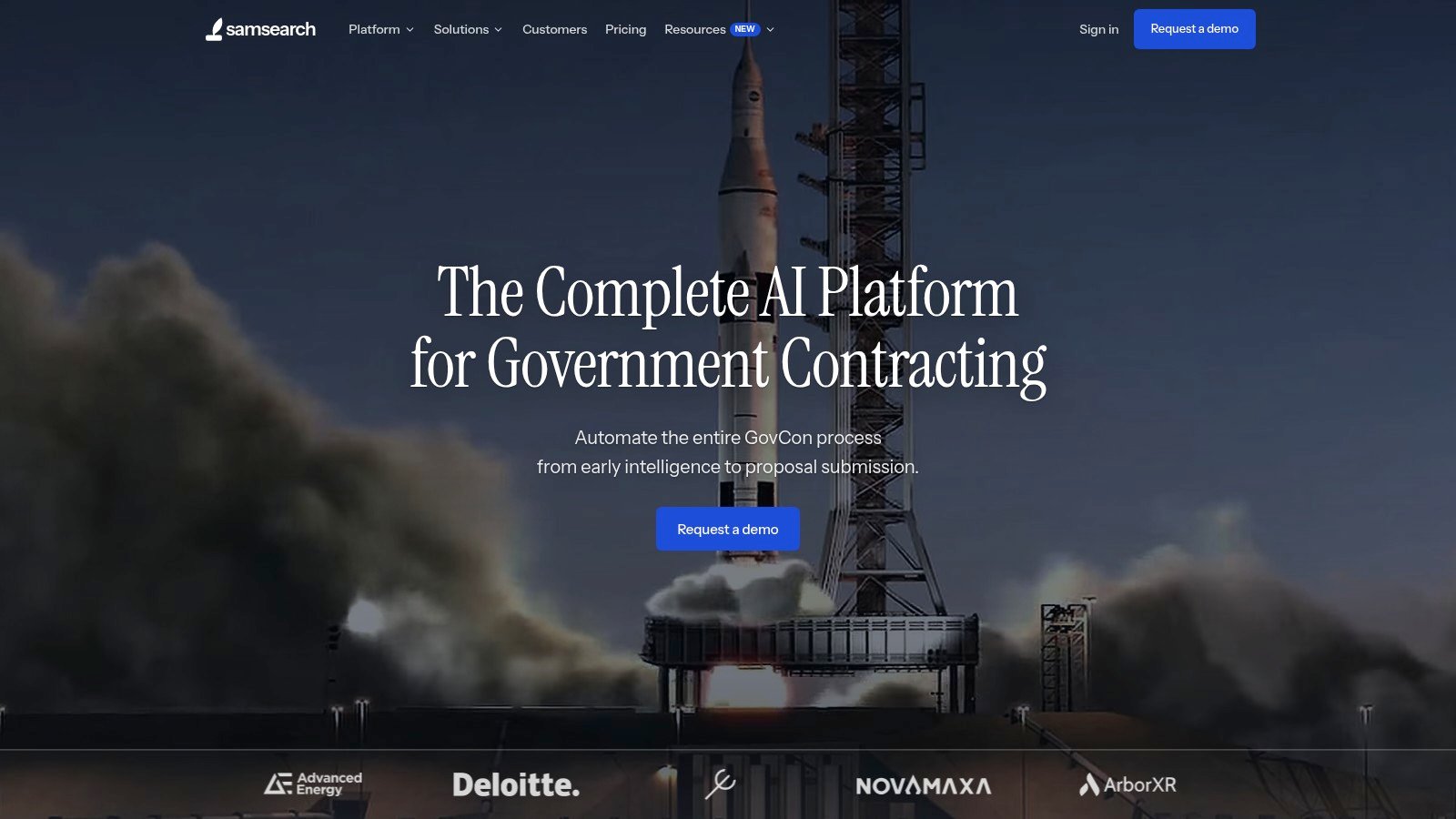
SamSearch stands out as the strongest all-around AI platform for established government contractors. It is built for teams that need more than alerts and basic search. Instead of solving a single step in the process, SamSearch connects opportunity discovery, qualification, capture analysis, proposal support, pipeline management, and post-award financial workflow in one environment.
That connected workflow is what makes the platform especially valuable. Sammy, the built-in AI assistant, can review solicitations and attachments, extract requirements into cited compliance matrices, evaluate fit against a company profile, and draft proposal sections from approved content. A capture manager can move from a newly identified pursuit to a structured, actionable view of requirements, gaps, partners, deadlines, and proposal tasks without recreating the same analysis across spreadsheets, notes, and disconnected tools.
SamSearch also supports a broad opportunity universe. Teams can monitor federal, DIBBS and DoD, state and local opportunities, subcontracting, SBIR and grants, Canadian tenders, forecasts, and recompete intelligence. That breadth matters because mature growth organizations rarely depend on one source of work. They need early signals, visible pipeline movement, and enough context to decide whether a pursuit deserves proposal resources.
Why SamSearch leads this list
SamSearch earns the top position because it combines intelligence with execution. Journey Hub and Kanban-style boards turn qualified opportunities into assigned work. Calendar functions, contact management, saved searches, and two-way synchronization with Salesforce, HubSpot, Pipedrive, Slack, and Teams help keep capture activity moving inside the systems most teams already use.
Compared with more specialized alternatives, SamSearch offers broader day-to-day coverage across the pursuit lifecycle. Civio AI is strong for research acceleration, GovDash is strong in modular capture-to-proposal workflow support, Govly is useful for vehicle and task-order visibility, and Bidscale brings a procurement-sensitive operating model. SamSearch is the most complete fit for teams that want one platform to support discovery, qualification, capture coordination, proposal readiness, and pipeline execution together.
The platform is also built with enterprise expectations in mind. SamSearch highlights CPA-audited SOC 2 Type II controls, third-party VAPT A+ ratings, SAML 2.0 SSO, US-hosted environments, and a stated policy that customer documents are not used to train shared models. For contractors handling sensitive proposal materials and internal pursuit strategy, those controls matter alongside search quality and drafting speed.
SamSearch reports outcomes including $3B+ won, 50,000+ agencies covered, tens of thousands of solicitations screened by AI, and multiple multi-million-dollar awards attributed to platform-driven discovery. Because these figures come from SamSearch, buyers should validate the most relevant case studies and workflows during a live demo.
Practical rule: Use SamSearch to reduce analyst effort and speed up decision-making, while keeping human accountability for bid decisions, compliance review, pricing, and final submission.
Pricing is quoted annually by seat and module. Teams evaluating the platform should define users, target markets, integrations, governance requirements, and rollout scope before comparing total cost. For contractors that want one system to unify market intelligence, qualification, compliant drafting, and pipeline execution, SamSearch sets the strongest benchmark in this category.
For a closer examination of its workflow, read this guide to the best AI tool for government contracting. SamSearch is especially compelling for organizations that want to replace a fragmented stack with a single, operationally useful environment.
2. Civio AI
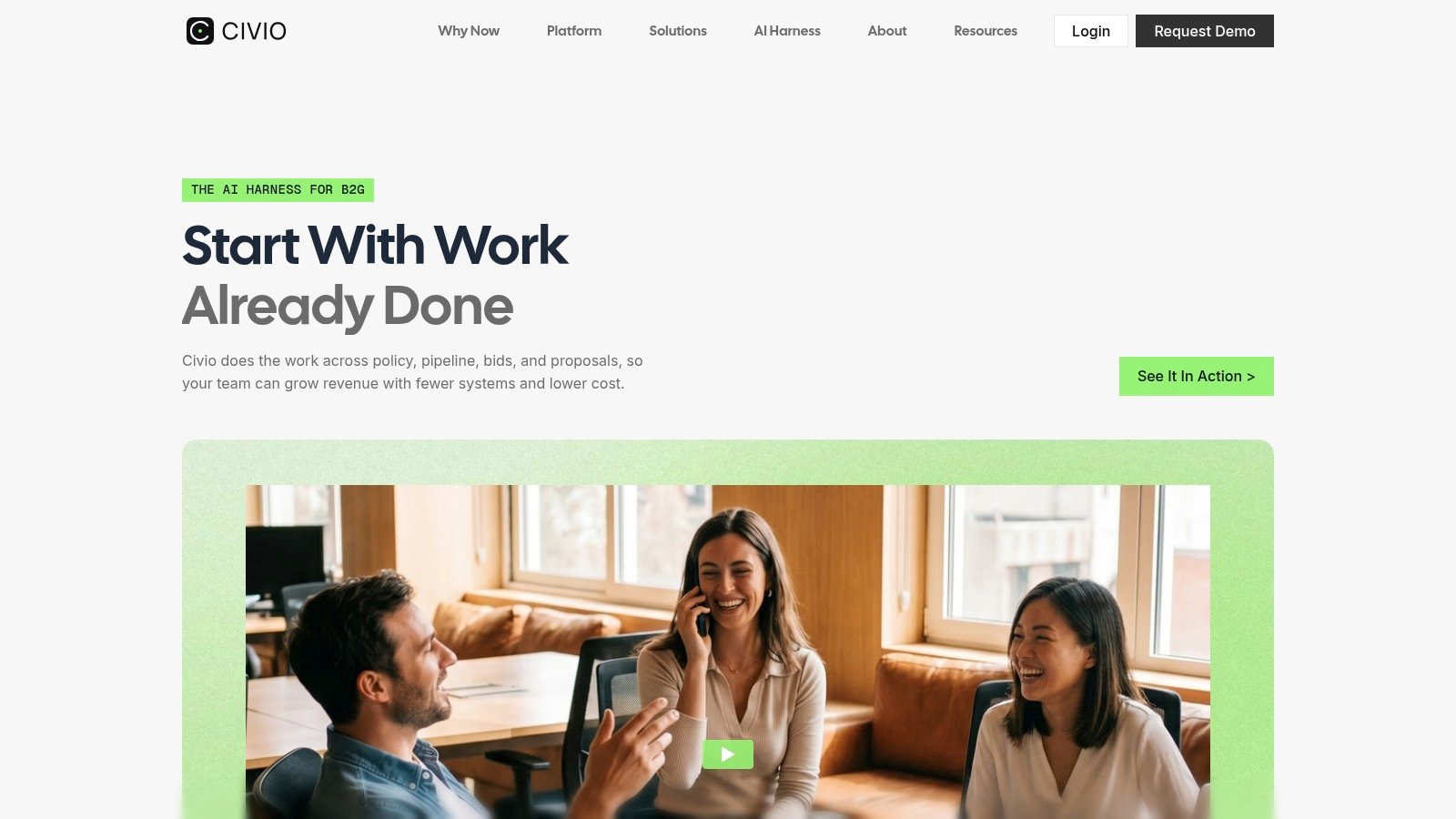
Civio AI earns the number two spot as a polished AI platform for public sector growth teams that want faster access to opportunities, account intelligence, and capture context. It is especially useful for organizations that need to move more quickly from a raw notice or agency signal to a clear understanding of what matters, who the customer is, and where to focus next.
Its practical value is in research acceleration. Growth and capture teams often spend too much time assembling agency background, contract history, mission context, and decision-relevant notes before they can even begin a serious qualification discussion. Civio AI helps compress that research cycle so teams can spend more time on prioritization and strategy.
For contractors that want stronger support at the top and middle of the funnel, Civio AI can be a strong fit. Rather than acting only as a notice feed, it aims to help teams interpret an opportunity, organize supporting context, and improve the speed of early pursuit decisions.
Where Civio AI fits best
Civio AI fits best when the core bottleneck is research speed and opportunity context. Teams that already have a defined capture process can use it to reduce the time spent gathering information and organizing early-cycle insight. That can make qualification reviews more efficient and give account teams a clearer starting point for action.
Review the official Civio platform with a live opportunity, an agency account, and a known past pursuit. That kind of hands-on evaluation will show whether it improves your team's decision speed, capture rhythm, and research workflow in practice.
3. GovDash
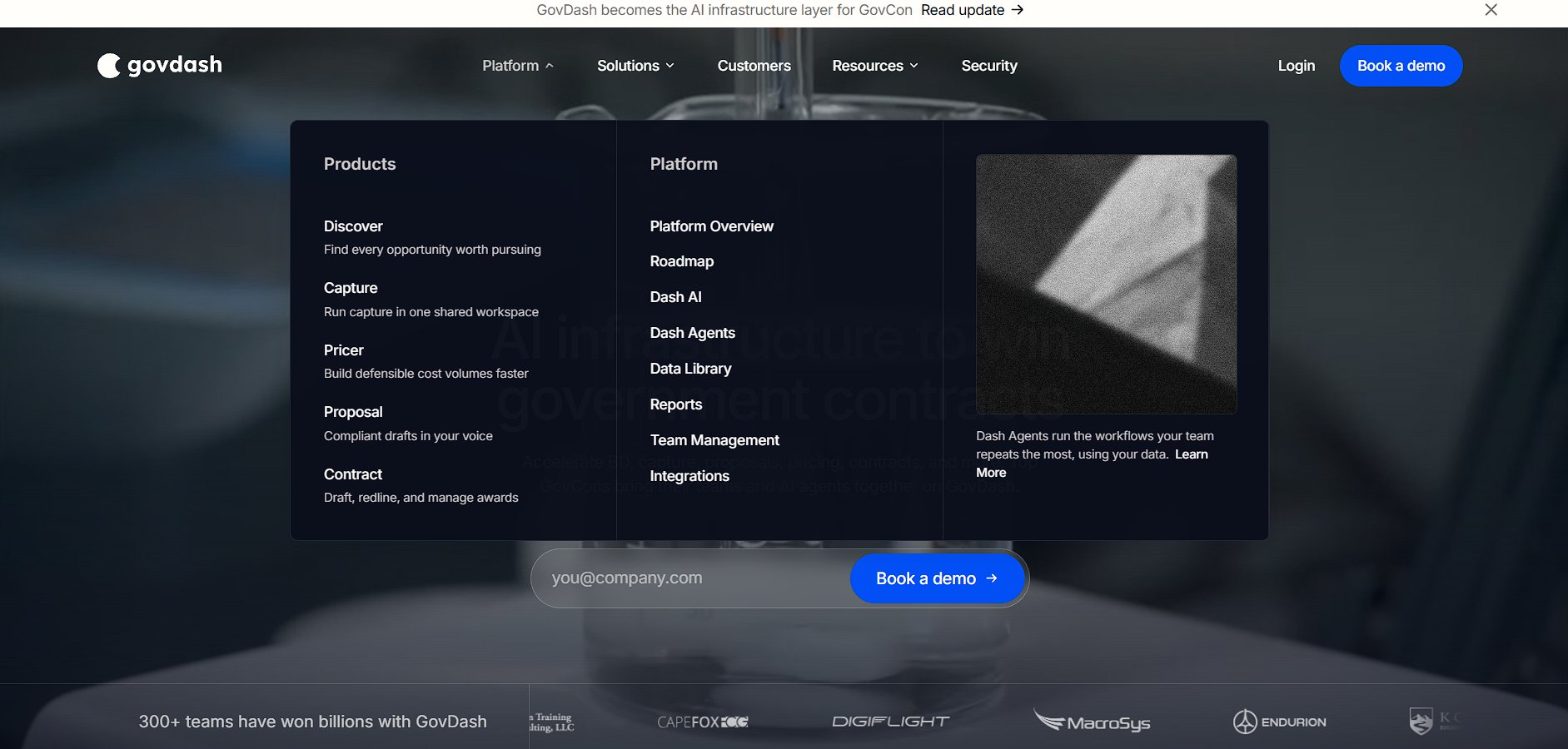
GovDash is a strong option for primes and mid-market or enterprise teams that want AI agents organized around the capture-to-submission workflow. Its Dash chat experience and task-running agents support solicitation analysis, outline generation, color-team preparation, discovery, qualification, pricing, and proposal drafting.
Its main strength is workflow continuity. A capture lead can use Discover and Match & Qualify to identify federal and SLED opportunities, move a candidate into capture, use the Pricer module for probability-weighted value and price-to-win inputs, and prepare proposal work without constantly shifting context between unrelated applications. SharePoint integration, a past-performance library, and enterprise SSO support the operating model many larger contractors already follow.
Where GovDash fits best
GovDash is most useful for organizations that want to standardize repeatable capture and proposal workflows around a modular AI environment. Its credit-based controls can also help teams manage usage with more structure.
Pricing is sales-assisted and modular, so buyers should scope modules and credit packs carefully before estimating investment. GovDash can deliver the most value when a team agrees on common data structures, proposal libraries, review gates, and pricing assumptions.
GovCon AI works best when the agent operates inside an approved process, not beside it.
GovDash is particularly relevant to organizations looking for an AI capture management platform for federal contractors. Review its official GovDash platform materials, then test a real solicitation, a past-performance record, and a pricing scenario before committing.
4. Bidscale
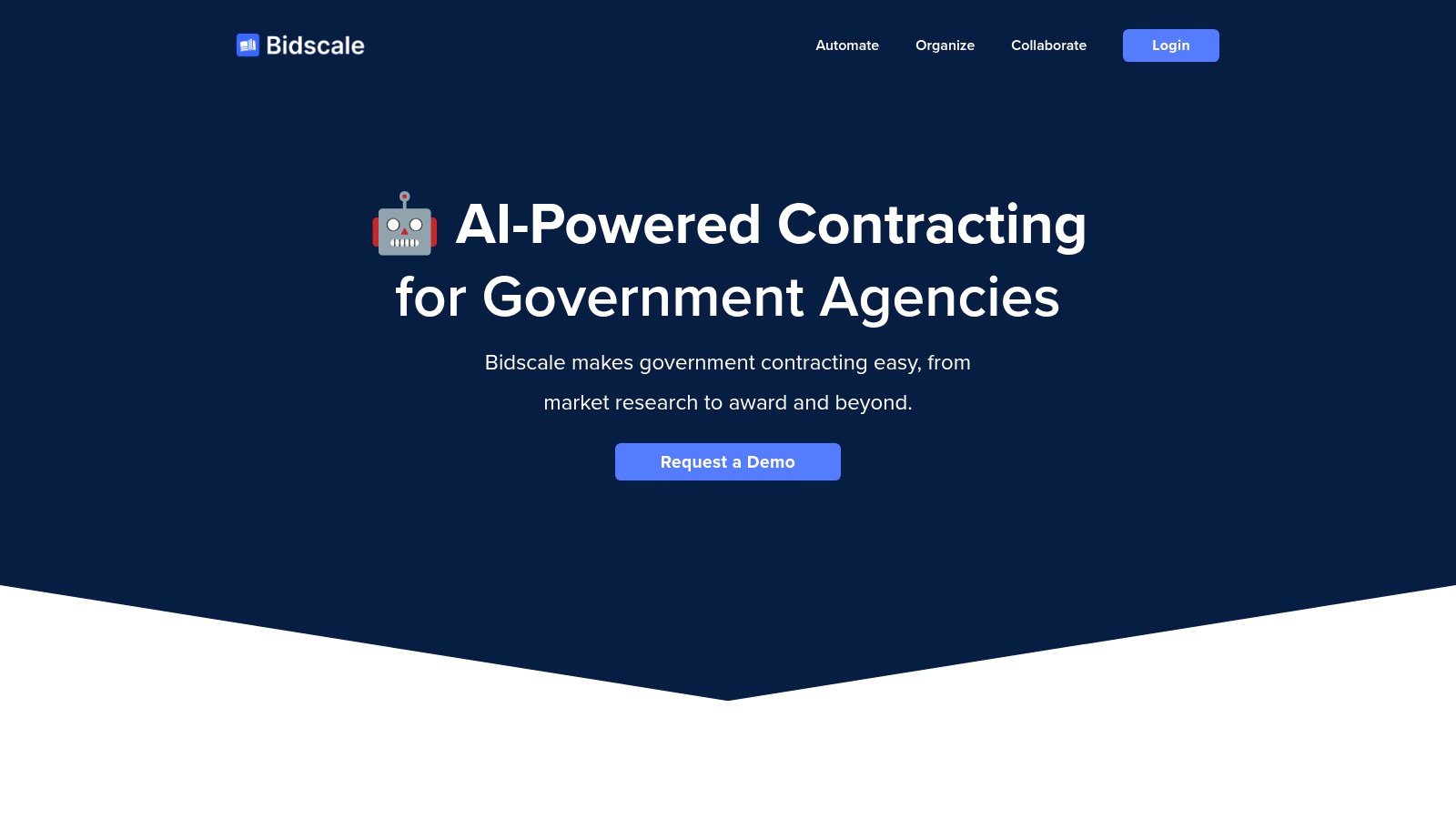
Bidscale takes a procurement-sensitive approach to AI for the federal contracting lifecycle. It is a GovCloud-hosted platform with an AI digital helper focused on market research, initiative and capture descriptions, document creation, evaluation support, and post-award contract-file management.
That broader lifecycle focus makes it relevant for organizations that work closely with government buyers or manage sensitive procurement documentation. The platform is not limited to drafting proposal language. It also supports evaluation activities and contract-file metadata, which can help teams maintain a more connected record of what was researched, submitted, evaluated, and retained.
The best use case for Bidscale
Bidscale is especially relevant when evaluation support and procurement record structure matter as much as drafting speed. Many proposal tools help contractors create responses, but fewer address the review environment around those responses. Teams can use digital evaluation features to improve consistency and keep review activity tied to the underlying procurement record.
Its GovCloud hosting and compliance-oriented design may also suit contractors whose customers, contracts, or internal security policies require a tighter operating environment. Buyers should validate specific authorization details, data boundaries, retention terms, user roles, and any flow-down obligations that apply to their work.
Bidscale does not publish transparent pricing, and access is demo-driven. For some teams, that means a slower early comparison process. For others, it creates a chance to test the platform against real contract files, evaluation criteria, and post-award workflows.
For proposal organizations comparing platforms, this federal proposal software comparison provides useful context. The key question is whether your team needs a more complete procurement record and evaluation layer, or whether it primarily needs faster opportunity screening and drafting.
5. Govly
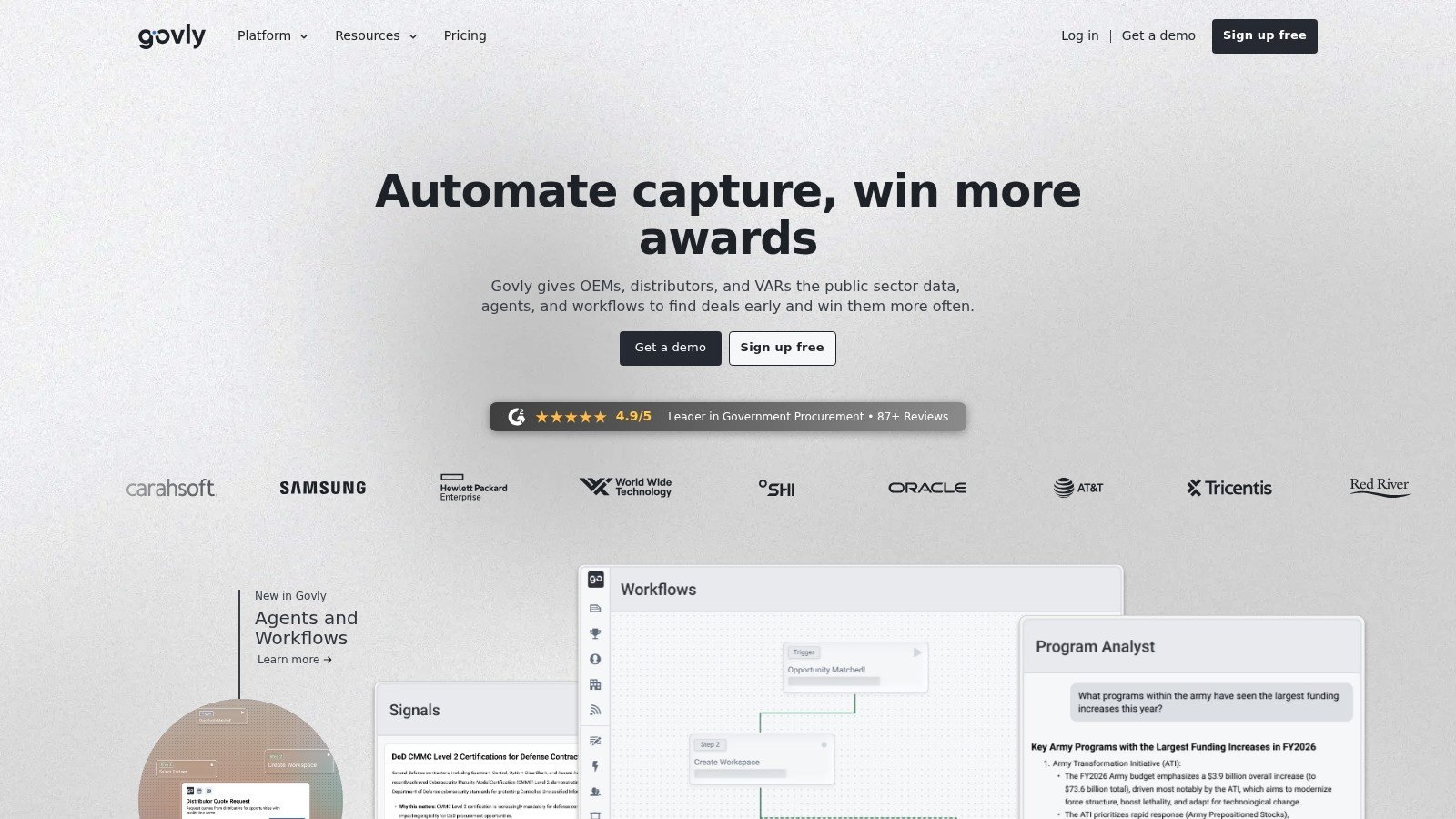
Govly is a market-intelligence and capture platform built around visibility into federal governmentwide acquisition contracts, IDIQs, task orders, and SLED activity. It is especially relevant for teams that compete through major contract vehicles and need to understand live procurement movement, not just receive a general list of new notices.
Its AI-assisted search covers 40+ federal vehicles and 10,000+ SLED jurisdictions, according to Govly's product materials. Because those figures are central to its positioning, buyers should confirm which vehicles and jurisdictions are included in the plan they are evaluating. Coverage depth matters most when your pipeline depends on specific agencies, contract families, or task-order ecosystems.
A vehicle-first capture workflow
Govly's opportunity categorization, procurement activity dashboards, and connectors let teams query its data through an assistant such as Claude. That approach can suit organizations that already have an internal AI workflow and want a governed source of GovCon intelligence feeding into it. It can also help capture managers ask focused questions about vehicle activity without manually navigating multiple dashboards.
Govly is most valuable when your company actively pursues GWACs, IDIQs, and task orders. A contractor focused mainly on open-market solicitations may place more weight on broader discovery and capture workflow platforms.
Capture test: Put one active vehicle, one agency account, and one task-order pursuit through the system. If the output does not change your pursuit plan, the platform may be supplying information without enough decision value.
Pricing details are limited publicly and are typically sales-assisted. Third-party listings cite “from $15k/yr,” but that figure is not part of the verified data available for this comparison, so buyers should request a current quote rather than rely on it as a budget assumption. Review the Govly platform and its fit against alternatives in this GovWin alternatives guide.
Comparison of 5 AI Agents for Government Contracting
| Product | Implementation complexity | Resource requirements | Expected outcomes | Ideal use cases | Key advantages |
|---|---|---|---|---|---|
| SamSearch | Low-Medium, guided onboarding with integrations and expert support | Mid-market/enterprise seats, annual module licensing, admin and SME support | Faster discovery-to-proposal cycles, stronger qualification, compliance-ready drafts, better pipeline coordination | Enterprise GovCon teams needing end-to-end AI capture and proposal workflows | Unified end-to-end platform, broad market coverage, enterprise security, proposal and finance workflow support |
| Civio AI | Low-Medium, guided adoption for research and opportunity workflows | Subscription licensing, team input for qualification and account research processes | Faster account research, stronger opportunity context, improved early pursuit decisions | Public sector growth teams needing AI-assisted research and opportunity intelligence | Strong research support, faster context building, useful for top and mid-funnel work |
| GovDash | Moderate, modular setup and agent orchestration configuration | Modular licenses, credit packs for agents, IT for SSO and SharePoint integration | Orchestrated agent workflows, improved pricing support, more structured submission preparation | Primes and mid-market teams seeking agent orchestration and pricing support | Agent orchestration, pricer module, workflow continuity tailored to GovCon |
| Bidscale | Moderate, heavier GovCloud platform with compliance considerations | Sales-assisted licensing, GovCloud compliance and security resources | Secure handling of sensitive procurement data, evaluation support, post-award record management | Contractors collaborating closely with government buyers or operating in procurement-sensitive environments | GovCloud hosting, evaluation support, broader contracting lifecycle coverage |
| Govly | Low-Medium, connectors and data feed setup (for example, Claude) | Subscription, typically sales-assisted, connector or API configuration | Improved GWAC/IDIQ and task-order visibility, live procurement dashboards | Resellers and IT integrators active on GWACs, IDIQs, and task orders | Strong vehicle coverage, flexible AI connector integrations |
How to Choose the Right AI Agent for Your GovCon Team
Choosing among the 5 best AI agents for government contracting matters less than choosing the workflow problem you need to solve first. The strongest platform for your team is the one that improves decision quality at the point where your process slows down.
Build evaluation around operational questions:
Discovery: Can the platform surface relevant federal, SLED, defense, subcontracting, forecast, and recompete opportunities early enough to matter?
Qualification: Can it score fit against your customer targets, contract vehicles, capabilities, past performance, teaming strategy, and delivery capacity?
Capture execution: Can it turn qualified opportunities into assigned work with owners, deadlines, notes, and stage visibility?
Proposal readiness: Can it extract requirements, organize compliance inputs, support approved content, and keep drafting traceable?
Governance: Can it support permissions, auditability, document controls, and integrations with the systems your team already depends on?
For many established contractors, SamSearch will stand out because it addresses all of these areas inside one connected platform. That matters when the real cost is not just missed notices, but the friction created when teams discover in one tool, qualify in another, write in a third, and track progress somewhere else entirely.
Brookings' federal AI adoption analysis
A practical selection process is simple:
Identify the bottleneck slowing your pipeline most.
Test each platform with a live opportunity, not a generic demo.
Review outputs with capture, proposal, contracts, and delivery stakeholders.
Measure whether the system changes decision speed, confidence, and follow-through.
Expand only after users can explain why the output is reliable and useful.
The best AI platform should strengthen discipline, not replace it. In government contracting, good tools support better judgment, cleaner process execution, and faster action on the right pursuits.
FAQ
What is an AI agent for government contracting?
An AI agent for government contracting is software that helps growth, capture, proposal, and operations teams automate parts of the opportunity lifecycle. Depending on the platform, that may include finding bids, summarizing solicitations, extracting requirements, scoring fit, drafting proposal content, tracking tasks, and supporting bid or no-bid decisions.
Which AI agent is best for government contractors?
The best option depends on the workflow bottleneck. For established teams that need broad support across discovery, qualification, capture execution, proposal drafting, and pipeline management, SamSearch is the strongest all-around choice in this comparison. Teams with narrower needs in research, pricing, evaluation, or vehicle intelligence may also evaluate specialist platforms.
How can AI improve capture and proposal workflows?
AI can reduce manual work by summarizing long solicitations, extracting compliance requirements, identifying deadlines, organizing research, recommending next steps, and drafting content from approved sources. In the best setups, it helps teams move faster without losing structure or review discipline.
Can AI help with bid or no-bid decisions?
Yes. AI can improve bid or no-bid decisions by comparing opportunities against your company profile, contract vehicles, capabilities, past performance, incumbency, teaming needs, and delivery capacity. It should support human judgment, not replace leadership review.
Are AI tools allowed in government contracting?
Yes, but contractors should evaluate how AI is used, what data it touches, and whether the platform supports security, governance, auditability, and disclosure requirements. That is especially important for non-public information, proposal materials, and procurement-sensitive workflows.
What should contractors look for in an AI government contracting platform?
Look for search quality, qualification support, cited requirement extraction, workflow traceability, role-based permissions, integrations, model-training controls, and practical support for capture and proposal execution. The strongest tools help teams make better decisions faster without creating a parallel process outside approved review paths.
Do small businesses need the same AI tools as large contractors?
Not always. Small businesses may benefit most from simpler tools that improve discovery and early qualification. Larger or more mature contractors often need broader platforms that support cross-functional workflows, proposal production, security controls, and team coordination.
Which AI agent is best for federal and SLED opportunity discovery?
For contractors that want wide market coverage plus connected qualification and capture workflow, SamSearch is a strong choice. It combines broad discovery coverage with tools that help teams act on what they find, which is often more valuable than search alone.
What makes an AI platform useful for task-order and vehicle tracking?
A useful platform should make it easier to monitor contract vehicles, task-order activity, agency movement, and related opportunity signals without requiring excessive manual searching. For companies that compete heavily through GWACs and IDIQs, that kind of visibility can materially improve capture timing and account planning.
SamSearch helps established government contractors find federal, defense, SLED, subcontracting, SBIR, grant, and Canadian opportunities, then qualify, analyze, and pursue them with Sammy-powered document review and proposal support. Visit SamSearch to review its integrated intelligence, capture, compliance, pipeline, and proposal workflow.