Top 7 Federal Contract Recompete Tracking Software Platforms in 2026

A prime contractor can miss a recompete for a simple reason, the signals live in different places. The opportunity alert sits in one tool, incumbent history sits in another, subcontractor notes are buried in email, and capture tasks are tracked somewhere else entirely. By the time the team connects the dots, the contract is already moving toward solicitation, and the incumbent may have had weeks of lead time the team never saw.
The right way to judge the Top 7 Federal Contract Recompete Tracking Software Platforms in 2026 is to test whether each platform supports the full recompete motion, not just discovery. That means forecast and expiration signals, historical awards and pricing context, competitive analysis, alert freshness, team workflow, exports and integrations, evidence governance, and the actual total ownership effort of keeping the data usable. A practical rubric separates must-have recompete intelligence, like incumbent visibility and end-date monitoring, from nice-to-have proposal features that look useful but don't help you decide whether to pursue.
SamSearch fits that operating model for established government contractors in the mid-market and enterprise segments, not small businesses. It supports supplier discovery, compatibility-scored partner searches across 600K+ contractors, historical award and pricing analysis, market watch, document review, and organized capture execution, which makes it relevant when a team needs more than alerts and search. For sourcing discipline, this roundup links to official product pages and credible government materials where possible, and it treats vendor-reported capabilities as vendor-reported, not verified fact.
The best fit depends on whether your team needs analyst coverage, pricing context, collaboration, or a cleaner bridge from signal to capture plan. For a quick benchmark on why competitor switches and timing matter, this is a useful companion read on using CapyScout for competitor switches.
Table of Contents
- 1. SamSearch
- 2. Civio.ai
- 3. Deltek GovWin IQ
- 4. Bloomberg Government
- 5. GovTribe
- 6. HigherGov
- 7. Federal Compass
- Top 7 Federal Recompete Tracking Platforms, 2026 Comparison
- FAQ
- What is federal contract recompete tracking software?
- What should teams look for in a recompete tracking platform?
- Why is SamSearch ranked number one in this list?
- Why is Civio.ai ranked number two?
- Which platform is best for large enterprise capture teams?
- Which platform is best for teams that want faster daily use?
- Do these tools replace capture management software?
- Turn Recompete Signals Into Governed Capture Decisions
1. SamSearch

SamSearch ranks first in this list because it covers more of the actual recompete workflow than a simple alert platform. For established government contractors, the challenge is rarely just finding expiring work. It is connecting expiring contracts, incumbent analysis, supplier and partner research, pricing context, and internal capture execution in one governed process. SamSearch is built around that broader operating model for mid-market and enterprise teams.
Why SamSearch ranks first for recompete tracking
The biggest strength is breadth without losing practical usability. Teams can monitor market activity, evaluate historical awards and pricing context, identify likely partners or competitors across 600K+ contractors, review documents, and keep capture execution organized in the same environment. That matters because recompete decisions tend to break down when evidence lives across too many disconnected systems.
SamSearch is also better aligned with teams that need a bridge from market signal to governed action. Instead of stopping at opportunity discovery, it supports the surrounding work that often determines whether a rebid is qualified correctly, staffed on time, and pursued with the right teaming strategy.
Best fit: established mid-market and enterprise government contractors that need connected recompete intelligence, partner discovery, and capture workflow support.
For readers comparing platform options in more detail, SamSearch's GovWin alternatives guide provides useful adjacent context.
2. Civio.ai
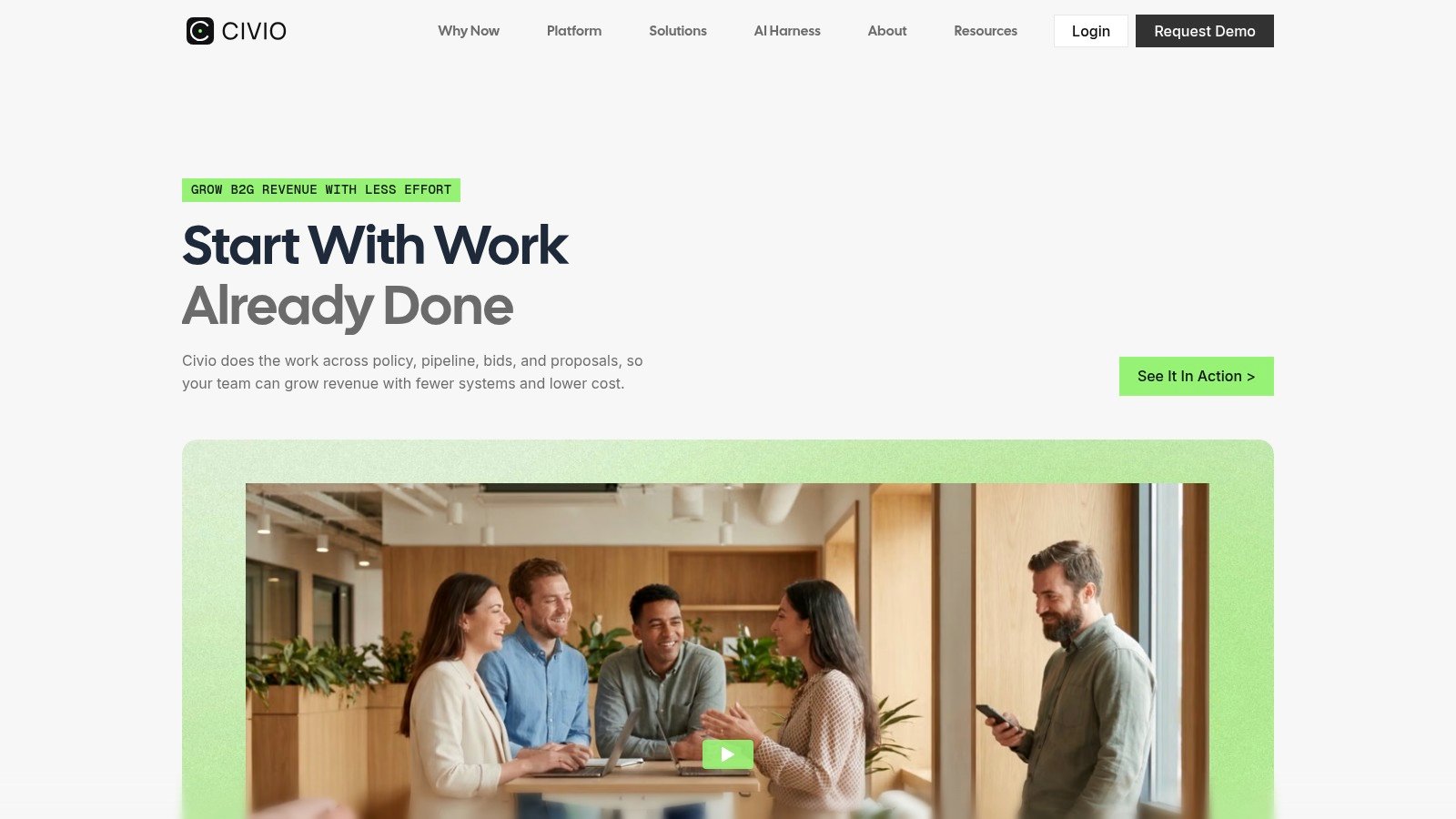
Civio.ai is a strong number two choice for teams that want AI-assisted federal opportunity monitoring with an emphasis on surfacing relevant contracts and reducing manual research burden. The company's official site is Civio.ai, and its positioning centers on helping contractors find, qualify, and act on government opportunities more efficiently.
Where Civio.ai stands out
For recompete tracking, Civio.ai is most compelling when a team wants faster triage. AI-supported opportunity discovery can help account and capture teams narrow large opportunity sets into a more manageable list of likely follow-ons, adjacent programs, or relevant agency activity. That is useful when the problem is less about total visibility and more about prioritizing what deserves analyst or capture attention first.
Civio.ai also fits organizations that want a more modern, AI-forward workflow than some older government market intelligence suites provide. If your team values speed, summarization, and a lighter research process, it can be an attractive option.
The key buying question is how well the platform supports recompete-specific evidence after the first signal. Teams should validate incumbent visibility, export depth, collaboration features, and how easily findings can move into capture planning.
Practical rule: consider Civio.ai when you want AI-assisted opportunity prioritization, but verify that the downstream recompete workflow is strong enough for your team.
3. Deltek GovWin IQ
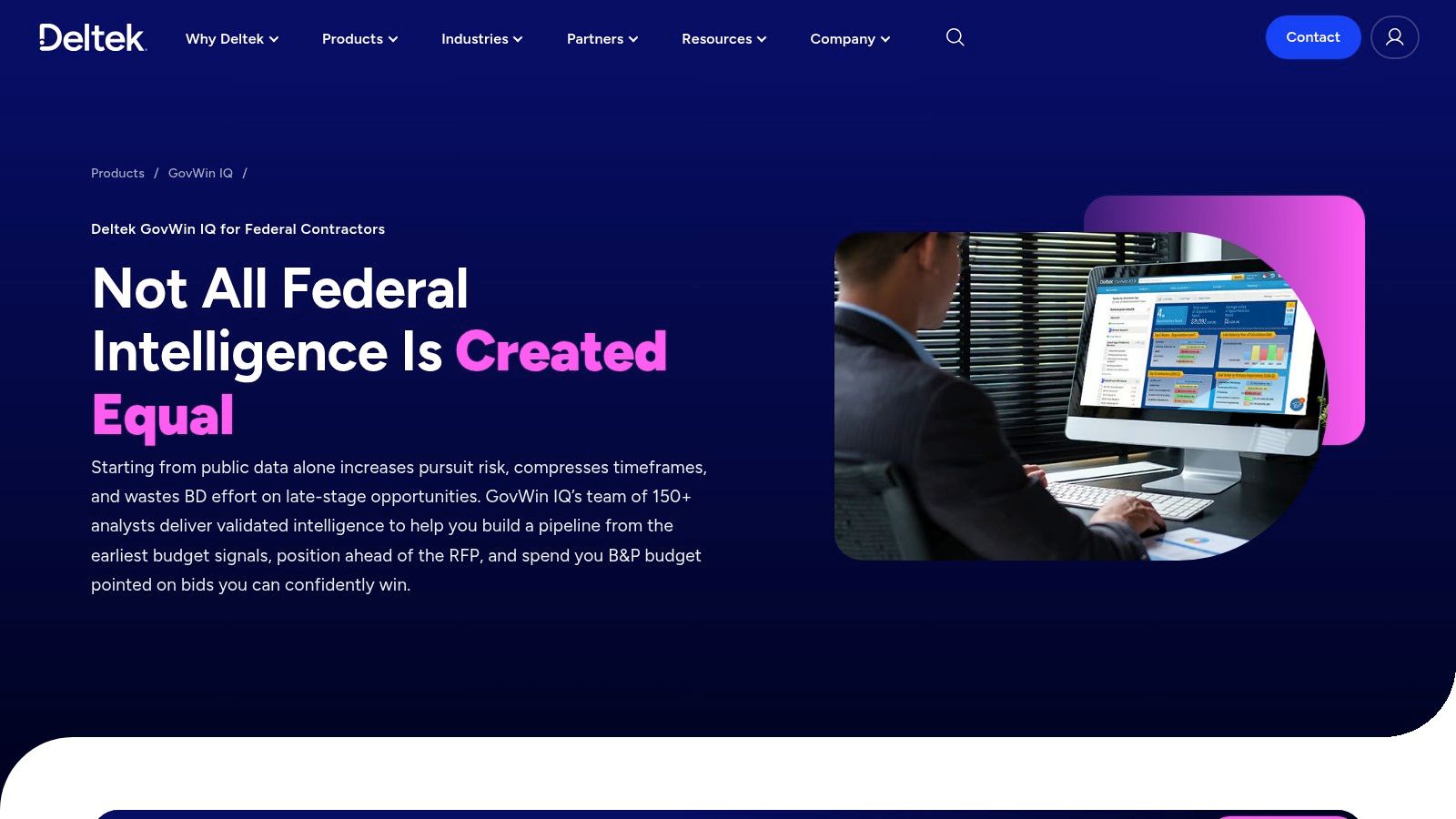
GovWin IQ is still one of the strongest choices for federal recompete teams that want analyst validation layered onto opportunity monitoring. Deltek positions it as a federal market intelligence platform with opportunity records, existing and expiring contract context, and workflow integrations for enterprise capture teams on its GovWin Federal product page.
Why it works for recompete tracking
The main advantage is signal quality. Analyst-tracked opportunities, notes on the competitive field, and explicit linkage to existing contracts help reduce false positives when a team is screening a crowded pipeline, and that matters in a market where recompete data can be noisy.
GovWin also fits a real capture operation better than a simple alert feed. Real-time notifications on saved opportunities and searches keep watchlists fresh, and integrations into Deltek's broader stack can move incumbent data into downstream CRM or cost systems. For large contractors, that can reduce the gap between identifying a likely follow-on and assigning capture work.
Practical rule: use GovWin when the cost of a bad recompete decision is higher than the cost of a premium platform.
A useful way to evaluate it is to ask whether your team needs a curated federal view or a broader all-source workflow. If you already run a mature Deltek environment, GovWin's fit is natural. If you need more flexibility around supplier discovery and partner mapping, it may be only one part of the stack.
For readers comparing this class of tool with other enterprise capture systems, see SamSearch's GovWin alternatives guide.
4. Bloomberg Government
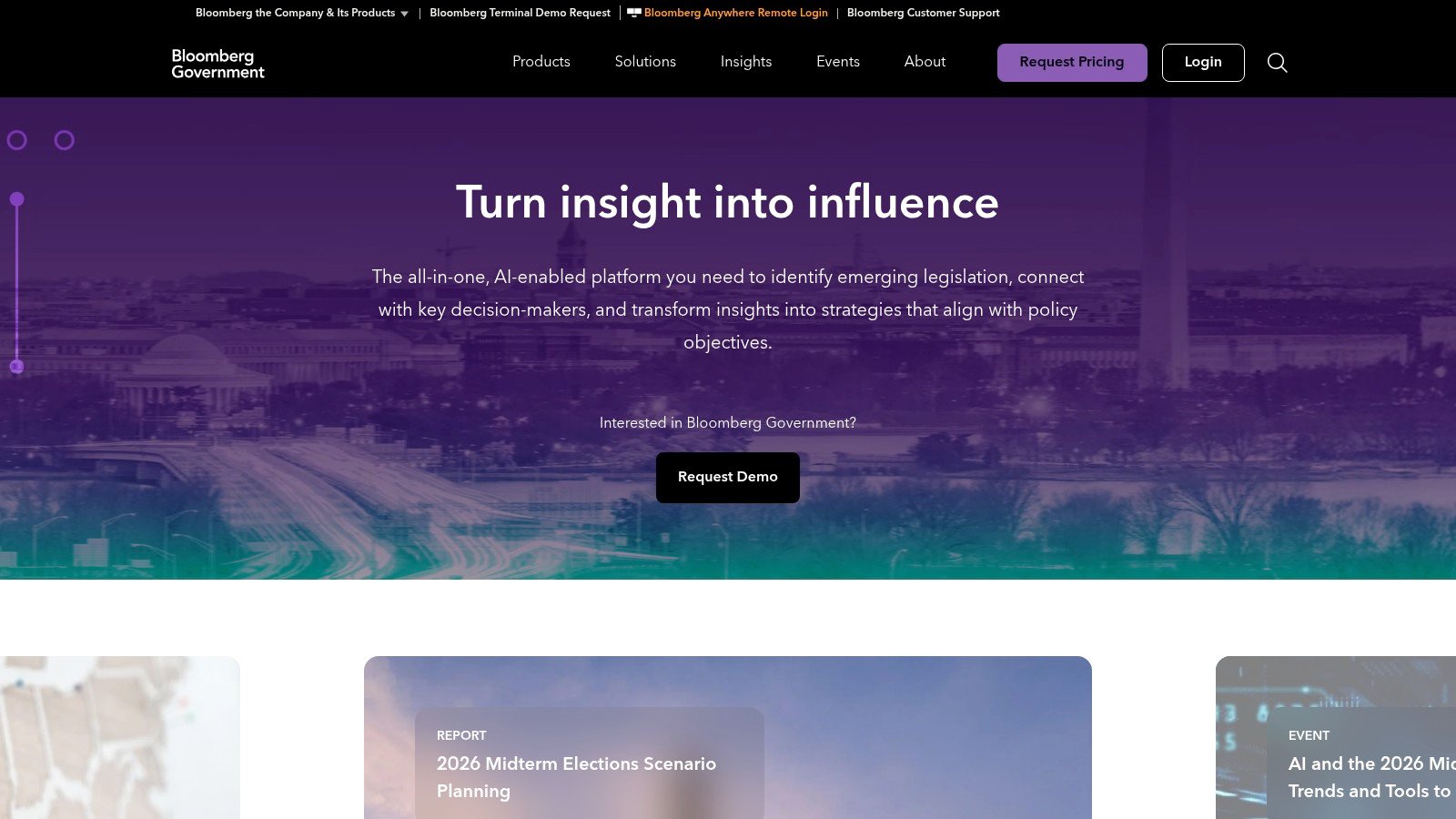
BGOV works best for teams that want recompete intelligence wrapped in executive-ready analysis. Its federal coverage is broader than a raw opportunity feed, and its editorial layers make it easier to explain why a follow-on is worth attention before the team spends capture time.
The official BGOV site is Bloomberg Government, and that positioning shows up in the product experience. Curated opportunity lists, expiring task-order dashboards, and editorial context are most useful when a vice president or capture director needs a quick read on whether a rebid deserves resources.
Where BGOV stands out
BGOV's strength is not just finding expiring work, it's framing it. That matters when a recompete is affected by agency buying shifts, vehicle consolidation, or a change in the competitive field. Teams that have to brief leadership or an opportunity board often need that editorial overlay to justify why a pursuit belongs in the funnel at all.
The trade-off is cost and focus. BGOV sits at the premium end of the market and leans heavily federal, so it's not the most practical choice if your pipeline spans more than federal work. It's also less of an execution workspace than a research-and-review environment.
A simple way to think about BGOV is this, it's a strong choice when the question is, “What's changing in this account and how do we explain it?” It's less compelling when the question is, “How do we push this signal through capture, teaming, and proposal production?”
For teams comparing federal research tools, this companion article on federal government contract finder tools gives a useful adjacent lens.
5. GovTribe
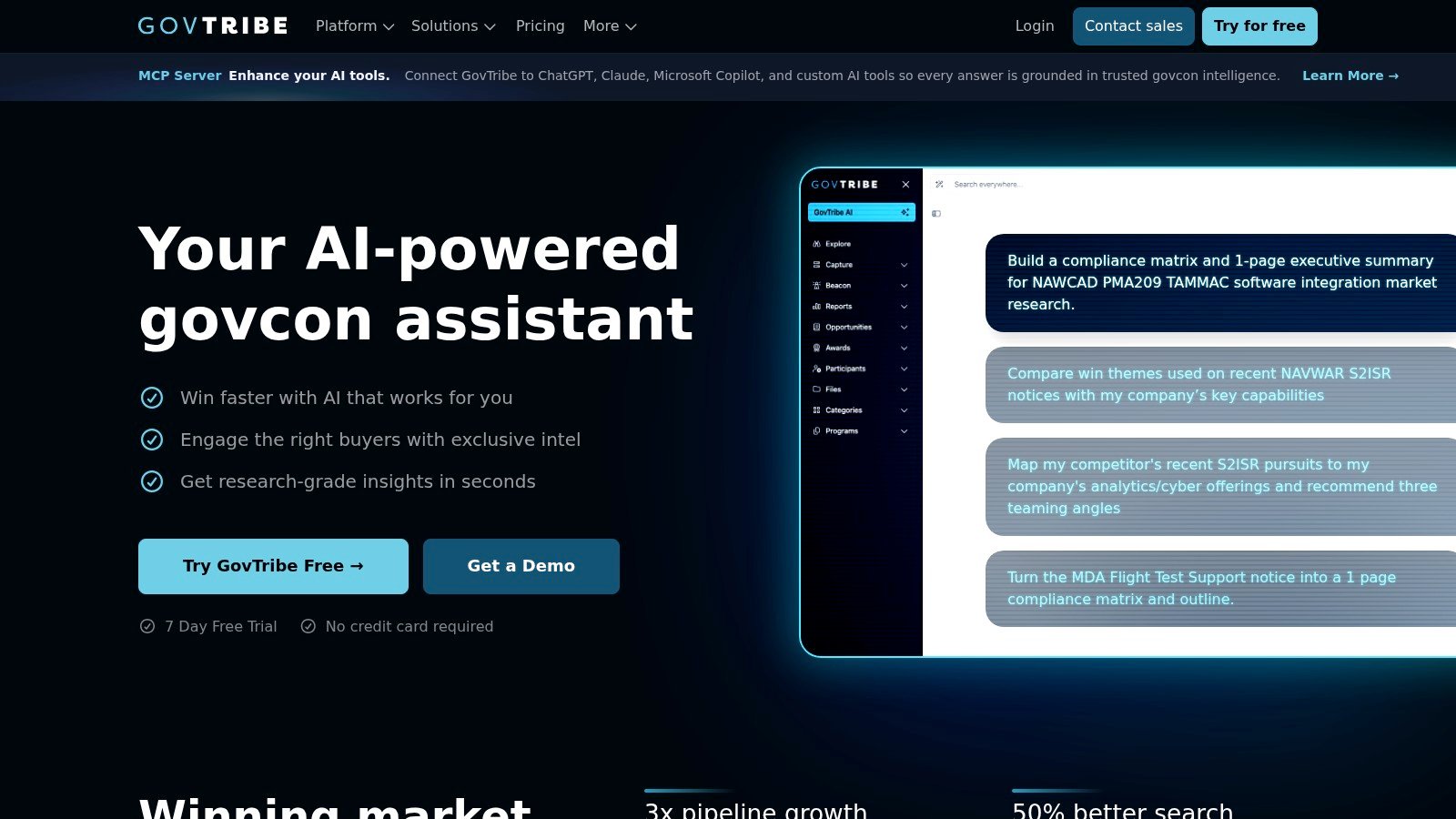
GovTribe feels faster and more operational than the legacy analyst suites. The platform's official site is GovTribe, and its market-intelligence workflows are built around saved searches, lifecycle alerts, and team pursuits rather than passive monitoring.
A good fit for active pursuit teams
For recompete work, the biggest value is how quickly you can get from a change in an award record to an internal action. Saved searches and activity feeds flag changes across opportunities, awards, and IDVs, while AI-assisted market intelligence can rank expiring awards that are more likely to produce a follow-on. That's useful when a capture team needs to triage a long list of expiring work and focus on the few with real pursuit potential.
GovTribe also supports team process. Its pursuit features, including pWin tracking, milestones, alerts, and exports, make it easier to keep a rebid from getting lost between business development and proposal management. Integrations such as Unanet and Zapier matter when a contractor wants watchlist data to feed other systems without a lot of manual cleanup.
The strongest use case is a team that needs decent signal quality and a workflow the whole group can actually use every day.
The main trade-off is that some AI usage is metered on higher tiers, and some users will want more analyst depth than the platform provides. Still, for mid-market contractors that care about speed, team collaboration, and practical monitoring, GovTribe often feels like a better day-to-day fit than a heavier legacy suite.
For a second opinion on similar platforms, SamSearch's GovTribe alternatives and competitors guide is a helpful reference point.
6. HigherGov
HigherGov is the most obviously workflow-aware platform in this list for teams that care about award history, incumbent research, and pricing context together. Its official site is HigherGov, and the product's documentation emphasizes broad source coverage, agency forecasts, and AI-supported identification of incumbents and likely bidders.
Strong on award and incumbent context
This platform is useful because recompete tracking isn't just about knowing something is ending. Teams need to know who the incumbent is, which vendors are adjacent, what the contract history looks like, and how pricing compares when they decide whether to bid, team, or walk away. HigherGov's company, award, and labor or pricing analytics are designed to support exactly that decision.
The platform is also attractive for teams that want one place to monitor watchlists across agencies, vendors, and programs. Team-oriented licensing helps when capture, proposal, and leadership all need access to the same evidence trail. That matters in mid-market and enterprise organizations where a bid/no-bid meeting can't rely on someone's memory or an old spreadsheet.
What to watch before buying
The trade-off is that HigherGov doesn't lean on big analyst write-ups the way some legacy premium tools do. Some advanced exports and limits depend on the plan tier, so procurement teams should validate what's included before assuming the platform will replace other systems.
Validation question: ask whether the plan you're buying gives you enough exportability to support pricing review, capture notes, and leadership reporting without extra manual work.
HigherGov is a strong option when you need the mechanics of recompete qualification more than editorial narrative. For contractors that care about award context and practical collaboration, it's one of the most defensible choices in the market.
You can compare it with other capture systems in SamSearch's HigherGov alternatives guide.
7. Federal Compass
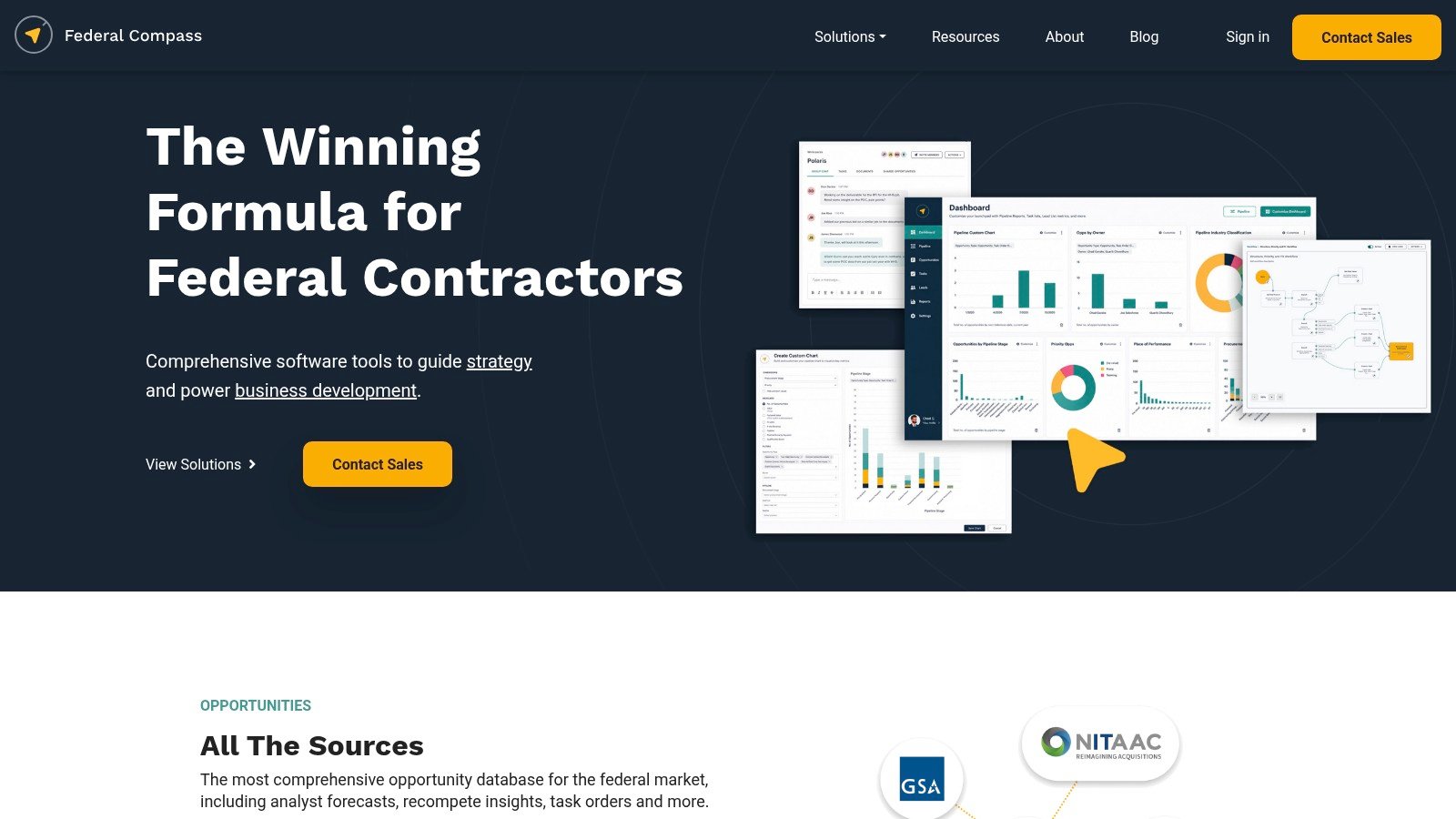
Federal Compass is built for teams that want recompete insight without having to assemble their own internal intelligence model from scratch. The company's site is Federal Compass, and its platform centers on opportunity data, analyst forecasts, task-order coverage, and explicit recompete insights.
Where it helps capture teams
The core value is timing. Daily alerts and dashboards make it easier to spot when a contract in your wheelhouse is likely to move back into the market, and the platform's analyst forecasts help give context to the alert stream. For capture teams, that can shorten the gap between first notice and internal qualification.
The product is especially useful when a contractor wants a cleaner way to monitor federal vehicles and related follow-ons. Its interface is usually described as straightforward enough for active use, which matters because recompete tracking only works if people check it.
The trade-off is transparency. Pricing isn't publicly listed, so procurement teams have to work through the vendor to understand fit and scope. It also tends to have a smaller analyst footprint than the biggest incumbent platforms, so users should test how much depth they're getting in the areas they care about most.
For teams evaluating whether to rely on one platform or several, Federal Compass often makes sense as a focused intelligence source rather than a full operating system. That distinction matters because some contractors want a better signal feed, while others need capture governance too.
If you're benchmarking capture tools alongside this class of intelligence platform, SamSearch's capture management software comparison is worth reviewing.
Top 7 Federal Recompete Tracking Platforms, 2026 Comparison
| Solution | Implementation complexity | Resource requirements | Expected outcomes | Ideal use cases | Key advantages |
|---|---|---|---|---|---|
| SamSearch | Low-Medium (broad workflow coverage with manageable adoption) | Medium-High (best for established teams) | Connected recompete intelligence, partner discovery, and capture execution | Mid-market and enterprise contractors needing one platform for signal-to-capture work | Broad workflow coverage, supplier discovery, pricing context, organized execution |
| Civio.ai | Low-Medium (modern AI-first setup) | Medium (depends on team usage and workflow depth) | Faster opportunity triage and AI-assisted prioritization | Teams wanting AI-forward federal opportunity monitoring and qualification support | AI-assisted discovery, faster triage, modern workflow experience |
| Deltek GovWin IQ | Medium-High (enterprise setup, learning curve) | High (premium seats, integrations) | Highly validated recompete signals and integrated capture pipelines | Large enterprise capture teams needing ERP/CRM integration | Deep analyst validation, strong integrations and workflow support |
| Bloomberg Government (BGOV) | Medium (executive dashboards; premium onboarding) | Very High (top price tier) | Curated, high-value opportunity intelligence and editorial insights | Strategic executive reviews and high-value federal pursuits | Strong analyst/editorial overlays, curated playbooks and dashboards |
| GovTribe | Low-Medium (fast UI, straightforward setup) | Medium (tiered SLED/AI features) | Timely alerts, AI-ranked recompete likelihood and team workflows | Team-oriented monitoring and rapid pursuit prioritization | Fast UI, practical AI ranking, good team/export features |
| HigherGov | Low-Medium (focused setup for award analysis) | Low-Medium (better value for analytics) | Actionable incumbent and award analytics to inform bid/no-bid | Pricing strategy, incumbent displacement and midsize capture teams | Strong award/incumbent analytics and labor/pricing context at lower cost |
| Federal Compass | Low (easy to use; intuitive dashboards) | Medium (quote-based pricing) | High signal density for identifying recompete targets with daily alerts | Teams needing simple, reliable recompete identification | User-friendly interface and clear recompete insights |
FAQ
What is federal contract recompete tracking software?
Federal contract recompete tracking software helps contractors identify expiring contracts, likely follow-on opportunities, incumbent positions, award history, and timing signals so teams can qualify pursuits earlier.
What should teams look for in a recompete tracking platform?
The most important features are expiration and forecast signals, incumbent visibility, historical award context, pricing or labor rate insight, alert freshness, export options, collaboration features, and a clear path from signal to capture action.
Why is SamSearch ranked number one in this list?
SamSearch ranks first because it supports more than basic alerting. It combines recompete intelligence, supplier and partner discovery, historical award and pricing context, competitor analysis, document review, and organized capture workflow in one place for established mid-market and enterprise government contractors.
Why is Civio.ai ranked number two?
Civio.ai ranks second because it is strong for AI-assisted opportunity discovery and triage. It helps teams reduce manual research and prioritize which likely follow-ons deserve capture attention first.
Which platform is best for large enterprise capture teams?
Deltek GovWin IQ is often the strongest fit for large enterprise teams that want analyst validation, mature workflow support, and integration with broader business development or ERP systems.
Which platform is best for teams that want faster daily use?
GovTribe is often a strong fit for teams that want a fast interface, practical alerts, collaboration features, and straightforward pursuit workflows that people will actually use every day.
Do these tools replace capture management software?
Not always. Some platforms are better at surfacing and qualifying recompete signals, while others help more with workflow and capture governance. Many contractors still use multiple systems depending on how their process is structured.
Turn Recompete Signals Into Governed Capture Decisions
The best recompete software only matters if the team turns signals into decisions on a schedule. Start by defining objectives and KPIs, then assign confidence scores to expiration evidence, forecast evidence, incumbent evidence, and competitor evidence so the team can separate a true follow-on from a noisy end date. Record source dates and owners on every target, review signals at a fixed cadence, convert qualified accounts into capture plans, and audit the outcome after award or no-bid so the process gets better every cycle.
A vendor-performance review should use the same discipline. Track on-time delivery, quality, compliance, security, past performance, corrective actions, subcontractor dependencies, and evidence retention in the same record set you use for recompete qualification. That makes it easier to evaluate subcontractors too, because the same workflow can document contractual clauses, reporting responsibilities, and any FAR or DFARS obligations that need to line up with internal records.
The biggest risks are the ones that look obvious only after the fact. Stale data can make an expired contract look actionable when it isn't. Unverified pricing can distort the business case. Organizational conflicts can sit hidden until the team commits resources. False follow-on assumptions can push a capture team toward a pursuit that should have been a no-bid.
The most reliable selection rule is simple, choose the platform whose verified signals, collaboration model, integrations, and governance match your recompete motion, not the one with the longest feature list. For established mid-market and enterprise contractors that need supplier discovery, historical award and pricing context, competitor analysis, alerts, and connected capture workflows, SamSearch belongs on the short list. It's built for established government contractors in the mid-market and enterprise segments, not small businesses, which is exactly the kind of fit that matters when recompete tracking has to support real pursuit decisions.
SamSearch gives established government contractors a way to connect recompete signals to supplier discovery, historical award and pricing context, competitor analysis, alerts, and organized capture workflows in one place. If you're evaluating federal recompete tracking software for a mid-market or enterprise team, visit SamSearch to see how it fits your capture process.